


Locrine is an Elizabethan play, first published in 1595, whose author is, sadly, lost to history. The title page says the play was “Newly set forth, corrected, and overseen, by W.S.” As you might expect, scholars and theater practitioners have eagerly tried to prove that this means the play was written, (or at least revised), by Shakespeare. So far, no proof has been found.
“Historical” Context

The play is a tragedy based on the founding of Britain. Over 2,000 years ago, a father and his three sons flee the destroyed Troy, tame the wild landscape of England, and become its first kings. After his father’s death, the eldest son, Locrine, must defend his land from barbarian invaders with the help of his brothers.
Semi-mythical characters


Brutus is the patriarch of the Britons who, according to legend, was descended from Aeneas the sole survivor of the infamous Trojan War. Brutus preserves the legacy of Troy by founding a new city in Britain, Troynovant (New Troy), and establishing his three sons as heirs to his kingdom.
Camber, Brutus’ young son

Albanact is the great warrior whom Brutus puts in charge of Scotland. He has his hands full defending Britain against the Scithian invaders.

Camber is given Cambria, (modern day Wales)

Locrine is Brutus’ eldest son, and as such he is crowned king over all Britain. According to legend, Locrine changes the capital of England from New Troy, to Locrindom, which then became London.
The Plot

The prologue

- Prologue describes Prometheus’ punishment as a tragedy, and his gift is a blessing. Prometheus also warns that Zeus will be overthrow if he succumbs to his desire for Thetis
- Ate the Goddess of revenge introduces the play, making it very clear that this is the fall of the royal house of Brutus.
- As the play continues, we see Brutus die, leaving his kingdom to his children

4. Humber is humbled- the villainous emperor Humber tries to conquer Britain. Many battles and many tears ensure
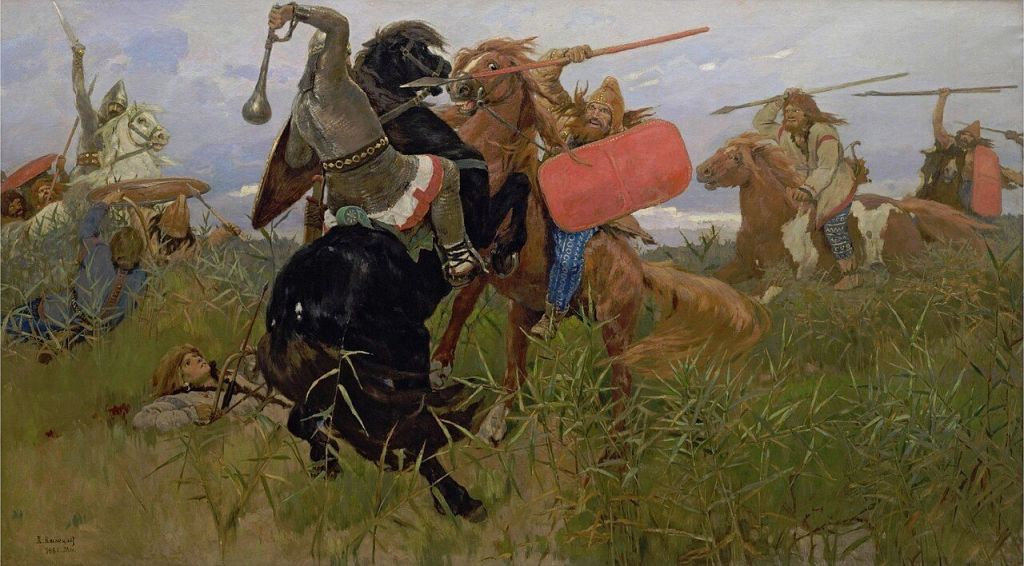
- Locrine is conquered- without giving too much away, Locrine is defeated in battle by his former wife, Gwendoline. It’s possible that, since the play was written in the last few years of the Elizabethan era, that the writer of Locrine chose Gwendolyn to be a stand in for Queen Elizabeth herself.
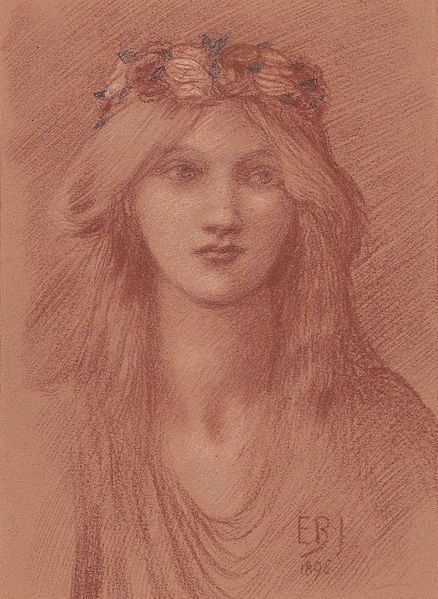
A Senecan Tragedy
Locrine probably isn’t a Shakespearean play- it’s characters communicate mainly in operatic speeches that are full of passionate feelings. Plays like this are called Senecan Tragedies, based on the ancient Roman playwright Seneca.
As I mentioned in my podcast, these speeches are fun to give, but it’s a challenge to deliver them in a way that connects with an audience.
Dumb Shows
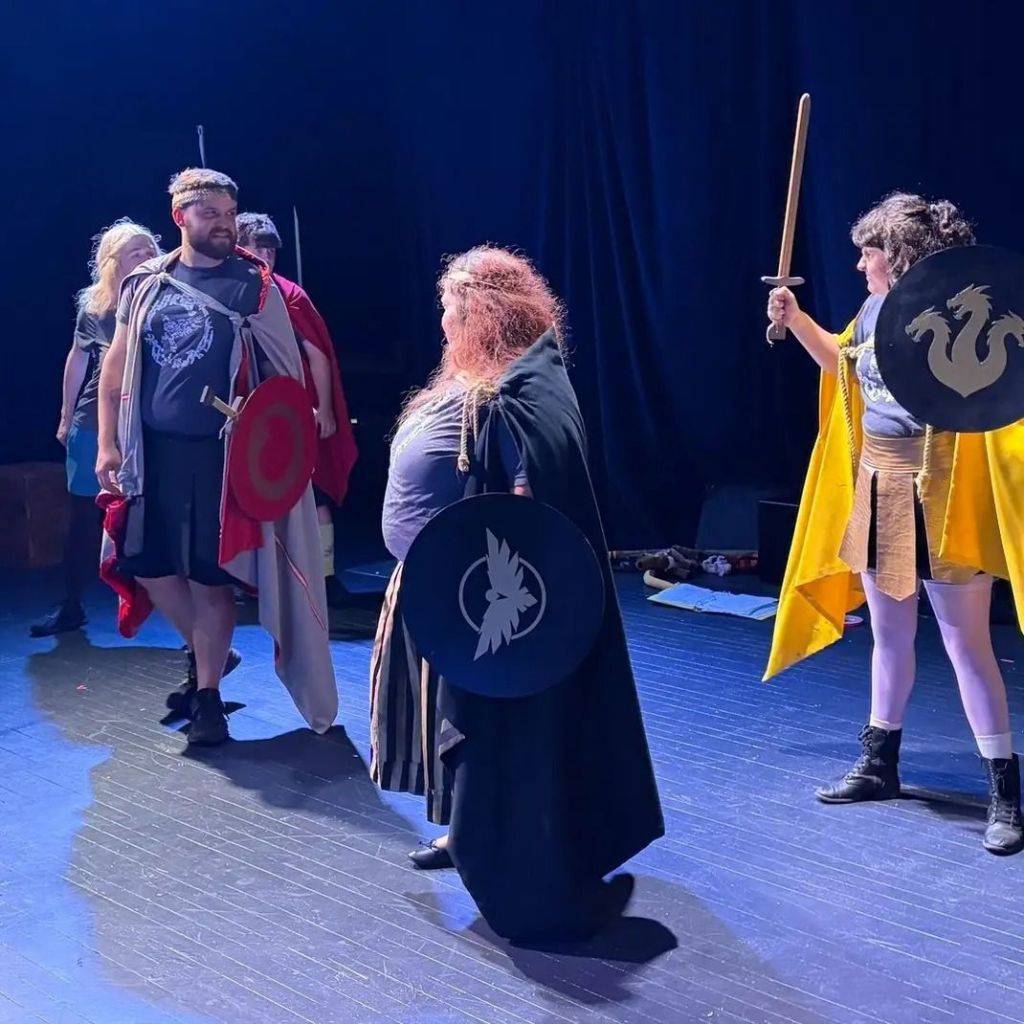
To illustrate key moments of the play, each act begins with a dumb show, a short pantomime which usually involves some kind of animal. For instance, when Humber defeats Brutus’ son Albanact, there is a dumb show where a crocodile kills a fish, echoing how Humber (who carries a crocodile on his shield), deceived and murdered Albanact.
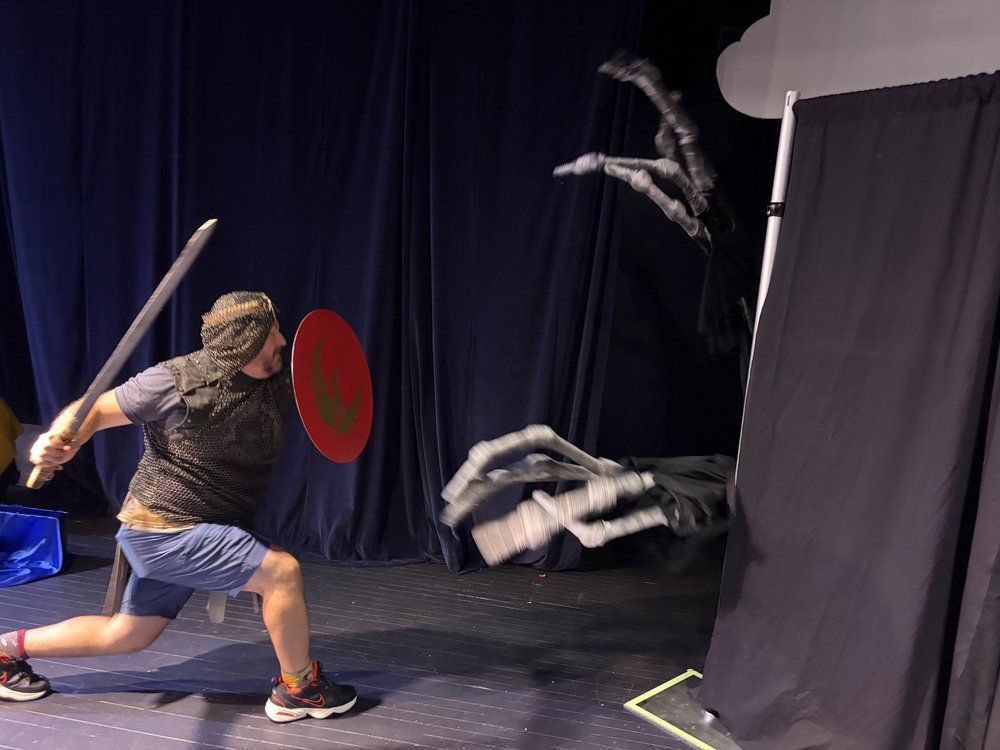
Our version of Locrine chooses to use puppets instead of real animals, most notably crows and vipers. The Mexican folktales that we intertwine with the text of Locrine mention a beautiful serpent named Kwinim Tsan, which represents the power of nature.
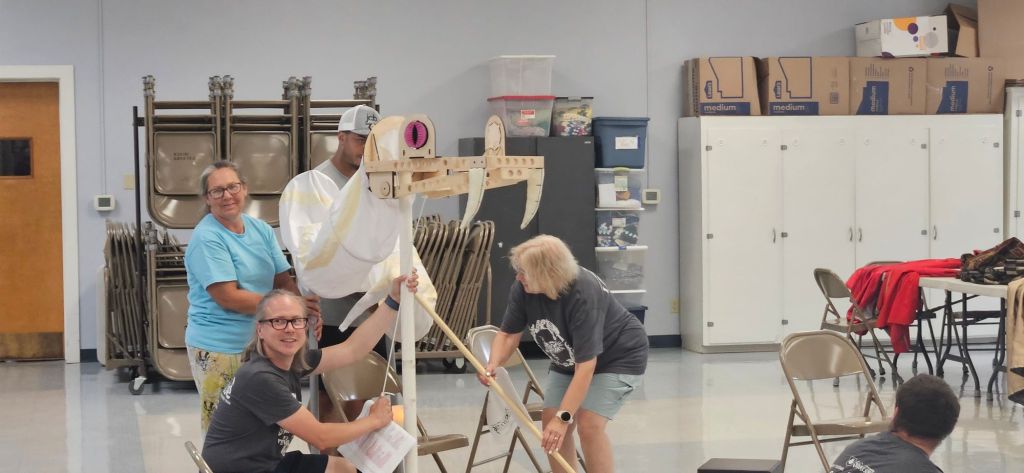
Our Interpretation
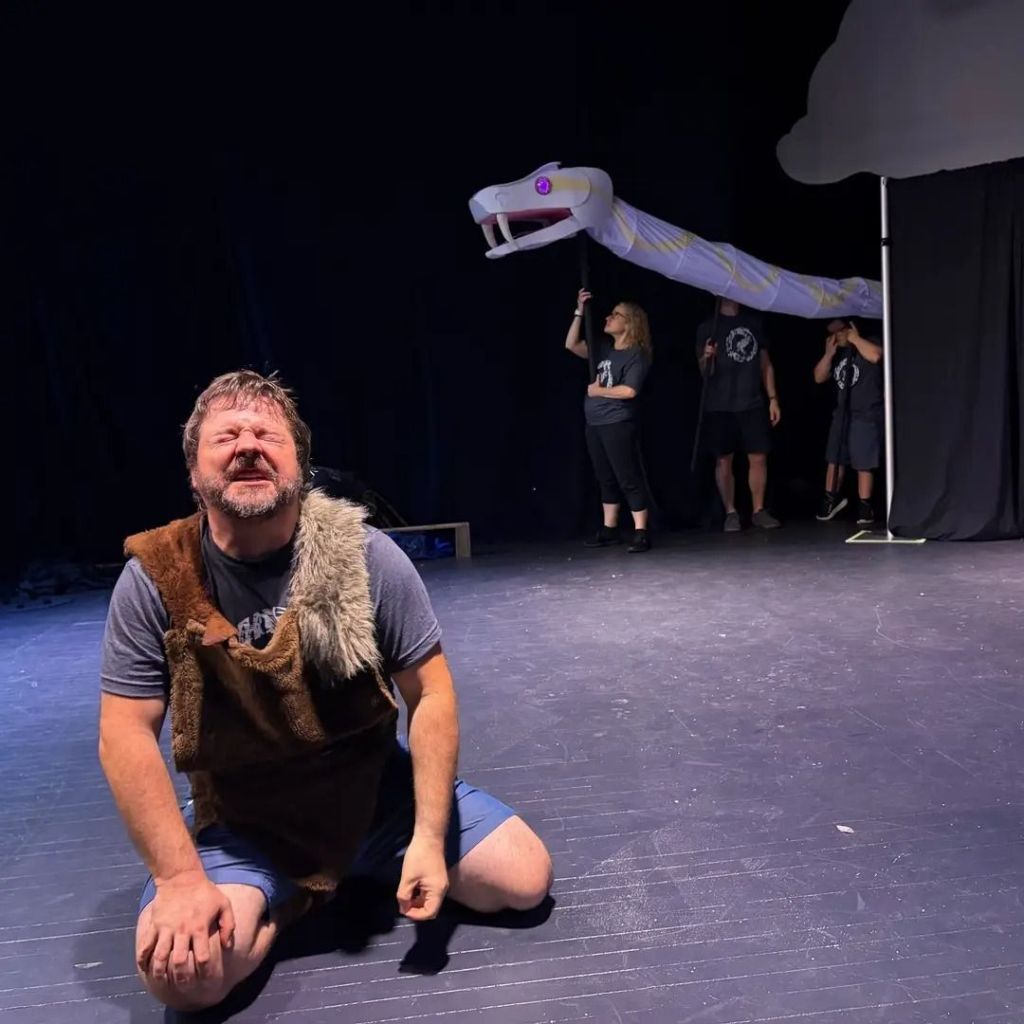




https://orangemite.org/laviborayelcuervo
La Vibora e Cuervo
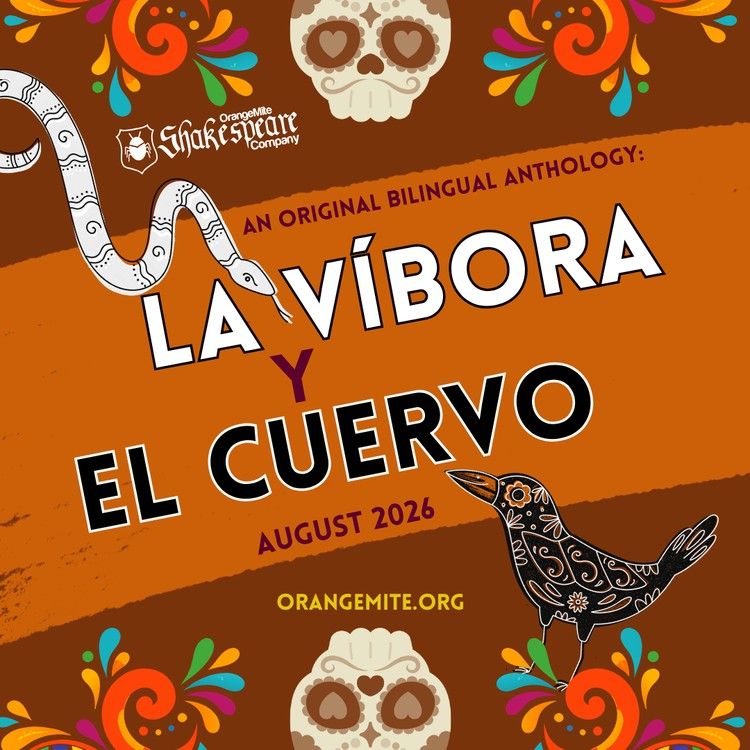
Our production, Víbora y cuervo: Locrine and Other Tales, pairs this origin myth with other origin myths to explore their power and purpose in our world. Orangemite.org
Well, there you go, Hope you enjoyed this overview of the play Locrine. If you like this review, you might like to see the show itself. Click here to purchase tickets:
https://orangemite.org/laviborayelcuervo
Friday, August 21, 7pm – at DreamWrights, part of the York Fringe Festival
Sunday, August 23, 2pm – at DreamWrights, part of the York Fringe Festival
Sources
https://www.folger.edu/blogs/shakespeare-and-beyond/locrine-play-curious-complicated/

