On August 25th, 2026, the world lost an incredible performer. Notable for his film roles in Clue,Muppet Treasuren Island It, the Rocky Horror Picture Show, as well as countless voice-over roles in film, TV, and audiobooks, Mr Curry had an incredible onstage personality and a versitile, commanding voice that landed itself well to slimy villains, megalomaniacal tyrants, and delicate fey characters.
If you’re familiar with his work, you probably won’t be surprised that Curry was a classically trained stage actor with equally impressive credits onstage. He originated the role of Mozart in Amedeus, played Gilbert and Sullivan’s Pirate King to great acclaim, and won numerous theater awards on both sides of the Atlantic.
For a while, I’ve wanted to honor this great performer, but I couldn’t find a way to do it on this platform. That is until I found this:
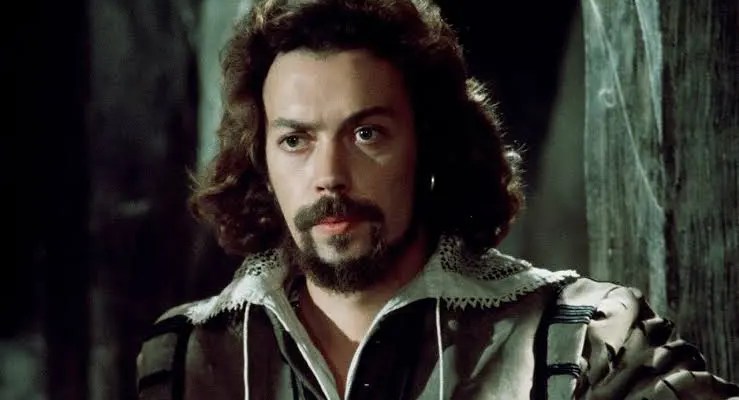
This was a 1978 British TV mini series about the life of Shakespeare, with Mr Curry as the title character. This is why I will provide a series of summaries of these episodes and discuss how Mr Curry adds to the mythos and historiography of Shakespeare
Episode 1: Dead Shepherd
We’re all dying, for poets it just comes earlier
Christopher Marlowe
We begin with Hamnet, no not Shakespeare’s ill-fated son, but Hamnet Sadler, Shakespeare’s friend from Stratford (and his son’s godfather). The fish-out-of water from Stratford has come to pass along messages (and a roasted chicken) to Shakespeare. As he delivers it, Shakespeare boasts about his success as an actor, performing in Doctor Faustus and winning the acclaim of both his fellow actors and the public. The problem is… this tale is a lie; Shakespeare is just a horse valet for the theater, while the brash and flamboyant Christopher Marlowe (Ian McShane), is the greatest playwright in London…for now.
The title refers to how Shakespeare falls in love with theater at first sight, and how London immediately falls in love with his talents.
Tim Curry on Playing Shakespeare
He’s a kind of ambitious country boy who learns fast” driven by the intense, fast-paced survival energy of the Elizabethan age.
Curry’s Shakespeare is full of energy and bravado. This is best demonstrated in the scene where he gets out of a cart full of straw, jumps up to the rafters of the Globe, jumps onstage, recites Faustus, and sings! He has a fiery energy and you can see how this Shakespeare is a man of ambitious energy, yet still possessed of an idealistic soul.
Ian McShane by contrast, is witty and world-weary with a dangerous edge. He has fallen out of love with theater; more interested in court intrigue. This leads him to spy for the Queen like an Elizabethan James Bond. Unlike Bond however, Marlowe is brutally murdered by agents from his own government! While all the London theater mourns his loss, his death also sets the stage for Shakespeare’s meteoric rise as the premier poet of England.
I’ll continue reviewing each subsequent episode on this page and also my podcast. Stay tuned!
You might have read my previous post about Locrine and Humber from that play. Well, today I will continue this series by discussing the other character I play, the mythical founder of Britain, King Brutus.
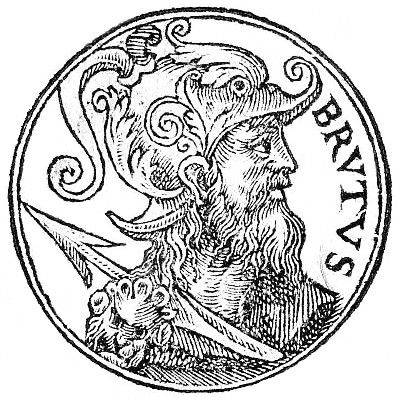
Brutus of Troy
Now before you ask- NO, THIS IS NOT Marcus Brutus, the man who stabbed Julius Caesar. This Brutus actually lived before said conspirator, around the year 11000 BC. Writers like Geoffrey of Monmouth, writing after the Norman Conquest of England, recorded the story of Brutus as a way of getting the British people on board with a single king uniting all of the kingdoms of England.
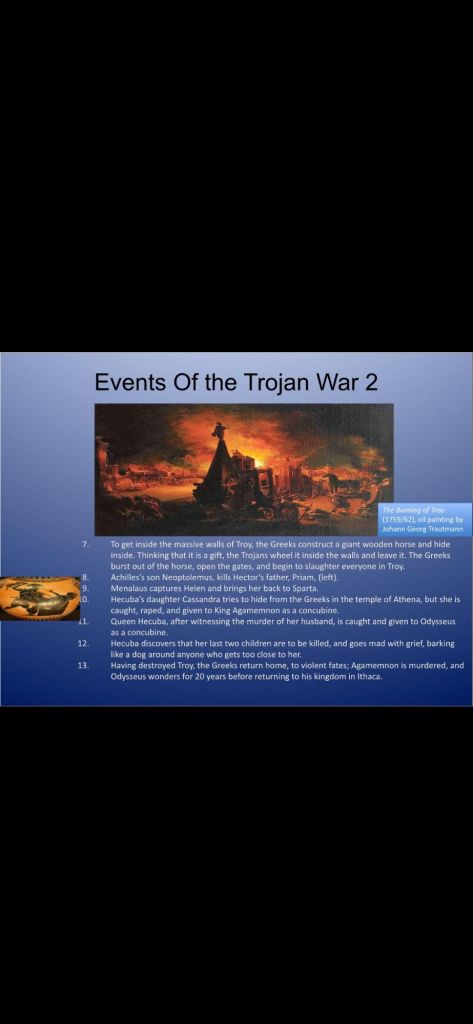
According to Monmouth (who clearly had an influence on the writer of Locrine), Brutus was the grandson of Aeneas, the sole survivor of the infamous Trojan War. Like the ancient Greek legends of Perseus or Hercules, Brutus is exiled from Italy for accidentally killing his father, and must then create a new empire in Britain.
Brutus! there lies beyond the Gallic bounds An island which the western sea surrounds, By giants once possessed; now few remain To bar thy entrance, or obstruct thy reign. To reach that happy shore thy sails employ; There fate decrees to raise a second Troy, And found an empire in thy royal line, Which time shall ne’er destroy, nor bounds confines – Diana’s speech to Brutus
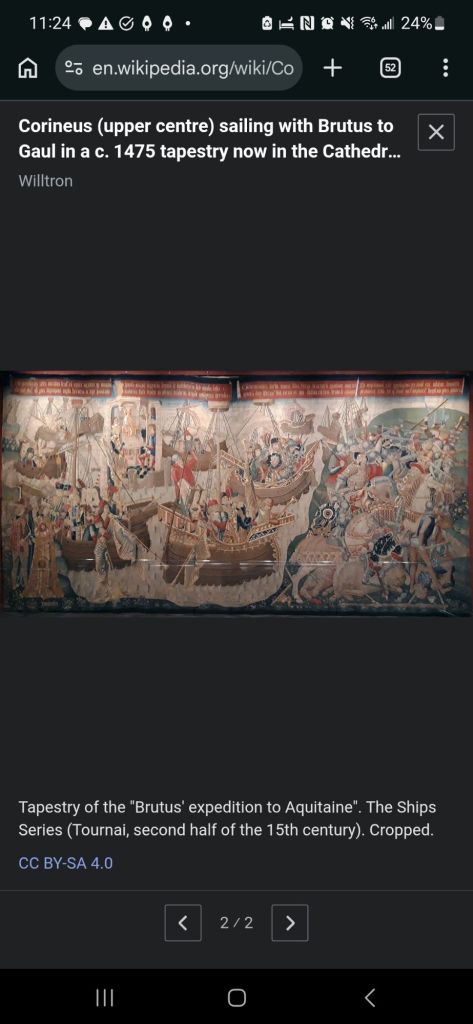
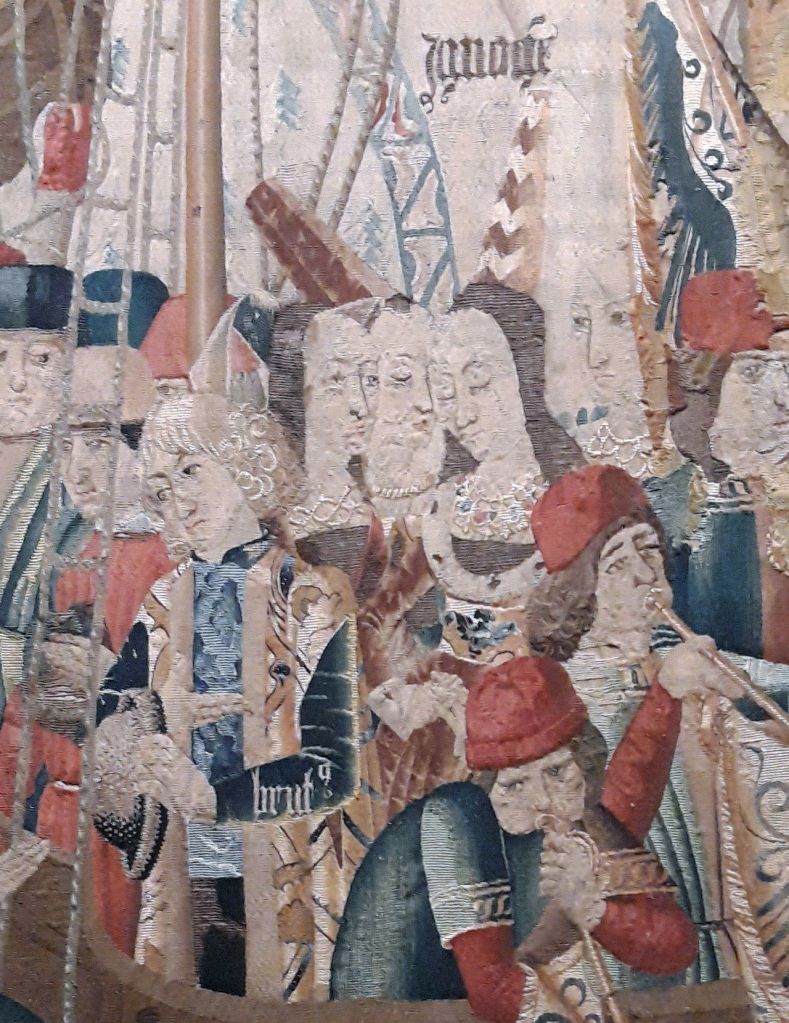
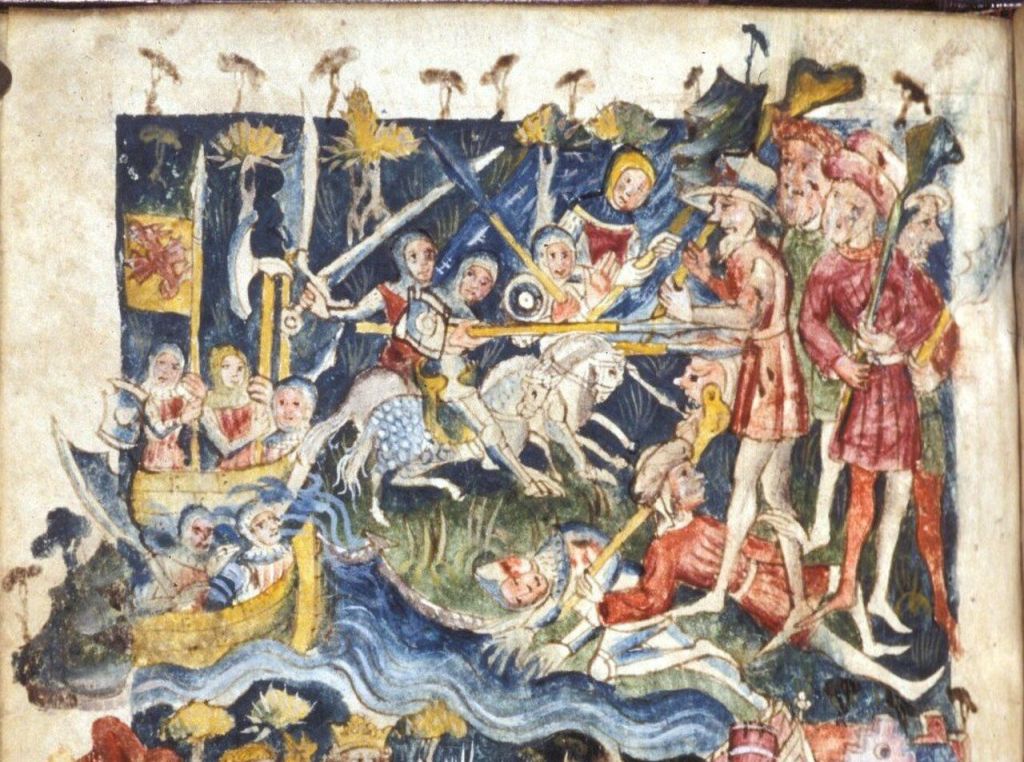
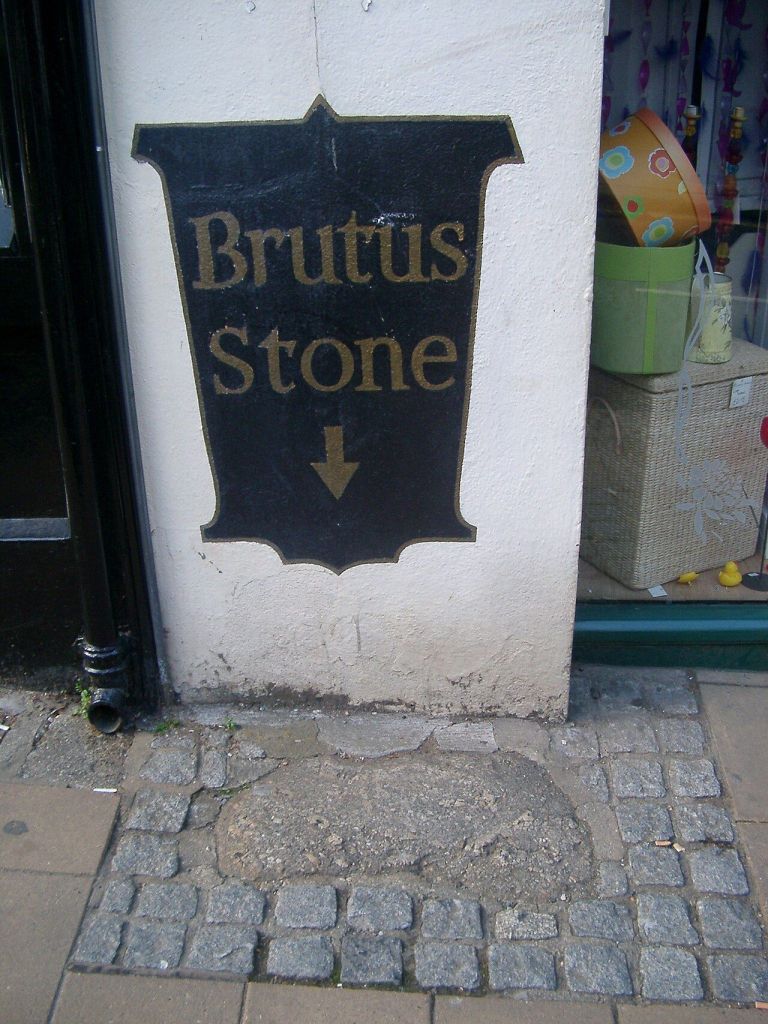
Detail of Brutus and his wife Imogen, sailing from Greece to England.Brutus battles the giants The so-called Brutus stone in Totnes
To secure his empire, Brutus must tame the savage giants that rule the untamed wilderness of Britain, in a mythical battle that is still celebrated to this day.
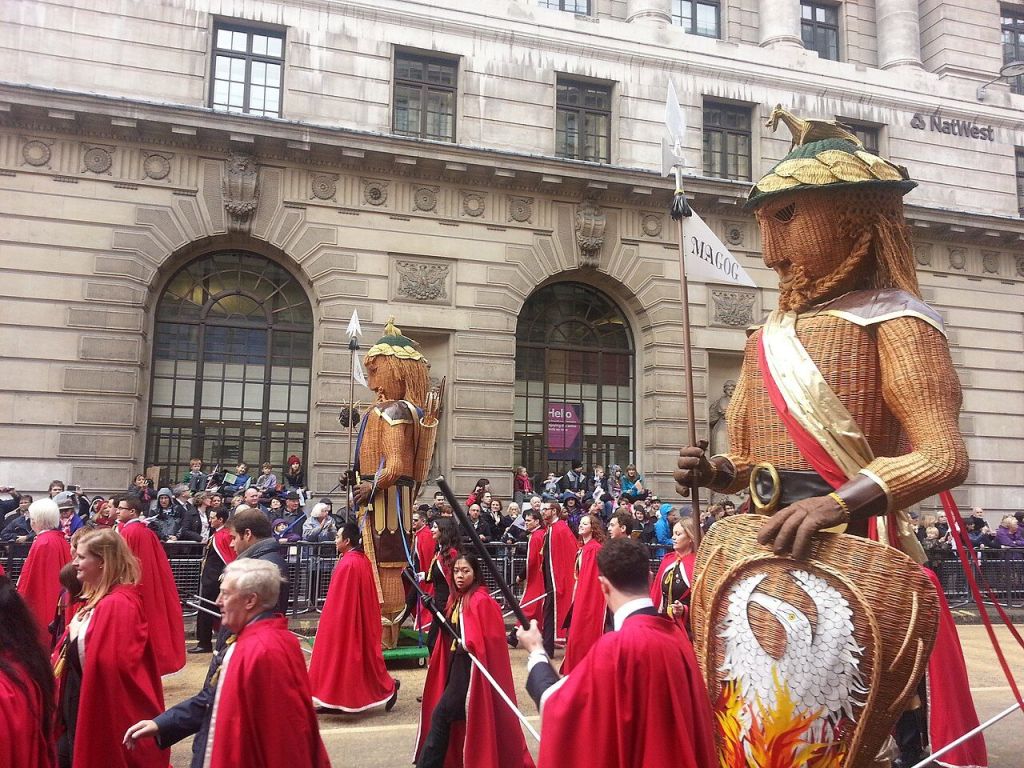
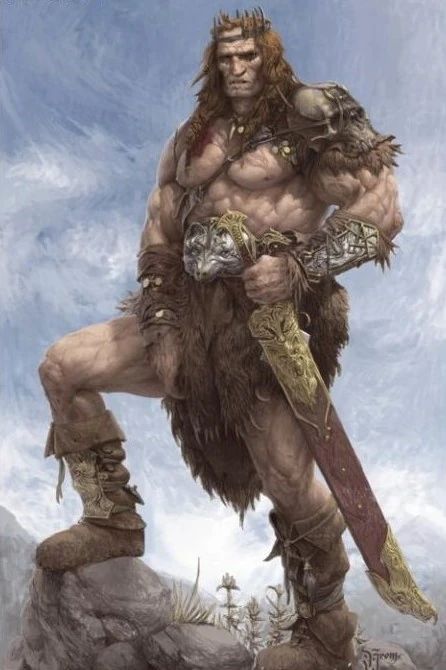
Illustration of Gogmagog Montage of the giant Gogmagog, whom Brutus’ general Corineus slew
At the beginning of the encounter, Corineus and the giant, standing, front to front, held each other strongly in their arms, and panted aloud for breath, but Goëmagot presently grasping Corineus with all his might, broke three of his ribs, two on his right side and one on his left. At which Corineus, highly enraged, roused up his whole strength, and snatching him upon his shoulders, ran with him, as fast as the weight would allow him, to the next shore, and there getting upon the top of a high rock, hurled down the savage monster into the sea; where falling on the sides of craggy rocks, he was torn to pieces, and coloured the waves with his blood- Monmouth
Function in the Play
Legacy of Troy- As I mentioned before, Brutus establishes the link between ancient Troy, and the founding of Britain.
The island was then called Albion,[9] and inhabited by none but a few giants. Notwithstanding this, the pleasant situation of the places, the plenty of rivers abounding with fish, and the engaging prospect of its woods, made Brutus and his company very desirous to fix their habitation in it. They therefore passed through all the provinces, forced the giants to fly into the caves of the mountains, and divided the country among them according to the directions of their commander. After this they began to till the ground and build houses, so that in a little time the country looked like a place that had been long inhabited. At last Brutus called the island after his own name Britain, and his companions Britons; for by these means he desired to perpetuate the memory of his name.
2. Corineus’ Brother In Arms
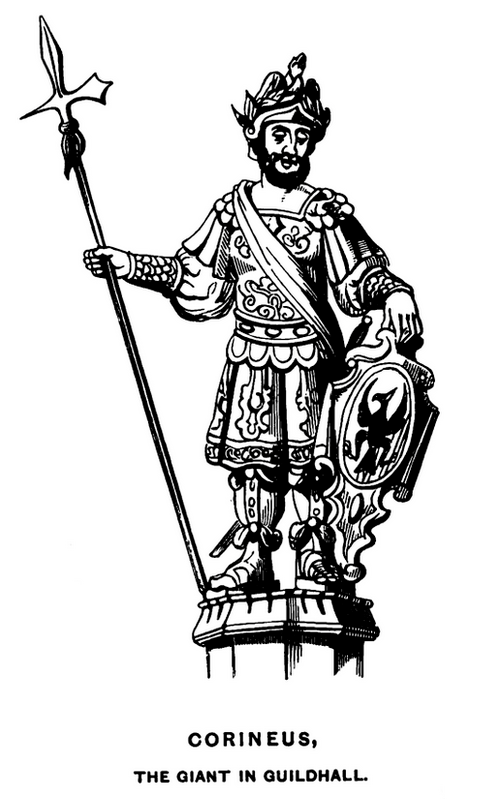
Like a lot of characters in Shakespeare’s history plays, Brutus has a loyal second in command, Corineus, the mythical founder of the kingdom of Cornwall. After Brutus dies, Corineus is a sort of Lord Protector, lending his council and military experience to Locrine and his brothers:
The name of their commander was Corineus, a modest man in matters of council, and of great courage and boldness, who, in an encounter with any person, even of gigantic stature, would immediately overthrow him, as if he were a child. When they understood from whom he was descended, they joined company with him and those under his government, who from the name of their leader were afterwards called the Cornish people, and indeed were more serviceable to Brutus than the rest in all his engagements. – Historia Regum Britanniae by Geoffrey of Monmouth, c1136
Patriarch– Brutus’ sons become the first kings of England, (Locrine), Scotland (Albanact), and Wales (Camber).
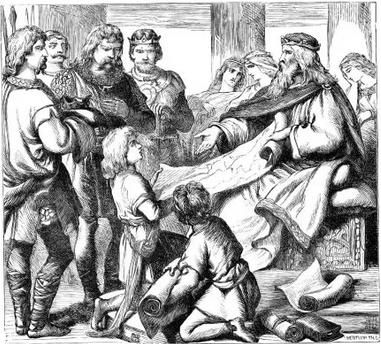
During these transactions, Brutus had by his wife Ignoge three famous sons, whose names were Locrin, Albanact, and Kamber. These, after their father’s death, which happened in the twenty-fourth year after his arrival, buried him in the city which he had built, and then having divided the kingdom of Britain among them, retired each to his government.
Illustration of King Locrine from the Genealogical Chronicle of the Kings of England to Edward IV (c. 1461)Camber- Brutus’ middle sonAlbanact, son of Brutus of TroyGwendoline, legendary Queen regent of Britain.
King Lear Right after Brutus’ story in Monmouth’s chronicle comes the ancient story of King Lear, the same story Shakespeare would later adapt into his own play. Like Lear, Brutus has to divide his kingdom, but unlike Lear, he does not try to test his children’s loyalty.
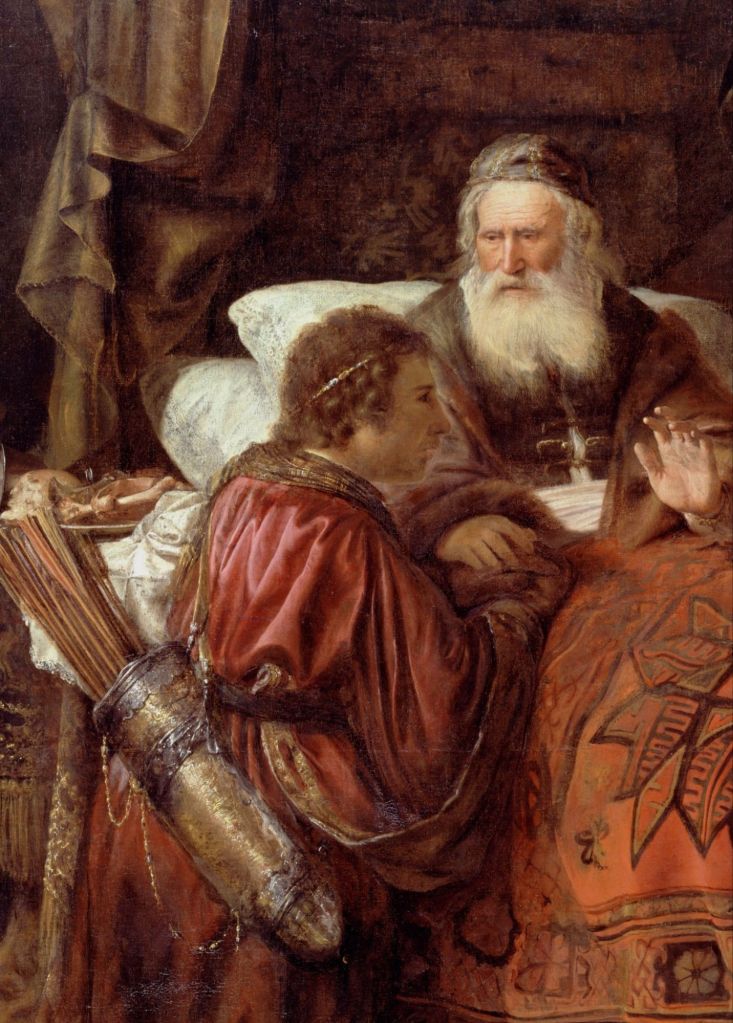
Isaac gives Jacob his blessing
Locrin, the eldest, possessed the middle part of the island, called afterwards from his name, Loegria. Kamber had that part which lies beyond the river Severn, now called Wales, but which was for a long time named Kambria; and hence that people still call themselved in their British tongue Kambri. Albanact, the younger brother, possessed the country he called Albania, now Scotland. After they had a long time reigned in peace together, Humber, king of the Huns, arrived in Albania, and having killed Albanact in battle, forced his people to fly to Locrin for protection.
Our Interpretation
Isaac blesses Jacob
Those who sought to deface our memory, wipe the name of Trojans from the earth Those did I captivate with this mine arm. And in this Isle at length I placed you. – Locrine, Act I.i
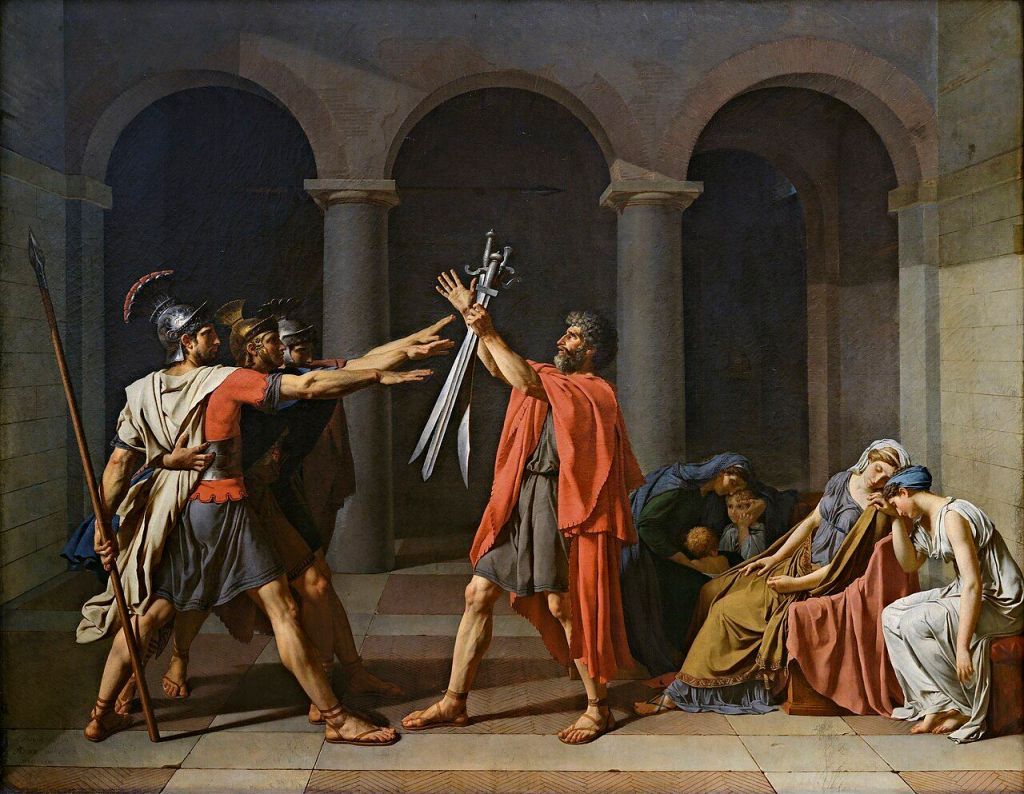
I see Brutus as an intimidating king like Hamlet’s Father (before he became a ghost). I also see him as similar to an Old Testament patriarch like Moses or Isaac- he was led by a god to the promised land, and gave it to his children, who must now protect and defend it.
Oath of the Horatii by Jaques Louis David
Colonizer
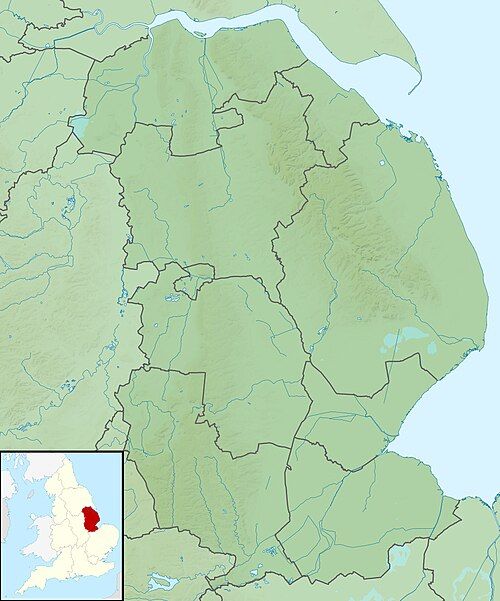
Map of Cornwall
On the other hand, one could also see Brutus as a colonizer- he takes land that wasn’t his and overthrows the natural order. This is a dimension that is not explored in the original story, but our version highlights it.
Playing Brutus
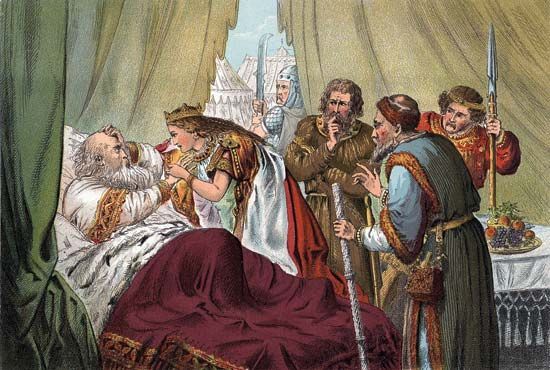
Look and physicality– For such a mythic figure, I tried to play Brutus with as much strength and gravity as possible, at least at first. While he is being introduced and fighting giants, I tried to make him a soldier and King in his prime. After a while though, we see Brutus on his death bed, and I play him as frail and shaky; struggling to keep his kingdom together, as he also struggles to stay alive.
As Brutus ages, I had him divest himself of his armor as he divests his kingdom- to CAMBER, he gives his shield. To Albanact, he gives his sword, and to Locrine, he gives his crown.
Verse
It’s interesting that most of Brutus’ lines are in Trochaic, rather than iambic verse, which could be a way to emulate older forms of verse, but I also suspect that it is designed to emphasize Brutus’ commands.
Then now, my son, thy part is on the stage, For thou must bear the person of a King. [Puts the Crown on his head.] Locrine, stand up, and wear the regal Crown, Cherish and love thy new betrothed wife. Locrine, Act I.i
Well, there you go, Hope you enjoyed this overview of the play Locrine. If you like this review, you might like to see the show itself. Click here to purchase tickets:
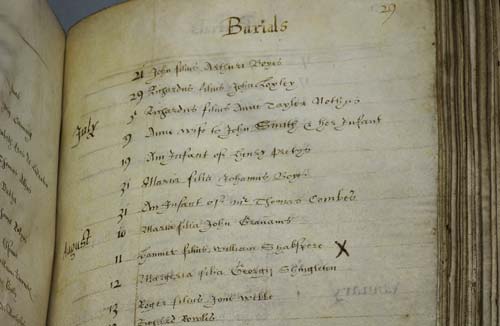
On August 11th, 1596, Shakespeare lost his only son.
Burial Registry of Hamnet Shakespeare
This very day, 2026. I sat down to watch the movie about him. I will compile my thoughts into a complete review in a while, but for now, let’s just say, it was absolutely incredible.
Biography of Hamnet
Just like his famous father, we know very little about the life of Hamnet Shakespeare. Since infant mortality rates were high, we don’t know his exact birthday, only that he was baptized on February 2nd, 1582. Like most 11-year old boys, he probably had started going to school at the King Edward Grammer School, the same as his father. This means he spent long hours away from his parents learning to read and write in Latin and Greek. When he was home, he lived with his mother, his two sisters, and his grandparents in the house of Henley Street.
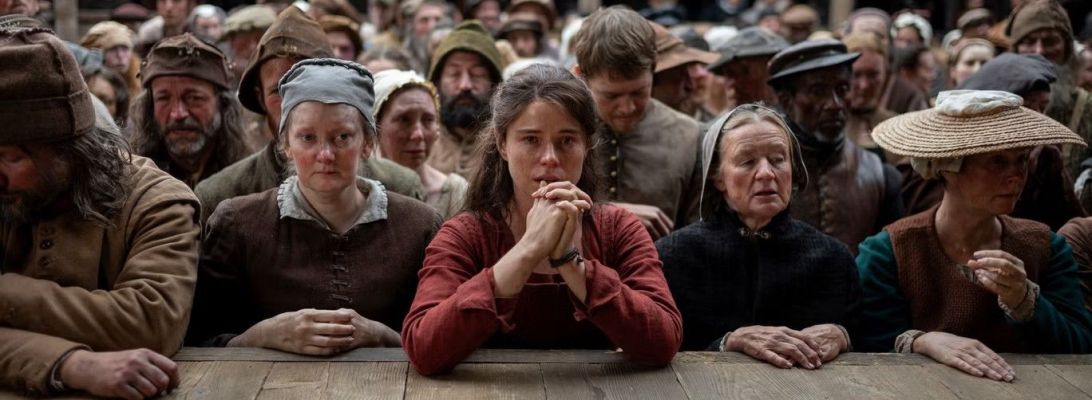
O’Farrel portrays the boy Hamnet as sensitive and somewhat lonely. The movie captures this
1589-1596
Never mind what I know. You must go.” She pushes at his chest, putting air and space between them, feeling his arms slide off her, disentangling them. His face is crumpled, tense, uncertain. She smiles at him, drawing in breath. “I won’t say goodbye,” she says, keeping her voice steady. “Neither will I.” “I won’t watch you walk away.” “I’ll walk backwards,” he says, backing away, “so I can keep you in my sights.” “All the way to London?” “If I have to.” She laughs. “You’ll fall into a ditch. You’ll crash into a cart.” “So be it.
O’Farrell
The novel portrays Anne Shakespeare realizing that her husband is stifled and unhappy living with his parents in Stratford, and so she suggests to his father that he go to London to ‘expand the family business,’ though in reality, she wants him to go to make his fortune and find more fulfilling work.
A glover will only ever want the skin, the surface, the outer layer. Everything else is useless, an inconvenience, an unnecessary mess. She thinks of the private cruelty behind something as beautiful and perfect as a glove.
Hamnet
The Plague
He wants to tear down the sky, he wants to rip every blossom from that tree, he wishes to take a burning branch and drive that pink-clad girl and her nag over a cliff, just to be rid of them, to clear them all out of his way. So many miles, so much road stands between him and his child, and so few hours left.
Hamnet
In the book, the plague germs that infect Judith and later Hamnet, lie inside a box with some glass beads that the Shakespeare’s ordered from Italy to decorate a pair of fancy gloves.
Hamnet’s Death
He can feel Death in the room, hovering in the shadows, over there beside the door, head averted, but watching all the same, always watching. It is waiting, biding its time. It will slide forward on skinless feet, with breath of damp ashes, to take her, to clasp her in its cold embrace, and he, Hamnet, will not be able to wrest her free.
Hamnet
In the novel, Hamnet somehow takes the plague away from his sister and dies in her place. Though it is hardly conclusive, I do find it interesting that Shakespeare stopped writing comedies about twins for another four years after Hamnet’s death, until he wrote Twelfth Night, which unlike earlier comedies like The Comedy of Errors, has a pair of twins mourning each other’s apparent death. They seem to share one soul, and one tries to resurrect the other, like Viola mourning her brother by, (in a sense), becoming her brother.
What should I do in Ilyria? My brother is in Elysium
Viola- “Twelfth Night”, Act I, Scene ii.
ELIZABETHAN FUNERAL CUSTOMS
In the book, Anne makes a winding sheet for her son. This was a cloth of linen or wool that was wrapped around dead bodies, since at the time, coffins were re-used. This must have been a somber and deeply upsetting activity for Anne.
The act of making a winding sheet was a sort of sad family responsibility, a way of ensuring that your loved ones die with dignity, and Anne clearly takes the task of making one very seriously.
The Aftermath Of Hamnet’s Death (Spoilers)
The Women of Hamnet
The most unique thing about this novel is how it shows the interdependence of women in Elizabethan society. Since Shakespeare spends most of the novel away from Anne, her support system mostly comes from Will’s mother Mary, as well as Anne’s daughters, her sister, and all the other women of the town. Nowadays we do most of our socialization online and barely know our own neighbors, but in the 1590s, especially for women, community was a way of building strength where women got through things like childbirth, loss, the managing of households, and many other difficulties through their relationships with other women. This video below shows the kinds of home remedies that women would share and later write down during the Tudor period:
Other Mysteries Solved
Once Hamnet dies, Will buys her a new house, New Place so she isn’t forced to live with his parents and no longer has to live in the house where her son died. But Will’s success comes with a price- he still has to leave for London. he offers to move them there but Agnes won’t hear of it. This solves the riddle of why Shakespeare commuted between town and country for his entire career- she knows the plague that took her son literally came from London, and she won’t risk losing her daughteras well. She probably also sees London like another woman that took her husband away as well, and therefore refuses to look it in the face.
It is no matter,” she pants, as they struggle there, beside the guzzling swine. “I know. You are caught by that place, like a hooked fish.” “What place? You mean London?” “No, the place in your head. I saw it once, a long time ago, a whole country in there, a landscape. You have gone to that place and it is now more real to you than anywhere else. Nothing can keep you from it. Not even the death of your own child. I see this,” she says to him, as he binds her wrists together with one of his hands, reaching down for the bag at his feet with the other. “Don’t think I don’t.”
O’Farrell, Hamnet.
The Shakespeares’ Marriage after Hamnet
The ugly truth that O’Farrell highlights in Hamnet is that it must have been very hard for the Shakespeares to endure Hamnet’s death, especially since Will was probably not there when it happened, and probably didn’t stay around long after burying his son.
Hamnet and Shakespeare
Raising the Dead
Hamlet, here, on this stage, is two people, the young man, alive, and the father, dead. He is both alive and dead. Her husband has brought him back to life, in the only way he can. As the ghost talks, she sees that her husband, in writing this, in taking the role of the ghost, has changed places with his son. He has taken his son’s death and made it his own; he has put himself in death’s clutches, resurrecting the boy in his place. “O horrible! O horrible! Most horrible!” murmurs her husband’s ghoulish voice, recalling the agony of his death.
O’Farrell, “Hamnet”
References
Journals
Bray, Peter. “Men, loss and spiritual emergency: Shakespeare, the death of Hamnet and the making of Hamlet.” Journal of Men, Masculinities and Spirituality, vol. 2, no. 2, June 2008, pp. 95+. Gale Literature Resource Center, link.gale.com/apps/doc/A189052376/LitRC?u=pl9286&sid=bookmark-LitRC&xid=ea79f235. Accessed 20 Apr. 2023.
Period Documents
Document-specific information Creator: Holy Trinity Church, Stratford-upon-Avon Title: Parish Register of Holy Trinity Church, Stratford-upon-Avon Date: 1558-1776 Repository: The Shakespeare Birthplace Trust, Stratford-upon-Avon, UK Call number and opening: DR243/1: Baptismal register, fol. 22v View online bibliographic record
Locrine is an Elizabethan play, first published in 1595, whose author is, sadly, lost to history. The title page says the play was “Newly set forth, corrected, and overseen, by W.S.” As you might expect, scholars and theater practitioners have eagerly tried to prove that this means the play was written, (or at least revised), by Shakespeare. So far, no proof has been found.
“Historical” Context
Notes on the Trojan War
The play is a tragedy based on the founding of Britain. Over 2,000 years ago, a father and his three sons flee the destroyed Troy, tame the wild landscape of England, and become its first kings. After his father’s death, the eldest son, Locrine, must defend his land from barbarian invaders with the help of his brothers.
Semi-mythical characters
Brutus of Troy
Brutus is the patriarch of the Britons who, according to legend, was descended from Aeneas the sole survivor of the infamous Trojan War. Brutus preserves the legacy of Troy by founding a new city in Britain, Troynovant (New Troy), and establishing his three sons as heirs to his kingdom.
Camber, Brutus’ young son
Albanact
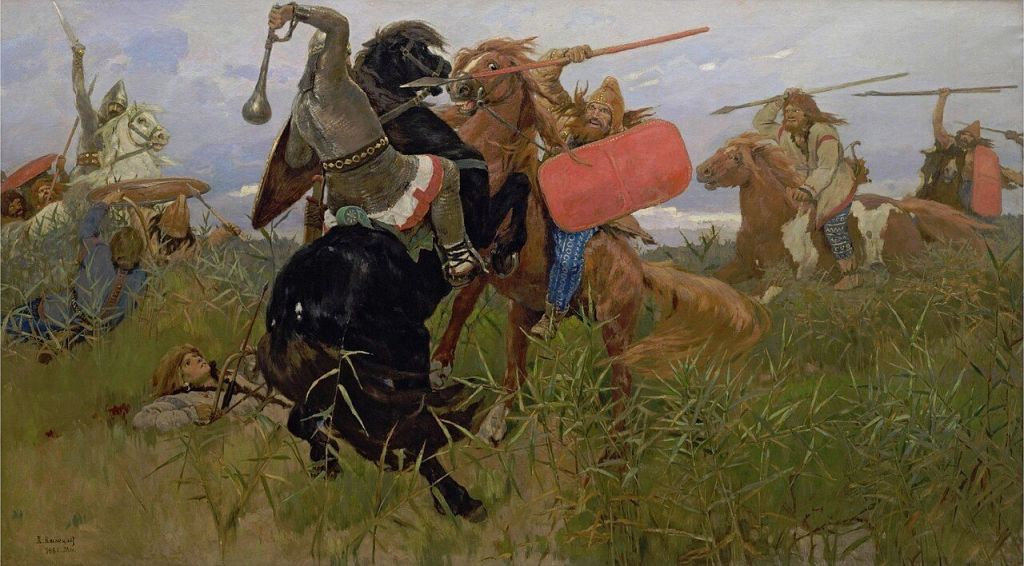
Albanact is the great warrior whom Brutus puts in charge of Scotland. He has his hands full defending Britain against the Scithian invaders.
Camber
Camber is given Cambria, (modern day Wales)
Illustration of King Locrine from the Genealogical Chronicle of the Kings of England to Edward IV (c. 1461)
Locrine is Brutus’ eldest son, and as such he is crowned king over all Britain. According to legend, Locrine changes the capital of England from New Troy, to Locrindom, which then became London.
The Plot
Title page illustration from Locrine, 1709
The prologue
Prologue describes Prometheus’ punishment as a tragedy, and his gift is a blessing. Prometheus also warns that Zeus will be overthrow if he succumbs to his desire for Thetis
Ate the Goddess of revenge introduces the play, making it very clear that this is the fall of the royal house of Brutus.
As the play continues, we see Brutus die, leaving his kingdom to his children
4. Humber is humbled- the villainous emperor Humber tries to conquer Britain. Many battles and many tears ensure
Locrine is conquered- without giving too much away, Locrine is defeated in battle by his former wife, Gwendoline. It’s possible that, since the play was written in the last few years of the Elizabethan era, that the writer of Locrine chose Gwendolyn to be a stand in for Queen Elizabeth herself.
Gwendoline, legendary Queen regent of Britain.
A Senecan Tragedy
Locrine probably isn’t a Shakespearean play- it’s characters communicate mainly in operatic speeches that are full of passionate feelings. Plays like this are called Senecan Tragedies, based on the ancient Roman playwright Seneca.
As I mentioned in my podcast, these speeches are fun to give, but it’s a challenge to deliver them in a way that connects with an audience.
Humber’s monologue from Locrine
Dumb Shows
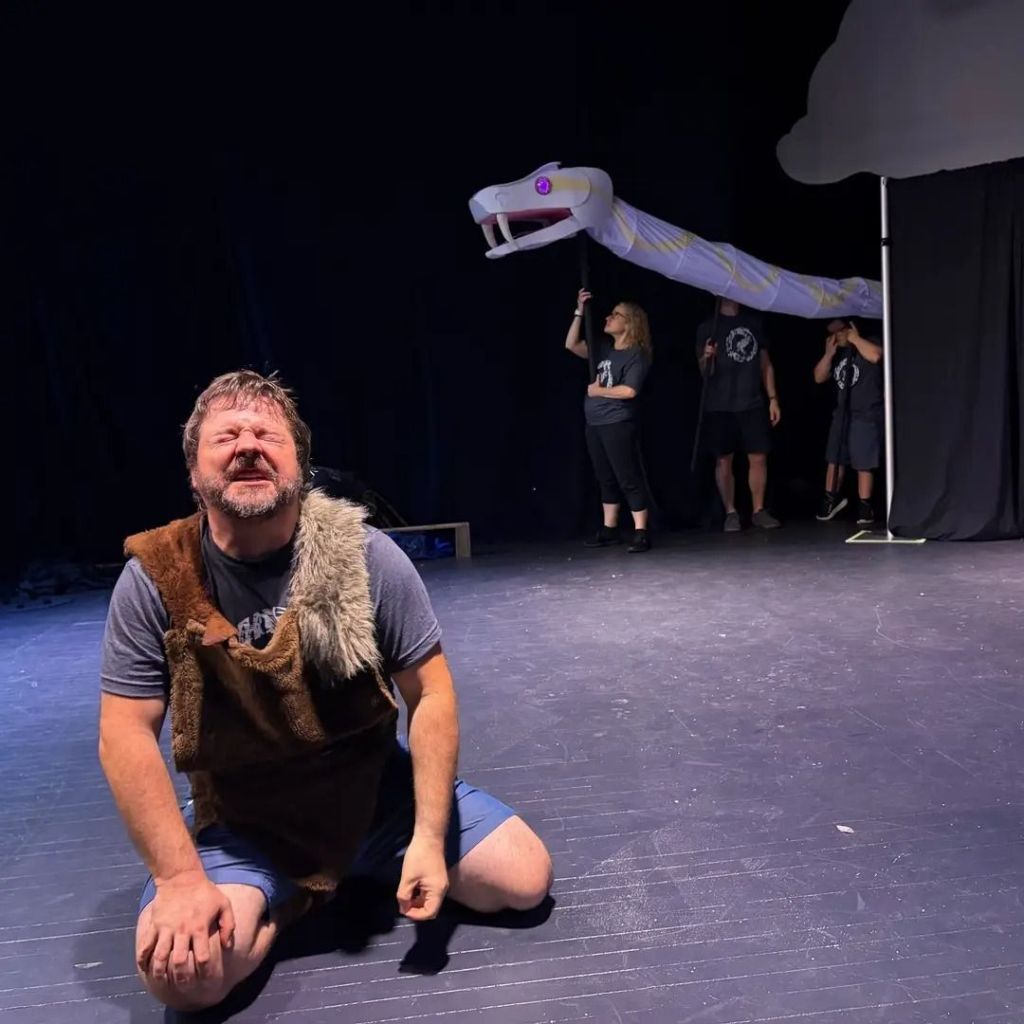
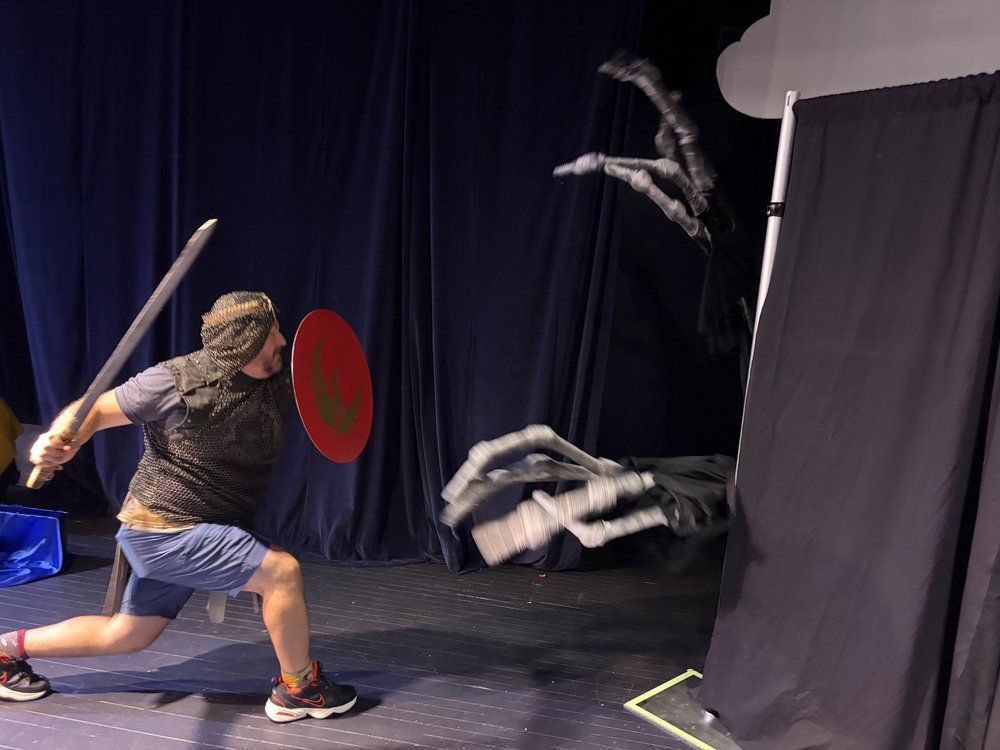
To illustrate key moments of the play, each act begins with a dumb show, a short pantomime which usually involves some kind of animal. For instance, when Humber defeats Brutus’ son Albanact, there is a dumb show where a crocodile kills a fish, echoing how Humber (who carries a crocodile on his shield), deceived and murdered Albanact.
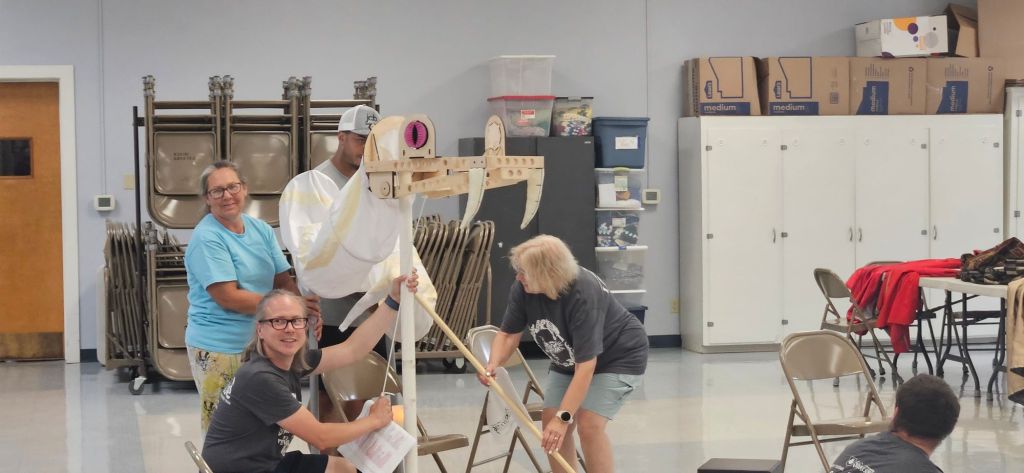
Our version of Locrine chooses to use puppets instead of real animals, most notably crows and vipers. The Mexican folktales that we intertwine with the text of Locrine mention a beautiful serpent named Kwinim Tsan, which represents the power of nature.
Our team works on the great serpent puppet
Our Interpretation
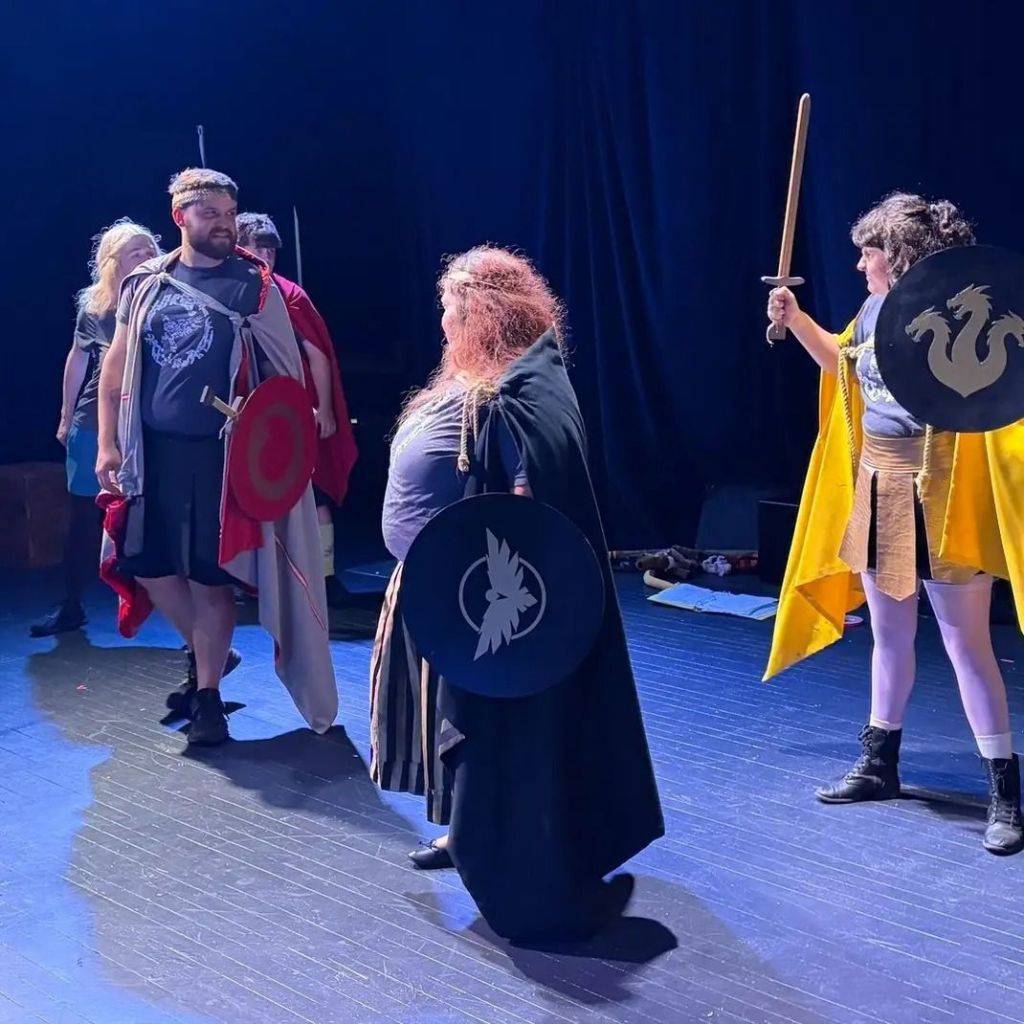
Humber is humbled in the wilderness Gwendoline rallies the troopsBrutus fights the giant Gogmagog Gwendolyn confronts LocrineA massive battle between Locrine’s forces and Gwendolyn’sThe indigenous story of how the crow became black.Cast photo
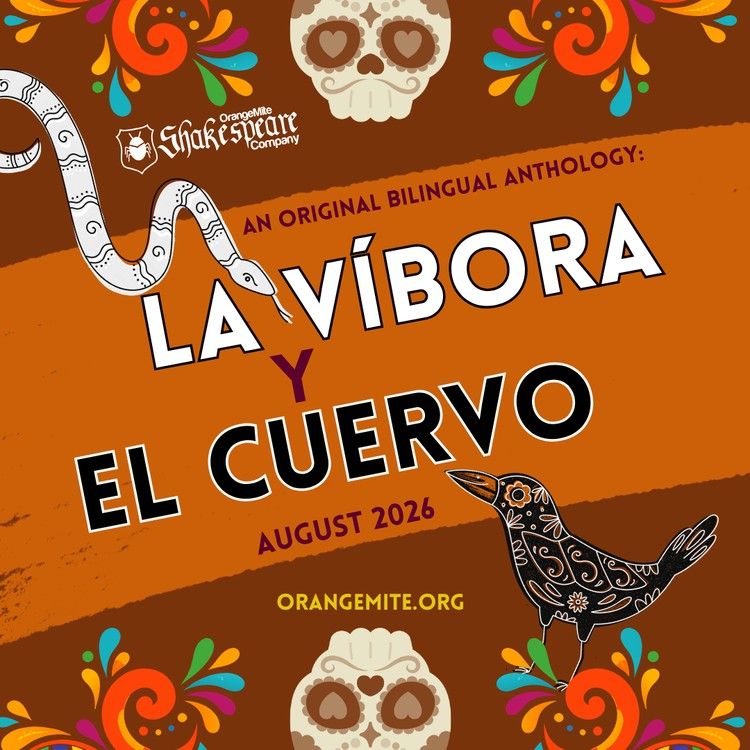
Our production, Víbora y cuervo: Locrine and Other Tales, pairs this origin myth with other origin myths to explore their power and purpose in our world. Orangemite.org
Poster for Orange Mite’s 2026 production of Locrine and Other Tales
Well, there you go, Hope you enjoyed this overview of the play Locrine. If you like this review, you might like to see the show itself. Click here to purchase tickets:
When Gwendolen was betrayed by her hiusband, King Locrinus of Loegria she took a swift and brutal revenge to become the ruler in her own right of Loegria.