If Shakespeare Wrote 9 to 5

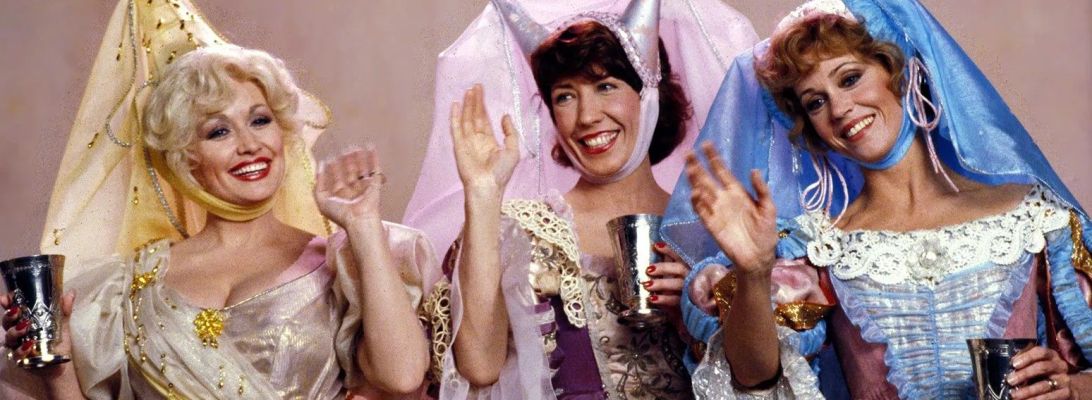
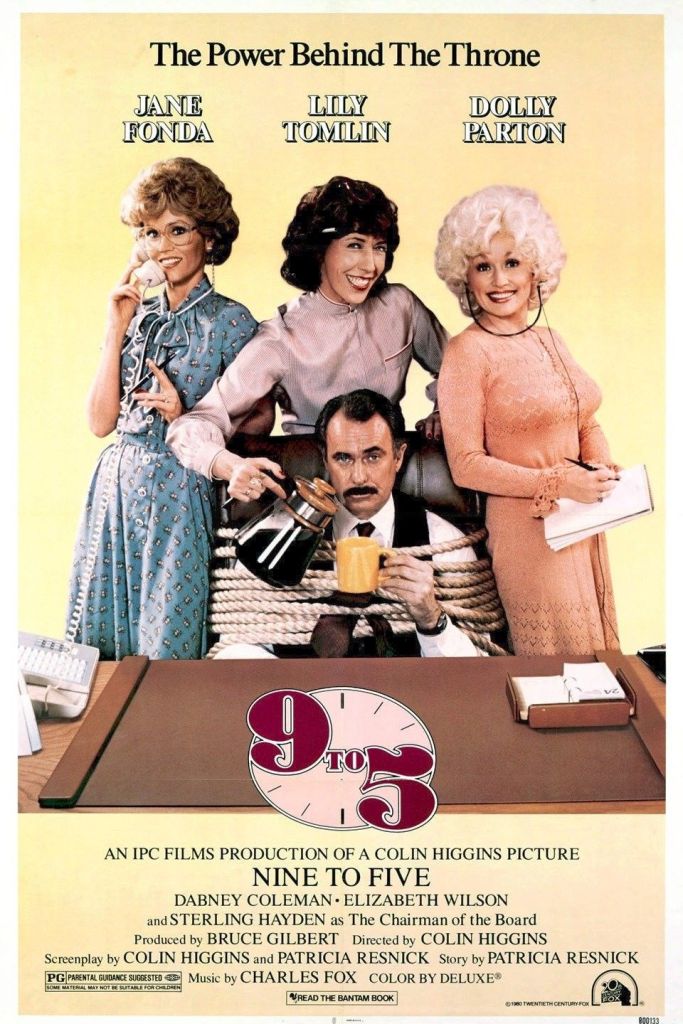
Happy 9/25! If you’ve never watched the 1980 movie 9 to 5 before, it’s a wonderful classic comedy, and of course, it’s a great way to honor the incomparable Dolly Parton, who played Dora Lee. Today I’d like to discuss the plot and themes of this movie, and compare them to classic Shakespearean comedy.

9 to 5 Music Video

The Plot

  1. Three unappreciated women in the workplace, Violet, Dora Lee, and Judy, hate their boss, a sexist, lying, hypocritical bigot. He not only rules the workplace as a tyrant, he is especially cruel to the women in the office- paying them less than their male counterparts, taking credit for their hard work, harassing the young and pretty ones, and firing them whenever he feels like it.
  2. It gets so bad that our three protagonists imagine elaborate fantasies where they not only kill him in over-the top Shakespearean ways, they also tell him off with delightfully theatrical language.
  3. Through a series of misunderstandings, the boss threatens to arrest all three of them for trying to kill him in real life. They then kidnap him and force him to stay home. Because Hart is so loathsome to deal with, the women take over the office without anyone noticing his absence! The office culture improves, productivity rises, and of course, everyone is treated equally and paid fairly. When Hart escapes and returns to the office, his boss is so happy with the women’s improvements, they promote him out of the office and he is never seen again!

Themes

The themes of 9 to 5 are truly universal, and it should never be described as a ‘chick comedy’- the same dehumanizing nature of capitalism and the unfair concentration of wealth is something everyone with a job can relate to. Just look at the lyrics of Dolly’s song:

In spite of the upbeat tune, Dolly hits on some serious grievances that working people have had since Shakespeare’s day and even older

  1. Unequal distribution of labor.
  2. Little chance for advancement
  3. Constant anxiety of being fired or demoted.

The Politics of 9 to 5

Women taking over male institutions for comedic purposes is not new- in the ancient Greek comedy Lysistrata,  women take over the Acropolis- mocking the pointless fighting of the Peloponnesian War. Like all comedies, you can see it from two sides- From a liberal lens, the men are so dumb and so obsessed with us that women could easily solve this conflict. From a conservative lens, you could see it as a cruel satire – things have gotten so bad that even a woman could do a better job than the men in power. Likewise- 9 to 5 works both as a progressive ode to women in the workplace, a universal condemnation of unbridled 80s capitalism, and a conservative absurdist look at work- stay in your lane, work up the ladder and eventually you’ll get noticed.

I bring this up because that’s how Shakespeare wrote his comedies, criticising institutions but not outright rejecting them. In addition, Shakespeare lived in a time of economic revolution- he saw workers directly rebel against corrupt local lords during the Diggers Revolt of the early 1600. Though their efforts never succeeded in his time, the Diggers inspired the democratic form of free enterprise that America was built upon. After all, monopoly is very close to monarchy.

Sexual Politics

Sexism is a theme in Shakespearean comedy, especially in Measure For Measure, the play in which a corrupt man in a position of authority, tries to take advantage of a nun. Angelo, the antagonist of the play represents how in patriarchal society, Sexual Assault and inequality is extremely prevalent, and very hard to fight against. I’ll discuss this further in my podcast later this week. For now, let’s just say that there is a direct link between Measure For Measure, 9 To 5, and the #metoo era.

Jane Fonda calls Hart a “wart on Humanity”, 1980

The Characters

Violet (Lilly Tomlin)

Violet, a senior supervisor and Hart’s second in command, is a woman trying to succeed in a man’s world. Of the three leads, she seems the least traditionally feminine- she has no husband, wears dark clothes, minimal makeup and jewelry, and devotes herself to her work, and has given her time, energy, and creativity to the job. The cruel irony is, even though she subverts her femininity, she’s never seen as anything other than “Hart’s girl.” She’s passed up for promotions, Hart steals her ideas and takes the credit, and even though she is a senior supervisor, Hart forces her to get him his coffee as if she has nothing better to do. Violet is a scathing critique of corporate culture, and she dreams in her fantasy to take Hart’s coffee, and give him a taste of his own toxic medicine. 

Violet’s Shakespearean counterpart is Viola from Twelfth Night. To succeed in a man’s world, Viola disguises herself as a man and gets a job. She is quickly rewarded and noticed once she hides her identity as a woman. This must have been extremely subversive for the 1600s.

If we compare Violet’s “I’m not a girl,” speech with Viola’s “In faith, they are as true of heart as we,” both speeches show a woman who is asking for equality.

  1. Viola. Ay, but I know—
  • Orsino. What dost thou know?
  • Viola. Too well what love women to men may owe:
    In faith, they are as true of heart as we.
    My father had a daughter loved a man,
    As it might be, perhaps, were I a woman,
    I should your lordship.
  • Orsino. And what’s her history?
  • Viola. A blank, my lord. She never told her love,
    But let concealment, like a worm i’ the bud,
    Feed on her damask cheek: she pined in thought,
    And with a green and yellow melancholy
    She sat like patience on a monument,
    Smiling at grief. Was not this love indeed?
    We men may say more, swear more: but indeed
    Our shows are more than will; for still we prove
    Much in our vows, but little in our love.

Both speak of suffering in silence, waiting for a man to notice them. In Viola’s case, she wants her boss, Duke Orsino to realize she’s a woman and fall in love with her, while Violet wants to be treated as a grown woman and an employee. Both speeches are about a man who is blinded by his preconceived notions of what a woman is, and the women eloquently shatter them.
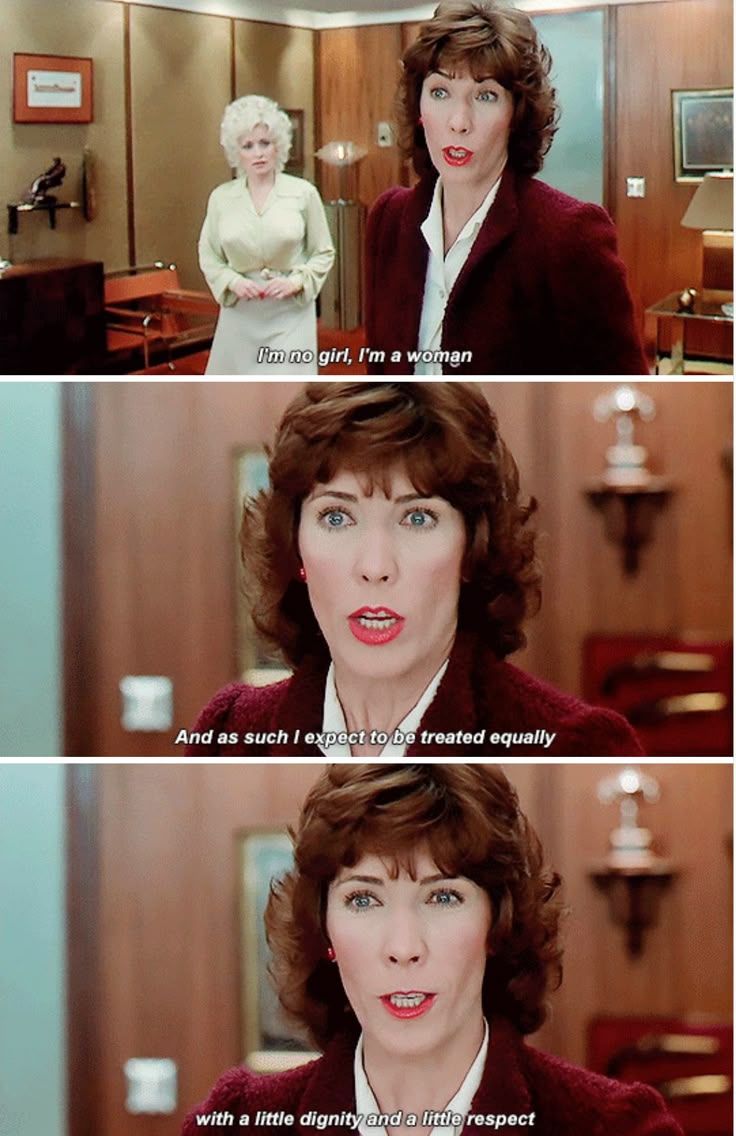
VIOLET: You gave that promotion to Bob Enright instead of me? I trained him for God’s sake! Oh, so it’s the old boys club. I’m going, but before I do, I have one more thing to say. Don’t you ever refer to me as your ‘girl’ again. I am no girl. I am a woman. W-O-M-Y-N! I’m not your wife, your mother or your mistress. I’m your employee and I expect to be treated equally, with a little dignity and a little respect! Oh, come off it, Doralee. Everyone knows you and Mr. Hart are having an affair.

Violet represents the best of working women, and the worst of how they are treated.

Dora Lee (Dolly Parton)

Dolly Parton as Dora Lee

At first glance, Dora Lee seems like a naive blond country bumpkin. She also appears, (as Violet alluded to earlier), to be having an inappropriate relationship with her boss. In reality, she is another victim of Hart’s cruelty. Because she’s Hart’s secretary, he feels entitled to a relationship with her, (even though both Dora Lee and Hart are married). Even worse, Hart openly flirts and leers at Dora Lee and makes up excuses to ogle and pinch and harass her. Why does she put up with this? First, because she knows how this kind of behavior is encouraged in all workplaces. This is why in her revenge fantasy, Dora Lee subjects Hart to the same kind of harassment that she has endured, before hog tying him like the sexist pig he is!

As you might have guessed, Dora Lee’s Shakespeare avatar is Isabella- the nun from “Measure For Measure” in Shakespeare’s darkest comedy, Isabella is a nun who tries to plead for clemency to an unjust judge. He then offers a horrific quid pro quo bargain- he will pardon her brother and save him from execution, but only if she sleeps with him.

Ha! Little honor to be much believed,
And most pernicious purpose! Seeming, seeming!
I will proclaim thee, Angelo; look for't:
Sign me a present pardon for my brother,
Or with an outstretch'd throat I'll tell the world aloud
What man thou art.

While Isabella threatens to tell the world on Angelo, Dora Lee favors a more… aggressive approach:

Dora Lee confronts Hart

DORALEE: What! You’ve been telling everyone I’m sleeping with you! That explains why everyone’s been treating me like a dime store floozy! They all think I’m banging the boss! And you love it, don’t you. It gives you some sort of cheap thrill, like knocking over pencils and picking up papers. I’ve put up with your grabbing and chasing me around the desk, ‘cause I need this job, but this is the last straw! I’ve got a gun out there in my purse and up to now I’ve been forgiving and forgetting ’cause that’s the way I was brought up but I swear, if you say another word about me, I’ll get that gun of mine. And I’ll change you from a rooster to a hen with one shot!

Like Isabella, Dora Lee’s speech emphasizes her Christianity, (note the use of the term: “forgiving and forgetting”) but unlike the nun, Dora Lee makes it clear in no uncertain terms that she NEED NOT, SHOULD NOT, and WILL NOT put up with Hart’s behavior.

Judy Bernly (Jane Fonda)

Judy is the new girl at the company. In addition to being an important fish-out-of water character who helps explain the plot to the audience, Judy has the most dynamic arc in the movie. She starts as a divorcee with no home, no job experience, and no husband. Her vulnerability makes Hart eager to take advantage of her, like he did Dora Lee. Fortunately, Violet and Dora Lee warn Judy and she quickly makes friends with them.

Judy fantasizes about hunting down her cruel boss.

Because of her kind nature, Judy is disgusted by Hart’s callousness and cruelty. This is why her fantasy for doing away with Hart paints her as a fearless hunter, scaring him and destroying him, like he did poor meek creatures whose heads he mounts on his office wall:

Judy grows from being a broken woman to a strong, valuable ally whose kindness is seen as a strength, not a weakness. Her husband even comes back and tries to get back together with her and, for the first time, Judy stands up for herself and says no. She had an easy out- become a wife and mother again, but finds strength from her friends and realizes she deserves better than him. By the end of the film, she becomes the heart of the team.

    To conclude my Analysis, let’s look at the scene at the bar between all three women:
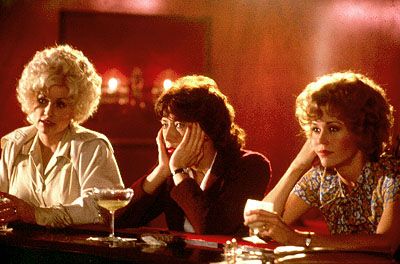
    V: What a rat.

    D: What a liar.

      J: What a creep.

    D: To think he told everybody

    I was sleeping with him…

    J: It’s so unfair. Just so unfair.

    V: Twelve years of service,

    and he shoots me down.

    J: We’ve got to do something. He can’t treat people like that.

    V: Do? What’s to do? Quit?

    D: – I can’t quit.

    V: – It’s the same all over.

    J: Look, couldn’t we just all get together and complain?

    V: – Complain to who?

    Let’s face it- We’re in a pink-collar ghetto.

    J: Let’s have another drink.

    And this: 

    1. To whom should I complain? Did I tell this,

    Who would believe me? O perilous mouths,

    That bear in them one and the self-same tongue,

    Either of condemnation or approof;

    Bidding the law make court’sy to their will:

    Hooking both right and wrong to the appetite,

    To follow as it draws!

    First off, let’s address the obvious parallels- both Dora Lee and Isabella have been assaulted and harassed and the man’s defense is exactly the same: “no one will believe you.” Both women know that in a patriarchial society society, both the offender and the judge allow this kind of culture of sexual abuse, which leads to a vicious cycle. As Violet points out, all companies have the same attitude towards women, which means that even if they quit, they’ll just find another Hart if they go work someplace else.
    What Shakespeare doesn’t mention is that Hart’s view of women is intertwined with his attitude towards his employees- female and male. He has no interest in them other than as objects to improve his wealth and status, which is also true in most companies. Violet’s phrase “pink collar ghetto” refuses to the all-too common practice of putting women  

    WWSD- not much- I think I’ve emphasized that the themes, characters, and clever satire of 9 to 5 perfectly parallel Shakespearean comedies like Measure For Measure, Twelfth Night, and others. Nevertheless, the fact that the same issues workers in general and women in particular are just as prevalent in Shakespeare’s day as in 1980, and today, means we have quite a way to go to have a truly egalitarian a workplace, so hopefully some of you will watch the movie and get inspired to change the world like Violet, Judy, and Dora Lee!

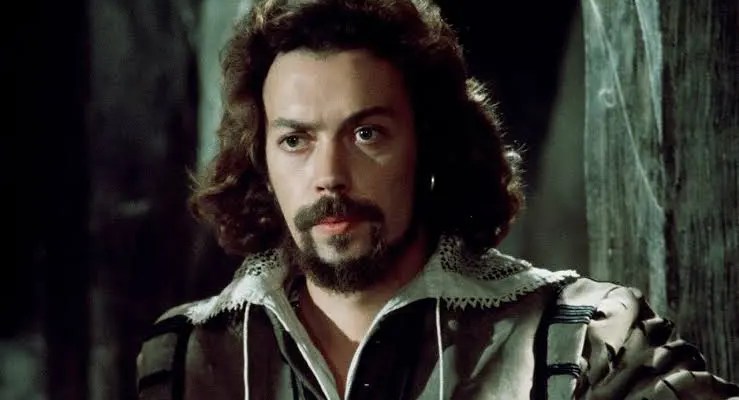
    Review: Tim Curry as William Shakespeare

    On August 25th, 2026, the world lost an incredible performer. Notable for his film roles in Clue,Muppet Treasuren Island It, the Rocky Horror Picture Show, as well as countless voice-over roles in film, TV, and audiobooks, Mr Curry had an incredible onstage personality and a versitile, commanding voice that landed itself well to slimy villains, megalomaniacal tyrants, and delicate fey characters.

    If you’re familiar with his work, you probably won’t be surprised that Curry was a classically trained stage actor with equally impressive credits onstage. He originated the role of Mozart in Amedeus, played Gilbert and Sullivan’s Pirate King to great acclaim, and won numerous theater awards on both sides of the Atlantic.

    For a while, I’ve wanted to honor this great performer, but I couldn’t find a way to do it on this platform. That is until I found this:

    This was a 1978 British TV mini series about the life of Shakespeare, with Mr Curry as the title character. This is why I will provide a series of summaries of these episodes and discuss how Mr Curry adds to the mythos and historiography of Shakespeare

    Episode 1: Dead Shepherd

    We’re all dying, for poets it just comes earlier

    Christopher Marlowe

    We begin with Hamnet, no not Shakespeare’s ill-fated son, but Hamnet Sadler, Shakespeare’s friend from Stratford (and his son’s godfather). The fish-out-of water from Stratford has come to pass along messages (and a roasted chicken) to Shakespeare. As he delivers it, Shakespeare boasts about his success as an actor, performing in Doctor Faustus and winning the acclaim of both his fellow actors and the public. The problem is… this tale is a lie; Shakespeare is just a horse valet for the theater, while the brash and flamboyant Christopher Marlowe  (Ian McShane), is the greatest playwright in London…for now.

    https://www.shakespeare.org.uk/explore-shakespeare/shakespedia/william-shakespeare/william-shakespeares-family/hamnet-shakespeare/

    Dead shepherd, now I see thy saw of might;

    Whoever loved, that loved not at first sight?

    William Shakespeare- As You Like It

    The title refers to how Shakespeare falls in love with theater at first sight, and how London immediately falls in love with his talents.

    Tim Curry on Playing Shakespeare

    He’s a kind of ambitious country boy who learns fast” driven by the intense, fast-paced survival energy of the Elizabethan age.

    Curry’s Shakespeare is full of energy and bravado. This is best demonstrated in the scene where he gets out of a cart full of straw, jumps up to the rafters of the Globe, jumps onstage, recites Faustus, and sings! He has a fiery energy and you can see how this Shakespeare is a man of ambitious energy, yet still possessed of an idealistic soul.

    Ian McShane by contrast, is witty and world-weary with a dangerous edge. He has fallen out of love with theater; more interested in court intrigue. This leads him to spy for the Queen like an Elizabethan James Bond. Unlike Bond however, Marlowe is brutally murdered by agents from his own government! While all the London theater mourns his loss, his death also sets the stage for Shakespeare’s meteoric rise as the premier poet of England.

    I’ll continue reviewing each subsequent episode on this page and also my podcast. Stay tuned!

    Tim Curry Starred In A Forgotten Series About Shakespeare With An Impressive Cast https://share.google/skBs5Kd5NgtOnMPrO

    https://share.google/skBs5Kd5NgtOnMPrO

    Period Documents

    Document-specific information
    Creator: Holy Trinity Church, Stratford-upon-Avon
    Title: Parish Register of Holy Trinity Church, Stratford-upon-Avon
    Date: 1558-1776
    Repository: The Shakespeare Birthplace Trust, Stratford-upon-Avon, UK
    Call number and opening: DR243/1: Baptismal register, fol. 22v
    View online bibliographic record

    Web

    King Edward Grammar School History: https://www.kes.net/about-us/history-of-the-school/

    Shakespeare’s Birthplace Trust- The Second Best Bed: https://www.shakespeare.org.uk/explore-shakespeare/shakespedia/william-shakespeare/second-best-bed/

    Coffin Archive.org- The Evolution of the English Shroud: From Single Sheet To Draw-Strings and Sleeves: http://www.archive.coffinworks.org/uncategorised/the-evolution-of-the-english-shroud-from-single-sheet-to-draw-strings-and-sleeves/

    Crafting A Character: Brutus from Locrine

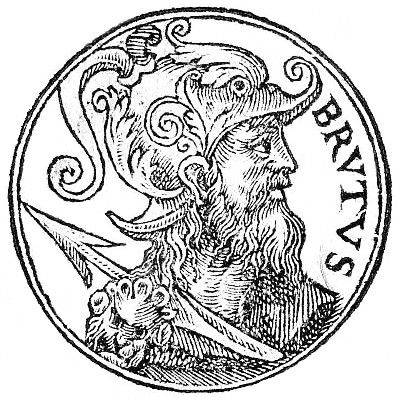
    You might have read my previous post about Locrine and Humber from that play. Well, today I will continue this series by discussing the other character I play, the mythical founder of Britain, King Brutus.

    Brutus of Troy

    Now before you ask- NO, THIS IS NOT Marcus Brutus, the man who stabbed Julius Caesar. This Brutus actually lived before said conspirator, around the year 11000 BC. Writers like Geoffrey of Monmouth, writing after the Norman Conquest of England, recorded the story of Brutus as a way of getting the British people on board with a single king uniting all of the kingdoms of England.

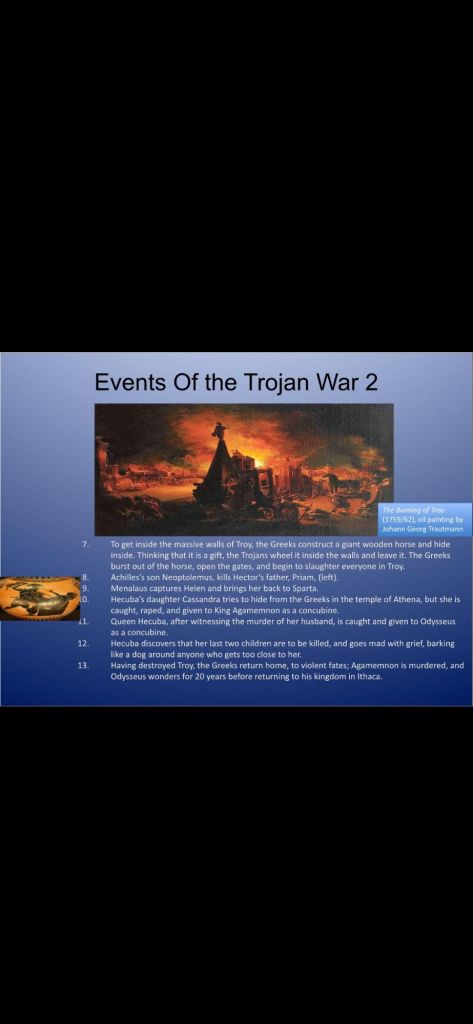
    According to Monmouth (who clearly had an influence on the writer of Locrine), Brutus was the grandson of Aeneas, the sole survivor of the infamous Trojan War. Like the ancient Greek legends of Perseus or Hercules, Brutus is exiled from Italy for accidentally killing his father, and must then create a new empire in Britain.

    Brutus! there lies beyond the Gallic bounds
    An island which the western sea surrounds,
    By giants once possessed; now few remain
    To bar thy entrance, or obstruct thy reign.
    To reach that happy shore thy sails employ;
    There fate decrees to raise a second Troy,
    And found an empire in thy royal line,
    Which time shall ne’er destroy, nor bounds confines  – Diana’s speech to Brutus

    Historia Regum Britanniae by Geoffrey of Monmouth, c1136

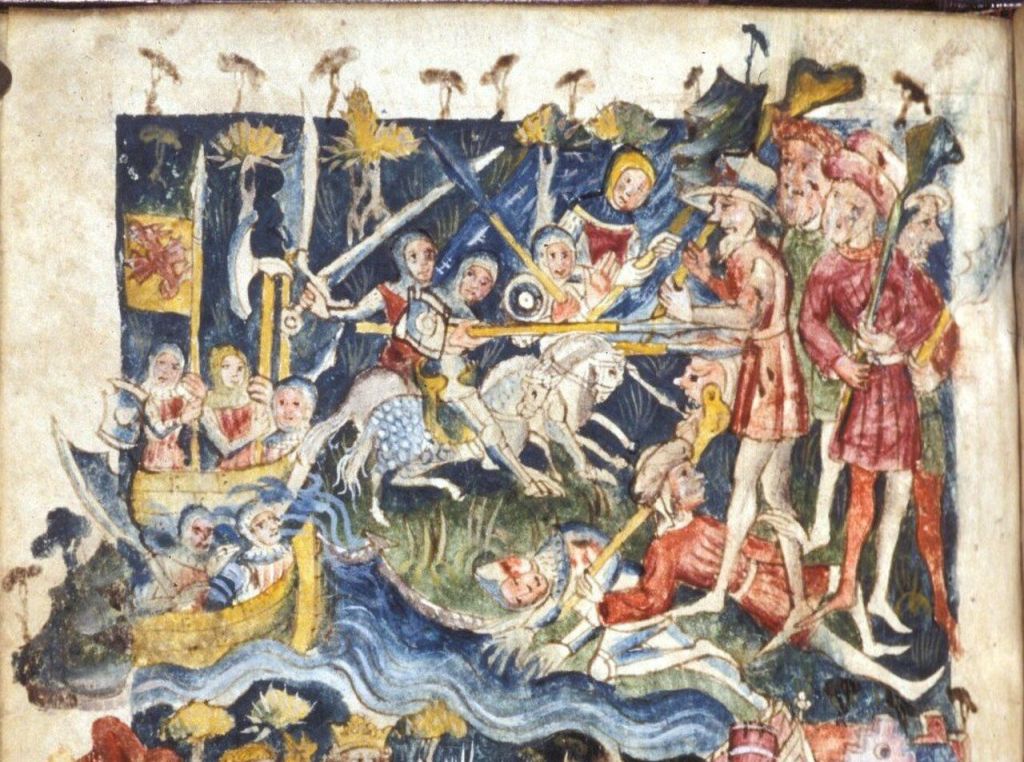
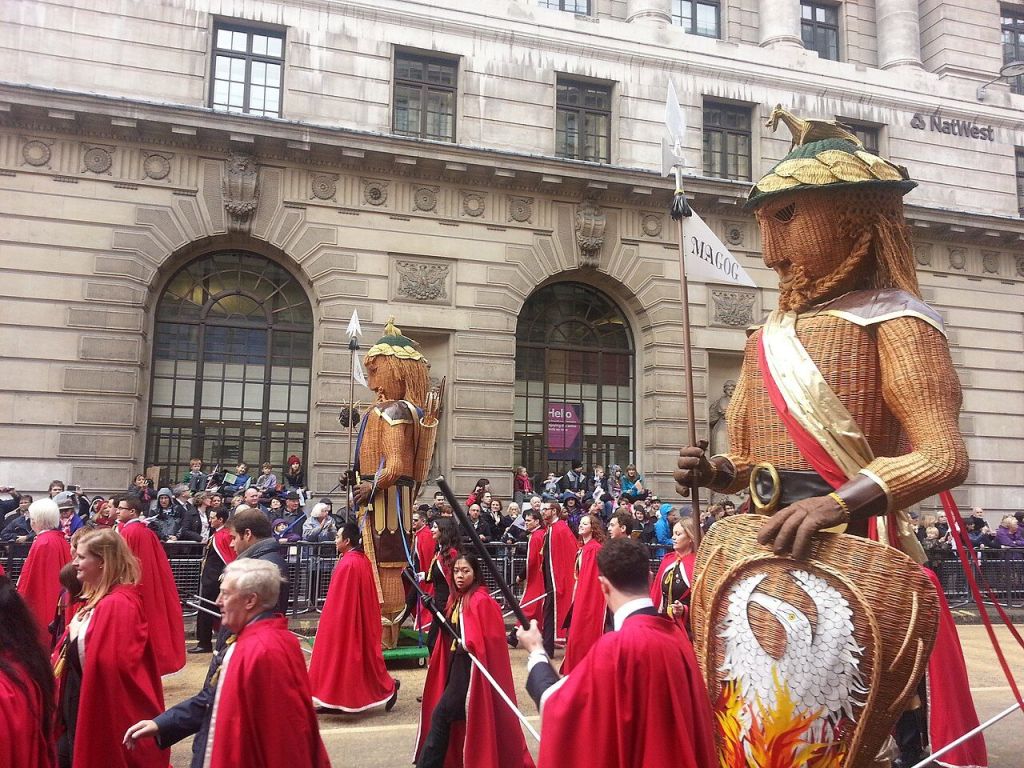
    To secure his empire, Brutus must tame the savage giants that rule the untamed wilderness of Britain, in a mythical battle that is still celebrated to this day.

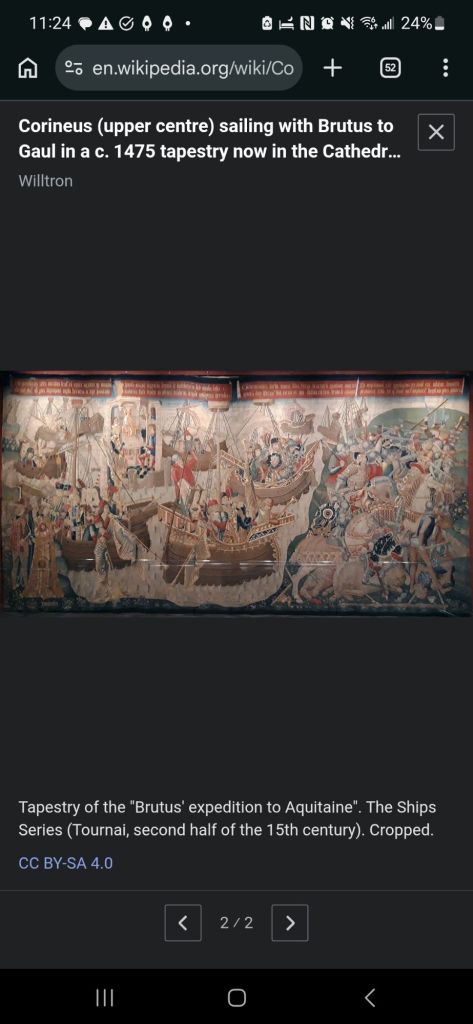
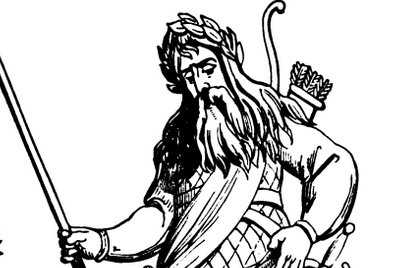
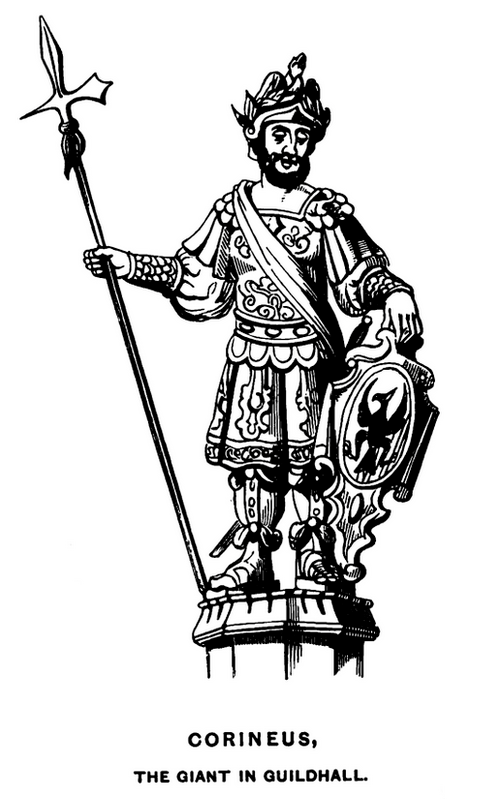
    At the beginning of the encounter, Corineus and the giant, standing, front to front, held each other strongly in their arms, and panted aloud for breath, but Goëmagot presently grasping Corineus with all his might, broke three of his ribs, two on his right side and one on his left. At which Corineus, highly enraged, roused up his whole strength, and snatching him upon his shoulders, ran with him, as fast as the weight would allow him, to the next shore, and there getting upon the top of a high rock, hurled down the savage monster into the sea; where falling on the sides of craggy rocks, he was torn to pieces, and coloured the waves with his blood- Monmouth

    Function in the Play

    1. Legacy of Troy- As I mentioned before, Brutus establishes the link between ancient Troy, and the founding of Britain.

    The island was then called Albion,[9] and inhabited by none but a few giants. Notwithstanding this, the pleasant situation of the places, the plenty of rivers abounding with fish, and the engaging prospect of its woods, made Brutus and his company very desirous to fix their habitation in it. They therefore passed through all the provinces, forced the giants to fly into the caves of the mountains, and divided the country among them according to the directions of their commander. After this they began to till the ground and build houses, so that in a little time the country looked like a place that had been long inhabited. At last Brutus called the island after his own name Britain, and his companions Britons; for by these means he desired to perpetuate the memory of his name.

    2. Corineus’ Brother In Arms

    Like a lot of characters in Shakespeare’s history plays, Brutus has a loyal second in command, Corineus, the mythical founder of the kingdom of Cornwall. After Brutus dies, Corineus is a sort of Lord Protector, lending his council and military experience to Locrine and his brothers:

    The name of their commander was Corineus, a modest man in matters of council, and of great courage and boldness, who, in an encounter with any person, even of gigantic stature, would immediately overthrow him, as if he were a child. When they understood from whom he was descended, they joined company with him and those under his government, who from the name of their leader were afterwards called the Cornish people, and indeed were more serviceable to Brutus than the rest in all his engagements. – Historia Regum Britanniae by Geoffrey of Monmouth, c1136

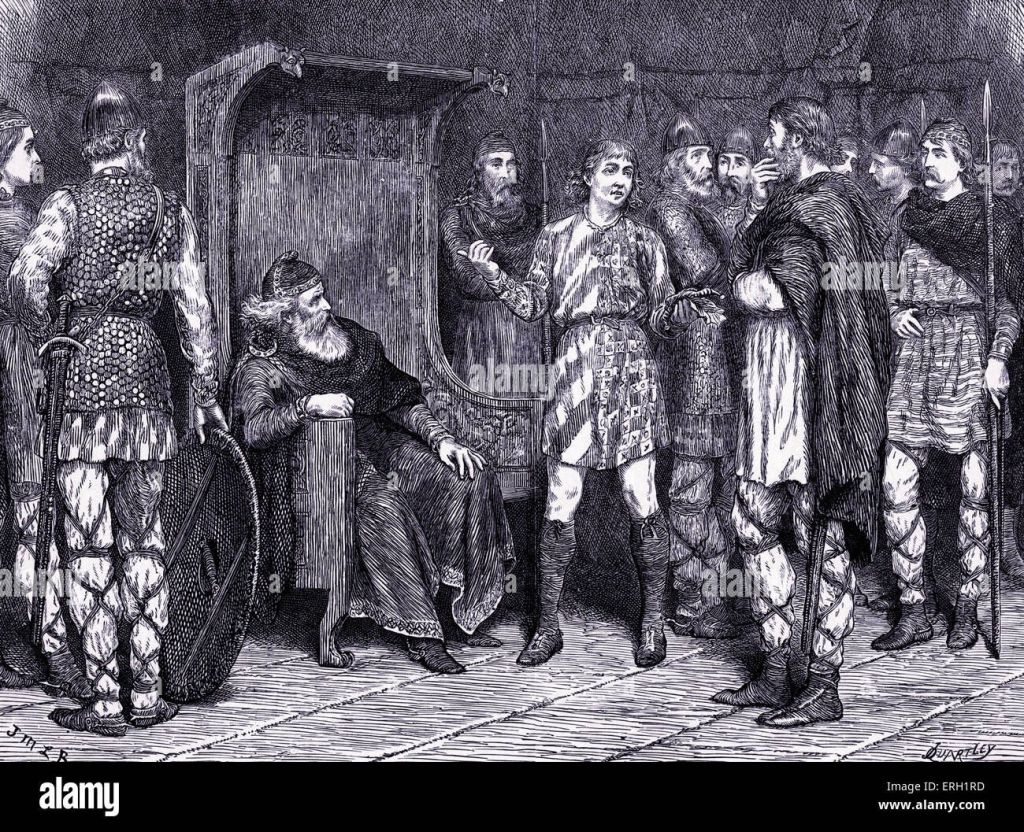
    1. Patriarch– Brutus’ sons become the first kings of England, (Locrine), Scotland (Albanact), and Wales (Camber).

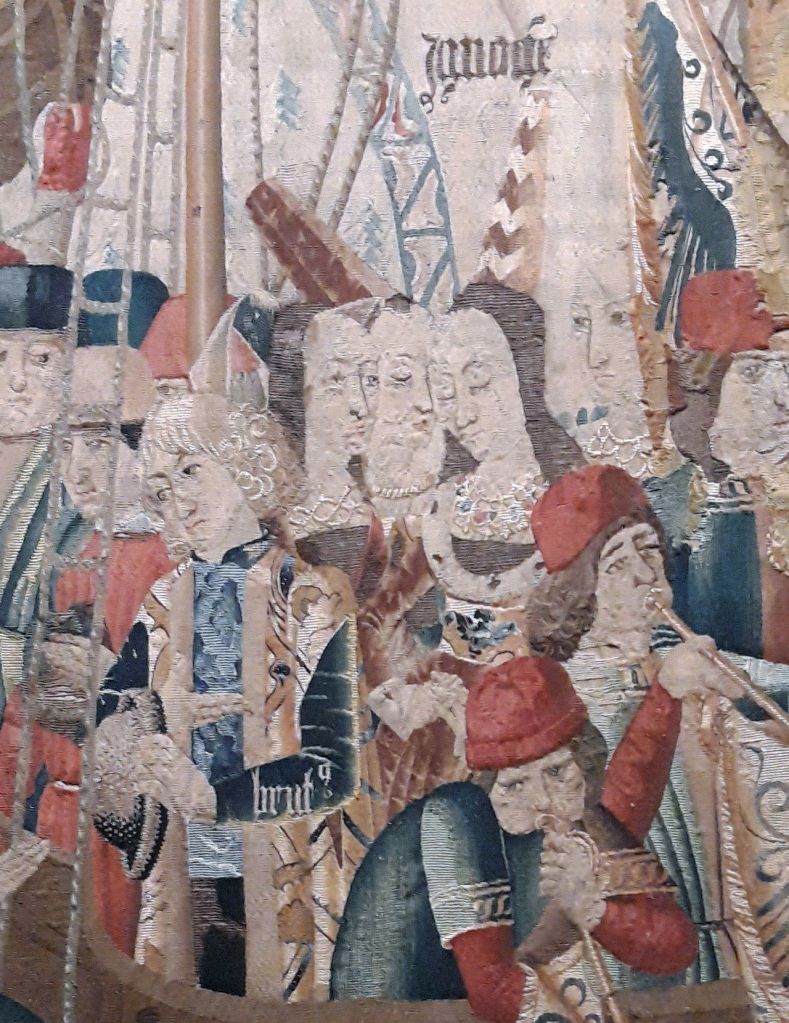
    During these transactions, Brutus had by his wife Ignoge three famous sons, whose names were Locrin, Albanact, and Kamber. These, after their father’s death, which happened in the twenty-fourth year after his arrival, buried him in the city which he had built, and then having divided the kingdom of Britain among them, retired each to his government.

    1. King Lear Right after Brutus’ story in Monmouth’s chronicle comes the ancient story of King Lear, the same story Shakespeare would later adapt into his own play. Like Lear, Brutus has to divide his kingdom, but unlike Lear, he does not try to test his children’s loyalty.

    Locrin, the eldest, possessed the middle part of the island, called afterwards from his name, Loegria. Kamber had that part which lies beyond the river Severn, now called Wales, but which was for a long time named Kambria; and hence that people still call themselved in their British tongue Kambri. Albanact, the younger brother, possessed the country he called Albania, now Scotland. After they had a long time reigned in peace together, Humber, king of the Huns, arrived in Albania, and having killed Albanact in battle, forced his people to fly to Locrin for protection.

    Our Interpretation

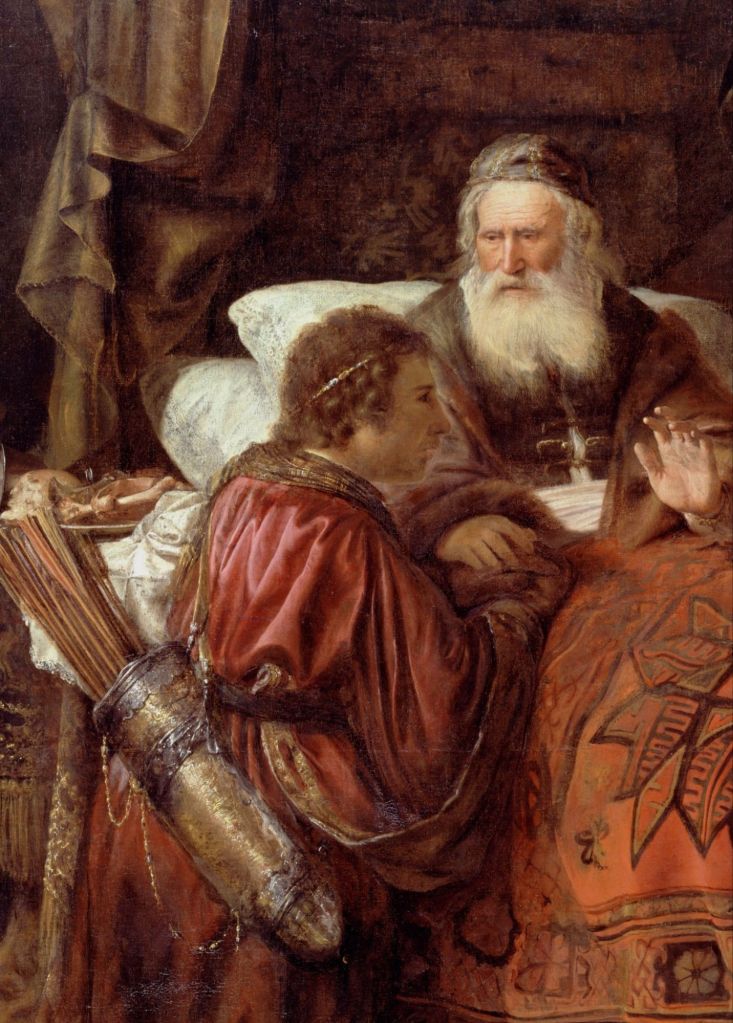
    Isaac blesses Jacob

    Those who sought to deface our memory,
    wipe the name of Trojans from the earth
    Those did I captivate with this mine arm.
    And in this Isle at length I placed you.
    – Locrine, Act I.i

    I see Brutus as an intimidating king like Hamlet’s Father (before he became a ghost). I also see him as similar to an Old Testament patriarch like Moses or Isaac- he was led by a god to the promised land, and gave it to his children, who must now protect and defend it.

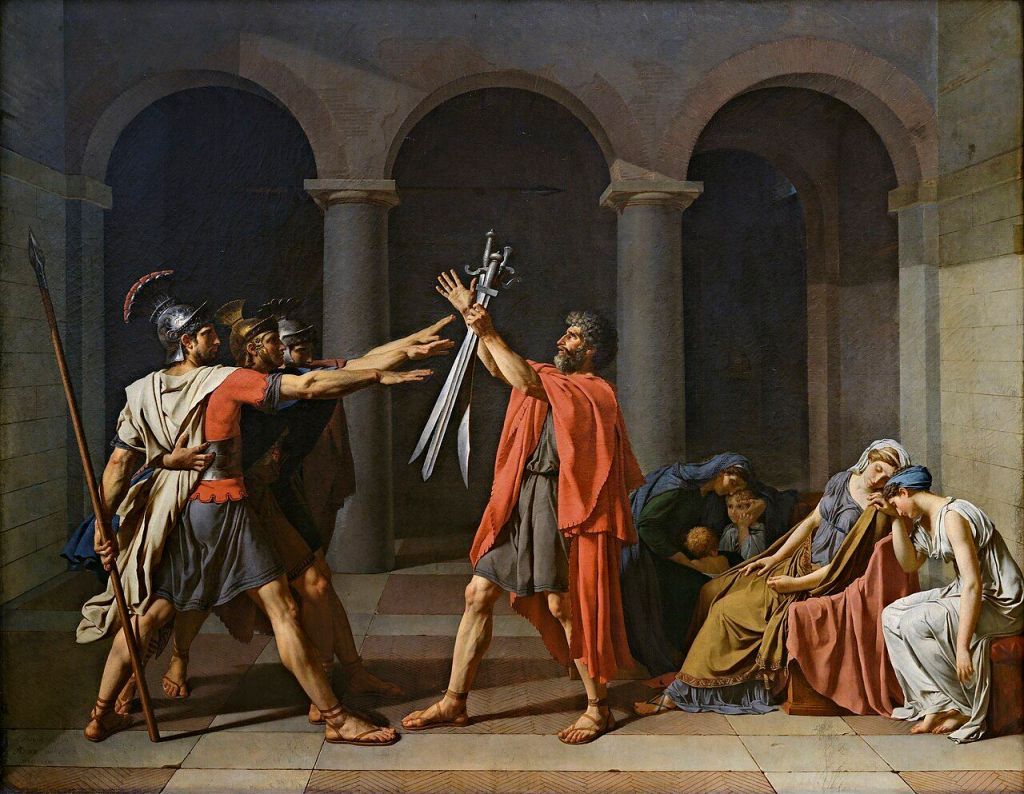
    Oath of the Horatii by Jaques Louis David
    1. Colonizer

    On the other hand, one could also see Brutus as a colonizer- he takes land that wasn’t his and overthrows the natural order. This is a dimension that is not explored in the original story, but our version highlights it.

    Playing Brutus

    1. Look and physicality– For such a mythic figure, I tried to play Brutus with as much strength and gravity as possible, at least at first. While he is being introduced and fighting giants, I tried to make him a soldier and King in his prime. After a while though, we see Brutus on his death bed, and I play him as frail and shaky; struggling to keep his kingdom together, as he also struggles to stay alive.
    2. As Brutus ages, I had him divest himself of his armor as he divests his kingdom- to CAMBER, he gives his shield. To Albanact, he gives his sword, and to Locrine, he gives his crown.
    1. Verse

    It’s interesting that most of Brutus’ lines are in Trochaic, rather than iambic verse, which could be a way to emulate older forms of verse, but I also suspect that it is designed to emphasize Brutus’ commands.

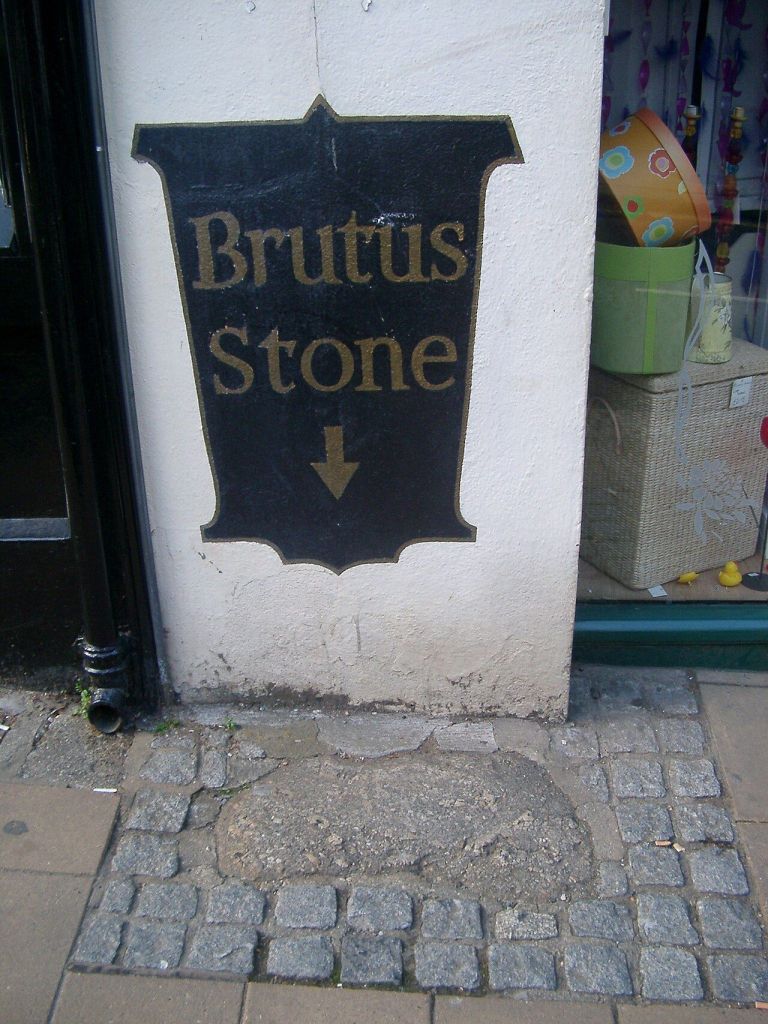
    From Troy to Totnes – The Tale of the Brutus Stone

    Then now, my son, thy part is on the stage,
    For thou must bear the person of a King.
    [Puts the Crown on his head.]
    Locrine, stand up, and wear the regal Crown,
    Cherish and love thy new betrothed wife.
    Locrine, Act I.i

    Well, there you go, Hope you enjoyed this overview of the play Locrine. If you like this review, you might like to see the show itself. Click here to purchase tickets:

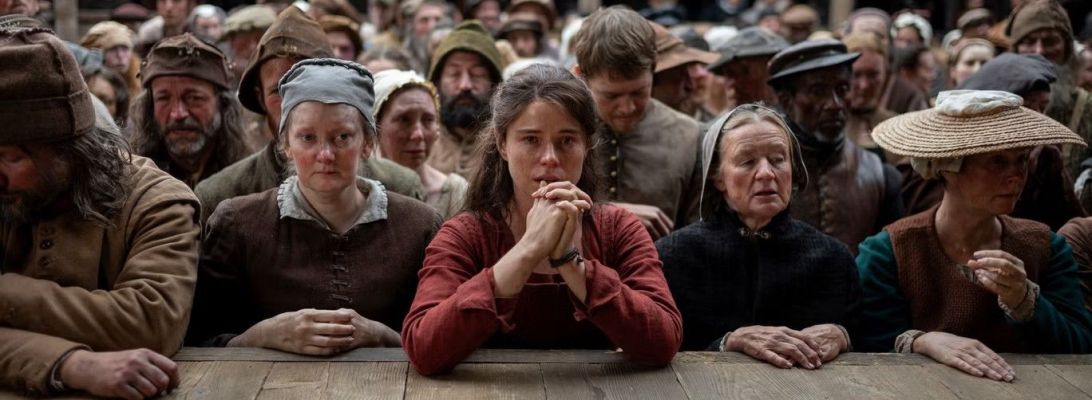
    How Accurate is Hamnet Part III: The Movie

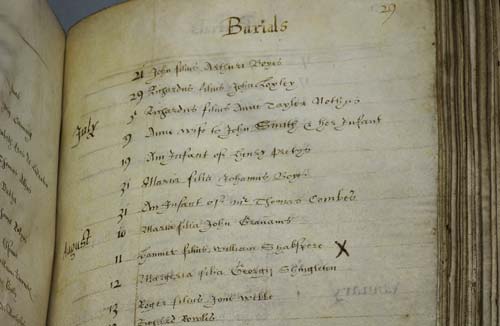
    On August 11th, 1596, Shakespeare lost his only son.

    Burial Registry of Hamnet Shakespeare

    This very day, 2026. I sat down to watch the movie about him. I will compile my thoughts into a complete review in a while, but for now, let’s just say, it was absolutely incredible.

    Biography of Hamnet

    Just like his famous father, we know very little about the life of Hamnet Shakespeare. Since infant mortality rates were high, we don’t know his exact birthday, only that he was baptized on February 2nd, 1582. Like most 11-year old boys, he probably had started going to school at the King Edward Grammer School, the same as his father. This means he spent long hours away from his parents learning to read and write in Latin and Greek. When he was home, he lived with his mother, his two sisters, and his grandparents in the house of Henley Street.

    https://www.kes.net/about-us/history-of-the-school/

    O’Farrel portrays the boy Hamnet as sensitive and somewhat lonely. The movie captures this

    1589-1596

    Never mind what I know. You must go.” She pushes at his chest, putting air and space between them, feeling his arms slide off her, disentangling them. His face is crumpled, tense, uncertain. She smiles at him, drawing in breath. “I won’t say goodbye,” she says, keeping her voice steady. “Neither will I.” “I won’t watch you walk away.” “I’ll walk backwards,” he says, backing away, “so I can keep you in my sights.” “All the way to London?” “If I have to.” She laughs. “You’ll fall into a ditch. You’ll crash into a cart.” “So be it.

    O’Farrell

    The novel portrays Anne Shakespeare realizing that her husband is stifled and unhappy living with his parents in Stratford, and so she suggests to his father that he go to London to ‘expand the family business,’ though in reality, she wants him to go to make his fortune and find more fulfilling work.

    https://www.shakespeare.org.uk/explore-shakespeare/shakespedia/william-shakespeare/william-shakespeares-family/hamnet-shakespeare/

    Gloves

    A glover will only ever want the skin, the surface, the outer layer. Everything else is useless, an inconvenience, an unnecessary mess. She thinks of the private cruelty behind something as beautiful and perfect as a glove.

    Hamnet

    The Plague

    He wants to tear down the sky, he wants to rip every blossom from that tree, he wishes to take a burning branch and drive that pink-clad girl and her nag over a cliff, just to be rid of them, to clear them all out of his way. So many miles, so much road stands between him and his child, and so few hours left.

    Hamnet

    In the book, the plague germs that infect Judith and later Hamnet, lie inside a box with some glass beads that the Shakespeare’s ordered from Italy to decorate a pair of fancy gloves.

    Hamnet’s Death

    He can feel Death in the room, hovering in the shadows, over there beside the door, head averted, but watching all the same, always watching. It is waiting, biding its time. It will slide forward on skinless feet, with breath of damp ashes, to take her, to clasp her in its cold embrace, and he, Hamnet, will not be able to wrest her free.

    Hamnet

    In the novel, Hamnet somehow takes the plague away from his sister and dies in her place. Though it is hardly conclusive, I do find it interesting that Shakespeare stopped writing comedies about twins for another four years after Hamnet’s death, until he wrote Twelfth Night, which unlike earlier comedies like The Comedy of Errors, has a pair of twins mourning each other’s apparent death. They seem to share one soul, and one tries to resurrect the other, like Viola mourning her brother by, (in a sense), becoming her brother.

    What should I do in Ilyria? My brother is in Elysium

    Viola- “Twelfth Night”, Act I, Scene ii.

    ELIZABETHAN FUNERAL CUSTOMS

    In the book, Anne makes a winding sheet for her son. This was a cloth of linen or wool that was wrapped around dead bodies, since at the time, coffins were re-used. This must have been a somber and deeply upsetting activity for Anne.

    The act of making a winding sheet was a sort of sad family responsibility, a way of ensuring that your loved ones die with dignity, and Anne clearly takes the task of making one very seriously.

    The Aftermath Of Hamnet’s Death (Spoilers)

    The Women of Hamnet

    The most unique thing about this novel is how it shows the interdependence of women in Elizabethan society. Since Shakespeare spends most of the novel away from Anne, her support system mostly comes from Will’s mother Mary, as well as Anne’s daughters, her sister, and all the other women of the town. Nowadays we do most of our socialization online and barely know our own neighbors, but in the 1590s, especially for women, community was a way of building strength where women got through things like childbirth, loss, the managing of households, and many other difficulties through their relationships with other women. This video below shows the kinds of home remedies that women would share and later write down during the Tudor period:

    Other Mysteries Solved


    Once Hamnet dies, Will buys her a new house, New Place so she isn’t forced to live with his parents and no longer has to live in the house where her son died. But Will’s success comes with a price- he still has to leave for London. he offers to move them there but Agnes won’t hear of it. This solves the riddle of why Shakespeare commuted between town and country for his entire career- she knows the plague that took her son literally came from London, and she won’t risk losing her daughter as well. She probably also sees London like another woman that took her husband away as well, and therefore refuses to look it in the face.

    It is no matter,” she pants, as they struggle there, beside the guzzling swine. “I know. You are caught by that place, like a hooked fish.” “What place? You mean London?” “No, the place in your head. I saw it once, a long time ago, a whole country in there, a landscape. You have gone to that place and it is now more real to you than anywhere else. Nothing can keep you from it. Not even the death of your own child. I see this,” she says to him, as he binds her wrists together with one of his hands, reaching down for the bag at his feet with the other. “Don’t think I don’t.”

    O’Farrell, Hamnet.

    The Shakespeares’ Marriage after Hamnet

    The ugly truth that O’Farrell highlights in Hamnet is that it must have been very hard for the Shakespeares to endure Hamnet’s death, especially since Will was probably not there when it happened, and probably didn’t stay around long after burying his son.

    Hamnet and Shakespeare

    Raising the Dead

    Hamlet, here, on this stage, is two people, the young man, alive, and the father, dead. He is both alive and dead. Her husband has brought him back to life, in the only way he can. As the ghost talks, she sees that her husband, in writing this, in taking the role of the ghost, has changed places with his son. He has taken his son’s death and made it his own; he has put himself in death’s clutches, resurrecting the boy in his place. “O horrible! O horrible! Most horrible!” murmurs her husband’s ghoulish voice, recalling the agony of his death.


    O’Farrell, “Hamnet”

    References

    Journals

    Bray, Peter. “Men, loss and spiritual emergency: Shakespeare, the death of Hamnet and the making of Hamlet.” Journal of Men, Masculinities and Spirituality, vol. 2, no. 2, June 2008, pp. 95+. Gale Literature Resource Center, link.gale.com/apps/doc/A189052376/LitRC?u=pl9286&sid=bookmark-LitRC&xid=ea79f235. Accessed 20 Apr. 2023.

    Period Documents

    Document-specific information
    Creator: Holy Trinity Church, Stratford-upon-Avon
    Title: Parish Register of Holy Trinity Church, Stratford-upon-Avon
    Date: 1558-1776
    Repository: The Shakespeare Birthplace Trust, Stratford-upon-Avon, UK
    Call number and opening: DR243/1: Baptismal register, fol. 22v
    View online bibliographic record

    Web

    King Edward Grammar School History: https://www.kes.net/about-us/history-of-the-school/

    Shakespeare’s Birthplace Trust- The Second Best Bed: https://www.shakespeare.org.uk/explore-shakespeare/shakespedia/william-shakespeare/second-best-bed/

    Coffin Archive.org- The Evolution of the English Shroud: From Single Sheet To Draw-Strings and Sleeves: http://www.archive.coffinworks.org/uncategorised/the-evolution-of-the-english-shroud-from-single-sheet-to-draw-strings-and-sleeves/

    Crafting A Character: Humber from Locrine

    I’m pleased to announce that I will be playing Humber, the Scithian Emperor who tried to conquer England, in a very special adaptation of Locrine in August of 2026.

    What is Locrine?

    Locrine is an Elizabethan play, first published in 1595, whose author is, sadly, lost to history. The play is a mythologized history of the founding of Britain, which the play calls New Troy.

    Our Interpretation

    Our version of Locrine is a hybrid between the original play, and stories from the indigenous people of Mexico in the huasteca region. Our director chose to reinterpret Humber as an existential threat to the natural world of Mexico- a threat to the people and the environment, who is defeated not just by Locrine’s army, but by the forces of nature themselves.

    Myth vs History

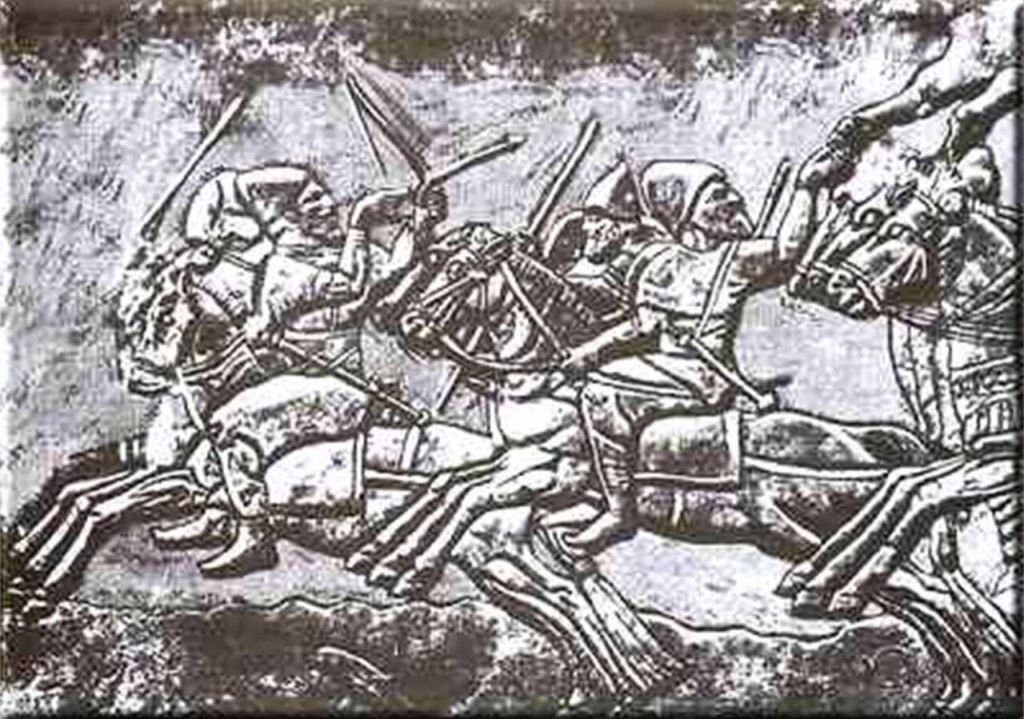
    Ancient Scithian horse warriors
    1. The Scythian Emperor- Scythia was originally modern day Iran, but many Scithian tribes also lived in places like Ukraine and Russia. They were nomads who primarily used their skills in mounted warfare to conquer regional fifedoms, organized under a single emperor.

    Function Within the Play

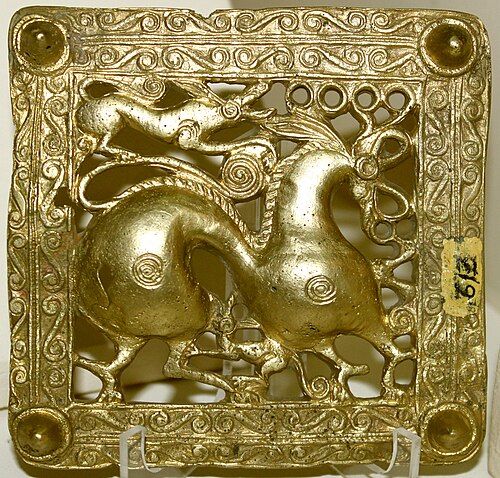
    Ancient golden Scithian belt buckle
    1. Ravisher of Nature- as Humber tries to conquer the people of England, he also destroys the natural world.
    2. Usurper/ Conqueror of the Britains- in our version of Locrine, Humber’s war to conquer Britain is analogous to the European colonizers who fought to dominate America such as the French, the Dutch, and of course, the Spanish.

    We are retired with joyful victory. The slaughtered trojans squeltering in their blood, infect the air with their carcasses, and are a prey for every ravenous bird.

    Locrine, Act 2 Scene 6


    Playing Humber

    Right now, I am playing Humber as a narcissist, a man who, at his core, is deeply insecure but tries to overcompensate it by acting like an invincible monarch- one who fills the void in his soul with land, slaves, possessions, and gold. He is good at persuading people and inspiring them to fight for him, but he cares for no one but himself.


    High on a bank by Nilus’ boistrous streams,
    Fearfully sat the Egyptian Crocodile,
    Dreadfully grinding in her sharp long teeth
    The broken bowels of a silly fish.
    [A crocodile swims across the stage, eating a
    fish.]
    His back was armed against the dint of spear,
    With shields of brass that shined like burnished gold;
    And as he stretched forth his cruel paws,
    A subtle Adder, creeping closely near,
    Thrusting his forked sting into his claws,
    Privily shed his poison through his bones.
    So Humber, having conquered Albanact,
    Doth yield his glory unto Locrine’s sword.
    Mark what ensues, and you may easily see,
    That all our life is but a Tragedy. –Locrine, Act III prologue.

    A snake struggling with an alligator, eventually gets the upper hand, or coil.

    In the play, Humber is compared to a fearsome predator- a crocodile, which was actually the sigil  on his shield. I took inspiration from the animal, and used a serpentine physicality when playing him. I also decided to give myself a crocodile smile- I keep my head down, stared my enemies in the eye, and then- struck!

    Gloucester’s show
    Beguiles him as the mournful crocodile
    With sorrow snares relenting passengers- Henry VI, Part II.

    Inspirations

    From History-

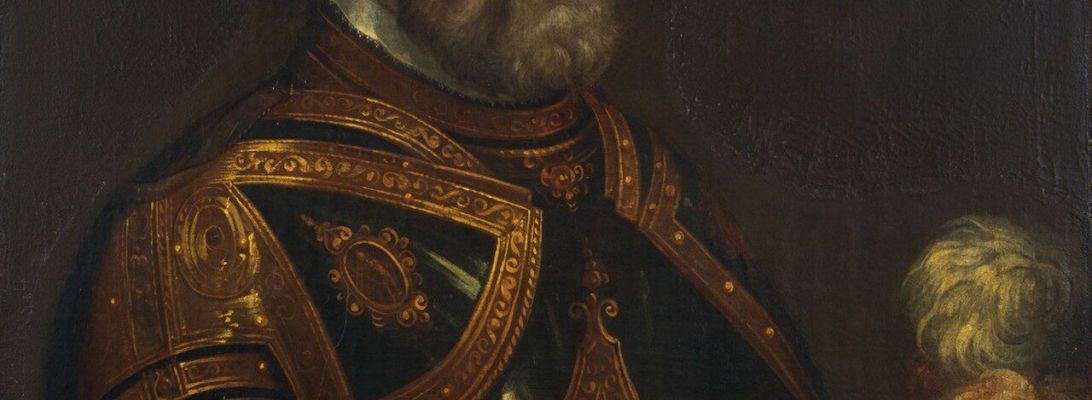
    Again, Locrine is not a history play and Humber, as far as we know, was not a real person. Rather than a legitimate chronicle, Locrine is a mythologized history of the founding of Britain. The Scithians never actually invaded Britain, (although some early chronicles claim that the Saxons were descended from them). Our version of Locrine conflates the foundation of Britain with the conquest of America, (specifically the struggle between English colonists and the Spanish conquistadors,) and there is one man who has come to symbolize the ruthless might and lust for gold that the Spanish had in the early conquest of the American continent more than any other Conquistador- Hernan Cortez,  governor of New Spain, and conqueror of the Mexican empire.

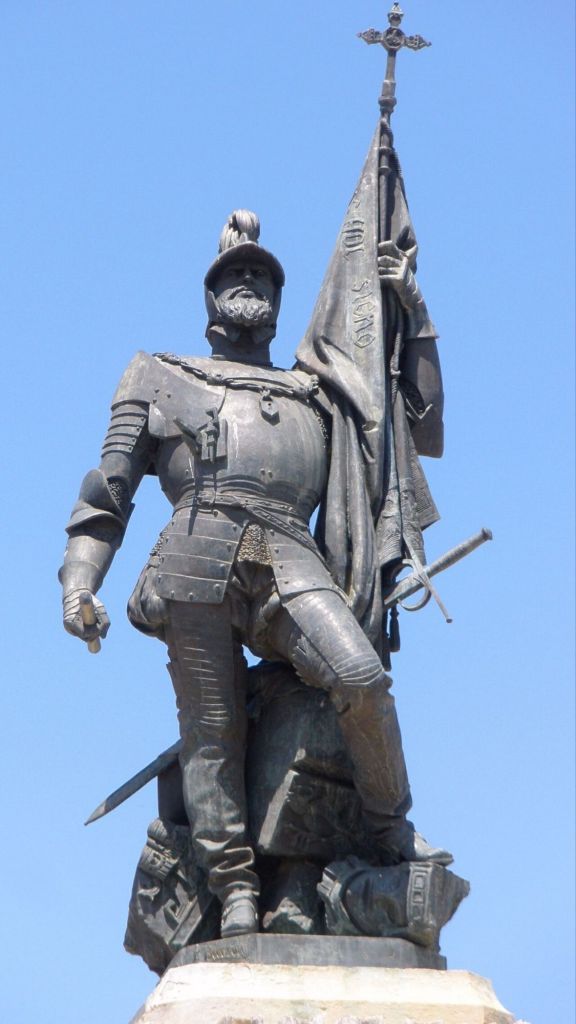
    Statue of Cortez. Notice the broken Aztec statue under his foot.

    We Spaniards know a sickness of the heart that only gold can cure- Hernan Cortez (allegedly)

    Cortez was a man of insatiable greed and lust for power. He was born a minor noble with a gift for diplomacy and exceptional courage. He eventually slaughtered thousands of the Mexican people, supplanted their ruler Montezuma, and razed their capital city of Tenochtitlán, rebranding it as Mexico City, capital of the New Spanish empire.

    Mural on the Battle of Centla and the conquest of Tabasco, by Homero Magaña Arellano.

    Like Humber, Cortez was more of an administrator than a soldier, but nevertheless, he did lead his army successfully against the native people in several key battles, where they used their cavalry and cannons to devastating effect. He also ravished hundreds of Indigenous women who sired his illegitimate children- like our Humber, he lusted for women in addition to gold.

    Cortez was careful to appear pious to his soldiers and respectful to the native people he encountered, but this was a calculated act designed to get loyalty and obedience from the people around him. According to his biography, Cortez had a zero-tolerance policy for blasphemy, and told his soldiers to respect the native Mexica. Again, Cortez’s real goal was to keep his men loyal to their “pious” commander and to make the people trust him…while he robbed them blind. Talk about crocodile tears.

    Cortez’s victories allowed him to build palaces for himself to rule over the Mexica, as well as a royal charter for himself, and of course, GOLD.

    The Spaniards appeared to be much delighted, they seized upon the gold like monkeys, their faces flushed. For clearly their thirst for gold was insatiable; they starved for it; they lusted for it; they wanted to stuff themselves with it as if they were pigs. They went about fingering handling the streamers of gold, passing them back and forth, grabbing them one to the other babbling, talking gibberish among themselves. – Bernardino de Sahagún

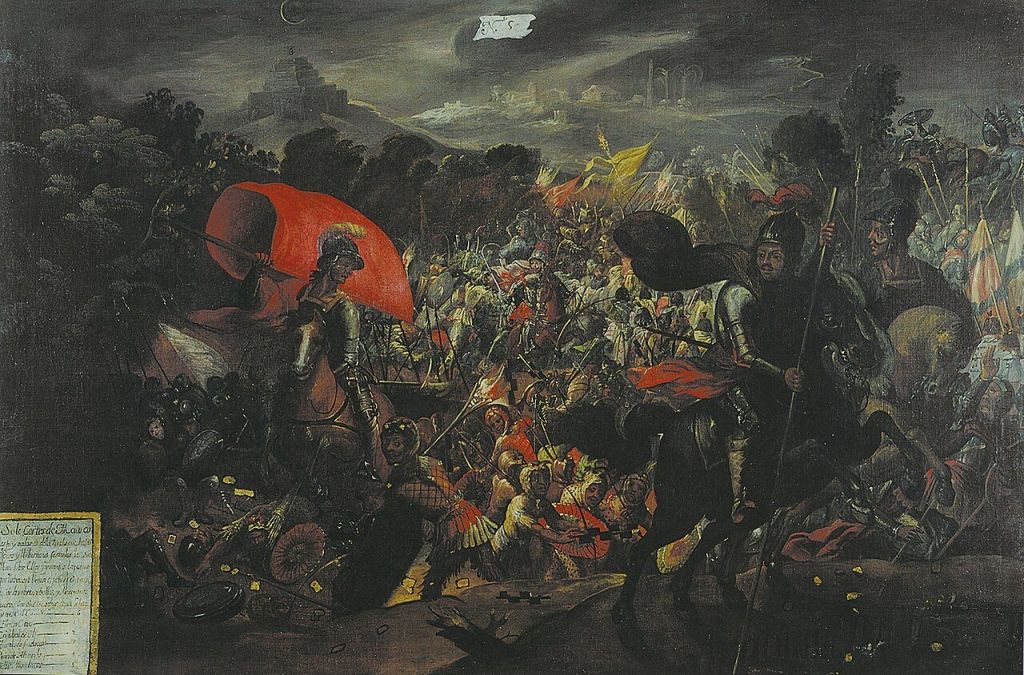
    In Locrine, Humber is defeated offstage and forced to starve to death in a desert wilderness. To fill in the blanks, I looked at events from Cortez’s life and death. The real Cortez died of dysentary in 1547, but I like to imagine Humber- Cortez being chased away by Locrine’s army, similar to his narrow escape from Tenochtitlán during the famous Noche Triste (30 June – 1 July 1520)

    Cortez and his soldiers narrowly escape Tenochtitlán

    From Shakespeare-

    Shakespeare rarely writes characters who are wholy evil, so for the first three acts, I mainly thought of another Sythian conqueror- Christopher Marlowe’s Tamborlaine. He is not so

    much a man as a force of nature, eager to kill, conquer, and take power and riches from the natural world.

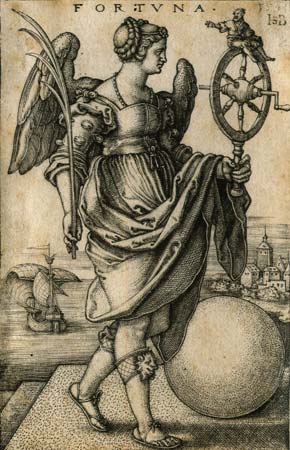
    The Roman Goddess Fortuna, with her wheel and orb.

    In the later acts of Locrine however, Humber is… well humbled ater losing the war, losing his son, and losing his wife. His laments for his son bear a striking resemblance to Titus Andronicus.

    Humber speech III, Scene 5, performed by One Woman Shakespeare

    Verse

    At the end of his life, Humber reverts to a primitive shadow of his former self- Humber is forced to hide in desert caves, and live on berries and roots. His cruel, bitter laments and desire to cast himself into the sea is almost perfect parallel to Shakespeare’s Timon of Athens.

    Timon in the cave

    What basilisk was hatched in this place,
    Where everything consumed is to nought?
    What fearful Fury haunts these cursed groves,
    Where not a root is left for me to eat?
    Hath fell Alecto, with invenomed blasts,
    Breathed forth poison in these tender plains?
    What, not a root, no fruit, no beast, no bird,
    To nourish Humber in this wilderness?
    My very entrails burn for want of drink,
    These foul accursed groves afford no meat,
    The gods, hard-hearted gods, yield me no meat.
    Was ever land so fruitless as this land?
    Was ever soil so barren as this soil?
    No, even the climate of the torrid zone
    Brings forth more fruit than this accursed grove

    In Conclusion

    Humber is a great deal of fun- he’s a cartoon-like villain at first, but after he loses to Locrine, he seems more human, longing to be reunited with his son. Even though he’s not the main character, he has a tragic character’s arc. In short, he’s great to play, and I hope he’ll be great to watch!

    Sources

    https://lostplays.folger.edu/Estrild

    https://orangemite.org/laviborayelcuervo

    https://historum.com/t/cort%C3%A9s-and-the-conquest-of-mexico.184401/?utm_source=google&utm_medium=organic

    Review: Kentucky Shakespeare’s “Two Gentlemen Of Verona”

    In Case You Haven’t Heard

    Two Gentlemen Of Verona is probably Shakespeare’s first comedy, maybe even his first play. A lot of the plot devices and themes Shakespeare explores in later plays were first set down in Two Gentlemen.

    The Plot

    Two Gentlemen Of Verona is about two best friends, Valentine and Proteus, who start out as young men yearning for adventure and to seek their fortune in Milan. As you might have guessed from his name, Valentine finds love instead of fortune, and so does his friend Proteus. What makes the play unique is that Proteus falls in love with Valentine’s betrothed Silvia, forsaking his faithful sweetheart Julia. The two virtuous girls support each other and fight to stop Proteus from sabotaging their relationships. In the end though, Valentine forgives Proteus and Valentine takes him back, which makes the play a little controversial for modern audiences.

    The Concept

    What happens in Milan, stays in Milan! Shakespeare’s gleefully silly comedy is set in 1940’s Las Vegas, where love and friendship are put to the test. A charming adventure navigating a love triangle, betrayal, disguises, an escape into the forest, and a dog. -Quoted from the official program.

    The play is set in 1940s Las Vegas, which works well with the theme of young, impressionable men trying to make their fortunes in a place where luck can change in an instant. Proteus goes from a lover and loyal friend to a liar and traitor. Meanwhile, Valentine’s luck changes from a favored gentleman at court, to a banished vagabond.

    The performances had the air of a 1940s classic comedy, with a lot of stylized slapstick and over-the top characters. It echoes the work of Laurel and Hardy or Abbot and Costello, which I feel was a wise choice- even if the audience couldn’t understand a word of the dialogue, they could still be entertained by the actors’ over-the top comedy.

    Free Shakespeare In the Park

    The set of “Two Gentlemen Of Verona”

    This was my first KY Shakespeare production, and I enjoyed the overall vibe a lot. According to kyShakespeare.com, the company is enjoying its 66th year of being the longest running, non-ticketed Shakespeare festival in the United States. The company prides itself as being accessible, inclusive, anti-racist, and generally committed to welcoming all people to enjoy their shows. From what I saw from my seat on a balmy day in Olmstead Park, Kentucky Shakespeare is doing a great job accomplishing its goals. I saw people from many different walks of life come by, laugh at the jokes, clap and cheer, and have a good time.

    The Cast

    The cast has a great grasp of Shakespeare’s language and comic timing. Like I said before, the cast performed as if they were in a 1940s classic comedy, which helps sells some of the absurd moments in the play. That said, across the board, the actors also knew how to deliver the serious moments of the play with grace and pathos.

    Crystian Wiltshire (Proteus)

    As you read earlier, Proteus’ character commits some very questionable actions- betraying his friend and forsaking his girlfriend for no good reason. In order to make the audience feel even a tiny amount of sympathy for him, would require an actor with charm, and a great sense of humor. Fortunately, Chrystian Wiltshire brings both of these qualities, as well as a great deal of skill. His Proteus is basically a young, naive fool, who never considers the long term consequences of his actions. One gets the impression that by the end of the play, he will learn his lesson and become a better man. Still, I heard a few people booing when Valentine forgave him at the end of the play. It’s a testament to Mr Wiltshire’s performance that he inspired such an emotional response from the audience.

    Justin Jackson (Valentine) Obviously, any production of Two Gentlemen depends upon the actors playing the title characters. The play’s central tension is Proteus changing from a lover to a liar and Valentine from a libertine to a lover. Fortunately, Mr Jackson is a great foil for Mr Wiltshire as Proteus. He excellently portrays the change of Valentines heart. At the beginning of the play he is charming and devil-may-care. If you haven’t read the play before, you might expect that Valentine might be the real liar and cheat from the way he teases Proteus about his lovesick behavior. But, once he meets Silvia, Valentine is utterly sincere and his smarmy looks are replaced by a rock solid earnestness. Jackson expertly conveys this startling metamorphosis with his powerful voice, imposing height, and dashing good looks. I wish I could see him in a tragic role like Hamlet or Brutus, but with his masterful portrayal of Valentine, I’m sure he’ll have many more memorable performances in the future.

    Kate Drury (Julia) I hope I have established by now that the main idea Shakespeare conveys in this play is that people transform when they fall in love, and neither the exterior nor interior man (or woman), resembles who they were. This is especially true with Julia, who starts out as a simpering, childish girl who tears up Proteus’s love letter to prove that she is not in love, but then agonizes over her cruel destruction of the note. This speech could seem cloyingly sweet or annoying in the wrong hands, but Miss Drury pulls it off to great effect.

    Even more impressive is the transformation Julia undergoes in Act 2, where she disguises herself as a man and faces many dangers to find and confront Proteus. She even has the heart to befriend Silvia, the woman Proteus forsakes her for. The childish Julia from Act I might not understand that Proteus is unfaithful, not the virtuous Silvia, but Kate effortlessly shows Julia’s wisdom to see that Silvia never entices Proteus, and scolds his behavior on behalf of Julia herself. It’s rare to see an Elizabethan playwright portray a female friendship that is mature and genuine, but Shakespeare manages to do so, and the actresses mirror this relationship flawlessly.

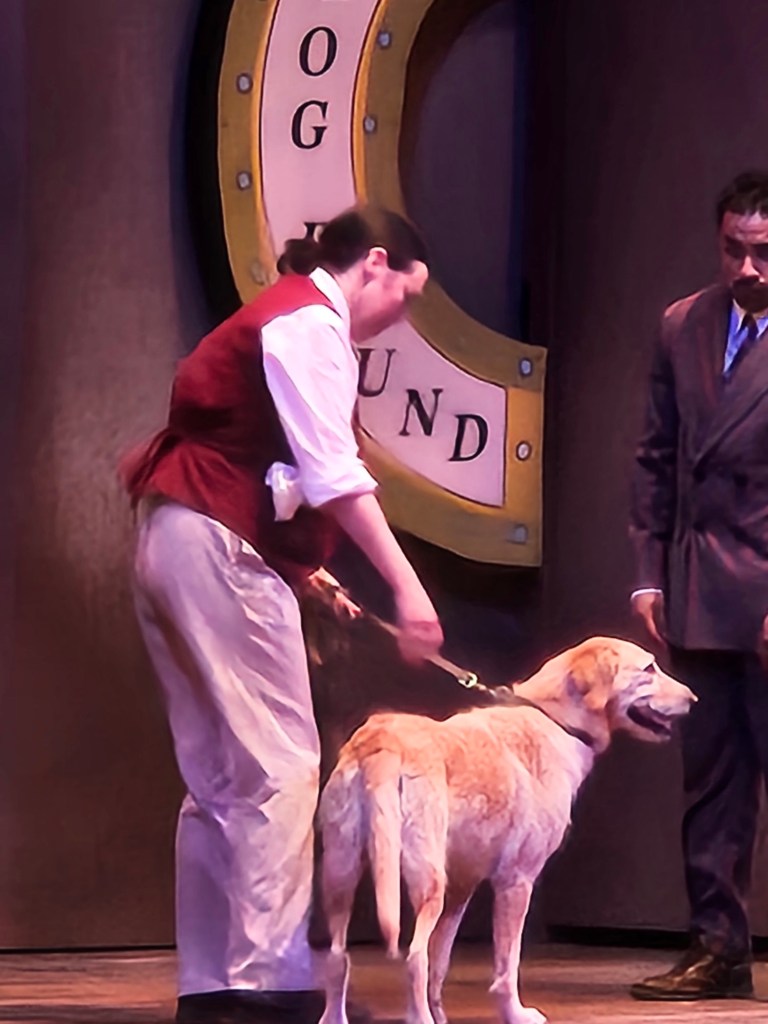
    Tilly as Crabbe the Dog

    For most people in the audience, the true star of the show was Tilly as Crabbe the dog. When my kids and I took our seats, my son’s immediate question was “When is the dog coming?” To be fair, Tilly is very cute and never once breaks character.

    My Reaction

    I tried my best to separate my feelings about Two Gentlemen Of Verona from the production. As I mentioned earlier, as Shakespeare’s first comedy, many of his more famous works are actually derived from this one. For instance, we have an Italian hero who visits his beloved by night, whose love is denied and he is banished from Verona, (sound familiar?) We also have a heroine who disguises herself as a boy, (a device which Shakespeare employs at least six times), a comic servant, a maid, pirates, a foppish suitor, and a bit where the heroine secretly obtains her beloved’s ring. As a hardcore Shakespeare fan, seeing these repeated devices and characters was a little tedious after recognizing them from other plays. I also felt that the dialogue should have been edited a little bit more- the play was about 2 1/2 hours which I felt was a little too long. That said, the skill of the actors and the creative use of the setting helped make Two Gentlemen Of Verona an enjoyable experience for all.

    In conclusion, I can see why people like this play and I too enjoy it, despite its questionable subtext.

    If you like this analysis, you might be interested in signing up for my Outschool Course on Shakespeare’s Comedies. Link down below. Share this class with a friend and you will get $20 USD off!
    You’ll also get $20 USD when you sign up with your link and take their first class!

    https://outschool.com/classes/shakespeares-comic-plays-868BR5hg?sectionUid=420e2feb-050f-456b-8d06-6510f6b9ad2c&usid=MaRDyJ13&signup=true&utm_campaign=share_activity_link

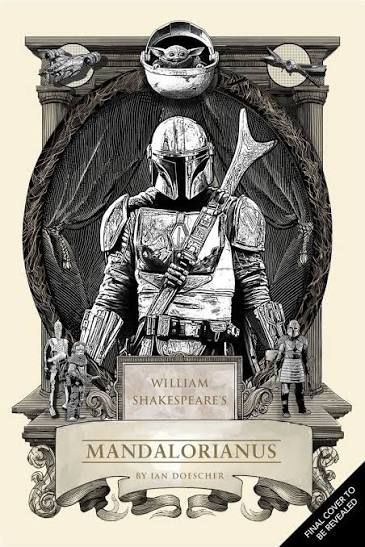
    Sonnet inspired by the Mandolorian

    The Child is locked within that room, alack!
    Too high to fly and the doors are far too thick
    Perhaps this console I can disarm or hack
    O Fate! Thou play'st upon me yet another trick.
    To enter I must show this Droid my face
    A thing most vile, against my holy creed.
    Methinks I hear The Armorer's voice 'cross space:
    "This is the way of Mandalore, take heed."
    This is MY WAY, MY QUEST, MY SACRIFICE
    Behold my face, thou cold and lifeless sentry.
    A few seconds shame should thee suffice
    Open the gate! Let me have present entry!

    Strange, up to now, my face hath been my mystery
    My Grogu's life is far more dear to me.