Review: HAMLET HAIL TO THE THIEF, Barbican Theatre | BroadwayWorld



We all love villains from Darth Vader in “Star Wars,” to Ursula in “The Little Mermaid” to the classic characters of literature, we just love villains. These are people of immense power and focus who use their skills of intimidation and persuasion to hoodwink an entire country, empire, or an entire planet sometimes. I feel it’s safe to say though that when confronted with real life with villains we are quite disturbed and hope that their cruelty or destructive schemes will soon be brought to an end.
I’m sure you’ve been hearing in the news how Donald Trump is spreading highly xenophobic dogma about Muslims, and has been getting a lot of backlash in the press and from both political parties. In fact, scholar and activist David Signer has pointed out that Trump fits the profile of a modern-day demagogue on par with such figures as Idi Amin, Hitler, and even the head of ISIS. Is this fair comment, or just sensationalism on the part of the media?
A demagogue, according to dictionary.com is somebody who purports themselves to be a man of people somebody who tries to mobilize the public, and claims to be opposing the old guard, but who ultimately uses the prejudice and hatred of the masses to his or her advantage. In other words these are the type of people who want a revolution; people like Napoleon, Stalin, and especially Hitler are examples of demagogues.
Does Trump deserve to be lumped in with such a notorious group? He has been billing himself as an antidote to the people who currently hold the levers of power. He’s polling very well with people who are sick and tired of the current state of our country, which means he does in fact fit a demagogue’s profile. A demagogue isn’t necessarily bad, however their potential for evil is unsurpassed.
One writer who obsessed over the uses and abuses of power is of course William Shakespeare. Therefore I looked at some of Shakespeare’s greatest villains who all share the traits of demagogues and realize the Trump shares something in common with all of them. Here is my analysis of a few of Shakespeare’s greatest baddies, and how they are like our current Republican front runner.
Demagogue number one: Coriolanus, Coriolanus
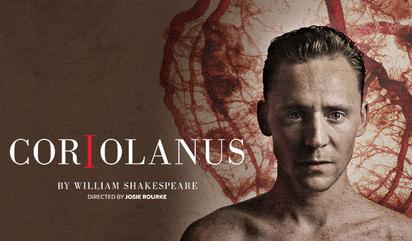
Strictly speaking, this character could be a villain or a hero, depending on who you ask. In the play that bears his name, Coriolanus is a Roman general who wins a great victory fighting Rome’s enemies. Like Trump, Coriolanus’ name is a brand- his real name is Caius Martius, but was awarded a new surname in the Battle of Corioli.
After the battle, Coriolanus tries to capitalize on Rome’s gratitude to make himself Consul and govern most of the empire. In order to become Consul, he has to court the people, (most of whowhom don’t believe the Roman republic represents them). One of the senators, Menenius, compares Rome to a human body, and the senate to a stomach:
MENENIUS
The senators of Rome are this good belly,
And you the mutinous members; for examine
Their counsels and their cares, digest things rightly
Touching the weal o’ the common, you shall find
No public benefit which you receive
But it proceeds or comes from them to you
And no way from yourselves. Cor. I.I
This passage illustrates that, in order for a country to function, the people need to allow the government to distribute power to them. A demagogue like Coriolanus ruins the social contract by trying to get the people to rebel. Signer mentions in his interview that when Trump attacks the body politic with hateful rhetoric, he infects it like an autoimmune disease, which mimicks the body speech in Coriolanus.
Coriolanus and Trump both want to be put in charge, but whenever anyone questions their fitness to govern, they fly into rages, often resorting to childish name calling:
Compare this speech from Coriolanus to Trump, who has been known to call his critics, “liars,” “crooks,” “fat pigs,” ”dogs,” ”slobs,” and “disgusting animals.”
CORIOLANUS
You common cry of curs! whose breath I hate
As reek o’ the rotten fens, whose loves I prize
As the dead carcasses of unburied men
That do corrupt my air, I banish you;
And here remain with your uncertainty!
Let every feeble rumor shake your hearts!
Your enemies, with nodding of their plumes,
Fan you into despair!
Coriolanus hates the common people, but demands that they support him without question. In a sense, Coriolanus is the opposite of a demagogue since he sides with the elite against the common people and the republic that represents them.
Demagogue #2: Jack Cade from Henry VI, Part II
Cade is the best example of a man of the people who becomes a corrupt warlord. Like Napoleon and Hitler after him, he rises to power during a time of political unrest- in this case, the civil war known as The Wars Of the Roses. Cade leads a lynch mob who kills everyone with authority over the common people, with particular fierceness against anyone who can read or write. One of Cade’s soldiers utters the famous Shakespearean line: “First thing we do, let’s kill all the lawyers.” This line has become a funny catchphrase because we all want to shake off the chains of the legal system or the political checks and balances we live in, but as Cade demonstrates, when you give into mob rule, tyranny soon follows.
Cade claims to be fighting for the common people, but by the end of the play, he becomes a full-on dictator:
The proudest peer in the realm shall not wear a head on his shoulders, unless he pay me tribute; There shall not a maid be married, but she shall pay to me
Her maidenhead ere they have it: men shall hold of me in capite; and we charge and command that their wives be as free as heart can wish or tongue can tell (Act IV, Scene vii).
Men like Cade are power-hungry warlords and like Trump, they’ll say anything to attract the most malcontents. To quote Signer, once a demagogue takes over the state,”What they do is they create a substate that is accountable to them alone,” which is why Cade is willing to destroy and pervert all English laws that don’t suit his own selfish goals. Similarly, Trump’s proposal to refuse all Muslim immigrants flies in the face of the US Constitution and the principals of religious freedom that it guarantees.
Demagogue #3: Richard III
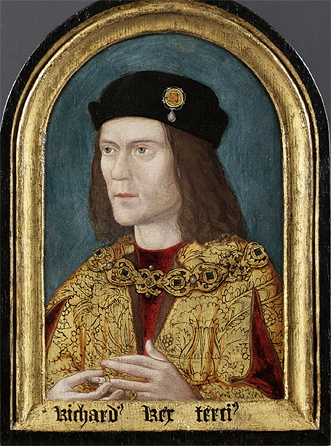
I hesitate to compare Donald Trump to Shakespeare’s most diabolical villain, the hunch-backed cripple Richard of Gloucester, who murders his way to the crown in Richard III, but Trump’s shameless attacks on minorities to stir up support for his campaign echo Richard’s schemes to slander his opponents (in addition to slaughtering them).
According to David Signer, one tactic that demagogues use is to manipulate the emotions of their supporters, and the time honored way for demagogues to manipulate emotions is to blame all of the old regime’s problems on a common enemy. Trump has blamed our nation’s problems on Muslim and Hispanic immigrants, while Richard blamed many of the kingdom’s problems on the Queen, claiming her relatives were taking coveted positions from “more deserving” nobles, like in this speech where Richard convinces his brother that the Queen arrested him, when it was Richard himself who arrested his brother Clarence:
GLOUCESTER
Why, this it is, when men are ruled by women: ‘Tis not the king that sends you to the Tower:
My Lady Grey his wife, Clarence, ’tis she
That tempers him to this extremity.
Was it not she and that good man of worship, Anthony Woodville, her brother there,
That made him send Lord Hastings to the Tower,
From whence this present day he is deliver’d?
We are not safe, Clarence; we are not safe. Richard III, Act I, Scene i.
The other surprising comparison I can make between Trump and Richard, is that they are both related! According to the website MyHerritage.com, there is a genetic link (albeit small) between Trump and the notorious Richard of Gloucester!
To sum up, when politicians try to turn over the apple cart, puncturing the constitution of our country, and encouraging people to dispense with established political order, the result is a deeply wounded nation and the potential for numerous examples of tyranny and despotism.
Sources:
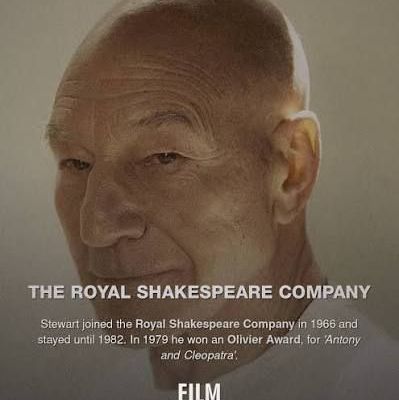
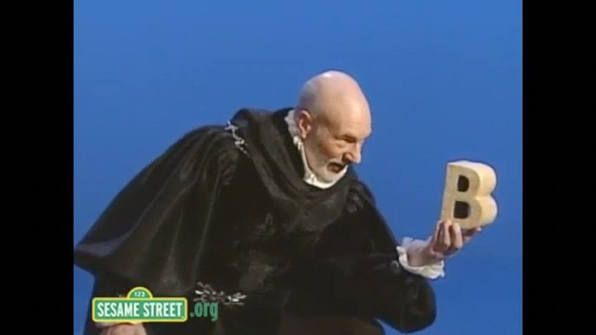
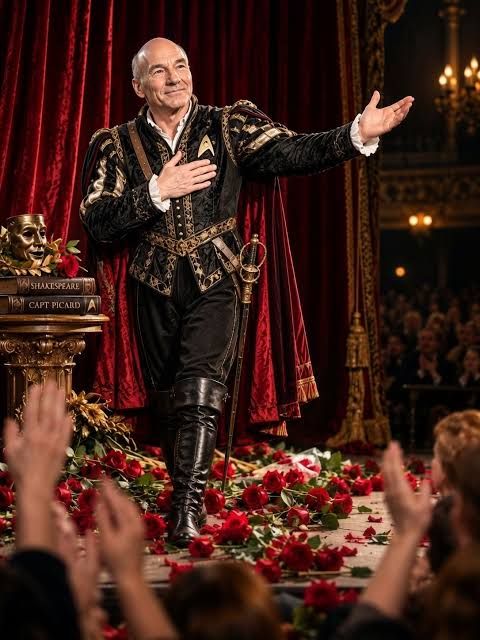
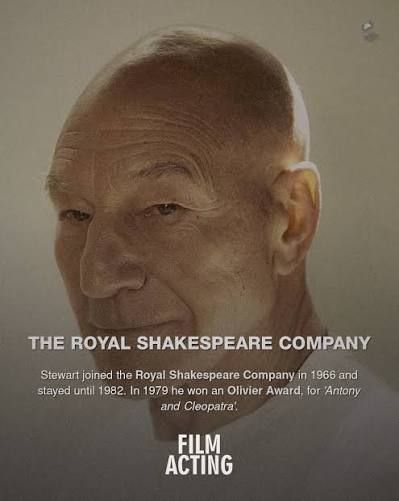
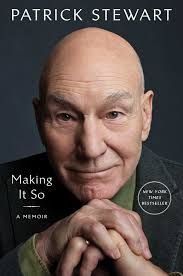
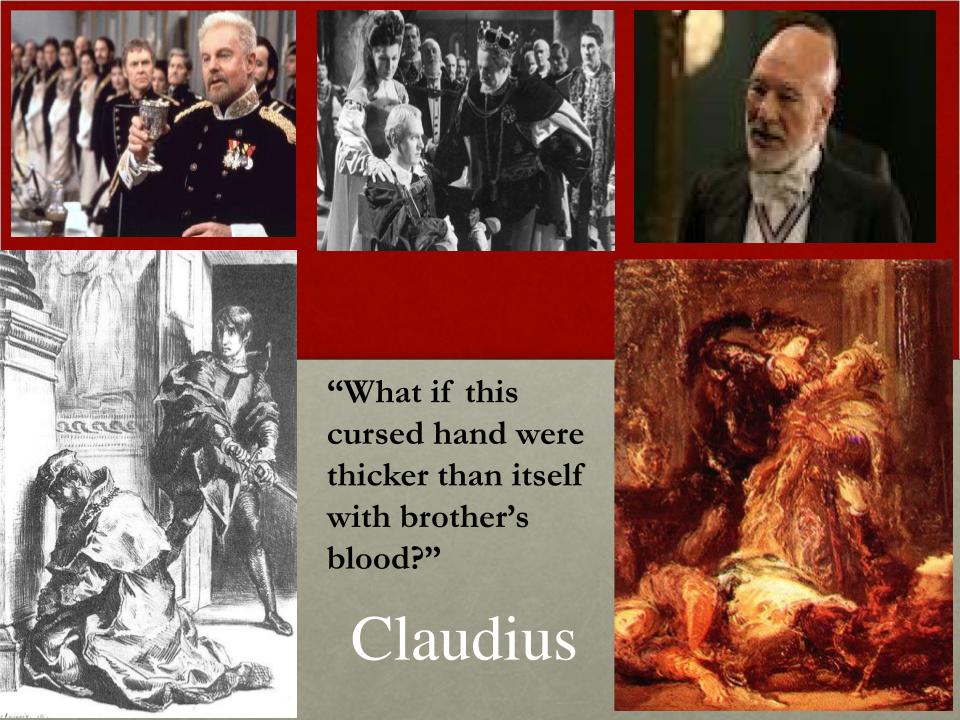
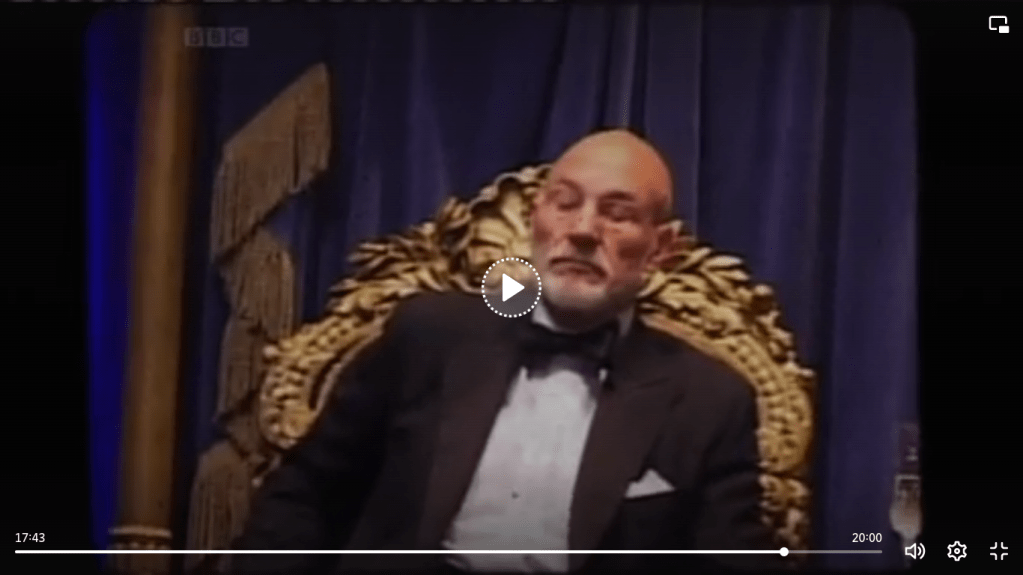
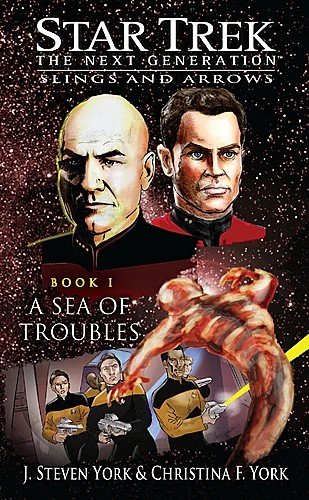
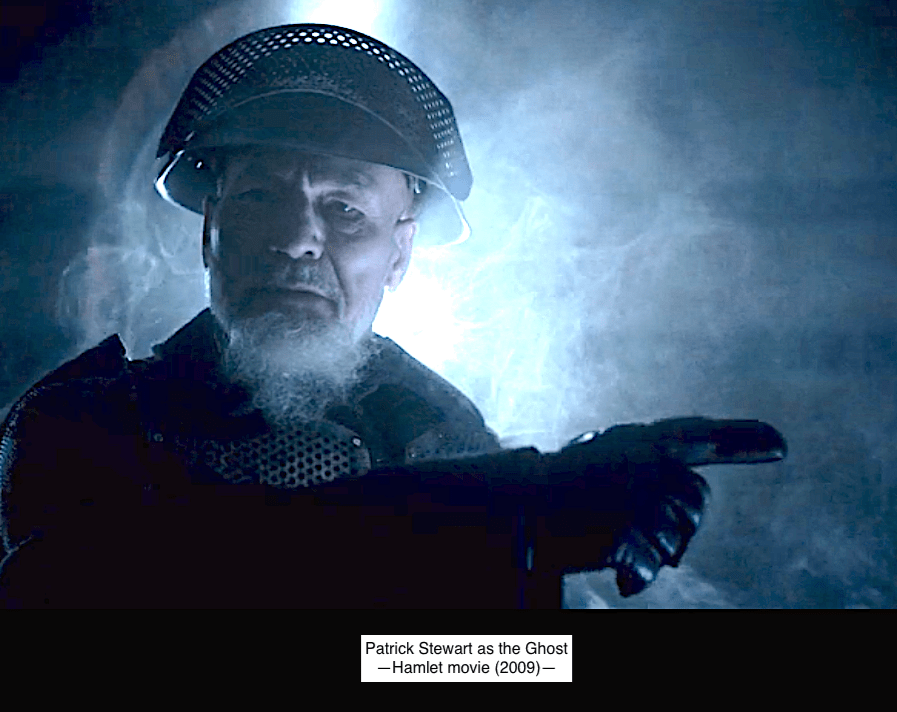


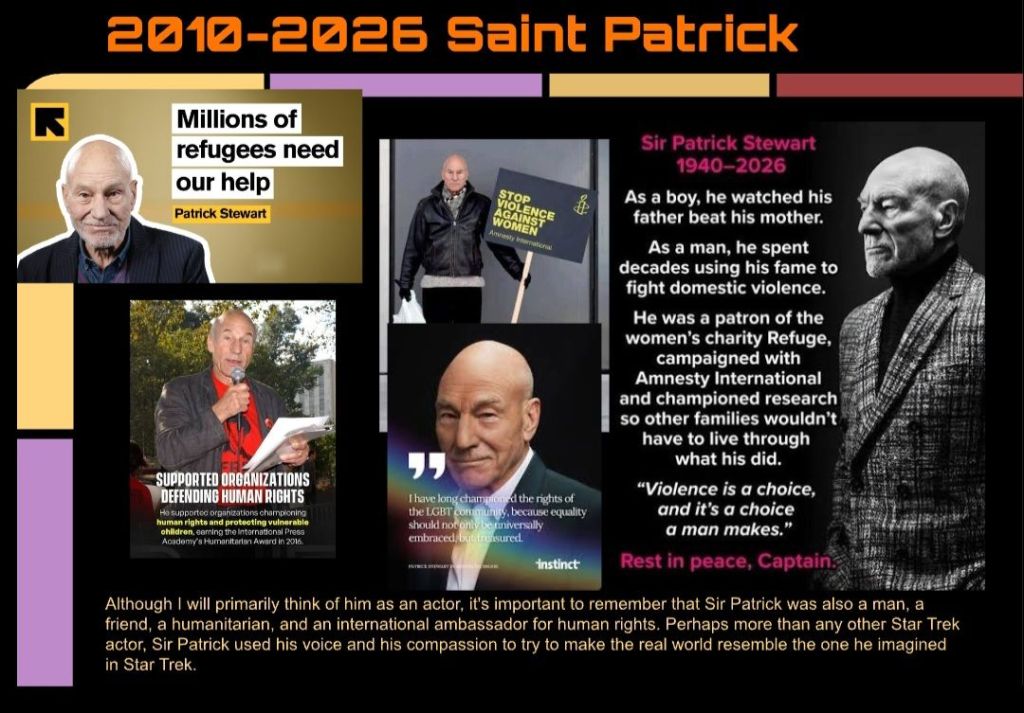
If you’re like me, you are still mourning the loss of beloved actor, Sir Patrick Stewart. Most visitors to my website know that he was more than a movie star, creator of such iconic characters as Professor X in X men and Captain Jean Luc Picard in Star Trek; he was also an accomplished Shakespearean actor. As I’ve written before, Sir Patrick was not only a great Shakespearean actor, he became an icon for Shakespearean acting, and was sort of an avatar for Shakespeare himself.
Since Sir Patrick meant so much to so many people, this tribute is only part of a series. What I want to do is start by showing you my journey of discovery- how I became acquainted with Stewart’s work, and how it helped shape my understanding of acting, Shakespeare, and the world at large.
I was born in 1984- the year Orwell told us would be a hideous technocracy with the government observing and controlling our every move.
In 1987, Gene Roddenberry created a much more optimistic vision of the future- a future where all peoples of the Earth live in peace and harmony, united on a misison of scientific discovery across the stars. As a kid, I was too young to see Star Trek once it came out, but soon, it would become an abiding obsession in my childhood.
My first introduction to Sir Patrick and Star Trek came from his friend LaVar Burton. At the time, I was an avid fan of the TV show Reading Rainbow, and as a child, I saw this:
I was too young to watch much Star Trek live, but once it was syndicated, I ate it up- I watched episode after episode, (and amassed an impressive collection of toys and other merchandise). More importantly, I was beginning to understand that Shakespeare was more than a lofty dead author, he was a writer who could inspire people and be used to help them understand the world (or galaxy).
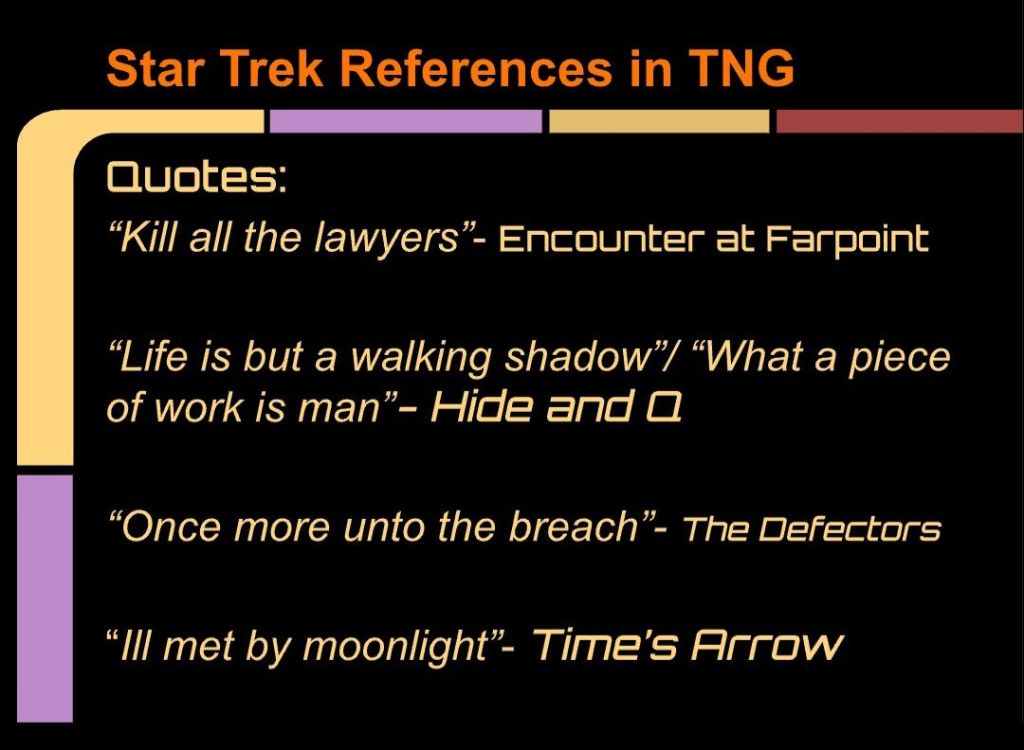
Austin Tichenor of the Reduced Shakespeare Company pointed out that, although most of us read Shakespeare in school, we don’t engage with it much (no pun intended). In school, Shakespeare is a passive experience- plots, themes, and characters are spouted at us by a teacher, and we rarely learn how to apply Shakespeare to our daily life. In the world of Star Trek, Shakespeare is used like a secular Bible- whenever the human characters try to explain or understand human nature to themselves or to aliens, robots, or godlike entities, they quote Shakespeare. https://youtu.be/JWit15tvkBs?is=Dg7Dk0A6PA29kbo3
Commander Data’s struggle to understand humanity extends to reading and performing Shakespeare himself, as this clip shows:
Data even impersonates a Shakespearean actor playing Puck in the episode Time’s Arrow, (a preview of Spiner’s role as Puck in Gargoyles):
in the two-part episode “Chain Of Command,”another veteran Shakespearean actor David Warner, captures and tortures Captain Picard!
The chilling way Warner plays Gul Madred is one of the high points of the series. He and Stewart worked before on a production of Hamlet in 1965, and the way these two play off each other is masterful. Warner is powerful, in command, dangerous, and sly. Picard never knows when he is telling the truth, and as time goes on, Madred revels in how much closer he is to breaking the pitiful human. Still, Picard in his wonderful stoicism never breaks, and briefly manages to turn the tables on Gul Madred, when he makes the mistake of opening up to Picard about how in reality, he is a scared and miserable soul, trying to fill the emptiness of his heart with power and sadistic pleasure. Again, these two actors are so powerful that all you need is them, and a dark room to create compelling drama.

After Star Trek ended, I started seeing Sir Patrick in many Shakespeare-adjacent roles, such as the Shakespeare quoting Canterville Ghost or the King of Texas (which was itself a cowboy re-telling of King Lear). For me, these TV performances piqued my interest, and inspired me to study Shakespeare myself.
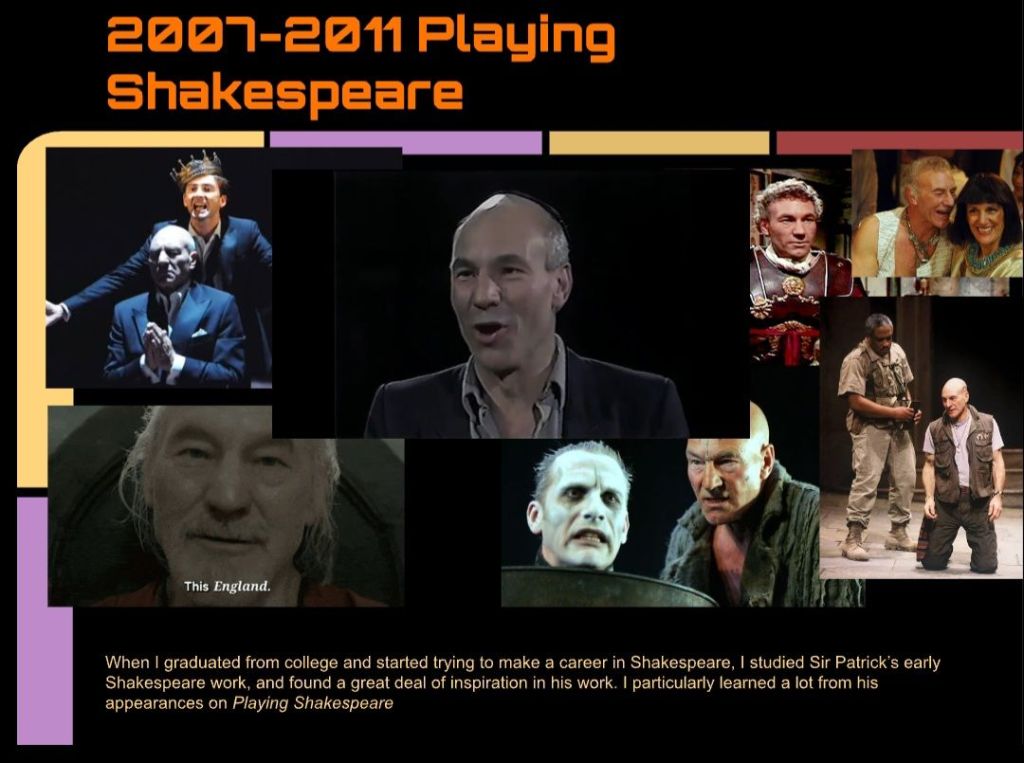
When I graduated from college and started trying to make a career in Shakespeare, I studied Sir Patrick’s early Shakespeare work, and found a great deal of inspiration in his control of the language.
I particularly learned a lot from his appearances on Playing Shakespeare, a 1975 TV show produced by the Royal Shakespeare Company. This show is an invaluable resource for Shakespearean actors because it parts the curtain and allows the actors to get at the way they approach Shakespeare’s language. One of the highlights of the show is an episode where Stewart and fellow RSC actor David Suchet, discuss their very different approaches to playing the same character- Shylock from The Merchant of Venice:
Stewart has given so many memorable Shakespearean performances over the years, but one of my favorites was when he played Marc Antony in Antony and Cleopatra. Sir Patrick played Antony as a shadow of his former self- a drunk, foolish old man who is completely blinded to the threat Octavian poses to him. Stewart said that he based his portrayal on his own father, who was himself a soldier and an alcoholic. With this in mind, the portrayal has an uncomfortable truth to it- you see a man who is destroying himself and undoing his golden reputation.
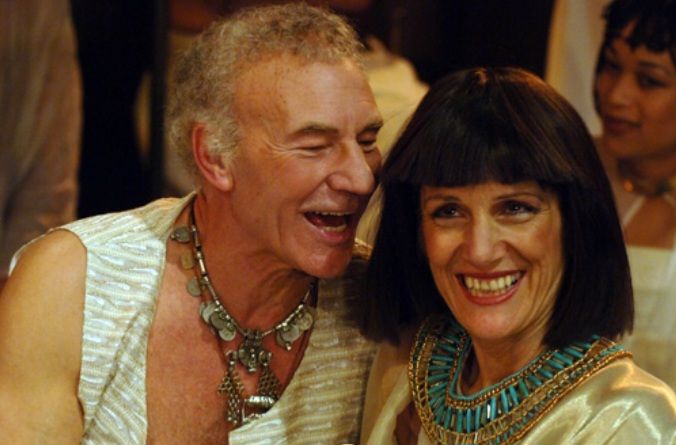
At the same time, Stewart makes us feel for him; since so many people admired Stewart (myself included), seeing him play a man who is bringing himself low, makes us all want to save him from himself. It’s the definition of catharsis.
https://geekfrontiers.com/pittsburgh-history/the-1975-star-trektacular-and-twelfth-night/
http://bardfilm.blogspot.com/2008/11/discoveries-in-undiscovered-country.html

