Crafting A Character: Brutus from Locrine

You might have read my previous post about Locrine and Humber from that play. Well, today I will continue this series by discussing the other character I play, the mythical founder of Britain, King Brutus.

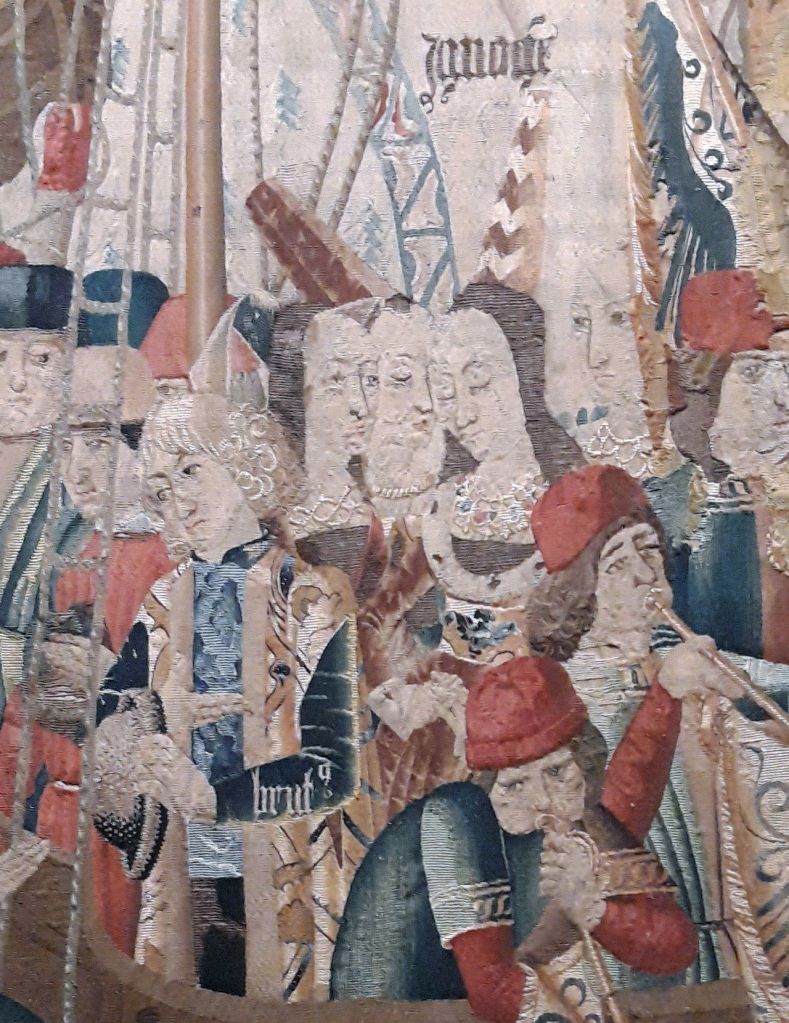
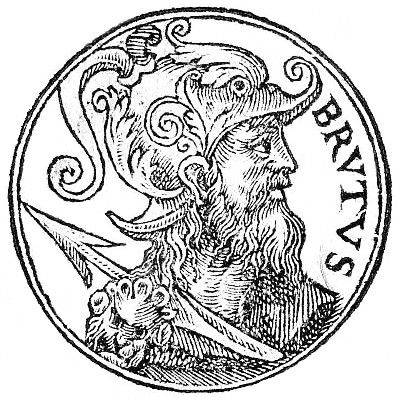
Brutus of Troy

Now before you ask- NO, THIS IS NOT Marcus Brutus, the man who stabbed Julius Caesar. This Brutus actually lived before said conspirator, around the year 11000 BC. Writers like Geoffrey of Monmouth, writing after the Norman Conquest of England, recorded the story of Brutus as a way of getting the British people on board with a single king uniting all of the kingdoms of England.
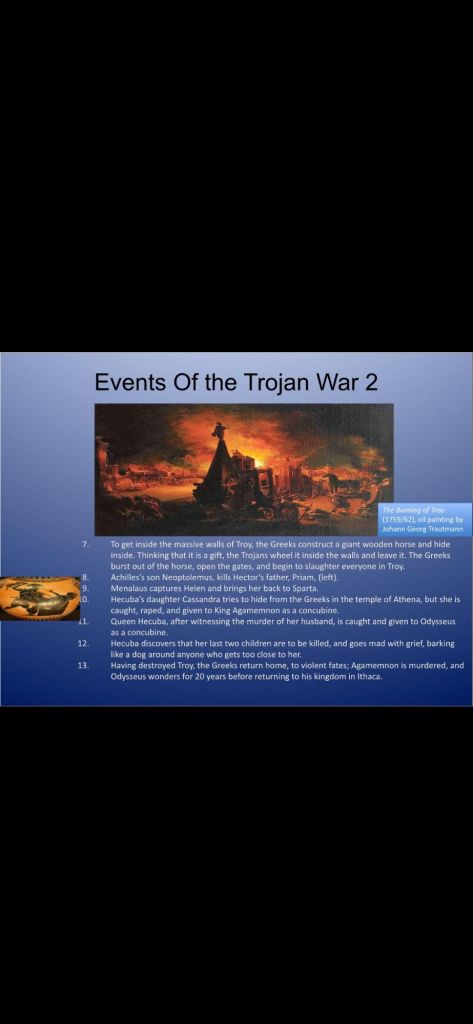
According to Monmouth (who clearly had an influence on the writer of Locrine), Brutus was the grandson of Aeneas, the sole survivor of the infamous Trojan War. Like the ancient Greek legends of Perseus or Hercules, Brutus is exiled from Italy for accidentally killing his father, and must then create a new empire in Britain.

Brutus! there lies beyond the Gallic bounds
An island which the western sea surrounds,
By giants once possessed; now few remain
To bar thy entrance, or obstruct thy reign.
To reach that happy shore thy sails employ;
There fate decrees to raise a second Troy,
And found an empire in thy royal line,
Which time shall ne’er destroy, nor bounds confines  – Diana’s speech to Brutus
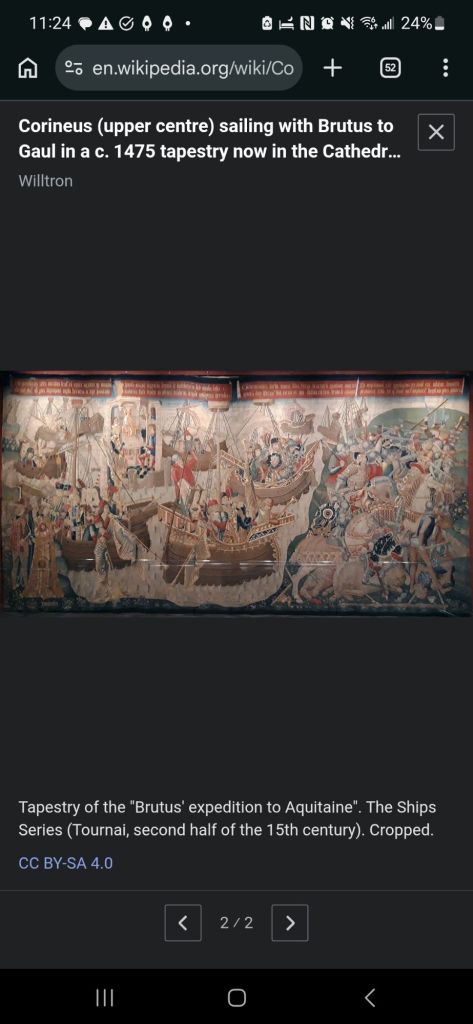
Historia Regum Britanniae by Geoffrey of Monmouth, c1136

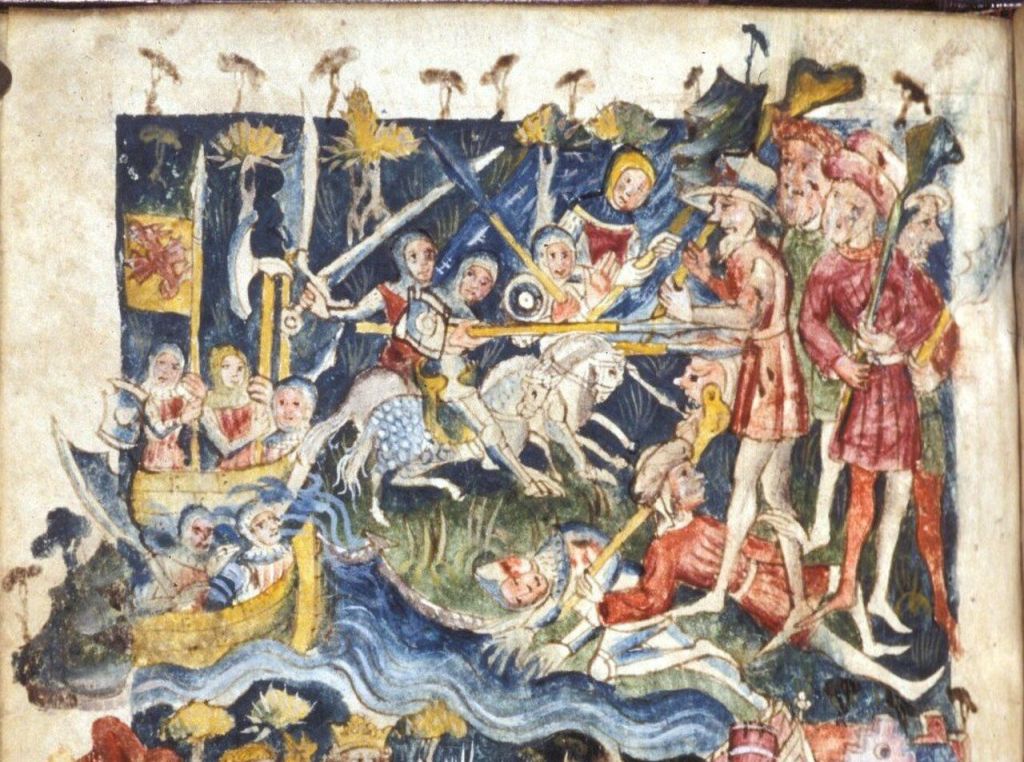
To secure his empire, Brutus must tame the savage giants that rule the untamed wilderness of Britain, in a mythical battle that is still celebrated to this day.
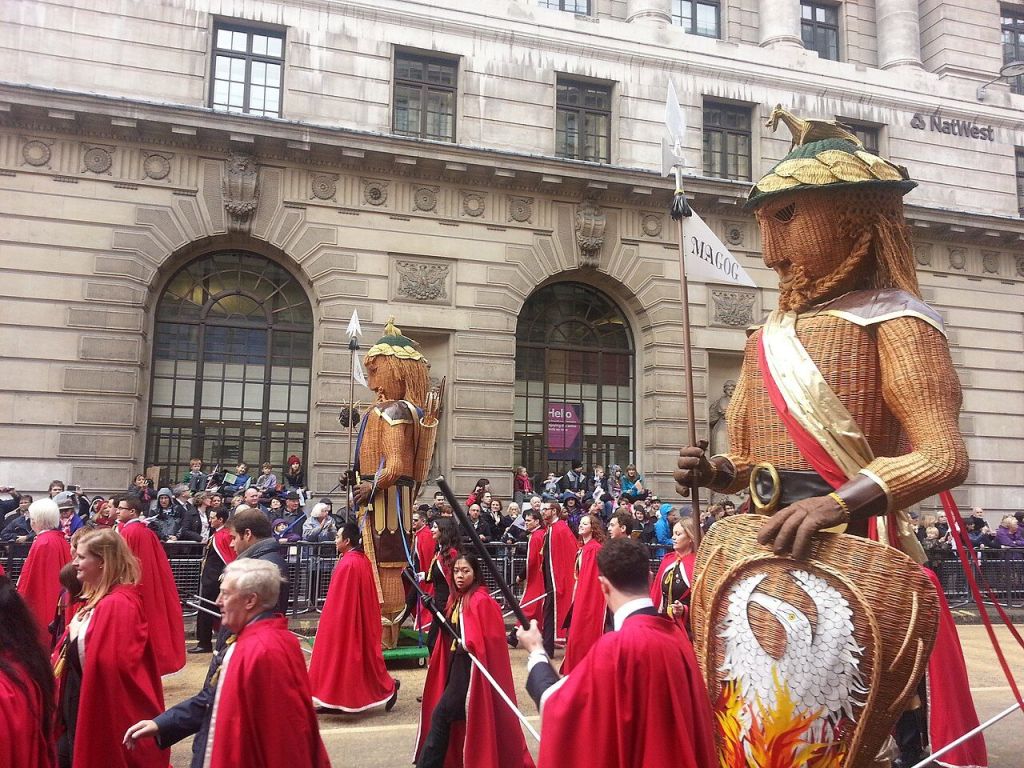
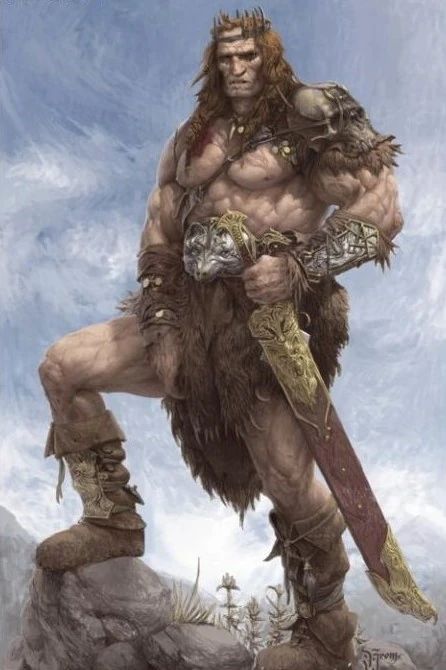
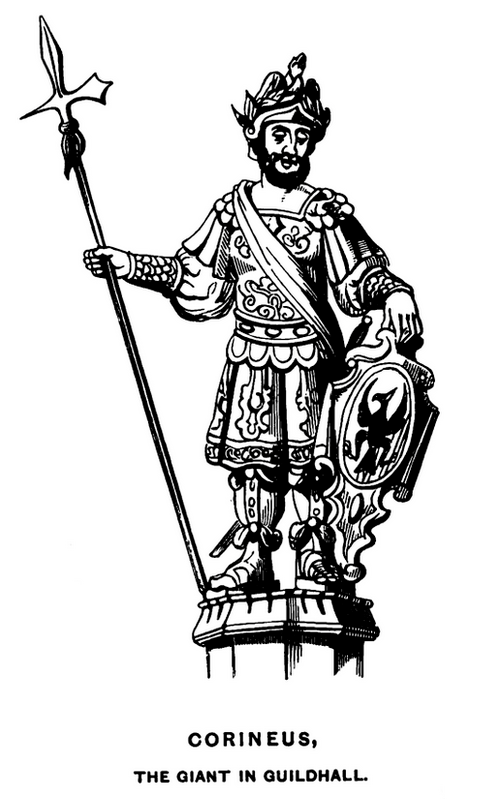
At the beginning of the encounter, Corineus and the giant, standing, front to front, held each other strongly in their arms, and panted aloud for breath, but Goëmagot presently grasping Corineus with all his might, broke three of his ribs, two on his right side and one on his left. At which Corineus, highly enraged, roused up his whole strength, and snatching him upon his shoulders, ran with him, as fast as the weight would allow him, to the next shore, and there getting upon the top of a high rock, hurled down the savage monster into the sea; where falling on the sides of craggy rocks, he was torn to pieces, and coloured the waves with his blood- Monmouth

Function in the Play

  1. Legacy of Troy- As I mentioned before, Brutus establishes the link between ancient Troy, and the founding of Britain.

The island was then called Albion,[9] and inhabited by none but a few giants. Notwithstanding this, the pleasant situation of the places, the plenty of rivers abounding with fish, and the engaging prospect of its woods, made Brutus and his company very desirous to fix their habitation in it. They therefore passed through all the provinces, forced the giants to fly into the caves of the mountains, and divided the country among them according to the directions of their commander. After this they began to till the ground and build houses, so that in a little time the country looked like a place that had been long inhabited. At last Brutus called the island after his own name Britain, and his companions Britons; for by these means he desired to perpetuate the memory of his name.

2. Corineus’ Brother In Arms

Like a lot of characters in Shakespeare’s history plays, Brutus has a loyal second in command, Corineus, the mythical founder of the kingdom of Cornwall. After Brutus dies, Corineus is a sort of Lord Protector, lending his council and military experience to Locrine and his brothers:

The name of their commander was Corineus, a modest man in matters of council, and of great courage and boldness, who, in an encounter with any person, even of gigantic stature, would immediately overthrow him, as if he were a child. When they understood from whom he was descended, they joined company with him and those under his government, who from the name of their leader were afterwards called the Cornish people, and indeed were more serviceable to Brutus than the rest in all his engagements. – Historia Regum Britanniae by Geoffrey of Monmouth, c1136
  1. Patriarch– Brutus’ sons become the first kings of England, (Locrine), Scotland (Albanact), and Wales (Camber).

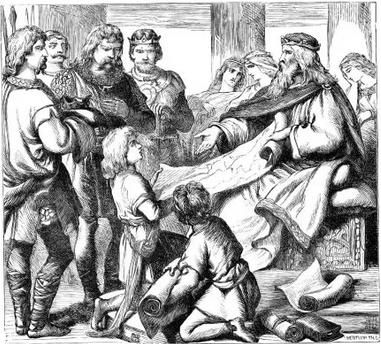
During these transactions, Brutus had by his wife Ignoge three famous sons, whose names were Locrin, Albanact, and Kamber. These, after their father’s death, which happened in the twenty-fourth year after his arrival, buried him in the city which he had built, and then having divided the kingdom of Britain among them, retired each to his government.

  1. King Lear Right after Brutus’ story in Monmouth’s chronicle comes the ancient story of King Lear, the same story Shakespeare would later adapt into his own play. Like Lear, Brutus has to divide his kingdom, but unlike Lear, he does not try to test his children’s loyalty.
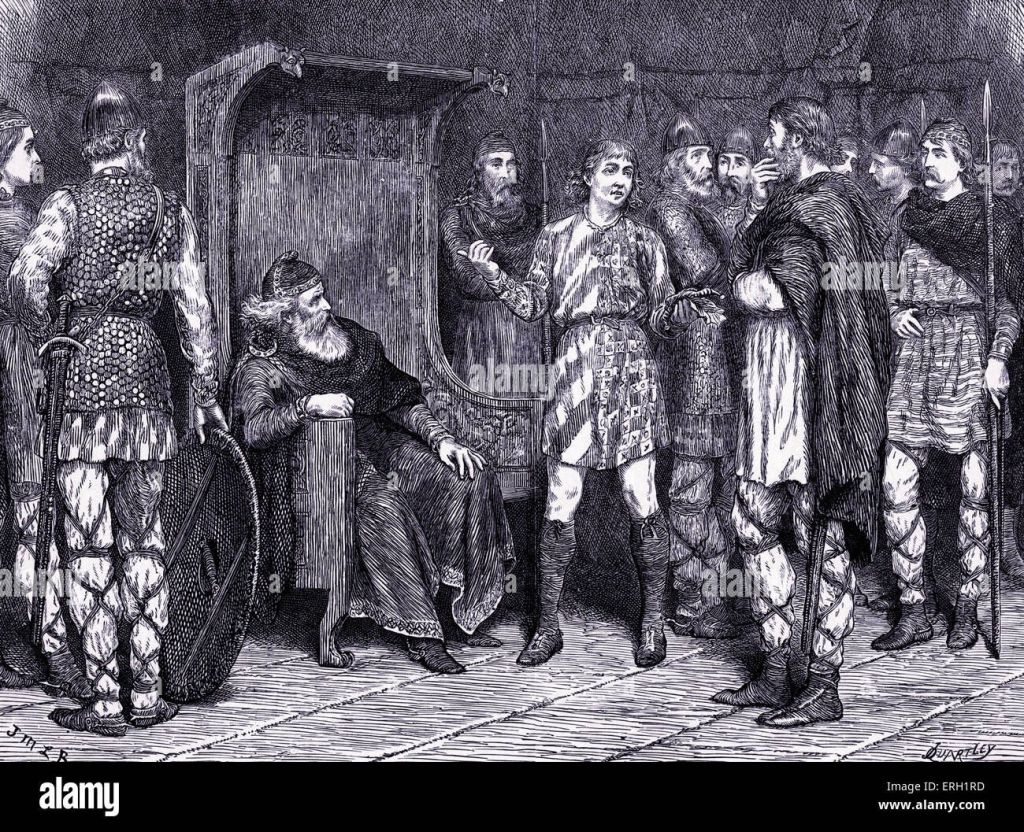
Locrin, the eldest, possessed the middle part of the island, called afterwards from his name, Loegria. Kamber had that part which lies beyond the river Severn, now called Wales, but which was for a long time named Kambria; and hence that people still call themselved in their British tongue Kambri. Albanact, the younger brother, possessed the country he called Albania, now Scotland. After they had a long time reigned in peace together, Humber, king of the Huns, arrived in Albania, and having killed Albanact in battle, forced his people to fly to Locrin for protection.

Our Interpretation
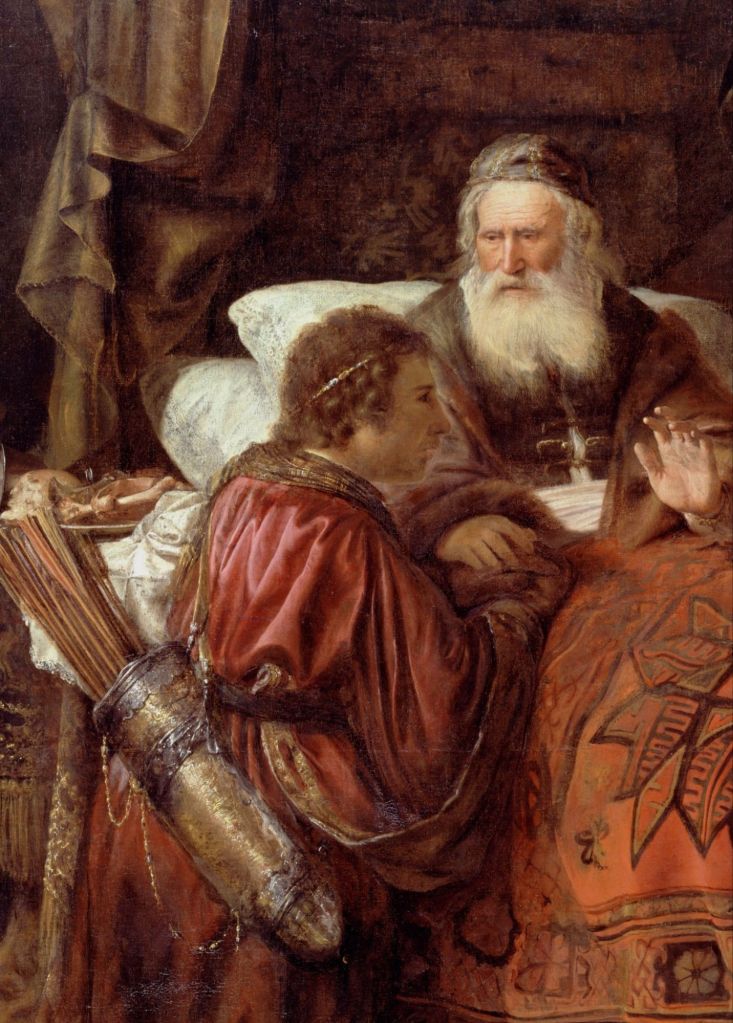
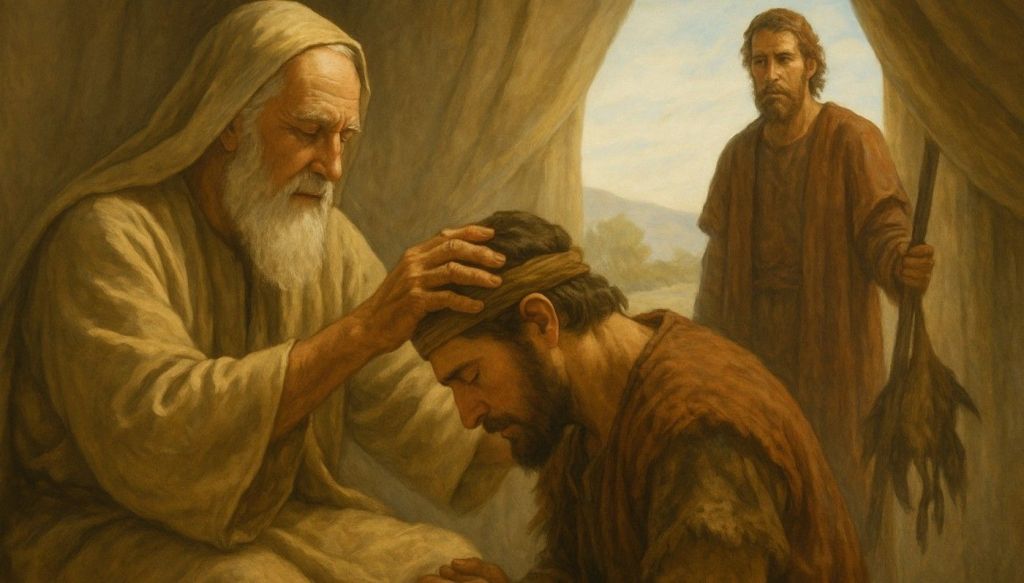
Isaac blesses Jacob

Those who sought to deface our memory,
wipe the name of Trojans from the earth
Those did I captivate with this mine arm.
And in this Isle at length I placed you.
– Locrine, Act I.i

I see Brutus as an intimidating king like Hamlet’s Father (before he became a ghost). I also see him as similar to an Old Testament patriarch like Moses or Isaac- he was led by a god to the promised land, and gave it to his children, who must now protect and defend it.
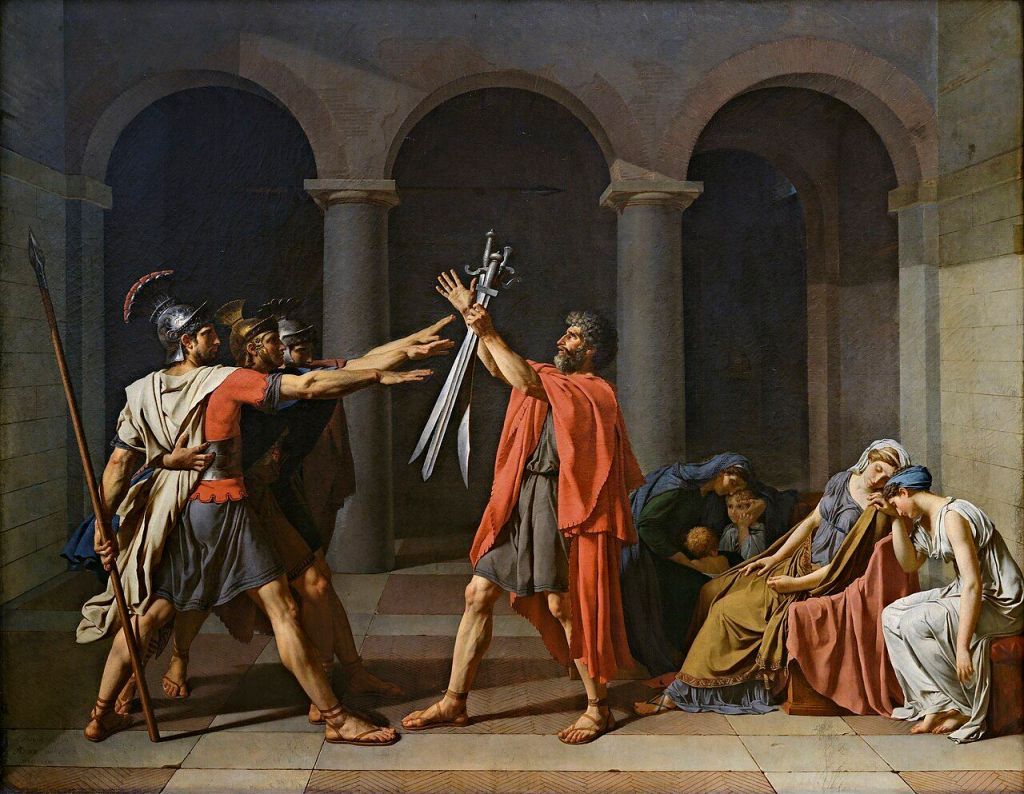
Oath of the Horatii by Jaques Louis David
  1. Colonizer

On the other hand, one could also see Brutus as a colonizer- he takes land that wasn’t his and overthrows the natural order. This is a dimension that is not explored in the original story, but our version highlights it.

Playing Brutus

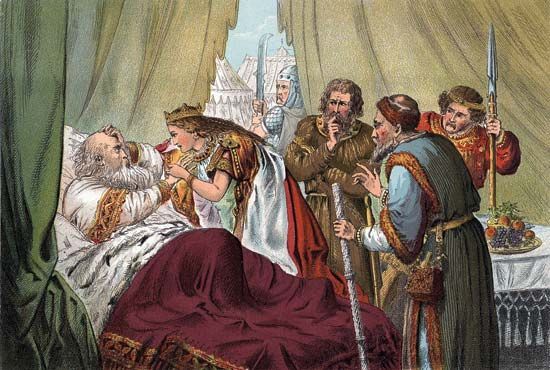
  1. Look and physicality– For such a mythic figure, I tried to play Brutus with as much strength and gravity as possible, at least at first. While he is being introduced and fighting giants, I tried to make him a soldier and King in his prime. After a while though, we see Brutus on his death bed, and I play him as frail and shaky; struggling to keep his kingdom together, as he also struggles to stay alive.
  2. As Brutus ages, I had him divest himself of his armor as he divests his kingdom- to CAMBER, he gives his shield. To Albanact, he gives his sword, and to Locrine, he gives his crown.
  1. Verse

It’s interesting that most of Brutus’ lines are in Trochaic, rather than iambic verse, which could be a way to emulate older forms of verse, but I also suspect that it is designed to emphasize Brutus’ commands.

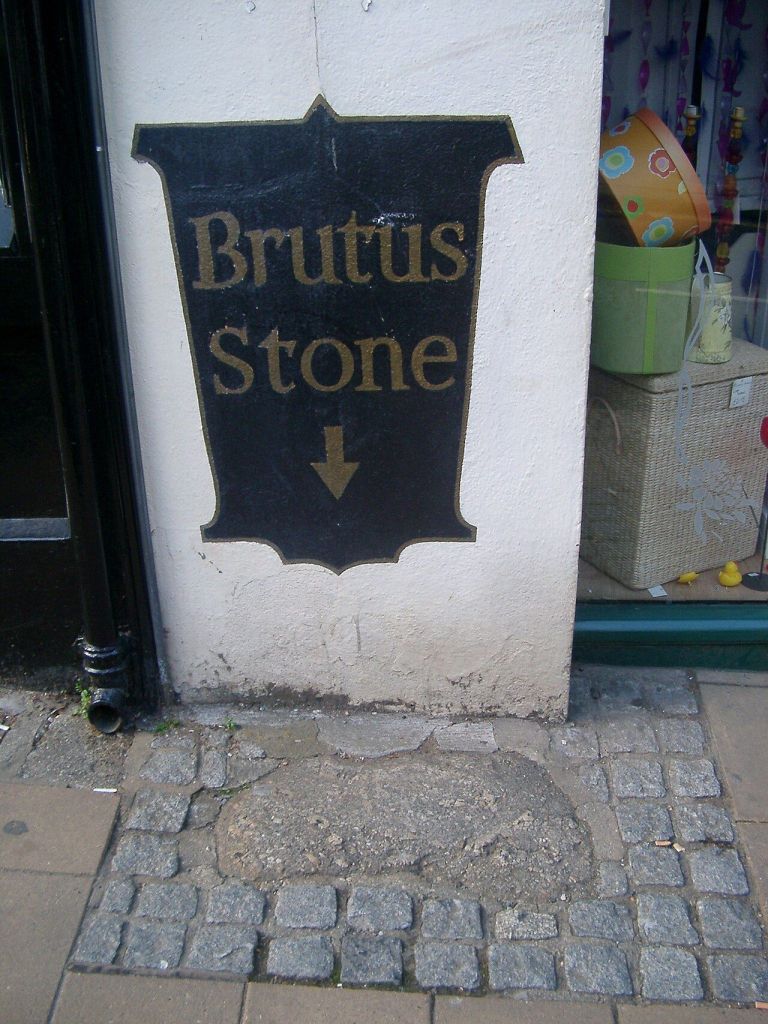
From Troy to Totnes – The Tale of the Brutus Stone

Then now, my son, thy part is on the stage,
For thou must bear the person of a King.
[Puts the Crown on his head.]
Locrine, stand up, and wear the regal Crown,
Cherish and love thy new betrothed wife.
Locrine, Act I.i

Well, there you go, Hope you enjoyed this overview of the play Locrine. If you like this review, you might like to see the show itself. Click here to purchase tickets:

Intro to Locrine

Title page for the 1595 edition of Locrine.

Locrine is an Elizabethan play, first published in 1595, whose author is, sadly, lost to history. The title page says the play was “Newly set forth, corrected, and overseen, by W.S.” As you might expect, scholars and theater practitioners have eagerly tried to prove that this means the play was written, (or at least revised), by Shakespeare. So far, no proof has been found.

“Historical” Context

Notes on the Trojan War

The play is a tragedy based on the founding of Britain. Over 2,000 years ago, a father and his three sons flee the destroyed Troy, tame the wild landscape of England, and become its first kings. After his father’s death, the eldest son, Locrine, must defend his land from barbarian invaders with the help of his brothers.

Semi-mythical characters

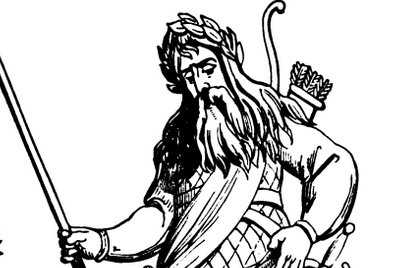
Brutus of Troy

Brutus is the patriarch of the Britons who, according to legend, was descended from Aeneas the sole survivor of the infamous Trojan War. Brutus preserves the legacy of Troy by founding a new city in Britain, Troynovant (New Troy), and establishing his three sons as heirs to his kingdom.

Camber, Brutus’ young son

Albanact

Albanact is the great warrior whom Brutus puts in charge of Scotland. He has his hands full defending Britain against the Scithian invaders.

Camber

Camber is given Cambria, (modern day Wales)

Illustration of King Locrine from  the Genealogical Chronicle of the Kings of England to Edward IV (c. 1461)

Locrine is Brutus’ eldest son, and as such he is crowned king over all Britain. According to legend, Locrine changes the capital of England from New Troy, to Locrindom, which then became London.

The Plot

Title page illustration from Locrine, 1709

The prologue

  1. Prologue describes Prometheus’ punishment as a tragedy, and his gift is a blessing. Prometheus also warns that Zeus will be overthrow if he succumbs to his desire for Thetis
  2. Ate the Goddess of revenge introduces the play, making it very clear that this is the fall of the royal house of Brutus.
  3. As the play continues, we see Brutus die, leaving his kingdom to his children

4. Humber is humbled- the villainous emperor Humber tries to conquer Britain. Many battles and many tears ensure

  1. Locrine is conquered- without giving too much away, Locrine is defeated in battle by his former wife, Gwendoline. It’s possible that, since the play was written in the last few years of the Elizabethan era, that the writer of Locrine chose Gwendolyn to be a stand in for Queen Elizabeth herself.
Gwendoline, legendary Queen regent of Britain.

A Senecan Tragedy

Locrine probably isn’t a Shakespearean play- it’s characters communicate mainly in operatic speeches that are full of passionate feelings. Plays like this are called Senecan Tragedies, based on the ancient Roman playwright Seneca.

As I mentioned in my podcast, these speeches are fun to give, but it’s a challenge to deliver them in a way that connects with an audience.

Humber’s monologue from Locrine

Dumb Shows

To illustrate key moments of the play, each act begins with a dumb show, a short pantomime which usually involves some kind of animal. For instance, when Humber defeats Brutus’ son Albanact, there is a dumb show where a crocodile kills a fish, echoing how Humber (who carries a crocodile on his shield), deceived and murdered Albanact.

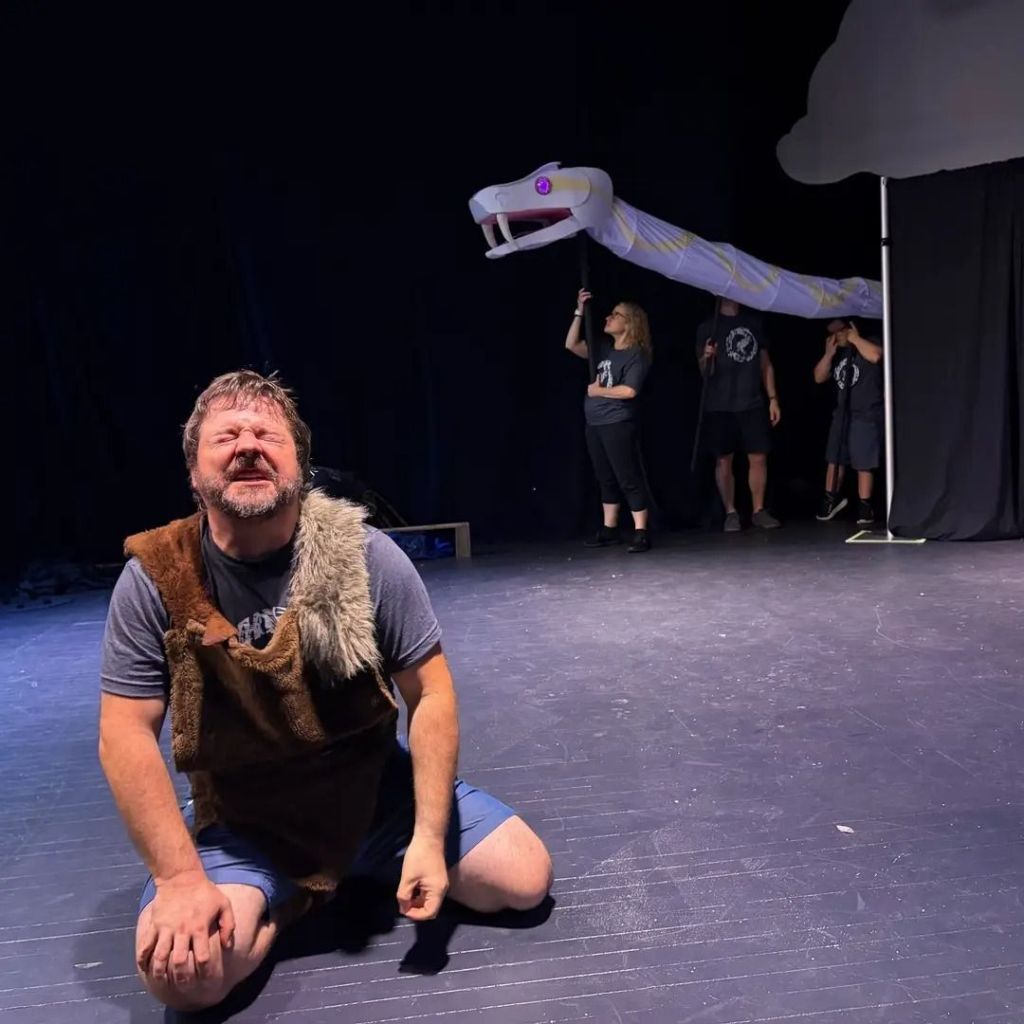
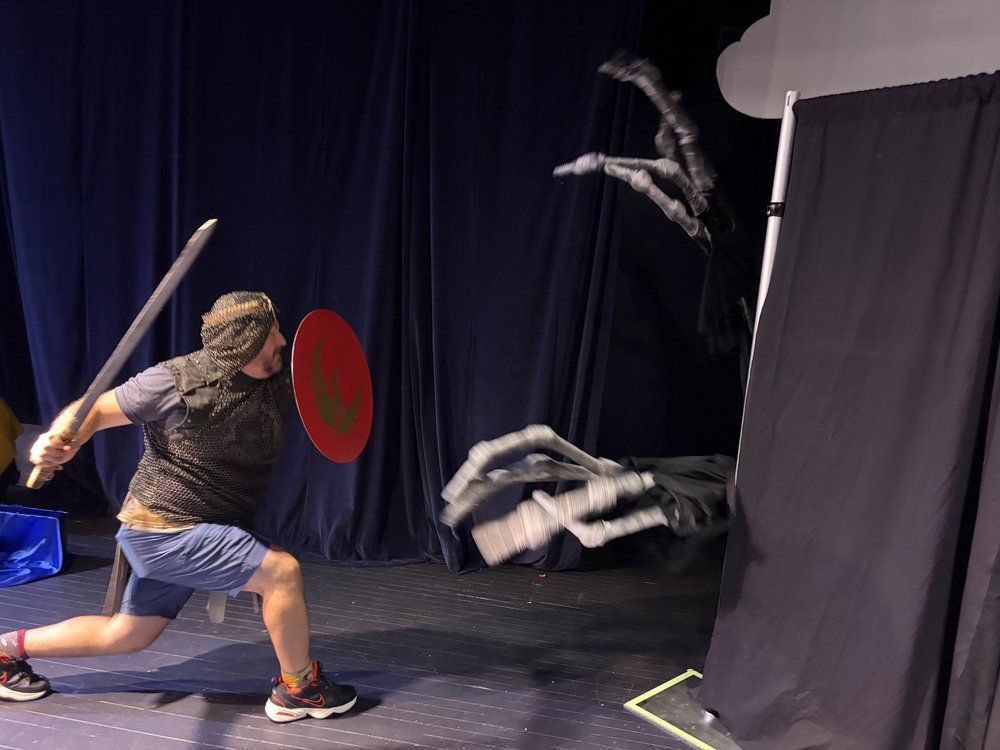
Our version of Locrine chooses to use puppets instead of real animals, most notably crows and vipers. The Mexican folktales that we intertwine with the text of Locrine mention a beautiful serpent named Kwinim Tsan, which represents the power of nature.

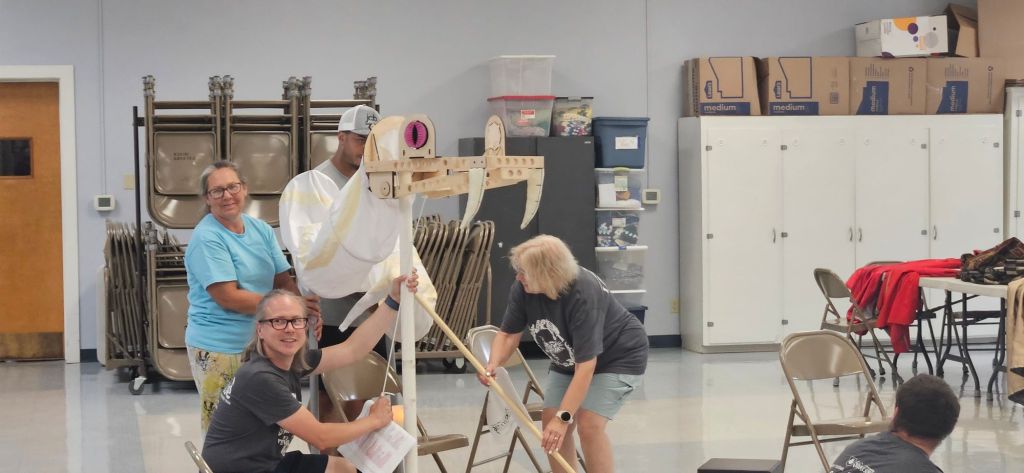
Our team works on the great serpent puppet


Our Interpretation

https://orangemite.org/laviborayelcuervo

La Vibora e Cuervo

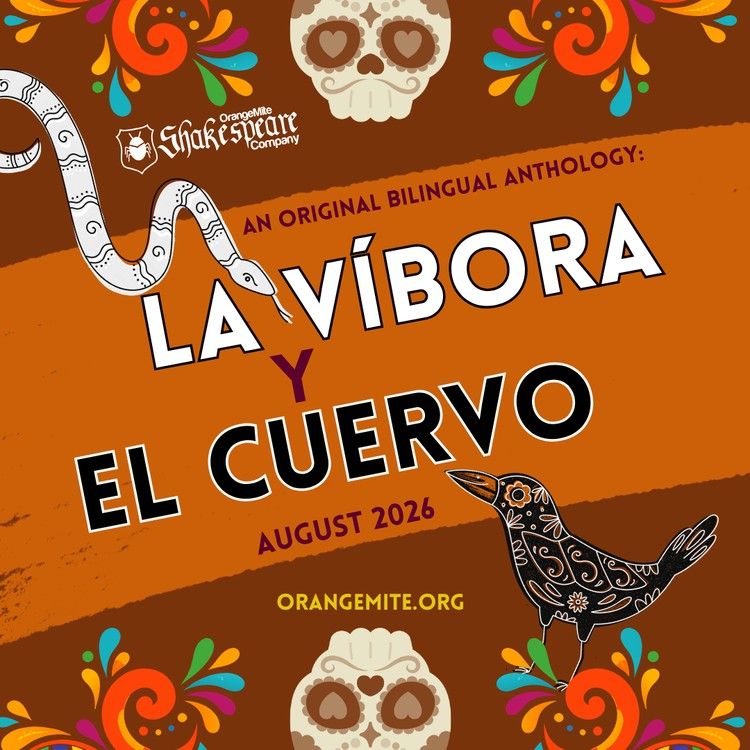
Our production, Víbora y cuervo: Locrine and Other Tales, pairs this origin myth with other origin myths to explore their power and purpose in our world. Orangemite.org

Poster for Orange Mite’s 2026 production of Locrine and Other Tales

Well, there you go, Hope you enjoyed this overview of the play Locrine. If you like this review, you might like to see the show itself. Click here to purchase tickets:

https://orangemite.org/laviborayelcuervo

Friday, August 21, 7pm – at DreamWrights, part of the York Fringe Festival


Sunday, August 23, 2pm – at DreamWrights, part of the York Fringe Festival

Sources

https://www.folger.edu/blogs/shakespeare-and-beyond/locrine-play-curious-complicated/

Crafting A Character: Humber from Locrine

I’m pleased to announce that I will be playing Humber, the Scithian Emperor who tried to conquer England, in a very special adaptation of Locrine in August of 2026.

What is Locrine?

Locrine is an Elizabethan play, first published in 1595, whose author is, sadly, lost to history. The play is a mythologized history of the founding of Britain, which the play calls New Troy.

Our Interpretation

Our version of Locrine is a hybrid between the original play, and stories from the indigenous people of Mexico in the huasteca region. Our director chose to reinterpret Humber as an existential threat to the natural world of Mexico- a threat to the people and the environment, who is defeated not just by Locrine’s army, but by the forces of nature themselves.

Myth vs History

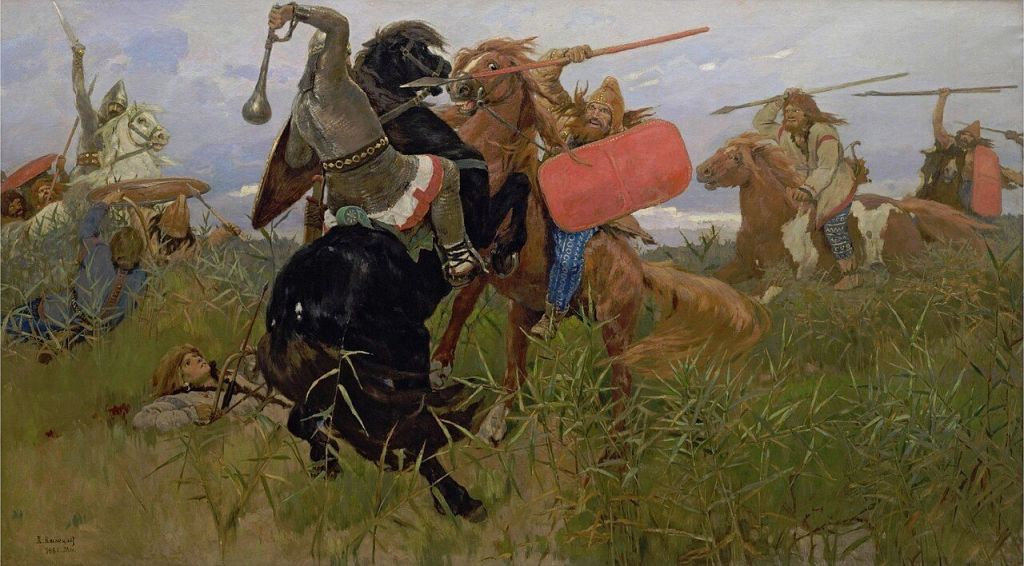
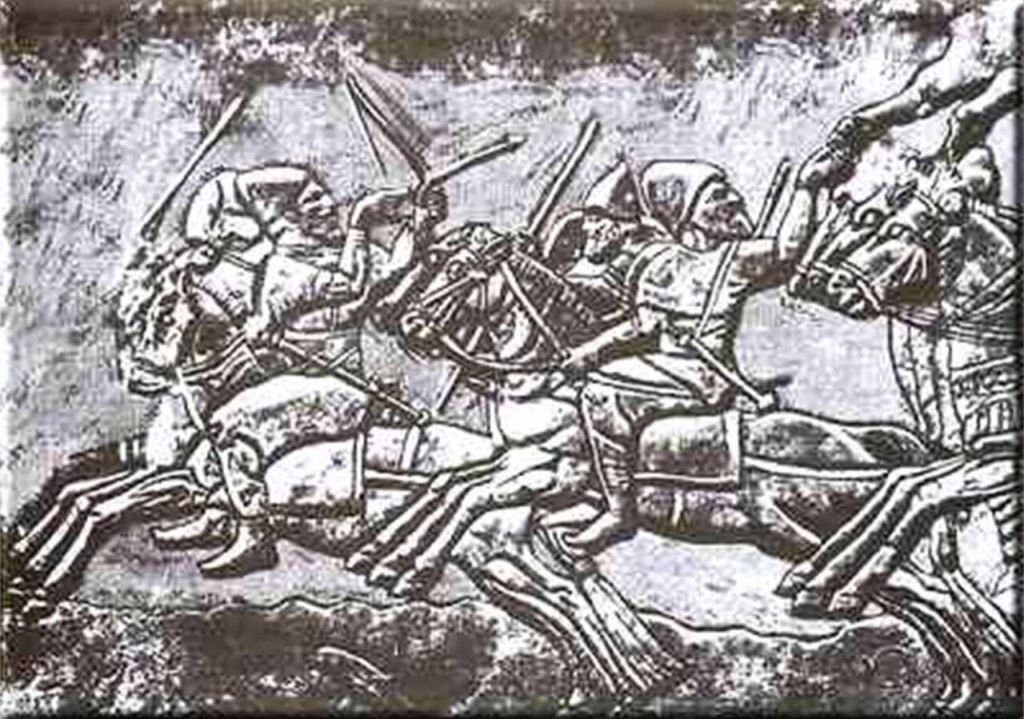
Ancient Scithian horse warriors
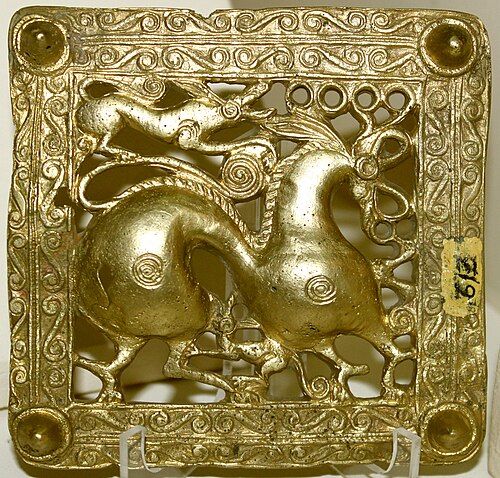
  1. The Scythian Emperor- Scythia was originally modern day Iran, but many Scithian tribes also lived in places like Ukraine and Russia. They were nomads who primarily used their skills in mounted warfare to conquer regional fifedoms, organized under a single emperor.

Function Within the Play

Ancient golden Scithian belt buckle
  1. Ravisher of Nature- as Humber tries to conquer the people of England, he also destroys the natural world.
  2. Usurper/ Conqueror of the Britains- in our version of Locrine, Humber’s war to conquer Britain is analogous to the European colonizers who fought to dominate America such as the French, the Dutch, and of course, the Spanish.

We are retired with joyful victory. The slaughtered trojans squeltering in their blood, infect the air with their carcasses, and are a prey for every ravenous bird.

Locrine, Act 2 Scene 6


Playing Humber

Right now, I am playing Humber as a narcissist, a man who, at his core, is deeply insecure but tries to overcompensate it by acting like an invincible monarch- one who fills the void in his soul with land, slaves, possessions, and gold. He is good at persuading people and inspiring them to fight for him, but he cares for no one but himself.


High on a bank by Nilus’ boistrous streams,
Fearfully sat the Egyptian Crocodile,
Dreadfully grinding in her sharp long teeth
The broken bowels of a silly fish.
[A crocodile swims across the stage, eating a
fish.]
His back was armed against the dint of spear,
With shields of brass that shined like burnished gold;
And as he stretched forth his cruel paws,
A subtle Adder, creeping closely near,
Thrusting his forked sting into his claws,
Privily shed his poison through his bones.
So Humber, having conquered Albanact,
Doth yield his glory unto Locrine’s sword.
Mark what ensues, and you may easily see,
That all our life is but a Tragedy. –Locrine, Act III prologue.

A snake struggling with an alligator, eventually gets the upper hand, or coil.

In the play, Humber is compared to a fearsome predator- a crocodile, which was actually the sigil  on his shield. I took inspiration from the animal, and used a serpentine physicality when playing him. I also decided to give myself a crocodile smile- I keep my head down, stared my enemies in the eye, and then- struck!

Gloucester’s show
Beguiles him as the mournful crocodile
With sorrow snares relenting passengers- Henry VI, Part II.

Inspirations

From History-

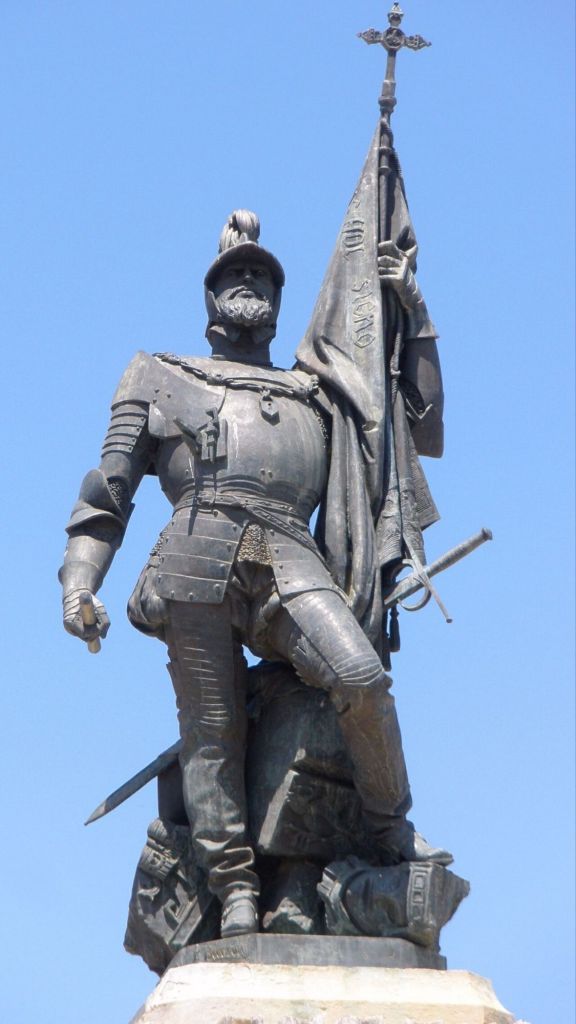
Again, Locrine is not a history play and Humber, as far as we know, was not a real person. Rather than a legitimate chronicle, Locrine is a mythologized history of the founding of Britain. The Scithians never actually invaded Britain, (although some early chronicles claim that the Saxons were descended from them). Our version of Locrine conflates the foundation of Britain with the conquest of America, (specifically the struggle between English colonists and the Spanish conquistadors,) and there is one man who has come to symbolize the ruthless might and lust for gold that the Spanish had in the early conquest of the American continent more than any other Conquistador- Hernan Cortez,  governor of New Spain, and conqueror of the Mexican empire.

Statue of Cortez. Notice the broken Aztec statue under his foot.

We Spaniards know a sickness of the heart that only gold can cure- Hernan Cortez (allegedly)

Cortez was a man of insatiable greed and lust for power. He was born a minor noble with a gift for diplomacy and exceptional courage. He eventually slaughtered thousands of the Mexican people, supplanted their ruler Montezuma, and razed their capital city of Tenochtitlán, rebranding it as Mexico City, capital of the New Spanish empire.

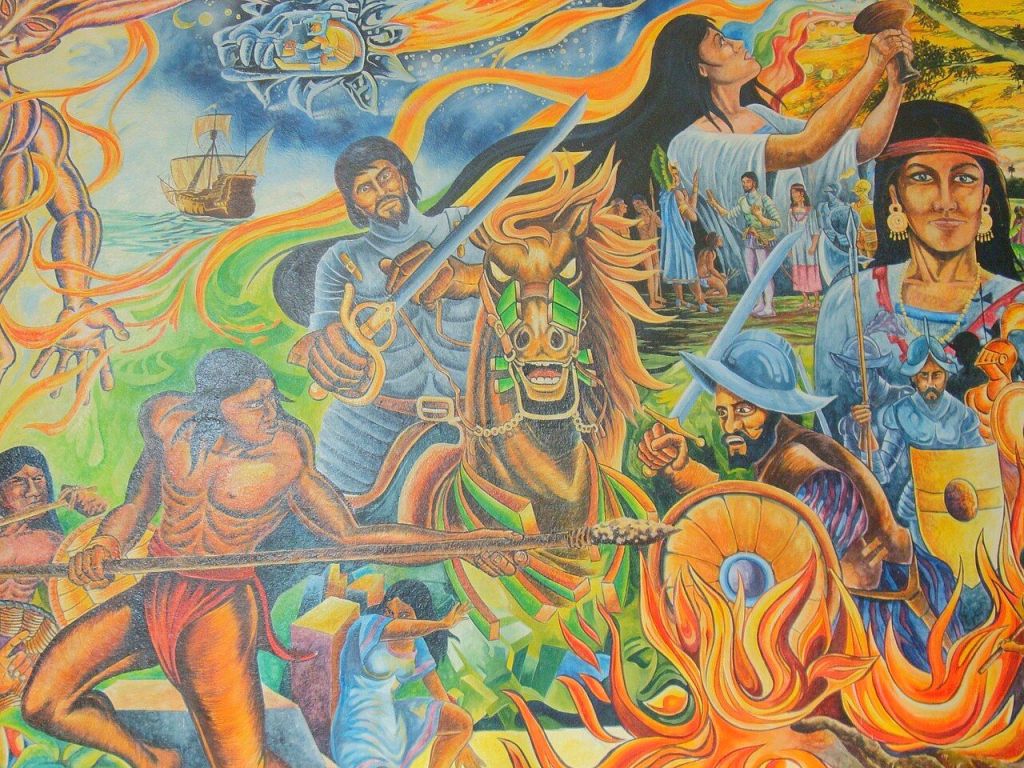
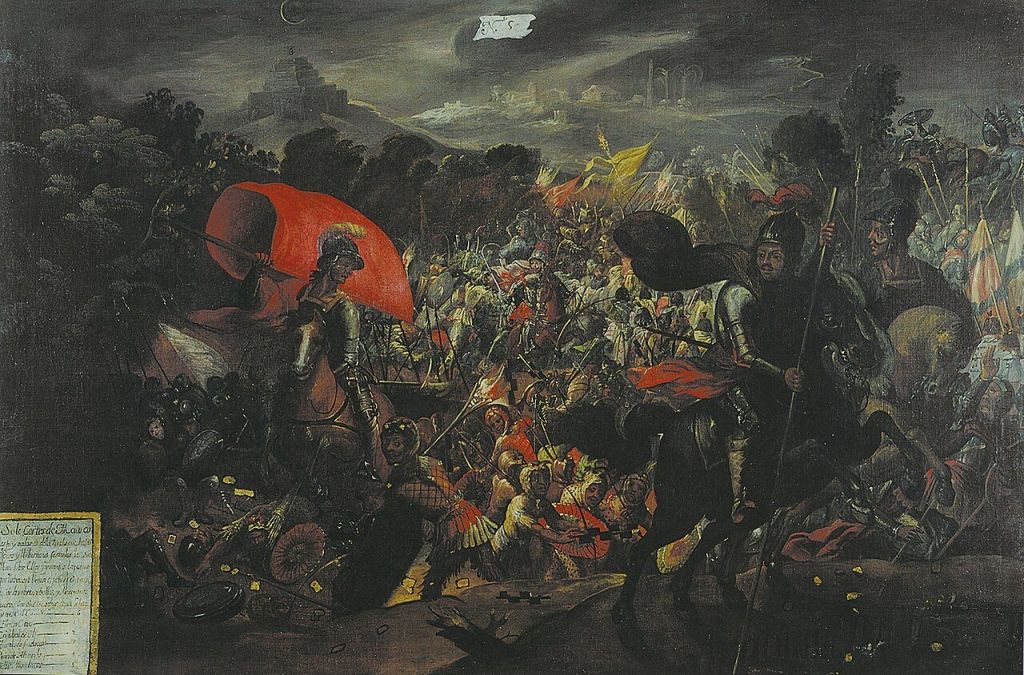
Mural on the Battle of Centla and the conquest of Tabasco, by Homero Magaña Arellano.

Like Humber, Cortez was more of an administrator than a soldier, but nevertheless, he did lead his army successfully against the native people in several key battles, where they used their cavalry and cannons to devastating effect. He also ravished hundreds of Indigenous women who sired his illegitimate children- like our Humber, he lusted for women in addition to gold.

Cortez was careful to appear pious to his soldiers and respectful to the native people he encountered, but this was a calculated act designed to get loyalty and obedience from the people around him. According to his biography, Cortez had a zero-tolerance policy for blasphemy, and told his soldiers to respect the native Mexica. Again, Cortez’s real goal was to keep his men loyal to their “pious” commander and to make the people trust him…while he robbed them blind. Talk about crocodile tears.

Cortez’s victories allowed him to build palaces for himself to rule over the Mexica, as well as a royal charter for himself, and of course, GOLD.

The Spaniards appeared to be much delighted, they seized upon the gold like monkeys, their faces flushed. For clearly their thirst for gold was insatiable; they starved for it; they lusted for it; they wanted to stuff themselves with it as if they were pigs. They went about fingering handling the streamers of gold, passing them back and forth, grabbing them one to the other babbling, talking gibberish among themselves. – Bernardino de Sahagún

In Locrine, Humber is defeated offstage and forced to starve to death in a desert wilderness. To fill in the blanks, I looked at events from Cortez’s life and death. The real Cortez died of dysentary in 1547, but I like to imagine Humber- Cortez being chased away by Locrine’s army, similar to his narrow escape from Tenochtitlán during the famous Noche Triste (30 June – 1 July 1520)

Cortez and his soldiers narrowly escape Tenochtitlán

From Shakespeare-

Shakespeare rarely writes characters who are wholy evil, so for the first three acts, I mainly thought of another Sythian conqueror- Christopher Marlowe’s Tamborlaine. He is not so

much a man as a force of nature, eager to kill, conquer, and take power and riches from the natural world.

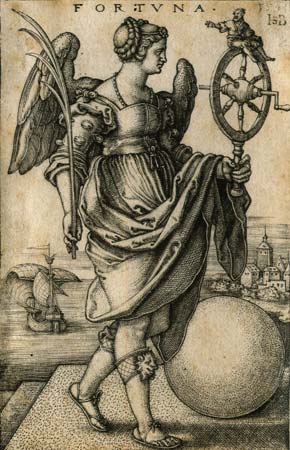
The Roman Goddess Fortuna, with her wheel and orb.

In the later acts of Locrine however, Humber is… well humbled ater losing the war, losing his son, and losing his wife. His laments for his son bear a striking resemblance to Titus Andronicus.

Humber speech III, Scene 5, performed by One Woman Shakespeare

Verse

At the end of his life, Humber reverts to a primitive shadow of his former self- Humber is forced to hide in desert caves, and live on berries and roots. His cruel, bitter laments and desire to cast himself into the sea is almost perfect parallel to Shakespeare’s Timon of Athens.

Timon in the cave

What basilisk was hatched in this place,
Where everything consumed is to nought?
What fearful Fury haunts these cursed groves,
Where not a root is left for me to eat?
Hath fell Alecto, with invenomed blasts,
Breathed forth poison in these tender plains?
What, not a root, no fruit, no beast, no bird,
To nourish Humber in this wilderness?
My very entrails burn for want of drink,
These foul accursed groves afford no meat,
The gods, hard-hearted gods, yield me no meat.
Was ever land so fruitless as this land?
Was ever soil so barren as this soil?
No, even the climate of the torrid zone
Brings forth more fruit than this accursed grove

In Conclusion

Humber is a great deal of fun- he’s a cartoon-like villain at first, but after he loses to Locrine, he seems more human, longing to be reunited with his son. Even though he’s not the main character, he has a tragic character’s arc. In short, he’s great to play, and I hope he’ll be great to watch!

Sources

https://lostplays.folger.edu/Estrild

https://orangemite.org/laviborayelcuervo

https://historum.com/t/cort%C3%A9s-and-the-conquest-of-mexico.184401/?utm_source=google&utm_medium=organic

Shakespeare and Star Trek

Today I’ll be tracing the recurring themes and motifs that evolved from Shakespeare’s last solo play, “The Tempest,” and chart a course that explains the evolution of this play into the beloved Star Trek franchise.

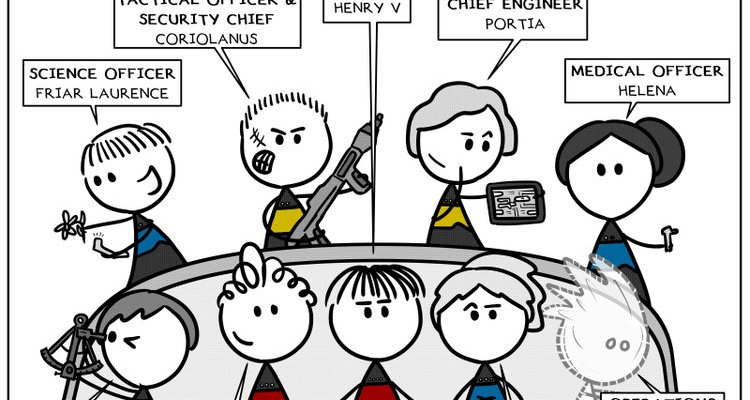
https://goodticklebrain.com/home/2019/7/11/the-crew-of-the-uss-shakespeare

The Roots of Star Trek in Shakespeare

  • Shakespeare’s The Tempest is based on a real story. As I said before, the story might have come from a traveler’s story about visiting the island of Bermuda in the early 1600s. The idea of Europeans going to an uncharted island, meeting the strange inhabitants, and ‘civilizing’ them, might have inspired Shakespeare to write the story of Prospero.
  • In addition to the Bermuda story, the age of English colonization had firmly begun at this time. The first English colony in America, Jamestown was settled in 1607, and The Tempest came out 1611.
  • At the same time, The King was worried about magic and trying to marry his daughter off to a prince.
  • Shakespeare wasn’t allowed to comment on contemporary issues, so instead of setting the play in England or even contemporary Europe, he set it on a fantastical island with spirits Prospero can control. His control becomes a metaphor for colonization. At the same time, we see a fantasy version of James’ daughter’s marriage in the romance between Ferdinand and Miranda. The motifs of discovering strange new worlds and encountering new races of people form the core of Star Trek and space-based science fiction in general, and an adaptation of The Tempest in the 1950s would set the template that the Enterprise and her crew would be built on.

“Forbidden planet”- The Tempest goes Sci-Fi

Forbidden Planet is a story about a dashing, adventurous captain, a curmudgeonly doctor, and a science officer who are from a United group of planets that peacefully searches for “brave new worlds,” and the people in them. Obviously, these characters are very similar to Captain Kirk, Dr. McCoy, and Mr. Spok, so clearly Star Trek owes its initial creation to the success of Forbidden Planet, which was a Sci-fi adaptation of the Tempest. The question then is if there is there more that we can say about the connection between Shakespeare and Star Trek.

Star Trek’s relationship with Shakespeare

The main connective tissue of Star Trek and The Tempest is the use of exotic locations and alien cultures to explore issues that were close to home. When people in 1600 went to see Hamlet Prince of Denmark they didn’t see an ancient legend of a Viking Prince as the original Amleth, written by Saxo Grammaticus; what they saw was a thoroughly modern story of a Renaissance Prince tackling theological issues that had only just been dreamt of by the English protestants; issues of predestination, issues of Calvinism, issues of the questions about the issue the existence of purgatory, etc. That would have been unheard of to the original audience of Prince Hamlet. The appeal was seeing a different place and time to retell an ancient legend that at the same time spoke to the present time of the 17th century. Star Trek does the same thing only looking to the future instead of the past.

Did any of TOS 5 year mission first contacts aliens show up in later Star  Trek episodes as Borg? - Science Fiction & Fantasy Stack Exchange

Like Star Trek, Shakespeare used exotic locations to examine issues that were universal, (no pun intended), issues that were very much for the consumption of his audience. Look at Star Trek; every alien race the Enterprise encounters is an allegory for some culture or idea on Earth, like the two-toned alien Lokai and Bele that represent segregation and racism, or the Klingons who represented the Soviet Union, or the Borg, who represent imperialism and authoritarianism, cults, and to a certain extent fascism,

In Star Trek, space-age technology was always secondary to character; it was always about fragmenting the human condition into different recognizable alien species. Through the characters of Dr. McCoy, Captain Kir, and Mr. Spok, Star Trek examines humanity through 3 distinct points of view; that of Kirk the wide-eyed Explorer, McCoy, the cynical doctor with a heart of gold, and the cold and logical Mr. Spock. As the series went on, the allegories to contemporary affairs grew more nuanced, like how in Star Trek 6, the conflict between the Federation and the Klingons represents the final days of the Soviet Union, and the fear on both sides of what a post-Cold War world would be like.

Star Trek The Next Generation: The Tempest, Reformed.

Why did the creators of Star Trek cast Patrick Stewart, the foremost Shakespearean actor of his time, to play the captain of the Enterprise? I would say it is because Shakespeare is a writer who follows some of the same tropes that Star Trek would later use, so the creators needed a Shakespearean actor to communicate these ideas to the audience.

When Star Trek: The Next Generation first came out in the mid-1980s; the lens through which we saw alien cultures changed significantly: Picard sees humanity and the universe through a sentimental lens; viewing all cultures with no concept of superiority or paternalism. Like Shakespeare, Picard sees these cultures as his own and all worthy of respect. That’s why these cultures are often drawn to him and embrace him as one of their own, such as in the episode where he literally lives the life of a man named Kamin on the now-dead planet of Katan, and becomes the only living man to pass on their stories:

Picard’s greatest antagonist Q is a warped mirror of Picard; somebody who sees humanity as a plaything but nonetheless is intrigued and fascinated by human nature:

Taken together, Picard and Q are like the two sides of Shakespeare’s Prospero in The Tempest. Simmilar to how Dr. Morbius represents Prospero’s ego in Forbidden Planet, Picard represents the superego- the part devoted to improving the lives of his crew and the aliens he helps, and who looks at each “brave new world,” he encounters with awe and respect.

Q however, is Prospero’s Id- a malevolent, cynical, vengeful man, (who like Prospero in the episode Deja Q, is actually banished from his rightful place in the Q Continuum). He torments and enslaves creatures for his own amusement and his curiosity about humanity is more morbid and sadistic than scientific or philosophical. With this in mind, it makes sense that Q has been such an enduring part of the Star Trek series since he is an essential component of the series’ psychological makeup.

Science fiction in general is about possibilities- looking at where we came from and where we are and asking questions about where we are going. Generally speaking, Shakespeare looked more to the past than the future, but his conclusions were pretty much the same- he saw “What a piece of work man is,” but also feared greatly for his survival. Star Trek takes these concepts and projects them out to the far future. Even though in the 24rth century humans have mastered space travel, eliminated poverty, and put aside petty prejudice, people are still people and the conflicts they have don’t change. What’s great about Star Trek is how well both choose to tell the eternal story of the human condition, looking before and after and making some truly profound discourse on what it means to be human. Perhaps the real final frontier is the same as the first- the human heart.