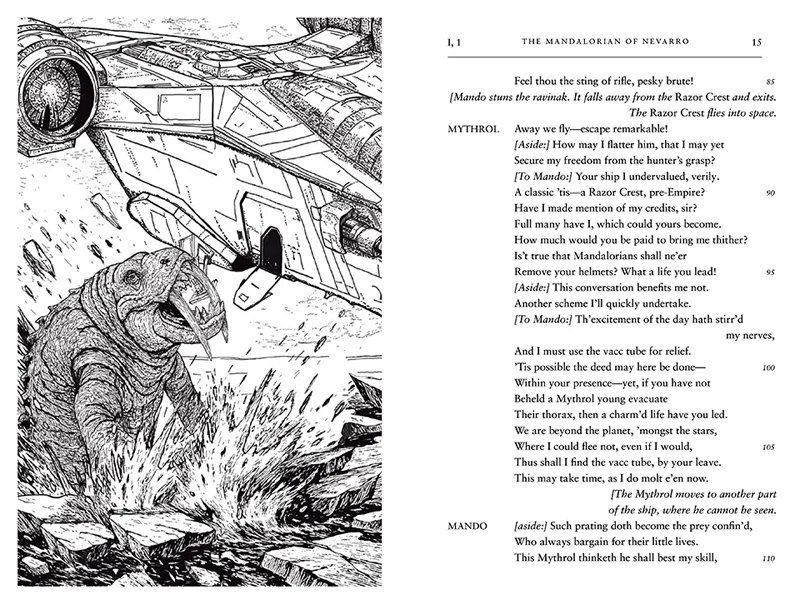
Review – ‘William Shakespeare’s Star Wars: The Mandalorian of Nevarro’

Happy May 4th Everyone!

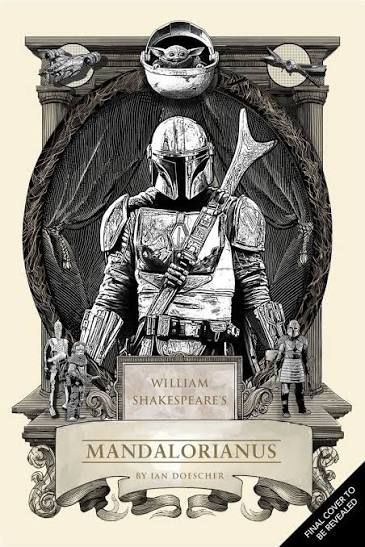
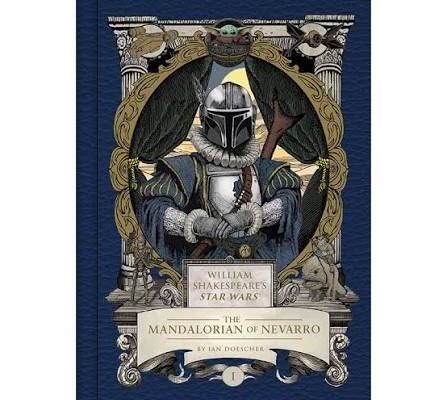
With the upcoming release of The Mandalorian and Grogo, I knew there would be lots of tie-in Star Wars merchandise capitalizing on it. What I didn’t expect,  was that, after a six year hiatus, playwright Ian Doescher has once again taken up his quills and lightsabers to dramatize the next installment in the Shakespearean Star Wars cannon, The Mandalorian of Nevarro.

What Is William Shakespeare’s Star Wars?

William Shakespeare’s Star Wars is a series of parody plays written by Ian Doescher that takes the prose screenplays of the Star Wars story and transforms them into Elizabethan verse. Last time, I mentioned how much I loved the cheeky references to Shakespeare and Star Wars, and how Doescher adapts the cinematic quality into Elizabethan drama very well. In my podcast, I also emphasized the way Doescher gives each character verbose Shakespearan language that works very well for radio and theater:

I’ve written reviews about Mr Doescher’s versions of the original trilogy, but I never expected him to cover the Disney Plus shows, bit he proved me wrong, and by all accounts, this edition lives up to its predecessors.

https://www.starwarsnewsnet.com/2026/04/review-william-shakespeares-star-wars-the-mandalorian-of-nevarro-reimagines-mando-in-a-worthy-retelling-of-the-series.html

Interview with Ian Doescher about “The Mandalorian of Nevarro”

What We Know

I haven’t gotten a copy yet of the full play, so this will be less of a review and more of a prediction and a fun speculation about how Mr Doescher will handle everyone’s favorite green foster child and Beskar- clad dad.

When your main character is, quite frankly, one of the most non-theatrical Star Wars protagonists in existence, forcing that character to come out of his shell and give him that Shakespearean flair was always going to be a test. – Nate Manning, Star Wars News.net

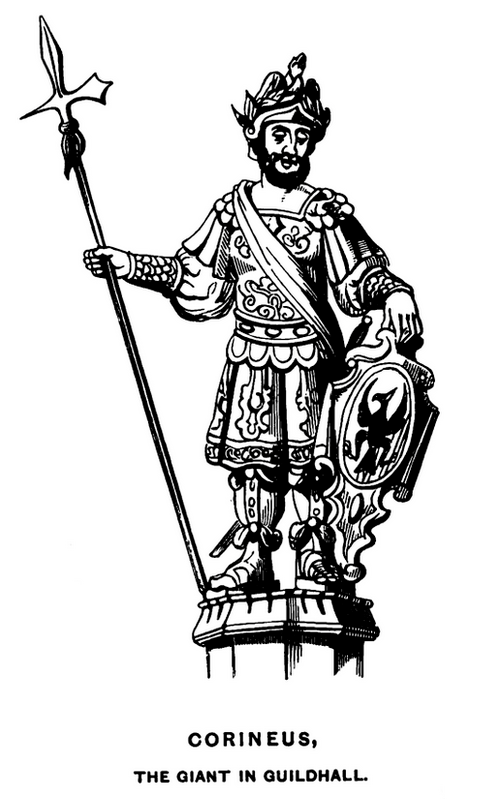
The Mandalorian of Nevarro is a two part series that, like the other William Shakespeare’s Star Wars books, adapts the prose text of episodes 1-4 into Shakespeare’s verse. According to Wookiepedia, the series was originally titled Mandalorius, which is probably a pun on Shakespeare’s play Coriolanus

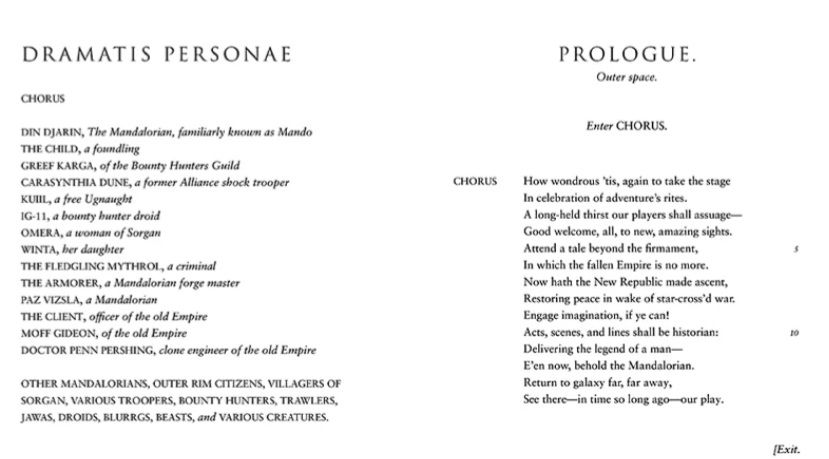
Prologue and Dramatis Personae for “The Mandalorian of Nevarro”

What We Can Guess

One thing I am very curious about is how far Doescher adapted Coriolanus for Mandolorian. As you might have read in my review for Coriolanus, one reason why the play isn’t as popular as some of Shakespeare’s other tragedies is simply that its hero is not very compelling. Coriolanus is not as articulate or wise as Hamlet, nor does his journey form a cohesive arc like Macbeth or Othello.  He seems to flit between loving Rome and hating it, between peace and war, with little agency or understanding of what is happening to him, and even less insight. He is mainly a maddeningly inscrutable man, almost as if he was wearing a mask.

With all this in mind, I can honestly understand why Doescher might choose the Roman general Caius Martius Coriolanus as a model for Jinn Jaran, (assuming that the final play does in fact do so). Like Coriolanus, Mando is a lone warrior in a fragile republic, who goes from planet to planet with nothing but his ship, and his rigid code of behavior to guide him. Therefore it makes total sense that Doescher would use Coriolanus as a model to emulate when adapting The Mandalorian.

With all due respect to Shakespeare, what makes Mando a more interesting character from Coriolanus us that he has a compelling Arc. He starts as a solitary bounty hunter to a surrogate father who finds meaning when he adopts a child. It’s like his helmet and armor are metaphors for the uncaring, uncompromising person he was. Over the course of the series, as Mando becomes a better man and a better father, he is forced to remove his armor and form real relationships.

What I Hope

I hope this adaptation uses Shakespeare’s ability to conjure images and feelings when telling Mando’s story, but only time will tell.

May the Forth Be With Thee!

Mando

Lots of Great classes are available on Outschool This Summer

With summer break approaching, why not give your kids the gift of learning Shakespeare in a low-key, no-pressure scenario? I have classes on Shakespeare’s life, Romeo and Juliet, and my celebrated Stage Combat class! Sign up now for all the fun on Outschool.com!

Shakespeare and Star Wars

Class Description: Using self-paced online activities, your child(ren) will compare the plot and characters of Star Wars to Shakespeare’s plays. We will also discuss Shakespeare’s writing by looking at “William Shakespeare’s Star Wars” by Ian Doescher.

Romeo and Juliet Murder Mystery

Course Description: A flexible schedule class that teaches kids the plot and characters of “Romeo and Juliet,” in the context of a detective story where you solve the mystery of the young lovers’ deaths.

Course Descriptions

How to Write Like Shakespeare: Learn the basics of iambic pentameter, sonnet form, and Shakespeare’s dramatic structure, and practice writing Shakespearean speeches.

Get $10 off my class “Shakespearean Stage Combat” with coupon code HTHES3IB1C10 until May 4, 2026. Get started at https://outschool.com/classes/shakespearean-stage-combat-TyjzafsK and enter the coupon code at checkout.

Crafting A Character: Portia (Wife of Brutus

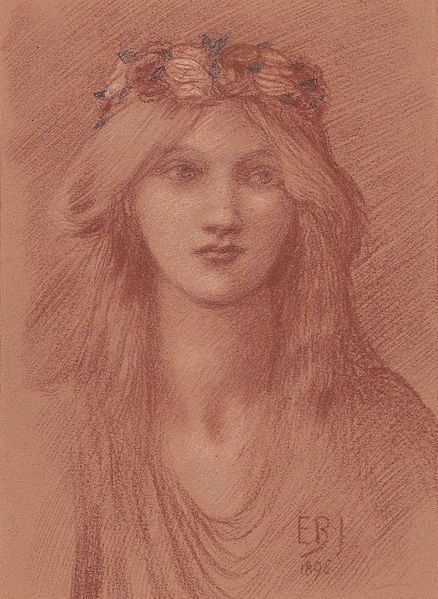
Portia (Or Porcia), was the wife of Marcus Brutus. Many ancient writers emphasize her courage, beauty, and devotion to her husband and Rome. Many painters and illustrators have chosen to depict her as a model of courage and grace.

Porcia, as has been said, was a daughter of Cato, and when Brutus, who was her cousin, took her to wife, she was not a virgin; she was, however, still very young, and had by her deceased husband⁠17 a little son whose name was Bibulus. A small book containing memoirs of Brutus was written by him, and is still extant. 4 Porcia, being of an affectionate nature, fond of her husband, and full of sensible pride, did not try to question her husband about his secrets until she had put herself to the following test. 5 She took a little knife, such as barbers use to cut the finger nails, and after banishing all her attendants from her chamber, made a deep gash in her thigh, so that there was a copious flow of blood, and after a little while violent pains and chills and fever followed from the wound. 6 Seeing that Brutus was disturbed and greatly distressed, in the height of her anguish she spoke to him thus: 7 “Brutus, I am Cato’s daughter, and I was brought into thy house, not, like a mere concubine, to share thy bed and board merely, but to be a partner in thy joys, and a partner in thy troubles. 8 Thou, indeed, art faultless as a husband; but how can I show thee any grateful service if I am to share neither thy secret suffering nor the anxiety which craves a loyal confidant? 9 I know that woman’s nature is thought too weak to  p155 endure a secret; but good rearing and excellent companion­ship go far towards strengthening the character, 10 and it is my happy lot to be both the daughter of Cato and the wife of Brutus. Before this I put less confidence in these advantages, but now I know that I am superior even to pain.” 11 Thus having spoken, she showed him her wound and explained her test; whereupon Brutus, amazed, and lifting his hands to heaven, prayed that he might succeed in his undertaking and thus show himself a worthy husband of Porcia. Then he sought to restore his wife. -Plutarch, Life of Brutus

https://portiacatonis.weebly.com

She tried to conceal her distress, but a certain painting betrayed her, in spite of her noble spirit hitherto. 3 Its subject was Greek, — Andromache bidding farewell to Hector; she was taking from his arms their little son, while her eyes were fixed upon her husband. 4 When Porcia saw this, the image of her own sorrow presented by it caused her to burst into tears, and she would visit it many times a day and weep before it. 5 And when Acilius, one of the friends of Brutus, recited the verses containing Andromache’s words to Hector,

“But, Hector, thou to me art father and honoured mother

And brother; my tender husband, too, art thou,”

Brutus smiled and said: 6 “But I, certainly, have no mind to address Porcia in the words of Hector,

‘Ply loom and distaff and give orders to thy maids,’⁠23

for though her body is not strong enough to perform such heroic tasks as men do, still, in spirit she is valiant in defence of her country, just as we are.” This story is told by Porcia’s son, Bibulus.

https://artsandculture.google.com/asset/portia-and-brutus/qQH7qtdFwf6xeA?hl=en&ms=%7B%22x%22%3A0.5%2C%22y%22%3A0.2668803418803419%2C%22z%22%3A8%2C%22size%22%3A%7B%22width%22%3A2.1891025641025643%2C%22height%22%3A0.6672008547008548%7D%7D

Portia marks a turning point in Shakespeare’s Roman female characters as we we go from more ‘traditional’ female characters, to ones who exemplify masculine virtues. Instead of women being subordinates to men’s affairs and keeping out of religion, politics, and the affairs of Roman society, Portia is a character who demands respect, and to share her husband’s dangers. Some ancient sources suggested possibly Portia might have been the one who inspired Brutus to kill Caesar, (more on that later), but in any case Portia is not a character who is subordinate to men, but who demands to be treated as a Roman citizen.

Playing Portia

Shakespeare’s Fools

Happy April Fool’s Day! Today I’d like to look at the rich history of Shakespeare’s fools and clowns! Clowns are some of Shakespeare’s classic comic characters, but fools are complex characters that entertain, satirize, and even philosophize. They may dress the part, but they are no fools.

This clip from Mel Brooks’ comic masterpiece History of the World, Part I, has the writer/director perform as Comicus, a ‘stand-up philosopher’ from Ancient Rome- a philosopher who is basically a stand-up comic. As you’ll see, unlike clowns, most of Shakespeare’s fools basically fulfill this role- to satirize and make fun of people and institutions.

What Is A Fool?

Fools and clowns are based on medieval minstrels who, as this video from Monty Python’s Terry Jones shows, were itinerant entertainers who had to do a number of jobs including play music, dance, sing, compose poetry, juggle, and on occasion- START A WAR!

Fools Vs. Clowns

A fool is the renaissance version of a minstrel- an official royal entertainer who worked at royal courts. A clown is a comic part in a play. They often danced, sang, and did improv comedy. To illustrate the difference, here’s a short video about the life of Henry VIII’s favorite fool- Will Sommers

Foolish Founding Fathers

All of Shakespeare’s fools and clowns are based on ancient Italian sources-from the Roman comedies of Plautus and Terrence to the improvised comedy known as Commedia Del ‘ Arte

Short featurette documentary on the artform of “Commedia Del’ Arte” by The National Theater in London

Commedia is based on stock character types that Shakespeare adapted and fleshed out- Arlequinno became the constantly hungry Dromio, (among others), while Capitano became Falstaff and Pistol. Even Shylock has remnants of Brighella in his DNA. According to Dario Fo in his book: Manuale Minimodell’Attore, Shakespeare adapted stock characters from commedia to be his clowns, and sarcastic characters called sots, who commented on the action to become his fools (Fo, 107)

Will Kempe- Shakespeare’s First Great Clown

Despite his strength and skill as a dancer, Kempe specialized in playing oafish buffoons like Dogberry in Much Ado About Nothing, Falstaff in the Henry IV plays, and Peter in Romeo and Juliet. In the Second Quarto edition of Romeo and Juliet, you can see in the stage directions “Enter Will Kempe,” right before Peter speaks:

According to Will In the World by Steven Greenblatt, Kempe and Shakespeare had a falling out in the late 1590s, which many scholars have assumed might have been due to Shakespeare’s distaste for clowns wasting time with jokes that bogged down the play:

Hamlet:
Let those that play your
clowns speak no more than is set down for them. For there
be of them will themselves laugh, to set on some
quantity of barren spectators to laugh too. Though in the
meantime, some necessary question of the play be then
to be considered. That's villainous, and shows a most pitiful
ambition in the fool that uses it. Hamlet, Act III, Scene ii.

Kempe, for his part, seemed a little big for his britches; he and his fellow clowns seemed to think that Shakespeare's scripts were just vehicles for his own jokes and songs (Reynolds, 247). He then sold his share in the Chamberlain's Men, derriding them in print as "My notable Shake-rags," and then staged a publicity stunt where he danced across England!

1600-1613: The Golden Age Of Foolery

Kempe’s replacement was Robert Armin, an accomplished writer and singer, who specialized in playing satirical Fool roles. Armin appeared in several Shakespearean plays after 1599.

Unlike Kempe, Armin’s characters are essential to the plot of the play, and his jokes support the themes and ideas of the plays themselves. As Feste in Twelfth Night, Armin makes jokes that make fun of the overly-serious Orsino and Countess Olivia:

Feste. Good madonna, why mournest thou?
Olivia. Good fool, for my brother's death.
Feste. I think his soul is in hell, madonna.
Olivia. I know his soul is in heaven, fool.
Feste. The more fool, madonna, to mourn for your brother's
soul being in heaven. Take away the fool, gentlemen. Twelfth Night, Act I, Scene v.
Touchstone in “As You Like It”

Sometimes Armin’s characters are satirical mirrors of Elizabethan society; in As You Like It, Touchstone the Fool mocks the culture of dueling; implying that there are hundreds of loopholes that a gentleman may use to challenge a man to a duel, without actually fighting.

  • Touchstone I did dislike the cut of a certain
    courtier’s beard; he sent me word, if I said his beard was not
    cut well, he was in the mind it was. This is call’d the Retort
    Courteous. If I sent him word again it was not well cut, he would
    send me word he cut it to please himself. This is call’d the Quip
    Modest. If again it was not well cut, he disabled my judgment.
    This is call’d the Reply Churlish. If again it was not well cut,
    he would answer I spake not true. This is call’d the Reproof
    Valiant. If again it was not well cut, he would say I lie. This
    is call’d the Countercheck Quarrelsome. And so to the Lie
    Circumstantial and the Lie Direct.
  • Jaques (lord)And how oft did you say his beard was not well cut?
  • TouchstoneI durst go no further than the Lie Circumstantial, nor
    he durst not give me the Lie Direct; and so we measur’d swords
    and parted.

The Fool in “King Lear”

Perhaps Armin’s greatest comic creation was The Fool in King Lear; the ultimate satirist who makes fun of the king’s foolish choices. He tries to talk sense to the increasingly mad king, until he vanishes entirely, and Lear himself starts making fool-like cracks at the audience:

Lear Thou hast seen a
farmer's dog bark at a beggar?
Earl of Gloucester. Ay, sir.
Lear. And the creature run from the cur? There thou mightst behold
the great image of authority: a dog's obeyed in office.
The usurer hangs the cozener.
Through tatter'd clothes small vices do appear;
Robes and furr'd gowns hide all. Plate sin with gold,
And the strong lance of justice hurtless breaks;
Arm it in rags, a pygmy's straw does pierce it.
None does offend, none- I say none! Get thee glass eyes
And, like a scurvy politician, seem
To see the things thou dost not. King Lear, Act IV, Scene vi.

Through realizing his own foolishness, Lear recovers his sanity, and makes peace with his daughter, which beautifully shows the importance of fools, clowns, and satirists; to question ourselves, to sharpen our critical thinking, and to endure hardships with good humor. Therefore on this April Fools Day, I say,

“Here’s to the fools, to folly, to farce. Let them push the wealthy on the ar— APRIL FOOLS!”

References

Best, Michael. “Shakespeare’s Actors: Will Kempe” Internet Shakespeare Editions, University of Victoria, 28 Sept. 2016, ise.uvic.ca/Foyer/citing. Accessed 30 Sept. 2023.

Fo, Dario. Manuale Minimodell’Attore (English: “The Tricks Of the Trade” Translated by Joe Farrell, 1991. Accessed online at Google Books: https://www.google.com/books/edition/The_Tricks_of_the_Trade/akEJ9Ew9GaoC?hl=en&gbpv=1. 29 March. 2023.

For more tomfoolery

I teach a class specifically on Shakespeare’s comedies where I’ll talk a lot about the way Shakespeare writes clowns. I’ll also delve into the history of Commedia Del’Arte and how it influenced Shakespeare’s characters! For more information, visit http://www.outschool.com
How Accurate Is Medieval Times?

In many ways, Medieval Times is a campy, theme park-esque place. Don’t get me wrong, I love this place, and both Puppet Shakespeare and I enjoyed it immensely. From a historical perspective, however, Medieval Times has more in common with Disney Land than British history. That said, it still contains a nod to this ancient culture that praised and highly ritualized the concept of judicial combat.


The Court

You are cast as a lord or lady, representing a fantasy kingdom (which corresponds to the color of the crown you wear). I was fortunate to get the Red crown for Valentines Day, and was seated right next to the King and Queen (more on that later). The hall was decorated with colored banners and each kingdom was introduced with trumpets and flags. The feast was a celebration of the uniting of all the surrounding kingdoms under the King and Queen. As the king and queen came out, everyone cheered and the royals toasted each kingdom and praised and thanked them all for their service to the crown. The monarchs then promised each lord and lady there a greater reward with sports, games, spectacles, and of course, the feast itself.

Feudalism

Map of the kingdoms in England during the Wars of the Roses

As I mentioned in my Game of Thrones post, a king’s main job was to unite all the lords in the land and get them swear fealty to him, binding the whole country under the crown. It was King Henry VI’s failure to keep the lords in line that resulted in the civil war known as the Wars of the Roses. Feasts like the one in Medieval Times, were essentially propaganda to keep the lords allied with the king. They demonstrated the power of the king and communicated loudly and clearly that the lands would be stronger together, as opposed to endless war. So, this kind of pageantry was political as well as entertaining, and the king and queen’s dialogue preserves the purpose of this kind of feast, which as a history nerd, I deeply appreciated.

Court Sport


While we waited for the feast, the knights entertained the court with displays of their skills and strength. They rode towards the quintain and hit it with their lances, threw spears at a target, and even their horses got a chance to trot without riders, showing how well trained they were.

The knights practice throwing spears at the target

The Joust

Shakespeare’s Pericles, Prince Of Tyre has a very elaborate and detailed depiction of how jousts worked in the Medieval and Renaissance eras. Shakespeare knew that the joust was the ultimate display of skill, chivarly, and the ideals of courtly love. Knights were portrayed as romantic heroes who fought for a simple favor from a lady such as a rose or handkerchief and each one defined himself by his strict code of honor and virtue. All these traditions are hightlighted in the scene where Pericles fights in a tournament to gain the love of the princess Taisa:

Enter A pavilion for the [p]reception of King, Princess, Lords, &c.

[Enter SIMONIDES, THAISA, Lords, and Attendants]

Simonides. Are the knights ready to begin the triumph?
First Lord. They are, my liege;750
And stay your coming to present themselves.
Simonides. Return them, we are ready; and our daughter,
In honour of whose birth these triumphs are,
Sits here, like beauty's child, whom nature gat
For men to see, and seeing wonder at.755
[Exit a Lord]

Thaisa. It pleaseth you, my royal father, to express
My commendations great, whose merit's less.
Simonides. It's fit it should be so; for princes are
A model which heaven makes like to itself:760
As jewels lose their glory if neglected,
So princes their renowns if not respected.
'Tis now your honour, daughter, to explain
The labour of each knight in his device.
Thaisa. Which, to preserve mine honour, I'll perform.765
[Enter a Knight; he passes over, and his Squire]
presents his shield to the Princess]
Simonides. Who is the first that doth prefer himself?
Thaisa. A knight of Sparta, my renowned father;
And the device he bears upon his shield770
Is a black Ethiope reaching at the sun
The word, 'Lux tua vita mihi.'
Simonides. He loves you well that holds his life of you.
[The Second Knight passes over]

Chivalric ideals aside, the joust also had a practical purpose- it was a way for knights to train for war, an a way for them to win fame, money, and good reputations at court. As you can see in the photos above, the knights were separated by a wooden barrier called “the tilt wall.” Each knight was identified by the colorful designs on their banners, shields, and the blanket draped over the horse. Once the king or marshal threw down the warder, the knights charged headfirst at their opponents, armed with shields, lances, and full armor. Knights scored points for breaking lances and shields or by knocking other knights off their horses. Naturally, to create the most impressive display possible, all the knights at Medieval Times fell off their horses and no lances broke.


First, and most important, was the Joust Royal, or "tilting," in which mounted knights armed with lances charged at their opponents across a barrier.
This was followed by a "tourney" in which mounted knights ran at each other without a tilt barrier (as pictured here).>
Combatants armed with spears and swords also fought on foot over a barrier
Best, Michael. "Chivalry and Duels." Internet Shakespeare Editions, University of Victoria, 28 Sept. 2016, ise.uvic.ca/Foyer/citing. Accessed 30 Sept. 2016.

The Lance

The video above is from Weapons That Made Brittain, in which historian and reinactor Mike Loads, explains with vivid details, how Knights learned how to master the art of the Lance, and how the Lance became one of the most important weapons of the knight.

Duels

In the climax of the evening, the knights stopped fighting for sport, and started fighting for power! The Green Knight (as green with envy as his armor and horse), suddenly refused to dismount from his horse and began striking knights left and right. He then challenged the leadership of the king, threatening to rebel from the kingdom, along with his fellow knights! The king then decided to choose a champion to fight the Green Knight to the death! The Red Knight, (who as I mentioned before, represented my kingdom, and threw a rose as a favor to my family), picked up the glove of the envious Green Knight, thus signifying that he would be the champion, and fight for the fate of the kingdom!

Why the Green Knight?

Illustration from Sir Gawain and the Green Knight, 14th century.

At the hall door comes a frightening figure,
He must have been taller than anyone in the world:
From the neck to the waist so huge and thick,
And his loins and limbs so long and massive,
That I would say he was half a giant on earth.
But more than anything
His color amazed them:
A bold knight riding,
The whole of him bright green. Sir Gawain and the Green Knight

In most (but not all) interviews and clips I’ve seen, the Green Knight is the bad guy- the one Knight whom almost everyone is supposed to root against. When I got home, I wondered why this was. After all, isn’t the black knight usually associated with villainy? My personal theory is that this is a subtle reference to the classic medieval story, Sir Gawain and the Green Knight. The eponymous Knight is supernaturally strong and able to even survive decapitation! He serves in the story, as the ultimate test for our young hero, Sir Gawain. I think the writers of Medieval Times definitely did their homework, making this Knight the antagonist.

The duel began on horses, but quickly changed to single combat on foot. They fought with axes, maces, and of course swords.

Even though dueling was a bloody and dangerous pastime, it has a long history that even kings couldn’t erase. Back in Anglo-Saxon times, private disputes, (such as the murder of one’s father) could be settled through means of a duel. In this period, England was occupied by the Danes, (which we would now call Vikings), and several Viking practices of judicial combat survive. For example, the Hólmgangan, an elaborate duel between two people who fight within the perimeter of a cloak. These kinds of fights continued throughout medieval Europe and, like Medieval Times Shakespeare knew their devastating dramatic potential.

At the end of Shakespeare’s Hamlet, the revenge cycle between Hamlet, Leartes, and Fortinbras, comes to a close using a duel. Hamlet has murdered Leartes’ father but Hamlet did not intentionally kill him. This kind of legal dispute would certainly have been settled with a duel in Saxon times. This is one reason why Leartes scorns Hamlet’s offer of forgiveness at the beginning of the scene, and instead trusts in the outcome of the fight to prove his cause. Hamlet and Leartes begin fighting officially under the terms of a friendly fencing match, but it becomes clear early on that at least in the mind of Leartes, this is actually a blood-combat. Laertes is demanding blood for the death of his father, and like the Green Knight, his fight will decide the fate of the Danish throne.

  • HamletCome for the third, Laertes! You but dally.
    Pray you pass with your best violence;
    I am afeard you make a wanton of me.
  • LaertesSay you so? Come on. Play.
  • OsricNothing neither way.
  • LaertesHave at you now!

[Laertes wounds Hamlet; then] in scuffling, they change rapiers, [and Hamlet wounds Laertes].

[Laertes falls.]

By the Renaissance, dueling was highly controlled by traditions of honor and fair play. As Laertes admits, poisoning Hamlet and fighting him to the death without his knowledge would be considered treason, and highly dishonorable. The Green Knight does every possible thing to make the audience see him as the villain with his lack of courtesy, dirty tricks, and disdain for the king and queen. He is so dishonorable that, even Americans, who have nothing but disdain for monarchy and in real life, value independence and self-sovereignty, would rather take the side of the monarch and his stooge the Red Knight over the Green Knight, just because he refuses to play fair.

The Weapons

What Would I Do Differently?

Sources:

Sources-

  1. Ur- Hamlet
  2. Lear source- Hollinshed’s Chronicles
  3. Tony Robinson’s Crime and Punishment: http://www.youtube.com/watch?v=2yz9VLkNHJU&feature=youtu.be
  4. Truth Of the Swordhttps://www.youtube.com/watch?v=vFL2ghH0RLs
  5. Secrets Of the VIking Sword http://youtu.be/nXbLyVpWsVM
  6. Ancient Inventions- War and Conflict http://youtu.be/IuyztjReB6A
  7. Terry Jones- Barbarians (the Savage Celts) https://www.youtube.com/watch?v=PSuizSkHpxI
  8.  Joe Martinez book

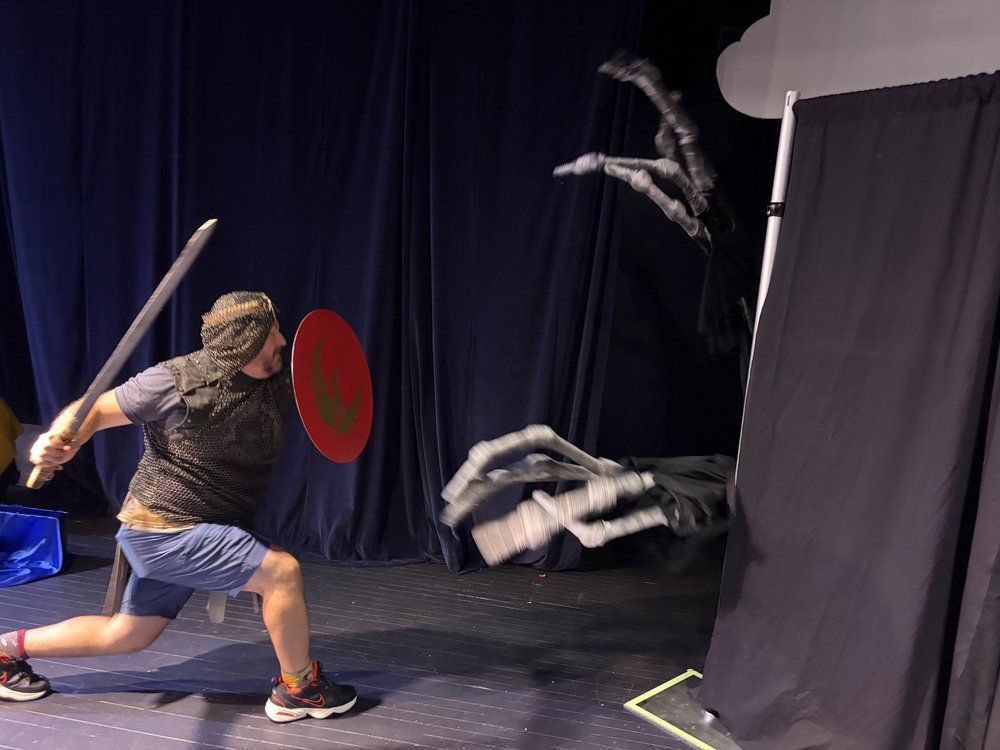
If you enjoyed this post, and would like to do some stage combat of your own, sign up for one of my history and stage combat classes on Outschool.com!

Title image for my Stage Combat Course

Shakespearean Couples Tier List

Since it’s still the month of love, I thought I’d rank Shakespearean couples and see if the allegation is true that Shakespeare has no good married couples. Naturally, this is my opinion, but I will try to back my opinions up with quotations and moments from the plots. Let me know what you think!

S Tier- the Super Couples

My criteria for the best couples in Shakespeare are this:

  1. Trust
  2. Mutual respect and affection
  3. Devotion, or as Shakespeare puts it “Love is not love, which alters when it alteration finds.”

A Tier- the ones who Passed the Test

Couples in this tier all tried and failed at first- Orsino spent years mooning over Olivia not able to see how wonderful Viola is. Lysander drops Hermia for Helena, (but to be fair, that was Puck’s fault, not his). At the end though, all these lovers reconcile and are better people for their trials and tribulations.

B Tier- Affection, but no devotion

Couples in B-tier are passionate and willing to break rules, laws, and sometimes necks for their loves. However, as Friar Laurence says “These violent delights have violent ends.” Every couple in B-tier ultimately fails to create a lasting relationship.

C Tier- The ones hanging by a thread

All the C-couples have some very toxic traits. Claudius hates Gertrude’s son and murdered his own brother, so his relationship with his wife/ sister-in-law is ultimately doomed. Hamlet has little to no respect for Ophelia and flies into mysygenistic rage at the slightest provocation. Even Demetrius, who is magically compelled to love Helena forever, has a history of loving women, and then abandoning them. Who’s to say he won’t get hit by the arrow again, and throw Helena off?

D Tier- Actively ABusive/ A Relationship Based on lies

I truly despise Taming Of the Shrew, or as I like to call it, Stockholm Syndrome: The Play. The men in D-tier (and Phoebe in the case of As You Like It) are controlling, abusive, cruel, and pathological liars. They don’t want a partner, so much as a toy to beat around when they feel like it.

Special Mention- Cordelia and the King of France from “King Lear”

These guys might be low key the best couple in Shakespeare. The King of France marries Cordelia and comes to her defense after her father disowns her and humiliates him. Based on this, you can tell he doesn’t care about her title or her dowry (“Thy truth then be thy dower. Thou hast her France, let her be thine, for we have no such daughter.”

Not only that, France goes with Cordelia and lends her an army to recapture England for Lear! Clearly this guy loves Cordelia and is ride or die on making her happy.

Special Mention- Antony and Cleopatra

I know they are an iconic couple, but I think Antony and Cleopatra are a very toxic pair. When I first read the play, I hated Cleopatra for leading Antony on and mocking and teasing him every chance she got. Now I hate Antony for his selfishness. Cleopatra is trying to save her sons, her kingdom, and her family’s legacy and he is throwing away everything just to appease his own ego. He also shames Cleopatra for her promiscuity, which is extremely hypocritical coming from him. This couple is clearly in need of MASSIVE counseling, and I pity poor Enobarbus and Charmian for getting caught in their drama.

I hope you enjoyed this tier list. One pattern I noticed in all these plays is that every couple in Shakespeare is tested, whether through magic, deceit, long journeys, or just jealousy. Shakespeare does a good job of showing how young love is beautiful and exciting, but real love is based on respect and the will to choose your partner in spite of obstacles.

What to Get A Shakespeare Nerd For Christmas 2

If you’re reading this as I post it, there’s a Shakespearean nerd in your life and your wits are about to turn trying to find a gift. I’ve already written about printed editions of Shakespeare and educational apps, so you can consult those if that’s what you are looking for. Now I’m covering the kinds of stuff that die-hard Shakespeare fans will kill a king and marry with his brother for, basically nerdy swag that no Shakespearean fanatics should be without!

Slings and Arrows


For anyone: Immortal Longings.com- This company is very special to me. If you’ve seen any of my Play Of the Month posts, you’ve seen the gorgeous artwork for Shakespeare’s plays by the artist Elizabeth Schuch. Not only do I love her work, my wife and I put her prints on the decor for our wedding day, and wrapped some of my presents in wrapping paper with her designs on it. If you go to her website, she sells Shakespearean art printed on and inspired by Shakespeare’s plays on everything from tapestries to clothes to iPhone cases. I highly recommend checking her work out, and patronizing it as much as possible: https://society6.com/immortallongings/s?q=popular+framed-prints

I also want to give a shout-out to the website Good Tickle Brain, a weekly Shakespearean comic that satirizes the Bard’s work with love. I feel the best way to introduce anyone, young or old to Shakespeare is through a healthy dose of satire and parody. Mya Gosling loves Shakespeare and it comes through in her simple, funny retellings of his plays. If you go to their shop (spelled Shoppe to appeal to nerds like me), you can get some of her comic books, funny T-shirts, and a few educational posters for teachers too: https://goodticklebrain.com/shoppe/

Adults

  1. The Bard game This is the Monopoly for Shakespeare Nerds- each player pretends to be a theater manager putting on plays in real locations where Shakespeare’s company toured during his lifetime. You make money by reciting speeches or improvising one in the Shakespearean style, or by answering Shakespearean trivia questions. A must-have for any Twelfth Night Party! Review of the game: https://boardgamegeek.com/boardgame/12372/shakespeare-bard-game https://boardgamegeek.com/boardgame/12372/shakespeare-bard-game
  2. Puzzles- The world of Shakespeare or Build it yourself Globe Theater- I love the idea of learning about history by building it yourself.
  3. Wine 🍷 Though I was unable to find actual wine with Shakespeare’s name on it, practically every other part of the wine drinking experience has been branded with Shakespeare- wine bags, glasses, corks and bottle stoppers, and even whole bars! If you spend a few minutes looking online, you can find tons of Shakespearean wine merch. By the way, here’s a convenient list of quotes Shakespeare wrote about alcohol: http://www.shakespeare-online.com/faq/shakespearedrinking.html
  4. T shirts 👕 https://www.redbubble.com/shop/shakespeare+t-shirts

Stocking stuffers

Shakespearean Comic Books. I’ve written reviews about some of these books and I’m very impressed by the artwork and the clever adaptations. Click here to read my review of the Romeo and Juliet Comic.

Kids

  1. Pop-Up Shakespeare by the writers of the Reduced Shakespeare Company. I’m a huge fan of The Reduced Shakespeare Company and they have created an amazing new popup book for kids of the entire Shakespearean cannon!

  1. Board books 📖 Yes, even toddlers can get into Shakespeare. I actually read this to my daughter a lot. It’s not the story of the play, but it does introduce some of the characters and famous lines which can help a child to become familiar with Shakespeare.
  2. Let’s hit each other with Foam Swords (Game)- Most kids get into Shakespeare for the swordplay, and here’s a fun, safe way to do so.

So there are some gift ideas for the Shakespeare nerd in your life. Merry Christmas!

Here’s one more gift that you could give a Shakespeare nerd ages 13-18: A class from ME!

Go to my Outschool profile and Get $5 off the following classes:

  1. Wizard Science for Kids!
  2. What Was Christmas Like for William Shakespeare?
  3. The Violent Rhetoric of Julius Caesar
  4. Stars and Constellations for Kids
  5. Romeo and Juliet: Why Do We Still Read This Play?
  6. Macbeth: An Immersive Learning Experience
  7. Love Poetry- Shakespeare Style!An Interactive Guide to Shakespeare’s London
  8. An Immersive Guide to “Romeo and Juliet”
  9. A Child Astronomer’s Christmas!

Get started at https://outschool.com/classes/a-child-astronomers-christmas-bhmPRpND and enter the coupon code at checkout. My classes are available for as low as $4 apiece! Get started at https://outschool.com/classes/a-child-astronomers-christmas-bhmPRpND and enter the coupon HTHESNIF6B5 code at checkout.

Course image: "The Violent Rhetoric Of Julius Caesar"
Course title image for my Outschool course, 2021

Lots of Great classes are available on Outschool This Winter

Scan the QR code to see my list of classes.

With the holidays approaching, why not give your kids the gift of learning Shakespeare in a low-key, no-pressure scenario? I have classes on Shakespeare’s life, Romeo and Juliet, and my celebrated Stage Combat class! Sign up now for all the fun on Outschool.com!

Shakespeare and Star Wars

Class Description: Using self-paced online activities, your child(ren) will compare the plot and characters of Star Wars to Shakespeare’s plays. We will also discuss Shakespeare’s writing by looking at “William Shakespeare’s Star Wars” by Ian Doescher.

Romeo and Juliet Murder Mystery

Course Description: A flexible schedule class that teaches kids the plot and characters of “Romeo and Juliet,” in the context of a detective story where you solve the mystery of the young lovers’ deaths.

Course Descriptions

How to Write Like Shakespeare: Learn the basics of iambic pentameter, sonnet form, and Shakespeare’s dramatic structure, and practice writing Shakespearean speeches.

Get $10 off my classes with coupon code HTHESJTOUQ10 until Dec 25, 2024. Look through my classes at https://outschool.com/teachers/The-Shakespearean-Student and enter the coupon code at checkout.