It’s a moment of tragic irony, worthy of King Lear himself that the actor who played Snape died before the actor who played Dumbledore, but here we are. I’m saddened to say that we’ve lost another beloved Shakespeare and Harry Potter actors.


Gambon was born in Ireland in 1940. His first Shakespeare role was in a production of “Othello” at the Gates Theater in Dublin Ireland. He went on to win an Olivier Award, a BAFTA, several SAG awards, and was knighted in 1988.

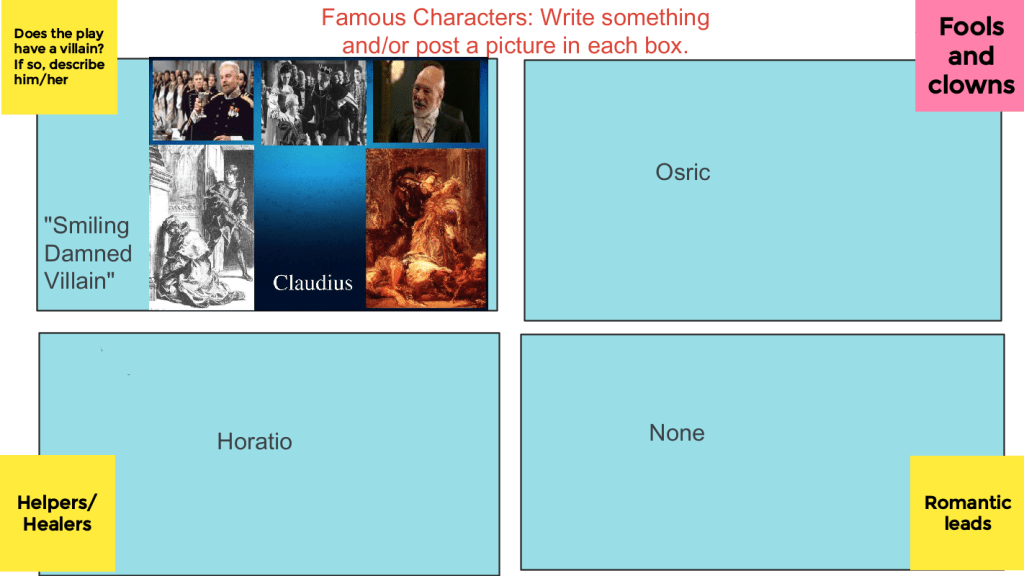
Sir Michael became accomplished both on TV, in movies, and on stage. He played many of Shakespeare’s greatest roles, including a famous performance as King Lear with Antony Sher at the Royal Shakespeare Company. Here are some highlights of his stage work:
Now before I go on, I’d like to address the elephant in the room, or rather the MEME in the room:

I’ve never understood the animosity that Gambon got for changing the interpretation of this line, and no one seems to have a real explanation for why he changed it from the book. So this is all speculative, but as a Shakespeare actor myself, I want to provide some rational explanations that while you might not like his choice, you hopefully won’t come to the conclusion that it was the “Worst mistake ever.”
1. If You Don’t Change Something, You’re Not Doing Your Job
All Shakespearean actors know that every line they say has been spoken thousands of times before out of the mouths of hundreds of actors. It therefore follows that the actor has to find a way to make the character his or her own. Gambon knew that Richard Harris had embodied the character as a sage, god-like figure. Gambon’s decision to make the role different helps make his interpretation memorable.
2. Gambon’s Dumbledore is not the same man as Richard Harris’
In the first two books, Harry Potter is just beginning to learn about the wizard world, so he sees Dumbledore as a god- like father figure. By his third year though, Harry starts to see Dumbledore as a man, a powerful wizard, but also a man. This comes across very well in Gambon’s performance- he forgets thing, he gets frustrated, and he makes mistakes. Much like how all children see their parents differently as they grow up, Harry, and through him the audience, see Dumbledore differently as the series continues.
My Theory- Why Is Dumbledore So Furious With Harry?
My personal theory is that Dumbledore isn’t actually mad at Harry, he’s mad because he believes that the person standing in front of him isn’t Harry. Spoiler alert for later in Goblet of Fire, but we that an intruder has snuck into Hogwarts, and Dumbledore must have had suspected that Voldemort would try this. What if he suspected that Voldemort sent an agent disguised as Harry to infiltrate the school? This would explain the fury Dumbledore displays toward Harry when he sees he’s been entered in the Triwizard Tournament.
As an educator and a father, I would be absolutely furious if someone tried to break into my school and harm my students, and since Dumbledore is the closest thing Harry has to a father, you can see why Dumbledore would be especially angry. So maybe this is why Gambon chose to deviate from the book in his interpretation of Dumbledore.
Sources:
https://pagesix.com/2023/09/28/sir-michael-gambon-dumbledore-in-harry-potter-dead-at-82/
https://www.mtv.com/news/3m9lil/harry-potter-and-the-gobleddafiyah