Locrine is an Elizabethan play, first published in 1595, whose author is, sadly, lost to history. The title page says the play was “Newly set forth, corrected, and overseen, by W.S.” As you might expect, scholars and theater practitioners have eagerly tried to prove that this means the play was written, (or at least revised), by Shakespeare. So far, no proof has been found.
“Historical” Context
Notes on the Trojan War
The play is a tragedy based on the founding of Britain. Over 2,000 years ago, a father and his three sons flee the destroyed Troy, tame the wild landscape of England, and become its first kings. After his father’s death, the eldest son, Locrine, must defend his land from barbarian invaders with the help of his brothers.
Semi-mythical characters
Brutus of Troy
Brutus is the patriarch of the Britons who, according to legend, was descended from Aeneas the sole survivor of the infamous Trojan War. Brutus preserves the legacy of Troy by founding a new city in Britain, Troynovant (New Troy), and establishing his three sons as heirs to his kingdom.
Camber, Brutus’ young son
Albanact
Albanact is the great warrior whom Brutus puts in charge of Scotland. He has his hands full defending Britain against the Scithian invaders.
Camber
Camber is given Cambria, (modern day Wales)
Illustration of King Locrine from the Genealogical Chronicle of the Kings of England to Edward IV (c. 1461)
Locrine is Brutus’ eldest son, and as such he is crowned king over all Britain. According to legend, Locrine changes the capital of England from New Troy, to Locrindom, which then became London.
The Plot
Title page illustration from Locrine, 1709
The prologue
Prologue describes Prometheus’ punishment as a tragedy, and his gift is a blessing. Prometheus also warns that Zeus will be overthrow if he succumbs to his desire for Thetis
Ate the Goddess of revenge introduces the play, making it very clear that this is the fall of the royal house of Brutus.
As the play continues, we see Brutus die, leaving his kingdom to his children
4. Humber is humbled- the villainous emperor Humber tries to conquer Britain. Many battles and many tears ensure
Locrine is conquered- without giving too much away, Locrine is defeated in battle by his former wife, Gwendoline. It’s possible that, since the play was written in the last few years of the Elizabethan era, that the writer of Locrine chose Gwendolyn to be a stand in for Queen Elizabeth herself.
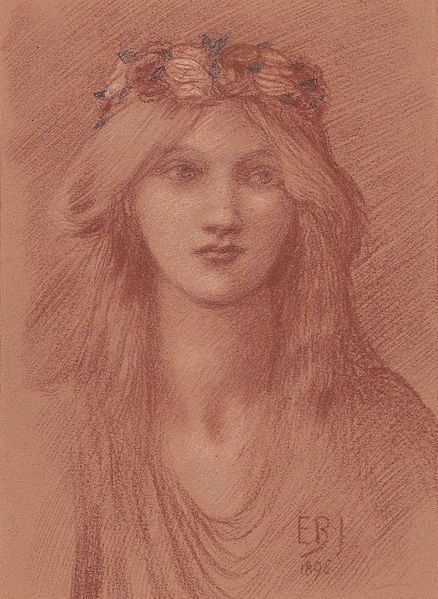
Gwendoline, legendary Queen regent of Britain.
A Senecan Tragedy
Locrine probably isn’t a Shakespearean play- it’s characters communicate mainly in operatic speeches that are full of passionate feelings. Plays like this are called Senecan Tragedies, based on the ancient Roman playwright Seneca.
As I mentioned in my podcast, these speeches are fun to give, but it’s a challenge to deliver them in a way that connects with an audience.
Humber’s monologue from Locrine
Dumb Shows
To illustrate key moments of the play, each act begins with a dumb show, a short pantomime which usually involves some kind of animal. For instance, when Humber defeats Brutus’ son Albanact, there is a dumb show where a crocodile kills a fish, echoing how Humber (who carries a crocodile on his shield), deceived and murdered Albanact.
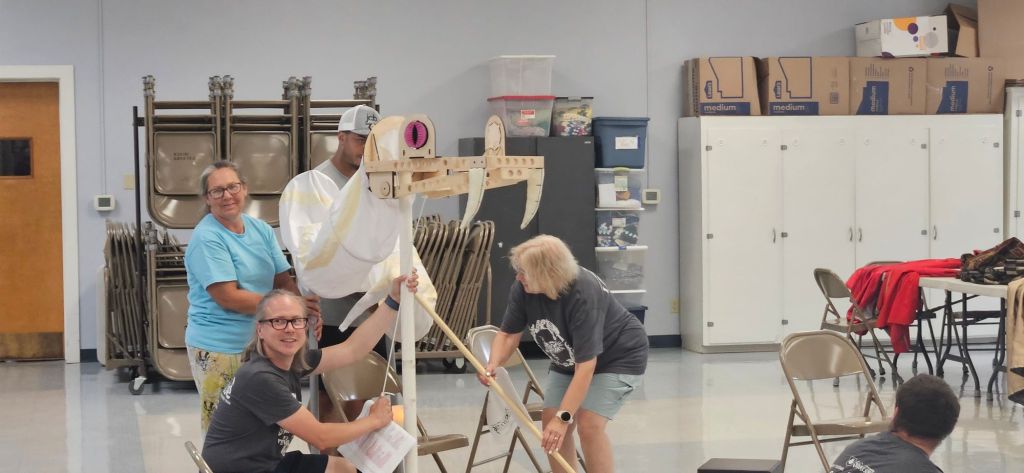
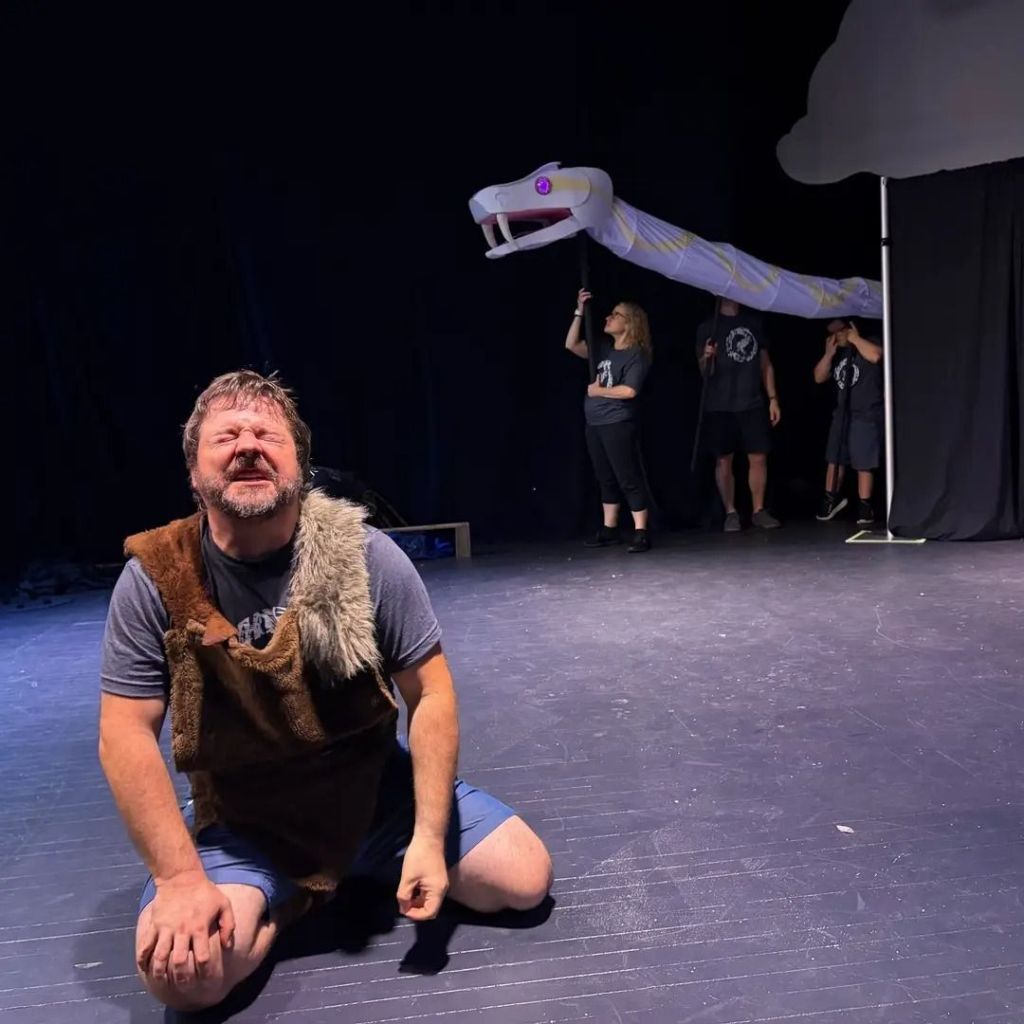
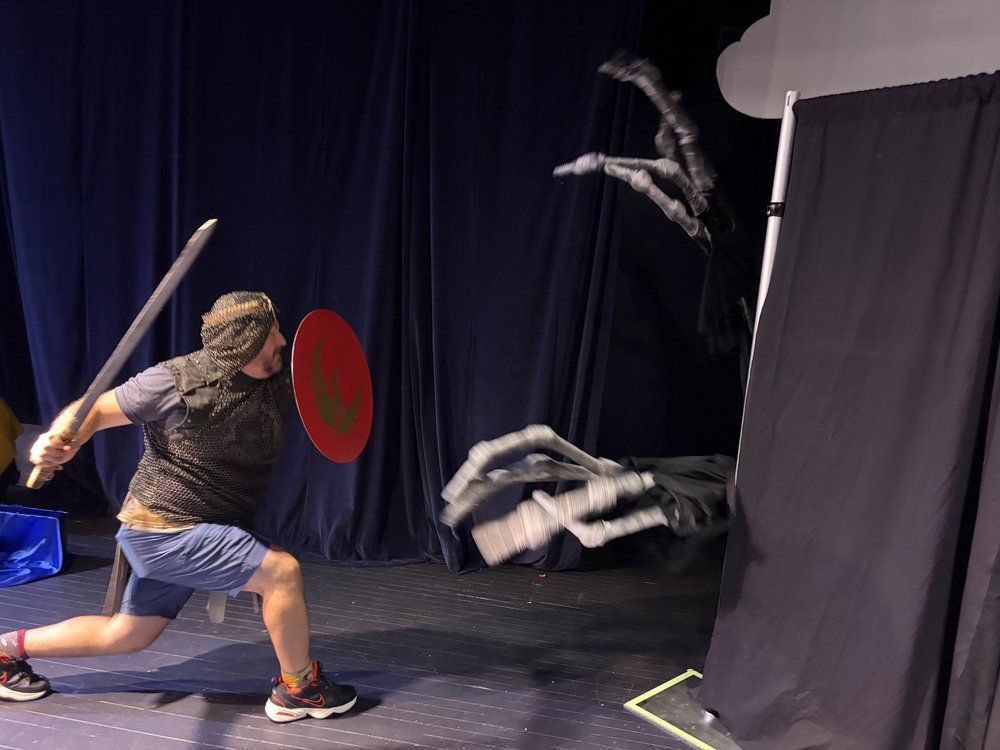
Our version of Locrine chooses to use puppets instead of real animals, most notably crows and vipers. The Mexican folktales that we intertwine with the text of Locrine mention a beautiful serpent named Kwinim Tsan, which represents the power of nature.
Our team works on the great serpent puppet
Our Interpretation
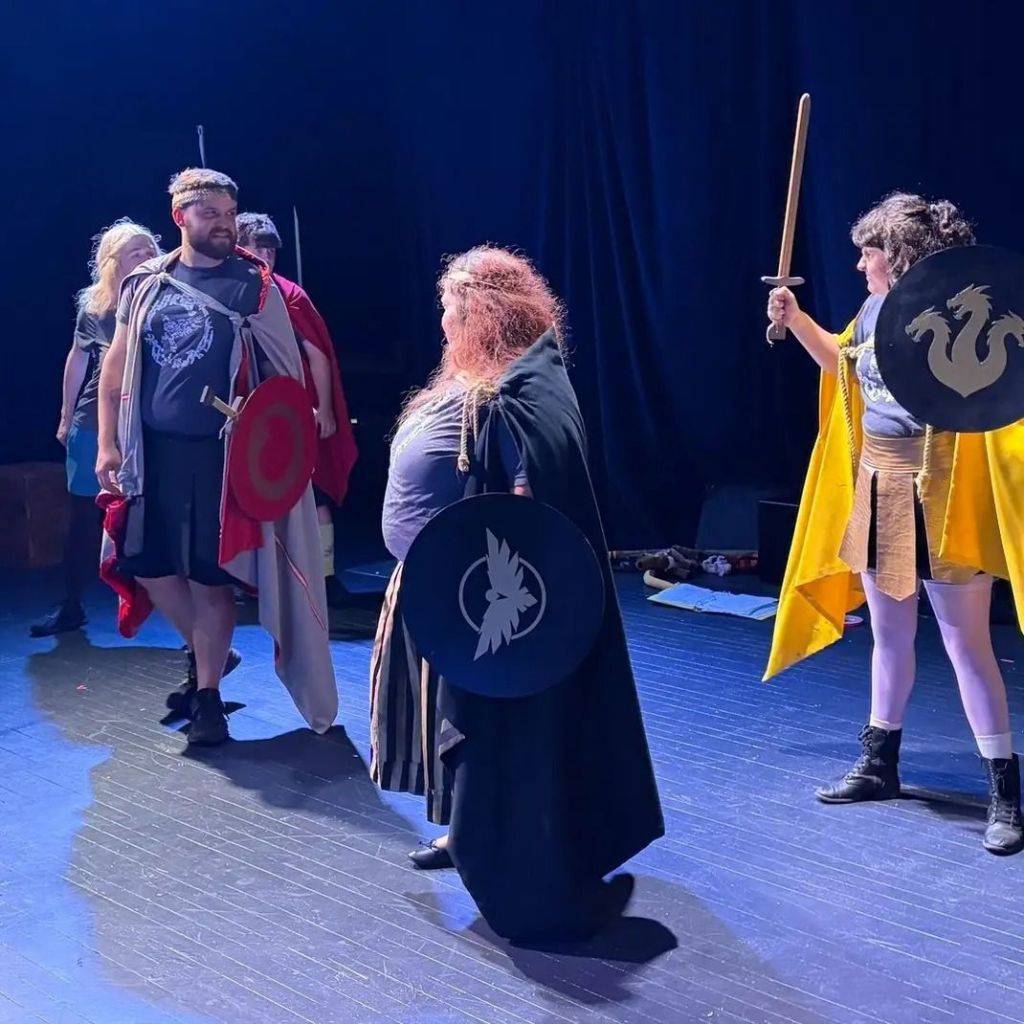
Humber is humbled in the wilderness Gwendoline rallies the troopsBrutus fights the giant Gogmagog Gwendolyn confronts LocrineA massive battle between Locrine’s forces and Gwendolyn’sThe indigenous story of how the crow became black.Cast photo
Our production, Víbora y cuervo: Locrine and Other Tales, pairs this origin myth with other origin myths to explore their power and purpose in our world. Orangemite.org
Poster for Orange Mite’s 2026 production of Locrine and Other Tales
Well, there you go, Hope you enjoyed this overview of the play Locrine. If you like this review, you might like to see the show itself. Click here to purchase tickets:
I’m pleased to announce that I will be playing Humber, the Scithian Emperor who tried to conquer England, in a very special adaptation of Locrine in August of 2026.
What is Locrine?
Locrine is an Elizabethan play, first published in 1595, whose author is, sadly, lost to history. The play is a mythologized history of the founding of Britain, which the play calls New Troy.
Our Interpretation
Our version of Locrine is a hybrid between the original play, and stories from the indigenous people of Mexico in the huasteca region. Our director chose to reinterpret Humber as an existential threat to the natural world of Mexico- a threat to the people and the environment, who is defeated not just by Locrine’s army, but by the forces of nature themselves.
Myth vs History
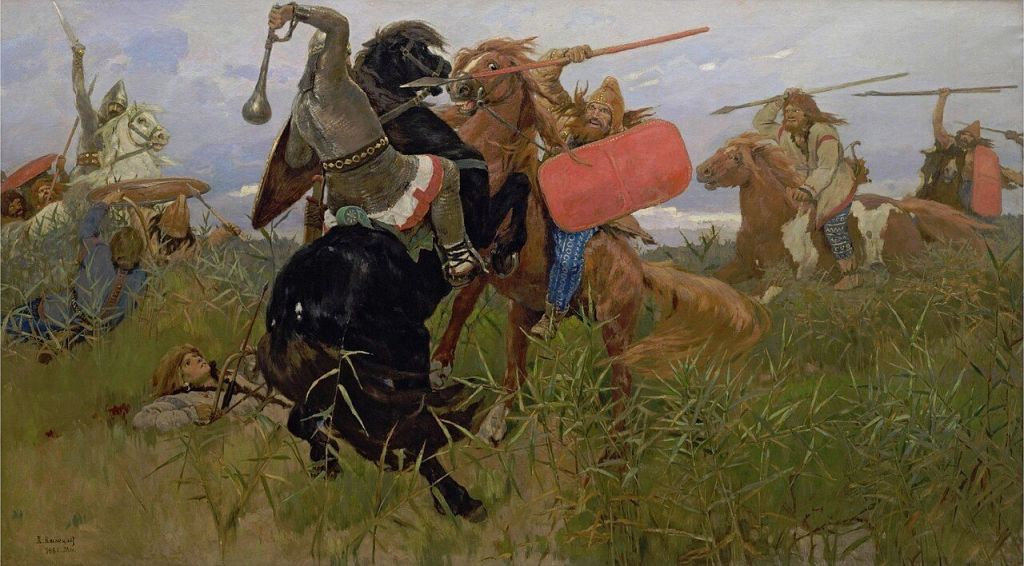
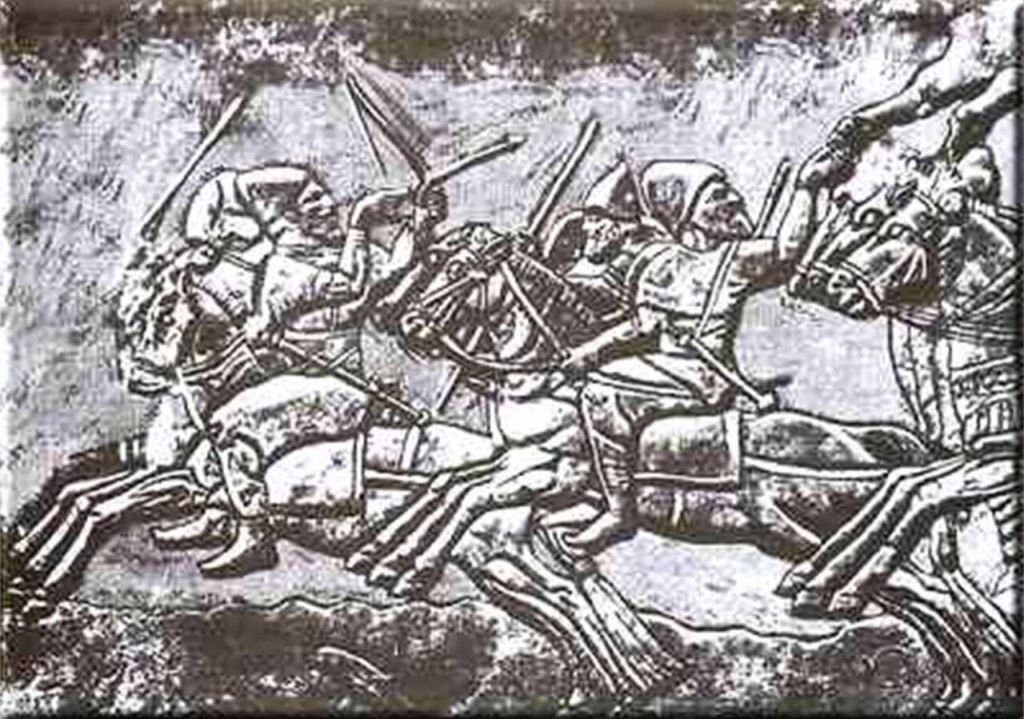
Ancient Scithian horse warriors
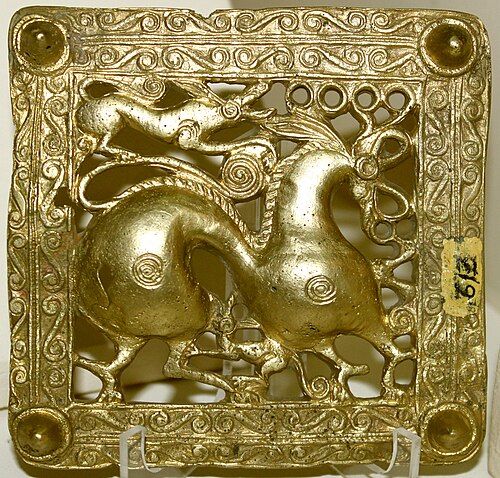
The Scythian Emperor- Scythia was originally modern day Iran, but many Scithian tribes also lived in places like Ukraine and Russia. They were nomads who primarily used their skills in mounted warfare to conquer regional fifedoms, organized under a single emperor.
Function Within the Play
Ancient golden Scithian belt buckle
Ravisher of Nature- as Humber tries to conquer the people of England, he also destroys the natural world.
Usurper/ Conqueror of the Britains- in our version of Locrine, Humber’s war to conquer Britain is analogous to the European colonizers who fought to dominate America such as the French, the Dutch, and of course, the Spanish.
We are retired with joyful victory. The slaughtered trojans squeltering in their blood, infect the air with their carcasses, and are a prey for every ravenous bird.
Locrine, Act 2 Scene 6
Playing Humber
Right now, I am playing Humber as a narcissist, a man who, at his core, is deeply insecure but tries to overcompensate it by acting like an invincible monarch- one who fills the void in his soul with land, slaves, possessions, and gold. He is good at persuading people and inspiring them to fight for him, but he cares for no one but himself.
High on a bank by Nilus’ boistrous streams, Fearfully sat the Egyptian Crocodile, Dreadfully grinding in her sharp long teeth The broken bowels of a silly fish. [A crocodile swims across the stage, eating a fish.] His back was armed against the dint of spear, With shields of brass that shined like burnished gold; And as he stretched forth his cruel paws, A subtle Adder, creeping closely near, Thrusting his forked sting into his claws, Privily shed his poison through his bones. So Humber, having conquered Albanact, Doth yield his glory unto Locrine’s sword. Mark what ensues, and you may easily see, That all our life is but a Tragedy. –Locrine, Act III prologue.
A snake struggling with an alligator, eventually gets the upper hand, or coil.
In the play, Humber is compared to a fearsome predator- a crocodile, which was actually the sigil on his shield. I took inspiration from the animal, and used a serpentine physicality when playing him. I also decided to give myself a crocodile smile- I keep my head down, stared my enemies in the eye, and then- struck!
Gloucester’s show Beguiles him as the mournful crocodile With sorrow snares relenting passengers- Henry VI, Part II.
Inspirations
From History-
Again, Locrine is not a history play and Humber, as far as we know, was not a real person. Rather than a legitimate chronicle, Locrine is a mythologized history of the founding of Britain. The Scithians never actually invaded Britain, (although some early chronicles claim that the Saxons were descended from them). Our version of Locrine conflates the foundation of Britain with the conquest of America, (specifically the struggle between English colonists and the Spanish conquistadors,) and there is one man who has come to symbolize the ruthless might and lust for gold that the Spanish had in the early conquest of the American continent more than any other Conquistador- Hernan Cortez, governor of New Spain, and conqueror of the Mexican empire.
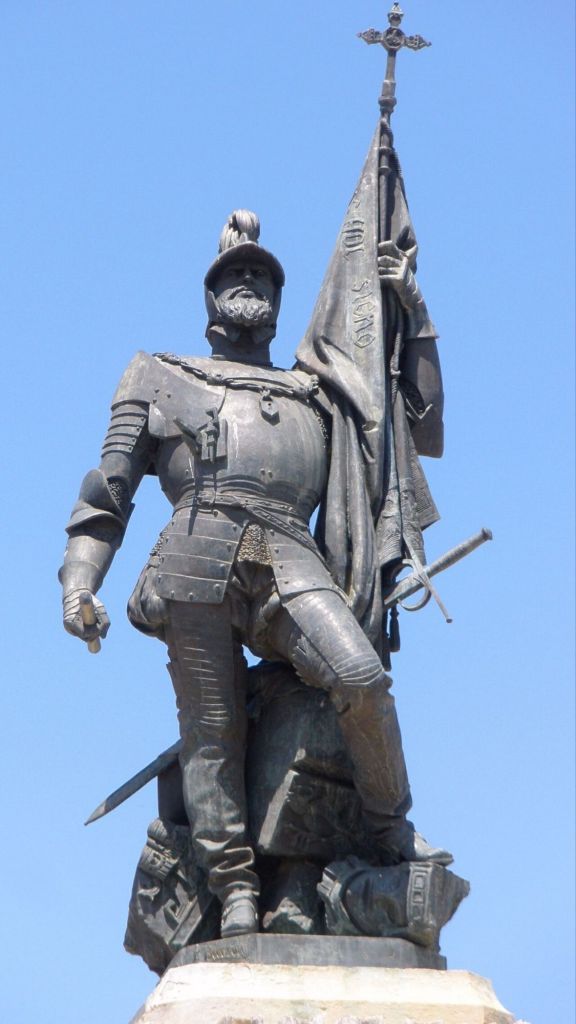
Statue of Cortez. Notice the broken Aztec statue under his foot.
We Spaniards know a sickness of the heart that only gold can cure- Hernan Cortez (allegedly)
Cortez was a man of insatiable greed and lust for power. He was born a minor noble with a gift for diplomacy and exceptional courage. He eventually slaughtered thousands of the Mexican people, supplanted their ruler Montezuma, and razed their capital city of Tenochtitlán, rebranding it as Mexico City, capital of the New Spanish empire.
Mural on the Battle of Centla and the conquest of Tabasco, by Homero Magaña Arellano.
Like Humber, Cortez was more of an administrator than a soldier, but nevertheless, he did lead his army successfully against the native people in several key battles, where they used their cavalry and cannons to devastating effect. He also ravished hundreds of Indigenous women who sired his illegitimate children- like our Humber, he lusted for women in addition to gold.
Cortez was careful to appear pious to his soldiers and respectful to the native people he encountered, but this was a calculated act designed to get loyalty and obedience from the people around him. According to his biography, Cortez had a zero-tolerance policy for blasphemy, and told his soldiers to respect the native Mexica. Again, Cortez’s real goal was to keep his men loyal to their “pious” commander and to make the people trust him…while he robbed them blind. Talk about crocodile tears.
Cortez’s victories allowed him to build palaces for himself to rule over the Mexica, as well as a royal charter for himself, and of course, GOLD.
The Spaniards appeared to be much delighted, they seized upon the gold like monkeys, their faces flushed. For clearly their thirst for gold was insatiable; they starved for it; they lusted for it; they wanted to stuff themselves with it as if they were pigs. They went about fingering handling the streamers of gold, passing them back and forth, grabbing them one to the other babbling, talking gibberish among themselves. – Bernardino de Sahagún
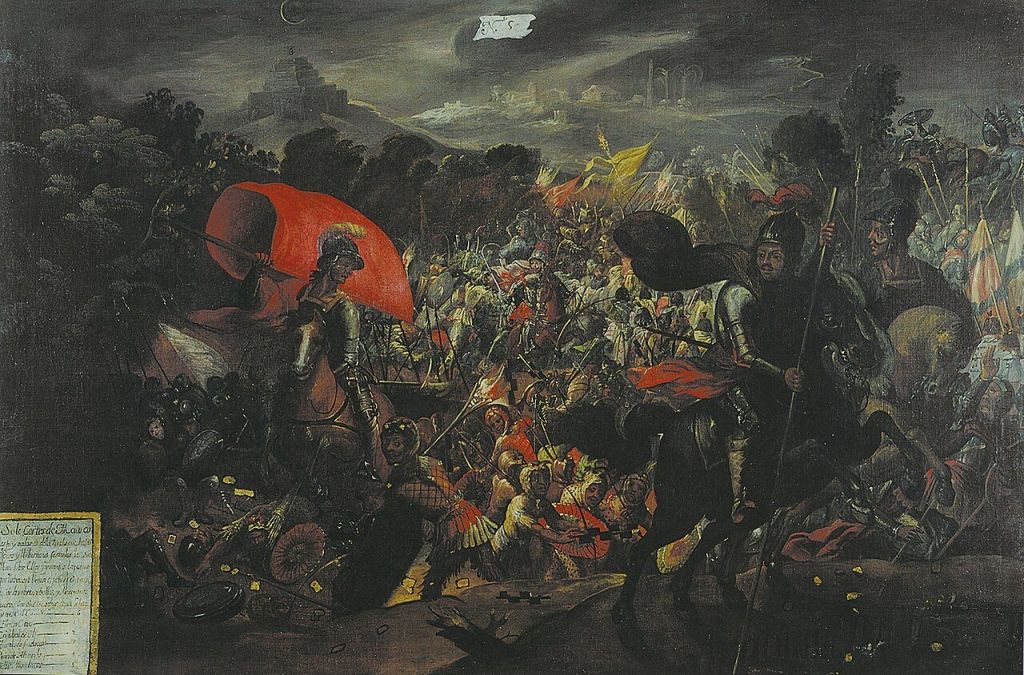
In Locrine, Humber is defeated offstage and forced to starve to death in a desert wilderness. To fill in the blanks, I looked at events from Cortez’s life and death. The real Cortez died of dysentary in 1547, but I like to imagine Humber- Cortez being chased away by Locrine’s army, similar to his narrow escape from Tenochtitlán during the famous Noche Triste (30 June – 1 July 1520)
Cortez and his soldiers narrowly escape Tenochtitlán
From Shakespeare-
Shakespeare rarely writes characters who are wholy evil, so for the first three acts, I mainly thought of another Sythian conqueror- Christopher Marlowe’s Tamborlaine. He is not so
much a man as a force of nature, eager to kill, conquer, and take power and riches from the natural world.
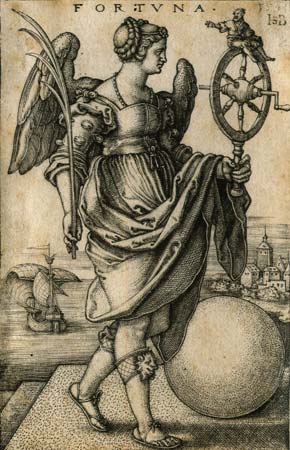
The Roman Goddess Fortuna, with her wheel and orb.
In the later acts of Locrine however, Humber is… well humbled ater losing the war, losing his son, and losing his wife. His laments for his son bear a striking resemblance to Titus Andronicus.
Humber speech III, Scene 5, performed by One Woman Shakespeare
Verse
At the end of his life, Humber reverts to a primitive shadow of his former self- Humber is forced to hide in desert caves, and live on berries and roots. His cruel, bitter laments and desire to cast himself into the sea is almost perfect parallel to Shakespeare’s Timon of Athens.
Timon in the cave
What basilisk was hatched in this place, Where everything consumed is to nought? What fearful Fury haunts these cursed groves, Where not a root is left for me to eat? Hath fell Alecto, with invenomed blasts, Breathed forth poison in these tender plains? What, not a root, no fruit, no beast, no bird, To nourish Humber in this wilderness? My very entrails burn for want of drink, These foul accursed groves afford no meat, The gods, hard-hearted gods, yield me no meat. Was ever land so fruitless as this land? Was ever soil so barren as this soil? No, even the climate of the torrid zone Brings forth more fruit than this accursed grove
In Conclusion
Humber is a great deal of fun- he’s a cartoon-like villain at first, but after he loses to Locrine, he seems more human, longing to be reunited with his son. Even though he’s not the main character, he has a tragic character’s arc. In short, he’s great to play, and I hope he’ll be great to watch!