I’m not going to say where my club is or mention the names of the members for privacy’s sake. This post is to familiarize you with the idea, and hopefully inspire your school to do the same.
The Genesis
Like I said in my “Is Shakespeare Being Cancelled?” post, most teachers don’t have the time, training, or inclination to teach a really in-depth Shakespeare unit. Most classes I’ve worked in barely have enough time to cover the plot of Romeo and Juliet, before they need to work on another unit. This is why I started a Shakespeare club, to give kids time to engage with Shakespeare without having to worry about grades.
Mission Statement:
Shakespeare was NOT meant to be read. In this club, we’ll engage with Shakespeare’s plays through games, sword fighting, dramatic readings, movies, and sometimes even recipes! The goal of the club is to have fun with classic works of theater.
Organization
Every month we will discuss a new play and try to explore different aspects of it each week. For each week we’ll do the following:
Weekly questions such as: “What do you know about Shakespeare the man?” or, “Are Shakespeare’s plays still relevant today?”
Group Close reading- Every month I’ll choose a different play to focus on. We’ll pick a scene or speech each month to look at and read aloud.
I’ll provide some context, explaining what is happening in the play durin the speech, and any relevant historical context.
There will be a dramatic reading, either by me (or a brave soul in the club).
We’ll watch a recording and discuss their interpretation and what the students like and don’t like.
Immersive activities such as:
-Pool Noodle sword fights
– Shakespeare’s arts and crafts and recipes such as gingerbread men contests and making costumes and props.
– Shakespeare movie-watching party with such films as 10 Things I Hate About You, ‘O,’ “Gnomio and Juliet,” “Hamlet,” and others.
Weekly challenges like “Find a Shakespeare quote that you use in normal speech,” “Find a movie or character that’s based on Shakespeare,” or “Draw a picture of a Shakespearean character (stick figures are acceptable). Each challenge is rewarded with a digital badge, which the students can trade for Shakespeare swag at the end of the month!
Meeting RecapS
Meeting 1: I talked about Shakespeare’s life, using the same format as this video:
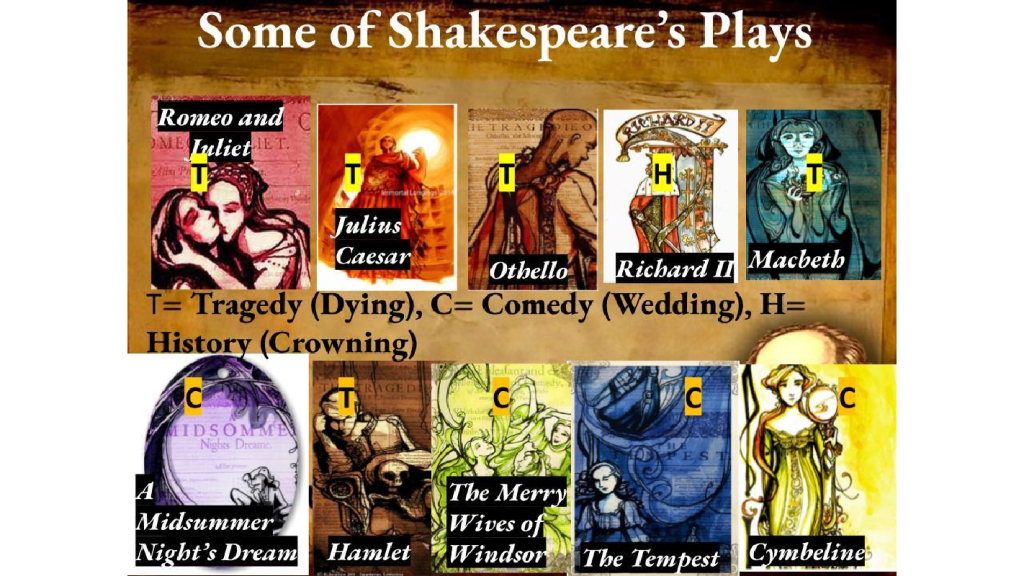
Meeting 2: To get the kids to connect with Shakespeare’s plays, I had them take a personality quiz to figure out which Shakespeare play they might want to read:
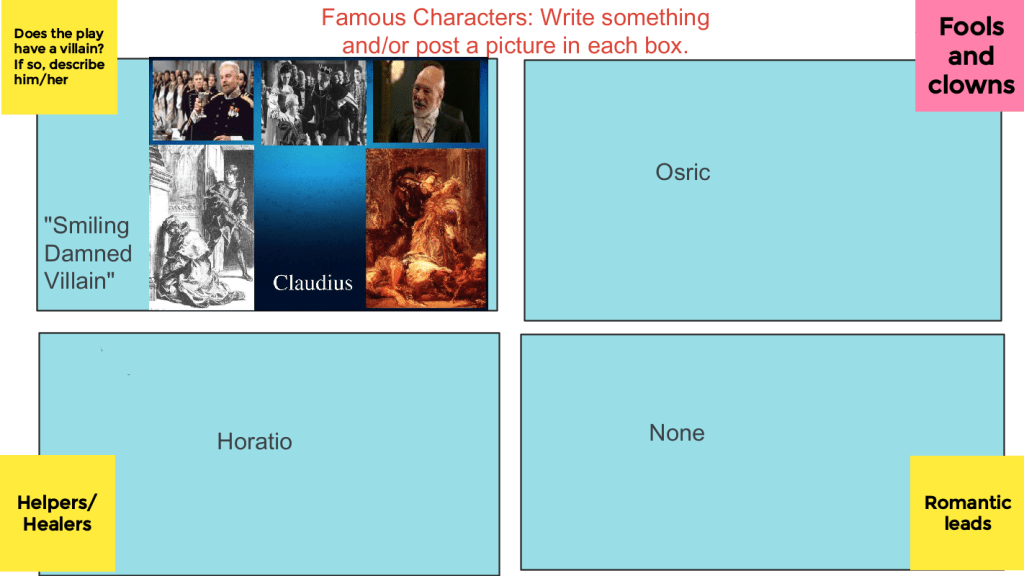
I then asked the students to research the play they got, then asked them to fill out a Jamboard, like the one I made below- using photos and short descriptors to get a general idea of their new favorite play!
So as the school year continues, I’ll create more recaps and post more discussions to let you know how this little experiment is coming. Since this is a new idea, I’d love to get your feedback because I want as many people as possible to help make this project a success!
As you probably know, I love to review children’s adaptations of Shakespeare (whether direct or indirect). “The Lion King,” (Hamlet), “Encanto” (King Lear), and of course, the many adaptations of “Romeo and Juliet,” are mainstays on this website: Gnomio and Juliet, Romeo and Juliet: Sealed With A Kiss, even Disney’s Pocahontas have their basic plot and characters firmly rooted in Verona Italy.
Then one day by chance, I found this book in a local park, and I knew I had to review it!
The Premise
This is a simple re-telling of the story of Shakespeare’s play that focuses on just the young lovers. You feel for these cute little animals and in a way, making them a kitty and a dog smitten with puppy love, makes them more understandable and sympathetic than Shakespeare’s youthful teenagers, who indulge in violent delights without using their human reason.
What It Keeps
The Story
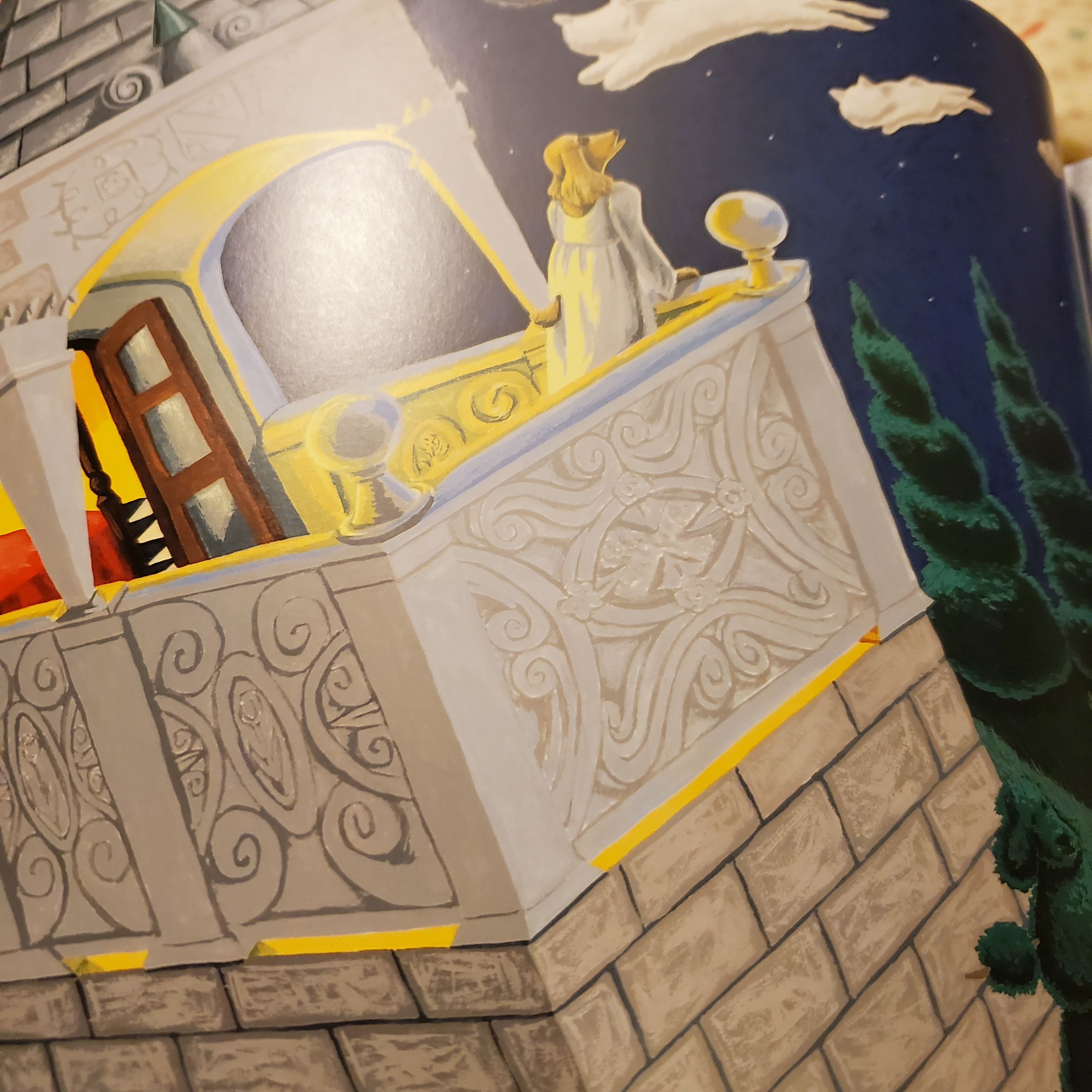
The book keeps the feud between the two families, has the young lovers meet in disguise at a ball, fall in love on a balcony, get married, and amazingly, DIE! Laden still manages to tell the story in a kid-friendly way, though giving it tragic weight.
The Language
The book opens with a rhyming prologue, which, although it isn’t in sonnet form, has the same function as Shakespeare’s prologue- to explain the plot before we see it played out in the book, thus giving the whole story a sense of dramatic irony. Plus, as you can see, Laden also imitates Shakespeare’s love of wordplay with metaphors and puns, (a tale of tails), and alliteration to give the dialogue some wit and effervescence. Reading it gave me giggles like I’d just popped open some champagne.
What it changes: Spoiler alert
All throughout, Laden makes small changes to simplify the plot and remove characters that don’t directly impact the main plot. The characters of Lord/Lady Capulet and Lord/Lady Montegue, The Nurse, Paris, Peter, the servants, and the friars are completely absent, turning an already brief play into an even more compressed story.
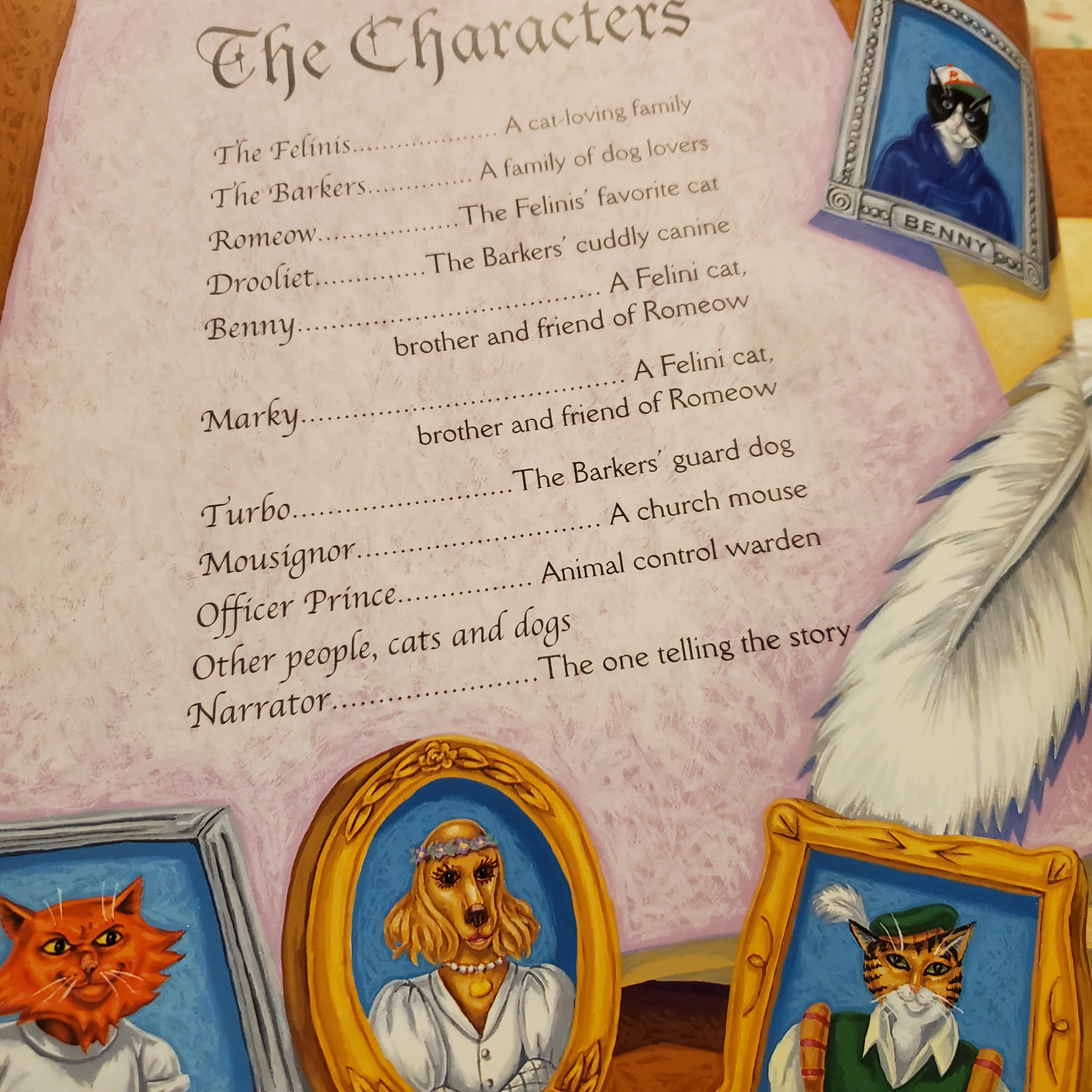
Like a lot of animal retellings I’ve seen of this story, the author recasts the human leads as animals that are natural enemies- in this case, cats and dogs. This makes the story easier for kids to understand. As I’ve said before, it’s often difficult to keep track of who belongs to which house in Shakespeare’s version. All you need to know is that Romeo and his brothers are cats and Juliet’s family are dogs.
Funnily enough, my daughter actually complained that the story would’ve been better if Juliet were a cat instead of Romeo, which I agree with for very specific reasons. The character of Tybalt is named after a character from a prose story called “Reynard the Fox,” who had the epithet, Prince of CATS. Mercutio annoys Tybalt by taunting him with this title before challenging him to a duel:
Tybalt: What would you with me?
Mercutio: Good Prince of Cats, nothing but one of your nine lives! Romeo and Juliet, Act III, Scene i.
It would’ve been a funny Shakespeare easter egg to have Juliet and Tybalt be portrayed as cats, but I understand why they went with dogs- Drooliet is a hilarious pun, and having Tybalt be a vicious, rabid dog helps set him up as a fearsome antagonist.
I suppose you’re wondering, how the author keeps Shakespeare’s tragic ending in a children’s book? Well, like Shroedinger’s cat, she manages to make Romeow die and not die at the same time. He gives Drooliet one of his 9 lives, allowing them both to ‘die’ and then come back for a happy ending. It’s a brilliant way to nod at the original, while also keeping the kid-friendly tone.
My Reaction
This book is really fun and very enjoyable for kids, parents, and teachers who want to introduce kids to Shakespeare at an early age!
For Pride Month, I’d like to draw some focus to a celebrated LGBTQ film, based on a play that, while not Shakespearean, it was by one of Shakespeare’s contemporaries and one who influenced Shakespeare a lot. This film, Edward II, directed by Derek Jarman, was based on the play of the same name by Christopher Marlowe (1564-1593). The film came out in 1991, during the AIDS crisis, when gay and lesbian people were not only fighting for their lives against a devastating epidemic but also for acceptance from the heterosexual community. This film is not only a striking, well-acted, well-directed adaptation of Marlowe’s play; it is also an encapsulation of the fears, struggles, and anxieties of the LGBTQ+ community at the time.
Plot Summary/ Great Quotes
Biography Of King Edward II
Edward II was the son of the infamous King Edward I, aka, Edward the Longshanks, the Scottish Hammer. He lived from 1307-1327 – until he was assassinated.
Fact Vs. Fiction
Peter Hanley as Prince Edward in “Braveheart” (1995) directed by Mel Gibson.
Aside from a few historical footnotes, I’m betting that when we think of Edward II, we mostly think of this portrayal in the 1995 film Braveheart. Frankly, most contemporary accounts of Edward II’s reign are similar to this portrayal- vain, spoiled, weak, deluded, and an utter disgrace to his warrior father. One of his greatest embarrassments was his army’s catastrophic defeat at the Battle of Bannockburn in 1314. Edward’s sources mainly portray him as weak and feeble compared to his father, but we have to remember that this was a cruel, warlike society with very little place for anyone who didn’t conform to stereotypical masculine virtues. Probably in the minds of the English court, Edward’s homosexuality was linked with his failures as a king. It was up to Jarman’s production to make Edward feel more like a real man, and not just a gay stereotype.
Play Vs. Movie
In the play, it’s ambiguous whether Galveston really loves Edward, or if he’s using him for the king’s power and protection. In the movie, Galveston is definitely using Edward, making the king’s fawning all the more pathetic and tragic. As his son asks: “Why do you love him when all the world hates him?” This makes our sympathies teter between Edward and his court- we wish Edward would open his eyes and get rid of Galveston, but at the same time, who hasn’t been blinded by love? At the same time, Galveston has been hurting the country, and taking Edward away from his court and his queen. Like many other stories of monarchs in love, including the real-life story of our current king, there is a constant tension in the court between the monarch’s personal desires, and his or her responsibilities to the country.
Biography of Marlowe
Edward II and Richard II
Many scholars believe that Marlowe’s play helped influence Shakespeare’s Richard II, as they both center around weak, sometimes effeminate kings that fall prey to the machinations of other lords. In Shakespeare’s play, it is possible to play Richard as being in love with some of his favorite courtiers, but nothing is explicit. Obviously, Marlowe was much more overt in Edward’s love for Gaveston. To demonstrate how these plays are similar, here’s Ian McKellen playing Richard II:
Is this play Homophobic?
On the one hand, the story shows Edward as effeminate, weak-willed, and poor in judgment which does align with offensive homosexual stereotypes. On the other hand, the other lords of the court are portrayed as cruel and intolerant, and Jarman definitely makes Mortimer a cruel and homophobic individual. In addition, when Edward’s son Edward III, who famously conquered England and France, he is shown in the movie wearing drag, which clearly shows that a member of the LGBTQ community need not be weak or ineffective. It also shows that Edward III has inherited his mother’s strength, not his father’s weakness.
a sufficiently entertaining, adamantly old-fashioned adaptation that follows the play’s general outline without ever rising to the passionate intensity of its star-cross’d crazy kids
Romeo and Juliet is still taught more than any other text in American high schools, and since it’s a play not a book, teachers will inevitably want to show a movie in class to show some of the action to the students. Since this is the most recent high-profile film version of Romeo and Juliet, it seems inevitable that this will be the one teachers will show to students, so I will try to review this film from the point of view of an educator, not a Shakespeare fan.
The Concept
This film was financed by the Swarosvski Crystal Company and in the words of their own chairperson, the film is an extension of the Swarosvki brand. So if I were to describe this film’s concept it would be to dazzle the viewers with expensive costumes, exotic locations, beautiful visuals, and young, attractive actors:
To be clear, I agree with the director that Shakespeare should be updated every few years to keep it fresh and relevant. However, I would argue that this film doesn’t go far enough to make this concept fresh, and this version is destined to age poorly. Without a unique view of the play other than- “love is pretty”, the film lacks vision and is not very distinct. That said, it perhaps is a good way to introduce young people to the play, as we’ll see below:
Changes to The Plot
The Act I Tournament
The film opens, not with two servants fighting (yet), but with a tournament between the Monaegues and Capulets, where they joust instead of fight to avoid bloodshed. It is a striking image to be sure, and it is less confusing than starting a fight over biting a thumb, but it is a little odd that the Prince has this tournament to avoid street fights, and then they wind up fighting anyway over the results of the tournament. It works within the story but it makes the Prince seem dumb and it adds little to the story other than spectacle.
The Dialogue
As you can see from this clip, the dialogue of this film is changed liberally. The writers change Shakespeare’s lines to make them sound less Shakespearean. They also heavily cut the speeches to shorten the duration of the film. Cutting long speeches and substituting a word here and there is pretty standard for most Shakespeare movies, but what I find really irritating in this film is the number of lines that they add. It’s generally understood in Shakespeare that a director or actor can subtly change a few lines in a play- change pronouns, change an archaic word or two to make it easier for an audience, but this movie has the dubious record for most lines added to a Shakespeare movie. Some of these lines are paraphrases of the Shakespearean text, like all the dialogue of Sampson and Friar Laurence’s speech explaining the sleeping drug plan to Juliet. Some of the additions are character lines, like the scene where Benvolio admits he wants to woo Rosaline, (which to be fair, is an interesting change and I don’t mind it). Finally, some of the lines are designed to summarize speeches that the script cuts.
I know I sound like a purist here, but I feel that if you’re going to do Romeo and Juliet, use the text of Romeo and Juliet, and don’t change it unless it’s absolutely necessary. If you’re going to do an adaptation like Gnomio and Juliet or Tromeo and Juliet, you can throw out the Shakespearean dialogue and play around with dialogue using the plot and characters Shakespeare wrote. This film does neither- it mangles Shakespeare’s text but rigidly adheres to the story and characters, so it fails to pick a lane between faithful depiction or creative adaptation.
Small changes:
Mercutio is a Montegue now. This matters because in Shakespeare’s version, he was related to the Prince, which is why the Prince takes pity on Romeo for avenging Tybalt’s death. Changing his allegiance robs his death of some of the tragedy that he was a neutral party who got caught up in other people’s quarrels.
Tybalt is in love with his cousin Juliet, (which admittedly I’ve seen in other productions). It gives him more motivation to hate Romeo and makes him even more distasteful to the audience.
Sampson and Gregory appear, but they are not named, nor do they bite a thumb.
Benvolio’s role is merged with Balthazar and the actor is the youngest person in the cast. I honestly like this change a lot- Balthazar is a great character but he is functionally identical to Benvolio in the plot, so merging the two parts makes a lot of sense. Both Balthazar and Benvolio spend the play looking out for Romeo yet Benvolio disappears once Tybalt dies, so giving the actor Balthazar’s lines is a welcome change. Now Benvolio is literally with Romeo to the end, which makes us feel sorry for Romeo and his best friend.
Benvolio is in love with Rosaline and makes a play for her after Romeo falls in love with Juliet. This might be a subtle nod to their relationship in the novel “Romeo’s Ex.”
Rosaline is Juliet’s cousin now, which is not mentioned in Shakespeare’s version.
Rosaline actually speaks, remarking on the foolish nature of silly Romeo, the Montague, and the Capulets. She still has no effect on the plot though, and her dialogue adds nothing.
Concerns for Teachers
If you are a teacher, I would recommend you show parts of the movie, specifically the fights and some of the action in the second half rather than the whole thing, but once you read the rest of this review, you can draw your own conclusions. As I mentioned before the Shakespearean dialogue is heavily cut, new ‘modern’ dialogue is added in, and even some of the action is also changed. Because of this, DO NOT TRY to read the play along with this film, as your students will get extremely frustrated. In my class, I actually played a game where the students write down what the movie changed from the play to try and get them to engage with it. I would also recommend asking questions or quizzing the students on the plot or the famous lines since those are more or less intact.
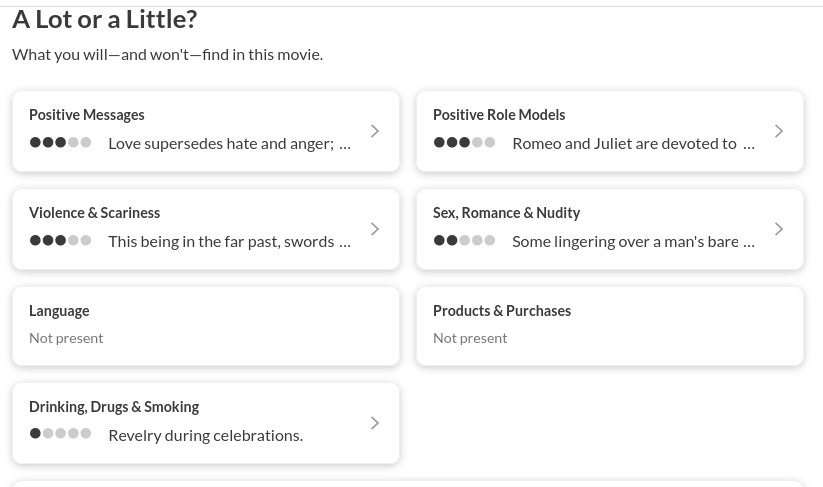
According to Common Sense Media, the film is relatively tame for students, (which of course was one of the goals of making it), so the violence is toned down, there is little nudity and little cursing (there actually is a little PG-13 language added near the beginning, but not much).
Though the film is populated with English and American actors, the majority of the crew is Italian and principal photography was done in Italy, both on-location in places like Verona, Mantua, Rome, and other Italian locations.
Historical Context
The original story of Romeo and Juliet is set in the 1400s but based on the references to Early Modern fashion and music, we can assume Shakespeare set his version around 1593- (the year it was probably written). This production, based on its fashion and architecture is probably set around the early Baroque period, (c. 1600).
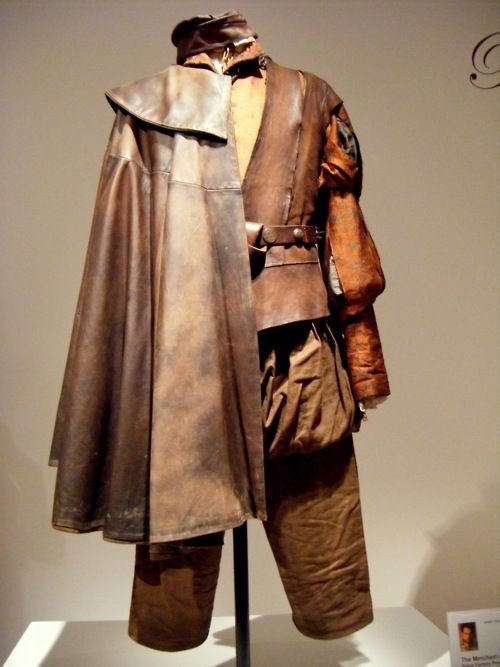
This time period was notable for abandoning neck and sleeve ruffs in favor of lace or linen collars (Source: https://fashionintherenaissance.weebly.com/fashion-timeline.html) . The famous pumpkin pants were also replaced with less fussy breeches as well. All these fashion choices are in the Romeo and Juliet movie and it’s fascinating to look at the choices they made for the film in behind-the-scenes documentaries. I shouldn’t be surprised here, but studying this period made me enjoy the film more- I lost myself in the spectacle and ignored their handling of the story.
The Costumes
Costume featurette from Romeo and Juliet (2013)
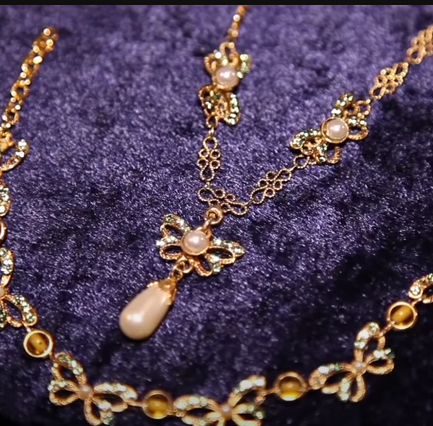
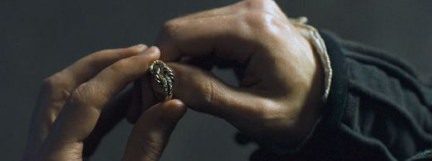
As you can see from the close-ups above, the Swarovski Crystal company definitely showed off some of their wares in Juliet’s costume. In fact, Swarovski sells a version of Juliet’s wedding ring.
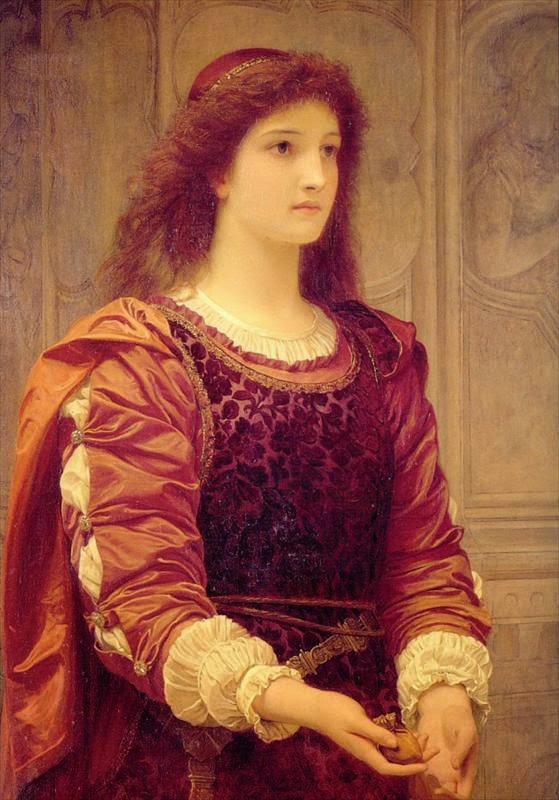
You can also see in these costume renderings the influence of Pre-Raphelite artwork on the costumes, like this famous painting by Francis Dicksee (1884).
The Sets
Many of the street locations for Romeo and Juliet were filmed at Cinecitta Studios in Italy, but as you can see from this behind-the-scenes footage, most of the film was filmed on location in beautiful real-life baroque buildings in Italy:
The Locations
Many of the locations remind me of the high baroque architecture of the celebrated Italian sculptor and architect Gian-Lorenzo Bernini (1598-1680), who had his own Romeo and Juliet-style drama in terms of sordid love affairs, duels, and exiles:
One location I found very interesting to research was the Grotto of Sacro Speco in Subiaco, which was the location for Friar Laurence’s cell. This is a very holy site to many Catholics- it is the celebrated Cave of St. Benedict, the founder of the Benedictine monks. Friar Laurence is a Franciscan monk so this isn’t entirely accurate, but it does provide some wonderful religious eye candy during the scenes at his cell, and it does beautify the wedding scene.
The Music (rant alert)
THE MUSIC NEEDS TO SHUT UP! Especially in the love scenes, the music is too loud and drowns out the dialogue. I personally find it irritating that the score makes so much use of the piano, which wasn’t invented until 1700, since the movie is trying to be historically accurate. To be fair, the loud piano is actually the sound department’s fault, but the fact that pianos didn’t exist at this time took me out almost as much as the overpowering score, (which somehow won two International Film Music Critics Awards (IFMCA)!
The Cast
Reviewers usually love to rag on whoever plays Romeo and Juliet. It’s kind of a no-win scenario here- If they’re young, they’re inexperienced and thus, don’t know how to speak Shakespeare. If they’re older, they’re too old and shouldn’t have been cast in such a youthful role. So rather than falling into that trap, I’ll be positive about the casting and say what I like about the performances, while criticizing the direction, because I feel that in general, the acting in this film is fine, but there are some odd choices that the director should’ve thought twice about.
Romeo (Douglas Booth)
Booth might actually be my favorite film Romeo- he’s beautiful to look at, sweet, impulsive, naive, everything Romeo should be. He also knows how to deliver Shakespeare and can convey complex ideas through poetry. I could argue that he lacks the rage that Romeo should have when killing Tybalt, but I don’t think that’s what he was going for this Romeo is a good guy who is too sheltered and lacks proper guidance, so he makes rash choices because nobody is there to tell him why they are.
Juliet (Hailiee Steinfeld)
I don’t fault Ms. Steinfeld for this, but her worst scenes are sadly, the most famous. Her delivery during the Act I dance and the famous balcony scene is monotonous and dull. I think the director told her to act as if love put her in a trance, but the effect is that she sounds like she’s half asleep. Again, I know she can do Shakespeare because her scenes with the Nurse and Lord Capulet are much better; she’s passionate, articulate, and full of emotion. I think the director failed to give her proper direction to play a love scene realistically, and intentionally slowed the scene down so the audience could pick out the famous lines.
Lord Capulet
Some people argue that Lord Capulet is actually a good dad, but not this film. As I’ll show you later, this film is trying to play up the forbidden love aspect of the story, and what is more classic than an angry, disapproving father? To this end, even though Damien Lewis starts out jovial and sweet to Juliet, by Act III he is full of resentment and rage:
Damien Lewis as Lord Capulet, in a scene from Act III, Scene v
Tybalt (Edward Westwick)
Ed Westwick steals the show every time he’s on screen. He knows how to speak the Shakespearean lines and he makes the added lines sound Shakespearean (which is to say, actually good). With his fiery gaze and his thick, deep voice, he reminds me of a young Mark Strong and is equally good at playing smarmy yet compelling antagonists. You love to hate this guy, yet you feel sorry when he dies.
Friar Laurence (Paul Giamatti)
Giamatti rivals Pete Postlethwaite for my favorite Friar Laurence. He was a perfect choice and he has an effortless Shakespearean delivery. I think it’s telling that his lines of dialogue are the least altered from Shakespeare- the director knew Giamatti could make them work without any alteration. He also has a great rapport with both Douglas Booth and Hailee Steinfeld.
Moments to Watch For:
This film does well at portraying the forces that rip Romeo and Juliet apart- Tybalt’s maniacal hatred of the Montagues, Lord Capulet’s scheme to marry Juliet, and the influence of maligning fate. For this reason, the film is actually better in the second half, once the romance is over and the tragedy sets in. Again, a lot of this is due to the excellent performances of Ed Westwick as Tybalt, and Paul Giamatti as Friar Laurence, who frantically strains his brain to help the lovers and is thwarted at every turn. I wonder if, since the film was adapted by the creator of Downton Abbey, in which Giamatti starred, the writer placed most of the success of the film on Giamatti’s shoulders, intentionally or not.
My Reaction: Shakespeare for Twi-hards.
Forgive me for getting a little conspiracy-theory-ey here but, since the Twilight saga concluded in 2012 and this film came out the next year, I suspect that thisRomeo and Juliet was partially produced to cash in on the success of Twilight. After all, Twilight: New Moon is full of references to Romeo and Juliet:
As the video below demonstrates, Twilight and Romeo and Juliet are both examples of Petrachian love, which is to say, love thwarted, so similar themes and tropes are baked into both stories.
There are also stylistic similarities to how this particular Romeo and Juliet are filmed, such as the lush landscapes, the prevalence of piano in the score, the heavy uses of glamour shots, and even some of the Italian locations evoke Twilight:
Worst of all, I feel that this film tried to make Hailee Steinfeld, an Academy Award-nominated actress, try to act like Bella Swan in the Balcony scene. I think this is why the first half of the film drags and seems slow and dull- it is trying to emulate Twilight’s visual style and forces the actors to adopt a “Twilight School of Acting.”
So in conclusion, the film is uneven- it has talented people working on it, but I think the studio and the company were a little preoccupied with selling the film to a specific group of young people. Does it work for classrooms? For now, but I worry that this version won’t connect with young people for long, and because of its lack of focus and clear direction, it will probably go the way of Twilight– a brief cultural blip that is pretty to look at, but that is quickly forgotten.
Title image for my online course on “Romeo and Juliet.”
If you like this analysis, you might be interested in signing up for one of my Outschool Course on Romeo and Juliet Link down below. Share this class with a friend and you will get $20 USD off!
I’m working on Part II of my Shakespeare’s Star Wars podcast and I thought I’d share some of the clips I’ve been editing together. First is a short clip of Darth Vader saying lines to express his sorrow and anger when Luke plummets down the Cloud City shaft, rather than go with his own father. I wrote the text myself, adapting it from this speech of King Leontes in “The Winter’s Tale:”
Gone already!
Inch-thick, knee-deep, o'er head and
ears a fork'd one!
Go, play, boy, play: thy mother plays, and I
Play too, but so disgraced a part, whose issue
Will hiss me to my grave: contempt and clamour
Will be my knell. Go, play, boy, play. "Winter's Tale"

I  re-purposed this speech as Vader’s angry response to Luke choosing to fall down the air shaft. I think it conveys Vader’s anger, but also his grim determination to turn his son to the dark side:

Gone already!
Inch-thick, knee-deep, o'er head and
ears a fallen one!
Go, fall, boy, fall: So Obi Wan, and I
Fell too, but thou shalt live and come to me again
My master will hiss thee to my path: darkness and pow’r
Will be my friends. Go, fall, boy, fall!


If you listen to the podcast, you can hear that I mainly focused on Vader and Luke and how they convey their emotional journey through soliloquies like this. In the second part, I will talk about the romantic foils to Luke and Vader- Han and Leia! STAY TUNED!
Part 1 of 2 of my podcast episodes about “The Empire Striketh Back,” from the William Shakespeare’s Star Wars series.
Support the show
If you like my dramatic readings and analyses of the “William Shakespeare’s Star Wars” series, please consider donating to my podcast.
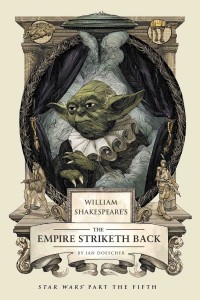
Book cover for Ian Doescher’s “The Empire Striketh Back,” a Shakespearean parody of Star Wars Episode 5.
Well today is May 4rth, when a lot of people have chosen to celebrate one of the most iconic movies of the 20th century: Star Wars! And why not? The story is full of conflict, introspection, love, change, the conflict between fathers and sons, and occasionally guidance from ghosts. Wait, that sounds familiar- it’s a lot like Shakespeare! Yes, the movie has a lot of parallels with the Shakespearean canon, and I’d like to share some of those similarities here. Below is a post I did for the American Shakespeare Center about how the Star Wars prequels parallel Shakespeare’s history saga of Henry the Sixth:
As I was writing William Shakespeare’s The Empire Striketh Back, I was surprised to realize I had made more references to Shakespeare’s Much Ado About Nothing than any other play. Much Ado is a comedy—probably my favorite of Shakespeare’s comedies—so it was strange that lines from it kept popping up in the darkest of the original Star Wars® trilogy.
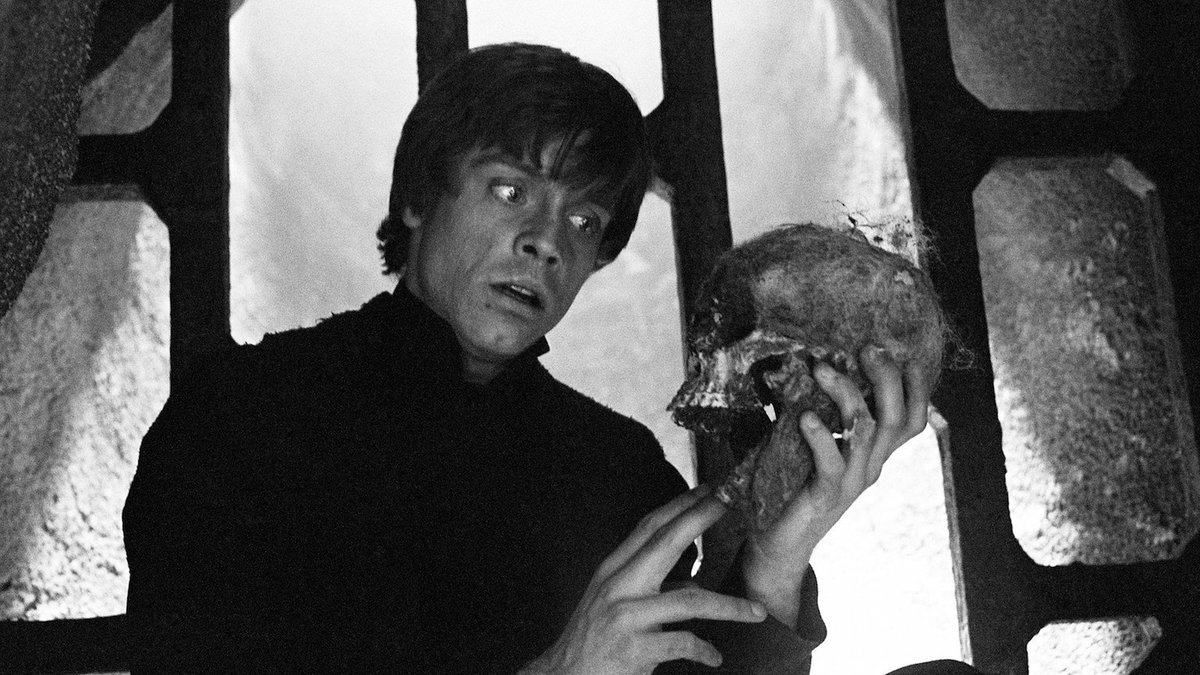
William Shakespeare’s Star Wars is a series of parody plays written by Ian Doescher that takes the prose screenplays of the Star Wars story and transforms them into Elizabethan verse. Last time I mentioned how much I loved the cheeky references to Shakespeare and Star Wars, and how Doescher adapts the cinematic quality into Elizabethan drama very well. In my podcast, I also emphasized the way Doescher gives each character verbose Shakespearan language that works very well for radio and theater:
My podcast episode where I do dramatic readings of “Verily A New Hope.”
What I want to do with this post, (and the accompanying podcast), is to see whether this edition captures the fun, the clever wordplay, and the Shakespearean storytelling of “A New Hope,” with the second installment of the series, and if it helps to capture the shift in tone between the two movies, as Luke is tempted by the dark side and Han is betrayed and frozen by Lando.
Notes about the play
The first play in the series, “Verily, A New Hope,” took plot and structure inspiration from Henry V; it tells the story as an epic heroic story of Luke’s heroic deeds, much like how Henry V is about a king who grows from boy to man.
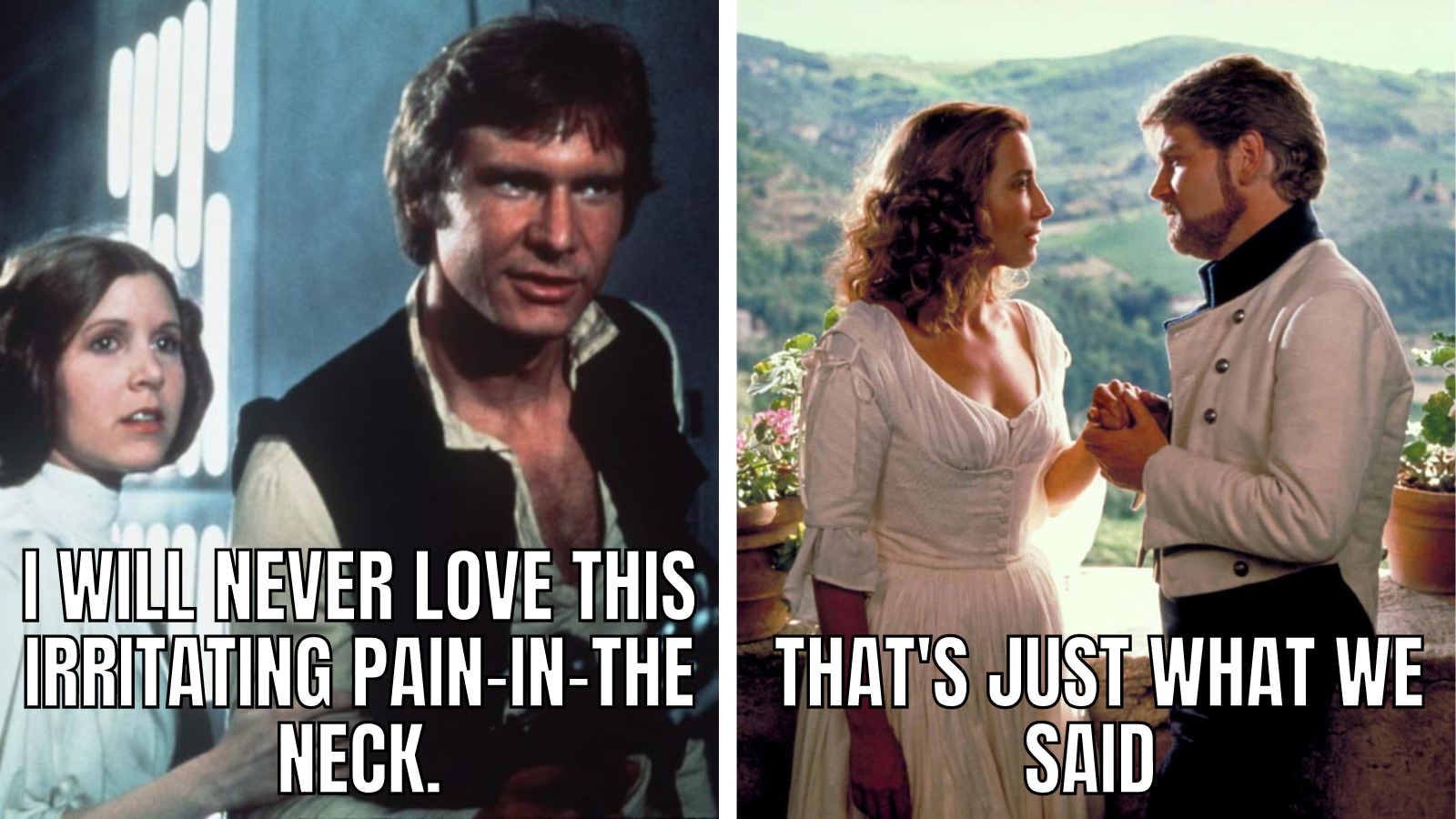
By the playwright’s own admission, the dialogue is stuffed with lots of re-purposed quotes from Much AdoAbout Nothing, Shakespeare’s comedy of a womanizing, self-centered soldier who becomes a devoted husband. This is appropriate since the Leia/ Han plot within the play and movie starts out with them bickering like Beatrice and Benedick. Doescher says this was an accident, but I think he might have subconsciously taken inspiration from their love affair to help structure the dialogue. In the accompanying podcast episode, I talk more about how the use of Much Ado quotes helped to flesh out the characters of Luke, Leia, and especially Han.
Structure
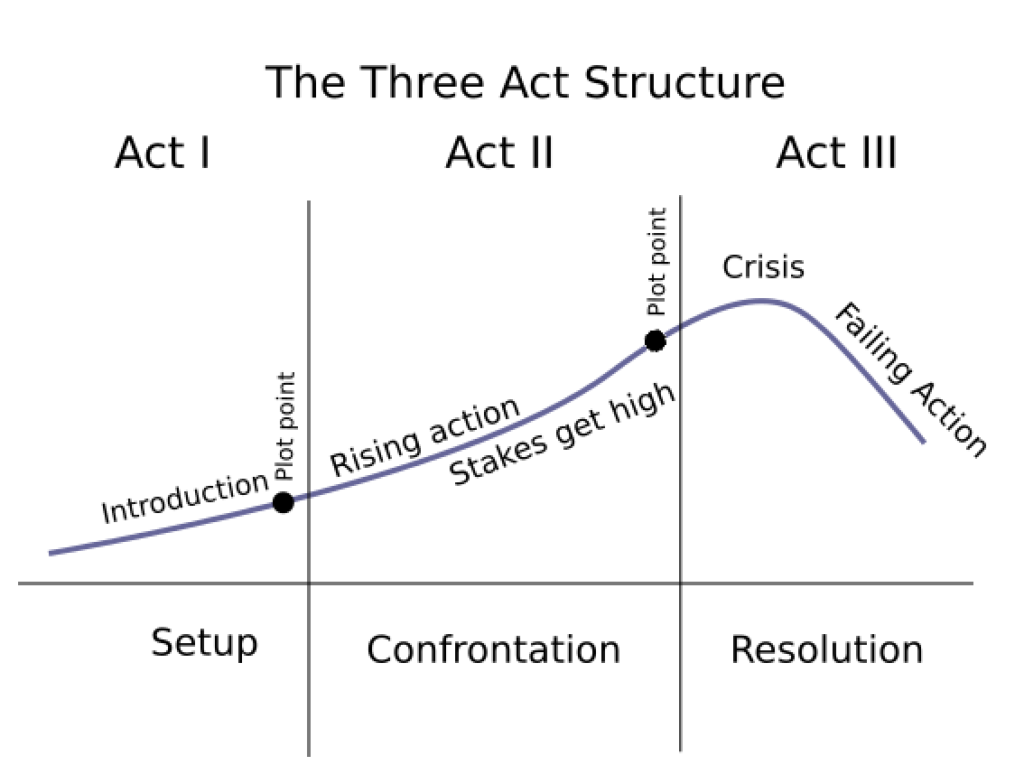
Movies and plays follow a similar structure where the action starts at a static place, tension rises, and finally, things get resolved at the end. A lot of the same elements are in both issues. The main difference is how they are arranged. Let’s see how Doescher translated the three-act structure of a screenplay, to the five-act structure of an Elizabethan tragedy.
A Chorus is a short speech where a character who is not part of the action of the play introduces the plot. It functions the same way as the famous title crawl at the beginning of Star Wars.
I mentioned last time that “Verily: A New Hope” uses choruses liberally, which is appropriate because the tone of this story is so much darker, and since the action follows the journeys of Han and Luke so closely Ian doesn’t use choruses as much. I suspect this is partly because unlike The Empire Strikes Back, A New Hope jumped around more between planets and locations and used wipes and other transitions heavily:
Below is a link to the Royal Shakespeare Company’s Learning Zone, where you can learn about the language of the Henry V chorus.
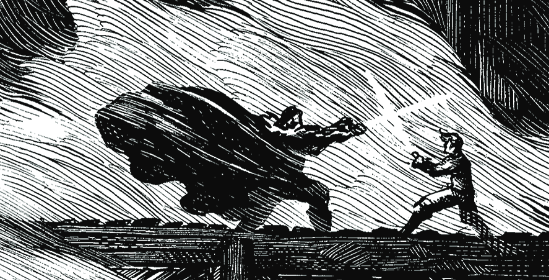
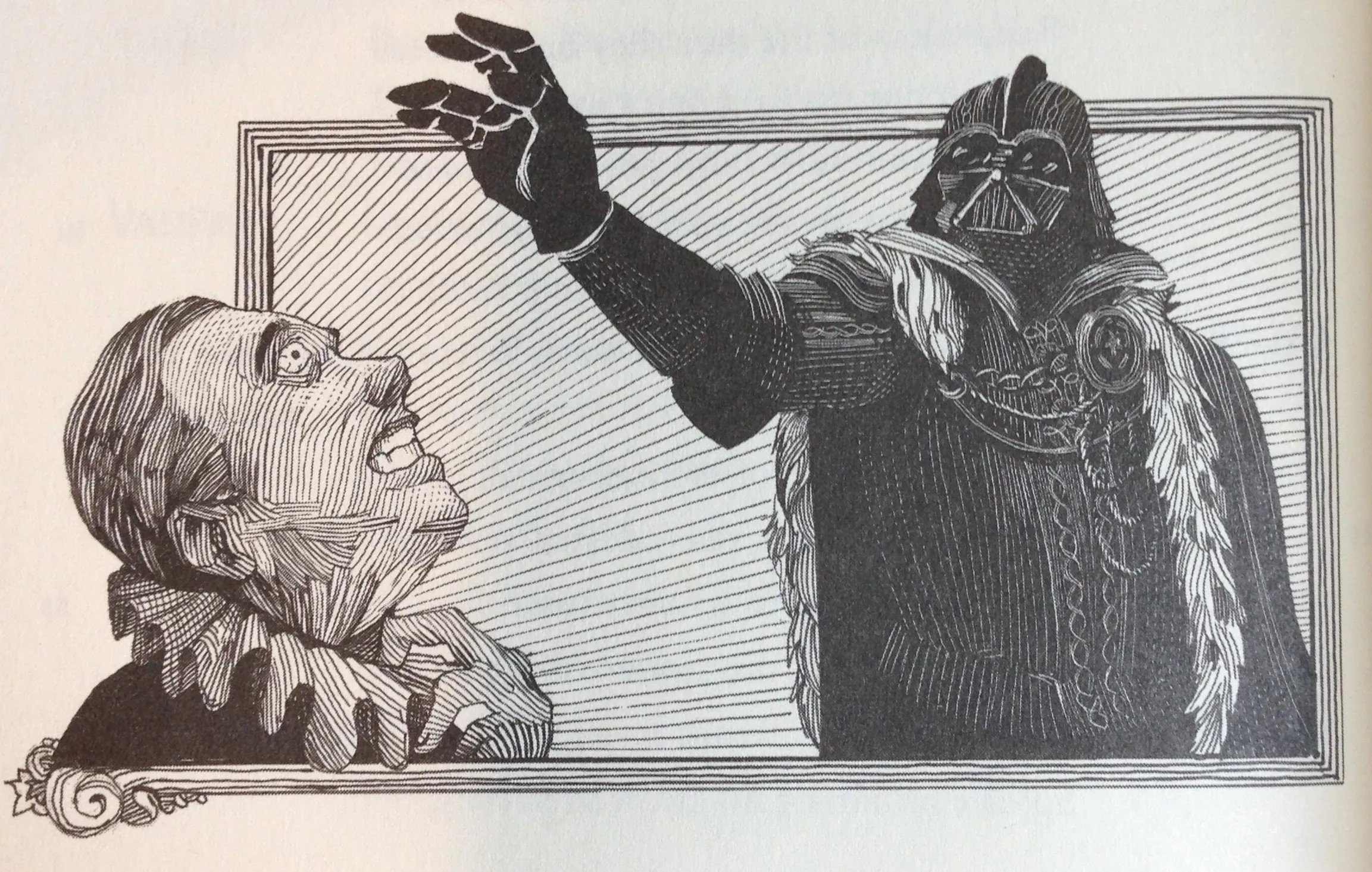
The literary technique of stichomythia has characters who speak at more or less the same time, using slightly different forms of dialogue. Doescher uses this well as a staging device by having Vader and Luke speak similar lines as Luke plummets down the shaft after losing his lightsaber duel:
These similar lines highlight the connection these two have (no spoilers), and also emphasize that, though the actors might be physically close onstage, their characters are meant to be far apart; they wouldn’t be saying this to each other.
In Romeo and Juliet, there’s an excellent example of stichomythia in Act IV, Scene iv, right after Juliet’s parents and Nurse discovers her, apparently dead. There is a long series of laments by her parents and nurse where they are shocked and horrified at her sudden death:
Lady Capulet. Accursed, unhappy, wretched, hateful day! 2702 Most miserable hour that e’er time saw In lasting labour of his pilgrimage! But one, poor one, one poor and loving child, But one thing to rejoice and solace in, And cruel death hath catch’d it from my sight!
Nurse. O woe! O woful, woful, woful day! Most lamentable day, most woful day, That ever, ever, I did yet behold!2710 O day! O day! O day! O hateful day! Never was seen so black a day as this: O woful day, O woful day!
Paris. Beguiled, divorced, wronged, spited, slain! Most detestable death, by thee beguil’d,2715 By cruel cruel thee quite overthrown! O love! O life! not life, but love in death!
Capulet. Despised, distressed, hated, martyr’d, kill’d! Uncomfortable time, why camest thou now To murder, murder our solemnity?2720 O child! O child! my soul, and not my child! Dead art thou! Alack! my child is dead; And with my child my joys are buried.
Romeo and Juliet, Act IV, Scene v lines 2702-2723.
When I played Friar Laurence and the cast and I rehearsed this scene, the actors playing the Nurse and Juliet’s parents were struck by how similar the lines are and worried that these long passages of laments would get tedious to an audience. I realized by looking at the similar lines, the similar words (especially at the ends of lines), and the fact that Friar Laurence interrupts them at the end, led me to believe that these lines are meant to be spoken AT THE SAME TIME. This creates an effect of organized chaos where the actors seem to be wailing and ranting, but are actually speaking a carefully composed quartet of grief. Thus Doescher cleverly mimics Shakespeare’s use of stichomythia to convey Vader and Luke’s physical distance, and complementary feelings at the same time.
3. Parody Lines
The biggest appeal of William Shakespeare’s Star Wars is the fact that it is a parody, and I’ve said for many years that parody and gentle riffing on Shakespeare is a great way to get students to overcome their fear of Shakespeare and engage with him. Students who know Star Wars but don’t know Shakespeare will recognize the familiar characters and plots of the movies and then see how Shakespeare’s language tells the story anew. Similarly, people who know Shakespeare will recognize the way Doescher re-tools famous Shakespeare quotes to give to characters in the Star Wars Universe, like here, where he spoofs the intentionally bad speech of Snug the Joiner and gives it to the Wampa from Empire Strikes Back:
Peter Keavy as Snug the Joyner in “A Midsummer Night’s Dream,” 2017.
In the Educator’s guide, which I’ve attached below, Doescher tells you exactly which lines he has parodied and the plots of the original plays so the students can learn about Shakespeare through these famous speeches. Orson Wells once said that “We sit through Shakespeare in order to recognize the quotations,” and this edition gives us thrilling space battle, wonderful characters, and witty dialogue to keep us entertained while we wait.
Staged moments
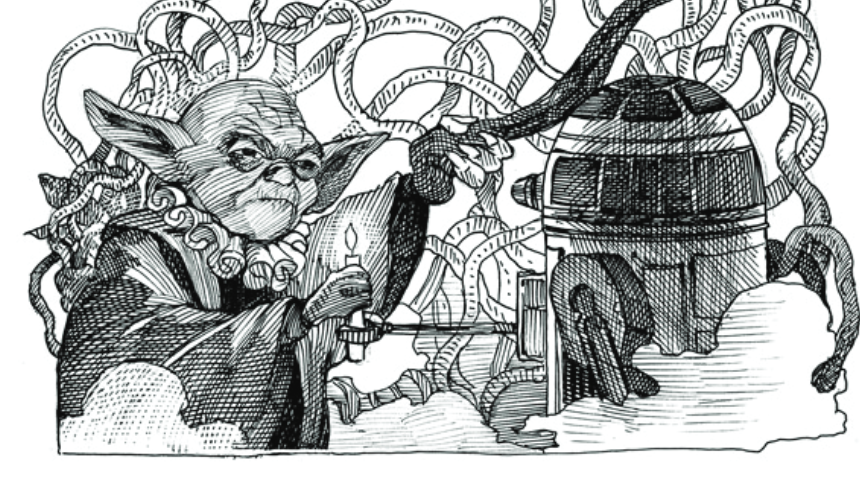
As Doescher worked his way through all nine installments of Star Wars, he continued to expand and experiment with his storytelling. There are a couple of moments in “Empire” that work only onstage such as the aforementioned moment of stichomythia after the lightsaber duel, and the scene in Act II, Scene ii where the Imperial Walkers known as AT-ATs actually speak to each other onstage. Like the French in Henry V, it’s interesting to see the battle from the enemy’s point of view, albeit a highly biased one. I won’t reprint it here for copyright reasons, but I will put this funny sketch in as a placeholder:
My Criticism
Although I loved “Verily, A New Hope,” I feel that Doescher didn’t go far enough to adapt the dialogue in interesting ways and play with the stagecraft of Star Wars to make it more distinct from the film and the first installment. My favorite moment of the play was the Wampa speech which was great because it not only parodies one of my favorite speeches in “A Midsummer Night’s Dream, it also made the Wampa attack tonally distinct from the film- the film is tense and grim, while the Wampa speech is funny and charming. I wish Doescher had embraced the parody and silly tone he shows in this speech and applied it more to the rest of the play; we already know Empire is the darkest installment of the series, but that doesn’t mean it needs to be played like that the whole time.
What I think works best in the film is the romantic comedy between Han and Leia; Doescher does a wonderful job pointing out the parallels between Han and Leia and Benedick and Beatrice which is not only fun, but helps Star Wars fans appreciate the comedy of Much Ado About Nothing even more. This is why I’m glad Doescher took painstaking notes on how he parodied Much Ado and other plays in the guide below:
If you enjoyed the accompanying podcast episode to this post, please consider subscribing and donating to help me continue making fun and educational content like this!
While researching for my upcoming podcast on Shakespeare’s Star Wars, I found this great article by fellow Shakespeare blogger William Shakespeare In Media. They have a great analysis of Ian Doescher’s parody “William Shakespeare’s Star Wars,” with some details I didn’t know the first time around! So please show them your support, and tell them Shakespearean Student sent you!