
8 lessons from ‘King Lear’ as we head back to work or nights out after COVID-19


This book Demonology influenced Shakespeare’s Macbeth and Hamlet in ways I’ll get into later. It was written by King James himself, and it takes the form of a dialogue, that is, an intellectual conversation where the concept of witchcraft, sorcery, necromancy, etc is explained, debated, and questioned between two imaginary people.
In the video, Youtuber Andrew Rakich, known for his history series, Checkmate Linconites, (where he plays two characters who argue about the Civil War from a Union and Confederate perspective) has done a dramatic reading of the whole book in the accent of 1600s England. It’s part audio book, part history lesson, part linguistics lesson, and all great!
Here are some of my favorite quotes from the book:

Just like in Dr. Faustus, James theorizes that the Devil lets all so-called sorcerers and necromancers believe they have power over him, to deceive them later.
For as the humor of Melancholie in the selfe is blacke, heauie and terrene, so are the symptomes thereof, in any persones that are subject therevnto, leannes, palenes, desire of solitude: and if they come to the highest degree therof, mere folie and Manie:
Demonology, Chapter 1, p. 30,. Reprinted from Project Gutenberg
This passage echoes Hamlet’s description of his own meloncholy, and his fear that The Devil might be trying to use his melocholy to conjure up his father in order to damn him:
The spirit that I have seen
600May be the devil, and the devil hath power601To assume a pleasing shape; yea, and perhaps602Out of my weakness and my melancholy,603As he is very potent with such spirits,603. As . . . spirits: i.e., because he has great influence on those who have a temperament such as mine.
604Abuses me to damn me. I’ll have grounds604. Abuses: deludes. If the Ghost is deceiving Hamlet about King Claudius’ guilt, and Hamlet kills him, Hamlet would be a murderer, and therefore damned.
Hamlet, Act II, Scene ii, reprinted from Shakespeare Navigators.com.605More relative than this: the play’s the thing606Wherein I’ll catch the conscience of the king.
For that is the difference betuixt Gods myracles and the Deuils, God is a creator, what he makes appeare in miracle, it is so in effect. As Moyses rod being casten downe, was no doubt turned in a natural Serpent: [pg 023]where as the Deuill (as Gods Ape) counterfetting that by his Magicians, maid their wandes to appeare so, onelie to mennes outward senses: as kythed in effect by their being deuoured by the other. For it is no wonder, that the Deuill may delude our senses, since we see by common proofe, that simple juglars will make an hundreth thinges seeme both to our eies and eares otherwaies then they are. Now as to the Magicians parte of the contract, it is in a word that thing, which I said before, the Deuill hunts for in all men.
Demonology, Chapter 6, p. 23
It’s very useful to conceptualize what the early Jacobeans thought the difference was between God and the Devil, and thus the difference between divine miracles and hellish charms. In James’ eyes, all magic and demonic arts were mere illusions, designed to play upon men’s senses and draw the intended victim into the Devil’s power. Obviously, since all of theater rests upon such illusion, it’s no wonder Shakespeare portrays magic onstage in his most popular works. In particular, this passage calls to mind the magic of Prospero, who is able to conjure spirits fo a while, but they all eventually dissolve:
PROSPERO
146You do look, my son, in a mov’d sort,146. mov’d sort: troubled state.
147As if you were dismay’d: be cheerful, sir.148Our revels now are ended. These our actors,148. revels: festivity, entertainment.
149As I foretold you, were all spirits and150Are melted into air, into thin air:151And, like the baseless fabric of this vision,151. baseless fabric: structure without a physical foundation.
152The cloud-capp’d towers, the gorgeous palaces,153The solemn temples, the great globe itself,153. the great globe itself: all the world, [and the theater] >>>
154Yea, all which it inherit, shall dissolve154. all which it inherit: all who live on it.
155And, like this insubstantial pageant faded,155. insubstantial: without material substance.
156Leave not a rack behind. We are such stuff156. rack: wisp of cloud driven before the wind.
The Tempest, Act IV, Scene i.157As dreams are made on, and our little life158Is rounded with a sleep.

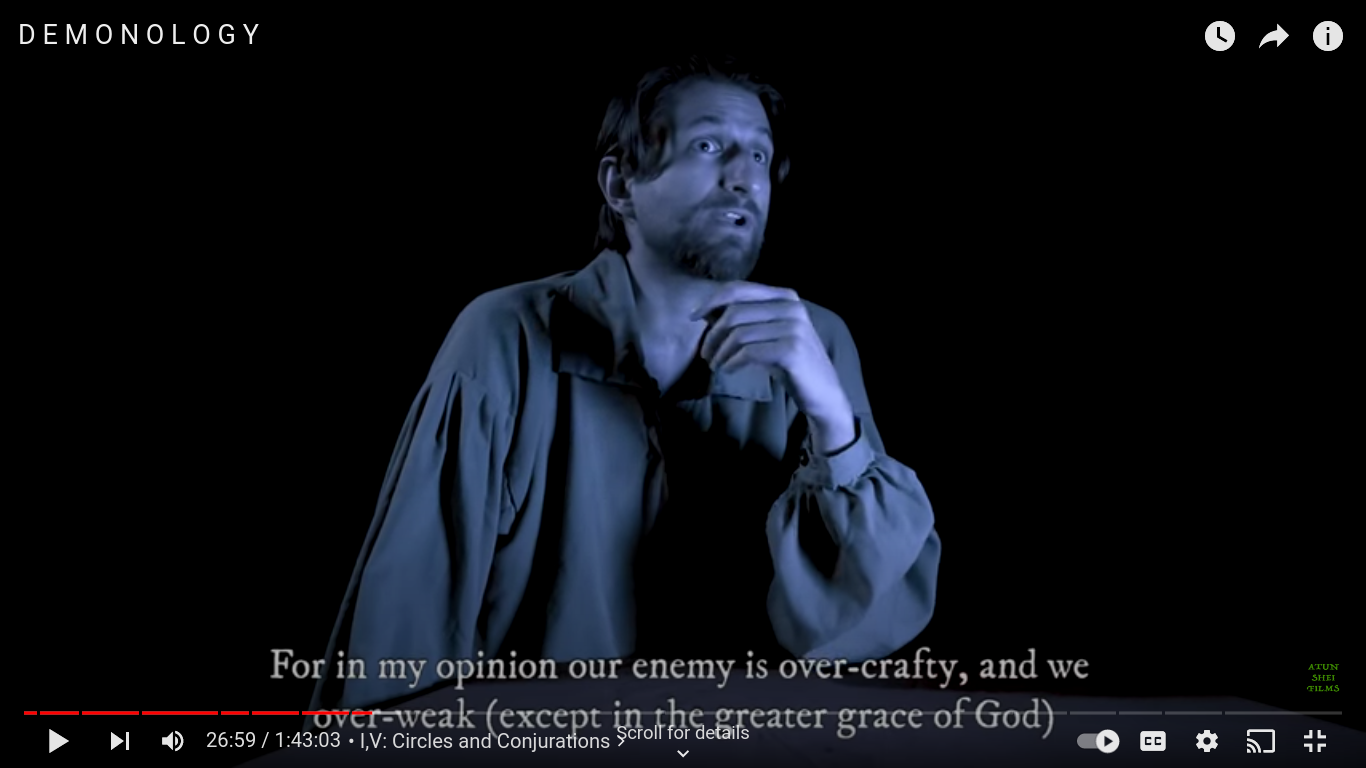
For although, as none can be schollers in a schole, & not be subject to the master thereof: so none can studie and put in practize (for studie the alone, and knowledge, is more perilous nor offensiue; and it is the practise only that makes the greatnes of the offence.) the cirkles and art of Magie, without committing an horrible defection from God: And yet as they that reades and learnes their rudiments, are not the more subject to anie schoole-master, if it please not their parentes to put them to the schoole thereafter; So they who ignorantly proues these practicques, which I cal the deuilles rudiments, vnknowing them to be baites, casten out by him, for trapping such as God will permit to fall in his hands: This kinde of folkes I saie, no doubt, ar to be judged the best of, in respect they vse no invocation nor help of him (by their knowledge at least) in these turnes, and so haue neuer entred themselues in Sathans seruice; Yet to speake truely for my owne part (I speake but for my selfe) I desire not to make so neere riding: For in my opinion our enemie is ouer craftie, and we ouer weake (except the greater grace of God) to assay such hazards, wherein he preases to trap vs.
Demonology Chapter 5, page 15.
It almost seems in this passage that James is covering his tracks against any detractors who might be wondering if he himself might be damned for knowing so much about witchcraft. Accordingly, he asserts that the knowledge of witchcraft is perfectly lawful, it’s the practice that damns the scholar.


Today I’m going to talk about the unique costume challenges in dressing the cast for a production of Shakespeare’s history play, “Richard III.”


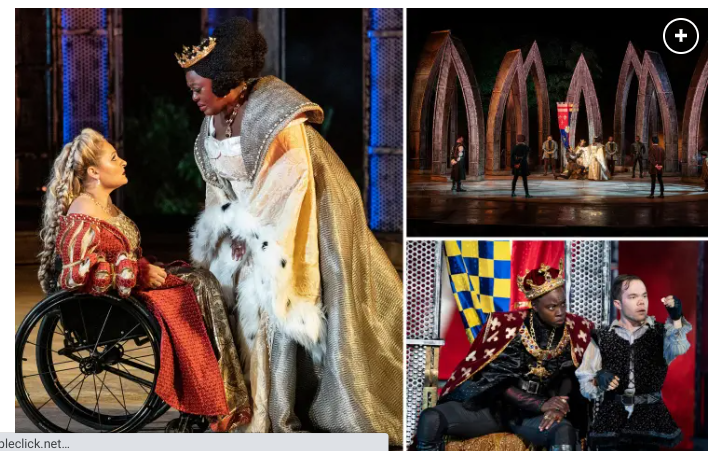
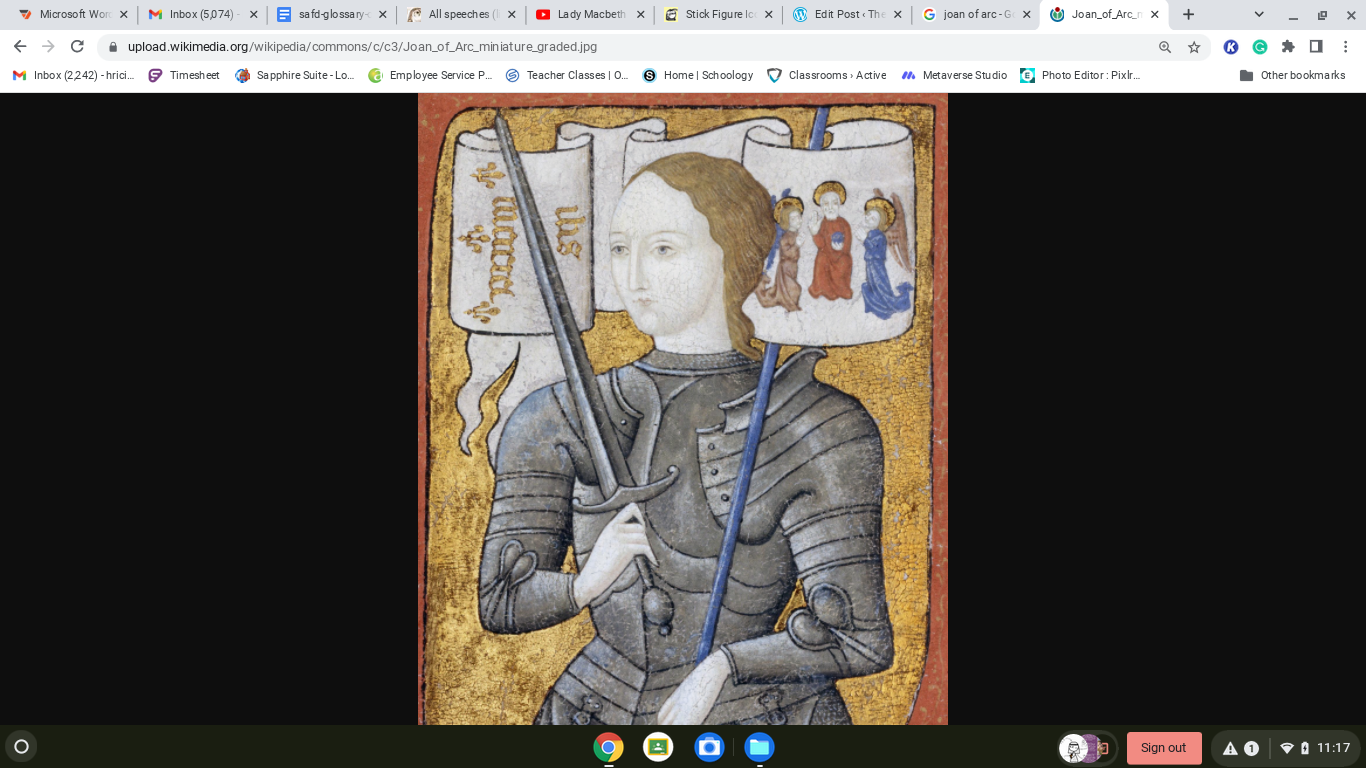

The play is set in 1483, a time period where, even though many European countries were at war, many nobles had sumptuous, more form-fitting clothes with fur, gold, leather, and other exotic fabrics. If you look at the sketch I did above, I gave Richard designs using velvet, leather, fur, and gold. After all, Richard is a powerful duke even before he takes the crown. For more information about this period, visit Fashion History.edu.
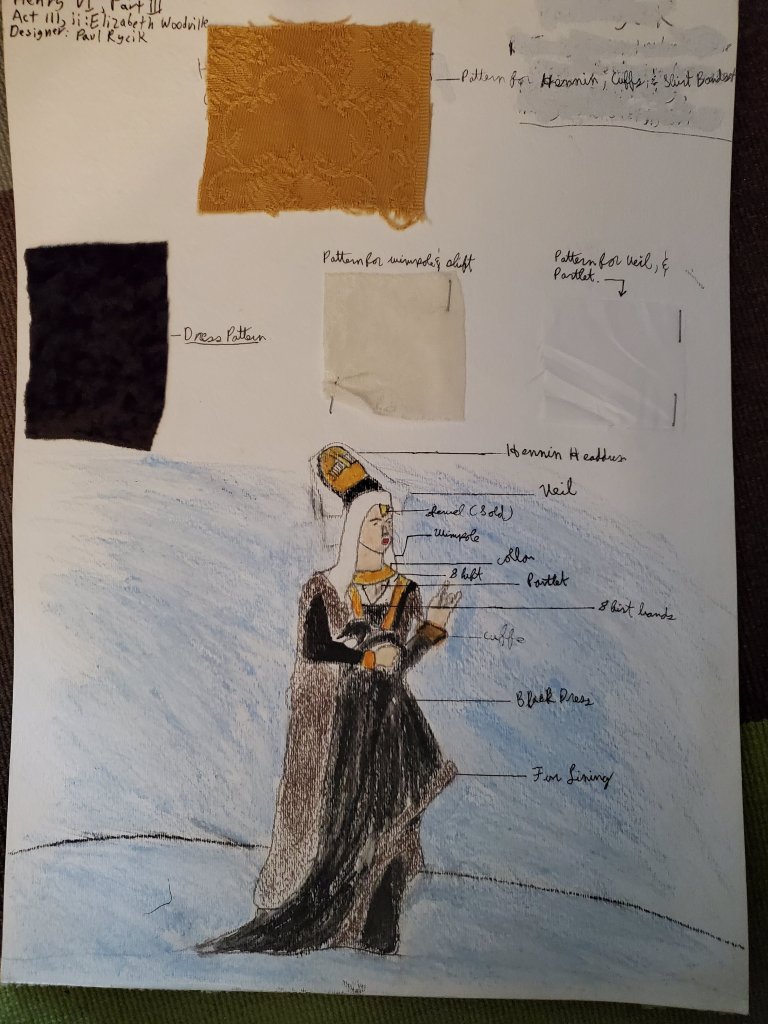
Further, if you’re interested in finding pre-made patterns of 15th century-inspired costumes, go to your fabric store and look for kits like the ones I photographed below.


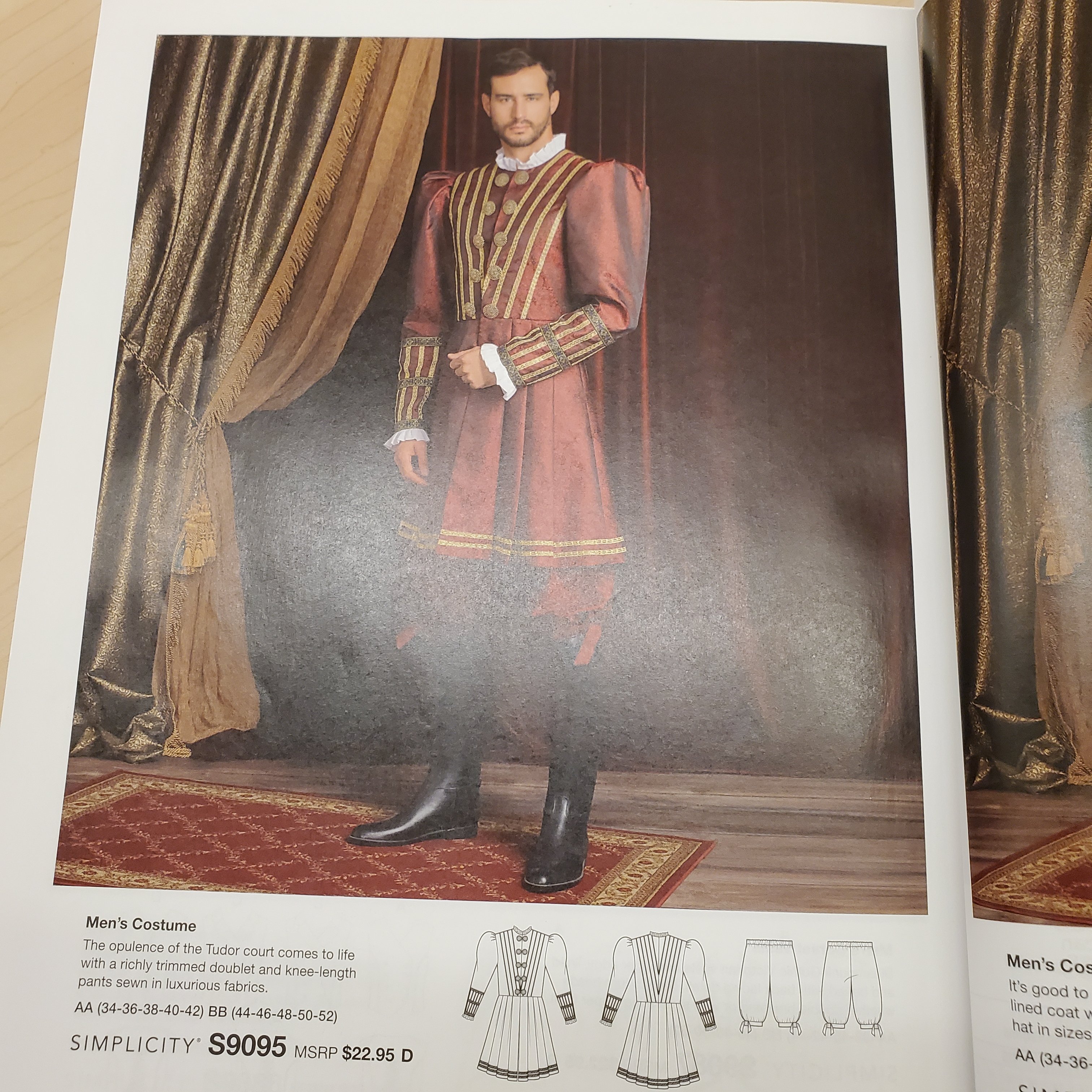
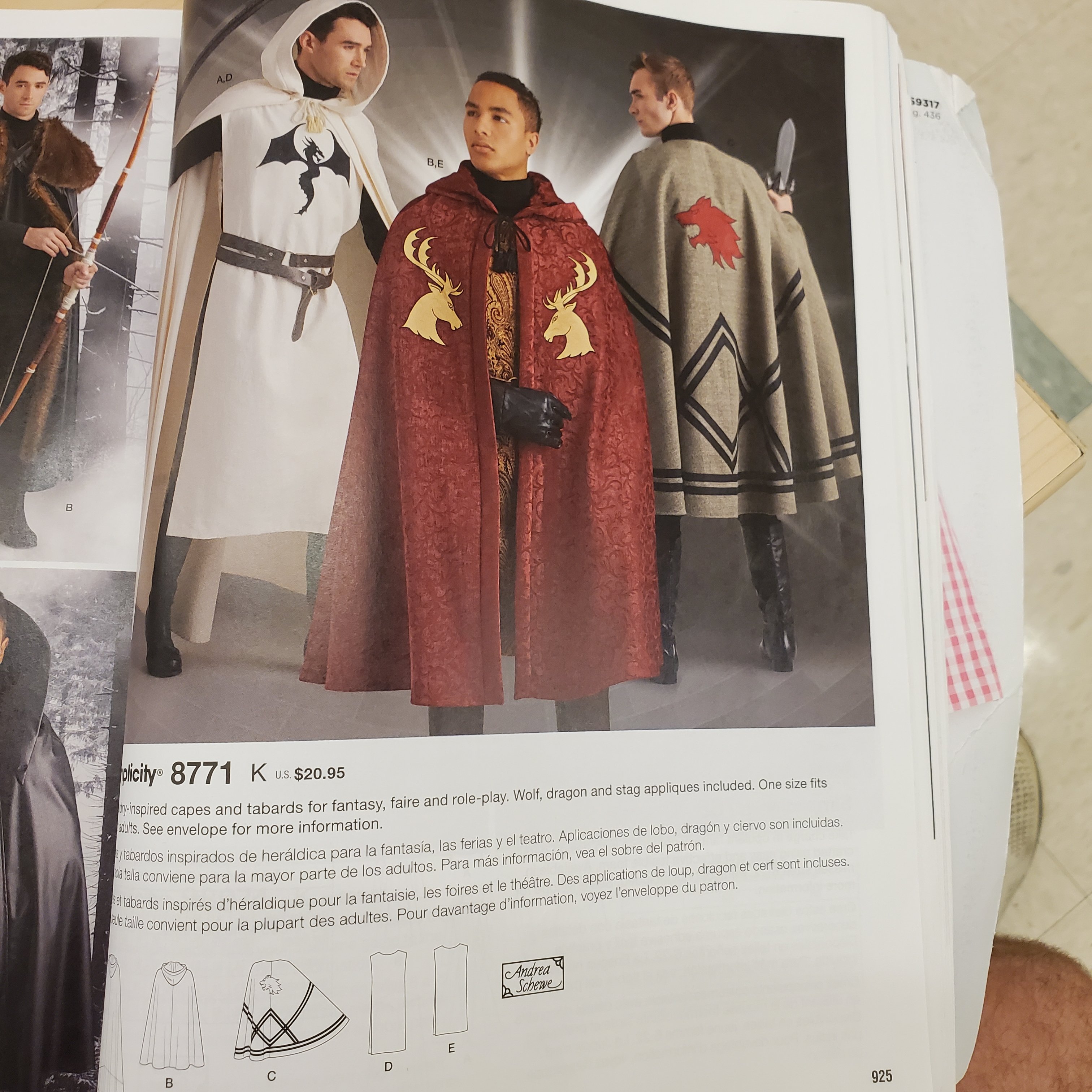
My design was based on a drawing by the 19th century illustrator HC. Seleous, and the color were taken largely from Richard’s royal portrait in the National Portrait Gallery. I also used a royal portrait of Elizabeth Woodville, queen to Edward IV, (Richard’s brother).


Interestingly, x-ray photography has recently revealed that Richard’s alleged hump was added to his portrait after his death. In reality, the king only suffered from merely a curvature of the spine. Just like in Shakespeare’s play, the Tudor Chroniclers literally defaced Richard’s image to make him look like an evil, deformed maniac.
Costume designers are vital to help the actors realize the deformity when playing Richard III, and they have done so in many ways. Ian Holm wore a boot on his leg. John Harrel had a bowling ball fastened to his hand, and Antony Sher had a large hump in the center of his back, both a cloth one that was built into his clothes, and an elaborate makeup prosthetic for scenes where he was partially undressed. When I researched for my thesis, I consulted Sir Antony’s book “Year Of the King,” where the actor explained his research into real spinal deformities, and how he incorporated them into the performance. You can see how my actor Matthew figured out how the hump would impede his walk and other movements.
For the final battle between Richard and Richmond, one has to decide on the period and think carefully of the fitness of the actors. 1485 was at the height of the era of suits of armor, and many films have chosen to have Richard fight to the death, while encased in a heavy metal coat of plates.
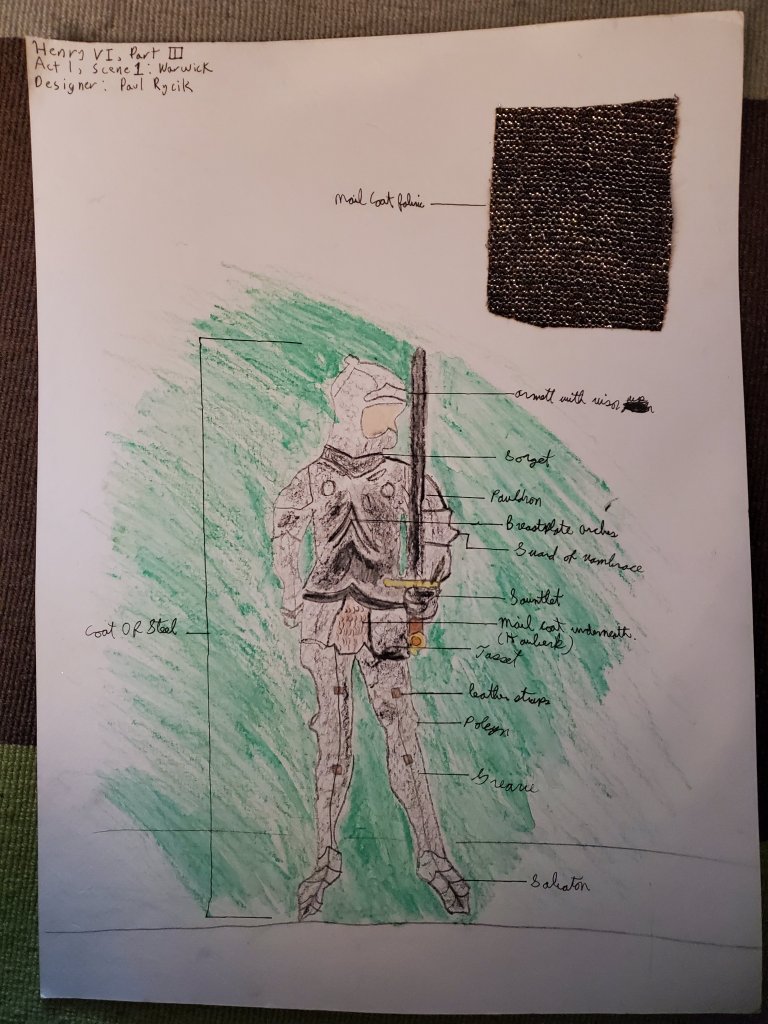
However, this has not always been the case. Ian McKellen had Richard fight in a gas mask in a 1940s British military uniform, driving around on a jeep that gets stuck once Richard utters his most famous line:
Richard III is a play about political intrigue, mafia-like turf-wars, and literal backstabbing and the clothes need to reflect this brutal and Machiavellian world. The costumer needs to help all the actors, not just Richard realize their place in the corrupt medieval political landscape of The Wars Of The Roses, as these characters go from an uneasy peace, to the last gasp of civil war.
I love Game Of Thrones! If you’ve ever read the books or seen the series on HBO, like me you might be amazed by the scale and complexity of the world author George RR Martin created. He wove together a rich tapestry of medieval history, legends, and yes, Shakespeare. He used some of Shakespeare’s plots, commented and expanded on his themes, and adapted some of his iconic characters into a very rich and in a way, very modern story.
https://m.imdb.com/video/vi1149616665/?playlistId=tt11198334?ref_=ext_shr_lnk
Since the prequel series “House Of The Dragons” premieres today, I’m going to examine the components of Martin’s narrative that he embroidered off of Shakespeare’s plots, themes, and characters. If you like my take on this, or if you disagree, please leave a comment below! If you have any suggestions for other popular works adapted from Shakespeare, let me know and I’ll review them on the blog!
Part I: Story
Shakespeare wrote four plays that chronicle a series of civil wars where powerful families battled each other for the crown of England. Like Game of Thrones, the conflict was mainly between the kingdoms in the North and South:
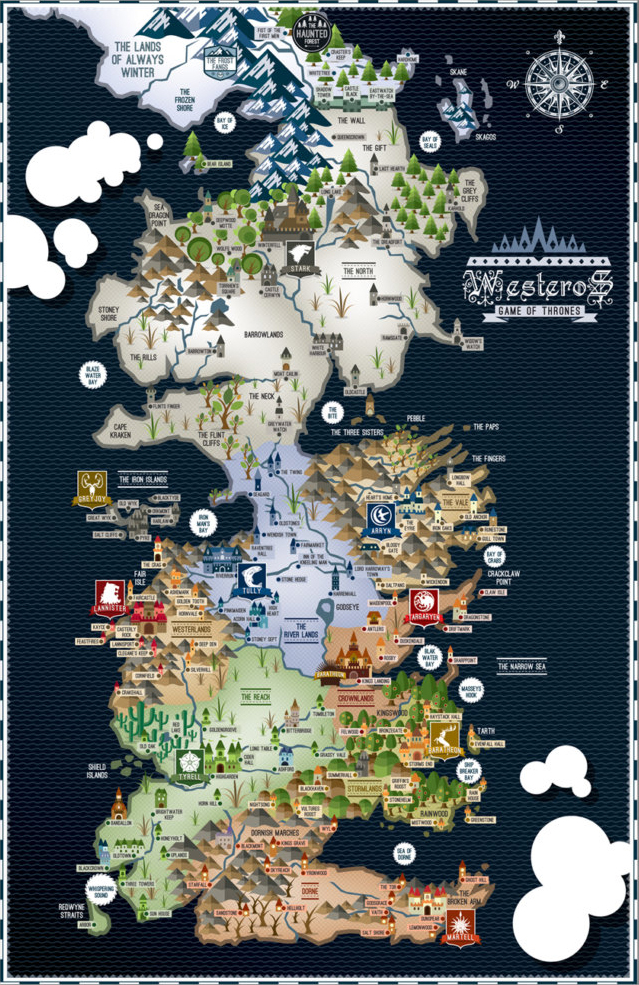
Shakespeare’s three parts of King Henry VI and Richard III chronicle the real struggle between the Yorkists in the north to take the crown from the Lancastrians in London in the South.

Part II: Themes
Power corrupts, especially those who go seeking it.
The death of chivalry and honor in favor of political backstabbing.
King Henry VI has a speech where he watches a great battle while sitting on a molehill, watching the tide turn back and forth between his soldiers and the Yorkists. As with Game Of Thrones, the more blood each side has on its hands, the harder it becomes to decide whom to truly root for. In the end, it doesn’t seem to matter- kingdoms are won and lost as arbitrarily as a game. All it takes is time, and a good player to win.
The silence of the Gods. Shakespeare’s King Lear is constantly making oaths to his gods and asking them to punish his enemies. Likewise, Lear’s friend the Duke Of Gloucester, places his faith in the gods to protect Lear and punish the usurpers Goneril and Regan. Nevertheless, the action of King Lear doesn’t show any kind of divine judgement- Lear is exiled, goes mad, is sent to prison, and finally dies. Gloucester loses his sight, his lands, and dies randomly right after he is re-united with his son Edgar. In both King Lear and Game Of Thrones, there is a persistent question as to the nature of the gods, or even the surety of their existence.

King Lear mourns Cordelia’s death by
James Barry, c. 1786.
No where is this more apparent than at the end of the play King Lear, when, just as it seems that the Duke of Albany is about to reward the good people and punish the wicked, King Lear arrives howling, with the dead Cordelia in his arms. “Is this the promised end?” in horror at the gods’ apparent cruelty. https://youtu.be/7acLWsal1FU
In Game Of Thrones, the good characters pray to their old gods and new, but never seem to hear from them or sense their influence. Osha, the Wildling even suggests that the gods have no power in King’s Landing, where the special God’s Wood trees have been cut down.
Part III: Characters
Below is a list of my favorite GOT characters, with my interpretation of their Shakespearean roots.

Ned Stark- Humphrey Duke of Gloucester from Henry VI, Part II
Duke Humphrey is a Yorkist from the north of England, just as Ned is Lord of Winterfell, a powerful kingdom in the north of Westeros. King Robert makes Ned Protector Of the Realm when he dies, which makes him king in all but name, and tasked with taking care of Robert’s young son Joffrey until he comes of age.
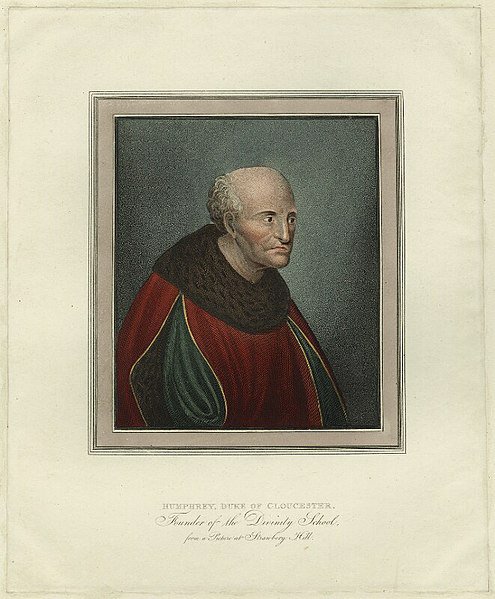
Portrait of the historical Humphrey, Duke of Gloucester from the National Portrait Gallery, artist unknown.
In Shakespeare’s Henry VI trilogy, King Henry the Fifth makes his brother Humphrey Lord Protector before he dies, to take care of England until his infant son Henry VI comes of age to rule. Like Ned, Humphrey is loyal, blunt, and only interested in keeping the realm at peace. In both Westminster and the Red Keep, all the lords are conniving and ambitious, and only interested in advancing themselves politically. These two lord protectors are the only ones with the good of the kingdom in mind.
Both Ned and Humphrey are betrayed and executed by those ambitious lords around them for the same reason; they stand in the way of the lords in their quest for power. In Henry VI, Part II, Henry’s ambitious queen Margaret starts a smear campaign against Humphrey’s wife, then pressures the King to force Gloucester to resign. As if that weren’t enough, Margaret also secretly conspires to murder the noble duke. Similarly, In Game of Thrones (Spoiler Alert), queen Circe puts her son on the throne and proclaims Ned a traitor. In both cases though, once the Lord Protector dies, the whole kingdom erupts in fights and arguments for the crown on all sides.
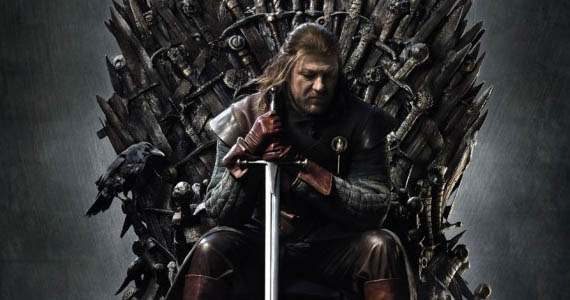
Ned Stark also resembles the heroes of Shakespeare’s Roman plays. He is cold and stoic as Brutus, and a devoted soldier like Titus Andronicus. Ned’s dire wolf is another connection with Shakespeare’s Roman plays; the wolf 🐺 is the symbol of the Roman Empire; packs of cold hunters who depend on each other for the survival of the family.
King Joffrey- Saturnine from Titus Andronicus– Joffrey is like the worst kind of tyrant- rash, proud, violent, and cruel. He lacks the maturity to make wise decisions and because of his privileged upbringing, he takes even the tiniest slight against him as an act of treason, and leaves a trail of heads in his wake. Worse still, he is easily manipulated by his mother Circe, who teaches him to act and feel superior to everyone else, and never care for the good of anyone but himself. In that way, he is very much like a Roman Emperor like Nero or Caligula, the real people whom Shakespeare adapted into the character of Emperor Saturnine in his play Titus Andronicus.
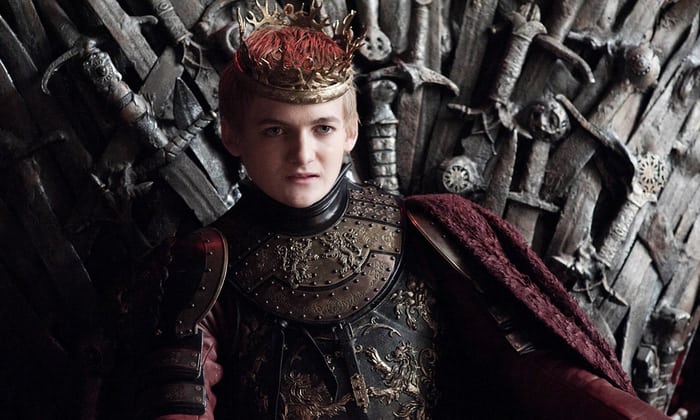
When we first meet Saturnine, he leads an angry mob into the streets of Rome, demanding to be made emperor, and threatening all out war if he doesn’t get his way. He also turns on the loyal soldier Titus, (who helped him win a war and win his crown), just because Titus wouldn’t give Saturnine his daughter in marriage. In the clip below from the 1999 movie Titus, Emperor Saturnine (Alan Cummings) is furious just because Titus wrote some mean scrolls about him, after Saturnine killed two of Titus’ sons, and banished a third.

King Robert Baratheon- Edward IV from Richard III.

◦ In the first book of the Game of Thrones series, Robert is the King of the Seven Kingdoms, having won a civil war to take it away from the Mad King Araes Targaryen. Edward in the play Richard III has just won the crown of England after a civil war against the mad King Henry VI. Both men were powerful warriors and used to be strong and handsome. People loved and feared him, but now the pressures of keeping the throne has literally consumed them.
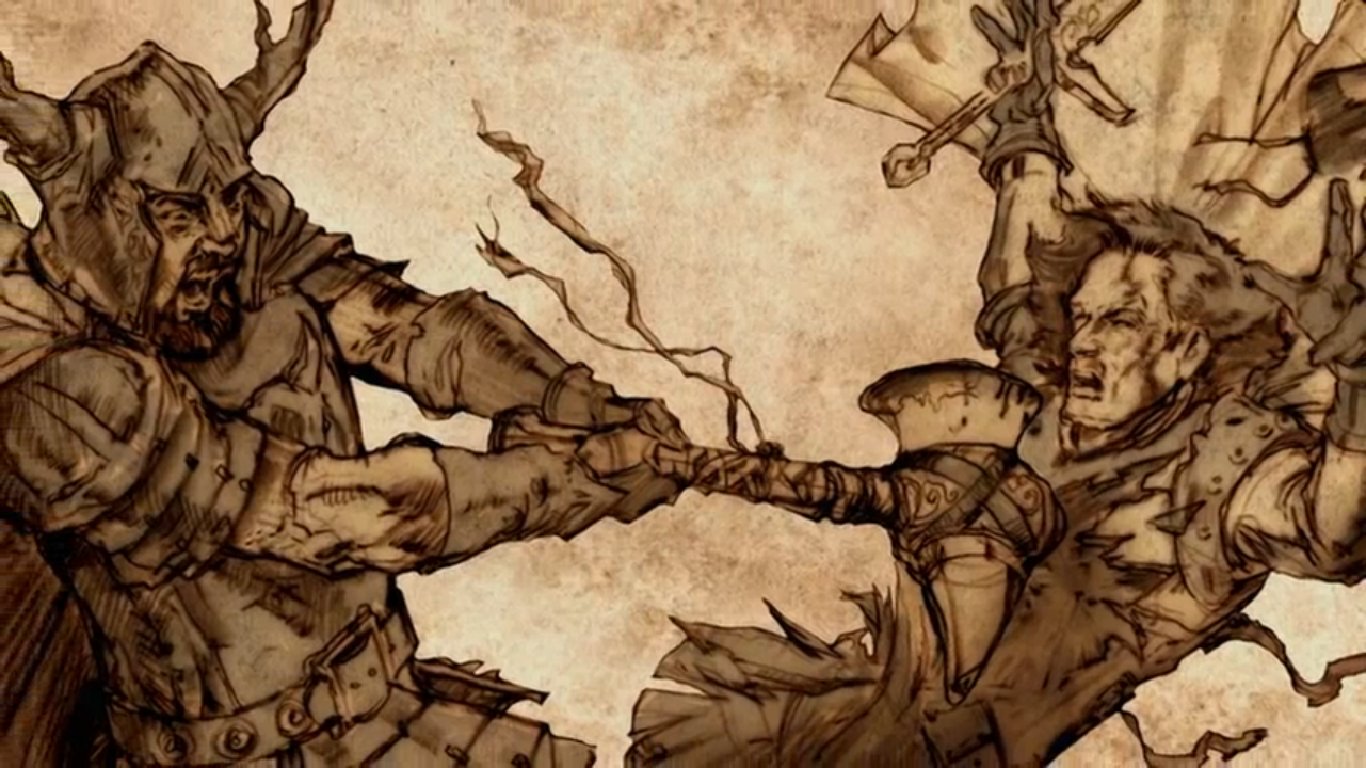
P. 53
Next had come King Robert himself, with Lady Stark on his arm. The King was a great disappointment to Jon. His father had talked of him often: the peerless Robert Baratheon, demon of the Trident, the fiercest warrior of the realm, a giant among princes. Jon only saw a fat man, red-faced under his beard, sweating through his silks.
Jon had noticed that too. A bastard had to learn o notice things, to read the truth that people hid behind their eyes. Two seats away, the king had been drinking heavily all night. His broad face was flushed behind his black beard.
In this passage from Thomas More’s History Of Richard III, (Shakespeare’s primary source for the play), More chronicles how Edward went from a handsome young king, loved and feared by all, into a gluttonous, lecherous, sick old man, who was consumed by care.
He was a goodly personage, and very princely to behold: of heart, courageous; politic in counsel; in adversity nothing abashed; in prosperity, rather joyful than proud; in peace, just and merciful; in war, sharp and fierce; in the field, bold and hardy, and nevertheless, no further than wisdom would, adventurous. Whose wars whosoever would well consider, he shall no less commend his wisdom when he withdrew than his manhood when he vanquished. He was of visage lovely, of body mighty, strong, and clean made; however, in his latter days with over-liberal diet [1], he became somewhat corpulent and burly, and nonetheless not uncomely; he was of youth greatly given to fleshly wantonness, from which health of body in great prosperity and fortune, without a special grace, hardly refrains. This fault not greatly grieved the people, for one man’s pleasure could not stretch and extend to the displeasure of very many, and the fault was without violence, and besides that, in his latter days, it lessened and well left.
-Thomas More, History Of Richard III, c. 1513
There are also similarities in how the characters died. King Robert was killed by a wild boar, while King Edward was killed by his brother Richard, whose sign was a white boar. As a bonus, the stag that is the sigil of House Baratheon, is also the seal of King Richard II, the king who, in the Shakespearean tragedy that bears his name, started the civil war when he was murdered in the Tower Of London. Below is a picture of the famous Wilton Diptych, (Richard the Second’s private alter piece), which depicts the king and all the angels in heaven wearing a badge with a white stag on it.

I’m not actually the first person to mention this connection between Robert Baratheon and Edward IV. In the British newspaper, The Guardian, the author compares several characters from Game Of Thrones, to historical English events: https://www.telegraph.co.uk/tv/0/game-of-thrones-vs-history-which-real-characters-and-events-insp/robert-baratheon-and-edward-iv/
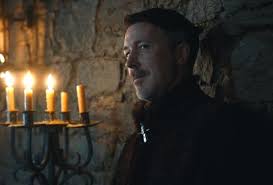
Little Finger -Lucio from Measure For Measure, Iachimo from Cymbeline, Bawd from Pericles, etc. Shakespeare has a host of character like this lord of Westeros, the Master of Coin. He is cowardly and cynical, but he is also very clever and understands people’s weaknesses, especially sex. Like Bawd from Pericles, Little Finger has grown rich off brothels, and like many real life governments, he turns his prostitutes into spies. This gives him not only cash, but dirt on every lord in the 7 kingdoms. He only worries about Ned Stark, (who can’t be bought), and Vares the eunuch, who can’t be seduced. Little Finger is basically an oily politician and exploits the power of lust in the men of King’s Landing.
Jon Snow– Edgar and Edmund in King Lear Philip the Bastard in King John.
◦ Snow is the illegitimate son of Ned Stark. He’s aware of what he is, so he joins thieves and rapers as a knight of the Night Watch to make a life for himself, just as Edgar becomes a mad beggar in King Lear once he is accused of attempted murder. He has few illusions and like all the base-born children in Shakespeare:
775
He was who he was, Jon Snow, bastard oath breaker motherless, friendless, and damned. For the rest of his life, however long that might be- he would be condemned to be an outsider, the silent man standing in the shadows who dares not speak his true name.”
◦ Shakespeare wrote several characters born out of wedlock such as Phillip Falconbridge in King John, and Edmund from King Lear.

Unlike Jon Snow, Edmund in King Lear uses deceitful and cruel cunning in order to advance his position in life. Snow doesn’t try to change the rules, but both of them know that no one is going to give them anything. Early in book one, Jon learns to accept the cruelty of the world, and to accept what he is:
Let me give you some council, bastard, never forget what you are, for surely the world will not. Make it your strength. Then it can never be your weakness. Armor yourself in it, and it will never be used to hurt you.
Song Of Ice And Fire, p. 57.
🦁 Tyrian Lannister –
Obviously he shares some parallels with Richard III, with his small size and the fact that he is the most hated member of a powerful family. In fact, Peter Dinklage who plays Tyrion played Richard the Third back in 2004.
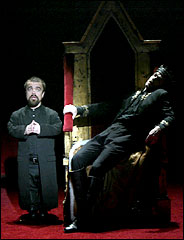
In terms of his personality however, Tyrion has neither the cruelty, nor the bitterness of Richard. For this reason, I would argue that Tyrion more closely resembles Sir John Falstaff.

◦ Like Falstaff, Tyrion laughs at his physical form as a way of disarming his enemies.
◦ Both Characters are famous for talking their way out of anything.
◦ Both characters are down on their luck for most of the books
Both characters are, ahem, fond of drink. Falstaff even has a beer named after him:
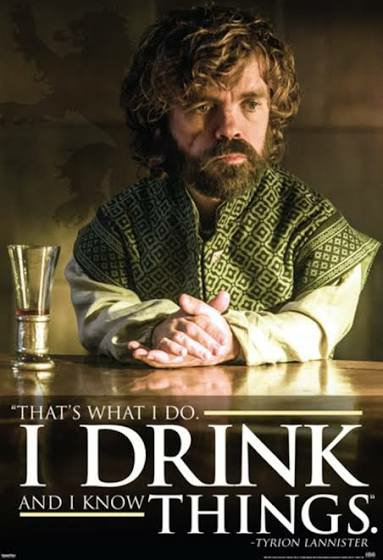

◦ Most Of all, Tyrion and Falstaff are survivors – they will do anything to stay alive, good or bad. They are also unapologetic about acting cowardly and deceitfully to avoid death. In Falstaff’s famous ‘Catechism speech,’ he mocks the concept of honor and how it frequently gets men killed.
FALSTAFF
‘Tis not due yet; I would be loath to pay him before
his day. What need I be so forward with him that
calls not on me? Well, ’tis no matter; honour pricks
me on. Yea, but how if honour prick me off when I
come on? how then? Can honour set to a leg? no: or
an arm? no: or take away the grief of a wound? no.
Honour hath no skill in surgery, then? no. What is
honour? a word. What is in that word honour? what
is that honour? air. A trim reckoning! Who hath it?
he that died o’ Wednesday. Doth he feel it? no.
Doth he hear it? no. ‘Tis insensible, then. Yea,
to the dead. But will it not live with the living?
no. Why? detraction will not suffer it. Therefore
I’ll none of it. Honour is a mere scutcheon: and so
ends my catechism.
Now observe this passage where Tyrion reacts to the death of a noble knight who was foolish enough to wear armor while crossing a river on a raft.
“Good my lord,” the messenger said. “Lord Brax was clad in plate-and-mail when his raft overturned. He was so gallant.” “He was a fool,” Tyrion thought, willing his cup and staring down into the wind depths. Crossing a river at night on a crude raft, wearing armor, with an enemy waiting on the other side–if that was gallantry, he would take cowardice every time. Song of Ice and Fire, 765.
My favorite part of the books is the way Martin writes the female characters. All the female characters are dealing with the fact that women have very little power or say in their society and they all use Shakespearean means or methods to get what they want.
🦁 Circe- Tamara and Lady Macbeth
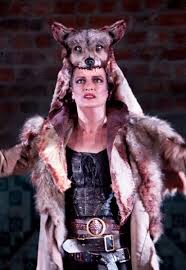
◦ Circe
Just as her son Joffrey has the arrogance and sadistic cruelty of a Roman emperor, Circe is a mirror image of the cruel empress Tamara, Queen Of Goths in Titus Andronicus. Both women are attracted to power and motivated by revenge. Tamara wants revenge against General Titus, who executed her son in the war. After seducing and marrying the emperor, she uses her influence to execute two of Titus’ sons. She then uses her lover Aaron the Moor (with Whom she secretly has a child), to concoct a plot to rape and mutilate Titus’ daughter. And if that weren’t enough, she tries to drive him mad by appearing at his home dressed as the Roman goddess Revenge. In short, Tamara is a classic femme fatale, who raises above the social oppression of her sex by seducing powerful men, and stabbing them in the back.
Circe is also a femme fatale, though Martin gives her more time to explain her motivations than Shakespeare gives Tamara. Like the Queen Of Goths, Circe marries King Robert Baratheon, while secretly having a taboo affair, this time with her brother Jamie. The difference is that Circe kills not strictly for vengeance, but mainly to conceal the fact that her son Joffrey is actually the product of her incest in order to protect him and eventually make him king. This is why Circe kills Ned Stark, Jon Aron, and consents to the murder of all or Robert Baratheon’s true born sons.
Circe does desire revenge, but not against anyone in particular. Instead, she wants to repay the patriarchy that keeps her down simply because she is a woman. Quote about Circe when she talks about how jealous she is of Jamie. In that chapter we get a great sense of who Circe really is. Because she’s a twin, she compares herself to her brother, observing how Jamie was given on her glory and respect when he became a knight and a member of the King’s Guard, while she was sold off to king Robert at the age of twelve like a slave or a common whore. Why, Circe asks, if she looks so much like him and acts so much like him, is she treated so differently just because she’s a woman? In a perverse sort of way, her incest might be a misguided attempt to claim part of Jamie’s honor and power through sexual conquest. Both Tamara and Circe show how an oppressive patriarchy can plant truly destructive thorns in the hearts of women, and these two queens reap that bitter harvest by cutting down the men in power one by one.
like camera Circe is driven by her love for her children and her desire and her pride and desire for vengeance. She spends the first half of the place seducing the emperor to gain his favor and then when she is made empress she uses her power to systematically destroy Titus and his family. Similarly, Circe marries king Robert and then when he dies she makes her son she then kills Ned Stark guy in prisons his daughter tries to kill the second of and
Catelyn-

Hermione From The Winters Tale ❄️ 🐺
◦ Pious
◦ Kindness and mercy are her weapons as well as her will and devotion to her friends and family. Even Tyrion is impressed by her integrity.
🐺 Aria- Imogen from Cymbeline
◦ If it’s a mans world, pretend you are one! She learns to use a sword ⚔️ and uses her small size and gender to sneak away from her enemies.
🐉 Daenerys Targaryen- Cleopatra!
◦ Crafty and beautiful
◦ Uses her sexuality to gain a powerful man’s protection
◦ Her dragons 🐉 make her a goddess, elevating her beyond a woman and even a queen. In a society that opposed and ignored women, female monarchs needed to practically deify themselves in order to get the same respect as their male counterparts.
Just as the real Cleopatra claimed to be a descendant of the goddess Isis and Elizabeth I was part of the cult of the virgin queen, The Mother Of Dragons has a mythic power that commands fear and adoration.
Spoiler Alert
In the final chapter of book one, Daenerys tries to simultaneously say goodbye to her warrior husband Khal Drogo, and to get her few remaining soldiers to swear loyalty to her. She dresses him, she braids his hair, she puts him atop a pyre, and waits for a star to pass overhead to give his funeral a cosmic significance:
“This is a wedding too.”
The pyre shifted and the logs exploded as the fire touched their secret hearts. She could hear the screams of frighten horses and the voices of the Dothraki. “No,” she wanted to shout to him, “No my good knight, do not fear for me. The fire is mine. I am Daenerys Stormborn, daughter of dragons, bride of Dragons, Mother Of Dragons.”
This mirrors how, once Cleopatra loses Antony and knows that the Romans are coming to capture her, she says goodbye to Antony, and asserts herself as queen.
CLEOPATRA
Give me my robe, put on my crown; I have
Immortal longings in me: now no more
The juice of Egypt’s grape shall moist this lip:
Yare, yare, good Iras; quick. Methinks I hear
Antony call; I see him rouse himself
To praise my noble act; I hear him mock
The luck of Caesar, which the gods give men
To excuse their after wrath: husband, I come:
Now to that name my courage prove my title!
I am fire and air; my other elements
I give to baser life.
Have I the aspic in my lips? Dost fall?
If thou and nature can so gently part,
The stroke of death is as a lover’s pinch,
Which hurts, and is desired. Dost thou lie still?
If thus thou vanishest, thou tell’st the world
It is not worth leave-taking. Antony and Cleopatra, Act V, Scene ii.
Dany does the same thing. She lights the pyre to help her husband ascend to the heavens, taking his place among the stars. Then, she sits on top of the pyre along with her three dragon eggs. Miraculously, she survives the fire and the dragons hatch, thus establishing her as the true heir of House Targarean and the Mother Of Dragons.
After witnessing the queen embracing her serpentine children, the blood riders that swore oaths to defend her husband swear again to defend her, promising to help her win the Iron Throne. Her power to command loyalty can win her the throne, and unlike Robert, keep it!
There are enough comparisons between Shakespeare and GOt that one playwright even adapted Shakespeare to resemble a Game Of Thrones story. Below is a poster of
Play Of Thrones, an adaption Of The Henry VI plays that, as I’ve mentioned, are full of characters and scenes similar to Game Of Thrones:
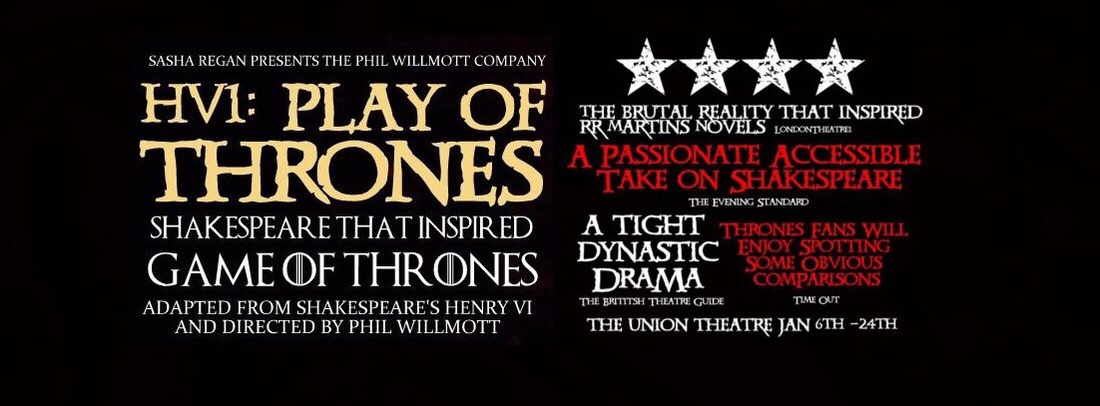
http://philwillmott.org/play-of-thrones-shakespeare-that-inspired-game-of-thrones.html
In conclusion, these two works prove that Shakespeare has a timeless appeal that has inspired countless writers to adapt his stories and characters.


Now put your shields before your hearts, and fight
Coriolanus, Act 1, Scene iv.
With hearts more proof than shields
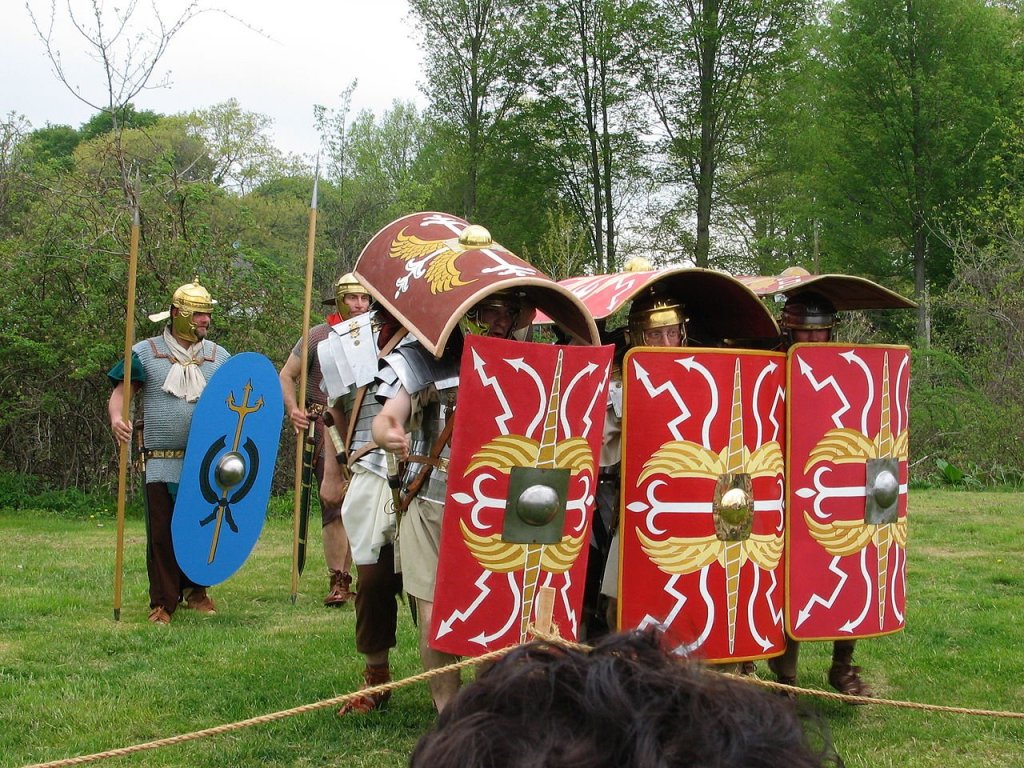
Shakespeare uses the word “shield” over 30 times, often as a verb meaning ‘to protect.’ However, there are a few very important references to this ancient tool of defense, and constructing one can teach you a lot about the history of a culture, and that culture’s methods of waging war.
The seven-fold shield of Ajax cannot keep
The battery from my heart
Antony and Cleopatra, Act IV, Scene 14.
As the quote above from Antony and Cleopatra mentions, the shield has been around since the dawn of history, certainly since Roman times. The Romans prized their large shields called scuta, which they used in defensive formations as the soldiers crashed through their enemies’ defenses.

In medieval times, Anglo-Saxons and Vikings used new and more sophisticated shield formations in some of the most important battles in early British history. This included the Battle of Hastings in 1066, which ended the Anglo-Saxon era when the English abandoned the protection of their shield wall to chase the Norman invaders, who then annihilated their forces and proclaimed their leader William of Normandy, the conqueror of all England.
In this excellent video, historian and fight choreographer Mike Loads traces the history of medieval shields and shows step-by-step how to make an authentic Anglo-Saxon shield!
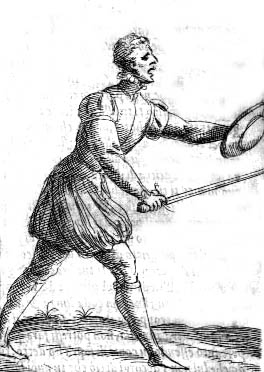
[Enter SAMPSON and GREGORY, of the house of Capulet, armed with swords and buckles]
Shakespeare’s Romeo and Juliet begins with servants armed with swords and small shields called bucklers. These shields were designed to be used in single combat (duels) and were very light and agile. According to Mike Loads, young men would wear their swords and bucklers on their hips and make a loud racket as they walked through the streets. The shield proclaimed that they were armed and dangerous. This macho swaggering is the origin of the term “swashbuckling,” which is probably how these servants see themselves since they spend the first scene of the play trying to pick a fight.

Just as the sound of a buckler announced to the world that a young man was armed and ready to fight, the design on a nobleman’s shield announced his status, his house, and his family motto. The popular historical consensus is that once the medieval knight arrived on the battlefield, they started using their shields and tabards as a colorful display; one that made it clear that they were noble. In war, a knight or other nobleman could collect a hefty ransom if they captured another knight alive, so if you belonged to a rich noble house, your brightly decorated shield could save your life on a battlefield in more ways than one.
Each heraldic design would be registered in the College Of Arms, and many of them are still on record today. In Shakespeare’s Pericles, a group of knights presents their shields to King Simonides and his daughter Thaisa right before a joust and she reads their mottos. The shields are like the knight’s ID tags and help the princess know whom to award the prize money once the jousting is over:
Simonides. Are the knights ready to begin the triumph?
First Lord. They are, my liege;
And stay your coming to present themselves.
Simonides. Return them, we are ready; and our daughter,
In honour of whose birth these triumphs are,
[To Thaisa] 'Tis now your honour, daughter, to explain
The labour of each knight in his device.
Thaisa. Which, to preserve mine honour, I'll perform.
[Enter a Knight; he passes over, and his Squire]
presents his shield to the Princess]
Simonides. Who is the first that doth prefer himself?
Thaisa. A knight of Sparta, my renowned father;
And the device he bears upon his shield
Is a black Ethiope reaching at the sun
The word, 'Lux tua vita mihi.'
Simonides. He loves you well that holds his life of you.  Pericles, Act II, Scene ii.
Since shields are an important part of Shakespeare’s plays, here’s how you can make a shield activity at home or in the classroom.
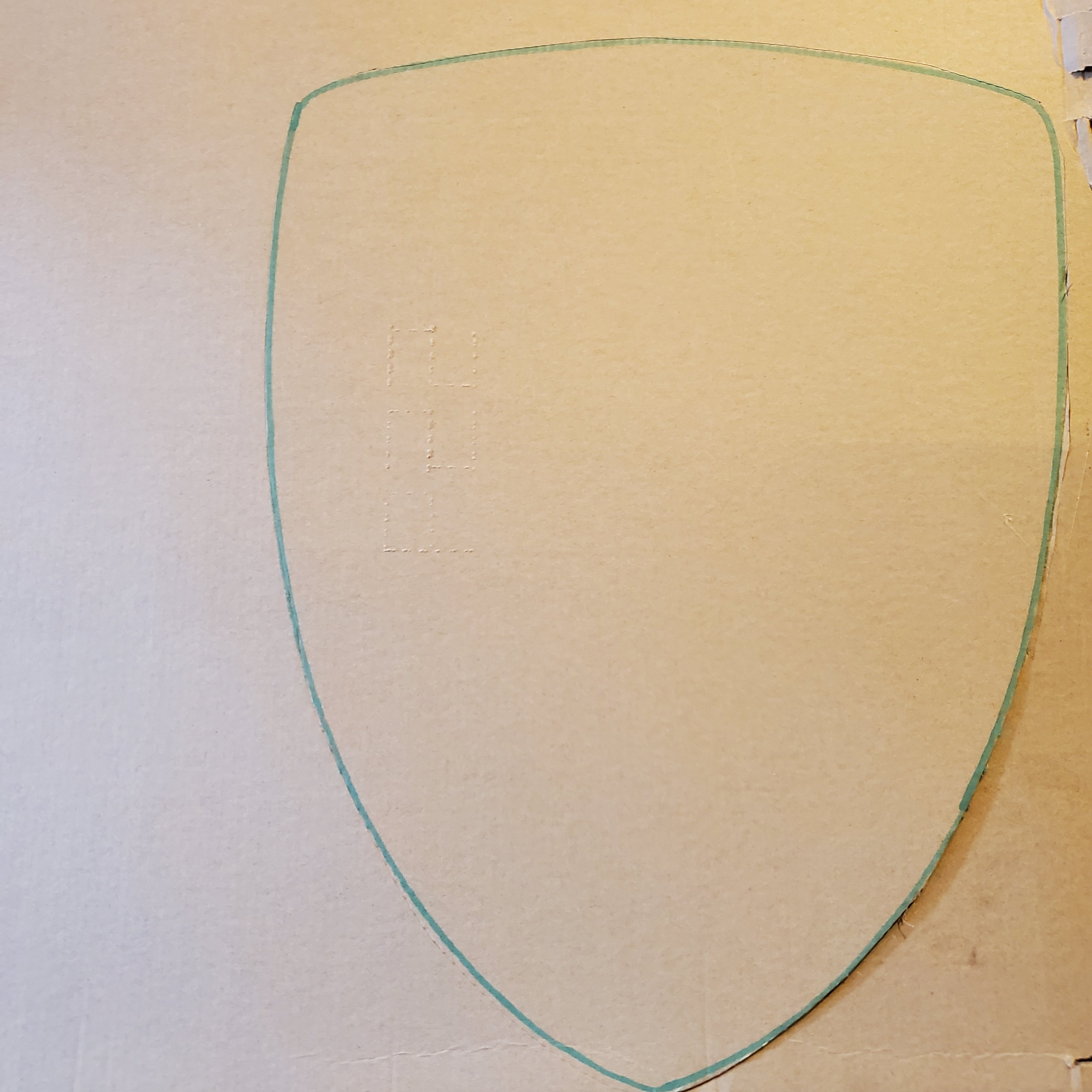
If you want to make a buckler, you need a round surface a little bigger than a dinner plate. You should be able to hold it and move it like an extension of your fist. If you want to make a basic 14th-century type shield like the ones I have below, cut out the familiar, ‘State of Ohio’ shape below. I made mine about 11 inches long, and 10 inches wide. I used cardboard but you can also use paper or wood or metal if you have real craftsperson talent.

I got a lot of good information on how people chose designs for their shields by visiting English Herritage.org’s Guide to Heraldry: https://www.english-heritage.org.uk/guide-to-heraldry. The website has a lovely catalog of the colors and designs real knights and barons and lords used to make their shields/ coats of arms stand out. You can choose a simple background with a plant, animal, etc. in the foreground, or you can divide the shield into a cross, a diagonal line called a Fess, or a triangle called a chevron.

You need not be constrained by historical precedent in coming up with your shield. Like any canvas, the only limits on your shield design are your imagination. Check out these designs I made with my kids!

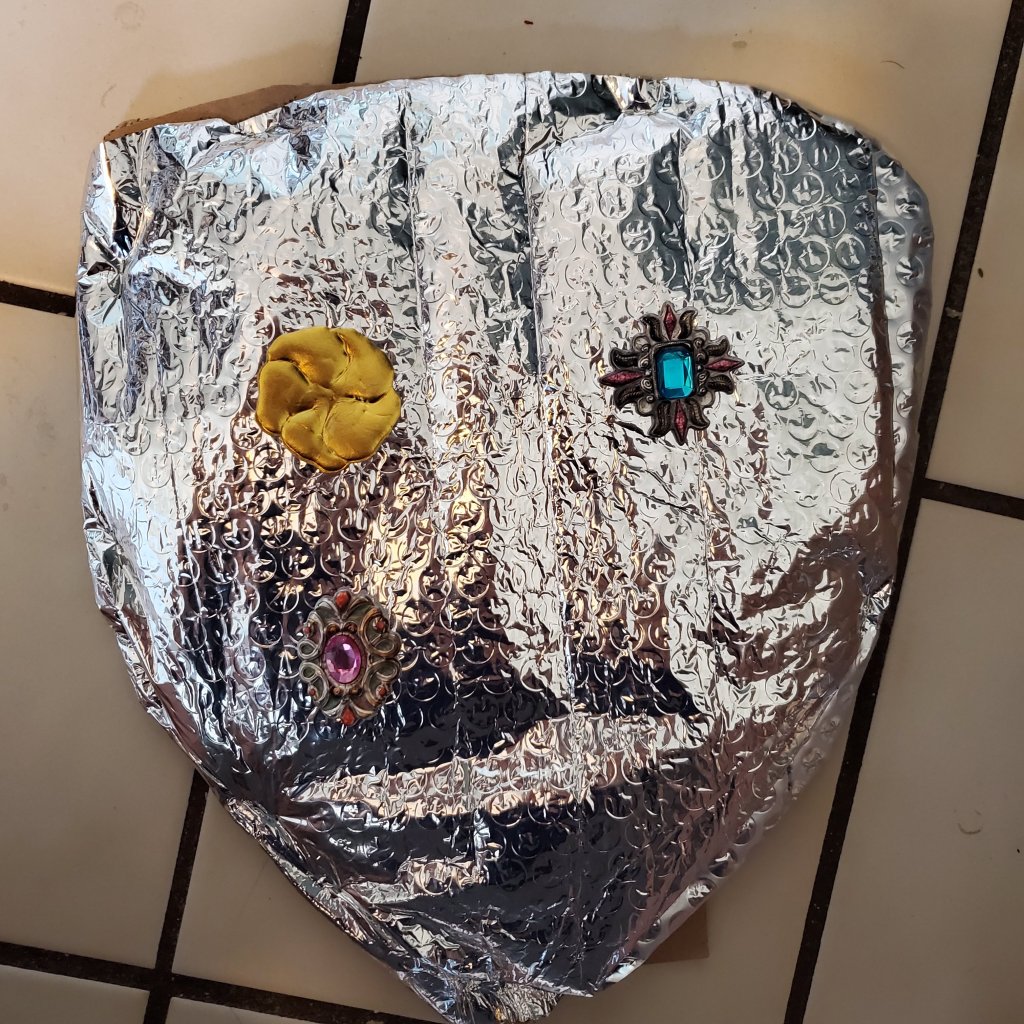

Most mottos are single lines of text (usually in Latin), that illustrate what is important to the house that sports it. For example, Richard II’s motto was: “loyalté me lie,” (“Loyalty binds me.”). You could come up with a simple motto and Google Translate it into Latin or French, etc.

Now that you have your shield, with its own unique motto and design, it can be a useful tool to explain how people saw themselves in Shakespeare’s day. Nowadays we mainly see ourselves as individuals, but this kind of heraldry illustrates how knights, nobles and servants saw themselves mainly as part of a house, with its own values, its own traditions, and sometimes an us vs. them mentality against other houses.
This kind of household mentality is of course, at the core of Romeo and Juliet and the Wars of the Roses cycle of plays, and Shakespeare uses heraldry to illustrate this mentality. Look how the knights in the tournament scene from the 2013 film are dressed in their houses’ colors and the nobles and servants are also wearing those same colors:
Like sports fans who wear the jerseys of their favorite teams, shields and heraldry proclaim the allegiance of the servants and nobles who belong to powerful houses/ kingdoms. This kind of emblem can help students understand a piece of medieval and Renaissance history, and how that history shapes our own mentalities today.
3. https://www.thearma.org/essays/SwordandBucklerP4.htm#.YtysVlfMLq8
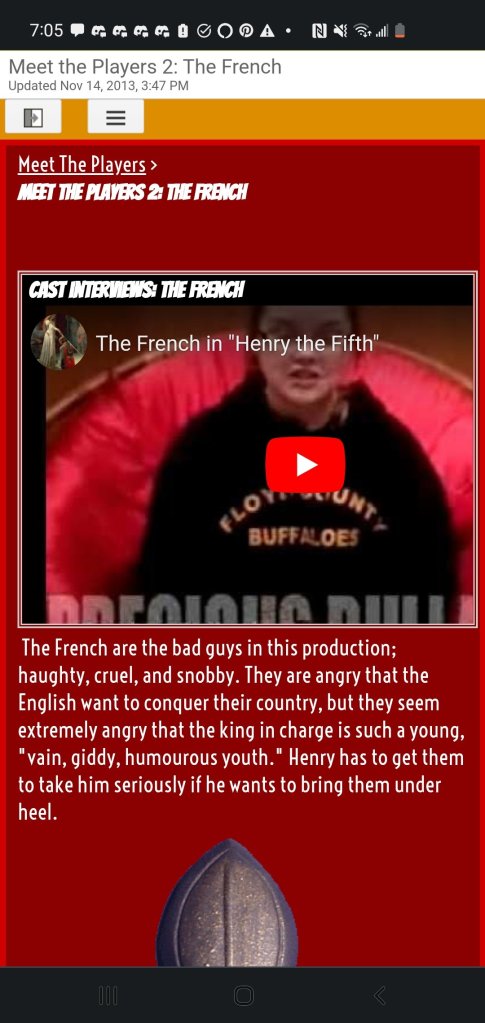
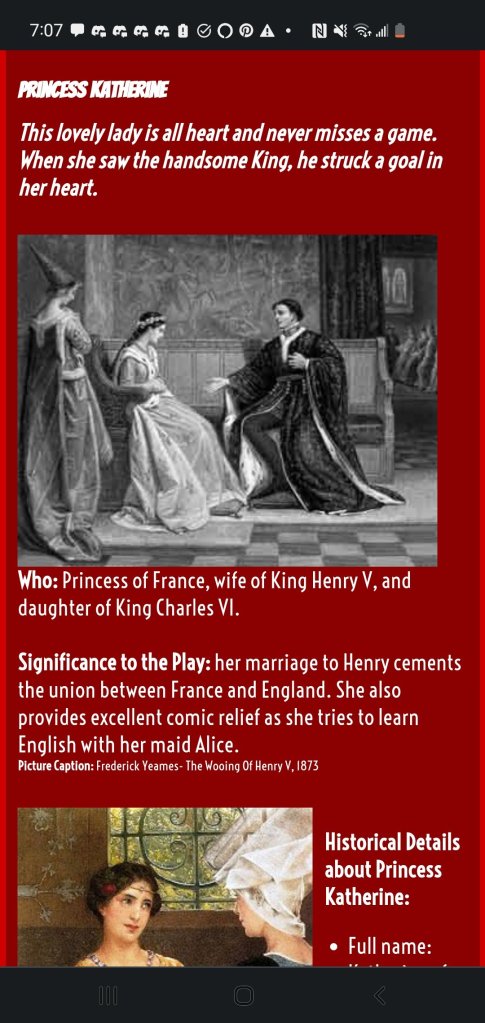
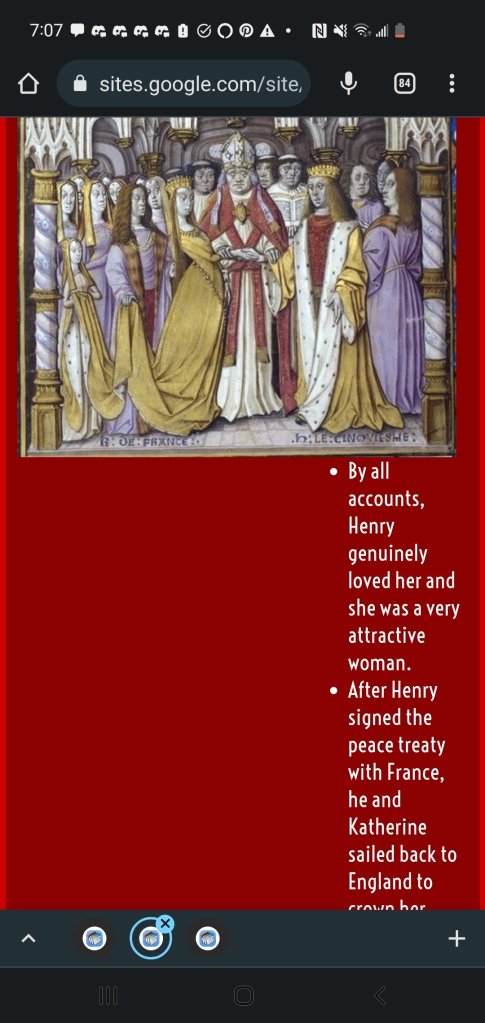
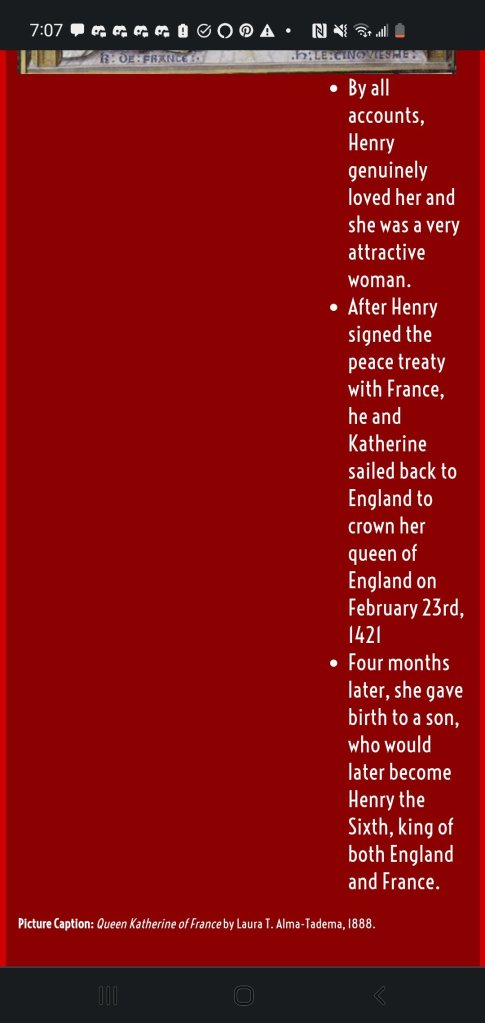
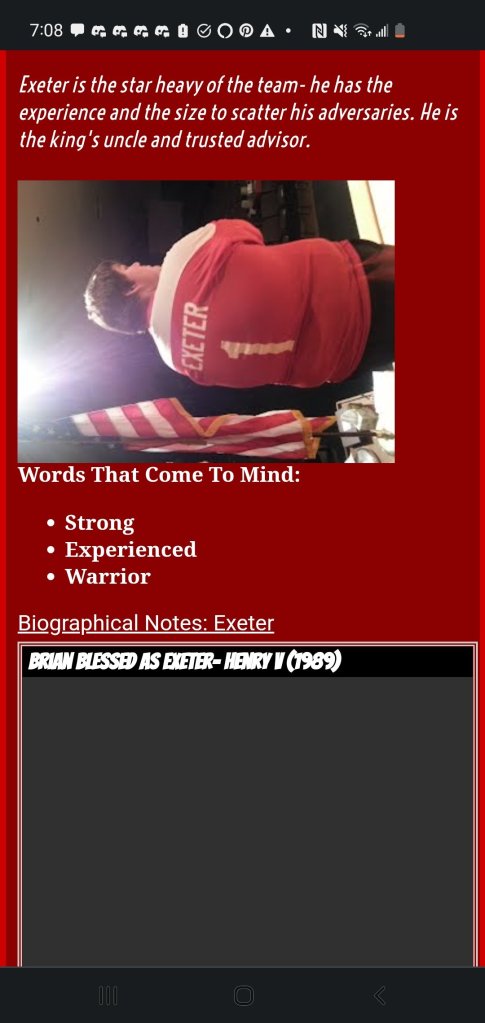
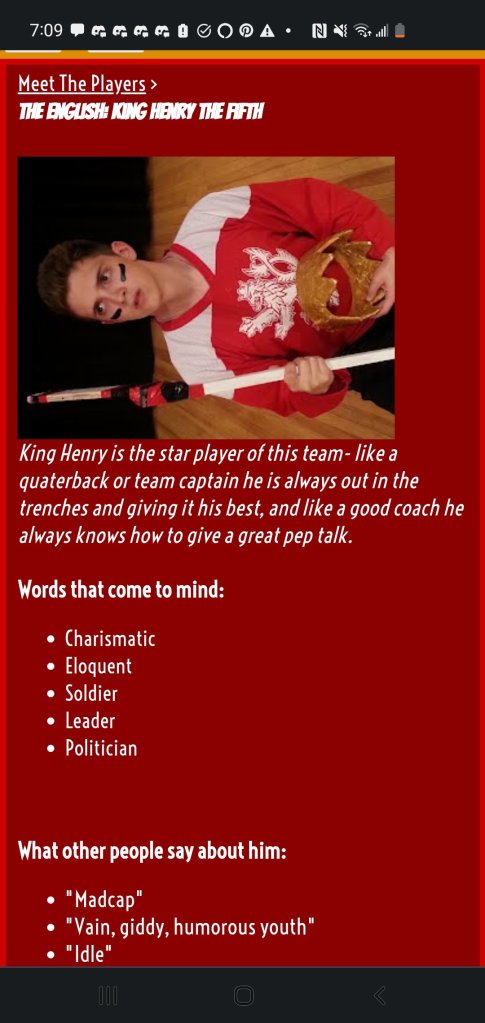
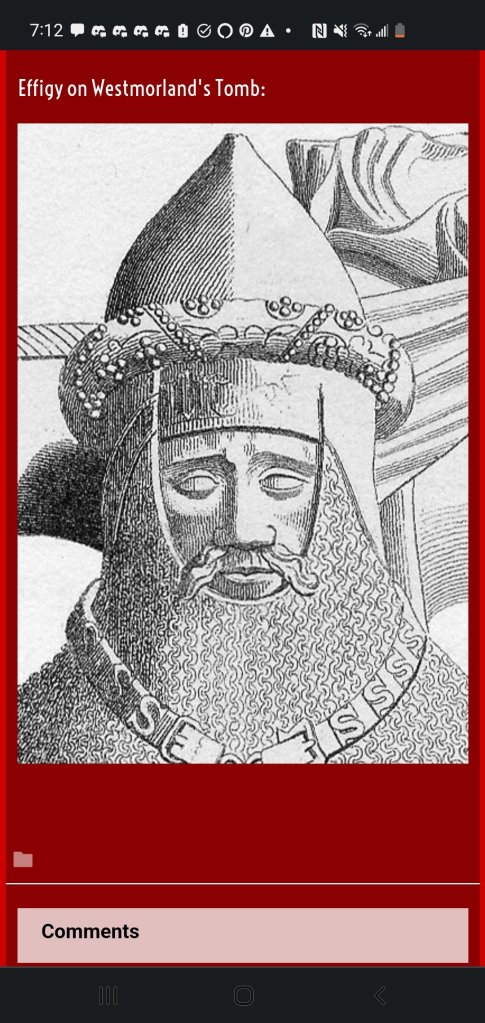
In 2012, I was text coach for a high school production of “Henry the Fifth,” directed by Sara Landis. Below is a series of photos, videos, and character information about the production, and the play itself.
https://sites.google.com/site/fchshenryv/















On this Memorial Day, I’m inspired by a quote to ponder what it really means to “Support Our Troops,” living and dead. The quote comes from an epilogue written for a 1778 performance of Shakespeare’s obscure Roman Tragedy, “Coriolanus:”


The most interesting thing about the play is how modern it is. One of his few plays that deals directly with the drama of democracy. And more than that, it deals with the seemingly modern phenomenon of officials undone by public opinion. So many of Shakespeare’s characters have to answer to their God or their king, or (as Coriolanus does), his family. Only rarely, do they answer to the people.
Kyle Kallgren: “Coriolanus- Universal Soldier” (2016)
https://www.nationaltheatre.org.uk/shows/nt-at-home-coriolanus


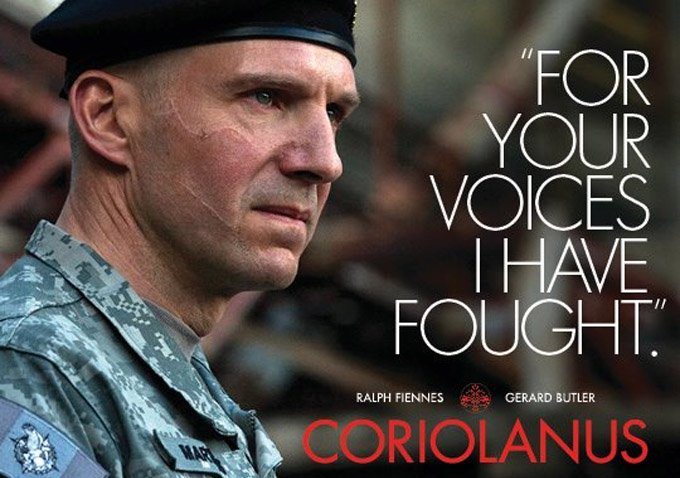

Coriolanus is one of Shakespeare’s strangest and most controversial plays. Its principal figure is a warrior, exemplary in his courage and single-minded dedication, who finds it difficult to adjust to life away from the battlefield. Refusing to compromise and contemptuous of anyone who does not live up to his exacting standards, Coriolanus, not long after being nominated for the high political office of consul, is cast into exile, accused of treason and ends up leading an army to invade and destroy Rome.
Warren Chernaik, Emeritus Professor of English in the University of London
Throughout the play, Coriolanus shows nothing but contempt for popular rule. This certainly suggests that he is aristocratic in his political views, but arguably he is much more militaristic. Remember that to be a Consul or any kind of high ranking position in the Senate, the senators all served in the army for a set term. Coriolanus respects the Senate more than the Assembly because the former is full of his fellow comrades in arms.
Coriolanus is first and last a soldier, and he represents a society run by the war machine. For centuries, authoritarians who rule through a cult of personality have propped up Caius Martius as an ideal of a military society. After all, it was Mussoluini who organized his fascist dictatorship around the Roman Empire, and the play Coriolanus was taught in literature classes during the Third Reich. They probably looked like Starship Troopers.
So to recap, though we owe soldiers a lot for their courage and sacrifice, nobody owes them Blind obedience, because that is the root of fascism. Look at this actual excerpt from a literary textbook about Coriolanus that was given to children in Nazi Germany.
The poet deals with the problem of the peaople and its leader, he depicts the ture nature of the leader in contrast to the aimless masses; he shows a people led in a false manner, a false democracy, whose exponents yield to the wishes of the people for egotistical reasons. Above these weaklings towers the figure of the true hero and leader, Coriolanus, who would like ot guide the deceived people to its health in the same way as, in our days, Adolf Hitler would do with our beloved German Fatherland.
Martin Brunkhorst, “Shakespeare’s Coriolanus in Deutscher Bearbeitung. Quoted from Weida
So now that I’ve established what we don’t owe our soldiers, what do we owe them?
[ ] Honesty- why are you fighting? Is dying for one’s country worth it? Unlike Henry V, in which Shakespeare makes it very clear why the king is trying to conquer France, we don’t really understand why Rome wants to destroy the Volskies, and it seems somewhat arbitrary. I think one of the ways we sympathize with Coriolanus is that he never “asks the reason why; his is but to do and die,” as Tennyson puts it. He has one speech where he rallies the troops, but it just seems flat and hollow without a clear reason why the soldiers should risk their lives.
[ ] A chance to heal When he comes home to run for Consul, Coriolanus is required to show his battle scars to the people and refuses to stay in the room when the patricians talk about them. This could be interpreted as more arrogance where he is disgusted to be in the same room as common men, but I think there’s another aspect. I think Coriolanus has PTSD, and every time he sees or hears about his scars, his repressed memories bubble up to the surface and drown him in fear. His story is partially a story of how all soldiers need help to deal with the trauma they endure on a regular basis.
[ ] Love for their courage and sacrifice. Whether the conflict is right or wrong men and women risked their lives for it, and that is worth compassion.
[ ] Good leaders. Coriolanus is a play where arguably nobody cares about the people. Coriolanus and the Patricians look down on them, and the tribunes see them as a means to gain power. With all this political in fighting who is really trying to make life better? Better for the starving Romans? Better for soldiers like Coriolanus? In a republican society like Rome, we owe it to our soldiers to participate in politics so men like Coriolanus aren’t sent to die on a whim. If we don’t use our voices, we are the common cry of curs that Coriolanus characterizes us as:
Compassion– in John Osborne’s version the title character goes mad from his trauma and of course, in Shakespeare’s version, he’s driven out of Rome and then killed by Aufidius. Even today, many soldiers suffer from poverty, sickness, life-altering injuries, and of course, PTSD. This Memorial Day, let’s all try to help ease the lives of the men and women who have suffered for us.
Sources:
SHAKESPEARE AND BRITISH OCCUPATION POLICY IN GERMANY, 1945-1949 by Katherine Elizabeth Weida B.A. (Washington College) 2011
https://www.bl.uk/shakespeare/articles/an-introduction-to-coriolanus


