Crafting A Character: Brutus from Locrine

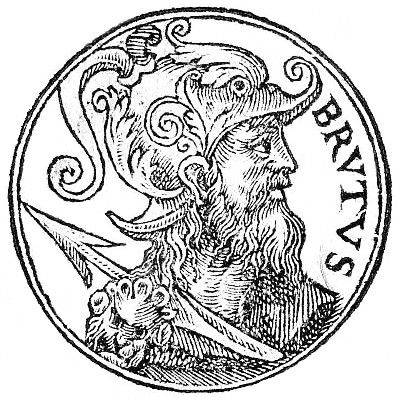
You might have read my previous post about Locrine and Humber from that play. Well, today I will continue this series by discussing the other character I play, the mythical founder of Britain, King Brutus.

Brutus of Troy

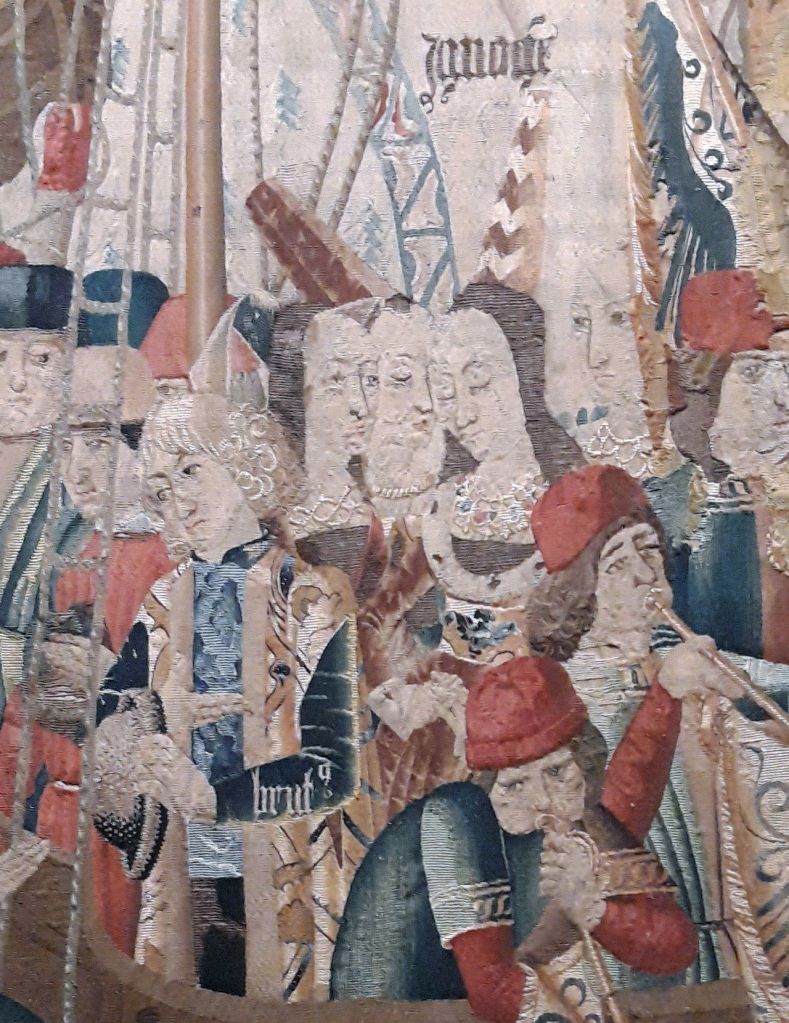
Now before you ask- NO, THIS IS NOT Marcus Brutus, the man who stabbed Julius Caesar. This Brutus actually lived before said conspirator, around the year 11000 BC. Writers like Geoffrey of Monmouth, writing after the Norman Conquest of England, recorded the story of Brutus as a way of getting the British people on board with a single king uniting all of the kingdoms of England.
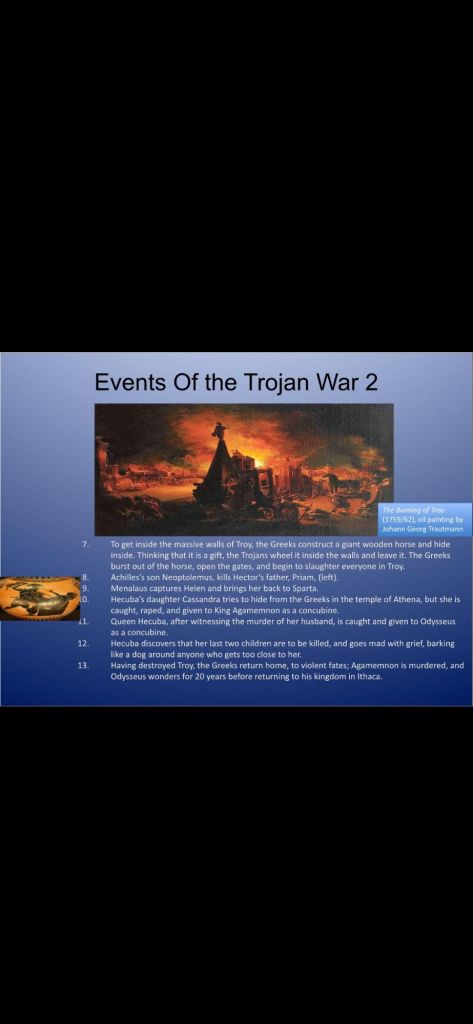
According to Monmouth (who clearly had an influence on the writer of Locrine), Brutus was the grandson of Aeneas, the sole survivor of the infamous Trojan War. Like the ancient Greek legends of Perseus or Hercules, Brutus is exiled from Italy for accidentally killing his father, and must then create a new empire in Britain.

Brutus! there lies beyond the Gallic bounds
An island which the western sea surrounds,
By giants once possessed; now few remain
To bar thy entrance, or obstruct thy reign.
To reach that happy shore thy sails employ;
There fate decrees to raise a second Troy,
And found an empire in thy royal line,
Which time shall ne’er destroy, nor bounds confines  – Diana’s speech to Brutus
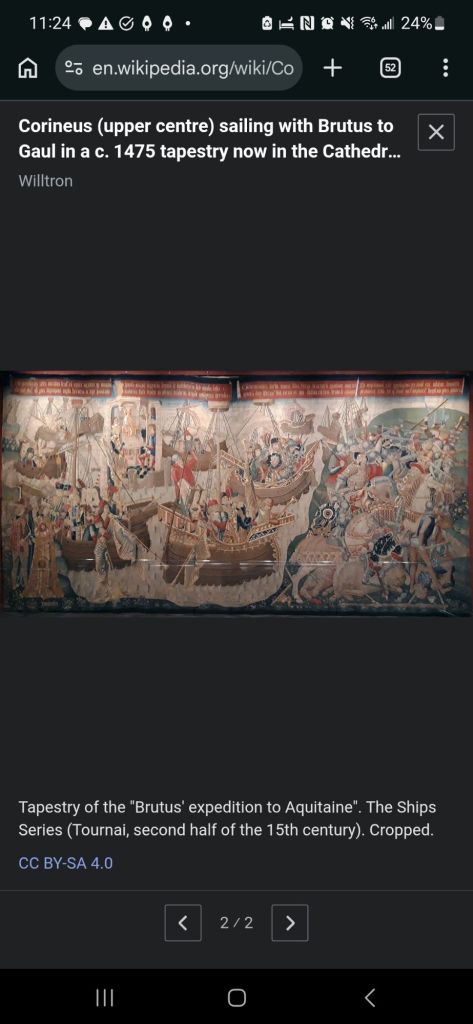
Historia Regum Britanniae by Geoffrey of Monmouth, c1136

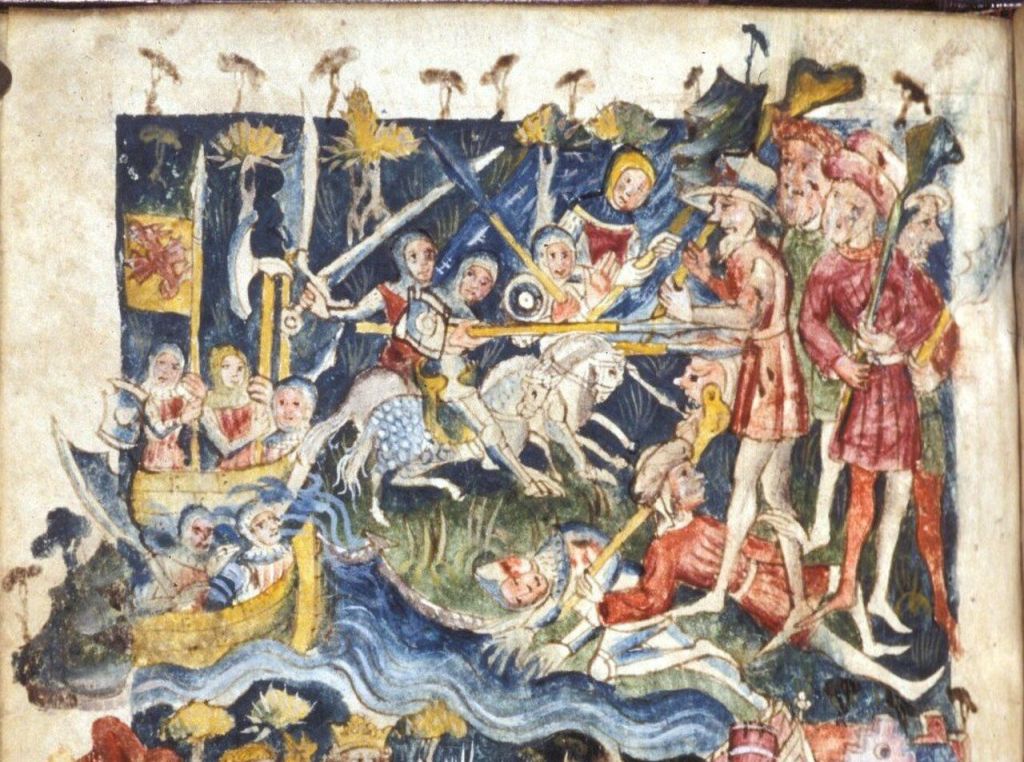
To secure his empire, Brutus must tame the savage giants that rule the untamed wilderness of Britain, in a mythical battle that is still celebrated to this day.
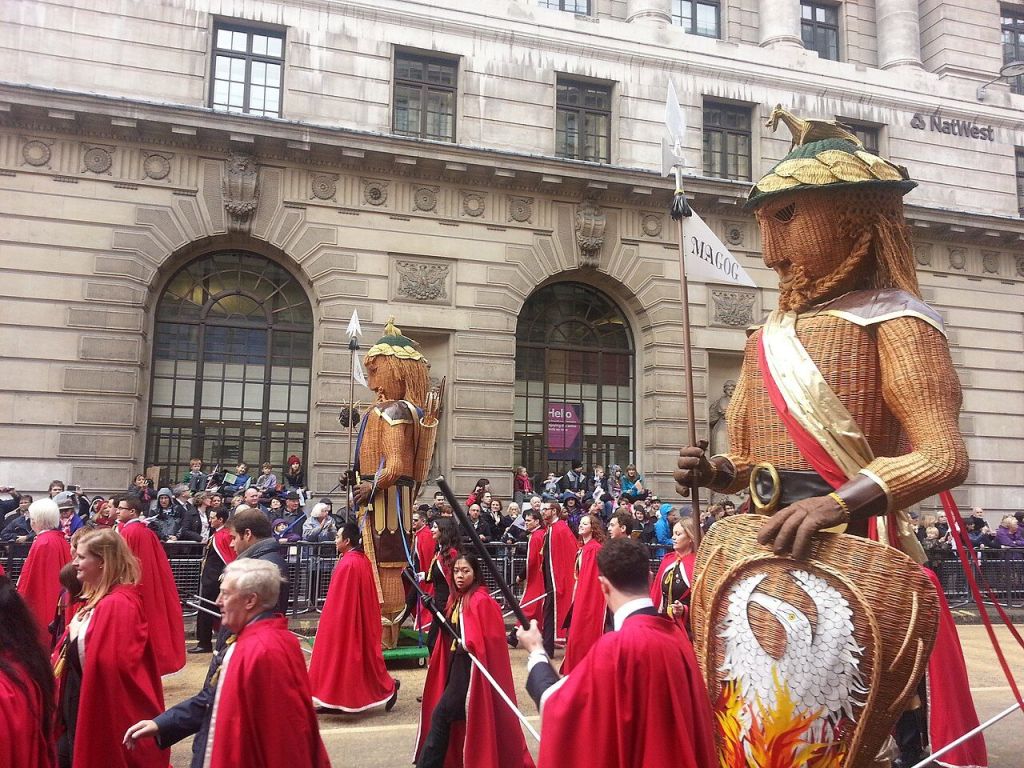
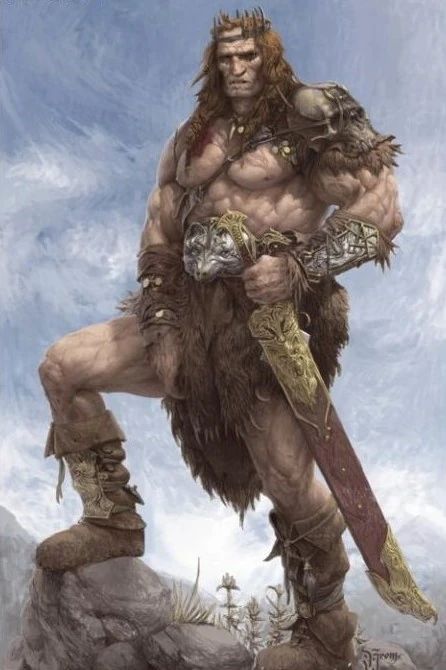
At the beginning of the encounter, Corineus and the giant, standing, front to front, held each other strongly in their arms, and panted aloud for breath, but Goëmagot presently grasping Corineus with all his might, broke three of his ribs, two on his right side and one on his left. At which Corineus, highly enraged, roused up his whole strength, and snatching him upon his shoulders, ran with him, as fast as the weight would allow him, to the next shore, and there getting upon the top of a high rock, hurled down the savage monster into the sea; where falling on the sides of craggy rocks, he was torn to pieces, and coloured the waves with his blood- Monmouth

Function in the Play

  1. Legacy of Troy- As I mentioned before, Brutus establishes the link between ancient Troy, and the founding of Britain.

The island was then called Albion,[9] and inhabited by none but a few giants. Notwithstanding this, the pleasant situation of the places, the plenty of rivers abounding with fish, and the engaging prospect of its woods, made Brutus and his company very desirous to fix their habitation in it. They therefore passed through all the provinces, forced the giants to fly into the caves of the mountains, and divided the country among them according to the directions of their commander. After this they began to till the ground and build houses, so that in a little time the country looked like a place that had been long inhabited. At last Brutus called the island after his own name Britain, and his companions Britons; for by these means he desired to perpetuate the memory of his name.

2. Corineus’ Brother In Arms

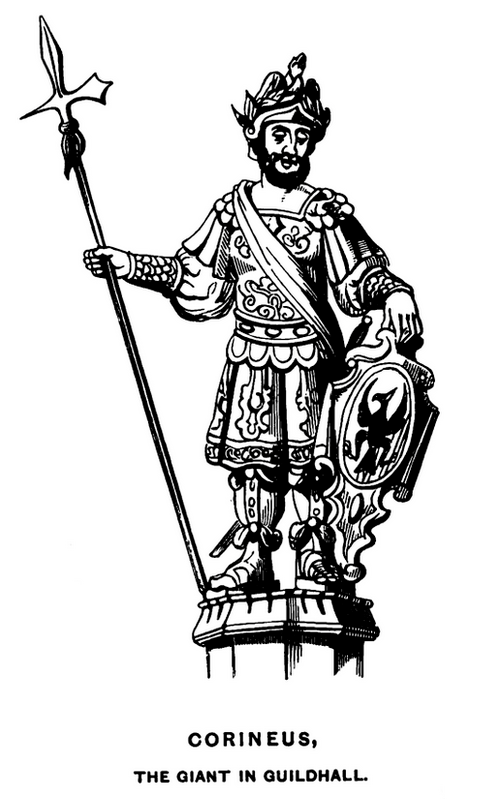
Like a lot of characters in Shakespeare’s history plays, Brutus has a loyal second in command, Corineus, the mythical founder of the kingdom of Cornwall. After Brutus dies, Corineus is a sort of Lord Protector, lending his council and military experience to Locrine and his brothers:

The name of their commander was Corineus, a modest man in matters of council, and of great courage and boldness, who, in an encounter with any person, even of gigantic stature, would immediately overthrow him, as if he were a child. When they understood from whom he was descended, they joined company with him and those under his government, who from the name of their leader were afterwards called the Cornish people, and indeed were more serviceable to Brutus than the rest in all his engagements. – Historia Regum Britanniae by Geoffrey of Monmouth, c1136
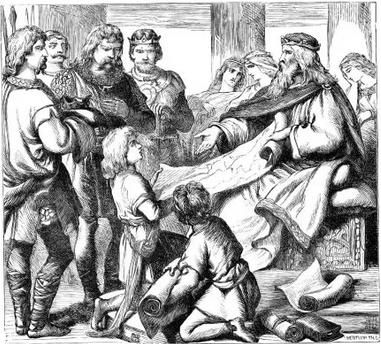
  1. Patriarch– Brutus’ sons become the first kings of England, (Locrine), Scotland (Albanact), and Wales (Camber).

During these transactions, Brutus had by his wife Ignoge three famous sons, whose names were Locrin, Albanact, and Kamber. These, after their father’s death, which happened in the twenty-fourth year after his arrival, buried him in the city which he had built, and then having divided the kingdom of Britain among them, retired each to his government.

  1. King Lear Right after Brutus’ story in Monmouth’s chronicle comes the ancient story of King Lear, the same story Shakespeare would later adapt into his own play. Like Lear, Brutus has to divide his kingdom, but unlike Lear, he does not try to test his children’s loyalty.

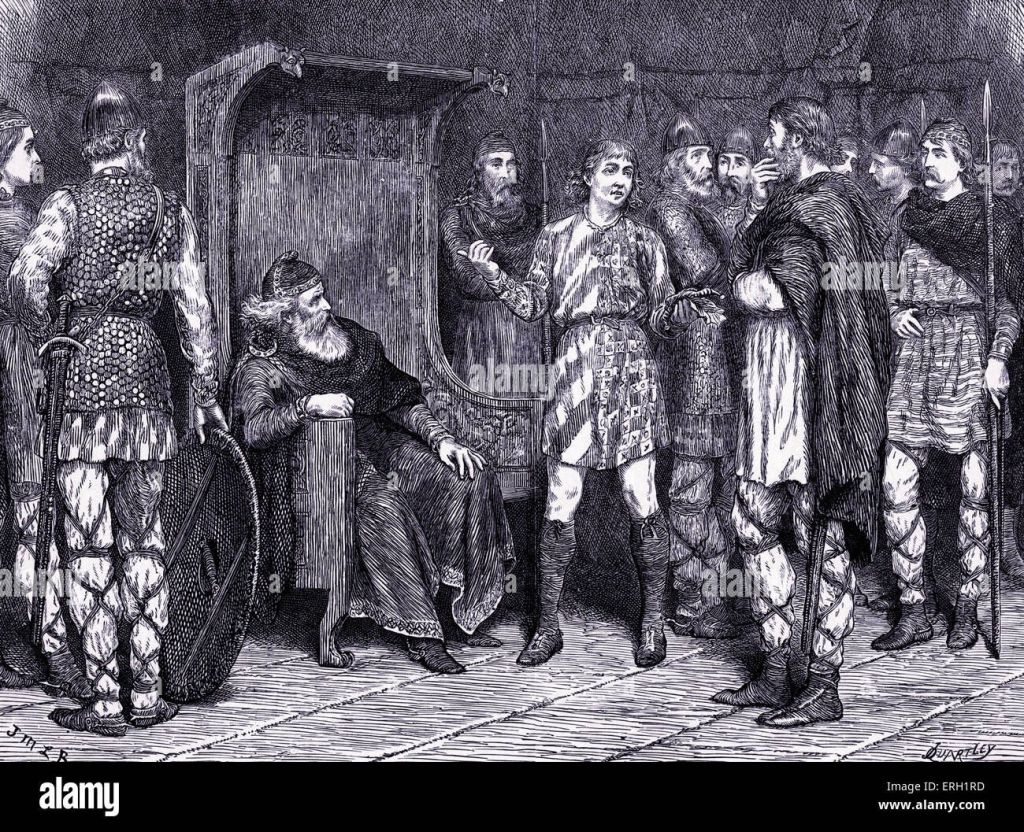
Locrin, the eldest, possessed the middle part of the island, called afterwards from his name, Loegria. Kamber had that part which lies beyond the river Severn, now called Wales, but which was for a long time named Kambria; and hence that people still call themselved in their British tongue Kambri. Albanact, the younger brother, possessed the country he called Albania, now Scotland. After they had a long time reigned in peace together, Humber, king of the Huns, arrived in Albania, and having killed Albanact in battle, forced his people to fly to Locrin for protection.

Our Interpretation
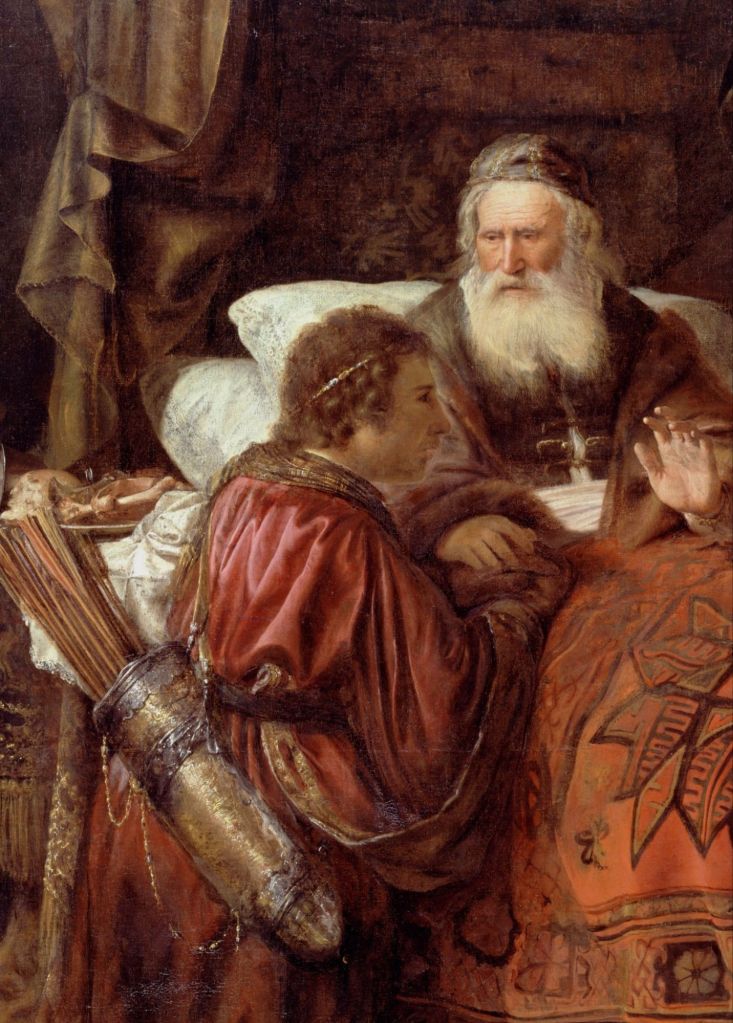
Isaac blesses Jacob

Those who sought to deface our memory,
wipe the name of Trojans from the earth
Those did I captivate with this mine arm.
And in this Isle at length I placed you.
– Locrine, Act I.i

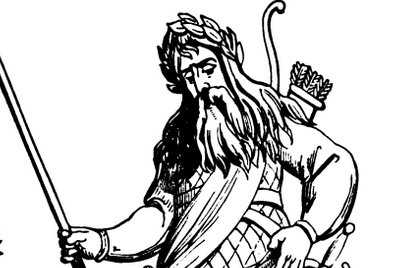
I see Brutus as an intimidating king like Hamlet’s Father (before he became a ghost). I also see him as similar to an Old Testament patriarch like Moses or Isaac- he was led by a god to the promised land, and gave it to his children, who must now protect and defend it.
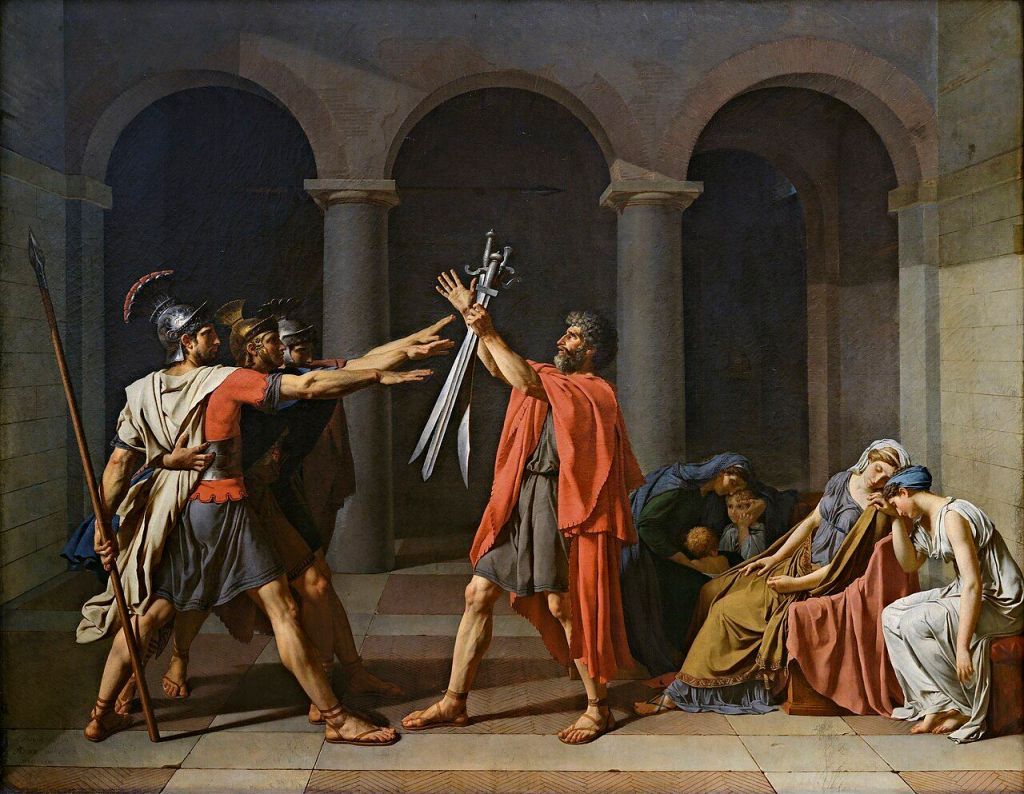
Oath of the Horatii by Jaques Louis David
  1. Colonizer

On the other hand, one could also see Brutus as a colonizer- he takes land that wasn’t his and overthrows the natural order. This is a dimension that is not explored in the original story, but our version highlights it.

Playing Brutus

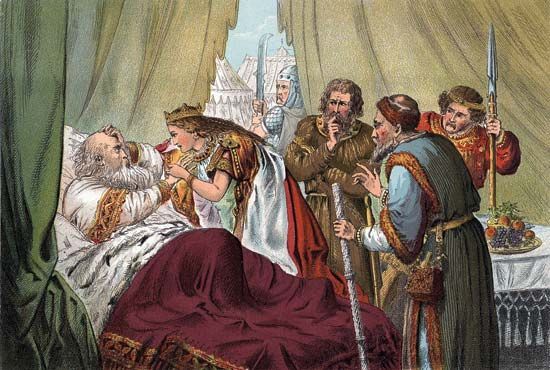
  1. Look and physicality– For such a mythic figure, I tried to play Brutus with as much strength and gravity as possible, at least at first. While he is being introduced and fighting giants, I tried to make him a soldier and King in his prime. After a while though, we see Brutus on his death bed, and I play him as frail and shaky; struggling to keep his kingdom together, as he also struggles to stay alive.
  2. As Brutus ages, I had him divest himself of his armor as he divests his kingdom- to CAMBER, he gives his shield. To Albanact, he gives his sword, and to Locrine, he gives his crown.
  1. Verse

It’s interesting that most of Brutus’ lines are in Trochaic, rather than iambic verse, which could be a way to emulate older forms of verse, but I also suspect that it is designed to emphasize Brutus’ commands.

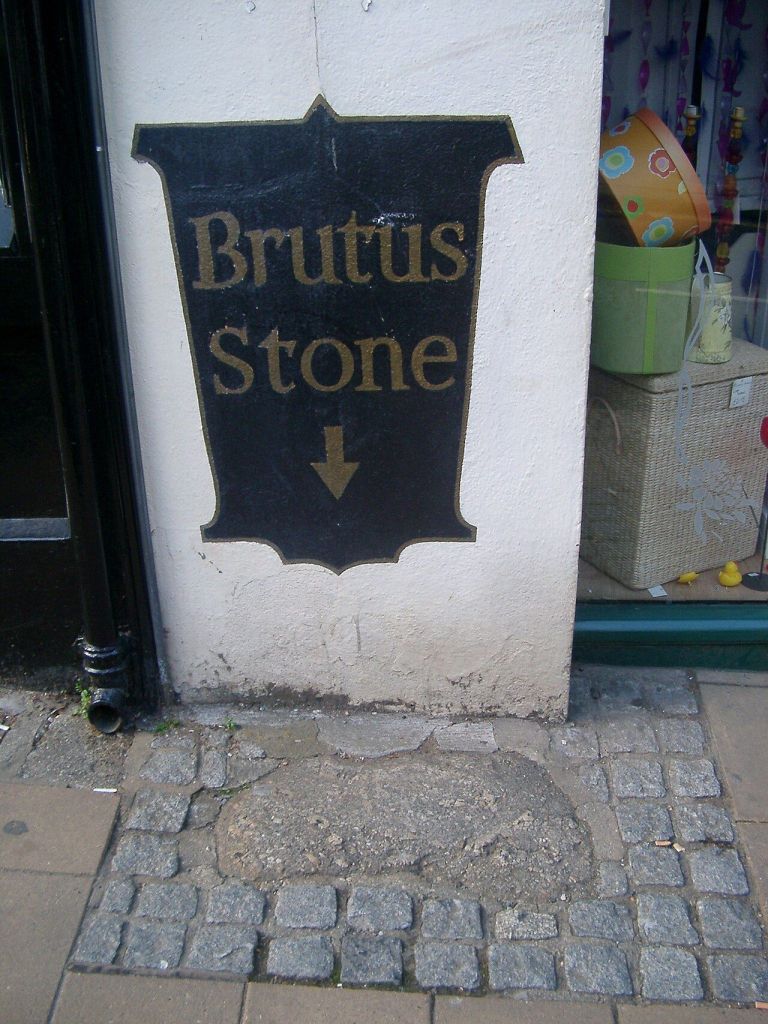
From Troy to Totnes – The Tale of the Brutus Stone

Then now, my son, thy part is on the stage,
For thou must bear the person of a King.
[Puts the Crown on his head.]
Locrine, stand up, and wear the regal Crown,
Cherish and love thy new betrothed wife.
Locrine, Act I.i

Well, there you go, Hope you enjoyed this overview of the play Locrine. If you like this review, you might like to see the show itself. Click here to purchase tickets:

The Ides of March

A historical Account

However, the Romans gave way before the good fortune of the man and accepted the bit, and regarding the monarchy as a respite from the evils of the civil wars, they appointed him dictator for life. This was confessedly a tyranny, since the monarchy, besides the element of irresponsibility, now took on that of permanence

Patrick Stewart (Cassius), convinces Brutus (Ian Richardson), to betray Caesar, RSC, 1970

Under these circumstances the multitude turned their thoughts towards Marcus Brutus, who was thought to be a descendant of the elder Brutus on his father’s side, on his mother’s side belonged to the Servilii, another illustrious house, and was a son-in‑law and nephew of Cato. 2 The desires which Brutus felt to attempt of his own accord the abolition of the monarchy were blunted by the favours and honours that he had received from Caesar. 3 For not only had his life been spared at Pharsalus after Pompey’s flight, and the lives of many of his friends at his entreaty, but also he had great credit with Caesar. 4 He had received the most honourable of the praetorships for the current year, and was to be consul three years later, having been preferred to Cassius, who was a rival candidate. 5 For Caesar, as we are told, said that Cassius urged the juster claims to the office, but that for his own part he could not pass Brutus by.105 6 Once, too, when certain persons were actually accusing Brutus to him, the conspiracy being already on foot, Caesar would not heed them, but laying his hand upon his body said to the accusers: “Brutus will wait for this shrivelled skin,”106 implying that Brutus was worthy to rule because of his virtue, but that for the sake of ruling he would not become a thankless villain. 7 Those, however, who  p589 were eager for the change, and fixed their eyes on Brutus alone, or on him first, did not venture to talk with him directly, but by night they covered his praetorial tribune and chair with writings, most of which were of this sort: “Thou art asleep, Brutus,” or, “Thou art not Brutus.”107 8 When Cassius perceived that the ambition of Brutus was somewhat stirred by these things, he was more urgent with him than before, and pricked him on, having himself also some private grounds for hating Caesar; 

So far, perhaps, these things may have happened of their own accord; the place, however, which was the scene of that struggle and murder, and in which the senate was then assembled, since it contained a statue of Pompey and had been dedicated by Pompey as an additional ornament to his  p597 theatre, made it wholly clear that it was the work of some heavenly power which was calling and guiding the action thither.

Well, then, Antony, who was a friend of Caesar’s and a robust man, was detained outside by Brutus Albinus,110 who purposely engaged him in a lengthy conversation; 5 but Caesar went in, and the senate rose in his honour. Some of the partisans of Brutus took their places round the back of Caesar’s chair, while others went to meet him, as though they would support the petition which Tulliusº Cimber presented to Caesar in behalf of his exiled brother, and they joined their entreaties to his and accompanied Caesar up to his chair. 6 But when, after taking his seat, Caesar continued to repulse their petitions, and, as they pressed upon him with greater importunity, began to show anger towards one and another of them, Tullius seized his toga with both hands and pulled it down from his neck. This was the signal for the assault. 7 It was Casca who gave him the first blow with his dagger, in the neck, not a mortal wound, nor even a deep one, for which he was too much confused, as was natural at the beginning of a deed of great daring; so that Caesar turned about, grasped the knife, and held it fast. p599 8 At almost the same instant both cried out, the smitten man in Latin: “Accursed Casca, what does thou?” and the smiter, in Greek, to his brother: “Brother, help!”

9 So the affair began, and those who were not privy to the plot were filled with consternation and horror at what was going on; they dared not fly, nor go to Caesar’s help, nay, nor even utter a word. 10 But those who had prepared themselves for the murder bared each of them his dagger, and Caesar, hemmed in on all sides, whichever way he turned confronting blows of weapons aimed at his face and eyes, driven hither and thither like a wild beast, was entangled in the hands of all; 11 for all had to take part in the sacrifice and taste of the slaughter. Therefore Brutus also gave him one blow in the groin. 12 And it is said by some writers that although Caesar defended himself against the rest and darted this way and that and cried aloud, when he saw that Brutus had drawn his dagger, he pulled his toga down over his head and sank, either by chance or because pushed there by his murderers, against the pedestal on which the statue of Pompey stood. 13

And the pedestal was drenched with his blood, so that one might have thought that Pompey himself was presiding over this vengeance upon his enemy, who now lay prostrate at his feet, quivering from a multitude of wounds. 14 For it is said that he received twenty-three; and many of the conspirators were wounded by one another, as they struggled to plant all those blows in one body.

-Plutarch’s Life Of Caesar

Artwork

Video 📹

Commentary

James Shapiro in his book 1599, addresses the common complaint that in the play that bears his name, Julius Caesar dies halfway through the play and has little time onstage to make a connection with the audience. The play is about tyrananicide, what causes it, what it looks like, and especially its aftermath. In a time when Jesuits and Catholic radicals threatened to assassinate Queen Elizabeth, Shakespeare wrote a powerful story about how fragile government systems can be; how striking the head off Rome leads to anarchy and sometimes tyranny.

Movie Review: Disney’s “Encanto”- “King Lear” with a happy ending. 


If you read my blog for an extended period of time, or if you listen to my podcasts, or if you’ve taken any of my classes online, then  I probably  told you the notion that I believe that you could find Shakespearean roots in just about every single work of Western and quite a few of Eastern literature. Shakespeare is ingrained in our culture and therefore a lot of his influence can be felt in almost every bit of media we take in.  One of my favorite ways to illustrate this, is by looking at Disney movies, trying to prove that every Disney story is at least a little bit inspired by a Shakespeare play as you’ve seen from my comedy series if Shakespeare wrote for Disney:

I had an enormous challenge on my hands when Disney came out with the new film Encanto. Previously I’ve found it very easy to deconstruct Disney film plots and spot their Shakespearean roots: Pocahontas is Romeo and Juliet by Disney’s own admission, Aladdin is basically the Tempest, Mulan is Twelfth Night, and the Lion King is Hamlet, (as many people have pointed out).

Encanto was really really hard because it is such a fresh and original story. It is deeply rooted in Columbian culture, so trying to defend the notion that it has anything in common with the works of a 400-year-old English male playwright is a tough claim. I don’t mean to suggest that this movie is a deliberate reinterpretation of Shakespeare. That would be insulting and limiting to the breadth of the story. My main purpose with this post is to show how universal and powerful these two stories are- to pay Encanto the compliment that, like Shakespeare, the story transcends cultural and historical boundaries and tells a story we can all relate to, and this is why I am making this bold claim, that Encanto resembles King Lear, albeit with a happy ending.

Mirabelle- the Cordelia of “Encanto”

It was hard for me to realize that  Encanto resembles  Lear because the Lear character is not the focus of the movie; the focus of the movie is the Cordelia character, Mirabelle. If you’ve read King Lear , then you know that Cordelia is vital to the first 2 scenes of the play, and then goes offstage until Act 4 when where she is reunited with her father in prison, then cures his madness just long enough for her to be hanged. Her death is the darkest, grimmest, bleakest moment that  Shakespeare ever wrote. She is the heart of the play and Lear’s failure to listen to her forms the heart of the play’s message;  when an older generation clings to power and power or money or status or anything else besides their family, ultimately they suffer tremendously.

  In his first line, King Lear says that he wants to give up his kingdom, conferring it to his daughters and their husbands, but what he is really trying to do is to get his daughters to say they love him and to give them the kingdom as a reward.

This deal also has more strings attached;   Lear basically says: “Now that I’ve given you my kingdom, you have to house me in your castle with a retinue of 100 knights.” And the only child who really loves Lear and has his best interest in heart is Cordelia, and Lear violently renounces his parental claims on her and banishes her from the kingdom along with her husband the king of France.

The Lear of “Encanto”

Abuela Alma Madrigal, from Disney’s Encanto.

So who is the King Lear figure in Encanto? Abuela Alma! Think about it, she is an older person who is spending the whole play clinging and holding on to the power that the Magic Candle gives to her. She spends the whole movie trying to protect the Encanto, and when she mistakenly believes that Mirabelle is a threat, she pushes her away. She rules her other children Papa, Julietta, and Brunowith an iron fist, and she flies into panics and rages whenever anything seems to threaten the safety of the candle. For example, when Bruno gets the magic prophecy that Mirabelle might destroy the house and destroy the Encanto,  Abuela refuses to let Mirabelle talk to anybody ever and generally acts in a cruel controlling way.

Look at this passage when Lear rejects his loving daughter Cordelia. Given what I’ve mentioned- the fists of rage, the clinging to supernatural powers, and the controlling demands for loyalty and obedience from his children, whom does King Lear sound like?

Lear: 
For, by the sacred radiance of the sun,
The mysteries of Hecate and the night;
By all the operation of the orbs115
From whom we do exist and cease to be;
Here I disclaim all my paternal care,
Propinquity and property of blood,
And as a stranger to my heart and me
Hold thee from this for ever. The barbarous Scythian,120
Or he that makes his generation messes
To gorge his appetite, shall to my bosom
Be as well neighbour'd, pitied, and reliev'd,
As thou my sometime daughter. King Lear, Act I, Scene i.

As Ian McKellen explains in this interview, like Abuella, Lear clings to power, which he derives from supernatural forces, ignores people who care about him, and believes that his authority is absolute:

Trauma and Violence in Encanto and King Lear

Marxist critics believe that Lear’s power is based on violence, (like most medieval kings), and violence is actually connected to Abuela as well. Let’s not forget that the candle was forged after the faceless men with machetes attempted to murder Abuela and her whole village. The candle is Abuela’s power, but it is also a constant reminder of the violence that she escaped. It is also therefore a symbol of her trauma. Perhaps these characters became so controlling, distant, and cold because of the trauma they endured. Lear is supposed to be a king of Britain back in the pre-Christian era of the Anglo-Saxons so he must have seen countless invasions:

The former king says himself that he’s fought in wars with his “Good biting falchion” (a kind of sword). Whether they’ve seen falchions or machetes, these characters have seen violence and want to protect themselves against seeing the pain of it again, and ultimately it is their children that suffer because of it.

In King Lear, the kingdom is ripped apart between the three daughters, and in Encanto, the house is literally ripped apart by the rift between the family and Abuela. Lear foolishly tries to bribe his daughters into flattering him; promising them the kingdom if they demonstrate how much they love him. Therefore Lear demands obedience and love and expects his family to fawn on him as if they were his subjects, not his family.

Lear’s favorite daughter Cordelia refuses to take the bribe, so she says nothing. Lear is enraged and treats this small disobedience like an act of treason:

Act 1 Scene ii: Lear disowns Cordelia

Arguably Abuella makes the same mistake. She treats her children like her subjects too and exploits their gifts in order to keep the community happy. Her fear of losing her home is the reason she pushes the Madrigals to be indispensable to the community. Think of the psychological and physical pressure Louisa mentions in her song:

As you can see in this video, Lin Manuel Miranda, who wrote the music for Encanto, was actually inspired by Shakespearean verse for the lyrics and rhythms in her song “Surface Pressure.” Whether or not he or the screenwriters were inspired by “Lear,” the fact remains that Mirabelle suffers much like Cordellia. She also can’t stand to see her sister Louisa in pain like this, so she sets out to save her family, which forces her to confront Alma. Much like Lear and Cordelia, Mirabelle and Abuela argue about how her clinging to the past is hurting her family and how the pressure she puts on them is literally ripping their home and family apart:

Sight and Sightlessness in “Encanto” and “King Lear”

Perhaps the biggest connective motif between Encanto and King Lear is the motif of sight and sightlessness. Both Lear and Lord Gloucester are blind to the danger that they’re in and blind to who their real friends and enemies are. Lear trusts his two elder daughters because they flatter him, he trusts his drunken knights who only succeed in getting him forced out of the cold. Conversely, Lear ignores Cordelia. who really loves him, as well as  Kent, who is a loyal nobleman to the very end, and he ignores the Fool because he’s a fool.  If he had heeded any of their advice he would not have died alone and powerless. Therefore his sightlessness is a deadly weakness.

Gloucester, the other old man character in Lear has another problem with sightlessness and is punished for it figuratively and literally.  Gloucester’s bastard son Edmond deceives him into thinking that his legitimate son Edgar is plotting to kill him. The old man sends Edgar away, makes Edmund his heir, and then Edmond betrays him and gets him arrested for treason.

In the play’s most savage scene, Gloucester is tortured and his eyes are literally pulled out of his head.  From this moment  Gloucester finally sees Edmond’s treachery, and he laments that he “Stumbled when he saw”. Gloucester feels like he is finally able to see clearly now that he is blind, not unlike the ancient Greek tragedy Oedipus Rex. Of course,  nothing this gruesome can be shown in a Disney movie but the image of sight is constantly referenced in Encanto visually, and also through the lyrics of the songs. Even the name of the character; Mirabelle comes from the Spanish word ‘mira’ which means “to look”, and the first thing one might notice about her is her brightly painted green glasses, which constantly draw attention to her ability to see.

Mirabelle, like Cordelia, is able to see that her family is in pain, she sees that her family, the Encanto, and the house is in danger, while Abuela is constantly deluding herself and everybody else in thinking that nothing is wrong.

Through the course of the movie, Mirabelle is able to fix the various problems she sees. For instance, she sees that her sister Louisa is taking on too many responsibilities and refusing to admit that she is tired and feels weak. She realizes that her sister Isabella is tired of being the perfect golden child, that her  Uncle Bruno is not the monster that the family declares him to be, (however catchy their song about him is).

Through her sight and her perceptiveness, Mirabelle is able to heal the wounds in her family, The last wounds that she heals are the cracks on her house, and her own Abuella’s wounds, the wounds that went deep through her and even deep through her house; she mends the problems that happened the instant that the candle came into being:

Once Mirabelle and Alma reconcile, they set about rebuilding the house in this song. Notice how many times the words “look,” and “see” are mentioned in the lyrics. Mirabelle re-iterates how each person in her family is more than their gifts, more than just the roles Abuella put them in, and they respond by telling her to look at her own gifts and be proud of who she is. She heals them by seeing them as they are, and they heal her by seeing her too.

It was when I realized this that I understood that this movie is what would have happened if King Lear had only listened to the people who really cared about him, and did not succumb to idle flattery. If only he did not let his pain and his trauma dictate the rest of his life. There’s a wonderful hopeful message here that family wounds can be healed if we take the time to see and address them. If you read King Lear and then see Encanto you can see both how these family wounds can be healed, and the tragic consequences if they are not.

I hope that this little post has helped you appreciate both works because they are both magnificent and they are both carefully constructed and they both tell a very simple lesson for all families. As families, we need to recognize our faults, forgive faults in others, and work together to mend the pain and suffering that we experience in our lives. Mirabelle and Cordelia show that we can all be heroes if we see the truth, and speak what they feel not what they ought to say.

FMI

https://www.rsc.org.uk/shakespeare-learning-zone/king-lear/character/analysis#king-lear

Gloucester and His Sons, PBS Learning Media: Shakespeare Uncovered: witf.pbslearningmedia.org/resource/shak15.ela.lit.gloucester/gloucester-and-his-sons-king-lears-subplot-shakespeare-uncovered/?student=true

James Earl Jones in King LEar at Shakespeare In the Park, 1974. In my opinion, this is the BEST version of “King Lear” on film.