Educators love to compare Shakespeare to classic Disney, myself included. After all, both Shakespeare and Walt Disney were popular entertainers who adapted classic stories into new forms for larger audiences.
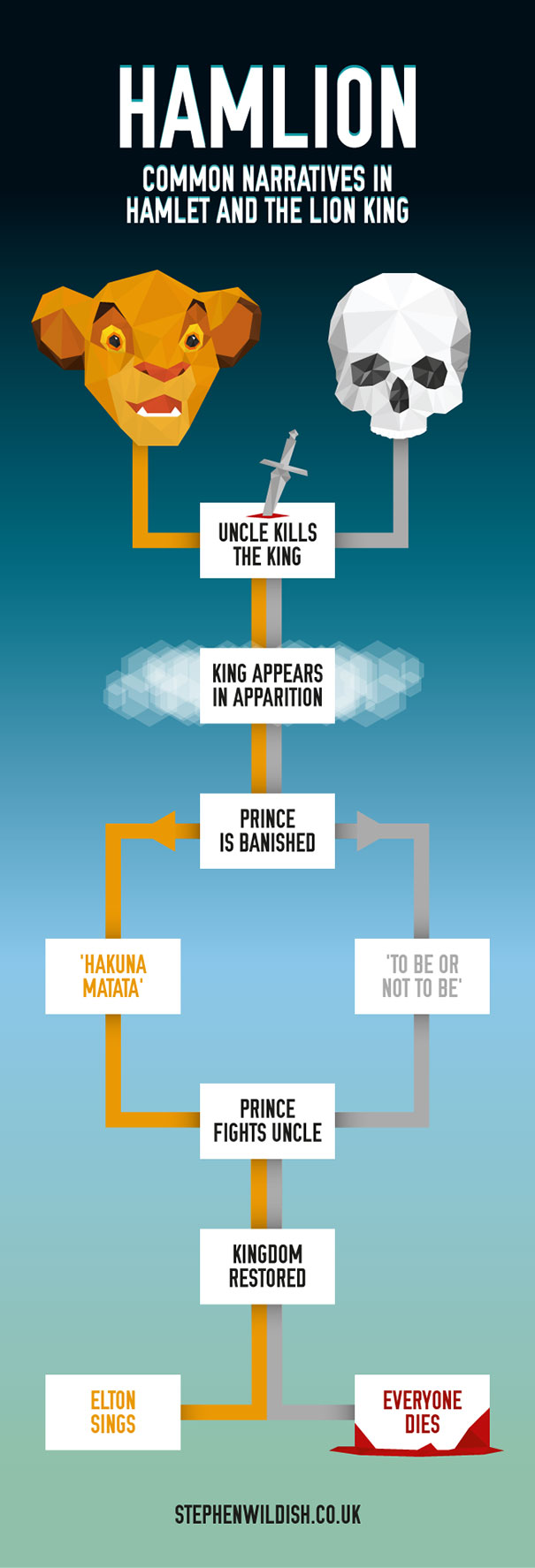
You can make a pretty strong case that Hamlet is “The Lion King” from these narrative similarities:
Infographic of Lion King similarities from Daily Infographic.com
It’s also true that, when the story artists at Disney decided to make the villain Mufasa’s brother, they noted the parallels to Shakespeare as the film was being written:
Though Shakespeare’s Hamlet is very much the story of a renaissance prince, it’s important to remember that the play’s sources date back to the Dark Ages. The anonymous “UR-Hamlet,” (later published in the early 1590s ), is based on an ancient legend about a prince who fights to the death to revenge his father’s murder. Shakespeare’s adaptation still contains a nod to this ancient culture that praised and highly ritualized the concept of judicial combat.
Back in Anglo-Saxon times, private disputes, (such as the murder of one’s father) could be settled through means of a duel. In this period, England was occupied by the Danes, (which we would now call Vikings), and several Viking practices of judicial combat survive. For example, the Hólmgangan, an elaborate duel between two people who fight within the perimeter of a cloak.
At the end of Shakespeare’s Hamlet, the revenge cycle between Hamlet, Leartes, and Fortinbras, comes to a close using a duel. Hamlet has murdered Leartes’ father but Hamlet did not intentionally kill him. This kind of legal dispute would certainly have been settled with a duel in Saxon times. This is one reason why Leartes scorns Hamlet’s offer of forgiveness at the beginning of the scene, and instead trusts in the outcome of the fight to prove his cause. Hamlet and Leartes begin fighting officially under the terms of a friendly fencing match, but it becomes clear early on that at least in the mind of Leartes, this is actually a blood-combat. He is demanding blood for the death of his father, as the Danes would have done during the Anglo Saxon times when Shakespeare’s source play of Hamlet was written.
What happens in the fight
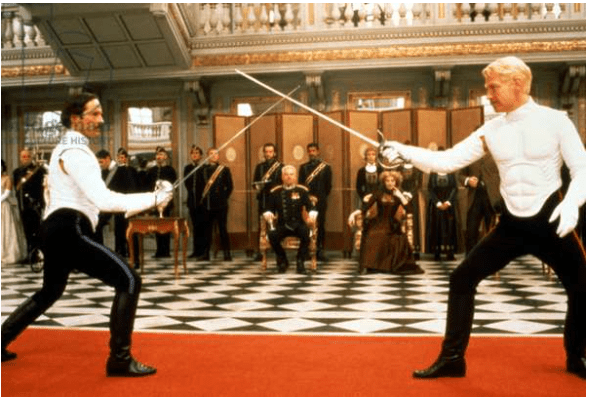
Olivier’s Sword Fight in Act V, Scene iii (1948).
The sword fight at the end of Hamlet is surprising in many ways. First of all, it is much more choreographed than many of Shakespeare’s other fights which are usually dramatized on the page very simply with two words: “They fight.” In Hamlet by contrast, Shakespeare has a series of important and descriptive stage directions. Furthermore, the fight is divided into three distinct bouts or phrases, or if you like “mini fights.” Below is the full text of the fight. I shall then explain what happens in each phrase.
PHrase One
Shakespeare it very clear that Hamlet gets a normal fencing rapier, while Leartes gets a sharp one, they fight one fencing bout where Hamlet scores a point. This is the most “sportsman like” part of the fight:
Enter King, Queen, Laertes, Osric, and Lords, with other

Attendants with foils and gauntlets.

A table and flagons of wine on it.

Claudius. Come, Hamlet, come, and take this hand from me.
[The King puts Laertes' hand into Hamlet's.]

Hamlet. Give me your pardon, sir. I have done you wrong;
But pardon't, as you are a gentleman.
Laertes. I am satisfied in nature,
Whose motive in this case should stir me most
To my revenge. But till that time
I do receive your offer'd love like love,
And will not wrong it.3890
Hamlet. I embrace it freely,
And will this brother's wager frankly play.
Give us the foils. Come on.
Laertes. Come, one for me.
Hamlet. I'll be your foil, Laertes. In mine ignorance3895
Your skill shall, like a star i' th' darkest night,
Stick fiery off indeed.
Laertes. You mock me, sir.
Hamlet. No, by this hand.
Claudius. Give them the foils, young Osric. Cousin Hamlet,3900
You know the wager?
Hamlet. Very well, my lord.
Your Grace has laid the odds o' th' weaker side.
Claudius. I do not fear it, I have seen you both;
But since he is better'd, we have therefore odds.3905
Laertes. This is too heavy; let me see another.
Hamlet. This likes me well. These foils have all a length?
They Prepare to play.

Osric. Ay, my good lord.
Claudius. Set me the stoups of wine upon that table.3910
If Hamlet give the first or second hit,
Or quit in answer of the third exchange,
Let all the battlements their ordnance fire;
The King shall drink to Hamlet's better breath,
And in the cup an union shall he throw3915
Richer than that which four successive kings
In Denmark's crown have worn. Give me the cups;
And let the kettle to the trumpet speak,
The trumpet to the cannoneer without,
The cannons to the heavens, the heaven to earth,3920
'Now the King drinks to Hamlet.' Come, begin.
And you the judges, bear a wary eye.
Hamlet. Come on, sir.
Laertes. Come, my lord. They play.
Hamlet. One.3925
Laertes. No.
Hamlet. Judgment!
Osric. A hit, a very palpable hit.
Laertes. Well, again!
Claudius. Stay, give me drink. Hamlet, this pearl is thine;3930
Here's to thy health.
[Drum; trumpets sound; a piece goes off [within].]
Give him the cup.
Hamlet. I'll play this bout first; set it by awhile.
Phrase Two
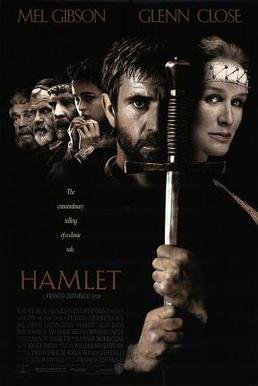
Mel Gibson in “Hamlet” (1990)
Claudius. Come. [They play.] Another hit. What say you?3935
Laertes. [aside] And yet it is almost against my conscience.
Again, Hamlet gets the upper hand and scores a point. While his mother is celebrating his victory, she accidently drinks the poisoned cup that Claudius meant for Hamlet. Now Claudius is enraged, Laertes is angry because of losing the first two bouts, and Hamlet is blissfully unaware that he is in mortal danger.
Phrase Three
When Hamlet isn’t expecting it, Leartes wounds him with the poisoned sword. From there, the fight degenerates into a violent, bloody mess where Hamlet disarms Laertes, then stabs Leartes. After this, the Queen dies, and Hamlet kills Claudius:
Hamlet. Come for the third, Laertes! You but dally.3950 Pray you pass with your best violence; I am afeard you make a wanton of me.
Gertrude. No, no! the drink, the drink! O my dear Hamlet!3965 The drink, the drink! I am poison’d. [Dies.]
Hamlet. O villany! Ho! let the door be lock’d. Treachery! Seek it out.
[Laertes falls.]
Laertes. It is here, Hamlet. Hamlet, thou art slain;3970 No medicine in the world can do thee good. In thee there is not half an hour of life. The treacherous instrument is in thy hand, Unbated and envenom’d. The foul practice Hath turn’d itself on me. Lo, here I lie,3975 Never to rise again. Thy mother’s poison’d. I can no more. The King, the King’s to blame.
Hamlet. The point envenom’d too? Then, venom, to thy work. Hurts the King.
Claudius. O, yet defend me, friends! I am but hurt.
Hamlet. Here, thou incestuous, murd’rous, damned Dane, Drink off this potion! Is thy union here? Follow my mother. King dies.
God’s providence in Hamlet (or lack therEof)
It is telling that everyone dies in this scene, which indicates that the concept of providence seems somewhat ambiguous in this scene- yes, Claudius dies but so does Hamlet. In addition, Leartes dies justly for his own treachery as he claims, but he also tries to avoid damnation. Leartes is guilty of treason for killing Hamlet, but Hamlet is guilty of killing an old man and a young maid, so Leartes asks God to forgive Hamlet for two murders, while he has only committed one. Providence doesn’t seem clear which crimes are worse. Further, Providence fails to reveal the guilt or innocence of Queen Gertrude- did she know her second husband murdered her first? Did she support Hamlet’s banishment? Did she know the cup was poisoned, and is therefore guilty of suicide, or was she ignorant and punished by fate for her adultery and incest? Knowing the conventions of judicial combat help the reader understand the compex world of Hamlet, a world devoid of easy answers.
How Would I Stage the Fight?
Phrase 1 I want the two combatants to start en guarde, their blades touching, then there will be a series of attacks on the blade. Hamlet will advance and attack the low line of Leartes’ sword Hamlet will advance and attack the high line of Leartes’ sword Leartes will advance and beat attack the high line of Hamlet’s sword Leartes will advance and attack the low line of Hamlet’s sword
Hamlet performs a bind on Leartes’ sword, sending it off on a diagonal high line. Hamlet attacks Leartes leg and Leartes will react in mild pain.
Phrase 2 Leartes is no longer fighting in polite manner, so this will be the real fight where he’s actually going for targets Hamlet and Leartes come together and bow, Both go into en guarde and Osric signals the start of the fight. Hamlet attacks Leartes’ blade high Leartes attacks Hamlet’s blade low Leartes suddenly does a moulinet and attacks Hamlet’s right arm. Hamlet does a pass back and parries 3 Leartes attacks Hamlet’s Left Arm. Hamlet does another pass back and parries 4 Leartes cuts for Hamlet’s head. Hamlet passes back and does a hanging parry 6, which causes the sword to slide off. Hamlet ripostes, slips around Leartes’ ________side, and thrusts offline in suppination. He then flicks the sword, hiting the back of Leartes’ knee. Phrase 3 Concern- you need to have enough space for Hamlet to chase Leartes DS, and for Leartes to slice Hamlet with the forte of his sword. Before the bout is supposed to start, Hamlet walks toward the sword, point down to Leartes US L or USR “I am afeard you make a wanton of me” Leartes: “You mock me sir!” Hamlet: “No, by this hand” Hamlet presents his hand. Leartes places his sword on it, and slices it Leartes gives Hamlet a stomach punch Hamlet falls to his knees dropping the sword. If necessary, Hamlet can pull out a blood pack to put on his hand.
Leartes points his blade above Hamlet’s head, then brings it back, preparing to strike off Hamlet’s head. Leartes: “Have at you now” Hamlet ducks to the right, with his leg extended. Leartes Passes forward, trips on Hamlet’s leg. Hamlet does a slip and goes behind Leartes’ back. Hamlet rabbit punches Leartes on the back, picks up Leartes’ sword, noticing the blood on it Leartes slowly rises, then notices Hamlet with his sword, he quickly grabs Hamlet’s weapon Hamlet shoves Leartes DS into a corp a corp, then traps Leartes’ blade The two push each other for a while
Osric: “Nothing Neither way” Hamlet pushes Leartes downstage, then slices him across the back. Leartes stops DS, and falls to the ground
Murder of Claudius If Claudius is standing, we can have Horatio grab the king around the neck, Hamlet places the sword across Claudius’ stomach, and slices him. If Claudius is seated, Hamlet picks up the goblet with one hand, slices the king’s leg, then, (after establishing a good distance), Hamlet points the blade off line, just left of Claudius’ neck. Hamlet is giving Claudius a choice- drink or be stabbed. When Claudius chooses to drink, either Hamlet or Horatio can give him the cup. If Horatio gives it to Claudius, it might give him the idea to die later.
This is a play I’ve been obsessed with since I was 16 years old. There’s so much to say about it, but I’ll be focused mainly on the mysteries of its famous plot and characters. In the meantime, here’s some background info on the play collected from the posts I’ve done on it over the years:
Play of the Month: Hamlet. My complete summary with pictures, videos, and discussion questions
How Accurate Is Hamnet? I review the novel “Hamnet” which is a work of historical fiction. It focuses on the possibility that Shakespeare wrote “Hamlet” after the death of his 11-year-old son.
Shakespeare on Ghosts: In this post, I discuss the meaning and psychological significance of the Ghost in “Hamlet”.
Internet Shakespeare Editions: https://internetshakespeare.uvic.ca/Library/Texts/Ham/. Has all four quartos in modern and original type, lots of background sources, and the text of the German Hamlet “Bestrafte Brudermord.”
Today I pay tribute to a remarkable book written by a great actor, who has inspired me and countless others.
I was privileged back in 2011 to see Anthony Sher on stage playing is playing Edmund Kean in John Paul Sartre’s pastiche of Shakespeare entitled “Kean.” It was a very good casting because this actor very clearly had a lot of raw energy and at the same time charisma and wit. But at the same time, he also seemed to have tenderness, sadness, and insecurity behind his eyes. I didn’t realize it but this actor, Sir Antony Sher, who sadly passed away just last year, would change my life.
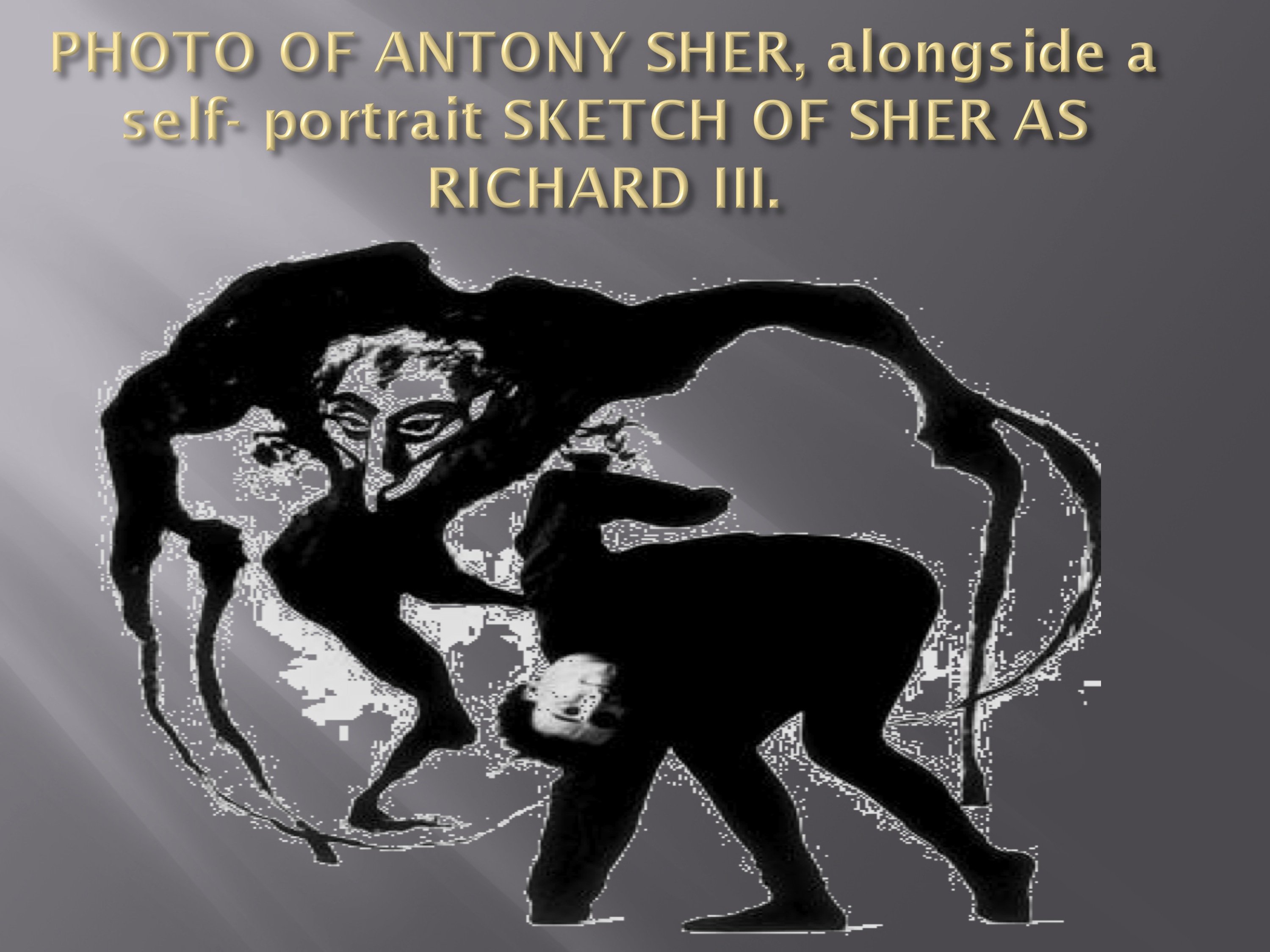
When I was still in college I knew that I was going to go to grad school, and I wanted to write a graduate thesis on Richard III. Through my research, I came to realize that this same actor produced what is still regarded it as one most acclaimed and influential productions of the play ever. In 1984, Sir Antony played an iconic Richard III at the Royal Shakespeare Company which was revolutionary for its raw energy, tragic emotions, and creative physicality. Mr. Sher played the role on crutches and was able to scuttle around the stage like a spider.
I feel very therefore very privileged that I was able to see him perform live and to research his performance for my thesis.
One of my greatest aids for this was Sir Antony’s own book about the process of writing Richard that he wrote while in the process of doing Richard, “A Year Of the King. It’s organized in the form of a diary and a lot of the pages are available for free on Google Books. I strongly recommend it. In this review, I’m going to praise his massive preparations for the role and talk about the effects of the production going forward in future productions of Richard III.
In 1982, Sir Antony was playing the Fool in a production of King Lear with Michael Gambon, (the future Dumbledore from Harry Potter). During the performance, Sher suffered a leg injury that required him to be on crutches for several months. In his diary, Sher records how angry being perceived as disabled made him feel. His physical therapy took place at the Remedial Dance Clinic, Harley St.
Six months later in August of 1983 Sher was cast in Tartuffe with Bill Alexander as director, (who would later direct him again in Richard III). A chance meeting with Trevor Nunn, (who was the Artistic director at the time), put the idea of Sher playing Richard into Alexander’s head. After another meeting with Terry Hands, Sher was offered the role.
Sher rehearsing for Richard.
“The truth of the matter was I was terrified of the verse, ashamed of my inexperience with it and nursing a fear that I was trespassing anyway. Wasn’t classical theatre the territory of handsome, rich-voiced Brittish giants like Gielgud and Oliver, and out of bounds for little Cape Town newbies like me?”
Sher, Year Of the King, page 9
Fighting with Olivier
Drawing of Olivier’s iconic Richard by Antony Sher, 1983.
When Antony Sher approached the role of Richard in his 1984 RSC production, his first intention was to make his portrayal of Richard’s deformity and disability different from Laurence Olivier’s. Sher and Olivier believed Richard is both physically and mentally deformed, therefore, Sher’s massive preparation for the role included thorough research into the physical effects of real disability and a deep examination of its psychological effects.
Unlike Olivier, Mr. Sher believed that Richard’s deformity was the key to understanding his character and that every aspect of Sher’s characterization stemmed from his interpretation of that deformity. This work produced a captivating physical characterization and a startlingly human re-conception of Richard’s mind.
The Physicality
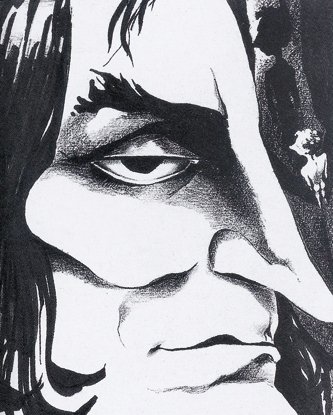
Sher’s characterization of Richard’s body resulted in an image, which he referred to as “The Bottled Spider.” Richard had a massive hump in the center of his back, massive arms, and two crutches that fitted onto Sher’s forearms, allowing him to scuttle across the stage, giving the impression of a poisonous spider. Sher created this iconic physical characterization through a combination of textual research, sketches, medical research into real deformities, image research, and real-life experience. The guiding principles that Sher used in creating Richard’s deformity were creating a severely deformed character that the audience would identify with. At the same time, Sher attempted to create a physicality that he could sustain through the run of the show without major injuries (21 &30). According to Sher, the role of Richard III is notorious for crippling actors who sustain severe damage to their backs and shoulders (39). Thus Antony Sher’s Richard was physically designed to be both functional for the actor, as well as realistic and remarkable for the audience.
The first step towards Sher’s physical characterization of Richard was going through the text for clues. Sher found several references to what Richard’s deformity looks like in the speeches of Queen Margaret. Margaret refers to Richard repeatedly as various beasts, alternating between boars, hounds, and the bottled spider that would become so important to the final characterization. Before Sher settled on a spider as the animal Richard most resembles, he experimented with several others, including boars, apes and bulls. Sher did several sketches of bulls, which he saw in a BBC TV program. Sher was attracted to bulls and their raw power and massive shoulders. Sher wanted an animal that was threatening and powerful to give his portrayal a ‘tragic dimension’ (64).
Having to say ‘I was born in South Africa’ stuck in my throat like a confession of guilt.’
Sher, p. 25
Another image from the text that Sher thought about repeatedly was the image of Richard’s hump as a mountain. When Richard refers to his hump as “an envious mountain on my back,” Sher thought back to the Lion’s Head mountain in Kingstown South Africa. Sher grew up in South Africa and visited there during apartheid. The mountain spoke to Sher’s notion of Richard’s raw, tragic power. Sher sketched the mountain several times, and combined it with other images of bulls and spiders and this became the overall concept for Richard’s hump- an image of thick power that simultaneously weighs down the figure of Richard, and gives him his strength.
I feel he should be severely deformed, not just politely crippled as he’s often played. Bill says one should identify with him: a man looking in from the outside and thinking, ‘I’ll have some of that.’
November 7, 1983
Sher and Brian Blessed in the final play.
The most memorable part of Sher’s physical performance as Richard was the way he manipulated the two arm crutches that he wore for the first half of the performance. Sher’s Bottled Spider image mainly depended on his ability to manipulate the crutches. The crutches became part of Richard’s body (Cerasano 621) and, far from making Sher’s movements clumsy or stiff, they gave him the ability to transform himself into a strange four-legged creature that would move around the stage incredibly fast.
Director Bill Alexander told Sher during rehearsals that he intended to use the crutches in as many ways as possible. For example, the crutches also served as a weapon because of Sher’s ability to swing them around like clubs. One chilling moment of the performance occurred when Sher’s Richard entraps lord Hastings (Brian Blessed) by folding his crutch-arm across Hasting’s neck; foreshadowing Richard’s later decision to chop off Hastings’ head (Cerasano 621).
The problem in playing him extremely deformed is to devise a position that would be 100 per-cent safe to sustain over three hours, and for a run that could last for two years. Play him on crutches perhaps? They would take a lot of the strain off the danger areas: lower back, pelvis and legs. And my arms are quite strong after months at the gym. Also I was on crutches for months after the operation so they have a personal association for me of being disabled. They could be permanently part of Richard tied to his arms. The line, ‘Behold mine arm is like a blasted sapling wither’d up,’ could refer to one of them literally. The crutches idea is attractive, too attractive at this early stage. Must keep an open mind on the subject.
Sunday Nov, 19, 1983
Physical therapist Charlette Arnold, helped Sher get into clinics for people with real disabilities. She also provided Sher with books on back disorders, which led Sher to choose the disorder Kyphosis as the model for Richard’s hump. Kyphosis causes a large central hump in the back, which Sher immediately adopted because it resembled the mountain image of his sketches. Also, the central hump was different from Olivier’s side hump.
Sher’s research on back disorders was of great use in the coronation scene in which he and Lady Anne appear with bare backs. Bill Alexander hired makeup artist Christopher Tucker to create a lifelike prosthetic for Richard’s back. The audience was thus forced to see Richard as a naked, deformed man, contrasted next to the beautiful bare back of his wife, creating a powerful moment that re-enforced Richard’s humanity. Sher would also use a humanistic approach to his portrayal of Richard’s mind, which, like Richard’s body, he developed through extensive research.
Richard (Antony Sher) is killed by Henry Tudor at the play’s conclusion.
Psychology- Richard III on the couch
“In several copies I’ve looked at it’s called The Tragedy of King Richard the Third. Yet a tradition has evolved of playing it as black comedy. I’ve never seen anyone play Richard’s pain, his anger, his bitterness, all of which is abundant in the text. It seems to me that Richard’s personality has been deeply and dangerously affected by his deformity, and that one has to show this connection.
November 19, 1983 p. 30
In his research, Sher made the link between deformity and psychopathology. Unlike Oliver, who played Richard as a paranoic, Sher played Richard as a psychopath. In his research into psychopaths, Sher uncovered the idea that psychopaths often suffer childhood traumas. The text of Richard suggests that Richard’s mother hated him, and such a lack of affection could realistically change a boy into a psychopath. Through this probing of the text and research into psychology, Sher concluded that Richard’s deformity is a realistic source of desire for revenge.
Sher talked to his own psychiatrist, Monty Berman who provided him with insight into Richard’s mind. Monty helped Sher dispel the idea that Richard is a superhuman fiend. On the contrary, Richard’s persona is very similar to real live psychopaths. Berman theorized that the pain at being deformed, coupled with the violent upbringing Richard living through in the Wars of the Roses, could transform him into a remorseless killer.
Sher: “How do you explain Richard the Third then?” Monty: “Well, how did you feel when you were on crutches last year?” Sher: “I hated people staring at me.” Monty: “What did you want to say to them?” Sher: “F#$% off! What are you staring at?” Monty: “Precisely. Anger. Richard is revenging himself on the whole world, destroying a world he sees as hating him.”
Monty: “We treat the disabled appallingly. They come up against dreadful prejudice. The disabled person experiences frustration and if given the chance, will lash out.” Sher: “So are you saying Richard’s behavior is normal?” Monty: “Under the circumstances, absolutely normal.”
Sher and Berman also believe Richard has the humor of a psychopath- a sardonic wit that has no regard for the feelings of his audience. Sher looked at the parallels between Richard III, and serial killer David Nilsen, who would invite people over for tea and strangle them, and boil their heads on his stove. Nilsen once told police with Richard-like humor that; “Having corpses was better than going back to an empty house.” One could easily hear the same sort of gruesome wit in the phrase: “I do love thee so, that I shall shortly send thy soul to heaven,” (R3 I,i).
A psychopath like Richard kills in order to try and feel emotion; “Each murder is an attempt to release anger, an attempt at catharsis, and each time it is unrelieved. It’s like promiscuous sex without love. Each climax is less and less fulfilling so the appetite grows until it is insatiable.” Thus Berman allowed Sher to break with the tradition of playing Richard as an inhuman monster, and play him as a very real, very tortured, human soul.
Although Antony Sher attempted to play Richard as a psychopath, his portrayal of Richard’s pain could become sympathetic. His observation of people in clinics and his own personal experience of being on crutches taught him about the cruelty that the disabled suffer. However, although he did great work to try and understand the condition of being deformed and disabled, his portrayal was still an affected disability; an act. In the book “Framed: Interpreting Disability in Today’s Media,” the author speaks about how watching an able bodied actor play disability can actually alienate the audience from the character he is portraying. The performance is seen as an act, a novelty, not an honest representation of real people. One way to eliminate this barrier between character and actor is to cast a Richard who really does suffer from a disability or deformity. I’ve talked in previous posts about how last month’s Public Theater performance was a deliberate attempt to move away from theatrical illusion and re-contextualize Richard’s deformity in the form of race, and contextualize disability by letting actors with disabilities play the heroic parts, while only Richard was able-bodied.
In a way, like Olivier, Sher’s performance is a new monolith that actors must work hard to distinguish themselves from. He spent an entire year building his Richard from the ground up, experimenting with new ways to portray his deformities, his disability, his psychology, and of course, how he looks and moves onstage. Reading this book, an actor gets a great appreciation for all the work Sir Antony Sher included in this wonderful performance, and hopefully, the book will inspire new and creative ways to portray this character in the future.
Thank you for reading. If you want to see some of Sher’s physical and psychological techniques in practice, please watch the thesis presentation that I did at the Blackfriars playhouse below. If you are interested in signing up for one of my acting courses, click here. Thank you!
Today I’m going to talk about the unique costume challenges in dressing the cast for a production of Shakespeare’s history play, “Richard III.”
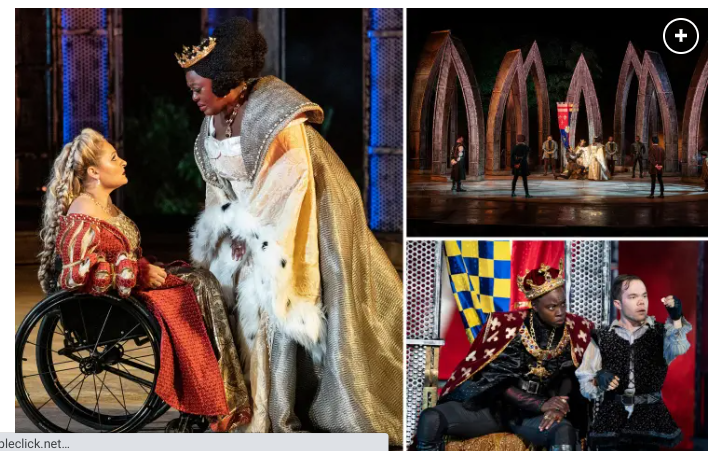
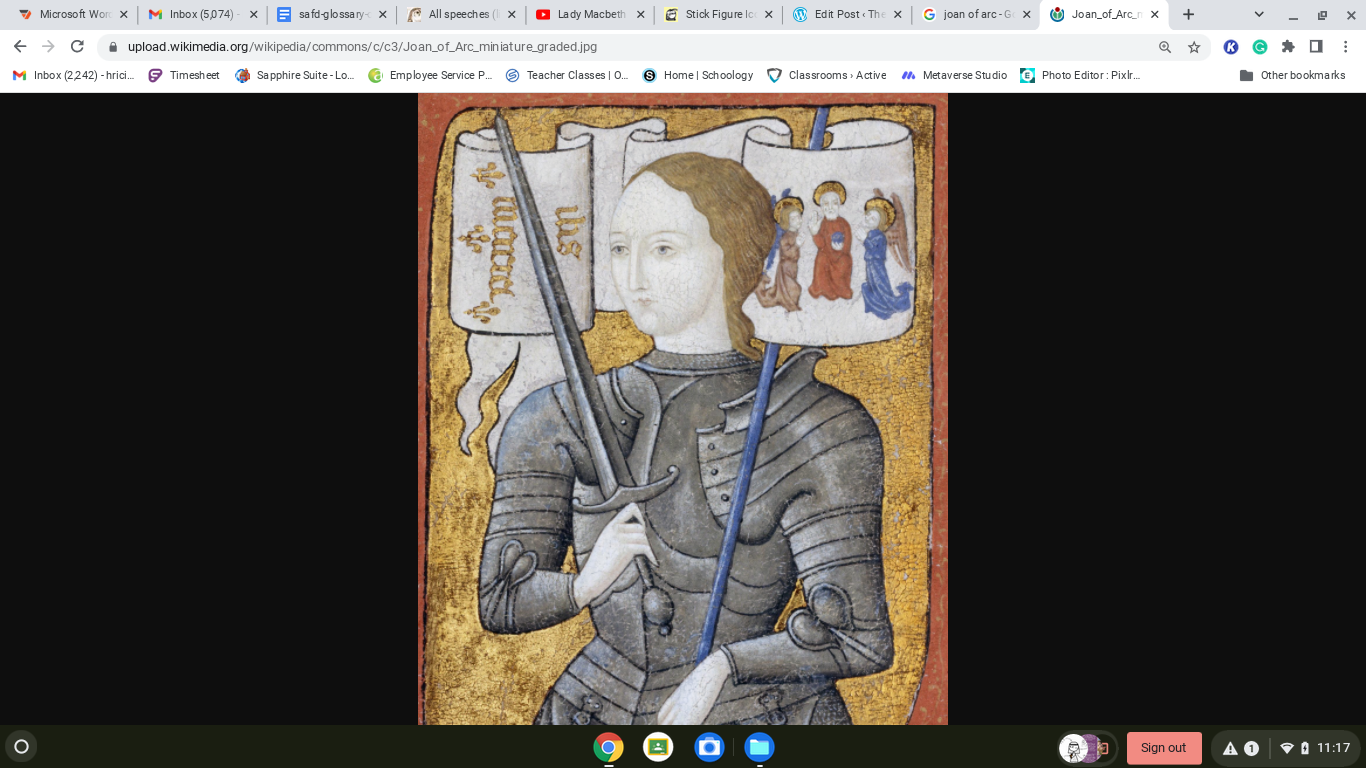
Antony Sher in the 1984 RSC production of Richard IIIConstance from King JohnProduction stills from the 2022 Public Theater production.Contempory drawing of Joan of ArcLaurence Olivier in his 1955 film “Richard III.”
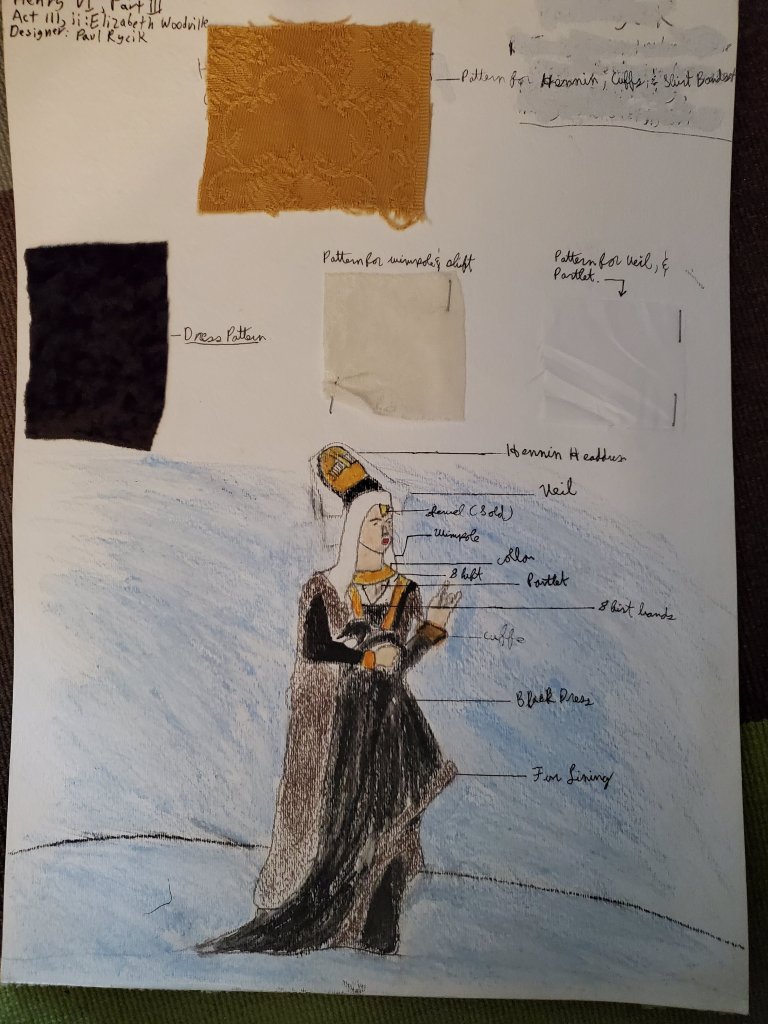
The play is set in 1483, a time period where, even though many European countries were at war, many nobles had sumptuous, more form-fitting clothes with fur, gold, leather, and other exotic fabrics. If you look at the sketch I did above, I gave Richard designs using velvet, leather, fur, and gold. After all, Richard is a powerful duke even before he takes the crown. For more information about this period, visit Fashion History.edu.
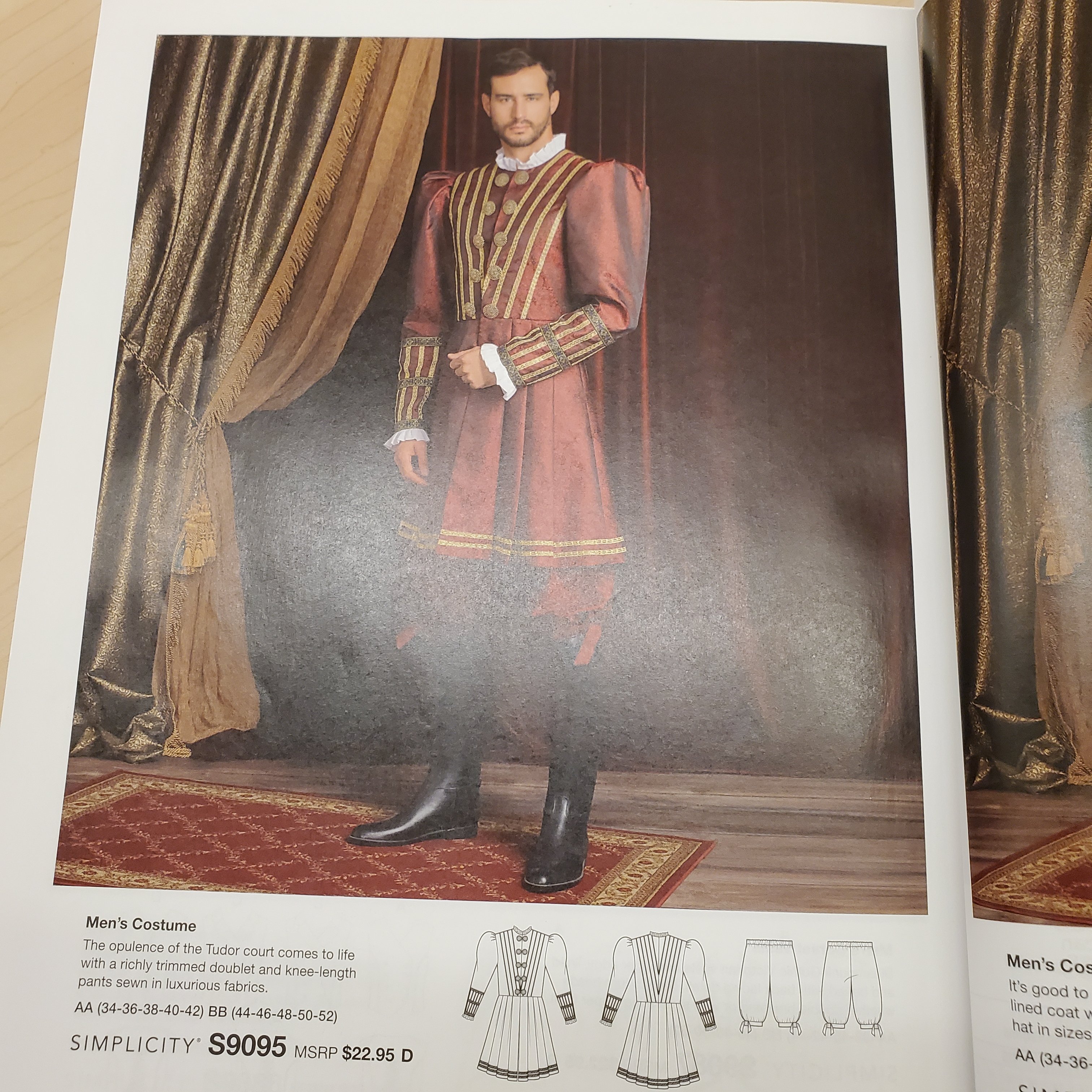
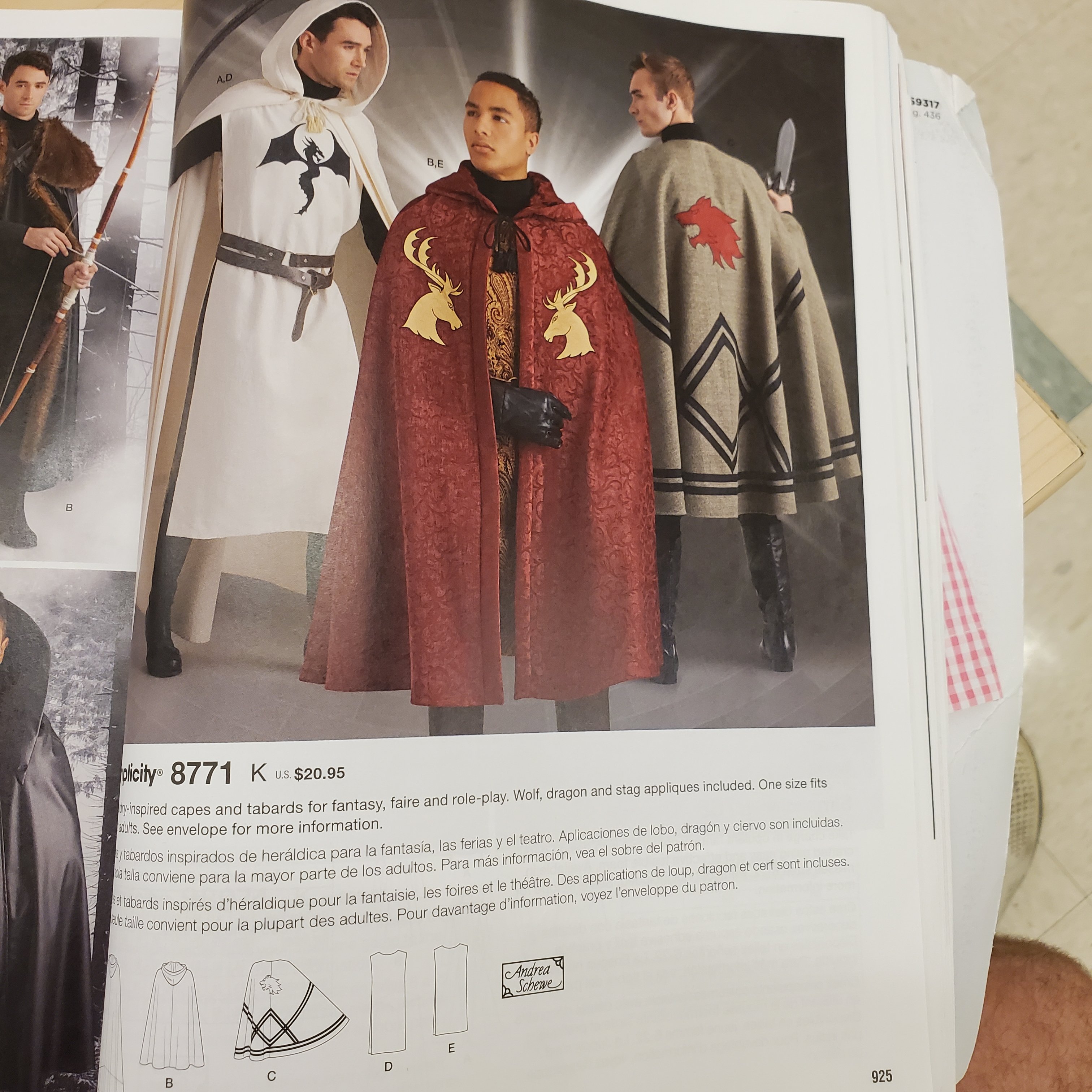
Further, if you’re interested in finding pre-made patterns of 15th century-inspired costumes, go to your fabric store and look for kits like the ones I photographed below.
My design was based on a drawing by the 19th century illustrator HC. Seleous, and the color were taken largely from Richard’s royal portrait in the National Portrait Gallery. I also used a royal portrait of Elizabeth Woodville, queen to Edward IV, (Richard’s brother).
Royal Portrait of Queen Elizabeth Woodville, 1437-1492.National Portrait of King Richard III.
Donning the Hump
Interestingly, x-ray photography has recently revealed that Richard’s alleged hump was added to his portrait after his death. In reality, the king only suffered from merely a curvature of the spine. Just like in Shakespeare’s play, the Tudor Chroniclers literally defaced Richard’s image to make him look like an evil, deformed maniac.
Costume designers are vital to help the actors realize the deformity when playing Richard III, and they have done so in many ways. Ian Holm wore a boot on his leg. John Harrel had a bowling ball fastened to his hand, and Antony Sher had a large hump in the center of his back, both a cloth one that was built into his clothes, and an elaborate makeup prosthetic for scenes where he was partially undressed. When I researched for my thesis, I consulted Sir Antony’s book “Year Of the King,” where the actor explained his research into real spinal deformities, and how he incorporated them into the performance. You can see how my actor Matthew figured out how the hump would impede his walk and other movements.
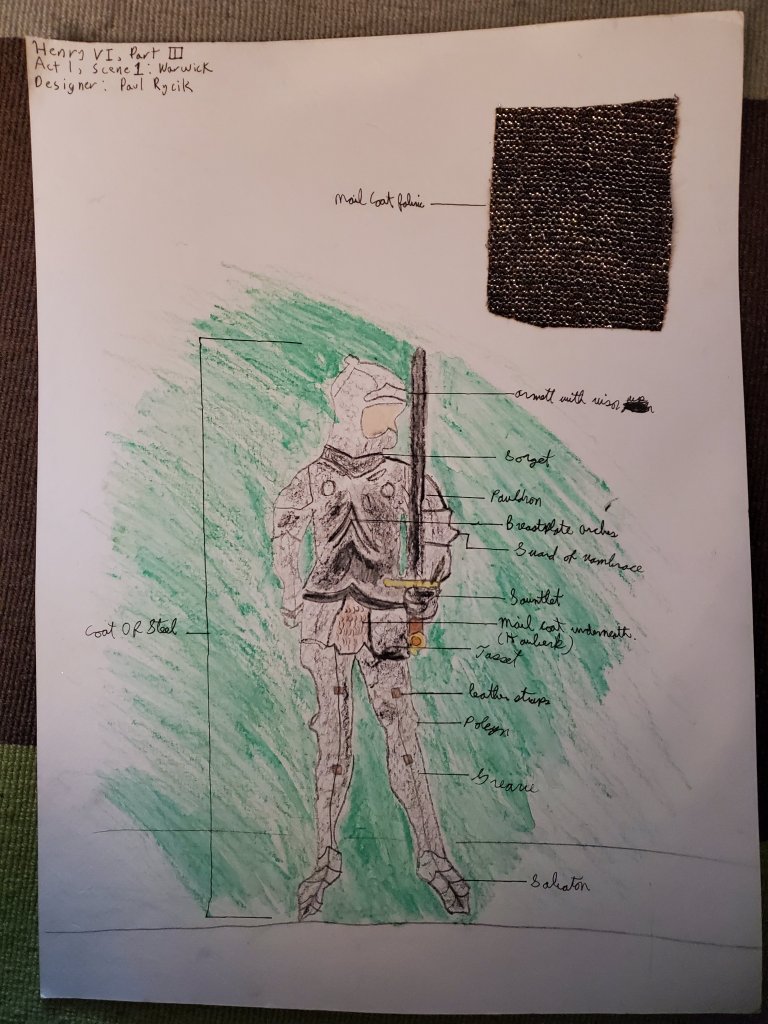
For the final battle between Richard and Richmond, one has to decide on the period and think carefully of the fitness of the actors. 1485 was at the height of the era of suits of armor, and many films have chosen to have Richard fight to the death, while encased in a heavy metal coat of plates.
Benedict Cumberbatch in the 2017 BBC TV mini-series “The Hollow Crown.”Design for a suit of armour for Henry Tudor
However, this has not always been the case. Ian McKellen had Richard fight in a gas mask in a 1940s British military uniform, driving around on a jeep that gets stuck once Richard utters his most famous line:
Richard III is a play about political intrigue, mafia-like turf-wars, and literal backstabbing and the clothes need to reflect this brutal and Machiavellian world. The costumer needs to help all the actors, not just Richard realize their place in the corrupt medieval political landscape of The Wars Of The Roses, as these characters go from an uneasy peace, to the last gasp of civil war.
Ian Mckellen in the 1995 movie version of Richard III.
This past month, there was a free production of Richard III in New York’s Shakespeare In the Park, starring Danai Gurira as the title character. I have not seen this production, though I wish I had. I enjoyed the actress Ms. Gurrira in such films as “Black Panther,” and would love to see her do Shakespeare. What is more, the concept intrigues me. This project explores themes of toxic masculinity, racial identity, inferiority, and misogyny.
Unsurprisingly, with so many heady topics in the production, this Richard III is still somewhat controversial. Some right-wing critics dismissed the whole production as a piece of ‘woke propaganda,’ but I feel this is unfair.
When Danai Gurira of Marvel’s “Black Panther” first takes the stage in the title role, the actress has no perceivable hunchback or arm trouble. And yet the dialogue suggesting Richard suffers from a lifelong physical issue (“rudely stamped”) has been kept in. Perhaps we are to use our imaginations. Who knows? We are certainly tempted to close our eyes.
I will not judge this production based on the acting because I haven’t been able to see it. What I will do is take a stance on the validity of the concept. Specifically, I want to ask if this play is a good examination of toxic masculinity and if it would it be worthwhile to see it portrayed by a black woman, as opposed to a white man. The short answer is an emphatical “Yes.”
Richard III is definately an example of toxic masculinity. He is violent, full of hatred, vengeance, and mysogeny. He is constantly insulting women from Lady Anne, Jane Shore, Queen Elizabeth, and even his own mother. In fact, the source of Richard’s toxic attitude is that he blames his mother for his disability and deformity:
Well, say there is no kingdom then for Richard;1635
What other pleasure can the world afford?
I'll make my heaven in a lady's lap,
And deck my body in gay ornaments,
And witch sweet ladies with my words and looks.
O miserable thought! and more unlikely1640
Than to accomplish twenty golden crowns!
Why, love forswore me in my mother's womb:
And, for I should not deal in her soft laws,
She did corrupt frail nature with some bribe,
To shrink mine arm up like a wither'd shrub;1645
To make an envious mountain on my back,
Where sits deformity to mock my body;
To shape my legs of an unequal size;
To disproportion me in every part,
Like to a chaos, or an unlick'd bear-whelp1650
That carries no impression like the dam.
And am I then a man to be beloved?
O monstrous fault, to harbour such a thought!. 3H6, Act III, Scene i, lines 1635-1653.
Now I should clarify the difference between deformity and disability, which are characteristics that Richard III has as part of his character makeup. According to the Americans With Disabilities Act, a disability is defined as: “A physical or mental impairment that substantially limits one or more major life activities.” This could include paralysis, autism, or any number of congenital or acquired conditions. Richard’s disability is primarily his limp (caused by his unequally shaped limbs), and his withered arm. What’s interesting in this production is that while the title role is played by an able-bodied woman, most of the rest of the cast have actual disabilites. Watch this clip of the famous courtship scene between Richard and Lady Anne, who plays her role in a wheel-chair.
While a disability is a legal term that is recognized by lawyers and governments alike, the term “deformity” is more subjective; it generally refers to any kind of cosmetic imperfection. In Richard III, this applies to Richard’s hump and withered arm.
The Elizabethans thought that deformity was a sign of disfavor from God, and that deformed people were constantly at odds with God and nature, as Francis Bacon puts it in his essay, “On Deformity.”
As deformed people are physically impaired by nature; they, in turn, devoid themselves of ‘natural affection’ by being unmerciful and lacking emotions for others. By doing so, they get their revenge on nature and hence achieve stability.
Richard III has this drive for revenge in spades and I believe it manifests itself as a particularly terrible form of toxic masculinity. Richard definitely wants the crown to make up for his lack of ‘natural affection,’ but he is also especially malevolent towards women.
I, that am rudely stamp’d, and want love’s majesty
To strut before a wanton ambling nymph;
And therefore, since I cannot prove a lover,
To entertain these fair well-spoken days,
I am determined to prove a villain
And hate the idle pleasures of these days
Seeing a woman play this kind of misogynist dialogue forces the audience to take it out of context and question Richard’s point of view. We see casual misogyny every day, and seeing a woman deliver it is quite illuminating.
Richard’s deformity and Blackness
Another provocative choice by Danai Gurira’s portrayal of Richard is the fact that she plays the role of Richard without the hump or withered arm. She herself explains that for her production, Richard’s perceived deformity, is actually represented by her being a black woman:
He’s dealing with the otherness compared to his family, in terms of not being Caucasian and fair like them.” The word ‘fair’, is used a lot in the play.
Danai Gurira’s
Shakespeare writes Richard as constantly striving to compensate for his deformities by being clever, violent, and eventually, by becoming king. As I wrote before in my review of Othello, for centuries black people have been portrayed as inferior; aberrations of the ‘ideal fair-skinned form’. So, to the Elizabethans, blackness itself was a form of deformity, and the rawness of addressing this uncomfortable fact in this production should be commended.
English people are already trained—and we have scholars like Anthony Barthelemy has talked about this in his book Black Face, Maligned Race, where the image of blackness, as associated with sin, with the devil, all of these things, makes it quite easy to map onto then Black people these kinds of characteristics. Then, those kinds of characteristics allow for the argument that these people are fit to be enslaved. – Dr. Ambereen Dadabhoy, Race and Blackness in Elizabethan England Shakespeare Unlimited: Episode 168
So while I can’t speak to the production’s acting or staging, I will emphatically defend the notion that this production’s concept is valid. Richard III is an example of toxic masculinity through his self-hatred, violence, misogyny, and narcissism. In addition, as I’ve written before, in the Early Modern Period, blackness was considered an aberration or deformity, and seeing it in the person of Richard, with the implicit understanding that black people still face this kind of prejudice today, opens a much-needed dialogue that any production of Shakespeare shouldn’t be afraid to open.
In short, by re-contextualizing Richard’s deformity and disabilities, this production gets to the heart of the play’s moral for our times. The early modern period’s toxic attitudes towards deformity and disability created the Renaissance monster of Richard III. We in the 21st century must examine our own societal prejudices and toxic attitudes so this monster does not come to haunt us in real life.
Now put your shields before your hearts, and fight With hearts more proof than shields
Coriolanus, Act 1, Scene iv.
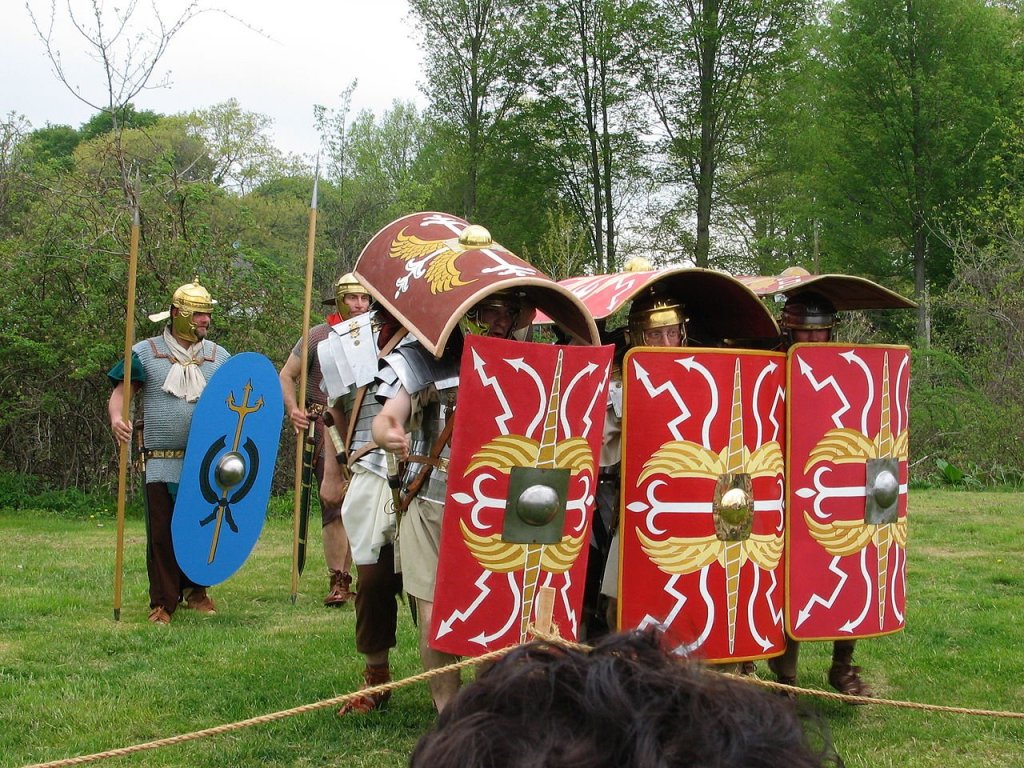
Roman re-enactors demonstrate a testudo formation (The Tortoise). Wikimedia Commons.
Shakespeare uses the word “shield” over 30 times, often as a verb meaning ‘to protect.’ However, there are a few very important references to this ancient tool of defense, and constructing one can teach you a lot about the history of a culture, and that culture’s methods of waging war.
A Brief History of Shields
The seven-fold shield of Ajax cannot keep
The battery from my heart
Antony and Cleopatra, Act IV, Scene 14.
As the quote above from Antony and Cleopatra mentions, the shield has been around since the dawn of history, certainly since Roman times. The Romans prized their large shields called scuta, which they used in defensive formations as the soldiers crashed through their enemies’ defenses.
DIY Roman shieldA replica of an ancient Celtic shield.
In medieval times, Anglo-Saxons and Vikings used new and more sophisticated shield formations in some of the most important battles in early British history. This included the Battle of Hastings in 1066, which ended the Anglo-Saxon era when the English abandoned the protection of their shield wall to chase the Norman invaders, who then annihilated their forces and proclaimed their leader William of Normandy, the conqueror of all England.
In this excellent video, historian and fight choreographer Mike Loads traces the history of medieval shields and shows step-by-step how to make an authentic Anglo-Saxon shield!
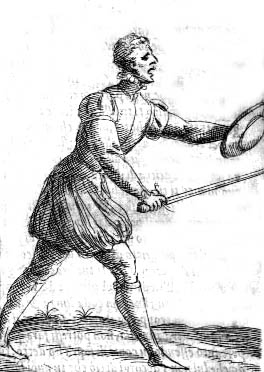
Illustration of a man fighting with a sword and buckler
Swashbuckling
[Enter SAMPSON and GREGORY, of the house of Capulet, armed with swords and buckles]
Shakespeare’s Romeo and Juliet begins with servants armed with swords and small shields called bucklers. These shields were designed to be used in single combat (duels) and were very light and agile. According to Mike Loads, young men would wear their swords and bucklers on their hips and make a loud racket as they walked through the streets. The shield proclaimed that they were armed and dangerous. This macho swaggering is the origin of the term “swashbuckling,” which is probably how these servants see themselves since they spend the first scene of the play trying to pick a fight.
What Is heraldry?
A series of heraldic devices from the Royal College of Arms.
Just as the sound of a buckler announced to the world that a young man was armed and ready to fight, the design on a nobleman’s shield announced his status, his house, and his family motto. The popular historical consensus is that once the medieval knight arrived on the battlefield, they started using their shields and tabards as a colorful display; one that made it clear that they were noble. In war, a knight or other nobleman could collect a hefty ransom if they captured another knight alive, so if you belonged to a rich noble house, your brightly decorated shield could save your life on a battlefield in more ways than one.
Each heraldic design would be registered in the College Of Arms, and many of them are still on record today. In Shakespeare’s Pericles, a group of knights presents their shields to King Simonides and his daughter Thaisa right before a joust and she reads their mottos. The shields are like the knight’s ID tags and help the princess know whom to award the prize money once the jousting is over:
Simonides. Are the knights ready to begin the triumph?
First Lord. They are, my liege;
And stay your coming to present themselves.
Simonides. Return them, we are ready; and our daughter,
In honour of whose birth these triumphs are,
[To Thaisa] 'Tis now your honour, daughter, to explain
The labour of each knight in his device.
Thaisa. Which, to preserve mine honour, I'll perform.
[Enter a Knight; he passes over, and his Squire]
presents his shield to the Princess]
Simonides. Who is the first that doth prefer himself?
Thaisa. A knight of Sparta, my renowned father;
And the device he bears upon his shield
Is a black Ethiope reaching at the sun
The word, 'Lux tua vita mihi.'
Simonides. He loves you well that holds his life of you.  Pericles, Act II, Scene ii.
How to make your own shield!
Since shields are an important part of Shakespeare’s plays, here’s how you can make a shield activity at home or in the classroom.
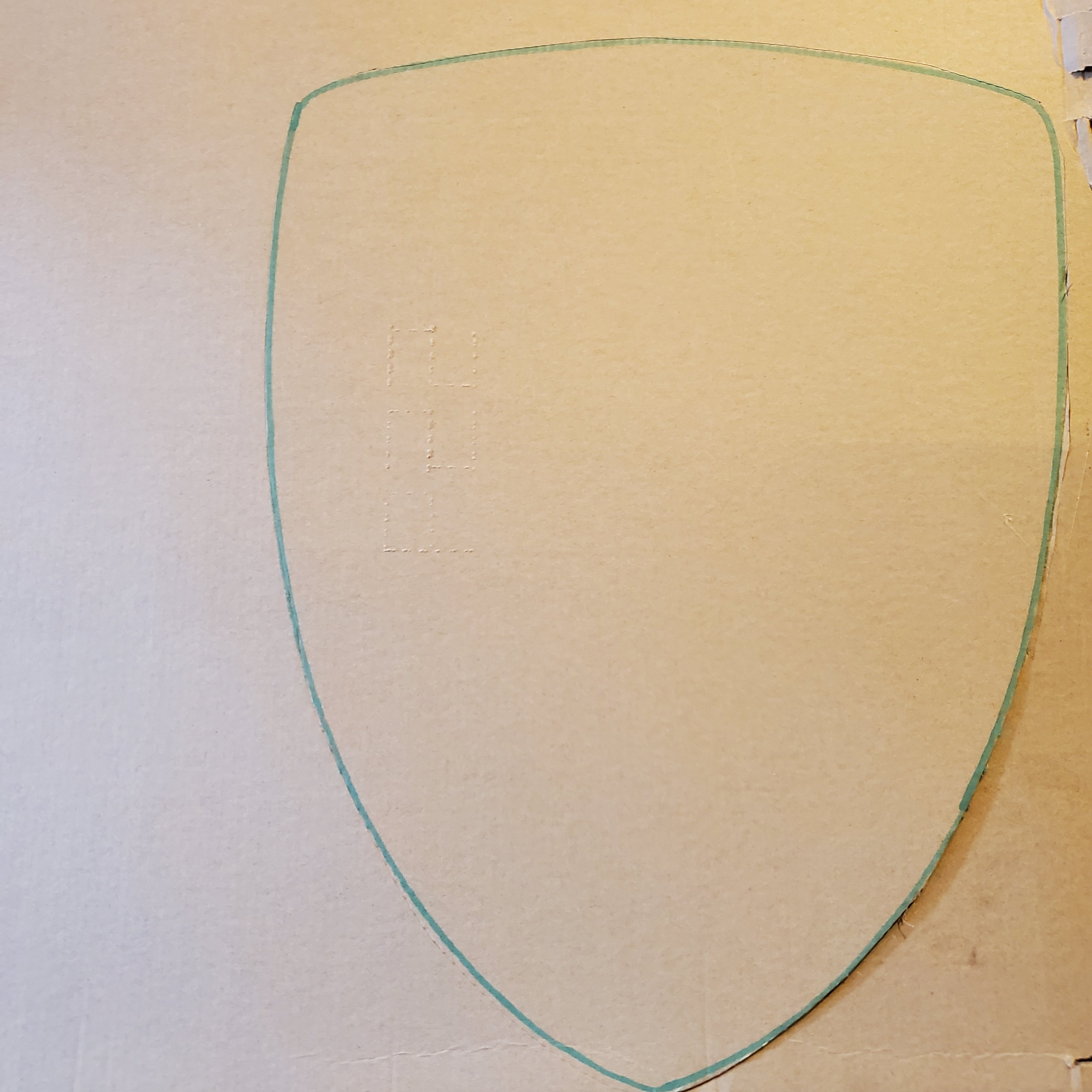
Making the basic shape
If you want to make a buckler, you need a round surface a little bigger than a dinner plate. You should be able to hold it and move it like an extension of your fist. If you want to make a basic 14th-century type shield like the ones I have below, cut out the familiar, ‘State of Ohio’ shape below. I made mine about 11 inches long, and 10 inches wide. I used cardboard but you can also use paper or wood or metal if you have real craftsperson talent.
Choosing a color and design
I got a lot of good information on how people chose designs for their shields by visiting English Herritage.org’s Guide to Heraldry: https://www.english-heritage.org.uk/guide-to-heraldry. The website has a lovely catalog of the colors and designs real knights and barons and lords used to make their shields/ coats of arms stand out. You can choose a simple background with a plant, animal, etc. in the foreground, or you can divide the shield into a cross, a diagonal line called a Fess, or a triangle called a chevron.
The Personal Touch
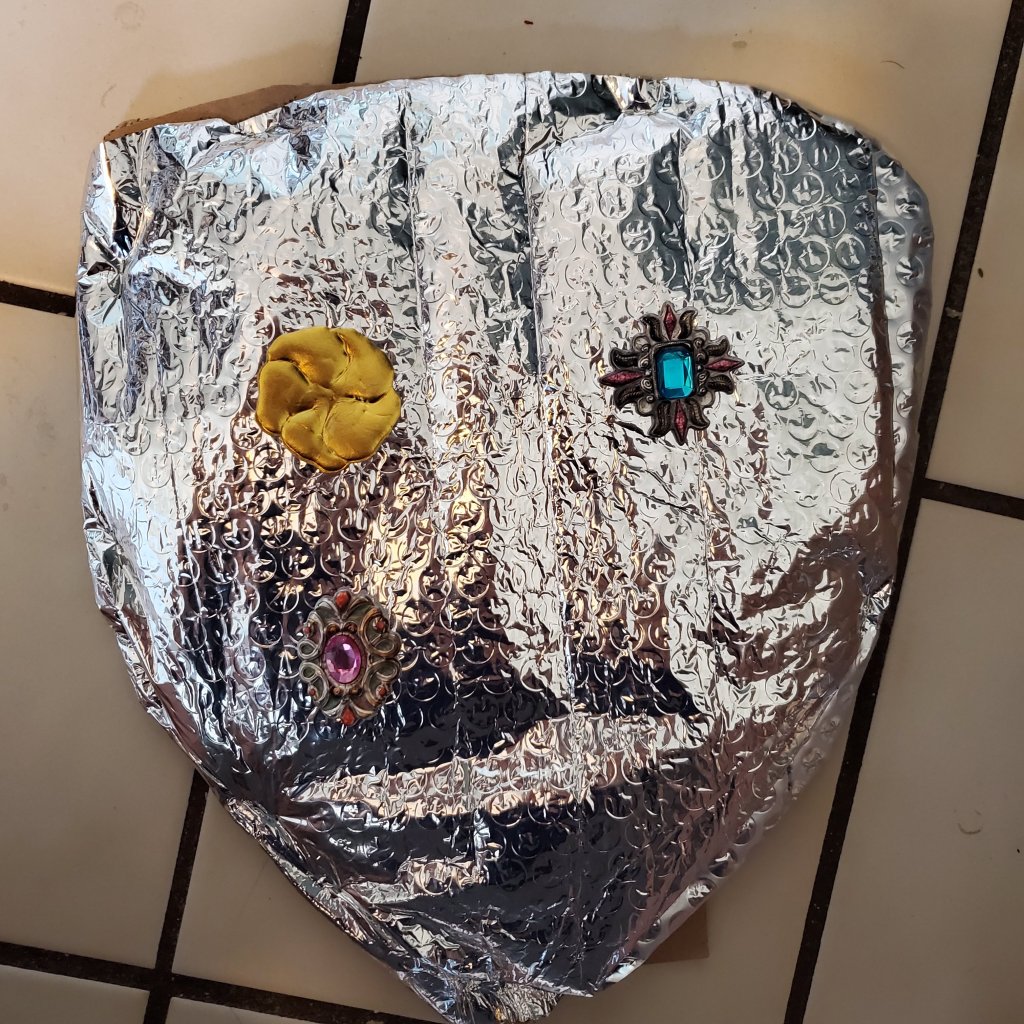
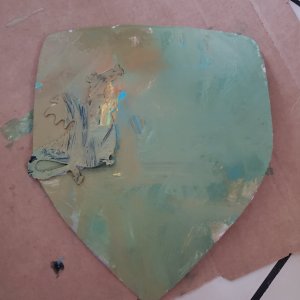
You need not be constrained by historical precedent in coming up with your shield. Like any canvas, the only limits on your shield design are your imagination. Check out these designs I made with my kids!
Henry V inspired shield.I wrapped this shield in heat-resistant blankets, and decorated it with stickers from the dollar store.My daughter paints an apple tree on her shield. Why not?My son used a stencil to make a dragon for his shield. We’re going to cover the dragon in glow0in-the dark paint.
Your Motto
Most mottos are single lines of text (usually in Latin), that illustrate what is important to the house that sports it. For example, Richard II’s motto was: “loyalté me lie,” (“Loyalty binds me.”). You could come up with a simple motto and Google Translate it into Latin or French, etc.
Regal coat of arms for King Richard III. Note the white boar, (Richard’s personal charge). Note also that he has combined the 3 red lions of the royal house of Plantagenet, with the blue and gold fleur de lis of the crown of France. Richard claims the throne of England and France and combining heraldic imagery is known as “marshaling.”
Now that you have your shield, with its own unique motto and design, it can be a useful tool to explain how people saw themselves in Shakespeare’s day. Nowadays we mainly see ourselves as individuals, but this kind of heraldry illustrates how knights, nobles and servants saw themselves mainly as part of a house, with its own values, its own traditions, and sometimes an us vs. them mentality against other houses.
This kind of household mentality is of course, at the core of Romeo and Juliet and the Wars of the Roses cycle of plays, and Shakespeare uses heraldry to illustrate this mentality. Look how the knights in the tournament scene from the 2013 film are dressed in their houses’ colors and the nobles and servants are also wearing those same colors:
Like sports fans who wear the jerseys of their favorite teams, shields and heraldry proclaim the allegiance of the servants and nobles who belong to powerful houses/ kingdoms. This kind of emblem can help students understand a piece of medieval and Renaissance history, and how that history shapes our own mentalities today.
I’ve chosen Shakespeare’s Henry V as my play of the Month for July because it’s easily Shakespeare’s most patriotic play; as July 4rth is the seminal event in American history, the Battle of Agincourt is one of the most famous battles in English history. So this month, we’re examining the so-called “star of England,” and the story that every Englishman teaches his son, and in the process, discuss the nature of war, patriotism, and the stories we tell ourselves that become our history.