I want to hear from you

Hello everybody.

Since most schools are still closed due to Covid 19, many parents, teachers, and students are learning online. In this time of crisis, I want to try and help, so I’m asking for advice from you on what Shakespearean resources you want me to make/ review on this blog:

  • What plays do you need resources for but can’t find?
  • Want to know if a site or app is any good? Let me know and I’ll review it!
  • Need lesson plans or study help? I’ll post some links.

For now, you can check out my activities teachers and student pages which includes lesson plans and ideas for specific plays, as well as reviews of educational apps and websites. You can also check out my plays of the month pages, which helps analyze plays for students and teachers.

Just today I found an activity for finding figurative language on the seesaw app:

https://app.seesaw.me/pages/shared_activity?share_token=Je7-nxHvQHK5Go_LcZ2qnA&prompt_id=prompt.9733ba76-b354-430c-981

7-0c97ab9ab217

This is just a start, I know, but I want this blog to help people enjoy and understand Shakespeare and if I can ease the burden of teachers and parents who are already struggling during this difficult time, I can think of nothing more worthwhile.

-Shakespearean student:

Email: shakespeareanstudent@gmail.com

Why Mean Girls Is Based On Julius Caesar

As you probably know if you subscribe to this blog, I love to review adaptations of Shakespeare, so imagine my delight when I realized that the classic teen comedy Mean Girls from 2004, (and the current Broadway show of the same name), is based on Julius Caesar! This movie doesn’t have Shakespearean dialogue or the names or locations, but the essence of the play is the same, albeit with a more modern ending.

https://www.broadway.com/videos/159888/backstage-at-mean-girls-with-erika-henningsen-episode-13-the-final-goodbye/#play

In Shakespeare’s play and Tina Fey’s script, the main antagonist is popular, and dangerous, and inspires fear and envy from everyone. Regina George and Caesar both rule their empires through their armies, intimidation, their wealth, and their supreme self-confidence. In addition, both names are associated with royalty- Regina in Latin means queen.

I didn’t realize that the movie has its roots in Julius Caesar until I saw this video from the YouTube channel The Take: https://youtu.be/FRfoEzZbK_Y. It was when I watched this video, that I realized Mean Girls character Janis was an analog for Shakespeare’s character Cassius, the man who sets the plot in motion to assassinate Caesar.

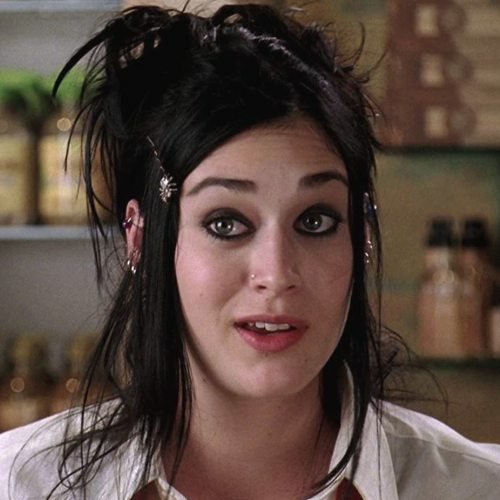
In the movie, Janis meets a well meaning girl and manipulates her into betraying Regina. Look at this clip where after Cady feels betrayed by Regina, Janis outlines her conspiracy, with a Roman sword in her hand! https://youtu.be/D0JMoa4QfA0

Like Cassius, Janis claims that once Regina is destroyed, the social order of the high school will change from a dictatorship to a democracy, but what she really wants is to supplant and replace Regina and make herself the new queen Bee. Even her name is a clue to her malevolent nature, she is named after the Roman god with two faces!

Sir Patrick Stewart as Cassius in the 1972 RSC production of Caesar

Similarly in Julius Caesar, Cassius convinces Brutus that once Caesar dies, Rome will be a republic again. In real life, Brutus was Caesar’s close friend, so Brutus agonizes over whether he is doing the right thing and whether he owes more loyalty to Rome, or his friend Caesar: https://youtu.be/IoDwXjKIenI

If Janis is Cassius, what about Brutus?

Cady Heron (played in the movie by Lindsay Lohan), is naive but intelligent. Like Brutus, she is manipulated and carefully chosen to betray the king. Janis chooses Cady because she’s pretty enough to get close to Regina, her looks are like social currency. Brutus’ social currency was his family: he was descended from the founder of the republic so he lent credibility to the conspiracy. He was also close in family to Caesar and Cassius.

In both stories once the monarch is destroyed, the power vacuum immediately starts to close; rather than change the social order, a new monarch arises. In Caesar, the second triumvirate takes over for the first, and Caesar’s nephew Augustus eventually becomes the supreme ruler of the Roman empire.

In Mean Girls, once Regina loses her social cache, Cady takes her place.

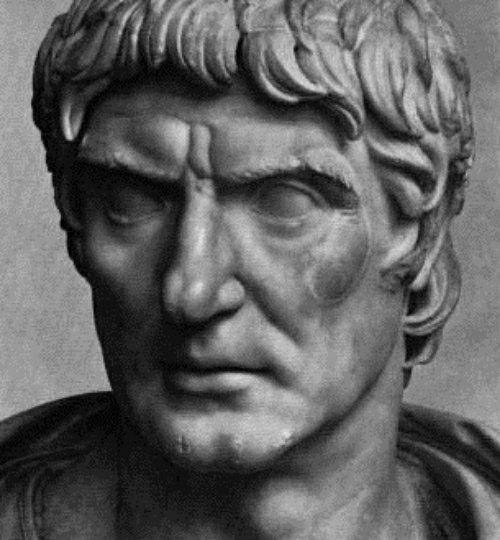
Then when Janis exposes Cady and Regina, she briefly basks in becoming a new Queen Bee- her revolution to overthrow a tyrant has paid off, bit now she is the tyrant herself. This actually mirrors the real Julius Caesar, who took power from the feared dictator Lucius Cornelius Sulla.

Bust of Sulla

Like Regina and her Burn Book, Sulla kept a list of people he saw as threats called the Proscriptions, only Sulla used it to execute the people on the list and seize their property. Caesar started his career as a populist soldier working for the Senate against Sulla and for the people, but became a dictator himself, the very thing he was sworn to oppose!

The movie does end on an encouraging note when the adults finally step up and address the terrible things that their students are doing, which has important lessons about bullying that every young person should see.

Tina Fey actually admitted that she herself was a Mean Girl in high school, so there’s a great deal of honesty when her character confronts the kids about the consequences of bullying each other.

Though the movie ends happily, the Cesarian parallels are not over; even though this high school has been democratized, the problems that created this Mean Girls autocracy remains. As you can see in the final minutes of the movie, a new crop of Plastics arrive just as the old group disbanded.https://youtu.be/LshX2God-wkIn four years when the regime changes again, will there be a new Caesar?

After rewatching clips from the movie, I realized that Tina Fey actually made a Caesar reference right there in the movie!

Mean Girls Clip- Gretchen quotes Cassius

In this clip, Gretchen is in English class, perfectly paraphrasing Cassius’ speech in Act I, Scene ii, even the part about Caesar being a colossus:

Cassius. Why, man, he doth bestride the narrow world

Like a Colossus, and we petty men

Walk under his huge legs and peep about

To find ourselves dishonourable graves.

Brutus and Caesar: what should be in that ‘Caesar’?

Why should that name be sounded more than yours?

Write them together, yours is as fair a name;

Sound them, it doth become the mouth as well;

Weigh them, it is as heavy; conjure with ’em,

Brutus will start a spirit as soon as Caesar.

Now, in the names of all the gods at once,

Upon what meat doth this our Caesar feed,

That he is grown so great? Age, thou art shamed!

Rome, thou hast lost the breed of noble bloods!

When went there by an age, since the great flood,

But it was famed with more than with one man?

When could they say till now, that talk’d of Rome,

That her wide walls encompass’d but one man?

Now is it Rome indeed and room enough,

When there is in it but one only man.

O, you and I have heard our fathers say,

There was a Brutus once that would have brook’d

The eternal devil to keep his state in Rome

As easily as a king. I.ii. 226-252.

Now I know Mean Girls is based more on a book and by Tina Fey’s own experiences than Shakespeare, but the point is that the next time you are bored and angry about having to read a play based on a guy who’s been dead for over 2,000 years, take a look at the lunch table next to you and you’ll see that things haven’t changed that much.

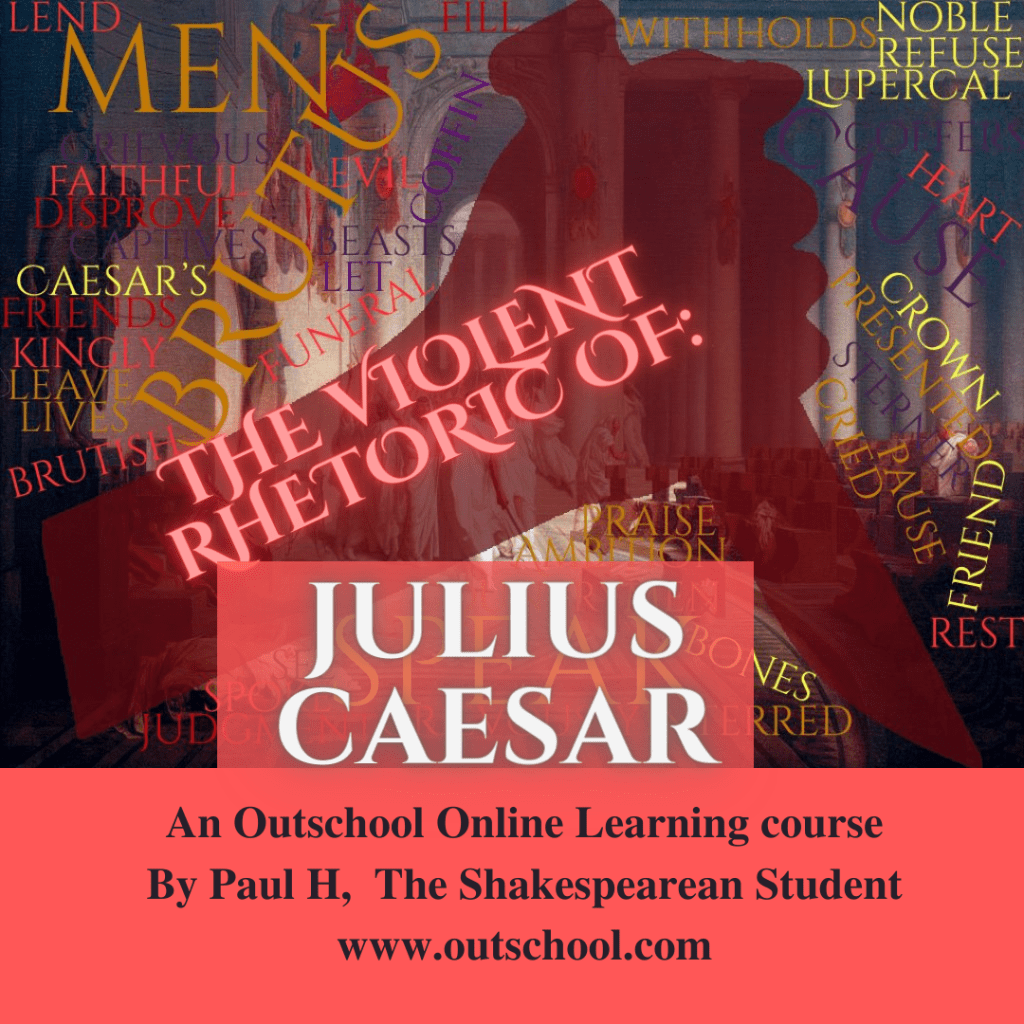
If you liked this post, please consider signing up for my online class, “The Violent Rhetoric Of Julius Caesar,”

The class breaks down some of the most famous speeches in Julius Caesar and gives you some tips and tricks on how to write persuasive speeches like Antony’s “Friends, Romans, Countrymen,” speech. Use these powers for good though, not to turn your school into a Mean Girls dictatorship! https://outschool.com/classes/84ee847d-19f3-45f8-9f25-81e688b8497d

There’s also a fully asynchronous version that you can do on your own time whenever you want:

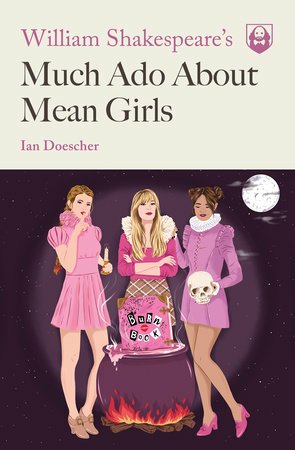
Finally, if you love Mean Girls and Shakespeare, check out Much Ado About Mean Girls by Ian Doescher, author of the William Shakespeare’s Star Wars trilogy.

How did Shakespeare Celebrate Halloween?

Let me begin by admitting that this post was harder to write than my Christmas post because pre Christian traditions are harder to pin down. In addition, to give you my standard disclaimer, I don’t believe it’s really possible to definitively know how or if Shakespeare celebrated Halloween, but since the history of Halloween is long and fascinating, and since Shakespeare’s plays influenced that history, I feel it’s worth exploring.

Part I: Origins of Halloween

Almost every culture on Earth has a middle fall celebration that calls to mind the bounty of the harvest, and the inevitable approach of winter. Most of our Halloween traditions are based on the ancient European festival of Samhuin.

What is Samhuin?

Over 2,000 years ago, the Celts inhabited much of the British Isles. They believed in many gods and spirits that controlled nature and the seasons. To thank the gods for the harvest the Celts gave them offerings like apples, and threw parties to celebrate the gods’ bounty.

When the Romans conquered the Celts, they co-opted some of their religious practices. For instance the tradition of giving apples as offerings to the Roman goddess Pomona. This tradition of course, evolved into our modern Halloween tradition of bobbing for apples. Honoring the harvest also went hand in hand with darker traditions; ones inspired by fear of death, decay, and evil spirits.

With the Sun dying and the Earth growing cold in late October, cultures like the Celts and the Romans feared that evil fairies and ghosts could cross over into our world. In particular the Celts believed that around the night of October 31st, the veil between the living and the dead was the thinnest.

Samhuinn was a liminal time between our world and the Otherworld. It’s a night when the souls of dead loved ones as well as spirits and fairies – the aos sí in Irish mythology and aes sídhe or sìth in Scottish mythology – could come through to visit. Deceased family members were honoured with seats at the evening feast, and offerings of milk and baked goods were left at the front door for the Fairies.

Source: https://theculturetrip.com/europe/united-kingdom/scotland/articles/edinburghs-samhuinn-fire-festival-and-the-origins-of-halloween/

At some point people decided to dress up as the spirits to ward them off, and this evolved into our modern day trick or treating.

These traditions did not die once England became Christian, (after it was conquered by the Romans), they simply translated into a different form. Halloween actually translates as “All Hallows Eve,” a Catholic celebration of of dressing up as pagan spirits and giving offerings of the harvest to honor Catholic saints as well as departed love ones.

Part II: What might Shakespeare have Done on Halloween?

Although Shakespeare never directly mentions Halloween, he lived in a world that kept many of these folk traditions alive. Shakespeare was the grandson of a farmer and his father was a devout Catholic, so he probably was brought up in these ancient Halloween traditions. He probably would have attended some kind of harvest festival to celebrate the bounty of the summer, and might have put food out for his departed family members.

Samhain is still heralded by the baking of kornigou, cakes baked in the shape of antlers to commemorate the god of winter shedding his ‘cuckold’ horns as he returns to his kingdom in the otherworld. On the Isle of Man in the Irish sea, the Manx celebrate Hop-tu-Naa, which is a celebration of the original New Year’s Eve and children dress as scary beings, carry turnips and go from home to home asking for sweets or money.

Source: https://theancientweb.com/2010/10/the-origins-of-halloween-part-1/

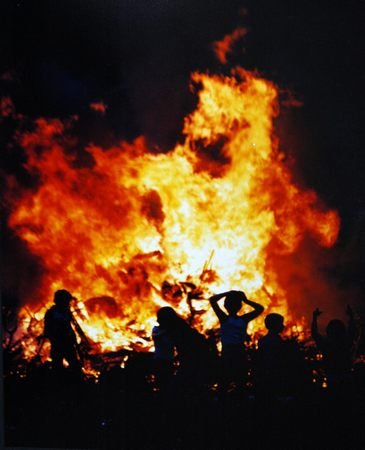
Call me a softie but I really like the idea of Shakespeare baking treats like soul cakes for neighborhood kids or telling scary stories about a bonfire. The kornigou is more commonly known as the Soul Cake, and it’s still popular today. It’s even been immortalized in song:

https://youtu.be/j35dvmdse9k

You can even make it yourself: www.cardamomdaysfood.com/recipe/soul-cakes/

Another tradition was dancing around ancient Celtic burial mounds. According to tradition, these mounds were home to spirits and Fairies, and could be portals to the land of the dead. In Irish folklore, poets and storytellers had the power to pass between these two realms. Maybe Shakespeare himself visited such a mound in his youth and was inspired to write about the fairy queen Titania and the hobgoblin Robin Goodfellow. Archeologists are still learning about these ancient ruins today (source: Smithson.com)

https://youtu.be/gnFv0D

Theater

The most tantalizing ancient Halloween tradition is mumming, a kind of amateur theater practiced by the ancient Celts. Like modern Sunday school plays the plays were a religious ritual designed goal to honor the gods and the harvest.

Mumming, a type of folk play, was used to tell traditional Samhuinn stories about battles or the winter goddess Cailleach (meaning “old hag”), who began winter by washing her hair in the whirlpool of Corryvreck.

For a modern example of this of these traditions you can look at the Edinburgh fire festival which preserves the kind of mumming that the Celts might have done on Samhuin and Shakespeare might have seen. It’s highly ritualistic, immersive, and the characters have spooky similarities to some of Shakespeare’s plays.

To give you an idea of how mumming might have influenced Shakespeare, watch this trailer for the 2017 Edinburgh Fire Festival:

https://youtu.be/z8NsvHontQA

What you can see in the trailer:

1. Keening- the wild women screaming as a way to lament, honor, and guide the dead. Characters like Constance in King John have many similar qualities.

2. The fight between the Summer King and the Winter Lord. Many Celtic stories dramatize the change of seasons from summer to winter as a battle. Even the duel between King Arthur and his young son Mordred could be seen in this context. In another interesting interpretation, Jennifer Lee Carroll in her book Haunt Me Still, interprets this mummers play as a pagan retelling of the story of Macbeth.

3. You can see brightly colored figures some designed to honor the changing of the seasons, and wild, animalistic people, presumably playing the roles of the Fairies, goblins, or other creatures that appear on Samhuin. It’s not much of a stretch to see these figures as the Fairies of Midsummer Night’s Dream, or the witches of Macbeth.

Part III: What did Shakespeare mention about Halloween?

Ghosts appear in five of Shakespeare’s plays. We see reference to all kinds of Fairies, goblins, and spirits and even a couple times people dressing up to ward off evil. In Titus Andronicus, the queen of the Goths disguises herself and her sons as spirits of revenge and go to Titus’ house to torment him, and then the old man Titus tricking them into coming to his house, where he takes his revenge.

One Shakespeare play that I think perfectly encapsulates the Halloween traditions of the English countryside is Merry Wives Of Windsor, specifically the scene in which Falstaff is tormented by a ghost story.

In the play, the fat, drunk knight Sir John Falstaff has been trying to seduce two married women, Mistress Page and Mistress Ford. Page devises a plan to scare and humiliate Falstaff, by dressing up her husband as the terrifying ghost of Herne the Hunter:

• 4.4 MISTRESS PAGE

• There is an old tale goes that Herne the hunter,

Sometime a keeper here in Windsor forest,

Doth all the winter-time, at still midnight,

Walk round about an oak, with great ragg’d horns;

And there he blasts the tree and takes the cattle

And makes milch-kine yield blood and shakes a chain

In a most hideous and dreadful manner:

You have heard of such a spirit, and well you know

The superstitious idle-headed eld

Received and did deliver to our age

This tale of Herne the hunter for a truth.

Herne the Hunter is a real medieval legend about a man who was hanged for poaching deer in Windsor park and now haunts the forest with horns on his head. Not only does Master Ford dress as Herne, The witty housewives dress the neighborhood children like Fairies and instruct them to pinch the fat knight and burn him with lit candles. Essentially this scene is a Shakespearean trick or treating moment with a ghost story to boot. Plus as Mistress Page mentioned, the ghost haunts Windsor towards the the oncoming of Winter, so it’s not entirely unlikely that it would be that this scene was originally played around the time of Halloween.

How did Shakespeare contribute?

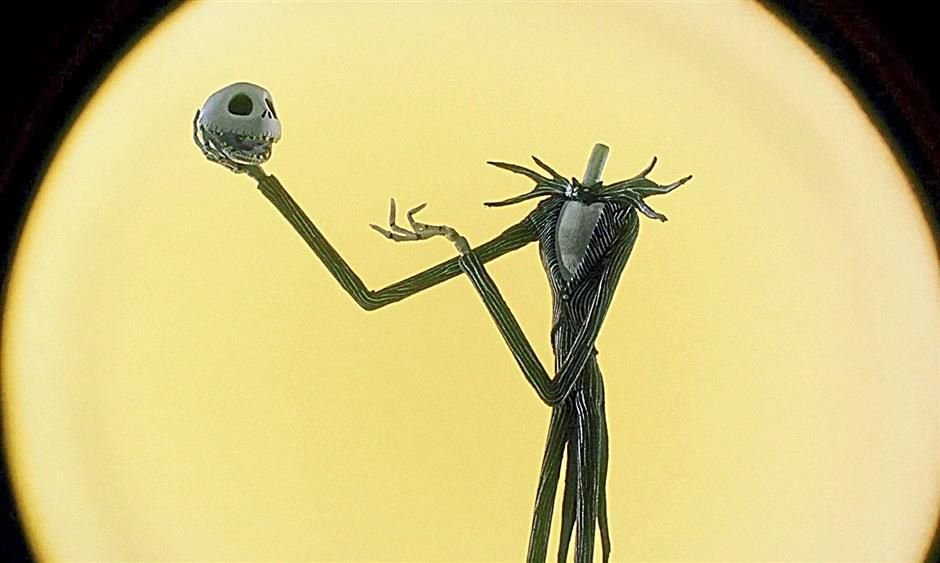
Scholars describe Shakespeare’s mind like a magpie, taking myths, legends, history, and books to come up with his own plays. As you have seen, the ancient traditions of Halloween had a powerful effect on Shakespeare’s plays. But, did he contribute to those traditions himself? I would say yes in a big way. First of all the image of Hamlet holding a skull has inspired many other Halloween images:

David Tennant in Hamlet, RSC 2008

Jack Skellington in The Nightmare Before Christmas, 1993.

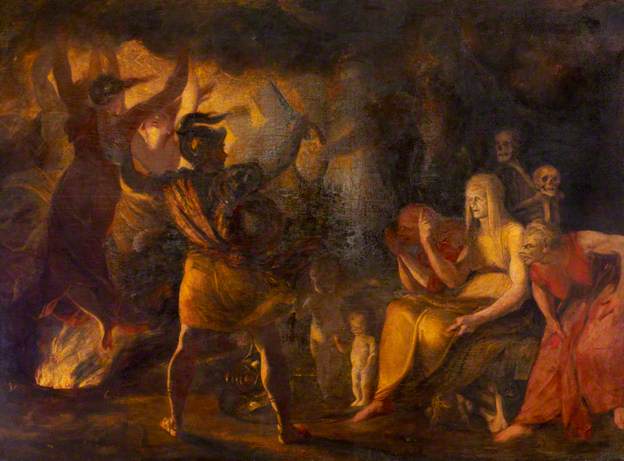
But I think Shakespeare’s greatest contribution to how we celebrate Halloween are centered within the witches of Macbeth.

Though Shakespeare by no means invented the concept of witchcraft, he did popularize the idea of the wicked witch, and helped form our modern view of what a witch is. The image he created in Macbeth

As you’ve seen, Shakespeare conjured the witches in Macbeth by infusing Celtic traditions like the wise woman with her chants and her cauldron, and infused her with the 17th century fear of witchcraft. Remember that Shakespeare’s patron King James was terrified of witchcraft and believed that he might be targeted by demonic forces. Shakespeare masterfully created some frightening witches that inspire Macbeth to do some terrible deeds, but adamantly deny that any harm will come to the English king, prophesying his bloodline will “Stretch out to the crack of doom.”

More than that, I would argue that the modern wicked witch would be all but silent without Shakespeare. When you think of what a witch might say, besides a series of high pitched cackling, what do you think of? Probably you think of this:

Or this:

Shakespeare’s bizarre and cryptic language helped inspire countless other interpretations of witches, and thus, a way for audiences to deal with the temptations that lurk in our hearts.

In conclusion, we don’t know how Shakespeare celebrated Halloween or even if he did to begin with; Halloween and Shakespeare’s life are both frought with mystery and legend, but one thing is dead certain; Halloween would not be the same without him. He absorbed the ancient rituals of the Celts and Romans and crafted some modern Halloween ideas and images that endure to this day.

Sources

https://www.historic-uk.com/CultureUK/Halloween/

https://www.bbc.co.uk/newsround/15169373

http://m.ncregister.com/daily-news/ghosts-and-the-catholic-church-pointing-to-the-permanence-of-the-soul


Thanks very much for reading! If you liked this post, please consider signing up for my new “Macbeth” online class via Outschool.com. One really fun part of the class will be an escape room where you use your knowledge of Macbeth to escape a cursed castle:

Teaching Titus through creepy cooking

Titus Andronicus is one of the most bloody, disgusting plays in Shakespeare. As this infographic from the Royal Shakespeare Company shows, there are tons of deaths and some of them are even the result of cannibalism!

One way to capture the macabre nature of this play in the classroom, (which some scholars see as a horror comedy), is to characterize it through cooking, after all, revenge is a dish best served cold.

Me in costume as Titus Androgynous, a crazy cooking show host who butchers two people in the same manner as Titus

So here are some ghoulish gourmet dishes and revolting recipes that you can share with your students to help them get into this tragic tale of violence, revenge, and cooking:

Idea 1: recipe cards

Design a recipe card like the ones in cooking magazines based on Titus speech where he murders Chiron and Demetrius

Idea 2: Create a menu that summarizes the play:

Act I:

Starter: Caesar Salad, toad in the hole

As the play begins, Caesar has died and Saturnine wants to devour his father’s empire. Enjoy this light salad in anticipation of far more bloody feasts to come.https://youtu.be/UxZ5NOkRwj0

Act II Scene 3: Breakfast:

Lamb Benedict

Lamb Benedict recipe I found on Reddit

While on an early morning hunting trip, Bassianus is slaughtered like a lamb by his own nephews. Enjoy this sweet treachery with a golden egg in the hole.

Act II, Scene 4: Main course:

Roast venison with all the trimmings

“As the deer that hath some unrecuring wound.”

“She was washed and cut and trimmed.”

Titus compares his daughter to a deer or welkin, and in the play’s most barbaric scene, the emperor’s sons ravish her and cut out her tongue. They enjoy the cruel rape and mutilation just like two starving lions enjoying their prey.

Act V:

Just desserts: people pot pie.

“More stern and bloody than the centaur’s feast,” A truly unforgettable dessert for this feast of carnage. The cook, Titus, reinvents the term rich food by cooking two emperor’s sons into pies.

Served cold, like revenge!

“Set him breast deep in Earth and famish him.”

Idea 3: Real Titus foods inspired by my favorite Halloween diy recipes

1. Lavinia’s tongue and hands

• horrific Halloween punch with ice cold hand cubes: https://youtu.be/XLYwcX7Ud-E

• Bloody lady fingers https://pin.it/xbnfxcs4bxbhsq

2. Titus hand: Hot dog fingers for Titus’ hand.

https://pin.it/ofn6cotybnvn4n

Or this grisly appetizer: cheese hand in prosciutto

3.

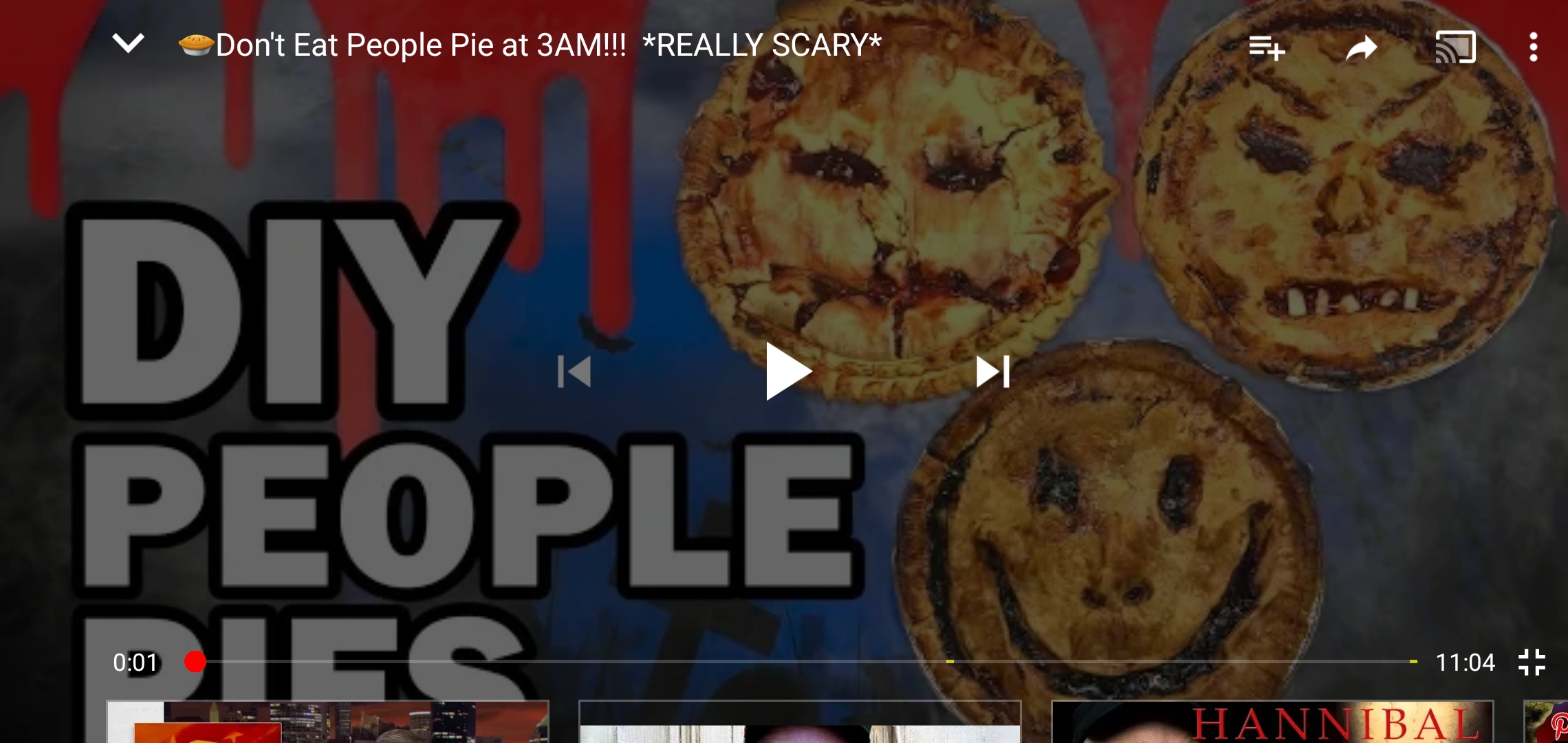
People Pies:

There are many horrific pie recipes on the internet, but for a busy teacher on a budget, I’m adapting this one from the YouTube channel Threadbanger: https://youtu.be/E6U6xUl3A5M. Don’t show this video to your students because there’s far too much cursing. That said this recipe is very cheap and it’s easy. He used only store bought items and no fancy cooking techniques, which means if you choose to bake it as a classroom activity, even your students can help make it. Here are some tips from the video to get the most horrible ppeople pie you can make:

• Use red filling like cherry or strawberry for filling.

• Use excess dough for a nose.

• Cut out little pieces of apple to make teeth

• Cut holes for the eyes and mouth

• The bloodier, the better!

Bone appetit!

What to Get A Shakespeare Nerd For Christmas

If you’re reading this as I post it, there’s a Shakespearean nerd in your life and your wits are about to turn trying to find a gift. I’ve already written about printed editions of Shakespeare and educational apps, so you can consult those if that’s what you are looking for. Now I’m covering the kinds of stuff that die-hard Shakespeare fans will kill a king and marry with his brother for, basically nerdy swag that no Shakespearean fanatics should be without!

img_0615-1


For anyone: Immortal Longings.com- This company is very special to me. If you’ve seen any of my Play Of the Month posts, you’ve seen the gorgeous artwork for Shakespeare’s plays by the artist Elizabeth Schuch. Not only do I love her work, my wife and I put her prints on the decor for our wedding day, and wrapped some of my presents in wrapping paper with her designs on it. If you go to her website, she sells Shakespearean art printed on and inspired by Shakespeare’s plays on everything from tapestries to clothes to iPhone cases. I highly recommend checking her work out, and patronizing it as much as possible: https://society6.com/immortallongings/s?q=popular+framed-prints

img_1488-1

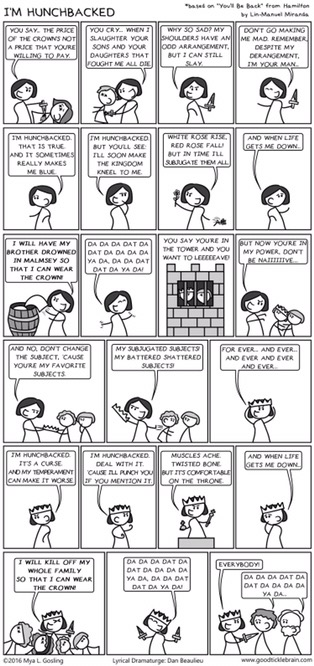
I also want to give a shout-out to the website Good Tickle Brain, a weekly Shakespearean comic that satirizes the Bard’s work with love. I feel the best way to introduce anyone, young or old to Shakespeare is through a healthy dose of satire and parody. Mya Gosling loves Shakespeare and it comes through in her simple, funny retellings of his plays. If you go to their shop (spelled Shoppe to appeal to nerds like me), you can get some of her comic books, funny T-shirts, and a few educational posters for teachers too: https://goodticklebrain.com/shoppe/

Bard Game

Adults

  1. The Bard game This is the Monopoly for Shakespeare Nerds- each player pretends to be a theater manager putting on plays in real locations where Shakespeare’s company toured during his lifetime. You make money by reciting speeches or improvising one in the Shakespearean style, or by answering Shakespearean trivia questions. A must-have for any Twelfth Night Party! Review of the game: https://boardgamegeek.com/boardgame/12372/shakespeare-bard-game https://boardgamegeek.com/boardgame/12372/shakespeare-bard-game
  2. Bards Dispense ProfanityBards against humanityMost people know the raunchy card game where you try to encapsulate a disgusting word or phrase with a description written on your card. Well, there’s a Shakespeare version too! It makes sense that someone made a card game inspired by the king of the Elizabethan put-downs, (and the inventor of one or two modern curse words!)
  3. Wine 🍷 Though I was unable to find actual wine with Shakespeare’s name on it, practically every other part of the wine drinking experience has been branded with Shakespeare- wine bags, glasses, corks and bottle stoppers, and even whole bars! If you spend a few minutes looking online, you can find tons of Shakespearean wine merch. By the way, here’s a convenient list of quotes Shakespeare wrote about alcohol: http://www.shakespeare-online.com/faq/shakespearedrinking.html
  4. T shirts 👕 https://www.redbubble.com/shop/shakespeare+t-shirts

Stocking stuffers

  1. Pen and ink There’s a lot of good versions of pen and ink with Shakespeare’s name on them. Imagine the fun you can have writing sonnets with your own Shakespearean pen and ink!

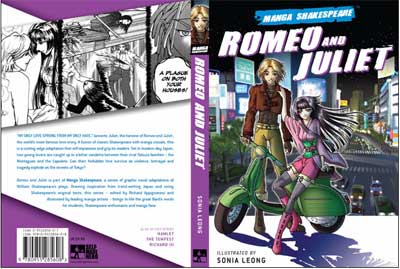
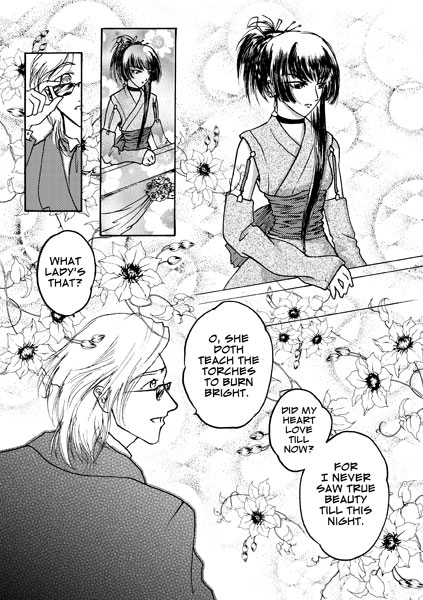
Shakespearean Comic Books. I’ve written reviews about some of these books and I’m very impressed by the artwork and the clever adaptations. Click here to read my review of the Romeo and Juliet Comic.

Kids

  1. Pop-Up Shakespeare by the writers of the Reduced Shakespeare Company. I’m a huge fan of The Reduced Shakespeare Company and they have created an amazing new popup book for kids of the entire Shakespearean cannon!
  1. Barbie and Ken as Romeo and Juliet. Ok, so this is a bit of a stretch, but hey, I’d get it for my daughter. R&J Barbie
  1. MND Board BookBoard books 📖 Yes, even toddlers can get into Shakespeare. I actually read this to my daughter a lot. It’s not the story of the play, but it does introduce some of the characters and famous lines which can help a child to become familiar with Shakespeare.
  1. King Of Shadows
  1. Cover of “King Of Shadows,” an excellent Young adult novel for anyone who loves Shakespeare.
  1. King 👑 Of shadows (Ages 8-12) This is an excellent young adult novel that teaches a lot about Shakespeare’s theater and the time period in which he lived. For a complete review, click here:

This was one of my favorite books growing up. It tells the story of Shakespeare’s life and work, with special attention to the creation of the Globe Theater in 1599. It’s gorgeously illustrated and a great read for kids!

So there are some gift ideas for the Shakespeare nerd in your life. Merry Christmas!

Here’s one more gift that you could give a Shakespeare nerd ages 13-18: A class from ME!

Go to my Outschool profile and Get $5 off the following classes:

  1. Wizard Science for Kids!
  2. What Was Christmas Like for William Shakespeare?
  3. The Violent Rhetoric of Julius Caesar
  4. Stars and Constellations for Kids
  5. Romeo and Juliet: Why Do We Still Read This Play?
  6. Macbeth: An Immersive Learning Experience
  7. Love Poetry- Shakespeare Style!An Interactive Guide to Shakespeare’s London
  8. An Immersive Guide to “Romeo and Juliet”
  9. A Child Astronomer’s Christmas!

Get started at https://outschool.com/classes/a-child-astronomers-christmas-bhmPRpND and enter the coupon code at checkout. My classes are available for as low as $4 apiece! Get started at https://outschool.com/classes/a-child-astronomers-christmas-bhmPRpND and enter the coupon HTHESNIF6B5 code at checkout.

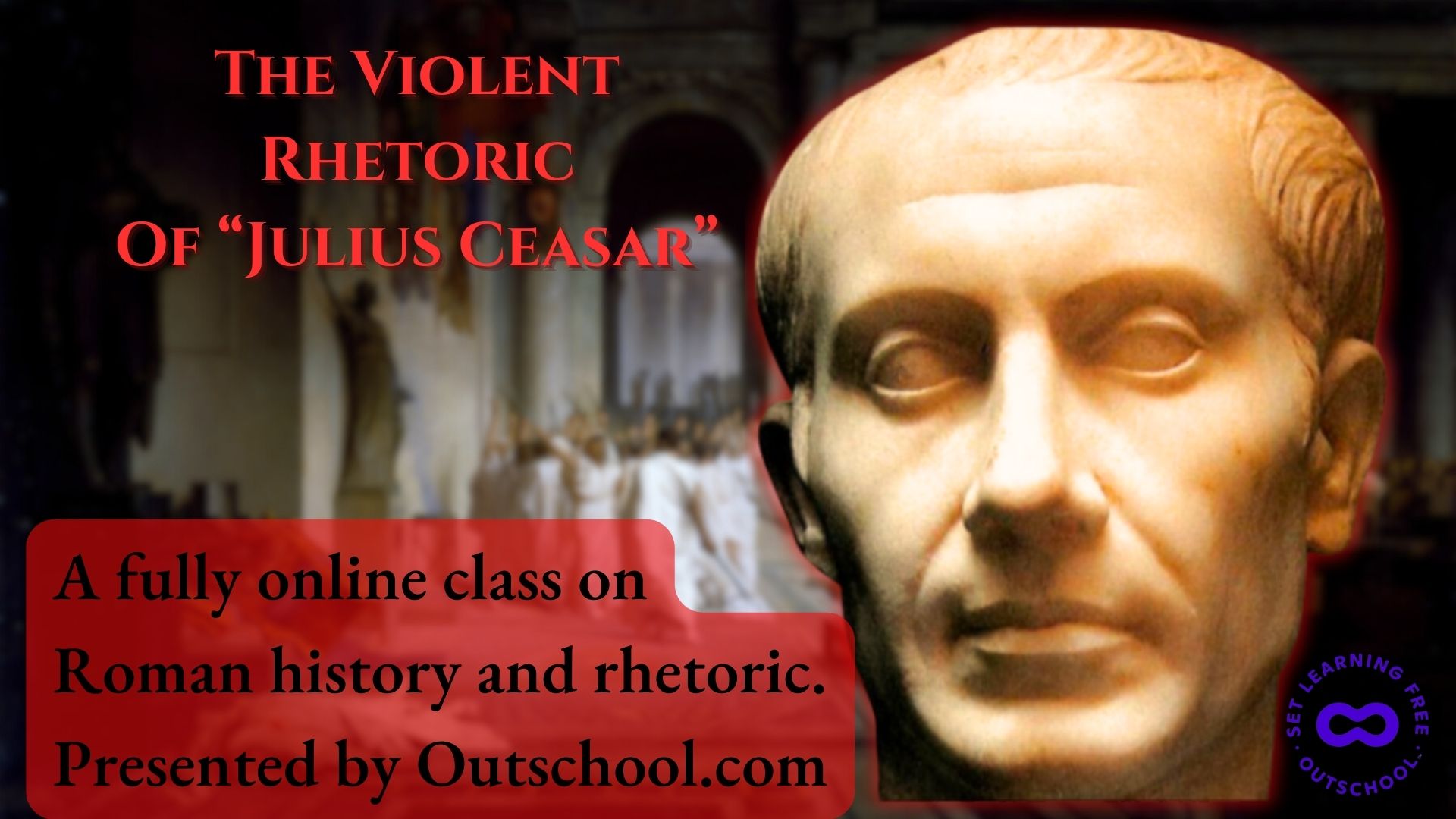
Course image: "The Violent Rhetoric Of Julius Caesar"
Course title image for my Outschool course, 2021

The mystery of Shakespeare’s Sonnets 

We’ve discussed a little bit about how to create sonnets, now let’s talk about the creator of 154 of the greatest sonnets the world has ever known.

The sonnets are some of the most mysterious pieces of writing Shakespeare ever created. We don’t know when he wrote them, we don’t really know in what order he wrote them, we don’t know for whom he wrote them, and we certainly don’t know whom they are about. That hasn’t stopped many conspiracy theorists and many, many, many, writers from coming up with imaginative stories about these often tantalizing and mysterious pieces of writing.

Genesis:
the only thing we know for sure about Shakespeare sonnets is that they were first published in 1609, as “Shakespeare’s Sonnets, Never Before Imprinted.” A lot of scholars believe that the sonnets were actually published without Shakespeare’s permission. The main evidence for this comes from Shakespeare’s contemporary Francis Meres who referred to them as Shakespeare sonnets “distributed by his among his friends.” Scholars theorize that someone got a hold of these poems that Shakespeare meant to keep private, and published them without his consent or even his knowledge. All we know for a fact is that some of them already existed before 1609.

The Mysterious Young Man.

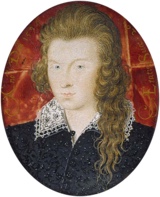
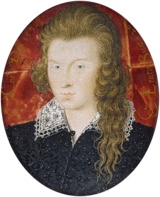
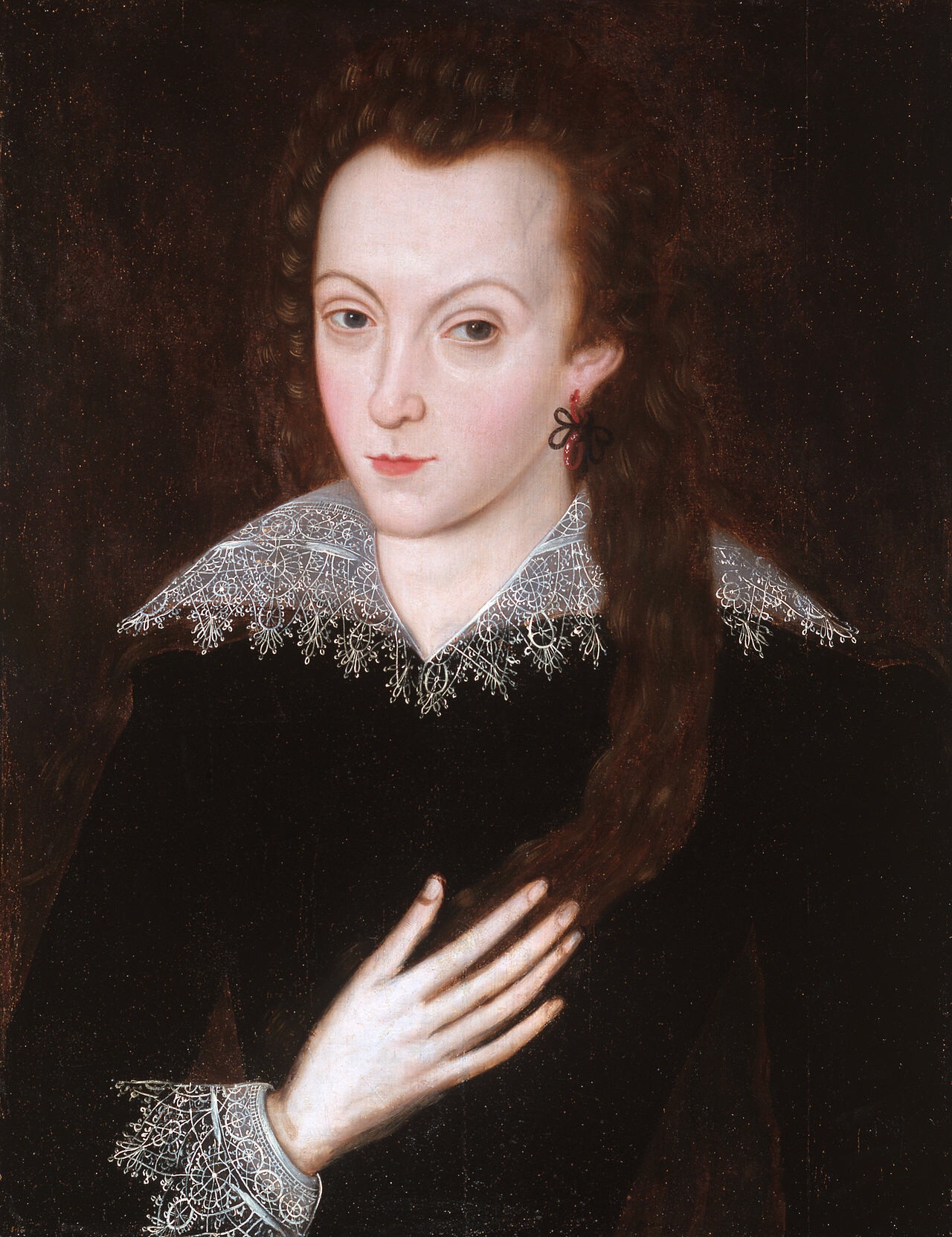
Henry Wriothesley, 3rd Earl of Southampton

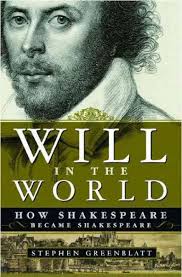
Scholar Steven Greenblatt in his wonderful book Will In the World, presents a more straightforward theory about where the sonnets came from: Shakespeare wrote them for some quick cash. As a writer, Shakespeare couldn’t always rely on the theater to make a living, especially since the theaters were often closed during times of plague, and religious holidays.

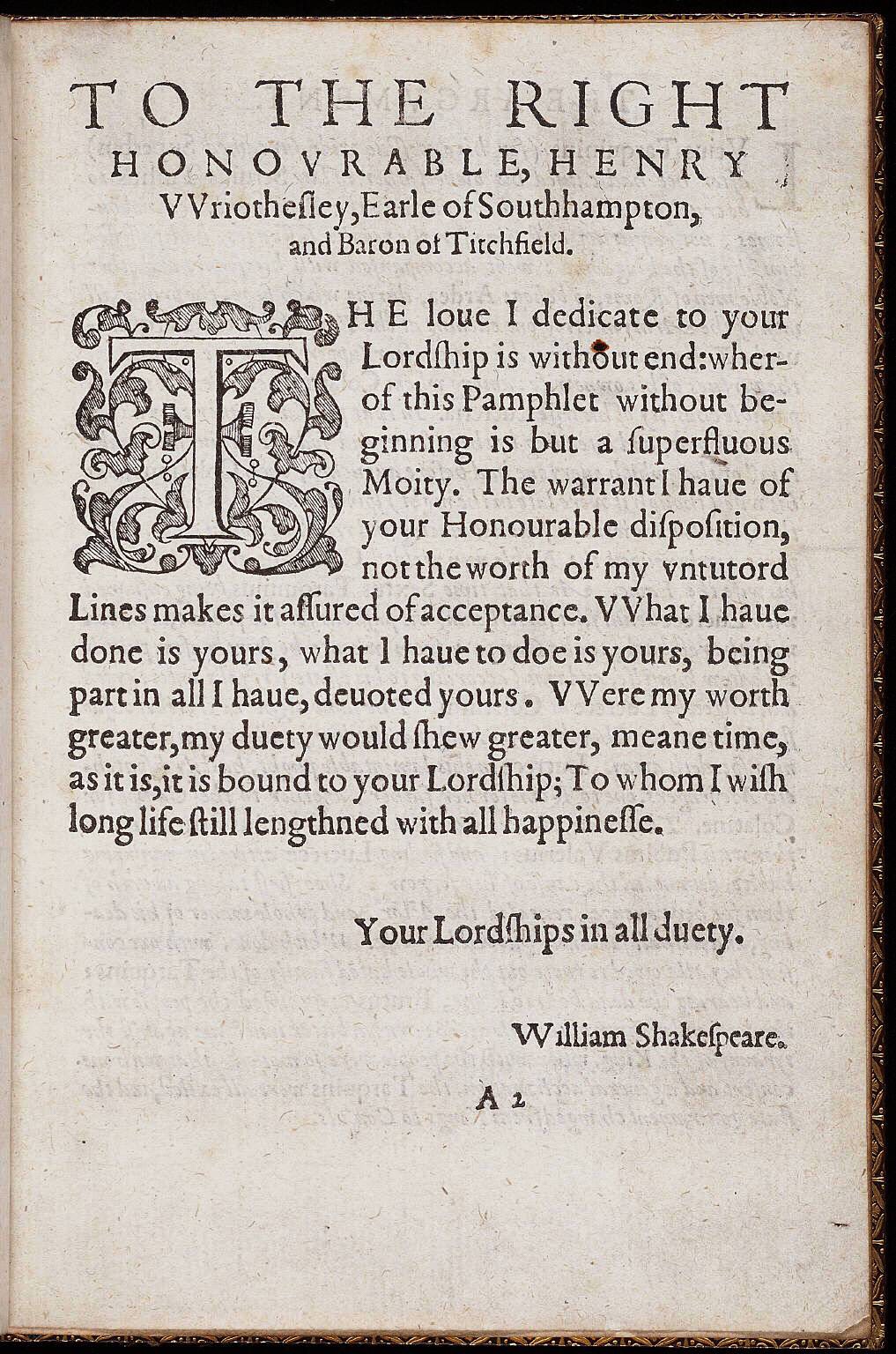
Greenblatt believes that in order to pay his bills in the mid-1590s, Shakespeare wrote poetry for Henry Wriothesley, 3rd Earl of Southampton. We know that The Bard dedicated two long poems to Southampton, Venus and Adonis, and TheRape Of Lucreece and the language Shakespeare uses on the dedication is very personal, even slightly flirty. Greenblatt believes that most if not all of the early sonnets were also written for Southampton. Greenblatt points out that Wriothesley was expected to get married and produce an heir, but he was in his late 20s and had not yet chosen a wife.

Greenblatt believes that Shakespeare was hired by someone in the Southampton family to write a series of love poems that would encourage the Earl to hurry up and get hitched. Indeed, the first 126 sonnets refer to a young, good looking blonde- haired man who has tragically remained single.

This theory works for most, but not all of the early sonnets Sonnet 33 seems to refer to a dead child. Many scholars believe that this sonnet was composed specifically for the death of Shakespeare’s own son Hamnet, who died in 1596 at the age of just eight years old. Obviously since Hamnet is so similar to Hamlet, Shakespeare might have given him a much more fitting tribute a few years later.

My favorite interpretation of the young man of the sonnets comes from the movie Shakespeare In Love. Since the love expressed in the sonnets between the speaker and the Fair Young Man seems to be somewhat sexual in nature, it kind of lends itself to the notion that Shakespeare might’ve been homosexual. What I find amusing is that in the film, since his lady love is his disguised as a boy, ( like so many of Shakespeare’s heroines ), the film answers the question of whether Shakespeare was gay or straight by having the young Shakespeare fall in love with a blonde woman disguised as a male actor, In the scene below, Shakespeare watches his mistress perform in disguise as Romeo, then dedicates a sonnet to her, while still referring to her as male in the sonnet! https://youtu.be/xpyTl3OMWrU

The DarkLady

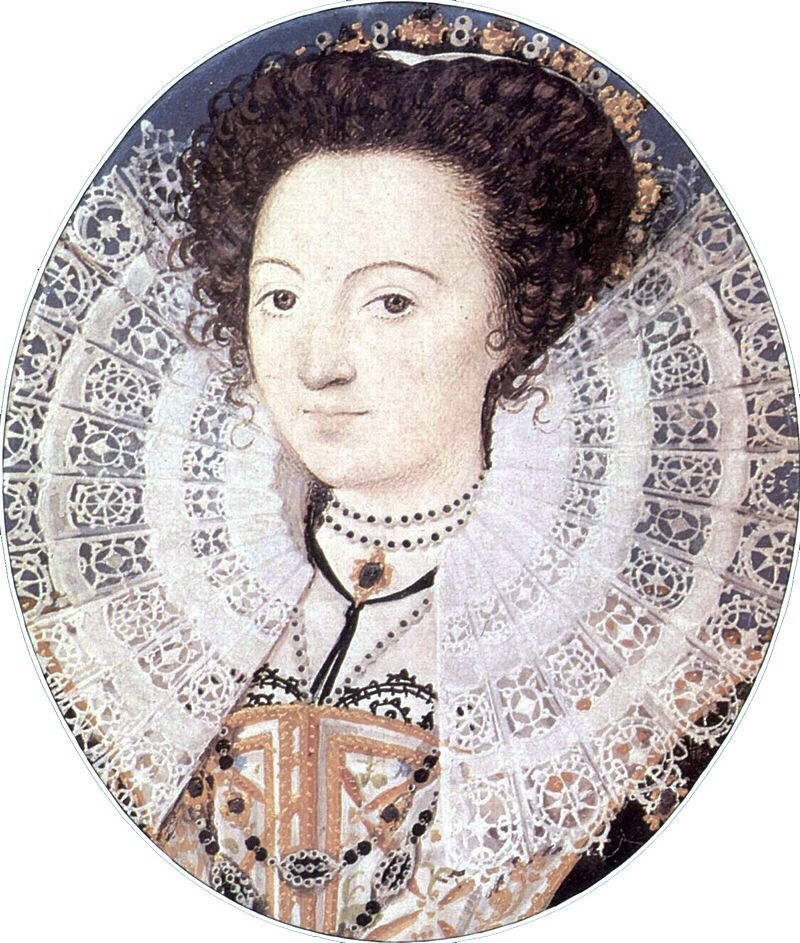
In the next group of sonnets, the speaker refers to a woman that the speaker calls his mistress. We have no clues from the sonnets as to who she might be, except that her skin is dark. Many many people have wondered who this young woman might be. My favorite theory comes from scholar Michael Wood in his documentary In Search Of Shakespeare. Wood theorizes that it might’ve been in Emilia Lanier, who was the wife of Shakespeare’s patron. One of her descendants, Peter Bassano, has put forth the notion that Shakespeare could have been involved with Mrs. Lanier.

Of course, it also seems likely that The Dark Lady just could’ve been a literary exercise for Shakespeare, who was also writing Anthony and Cleopatra at the time. https://youtu.be/u0W9v9jVp04

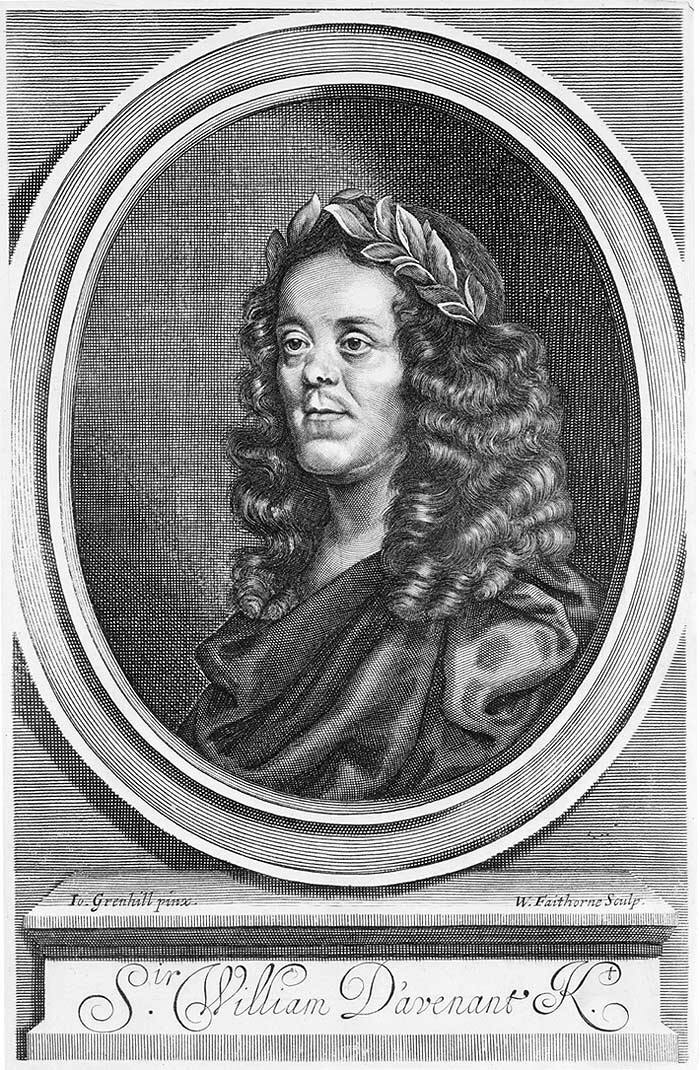
Other candidates for The Dark Lady have included the mother of celebrated 18th century playwright and actor, William Davenant.

Sir William himself claimed to be Shakespeare’s illegitimate son, and his parent’s tavern is midway between Stratford and London, so it’s not entirely impossible that Shakespeare at least knew the boy’s mother. The apocryphal story comes from John Audley’s biography of Shakespeare from 1693. Here is what he says about Shakespeare and Davenant:

Mr. William Shakespeare was wont to go into Warwickshire once a year, and did commonly in his journey lie at this house [the Crown] in Oxon, where he was exceedingly respected… Now Sir William [Davenant] would sometimes, when he was pleasant over a glass of wine with his most intimate friends–e.g. Sam Butler, author of Hudibras, etc., say, that it seemed to him that he writ with the very spirit that did Shakespeare, and seemed contented enough to be thought his Son. He would tell them the story as above, in which way his mother had a very light report, whereby she was called a Whore.[2]

My favorite interpretation of the Dark Lady Myth comes from Doctor Who, in an episode called The Shakespeare Code where The Doctor s companion Martha Jones, (who is black), meet Shakespeare and he immediately is smitten with her.

It is supremely naïve to assume that anybody can pin down a definitive Dark Lady. Adultery was just a serious back then as it is now, and admitting to it, even in a play or poem would have been suicide for Shakespeare, which is why the sonnets are vague enough so that they never conclusively point to any specific party, which helps keep this tantalizing mystery alive to this day.

References:

Books:

Web:

http://www.peterbassano.com/shakespeare

If you enjoyed this post, you might want to sign up for my Outschool class on Shakespeare’s love poems. We’ll discuss the mystery of the Dark Lady, and you’ll learn to create your own sonnets, just in time for Valentines Day!

Close Reading: Friends, Romans, Countrymen

Today I’m going to do an analysis of one of the most famous speeches in all of Shakespeare: Antony’s Funeral Speech in Act III, Scene ii of Julius Caesar, commonly known as the “Friends, Romans, Countrymen” speech.

I. Given Circumstances

Antony is already in a very precarious position. His best friend Julius Caesar was murdered by the senators of Rome. Antony wants vengeance, but he can’t do so by himself. He’s also surrounded by a mob, and Brutus just got them on his side with a very convincing speech. They already hate Antony and Caesar. His goal- win them back. Here is a clip of Brutus (James Mason) speaking to the crowd from the Joseph Mankewitz movie version of Julius Caesar:

So the stakes are very high for Antony: If he succeeds, the crowd will avenge Caesar, and Antony will take control of Rome. If he fails, he will be lynched by an angry mob.

II. Textual Clues

If you notice in the text of the speech below, Antony never overtly says: “Brutus was a liar and a traitor, and Caesar must be avenged,” but that is exactly what he gets the crowd to do. So how does he get them to do so, right after Brutus got them on his side?

Antony. You gentle Romans,— 1615

Citizens. Peace, ho! let us hear him.

Antony. Friends, Romans, countrymen, lend me your ears;

I come to bury Caesar, not to praise him.

The evil that men do lives after them;

The good is oft interred with their bones; 1620

So let it be with Caesar. The noble Brutus

Hath told you Caesar was ambitious:

If it were so, it was a grievous fault,

And grievously hath Caesar answer’d it.

Here, under leave of Brutus and the rest— 1625

For Brutus is an honourable man;

So are they all, all honourable men—

Come I to speak in Caesar’s funeral.

He was my friend, faithful and just to me:

But Brutus says he was ambitious; 1630

And Brutus is an honourable man.

He hath brought many captives home to Rome

Whose ransoms did the general coffers fill:

Did this in Caesar seem ambitious?

When that the poor have cried, Caesar hath wept: 1635

Ambition should be made of sterner stuff:

Yet Brutus says he was ambitious;

And Brutus is an honourable man.

You all did see that on the Lupercal

I thrice presented him a kingly crown, 1640

Which he did thrice refuse: was this ambition?

Yet Brutus says he was ambitious;

And, sure, he is an honourable man.

I speak not to disprove what Brutus spoke,

But here I am to speak what I do know. 1645

You all did love him once, not without cause:

What cause withholds you then, to mourn for him?

O judgment! thou art fled to brutish beasts,

And men have lost their reason. Bear with me;

My heart is in the coffin there with Caesar, 1650

And I must pause till it come back to me.

First Citizen. Methinks there is much reason in his sayings. Julius Caesar Act III, Scene ii.

The two main methods Shakespeare uses to infuse Antony’s speech with powerful persuasive energy are the way he writes the verse, and his command of rhetoric.

A. Verse

The greatest gift Shakespeare ever gave his actors was to write his plays in blank verse. It not only tells you which words are important to stress, it gives you clues about the character’s emotional journey; just as a person’s heartbeat can indicate their changes in mood, a subtle change in verse often betrays the character’s pulse and state of mind. Antony uses his own emotions and his powers of persuasion to manipulate the crowd, so his verse helps show how he changes the pulse of the Roman mob.

I could write a whole post on the verse in this page, which I don’t need to do, since The Shakespeare Resource Center did it for me: http://www.bardweb.net/content/readings/caesar/lines.html What I will do is draw attention to some major changes in the verse and put my own interpretations on how Antony is using the verse to persuade the crowd:

  1. The first line of the speech grabs your attention. It is not a standard iambic pentameter line, which makes it rhythmically more interesting. In the movie version, Marlin Brando as Antony shouts each word to demand the crowd to just lend him their attention for a little while. He uses the verse to emphasize Antony’s frustration.
  2. “The Evil that men do, lives after them”- Notice that the words evil and men are in the stressed position. Antony might be making a subconscious attempt to say Brutus and the other evil men who took the life of Caesar are living, when they deserve to die.
  3. If it were so..” Again, Antony might be making a subtle jab at the conspirators. Brutus said Caesar was ambitious and Antony agrees that ambition is worthy of death, but he also adds an If, to plant the seeds of doubt in the crowd’s minds. To drive it home, the word if is in the stressed position, making it impossible for the crowd to not consider the possibility that Caesar wasn’t ambitious, and thus, didn’t deserve to be murdered.

B. Rhetoric

One reason why this speech is so famous is its clever use of rhetoric, the art of persuasive speaking. Back in ancient Rome, aristocrats like Antony were groomed since birth in the art of persuasive speech. Shakespeare himself studied rhetoric at school, so he knew how to write powerful persuasive speeches. Here’s a basic breakdown of the tactics Antony and Shakespeare use in the speech:

Ethos, Pathos, and Logos

The three basic ingredients of any persuasive speech are Ethos, Pathos, and Logos. Ethos is an appeal to the audience based on the speaker’s authority. Pathos is an appeal to the emotions of the crowd, and Logos is an appeal to facts and or reason. Both Brutus and Antony employ these three rhetorical tactics, but Antony doesn’t just appeal to his audience, he manipulates them to commit mutiny and mob rule.

Logos Antony has very few facts or logical information in his speech. His major argument is that again, since Caesar wasn’t ambitious, (which is very hard to prove), his death was a crime. Antony cites as proof the time Cæsar refused a crown at the Lupercal, but since that was a public performance, it’s hardly a reliable indication of Caesar’s true feelings.

You see logos as a rhetorical technique all the time whenever you watch a commercial citing leading medical studies, or a political debate where one person uses facts to justify his or her position. If you look at Hillary Clinton during the 2016 Presidental Debate, she frequently cited statistics to back up her political positions

Ethos-

Ethos is an argument based on the speaker’s authority. Brutus’ main tactic in his speech is to establish himself as Caesar’s friend and Rome’s. He says that he didn’t kill Caesar out of malice, but because he cared more about the people of Rome.

BRUTUS: If there be any in this assembly, any dear friend of Caesar’s, to him I say, that Brutus’ love to Caesar was no less than his. If then that friend demand why Brutus rose against Caesar, this is my answer:

–Not that I loved Caesar less, but that I loved Rome more. JC, III.ii.

Antony employs the exact same tactics, establishing himself as Caesar’s friend and telling the crowd that, as Caesar’s friend, Antony believes that Caesar did not deserve his murder. His use of Ethos therefore, helps Antony refute Brutus’ main claim.

Again, the 2016 debate is another excellent way of showing ethos in action. Hillary Clinton and Brutus frequently cited their political experience and their strength of character to justify their views. There’s an excellent article that examines Hillary’s use of Ethos in her political rhetoric: https://eidolon.pub/hillary-clintons-rhetorical-persona-9af06a3c4b03

Pathos

Pathos is the most frequently used rhetorical tactic: the appeal to emotion. Donald Trump uses this constantly, as you can see in this clip from the 2016 debate:

https://youtu.be/wMuyBOeSQVs

Pathos is bit more of a dirty trick than Ethos and Logos, which is why Brutus doesn’t use it much. As scholar Andy Gurr writes:

Brutus is a stern philosopher and thinker. His faith in reason fails to secure the crowd from Antony’s disingenuous appeal to their affections, which uses sharp sarcasm and some twisted facts.

Antony’s major appeals to emotion:

  • His grief over losing Caesar
  • His painting of Cæsar as a generous, faithful friend
  • Shaming the crowd for not mourning Caesar’s death
  • Appeal to piety by showing the body funeral reverence.
  • His use of Caesar’s bloody body and mantle to provoke outrage from the citizens.
  • His use of Caesar’s will to make the crowd grateful to Caesar, and furious at Brutus.

Rhetorical Devices

If Ethos, Pathos, and Logos are the strategies of rhetorical arguments, rhetorical devices are the artillery. If you check out the website Silva Rhetoricae, (The Forest Of Rhetoric), you can read about the hundreds of individual rhetorical devices that politicians have used in speeches and debates since ancient history. I will summarize here the main ones Antony uses over and over again in “Friends, Romans, Countrymen.” For another more compete analysis, click here: https://eavice.wordpress.com/2011/02/05/jv-rhetorical-devices-in-antonys-funerary-speech-from-shakespeares-julius-caesar/

  • Irony The way Antony keeps repeating “Brutus is an honorable man,” is a particularly sinister form of irony, which here means to imply the opposite of what you have said to mock or discredit your opponent. The irony is that the more Antony repeats this idea that Brutus is honorable, the more the crowd will question it. If Brutus were truly honorable, he would not need Antony to remind them. Of course, Brutus can still be honorable whether Anthony mentions it or not, but this repetition, coupled with Antony’s subtle rebuttals Of Brutus’ arguments, manages to shatter both Brutus’ motives, and his good name, at least in the eyes of his countrymen.
  • Antimetabole is the clever use of the same word in two different ways. Antony manages to work it in twice in this speech:
  • “If it were so, it was a grievous fault,
  • And grievously hath Caesar answer’d it.”
  • “You all did love him once, not without cause: What cause withholds you then, to mourn for him?”
  • Rhetorical question This is the most famous rhetorical device which by the way in Antony’s day would have been known as Erotema. Antony asks a series of questions designed to refute the notion that Caesar was ambitious, from his mercy to his captives, to Caesar’s tenderness to the poor, and of course his refusal to take the crown during the Lupercal. Each question calls Brutus’ claims into question and seeds doubt in the crowd.

Performance Notes with link to Globe performance

https://youtu.be/1RL8Wg-b8k

Unlike most Shakespearean plays, with Julius Caesar, we have an eyewitness account of how the play was originally performed. Swiss student Thomas Platter wrote a long description of watching the play at the original Globe Theatre in 1599. This is a translation that I found on The Shakespeare Blog:

On September 21st after lunch, about two o’clock, I and my party crossed the water, and there in the house with the thatched roof witnessed an excellent performance of the tragedy of the first Emperor Julius Caesar, with a cast of some fifteen people; when the play was over they danced very marvellously and gracefully together as is their wont, two dressed as men and two as women…

Thus daily at two in the afternoon, London has sometimes three plays running in different places, competing with each other, and those which play best obtain most spectators.

The playhouses are so constructed that they play on a raised platform, so that everyone has a good view. There are different galleries and places, however, where the seating is better and more comfortable and therefore more expensive. For whoever cares to stand below only pays one English penny, but if he wishes to sit he enters by another door, and pays another penny, while if he desires to sit in the most comfortable seats which are cushioned, where he not only sees everything well, but can also be seen, then he pays yet another English penny at another door. And during the performance food and drink are carried round the audience, so that for what one cares to pay one may also have refreshment.

The actors are most expensively costumed for it is the English usage for eminent Lords or Knights at their decease to bequeath and leave almost the best of their clothes to their serving men, which it is unseemly for the latter to wear, so that they offer them for sale for a small sum of money to the actors.

Thomas Platter, 1599, reprinted from: http://theshakespeareblog.com/2012/09/thomas-platters-visit-to-shakespeares-theatre/

So the conclusions we can draw based on Platter’s account include that Antony was standing on a mostly bare stage with a thatched roof, raised slightly off the ground. We can also guess that, since the merchants were selling beer, fruits, and ale, that the audience might have been drunk or throwing things at the actors.

As Platter notes, and this page from Shakespeare’s First Folio confirms, there were only 15 actors in the original cast, so Shakespeare’s company didn’t have a huge cast to play the gigantic crowd in the Roman street. In all probability, the audience is the mob, and Antony is talking right to them when he calls them “Friends, Romans, Countrymen.” I believe that the audience was probably encouraged to shout, chant, boo, cheer, and become a part of the performance which is important to emphasize when talking about how to portray this scene onstage. A director can choose whether or not to make the audience part of the action in a production of Julius Caesar, which can allow the audience to get a visceral understanding of the persuasive power of politicians like Brutus and Antony. Alternatively, the director can choose instead to have actors play the crowd, and allow the audience to scrutinize the crowd as well as the politicians.

In conclusion, the reason this speech is famous is Shakespeare did an excellent job of encapsulating the power of persuassive speech that the real Antony must have had, as he in no small way used that power to spur the Roman crowd to mutiny and vengeance, and began to turn his country from a dying republic into a mighty empire.

If you liked this post, please consider signing up for my online class where I cover the rhetorical devices in Julius Caesar and compare them with several other famous speeches. Register now at http://www.outschool.com

For a fascinating look at how a modern cast of actors helps to create this scene, check out this documentary: Unlocking the Scene from the Royal Shakespeare Company’s production in 2012, with Patterson Joseph as Brutus, and Ray Fearon as Antony:

◦ Interview with Patterson Joseph and Ray Fearon RSC: https://youtu.be/v5UTRSzuajo

And here is a clip of the final scene as it was performed at the Royal Shakespeare Company:

References

1. Annotated Julius Caesar: https://sites.google.com/site/annotatedjuliuscaesar/act-3/3-2-57-109

2. Folger Shakespeare Library: Julius Caesar Lesson Plan: https://teachingshakespeareblog.folger.edu/2014/04/29/friends-romans-teachers-send-me-your-speeches/

3. Silva Rhetoric http://rhetoric.byu.edu/

3. Rhetoric in Marc Antony Speech

https://www.google.com/amp/s/eavice.wordpress.com/2011/02/05/jv-rhetorical-devices-in-antonys-funerary-speech-from-shakespeares-julius-caesar/amp/

4. Shakespeare Resource Center: http://www.bardweb.net/content/readings/caesar/lines.html