If Shakespeare Wrote 9 to 5

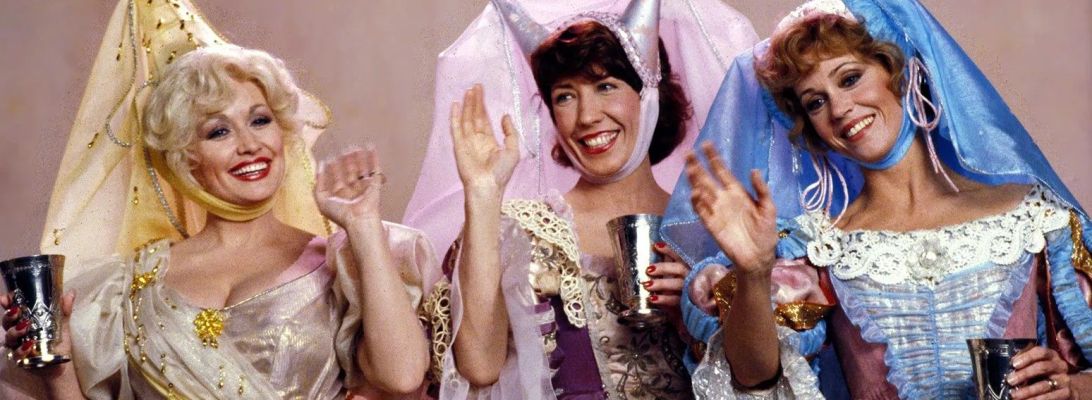
Happy 9/25! If you’ve never watched the 1980 movie 9 to 5 before, it’s a wonderful classic comedy, and of course, it’s a great way to honor the incomparable Dolly Parton, who played Dora Lee. Today I’d like to discuss the plot and themes of this movie, and compare them to classic Shakespearean comedy.

9 to 5 Music Video

The Plot

  1. Three unappreciated women in the workplace, Violet, Dora Lee, and Judy, hate their boss, a sexist, lying, hypocritical bigot. He not only rules the workplace as a tyrant, he is especially cruel to the women in the office- paying them less than their male counterparts, taking credit for their hard work, harassing the young and pretty ones, and firing them whenever he feels like it.
  2. It gets so bad that our three protagonists imagine elaborate fantasies where they not only kill him in over-the top Shakespearean ways, they also tell him off with delightfully theatrical language.
  3. Through a series of misunderstandings, the boss threatens to arrest all three of them for trying to kill him in real life. They then kidnap him and force him to stay home. Because Hart is so loathsome to deal with, the women take over the office without anyone noticing his absence! The office culture improves, productivity rises, and of course, everyone is treated equally and paid fairly. When Hart escapes and returns to the office, his boss is so happy with the women’s improvements, they promote him out of the office and he is never seen again!

Themes

The themes of 9 to 5 are truly universal, and it should never be described as a ‘chick comedy’- the same dehumanizing nature of capitalism and the unfair concentration of wealth is something everyone with a job can relate to. Just look at the lyrics of Dolly’s song:

In spite of the upbeat tune, Dolly hits on some serious grievances that working people have had since Shakespeare’s day and even older

  1. Unequal distribution of labor.
  2. Little chance for advancement
  3. Constant anxiety of being fired or demoted.

The Politics of 9 to 5

Women taking over male institutions for comedic purposes is not new- in the ancient Greek comedy Lysistrata,  women take over the Acropolis- mocking the pointless fighting of the Peloponnesian War. Like all comedies, you can see it from two sides- From a liberal lens, the men are so dumb and so obsessed with us that women could easily solve this conflict. From a conservative lens, you could see it as a cruel satire – things have gotten so bad that even a woman could do a better job than the men in power. Likewise- 9 to 5 works both as a progressive ode to women in the workplace, a universal condemnation of unbridled 80s capitalism, and a conservative absurdist look at work- stay in your lane, work up the ladder and eventually you’ll get noticed.

I bring this up because that’s how Shakespeare wrote his comedies, criticising institutions but not outright rejecting them. In addition, Shakespeare lived in a time of economic revolution- he saw workers directly rebel against corrupt local lords during the Diggers Revolt of the early 1600. Though their efforts never succeeded in his time, the Diggers inspired the democratic form of free enterprise that America was built upon. After all, monopoly is very close to monarchy.

Sexual Politics

Sexism is a theme in Shakespearean comedy, especially in Measure For Measure, the play in which a corrupt man in a position of authority, tries to take advantage of a nun. Angelo, the antagonist of the play represents how in patriarchal society, Sexual Assault and inequality is extremely prevalent, and very hard to fight against. I’ll discuss this further in my podcast later this week. For now, let’s just say that there is a direct link between Measure For Measure, 9 To 5, and the #metoo era.
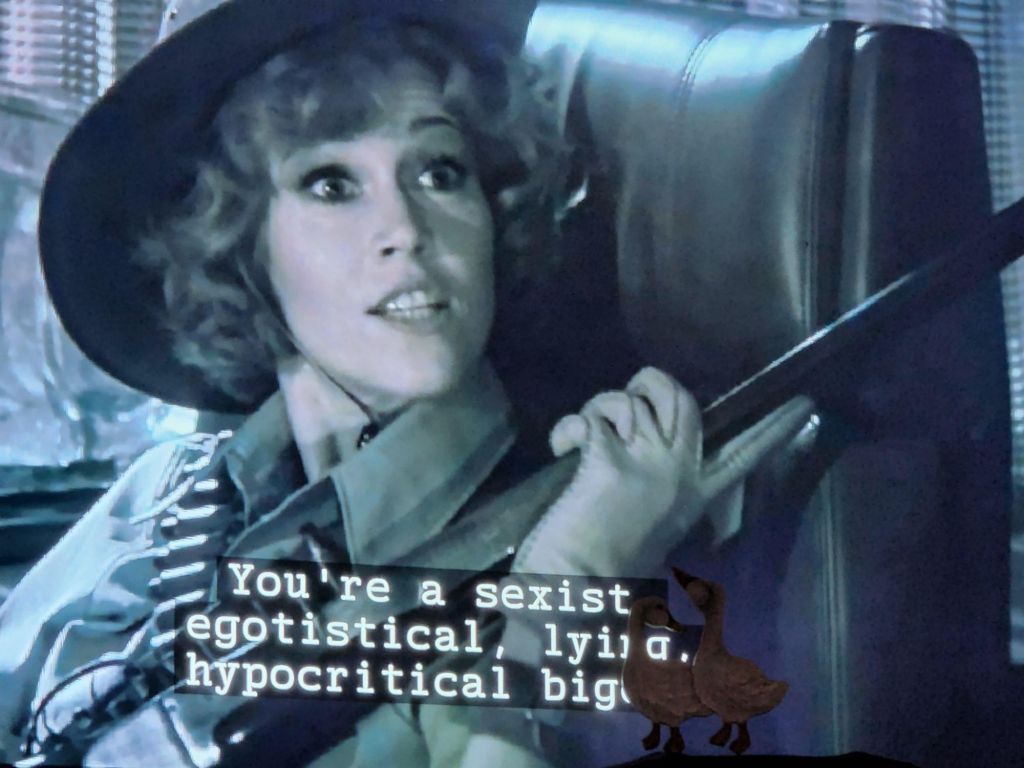
Jane Fonda calls Hart a “wart on Humanity”, 1980

The Characters

Violet (Lilly Tomlin)

Violet, a senior supervisor and Hart’s second in command, is a woman trying to succeed in a man’s world. Of the three leads, she seems the least traditionally feminine- she has no husband, wears dark clothes, minimal makeup and jewelry, and devotes herself to her work, and has given her time, energy, and creativity to the job. The cruel irony is, even though she subverts her femininity, she’s never seen as anything other than “Hart’s girl.” She’s passed up for promotions, Hart steals her ideas and takes the credit, and even though she is a senior supervisor, Hart forces her to get him his coffee as if she has nothing better to do. Violet is a scathing critique of corporate culture, and she dreams in her fantasy to take Hart’s coffee, and give him a taste of his own toxic medicine. 

Violet’s Disney Princess Fantasy

Violet’s Shakespearean counterpart is Viola from Twelfth Night. To succeed in a man’s world, Viola disguises herself as a man and gets a job. She is quickly rewarded and noticed once she hides her identity as a woman. This must have been extremely subversive for the 1600s.

If we compare Violet’s “I’m not a girl,” speech with Viola’s “In faith, they are as true of heart as we,” both speeches show a woman who is asking for equality.

  1. Viola. Ay, but I know—
  • Orsino. What dost thou know?
  • Viola. Too well what love women to men may owe:
    In faith, they are as true of heart as we.
    My father had a daughter loved a man,
    As it might be, perhaps, were I a woman,
    I should your lordship.
  • Orsino. And what’s her history?
  • Viola. A blank, my lord. She never told her love,
    But let concealment, like a worm i’ the bud,
    Feed on her damask cheek: she pined in thought,
    And with a green and yellow melancholy
    She sat like patience on a monument,
    Smiling at grief. Was not this love indeed?
    We men may say more, swear more: but indeed
    Our shows are more than will; for still we prove
    Much in our vows, but little in our love.

Both speak of suffering in silence, waiting for a man to notice them. In Viola’s case, she wants her boss, Duke Orsino to realize she’s a woman and fall in love with her, while Violet wants to be treated as a grown woman and an employee. Both speeches are about a man who is blinded by his preconceived notions of what a woman is, and the women eloquently shatter them.
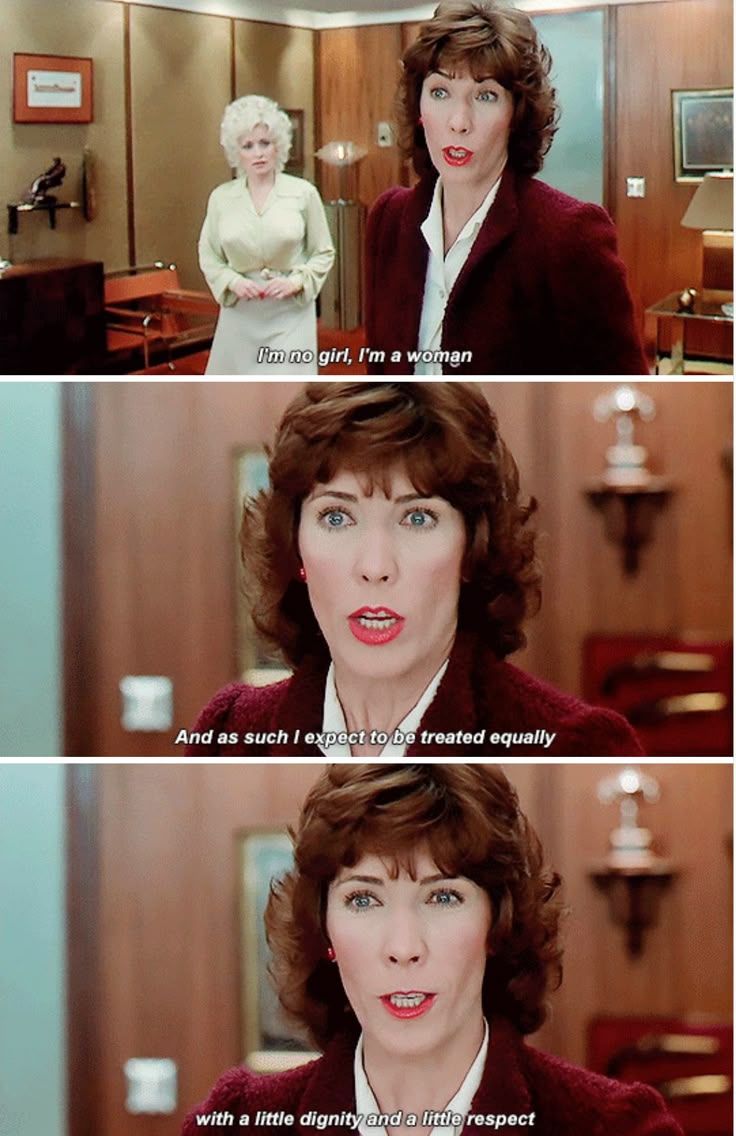
VIOLET: You gave that promotion to Bob Enright instead of me? I trained him for God’s sake! Oh, so it’s the old boys club. I’m going, but before I do, I have one more thing to say. Don’t you ever refer to me as your ‘girl’ again. I am no girl. I am a woman. W-O-M-Y-N! I’m not your wife, your mother or your mistress. I’m your employee and I expect to be treated equally, with a little dignity and a little respect! Oh, come off it, Doralee. Everyone knows you and Mr. Hart are having an affair.

Violet represents the best of working women, and the worst of how they are treated.

Dora Lee (Dolly Parton)

My video podcast episode: Shakespeare, 9 to 5, and the Legacy of Dolly Parton

At first glance, Dora Lee seems like a naive blond country bumpkin. She also appears, (as Violet alluded to earlier), to be having an inappropriate relationship with her boss. In reality, she is another victim of Hart’s cruelty. Because she’s Hart’s secretary, he feels entitled to a relationship with her, (even though both Dora Lee and Hart are married). Even worse, Hart openly flirts and leers at Dora Lee and makes up excuses to ogle and pinch and harass her. Why does she put up with this? First, because she knows how this kind of behavior is encouraged in all workplaces. This is why in her revenge fantasy, Dora Lee subjects Hart to the same kind of harassment that she has endured, before hog tying him like the sexist pig he is!

As you might have guessed, Dora Lee’s Shakespeare avatar is Isabella- the nun from “Measure For Measure” in Shakespeare’s darkest comedy, Isabella is a nun who tries to plead for clemency to an unjust judge. He then offers a horrific quid pro quo bargain- he will pardon her brother and save him from execution, but only if she sleeps with him.

Ha! Little honor to be much believed,
And most pernicious purpose! Seeming, seeming!
I will proclaim thee, Angelo; look for't:
Sign me a present pardon for my brother,
Or with an outstretch'd throat I'll tell the world aloud
What man thou art.

While Isabella threatens to tell the world on Angelo, Dora Lee favors a more… aggressive approach:

Dora Lee confronts Hart

DORALEE: What! You’ve been telling everyone I’m sleeping with you! That explains why everyone’s been treating me like a dime store floozy! They all think I’m banging the boss! And you love it, don’t you. It gives you some sort of cheap thrill, like knocking over pencils and picking up papers. I’ve put up with your grabbing and chasing me around the desk, ‘cause I need this job, but this is the last straw! I’ve got a gun out there in my purse and up to now I’ve been forgiving and forgetting ’cause that’s the way I was brought up but I swear, if you say another word about me, I’ll get that gun of mine. And I’ll change you from a rooster to a hen with one shot!

Like Isabella, Dora Lee’s speech emphasizes her Christianity, (note the use of the term: “forgiving and forgetting”) but unlike the nun, Dora Lee makes it clear in no uncertain terms that she NEED NOT, SHOULD NOT, and WILL NOT put up with Hart’s behavior.

Judy Bernly (Jane Fonda)

Judy is the new girl at the company. In addition to being an important fish-out-of water character who helps explain the plot to the audience, Judy has the most dynamic arc in the movie. She starts as a divorcee with no home, no job experience, and no husband. Her vulnerability makes Hart eager to take advantage of her, like he did Dora Lee. Fortunately, Violet and Dora Lee warn Judy and she quickly makes friends with them.
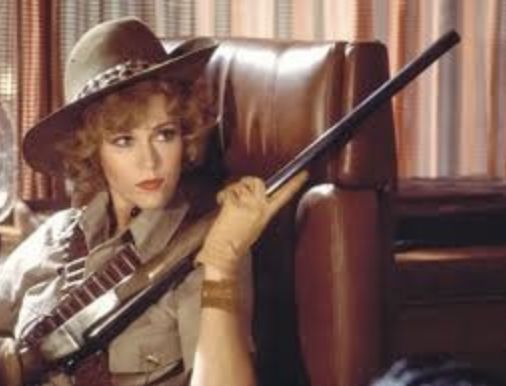
Judy fantasizes about hunting down her cruel boss.

Because of her kind nature, Judy is disgusted by Hart’s callousness and cruelty. This is why her fantasy for doing away with Hart paints her as a fearless hunter, scaring him and destroying him, like he did poor meek creatures whose heads he mounts on his office wall:

Judy grows from being a broken woman to a strong, valuable ally whose kindness is seen as a strength, not a weakness. Her husband even comes back and tries to get back together with her and, for the first time, Judy stands up for herself and says no. She had an easy out- become a wife and mother again, but finds strength from her friends and realizes she deserves better than him. By the end of the film, she becomes the heart of the team.

To conclude my Analysis, let’s look at the scene at the bar between all three women:
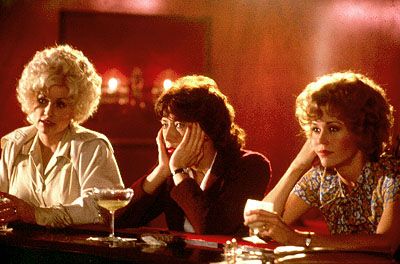
V: What a rat.

D: What a liar.

  J: What a creep.

D: To think he told everybody

I was sleeping with him…

J: It’s so unfair. Just so unfair.

V: Twelve years of service,

and he shoots me down.

J: We’ve got to do something. He can’t treat people like that.

V: Do? What’s to do? Quit?

D: – I can’t quit.

V: – It’s the same all over.

J: Look, couldn’t we just all get together and complain?

V: – Complain to who?

Let’s face it- We’re in a pink-collar ghetto.

J: Let’s have another drink.

And this: 

To whom should I complain? Did I tell this,
Who would believe me? O perilous mouths,
That bear in them one and the self-same tongue,
Either of condemnation or approof;
Bidding the law make court'sy to their will:
Hooking both right and wrong to the appetite,
To follow as it draws!
Measure For Measure, Act II, Scene 4

First off, let’s address the obvious parallels- both Dora Lee and Isabella have been assaulted and harassed and the man’s defense is exactly the same: “no one will believe you.” Both women know that in a patriarchial society society, both the offender and the judge allow this kind of culture of sexual abuse, which leads to a vicious cycle. As Violet points out, all companies have the same attitude towards women, which means that even if they quit, they’ll just find another Hart if they go work someplace else.
G

What Shakespeare doesn’t mention is that Hart’s view of women is intertwined (get it?) with his attitude towards his employees- female and male. He has no interest in them other than as objects to improve his wealth and status, which is also true in most companies. Violet’s phrase “pink collar ghetto” refuses to the all-too common practice of putting women  in low-paying jobs with no chance for advancement.

What Would Shakespeare Do? not much- I think I’ve emphasized that the themes, characters, and clever satire of 9 to 5 perfectly parallel Shakespearean comedies like Measure For Measure, Twelfth Night, and others. Nevertheless, the fact that the same issues workers in general and women in particular are just as prevalent in Shakespeare’s day as in 1980, and today, means we have quite a way to go to have a truly egalitarian a workplace, so hopefully some of you will watch the movie and get inspired to change the world like Violet, Judy, and Dora Lee!

Shakespearean Tropes In Meow Wolf’s “Omega Mart” (Spoiler alert)

Giant Skull art as part of Area 15. Hamlet would be dazzled.

I just got back from Las Vegas where I had a simulating, terrifying, and extremely engaging trip to the Meow Wolf Area 15! If you haven’t heard of them, Meow Wolf is an arts and entertainment group which specializes in creating multimedia experiences, and their most popular and mysterious installation is their apocalyptic grocery store, Omega Mart.

Even if you’ve never been to Omega Mart, you might have seen their website, their ’employee training videos’, or the music videos that have been floating around the Internet. My journey began when I saw this video by the YouTube channel Food Theory. After seeing this video, I, like Matt Pat was compelled to go there myself and discover what Omega Mart was like.

My handwritten notes about the mysteries of Omega Mart that I wanted to explore once I got there.

“We take a lot from open world games [where] you can play the story lines or you can just mess around.  We like giving people that optionality (sic). If you’re a 5 year old kid and you aren’t into reading a bunch of material, you just want to run around and treat it like a playground, and that’s totally fine.”

Vince Cadleback, CEO of Meow Wolf
Video artwork that was projected on the wall of the Forked Earth room

A Note about the experience

Meow Wolf’s CEO has stated that the experience of Omega Mart is ultimately up to you. Similar to Sleep No More, this art installation (and it is an art installation) is much like an experiential theater experience in that there is no proscenium, and you do not sit down; it is not a passive watching experience but an active mystery. In Sleep No More, you followed various actors and watched them act out scenes in front of you. In Omega Mart, the story is more epistulary, meaning that there are no live performances, but you can unlock the story at your own pace through reading journal entries, corporate memos and websites, mini-games, and of course, actors performing in corporate videos, commercials, and even security footage. Like a modern video game, you can just walk around the open world and enjoy it, or you can unlock all the lore and piece together the mystery of Omega Mart yourself. This is story a story that is rife with greed, personal tragedy, family drama and maybe even murder. So of course my Shakespeare brain activated, and I wanted to see if I could find some Shakespearian tropes in the story of Omega Mart. I should mention that this kind of experience is often best when you let it become a surprise, so if you truly want to experience Omega Mart without spoilers, stop reading….

STOP RIGHT
NOWSTOP RIGHT
NOWSTOP RIGHT
NOWSTOP RIGHT
NOWSTOP RIGHT
NOWSTOP RIGHT
NOWSTOP RIGHT
NOW RIGHT RiGHT St0p R$GHT N00000W!

 OK well if you’ve continued reading grab your tattoo chicken, apply your whale song deodorant and let’s get going!

The Characters

The drama of Omega Mart focuses on a single family, the Dram family: Walter, Charlie, Cecilia and Marin Dram. As you go through the various exibits in the Meow Wolf installation (not just the OmegaMart store), you begin to piece together what happened to them, how this family broke apart, and what Shakespearian tropes can we see within this story.

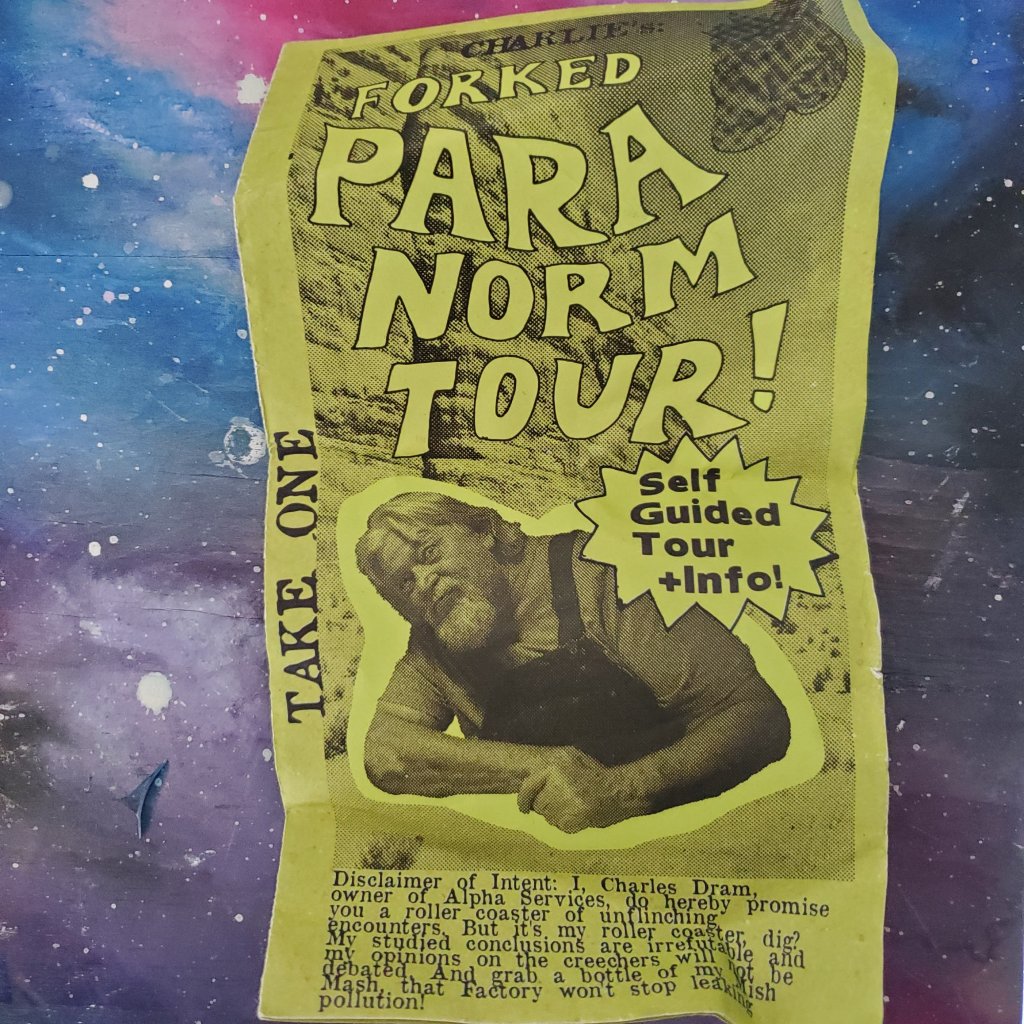
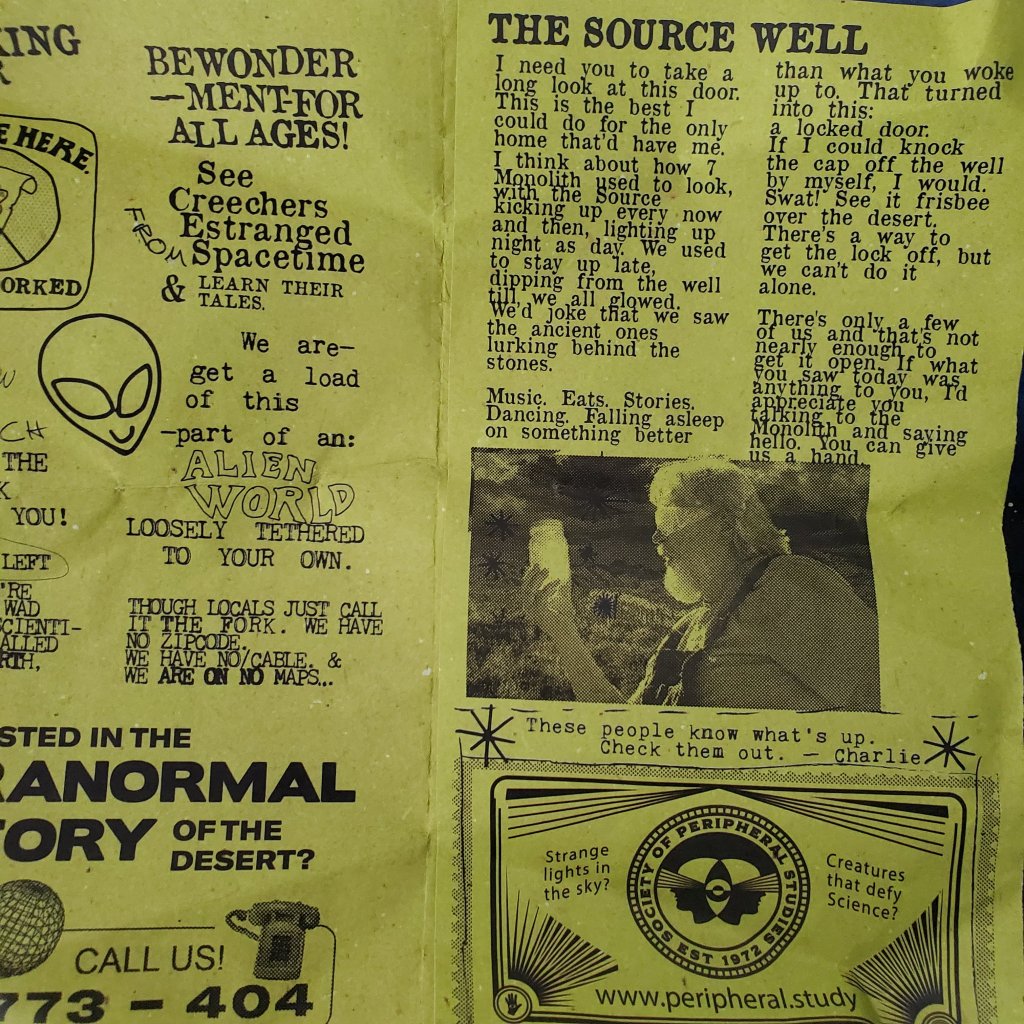
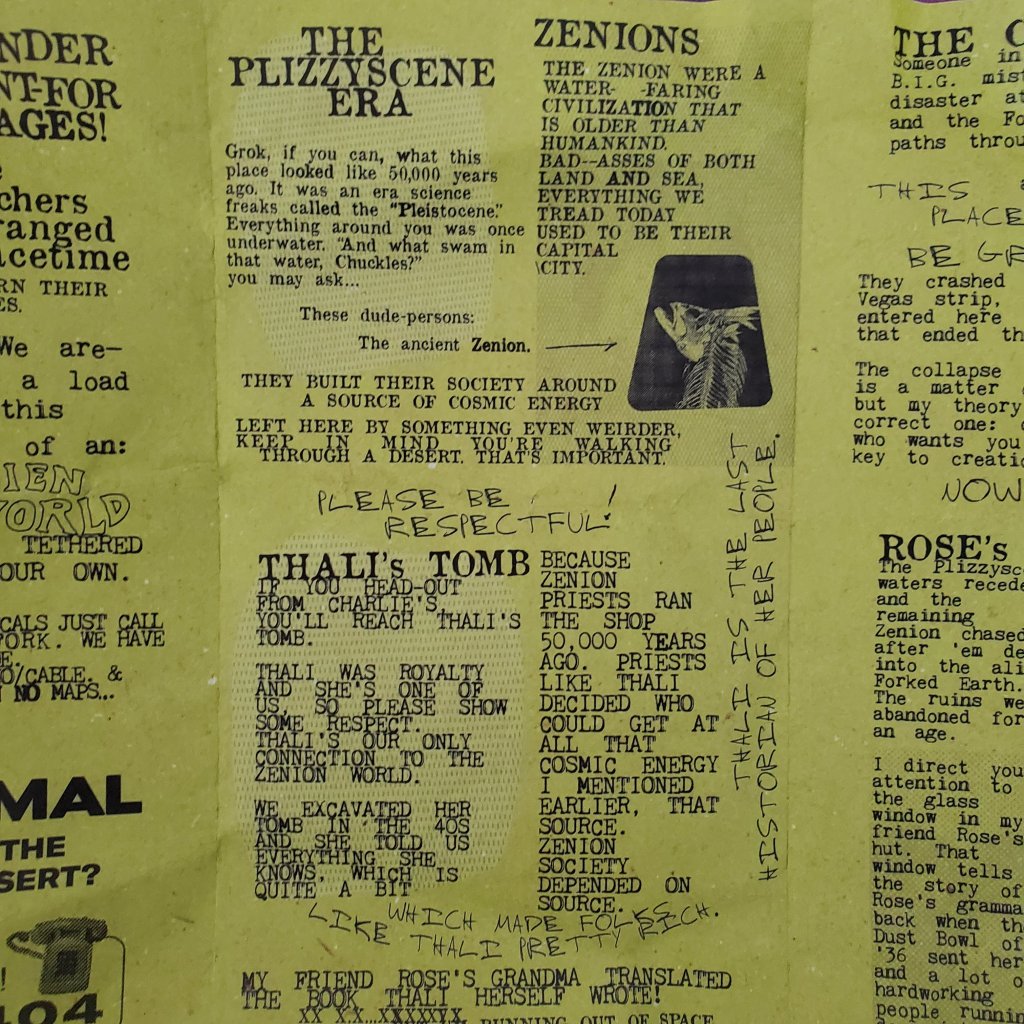
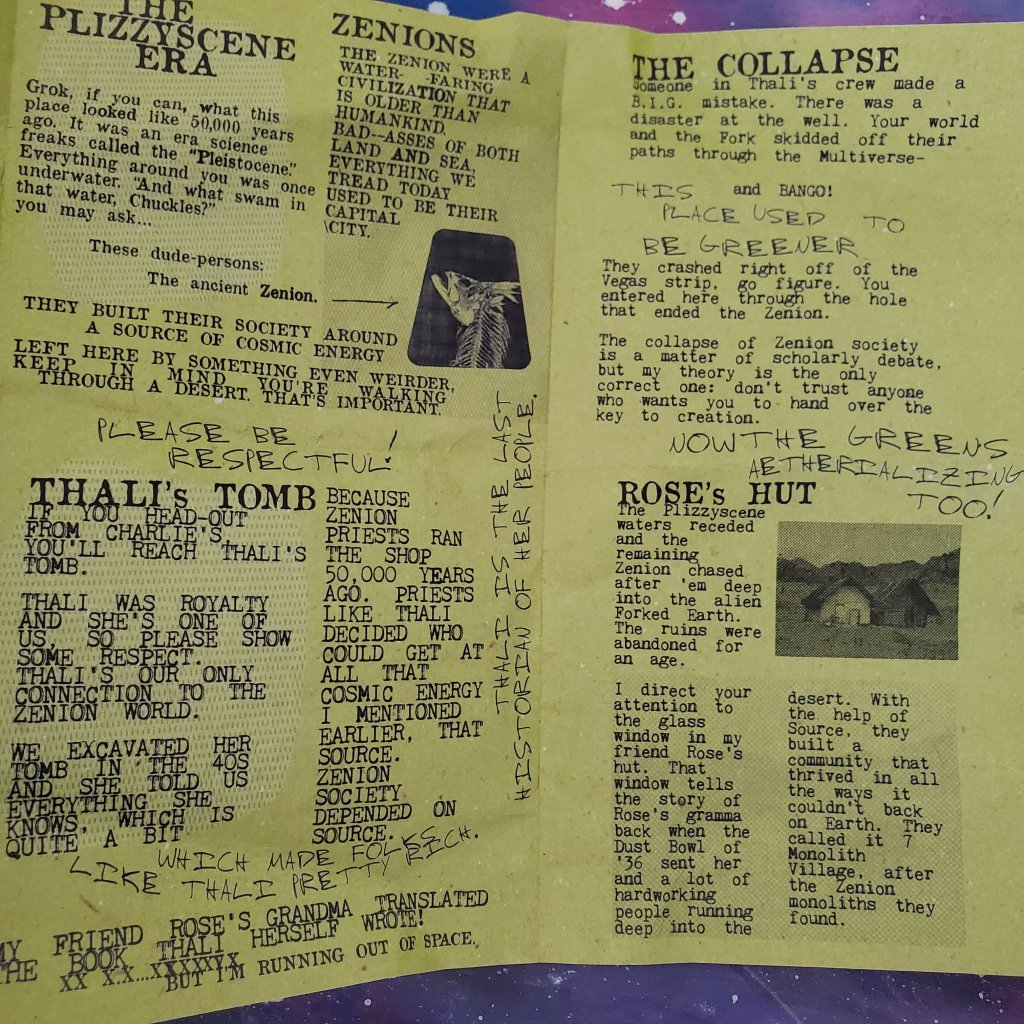
  1. Charlie Dram: Sir John Falstaff The whole story begins with Charlie Dram; an old garage attendant who lives in the fictional town of Seven Monolith Villiage in Nevada. As you can see in the brochure I photographed above, Charlie runs a small tourist attraction where he guides tours allowing people to see The Forked Earth- a dimensional rift between our world and an alien planet, that is also the fount of a powerful and dangerous place called The Source Well. At some point, Charlie goes into business with his family, who eventually cut him out of their lives.

Henry V. I know thee not, old man. Fall to thy prayers.
How ill white hairs become a fool and jester!
For God doth know, so shall the world perceive,
That I have turn’d away my former self;
So will I those that kept me company.

  • King Henry IV, Part II, Act V, Scene 5.
Walter Dram, CEO of Dramcorp
2. Walter Dram: King Lear. This being America of course it was inevitable that somebody would try to capitalize on the Source Well, specifically Walter dram Charlie's brother Walter. Mr. Dram, the CEO of Dramcorp found a way to harness the source and use it. It's not explicitly stated but it's highly implied that he took the Source to a place called Plenty Valley and started using it to revitalize crops out in the Las Vegas desert.
After harnessing The Source, Walter found that he was able to create produce that had unusual properties and from there he opened his grocery store, Omega Mart. If you go to the store, the products seem just a little off- they all have peculiar names, seem to have peculiar properties and in some extreme cases they seem to have inhuman properties like like lemons that are alive!

Charlie calls these creatures  "mascots;" creatures that have that seem to be living cereal boxes. The source seems to have unpredictable and uncontrollable effects on natural products but because every Omegamart produce is doused with Additive S (which is Walter's addictive additive made from The Source), customers don't seem to care if they become addicted to any products that are laced with The Source.

Walter finds himself extremely rich and successful and opens up his corporation Dram Corp in 1977. Decades later in 2020, Walter promises to make his daughter Cecilia Dram his sucessor when he retires, but at some point, he must have reneged on that promise, proclaiming Kaz Matzumora the future CEO. What happened to accelerate the fallout between Walter and Cecilia, we're not sure, but it's quite possible that it has something to do with Cecilia's daughter Marin.

Better that thou hast not been born, then not to have pleased me better.

King Lear

So we have a rich and successful man, who, now that he’s getting old, desires to pass his empire on to younger people, including his daughter. At the same time, he refuses to let go of power, and is willing to throw family under the bus to get his way, as he did with Charlie, and would have done with Marin, (more on that later). Let’s just say, it is very easy to spot the parallels between Walter Dram, and King Lear. Look at this video below where Walter seems to repent for his greed and abandoning his family, though it takes place in an ethereal prison.

  • Lear. Pray, do not mock me.
    I am a very foolish fond old man,
    Fourscore and upward, not an hour more nor less;
    And, to deal plainly,
    I fear I am not in my perfect mind.
    Methinks I should know you, and know this man;
    Yet I am doubtful; for I am mainly ignorant
    What place this is; and all the skill I have
    Remembers not these garments; nor I know not
    Where I did lodge last night. Do not laugh at me;
    For (as I am a man) I think this lady
    To be my child Cordelia.
King Lear Act IV, Scene vii.

When I watched the Film Theory about Omega Mart, I thought Walter was like King Duncan in Macbeth, and his daughter Cecelia was Lady Macbeth, killing Walter to gain his power. The truth though, is much more complicated, and it centers around Walter’s granddaughter, Marin.

2. Marin Dram: Cordelia from King Lear, Miranda from The Tempest

if you look at the videos in Charlie’s office you can see Cecilia Dram (Walter’s daughter), drinking the Source. Within a minute she starts having cramps, and convulsions; she has been literally impregnated by the Source! Her daughter Marin was conceived by Cecilia Dram and the Source. But, there’s a catch; Marin, because she was created from the Source, cannot be too far from the Source Well. So, rather than living with her her mother and grandfather at Dramcorp, she’s forced to live in a yurt in Seven Monolith Village, very close to the Source Well.

Tarot cards found in Marin’s desk.

Marin’s diary expresses a deep sense of loneliness and a desire to explore the world, not unlike Prospero’s daughter Miranda in The Tempest. She also expresses romantic feelings for Rose, a girl who lives in Seven Monolith, (who according to Charlie, is the granddaughter of a woman who successfully translated the language of the aliens who created the Source Well). The wonderful music video “Marin’s dream” playing below, shows cogent references to Marin having bisexual feelings for Rose and fear towards her mother. This is partly because, since Marin is connected to the Source and her family has been exploiting The Source for profit, she is fearful that her mother will exploit her for her Source-given powers .

We are such suff as dreams are made on, and our little life is rounded with a sleep

Prospero- The Tempest

It is further revealed that Marin is capable of creating living creatures with her own mind because of her connection to the Source. Below is a drawing by Marin of a hamster which then came to life in 7 Monolith! These powers make Marin highly desirable to both Celia and Walter. As Charlie mentions in the brochure, there are living product creatures called mascots and it seems likely that Marin is literally creating these creatures in her sleep!

At the end of the music video you can see Marin going through a portal in the wall. In Seven Monolith you can access numerous posters, emails, and phone calls that discuss and speculate about Marin’s disappearance. Some say she ran away from home, some say she was violently sucked into the portal, but the music video makes it very clear that Marin Dram chose to leave Seven Monolith Villiage, and to leave our universe as we know it. Why? It probably has to do with her mother, Cecilia Dram.

Cecilia’s letter to Charlie, May 2017

Cecelia Dram: Goneril and prosperO

Like I said before, I was expecting Cecelia to be the villain in the story- a power-hungry “thankless child,” (as King Lear puts it), who murdered her own father to take control of his empire. Now it’s possible that she did want to take the company at some point, but what also seems clear is that Cecelia is also seeking redemption for herself, and a reunion for her family.

Cecelia and Walter’s Disappearance

In a highly classified video that you can only access in the Dram Corp offices, Walter and Cecilia confront each other about Marin, and Walter seems to be intent on exploiting her gifts for profit. At this point, the video cuts out, but the audio tells us that Walter has fallen into the Source Well. It’s unclear whether he fell or if Cecilia or Marin pushed him, but what we do know is that Walter in every subsequent and email and communication with the board is referred to as “traveling.” When I first saw this, I thought that it meant that Cecilia had murdered Walter simply to gain control of the company, but it seems to be wilder than that; it seems that Cecilia might have thrown Walter into the source well to protect her daughter, but now wishes to get him back.

Once Walter falls into the Source Well, he actually absorbed so much Source that he no longer has a physical form; he seems to have ascended to a higher plane of existence and as you can see in this whiteboard, there’s a rumor that he is actually hiding somewhere in the Omega Mart facility. I won’t give away where he actually is though; you’ll have to discover it yourself.

Cecilia’s motives are the most interesting and ambiguous in the course of the Omegamart storyline. Her demeanor changes drastically after the disappearance of her father and daughter; it seems that she is trying to harness the power of the source not for profit but for but to cause her employees to “Ascend to a higher plan of existence.” Other members of the board in teleconferences seem frustrated with her, accusing her of no longer taking an interest in selling products anymore and that she seems to be coming down with strange cult-like behavior. Look at this highly confusing LED talk she gave one month after Walter’s disappearance:

So it’s ambiguous what Cecilia’s motives are- it could be that she’s attempting to create an army of Source-addicted zombies to do her bidding. It’s also possible that she is trying to figure out how to replicate the same experience as Walter and Marin. Maybe she wants to try and replicate what happened to them, so she can see them again.

Further evidence also supports that Cecelia is desperate to contact Marin and Walter by the fact that in addition to working on LAT, (her employee advancement program), Cecilia is also pushing her research team to create inter-dimensional portals. The clip above in which Cecilia talks to her DART scientists strongly implies what Cecilia really wants to do is to find her daughter in whatever dimension that she’s actually in. Notice that when the test subject mentions a teenage girl he sees in his dreams, Cecelia immediately drops everything to talk to him. Soon after that, DART starts working on DRAMNILATE, a technology that allows researchers to look inside people’s dreams, and test them on the exact same employee as before. Clearly Cecelia is hellbent on finding Marin anywhere, even in dreams!

Through the entire Omegamart storyline, it is ambiguous as to whether Cecilia is the hero or the villain. Her quest to find her family is noble, but she is hiding behind a mask of unbridled capitalism and exploiting a company that creates an addictive substance to do it. It seems almost Faustian that Cecelia has made a deal with the Devil to try and get her family back.

 Tell your piteous heart there’s no harm done. No harm.

I have done nothing but in care of thee,

Of thee, my dear one, thee, my daughter, who

Art ignorant of what thou art…

The Tempest , Act I, Scene ii.

So what does this have to do with Shakespeare? When I saw how Cecelia was protecting Marin I saw a king Lear trope; a greedy cruel old man who places his kingdom ahead of even his own family. Lear’s daughter Goneril lies to him and rejects him, but she does so to protect herself. Cecelia is alike a Goneril who protects Cordelia, the youngest and most innocent of Lear’s daughters, while Marin is like Cordelia herself.

Zenion creature (left), and illustration of Caliban (right).

This island’s mine, by Sycorax my mother,
Which thou takest from me! When thou camest first,
I loved thee And show’d thee all the qualities o’ the isle,
Cursed be I that did so! All the charms
Of Sycorax, toads, beetles, bats, light on you!
For I am all the subjects that you have,
Which first was mine own king!

Caliban, Act I Scene ii.

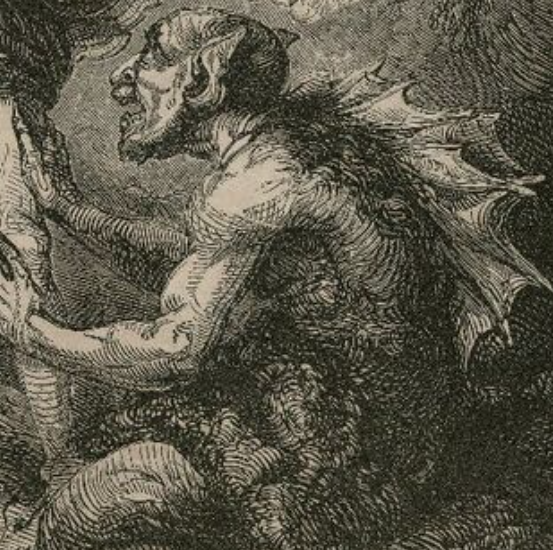
Looking at the totality of the Omegamart story, there are several connections to the Tempest Calliban the creature that lives on Prospero’s island bears striking similarities to the Zenions. He is described as being man and fish, much like the Zenions. Further, Caliban is not a native inhabitant of the island; he was brought over by the witch Sycorax and Prospero exploited him after Sycorax died, much like how the Dram family, especially Walter, exploited The Zenion’s magical Source.

In both cases, the Prospero character has both noble and ingnoble goals- Prospero wants to get himself and his daughter home, but also to revenge his exile to the island. Walter and Cecilia seem like Prospero split in two: there is a light side that wishes to defend Marin and see her safely home,and the dark side that wishes to exploit The Source and addict unwitting consumers.

I won’t give away how the story of omegamart ends but let’s just say that Walter gets across the notion that he has repented for his greed, and wishes to free the Source from the factory, much like how Prospero frees Ariel at the end of The Tempest. In both cases, YOU are the necessary person to help free Walter. Both Walter and the Meow Wolf team have hinted that there are new areas of Omega Mart that guests haven’t unlocked yet. Perhaps you will be the one to unlock the secret to free Walter, and the Source!

  • Prospero. Now my charms are all o’erthrown,
    And what strength I have’s mine own,
    Which is most faint: Let me not,
    Since I have my dukedom got
    And pardon’d the deceiver, dwell
    In this bare island by your spell;
    But release me from my bands
    With the help of your good hands:
    And my ending is despair,
    Unless I be relieved by prayer,
    Which pierces so that it assaults
    Mercy itself and frees all faults.
    As you from crimes would pardon’d be,
    Let your indulgence set me free.
Prospero. Act V, Scene i

Thanks for reading this post. If you enjoyed reading it, leave a comment below. Please also relate any Omega Mart stories you had at Area 15!