How Accurate Is Hamnet?

“She’s got…it, hasn’t she? The pestilence?” (O’Farrell, 105).
As this quote, (and the subtitle) suggests, Maggie O’Farrell’s novel Hamnet: A Novel About the Plague, focuses on the terror surrounding the plague and its devastating consequences on families. I really respect this book for its historical authenticity, it’s clever prose, and O’Farrell’s command of style, but I should warn you that this novel is definitely not for breezy summer reading.

If you are looking for a novel about William Shakespeare, this isn’t it; the Bard only appears in flashbacks. The action mainly concerns his wife and children. While Will was living and working in London for most of the year, his family lived in Stratford Upon Avon, along with the playwright’s mother and father. The novel has follows the characters across two times: 1582, when Shakespeare and his wife first met, courted and married, and around 1595, during an outbreak of plague that would (Spoiler Alert) eventually claim the life of Shakespeare’s son, Hamnet.

Drawing of Shakespeare and his family. Hamlet and Judith are on his right, his other daughter Susanna and his wife Anne are on his left.

The novel has a very dour tone, but that is by design. The author herself writes that the premise of the book was to create a realistic (albeit fictional) account of the Shakespeare family as their only son fell sick and died.
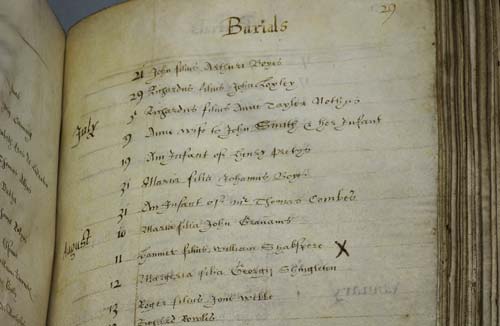
Burial records for the town of Stratford Upon Avon for 1596. On August 11, it records the death of Hamnet Shakespeare, William’s only son

The premise is intriguing from a historical point of view. We have no diaries or correspondence that express how the Shakespeares dealt with this catastrophic loss, but many scholars believe that Shakespeare’s play Hamlet was a direct homage to his son, since in Elizabethan England the names Hamlet and Hamnet were used interchangeably. Still, it must have effected Will in other ways, and it had to have had an effect on Hamnet’s mother and sisters, and that was O’Farrell’s focus when adapting this story as a novel.

I would describe the novel’s tone as ‘haunting,’ which is appropriate since it’s based around how a child’s death effected his family. It reminds me of a passage Shakespeare himself wrote about the death of a young boy in his play King John:

Grief fills the room up of my absent child,
Lies in his bed, walks up and down with me,
Puts on his pretty looks, repeats his words,
Remembers me of all his gracious parts,
Stuffs out his vacant garments with his form;
Then, have I reason to be fond of grief?
Fare you well: had you such a loss as I,
I could give better comfort than you do.
I will not keep this form upon my head,
When there is such disorder in my wit.
O Lord! my boy, my Arthur, my fair son!
My life, my joy, my food, my all the world!
My widow-comfort, and my sorrows' cure! King John Act III, Scene iv.


Like Constance in the quote above,, All the characters in Hamnet are haunted.
[Hamnet is pursued by plague. Will Shakespeare and Anne Hathaway are haunted by their abusive parents. Will’s father John by the loss of his business and social standing, and of course, everyone is haunted by Hamnet’s death.
https://youtu.be/kj240pJPpB8

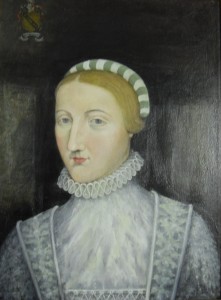
Artist’s restored version of a Elizabethan woman, believed to be Anne Hathaway.
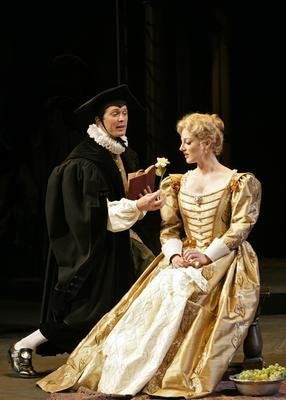
Lucentio and Bianca (The Taming of the Shrew, Oregon Shakespeare Festival, 2007)

Although the novel is mainly about Hamnet’s decline and death, my favorite parts of the book are flashbacks to the courtship and marriage of Will Shakespeare and Anne Hathaway. We know nothing about their real courtship, so O’Farrell borrows the plot from Shakespeare’s Taming Of the Shrew. Like Lucentio in Shrew,
The 18 year old William Shakespeare is a Latin tutor, (having not yet become a writer), who woos a misunderstood woman whom the town calls a shrew. In the book, Anne Hathaway is known as Agnes and (like many unmarried women of the period), is looked on as odd and somewhat wild. Many single women of this period would likely face discrimination, and sometimes. In this video, you can see how cunning women like Anne had an uneasy relationship with the local community; some saw them as an asset to the community, but others believed their abilities came from The Devil. For more information on Anne’s life, click here.

The History Guy- Witch Trials in the 16th and 17th centuries.

Anne is further isolated because of her strange abilities- in the book she owns a falcon, not a ladylike hobby for 1580s England. She is also skilled with medicinal plants and knows how to read palms. In essence, though the town ostracizes Anne, Shakespeare admires her cleverness, and the book implies that Shakespeare would later use her skills in characters like Kate from Shrew, Friar Lawrence (the skilled potion master), and maybe even the witches from Macbeth.

The reusing of Shakespeare’s plots doesn’t stop there- Before Anne and Will get married they are handfasted- that is they make a mutual promise to get married in front of witnesses. Anne knows that her family will not consent to their marriage given Shakespeare’s low economic prospects, so she convinces Will to get her pregnant. This mirrors Claudio and Juliet in Shakespeare’s Measure For Measure, who are publicly shamed and arrested for fornication, even though their only crime was not waiting until they had given a dowry to the groom’s parents before consumating the marriage.


One final master stroke of O’Farrel’s historical fictive tapestry is how she engineers the father son conflict between Will Shakespeare and his father John. Shakespeare loves to explore the power dynamic between boys on the cusp of manhood, and their already powerful fathers. In the case of John Shakespeare, O’ Farrell depicts him as a man who has worked, schemed, scammed, and clawed his way to the highest wealth his birth can allow him, but is now falling from grace, who has nothing but contempt for his son who seems like a worthless dreamer, incapable of hard work. This most closely echoes Shakespeare’s Prince Hal and King Henry, a son who must prove his fitness to be king to his father and to his nation. Watch this exchange from “The Hollow Crown” where the sick and aging John of Gaunt (Patrick Stuart), chastises his weak, effeminate nephew, King Richard II:

Historical Notes:

Infant mortality in Elizabethan England:

Even before Hamnet is born, his mother and mother in law are painfully aware that he might die young. Sadly this is very historically accurate. Infant mortality rates were high in Elizabethan England. According to Ian Mortimer in his book The Time Traveler’s Guide To Elizabethan England, mothers had to keep their children at arms length and not get too attached. Being a mother in this time meant dealing with the constant knowledge that your child might not survive:

In Stratford in the 1560s, there are on average, sixty-three children baptized every year- and forty-three children buried.

Mortimer, 27.

John Shakespeare’s fall John Shakespeare was more than a glover- he held a position in the Stratford Guild Hall- basically a city council position. He was in charge of hiring constables, keeping the peace, overseeing the brewing of ale, and approving theatrical entertainments for civic events. Probably John got his son interested in theater by letting him tag along to the sort of private performances he would have watched to determine whether a play or troupe was good enough for, for instance, the visit of a peer. However, by the 1580s, John was losing his business and selling off his land assets. Scholars suspect that either John was a closet Catholic, forced to pay fines every time he failed to attend protestant church, or he was avoiding church and his alderman council meetings because he knew his creditors would be there. In any case, O Farell takes this historical tidbit and turns John Shakespeare into a bitter, broken, abusive man whom Shakespeare can’t wait to get away from. Shakespeare and his wife bond over their abusive parents and dream of succeeding financially so they can get away from their parent’s influence.
Malt and wool The novel hints at John Shakespeare’s secret side business selling wool and malt, but never explicitly states that this practice was illegal. All wool was controlled by the Elizabethan government so it was illegal to sell it without special permission, and in 1570, John Shakespeare was caught selling wool illegally. He was also found guilty of money-lending, hoarding grain, and selling malt. This is why he tells his son to forget the wool he saw in the attic.
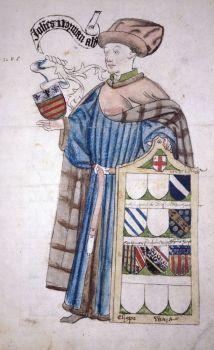
An Alderman in his official robe, the same kind John Shakespeare would have worn.

Historical Events Mentioned in Hamnet

  1. 1556 Anne Hathaway born. She’s referred to as Agnes in other court documents. Her father Richard owned a sheep farm in Hewland. At some point, her mother died and her father Richard married a woman named Joan, whom the novel portays as a bitter, controlling witch.

1564– Will Shakespeare born, third of 8 children. His father started out as a local glover, who quickly rose through the ranks of local government to become the mayor of the town. They owned a house in Henley street, which also doubled as the glove workshop. For more informaition on this fascinating building, visit the Shakespeare Birthplace trust: https://www.shakespeare.org.uk/visit/shakespeares-birthplace/
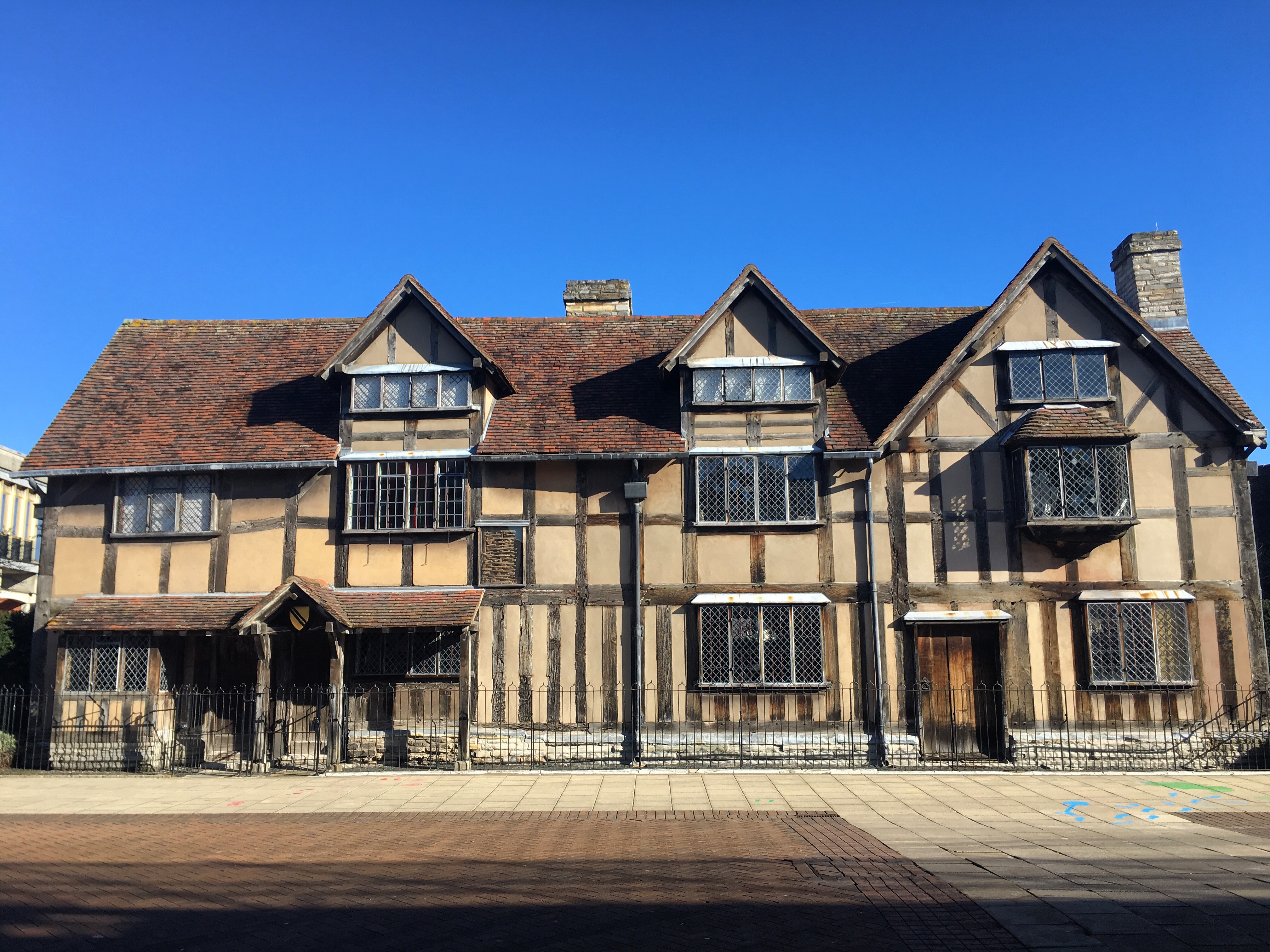
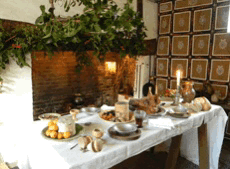
The Shakespeare’s house on Henley Street in Stratford Upon Avon, where Will, his wife, children, and parents lived until 1597.
Recreation of the Shakespeare’s dinner table.


1581– Anne’s father Richard dies,  bequeathing her “£6 13s 4d ‘atte the day of her maryage’.” Richard Hathaway owned a farmhouse in Shottery that still stands today! For more info, please visit the Shakespeare Birthplace Trust: https://www.shakespeare.org.uk/visit/shakespeares-birthplace/

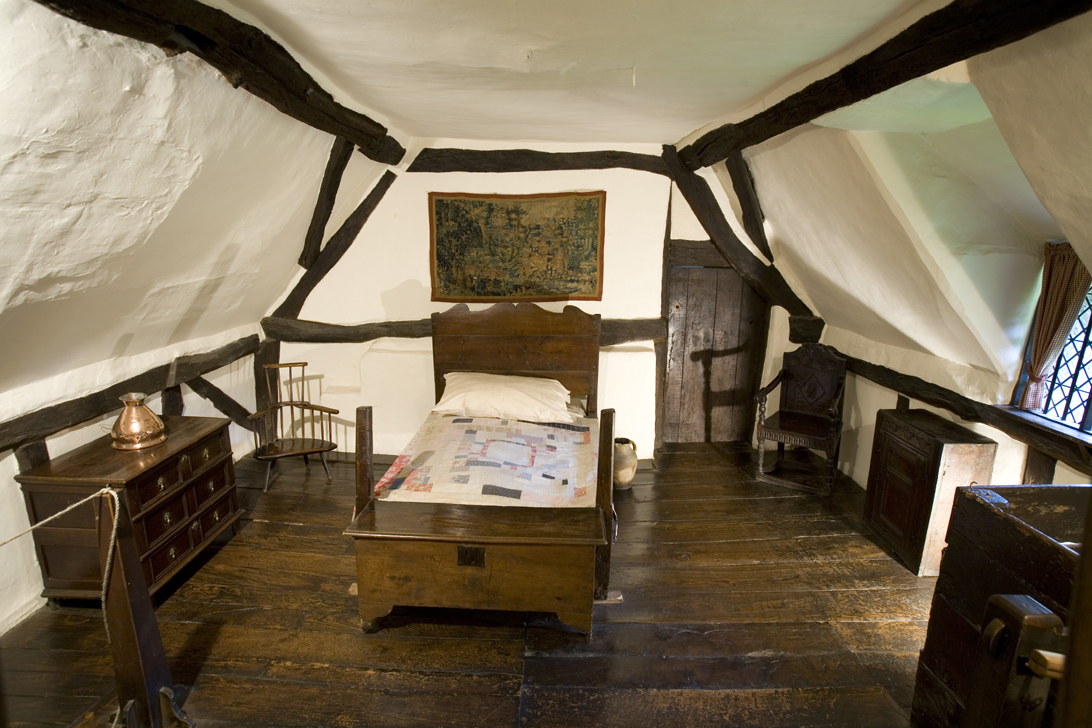
Anne Hathaway’s Cottage and Gardens, Stratford-upon-Avon, UK. June 2014.
Interior and exterior images of Ann Hathaways cottage, Shottery, Stratford upon Avon, Warwickshire.


1582– On November 27th, 1582, William married Anne Hathaway. He was 18, she was 26. It must have been a hasty and stressful situation. Shakespeare had no job, and based on the timeline, Anne was already pregnant with their daughter Susanna. For more information on marriage in the period, please visit my website on Elizabethan society:

The Shakespeares were granted a marriage licence by the Bishop of Worcester. They were married at Temple Grafton, a village approximately five miles (8 km) from Stratford.

Notes On Shakespeare’s Wedding Day:

  • We know that Anne’s family paid a dowry to Shakespeare’s family, which annoys Shakespeare in the book. He feels furious that his father uses the marriage to help his business interests.
  • According to Michael Wood, the priest left out the reading of the banns, and suspected the marriage was intentionally catholic. The book also makes it clear that this was a catholic ceremony, deep into the reign of the Protestant Queen Elizabeth I.
Robert Bearman, “The Shakespeare marriage bond,” Shakespeare Documented, https://shakespearedocumented.folger.edu/resource/document/shakespeare-marriage-bond

May 26, 1583– Susanna Shakespeare is baptized, which means she was probably born three days earlier.

February 2nd, 1585– Hamnet and Judith are baptized.The twins were named after two very close friends of William and Anne, the baker Hamnet Sadler and his wife, Judith. The Sadlers became the godparents of the twins and, in 1589, they in turn named their own son William.

1586– John Shakespeare is booted off the Stratford board of Aldermen for not attending meetings. Michael Wood suggests that John might have been avoiding the meetings because he was in debt, and the creditors knew where to find him. The novel seems to agree with this theory- the first time that we meet John Shakespeare, he is on the verge of beating his own grandson for sneaking up on him. If he was hiding from his creditors, he’d have a reason to be jumpy.
1592 – Shakespeare makes it in London?
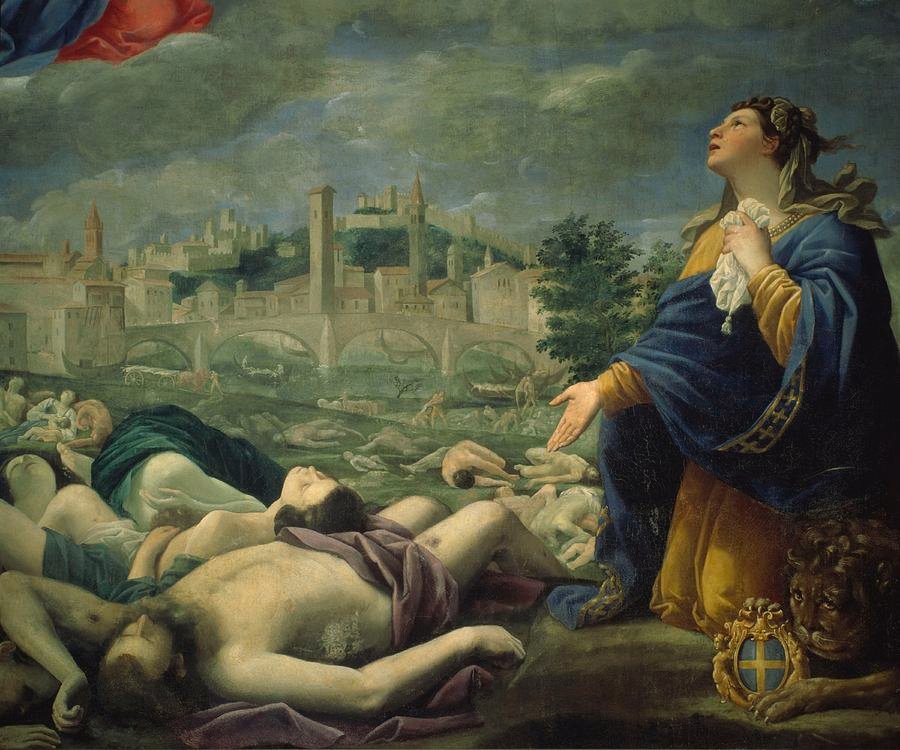
1593 Outbreak of Bubonic Plague- 15,000 people died in London alone. O Farrell does a great job of portraying the visceral terror people must have felt during an outbreak, the same terrified panic that gripped our world in 2020. As I’ve written before, not only did the disease itself instill fear, but also the Draconian measures of quarantines, and the grotesque and ineffective methods for treating the plague. To see how you might be treated for plague in the 1590s, take my quiz: https://sites.google.com/d/1iLSGjbllxU-ZwyrUya_xHtjojSCg9pd6/p/1xzNm37sGbHsQJgsnx4irZHJVp9YscVVJ/edit?authuser=2
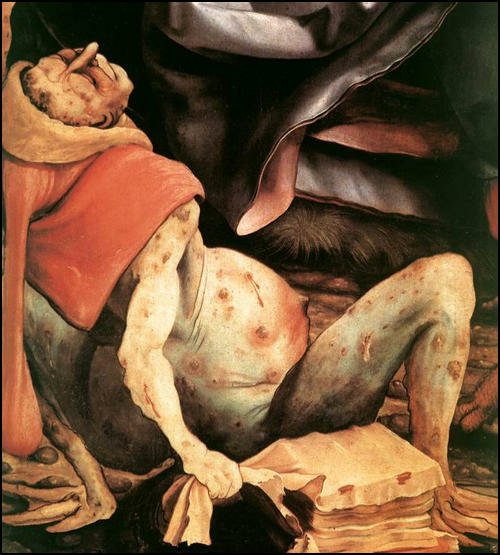
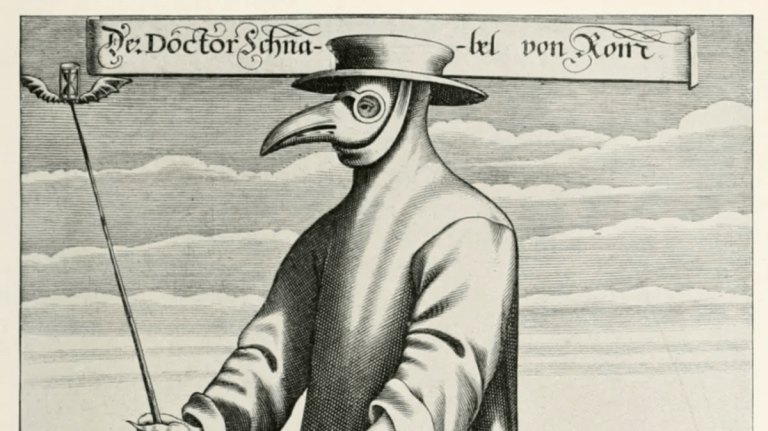
Because of the contagious nature of the disease, the theatres were closed, which forced Shakespeare to write poems instead of plays. Around this time he also probably wrote Romeo and Juliet, Richard III, and A Midsummer Night’s Dream.
Shakespeare published Venus and Adonis

1596 Hamnet dies

C. 1599– William Shakespeare writes Hamlet, his longest play, widely regarded as the greatest play ever written in the English language.
I hope this post helped increase your understanding and enjoyment of the book, and Elizabethan History in general.

For a fascinating look at the life of an Elizabethan woman, check out this documentary about Shakespeare’s mother Mary Arden, created by scholar Michael Wood:


New Outschool Lesson: Basics Of Stage Combat!

I’m teaching a series of online summer classes and I am very excited about this one in particular. I will teach a short class for kids ages 10-18, about duelling and swords. I will then explain basic stage combat moves, and finally choreograph a short fight for the students to do at home!

Registration starts now! Space is limited so go to Outschool.com, ASAP. Cost is $5 per child.

Summer Shakespeare Academy!

I’m working this summer with the good people at Outschool, an online learning platform for kids ages 3-18. I’m designing a series of Shakespeare classes that you can sign up for. We’ll be doing acting exercises, reading Shakespeare’s text, and making Shakespeare props Cost is $3 per child.

The course is ala carte, that is, you can sign up for as many courses as you like. Each course builds on the last one, but you don’t have to have taken the previous ones to enjoy any one particular course Let me know in the comments which class(es) you are interested in, and/or what suggestions you might have. I can’t wait to hear what you think about these summer Shakespeare courses, and I hope to see you online soon!

1. Introduction to Shakespeare- (enrollment here: https://outschool.com/classes/introduction-to-shakespeare-or-how-i-learned-to-love-the-bard-UoHH5fes?sectionUid=973060db-f857-461a-a23a-f1476203a544&showDetails=true) We’ll talk about why Shakespeare is so famous and learn about his life and career. Then we’ll do some fun quizzes that you can earn prizes based on how well you pay attention!
2. How to write ✍ like Shakespeare (Enrollment here: https://outschool.com/classes/how-to-write-like-shakespeare-0HuPq1Cg?sectionUid=4243af25-ba41-4724-82a2-61bd7c7d862e&showDetails=true) Have you ever wanted to woo your sweetheart or write the next bestselling play? Well, this course will cover the secrets of Shakespeare’s writing. We’ll cover how to write romantic poems, the structure of Shakespeare’s plays, and you’ll get to write your own Shakespearean speeches!
3. Intro to Shakespearean acting Practical tips and tricks for your next Shakespeare audition.
4. Shakespeare’s villains
We’ll look at the darkest and creepiest Shakespearean characters and see why they still fascinate us today!
5. The Violent Rhetoric Of Shakespeare’s Julius Caesar (Registration Here: https://outschool.com/classes/the-violent-rhetoric-of-julius-caesar-fkMLbAtA?sectionUid=1f9220cd-8c28-438d-9799-8479494353a4&showDetails=true#usMaRDyJ13) In this one-time course, students will analyze the rhetoric and persuasive power in two speeches from Shakespeare’s “Julius Caesar”
6. Intro to Romeo and Juliet – Get a leg up on your next English class with this fun, frenetic look through the characters, themes, and story of Shakespeare’s most popular, and most-taught play.
7. Basics Of Stage Combat (Registration here: https://outschool.com/classes/1120ada2-047d-4b0f-84f6-5eb4b0f7dc66/schedule#usMaRDyJ13 I’ll teach the kids about Elizabethan street fighting, and the basics of stage combat.
8. The Balcony Scene of Romeo and Juliet– It’s been called the greatest love scene of all time, but why? I’ll explain the imagery, the poetic language, and give you a chance to make your own love poetry!
9. Insults and Shakespeare You’ll craft your own Shakespeare insults and engage in a (respectful), beat down with your classmates! Along the way, we’ll talk about how insults escalate to violence in Shakespeare’s Romeo and Juliet.
10. The Iconic imagery of Romeo and Juliet We’ll look at some beautiful paintings, songs, and other works of art that build on Shakespeare’s poetic imagery.
11. Romeo and Juliet and pedagogy Shakespeare is uniquely challenging to get kids to engage with. I’ll give you some of my resources, games, and activities to help you delve into the play in your next class.

If you like these courses, let me know by leaving a comment below. If you’re interested in signing up, visit my teacher profile page: https://outschool.com/teachers/The-Shakespearean-Student. New classes will be added every week, and I’ll work around your schedule when planning the dates and times. Hopefully this will be a great chance for me to share my expertise with a young group of future Shakespearean students!

Resources for Teachers and Students: A Visit To Elizabethan London

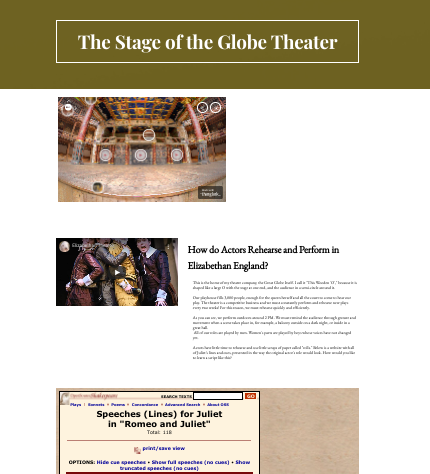
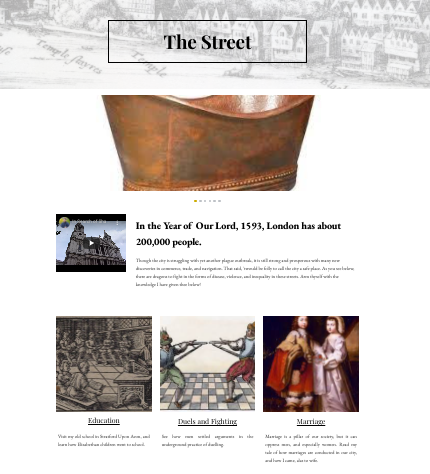
I’m working on several educational projects at the moment and I’m proud to share this one with you. It’s what I call a virtual tour of Shakespeare’s London. The teacher I’m working with said she wanted to teach the kids about the culture of Elizabethan London as he was writing Romeo and Juliet. Naturally with the pandemic a field trip was out of the question, (for multiple reasons), but I wanted to create a visually interesting tour of the places Shakespeare knew and worked and try to imagine his perspective and how that might have informed the characters and themes of Romeo and Juliet.

So I created this: a website written as if Shakespeare himself is taking you on a tour of his London in the year 1593, the year where, as far as we know, he had just completed writing Romeo and Juliet. 1593 was also the middle of another outbreak of Bubonic Plague. It has virtual tours of Shakespeare’s Globe Theater, Hampton Court Palace, Shakespeare’s Grammar School, and a quiz where you can pretend you’re in the Elizabethan doctor’s office.

For the class I’m helping, the students will fill out a worksheet as they navigate the website so they learn from the material at their own pace. If you’re interested, leave a comment and I’ll post the worksheet so you can use it in your classroom.

My hope is that this website can be a resource for anyone trying to connect with Romeo and Juliet and trying to learn from the culture of Elizabethan London. Shakespeare was a product of his time and his experiences must have had an influence on what he wrote. Even if they didn’t, they certainly influenced the people who saw the play and he knew that it would. So I hope it can help you understand a little bit more about the world of this famous play, and the context of the world that created it.

Shakespeare’s Roman Women

Since it’s Women’s History Month, and we just had the Ides of March last week, I thought it might be a good idea to analyze some of Shakespeare’s  female characters in his Roman plays. I’ve talked a lot about the men in Julius Caesar, Titus, Andronicus, and Coriolanus, but haven’t examined the female characters much, so that’s what I’m going do discuss today.

Examining these characters is important because many are based on real Roman women, and Shakespeare’s sources reveal what Roman culture thought about women’s roles. This is particularly relevant to those of you reading this in the west because Roman culture influenced the Elizabethans and they set the foundation for our culture today. Feminist criticism has been much maligned, (and I’m certainly not an expert on feminism), but I do know this: it exists to question the values and conventions of our culture, so we can identify what works and what needs to change to build a more egalitarian society.

When it comes to Shakespeare female characters in general, he challenges the status quo, but also reinforces it: There’s always a character who challenges traditional gender roles like Katherine and Beatrice, but, (with the exception of Twelfth Night), for every one of these there’s also a Bianca or a Hero; characters who embody traditional famine roles and virtues of chastity, meekness, and yes, marriage and childbirth.

Nowhere is this more apparent than in Shakespeare’s Roman plays where there are always two female characters and they usually embody opposite views of women’s roles and a woman’s duty to her country and the men in their lives

1. Tamara from Titus Andronicus

Titus was Shakespeare’s first tragedy and his first Roman play. As we shall see, as Shakespeare went through his career we see a more nuanced view of women’s roles and a greater appreciation for women who disdain or challenge patriarchal society. The characters Lavinia and Tamara are perfect examples and counterexamples respectively of traditional feminine roles.

When we first meet her, Tamara is the queen of the Goths- an enemy tribe that Rome has just conquered. Everything about Tamara from her foreign upbringing, to her personality, is a counter-example of what Romans prize in women. She is portrayed as savage and bloodthirsty, motivated by revenge against Titus, (who in the first scene of the play, kills her eldest son. Tamara responds by masterminding the murder of all of Titus’ children. She is also sexually liberated and uses her sexuality to further her revenge. Tamara seduces the Emperor to get him on her side, and gets the Emperor to condemn Titus’ sons to death. Her adultery with Aaron is another way she uses her sexuality to get revenge; she brings ruin the monarchy by cuckolding the Emperor. Thus Tamara’s sexuality and bold personality is framed in the play as an existential threat to Rome itself.

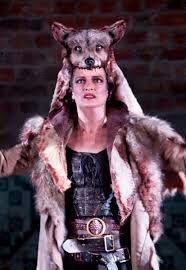
Tamara’s chief and only virtue is her love for her children, as you can plainly see in this scene from the play. Her love for her son Alarbus is why she begs Titus for his life, and afterwards, when he sacrifices Alarbus, Tamara’s love for her son turns into deadly hate to Titus. It is her motherly devotion that makes Tamara simultaneously human, and inhuman. As the play progresses however, Tamara is referred to in increasingly inhuman and savage terms. She dresses up as the goddess Revenge to torment Titus, and after she dies, Lucius, the new Emperor (and Titus’ only surviving son), calls her a “ravenous tiger,” and calls for her body to be thrown to beasts, since “Her life was beast-like.” Tamara is unquestionably the villain- a femme-fatale and a threat to all the Roman characters, but especially Titus’ daughter Lavinia.

2. Lavinia from Titus Andronicus

For the entire play, Lavinia embodies  traditional Roman female virtues, in that she is defined by the men in her life, and her chastity. The Romans actually invented the term castitas to refer to the female virtues of modesty and chastity, that is, only having sex with the man you are married to. Lavinia fits this mold perfectly. She’s a devoted daughter, wife, and sister. When we first meet her, she is a model of duty- greeting her father and asking for his blessing when he returns to Rome, and shedding tears for her brothers that were slain in the war:

In the cruelest and most barbaric scene in all of Shakespeare, Lavinia is raped by Tamara’s sons. Then, to keep her from identifying her attackers, they cut out her tongue and cut off her hands. The mutilation is grotesque, but for Titus, the Romans, and for the Elizabethans Shakespeare was writing for, the cruelest loss for Lavinia was the loss of her chastity. Now that she isn’t a virgin, Lavinia is marked with the opposite of chastity, incestum, or infamy. Even though the rape was not her fault, Lavinia is marked with shame. The Romans took unchastity extremely seriously; they used to punish it by throwing the adulteress to her death off the Tarpeian Rock. As you can see in this video, when a woman who was supposed to live chaste is even suspected of adultery, her very life is now in jeopardy:


When she loses her virginity, Lavinia becomes a silent creature of sadness. She is no longer a person, but a motivation for Titus’ revenge. Even if she hadn’t lost her tongue, she would still have little agency in the plot. This is why Titus kills her; to remove her incestum, and end her suffering.  Lavinia embodies the the cruel truth that women had to face in ancient Rome- once they lose their virginity, they are already dead in the eyes of most of Roman society.

Lavinia’s death scene from Titus, 1999, directed by Julie Taymor.

3. Portia (Julius Caesar)
If Shakespeare only wrote these two  female characters, you might rightly assume that he was a vile sexist, who defines a women’s usefulness simply by her chastity or lack thereof, and who thinks the proper function of a woman is to be quiet, demure, chaste, and obedient. Thankfully Shakespeare created Portia in Julius Caesar, and she defies many of the stereotypes associated with women in Ancient Rome.

Portia marks a turning point in Shakespeare’s Roman female characters as we we go from more ‘traditional’ female characters, to ones who exemplify masculine virtues. Instead of women being subordinates to men’s affairs and keeping out of religion, politics, and the affairs of Roman society, Portia is a character who demands respect, and to share her husband’s dangers. Some ancient sources suggested possibly Portia might have been the one who inspired Brutus to kill Caesar, (more on that later), but in any case Portia is not a character who is subordinate to men, but who demands to be treated as a Roman citizen.

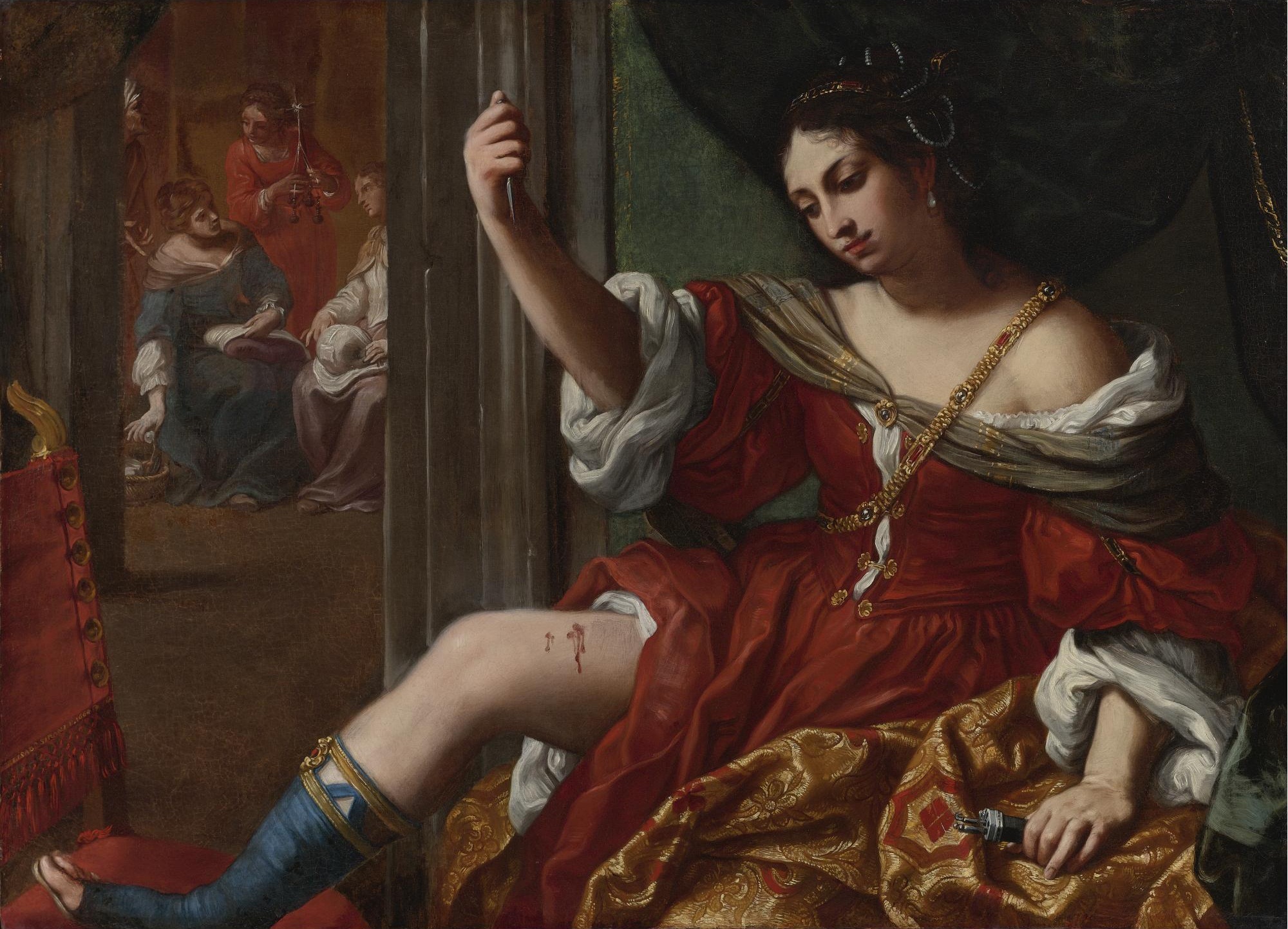
In one of the strangest passages of the play, Portia reveals that she has willingly injured herself by stabbing herself in the thigh. She does this as a way of establishing her tolerance for pain and her desire to be taken seriously by her husband:

Brutus. You are my true and honourable wife,
As dear to me as are the ruddy drops
That visit my sad heart
Portia. If this were true, then should I know this secret.
I grant I am a woman; but withal920
A woman that Lord Brutus took to wife:
I grant I am a woman; but withal
A woman well-reputed, Cato's daughter.
Think you I am no stronger than my sex,
Being so father'd and so husbanded?925
Tell me your counsels, I will not disclose 'em:
I have made strong proof of my constancy,
Giving myself a voluntary wound
Here, in the thigh: can I bear that with patience.
And not my husband's secrets?930
Brutus. O ye gods,
Render me worthy of this noble wife!

Romans have always had a connection with blood. Blood is a connection to duty; we owe our lives and our blood to Rome; the Gladiator whose blood honours the dead, the sacrifice of the enemy soldiers in Titus Andronicus, and the blood of the Roman soldier shed in service of the country. Rome is almost a culture that is built on blood. Portia in this gesture makes it clear that she is willing to shed blood just as much as her husband, who of course, will shed blood, (just not his own). In a way, Portia’s wound makes her more heroic than Brutus, because she is willing to suffer for the good of Rome, while Brutus kills for the good of Rome.

Shakespeare’s Roman characters, (male and female), extol the questionable virtue of the noble death. Historically when a Roman conspiracy failed, the conspirators had a choice; they could be paraded back to Rome humiliated and disgraced, or they could kill themselves and show defiance in the face of their conquerors. In some cases suicide was actually encouraged by the conquerors, as it meant that the threat was neutralized. In response, the conquerors would go easy on the wife and children.

Portia kills herself after Brutus is on the run. There could be two equally important reasons why she does this. First, she might be attempting to gain favor with the triumvirate by killing herself, (since she is complicit in the assassination), in the hopes that Anthony and a and Octavian will take pity on a Brutus’ children. It’s also possible that Portia kills herself because with the tide of battle turning, she might be next. Portia might be showing the same sort of resolve their husband later shows when he commits suicide to appease Caesar’s ghost and to defy his enemies the honor of capturing him.

Since Portia has a lot of her husband’s same virtues, the inevitable question I come to is to wonder what if; what if  Shakespeare’s Brutus had a listened to Portia more,what might he have done?

The Lictors Bring to Brutus the Bodies of His Sons, Jacques Louis David, 1789.

This painting by Jacques Louis David depicts Brutus’ ancestor Junius Brutus. We see that he is utterly removed and stoic him in the face of death. He has ordered the execution of his own sons for trying to bring back the monarchy. In the background, Brutus’s wife and daughters are mourning the death of their son and brothers. Men like Brutus, with their Republican ideals, take little stock in the consequence of their actions.

One can only wonder if Brutus had had confided in Portia, would she have condemned his actions, or could she have led him to a more constructive path, that might have a prevented Brutus’ death, and maybe even stopped the coming days of the Empire?

Valumnia (Coriolanus)
In Shakespeare’s later Roman tragedy Coriolanus, we again see a young, chaste woman and an older mother figure, but unlike in Titus, the older Volumnia is much more heroic than the young maid Virgilia. Both show loyalty to Rome and devotion to Coriolanus, but Volumnia is not only a hero, she is in many ways a complete inversion of the Roman mother trope.


Volumnia is fanatically devoted to Rome and its army and like her son. She finds war more beautiful than symbols of peace, especially those associated with motherhood. In Act I, Scene iii, she says that the breasts of the Trojan Queen Hecuba were not as lovely as her son’s forehead when it spit blood in battle. She is an inversion of the traditional motherly character; because of her devotion to Rome and  her son,
she is more outspoken than other women and not afraid to talk back to anyone who questions Rome. In a way she is more of Coriolanus’ general or his father than a traditional mother. Her love of Rome is inextricably tied to her love of her son. She raises her son to be a warrior for the Senate and the people of Rome, exhorting him to either return in glory, or die. Observe this passage where she tells Coriolanus’ wife that she was never proudest than when she sent her son off to war:

Volumnia: I pray you, daughter, sing; or express yourself in a
more comfortable sort: if my son were my husband, I
should freelier rejoice in that absence wherein he
won honour than in the embracements of his bed where
he would show most love. When yet he was but
tender-bodied and the only son of my womb, when
youth with comeliness plucked all gaze his way, when
for a day of kings' entreaties a mother should not
sell him an hour from her beholding, I, considering
how honour would become such a person. that it was
no better than picture-like to hang by the wall, if
renown made it not stir, was pleased to let him seek
danger where he was like to find fame. To a cruel
war I sent him; from whence he returned, his brows
bound with oak. I tell thee, daughter, I sprang not
more in joy at first hearing he was a man-child
than now in first seeing he had proved himself a
man.

Although Virgilia fits the bill of the modest, chaste, and loyal Roman housewife, Volumnia is framed as much more heroic. She even uses her mighty stoicism to save Rome! After Coriolanus rebels against Rome and joins the Volscis, Volumnia gets him to agree to make peace with Rome. She does this by kneeling before her own son; humiliating herself for the good of Rome. This act of self-humiliation changes Coriolanus’ mind. Observe how shocked Coriolanus (Ralph Fiennes) is when his mother (Vanessa Redgrave) kneels in this scene from the movie Coriolanus (directed by Ralph Fiennes in 2011).

4. Julia (Antony and Cleopatra) and with Cleopatra

With these final two examples, I’ve chosen two character who, (at face value), resemble Lavinia and Tamara. One is a dutiful, chaste Roman wife, related by blood to the Imperial family. Octavia was beloved throughout Rome for her chastity and kindness, and the citizens were outraged when her husband Marc Antony, abandoned her for Cleopatra, who was seen by many as a murderous, barbarous, lustful and an evil sorceress. However, Shakespeare paints a much more complex picture of Cleopatra, and though Octavia retains her chastity and is praised for her virtue, Cleopatra is unquestionably the star of the show, and ultimately commands more respect, awe, and even sympathy from the audience.

In Shakespeare’s play (and in real life), Cleopatra used her beauty as a propaganda tool. As I mentioned the Game of Thrones post, she deified herself in order to be taken seriously. In the 1st century AD, the system was very much rigged against female authority and so women had to resort to terrible measures in order to secure power for themselves.

If you look at the play again especially near the end, Cleopatra doesn’t come across as a femme fatale, she comes across as a woman who is trying to keep her Kingdom and her son Cesarian safe, and she will do anything to protect him. As the name suggests, Cesarean was Cleopatra’s love child of Julius Caesar, so the entire Roman world wanted him dead, because he was a threat to Octavian’s claim to the throne. To keep her son safe, Cleopatra seduces Marc Antony, hoping a powerful Roman alliance will keep her crown safe, and her son alive. Sadly for her, Octavian would stop at nothing to bring down all threats to his power, including Cesarian and Marc Antony. Arguably, the only reason he married Marc Antony to Octavia in the first place, was that he knew if Antony committed adultery, it would give Octavian the perfect excuse to raise an army and destroy Antony. Cleopatra got caught up in the political machinations of the most powerful and cunning man in the ancient world, and held him off as best she could.

Cleopatra struggles through the whole play to keep Antony, her people, and the situation in Rome under control. Antony never respects her as a queen and treats her like a jealous boyfriend, which is why they frequently get into fights.

However, after Antony’s suicide, the audience sees that Cleopatra also genuinely loved him back, and weeps for him as a wife, not an ally. Yet, quickly she regains her royal composure once Octavian threatens to take her back to Rome in chains. She decides to simultaneously deny Octavian the satisfaction, protect her son, and join her husband in the afterlife with her regal suicide:

Cleopatra: Give me my robe, put on my crown; I have
Immortal longings in me: now no more
The juice of Egypt's grape shall moist this lip:
Yare, yare, good Iras; quick. Methinks I hear
Antony call; I see him rouse himself
To praise my noble act; I hear him mock
The luck of Caesar, which the gods give men
To excuse their after wrath: husband, I come:
Now to that name my courage prove my title!
I am fire and air; my other elements
I give to baser life. So; have you done?
Come then, and take the last warmth of my lips.
Farewell, kind Charmian; Iras, long farewell.
[Kisses them. IRAS falls and dies]
Have I the aspic in my lips? Dost fall?
If thou and nature can so gently part,
The stroke of death is as a lover's pinch,
Which hurts, and is desired. Dost thou lie still?
If thus thou vanishest, thou tell'st the world
It is not worth leave-taking.

In conclusion, Shakespeare couldn’t go too far against the grain with challenging traditional patriarchal views of women, but in his Roman plays, we see characters who are simultaneously mothers and murderers, chaste and intelligent, citizens and devoted wives. I’m not trying to say that Shakespeare invented feminism, but I do believe his characters remind us that it is folly to try to box either gender into such stale old Roman categories as masculine or feminine. Perhaps we should all aspire to be like Cleopatra, whose infinite variety allowed her to succeed in a man’s world, while still being a wife, a mother, a lover, and a queen.

What Does Shakespeare Say About Ireland 🇮🇪?

Happy St. Patrick’s Day! The Emerald Isle has long been a source of illumination for poet’s pens and Shakespeare was no exception. The Bard of Avon is indebted to Mother Ireland not only for the inspiration he took, but sadly for the pain he gave her back.

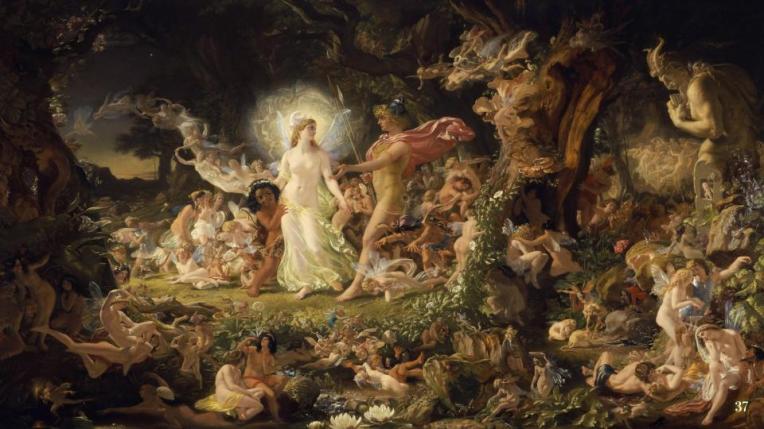
None of Shakespeare’s plays are set in Ireland, but he freely adapted elements from Irish folklore. English poet Edmund Spencer visited Ireland in the 1590s and adapted the folklore he picked up into his opera The Fairy Queen, which Shakespeare adapted into A Midsummer Night’s Dream

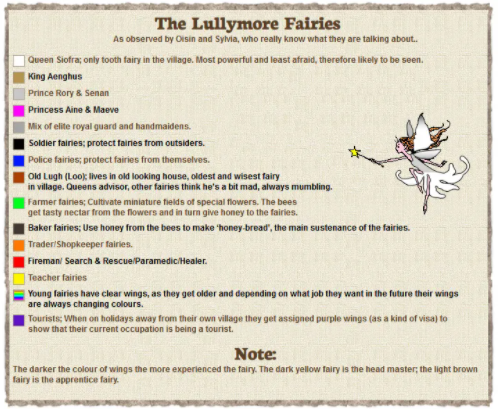
The Irish created and continue to tell many of the fairy legends and stories that we retell and adapt today. If you go to Lullymore park in Ireland, you can see a place that is essentially a “Fairy preserve.”

Types of fairies you can “spot” at the Lullymore Park in Ireland:

The old stories tell that Fairies are magical creatures who live in hollow places in the earth. Some are benevolent and help give rain and pleasant weather to the Earth, Like the king and Queen of the fairies, Oberon and Titania:

And the mazed world,
By their [the tides] increase, now knows not which is which:
And this same progeny of evils comes
From our debate, from our dissension;
We are their parents and original.

— Titania, (Queen of the Faries), A Midsummer Night’s Dream Act II, Scene i.

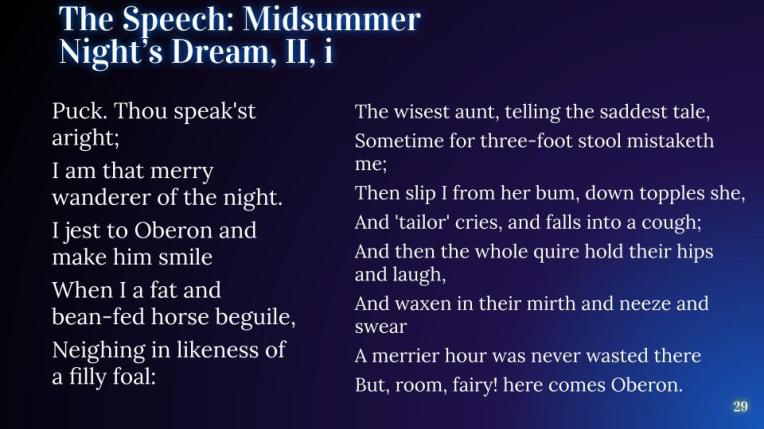
Titania in this speech shows great concern for nature, humanity, and the planet. She believes it is the responsibility of fairies, particularly herself and her husband Oberon, to control the elements and keep humans and fairies safe. Some fairies, however, are cruel and enjoy playing tricks on mortals, just like Puck in A Midsummer Night’s Dream, or Queen Mab in Romeo and Juliet.

.

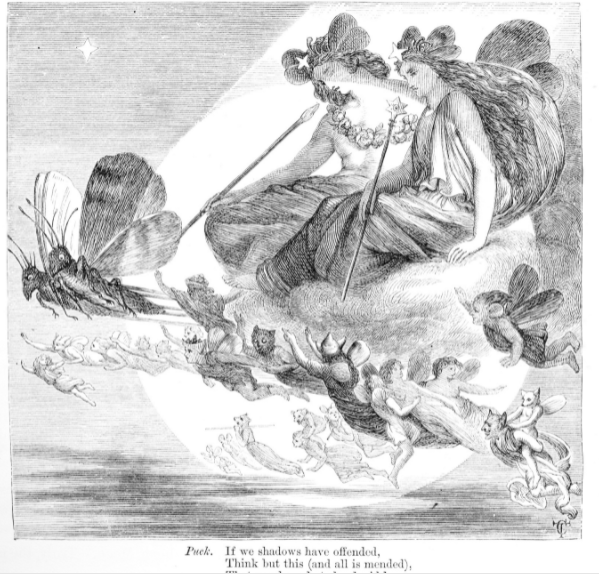
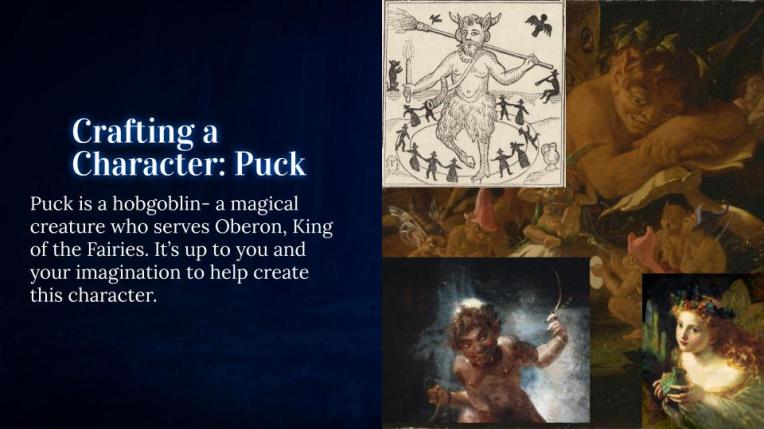
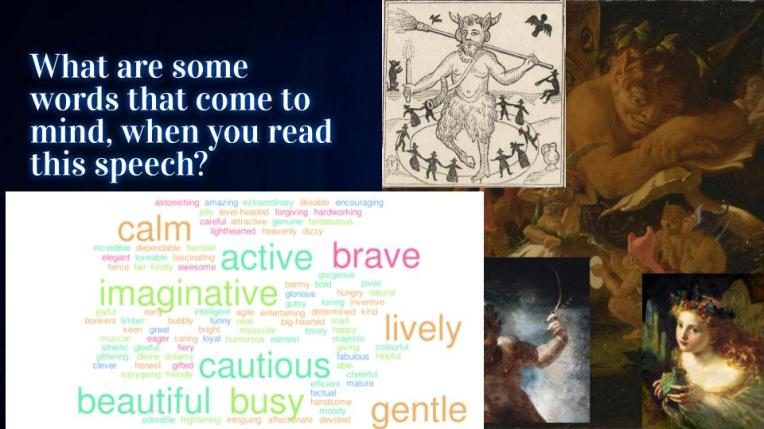
This is a short analysis I created of the tricks Puck plays on people in A Midsummer Night’s Dream, as part of my acting course on Ouschool.com. Note the different ways Puck is portrayed in photos as a satyr, a rotund elf, and sometimes as an almost- demon like figure.

Cringe-worthy Shakespeare: Shakespeare’s only Irish character, captain mcmorris in “Henry V”

When Shakespeare is racially insensitive towards people of color, the cringe-worthy writing is mercifully few and far between. With the exception of Aaron the Moor and Don Armada, there are only a few sporadic derogatory references to non-White Anglo-Saxon Protestants. Sadly though, Shakespeare might have permanently harmed the Irish through his character the Irish captain Macmorris in Henry the Fifth, his only Irish character.

According to The Irish Times, there is a longstanding stereotype that still exists in the British Isles that Irish people are violent, short-tempered, and essentially savages and Shakespeare might have invented this stereotype (or at least popularized it) when he wrote this scene from Henry the Fifth, Act III, Scene ii:

FLUELLEN
To the mines! tell you the duke, it is not so good
to come to the mines; for, look you, the mines is
not according to the disciplines of the war: the
concavities of it is not sufficient; for, look you,
the athversary, you may discuss unto the duke, look
you, is digt himself four yard under the
countermines: by Cheshu, I think a' will plough up
all, if there is not better directions.
GOWER
The Duke of Gloucester, to whom the order of the
siege is given, is altogether directed by an
Irishman, a very valiant gentleman, i' faith.
FLUELLEN
It is Captain Macmorris, is it not?
GOWER
I think it be.
FLUELLEN
By Cheshu, he is an ass, as in the world: I will
verify as much in his beard: be has no more
directions in the true disciplines of the wars, look
you, of the Roman disciplines, than is a puppy-dog.
Enter MACMORRIS and Captain JAMY
GOWER
Here a' comes; and the Scots captain, Captain Jamy, with him.
FLUELLEN
Captain Jamy is a marvellous falourous gentleman,
that is certain; and of great expedition and
knowledge in th' aunchient wars, upon my particular
knowledge of his directions: by Cheshu, he will
maintain his argument as well as any military man in
the world, in the disciplines of the pristine wars
of the Romans.
JAMY
I say gud-day, Captain Fluellen.
FLUELLEN
God-den to your worship, good Captain James.
GOWER
How now, Captain Macmorris! have you quit the
mines? have the pioneers given o'er?
MACMORRIS
By Chrish, la! tish ill done: the work ish give
over, the trompet sound the retreat. By my hand, I
swear, and my father's soul, the work ish ill done;
it ish give over: I would have blowed up the town, so
Chrish save me, la! in an hour: O, tish ill done,
tish ill done; by my hand, tish ill done!
FLUELLEN
Captain Macmorris, I beseech you now, will you
voutsafe me, look you, a few disputations with you,
as partly touching or concerning the disciplines of
the war, the Roman wars, in the way of argument,
look you, and friendly communication; partly to
satisfy my opinion, and partly for the satisfaction,
look you, of my mind, as touching the direction of
the military discipline; that is the point.
JAMY
It sall be vary gud, gud feith, gud captains bath:
and I sall quit you with gud leve, as I may pick
occasion; that sall I, marry.
MACMORRIS
It is no time to discourse, so Chrish save me: the
day is hot, and the weather, and the wars, and the
king, and the dukes: it is no time to discourse. The
town is beseeched, and the trumpet call us to the
breach; and we talk, and, be Chrish, do nothing:
'tis shame for us all: so God sa' me, 'tis shame to
stand still; it is shame, by my hand: and there is
throats to be cut, and works to be done; and there
ish nothing done, so Chrish sa' me, la!
JAMY
By the mess, ere theise eyes of mine take themselves
to slomber, ay'll de gud service, or ay'll lig i'
the grund for it; ay, or go to death; and ay'll pay
't as valourously as I may, that sall I suerly do,
that is the breff and the long. Marry, I wad full
fain hear some question 'tween you tway.
FLUELLEN
Captain Macmorris, I think, look you, under your
correction, there is not many of your nation--
MACMORRIS
Of my nation! What ish my nation? Ish a villain,
and a bastard, and a knave, and a rascal. What ish
my nation? Who talks of my nation?
FLUELLEN
Look you, if you take the matter otherwise than is
meant, Captain Macmorris, peradventure I shall think
you do not use me with that affability as in
discretion you ought to use me, look you: being as
good a man as yourself, both in the disciplines of
war, and in the derivation of my birth, and in
other particularities.
MACMORRIS
I do not know you so good a man as myself: so
Chrish save me, I will cut off your head.
GOWER
Gentlemen both, you will mistake each other.
JAMY
A! that's a foul fault.
A parley sounded
GOWER
The town sounds a parley.
FLUELLEN
Captain Macmorris, when there is more better
opportunity to be required, look you, I will be so
bold as to tell you I know the disciplines of war;
and there is an end.
Exeunt

Irish History and Shakespeare: The tempestous relationship between england and Ireland

The mayor and all his brethren in best sort,
Like to the senators of the antique Rome,
With the plebeians swarming at their heels,
Go forth and fetch their conquering Caesar in:
As, by a lower but loving likelihood,
Were now the general of our gracious empress,
As in good time he may, from Ireland coming,
Bringing rebellion broached on his sword,

Henry V, Act V Chorus

National Portrait Gallery painting of Robert Deveraux, 2nd Earl of Essex. Wikimedia Commons.
Robert Devereax, 2nd Earl of Essex (National Portrait Gallery)
Hugh, O’Neill, Earl of Tyronne

James Shapiro in his excellent book, A Year In The Life Of William Shakespeare, 1599, posits that contemporary affairs in Ireland might have inspired some of Shakespeare’s greatest plays in including Richard II, Henry V, and Julius Caesar. In 1594 the Earl of Tyrone began a rebellion in Ireland against the English, and in 1599, Queen Elizabeth dispatched the ambitious and chivalrous Earl of Essex to quell it. As you can see in the quote above, Shakespeare mentions Essex’s fight in his play of Henry V, which probably premiered at around the same time Essex was in Ireland.

The audience may have been watching Henry conquer France, but many would have been thinking about Elizabeth’s struggle to conquer Ireland.

BBC Radio 4 Extra – Shakespeare’s Restless World, Ireland: Failures in the Present – Transcript – Shakespeare’s Restless World – Programme 7

Though King Henry successfully conquered and united England and France, Essex failed spectacularly, and Elizabeth was deeply embarrassed by the whole scenario. She was also deeply alarmed by the popularity of Shakespeare’s tragedy Richard II, which shows onstage the deposing and killing of a king who had no children and failed to quell a rebellion in Ireland.

Elizabeth was worried about her subjects but she was also very worried about Essex overseas. Everyone, (including Shakespeare), remembered that 2,000 years ago, Julius Caesar went from him the Senate’s Consul General to dictator by amassing an army, then threatening to invade Rome under the pretense of helping to quell a foreign invasion. Caesar made his name by subjugating tribes in Gaul (modern-day France), and the Senate was worried that he would come home and use his army for a military coup. Look at the expressions on the faces of Cicero and Brutus when they see Caesar coming home in triumph in this scene from the HBO series Rome.

Elizabeth repeatedly attempted to curb Essex’s power while he was fighting in Ireland; she refused to give the Earl more troops for fear that he might be staging a potential coup. Her fears would later be proven right when in 1602, Essex attempted to head a rebellion and take the Crown for himself, but not before one of Essex’s friends commissioned Shakespeare’s company to portray the deposing and killing of King Richard II. Essex was trying to turn himself from a failed Henry V to a victorious Henry IV, and his queen into Richard II.

Left- deposition form the interrogation of Augustine Phillips, one of the actors in Shakespeare’s company about his company’s potential involvement with the Essex rebellion. Right- the hanging of Cinna the poet from Julius Caesar.

Shakespeare might have been inspired to write Julius Caesar after being an unwitting pawn in the political drama between Essex and the queen, and might have even created the character of Cinna the Poet as an analog for Shakespeare himself. In the play, Cinna the poet is mistaken for one of the conspirators by an angry mob and is murdered in the street. Perhaps Shakespeare created Cinna the Poet as a way of coping with the fear he must have had that people might mistake him for a radical, after his play Richard II briefly made him a walking target for those opposed to Essex’s rebellion. In any case, Julius Caesar eloquently documents the kind of anxiety of not knowing who could be trusted when it comes to politics, whether it be a populist warrior like Julius Caesar or Essex, or the Queen, privy council, or indeed Roman senate, and the whole thing started from a failed attempt to quell a rebellion in Ireland.

In summation, even though Shakespeare sets no plays in Ireland, Irish history and Irish culture are everywhere in his plays. England and Ireland are I are indeed separate islands but the cultural exchange between England and Ireland has inspired Shakespeare and many other great writers for centuries. After all Shakespeare’s most famous honorific, ‘the Bard of Avon’ comes from an ancient Irish tradition of semi-mystical poets, who in Irish folklore, were able to see the future and glimpse worlds that are unseen to ordinary mortals. What Shakespeare really felt about Ireland we don’t know but we do him but he does owe the Irish people a lot of thanks, and on this  Saint Patrick’s day, I honor their contribution to him and to him all the world

References:

Shapiro, James. A Year In the Life Of William Shakespeare, 1599. Chapter 6: Things Dying and Things Reborn.

https://www.bbc.co.uk/programmes/articles/3fLDRSY7r9rJhrVFWy99Mly/transcript-shakespeares-restless-world-programme-7

https://www.independent.ie/entertainment/theatre-arts/is-shakespeare-responsible-for-the-stage-irishman-34638347.html

https://www.irishtimes.com/culture/stage/what-ish-my-nation-shakespeare-s-irish-connections-1.2619173

Shakespeare on Riots

Today is March 15th, a day that history still bewares, because of the infamous day when armed, violent conspirators went to the Senate and attempted to overthrow elected rulers. For obvious reasons, this put me in mind of the heinous actions of another group of conspirators stormed another Senate and tried, unsuccessfully, to overthrow democracy.

January 6th, 2021 (which, coincidently, was Twelfth Night, one of my favorite Shakespeare-themed holidays), was a tragedy for multiple reasons. The protestors broke windows, destroyed furniture, defaced statues, broke into both chambers of Congress, and probably would have harmed lawmakers, in a violent protest of both the US presidential election and the Senate vote in Georgia that week.


Let me be clear, this was sedition and treason and everyone involved should be prosecuted to the full extent of the law. Anyone who says otherwise is blatantly attacking our cherished democracy, and spitting in the face of the rule of law. Unfortunately, Republicans in both chambers have been unwilling to condemn their actions for fear of alienating their base. If this is what the Republican party has come to, the party doesn’t deserve the name. A republic protects the right of the people to elect its representatives and dedicates itself to the peaceful transition of power. Left unchallenged, groups like this will bring anarchy and tyranny to our country.

How do I know this? Because it happened before. Shakespeare has long dramatized real historic events where people rise up against their governments (for better or worse). In all cases, whether protesting a famine, a war, or a cruel tyrannical usurper, the riots never accomplish anything except bringing chaos and bloodshed. Sometimes these ignorant rioters are goaded by charismatic powerful figures, but these upper-class characters are only exploiting the rioters, using their violence as a way to get power for themselves. So, let’s examine the language, tactics, and effects of rioters in three of Shakespeare’s plays: Julius Caesar, Henry VI Part III, and Sir Thomas More:

Example 1: Julius Caesar

George Ed Robertson Antony
(c) Hartlepool Museums and Heritage Service; Supplied by The Public Catalogue Foundation

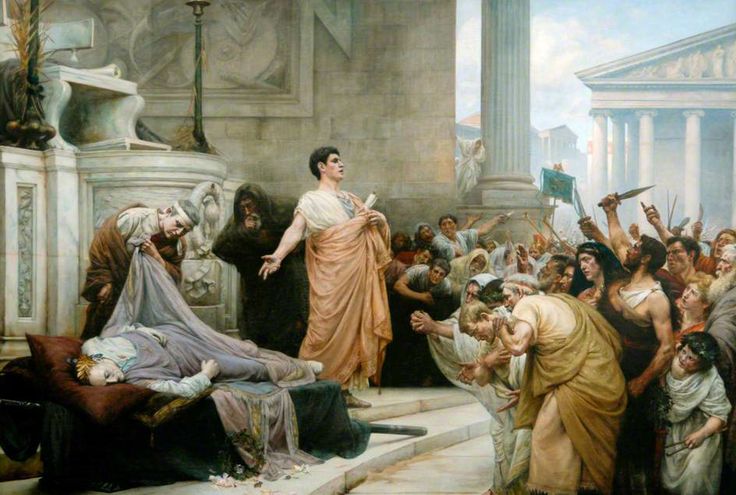
As I covered before in my “Friends, Romans, Countrymen,” post, during Antony’s famous funeral speech, he galvanizes the Roman crowd, first to mourn Caesar, then to revenge his death. How do they do this? By burning the houses of the conspirators and rioting in the street. They even kill a man just because he has the same name as one of the conspirators:

https://www.rsc.org.uk/shakespeare-learning-zone/julius-caesar/story/timeline

What does this violence accomplish? Nothing. Caesar is still dead. Brutus is still alive (though on the run). Antony merely wished to punish Brutus, and get the mob to hate him while he secretly cheats them out of their money. In Act Four, Antony becomes the de facto ruler of Rome because he leveraged his performance at the funeral, and uses his newfound powers to take money away from the citizens that Caesar promised to give them in his will. He manipulated them for his own purposes and duped them for political power.

Example 2: Jack Cade in Henry VI, Part ii.

Henry VI is the only king in English history to be crowned twice, deposed twice, and buried twice (Saccio 91). As the play begins, King Henry has already lost France, lost his mind, and lost the respect of his people. Around 1455, John Hardyng wrote a contrast between Henry’s father and himself. He laments that Henry the Fifth died so soon and then exhorts Henry to keep the quarrelsome lords in his government from warring among themselves.

Withstand, good lord, the outbreak of debates.
And chastise well also the rioters
Who in each shire are now confederates
Against your peace, and all their maintainers
For truly else will fall the fairest flowers
Of your great crown and noble monarchy
Which God defend and keep through his mercy.

(Excerpt from Harding’s Chronicle, English Historical Documents, 274).

Henry’s political ineptness was why Richard of York challenged his claim to the throne. Though Richard had little legal claim as king, he believed himself to be better than Henry.

In Shakespeare’s play Henry VI, Part ii, York tries to get the people’s support by engineering a crisis that he can easily solve. York dupes a man named Jack Cade to start a riot in London and demand that the magistrates crown Cade as the true king.

Biography of Richard, Duke of York, who challenged King Henry VI for his right to be king.

York and Cade start a conspiracy theory that Cade is the true heir to the throne and the royal family suppressed his claim and lied about his identity. Cade starts calling himself John Mortimer, a distant uncle of the king whom York himself admits is long dead:

The Royal National Theater’s production of Henry VI, Parts II, and 7. Jack Cade appears at about the 7-minute mark.
And this fell tempest shall not cease to rage
Until the golden circuit on my head,
Like to the glorious sun's transparent beams,
Do calm the fury of this mad-bred flaw.
And, for a minister of my intent,
I have seduced a headstrong Kentishman,
John Cade of Ashford,
To make commotion, as full well he can,
Under the title of John Mortimer.

Just like Cade and his rebels, the January 6th rioters were motivated by lies and conspiracies designed to crush their faith in their legitimate ruler. Even more disturbing, these rioters are pawns in the master plan of a corrupt political group. York doesn’t care that Cade isn’t the real king; he just wants to use Cade’s violence as an excuse to raise an army, one that he can eventually use against King Henry himself.

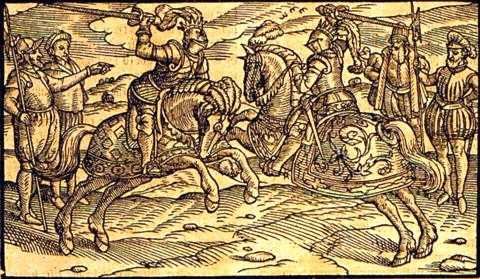
15th century woodcut from the War Of the Roses.

Similar to York’s lies and conspiracy-mongering, many Republicans have refused to accept the legitimacy of Joe Biden’s election, and some are actual proponents of Q Anon conspiracies!

A lot of Republicans deserve blame for fanning the flames of rebellion on January 6th, but arguably former President Trump deserves most of the blame. Even Rush Limbaugh admitted that Trump spread a huge amount of conspiracy theories without believing in any of them. He does this because he wants Americans to be afraid of imaginary threats that he claims he can solve. What’s easier to solve than a problem that doesn’t exist? Much like York, Trump tried to hold onto power by pressuring his supporters to pressure the Capital, feeding them lies about election fraud, and a secret democratic Satanic cult. Thus radicalized, they resolved to do what Cade’s mob did: “Kill all the lawyers.” Unfortunately, there are a lot of lawyers in the Senate.

As Dick the Butcher points out, most people don’t actually believe Cade is truly John Mortimer, they are just so angry at the king and the oppressive English government, that they are willing to follow him in a violent mob to take their vengeance upon the monarchy. This is why they try Lord Saye and execute him just for the crime of reading and writing! Similarly, the mob attacking the capital was made up of die-hard conspiracy adherents, and people just angry at the Democratic Party.

https://www.washingtonpost.com/technology/2021/01/20/qanon-trump-era-ends/

Like I said before, Cade and his mob is just a pawn in the machinations of York. Eventually the king’s enforcer, Lord Clifford convinces most of them to abandon Cade, and Cade himself dies a humiliating death- on the run from the law and starving, Cade is murdered by a farmer after trying to steal some food. After Joe Biden became the 46th President, many of the conspiracy group Q-Anon, who had many prominent members in the January 6th riot, began to disbelieve and abandon the conspiracies of the group. However, as this news story shows, some Q-Anon supporters are die-hard adherents and will never abandon their conspiracy theories, and some, like York’s supporters, are being recruited by other extreme groups. Sadly, as York shows, sometimes a riot is a rehearsal for another riot. In Shakespeare’s Henry VI, Part III, York finally amasses an army and challenges the Lancastrians in all-out war. Hopefully, the US government will hunt down and arrest these violent insurrectionists before they have the chance to do the same.

Example 3: Sir Thomas More

In the unfinished play “Sir Thomas More, a racist mob again attempts to attack London. This time they have no political pretenses; they want to lynch immigrants who they believe are taking English jobs. As I said in my “Who Would Shakespeare Vote For?” post, More’s speech is a perfect explanation of why this behavior cheapens and denigrated a country’s image, and weakens its ability to command respect from the rest of the world. Last time I posted a video of Sir Ian McKellen speaking this speech, but this time.. well just watch:

Records of English witches

I’m giving a lecture Sunday about “Macbeth” and its relation to real magical traditions. Accordingly, I’ve looked up records of real witchcraft trials. Below is a database of cases from 1602-1635. “Macbeth” was supposedly written around 1605, so these cases are pretty close to the time period. It’s a fascinating, and sometimes gruesome look at the methods used to try people (mostly women) for an “invisible crime,” around the same time Shakespeare was dramatizing that crime onstage: http://witching.org/production/brimstone/detail.php?mode=city&city=London%20(Newgate%20Prison).