

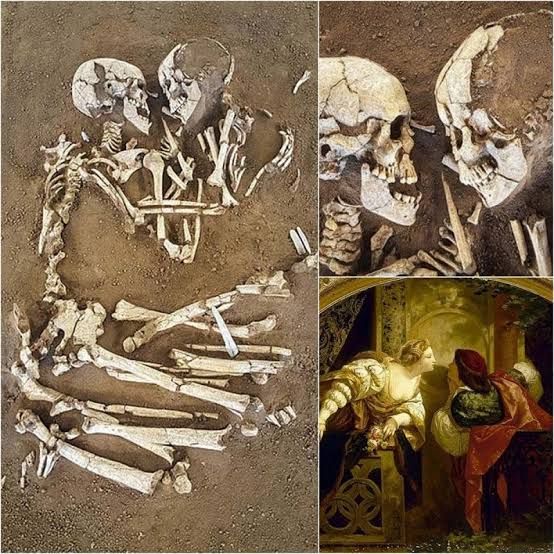
Was the most classic love story of all time actually meant to be gothic horror?
Is Romeo and Juliet supposed to be Scary?
Good morrow my Gothic gogglers! Since Spooky Season is upon us, I’d like to discuss the notion that, rather than being an iconic story of romantic love, maybe Romeo and Juliet is actually supposed to be gothic, disturbing, and maybe even terrifying!
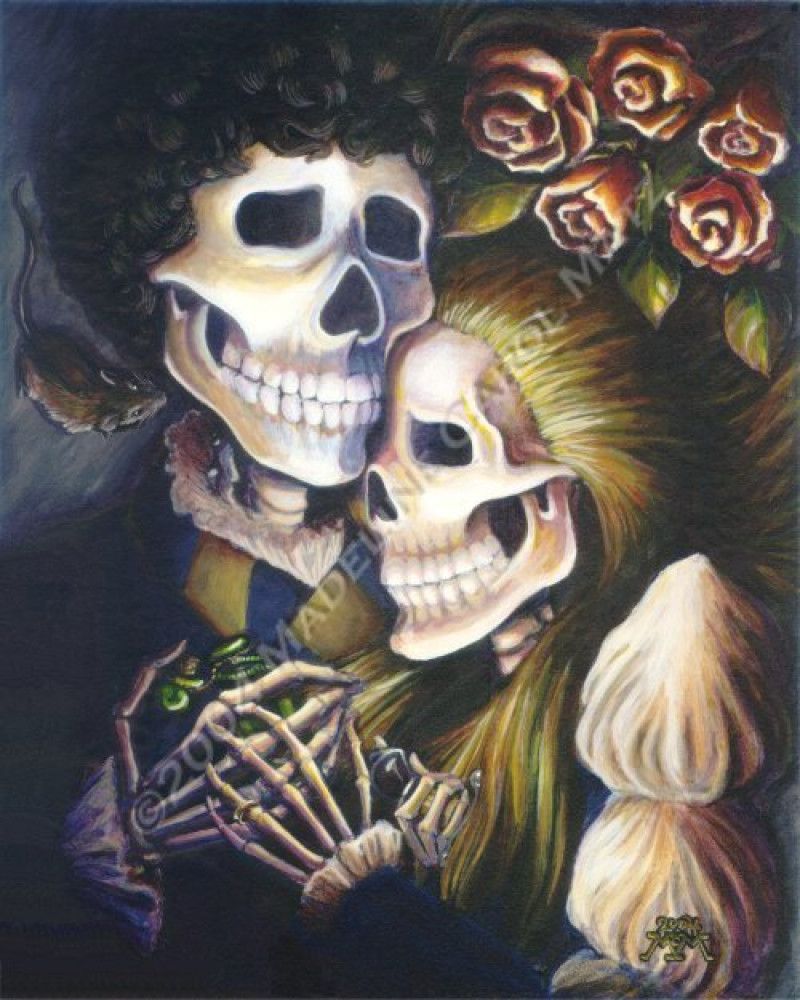
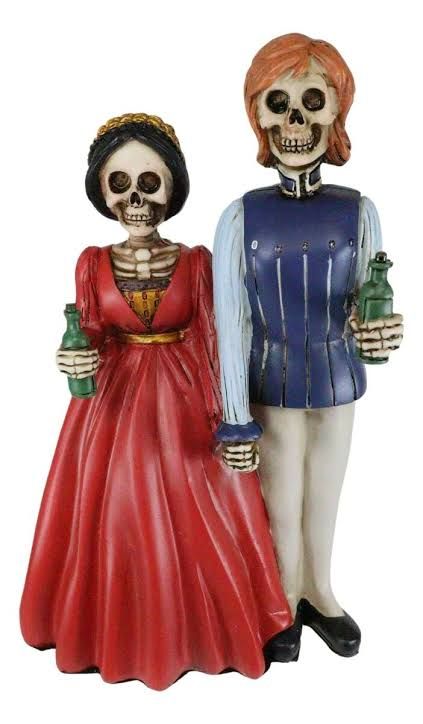
I got the idea for this post after perusing the Michaels halloween displays, and realizing that many of them are Shakespeare themed in general, and Romeo and Juliet in particular. It got me thinking that, although Shakespeare died before such writers as Poe, Shelly, and Byron, his work has many ideas, themes, and tropes that are common in what we call Gothic literature; a kind of genre dominated by imagery of terror, disgust, and a fascination with the macabre.
Point 1: Romeo and Juliet was originally a cautionary tale.
One common trend in horror is punishing young people for their indescretions, especially disobedience and premarital sex. This is still common today; once you see a couple kiss in a horror movie, you know a grizzly death is coming. People see this story as the ideal love story, which it definitely is not. Shakespeare isn’t trying to put these lovers on a pedestal, he’s trying to show how hard it is for love to flourish in such a toxic, violent world.
This might shock you, but Shakespeare didn’t invent the story of Romeo and Juliet; he based it on an English poem by poet Albert Brooke, whose attitude to young lovers would’ve made Norma Bates blush! Look at the Introduction to the 1593 edition of the poem Romeus and Juliet:
The good
man’s example biddeth men to be good, and the evil man’s
mischief warneth men not to be evil. To this good end, good
Reader, is this tragical matter written, to describe unto thee a couple of unfortunate lovers, thralling themselves to
unhonest desire ; neglecting the authority and advice of
parents and friends ; conferring their principal counsels
with drunken gossips and superstitious friars (the naturally
fit instruments of unchastity) ; attempting all adventures of
peril for th’ attaining of their wished lust ; using auricular
confession, the key of whoredom and treason, for further-
ance of their purpose ; abusing the honourable name of
lawful marriage to cloak the shame of stolen contracts ;
finally by all means of unhonest life hasting to most
unhappy death. -Albert Brooke
Brooke’s introduction reads like a sermon, suggesting that we look at the lover’s unfortunate lives like a parable designed to “scare us straight.” Even though Shakespeare takes a more sympathetic tone to the story, its roots as a cautionary tale come through in the plot and characters.
What is Gothic Horror?
Probably these days when you think of “gothic.” you think of a pale person with black hair wearing piercings, crosses and black clothes, but back in the 19th century, gothic was a genre of “Romantic literature” that emphasized the unusual, the mysterious, the grotesque, and the terrifying.
To understand what gothic literature is, you have to first understand what Romanticism is. Elizabethans like Shakespeare emphasized the concept of reason and a devotion to logic and subduing passion and superstition to reason, which is why most of his tragic heroes fall victim to their passions and almost never use their reason. By contrast, 19th century Romantic literature favored the opposite approach- rejecting cold reason and machine-like rationality and embracing the passions that make people human- passions like love and awe and devotion, but also terror and desire, which became the tentpoles of gothic literature. Gothic stories like those of Mary Shelly (Frankenstein), Brahm Stoker ( Dracula) and of course Edgar Allen Poe, took the Romantic concept of emphasizing feeling and mood, and crafted masterpieces of terror and suspense.
In short, you could think of Romanticism as the moody child of Shakespeare, and gothic literature as his even moodier grandchild.
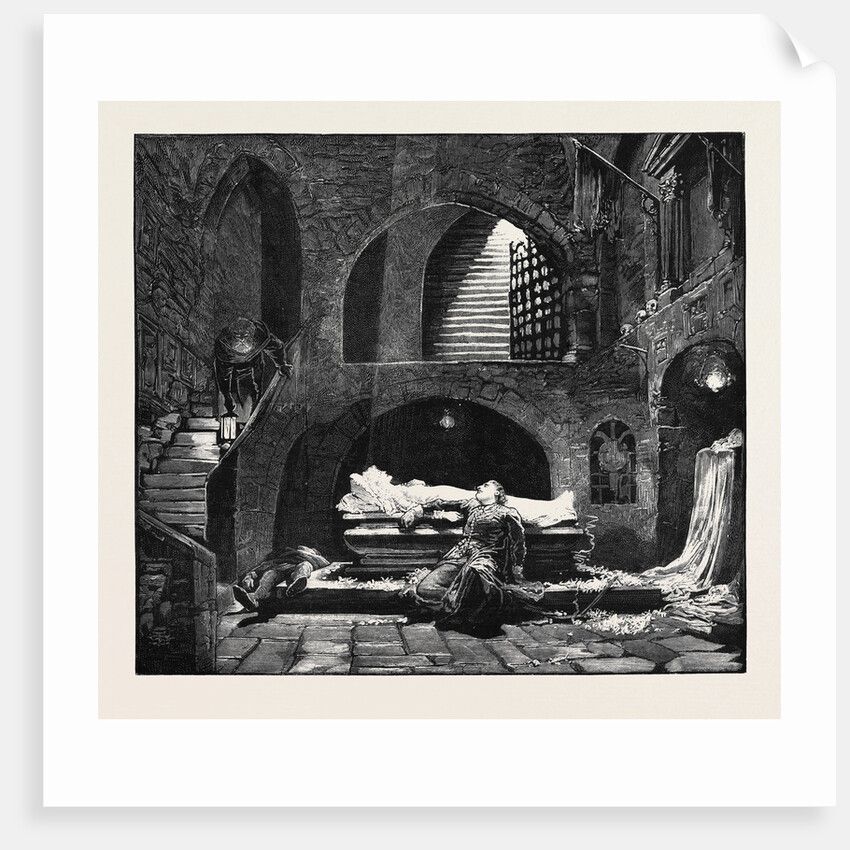
As Romanticism took hold in literary circles, it also took hold in the way Romeo and Juliet was staged too. In 1882, a celebrated production of the play debuted at the Lyceum theater in London, the same theater managed by Dracula author Brahm Stoker. The production had an emphasis on the gothic elements of the story with dark, moonlit scenery, gothic crypts, and an eerie scene where Sir Henry Irving as Romeo carries the slaughtered body down a long, winding staircase to lay him in Juliet’s tomb.

Thou detestable maw, thou womb of death,
Gorged with the dearest morsel of the earth,
Thus I enforce thy rotten jaws to open,
And, in despite, I’ll cram thee with more food!
A few years later, Stoker would finish Dracula, and adapt it as a stage play at the Lyceum.Legend has it that Stoker based the character of Dracula on Sir Henry. Sadly for Mr. Stoker, Irving never played the role onstage. Therefore you can see how Shakespeare’s writing helped form the ideas of gothic writers like Shelly and Stoker, and Romeo and Juliet was re-interpreted from a medieval morality tale into a Romantic story of two people whose desire is both powerful and destructive (Source: Royal Shakespeare Company)
Violent Delights/ Monstrous Ends
- Courtly love- the trope of star-crossed lovers requires a tantalizing distance; the feelings engendered are primarily longing and unfulfilled desire; the lovers express joy from finding love, but they also suffer as long as they cannot totally be together. In Romeo and Juliet, the distance is simply an accident of birth- they happened to be born into families that hate each other. It is a simple step to turn this fate unto something much more horrible
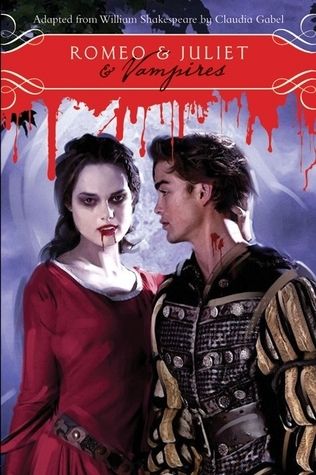
- Romeo in particular, rather than using lawful means to overcome the stars, use violence to express their love- Romeo can and does kill for Juliet, twice. It’s not much of a stretch to imagine Romeo as a vampire or some other monster who kills to maintain his relationship. In our culture, such relationships are toxic, but the romantics ate them up.
The Play’s obsession with Death
Case Study- Twilight: an attempt to make Shakespeare cool for goth kids
Shakespeare understood implicitly that passion and blood are linked- it goes back to the ancient Greek concept of the humors, which I explored in my Romeo and Juliet lectures that blood was associated with passion- both the passion to create life, and the passion of intense feelings such as love, rage and destructiveness as Freud says
- The star crossed lovers ridiculously short timeline- the play only takes place over six days! As I mentioned in an earlier post, this was another deliberate choice by Shakespeare to make the action more intense.
- Edward As the Byronic Romeo- bloodlust is a metaphor for abstinence, turning Christian morality into gothic fear- if the hero gives into his lust, it will destroy his beloved.
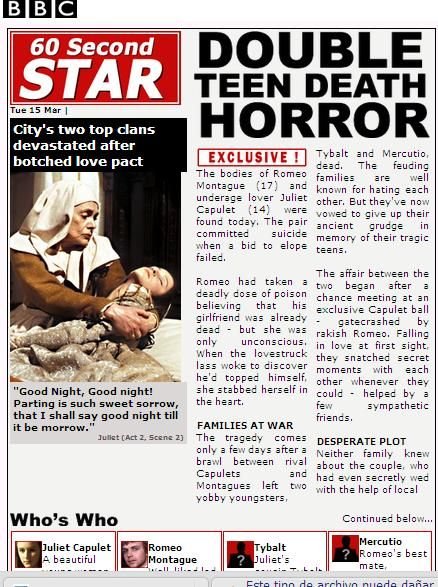
Death follows Romeo like a predator stalks its prey.
If you enjoyed this post, please consider signing up for my online courses on Romeo and Juliet

Get $10 off my class “Romeo and Juliet: Why Do We Still Read This Play?” with coupon code HTHES4KG1E10 until May 23, 2026. Get started at
https://outschool.com/classes/romeo-and-juliet-why-do-we-still-read-this-play-wAhPqsrx
and enter the coupon code at checkout.
Continue reading
