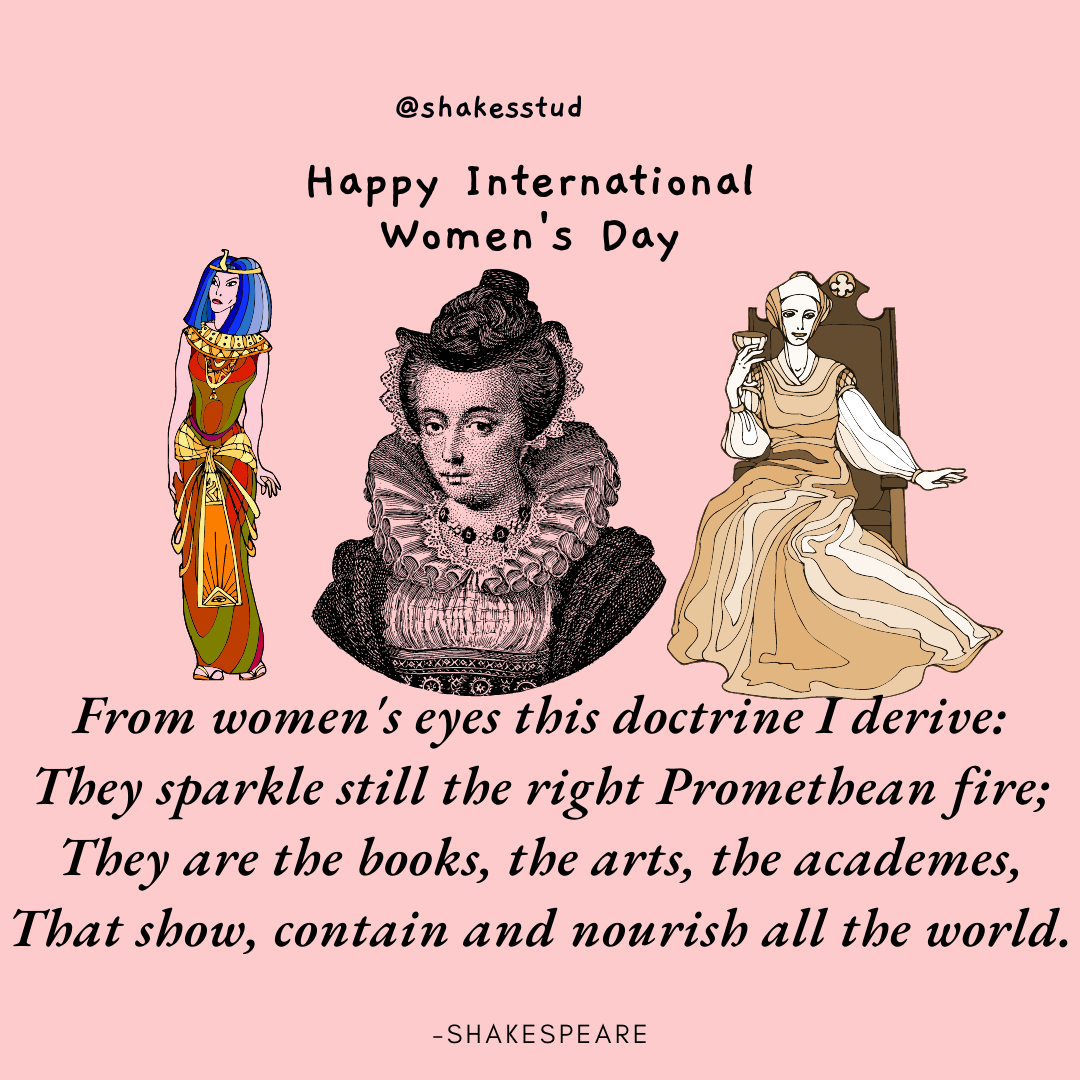
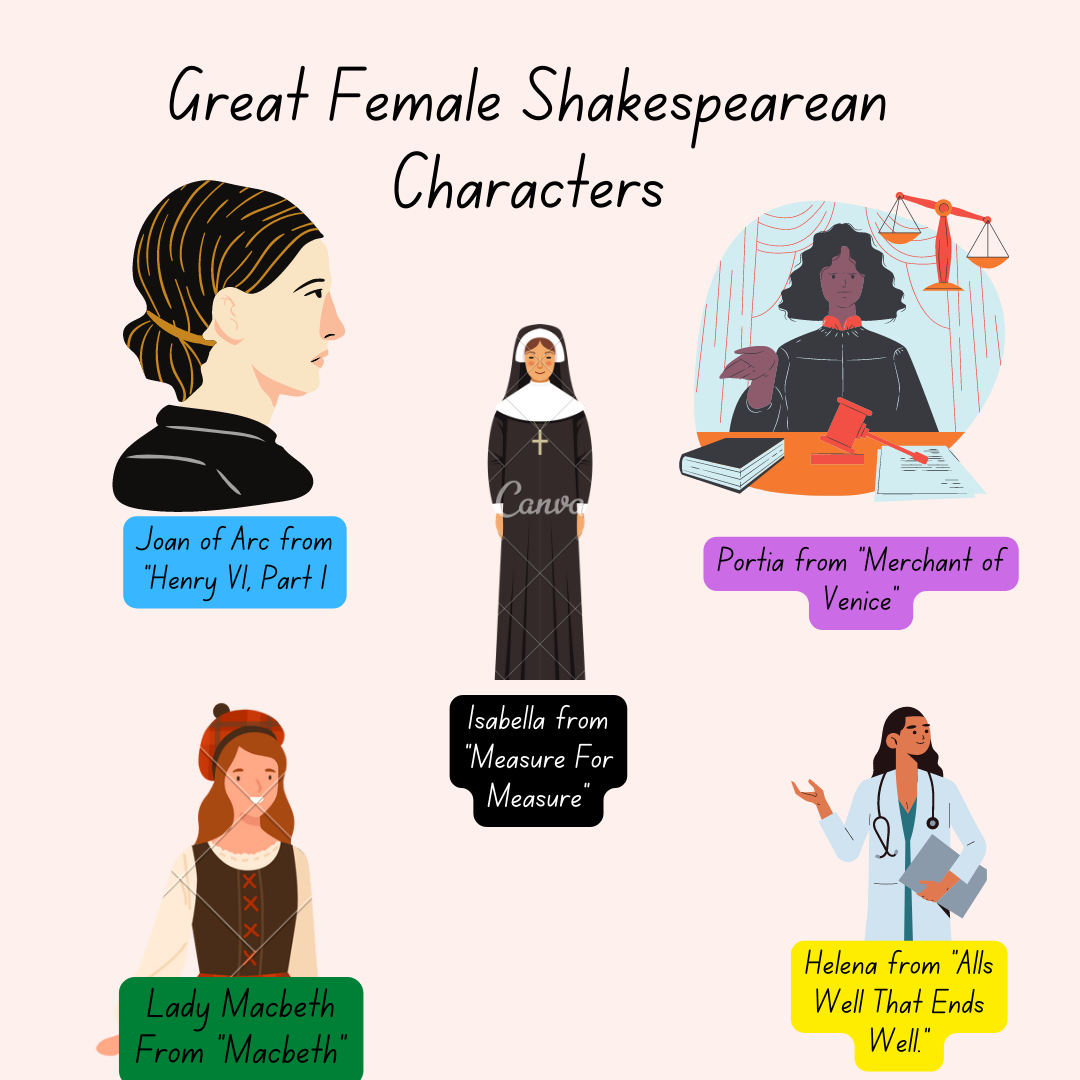
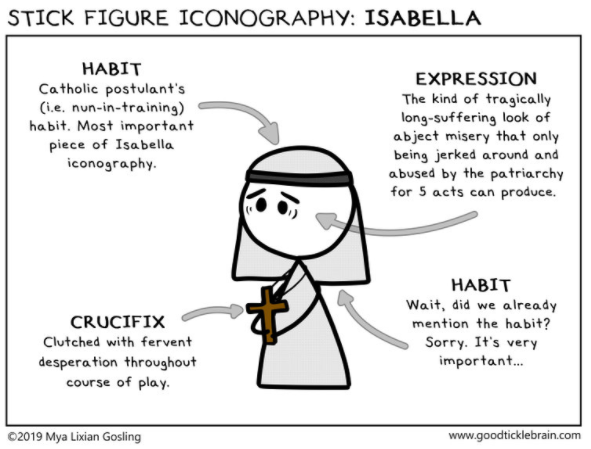
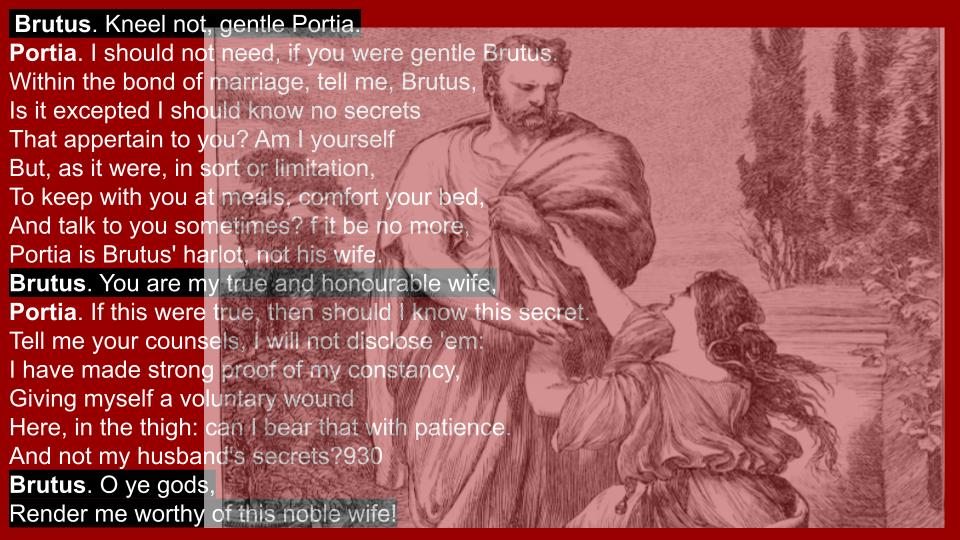
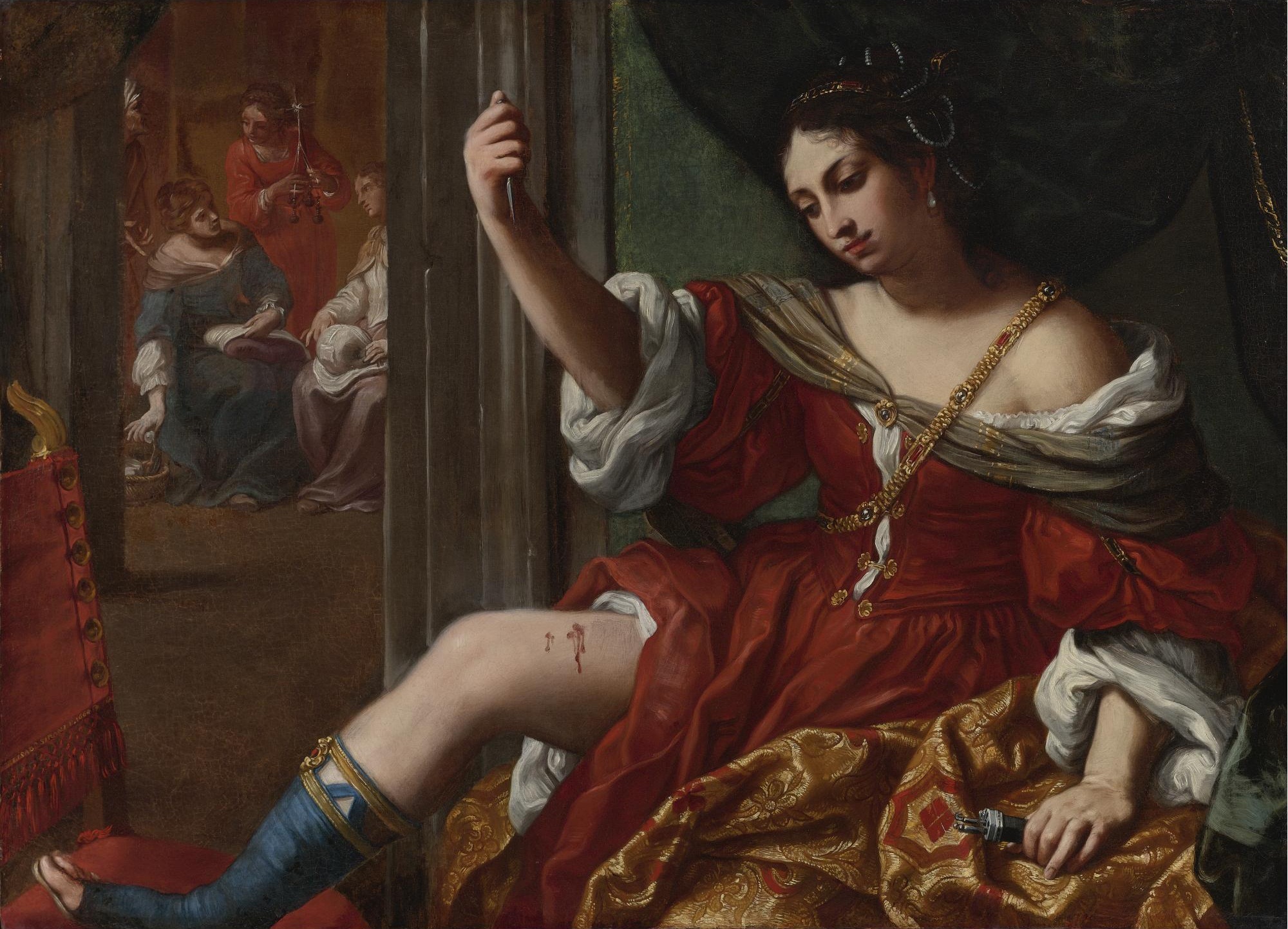
Since International Women’s Day is Friday, I’m devoting the following week to talking about the awesome female characters in Shakespeare’s Roman plays: Titus, Andronicus, Julius Caesar, Antony and Cleopatra, and Coriolanus
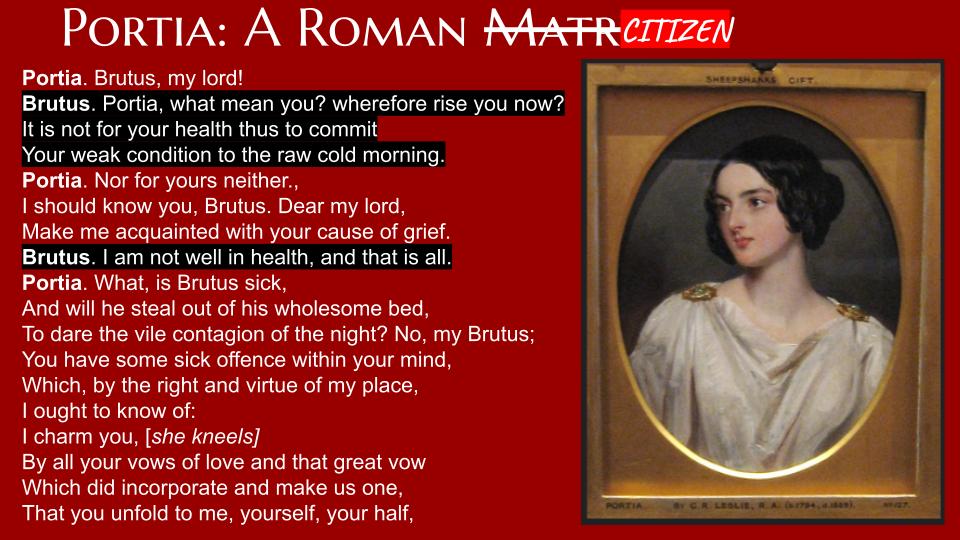
First, here’s my post and an accompanying podcast on Roman women, which includes an analysis of Lavinia, Portia, Valumnia, and Cleopatra:
Here’s a fascinating video about the lives of Roman girls:
And here’s a special section about Cleopatra:
Comedy sketches about Cleopatra from “Horrible Histories” BBC, 2015.
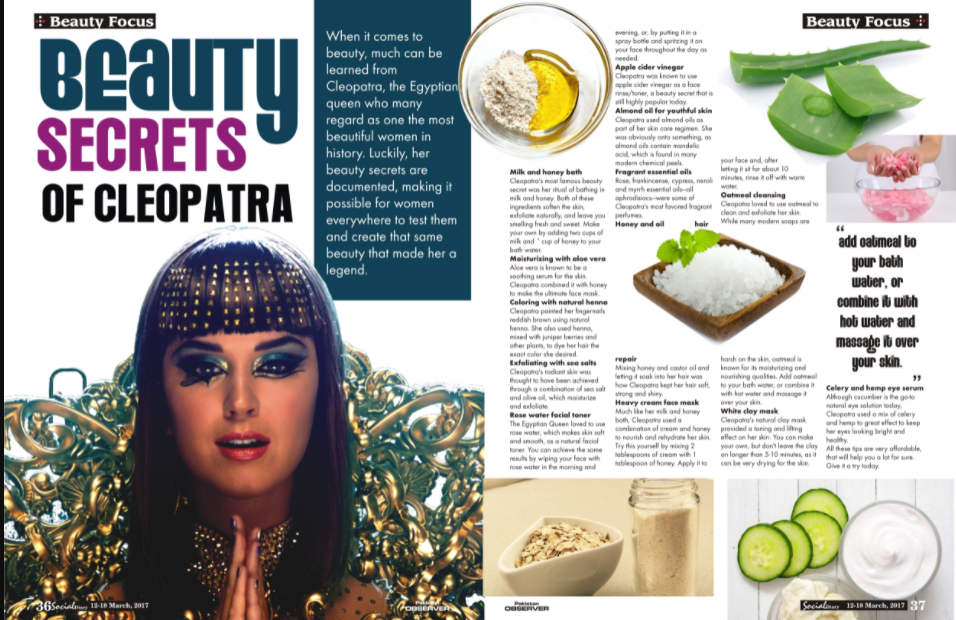
A Lady-Gaga-esque song about Cleopatra from “Horrible Histories,” 2014Infographic from an article about Cleopatra’s beauty regimen. Source: http://socialdiary.pk/
Every couple of years or so, there’s a new retelling of the tale of star-crossed lovers. I’ve written before that Shakespeare didn’t invent this story, but his version is definitely the template for every subsequent retelling.
The big challenge in telling the story for children is how to get around the sexual and violent elements of the story. Some versions like “Gnomio and Juliet,” make the violence comic and kid-friendly, while others like the WIshbone version call attention to the fact that it’s only a play, by presenting it as a story-within-a story.
What I find unique about Disney’s Elemental is that it ignores the violence and explores a side of the story that is often downplayed: family loyalty vs. personal choice. Is this version a complete adaptation- no. But it’s interesting to compare to “Romeo and Juliet” to see how it modernizes and diversifies elements of Shakespeare’s story.
Part I- The World of “Elemental”
One trope that both Elemental and Romeo and Juliet emphasize is the ancient notion of comparing human temperaments to the four elements.
In this world, all people are made of one basic element and it corresponds to their personality- dull, cold earth, flighty air, emotional water, and driven and temperamental fire. Our heroine Ember not only has a fiery temper, but a burning desire to repay her family for all that they’ve given her. She is also full of family anger for the prejudice she suffered at being an immigrant and a fire person. In the world of Elemental, fire people are looked upon with distrust because.. well fire burns!
This concept of elemental temperaments is explored in very creative ways in the film, but it is by no means a new idea. The idea that humans are made of four elements goes back to ancient Greece and China. The Greek philosopher Aristotle helped popularize the theory that not only is everything made of four elements but there are four liquids called humours that control human health and human behavior.
This is a presentation I created back in 2006 that explores the imagery and worldview of Romeo and Juliet. I explore what it means to be “Star Crossed Lovers,” and the relation that this play has to Astrology, religion, and even the Black Death. I hope you find it interesting!
Aristotle believed that to be physically and emotionally healthy, a person’s humours needed to be balanced which would prevent sickness and also control their temperament. A “humorous” person was someone who was either too angry or too melancholy and therefore worthy of scorn. This eventually twisted into our notion that humorous means to be funny.
In Romeo and Juliet, all of the characters are dominated by a particular humor and sometimes they even say how they are dominated by Choler (fire), Melancholy (Earth), Blood (Air), and Phlegm (Water)
Patience perforce with wilful choler meeting Makes my flesh tremble in their different greeting. I will withdraw: but this intrusion shall Now seeming sweet convert to bitter gall.
Tybalt, Act I, Scene v
All things that we ordained festival, Turn from their office to black funeral; Our instruments to melancholy bells, Our wedding cheer to a sad burial feast,
Lord Capulet, Act IV, Scene v
Then hie you hence to Friar Laurence’ cell; There stays a husband to make you a wife: Now comes the wanton blood up in your cheeks, They’ll be in scarlet straight at any news.
What’s unique about Elemental is that, while characters in Renaissance dramas have all four elements within them, in this movie, they are literally embodying one. Therefore to be in balance as Aristotle says they should be, they need a partner with an opposite humor to form a harmonious union. This is a nice way of visually showing the age-old adage that opposites attract in a very literal and easy-to-grasp way.
Wade- A more Temperate Romeo
As much as I love “Romeo and Juliet,” I’m well aware that Romeo is not an ideal lover. His attraction to Juliet is very much based on sight alone and though he is courageous and persistent to win her love, he does little to support or help her. Many people have pointed out that, had Romeo lived, it seems unlikely that his relationship with Juliet would last, especially considering that he just got over another girl five minutes before meeting her:
So as a character, Romeo is iconic, but as a lover, he’s not exactly ideal. What Elemental does is keep his love of romance and his persistence, and give him the ability to empathize, a desire to help, and above all, the ability to LISTEN to Ember, (the Juliet analog). Enter… Wade:
Wade is a great addition to the Romeo trope and though he doesn’t kill anyone for Ember’s honor, he does fight many figurative battles for her- he helps her fight her guilt and find her purpose in life, he tries to help her family multiple times, and he fights her father’s prejudice against water people by being kind and respectful to her family.
I think it’s telling that Wade is dominated by water. First of all, it makes it clear to audiences that he has significant challenges in dating Ember (since he might literally extinguish her), but also because of what it says about his character.
Romeo is dominated by the humor of blood, which according to Hippocrates and Galen:
A person who is sanguine is generally optimistic, cheerful, even-tempered, confident, rational, popular, and fun-loving. He or she can be daydreamy to the point of not accomplishing anything and impulsive, acting on whims in an unpredictable fashion. Sanguines usually have a lot of energy, but have a problem finding a way to direct the energy. This also describes the manic phase of a bipolar disorder.
While Wade is literally made of water, which according to Galen:
A phlegmatic person is calm and unemotional. Phlegmatic means “Pertaining to phlegm” and corresponds to the season of winter (wet and cold), and connotes the element of water. While phlegmatics are generally self-content and kind, their shy personality can often inhibit enthusiasm in others and make themselves lazy and resistant to change. They are very consistent, relaxed, and observant, making them good administrators and diplomats. Like the sanguine personality, the phlegmatic has many friends. But the phlegmatic is more reliable and compassionate; these characteristics typically make the phlegmatic a more dependable friend.
So by his very nature, Wade is more active and a better friend than Romeo, which makes his relationship with Ember a more equal partnership. Wade is thus a more modern take on the age-old sanguine lover like Romeo.
Many have argued that Romeo and Juliet’s relationship was never designed to last; it was designed to be much like fire or even like a poison that tastes good at first, but kills at last:
Much like Shakespeare’s version, the Juliet character in Elemental is more interesting than the Romeo character, and the writers know it. In Shakespeare’s version, Romeo is absent for most of Act IV, and in Elemental, Wade is not there for most of Act I and parts of Act II in the movie. The focus of both stories and the best feature is how the heroine handles the conflict between her family and her romance.
In Shakespeare’s version, Juliet doesn’t immediately fall head-over-heels in love with Romeo and uses an elemental image to describe how it would be foolish to try and rush into love too fast:
Although I joy in thee, I have no joy of this contract to-night: It is too rash, too unadvised, too sudden; Too like the lightning, which doth cease to be Ere one can say ‘It lightens.’ Sweet, good night!
Juliet, Act II, Scene ii
But, once the two of them are married, she is very passionate and will do anything to avoid getting married to Lord Paris, even though her parents are pressuring her:
It’s also interesting that Lord Capulet is described in this scene as “Too hot.” I’ve mentioned before that in many productions, the Capulets are dressed in fiery colors like reds, yellows, and orange.
Collage of images of Tybalt. Notice the reds and yellows.
Juliet herself can also be very fiery and willful. At one point, Friar Laurence even compares Romeo’s infatuation with Juliet to fire and gunpowder!
Visual Accompaniment for Romeo and Juliet
These violent delights have violent ends And in their triumph die, like fireandpowder, Which as they kiss consume: the sweetest honey Is loathsome in his own deliciousness And in the taste confounds the appetite: Therefore love moderately; long love doth so; Too swift arrives as tardy as too slow. [Enter JULIET]
So there is precedent for portraying Juliet as a fiery character. What Elemental adds, is a sympathetic portrayal of race and culture wrapped up in her fiery nature. As I said before, Ember is the child of immigrants who are grateful to Element City for taking them in, but tired of the prejudices they face from the other elements. This echoes the real word struggle of Chinese immigrants under the Chinese Exclusion Act, and Japanese Americans during World War II. One way Ember’s fiery temper manifests itself is with her anger at prejudice and injustice:
The other struggle that keeps Ember intemperate is her conflicting desire to honor her family by taking over the family business, although this isn’t what she wants to do with her life. Wade sees this and realizes that Ember is fighting a war within herself and that is why she is lashing out at people in the store. She is also dealing with her family’s relative poverty and is constantly worried that her family won’t survive if she doesn’t take over the store.
In this scene, Ember becomes jealous of Wade, who was born into wealth and acceptance unlike her family who has struggled for years. This jealousy drives a wedge between her and Wade. It’s interesting that, rather than a family feud, the real forces that keep Wade and Ember in Elemental apart are not an arbitrary feud, but big societal forces like racism, nativism, and cultural differences.
In essence, Elemental takes the star-crossed aspect of the story and makes them more like the modern world. Most of us in first-world countries don’t get into blood feuds but plenty of people face prejudice and hardships based on where and how they were born. Elemental “boils” down the core of the Romeo and Juliet story and tells it differently, while keeping the central lesson that love can overcome and unite family differences and problems when two people are willing to risk everything for each other… even life.
For my Shakespeare club, I’m coaching two young actors on Viola’s celebrated soliloquy in Act II, Scene ii.I thought I’d share some of that work with you. In this speech, Viola has an epiphany; the lady she was sent to woo on her master Orsino’s behalf LOVES HER!
Viola has spent an unspecified amount of time disguised as a man. She has just tried (unsuccessfully) to woo Countess Olivia on behalf of her employer, Duke Orsino. Olivia seemed intrigued by her in her disguise as “Cesario,” and refused to hear any more words about Orsino, but asked Viola to come see her again. The Countess then sent her messenger Malvolio to give Viola a ring, which he claims she tried to give to Olivia as a gift. At first, Viola is confused and upset by the accusation, but slowly realizes that the ring is actually a gift for her; in fact, it’s a love token.
Traditional Interpretations
I think the comedy depends on how Viola reacts to the realization that Olivia loves her. I’ve seen some Violas that are embarrassed, some that are a little frightened (after all, hell hath no fury like a woman scorned), and others with sad sympathy. Viola is a good person, so she can’t laugh at the lovesick countess, but she can have a wry laugh at herself and how her disguise has caused all this trouble; making her unable to confess her love to him, while at the same time making Olivia think she is a handsome young man.
Michelle Terry In the Globe Theater (2021)
Michelle Terry as Viola in the 2021 production of “Twelfth Night”
Michelle Terry is very matter-of-fact in her portrayal. She doesn’t pause, she doesn’t drag out the lines. In fact, she seems more annoyed and scandalized than anything else. The comedy comes mainly from her gestures and movements as she talks to the audience as if they were one of her gal-pals- venting her frustration with this ridiculous situation.
Michelle Terry excels as Viola, straight-faced, tormented, only occasionally raising a conspiratorial eyebrow at the audience.
Judy Dench in the RSC TV show “Playing Shakespeare” is very sympathetic to “Poor Olivia, ” and plays the speech with a romantic sentimentality. She’s focused on Olivia, and feels awful for the false hope she’s given her.
Both these interpretations are valid, and they’re a good baseline for two sides of Viola’s personality- the sensitive genteel duke’s daughter who is sympathetic to Olivia, and the down-to-earth funny one who is willing to disguise herself as a boy to survive.
Literary Devices
Imagery
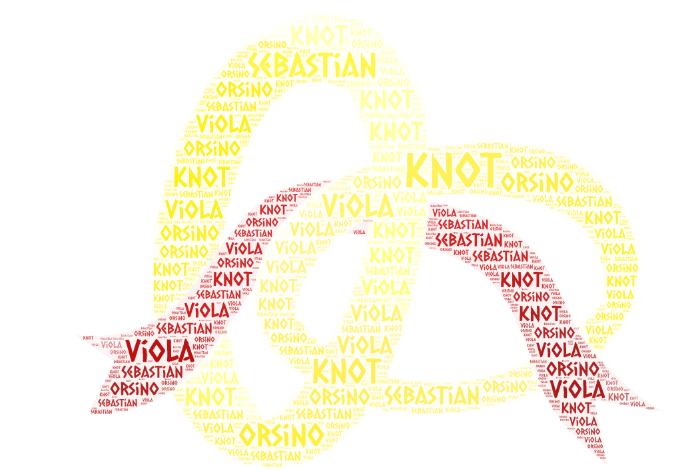
The main image here is the image of the knot- a central image of how convoluted this love triangle is.
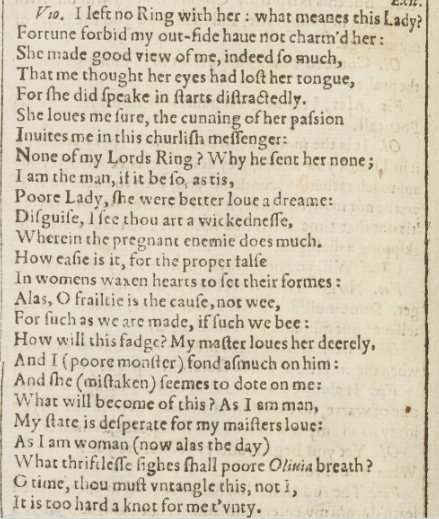
I left no Ring with her: what meanes this Lady? Fortune forbid my out‑side haue not charm'd her: [650] She made good view of me, indeed so much, That me thought her eyes had lost her tongue, For she did speake in starts distractedly. She loues me sure, the cunning of her passion Inuites me in this churlish messenger: [655] None of my Lords Ring? Why he sent her none; I am the man, if it be so, as tis, Poore Lady, she were better loue a dreame: Disguise, I see thou art a wickednesse, Wherein the pregnant enemie does much. [660] How easie is it, for the proper false In womens waxen hearts to set their formes: Alas, O frailtie is the cause, not wee, For such as we are made, if such we bee: How will this fadge? My master loues her deerely, [665] And I (poore monster) fond asmuch on him: And she (mistaken) seemes to dote on me: What will become of this? As I am man, My state is desperate for my maisters loue: As I am woman (now alas the day) [670] What thriftlesse sighes shall poore Oliuia breath? O time, thou must vntangle this, not I, It is too hard a knot for me t'vnty.
It’s interesting to note that (in the First Folio text), the verse alternates between being regular, and using a run-on technique called enjabment, where the thoughts continue after the end of the lines, starting with lines three and four. Ironically, when Viola says that Olivia was distracted and confused when she visited her, her own thoughts are disjointed and fragmentary as she reaches the inevitable conclusion that Olivia is infatuated with Viola in her disguise.
Viola’s Emotional Journey
In the book “Shakespeare’s First Texts” by Neil Freeman he describes how the Folio prints the speech in four distinct sections. Freeman hypothesizes that Shakespeare organized this speech into four phrases that chart the stages of emotions Viola goes through:
Each stage has its own easily identifiable quality, reflecting the growing steps of Viola’s journey in what for her is a huge struggle not only to comprehend, but also to deal with the enormous complications of the dreadful love triangle- the potential results of which are now becomming only too clear.
Freeman, 175.
Stage 1: Introduction
In the first three and a half sentences, Viola goes through the facts- she gave no ring to Olivia, Olivia was eying her, and half paying attention to what Viola was saying. The phrase ends with Viola’s conclusion that Olivia must be in love with her.
Stage 2: Complications
The sentences are of very irregular length- sometimes six words per line, sometimes a few as four. According to Freeman, the irregularity of the verse shows how Viola’s emotions are getting the better of her. Viola could be gasping with remorse over the pain she’s caused Olivia, or shocked at how easily she was taken in by Viola’s disguise.
Stage 3: Crisis/ Catharsis
Each line of this section mentions the people in this love triagle: “My master,” “And I,” “And She,” etc. Viola might be thinking about the possible outcomes to this situation- getting fired, getting discovered, getting married, etc.
Stage 4: Summary: “O Time, Thou Must Untangle This, Not I.”
Like Hamlet before her and Macbeth after her, Viola ends her soliloquy by saying she has no conclusion. She has no idea how to solve this problem, but can only hope that Time will provide a solution.
Audience Interaction
As I said, this is a soliloquy, which is to say, a speech where the character is solo or alone onstage. Some people think this means that the characters are talking to themselves, but I firmly disagree with this notion. One reason why Shakespeare writes soliloquies is because they allow a character to share their thoughts and feelings with the audience. They are the ancestors of every aria or solo in opera and musical theater, and every Disney Princess/ Villain song. I’ve even said before that there are some similarities between Viola and a famous Disney Princess:
“Welcome Spirit, How Camest Thou hither?” The sources for Puck
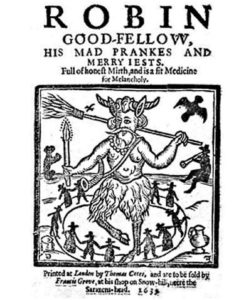
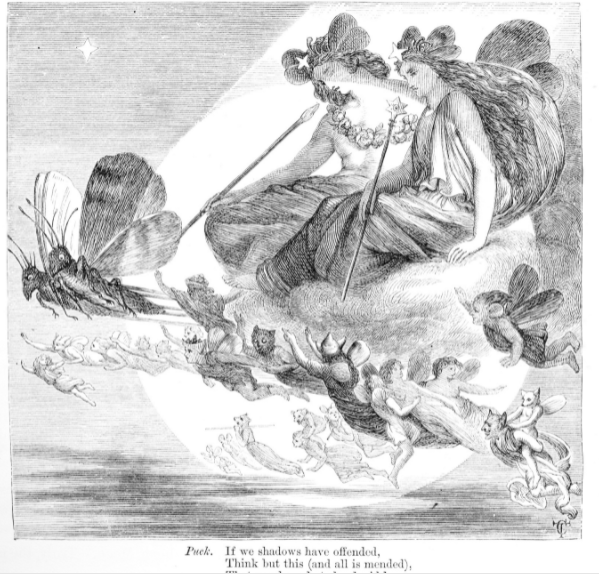
Puck, in medieval English folklore, a malicious fairy or demon. In Old and Middle English the word meant simply “demon.” In Elizabethan lore he was a mischievous, brownielike fairy also called Robin Goodfellow, or Hobgoblin. As one of the leading characters in William Shakespeare’s Midsummer Night’s Dream, Puck boasts of his pranks of changing shapes, misleading travelers at night, spoiling milk, frightening young girls, and tripping venerable old dames. The Irish pooka, or púca, and the Welsh pwcca are similar household spirits.
Shakespeare also took inspiration from English poet Edmund Spencer, who visited Ireland in the 1590s and adapted the folklore he picked up into his opera The Fairy Queen, which Shakespeare adapted into A Midsummer Night’s Dream
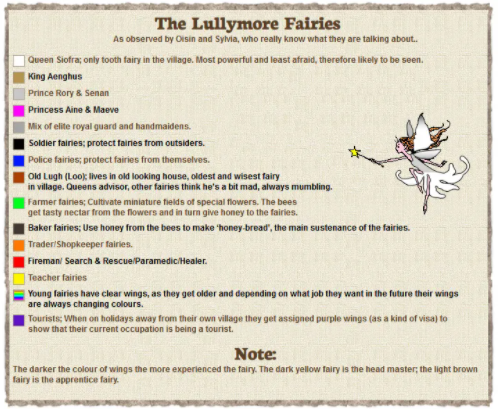
Types of fairies you can “spot” at the Lullymore Park in Ireland:
Puck/Robin’s Dual Nature
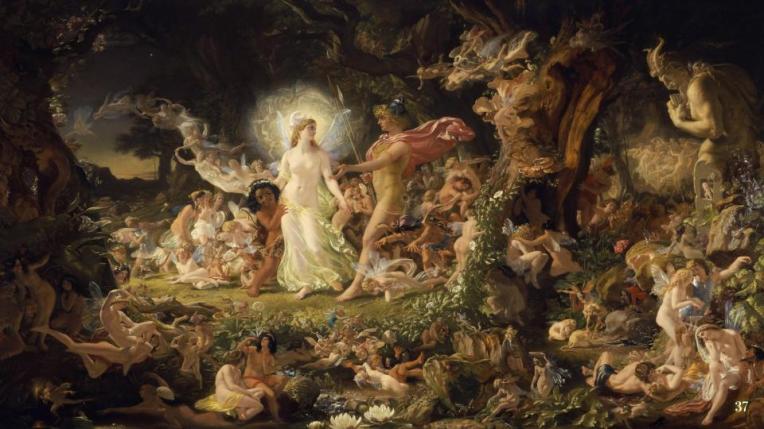
The old stories tell that Fairies are magical creatures who live in hollow places in the earth. Some are benevolent and help give rain and pleasant weather to the Earth, Like the king and Queen of the fairies, Oberon and Titania:
And the mazed world, By their [the tides] increase, now knows not which is which: And this same progeny of evils comes From our debate, from our dissension; We are their parents and original.
— Titania, (Queen of the Faries), A Midsummer Night’s Dream Act II, Scene i.
Titania in this speech shows great concern for nature, humanity, and the planet. She believes it is the responsibility of fairies, particularly herself and her husband Oberon, to control the elements and keep humans and fairies safe. Some fairies, however, are cruel and enjoy playing tricks on mortals, just like Puck in A Midsummer Night’s Dream, or Queen Mab in Romeo and Juliet.
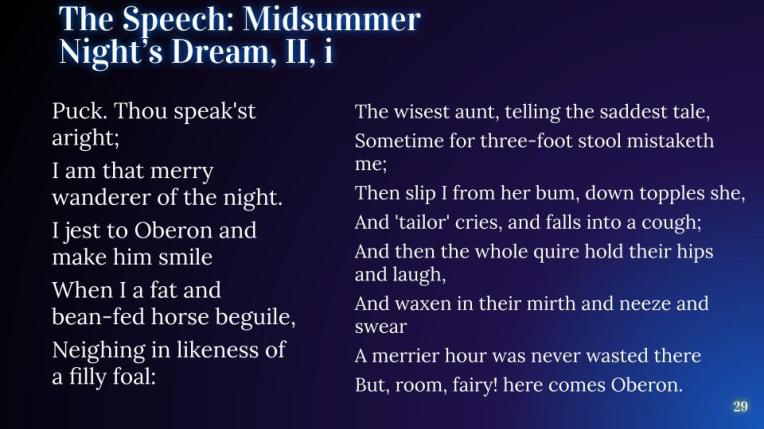
Close reading of Puck’s speech (MND II, i)
.
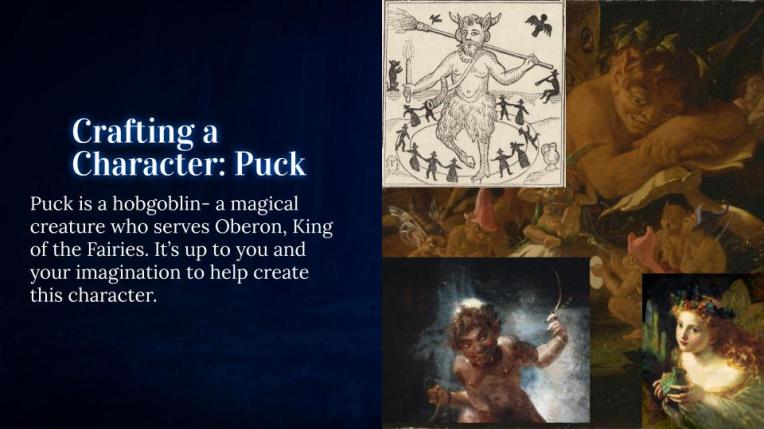
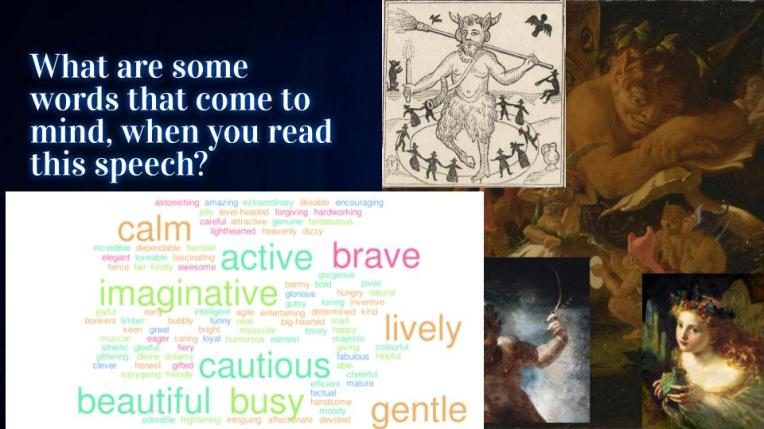
This is a short analysis I created of the tricks Puck plays on people in A Midsummer Night’s Dream, as part of my acting course on Ouschool.com. Note the different ways Puck is portrayed in photos as a satyr, a rotund elf, and sometimes as an almost- demon like figure.
Punishments or contracts with fairies formed a significant part of Goodfellow’s purpose on earth. While he could issue good fortune and support, this was always at the cost of those involved. As Reginald Scot commented, Goodfellow had a ‘standing fee’ of a ‘mess of white bread and milk’, which he expected after supporting housewives with their chores. If his payment was forgotten, Goodfellow was believed to steal from the home that owed him, often stealing grain and milk from the dairy.
Abigail Sparkes, Historic UK.com
Performing Puck
Because Puck is not human, and somewhat ambiguous in the text, an actor can play Puck in many different ways. Generally speaking, actors tend to explore Puck’s attitude toward humans, their love of mischief, and how to translate that physically and vocally
Puck. My mistress with a monster is in love. Near to her close and consecrated bower, While she was in her dull and sleeping hour, A crew of patches, rude mechanicals, Were met together to rehearse a play The shallowest thick-skin of that barren sort, Who Pyramus presented, in their sport Forsook his scene and enter’d in a brake When I did him at this advantage take, An ass’s nole I fixed on his head:
Anon his Thisbe must be answered, And forth my mimic comes. So, at his sight, away his fellows fly; And, at our stamp, here o’er and o’er one falls; He murder cries and help from Athens calls. I led them on in this distracted fear, And left sweet Pyramus translated there: When in that moment, so it came to pass, Titania waked and straightway loved an ass!
I am just ecstatic to talk about this year’s hit Broadway Musical Six. It swept the Tonys, and has opened up touring productions across the country, and I JUST GOT TO SEE IT!
This vibrant, clever retelling of Tudor her-story was created by TOBY MARLOW & LUCY MOSS in association with the Chicago Shakespeare Festival. The show is incredibly smart, and creative, and delves into the lives of some fascinating women, re-told as a singing contest with the characters singing their lives for you to judge what it was like being the queen of England and living with the turbulent and fickle Henry VIII.
What really appeals to me in this show is that like Hamilton, the musical takes these six semi-mythical women and tells their story in a way that is fresh and exciting. It bridges the gap between Tudor History and the modern-day by equating being a queen with being a celebrity, with all the drama of ambitious parents, romantic drama, public opinion, and even being exploited and sexualized by a male-dominated society. This comes across in the music, the costumes, the lyrics, and even the lighting!
Why “Six” Slaps
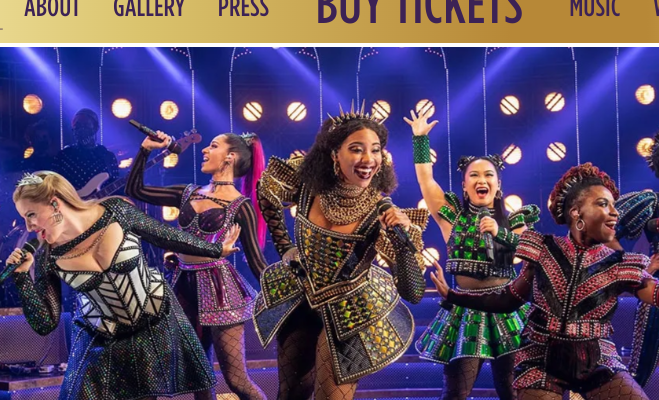
The costumes are brilliant and iconic. Catherine Of Aragon is like a cross between Beyonce, a saint, and a medieval knight. The lighting is incredible! You could tell the whole story using the lighting design as it pulsates, dances, changes into different colors, turns into different shapes, and finally flashes the name of the show in triumphant gold letters.
One particularly brilliant way the music works in “Six” is the fact that it uses the song “Greensleeves” as a motif both musically and thematically. One big theme of the show is how, unlike Henry VIII, most of the history of his six queens is lost and replaced by legends and even songs. The first line of the show is the famous rhyme about their fates: “Divorced. Beheaded. Died. Divorced. Beheaded. Survived.” As the video above helps illustrate, Marlowe and Moss know that most people only know the rhyme about their deaths and the myth that Henry wrote a song about one of them; that their lives are overshadowed by their deaths and the misconceptions that people have written over the years. Howard Ho points out how the song musically forces itself into the first number, “Ex Wives,” but by the end of the show, the six queens break free from these musical bars! You can hear the change of key and notes during this performance at the Tonys, which puts the opening number and closing reprise together.
The Cast of “Six” perform live at the 2021 Tony Awards.
But how do the queens go from “one word in a stupid rhyme,” to a group of powerful, individual queens singing in harmony, without the man who made them famous? That’s what the solo numbers in “Six” do so incredibly well- tell each queen’s solo stories as rocking ballads, hilarious dis-tracks, soulful love songs, and… well stay tuned.
Part II: The Women and Their Queenspirations
1. Catherine of Aragon
Catherine of Aragon was Henry’s first wife and is still universally beloved, even though Henry decided to divorce her. As the epitome of a stand-alone power queen, it makes sense that Six modeled her character, costume, and songs after Beyonce, with a Shakira-inspired Spanish beat for good measure:
My favorite thing about her solo, “No Way” is how the writers paraphrase her real-life speech during the divorce trial in 1529. Below are the lyrics and the real speech:
Alas, Sir, where have I offended you? Or what occasion have you of displeasure, that you intend to put me from you? I take God and all the world to witness that I have been to you a true, humble and obedient wife, ever conformable to your will and pleasure. This twenty years and more I have been your true wife, and whether it be true or no, I put it to your conscience.
— Katherine of Aragon, 1529
2. Anne Boleyn
In some ways, the version of Anne Boleyn in “Six” is less a pop version of the real queen and more of a commentary on the nature of celebrity. If you watch the video, you can see how in life she was admired for her beauty and fashion but hated for her comments on Queen Katherine, her scandalous love affairs, and her brash nature. This explains the spiky pop-punk princess look they gave her, (which evidently resonates with many audiences since I saw at least two girls cosplaying as Anne in the audience). Sort of like a celebrity who gets canceled on Twitter or Princess Diana, Anne shows how a person can be undone when they dare challenge an established order, especially the Royal Family.
After the show, I found it a bit weird that they portrayed Anne Boleyn as a jetsetting airhead, but then again she is one of the best-known queens in history, so they can get away with it. In reality, Anne Boleyn was highly educated and a member of an ambitious and social climbing family who basically pushed her to woo Henry. As you can see in this clip from “Anne Of A Thousand Days,” Henry and Anne’s family bullied her constantly to become the King’s mistress after HE ALREADY GOT HER SISTER PREGNANT, so Anne knew that the only way to keep Henry from ruining her life was to convince him to divorce Katherine of Aragon and marry her.
Of course, this strategy didn’t save Anne in the end, which says more about how cruel Henry VIII was, chewing up women and spitting them out in his ravenous quest for a son. So is this an accurate portrayal of Anne’s life? No. Is it fun, ABSOLUTELY!
III. Jane Seymore
I’m more than I seem, or am I?
“Six” The Musical.
This version of Jane Seymore was inspired by Adele, so appropriately, she has a heart-wrenching power ballad about her turbulent relationship with Henry. Sadly, we don’t know much about Jane’s real life, so the song takes some liberties. If you go to the Hampton Court Website, you can actually vote as to whether Jane was a devoted wife or a social climbing gold-digger. Probably the real woman was something even more complicated, though we’ll never know for sure.
IV. Anne of Cleaves
Anne of Cleaves is the funniest part of the show! Many of us have heard the story that Henry divorced Anne after he found her ‘ugly.’ What “Six The Musical” does is amend the story, by pointing out that after he divorced her, Henry gave her a castle and a huge retainer, allowing her to live like a queen, without being married to a king! Accordingly, her song is a Rhianna-style dis track that shows off her awesome lifestyle, and spits in Henry’s stupid face!
As fun as this, rags-to-riches story is, the truth is less fun- Anne was the sister of a German duke, so Henry’s lord Chancellor Thomas Cromwell probably forced Henry to marry her for diplomatic reasons (source: Hampton Court: “Anne of Cleaves”). Naturally, Henry didn’t like being told what to do- I suspect he resented Anne before even meeting her because he didn’t get to pick her himself.
As for whether Anne was actually ugly, the truth is really surprising- Henry actually disguised himself as a peasant during a masked ball when he first courted Anne, and she foundhim repulsive. At the time, Henry was 49 years old, and in very poor health. As such, he was intermittently impotent and blamed his inability to conceive a child with her on her supposed ugliness to save face.
Even though Anne in the show hates Henry, in reality, once the marriage was annulled, Anne and Henry remained good friends for years! She attended his next wedding to Katherine Howard, and, just like in the show, Henry treated her much better after the divorce:
‘YOU SHALL FIND US A PERFECT FRIEND, CONTENT TO REPUTE YOU AS OUR DEAREST SISTER. WE SHALL, WITHIN FIVE OR SIX DAYS …DETERMINE YOUR STATE MINDING TO ENDOW YOU WITH £4000 OF YEARLY REVENUE…YOUR LOVING BROTHER AND FRIEND.’
Henry VIII, 1548, six months after their wedding, when the annullment went through.
V. Katherine Howard
Without question, Katherine Howard is portrayed as the most tragic of Henry’s six wives and her song is a huge sucker punch. The writers never let you forget that Katherine’s first affair was when she was 13, and she died at age 19. Like Anne Boleyn and Jane Seymore, Henry picked Katherine for his queen among his ladies in waiting and her song “All You Wanna Do” satirizes his and many other men’s lustful appetites. The song begins as a raunchy, sexy pop ballad in the vein of Britney Spears’ “Toxic” and “Womanizer” about Katherine Howard’s love affairs, but then devolves into a cry for help, as Katherine confesses how she was abused, used, and manipulated by the men in her life, (including her own cousin Thomas Culpepper) until she was beheaded in 1542. It masterfully satires both Henry’s cruelty and the hypersexualization of teenage pop stars which certainly took its toll on Britney Spears and Ariana Grande, Katherine’s major ‘Queenspirations.’
VI. Katherine Parr
Historically, Katherine Parr had to turn away her fiancee Thomas Seymore (just like Anne Boleyn was previously engaged to Henry Percy) once the king set his eyes on her for his wife, so her song is a sad, soulful Alicia Keys-inspired bittersweet song where she tearfully says goodbye to Thomas to spare his feelings and probably his life.
Not only does this song once again show how Henry’s selfishness and his lust ruined the lives of the women he married, (as well as the men who already wanted to marry them), but it also sets up the main idea of the show:
His-Story overthrown
In the final number, the wives turn the tables on Henry- they have spent centuries being defined by him, but in reality, he is just as much defined by them! Going forward, history should not define these great women as just, “The Six Wives of Henry the Eighth,” but to celebrate their individual lives and contributions to history. Katherine Parr mentions this when she points out that in life, she fought to allow women to be educated, she wrote books, and was a scholar of theology. Historically, Henry and Katherine would argue about religion and he nearly executed her after she disagreed on points of theology, but Katherine kept her life by claiming she was “Not disagreeing with [him], but simply learning from [him].”
I Don’t Need Your Love is sung by Catherine Parr in SIX: The Musical. The first part of the song refers to her love of Thomas Seymour, whom she probably wanted to marry rather than Henry (and did marry after Henry’s death). However, the song also protests at the fact that women are often defined by their relationship with men, rather than as people in their own right. Catherine wants to be remembered for what she did, rather than the men she married or loved.
Katherine Parr, Six.
The final number completes the idea of the ‘historemix’ by having the Six queens/pop stars come up with a re-imagined happy ending for themselves, one that doesn’t include the pain that Henry inflicted on them: Katherine A becomes a singing nun, (like Whoopi Goldberg in Sister Act), while Anne Boleyn starts writing lyrics for Shakespeare (which is a fun idea since he does mention “Greensleeves” twice). Jane Seymore forms a band with her many surviving children, Katherine Howard goes solo, and Katherine Parr joins the other queens in a supergroup. It’s not at all historical, but it is a fun and sweet way to put an epilogue on these (mostly) tragic lives.
It’s odd, however, that the show invents an epilogue instead of talking about the six queen’s greatest legacy- Queens Elizabeth and MaryI. For a show that wants to highlight the often-forgotten legacy of these queens, it is an odd oversight. Remember Catherine and Anne gave birth to queens who eventually ruled England without a king. Jane Seymore gave birth to a king, and Catherine Parr helped raise them and restored them to the line of succession- She’s the reason her stepdaughters were able to become queens in the first place.
My issues with the epilogue aside, it is great to see history be recontextualized and shared in such an accessible way. We all know that European history is dominated by the names of white guys- king whoever, duke what’s-his name. To see important women in history be given a voice by a multi-ethnic cast is a great way to make it resonate, and using the metaphor of pop stars works extremely well in this context- these women mostly didn’t choose stardom, but they deserve it for what they went through.
Brava.
Educational links related to the six wives of Henry VIII:
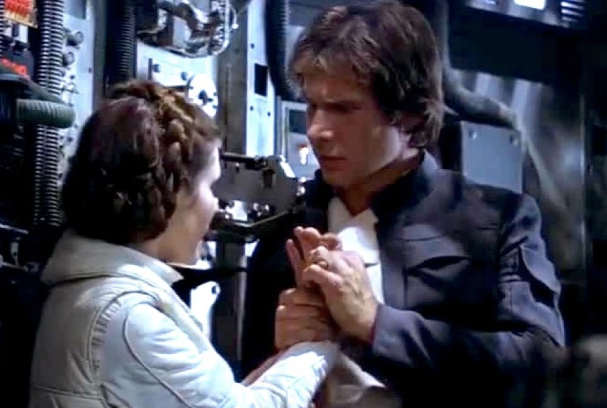
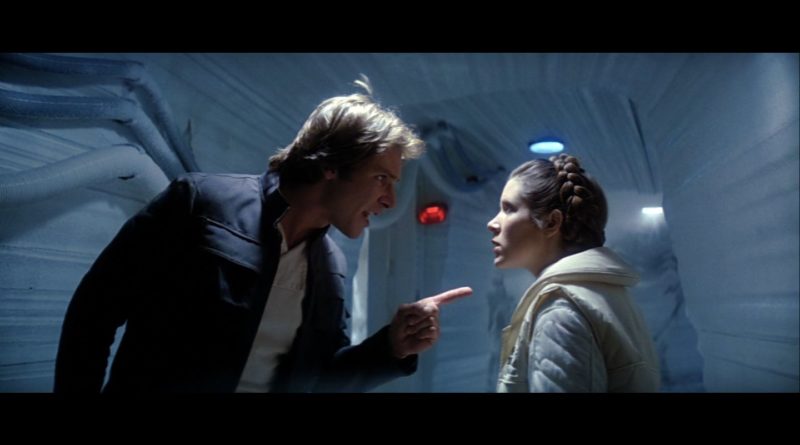
Greetings and welcome to part 2 of my podcast on The Empire Striketh back, the 5th installment in the William Shakespeare’s Star Wars Series.
Last time I mentioned Luke’s journey and how Droesher adapts the cinematic quality into Elizabethan drama through soliloquies.This time, I’m going to talk about the other main characters, Han and Leia. In my opinion, Doescher writes their journey much better and gives them lots of good romantic and comedic dialogue. I am also privileged that this time I will have some help with the voices- two professional actors, Hal Jourdan and Janine Ashley have graciously agreed to be part of this podcast, lending their voices to Han, Leia, the Wampa, and Luke. I’m grateful for their involvement and would love for you to check out their other work onstage. Below are some Youtube clips I made using their voices. Enjoy!
I’m so excited! One of my favorite Youtube channels is doing a series of videos where they try Shakespeare for the first time! Zach Kornfield, Eugene Yang, and Keith Habersberger known collectively as “The Try Guys” are a group of friends who seek out new experiences and share them with the world. They thrive on taking themselves out of their comfort zone and learning about the world through experiencing it firsthand in a funny, lighthearted way.
So, what could be more adventurous, daring, informative, and out of YouTube’s comfort zone than doing Shakespeare? So in a series of videos they are going to explore Elizabethan clothing, stage combat, learning how to speak Shakespearean verse, and finally on August 10th, 2023, they will perform “Romeo and Juliet” live on Youtube, with suggestions from the audience!
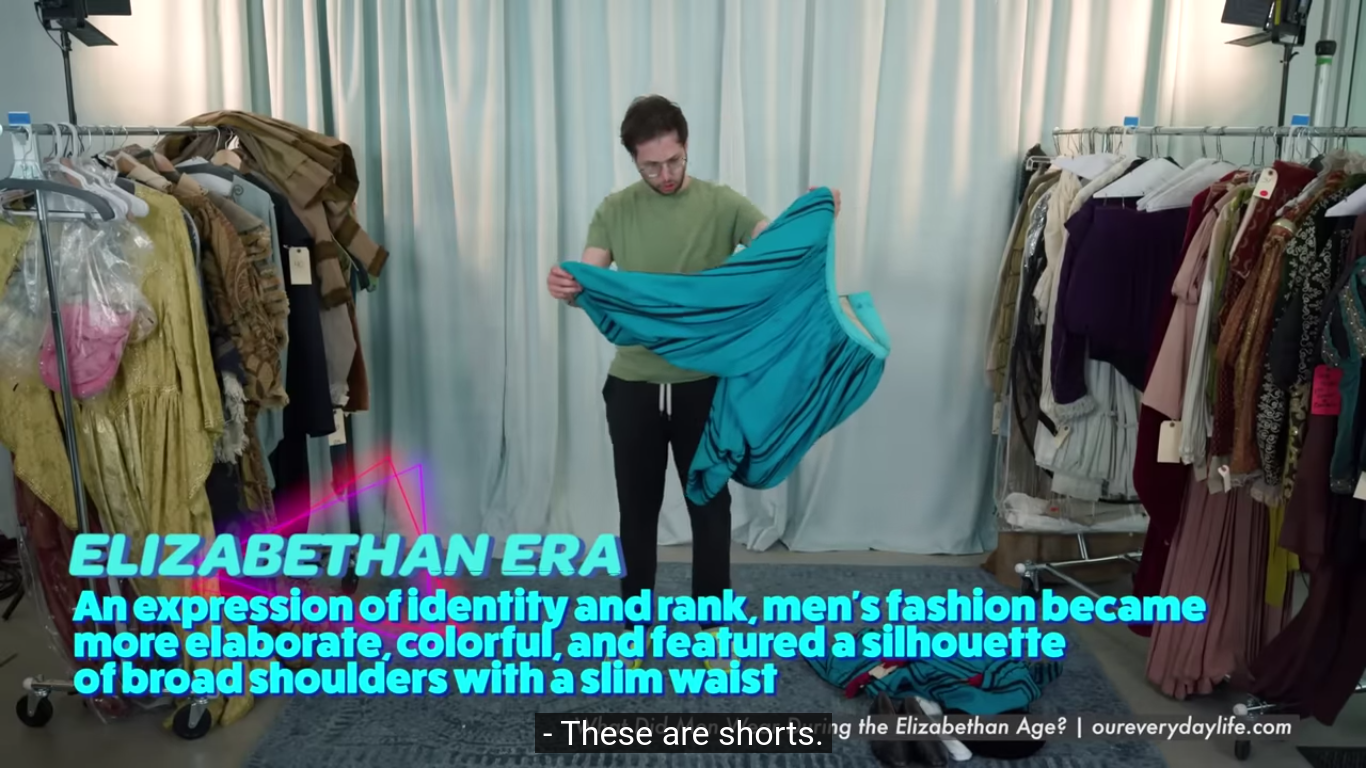
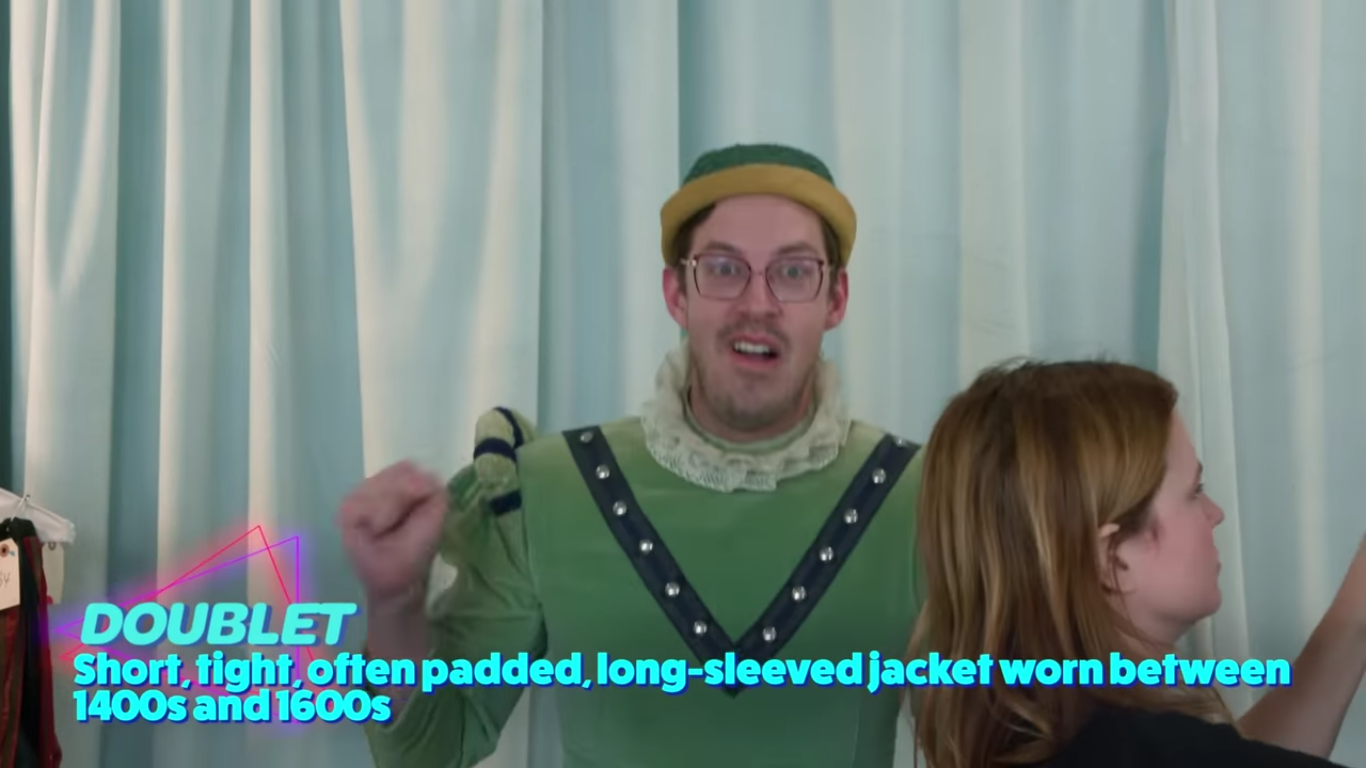
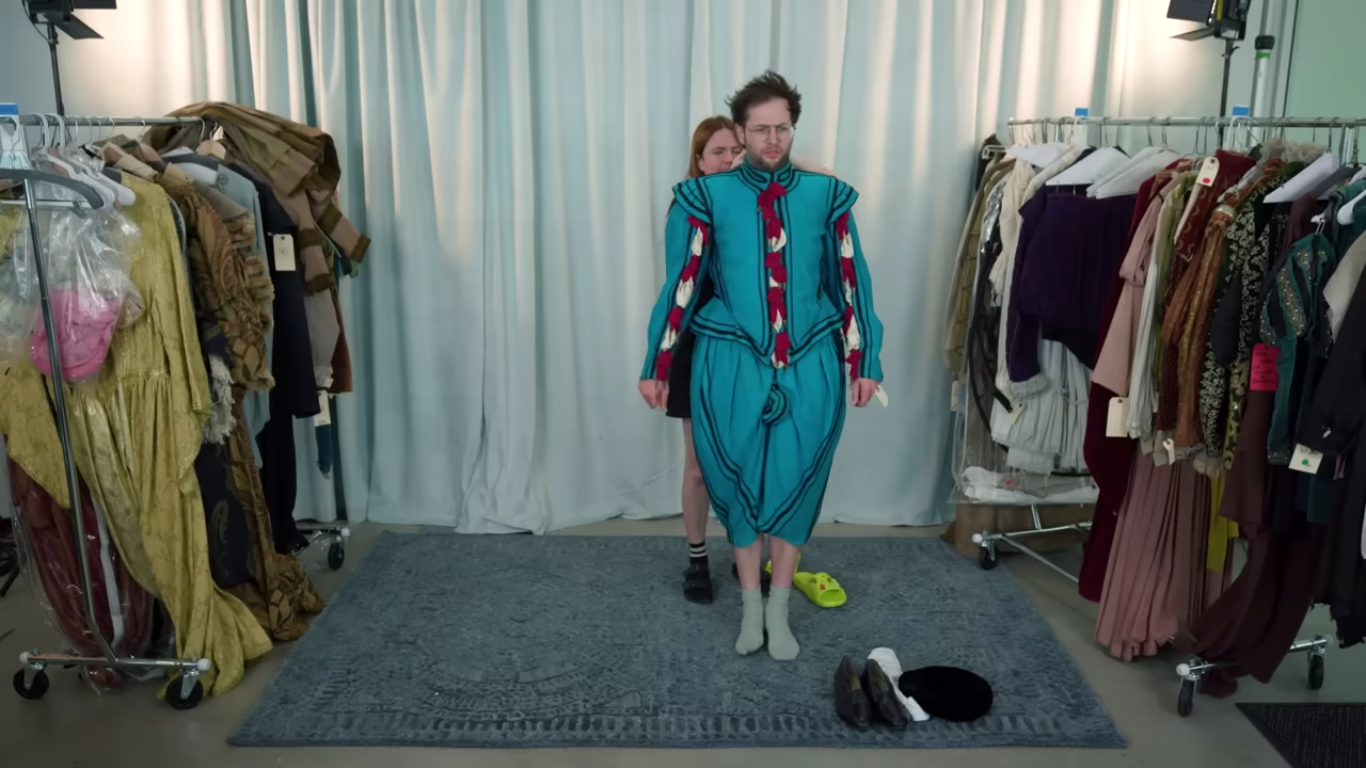
This post will be a reaction to the humor and information on Elizabethan clothing from part one of the series with my notes on Elizabethan fashion, and the costumes worn by Shakespeare’s company
Background on Elizabethan Clothing
I’ve written a series of posts about Elizabethan fashions. If you’re unfamiliar with the period, Queen Elizabeth reigned from 1558 to 1603. This was one of the most prosperous and cosmopolitan times in English history and the fashions of the time reflected this.
Report of fashions in proud Italy, Whose manners still our tardy apish nation Limps after in base imitation.
Richard II, Act II, Scene i
Clothing of this period was very hierarchical- if you were lower class, the garments had drab colors, were functional rather than fashionable, and were not tailored for individual people. On the other hand, upper-class people literally wore their wealth and status on their sleeves- clothes were tailor-made, colors were bright and hard to produce, and fashion styles represented the far reach and sophistication of the English court. One way the court proclaimed this was by importing fashions from Italy, as the quote above indicates. This might be one reason why so many of Shakespeare’s plays are set in Italy; the public wanted to see the exotic upper-class fashions in this play set in romantic, sophisticated Italy. In a way, Shakespearean plays were sort of a fashion show in the 16th century.
If they [Elizabethans] saw a onesie, their heads would explode!
Keith
Keith’s remark is referencing the fact that nowadays our clothes are stitched together on the spot by machines. If you buy pants or a shirt, it comes as one complete garment, but this is a luxury the Elizabethans did not have. Costumes came in pieces like ruffled collars, sleeves, skirts, kirtles, foreskirts, etc. All these pieces would need to be assembled by a patient lady or gentleman in waiting, which is why Elizabethan nobles couldn’t get dressed by themselves, as you can see in this graduate thesis video by my friend Anna Gonzales:
Keith Habensburger as Juliet
One of the best parts of the video is Keith trying on various upper-class Elizabethan ladies’ garments from dresses to skirts. The Try Guys have a long history of trying on female garments so in a way, they’re perfectly suited to try Shakespearean costumes.
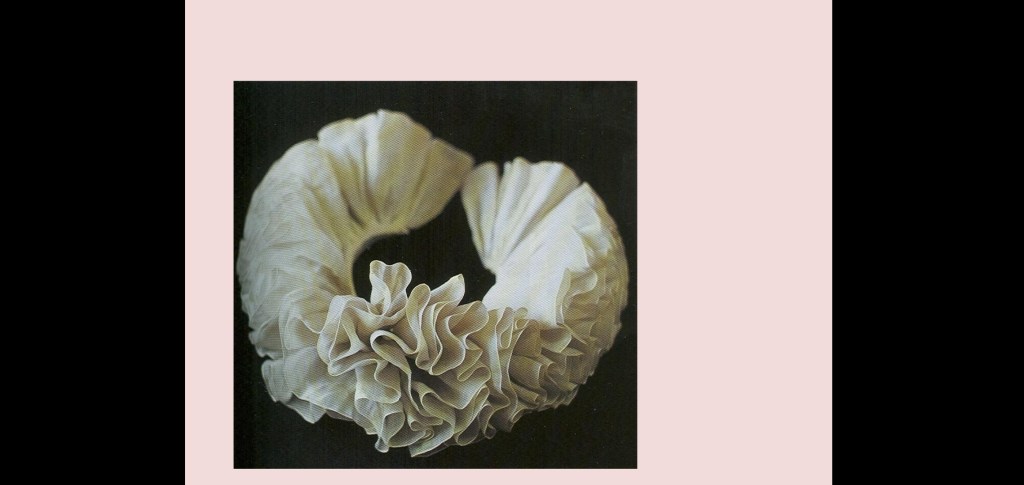
Keith’s favorite Elizabethan costume piece is the famous neck ruff- a piece of rolled linen that goes around the neck worn by men and women. Ruffs were very popular in the Tudor court, so it became a symbol of Elizabethan fashion.
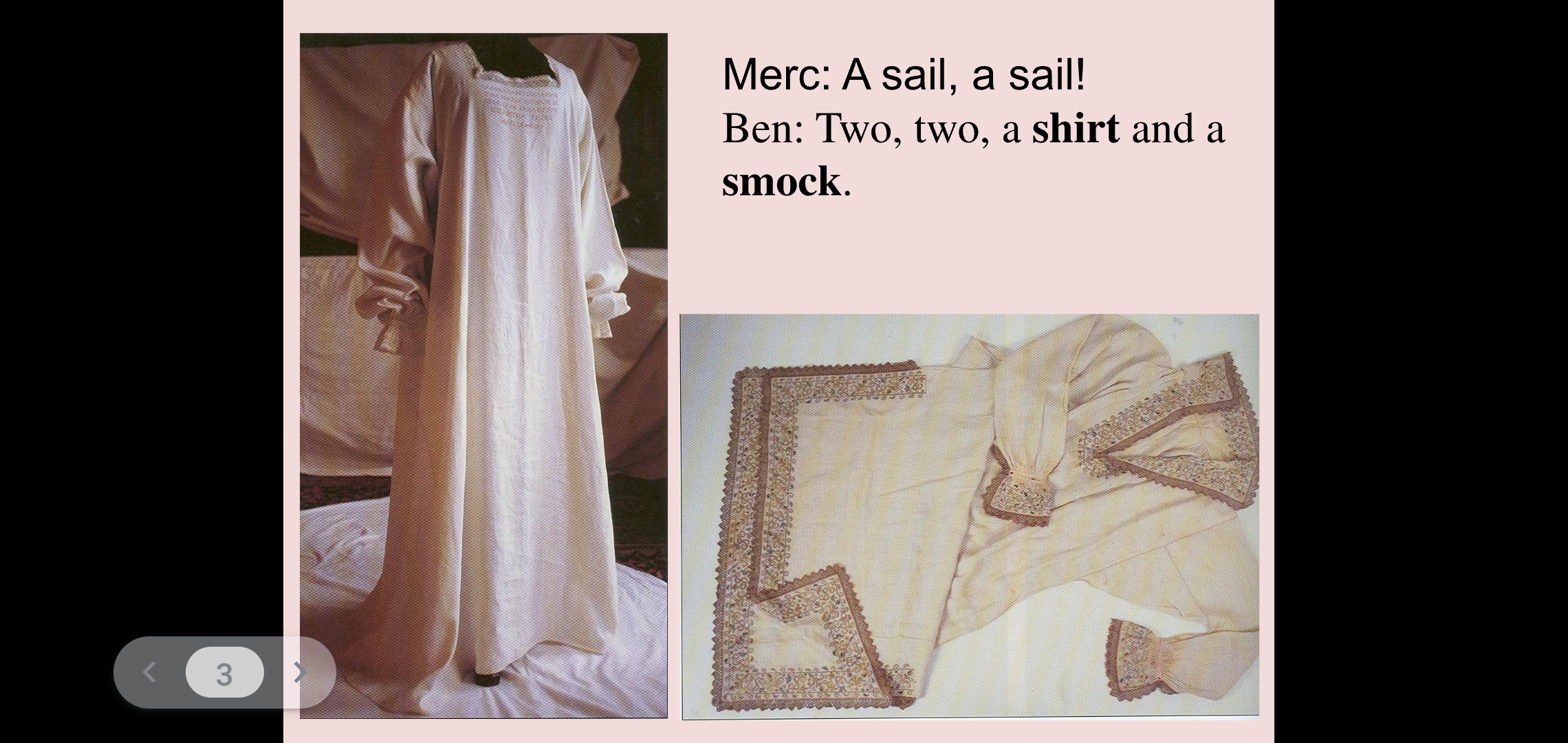
“A Shirt and a Smock”
In Anna’s thesis, she points out how Elizabethan undergarments came in the form of long shirts for men and a long linen one called a smock for women. In the video, Keith is puzzled by the garments and wonders if it would be at all erotic to see an Elizabethan in their not-at-all revealing shirts or smocks. As Anna points out in her thesis, these garments were worn close to the body, coming into contact with all the sweat and grime of daily life. So NO Keith, it wasn’t sexy to see an Elizabethan in his or her shirt or smock.
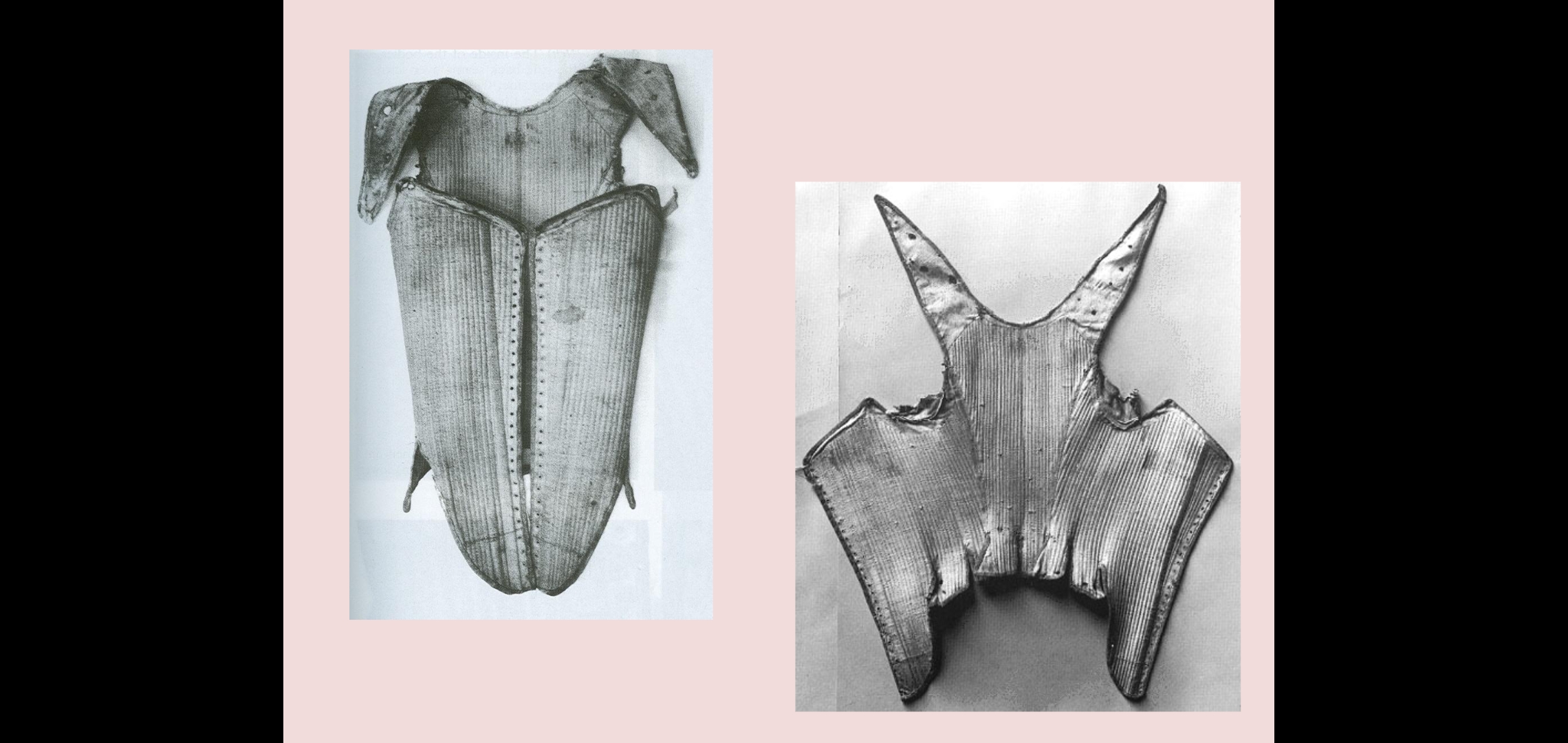
“THe Devil Himself Could Invent such stuff”- Elizabethan Corsets.
Every age has a new definition of the ‘ideal silhouette,’ that is, the figure that is most appealing in women that the clothes either create or accentuate. Elizabethan women were expected to have slim waists, small chests and wide hips. This look was accomplished through the use of a corset, which tightened the waist and compressed the chest.
Under the Hood- Farthingale, bum rolls, and petticoats
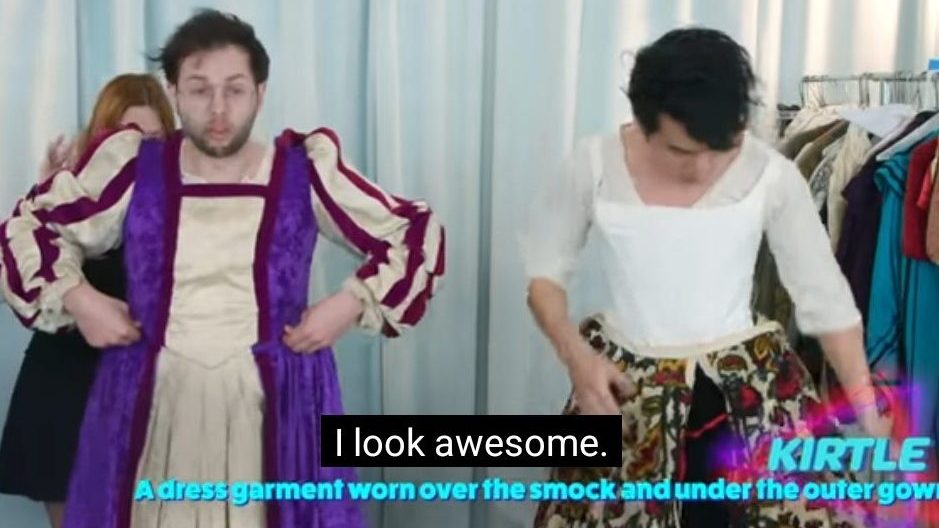
To create the wider hip look of Elizabethan women, bum rolls tied around the waist, and wooden farthingales created a bell shape for the hips and skirt. On top of that went the petticoat, kirtle, and skirt.
Eugene wears a petticoat on top of his corset and bum roll that is done up with red bows. Zach wears a lace collar that partly covers his head. Eugene’s sleeves were added separately.
Eugene As THe Nurse
Eugene’s clothing as The Nurse, reflects the fact that lower-class people had fewer and fewer fancy options in terms of fabrics, styles, and colors. The costume is a simple linen shirt, a basic corset, and grey clothes. I suspect that The Nurse was also helping Juliet get dressed, like the ladies in this video:
Men’s fashion- Zach as Romeo or “Bros wearing Hose”
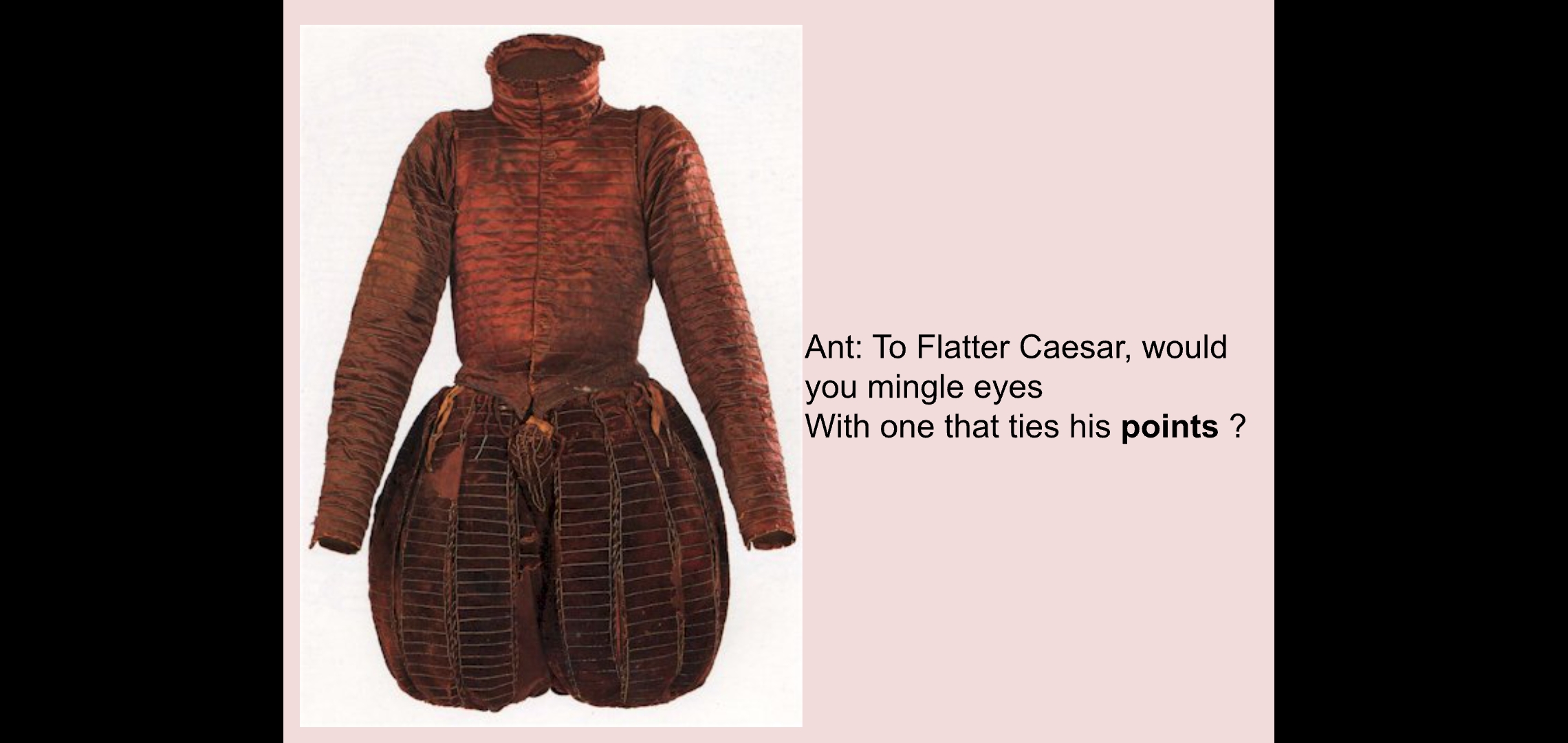
Men in this period also wore custom garments- the sleeves were added separately and the pants had to be attached at the points. Unlike women, young men didn’t cover their stockings (hose) and enjoyed showing off the shape of their legs. Stockings were often brightly colored and sometimes padded to make the man wearing it look more muscular.
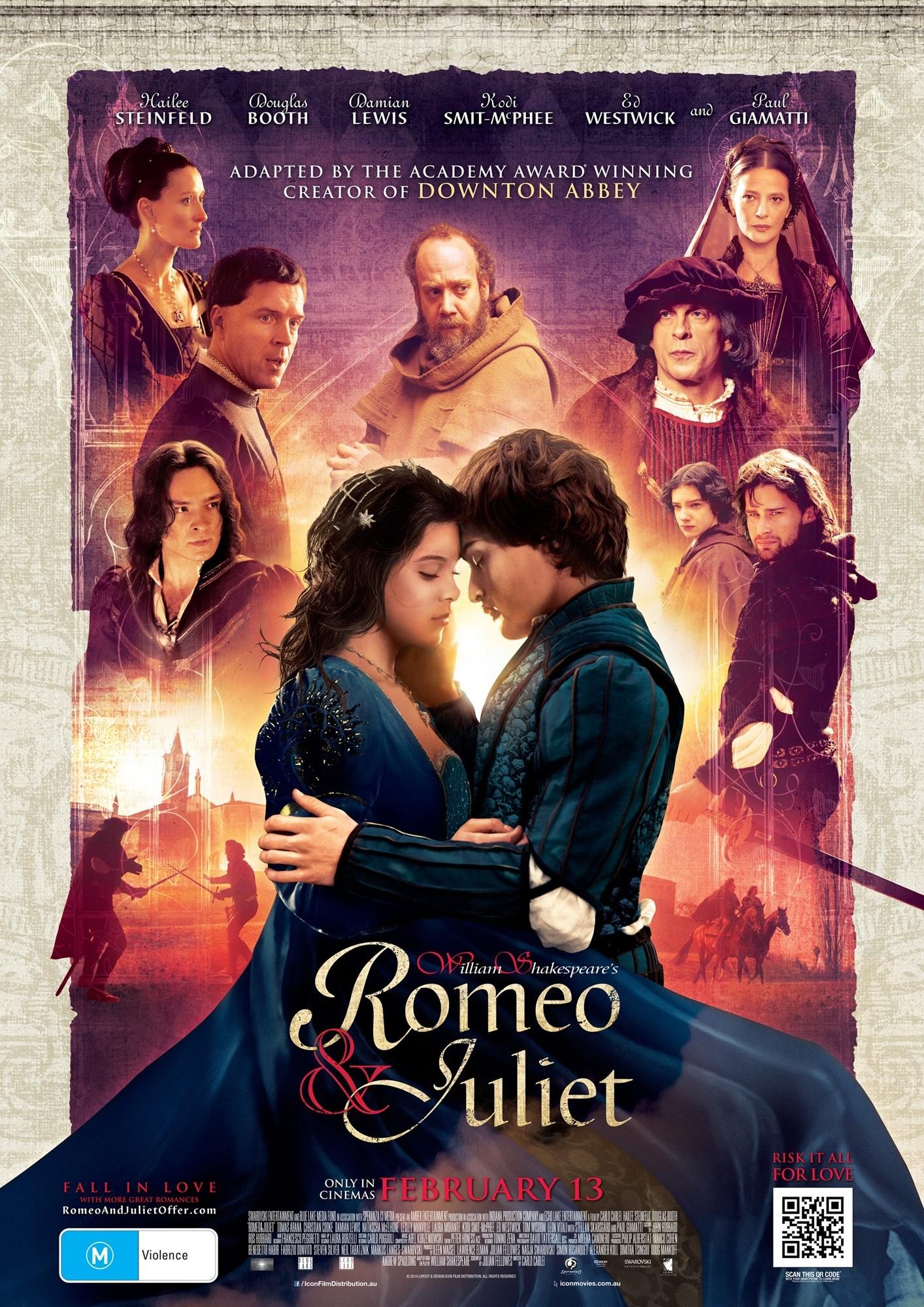
a sufficiently entertaining, adamantly old-fashioned adaptation that follows the play’s general outline without ever rising to the passionate intensity of its star-cross’d crazy kids
Romeo and Juliet is still taught more than any other text in American high schools, and since it’s a play not a book, teachers will inevitably want to show a movie in class to show some of the action to the students. Since this is the most recent high-profile film version of Romeo and Juliet, it seems inevitable that this will be the one teachers will show to students, so I will try to review this film from the point of view of an educator, not a Shakespeare fan.
The Concept
This film was financed by the Swarosvski Crystal Company and in the words of their own chairperson, the film is an extension of the Swarosvki brand. So if I were to describe this film’s concept it would be to dazzle the viewers with expensive costumes, exotic locations, beautiful visuals, and young, attractive actors:
To be clear, I agree with the director that Shakespeare should be updated every few years to keep it fresh and relevant. However, I would argue that this film doesn’t go far enough to make this concept fresh, and this version is destined to age poorly. Without a unique view of the play other than- “love is pretty”, the film lacks vision and is not very distinct. That said, it perhaps is a good way to introduce young people to the play, as we’ll see below:
Changes to The Plot
The Act I Tournament
The film opens, not with two servants fighting (yet), but with a tournament between the Monaegues and Capulets, where they joust instead of fight to avoid bloodshed. It is a striking image to be sure, and it is less confusing than starting a fight over biting a thumb, but it is a little odd that the Prince has this tournament to avoid street fights, and then they wind up fighting anyway over the results of the tournament. It works within the story but it makes the Prince seem dumb and it adds little to the story other than spectacle.
The Dialogue
As you can see from this clip, the dialogue of this film is changed liberally. The writers change Shakespeare’s lines to make them sound less Shakespearean. They also heavily cut the speeches to shorten the duration of the film. Cutting long speeches and substituting a word here and there is pretty standard for most Shakespeare movies, but what I find really irritating in this film is the number of lines that they add. It’s generally understood in Shakespeare that a director or actor can subtly change a few lines in a play- change pronouns, change an archaic word or two to make it easier for an audience, but this movie has the dubious record for most lines added to a Shakespeare movie. Some of these lines are paraphrases of the Shakespearean text, like all the dialogue of Sampson and Friar Laurence’s speech explaining the sleeping drug plan to Juliet. Some of the additions are character lines, like the scene where Benvolio admits he wants to woo Rosaline, (which to be fair, is an interesting change and I don’t mind it). Finally, some of the lines are designed to summarize speeches that the script cuts.
I know I sound like a purist here, but I feel that if you’re going to do Romeo and Juliet, use the text of Romeo and Juliet, and don’t change it unless it’s absolutely necessary. If you’re going to do an adaptation like Gnomio and Juliet or Tromeo and Juliet, you can throw out the Shakespearean dialogue and play around with dialogue using the plot and characters Shakespeare wrote. This film does neither- it mangles Shakespeare’s text but rigidly adheres to the story and characters, so it fails to pick a lane between faithful depiction or creative adaptation.
Small changes:
Mercutio is a Montegue now. This matters because in Shakespeare’s version, he was related to the Prince, which is why the Prince takes pity on Romeo for avenging Tybalt’s death. Changing his allegiance robs his death of some of the tragedy that he was a neutral party who got caught up in other people’s quarrels.
Tybalt is in love with his cousin Juliet, (which admittedly I’ve seen in other productions). It gives him more motivation to hate Romeo and makes him even more distasteful to the audience.
Sampson and Gregory appear, but they are not named, nor do they bite a thumb.
Benvolio’s role is merged with Balthazar and the actor is the youngest person in the cast. I honestly like this change a lot- Balthazar is a great character but he is functionally identical to Benvolio in the plot, so merging the two parts makes a lot of sense. Both Balthazar and Benvolio spend the play looking out for Romeo yet Benvolio disappears once Tybalt dies, so giving the actor Balthazar’s lines is a welcome change. Now Benvolio is literally with Romeo to the end, which makes us feel sorry for Romeo and his best friend.
Benvolio is in love with Rosaline and makes a play for her after Romeo falls in love with Juliet. This might be a subtle nod to their relationship in the novel “Romeo’s Ex.”
Rosaline is Juliet’s cousin now, which is not mentioned in Shakespeare’s version.
Rosaline actually speaks, remarking on the foolish nature of silly Romeo, the Montague, and the Capulets. She still has no effect on the plot though, and her dialogue adds nothing.
Concerns for Teachers
If you are a teacher, I would recommend you show parts of the movie, specifically the fights and some of the action in the second half rather than the whole thing, but once you read the rest of this review, you can draw your own conclusions. As I mentioned before the Shakespearean dialogue is heavily cut, new ‘modern’ dialogue is added in, and even some of the action is also changed. Because of this, DO NOT TRY to read the play along with this film, as your students will get extremely frustrated. In my class, I actually played a game where the students write down what the movie changed from the play to try and get them to engage with it. I would also recommend asking questions or quizzing the students on the plot or the famous lines since those are more or less intact.
According to Common Sense Media, the film is relatively tame for students, (which of course was one of the goals of making it), so the violence is toned down, there is little nudity and little cursing (there actually is a little PG-13 language added near the beginning, but not much).
Though the film is populated with English and American actors, the majority of the crew is Italian and principal photography was done in Italy, both on-location in places like Verona, Mantua, Rome, and other Italian locations.
Historical Context
The original story of Romeo and Juliet is set in the 1400s but based on the references to Early Modern fashion and music, we can assume Shakespeare set his version around 1593- (the year it was probably written). This production, based on its fashion and architecture is probably set around the early Baroque period, (c. 1600).
This time period was notable for abandoning neck and sleeve ruffs in favor of lace or linen collars (Source: https://fashionintherenaissance.weebly.com/fashion-timeline.html) . The famous pumpkin pants were also replaced with less fussy breeches as well. All these fashion choices are in the Romeo and Juliet movie and it’s fascinating to look at the choices they made for the film in behind-the-scenes documentaries. I shouldn’t be surprised here, but studying this period made me enjoy the film more- I lost myself in the spectacle and ignored their handling of the story.
The Costumes
Costume featurette from Romeo and Juliet (2013)
As you can see from the close-ups above, the Swarovski Crystal company definitely showed off some of their wares in Juliet’s costume. In fact, Swarovski sells a version of Juliet’s wedding ring.
You can also see in these costume renderings the influence of Pre-Raphelite artwork on the costumes, like this famous painting by Francis Dicksee (1884).
The Sets
Many of the street locations for Romeo and Juliet were filmed at Cinecitta Studios in Italy, but as you can see from this behind-the-scenes footage, most of the film was filmed on location in beautiful real-life baroque buildings in Italy:
The Locations
Many of the locations remind me of the high baroque architecture of the celebrated Italian sculptor and architect Gian-Lorenzo Bernini (1598-1680), who had his own Romeo and Juliet-style drama in terms of sordid love affairs, duels, and exiles:
One location I found very interesting to research was the Grotto of Sacro Speco in Subiaco, which was the location for Friar Laurence’s cell. This is a very holy site to many Catholics- it is the celebrated Cave of St. Benedict, the founder of the Benedictine monks. Friar Laurence is a Franciscan monk so this isn’t entirely accurate, but it does provide some wonderful religious eye candy during the scenes at his cell, and it does beautify the wedding scene.
The Music (rant alert)
THE MUSIC NEEDS TO SHUT UP! Especially in the love scenes, the music is too loud and drowns out the dialogue. I personally find it irritating that the score makes so much use of the piano, which wasn’t invented until 1700, since the movie is trying to be historically accurate. To be fair, the loud piano is actually the sound department’s fault, but the fact that pianos didn’t exist at this time took me out almost as much as the overpowering score, (which somehow won two International Film Music Critics Awards (IFMCA)!
The Cast
Reviewers usually love to rag on whoever plays Romeo and Juliet. It’s kind of a no-win scenario here- If they’re young, they’re inexperienced and thus, don’t know how to speak Shakespeare. If they’re older, they’re too old and shouldn’t have been cast in such a youthful role. So rather than falling into that trap, I’ll be positive about the casting and say what I like about the performances, while criticizing the direction, because I feel that in general, the acting in this film is fine, but there are some odd choices that the director should’ve thought twice about.
Romeo (Douglas Booth)
Booth might actually be my favorite film Romeo- he’s beautiful to look at, sweet, impulsive, naive, everything Romeo should be. He also knows how to deliver Shakespeare and can convey complex ideas through poetry. I could argue that he lacks the rage that Romeo should have when killing Tybalt, but I don’t think that’s what he was going for this Romeo is a good guy who is too sheltered and lacks proper guidance, so he makes rash choices because nobody is there to tell him why they are.
Juliet (Hailiee Steinfeld)
I don’t fault Ms. Steinfeld for this, but her worst scenes are sadly, the most famous. Her delivery during the Act I dance and the famous balcony scene is monotonous and dull. I think the director told her to act as if love put her in a trance, but the effect is that she sounds like she’s half asleep. Again, I know she can do Shakespeare because her scenes with the Nurse and Lord Capulet are much better; she’s passionate, articulate, and full of emotion. I think the director failed to give her proper direction to play a love scene realistically, and intentionally slowed the scene down so the audience could pick out the famous lines.
Lord Capulet
Some people argue that Lord Capulet is actually a good dad, but not this film. As I’ll show you later, this film is trying to play up the forbidden love aspect of the story, and what is more classic than an angry, disapproving father? To this end, even though Damien Lewis starts out jovial and sweet to Juliet, by Act III he is full of resentment and rage:
Damien Lewis as Lord Capulet, in a scene from Act III, Scene v
Tybalt (Edward Westwick)
Ed Westwick steals the show every time he’s on screen. He knows how to speak the Shakespearean lines and he makes the added lines sound Shakespearean (which is to say, actually good). With his fiery gaze and his thick, deep voice, he reminds me of a young Mark Strong and is equally good at playing smarmy yet compelling antagonists. You love to hate this guy, yet you feel sorry when he dies.
Friar Laurence (Paul Giamatti)
Giamatti rivals Pete Postlethwaite for my favorite Friar Laurence. He was a perfect choice and he has an effortless Shakespearean delivery. I think it’s telling that his lines of dialogue are the least altered from Shakespeare- the director knew Giamatti could make them work without any alteration. He also has a great rapport with both Douglas Booth and Hailee Steinfeld.
Moments to Watch For:
This film does well at portraying the forces that rip Romeo and Juliet apart- Tybalt’s maniacal hatred of the Montagues, Lord Capulet’s scheme to marry Juliet, and the influence of maligning fate. For this reason, the film is actually better in the second half, once the romance is over and the tragedy sets in. Again, a lot of this is due to the excellent performances of Ed Westwick as Tybalt, and Paul Giamatti as Friar Laurence, who frantically strains his brain to help the lovers and is thwarted at every turn. I wonder if, since the film was adapted by the creator of Downton Abbey, in which Giamatti starred, the writer placed most of the success of the film on Giamatti’s shoulders, intentionally or not.
My Reaction: Shakespeare for Twi-hards.
Forgive me for getting a little conspiracy-theory-ey here but, since the Twilight saga concluded in 2012 and this film came out the next year, I suspect that thisRomeo and Juliet was partially produced to cash in on the success of Twilight. After all, Twilight: New Moon is full of references to Romeo and Juliet:
As the video below demonstrates, Twilight and Romeo and Juliet are both examples of Petrachian love, which is to say, love thwarted, so similar themes and tropes are baked into both stories.
There are also stylistic similarities to how this particular Romeo and Juliet are filmed, such as the lush landscapes, the prevalence of piano in the score, the heavy uses of glamour shots, and even some of the Italian locations evoke Twilight:
Worst of all, I feel that this film tried to make Hailee Steinfeld, an Academy Award-nominated actress, try to act like Bella Swan in the Balcony scene. I think this is why the first half of the film drags and seems slow and dull- it is trying to emulate Twilight’s visual style and forces the actors to adopt a “Twilight School of Acting.”
So in conclusion, the film is uneven- it has talented people working on it, but I think the studio and the company were a little preoccupied with selling the film to a specific group of young people. Does it work for classrooms? For now, but I worry that this version won’t connect with young people for long, and because of its lack of focus and clear direction, it will probably go the way of Twilight– a brief cultural blip that is pretty to look at, but that is quickly forgotten.
Title image for my online course on “Romeo and Juliet.”
If you like this analysis, you might be interested in signing up for one of my Outschool Course on Romeo and Juliet Link down below. Share this class with a friend and you will get $20 USD off!
O ceremony, show me but thy worth! What is thy soul of adoration? Art thou aught else but place, degree and form, Creating awe and fear in other men? Wherein thou art less happy being fear'd Than they in fearing. What drink'st thou oft, instead of homage sweet, But poison'd flattery? O, be sick, great greatness, And bid thy ceremony give thee cure! Think'st thou the fiery fever will go out With titles blown from adulation? Will it give place to flexure and low bending? Canst thou, when thou command'st the beggar's knee, Command the health of it? No, thou proud dream, That play'st so subtly with a king's repose; I am a king that find thee, and I know 'Tis not the balm, the sceptre and the ball, The sword, the mace, the crown imperial, The intertissued robe of gold and pearl, The farced title running 'fore the king, The throne he sits on, nor the tide of pomp That beats upon the high shore of this world, No, not all these, thrice-gorgeous ceremony Henry V, Act IV, Scene i.
As this quote from Shakespeare's Henry V, there are many different cermonial customs and adornments that the British monarchs have used to adorn and elevate their kings and queens. Today I'm going to compare and contrast King Charles III and his mother Queen Elizabeth II, then I'll compare these coronations with the monarch who lived during most of Shakespeare's life: Queen Elizabeth I.
Part I: Queen Elizabeth II vs. Charles I
All my information for this section comes from this fascinating article from the Washington Post, which compares and contrasts King Charles’ coronation on May 6th, 2022, with his mother’s, which occurred on June 2, 1953:
Both Charles and Elizabeth were anointed with holy oil- an ancient tradition signifying God’s favor. The tradition goes all the way back to the Bible, where the book of First Kings details the procedure of anointing King Solomon:
And the king said to them, “Take with you the servants of your lord and have Solomon my son ride on my own mule, and bring him down to Gihon.
And let Zadok the priest and Nathan the prophet there anoint him king over Israel. Then blow the trumpet and say, ‘Long live King Solomon!’ You shall then come up after him, and he shall come and sit on my throne,
1 Kings Chapter 1, Verses 33-35
King George the Third commissioned composer Georg Friedrich Handel (famous for “The Messiah”) to write an anthem for his coronation based on this Biblical passage in 1761 This song has been a tradition during English coronations for the past 300 years, and as you can see in the video below, it was played when King Charles and Queen Elizabeth were privately anointed behind the canopy you see below.
The Scepter
The scepter is called the Sovereign’s Scepter and it is on display in the Tower of London as part of the Crown Jewels. For more information, go to Royal Collection.org:
The ball in this passage refers to the globus crucigeror ‘the orb and the cross.’ This is a symbol of the king’s status as the head of the Church Of England, which began with Elizabeth I’s father, Henry VIII. The orb telegraphs Christ as the true ruler of the world, and the English monarch as his representative on Earth.
The Sword (and) the Mace
A mace used to be a concussive weapon used in battle against knights in shining armor. Since armor is hard to penetrate, medieval warriors tried to cause blunt force trauma and concussion in their enemies using maces. Since those more violent beginnings, the mace has evolved into a symbol of the King’s power and is used at the opening of Parliament. There are three swords that lords used to herald the King during the coronation- the two swords of Justice, and the Curtana or ‘Sword of Mercy,’ so called, because its blade is broken, making it a ceremonial object of peace, rather than a practical weapon.
King Charles’ own sword is called the Sword of State- it is a steel sword gilded with silver, and the handle is wooden, gilded with gold. It symbolizes the monarch’s commitment to knightly virtues, and it is used to create people as knights.
The Crown
St. Edward’s crown is adorned with diamonds, furs, and over 2,000 diamonds! This crown, along with the sword of state, dates back to the 1660s, after the monarchy was briefly abolished, though the crown still has had its share of problems over the centuries, including being stolen!
The Robe(s)
King Charles in his golden robe
Queen Elizabeth II dons the golden Robe Royal
Close up of Elizabeth II in the Robe Royalthe
King Charles in his Robe of State
Elizabeth I in the Robe of State
Queen Camilla in her Robe of State
Much like how during graduation ceremonies people wear special robes to signify the transition from one state of being to another, British monarchs have worn multiple robes to show their apotheosis from a prince to the sovereign head of the country.
The Robe of Estate
The robe of Estate is the long, sumptuous robe of the sovereign; a symbol of his or her wealth. Charles wore his at the end of the ceremony after the crown was placed on his head.
Traditionally, the Robe of Estate is a very specific shade of purple called Tyrian Purple. It is again, a symbol of wealth because it was very labor-intensive and expensive to produce. This is one of the reasons why purple is a color associated with wealth and status:
Left- Royal portrait of Queen Elizabeth in her purple Robe of Estate by Sir Herbert James Gunn. Right- King Charles in his crimson Robe of Estate
Elizabeth’s purple Robe of Estate will now be worn by Queen Camilla, Charles’ wife. It is 6 1/2 meters long, weighs 15 pounds, and took 12 seamstresses 3,500 hours to complete, (source: Historic UK).
Queen Camilla in her Robe of State
THe THrone
The oldest part of the ceremony will without question be the throne- a plain-looking piece of oak that is over 700 years old! St. Edward’s Throne has been part of coronation ceremonies since King Edward I, (aka Edward Longshanks from Braveheart) in around 1200 AD. Surely there is no greater symbol of royal continuity- the monarchs in Shakespeare’s history plays actually sat on this throne. Any king or queen who touches this piece of furniture must get a sense of the ancient traditions of the monarchy.
King Charles III sits on St. Edmund’s throne, holding the scepters.
The Tide of Pomp (Royal Processions)
It’s been a tradition ever since the Middle ages for the new king or queen to travel from their home palace through the county so people can see them on their way to be crowned at Westminster Abbey. Long ago, this was a multi-day journey full of public festivals and entertainment that allowed the whole country to get a rare glimpse of the new monarch. By contrast, King Charles and Queen Camila only traveled 1.3 miles from Buckingham Palace to Westminster.
Image compare of King Charles III and his queen Camilla with his mother and father during Queen Elizabeth’s coronation in 1953.
Part II: Queen Elizabeth the First’s Coronation, January 14th, 1558.
The Procession
After the death of Mary the First, Elizabeth’s sister,
An Account of the Coronation
Like her namesake and the new king, Queen Elizabeth I was crowned at Westminster on January 15, 1558. Unlike them, however, the ceremony was performed in Latin and English by a Catholic bishop. Obviously, since Elizabeth was crowned during the Protestant Reformation, there was a lot of controversy about the liturgy. Some accounts aren’t sure what parts of the Catholic were read, but we do know Elizabeth took the oath, wore a similar golden robe to Charles and Elizabeth II, and was given the balm and scepter just like them. Here is a primary source account from an ambassador from the town of Mantua, Italy:
“The Queen was received under the canopy by the Archbishop and another Bishop, they having previously perfumed her with incense, giving her the holy water and the pax, the choristers singing; then the Earl of Rutland followed her Majesty with a plain naked sword without any point, signifying Ireland, which has never been conquered; then came the Earl of Exeter with the second sword; the third was borne by Viscount Montagu; the Earl of Arundel, having been made Lord Steward and High Constable for that day, carried the fourth (sword) of royal justice, with its gilt scabbard loaded with pearls. The orb was carried by the Duke of Norfolk, Lord Marshal, and in advance were knights clad in the ducal fashion, carrying the three crowns, they being the three Kings-at-arms; they bore the three sceptres, with their three crowns of iron, of silver, and of gold on their heads, and in their hands three naked iron swords, signifying the three titles of England, France, and Ireland..”
— Il Schifanoya, royal ambassador from Mantua
‘And whereas your request is that I should continue your good lady and be Queen, be ye ensured that I will be as good unto you as ever Queen was unto her people. No will in me can lack, neither do I trust shall there lack any power. And persuade yourselves that for the safety and quietness of you all I will not spare if need be to spend my blood. God thank you all.’ _Queen Elizabeth I