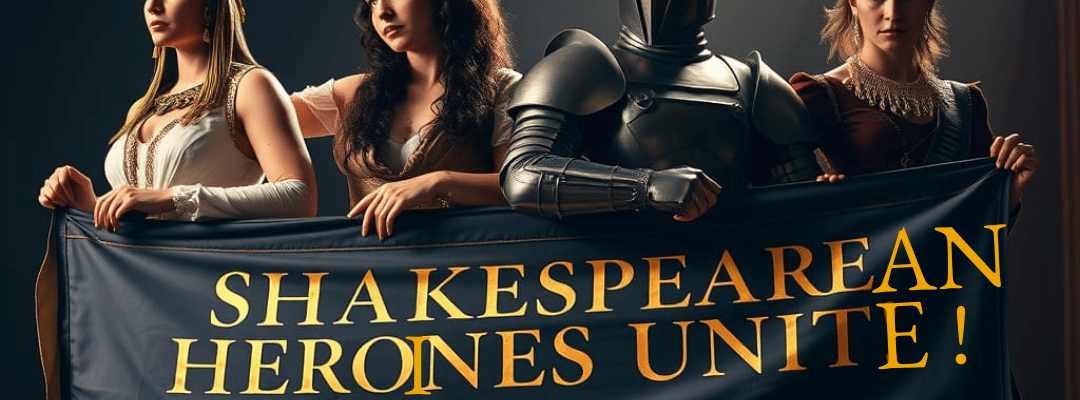
Every Year around this time, I like to draw attention to Shakespeare’s greatest heroines. You might have read my top 10 Shakespearean mother characters, or my post from last year, where I talked about some of Shakespeare’s best childless characters.This year, I’m putting together a squad of women you don’t want to mess with. So please enjoy (in no particular order because I refuse to rank women), – the best female fighters in all of Shakespeare:
Queen Margaret of Anjou
She defeats the York Army multiple times in the Wars Of The Roses, even killing the Duke of York himself. She was a powerful force on the battlefield and in the court.
Joan of Arc
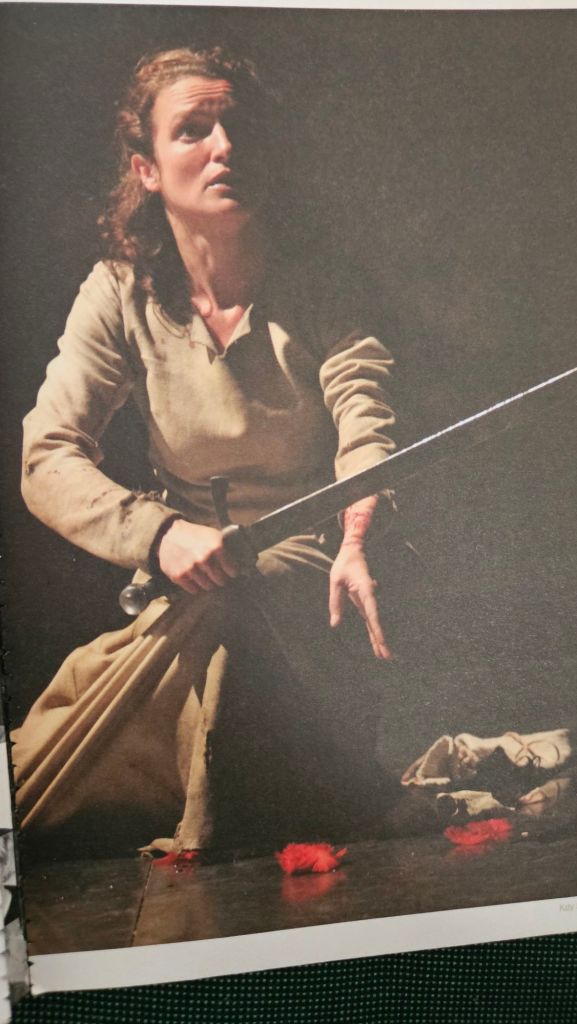
Joan la Pucelle from Henry VI, Part 1: (RSC, 2006)
I am prepared: here is my keen-edged sword, Deck’d with five flower-de-luces on each side; The which at Touraine, in Saint Katharine’s churchyard, Out of a great deal of old iron I chose forth.
And while I live, I’ll ne’er fly from a man.
The iconic female warrior who helped end English occupation of France. In Shakespeare’s play, she fights the French prince to prove her prowess in battle, then she retakes the towns of Orleans and Rouen from the English, and keeps fighting until the
Portia Catonis
Portia preparing to “Swallow fire”
True, she doesn’t have much fighting experience, but clearly she can tolerate pain, has accute powers of perception, and is related to a long line of political and military patriarchs.
Volunnia
Valumnia comforts Coriolanus’ wife (AI art)
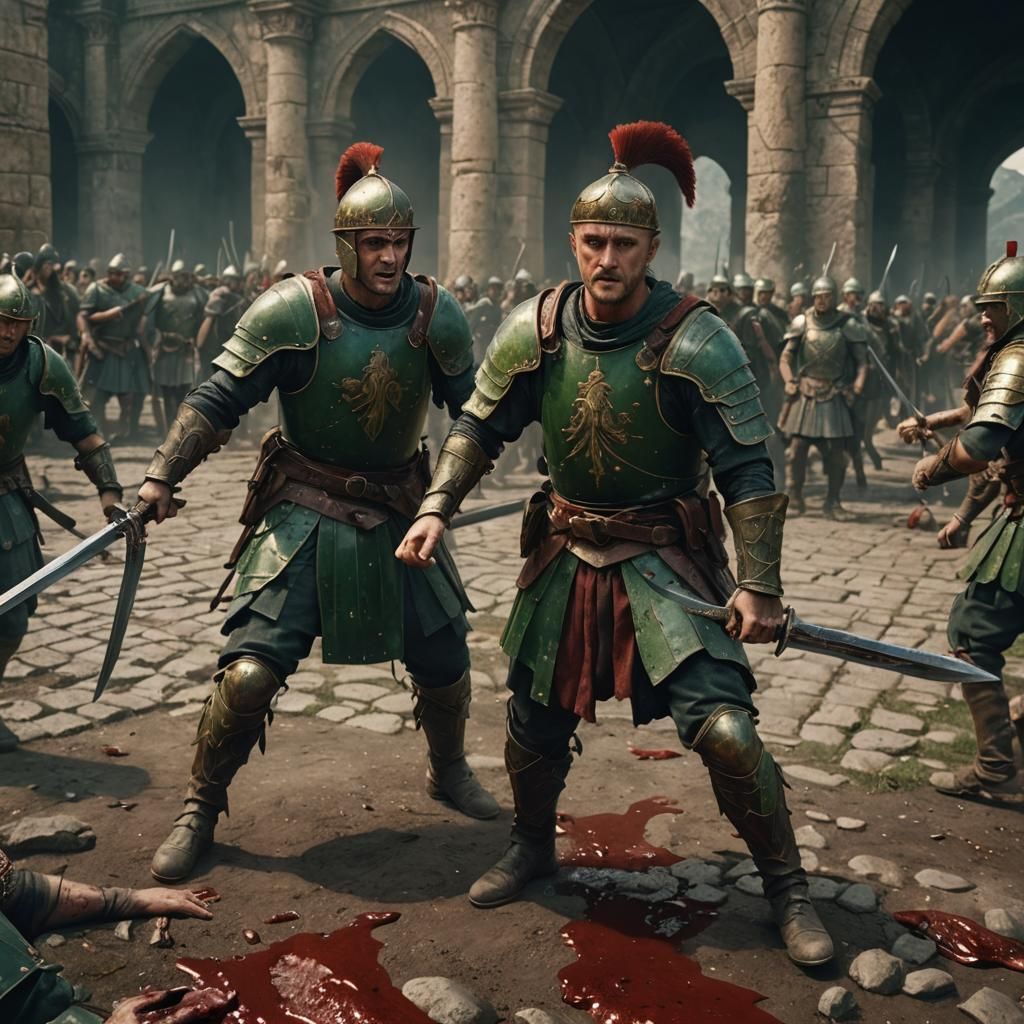
Dr Peter Saccio of Dartmouth College once said that this Roman matron talks to her son Caius Martias as if she’s his general, not his mother. She is totally devoted to Rome and she has trained her son since birth to fight for it.
Cordelia
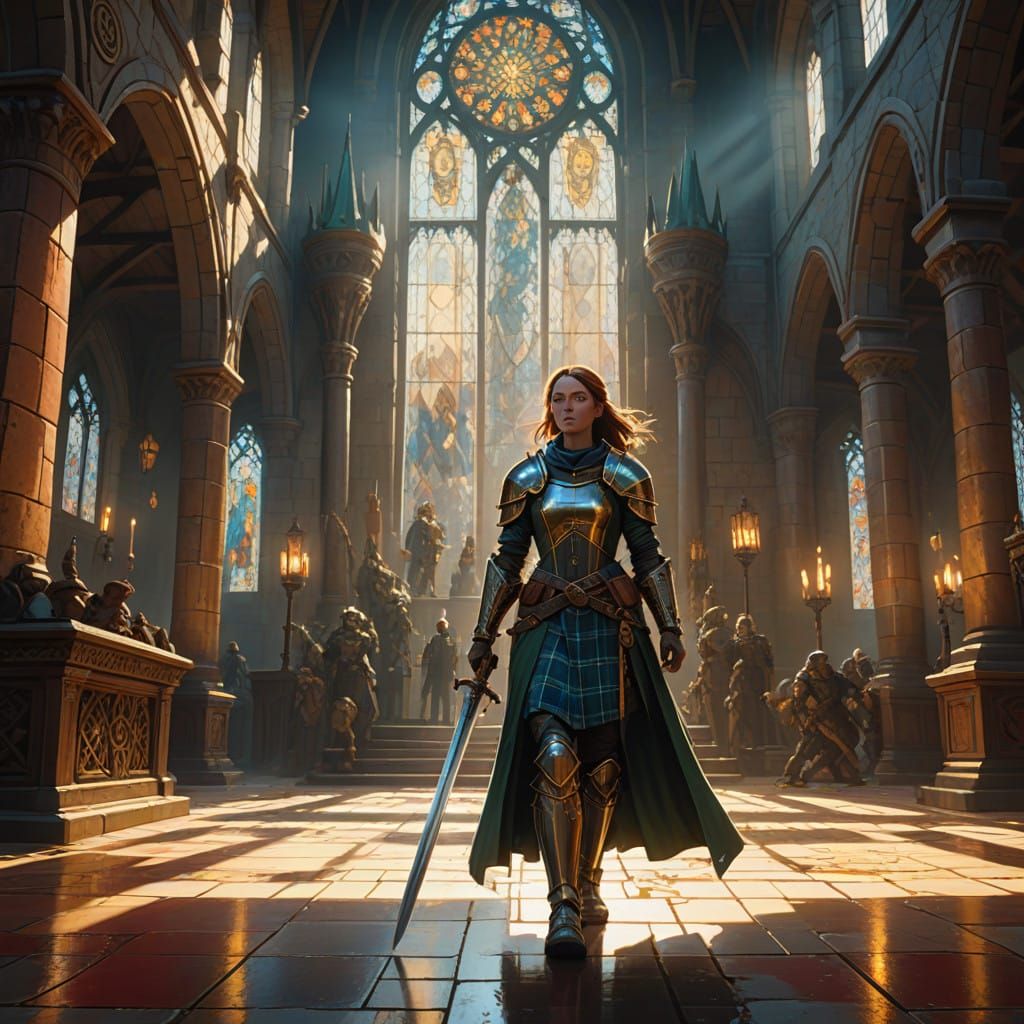
AI artwork I created of Cordelia storming Goneril’s castle
Our preparation stands
In expectation of them. O dear father,
It is thy business that I go about.
Therefore great France
My mourning and important tears hath pitied.
No blown ambition doth our arms incite,
But love, dear love, and our ag'd father's right!
Cordelia shows her strength not through words, but through deeds- massing an army and invading England to put her father back on the throne, as the passage above shows. It’s true she didn’t succeed in saving the kingdom, but she did save her father through her love and bravery.
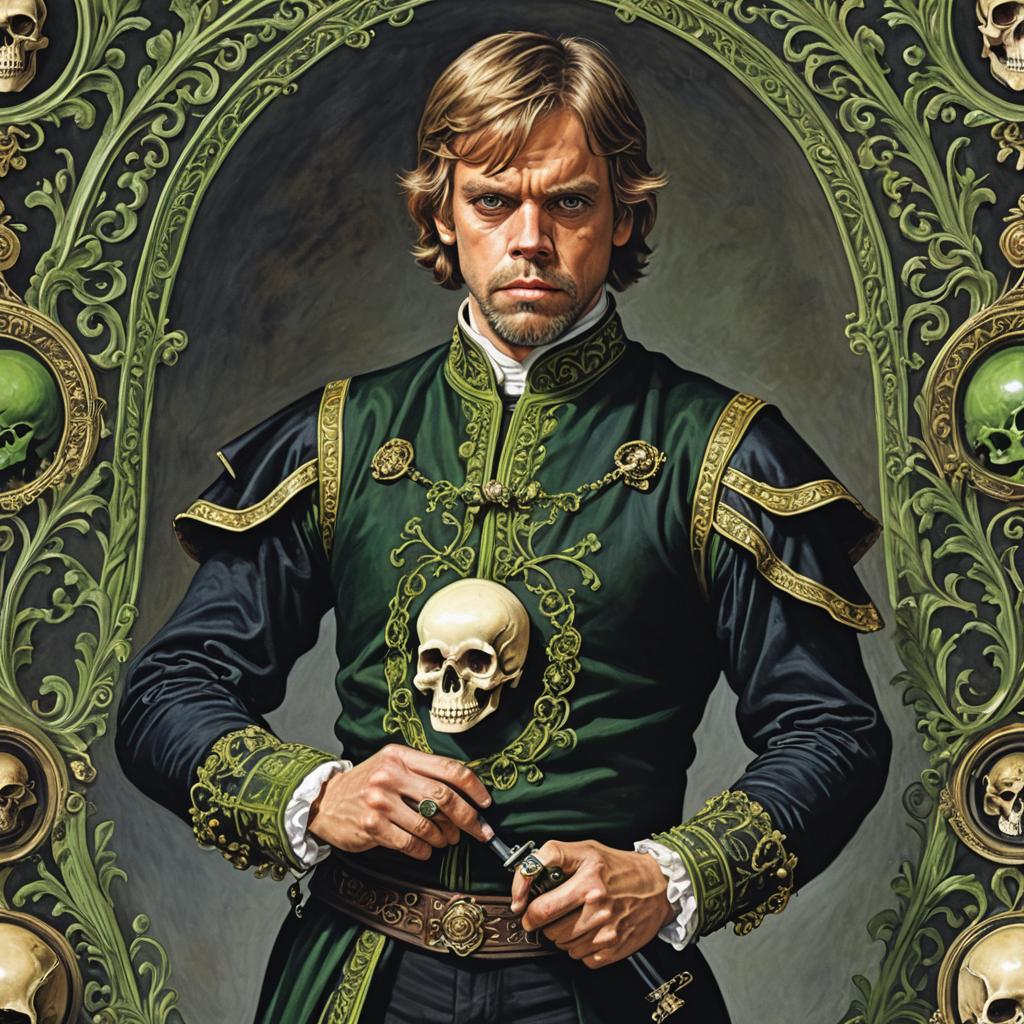
Cordelia and Lear re-united (AI art)Draco Malfoy as Coriolanus (AI art)Harry Potter As Henry V (AI Art)Hamlet as a Ravenclaw student at HogwartsArtwork of Cleopatra and her son Cesarian (Made with Night Cafe)Luke Skywalker as Hamlet (AI)
As a creative person who can’t draw, I can’t always depict the gorgeous imagery that Shakespeare uses in his poems and plays, so I often resort to AI artwork to do it for me. If you’ve been here a while, you know I’ve used NightCafe to imagine Shakespeare characters as, Harry Potter, Disney Princesses, Star Wars, and others.
I love to use AI to put pop cultural characters in a Shakespearean context, but until today, I never thought of using AI to interpret Shakespeare directly, until I read this article from Medium.com. The author, Douwe Osinga, has used the AI website DALL-E to create text-to-image artwork in order to show the viewer the imagery that various poets use in their poems. Here’s what he did for Shakespeare’s famous sonnet 118.
Here’s some art that I created through AI based on Sonnet 55:
Not marble nor the gilded monuments
Of princes shall outlive this powerful rhyme,
But you shall shine more bright in these contents
Than unswept stone besmeared with sluttish time.
When wasteful war shall statues overturn,
And broils root out the work of masonry,
Nor Mars his sword nor war’s quick fire shall burn
The living record of your memory.
’Gainst death and all-oblivious enmity
Shall you pace forth; your praise shall still find room
Even in the eyes of all posterity
That wear this world out to the ending doom.
    So, till the Judgement that yourself arise,

    You live in this, and dwell in lovers’ eyes.
I didn’t tell the NightCafe software what to draw; I just put the text of the sonnet. What I find interesting is that the AI assumed I was writing a poem to a beautiful woman, and chose to represent the first line of the poem by placing her in a graveyard. I also love the withered branch, prominently placed over the moon. It reminds me of a scythe- the symbol of decay and death.
I wish the AI had chosen to represent Mars or the flaming sword mentioned in the poem, but it does get some of the central images right.
Using AI to visualize poetry is a useful exercise when you’re teaching Shakespeare because it demonstrates how poets can use multiple allusions, personifications, and many other literary devices.
I’m sure I don’t need to tell you that one of the most iconic voices of our generation, James Earl Jones has passed away at the age of 93. I’m sure I also don’t need to mention his iconic film roles in such films as Field of Dreams, Coming To America, The LIon King, and of course, his (initially uncredited) role as the voice of Darth Vader in the Star Wars Trilogy. As I’ve written before, Jones had a powerful, authoritative voice that played kings, generals, knights, and even gods, which came directly from his training as a Shakespearean actor. So, instead of taking a look at his illustrious film career, I’d like to celebrate Jones’ contributions to Shakespeare, and how Shakespeare changed his life, and through him, changed mine.
Jones and Poetry
“I don’t mind talking about my stuttering because it’s just another example of you finding yourself with a weak muscle and you exercise it, and sometimes that becomes your strong muscle,” Jones told KCRA in 1986. “I was mute from grade one through freshman year in high school — mute because I just gave up on talking.”
-James Earl Jones in a TODAY Show interview, 1986
James Earl Jones was born in 1931 in Arkabutla, Mississippi. Not only did he struggle with racial discrimination at home and in his career, he also dealt with a debilitating stutter which, as you can see in the quote above, left him all but mute for years of his life. It was one of his teachers who helped Jones find his voice by giving him poetry to read, inspiring him to become an actor. As a Shakespearean actor who also struggles with a stutter, reading this about Jones helped me become an actor as well.
The New York Shakespeare Festival
Your voice has the power to inspire, motivate, and change lives. Don’t be afraid to use it.
James Earl Jones
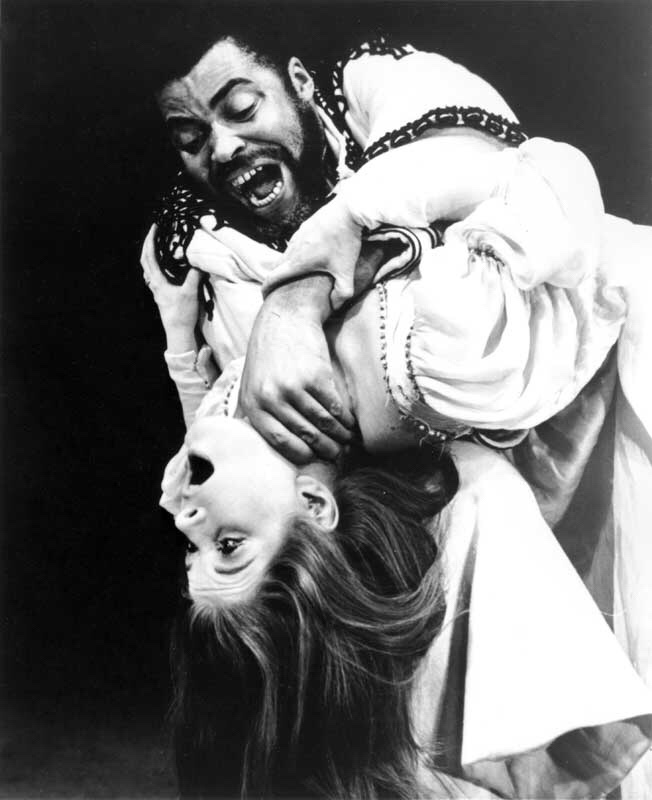
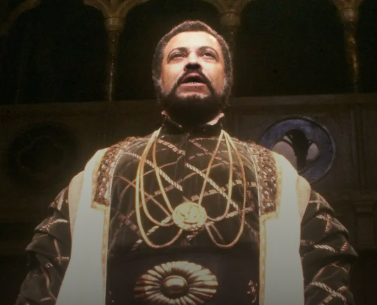
Before he became a star in the Hollywood firmament, Jones was a classically trained actor who starred in many contemporary and classic plays like The Iceman Cometh, The Great White Hope, and a title role in a drama about the great Shakespearean actor, Paul Robeson. In addition, Jones was a regular performer at the New York Shakespeare Festival, starring as King Claudius in Hamlet, Oedipus Rex, The Prince of Morocco in The Merchant of Venice, and like Paul Robeson, Jones was celebrated for his dignified and powerful portrayal of Othello.
James Earl Jones as Othello and Cecilia Hart as Desdemona in a scene from the Broadway revival of the play “Othello.”
James Earl Jones as Othello and Christopher Plummer as Iago in a scene from the Broadway revival of the play “Othello” (New York 1982)
“Mr. Jones commands a full, resonant voice and a supple body, and his jealous rages and frothing frenzy have not only size but also emotional credibility,” .”
The Times wrote in a review in 1964
From Shakespeare to Strangelove
James Earl Jones made the leap from stage and TV (he was one of the first celebrity guests on Sesame Street among others), after a surprising performance. In 1964, he was playing the relatively minor role of the Prince of Morocco in Merchant of Venice at the New York Shakespeare Festival, while George C. Scott played the more iconic role of Shylock. Surprisingly, Director Stanley Kubrick saw both of them and cast them both in Dr. Strangelove, Or: How I Learned to Stop Worrying And Love the Bomb, Jones’ first film role.
This goes to show that success is often not a straight line, that sometimes it’s the people you know and the reputation you garner that gives you success in your field.
Success should not be measured by material possessions, but by the contentment and fulfillment we find within ourselves.
James Earl Jones
My Favorite Performance of Jones
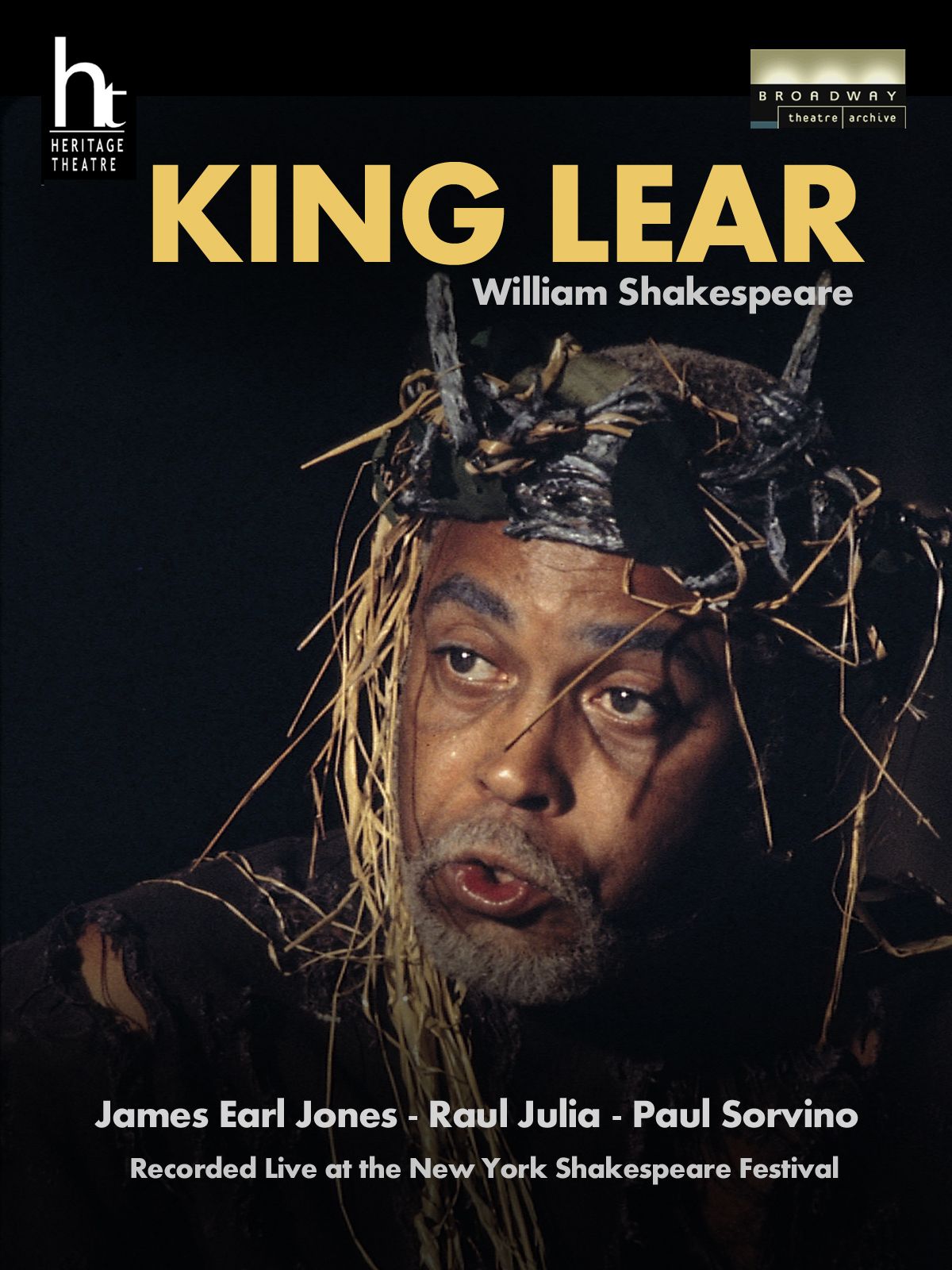
Though his film roles brought him international acclaim, James Earl Jones still performed onstage well into his 80s, including many more memorable performances at the New York Shakespeare Festival, including my favorite performance of all Jones’ stage roles- his role as King Lear. I’ve written before that Jones is still my favorite Lear- he plays the characters’ rage and commanding presence extremely well, but tempers it with the frailty and foolishness of age. You get the sense that this man was a force to be reckoned with, but is now unable to command himself, much less others. Jones’ interpretation apparently changed drastically in rehearsal, as he delved into Lear’s all-too-human flaws, playing him more like a king with dementia than like Mufasa.
Final thoughts
James Earl Jones would be the first to admit that Shakespeare and poetry changed his life. I would argue that the poetic qualities of his voice was what made him such a great actor. He could rumble and smash but also soothe and charm with a single sentence, and that is why I am glad that his voice is now preserved in the halls of Hollywood. Though he was a movie star, his voice was a Shakespearean through and through.
True strength is not in showing power over others, but in conquering your own fears and insecurities.
According to Branaugh, the idea behind the film was to emphasize beautiful things like tranquility and love, but preserve and heighten the danger of being hunted by a powerful warlord like the Duke
Interview with the director and cast at the Barbican
The Plot Of the Play
Historical Context
Branaugh set the film in 19th century Japan, at a time when English people came to Japan for the first time, and created small English communities in the country. I’ll discuss later that I have very conflicting feelings with this choice, but I will give Branaugh this- it does highlight the fish out of water journey that Rosalind and the other characters go through leaving their homes at court, and becoming enamored with a new country.
The Cast
The cast is full of veteran Shakespeareans and gifted Hollywood stars. Bryce Dallas Howard is charming as Rosalind, and has good chemistry with RSC actor David Oyelowo. I also enjoyed Brian Blessed’s dual role as Duke Senior and Duke Frederick. Kevin Klein is very sincere as Jaques but I wish he had a bit more fun with the over exaggerated melancholy that Jaques puts on. The overall effect of the performances is a sentimental, charming, beautiful, witty group of people who are having a fun time.
My Reaction
The cast is great, the cinematography is stunning, and the music is charming. Overall, Branaugh has done a great job of bringing the spirit of the play alive- that of a sweet, pastoral comedy about love, unrestrained by wealth or status. What I worry about though, is that Branaugh might inadvertently be celebrating colonialism. Yes, Japan is a beautiful country with a highly sophisticated and rich culture, so it makes sense that English people would be drawn to it. That does not justify the cruel way the English and Americans colonized parts of Japan, made the people mine for gold, and forced them to trade with the west. I worry that, like The Mikado, Branaugh celebrates Japan in a way that makes it seem like westerners were justified in taking so much away from it. I wish the plot had more of a “look but don’t touch” attitude to Japanese culture.
I also question the decision to cast barely any Asian actors. Given the story Branaugh wants to tell, it makes sense to cast non-asian actors as The Duke, Rosalind, Celia, and even Orlando, since they come to the forest from an English-style court. But the roles of Corin, Silvius, Audry, Phoebe, and even Old Adam are people who are supposed to be familiar with the country, meaning it would make perfect sense to cast Asian actors in these roles. Frankly, there are very few well known Asian actors in Hollywood and I would love to give some of them a chance to shine, especially since Shakespeare has long been a way for actors of all cultures and races to show their skills.
In conclusion, I can see why people like this movie and I too enjoy it, despite its questionable subtext. I don’t want to take away anyone’s enjoyment of the film, just to remind people not to be too seduced by the historical practice of taking something “As You Like It”
If you like this analysis, you might be interested in signing up for my Outschool Course on Shakespeare’s Comedies. Link down below. Share this class with a friend and you will get $20 USD off! You’ll also get $20 USD when you sign up with your link and take their first class!
Ages: Pre Teen- teen. The story is highly condensed so older readers might want a more in-depth adaptation to understand the themes and ideas of the plot.
Premise: This graphic novel is a good introduction to “A Midsummer Night’s Dream.” It tells the bare minimum of the story with very little dialogue and almost none of the original text. Most of the story is conveyed through the visual medium.
ABOUT THE ILLUSTRATORS (Reprinted from the graphic novel)
https://www.behance.net/berelince?locale=en_US Berenice Muniz is a graphic designer and illustrator from Monterrey, Mexico. In the past, she has done work for publicity agencies, art exhibitions, and she’s even created her own webcomic. These days, Berenice is devoted to illustrating comics as part of the CGraphikslava crew. In her spare time, “Bere” loves to draw, read manga, watch animated movies, play videogames, and kill zombies Fares Maese is a graphic designer and illustrator. He has worked as a colorist for Marvel Comics and as a concept artist for the card and role-playing games Pathfinder and Warhammer. Fares loves spending time playing video games with his Graphikslava comrades, and he’s an awesome drum player: https://faresmaese.artstation.com/
About the Retelling Author
The career path of Nel Yomtov has taken him from the halls of Marvel Comics, as an editor, writer, and colorist, to the world of toy development. He then became editorial and art director at a children’s nonfiction book publisher, and now Nel is a writer and editor of books, websites, and comics for children. A harmonica-honking blues enthusiast, Nel lives in New York with his wife, Nancy. They have a son. Jess.
mY rEACTION
I read this version to my five year old son and he enjoyed the colors and characters, which is why I feel confident recommending this version to younger children. It won’t help you pass a test on Midsummer and you won’t get the whole story. But you might get a tantalizing glimpse of Shakespeare’s world of fairies, lovers, and funny fools and honestly, that’s fine with me. As I’ve stated before, parody and short pop-culture adaptations of Shakespeare are great ways to connect with young people, and I see this book as a tool to do just that.
tECHNICAL eXECUTION
Character Design. It’s interesting to see the difference in style between this version, and the Manga Shakespeare version I previously read. That one was very much inspired by the Shoujo manga style, which emphasizes drama and relationships. This version’s drawings are softer, more cartoonish, and the expressions are less stiff, (except for Oberon, who is drawn very austerely). I particularly like the design for Puck with his big mischievous eyes and squat, childlike shape. I would argue however that the lovers and Mechanicals aren’t distinct enough, which is a problem since they are the most important characters.
The Adaptation
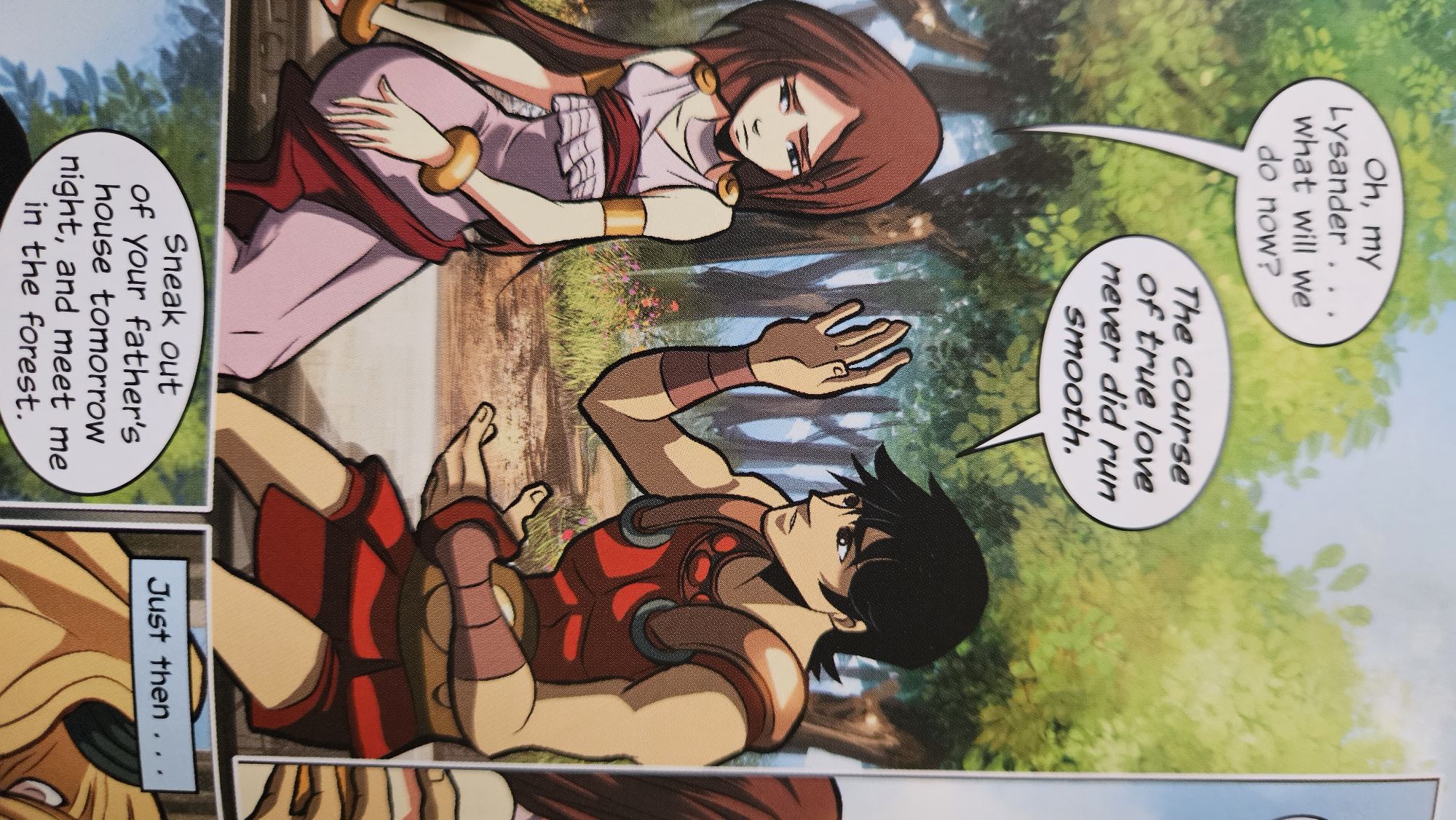
Like I said, this is a bare minimum adaptation of the play. None of Shakespeare’s text is used and the lines and speeches are cut liberally. The entire book is only 77 pages which of course means, that there are a lot of cuts. There’s no mention of the Indian boy, Titania’s tiff with Oberon, Philostrate, the other fairies, and all the great speeches are cut. This version is focused entirely on the plot, and it cuts it quite efficiently. To demonstrate this, below on the left is a panel that shows how Lysander and Hermia express their frustration with not being allowed to marry. On the right is the original text of the scene.
Ay me! for aught that I could ever read, Could ever hear by tale or history, The course of true love never did run smooth; But, either it was different in blood, Lysander. Or else misgraffed in respect of years, Lysander. Or else it stood upon the choice of friends, Or, if there were a sympathy in choice, War, death, or sickness did lay siege to it, Making it momentany as a sound, Swift as a shadow, short as any dream; Brief as the lightning in the collied night, That, in a spleen, unfolds both heaven and earth, And ere a man hath power to say ‘Behold!’ The jaws of darkness do devour it up: So quick bright things come to confusion.
The Colors
The colors are very beautiful. Other manga stories have colorful title pages but no color in the panels. This comic is alive with color and the colors help tell the story. Athens represents the world of the daytime, so the colors are very warm and vibrant. In the nighttime, the colors are cool and the characters are drawn with very sharp lines to make sure they don’t fade into the background.
IN Conclusion
This version tells l the story quickly and entertainingly with a vibrant and colorful style that was lacking in the Manga version. Granted, the Manga Shakespeare did allow me to focus on the text more, but I think I actually prefer this version, simply because of its beautiful artwork. Check it out if you get a chance!.
The popular Netflix show “Bridgerton”, takes place in England during the reign of King George III (reigned 1760-1820). This was a time of enormous cultural and political upheaval- less than one century after the monarchy was restored, with the American and French Revolutions taking place across the pond. This was an era of power and privilege for the aristocracy, but a time of great uncertainty for nearly everyone else.
Crash Course in Sentimental Comedies, the preferred theater of the late 18th century.
Shakespeare in this period was considered a bit old hat and too vulgar for the refined age of the 18th century. During the Regency, Sentimental Comedies were all the rage. These comedies and tragedies were designed to instill audiences with Catharsis or empathy with the characters, rather than get people to think or use their reason. Gone were the days of laughing at people’s humorous behaviors and more along the lines of pitying the poor fates of middle-class rustics. These poor characters remained good-natured at the cruelty of powerful aristocrats. This explains the popularity of such plays as Beaumarchais‘ The marriage of Figaro, or Mozart’s opera Don Giovanni, in which an evil aristocrat is ruining the lives of common people like the naive peasant Zerlina with his insatiable sex drive.
After the religious wars of the 16th century and the civil wars of the 17th century, early 19th century people were more disillusioned about the monarchy, especially after the seismic shifts of the French revolution and the American Revolution. This was the beginning of the end of the aristocracy, and even though we don’t see it in Bridgerton for comedy reasons, you can sense that the eponymous family is preserving their family and houses, rather than crown and country, which is one reason why the show still resonates with young people.
The Bridgertons might be aristocratic but they have no illusions about their own self-importance. They’re rich, yes but, like modern rich people, they don’t believe that they deserve their riches because of God- they merely fight to preserve their riches for their children, to find their daughters good love matches, and to survive the complex social Laviathon of eighteenth Century and Nineteenth Century England.
Popular Productions Of the Georgian Era
Georgian Shakespeareans
The Georgian Era was the first time in history that Shakespeare started to have a Global audience. French and German writers like Goethe, Schiller and Voltaire helped to kick off the practice of Shakespeare being translated and performed in non English speaking countries in the 18th century. In addition, Empress Catherine the Great brought Shakespeare as far as Russia with her 1786 production of The Merry Wives of Windsor. By the end of the 19th century, Shakespeare had been translated into French, German, Hindi, Hungarian, Italian, Spanish, and Danish (Downer, 468).
In England, however, with the trend towards sentimentality and accessibility, (as the video above mentions), the idea of adapting and modernizing Shakespeare became more common in this type period. What’s interesting is that, just when Shakespeare seemed to be on the way out culturally, people like David Garrick began to rehabilitate Shakespeare (McDonald 358).
English writers of the 18th century were trying their best to use Shakespeare as a tool of moral instruction.
Not only did Garrick create popular adaptations of Shakespeare, he also successfully made Shakespeare a cultural icon. Garrick’s famous jubilee of enthroned Shakespeare as the perfect example of english writing and the common man (even though most of his characters are aristocrats), the fact that Shakespeare was a common writer a not an aristocrat or a University educated man, actually benefited his reputation in the 18th century.
Even though Bridgerton prides itself on its colorblind casting and the black & white characters haven’t a shred of racial discrimination (except in the spin-off), this society is still plagued with sexism. What I find the most interesting about Bridgerton is that, like a Shakespearean comedy, the show’s conflicts center around how women navigate sexist patriarchal systems.
In Bridgerton, the London season and the annual balls are more than just a chance to to socialize and meet handsome young man, dance, and wear pretty dresses; they are the only hope that upper class women had for the future security of their houses. These systems were put in place because women were denied the ability to determine their own destinies. Though Queen Charlotte runs the social season, she is enforcing a patriarchal system; one that places a woman’s value entirely on her ability to charm and retain the affections of men.
the bridgerton ladies are extremely aware of this and you can see their anxiety every time they attend a ball. They know that their future depends on this and the show isn’t shy about that. So so like a Shakespearean heroine, the comedy and the central conflict is how these women will navigate this socio-economic gender-based political mindfield.
Cleopatra and her son CesareanPortia, wife of Brutus, swallow coals rather than be captured by Octavius.Beatrice from “Much Ado About Nothing”Cordelia Disenherited Jessica prepares to elope with Lorenzo Rosalind in “As You Like It”
What Shakespeare frequently does in his comedies is have women deliberately challenge or abandon this strict social structure. Young Shakespearean heroines frequently omen disguise themselves as men and/ or go traveling abroad so that they can find husbands and determine their own destinies. Shakespeare won’t Go So Far as to abandon the notions of marriage and childbearing, but he does create a sort of Female Fantasy: “wouldn’t it be nice to determine a one’s Future for oneself?”
Rosalind courts Orlando in As You Like It
In As You Like It, Rosalind, in disguise as a man, is able to dictate for herself the way that she marries and courts Orlando, which must have been shocking and hilarious for Elizabethans. Viola again disguised as a Man is able to criticize his outdated notions of women to his face, and disdains his repeated attempts to woo a woman who does not share his affections. Meanwhile Juliet, a woman whose arranged is dramatically portrayed from start to finish, abandons her father’s choice and marries for love. All these women have the same conflict as the bit bridgerton women they just confront them in more extreme way
Parent Description- A fully online, fully interactive course into Shakespeare’s histories taught by a professional text coach and actor.
Students- Uncover the scandalous and gory history behind Shakespeare’s most action-packed plays! Shakespeare’s histories have inspired such works as “Empire,” “Game of Thrones,” “Hamilton” and even the “Star Wars” trilogy. This class will unlock for you why these stories of power and betrayal have been so popular for 400 years.
Format:
0. The class will have a Nearpod with slides, activities, and links to my other resources. The class will be a combination of slides, activities, and videos. Each class will have
Weekly Discussion questions via Google Forms such as: “What do you know about Shakespeare the man?” or, “Are Shakespeare plays still relevant today?”
Video Analysis- Every week I’ll discuss a different play with a short video.
I’ll provide some context, explaining what is happening in the play durin the speech, and any relevant historical context.
We’ll watch a recording and the students can write their impressions on what they like and don’t like.
Immersive activities such as:
– Shakespeare arts and crafts and recipes such as making costumes and props.
– My online Shakespeare board game.
Virtual tours of the Tower Of London,
Weekly Web Quests like “find a Shakespeare quote that you use in normal speech,” “find a movie or character that’s based on Shakespeare,” or “Draw a picture of a Shakespearean character (stick figures are acceptable).
6 Week Course
Week 1 – Why Hamilton is Like A Shakespeare History Play Hamilton and Shakespearean History We’ll discuss what makes a history play a history play, why they were so popular in Shakespeare’s day, and draw parallels between Shakespeare and the Broadway Musical “Hamilton.”
What is a history play?
Song quest: Watch the Horrible histories king song
Worksheet- which Shakespearean character reminds you most of Hamilton?
What would you call the tone of this speech? Patriotic? Mournful? Excited? Bitter?
The deposition Scene (video- 3 minutes)
The danger of this scene:
Though Queen Elizabeth I is now almost universally beloved, she wasn’t always in Shakespeare’s time. By 1601, she was 68 years old and had no male heir. Her government had also failed to put down a rebellion in Ireland. Some people in her government were getting restless.
Robert Devereaux, Earl of Essex was one of those restless nobles. He’d been one of the Queen’s favorites, but after failing to crush the rebellion in Ireland, his relationship with her sourered. He then plotted to rebel against the Queen, and take the throne for himself.
To do that though, Essex would need to get people on his side, so he recruited Shakespeare! One of Essex’s servants paid Shakespeare’s companies to perform a scene from Shakespeare’s Richard II; the scene where a handsome and charismatic nobleman convinces the king to willingly give up his power.
This scene was so dangerous that when the play was published, it was taken out by Elizabeth’s censors.
Playing Richard video: Fiona Shaw Questions What does making Richard female emphasize for an audience? What point does Shaw’s performance say about women in power?
Week 3 Henry V week
Tom Hiddleston as Henry V
Basic plot- Young king fights a war and conquers France proving himself to the world.
Olivier vs. Branaugh
-Concept- what if the play was a Hockey movie?
Henry is like the coach or team captain who gives inspirational speeches
The underdogs win
The snooty bad guys lose
How this translates to staging fights/ directing the characters (website/ youtube interviews)
Activity= write a trailer or design a poster for Henry with a cool tag line.
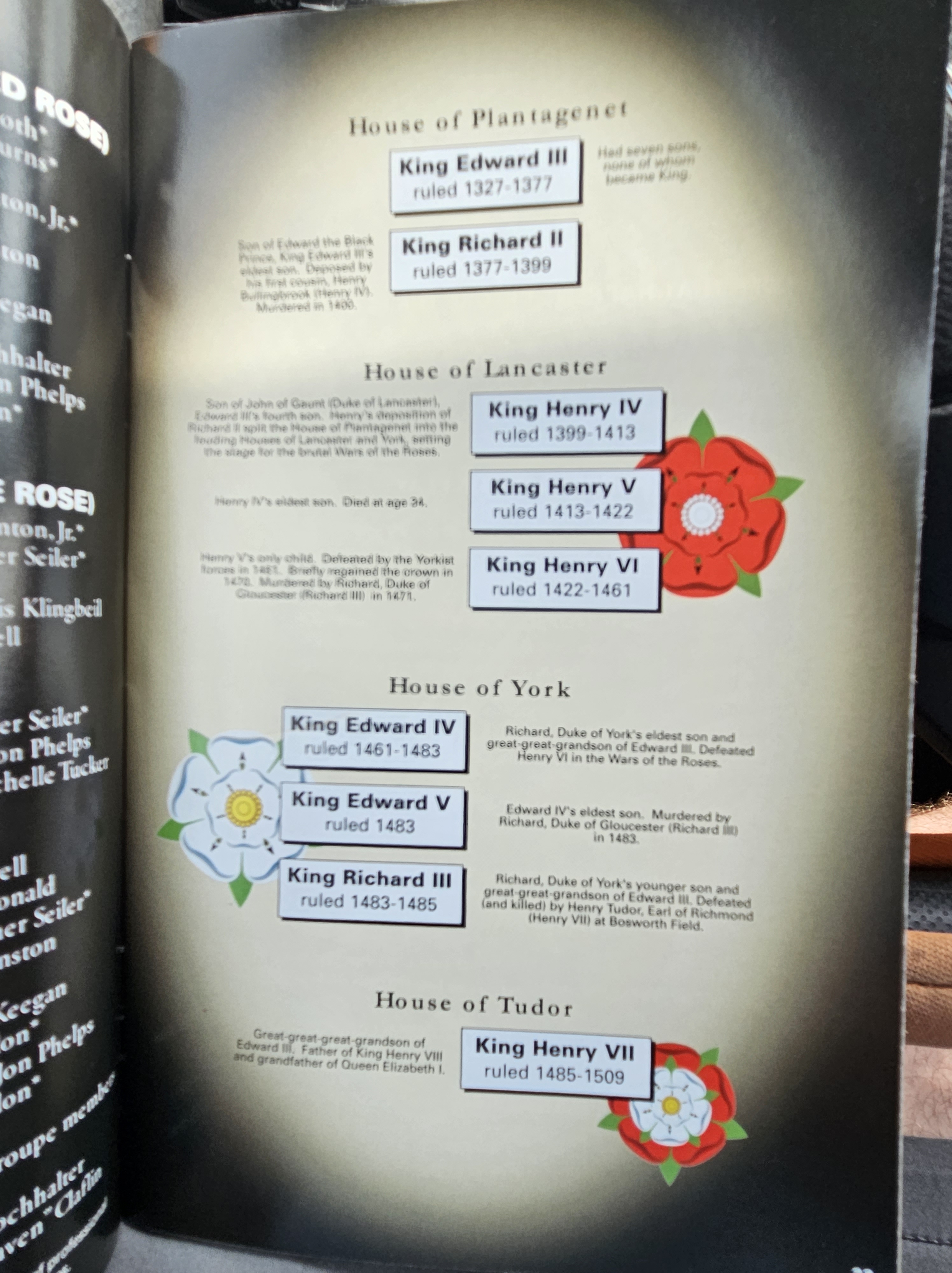
Week 4- The Wars of the Roses-
Summary of the three Henry VI plays
Wars of the Roses Horrible Histories
Web quest- research one major character from the 3H6 ASC website:
Richard of Gloucester
Henry VI
Margaret of Anjou
Richard of York
Medieval warfare
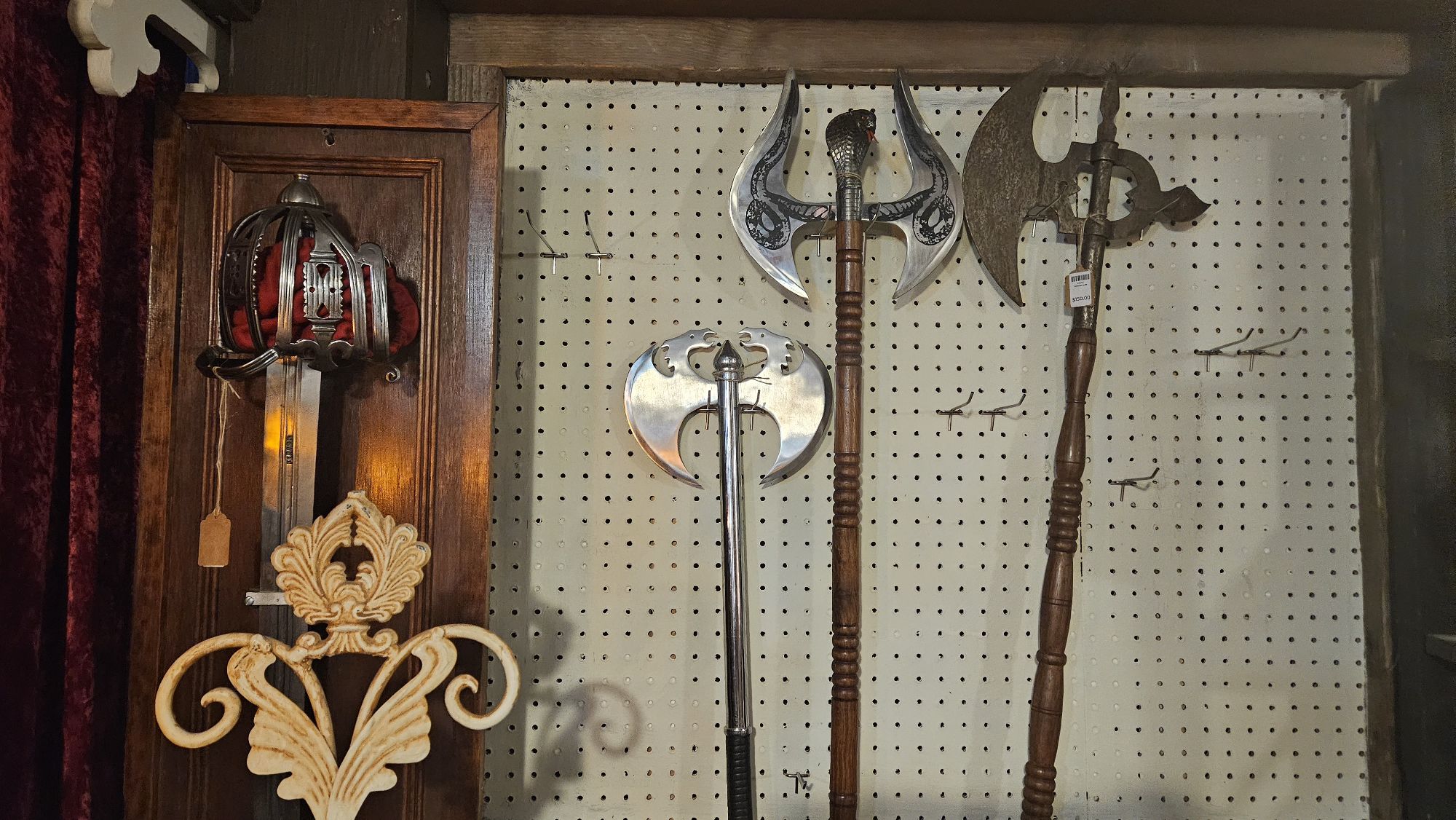
Watch one of the Weapons that Made Brittain videos and answer 5 questions.
The battles of the Wars of the roses
Costumes
Week 5- Richard III- The rise of the corrupt king
Close reading- “Now Is the Winter of Our Discontent”
Slides on Richard’s plot.
Richard and Machiavelli
Richard and Emperor Palpatine
Richard and Modern Leaders
Richard vs. the Amir of Gloucester
Propaganda activity- make a campaign slogan/ poster for Richard.
Title Card- “The Violent Rhetoric Of Julius Caesar”Title for my Outschool class on Codes and Ciphers, inspired by the Disney show “Gravity Falls.”Digital business card for my online classes with a QR code if you want to know moreTitle art for my Outschool course on Shakespeare’s comediesCover art for my Outschool class: “Shakespeare- the Lost Play”Title of my Outschool murder mystery gameTitle image for my online course on “Romeo and Juliet.”Title card for my Outchool Intro To Shakespeare cs.Title art for my Outschool course on Shakespeare’s comediesTitle for my Outschool class in swords and Stage Combat.
Great online classes in Shakespeare and science are available for students all this month at Outschool.com.
From now until June 1st, you can get a $20 discount with referral code PAULHT20. Share the joy with other curious minds in the family too! Spread the word and let’s ignite the passion for learning together!
Class Descriptions
Live Classes
For these classes you meet with me live over Zoom:
Introduction to Shakespeare- Tuesdays 9-9:30AM (EST)
This is my 30 minute short and sweet intro to Shakespeare’s life, his plays, and why his work still matters to us today!
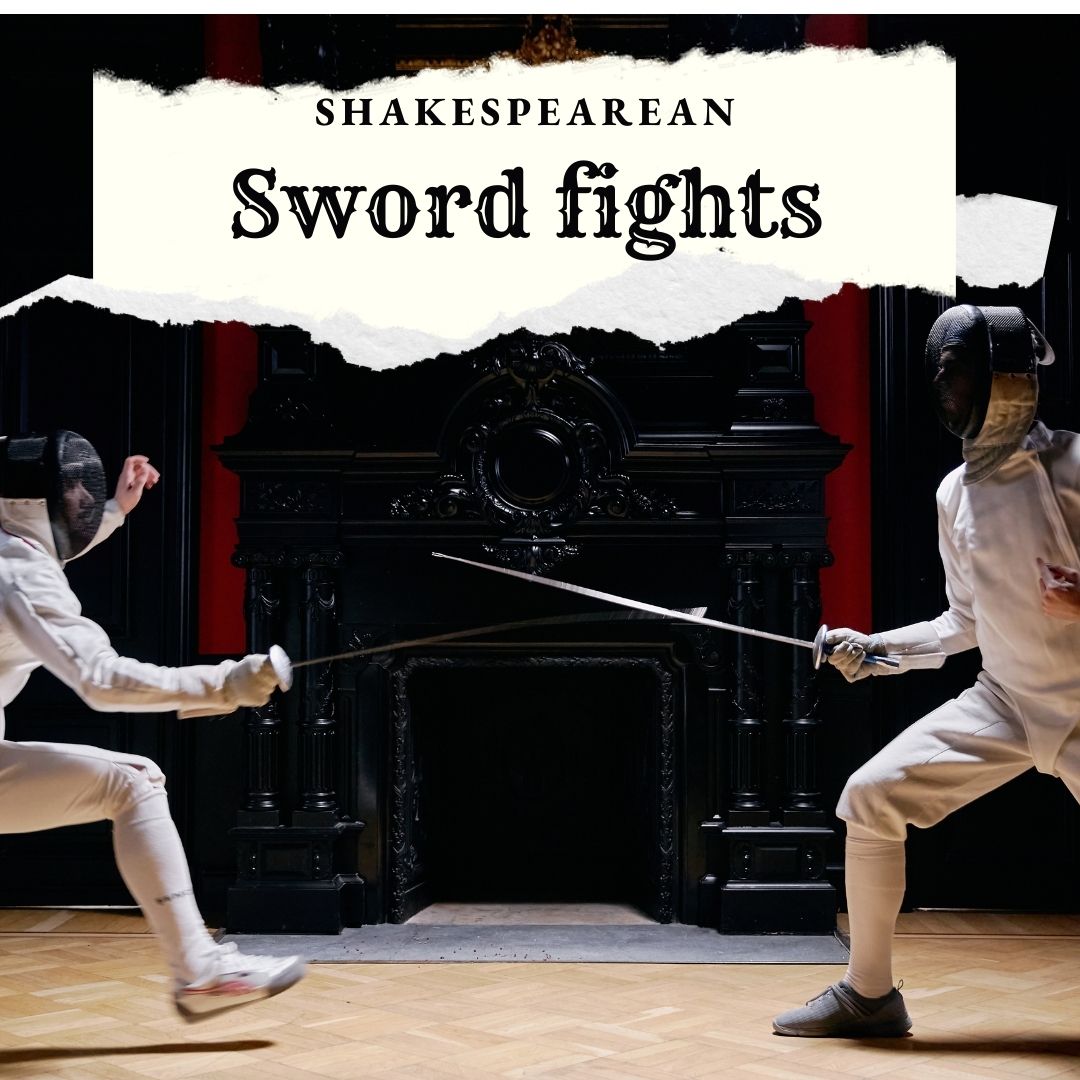
Intro To STage Combat (With SwordS)- Tuesdays 9:30-10AM (EST)-
Like the Intro to Shakespeare class above, this is an intro to the basic footwork, attacks, and defensive parries of swordplays for someone just begeinning to learn about swords.
Title image for my online course on “Romeo and Juliet.”
An Immersive Guide To “Romeo and Juliet- Tuesdays from 10-11AM (EST)
This multi-week course delves into the plot, characters and themes of “Romeo and Juliet,” while also providing interactive activities, virtual tours, and webquests.
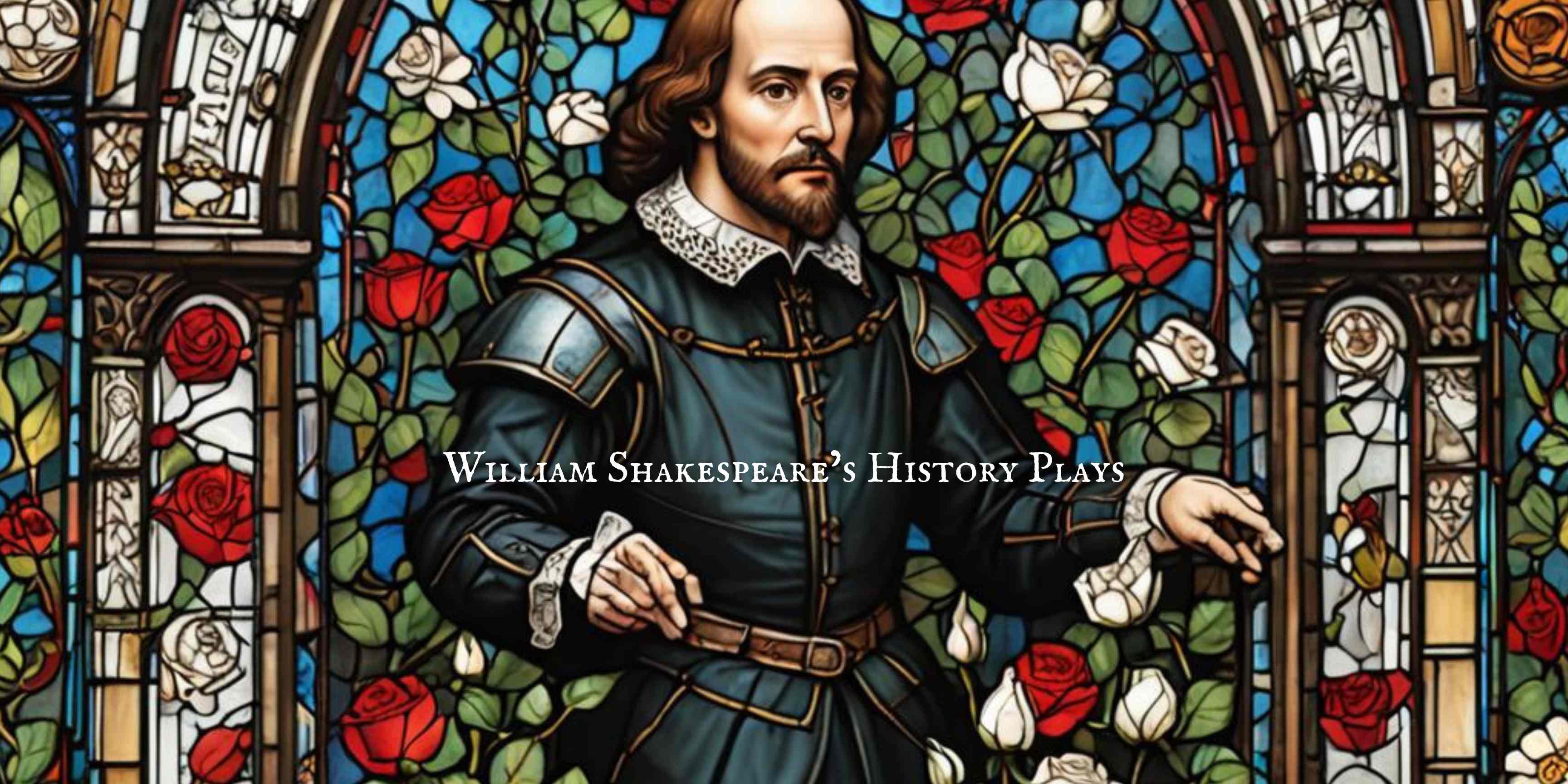
Shakespeare’s History Plays- SaturdAYs 8:30 AM IST
This is a new course I’m working on to cover all of Shakespeare’s History plays including Henry V, Richard II, and Richard III. More info as it becomes available.
Asynchronous Classes
These classes are Flex Schedule, which means the teacher prepares the activities in advance and allows you to do them at your own pace without direct consultation.
A flexible schedule class that teaches kids the plot and characters of “Romeo and Juliet,” in the context of a detective story where you solve the mystery of the young lovers’ deaths.
Did you know that Star Wars is based on the ideas and writings of William Shakespeare? This class will teach you about writing and characters though games, interactive activities and dramatic readings of both Star Wars and Shakespeare!