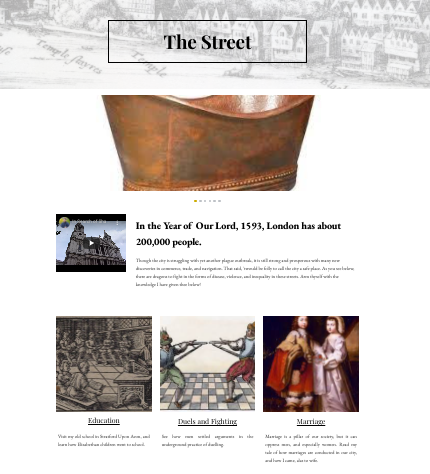
While I am just as sad as everyone else that the theaters are closed due to coronavirus, I’m happy to report that a number of Shakespearean theaters are putting up recordings of their shows online for free! Give them a watch if you can:
As the thumbnail shows, this is a staged reading of the play by actors over Zoom. I enjoy staged readings because you can hear Shakespeare’s words and use your imagination to create the show in your head.
Since most schools are still closed due to Covid 19, many parents, teachers, and students are learning online. In this time of crisis, I want to try and help, so I’m asking for advice from you on what Shakespearean resources you want me to make/ review on this blog:
What plays do you need resources for but can’t find?
Want to know if a site or app is any good? Let me know and I’ll review it!
Need lesson plans or study help? I’ll post some links.
For now, you can check out my activities teachers and student pages which includes lesson plans and ideas for specific plays, as well as reviews of educational apps and websites. You can also check out my plays of the month pages, which helps analyze plays for students and teachers.
Just today I found an activity for finding figurative language on the seesaw app:
This is just a start, I know, but I want this blog to help people enjoy and understand Shakespeare and if I can ease the burden of teachers and parents who are already struggling during this difficult time, I can think of nothing more worthwhile.
Happy Ides of March every one. I hope you have enjoyed all the posts for my Roman week. If I have time, I will try to post a few more, since I have not touched on Cymbaline or Titus Andronicus.This will not be an in depth character analysis. I won’t go into every scene and speech of Brutus’. My goal is to look at the history and the actions of Brutus in the play to show why he is such an amazing and ambigous character.
Marcus Brutus was born in 85 BC. Shakespeare’s source for the play, Plutarch’s lives of the Noble Greeks and Romans, mentions that his desire to kill Caesar might have been tied to his family: Brutus’ ancestor was Lucius Junius Brutus, the man who drove out the last king of Rome, and first consul. Below is the famous painting of Lucius foiling a plot to restore the monarchy, but to do so, he had to sentence his own sons to death:
Jaques Louis David, The Lictors Bring to Brutus the Bodies of His Sons, 1789.
This was how seriously the Brutus family took defending the Roman Republic, they valued it even beyond their own family.
Brutus’ mother was Servilia, half sister of Caesar’s longtime critic, the senator Cato. He even married Cato’s daughter Portia! So you can see that once Caesar starts acting like a king, Brutus must have felt a tremendous amount of pressure from his Family to stay true to his Republican ideology. On the other hand, Servillia was actually Caesar’s mistress and Brutus owed his life to Caesar. After Brutus fought against Casesar, they reconciled after the Battle of Pharsalus in 48 BC:
Most of those who were taken alive Caesar incorporated in his legions, and to many men of prominence he granted immunity. One of these was Brutus, who afterwards slew him. Caesar was distressed, we are told, when Brutus was not to be found, but when he was brought into his presence safe and sound, was pleased beyond measure- Plutarch, retrieved from: http://penelope.uchicago.edu/Thayer/E/Roman/Texts/Plutarch/Lives/Caesar*.html
Despite his close ties to Caesar, Brutus chose to betray and assassinate him, so the question remains, why?
In the play and in Plutarch, Brutus is persuaded by Cassius Longinus, his brother in law and colleague in the Roman Senate. As you remember from my post on “Friends, Romans, Countrymen,” there are three basic kinds of persuasive speech, and Cassius uses all three:
1. Ethos “If you do know that I do fawn on men, and hold them hard, and after scandal them… then hold me dangerous.”
2. Logos- Cassius points out a series of embarrassing stories about Caesar that set up the following argument:
• Caesar is weak and frail
• Gods cannot be frail
• Why is Caesar treated like a god?
3. Pathos
• The people
• Fear of tyranny
• Brutus’ family honor- this is the real knife that kills any doubt Brutus had. Cassius reminds Brutus of his ancestor Lucius and how he would rather die than see a king in Rome again.
The soliloquy
Brutus.It must be by his death: and for my part,
I know no personal cause to spurn at him,
But for the general. He would be crown’d:
How that might change his nature, there’s the question.
It is the bright day that brings forth the adder;
And that craves wary walking. Crown him?—that;—
And then, I grant, we put a sting in him,
That at his will he may do danger with.
The abuse of greatness is, when it disjoins
Remorse from power: and, to speak truth of Caesar,
I have not known when his affections sway’d
More than his reason. But ’tis a common proof,
That lowliness is young ambition’s ladder,
Whereto the climber-upward turns his face;
But when he once attains the upmost round.
He then unto the ladder turns his back,
Looks in the clouds, scorning the base degrees
By which he did ascend. So Caesar may.
Then, lest he may, prevent. And, since the quarrel
Will bear no colour for the thing he is,
Fashion it thus; that what he is, augmented,
Would run to these and these extremities:
And therefore think him as a serpent’s egg
Which, hatch’d, would, as his kind, grow mischievous,
And kill him in the shell.
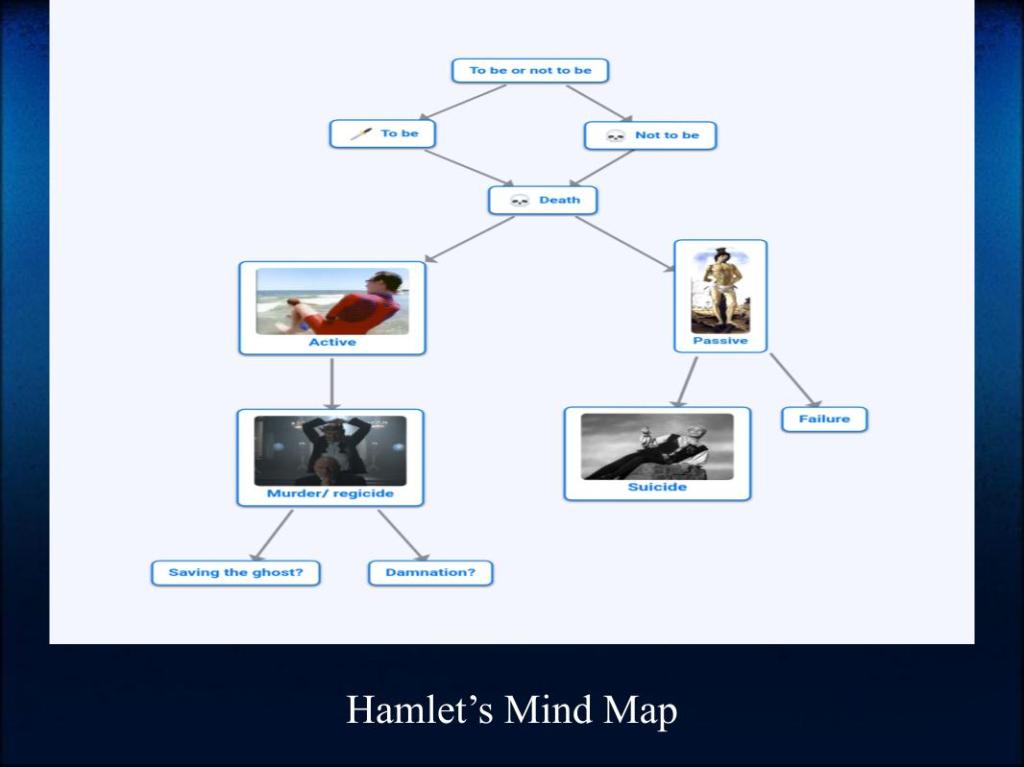
• This speech is a direct predecessor for “To be or not to be,” and Macbeth’s “If it were done,” soliloquy. https://youtu.be/IoDwXjKIenI
All three speakers are talking about murder and can’t bring themselves to say either the word murder, nor mention the name of the man who will die.
• All references to murder are in passive voice, as if Brutus wishes a lightning bolt would kill Caesar, so he doesn’t have to accept the responsibility of killing.
•Compared to Hamlet and Macbeth, Brutus’ text is flat, The speech depends on the actor to show the torment in his soul.
One question that the actor must answer for himself is, is Brutus really concerned for the well being of Rome, or does he want Caesar dead for another reason?
You can see in this video that Brutus speaks eloquently about how just the cause is and how only Caesar will die. This illustrates that Brutus is well spoken but not pragmatic. As we all know, Marc Anthony eventually gets the crowd to turn on Brutus and will become part of the army that hunts him and Cassius down. The dramatic irony is what helps the argument that Brutus is the real tragic hero of this play.
The murder and its aftermath
The rest as they say, is history. On March 15th, 44 BC, Brutus and the conspirators stabbed Caesar 17 times. In the play, before Caesar dies, he utters the famous line, “Et tu, Brute? Then fall Caesar!”
The line stands out because it is the only time anyone in this Roman play speaks in Latin. Now, I have heard a compelling argument from Professor J. Rufus Fears, that this might actually be a misquote, and what Caesar really said will amaze you. As I have mentioned, Brutus’ mother was Caesar’s mistress and the two of them were very close. At the time of Caesar’s death he was 40, while Caesar was 16 years his senior. Why did Caesar forgive Brutus fighing against him? Is it not possible that what he actually said was: “Et tu, son?” That’s a question for directors and actors, but it does heighten Brutus’ emotional conflic. Much like his ancestor Lucius, Marcus Brutus is caught between his ideals and his family.
During the funeral, Brutus has a very well crafted speech where he lays out his reasons for killing Caesar. He sets himself up as the friend of Rome. This video from the Royal Shakespeare Company explores the techniques that Brutus uses to get the crowd on his side: https://youtu.be/nyPlvuv8SSk
After Antony makes his speech however, the mob burns Brutus’ house and even slaughters a man just because he shares a name with one of the conspirators. Brutus and Cassius take their armies and flee Rome, and prepare to take on Antony and Octavian. The adversity Cassius and Brutus go through pushes them together and they behave like brothers; they fight and reconcile constantly: https://youtu.be/K9EAxjVC22M
In a way, these men are two sides of the same coin: Cassius is fiery but pragmatic while Brutus is stoic and idealistic. It’s like a tragedy in and of itself that these men weren’t melded into one man with Brutus’ heart and Cassius’ mind.
Is Brutus A Traitor?
Unlike Macbeth, Shakespeare’s text leaves it ambiguous as to whether Brutus was right or wrong to kill Caesar. Even Antony, who leads an army against him, ends the play by calling Brutus “The noblest Roman of them all.” Shakespeare also gives us few clues to Brutus’ motivations other than the speech I quoted earlier. Mainly we have to go on Brutus’ actions and their consequences.
One moment that I think perfectly encapsulates the ambiguity of Brutus’ actions is the moment where he’s visited by Caesar’s ghost. In other tragedies like Macbeth and Richard III, the villain is tormented by the ghost or ghosts of people he murdered. The ghost serves as a manifestation of the murderer’s guilty conscience and torments him before his death. When Brutus sees Caesar, he does not follow this trope. He isn’t horrified, not struck by guilt, in fact, he wishes that the ghost would stay longer.
Shakespeare, as other Elizabethan writers, uses the idea of ghosts in his plays usually as aforeshadowingof events to come. In “Hamlet,” Hamlet has to deal with working out what to do with his father’s request for revenge, and also, whether the ghost is indeed his father. In “Macbeth“, Macbeth has to deal with the Ghost of Banquo showing up to dinner, literally haunting him. In “Richard III“, Richard deals with the ghosts of the men he has wronged right at the start of the play.
This haunting is significant also in “Julius Caesar“. The Ghost of Julius arrives on the eve of battle to literally haunt Brutus. Brutus had hoped that by killing Caesar he would enact change in Rome, however, the Roman Empire goes on, as does the reign of Caesar (albeit, a new Caesar).
As Brutus goes into battle, and the battle doesn’t go his way, he again turns to Julius Caesar, blaming him for the outcome of the battle,
O Julius Caesar, thou art mighty yet!
Thy spirit walks abroad, and turns our swords
In our own proper entrails. (5.3.94–96)
Shakespeare’s ghosts are visible to one person (as well as the audience, clearly) so those who react to the ghost are the ones who are supposed to learn from the arrival of the ghost, heeding the message from beyond the grave.
Enter the Ghost of CAESAR
How ill this taper burns! Ha! who comes here?
I think it is the weakness of mine eyes
That shapes this monstrous apparition.
It comes upon me. Art thou any thing?
Art thou some god, some angel, or some devil,
That makest my blood cold and my hair to stare?
Speak to me what thou art.
GHOST
Thy evil spirit, Brutus.
BRUTUS
Why comest thou?
GHOST
To tell thee thou shalt see me at Philippi.
BRUTUS
Well; then I shall see thee again?
GHOST
Ay, at Philippi.
BRUTUS
Why, I will see thee at Philippi, then.
Exit Ghost
Now I have taken heart thou vanishest.
Ill spirit, I would hold more talk with thee.
The ghost itself also resists the clearcut definition as a sign of a guilty conscience. It doesn’t accuse Brutus of murder, it doesn’t curse in fact, all the ghost says is that Brutus will see him at Philippi. Unlike Richard III or Macbeth, the ghost utters no curses or scare Brutus out of his mind.
The only conclusion that Brutus gleans is that his end is near. According to Dr. John Langdon, many Elizabethan ghosts serve as a shorthand to indicate that the play’s denouement is on its way. Brutus seems aware of this as well- he knows that if he sees a ghost, he’s likely to be one soon. Yet the reality of his impending death doesnt change Brutus; he doesn’t express remorse like Richard III or hopelessness like Macbeth, if anything his stocism and seeming world weariness makes him seem more like a hero like Hamlet during his “Not a whit, we defy augery,” speech. This passive embrace of fate is at the core Brutus and it illustrates how hard it is to truly decide if he is a villain or a hero.
Though Shakespeare wrote the character of Brutus as ambiguous, over the centuries many artists and cultures have passed judgment on Brutus. Dante in his book Inferno example places Brutus and Cassius in the lowest circle of Hell, who along with Judas Iscariot, are being forever devoured by Satan himself, imagined below in a medieval illustration as a three-headed beast. You can see the name Brut in the head on the right.
By contrast, during the French Revolution, many statesmen referred to Brutus as a hero for his noble attempt to destroy a corrupt monarchy.
“One day men will be astonished by the fact that humanity in the eighteenth century was less advanced than in the time of Caesar. Then a tyrant was slain in the midst of the Senate with no formalities but thirty blows of a dagger and with no other law save the liberty of Rome”Louis Antoine de Saint-Just, November 13th, 1792, (2 months before the execution of Louis XVI).
As I have written before, in the 20th and 21st centuries, America has a somewhat more complex relationship with the character of Brutus. On the one hand, America was founded on the principle of resisting tyranny; it’s even on the state flag of Virginia, which is why some early productions of the play make Brutus a hero. On the other hand, as you see above, rebels and traitors like John Wilkes Booth have also taken inspiration from Brutus. His father and brother’s middle name was Brutus and all three brothers performed in the play one year before John turned theater performance into American tragedy.
Like Brutus, Booth seemed amazed with the world’s reaction to his deed, for after he assassinated the president, he wrote this in his journal:
[W]ith every man’s hand against me, I am here in despair. And why; For doing what Brutus was honored for … And yet I for striking down a greater tyrant than they ever knew am looked upon as a common cutthroat.”
John Wilkes Booth, April 21, 1865.
The most recent controversy over Brutus’ actions is the 2017 Shakespeare in the Park production of Caesar directed by Oscar Eustis. As I wrote before, when portraying Caesar as an American president, it tends to anger the political party of his supporters, but the play shows how unplanned political violence can destabilize a country. In these productions, Brutus seems a bit of a well meaning dupe or an naive patsy acting out of fear. On the other hand in cultures that have suffered many violent uprisings, Brutus is a figure that is all to common in places like Uganda, Iran, and the Taliban controlled world: https://youtu.be/5HU8SA33j2w
Brutus is a great character because Shakespeare keeps enough of his motives in the dark to allow for new interpretations, but also showing a man with relatable desires and fears get swept up in a dangerous and unpredictable time.
As you probably know if you subscribe to this blog, I love to review adaptations of Shakespeare, so imagine my delight when I realized that the classic teen comedy Mean Girls from 2004, (and the current Broadway show of the same name), is based on Julius Caesar! This movie doesn’t have Shakespearean dialogue or the names or locations, but the essence of the play is the same, albeit with a more modern ending.
In Shakespeare’s play and Tina Fey’s script, the main antagonist is popular, and dangerous, and inspires fear and envy from everyone. Regina George and Caesar both rule their empires through their armies, intimidation, their wealth, and their supreme self-confidence. In addition, both names are associated with royalty- Regina in Latin means queen.
I didn’t realize that the movie has its roots in Julius Caesar until I saw this video from the YouTube channel The Take: https://youtu.be/FRfoEzZbK_Y. It was when I watched this video, that I realized Mean Girls character Janis was an analog for Shakespeare’s character Cassius, the man who sets the plot in motion to assassinate Caesar.
In the movie, Janis meets a well meaning girl and manipulates her into betraying Regina. Look at this clip where after Cady feels betrayed by Regina, Janis outlines her conspiracy, with a Roman sword in her hand! https://youtu.be/D0JMoa4QfA0
Like Cassius, Janis claims that once Regina is destroyed, the social order of the high school will change from a dictatorship to a democracy, but what she really wants is to supplant and replace Regina and make herself the new queen Bee. Even her name is a clue to her malevolent nature, she is named after the Roman god with two faces!
Sir Patrick Stewart as Cassius in the 1972 RSC production of Caesar
Similarly in Julius Caesar, Cassius convinces Brutus that once Caesar dies, Rome will be a republic again. In real life, Brutus was Caesar’s close friend, so Brutus agonizes over whether he is doing the right thing and whether he owes more loyalty to Rome, or his friend Caesar: https://youtu.be/IoDwXjKIenI
If Janis is Cassius, what about Brutus?
Cady Heron (played in the movie by Lindsay Lohan), is naive but intelligent. Like Brutus, she is manipulated and carefully chosen to betray the king. Janis chooses Cady because she’s pretty enough to get close to Regina, her looks are like social currency. Brutus’ social currency was his family: he was descended from the founder of the republic so he lent credibility to the conspiracy. He was also close in family to Caesar and Cassius.
In both stories once the monarch is destroyed, the power vacuum immediately starts to close; rather than change the social order, a new monarch arises. In Caesar, the second triumvirate takes over for the first, and Caesar’s nephew Augustus eventually becomes the supreme ruler of the Roman empire.
In Mean Girls, once Regina loses her social cache, Cady takes her place.
Then when Janis exposes Cady and Regina, she briefly basks in becoming a new Queen Bee- her revolution to overthrow a tyrant has paid off, bit now she is the tyrant herself. This actually mirrors the real Julius Caesar, who took power from the feared dictator Lucius Cornelius Sulla.
Bust of Sulla
Like Regina and her Burn Book, Sulla kept a list of people he saw as threats called the Proscriptions, only Sulla used it to execute the people on the list and seize their property. Caesar started his career as a populist soldier working for the Senate against Sulla and for the people, but became a dictator himself, the very thing he was sworn to oppose!
The movie does end on an encouraging note when the adults finally step up and address the terrible things that their students are doing, which has important lessons about bullying that every young person should see.
Tina Fey actually admitted that she herself was a Mean Girl in high school, so there’s a great deal of honesty when her character confronts the kids about the consequences of bullying each other.
Though the movie ends happily, the Cesarian parallels are not over; even though this high school has been democratized, the problems that created this Mean Girls autocracy remains. As you can see in the final minutes of the movie, a new crop of Plastics arrive just as the old group disbanded.https://youtu.be/LshX2God-wkIn four years when the regime changes again, will there be a new Caesar?
After rewatching clips from the movie, I realized that Tina Fey actually made a Caesar reference right there in the movie!
In this clip, Gretchen is in English class, perfectly paraphrasing Cassius’ speech in Act I, Scene ii, even the part about Caesar being a colossus:
Cassius. Why, man, he doth bestride the narrow world
Like a Colossus, and we petty men
Walk under his huge legs and peep about
To find ourselves dishonourable graves.
Brutus and Caesar: what should be in that ‘Caesar’?
Why should that name be sounded more than yours?
Write them together, yours is as fair a name;
Sound them, it doth become the mouth as well;
Weigh them, it is as heavy; conjure with ’em,
Brutus will start a spirit as soon as Caesar.
Now, in the names of all the gods at once,
Upon what meat doth this our Caesar feed,
That he is grown so great? Age, thou art shamed!
Rome, thou hast lost the breed of noble bloods!
When went there by an age, since the great flood,
But it was famed with more than with one man?
When could they say till now, that talk’d of Rome,
That her wide walls encompass’d but one man?
Now is it Rome indeed and room enough,
When there is in it but one only man.
O, you and I have heard our fathers say,
There was a Brutus once that would have brook’d
The eternal devil to keep his state in Rome
As easily as a king. I.ii. 226-252.
Now I know Mean Girls is based more on a book and by Tina Fey’s own experiences than Shakespeare, but the point is that the next time you are bored and angry about having to read a play based on a guy who’s been dead for over 2,000 years, take a look at the lunch table next to you and you’ll see that things haven’t changed that much.
The class breaks down some of the most famous speeches in Julius Caesar and gives you some tips and tricks on how to write persuasive speeches like Antony’s “Friends, Romans, Countrymen,” speech. Use these powers for good though, not to turn your school into a Mean Girls dictatorship! https://outschool.com/classes/84ee847d-19f3-45f8-9f25-81e688b8497d
There’s also a fully asynchronous version that you can do on your own time whenever you want:
Finally, if you love Mean Girls and Shakespeare, check out Much Ado About Mean Girls by Ian Doescher, author of the William Shakespeare’s Star Wars trilogy.
What I like about this video is that it fills some of the gaps of Caesar’s life that Shakespeare could not put on stage, like his kidnapping by pirates or his victories against the Gauls and the English. You also get to see some of his battle tactics that made his 13th Legion, one of the most feared in Rome.
Again, this review of the HBO TV show Rome helps explain details of Caesar’s life that Shakespeare didn’t cover, namely, why the Senate wanted him dead, and why he was arguably a threat to the republic.
Let me begin by admitting that this post was harder to write than my Christmas post because pre Christian traditions are harder to pin down. In addition, to give you my standard disclaimer, I don’t believe it’s really possible to definitively know how or if Shakespeare celebrated Halloween, but since the history of Halloween is long and fascinating, and since Shakespeare’s plays influenced that history, I feel it’s worth exploring.
Part I: Origins of Halloween
Almost every culture on Earth has a middle fall celebration that calls to mind the bounty of the harvest, and the inevitable approach of winter. Most of our Halloween traditions are based on the ancient European festival of Samhuin.
What is Samhuin?
Over 2,000 years ago, the Celts inhabited much of the British Isles. They believed in many gods and spirits that controlled nature and the seasons. To thank the gods for the harvest the Celts gave them offerings like apples, and threw parties to celebrate the gods’ bounty.
When the Romans conquered the Celts, they co-opted some of their religious practices. For instance the tradition of giving apples as offerings to the Roman goddess Pomona. This tradition of course, evolved into our modern Halloween tradition of bobbing for apples. Honoring the harvest also went hand in hand with darker traditions; ones inspired by fear of death, decay, and evil spirits.
With the Sun dying and the Earth growing cold in late October, cultures like the Celts and the Romans feared that evil fairies and ghosts could cross over into our world. In particular the Celts believed that around the night of October 31st, the veil between the living and the dead was the thinnest.
Samhuinn was a liminal time between our world and the Otherworld. It’s a night when the souls of dead loved ones as well as spirits and fairies – the aos sí in Irish mythology and aes sídhe or sìth in Scottish mythology – could come through to visit. Deceased family members were honoured with seats at the evening feast, and offerings of milk and baked goods were left at the front door for the Fairies.
At some point people decided to dress up as the spirits to ward them off, and this evolved into our modern day trick or treating.
These traditions did not die once England became Christian, (after it was conquered by the Romans), they simply translated into a different form. Halloween actually translates as “All Hallows Eve,” a Catholic celebration of of dressing up as pagan spirits and giving offerings of the harvest to honor Catholic saints as well as departed love ones.
Part II: What might Shakespeare have Done on Halloween?
Although Shakespeare never directly mentions Halloween, he lived in a world that kept many of these folk traditions alive. Shakespeare was the grandson of a farmer and his father was a devout Catholic, so he probably was brought up in these ancient Halloween traditions. He probably would have attended some kind of harvest festival to celebrate the bounty of the summer, and might have put food out for his departed family members.
Samhain is still heralded by the baking of kornigou, cakes baked in the shape of antlers to commemorate the god of winter shedding his ‘cuckold’ horns as he returns to his kingdom in the otherworld. On the Isle of Man in the Irish sea, the Manx celebrate Hop-tu-Naa, which is a celebration of the original New Year’s Eve and children dress as scary beings, carry turnips and go from home to home asking for sweets or money.
Call me a softie but I really like the idea of Shakespeare baking treats like soul cakes for neighborhood kids or telling scary stories about a bonfire. The kornigou is more commonly known as the Soul Cake, and it’s still popular today. It’s even been immortalized in song:
Another tradition was dancing around ancient Celtic burial mounds. According to tradition, these mounds were home to spirits and Fairies, and could be portals to the land of the dead. In Irish folklore, poets and storytellers had the power to pass between these two realms. Maybe Shakespeare himself visited such a mound in his youth and was inspired to write about the fairy queen Titania and the hobgoblin Robin Goodfellow. Archeologists are still learning about these ancient ruins today (source: Smithson.com)
The most tantalizing ancient Halloween tradition is mumming, a kind of amateur theater practiced by the ancient Celts. Like modern Sunday school plays the plays were a religious ritual designed goal to honor the gods and the harvest.
Mumming, a type of folk play, was used to tell traditional Samhuinn stories about battles or the winter goddess Cailleach (meaning “old hag”), who began winter by washing her hair in the whirlpool of Corryvreck.
For a modern example of this of these traditions you can look at the Edinburgh fire festival which preserves the kind of mumming that the Celts might have done on Samhuin and Shakespeare might have seen. It’s highly ritualistic, immersive, and the characters have spooky similarities to some of Shakespeare’s plays.
To give you an idea of how mumming might have influenced Shakespeare, watch this trailer for the 2017 Edinburgh Fire Festival:
1. Keening- the wild women screaming as a way to lament, honor, and guide the dead. Characters like Constance in King John have many similar qualities.
2. The fight between the Summer King and the Winter Lord. Many Celtic stories dramatize the change of seasons from summer to winter as a battle. Even the duel between King Arthur and his young son Mordred could be seen in this context. In another interesting interpretation, Jennifer Lee Carroll in her book Haunt Me Still, interprets this mummers play as a pagan retelling of the story of Macbeth.
3. You can see brightly colored figures some designed to honor the changing of the seasons, and wild, animalistic people, presumably playing the roles of the Fairies, goblins, or other creatures that appear on Samhuin. It’s not much of a stretch to see these figures as the Fairies of Midsummer Night’s Dream, or the witches of Macbeth.
Part III: What did Shakespeare mention about Halloween?
Ghosts appear in five of Shakespeare’s plays. We see reference to all kinds of Fairies, goblins, and spirits and even a couple times people dressing up to ward off evil. In Titus Andronicus, the queen of the Goths disguises herself and her sons as spirits of revenge and go to Titus’ house to torment him, and then the old man Titus tricking them into coming to his house, where he takes his revenge.
One Shakespeare play that I think perfectly encapsulates the Halloween traditions of the English countryside is Merry Wives Of Windsor, specifically the scene in which Falstaff is tormented by a ghost story.
In the play, the fat, drunk knight Sir John Falstaff has been trying to seduce two married women, Mistress Page and Mistress Ford. Page devises a plan to scare and humiliate Falstaff, by dressing up her husband as the terrifying ghost of Herne the Hunter:
• 4.4 MISTRESS PAGE
• There is an old tale goes that Herne the hunter,
Sometime a keeper here in Windsor forest,
Doth all the winter-time, at still midnight,
Walk round about an oak, with great ragg’d horns;
And there he blasts the tree and takes the cattle
And makes milch-kine yield blood and shakes a chain
In a most hideous and dreadful manner:
You have heard of such a spirit, and well you know
The superstitious idle-headed eld
Received and did deliver to our age
This tale of Herne the hunter for a truth.
Herne the Hunter is a real medieval legend about a man who was hanged for poaching deer in Windsor park and now haunts the forest with horns on his head. Not only does Master Ford dress as Herne, The witty housewives dress the neighborhood children like Fairies and instruct them to pinch the fat knight and burn him with lit candles. Essentially this scene is a Shakespearean trick or treating moment with a ghost story to boot. Plus as Mistress Page mentioned, the ghost haunts Windsor towards the the oncoming of Winter, so it’s not entirely unlikely that it would be that this scene was originally played around the time of Halloween.
How did Shakespeare contribute?
Scholars describe Shakespeare’s mind like a magpie, taking myths, legends, history, and books to come up with his own plays. As you have seen, the ancient traditions of Halloween had a powerful effect on Shakespeare’s plays. But, did he contribute to those traditions himself? I would say yes in a big way. First of all the image of Hamlet holding a skull has inspired many other Halloween images:
David Tennant in Hamlet, RSC 2008
Jack Skellington in The Nightmare Before Christmas, 1993.
But I think Shakespeare’s greatest contribution to how we celebrate Halloween are centered within the witches of Macbeth.
Though Shakespeare by no means invented the concept of witchcraft, he did popularize the idea of the wicked witch, and helped form our modern view of what a witch is. The image he created in Macbeth
Illustration from William Blake’s “Europe a Prophecy,” 1794.
Macbeth and Ban
As you’ve seen, Shakespeare conjured the witches in Macbeth by infusing Celtic traditions like the wise woman with her chants and her cauldron, and infused her with the 17th century fear of witchcraft. Remember that Shakespeare’s patron King James was terrified of witchcraft and believed that he might be targeted by demonic forces. Shakespeare masterfully created some frightening witches that inspire Macbeth to do some terrible deeds, but adamantly deny that any harm will come to the English king, prophesying his bloodline will “Stretch out to the crack of doom.”
More than that, I would argue that the modern wicked witch would be all but silent without Shakespeare. When you think of what a witch might say, besides a series of high pitched cackling, what do you think of? Probably you think of this:
Or this:
Shakespeare’s bizarre and cryptic language helped inspire countless other interpretations of witches, and thus, a way for audiences to deal with the temptations that lurk in our hearts.
In conclusion, we don’t know how Shakespeare celebrated Halloween or even if he did to begin with; Halloween and Shakespeare’s life are both frought with mystery and legend, but one thing is dead certain; Halloween would not be the same without him. He absorbed the ancient rituals of the Celts and Romans and crafted some modern Halloween ideas and images that endure to this day.
Thanks very much for reading! If you liked this post, please consider signing up for my new “Macbeth” online class viaOutschool.com.One really fun part of the class will be an escape room where you use your knowledge of Macbeth to escape a cursed castle:
Titus Andronicus is one of the most bloody, disgusting plays in Shakespeare. As this infographic from the Royal Shakespeare Company shows, there are tons of deaths and some of them are even the result of cannibalism!
One way to capture the macabre nature of this play in the classroom, (which some scholars see as a horror comedy), is to characterize it through cooking, after all, revenge is a dish best served cold.
Me in costume as Titus Androgynous, a crazy cooking show host who butchers two people in the same manner as Titus
So here are some ghoulish gourmet dishes and revolting recipes that you can share with your students to help them get into this tragic tale of violence, revenge, and cooking:
Idea 1: recipe cards
Design a recipe card like the ones in cooking magazines based on Titus speech where he murders Chiron and Demetrius
Idea 2: Create a menu that summarizes the play:
Act I:
Starter: Caesar Salad, toad in the hole
As the play begins, Caesar has died and Saturnine wants to devour his father’s empire. Enjoy this light salad in anticipation of far more bloody feasts to come.https://youtu.be/UxZ5NOkRwj0
Act II Scene 3: Breakfast:
Lamb Benedict
Lamb Benedict recipe I found on Reddit
While on an early morning hunting trip, Bassianus is slaughtered like a lamb by his own nephews. Enjoy this sweet treachery with a golden egg in the hole.
Act II, Scene 4: Main course:
Roast venison with all the trimmings
“As the deer that hath some unrecuring wound.”
“She was washed and cut and trimmed.”
Titus compares his daughter to a deer or welkin, and in the play’s most barbaric scene, the emperor’s sons ravish her and cut out her tongue. They enjoy the cruel rape and mutilation just like two starving lions enjoying their prey.
Act V:
Just desserts: people pot pie.
“More stern and bloody than the centaur’s feast,” A truly unforgettable dessert for this feast of carnage. The cook, Titus, reinvents the term rich food by cooking two emperor’s sons into pies.
Served cold, like revenge!
“Set him breast deep in Earth and famish him.”
Idea 3: Real Titus foods inspired by my favorite Halloween diy recipes
Or this grisly appetizer: cheese hand in prosciutto
3.
People Pies:
There are many horrific pie recipes on the internet, but for a busy teacher on a budget, I’m adapting this one from the YouTube channel Threadbanger: https://youtu.be/E6U6xUl3A5M. Don’t show this video to your students because there’s far too much cursing. That said this recipe is very cheap and it’s easy. He used only store bought items and no fancy cooking techniques, which means if you choose to bake it as a classroom activity, even your students can help make it. Here are some tips from the video to get the most horrible ppeople pie you can make:
• Use red filling like cherry or strawberry for filling.
I designed this on an app called “GooseChase”, appropriate since Shakespeare invented the term!
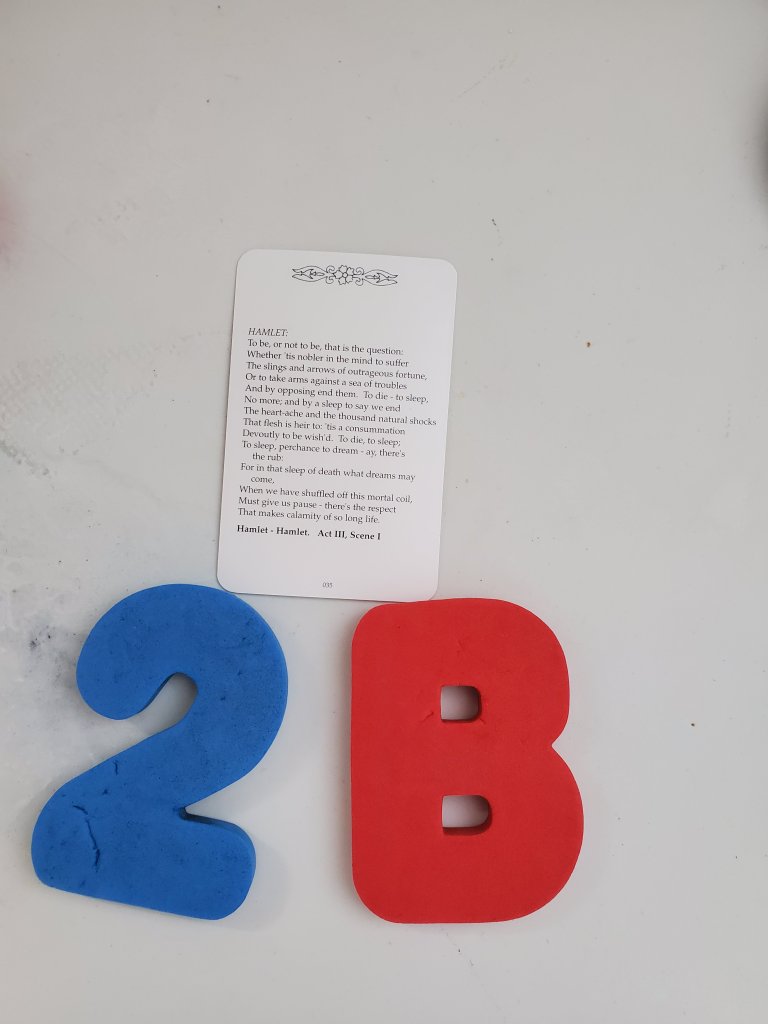
If you click on the link, you can do a great scavenger hunt where you upload pictures or answer trivia questions for points, and of course they are all related to Shakespeare. If you have the app on your phone, search for Shakespeare Birthday Scavenger Hunt and enter the code: 2BON2B (Get it, to be or not to be)! You can also use the code NLEGVM. Let me know if you like it or if you cannot access the link.