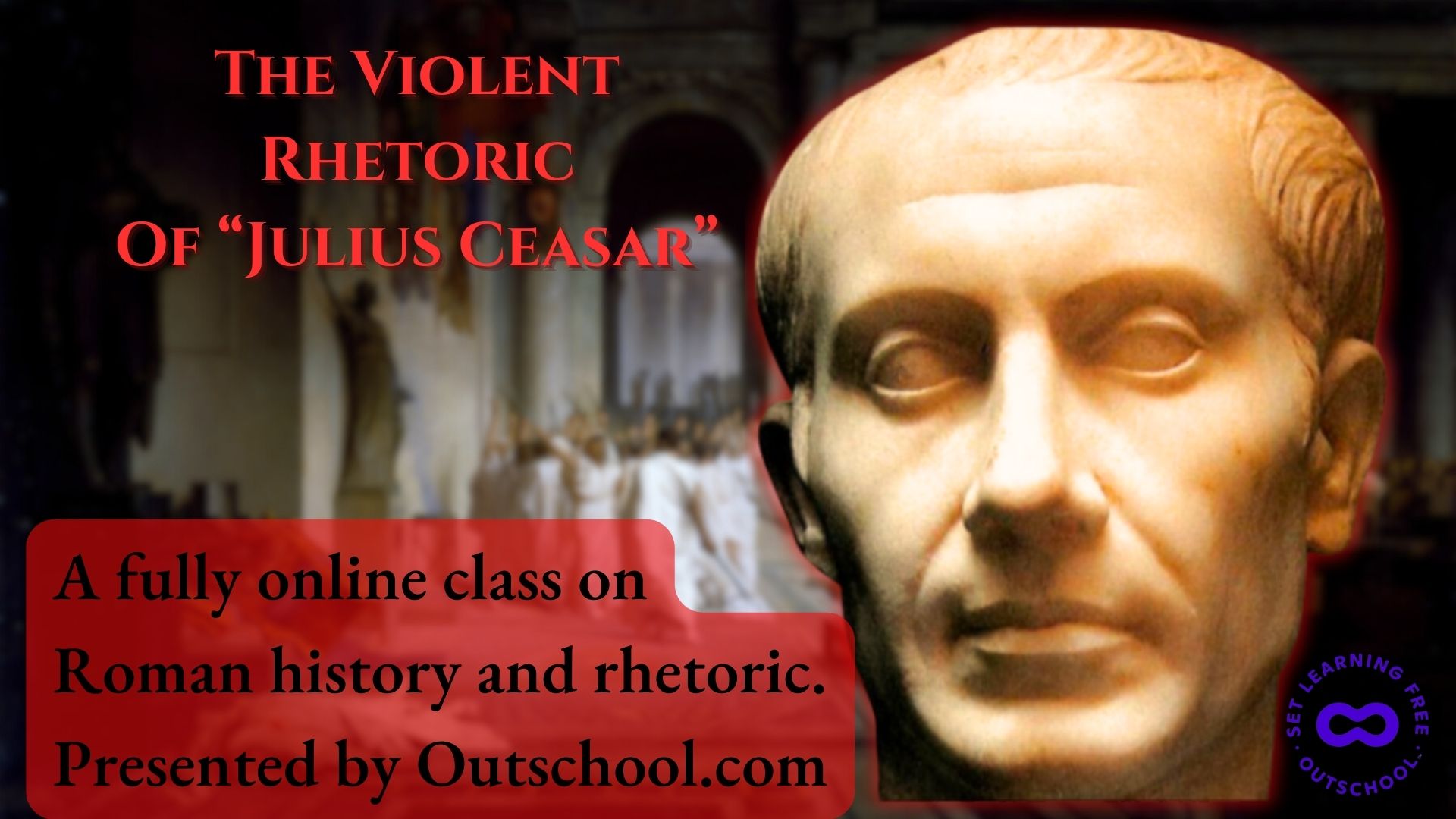
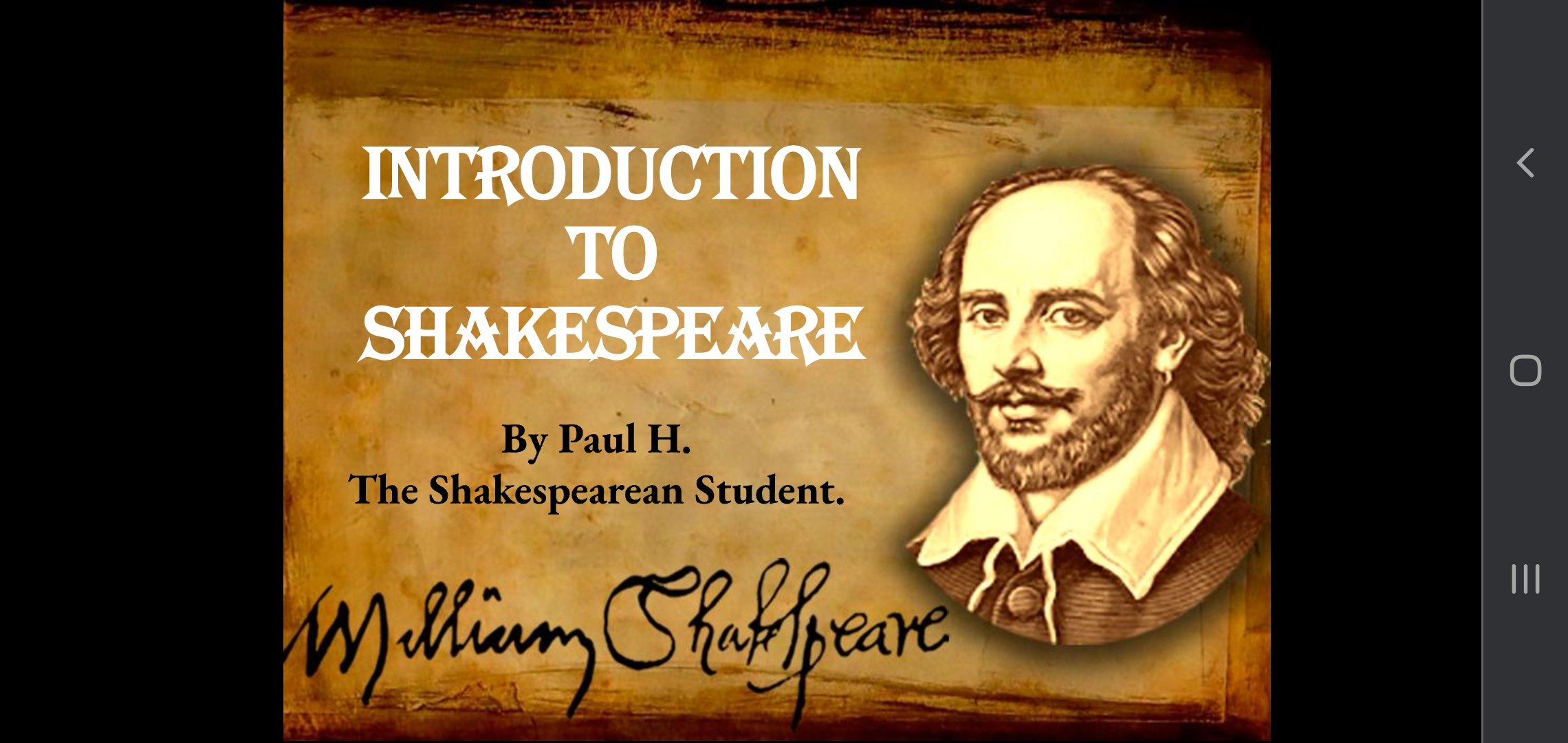
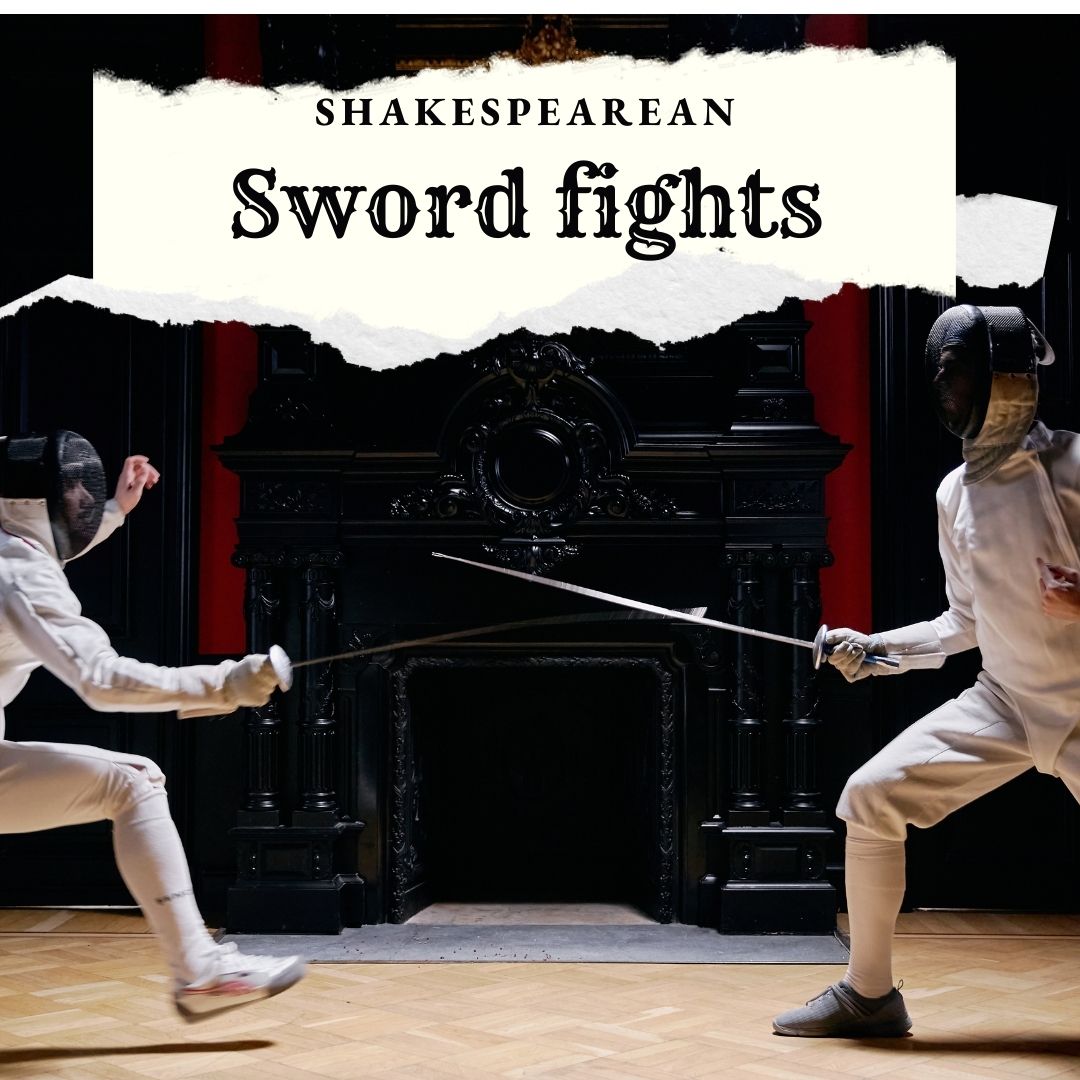
Title Card- “The Violent Rhetoric Of Julius Caesar”Title for my Outschool class on Codes and Ciphers, inspired by the Disney show “Gravity Falls.”Digital business card for my online classes with a QR code if you want to know moreTitle art for my Outschool course on Shakespeare’s comediesCover art for my Outschool class: “Shakespeare- the Lost Play”Title of my Outschool murder mystery gameTitle image for my online course on “Romeo and Juliet.”Title card for my Outchool Intro To Shakespeare cs.Title art for my Outschool course on Shakespeare’s comediesTitle for my Outschool class in swords and Stage Combat.
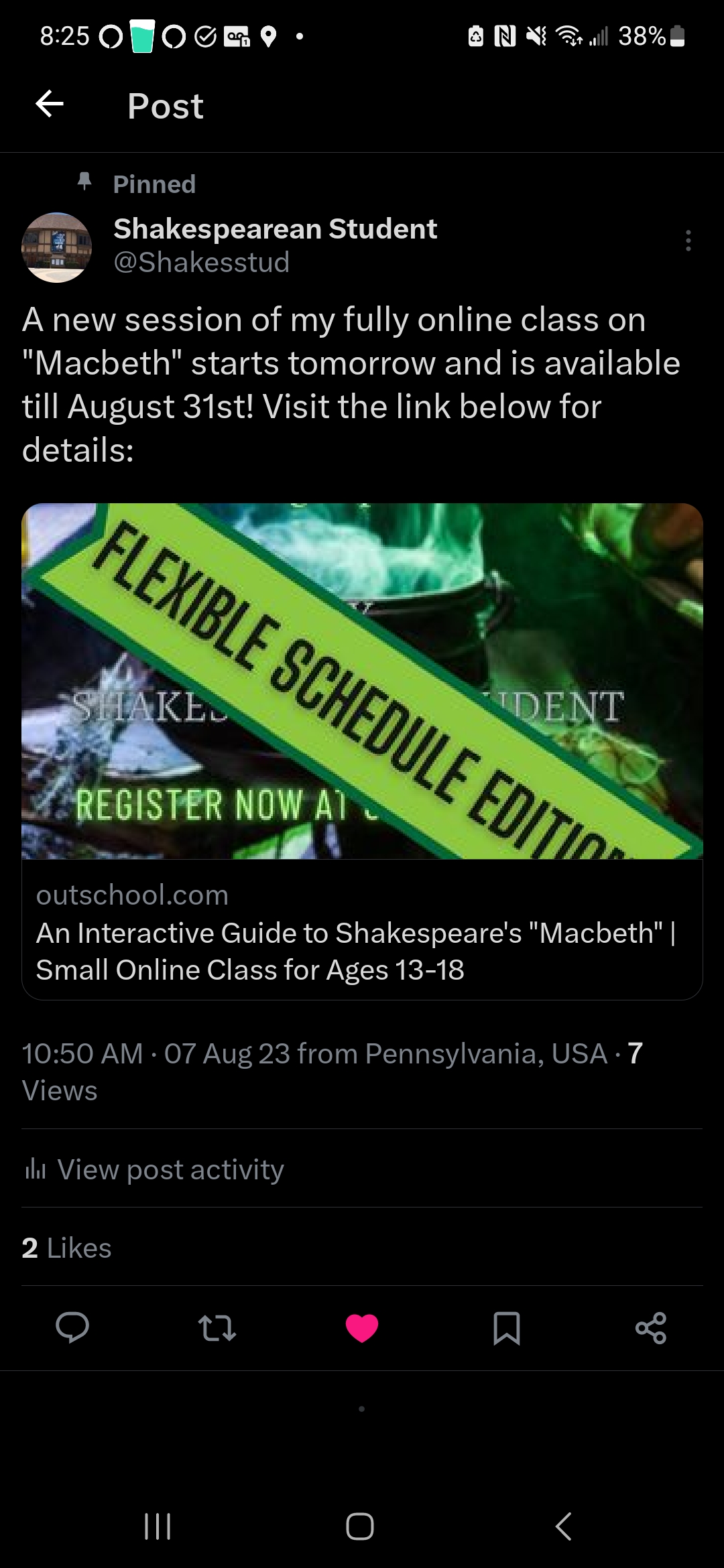
Great online classes in Shakespeare and science are available for students all this month at Outschool.com.
From now until June 1st, you can get a $20 discount with referral code PAULHT20. Share the joy with other curious minds in the family too! Spread the word and let’s ignite the passion for learning together!
Class Descriptions
Live Classes
For these classes you meet with me live over Zoom:
Introduction to Shakespeare- Tuesdays 9-9:30AM (EST)
This is my 30 minute short and sweet intro to Shakespeare’s life, his plays, and why his work still matters to us today!
Intro To STage Combat (With SwordS)- Tuesdays 9:30-10AM (EST)-
Like the Intro to Shakespeare class above, this is an intro to the basic footwork, attacks, and defensive parries of swordplays for someone just begeinning to learn about swords.
Title image for my online course on “Romeo and Juliet.”
An Immersive Guide To “Romeo and Juliet- Tuesdays from 10-11AM (EST)
This multi-week course delves into the plot, characters and themes of “Romeo and Juliet,” while also providing interactive activities, virtual tours, and webquests.
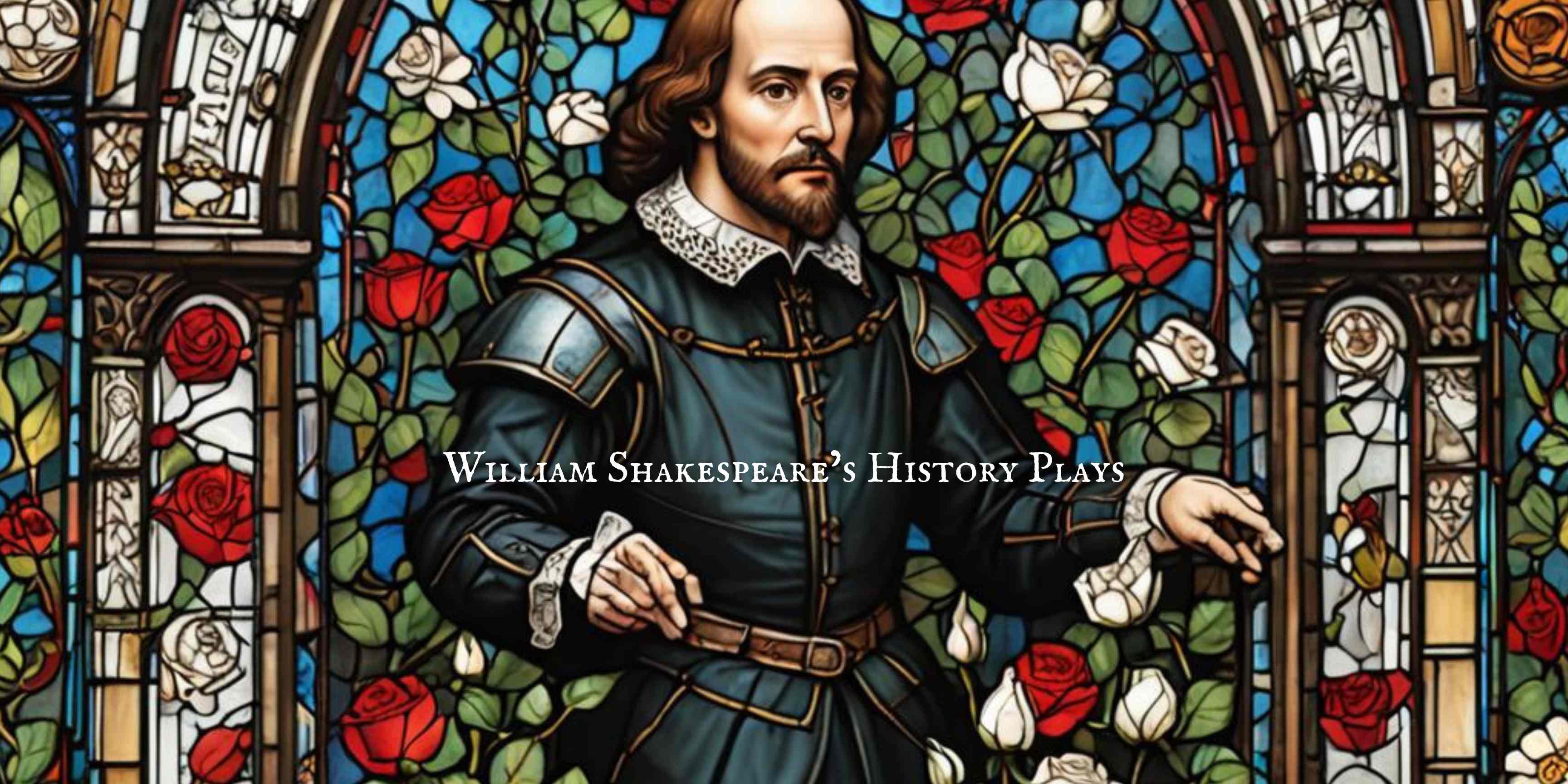
Shakespeare’s History Plays- SaturdAYs 8:30 AM IST
This is a new course I’m working on to cover all of Shakespeare’s History plays including Henry V, Richard II, and Richard III. More info as it becomes available.
Asynchronous Classes
These classes are Flex Schedule, which means the teacher prepares the activities in advance and allows you to do them at your own pace without direct consultation.
A flexible schedule class that teaches kids the plot and characters of “Romeo and Juliet,” in the context of a detective story where you solve the mystery of the young lovers’ deaths.
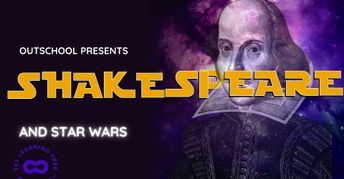
Did you know that Star Wars is based on the ideas and writings of William Shakespeare? This class will teach you about writing and characters though games, interactive activities and dramatic readings of both Star Wars and Shakespeare!
Using self-paced online activities, your child(ren) will compare the plot and characters of Star Wars to Shakespeare’s plays. We will also discuss Shakespeare writing by looking at “William Shakespeare’s Star Wars” by Ian Doescher.
Course Description
Concept: To compare and contrast the plot, characters, themes, and language of Shakespeare’s plays with Star Wars
Student Description:
Epic battles, quests for revenge, pirates, funny characters, powerful warriors swinging swords. Star Wars has something for everyone. But did you know that in many ways, Star Wars is based on the ideas and writings of William Shakespeare? In this course we’ll peer beneath the veil of Shakespeare and Star Wars to find the universal stories of love, revenge, power, and growing up, using games, artwork, and dramatic readings by professional actors!
Did you know that Star Wars is based on the ideas and writings of William Shakespeare? This class will teach you about writing and characters though games, interactive activities and dramatic readings of both Star Wars and Shakespeare!
Course organization (the class is divided into 6 parts that students can complete at their own pace over a week-long period.
What parts of the Star Wars story are like Shakespeare’s plays?
Are Shakespeare and the Star Wars movies saying anything similar about war? Families? Growing up?
Lesson Objectives
To teach about the characters and plot of Star Wars by comparing them to Star Wars
To introduce the concept of archetypes, tropes,
Set the Scene
Star Wars is about an evil empire trying to take over the galaxy. They have more ships, more soldiers, and a fearsome weapon that can blow up planets. The rebels on the other hand, though fewer in number, are faster, smarter, and have the advantage of fighting for a good cause.
In addition, the story is about growing up- Luke becomes a Jedi Knight. He takes revenge on the man who destroyed his father.
The Players (slides)
Luke
Obi Wan/ Yoda
Vader
Leia
Han
R2D2 and C3PO
The Emperor
Words Words Words
Epic
Parody
Theme
Plot
Archetype
Character
Trope
Theme
Class 2: The Journey of Han and Leia
Han and Leia vs. Beatrice and Benedick
Show videos of Han before Leia
Plot summary of Much Ado
Clips of the bickering of Benedick and Beatrice
Read blog and look at the writing.
Activity- how would you write a love letter to Han or Leia?
Play the scene from Jedi
Unit 2- The Prequels and Shakespeare’s Histories
A Crash Course in Shakespeare’s Histories
The Rise of Palpatine/ Richard III
Emperor Palpatine in Star Wars rises to power through a combination of manipulation, intimidation, and by killing his opponents.
Bio of Richard III
Slide- Richard’s rise to power
Slide- Palpatine’s rise to power
Quizlet
Unit 3- The Verse of William Shakespeare’s Star Wars by Ian Doescher
What is William Shakespeare’s Star Wars
Introduce the plays
Explain how Shakespeare’s verse works
Look at the common verse elements
Sonnets
Show the chorus of “Verily a New Hope”
It is a period of civil war. The spaceships of the rebels, striking swift From base unseen, have gain’d a vict’ry o’er The cruel Galactic Empire, now adrift. Amidst the battle, rebel spies prevail’d And stole the plans to a space station vast,Whose pow’rful beams will later be unveil’d And crush a planet: ’tis the DEATH STAR blast. Pursu’d by agents sinister and cold,Now Princess Leia to her home doth flee, Deliv’ring plans and a new hope they hold:Of bringing freedom to the galaxy .In time so long ago begins our play,In star-crossed galaxy far, far away
Stychomichia
Half lines
Enjambment
Title Crawl (make a gif via Canva)
Side By Side Comparisons
Read/ watch segments of the play
To Be Or Not To Be
All the World’s a Stage
St. Crispin’s Day Speech
Try to turn a Star Wars line into verse, and then look at the reveal.
Unit 4- Literary Devices of William Shakespeare’s Star Wars
Using the educational guide, we’ll learn about the following literary devices:
Extended Metaphors (Luke’s green lightsaber)
Anaphora (Luke’s call to action in Jedi)
Premonatory Dreams (Calpurnia)
Stichomythia Richard III vs. Han and Leia
Unit5- The Hero’s Journey of Luke Skywalker
Class 1: What is a Hero’s Journey (Slides)
Learn a little about Joseph Campbell’s monomyth. using the Percy Jackson post, Crash course video about monomyth
Chart Luke’s monomyth journey
Activity- Mad libs- write a star wars movie!
Quiz on plot elements from the monomyth (Quizzes or Quizlet)
Class 2 : Hamlet and Luke Skywalker
Plot comparison
(use infographic)
Quote from Doescher:
Hamlet The Tragedy of Hamlet, Prince of Denmark is Shakespeare’s most famous play. It’s also the play I make the most references to in William Shakespeare’s Star Wars.
To Be Or Not to Be
Use my video about the speech to explain the structure
Note how Doescher repurpuses every line in the Star Wars Trilogy:
Sometimes it expresses fear:
Sometimes concern:
Frustration: “The whips and scorns of time”
Hope: “The undiscovered galaxy” “Tis a consummation devoutly to be wished.”
Activity: write your own paraphrase of Hamlet’s speech, using the 6 beats I provided.
William Shakespeare’s Star Wars is a series of parody plays written by Ian Doescher that takes the prose screenplays of the Star Wars story and transforms them into Elizabethan verse. Last time I mentioned how much I loved the cheeky references to Shakespeare and Star Wars, and how Doescher adapts the cinematic quality into Elizabethan drama very well. In my podcast, I also emphasized the way Doescher gives each character verbose Shakespearean language that works very well for radio and theater:
My podcast episode where I do dramatic readings of “Verily A New Hope.”
I must confess, Return of the Jedi is my favorite Star Wars movie. I’ve seen all 9 films and it’s still my favorite. I adore the effects, the tight storytelling, the emotional farewells, and the dramatic victories. What I want to do with this post, (and the accompanying podcast), is to see whether this edition captures what I love about Jedi. The short answer is- no. It doesn’t capture it, IT EXPANDS IT! In many ways this play is Doescher’s triumph- he manages to capture the tone and characters of Star Wars perfectly, and makes the Shakespearean style his own!
Notes about the play
The first play in the series, “Verily, A New Hope,” took plot and structure inspiration from Henry V; it tells the story as an epic heroic story of Luke’s heroic deeds, much like how Henry V is about a king who grows from boy to man.
The second play “The Empire Striketh Back,” takes inspiration from Hamlet and Macbeth to explore Luke’s temptation by the Dark Side of the Force. It also uses Much Ado About Nothing as an inspiration for the burgeoning relationship between Han and Leia
I would argue that “Jedi Doth Return” is a mixture of all the other plays Doescher took inspiration from. Unlike the previous plays, this feels less like a parody, and more like an adaptation. I feel that Doescher has finally become so comfortable writing in the Shakespearean style, that he rarely needs to flat out parody lines and speeches, and simply uses Shakespearean dialogue to tell the story.
Moments to Watch for:
The Language
I’ll discuss the language of Jedi in greater detail in my podcast, but I’d like to highlight one or two here.
Extended metaphors:
Vader: It is the role I play, my destiny— The grand performance for which I am made. Come, author of the dark side of the Force, Make me the servant of thy quill and write The tale wherein my son and I are seal’d As one. Come, take mine ev’ry doubt from me, And fashion from my heart of flesh and wires A perfect actor: callous, cold, and harsh. Let this, the second Death Star, be the stage, And all the galaxy be setting to The greatest moment of my narrative:
The scene in which the Empire’s fight is won Whilst I decide the Fate of mine own son - The Jedi Doth Return Act I, Scene i
3. Parody Lines
The biggest appeal of William Shakespeare’s Star Wars is the fact that it is a parody, and I’ve said for many years that parody and gentle riffing on Shakespeare is a great way to get students to overcome their fear of Shakespeare and engage with him. Students who know Star Wars but don’t know Shakespeare will recognize the familiar characters and plots of the movies and then see how Shakespeare’s language tells the story anew. Similarly, people who know Shakespeare will recognize the way Doescher re-tools famous Shakespeare quotes to give to characters in the Star Wars Universe, like here, where he spoofs the famous “All the World’s A Stage” speech:
In the Educator’s guide, which I’ve attached below, Doescher tells you exactly which lines he has parodied and the plots of the original plays so the students can learn about Shakespeare through these famous speeches. Orson Wells once said: “We sit through Shakespeare to recognize the quotations,” and this edition gives us thrilling space battle, wonderful characters, and witty dialogue to keep us entertained while we wait.
Characterizations
What I love the most about the movie and the play is that it’s a very character-driven story. Instead of long trench runs with pilots we’ve never met, we get duels to the death between characters we’ve known for years. At its heart, Jedi is the story of the Skywalker family reuniting after Darth Vader ripped it apart. It’s also the culmination of Luke growing from a boy to a man. Doescher does an incredible job voicing these characters through the verse, and his use of the language helps highlight each character’s struggle and journey.
Luke/ Vader
Left- production photo of Mark Hamil holding a skull Yorrick-style. Right- AI art I created of Luke as Hamlet.
Luke has more of a duality in this story- sometimes his speeches are hopeful, positive, and full of decisive language, while other times he is bitter, angry, and mournful. This is a perfect characterization for a young man whom the Emperor hopes to turn to the Dark Side, and these speeches excellently bring out his character. Sometimes Luke even repeats lines spoken by Vader and the Emperor just to drive this point home.
Emperor
A speech from “Jedi Doth Return.” Notice how the ideas run on past the ends of lines and how long each sentence is
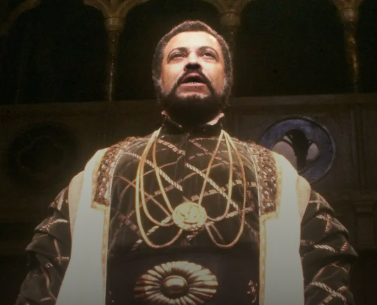
As for Emperor Palpatine, his speech is similar to Claudius in Hamlet in the sense that he has many run-on lines that only get to the point at the very end. This man knows he has the ea of the entire galaxy, so he can afford to make people wait for him to finish talking. As Luke himself says: “Your overconfidence is your weakness,” and Doescher does a great job conveying that weakness through the language.
Leia/ Han
My favorite part of The Empire Striketh Back was how Doescher conveys the love between Han and Leia. In that play/ movie, it was done through irritating each other in public, and soliloquizing in private. In Jedi, Han and Leia are more of a couple, supporting each other in their fights and the language has more of a romantic tone.
Han (Hal Jourdan) and Leia (Janine Ashley) finally confess their love in this scene.
My Criticism
To sum up, Jedi is a milestone in the William Shakespeare’s Star Wars Series where Ian Doescher learned how to make the language his own, rather than borrowing lines and phrases from Shakespeare. It’s a pity there aren’t more books in this series…. right?
If you enjoyed the accompanying podcast episode to this post, please consider subscribing and donating to help me continue making fun and educational content like this!
Me singing “Brush Up Your Shakespeare” in honor of the Bard’s birthday, 2025
Today, April 23 is the established birthday of William Shakespeare! Today I’ll share some of my favorite posts, videos, podcasts, and quirky recipes related to Shakespeare!
With summer break approaching, why not give your kids the gift of learning Shakespeare in a low-key, no-pressure scenario? I have classes on Shakespeare’s life, Romeo and Juliet, and my celebrated Stage Combat class! Sign up now for all the fun on Outschool.com! Shakespeare and Star Wars Class Description: Using self-paced online activities, your child(ren)… Read more: Lots of Great classes are available on Outschool This Summer
Portia (Or Porcia), was the wife of Marcus Brutus. Many ancient writers emphasize her courage, beauty, and devotion to her husband and Rome. Many painters and illustrators have chosen to depict her as a model of courage and grace. Porcia, as has been said, was a daughter of Cato, and when Brutus, who was her… Read more: Crafting A Character: Portia (Wife of Brutus
Happy April Fool’s Day! Today I’d like to look at the rich history of Shakespeare’s fools and clowns! Clowns are some of Shakespeare’s classic comic characters, but fools are complex characters that entertain, satirize, and even philosophize. They may dress the part, but they are no fools. This clip from Mel Brooks’ comic masterpiece History… Read more: Shakespeare’s Fools
Special Promo!
Some of my Shakespeare classes on Outschool.com
Get $10 off my classes with coupon code Get $10 off my classes Wizard Science for Kids!” with coupon code HTHES4KG1E10 until May 23, 2026. Get started at https://outschool.com/classes/wizard-science-for-kids-KmqzT8U0 and enter the coupon code at checkout.
Concept: To explore the plot, characters, and themes of Shakespeare’s Julius Caesar while also gaining an insight into Ancient Roman history and culture.
Student Description: Delve into the passionate speeches of Brutus and Antony in Shakespeare’s Julius Caesar, which led a whole country to revolution.
Parent Description Using self-paced online activities, and a helpful handout, your child(ren) will analyze the rhetoric and persuasive power in two speeches from Shakespeare’s “Julius Caesar.” The course will also cover the culture of Ancient Rome, and the circumstances that led to Julius Caesar’s assasination, which inadvertently led to the birth of the Roman Empire.
Course Organizaiton (the class is divided into 4 parts that students can complete at their own pace over a week-long period
Each lesson will have:
“That Is the Question” (Essential Question)
Lesson Objectives
Set the Scene (Background and context)- 1-3 slides
The Players (biography) 1-3 slides
Go Deeper (Webquest)
Explore military life and the lives of women in Rome using my blog and other websites as a guide.
Post 3 things you learned to the Outschool page or send a photo of your completed handout.
Words, Words Words (Vocabulary, famous lines)
A Taste of Your Quality (Independant Project)
Show us your mettle (Test)
So each class should be 14-15 slides long.
Outline
Class I- Background on Caesar and Roman Culture
That is the Question:
Why did Brutus feel Julius Caesar had to die?
What was the aftermath?
Can one person’s speech effect an entire nation?
Lesson Objectives
To provide historical and political context to explain why Julius Caesar was assassinated, and how his death inadvertantly created the Roman Empire.
To explain the Rhetorical Triangle, the building blocks of persuasive speech.
To go through the story of Julius Caesar focusing on the effect of the speeches.
To study the famous “Friends, Romans Countrymen” speech.
To contrast this speech with some more recent political speeches and you think critically about:
Brutus- Podcast episode. I posit in this episode that Brutus is
Words, Words, Words-
Traitor
Republic
Dictator
Revolution
Ethos
Pathos
Logos
Rhetoric
Colossus
Aeneus
A Taste Of Your Quality:
(Independent work): We’ll examine a painting of Brutus’ ancestor Lucius and learn why Brutus values Rome more than even family.
Show Us Your Mettle:
Quizzes on Brutus
Class 3- Antony and Brutus’ Dueling Speeches
(c) Hartlepool Museums and Heritage Service; Supplied by The Public Catalogue Foundation
That Is the Question
After Caesar’s Death, his friend Marc Antony held a funeral for him where he gives the famous “Friends, Romans, Countrymen” speech. How did Antony’s speech affect the crowd?
Brutus has a speech where he explains why he killed Caesar. What does he say, and how effectively does he say it?
Antony was secretly plotting to take power for himself, and get Brutus and Cassius killed. How did he do it?
Do speeches have the power to change a nation?
Learning Objectives
To explain the Rhetorical Triangle, the building blocks of persuasive speech.
To study the famous “Friends, Romans Countrymen” speech, as well
To look at these speeches and get you to think critically about:
We’ll talk about the consequences of violent revolutions and how Julius Caesar has inspired some of the greatest speeches in political history.
-Patrick Henry
– Gettysburg Address
– Mean Girls
That Is the Question
How have people interpreted the play “Julius Caesar” in America?
Does this play promote violence?
What kind of violent speech do we deal with in politics today?
Learning Objectives
To show the link between American History and Julius Caesar
To address the controversy and the misconception that the play promotes violent assassination.
To end on a cautionary note people must think critically about what they hear in politics and not make rash decisions based on appeals to fear.
Setting the Scene- US History
America was founded using the principles of republican government that Ancient Rome used- with a senate, and a series of checks and balances to ensure no one has too much power.
America was founded in a violent revolution, and some of our country’s early leaders used Brutus as an inspiration- to overcome a tyrannical king.
In later years, however, some people have forgotten what happened to Brutus
Today, we are often bombarded with speech that encourages fear and anger and we must think critically when we hear such speech in whatever forum- Roman, or Reddit.
The Players (use my JC lecture?)
Patrick Henry
Abraham Lincoln
John Wilkes Booth
Donald Trump
Go Deeper
-Watch the Caesar Video
– How does the play promote nonviolence?
– How did Brutus’ assassination fail to save the Roman Republic?
Last weekend I saw a wonderful production of “Six” The Musical at the Cab Calloway School Of the Arts in Wilmington DE. After seeing the professional production, I was worried that I wouldn’t enjoy these student performers but it was incredible! The young performers were all terrific and the director managed to use inventive, creative, and entertaining setpieces to both capture the essence of the Broadway show, and also make a version that is distinct and its own with student performers!
The Direction
DIRECTOR’S NOTE I thought original I’d never Broadway get a show chance only to has direct six it at actors Cab. in AS the luck cast, would so/ have it, the teen edition came out this past summer, which allows the addition of a singing and dancing ensemble. I immediately applied for the rights and we were one of the lucky schools to get them. This new teen edition is the perfect fit for our school community and it highlights the talents of studentsfrom every arts area. I wanted to create a Beyoncé or Taylor Swift concert-type at- mosphere, and I think we have achieved that with our show. The fabulous lighting, the beautiful costumes and make-up, the rocking pit band, the fabulous cast and crew and especially the epic choreography have culminated into quite a spectacle! It has always been a joy to work with my colleagues on these projects. and I want to give a particular shout-out to my team of choreog- raphers. They have taken my vision and turned it into something amazing. The creativity in this team is fierce, and if ever there was a group that fed off of each other’s ideas, it’s this one. We’ve had a blast collaborating on this production Also, I would like to acknowledge Brian Touchette, Peter Kuo and Jared DeStafney for their tireless work on this production. With- out them, this show would not be possible.
Marjorie Eldreth
As the director notes in the program, the challenge with doing a musical like “Six” at a high school or community setting is that there are only six major roles, which means it would be hard to find ways for the whole student body to participate. What I loved about this version is that, by utilizing dance, pantomime, and choruses, the director has found ways to not only involve more people, but help use the additional cast to tell the story in ways that the professional touring production I saw earlier didn’t!
My Favorite Moments
Normally I hate dance numbers in musicals. Don’t get me wrong, I admire the skill and athleticism that dancers have, but when I see a play or musical, I come for the story and the songs. Dance always seems like the black sheep in the musical theater trifecta to me. Not so with this production of “Six.” The dance numbers help tell the story in clever and moving ways! For instance, during Anne Boleyn’s “Don’t Lose Your Head,” a team of dancers with green sticks accompanied her. Their movements were cheeky and brash, which helps encapsulate her bubbly yet tart personality. During the choruses, the dancers and Anne rested their hands on the sticks, drawing attention to their heads moving back and forth, which reinforced both the title, and Anne’s air-headedness. Then, at the end of the number, the dancers got into a circle and pointed their sticks at Anne’s neck- pantomiming how she would eventually be beheaded! Thus, the dancers complimented Anne’s song perfectly, in a way that was not originally part of the show!
“My Heart Of Stone”
The most moving moment of dance was during Jane Seymore’s song “My Heart Of Stone.” When I saw this number in Hershey, it was by far my least favorite. I thought the lyrics were generic, that the song itself was bland, and that gave little depth to Jane character. All that changed this time around. While Jane belted her heart out about the son she never got to raise and the husband who mistreated her, we got to see elegant ballet dancers perform those moments for us. I particularly liked that the male dancers had red hair, (much like the real Henry VIII and his son). The dance actually helped me see Jane’s conflicting feelings for Henry- how she feels genuine love and affection one minute, and terror the next. How she and her son are both ghosts, now that they were denied the chance to live together on Earth. I don’t wish to diminish the wonderful singing and acting of the Hershey production, but Six: Teen Edition did a masterful job of showing, in addition to telling Jane’s story.
THe Cast
The Cab Calloway School of the Arts boasts some of the top young actors in the country, and all of them have tremendous chops as actors, dancers, and singers. Some of them already have professional acting credits. So it should come as no surprise that all the performances were incredible. It was very exciting, however to see a real 19-year-old play Catherine Howard, (since that was the real age she was when she died).
This production also took the bold leap of casting two men in the show. In one cast Anne of Cleaves was played by a man, and in the other (the one I watched), Katherine of Aragon was played by a man. I have no problem with this choice, (after all boys have been playing Katherine ever since Shakespeare’s Day), but I was a little disappointed that the actor had to modify the song to fit his range- I was looking forward to the extravagantly high Shakira and Beyonce inspired vocals that I’ve come to expect from the part. Nevertheless, the actor I saw was incredibly talented and his acting and dancing were completely appropriate for the part.
THe Dramaturg
For those of you who don’t know, a dramaturg’s responsibility is to help the actors, director, and production designer by doing research into the play’s historical or political context. It’s a role that is very important in period plays like Shakespeare. I’ve worked as a dramaturg myself and, though the work one does as a dramaturg is mostly unnoticed by the audience, the dramaturg can greatly contribute to the way the actors understand the text and give the director tools and ideas with which to explore themes and ideas present in it. I don’t know what the dramaturg did for this production, but I could tell based on the performances that every cast member was fully committed to their character. Each actor was able to clearly articulate their character’s emotional journey and that meant they must have learned the history and context of the Tudor period. Again, I don’t know if the dramaturg had any effect on this, but I’m going to assume they did a terrific job, because their end goal was accomplished- the actors and director gave a coherent and well thought out performance that captures the spirit of the Tudor period, so great job!
Since International Women’s Day is Friday, I’m devoting the following week to talking about the awesome female characters in Shakespeare’s Roman plays: Titus, Andronicus, Julius Caesar, Antony and Cleopatra, and Coriolanus
First, here’s my post and an accompanying podcast on Roman women, which includes an analysis of Lavinia, Portia, Valumnia, and Cleopatra:
Here’s a fascinating video about the lives of Roman girls:
And here’s a special section about Cleopatra:
Comedy sketches about Cleopatra from “Horrible Histories” BBC, 2015.
A Lady-Gaga-esque song about Cleopatra from “Horrible Histories,” 2014Infographic from an article about Cleopatra’s beauty regimen. Source: http://socialdiary.pk/
Today is February 29th, a day that only exists every four years. This is because the Earth’s rotation isn’t exactly 265 days, so every couple of years we add a day, (except every few hundred years).
The man who first pushed for the most accurate calender in the Western world was none other than Julius Caesar, the Roman dictator, and titular character in Shakespeare’s famous tragedy. Here’s an interesting news story that details why this happened:
For the month of March I’ll be doing a lot of posts, videos, and podcasts about Julius Caesar, and the Roman plays in general, and also hopefully releasing a new course for Outschool.com. Stay tuned!
Every couple of years or so, there’s a new retelling of the tale of star-crossed lovers. I’ve written before that Shakespeare didn’t invent this story, but his version is definitely the template for every subsequent retelling.
The big challenge in telling the story for children is how to get around the sexual and violent elements of the story. Some versions like “Gnomio and Juliet,” make the violence comic and kid-friendly, while others like the WIshbone version call attention to the fact that it’s only a play, by presenting it as a story-within-a story.
What I find unique about Disney’s Elemental is that it ignores the violence and explores a side of the story that is often downplayed: family loyalty vs. personal choice. Is this version a complete adaptation- no. But it’s interesting to compare to “Romeo and Juliet” to see how it modernizes and diversifies elements of Shakespeare’s story.
Part I- The World of “Elemental”
One trope that both Elemental and Romeo and Juliet emphasize is the ancient notion of comparing human temperaments to the four elements.
In this world, all people are made of one basic element and it corresponds to their personality- dull, cold earth, flighty air, emotional water, and driven and temperamental fire. Our heroine Ember not only has a fiery temper, but a burning desire to repay her family for all that they’ve given her. She is also full of family anger for the prejudice she suffered at being an immigrant and a fire person. In the world of Elemental, fire people are looked upon with distrust because.. well fire burns!
This concept of elemental temperaments is explored in very creative ways in the film, but it is by no means a new idea. The idea that humans are made of four elements goes back to ancient Greece and China. The Greek philosopher Aristotle helped popularize the theory that not only is everything made of four elements but there are four liquids called humours that control human health and human behavior.
This is a presentation I created back in 2006 that explores the imagery and worldview of Romeo and Juliet. I explore what it means to be “Star Crossed Lovers,” and the relation that this play has to Astrology, religion, and even the Black Death. I hope you find it interesting!
Aristotle believed that to be physically and emotionally healthy, a person’s humours needed to be balanced which would prevent sickness and also control their temperament. A “humorous” person was someone who was either too angry or too melancholy and therefore worthy of scorn. This eventually twisted into our notion that humorous means to be funny.
In Romeo and Juliet, all of the characters are dominated by a particular humor and sometimes they even say how they are dominated by Choler (fire), Melancholy (Earth), Blood (Air), and Phlegm (Water)
Patience perforce with wilful choler meeting Makes my flesh tremble in their different greeting. I will withdraw: but this intrusion shall Now seeming sweet convert to bitter gall.
Tybalt, Act I, Scene v
All things that we ordained festival, Turn from their office to black funeral; Our instruments to melancholy bells, Our wedding cheer to a sad burial feast,
Lord Capulet, Act IV, Scene v
Then hie you hence to Friar Laurence’ cell; There stays a husband to make you a wife: Now comes the wanton blood up in your cheeks, They’ll be in scarlet straight at any news.
What’s unique about Elemental is that, while characters in Renaissance dramas have all four elements within them, in this movie, they are literally embodying one. Therefore to be in balance as Aristotle says they should be, they need a partner with an opposite humor to form a harmonious union. This is a nice way of visually showing the age-old adage that opposites attract in a very literal and easy-to-grasp way.
Wade- A more Temperate Romeo
As much as I love “Romeo and Juliet,” I’m well aware that Romeo is not an ideal lover. His attraction to Juliet is very much based on sight alone and though he is courageous and persistent to win her love, he does little to support or help her. Many people have pointed out that, had Romeo lived, it seems unlikely that his relationship with Juliet would last, especially considering that he just got over another girl five minutes before meeting her:
So as a character, Romeo is iconic, but as a lover, he’s not exactly ideal. What Elemental does is keep his love of romance and his persistence, and give him the ability to empathize, a desire to help, and above all, the ability to LISTEN to Ember, (the Juliet analog). Enter… Wade:
Wade is a great addition to the Romeo trope and though he doesn’t kill anyone for Ember’s honor, he does fight many figurative battles for her- he helps her fight her guilt and find her purpose in life, he tries to help her family multiple times, and he fights her father’s prejudice against water people by being kind and respectful to her family.
I think it’s telling that Wade is dominated by water. First of all, it makes it clear to audiences that he has significant challenges in dating Ember (since he might literally extinguish her), but also because of what it says about his character.
Romeo is dominated by the humor of blood, which according to Hippocrates and Galen:
A person who is sanguine is generally optimistic, cheerful, even-tempered, confident, rational, popular, and fun-loving. He or she can be daydreamy to the point of not accomplishing anything and impulsive, acting on whims in an unpredictable fashion. Sanguines usually have a lot of energy, but have a problem finding a way to direct the energy. This also describes the manic phase of a bipolar disorder.
While Wade is literally made of water, which according to Galen:
A phlegmatic person is calm and unemotional. Phlegmatic means “Pertaining to phlegm” and corresponds to the season of winter (wet and cold), and connotes the element of water. While phlegmatics are generally self-content and kind, their shy personality can often inhibit enthusiasm in others and make themselves lazy and resistant to change. They are very consistent, relaxed, and observant, making them good administrators and diplomats. Like the sanguine personality, the phlegmatic has many friends. But the phlegmatic is more reliable and compassionate; these characteristics typically make the phlegmatic a more dependable friend.
So by his very nature, Wade is more active and a better friend than Romeo, which makes his relationship with Ember a more equal partnership. Wade is thus a more modern take on the age-old sanguine lover like Romeo.
Many have argued that Romeo and Juliet’s relationship was never designed to last; it was designed to be much like fire or even like a poison that tastes good at first, but kills at last:
Much like Shakespeare’s version, the Juliet character in Elemental is more interesting than the Romeo character, and the writers know it. In Shakespeare’s version, Romeo is absent for most of Act IV, and in Elemental, Wade is not there for most of Act I and parts of Act II in the movie. The focus of both stories and the best feature is how the heroine handles the conflict between her family and her romance.
In Shakespeare’s version, Juliet doesn’t immediately fall head-over-heels in love with Romeo and uses an elemental image to describe how it would be foolish to try and rush into love too fast:
Although I joy in thee, I have no joy of this contract to-night: It is too rash, too unadvised, too sudden; Too like the lightning, which doth cease to be Ere one can say ‘It lightens.’ Sweet, good night!
Juliet, Act II, Scene ii
But, once the two of them are married, she is very passionate and will do anything to avoid getting married to Lord Paris, even though her parents are pressuring her:
It’s also interesting that Lord Capulet is described in this scene as “Too hot.” I’ve mentioned before that in many productions, the Capulets are dressed in fiery colors like reds, yellows, and orange.
Collage of images of Tybalt. Notice the reds and yellows.
Juliet herself can also be very fiery and willful. At one point, Friar Laurence even compares Romeo’s infatuation with Juliet to fire and gunpowder!
Visual Accompaniment for Romeo and Juliet
These violent delights have violent ends And in their triumph die, like fireandpowder, Which as they kiss consume: the sweetest honey Is loathsome in his own deliciousness And in the taste confounds the appetite: Therefore love moderately; long love doth so; Too swift arrives as tardy as too slow. [Enter JULIET]
So there is precedent for portraying Juliet as a fiery character. What Elemental adds, is a sympathetic portrayal of race and culture wrapped up in her fiery nature. As I said before, Ember is the child of immigrants who are grateful to Element City for taking them in, but tired of the prejudices they face from the other elements. This echoes the real word struggle of Chinese immigrants under the Chinese Exclusion Act, and Japanese Americans during World War II. One way Ember’s fiery temper manifests itself is with her anger at prejudice and injustice:
The other struggle that keeps Ember intemperate is her conflicting desire to honor her family by taking over the family business, although this isn’t what she wants to do with her life. Wade sees this and realizes that Ember is fighting a war within herself and that is why she is lashing out at people in the store. She is also dealing with her family’s relative poverty and is constantly worried that her family won’t survive if she doesn’t take over the store.
In this scene, Ember becomes jealous of Wade, who was born into wealth and acceptance unlike her family who has struggled for years. This jealousy drives a wedge between her and Wade. It’s interesting that, rather than a family feud, the real forces that keep Wade and Ember in Elemental apart are not an arbitrary feud, but big societal forces like racism, nativism, and cultural differences.
In essence, Elemental takes the star-crossed aspect of the story and makes them more like the modern world. Most of us in first-world countries don’t get into blood feuds but plenty of people face prejudice and hardships based on where and how they were born. Elemental “boils” down the core of the Romeo and Juliet story and tells it differently, while keeping the central lesson that love can overcome and unite family differences and problems when two people are willing to risk everything for each other… even life.