My Top Ten Shakespearean Apps For Teachers and Students, Part 2

As I said before, my criteria for these apps was “Free, functional (educational or useful in life,) and fun.”
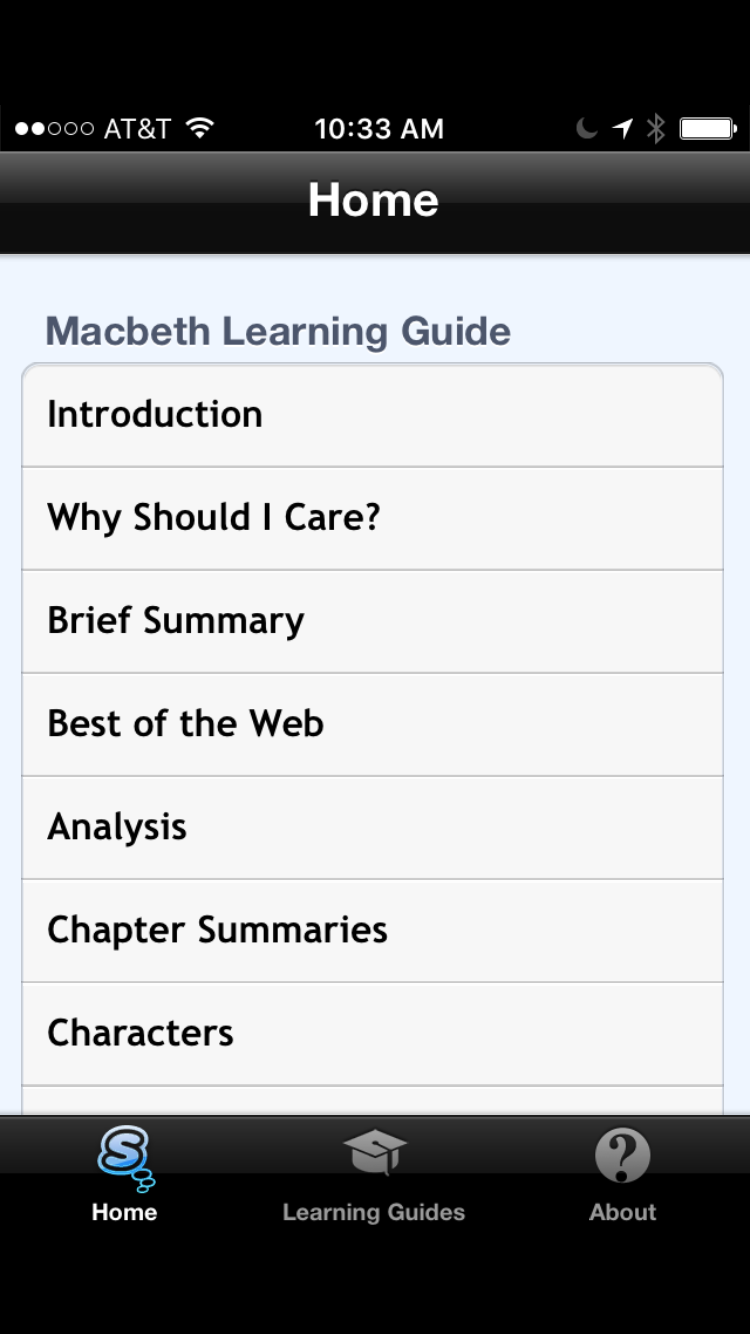
6. Shakespeare by Shmop: incredible! This is a study guide for your phone of tablet. There are separate apps Hamlet, Macbeth, and R&J. Each one features a glossary, analysis, quotes, study questions, you get the idea. You can cover a lot of the play with this app. My favorite feature is “Why Should I Care?” This is a short essay that compares the themes and ideas of the play to modern life. Excellent app, and the website is great too for students and teachers: http://www.shmoop.com

7. Shakespeare for kids


 I believe nobody is too old or too young to enjoy Shakespeare, so I tried to find a Shkespeare app for young children and came up with this. To be honest, I was disappointed in this one; it’s basically an app version of Irene Lamb’s book “Tales From Shakespeare”. It consists of short summaries of the plays intended for children. There are no study guides, no quotes, and the games have nothing to do with Shakespeare. My advice, get the book, or go to these sites: 

8. Poems By Heart Made by the Penguin Publishing Co, it’s designed to help you learn a poem by quizzing yourself, one line at a time, (or one word if necessary). Friendly and enjoyable.


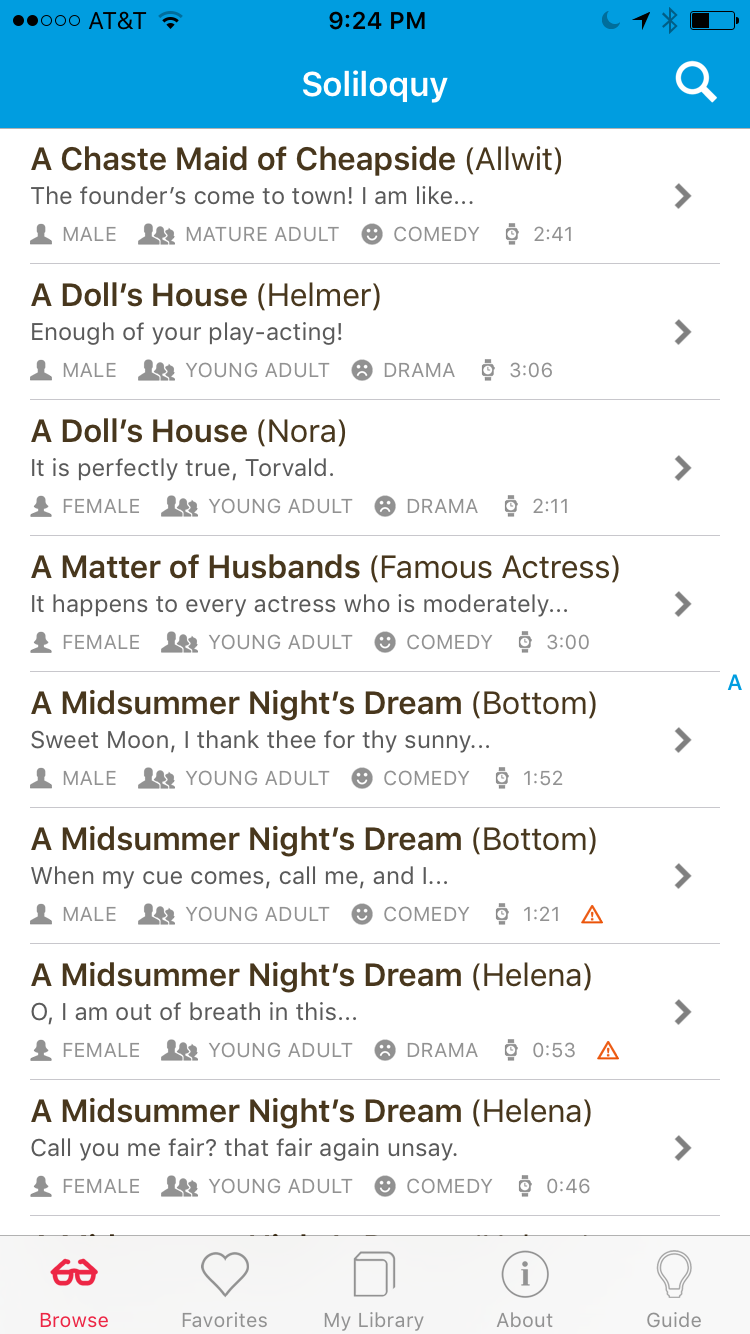
9. Soliloquy by playshakespeare.com. 

As you might expect, this app is a database of Shakespearean speeches. I normally don’t advocate actors learning speeches out of context without reading the whole play, but this app is useful for the professional actor on the go, who needs to pull out a speech in a hurry. It’s sort of a digital monologue portfolio. You can find a good speech, save it, then pull it out when you need to study it. There’s also a pro feature that allows you to edit the speech if it’s running long. What I really like is the fact that each speech is conveniently classified by gender/ genre/ length, and the helpful tips for young actors picking a good speech.

10. Shakespeare by Play Shakespeare.com


Well now we come to the end of the free Shakespeare app list I’ve compiled. Now what? I would recommend downloading Shakespeare by Playshakespeare.com, then BURN THE LIST! This is the most incredible Shakespeare app I’ve ever seen! It has tons of free and pay- only features and I’ve listed a few below:

  • Full text of the plays
  • A GPS feature where you can locate any Shakespearean theater near you.
  • A free passport to 57 theaters that offer discounts to members.
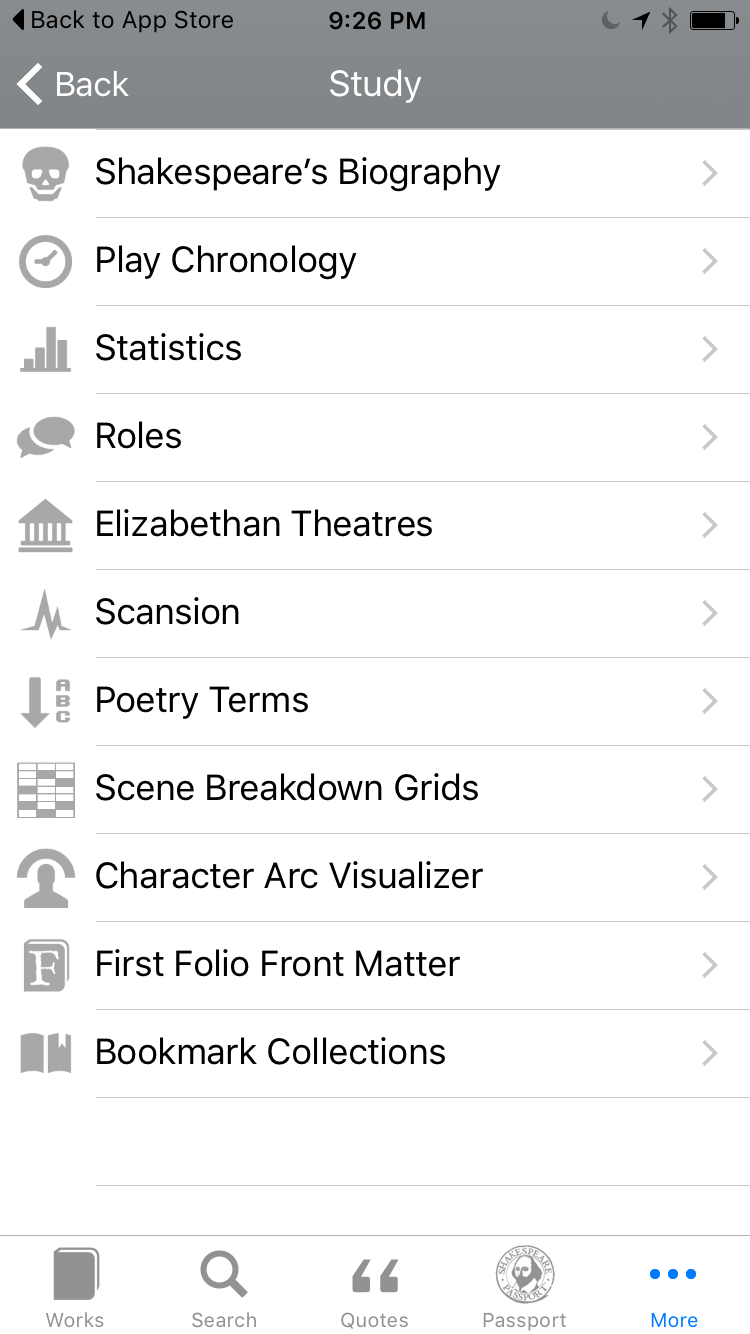
  • Study guides which include scene breakdown, poetry glossary, and notes on verse scansion
  • Shakeapeare quotes generator.
  • A glossary of over 40,000 Shakespearean words 

Much like this blog, I recommend this app to Shakespeare lovers of any age!


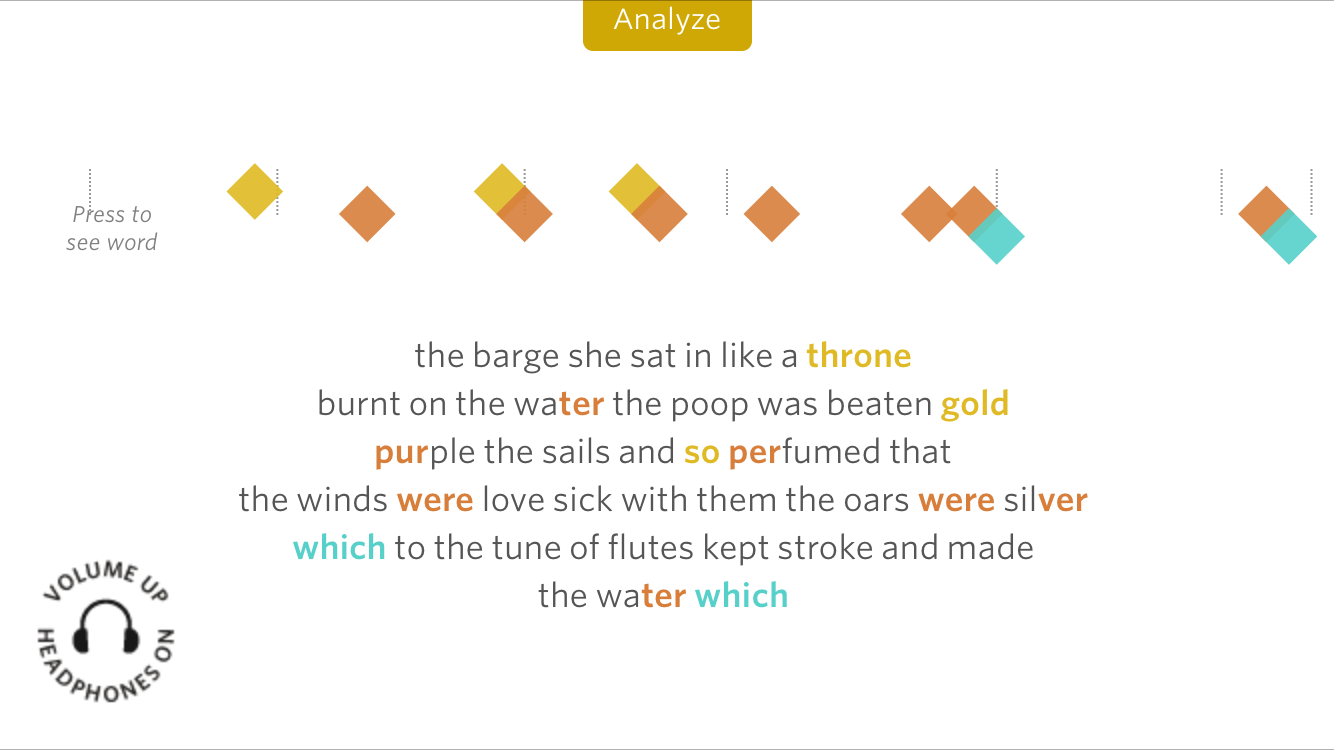
One more bonus review: this isn’t an app, but it’s a website created by Joel Eastman and Erik Hinton of the Wall Street Journal. Its purpose is to analyze the awesome lyric complexity of the Broadway musical “Hamilton.” http://graphics.wsj.com/hamilton/ 

The website uncovers the use of assonance, alliteration, near-rhymes, mid-line rhymes, and other strokes of Lin-Manuel Maranda’s lyrical brush. The best part is that you can feed any text you want into the website, and it will use the same algorithm to show you its lyrical elements, so I’d recommend using it as a tool to study Shakespeare. You’ll find that the Bard of Avon and Snoop Lion aren’t as different as they might seem.

So there you are, a few fun, friendly, and free tools for exploring the work and life of a timeless English playwright. As The Bard might say: “Sirs, betake you to your tools,” for such apps as these are only as good as the person who uses them.

Intro to Richard III

Hi everyone,

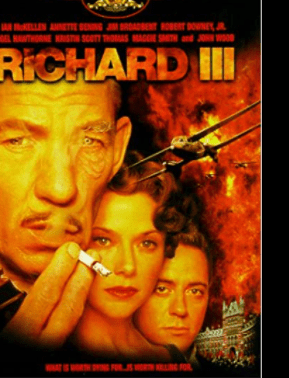
Introducing our new Play of the Month: Shakespeare’s dark history play about murder and corruption, Richard III. First, a short presentation I made that introduces the characters and themes of the play.


Second, a quick, funny summary of the play from the Reduced Shakespeare Company


And finally, this incredible animated version of the play, which looks like a stained-glass window come to life!

RIP Alan Rickman

Hung be the heavens with black, yield day to night! – William Shakespeare

One of the greatest classical actors of our time has gone to his great reward, which I hope includes a “good show” from Shakespeare himself. Most people know Alan Rickman as the slimy Professor Snape, or the evil Hans Gruber, or the cheating husband from “Love Actually,” but a generation ago he was a Shakespearean acting phenomenon at the Royal Shakespeare Company, playing such roles as Jaques, Hamlet, and Achilles. As much as I love Harry Potter, I think it’s wrong to remember such a versatile actor for only one role, so here’s a retrospective of his work that I found this morning. Guardian Tribute to Alan Rickman

“Good night sweet prince, and flights of angels sing thee to thy rest.”

How Shakespeare Celebrated Christmas Part 2: How the Nobles Celebrated Christmas

Once Shakespeare became a member of the Lord Chamberlain’s Men and later The King’s Men, the royals often requested that he and his company perform as the official royal entertainment at Christmas. Christmas for Shakespeare from 1592 to 1613 meant work. Nevertheless, it must’ve been a thrill for this country boy from Warwickshire England to see how the king and courtiers of his country would celebrate Christmas with elaborate feasts, parties, dances, and of course drama.

We know for a fact that Shakespeare was asked to perform at Christmas. As you can see on this title page for Shakespeare’s Loves Labors Lost, we have records of his plays being performed by name for the Christmas feast. In Tudor and Jacobean times, The Master of the Revels kept records of which plays he permitted to perform during the Christmas season and those records reveal what kind of entertainment each monarch enjoyed at Christmas.
Christmas at King Henry VIII’s palace

Although King Henry the Eighth died before Shakespeare was born, his Christmas feasts were so lavish I simply had to devote some space in this post to talk about him. Henry outlawed all sports and games at Christmastime during his reign, focusing instead on drama and feasts. Part of the reason that the king outlawed any kind of sports (except archery), was because of the huge caloric quantity ingested from his feasts. To be blunt, as Henry aged, his diet only got worse. Near the end of his life, he was so overweight, his attendants needed a crane to get him out of bed!

Henry’s Christmas feasts were the stuff of legend. One-third of his palace at Hampton Court was devoted to the kitchens! The feast would include as many exotic and expensive dishes as the king’s court could imagine!

Christmas turkey became popular in Henry the Eighth’s day, but it would certainly share a dish with peacock, hare, goose, and wild boar; the most vicious animal to kill in the wild forest. There’s even a Christmas carol called the Boar’s Head Carol, which celebrates how hard it was to procure and prepare such an animal. For Henry, exotic food was a symbol of his power and so he stocked his Christmas feast with the most elaborate food a king could buy to impress his nobles and visiting dignitaries.

After the feast, the court would sing together, often to unaccompanied music called madrigals. These were short, secular songs in multiple voice parts and they were the pop songs of Henry’s day; he even composed a few himself!

If you watch this video you can see an incredible documentary, where a group of historic food historians re-creating an elaborate Tudor feast: A Tudor Feast

If you liked this post, please consider signing up for my new online class, “What Was Christmas Like For William Shakespeare?” I’ll go further into the traditions of Elizabethan Christmas and add some insight into Shakespeare’s play “Twelfth Night.” Register now at Outschool.com!
– Shakespearean Student

What was Christmas Like For William Shakespeare?

Well, Christmas is almost here; soon many of us will be traveling home to celebrate the holidays with our families, enjoying parties, presents, carols, and decorations. However, our modern traditions weren’t always the norm for people who celebrate Christmas. In the interest of historical curiosity, we here at Shakespearean Student would like to talk a little bit about how William Shakespeare might’ve celebrated Christmas!

As with everything in Shakespeare’s life, many times scholars have nothing but “what if’s” to go on, because few records exist, there were no photos from the period, and very few documents survive related to Shakespeare. He also kept no journals or diaries to record what his life might’ve been like. However, based in the holiday traditions of England that have lingered on to this day, we can surmise what Christmas might’ve been like in the late 16th century.

Part 1: Stratford

Shakespeare was born in 1564, in the town of Stratford-Upon-Avon in the county of Warwickshire England. As I mentioned earlier, Shakespeare would not have known many of our modern Christmas traditions. The Christmas Tree as we know it didn’t come into being until Queen Victoria’s reign, (and she certainly didn’t light hers with electric lights). Victoria also invented the idea of putting presents under the tree. I’m not an expert on Christmas, but my research would indicate that probably Elizabethans like Shakespeare didn’t even give out presents on Christmas Day! Instead, in country towns like Stratford in Tudor times, Christmas was a time of feasting, singing, caroling, and theatre!

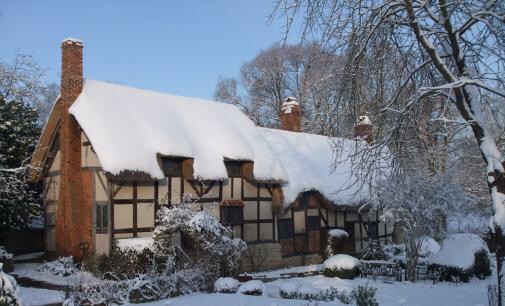
The Shakespeare family home at Christmas

Candleglow%20PR%20small[1]

The Christmas season in Shakespeare’s day usually extended from Christmas Eve to the twelfth night after Christmas also known as Twelfth Night or Epithany. Common people usually decorated their homes with holly and ivy, and celebrated Christmas Eve by lighting their homes with candles and by burning the Yule log, an ancient tradition dating back over 1,000 years when the Vikings controlled most of England. It was a symbol of light and warmth in the darkest time of the year.

Replica of Shakespeare’s kitchen.

Feasting-

Roast goose was a staple of the common man’s feast at Christmas. In 1588, Queen Elizabeth commanded the whole country to consume geese to commemorate England’s victory over the Spanish Armada. Other traditional fare included plum porridge, beer or ale, and the most celebrated Christmas beverage of all: Wassail!

Wasailing-

The old tradition of caroling comes from an ancient pagan holiday tradition of showing charity to the poor at the winter solstice. People would go door to door asking for alms and occasionally a warm beverage. This ancient practice evolved into caroling and Wasailing!

The word “wassail” is an old Celtic word that means “lambswool,” it refers to the fact that the drink is covered with a thin foam that looks kind of like the wool of a sheep. It is also derived from the Anglo-Saxon “wassail,” which means “be in health,” so it is simultaneously a drink, a toast, and an explanation of what the drink looks like.

Like our modern-day caroling, people would sing and dance going door to door asking for a traditional glass of wassail or a mince pie. A mince pie is a traditional meat pie that is often filled with 12 different ingredients to symbolize the 12 days of Christmas.
Mince pies were popular with both peasants and kings, and contains both fruit and different types of meat including rabbit chicken duck and hare.
Wasailing also has its roots in ancient pagan holidays and that’s why it’s often accompanied with a traditional Morris dance, where the dancers are waving handkerchiefs, knocking sticks together and dancing with brightly colored ribbons. This was a great tradition back in the small towns and shires of England and continues to this very day. Below you’ll find a video where you can make some wassail yourself! I Just a note that in this recipe, the cook has left out the alcohol and has also left out the egg which is necessary to create the foamy lambswool. Nonetheless I think it’s a very good recipe and I welcome you to try it for yourself.

Plays

As the mayor’s son, young William had a VIP pass to see all traveling actors who came to town. Shakespeare’s dad would’ve decided who got to perform at the guild halls and local inns, so he and his son would’ve watched private performances of all the shows first. After that, John Shakespeare decided who got to perform, and who would be sent away. In addition to professional troupes at Christmas, craftsmen in Will’s hometown people in Warwickshire would come together and put on a show! These amateur dramatic pieces were known as Mystery Plays.

Mystery Plays got their name from the old meaning of mystery: a trade or skill. Much like modern nativity plays or community theaters, every year all the craftsmen from the town would put on a series of short shows derived from Bible stories at Christmas time, and showcase their crafts as well as their acting talents. For example the goldsmiths were in charge of the Three Wise Men story.

We know that Shakespeare liked these plays because he refers to one in particular many, many times: The play of King Herod. in the Bible, Herod The Great is fearful of the baby Jesus and sends his soldiers to kill any young baby that they can find in the city of Jerusalem. Very often when Shakespeare refers to any of his villainous characters he describes them as Herod-like.

The Mysteries were printed during Shakespeare’s lifetime and people in York, Coventry, and Wakefield England still perform them today! Here’s a video of a little girl who performed in the York Mystery play last year:

I hope you enjoyed this little sojourn into the ancient traditions of the common folk back in Shakespeare’s England.

If you liked this post, please consider signing up for my new online class, “What Was Christmas Like For William Shakespeare?” I’ll go further into the traditions of Elizabethan Christmas and add some insight into Shakespeare’s play “Twelfth Night.” Register now at Outschool.com!

Till next time!

-The Shakespearean Student

Sources:

  1. Historic UK: A Tudor Christmas: http://www.historic-uk.com/HistoryUK/HistoryofEngland/A-Tudor-Christmas/
  2. Shakespeare Birthplace Trust: Christmas At Shakespeare’s Houses: http://www.shakespeare.org.uk/visit-the-houses/whats-on.html/christmas-holidays.html
  3. The Anne Bolyn Files: A Tudor Christmas: http://www.theanneboleynfiles.com/resources/tudor-life/tudor-christmas/
  4. Wassailing and Mumming: http://www.whychristmas.com/customs/wassailing.shtml

Shakespeare Spooky Story #3: The Witch’s Sabbath!

This story is my own invention, but it is based on historical fact and some ideas that could be inferred from Shakespeare’s life and career, composed for Friday the 13th, 2015. I hope you enjoy it.

November, 1603.

url-4

The bell tolled in St. Paul’s Churchyard, stopping the bustling crowd in their tracks. A solemn wind blew through the crowd, like there was some dark magic in the air. Though the old queen had died months ago, all god-fearing Englishmen were still in mourning for her death, and spared a thought for the virgin queen as they passed out the long nave of the church into the yard. William Shakespeare was in mourning as well, but  not for the queen; he was worried about the future of his company; without the queen’s sanction and protection, the theaters might be closed for good this time, (not one of these Newsmongers who gossiped at Paul’s Walk seemed to know how the young King James would take to plays and theater. The young man had had a life more dramatic than anything Will hat put to parchment- mother executed, father murdered, fighting off plots and murder attempts his whole life. “They say his mother’s head whispered a prayer when it was cut off” one of the gossips had told Will. “I heard talk his father was killed by cannon,” another whispered.” Shakespeare began to think of his old play Henry the Fourth, where he himself played the character of Rumor, who spoke with a million tongues, and not one of them true. Suddenly, from over the Bard’s left shoulder, came a slow deep voice that overpowered all the rest: “I heard t’other day the king fears being killed by witchcraft.” The voice came from one of the booksellers in the square.

Woodcut from the witch trial of 1597, in which witches supposedly tried to drown King James I.

As a writer, Shakespeare often came to St. Paul’s to buy books from the stalls at Paul’s Churchyard. He knew many of the booksellers by name, but he’d never seen this one before. His chest and arms were big as an ale barrow and his beard was grizzled and split into two forks, but what the poet marked in the man most was his piercing eyes- ones that stared at him like fire from an oily taper- quick and dancing, with an excitement as fiery as his own. “Tis true, the king were nearly shipwrecked  as a boy by a coven of witches. 13 there were, always 13. They gathered on Fridays for their cursed Witches’ Sabbaths, and summoned up storms to sink the royal barge. The elder witch spoke to the King at Holy Rood house and told his majesty prophesies. She knew all the privy conversations he had with his wife, though she’d never seen him before! His majesty gasped in wonder and had her hanged and burned.” “Fine tale, said the playwright.” “Aye,” said the fire-eyed seller, but the king fears most of all the Wyrd Sisters, who foretold the deaths of his ancestors at the hands of King Macbeth.”

Shakespeare began to smell a devise- to appease the king, he would write a play honoring James’ noble ancestors and condemning this Macbeth as a villain. Shakespeare knew this kind of historical flattery would work; his tragedy of King Richard III had been a great success and the old queen had made him a courtier soon afterwards. Now he just needed to get his hands on some Scottish history to concoct a new play for the King. “Have you a copy of the Chronicles of England and Scotland?” “Nay, me press be not ready yet for the latest edition. But the best story of King Macbeth is an ancient tome written by the Elder Witch herself. Few have seen it, and fewer live to tell its secrets. If ye travel to Scotland, look for the book in the hands of a woman with hair red as flame, and eyes sea-storm blue.” Shakespeare thanked the man, wrapped himself in his cloak, and left the shop in a huff. The bookseller pondered the poet and smiled: “Wicked flame from wicked smoke. Envy burns black beneath thy cloak.”

Holyrood House or "Holy Cross Palace" as it looked in Shakespeare's day from Calton Hill in Edinburgh.
Holyrood House or “Holy Cross Palace” as it looked in Shakespeare’s day from Calton Hill in Edinburgh.

Over the Christmas holiday, Shakespeare’s company received a summons to court to perform some entertainments before the new King! The Chamberlain’s Men were delighted and Will was quite relieved. The King ordered the players to perform at Holy Rood house in Edinburgh, as his court was still in procession from Scotland to England. “Masters,” Will shouted, “Let us give the new king a taste of our quality, and may he pay handsomely for it!” Will and the other shareholders in the company decided on a series of plays to perform for the king, and began the journey to the wilds of Scotland. On Christmas morning they set up their temporary Tiring house within the great banquet hall for the performance, placing props and costumes behind a series of tapestries.

At suppertime the chamberlain gave word to light the candles within the hall, and signal the actors to perform the play, which Will had selected as King Henry the Fourth; a clever choice by Will since it depicted an old king passing the crown to a young and energetic monarch. As the king and courtiers processed, Will spied through the tapestry a haunted looking young woman at King James’ elbow, dressed in courtly gowns with a green veil on her head. The chamberlain directed everyone to their seats and announced the start of the play. To Will’s annoyance, he addressed the company “Mr. Shaxberd and company,” but there was no time to be annoyed or intrigued. “The play’s the thing,” Will muttered, and took his place backstage.

End of Part I.

Part II

The performance was a terrific success! The king himself applauded and promised to patronize the entire company. All of Will’s dreams seemed to be coming true! That night, as he and the other players were packing their belongings into a wagon and preparing to leave the castle in search of a nice, cheap inn for the night, a pale breathless messenger arrived and informed Will that the King wished to meet with him to commission work for their next court performance. Will dutifully walked back up the battlements and entered the castle.

"The Murder of David Rizzio" by William Allen, 1883.
“The Murder of David Rizzio” by William Allen, 1883.

The servant directed him, not back into the ante-chamber of the Great Hall, but up one of the staircases on the North East tower. This tower housed the royal bed chambers! What on Earth was a mere poet from Stratford doing up here? The servant’s candle cast strange shapes upon the walls and the flame blazed upward like some bronze blade. Shakespeare knew from the gossips that the King’s mother had watched her lover David Rizzio be murdered in this very tower- he was stabbed 56 times by jealous Scottish nobles who wished to marry the queen and take the throne. Gruesome images flickered in the poet’s mind. At last, they came to an archway with four adjacent chambers. Three were heavily guarded by English soldiers with halberds but the fourth was unprotected. Slowly, ever so slowly Shakespeare nodded to the servant, and stalked along the pathway. Before he could nock, the door swung open. Pausing a little, The Bard stepped inside.

v0_master

The room looked like a mix between a library and a crypt with a cold stone wall, a small altarpiece that looked barely used, and several oak bookcases piled high to the ceiling. Once the playwright entered the room, the door shut without warning. He couldn’t see who shut it and the shock put something cold in his blood. Shakespeare’s eyes adjusted to the darkness of the room.Moonlight gave the place a silvery glow, until a shadow came out of the darkness and revealed itself as a woman’s face. Shakespeare could barely make out her features but it was clearly the woman he’d seen in the procession. The Moon made her red tresses shimmer and gleam, as if she were a fairy from one of the dark pools of legend. “I am Princess Elizabeth,” she replied in a voice that seemed more solemn than proud of her royal title. Recovering from his initial shock, the poet bowed low and counterfited his best courtier’s smile. “I am Master Will Shakespeare, at your service.”

“I know who you are. They call you the Bard of Avon. You’ve written sad stories of the deaths of kings, and woven yarns of the fairy queen,” the princess said in a hollow voice that chilled the poet to the core. “When I was little,” said the princess warming slightly, “My mother spoke of how Irish Bards could change their forms, and speak with the spirits of the dead. Sometimes they even outmatched witches who danced with the devil on Friday nights. You seek my family’s patronage?” “Yes”, said Shakespeare tentatively, “And may I prove worthy of such an honor.” “Beware your ambitions,” Elizabeth went on.

“My family has been torn apart by ambitious men. You know I take it that the chamber we stand in was where my grandmother watched her servant die. She lost the crown, and never saw her son again. Death stalks ambition in Scotland. Some say the Devil tempts men to dance with him on nights like this, and signs their name in his book. My ancestor Malcolm fought armies from Hell to keep his crown.” “From King Macbeth,” replied Shakespeare, (his breath finally returned). “I am the keeper of a history of that damned king, but I will not share it with anyone. He sold his soul to a witch to get the crown, and his book is full of spells that curse the reader. I brought you here so that you can lift our family’s curse with your writing. When you get my father’s patronage, do not feed his fears with stories of witches and prophesies or the curse will envelop the throne. Heed my warning, and do not look for the story of King Macbeth.”

As mysteriously as it had closed, the door opened again. The Bard bowed politely and left the chamber. As he left, he saw the Princess kneeling at the shrine at the corner of the room, eyes closed and meloncholy.

End of Part II.

Stay tuned for the final chapter tonight.

Happy Friday the 13th!

Remember, Remember GUY FAWKES DAY!

Hi Everyone!

For most of us Shakespeare geeks, November the Fifth isn’t just the day where we celebrate the movie/comic book V For Vendetta, it’s also a celebration of one of the most infamous plots in English History, the GUNPOWDER PLOT, where 13 Catholics including Guy Fawkes planned to blow up Parliament and kill King James of Scotland. To this day, Guy Fawkes is burned in effigy on November 5, and little children chant:

The Fifth of November

Remember, remember!
The fifth of November,
The Gunpowder treason and plot;
I know of no reason
Why the Gunpowder treason
Should ever be forgot!
Guy Fawkes and his companions
Did the scheme contrive,
To blow the King and Parliament
All up alive.
Threescore barrels, laid below,
To prove old England’s overthrow.
But, by God’s providence, him they catch,
With a dark lantern, lighting a match!
A stick and a stake
For King James’s sake!
If you won’t give me one,
I’ll take two,
The better for me,
And the worse for you.
A rope, a rope, to hang the Pope,
A penn’orth of cheese to choke him,
A pint of beer to wash it down,
And a jolly good fire to burn him.
Holloa, boys! holloa, boys! make the bells ring!
Holloa, boys! holloa boys! God save the King!
Hip, hip, hooor-r-r-ray!

The plot went down in 1605, the same year Shakespeare probably wrote Macbeth! A lot of scholars believe that a plot to assassinate the rightful king of Scotland gave Shakespeare the inspiration to craft his most paranoid, frightening, and topical play, similar to the way he chose to write Romeo and Juliet right after the plague closed the playhouses of London and wanted to write about the ancient plague of family vendettas.

Engraving of 8 of the 13 conspirators involved in the Gunpowder Plot.

Other scholars suggest that Shakespeare chose to write “Macbeth” to show support for James’ right as king. Shakespeare definitely needed to do this, after all, James was his royal patron and he needed to make sure that he was on the king’s good side. More importantly, Shakespeare’s family was on thin ice when it came to their loyalty to the crown. Remember, Shakespeare’s father and mother were both lifelong Catholics, just like the conspirators who tried to blow up the king! Not only that, but Shakespeare’s father was friends with Robert Catesby, the mastermind behind the whole plot! Even worse, Shakespeare’s favorite bar the Mermaid Tavern was a meeting place for Catesby and his gang! So Shakespeare might have written “Macbeth” as a way of proclaiming the king’s legitimacy, and his allegiance to the crown.

So let’s be thankful that the king never suspected Shakespeare because I for one wouldn’t want to live in a world without Macbeth.

Happy Guy Fawkes Day!

Enjoy this quiz on the history of Guy Fawkes Day: http://www.independent.co.uk/news/uk/how-well-do-you-know-what-happened-during-the-gunpowder-plot-a6721096.html

If you liked this post, please consider signing up for my “Macbeth” Outschool class, which is being offered at a $5 discount in honor of November 5th. Register now at Outschool.com: