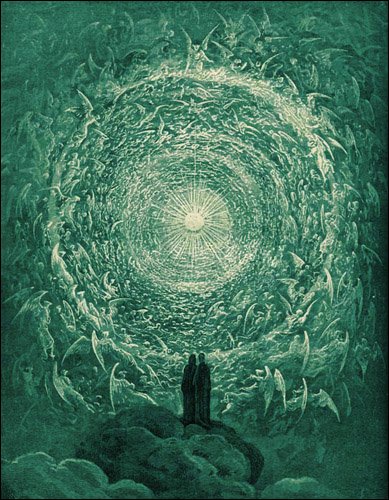
Heaven and Hell through Shakespeare’s Eyes

Since Easter and Passover are coming up, (and we are already in the middle of Rhamadan), I thought I’d examine Shakespeare’s depiction of other worlds both celestial and infernal. As the quote above says, philosophers and poets often wonder what greets us in the hereafter, so let me be your guide through Shakespeare’s poetic renderings of heaven and he’ll, accompanied by some gorgeous artwork from HC Selous, William Blake, and others.

The whitewashed images of Shakespeare’s childhood
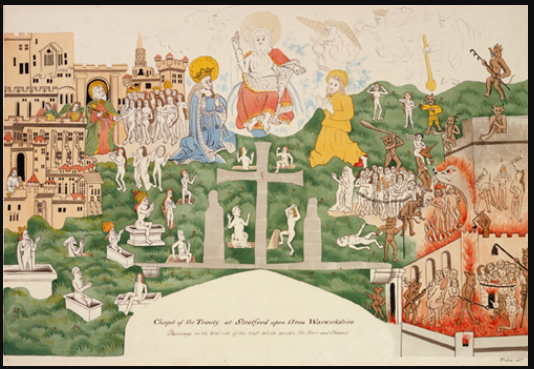
Fisher, Thomas (1781? -1836), “Chapel of the Trinity at Stratford upon Avon, Warwickshire” [1804?]. ART Vol. d58 nos.1, 3.

Shakespeare was no doubt interested in religion. He quotes from and alludes to the Bible many times in his plays. More importantly, he lived in a time when the national religion changed three times in just 4 years! When Henry VIII changed England to a protestant country, the religious identity of England completely changed:

This change was not just felt in monasteries, but in all English churches. King Henry decreed that certain Catholic traditions like Purgatory, indulgences, and praying to saints were idolatrous, and were therefore banned in the Church of England. So, when Shakespeare’s father was called to destroy the “idolatrous” images of the Last Judgement in the Guild Chapel of Stratford’s Holy Trinity Church, he had no choice but to comply. If you click on the link below, you can see a detailed description of the images that Shakespeare no doubt knew well in his family’s church, until his father was forced to literally whitewash them.

https://collections.shakespeare.org.uk/exhibition/exhibition/shakespeare-connected-discovering-the-guild-chapel/object/shakespeare-connected-discovering-the-guild-chapel-thomas-fishers-lithograph-of-the-doom-painting

Purgatory and the harrowing of hell

Like the images on the Stratford Guild chapel, the ideas of Catholic England didn’t disappear, they were merely hidden from view. Shakespeare refers to these Catholic ideas many times in his plays, especially in Hamlet, a play where a young scholar, who goes to the same school as Martin Luther, is wrestling with the idea of whether the ghost he has seen is a real ghost from purgatory, or a demon from hell, (as protestant churches preached in Shakespeare’s life).
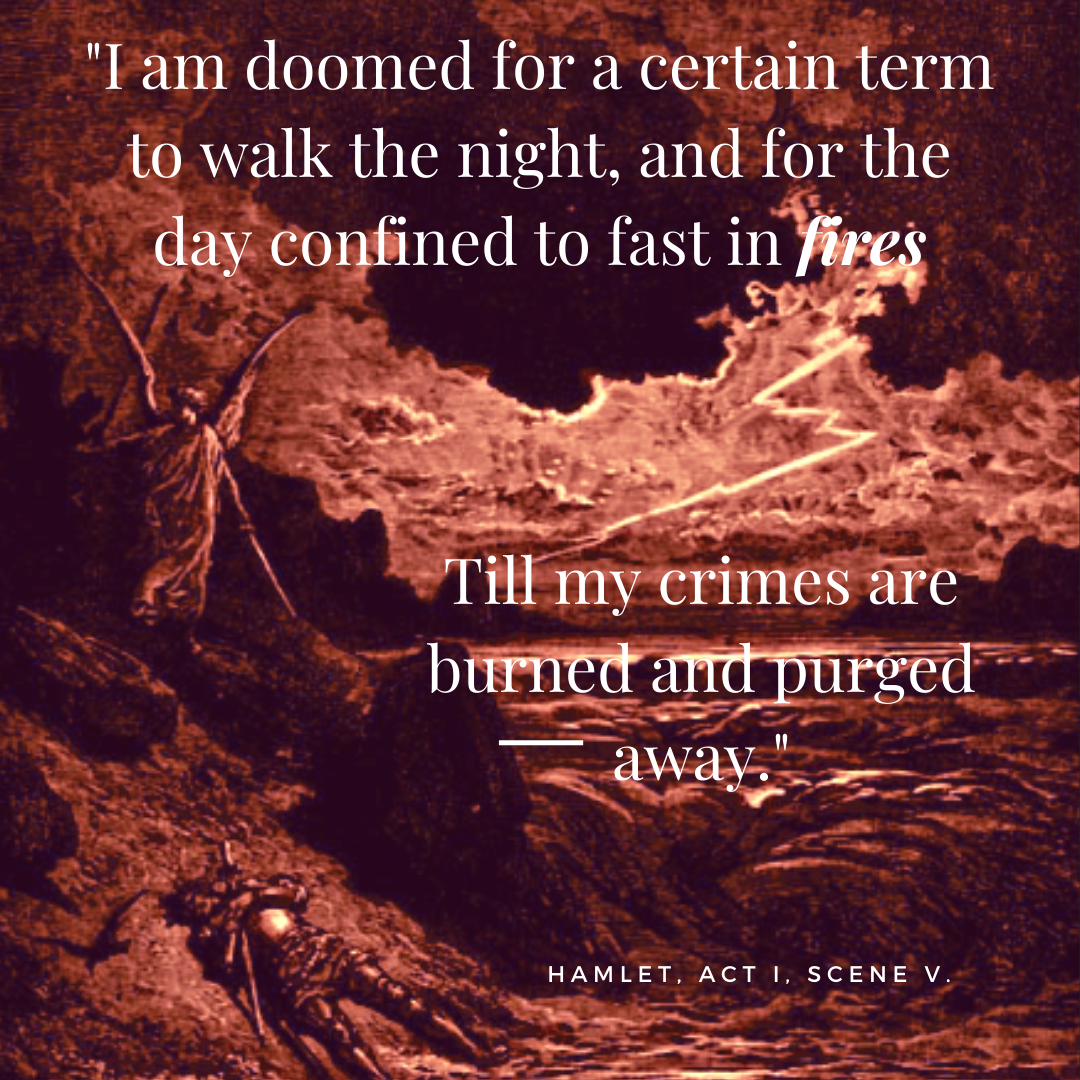
I’ve written before that the ghost of Hamlet’s father teases us with the possibility that he might be a soul in purgatory, the Catholic afterlife realm for those not evil enough for Hell, nor good enough for Heaven. At the height of their powers, monks and bishops sold prayers called indulgences that supposedly allowed a soul’s loved ones to buy them time out of purgatory, thus making them able to ascend to Heaven quicker. The image above is an illustration from Purgatorio, part of Dante’s Divine Comedy, where he visits the soul of
Buonconte da Montefeltro, who is languishing because he doesn’t yet have the strength to get out of purgatory and enter Heaven.

Of course, the Tudor monarchs Henry VIII and Elizabeth I abolished indulgences and proclaimed that purgatory itself didn’t exist, but ideas can’t die, and I feel that Shakespeare was at least inspired by the notion of purgatory, even if he didn’t believe in it himself.

“It Harrows me with fear and wonder.”

(Horatio) Hamlet, Act I, Scene i.

Lucifer and the vice of kings

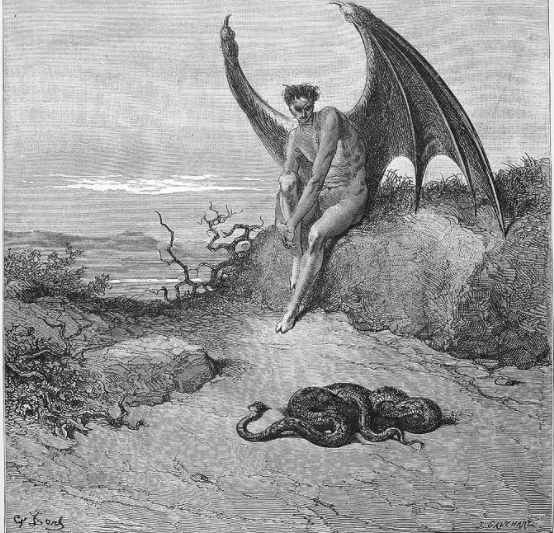
As a young boy, William Shakespeare was entertained by medieval Mystery plays; amateur theater pieces performed by local artisans that dramatized great stories from the Bible. We know this because he refers to many of the characters in these mystery plays in his own work, especially the villains. King Herod is mentioned in Hamlet and many other plays in and many of Shakespeare’s villains seem to be inspired by the biblical Lucifer, as portrayed in Medieval Mystery Plays.

In this short video of the Yorkshire Mystery play “The Rise and Fall of Lucifer,” we see God (voiced by Sir Patrick Stewart), creating Lucifer as a beautiful angel, who then, dissatisfied with his place in God’s kingdom, is transformed into an ugly devil. At first, Lucifer mourns losing his place in Paradise, but then finds comfort by becomming God’s great antagonist.

Compare this character arc with Shakespeare’s Richard of Gloucester, who also blames his unhappiness on God, (since he feels his disability and deformity are a result of God’s curse). Richard is angry with God, nature, and society, so he wages against them all to become king.

“Then since the heavens hath shaped my body so, let Hell make crook’d my mind to answer it.”

Richard of Gloucester, Henry VI, Part III, Act III, Scene i.

“All is not lost, the unconquerable will, and study of revenge, immortal hate, and the courage never to submit or yield.”

Lucifer― John Milton, Paradise Lost

Journeys into Hell

ClaudioAy, but to die, and go we know not where;
To lie in cold obstruction and to rot;
This sensible warm motion to become
A kneaded clod; and the delighted spirit
To bathe in fiery floods, or to reside
In thrilling region of thick-ribbed ice;
To be imprison’d in the viewless winds,
And blown with restless violence round about
The pendent world; or to be worse than worst
Of those that lawless and incertain thought Imagine howling: ’tis too horrible!

—Measure For Measure, Act III, Scene i
Inferno: Traitors
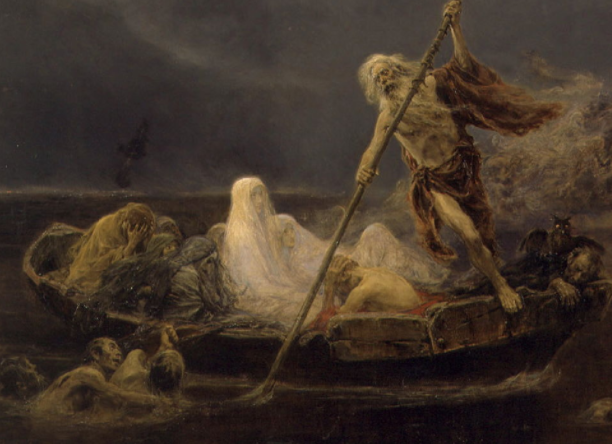
José Benlliure y Gil (1855–1937), Charon’s Boat

“Methought I crossed the meloncholy flood with that grim ferryman the poets write of, into the kingdom of perpetual night.”

— Richard III, Act I, Scene iv.
1579 drawing of the Great Chain of Being from Didacus Valades
The heavens themselves, the planets and this centre
Observe degree, priority and place,
Insisture, course, proportion, season, form,
Office and custom, in all line of order;
And therefore is the glorious planet Sol
In noble eminence enthroned and sphered
Amidst the other; whose medicinable eye
Corrects the ill aspects of planets evil,
And posts, like the commandment of a king,
Sans cheque to good and bad: but when the planets
In evil mixture to disorder wander,
What plagues and what portents! what mutiny!
What raging of the sea! shaking of earth! Commotion in the winds! frights, changes, horrors,
Divert and crack, rend and deracinate
The unity and married calm of states
Quite from their fixure! O, when degree is shaked,
Which is the ladder to all high designs,
Then enterprise is sick! - Troilus and Cressida, Act I, Scene iii.

Sources:

https://collections.shakespeare.org.uk/exhibition/exhibition/shakespeare-connected-discovering-the-guild-chapel/object/shakespeare-connected-discovering-the-guild-chapel-thomas-fishers-lithograph-of-the-doom-painting

https://folgerpedia.folger.edu/Idolatry:_Icons_and_Iconoclasm


Resources for National Poetry Month

I’m teaching a number of clases on poetry this National Poetry Month, and I wanted to make suggestion if you want to woo a sweetheart this poetry month but don’t know where to start. So here are some resources for you you use, and some links to some of my own work on the subject:

1. Mindup.com

This website is very good at helping you organize your writing into small blocks, webs, charts, etc. This is really useful when you’re creating sonnets because it helps you set up your argument. You can even add pictures to think about the images you’re going to use in your poem!.

2. RHymezone.com

https://www.rhymezone.com/

A MUST for any poet. This website allows you to find rhymes for any word.

3. Poem Generator.uk

https://www.poem-generator.org.uk/

This website is very fun and useful for teachers and students. You plug in various adjectives, verbs, and nouns and it does the rest. The sonnets aren’t great, but you do get a clear idea of how sonnets work, and that makes it very useful for students.

A sample sonnet I made about money.

3. Folger.edu- How to Write a sonnet

One of the best pieces of advice I can give to an aspiring poet is to read other poets and learn what you like. The Folger has a yearly competition of student sonnets which you can read on their website, and lots of handouts and info that teaches you about sonnet form, so check it out!

https://www.folger.edu/shakespeare-birthday-party-at-home/write-a-sonnet

4. My Mini lecture video: Shakespeare’s sonnets

My mini-lecture on Shakespeare’s Sonnets

5. My post on sonnet writing, with more resources and advice:

6. My OUtschool Classes on Sonnets and Shakespeare’s writing:

If you want some one-on-one help with writing Elizabethan poetry, consider signing up for my online classes! I teach 2 classes on writing poetry and literary devices:

Love Poetry: Shakespeare Style

This class is a live brainstorming session where I’ll teach you to use the resources I’ve listed above to craft an Elizabethan sonnet of your very own! We’ll also discuss some of Shakespeare’s own sonnets, and the enduring mystery of the Dark Lady and the Fair Young Man.

Trailer video fo “Love Poetry: Shakespeare Style”
Page Icon for my Outschool class on Shakespearean writing.

https://outschool.com/classes/d9a6c17e-7ec2-4839-8337-152da6beaeb7/schedule#usMaRDyJ13

This class is a general intro to Shakespeare’s writing. I discuss the structure of his plays and poems, and I play a fun game where I rewrite some very famous lines in iambic pentameter:

So thanks for reading this list! I hope this helps you out, and if you do consider signing up for my class, I’m offering a special discount for the Love Poetry course: Get $5 off my class “Love Poetry- Shakespeare Style!” with coupon code HTHESVFDPO5 until May 5, 2022. Get started at https://outschool.com/classes/love-poetry-shakespeare-style-k8lL9yLK and enter the coupon code at checkout.

Let thy verse flow like a river, ye merry balladiers!

Women’s History Month: Margaret Hughes: Stage Beauty

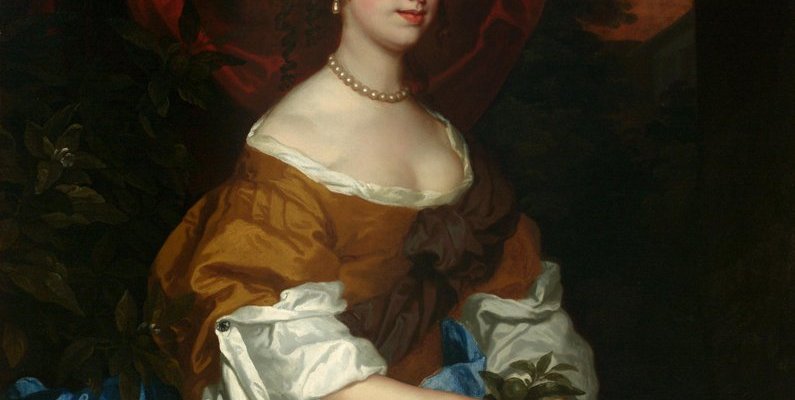
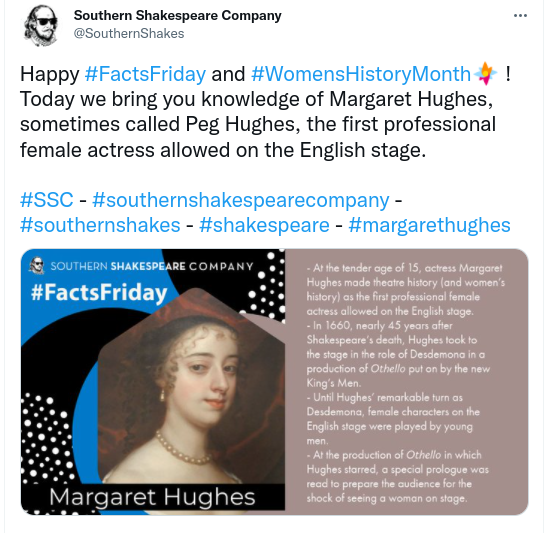
Since today is the last day of women’s history month I thought I’d talk about the historical first ever Shakespearean actress and first-ever English actress. Margaret Hughes (1630-1719), is credited as the first-ever English actress. She led a fascinating life and books, plays, and movies have immortalized her, including the 2004 film, Stage Beauty.

Although there is some debate among scholars as to whether the 1st actress in question was Margaret Hughe, she is the one who has been credited because of her performance as Desdemona in Othello during the reign of King Charles II.

Some facts about Mrs. Hughes from Southern Shakespeaer Company
King Charles discusses how his reign and the first actresses in England are linked.

Around 1660s Charles II formally allowed for public performances of women on English stages. Restoration audiences, craving entertainment after the enforced closure of theatres during the Puritan Interregnum, rejoiced. Others, particularly the successful male impersonators of women, were shocked and annoyed as they suddenly lost their celebrity status and were seen as freaks. The stage war that the appearance of actresses initiated resulted in an almost immediate reiteration of almost medieval misogyny and vituperative ostracism directed at any woman who dared to challenge the masculine reign on the English stage. The actresses themselves had to learn both how to act out femininity as seen through male playwrights’ eyes and how to maintain their celebrity status and the audiences’ adoration. This, however, meant more than ‘just’ displaying perfect acting skills and appearing in the best plays available. A successful actress needed to woo the audience, particularly its male members, with her body, or her sexuality in general. She likewise needed to accept, or even engender, vitriolic attacks on her reputation in public discourse and, if possible, utilise such bad publicity to her own advantage. As such, this chapter aims to present a link between medieval anxiety concerning public displays of femininity and the seemingly privileging introduction of the actress in the late seventeenth-century England. It will also present a synthetic image of celebrated actresses’ lives as seen through theatrical records as well as seventeenth-century pamphlets and poetry, proving true the contemporary saying that only lack of press is bad press.

Bronk, 23

What I’m going to do is give a few historical notes on Margaret Hughes and her portrayal of Desdemona in the production of Othello and then I’m going to simultaneously do a review of the movie that celebrates her life: Stage Beauty (which was also made into a play).

Review Of Stage Beauty

What Shakespeare In Love did for the 16th century, this movie does for the late 17th century: it is awash with beautiful costumes elegant sets and dazzling music. it is a visual feast and everybody in it is fantastic in their roles, especially Billy Crudup as Ned Kyneston, Richard Griffith as Sir Charles, Tom Wilkinson as Thomas Betterton, and of course, Claire Danes as Margaret Hughes.

Hughes is a  costumes mender and dresser for Thomas Betterton’s theater company in London as she watches Ned Kyneston every night as he portrays Desdemona in Othello. Mrs. Hughes develops an admiration not only for his performance and skills but also forms romantic feelings for him. However, Mrs. Hughes isn’t content to keep watching Kyneston from the wings, and sneaks off after work to perform as Desdemona illegally at the Cockpit Tavern to packed houses. When Kyneston finds out, he is livid.

“[He was] the most beautiful woman I’ve ever seen

— Samuel Peypes

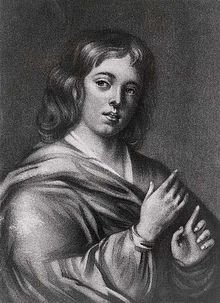
Edward Kyneston, (1640-1712)
1889 mezzotint engraving of Edward Kynaston.

Kyneston constantly belittles, ignores, and underestimates Hughes through this film and is supremely arrogant to everyone, enjoying the notoriety he’s achieved as the premier female impersonator in London. However, after he offends King Charles (played by Rupert Everett), and his mistress, Nell Gwynn, (herself an aspiring actress), the King in retaliation, bans men from playing women, thereby making Kyneston seem like a degenerate, incapable of getting work. He sinks into alcoholism and depression, but finds comfort when Hughes finds him and nurses him back to health. The two then form a romantic bond.

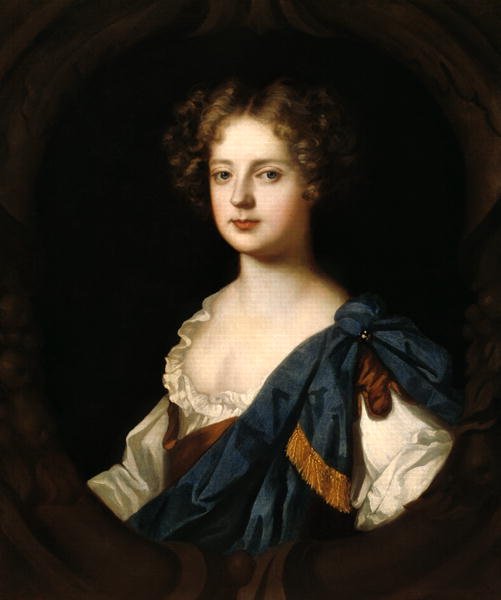
Nell Guinn, King Charles’ mistress and one of the first English actresses

In the third act twist of the movie, the actress playing Desdemona in Mr. Betterton’s theater is pregnant,  so  Margaret must take over her role.  Kyneston sees an opportunity to regain respectability as an actor,  so he demands to be given the role of Othello. In my favorite scene of the film, Kyneston rehearses the death scene of Othello, changing the acting style from over-the-top stylistic 17th century to very modern naturalistic portrayal:

The rehearsal scene from Stage Beauty (warning, R-rated language)

The two actors perform a fantastic modern naturalistic portrayal of Othello before the king, and they both become respected actors who learn to respect each other.

Danes performs with wonderful real pathos as Hughes and Desdemona. In fact, all the performances are great, the the writing is top notch, and as I said the costumes and cinematography are phenomenal. It’s a very fun, slightly naughty romp through Restoration England, not unlike the flirtatious comedies of Behn and Wycherly.

Special merit goes to Billy Crudup, who had to completely transform his voice, gestures, and dialect for the film. He worked closely with a dialect coach, a physical acting coach, and the director Richard Eyre, who has worked in theater for over 20 years, and has a lot of experience with Shakespeare:

The film is not without flaws; there are some plot elements that are a bit dated and a bit unsettling. While it is true that the real Ned Kyneston was rumored to have relationships with both men and women, including famously, George Villiers, the Duke of Buckingham, who appears in the movie. Kyneston’s sexual identity is constantly shifting through the course of the movie, and it’s not handled very delicately. In the beginning of the film, Ned seems very firmly homosexual;  his relationship with the Duke of Buckingham is played fairly respectfully, though Ned himself is hardly a positive portrayal of a gay or bisexualim man.

Even worse, when Buckingham rejects him, Crudup’s Kyneston seems to be coaxed by Hughes to become heterosexual, which he remains through the course of the movie. Now these actors have fantastic chemistry together, but it seems bizarre that Kyneston is all of a sudden changing his sexual identity at the same time he’s changing his style of performance. That doesn’t seem genuine, (at least in my experience),  and it might be offensive to members of the LGBTQ community to assume that a man might think he’s one identity and then choose to be a heterosexual.

Historical Details that the movie gets right:

Crash Course Theater History: The Restoration and first Actresses

1 it is true that for hundreds of years it was considered socially unacceptable for women to play parts on the London stage although it was common practice in Italy and France and other countries

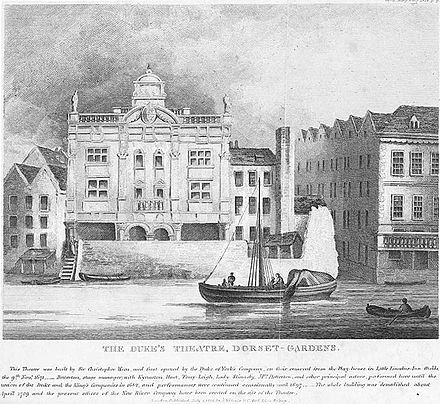
2. Ned Kynaston, Thomas Betterton, and of course Mrs. Hughes are real people who performed during the Restoration. However, they actually rarely worked together. Much like the Admiral’s Men and Chamberlain’s men in Shakespeare In Love, The Duke’s Company which is where Betterton worked, while Mrs. Hughed mainly performed in the rival King’s Company.

Edward Kyneston, (1640-1712)

Sources:

1. Katarzyna Bronk- No Press is Bad Press-Being an Actress in English Restoration. Stardom: Discussions on Fame and Celebrity Culture, 23-34, 2012. Retrieved online from: =related:YvjGsAEzxIoJ:scholar.google.com/&hl=en&as_sdt=0,39#d=gs_qabs&u=%23p%3DYvjGsAEzxIoJ

Happy St. Patrick’s Day!

My post about Shakespeare’s debt to Ireland in his plays.

Now a bit of poetry, here’s Sonnet 116 in Gaelic, the ancient language of Ireland:

And finally, here’s a post about Shakespeare’s Irish connection from the Irish Times:

https://www.irishtimes.com/culture/stage/what-ish-my-nation-shakespeare-s-irish-connections-1.2619173

A backhanded compliment from GB Shaw, one of Ireland’s greatest playwrights.
More criticism from Shaw about Shakespeare

Chinese New Year post: China and Shakespeare

Happy Chinese New Year Everyone!

As I said in my “Is Shakespeare Being Cancelled?” post, there is a long tradition of using Shakespeare as the epitome of creative arts, especially in England. For centuries, British imperialists have justified their subjugation of other cultures by claiming that English culture is superior, and Shakespeare became an unknowing cog in the machinery of cultural imperialism.

Since it is pretty much impossible to de-throne Shakespeare, one response that other cultures have used is to elevate their own artists to Shakespearean status. People are already calling Lin-Manuel Miranda the American Shakespeare, and there have been many other Shakespeares around the globe (Feng). Thre’s nothing wrong with this; after all, every culture has its own cultural heroes and they help embody what is important to that culture, which is why it’s fascinating to ponder the question- what makes someone The Chinese Shakespeare?

One other response to cultural imperialism is of course, to reject it, and since its inception, the Communist Party has sought to exclude, belittle, and suppress access to Western imperialist art. Shakespeare was banned during the Cultural Revolution of the 1960s, and even today the Communist Party is quicker to praise Chinese artists as being “Shakespearean,” than to praise Shakespeare directly. Just last year, President Xi Xinping officially declared that poet Tang Xianzu was “The Chinese Shakespeare.”

To be fair, Tang XIanzu was Shakespeare’s contemporary and there are some startling similarities between the themes and ideas expressed by the two poets:

China has produced some wonderful ballets, operas, and poetry so even though the government has suppressed Shakespeare in the past, the Chinese people have expressed a love of Shakespeare for over a century. As early as 1903, Chinese intellectuals started reading and translating Shakespeare and the first Chinese adaptation of Shakspeare was a rhymed ballad version of Romeo and Juliet’s balcony scene written by Deng Yizhe in 1910 (Sun, 1932). Today productions of Shakespeare are very popular in China and Shakespeare has facilitated a fascinating cultural exchange between east and west.

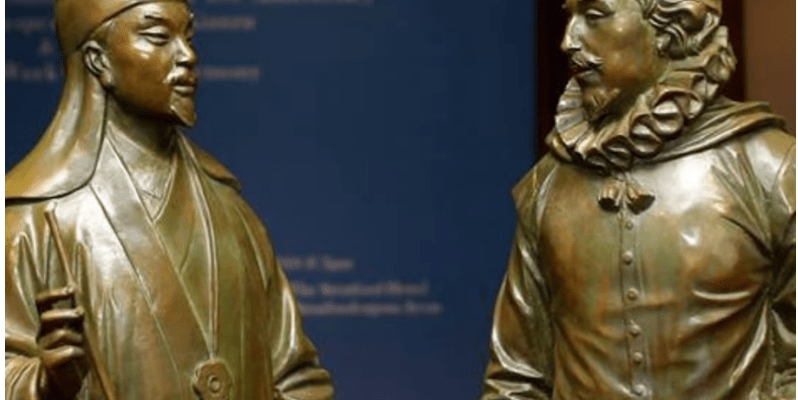
In addition to Chinese students encountering Shakespeare in the classroom, and the popularity of theater productions of Shakespeare in China, there are some fascinating efforts for English and Chinese speaking audiences to use Shakespeare as a bridge to cultural understanding. Right now, plans are underway to build a replica of Shakespeare’s birthplace in the southern Chinese city of Fuzhou. Meanwhile in Stratford Upon Avon, the government of Fuzhou gave a statue of Tang Xianzu to be featured prominently in the garden of the actual Shakespeare birthplace on Henley Street (Woodings).

Professor, Sir Stanley Wells, Honorary President of the Shakespeare Birthplace Trust with Wu Jianchun, Executive Vice Mayor of Fuzhou Municipal Government stand in front of a stature of Shakespeare and Tang Xianzu.

In addition, Royal Shakespeare Company Artistic Director Greg Doran, (former husband of the great RSC actor Antony Sher), has spearheaded a number of outreach projects designed to translate Shakespeare’s The Tempest into a format better suited for theater productions in China. The final show, which premiered in 2018, was not only a successful collaboration between east and western artist, but the production, with its themes of freedom and liberty, was likely to ruffle feathers in the Chinese government, according to (Yuan Yang).

Gallery of photos from the RSC’s translation of “The Tempest,” which premiered in Beijing at the National Center For the Performing Arts in 2018.

In Xi’s closely controlled China, The Tempest’s themes of liberty and identity clearly carry political ideas at odds with the ruling party — “thought is free”, the sprite Ariel sings. The implicit challenge to the status quo extended from the ideas to the production itself at the National Centre for the Performing Arts in Beijing. It offered new freedoms to the Chinese actors from the centre’s in-house theatre ensemble. Under the guidance of director Tim Supple, this was the first time they had been invited to experiment with performance and alter the text.

Yuang Yang. “The Bard in Beijing: how Shakespeare is subverting China”

To sum up, every culture has been exposed to Shakespeare, and many have found ways to re-interpret him, appropriate him, and use him as a tool of cultural exchange. This is neither good nor bad, it just is. What is interesting is that China has taken Shakespeare from a tool of imperialism into a tool of both multiculturalism, and subversion of their government. Studying the way other China and cultures have interpreted Shakespeare is a window into the values of those cultures and thus helps to further build a global community.

Below is a scene from a Chinese opera version of Hamlet for your viewing pleasure!

Works Cited

Podcasts

https://www.folger.edu/shakespeare-unlimited/tang-xianzu-china#:~:text=ALEXA%20ALICE%20JOUBIN%3A%20There’s%20no,it’s%20not%20a%20recent%20phenomenon.

Journals:

Yanna Sun. Shakespeare Reception in China. Theory and Practice in Language Studies, Vol. 2, No. 9, pp. 1931-1938, September 2012 © 2012 ACADEMY PUBLISHER Manufactured in Finland.

Qi-Xin He: China’s Shakespeare.

Shakespeare QuarterlyVol. 37, No. 2 (Summer, 1986), pp. 149-159 (11 pages)Published By: Oxford University Press. Retreived online from jstor.com.

Web:

Laurie Chen: China’s replica of Shakespeare’s birthplace Stratford-upon-Avon coming in 2022. South China Morning Post. Originally published October 2nd, 2018. Retrieved online from: https://www.scmp.com/news/china/society/article/2166635/work-start-soon-chinese-replica-shakespeares-birthplace-literary.

Simon Woodings: Tang Xianzu statue Unveiled at Shakespeare’s Birthplace. Stratford Upon Avon Herald. Originally published April 27th, 2017. Retrieved online from: https://www.stratford-herald.com/news/tang-xianzu-statue-unveiled-at-shakespeare-s-birthplace-9138327/

China’s Love Affair With Shakespeare Retreived 1/29/22 from https://www.barrons.com/articles/chinas-love-affair-with-shakespeare-51585137600

Yuan Yang. The Bard in Beijing: how Shakespeare is subverting China. Financial Times. October 5th, 2018. Retrieved online from https://www.ft.com/content/cd997246-c57b-11e8-bc21-54264d1c4647

Exquisite artwork based on Shakespeare’s Twelfth Night

“Twelfth Night” painting by Maike Edling, from ArtStation.com

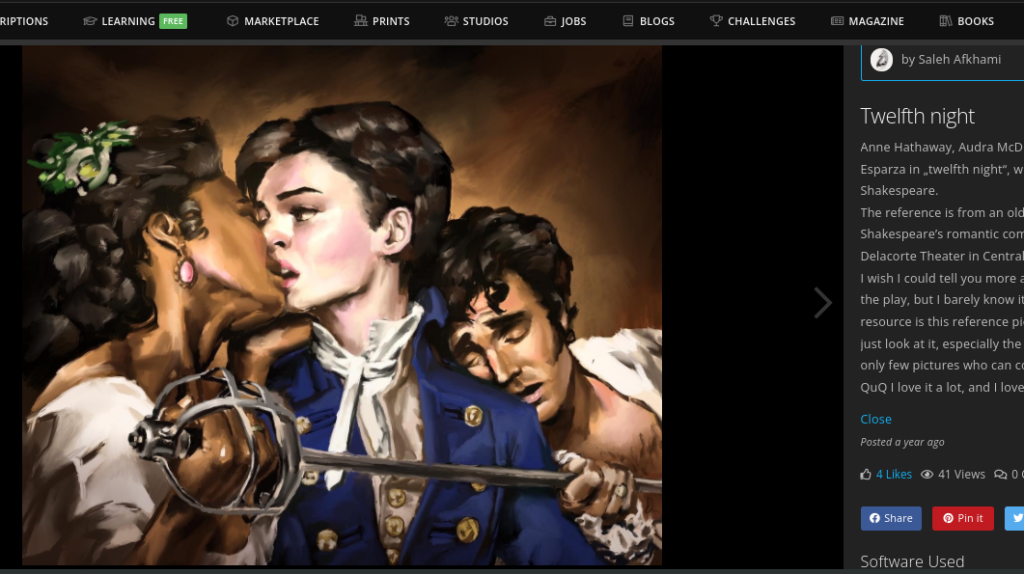
I want to give a shout-out to artist Maike Edling, who painted this beautiful rendition of Anne Hathaway (the actress, not Shakespeare’s wife), playing Viola in Twelfth Night at the Delacorte Theater in Central Park. The colors and the long brush strokes remind me of Cezanne and other early impressionists and give a kind of chaotic feel (appropriate for such a chaotic love triangle). Also, the choice to show Olivia kissing Viola while Orsino looks sadly on is not only passionate and vibrant, it sums up in one image the central conflict of the play: how will Viola deal with the fact that she loves a man, but is pursued by a woman?

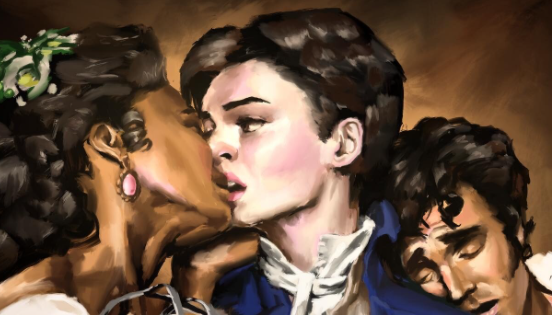
Close up of the painting.

I also love the ambiguity of Viola’s expression. She’s looking at Olivia, but her lips don’t quite touch, as if she’s thinking, “This feels weird, but…” It highlights the flirtation with gender norms and questioning heteronormativity that every production of “Twelfth Night” must address. All in all, I think it is an excellent depiction of the characters, themes and ideas of “Twelfth Night,” and if you can, you should patronize her work. I found this painting at https://www.artstation.com/artwork/ELEEAv, and I think it should get more views.

Go See, “Voodoo Macbeth”

I’m very excited! As some of you know, I wrote a piece about Orson Well’s 1936 Federal Theater Project production of “Macbeth,” set in Haiti. This was an important moment in theater history, and helped keep theater and African Americans employed during the Great Depression, so it deserves to be remembered. Imagine my joy when I found out that there’s an independent movie about the creation of this show! Below is the trailer. If you go to https://www.voodoomacbethfilm.com/, you can see the screening dates. Check it out when it comes to your town!

Review: A Midsummer Night’s Dream, (2021)

Trailer for Globe Theater’s 2021 production of A Midsummer Night’s Dream

What do you think of when you think of “Shakespeare?” What do you think of when you think of “A Midsummer Night’s Dream?” 

    Ruffs and Tights?

    Mostly white dudes?

    Elizabethan music?

    Dark night and moon?

This production, directed by Michelle Terry, is gleefully throwing out every preconceived notion of what A Midsummer Night’s Dream can or should be. In terms of design, casting, music, and interpretation, it breaks all the rules, while still remaining true to the text. This allows the production to appeal to not only hard-core Shakespeare fans, but first time audiences and children too!

I got to see this production thanks to the Globe’s online streaming library. My mother kindly shared me a link to this recording from the summer of 2021. You can watch it yourself on: https://www.shakespearesglobe.com/watch/#full-length-productions

I would describe the concept behind the show as “Suggestive,” that is, it doesn’t belong to a literal time and place. Even though the play is set in Ancient Greece, the play refuses to be constrained by historical accuracy, which arguably, fits nicely with Shakespeare in particular, and the Globe itself; a modern building in a modern city, based on a 400-year-old building.

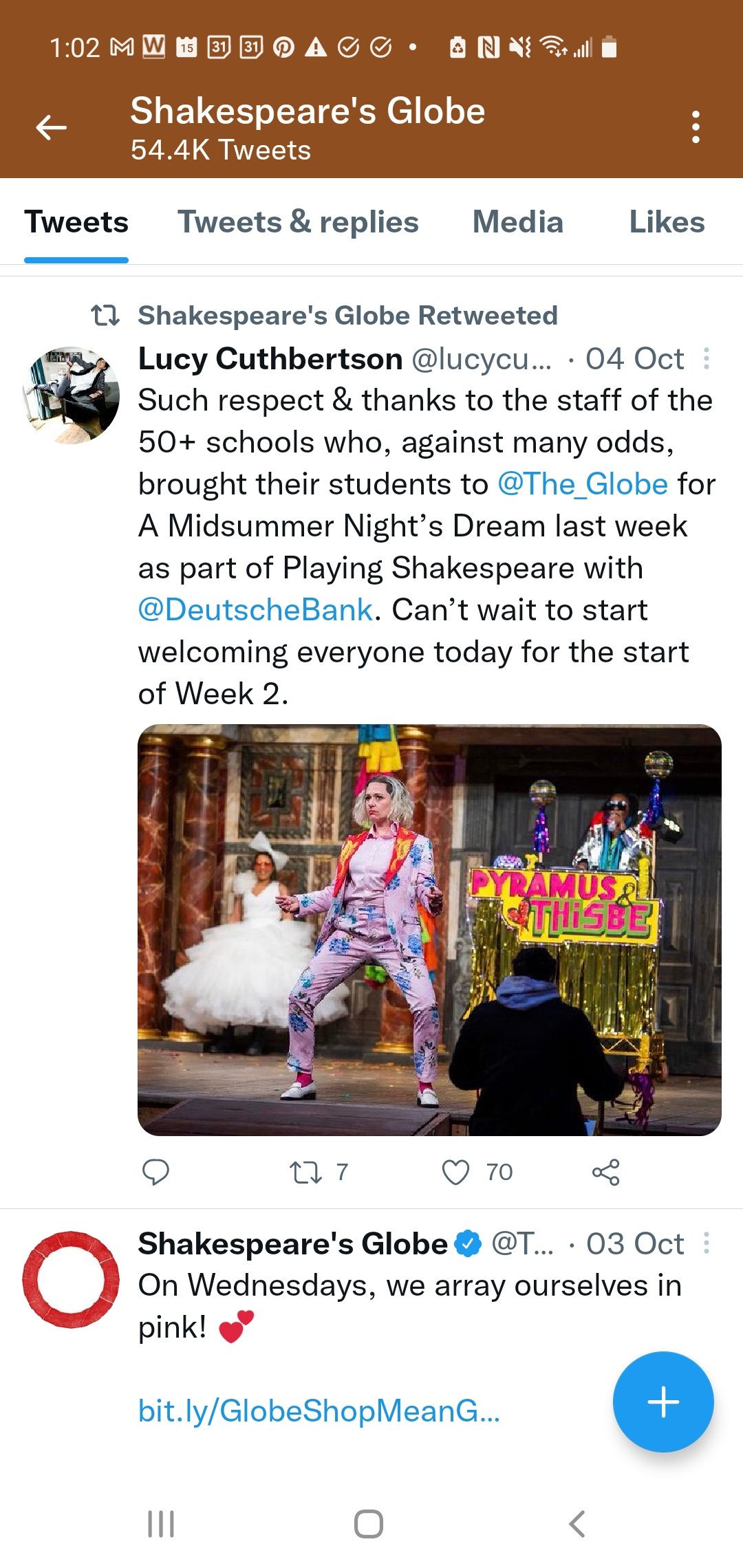
The music and costumes evoke a New Orleans Mardis Gras, a Pride parade, or a Spanish pinata with its bright colors, heavy use of fringes, and bright, energetic jazz music. The only people who don’t wear bright colors are the four lovers, which reflects their continuous frustration with being unable to marry the person they really want.

The show is also Color blind and gender blind, with women playing men’s parts and a cast with black, white, and mixed race actors. Terry’s direction also calls attention to the patriarchial, racist, and sexist elements of Athens which are often overlooked in other interpretations of Dream that I’ve seen or read about. Rather than being a hero, Theseus is a horny old man in a ludicrous pink uniform, looking like a cross between M. Bison and a Christmas nutcracker. To reinforce this point, the actor chose to perform one of Theseus’ most patriarchial speeches as a joke:

Theseus. What say you, Hermia? be advised fair maid:50
To you your father should be as a god;
One that composed your beauties, yea, and one
To whom you are but as a form in wax
By him imprinted and within his power
To leave the figure or disfigure it. -Midsummer Night's Dream, Act I, Scene i.

I’ve seen this speech heavily cut and played seriously, but never till now did I see it played to ridicule the ludicrous notion that women are in any way bound to worship their fathers.

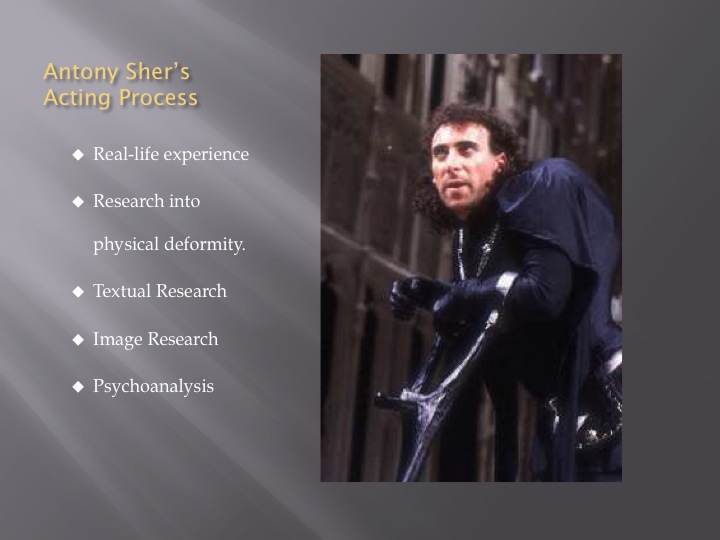
In another nod to contemporary gender politics, the actress who plays Hippolyta and Titania chose to perform her role on crutches. As far as I can tell, this was a deliberate choice and not a result of real injury. There is a precedent for this: In 1984, Sir Antony Sher performed Richard iii on crutches because it highlighted the cruelty people with disabilities often suffer.

I could be wrong, but I think that the reason the actress was on crutches was a symbolic way of confronting the way gender politics can cripple women.

Many scholars have pointed out how Hippolyta rarely speaks despite the fact that she is supposed to be the powerful Queen of the Amazons, and Theseus’ fiance besides. Shakespeare makes it clear that their marriage was arranged as a political alliance after the Amazons lost to Athens in a war:

Hippolyta, I woo'd thee with my sword,
And won thy love, doing thee injuries;20
But I will wed thee in another key,
With pomp, with triumph and with revelling.

With this in mind, it makes sense to have Hippolyta on crutches as a result of her injuries. Those injuries might also explain her silence; she has lost her agency now that she is essentially Theseus’ prisoner. One might think of any number of war atrocious where women have been sold to powerful men over the centuries. In short, by putting Hippolyta on crutches, we see a glimpse into her tragic story that most productions just gloss over- that she has lost a war, been separated from her people, and is now her enemies’ prisoner through marriage.

I’ve come to expect high quality acting from The Globe Theater Company and this cast did not disappoint. As we watched it together, my family concluded that this was one of the best acted productions of Dream that we’ve ever seen, which between us has to be over 30 plus productions.

The delivery is crisp and fast paced. Every actor has taken these words and made them their own. They speak them as if they were written yesterday. One thing I love about the Globe is that the directors encourage this kind of fast paced delivery; with no distracting special effects or sets, the actors have to captivate the audience with their delivery of Shakespeare’s text, without being melodramatic or self-indulgent. I’m pleased to say that this cast does a fantastic job of telling this magical story in a compelling and very modern way.

I’ve shown my recording to kids, teens, adults, and my family, and everyone has a different reaction to the show. Maybe this isn’t quite your cup of tea, but the concept is sound, the acting is high caliber, and it utilizes the Globe’s unique qualities extremely well. 


I personally didn’t care for Bottom just because I felt the actress was playing a very energetic part with too much sarcasm and tongue in cheek, but that’s mostly personal preference. I did however love Peter Quince, Snout, Snug, and the rest of the Mechanicals. Peter Quince is a rather thankless part but it’s great to see someone balance being a straight man trying to reign in Bottom’s antics. and an idiot who has no idea how to direct a company of actors, which the actress playing Quince did very well.