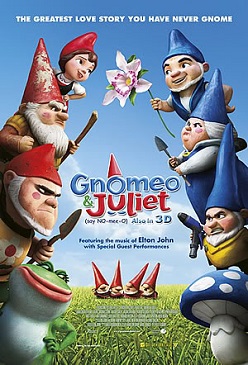
Like I said in the review for “Romeo and Juliet: Sealed With A Kiss,” adapting Shakespeare’s play for children seemed to me like an impossible undertaking, until I saw this film. This interpretation had all the romance and danger of Romeo and Juliet, with all the wry humor of Shrek. Before I present my thesis, I want to post a refutation of a review from a man I actually hold in very high esteem:
“You Wanted Me To Review Gnomio and Juliet, So I Did.” Kyle Kalgreen YouTube Video Essay.
I’ve watched all of Mr. Kalgreen’s reviews of Shakespeare on film, from Hamlet, to Ran, to Ralph Fiennes’ Coriolanus, and all but one of his reviews I genuinely loved. This is why I was so dissappointed when I saw this review. As his channel suggests, “Brows Held High” is mostly interested in high concept editions of Shakespeare and in a rare act of snobbery, Mr. Kalgren seems to turn his nose up at this movie, calling it essentially populist trash. He seems to say that the film misses the mark as a legitimate Shakespearean adaptation, and he’s not wrong. What he fails to notice though, is that is not the point of this movie. It’s purpose is not to be a faithful adaptation of Shakespeare, it’s a simplfied way of introducing children to Shakespeare.
This computer animated film is set in two adjoining houses in England, with two families of garden gnomes duking it out for supremacy. Though this seems like a ridiculous concept, it gives the film a great amount of charm, watching these two gnomes trot across the garden with their plaster feet, riding around on lawnmowers, and of course the fact that they are gnomes makes even Tybalt look cute.
Most importantly, unlike other ‘inanimate object comes to life’ movies, garden gnomes are able to be smashed. Unlike the nearly indestructable Woody or Lightning McQUeen- these characters can be smashed. It’s established in the first 10 minutes that both Gnomio and Juliet have parents that were smashed. This means that the audience is constantly worried for the safety of the characters, especially when they fight. This is a clever, kid-friendly shorthand that allows the audience to worry about the character’s mortality, without the gory realities of human death.
The characters are also handled with care and charm. Gnomeo is a cocky, self-assured gnome who first looks for adventure before finding love. Juliet is even more of a spitfire than her human counterpart, and is able to perform midnight catburgling into a nearby greenhouse. It’s their desire for fun and adventure that makes these two compatible, and makes their love easy for even a child to understand.
The film’s cleverness doesn’t stop there: the filmmakers inserted all kinds of Shakespearean jokes to make the play easier to understand and to entertain the audience. For example, the Capulet and Montegue households on “Verona Avenue” have the addresses 2B and another 2B crossed off, (punning on Hamlet’s most famous line). In addition, when we first meet Juliet, she argues with her father (voiced by Michael Caine) to let her off a small white platform that he forbids her from leaving. Because she’s a gnome, her father literally puts her on a pedestal, which beautifully illustrates the relationship between Juliet and Lord Capulet. In the play, this is hinted at, but not really explored, but in this version, it is front and center, and helps increase the drama.
Perhaps the most clever thing about Gnomeo and Juliet, is that the film makes you very aware that this is an homage, rather than a re-interpretation of the story. At the opening of the film, a tiny gnome with a ridiculously long hat says: “The story you’re about to see has been told before… A LOT.” This immediately reminds the audience that, although this film will give you the general idea of Shakespeare’s play, the real play is full of more violence and sex than a children’s movie will allow. At one point, Gnomeo even converses with an animated statue of Shakespeare himself, as a way of further conceding the homage, recognizing the difference between an adult-themed play, and a children’s movie, and hopefully, encouraging kids to see both versions.
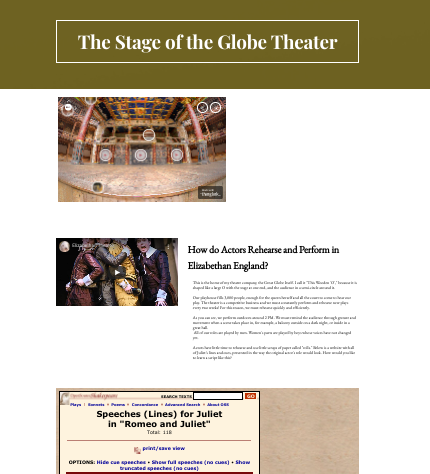
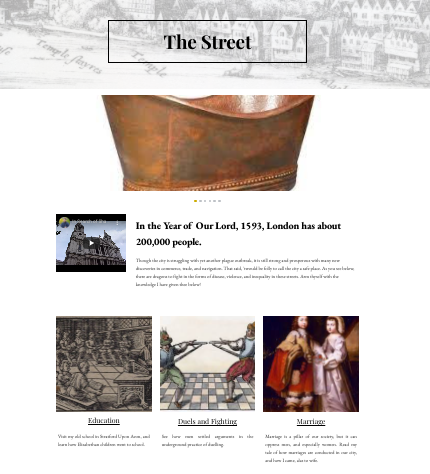
I’m working on several educational projects at the moment and I’m proud to share this one with you. It’s what I call a virtual tour of Shakespeare’s London. The teacher I’m working with said she wanted to teach the kids about the culture of Elizabethan London as he was writing Romeo and Juliet. Naturally with the pandemic a field trip was out of the question, (for multiple reasons), but I wanted to create a visually interesting tour of the places Shakespeare knew and worked and try to imagine his perspective and how that might have informed the characters and themes of Romeo and Juliet.
So I created this: a website written as if Shakespeare himself is taking you on a tour of his London in the year 1593, the year where, as far as we know, he had just completed writing Romeo and Juliet. 1593 was also the middle of another outbreak of Bubonic Plague. It has virtual tours of Shakespeare’s Globe Theater, Hampton Court Palace, Shakespeare’s Grammar School, and a quiz where you can pretend you’re in the Elizabethan doctor’s office.
For the class I’m helping, the students will fill out a worksheet as they navigate the website so they learn from the material at their own pace. If you’re interested, leave a comment and I’ll post the worksheet so you can use it in your classroom.
My hope is that this website can be a resource for anyone trying to connect with Romeo and Juliet and trying to learn from the culture of Elizabethan London. Shakespeare was a product of his time and his experiences must have had an influence on what he wrote. Even if they didn’t, they certainly influenced the people who saw the play and he knew that it would. So I hope it can help you understand a little bit more about the world of this famous play, and the context of the world that created it.
I’m stuck at home with the kids for Shakespeare’s Birthday, so I thought I’d come up with some fun activities for my kids to do today:
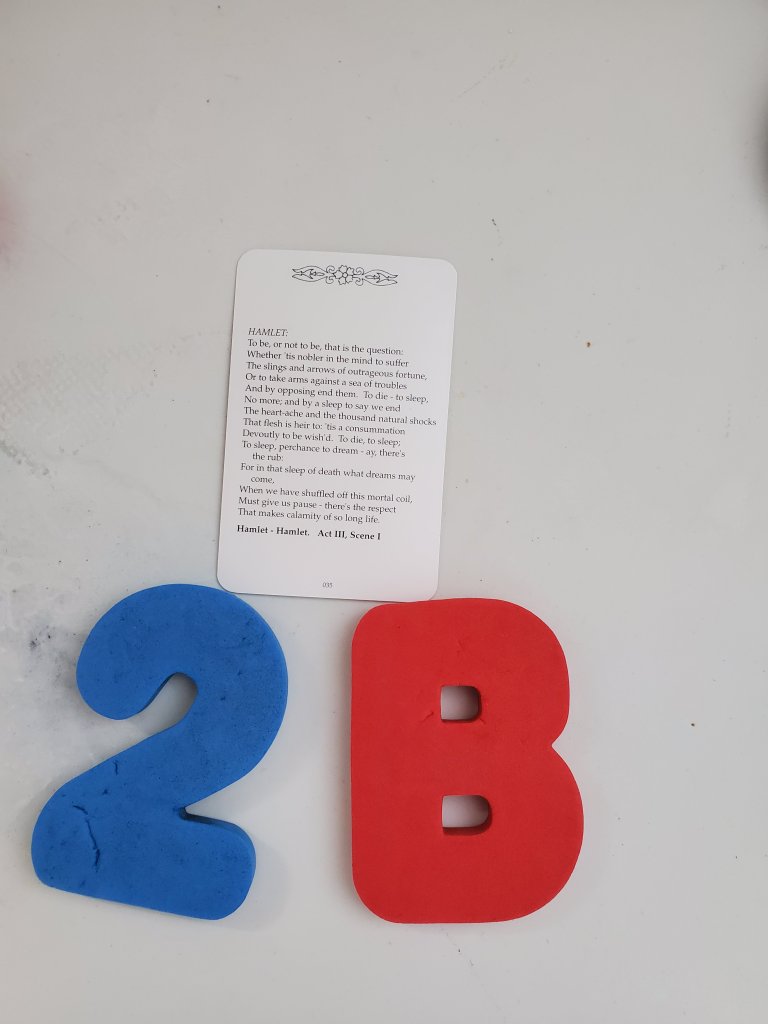
I hid the quote from “Hamlet” in the bathtub 🛁 and had my kids find the bath letters “2” and “B.”
At home I have a card game called “The Bard Game, which has several famous Shakespeare quotes printed on little cards. I hid the cards around the house and when they found them, I had them recite a short quote. Sometimes I hid them in funny locations like the bath tub or the fridge.
2. Romeo and Juliet For Kids. There’s a bunch of animated Shakespeare videos on YouTube and my daughter really likes this one: https://youtu.be/mMFE0IIHR6I
3. William Shakespeare and the Globe by Aliki. A fantastic book that introduces Shakespeare’s life and plays.
Romeo and juliet cookies
What’s a birthday party without treats? I had my kids decorate these Romeo and Juliet cookies. My daughter is only 5, so it was good practice writing ✍ the letters R and J.
If you like my ideas or want to suggest something, please leave a comment below!
I’m giving a lecture Sunday about “Macbeth” and its relation to real magical traditions. Accordingly, I’ve looked up records of real witchcraft trials. Below is a database of cases from 1602-1635. “Macbeth” was supposedly written around 1605, so these cases are pretty close to the time period. It’s a fascinating, and sometimes gruesome look at the methods used to try people (mostly women) for an “invisible crime,” around the same time Shakespeare was dramatizing that crime onstage: http://witching.org/production/brimstone/detail.php?mode=city&city=London%20(Newgate%20Prison).
Titus Andronicus is one of the most bloody, disgusting plays in Shakespeare. As this infographic from the Royal Shakespeare Company shows, there are tons of deaths and some of them are even the result of cannibalism!
One way to capture the macabre nature of this play in the classroom, (which some scholars see as a horror comedy), is to characterize it through cooking, after all, revenge is a dish best served cold.
Me in costume as Titus Androgynous, a crazy cooking show host who butchers two people in the same manner as Titus
So here are some ghoulish gourmet dishes and revolting recipes that you can share with your students to help them get into this tragic tale of violence, revenge, and cooking:
Idea 1: recipe cards
Design a recipe card like the ones in cooking magazines based on Titus speech where he murders Chiron and Demetrius
Idea 2: Create a menu that summarizes the play:
Act I:
Starter: Caesar Salad, toad in the hole
As the play begins, Caesar has died and Saturnine wants to devour his father’s empire. Enjoy this light salad in anticipation of far more bloody feasts to come.https://youtu.be/UxZ5NOkRwj0
Act II Scene 3: Breakfast:
Lamb Benedict
Lamb Benedict recipe I found on Reddit
While on an early morning hunting trip, Bassianus is slaughtered like a lamb by his own nephews. Enjoy this sweet treachery with a golden egg in the hole.
Act II, Scene 4: Main course:
Roast venison with all the trimmings
“As the deer that hath some unrecuring wound.”
“She was washed and cut and trimmed.”
Titus compares his daughter to a deer or welkin, and in the play’s most barbaric scene, the emperor’s sons ravish her and cut out her tongue. They enjoy the cruel rape and mutilation just like two starving lions enjoying their prey.
Act V:
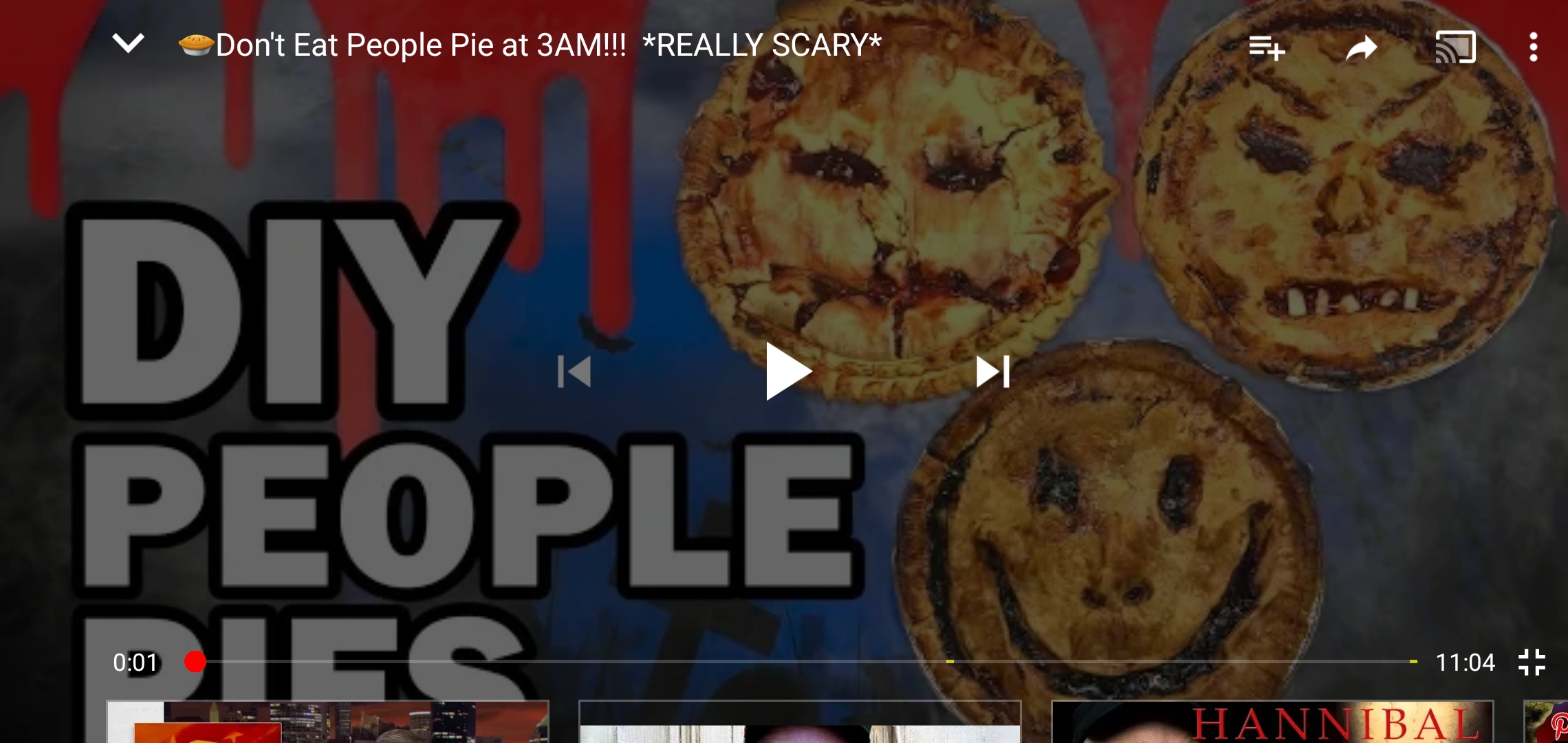
Just desserts: people pot pie.
“More stern and bloody than the centaur’s feast,” A truly unforgettable dessert for this feast of carnage. The cook, Titus, reinvents the term rich food by cooking two emperor’s sons into pies.
Served cold, like revenge!
“Set him breast deep in Earth and famish him.”
Idea 3: Real Titus foods inspired by my favorite Halloween diy recipes
Or this grisly appetizer: cheese hand in prosciutto
3.
People Pies:
There are many horrific pie recipes on the internet, but for a busy teacher on a budget, I’m adapting this one from the YouTube channel Threadbanger: https://youtu.be/E6U6xUl3A5M. Don’t show this video to your students because there’s far too much cursing. That said this recipe is very cheap and it’s easy. He used only store bought items and no fancy cooking techniques, which means if you choose to bake it as a classroom activity, even your students can help make it. Here are some tips from the video to get the most horrible ppeople pie you can make:
• Use red filling like cherry or strawberry for filling.
I designed this on an app called “GooseChase”, appropriate since Shakespeare invented the term!
If you click on the link, you can do a great scavenger hunt where you upload pictures or answer trivia questions for points, and of course they are all related to Shakespeare. If you have the app on your phone, search for Shakespeare Birthday Scavenger Hunt and enter the code: 2BON2B (Get it, to be or not to be)! You can also use the code NLEGVM. Let me know if you like it or if you cannot access the link.
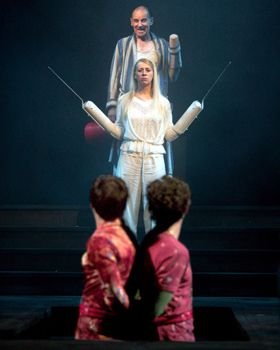
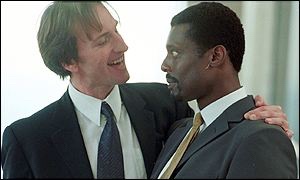
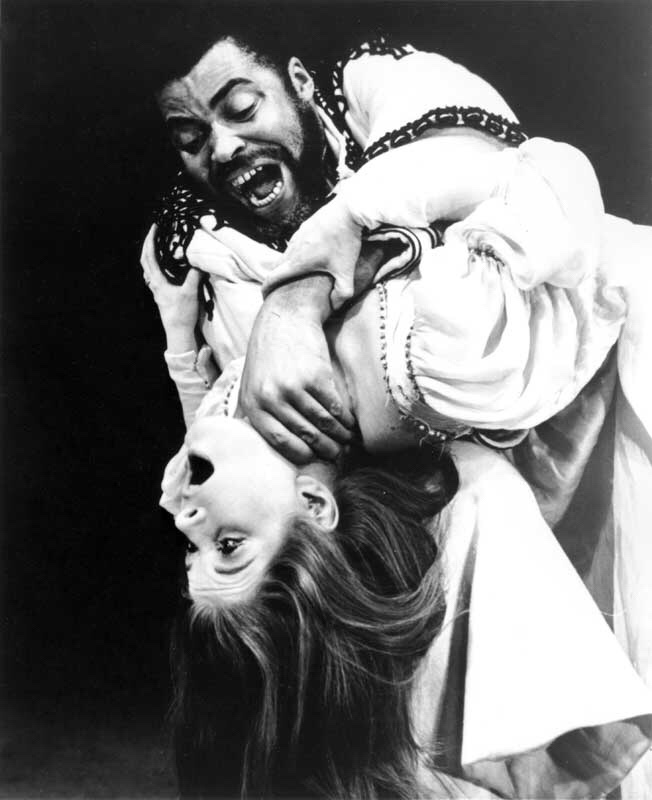
For February, I would like to give a shoutout to a wonderful article I read about famous black Shakespearean actors, and to link to a few of my old posts that detailed how Shakespeare approaches the issue of race. Enjoy:
Since it’s now two years into the Trump presidency I thought I would follow up on my post I wrote when he was a candidate, and focus instead on his actions as president. Shakespeare’s Richard changes almost immediately once the crown is set on his head in the middle of the play, and the rest of his short reign is plagued with the exhaustive process of keeping it on his head, (and by extension, keeping his head on his shoulders). My main argument is that Trump’s presidency has steadily skirted more and more towards authoritarianism through his actions and his rhetoric, much the same way Richard became more like a dictator as soon as he became king. Moreover, Trump, Shakespeare’s Richard and even the historical king Richard have been distorted beyond recognition because of fake news, but not the kind you might expect.
Part I Before the Throne
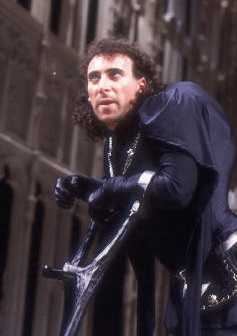
As I have written before, Richard claims the throne by manipulating everyone in the British political machine- stoking hatred among the nobles, while trying to appear as a pious, humble man to the common people. Because of his years on reality television and experience as a businessman, even I must admit Trump has a gift at manipulating people’s perceptions and playing the part of a man of the people:
https://m.youtube.com/watch?v=cpxCl8ylJgE
If you watch Trump in interviews, he often closes his remarks with “believe me,” Richard also understands the power of oaths and pretends to speak like a plain blunt man, claiming that the British nobles hate him because he ‘tells it like it is’:
Cannot a plain man live and think no harm?But his simple truth must be abused by silken, sly, insinuating jacks!-Richard III, Act I, Scene iii
As for Trump, even though he is a privileged billionaire with inherited wealth, he pretends to be an unpretentious, unapologetic common man, abused by the ‘mainstream media’ and his political opponents.
Richard is also a fan of the moral equivalence argument, (also known as whataboutism). He tries to offset his own murders by mentioning other people and their misdeeds during the Wars Of The Roses, making them seem as bad or worse than Richard:
Let me put in your mind if you forget what you have been ere this and what you are, withal what I have been and what I am. RIII Act I, Scene iii.
Many have pointed out that both Trump and Fox News frequently use Whatsboutism to discredit their opponents and to shrug off their own guilt. It is also a tactic frequently used in former Soviet Union propaganda: https://youtu.be/PpVzHpgYuSc
My final comparison of the rhetoric between Trump and Shakespeare’s Richard is that both men are actors, players, or if you like, hypocrites. Trump actually tweeted how he sees each speech he makes as a tailor-made performance, while Richard praises his own ability to dissemble and equivocate to the skies: https://youtu.be/v6ji07tsI2M
Part II: The descent
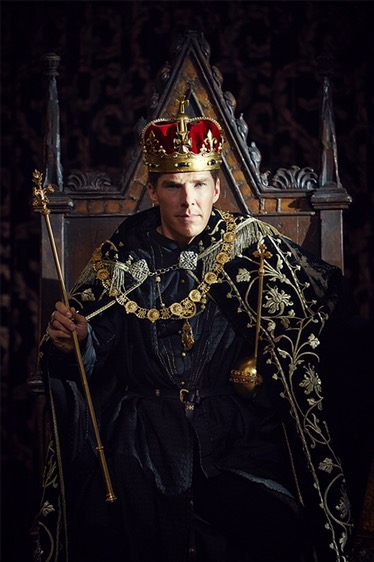
Richard the third starts out the play as a evil underdog. Yes he kills people to gain the throne, but his deformity makes him seem sympathetic, and the fact that his victims have already killed plenty of people in the Wars of the Roses, gets him on our side. Once he’s crowned however, Richard step by step becomes more and more like an authoritarian dictator
What is an authoritarian? Basically an authoritarian regime concentrates power into the hands of one person, and tries to hold onto power by:
1. Projecting strength.
2. Demonizing opponents, both real and imagined.
3. Destroying institutions.
From the moment the crown is placed on his head, Richard starts to see threats to his power, and uses all his newfound resources to destroy every each and every threat. First he kills his nephews, (the legitimate heirs to the throne), then he kills his wife, so that he can remarry a princess to try and consolidate his power. And finally, when he faces his greatest threat the armies of Henry tutor Earl of Richmond, Richard goes full on dictator, calling himself a tower of strength, demonizing Richmond as a foreigner, and claiming that his soldiers will rape the English wives and daughters.
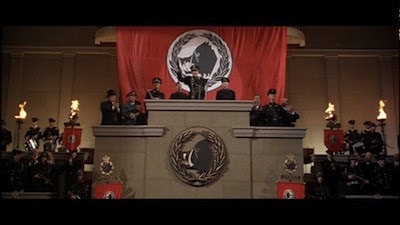
Still from Ian McKellen’s film version of Richard III, 1995
Trump is guilty of every one of these authoritarian strongman habits. He tries to convince people he is strong both physically and politically by having photo ops with doctors who claim that he is “the healthiest president ever”. He also attempted to project strength by misrepresenting the size of the crowds at his inauguration (which was a flat out lie), Furthermore, Trump demanded a military parade to emulate autocratic governments like North Korea. Then there’s his ultimate misguided show of American strength: the wall, which even Fox News has calculated will cost $25 billion dollars at least, and will do little to nothing to stop the flow of drugs and illegal immigration.
Trump also has from the beginning waged war on the Internet against any and all who oppose him. Let us not forget that Fox News is a 24 hour a day propaganda machine that exists almost entirely to condemn anyone who opposes the president and his agendas. And in terms of destroying institutions, his constant claims of “fake news“ seeks to destabilize the Free Press. America’s finding fathers guaranteed free press with the knowledge that if the government is corrupt, the only way the public can fight back is through the knowledge provided by a free and Independent press. But if the media is the enemy, we have no one to listen to except Trump himself.
Richard is even more comically trigger happy than Trump. Look at this scene where in less than 10 minutes, he sends a murderer to kill his nephews, plots to murder his wife and marry his niece, and completely throws off the Duke of Buckingham, his only supporter on his way to the crown!
Richard’s authoritarian tactics actually spring from one of the best political theorists of the renaissance, unfortunately it was Machiavelli. Niccolo Machiavelli saw how the crown heads of Italy consolidated power through violence and intimidation, and he came to realize that the power behind the throne is much less to do with divine right or royal bloodline, and more with who can play the game and project power and strength. In Shakespeare’s Henry the Sixth Part III, Richard brags that in his quest to the good for the crown he will send Machiavelli to school: https://m.youtube.com/watch?v=v6ji07tsI2M
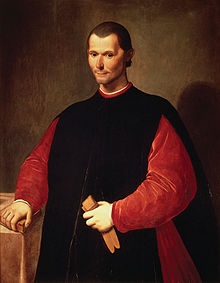
Portrait of Machiavelli by Sandi DiTito, c. 1650
I unfortunately don’t have enough time to get into the connections between Machiavelli, Richard, and Trump. Suffice it to say that all three advocate rule by fear and have no interest in preserving democracy. Below are some quotes and articles that I have collected about Machiavelli and his connection to Shakespeare and Trump:
Sadly, the ultimate similarity between Shakespeare’s Richard III, the real King Richard, and Trump is that the actual human has been swallowed up by a narrative. Even though most of what Trump says is a lie, to his supporters he is the one person who ‘tells it like it is,’ not because they believe him, but because they want to believe in the narrative he constructs.
These Ohio Voters Made Trump President. They’re Still With Him – TIME
Not only are his lies compelling, Trump himself has become a powerful symbol to the disenfranchised that the system is broken and corrupt, so why not vote for someone like him? He brands himself as a ‘plain blunt man’ who isn’t afraid to offend or criticize people in power, even though he is much worse than they are at running the government. According to the testimony of his former lawyer Michael Cohen, Trump described his own campaign as the ” The greatest infomercial in political history.” His campaign was from the start, a scam, where the ultimate con man told people he was going to fix healthcare, fix the immigrants coming into the country, and fix everything they didn’t like about America.
Trump and Richard exploit what you and I want to believe. A New York Times article from 2016 made an interesting comparison between Trump’s odious political persona and that of one of the “heels” or bad guys in professional wrestling. These characters are unrepentantly evil, and love to stir up anger in the crowd, and everyone knows that their every word and action is fake, but they buy into the story. This kind of suspension of disbelief is of course, the central guiding principle of theater itself, and arguably Shakespeare created a villain who would make a very effective wrestling heel.
The real Richard’s devolution from a historical king into a villainous archetype is more tragic, but just as powerful. The lies that the Tudor chronicles told about him were more compelling and politically convenient than the truth, and Shakespeare’s genius just further distanced us from caring what the real man was like. In essence, Shakespeare was inventing fake news far before Trump was railing about it. Just as we as an audience are complicit in the pretend crimes of a fake king when we watch the play, we are also complicit in perpetuating a comfortable simplistic story of the 15th century War of the Roses king Richard Plantagenet.
Trump and Richard show that history can be distorted when we focus less on what is really happening and more on what we want to see. More people wanted to believe his lies than Hillary Clinton’s facts, the same way people were forced to believe the Tudor lies instead of the real truth of what happened from 1483-1485. Likewise Shakespeare’s Richard exploits people’s fear, greed, and gullibility to gain power for himself, but this is his only talent; eventually his supporters lose faith in him, his enemies mobilize, and he is taken from power.















 If you click on the link, you can do a great scavenger hunt where you upload pictures or answer trivia questions for points, and of course they are all related to Shakespeare. If you have the app on your phone, search for Shakespeare Birthday Scavenger Hunt and enter the code: 2BON2B (Get it, to be or not to be)! You can also use the code NLEGVM. Let me know if you like it or if you cannot access the link.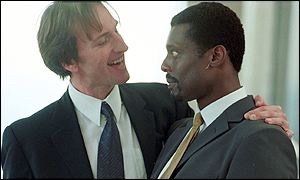


 As I have written before, Richard claims the throne by manipulating everyone in the British political machine- stoking hatred among the nobles, while trying to appear as a pious, humble man to the common people. Because of his years on reality television and experience as a businessman, even I must admit Trump has a gift at manipulating people’s perceptions and playing the part of a man of the people:


 The Shakespearean Student