

I was going to review this movie, but I’m quite impressed by Mr. Galgren of Channel Awesome’s take on it. I think this review is a great summary of how this movie cleverly adapts Shakespeare’s play in a 20th century context, and how incredible Sir Ian’s performance is! Enjoy the review, and see the movie if you get the chance!
theater
Useful Richard III Website, starring Ian McKellen!

Here’s a lovely website designed to help you learn about Richard’s first soliloquy by interacting with Sir Ian McKellen himself!
First, a video to see it in action:
And here’s the final website: http://www.stageworkmckellen.com/
As a bonus, here’s a review of Sir Ian’s new app, Heuristic Shakespeare:

http://www.avclub.com/article/ian-mckellen-launches-app-make-shakespeare-easier–236049
This app looks incredible, listen to this satisfied customer:
So far, the only play on the app is “The Tempest,” but hopefully if enough people buy it, it’ll expand and encompass all the plays. I hope you’ll check it out!
My Top Ten Shakespearean Apps For Teachers and Students, Part 2
As I said before, my criteria for these apps was “Free, functional (educational or useful in life,) and fun.”
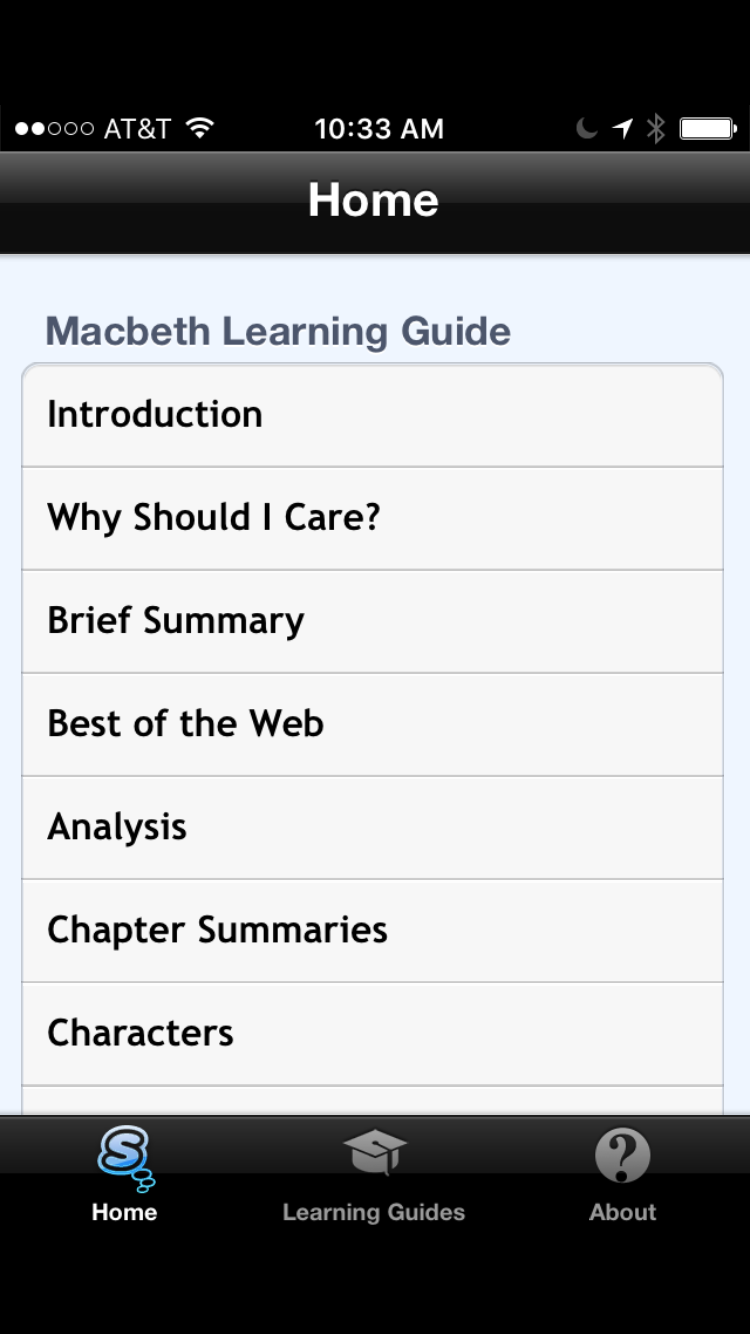
6. Shakespeare by Shmop: incredible! This is a study guide for your phone of tablet. There are separate apps Hamlet, Macbeth, and R&J. Each one features a glossary, analysis, quotes, study questions, you get the idea. You can cover a lot of the play with this app. My favorite feature is “Why Should I Care?” This is a short essay that compares the themes and ideas of the play to modern life. Excellent app, and the website is great too for students and teachers: http://www.shmoop.com
7. Shakespeare for kids–

I believe nobody is too old or too young to enjoy Shakespeare, so I tried to find a Shkespeare app for young children and came up with this. To be honest, I was disappointed in this one; it’s basically an app version of Irene Lamb’s book “Tales From Shakespeare”. It consists of short summaries of the plays intended for children. There are no study guides, no quotes, and the games have nothing to do with Shakespeare. My advice, get the book, or go to these sites:
- K-2: BBC Famous People: Shakespeare. http://www.bbc.co.uk/schools/primaryhistory/famouspeople/william_shakespeare/
- Starfall- Quotes From Shakespeare http://more.starfall.com/m/talking-library/shakespeare/load.htm?f&d=demo
8. Poems By Heart Made by the Penguin Publishing Co, it’s designed to help you learn a poem by quizzing yourself, one line at a time, (or one word if necessary). Friendly and enjoyable.

9. Soliloquy by playshakespeare.com.
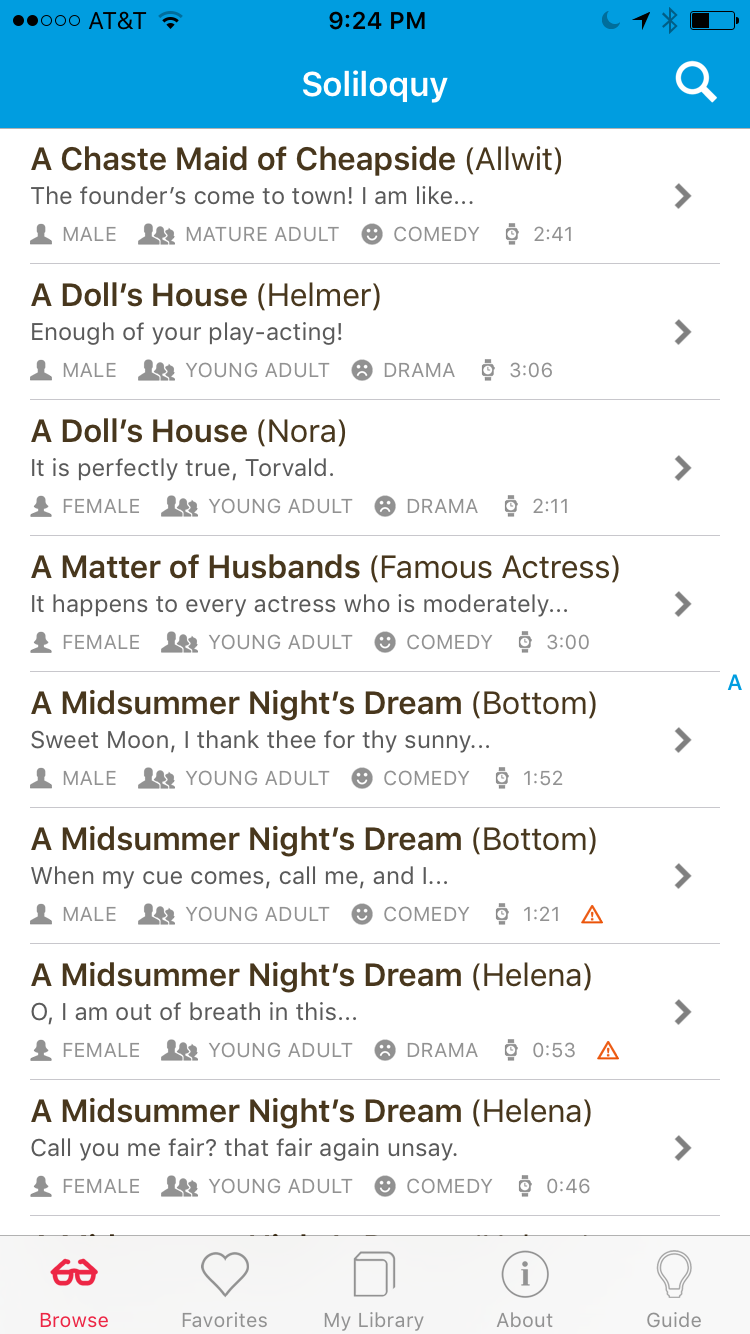
As you might expect, this app is a database of Shakespearean speeches. I normally don’t advocate actors learning speeches out of context without reading the whole play, but this app is useful for the professional actor on the go, who needs to pull out a speech in a hurry. It’s sort of a digital monologue portfolio. You can find a good speech, save it, then pull it out when you need to study it. There’s also a pro feature that allows you to edit the speech if it’s running long. What I really like is the fact that each speech is conveniently classified by gender/ genre/ length, and the helpful tips for young actors picking a good speech.
10. Shakespeare by Play Shakespeare.com
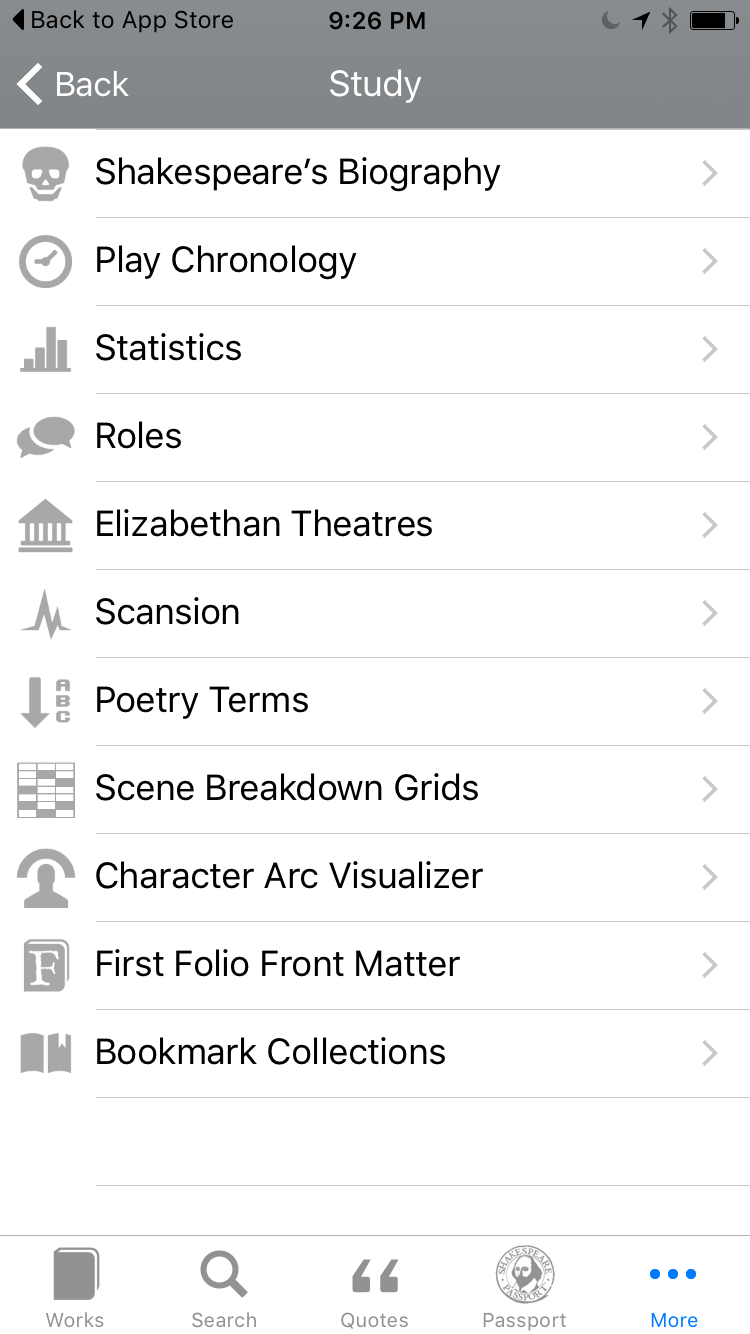

Well now we come to the end of the free Shakespeare app list I’ve compiled. Now what? I would recommend downloading Shakespeare by Playshakespeare.com, then BURN THE LIST! This is the most incredible Shakespeare app I’ve ever seen! It has tons of free and pay- only features and I’ve listed a few below:
- Full text of the plays
- A GPS feature where you can locate any Shakespearean theater near you.
- A free passport to 57 theaters that offer discounts to members.
- Study guides which include scene breakdown, poetry glossary, and notes on verse scansion
- Shakeapeare quotes generator.
- A glossary of over 40,000 Shakespearean words
Much like this blog, I recommend this app to Shakespeare lovers of any age!
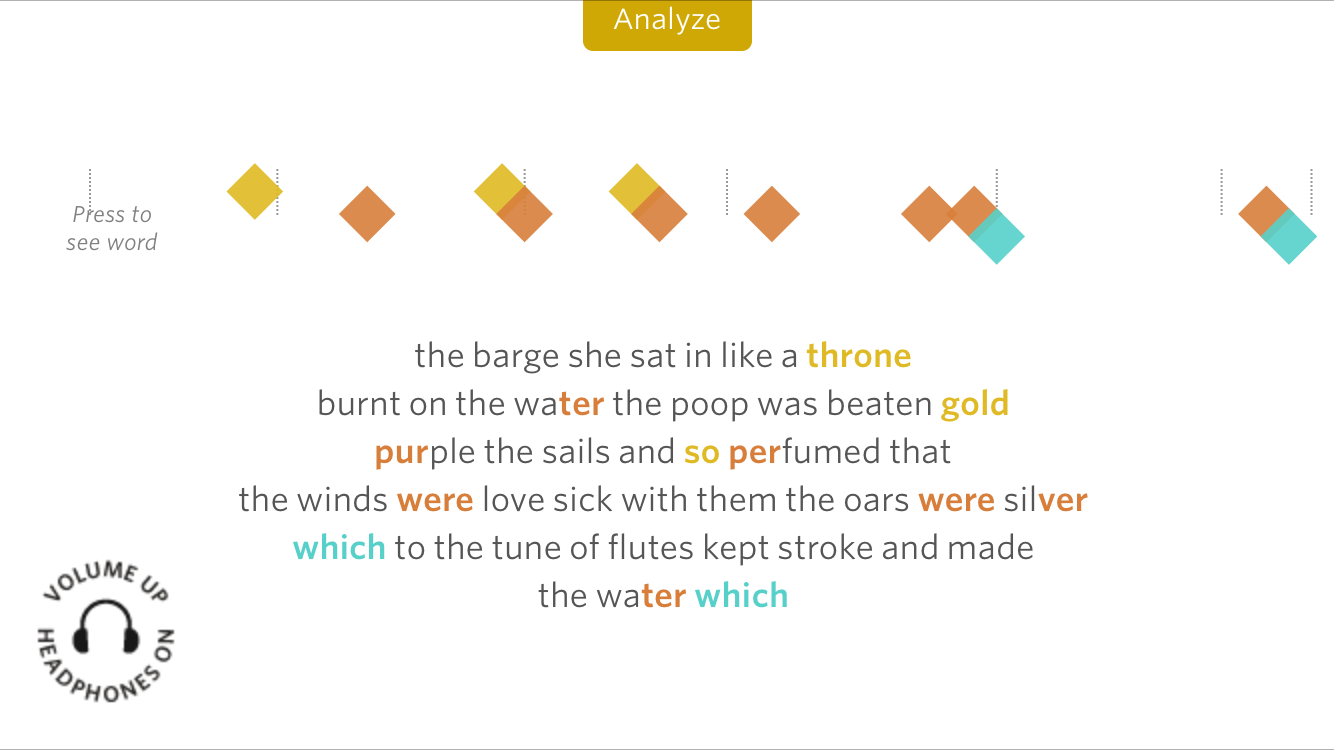
One more bonus review: this isn’t an app, but it’s a website created by Joel Eastman and Erik Hinton of the Wall Street Journal. Its purpose is to analyze the awesome lyric complexity of the Broadway musical “Hamilton.” http://graphics.wsj.com/hamilton/
The website uncovers the use of assonance, alliteration, near-rhymes, mid-line rhymes, and other strokes of Lin-Manuel Maranda’s lyrical brush. The best part is that you can feed any text you want into the website, and it will use the same algorithm to show you its lyrical elements, so I’d recommend using it as a tool to study Shakespeare. You’ll find that the Bard of Avon and Snoop Lion aren’t as different as they might seem.
So there you are, a few fun, friendly, and free tools for exploring the work and life of a timeless English playwright. As The Bard might say: “Sirs, betake you to your tools,” for such apps as these are only as good as the person who uses them.
Intro to Richard III

Hi everyone,
Introducing our new Play of the Month: Shakespeare’s dark history play about murder and corruption, Richard III. First, a short presentation I made that introduces the characters and themes of the play.
Second, a quick, funny summary of the play from the Reduced Shakespeare Company
And finally, this incredible animated version of the play, which looks like a stained-glass window come to life!
My Top Ten Shakespearean Apps For Teachers and Students, Part 1

Hi everyone! Well, it’s nearly August, which means back to school. Everyone is looking in the stores for the latest educational gear to help young minds on the journey to knowledge. To hopefully aid your journey teachers and students, I’ve compiled some of my favorite Shakespeare apps. There are a lot of apps out there of course, and I couldn’t hope to review them all, but I had a few criteria to limit the results:
- The app had to be free,
- It has to be functional (educational or useful in life,)
- Fun!
I also discovered that most Shakespeare apps out there seem to follow three basic categories: Shakespeare quotes, Shakespeare guides, and Shakespearean insults. Generally speaking, every app on this list is designed to either help you learn Shakespeare by showing and testing you on famous quotations, to help you engage with the text of the plays, or to just have fun making vintage Tudor insults such as: “I was looking for a fool when I found you. I desire we may be better strangers!” So here are the first five apps I am ready to recommend to students and teachers that bring the Bard into the mobile electronic age!
I. 3x The Bard–
This app is a series of quizzes on Shakespearean quotes. It gets is title because the quiz goes on and on until you make three mistakes. Just like in baseball, three strikes and you’re out! I found it fun but not functional. You don’t learn what the quotes mean, and you’re not tested on how well you can recite it, it just quizzes you on which play the quote comes from. Still, worth a look.
II. Shx at Play Two word review: very useful.


Combines the interactivity of an app, with the format of the Sourcebook Shakespeare books I mentioned in my “Which Shakespeare Edition Is Right For You” post. It features annotated texts of Shakespearean plays, videos, and a glossary. It’s really good stuff. I encourage teachers and students to use it. The only problem is that, while the plays are free, some features don’t become available until you pay to download them, but you might want to if you’re serious about studying the play.

III. Globe Theater 360
This is one of my favorite apps ever. I would call it the Pokemon Go of Shakespeare apps. As you move your phone, you get a 360 degree of Shakespeare’s Globe Theater, as if you were actually there! Even cooler, if you put your phone or tablet over the Globe Theater logo, it will make a computerized theater appear on your phone’s camera in real time, just like the creatures of Pokemon Go! Furthermore, you can click on various part of the Globe to learn about the theater, how the plays were performed, and the colorful history of Shakespeare’s Company. I think this is a must-have app for anyone interested in Shakespeare.


IV. Globe Player


Ok, I’ll be honest, this one isn’t free either, but it’s still incredible. I love that The Globe is well aware that not everyone can get out to London and see a play in Shakespeare’s re-constructed Globe theater, so they have a pay-per-view style app that allows you to watch videos of Globe Theater performances in your own home. You can also watch or stream international Shakespearean performances and documentaries right to your phone, tablet, or online at https://globeplayer.tv/
V. Genius


The best thing about this app is that you probably own it already! This is an extremely popular app for deciphering the meaning of song lyrics. Well guess what? People have also contributed commentary of some of Shakespeare’s famous speeches too! If you’re a teacher, you might consider having your class upload a Shakespearean text, and have them write line-by-line commentary to show just how well they understand it.
So that’s Part I of my look into my favorite apps Shakespearean apps, and I hope you enjoyed it. If you find any other apps you’d like me to review, leave a comment below!
Till next time,
The Shakespearean Student.
The Witches Of Macbeth

Happy Halloween everybody!
Tonight I’d like to discuss some of the spookiest, most enigmatic, and above all WEIRDEST characters in Shakespeare: the Three Weird Sisters in Macbeth.
1. Who are they?
Every production has to answer who the witches are, and many have very different answers. Are they temptress? Are they evil agents controlling Macbeth?Furies trying to destroy Macbeth?
I would argue in their basic form the witches are harbingers of change. Their very name “Wyrd Sisters” refers to an old Anglo Saxon concept of fate or destiny. Whether or not they have any effect on Macbeth mind or soul, they point the finger at him and say “things are going to change for you.” Then, he either makes the choices that determine his fate, or they change his fate for him.
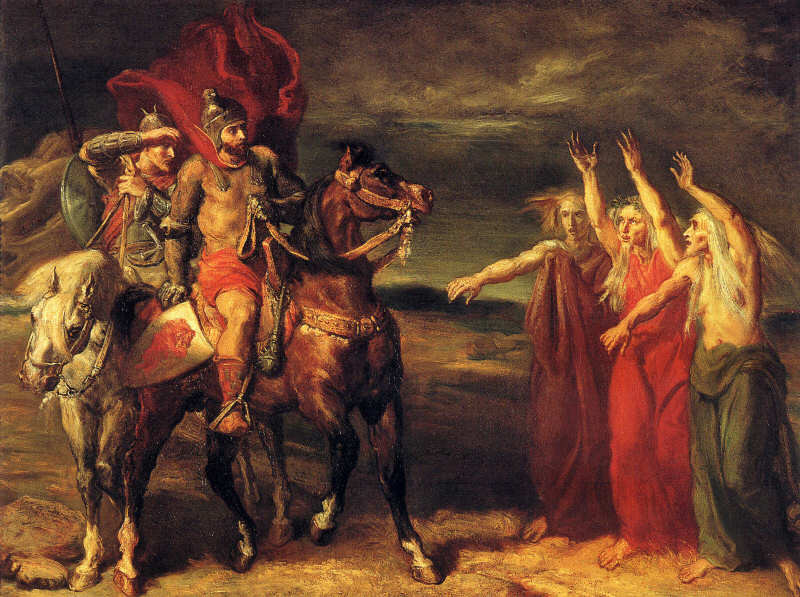
Macbeth meets the witches on a heath, which means land that is literally out of bounds– the wild, untamed wilderness, which the old Anglo Saxons believed was the lair of many cursed spirits and monsters. This could symbolize Macbeth’ sin or transgressions, slowly turning into a murderer, usurper, and a tyrant. It could also symbolize the chaos in Macbeth’s life.
What Do They Look Like?
Shakespeare’s descriptions of the witches are highly contradictory- they seem to be floating, yet on the ground, they seem to be women, but they have beards! They don’t look Earthly, but here they are on the Earth. This gives them an other worldly quality that keeps us guessing as to who they are, and helps them tempt Macbeth more easily.
BANQUO
What are these
So wither’d and so wild in their attire,
That look not like the inhabitants o’ the earth,
And yet are on’t? Live you? or are you aught
That man may question? You seem to understand me,
By each at once her chappy finger laying
Upon her skinny lips: you should be women,
And yet your beards forbid me to interpret
That you are so.
MACBETH
Speak, if you can: what are you? (Act I, Scene iii).
The Witches’ Language:
You know from my earlier posts that the norm for Shakespearean characters is to speak in iambic pentameter- 10 syllable lines of unrhymed poetry that sounds like a normal heartbeat. The witches break these norms- they generally speak in Trochaic Tetrameter- 8 syllable lines with the off beat emphasized. The witches are literally offbeat, and that’s why their speeches are unsettling. Look at the contrast between a normal iambic line like:
“In sooth I know not why I am so sad.” (Merchant Of Venice I,i).
and
“Dou-ble Dou-ble, Toil and Tro-ble.
Fire burn and Caul-dren Bu-ble. (Macbeth, Act IV, Scene i).
For more info on the verse forms of the Witches, click here:
The witches also speak their prophesies in a vague, ambiguous manner They like to play with obscuring their prophesies with lines that make Macbeth think one thing, but the opposite is true. The famous example here is when they claim Macbeth will never be vanquished “until Birnam Wood comes to Dunsinane Hill.” Macbeth assumes this means he’s invincible, but it actually means that the enemy carry wood from the forrest. This is called Equivocation.
Witches and mythology

1. During the reign of King James, the modern witch hunt began; the king was fascinated with witches and even wrote a book called Daemonology on how to identify and destroy them. This was the era where people believed that witchcraft, rather than a pagan religious practice, was a forbidden craft that could only come from a pact with the devil. However, Shakespeare borrows from both Satanic and early pagan ritual in the characters of his witches.
2. Shakespeare took a couple of details about witchcraft from ancient Celtic and Greek mythology. First of all, the use of a cauldron. In Celtic myth, a cauldron is a symbol of rebirth and was sometimes used to resurrect the dead, just as the witches do in IV i. Of course, the ideal time for raising the spirits was on the feast of the pagan god Samhain, at the point where the veil between the living and dead was the thinnest. The feast took place on October 31st, our modern day Halloween!

3. Familiar spirits In Act I, the witches speak to animal spirits called familiar spirits, which call to them and tell them where to go. King James himself wrote about how the witches found and communicated with these spirits.
Hecate.
In Act IV, Hecate, Ancient Greek goddess of magic appears. She is clearly the lord of all the witches, and is very displeased that they are riddling with Macbeth. Maybe not all witches believe in giving out prophesies that can destroy the Scottish monarchy. Hecate was always enigmatic in myths- she was born one of the Titans who opposed the gods, but frequently changed sides. More then being two faced, she was often portrayed as having three faces! Shakespeare refers to her frequently as “Triple Hecate.”

For more information on this mysterious goddess, consult the video below, (WARNING, ADULT-ONLY CONTENT).
In conclusion, the witches are meant to be ambiguous because the play examines the source of evil- whether it is inspired by other people, or if it comes from one’s own heart. The witches can be either or both, depending on how you want to tell the story, which is why they act and speak in contradictory ways.
Thanks for reading! If you enjoyed this posting, please consider signing up for my online class, “Macbeth: An Immersive Horror Experience.” I tell you the story of Macbeth and you get to play through an escape room, where you must solve the witches’ puzzles or be added to their Cauldron!
Romeo and Juliet’s Infinite (Variety) Playlist Part 1
Hello Loyal Subscribers and First Time Readers!
A few weeks ago I created a fake playlist of songs that I though the protagonists, Benedick and Beatrice, might want to hear during moments of the play. So I decided to do another one for R&J!
For those of you who didn’t read the older post, this is a game!
The way it works is I provide you with a list of the events that happen to Romeo, and then a fake ipod Playlist screen. This screen has a group of songs that I chose because I feel Romeo might want them as part of his ‘internal soundtrack.’ So if Romeo is feeling sad at a particular moment, you look at the playlist and try to pick a song that would match his mood. Today is Romeo’s playlist and tomorrow I’ll do Juliet’s.
Anyway, enough gabbing. LET’S PLAY!
Part I: Events that Happen To Romeo (In Chronological Order)
- Romeo is distraught because Rosalind will not give in to his romantic advances
- Romeo is disappointed when he finds out that the Montegues and the Capulets have been fighting again.
- Benvolio convinces Romeo to get over himself and go crash the party at the Capulet’s.
- Romeo dances at the Capulet Ball and is immediately stuck with true love.
- Romeo realizes with horror that his true love is a Capulet; his family’s enemy.
- Determined to seize the moment, Romeo climbs the orchard wall under Juliet’s balcony and risks death to talk to her.
- Having already plotted with the Friar and Nurse, Romeo secretly marries Juliet
- Romeo attempts to break up a fight between his friend Mercutio, and his new cousin, Tybalt.
- Full of rage after Tybalt kills Mercutio, Romeo challenges Tybalt to a duel and wins.
- Romeo is once again distraught and full of self-hatred for killing Tybalt. He hides in Friar Lawrence’s cell, and thinks about what he has done.
- Romeo sneaks once again into Juliet’s room and spends one last tender night with her before he has to leave for Mantua.
- Hearing that Juliet has died, Romeo is once again full of rage for the whole of humanity. He resolves to go back to Verona and die by Juliet.
- Feeling strangely at peace, Romeo bids farewell to his beloved Juliet, drinks a poison, and dies.
- Epilogue: Through Romeo’s death, his father reconciles with Capulet.
Part II- The playlist- Try to match these songs with the events above.

So now you know the rules, enjoy the game. Send your answers to us by leaving a comment below or by emailing me here:
Have fun!
Romeo and Juliet Extended Play Of the Month

Hi everyone,
Just wanted to let you know that I’ll be extending Romeo and Juliet for the next two weeks because it’s the start of the school year, and I still have plenty more to say about this play. So for the moment, here’s the list of posts I’ve done so far:
- Romeo and Juliet Summaries For Your Viewing Pleasure.
- Romeo and Juliet, How To Read This Play, Parts 1-3
- Where Did This Play Come From? The Narrative Sources of Romeo and Juliet.
- The Genesis Of Romeo and Juliet: Shakespeare’s creative process adapting the story
- Book Review: The Manga Shakespeare- Romeo and Juliet
- Romeo and Juliet Spin Offs
- Happy Birthday Juliet!
By the way, here’s a hilarious summary of the play from “Zounds, Alack, and By My Troth,”

Sleep No More Review

This was without a doubt, the most incredible theater experience I’ve ever had. It was scary, interactive, exciting, clever, sexy, and even a little disturbing, but without a doubt it was incredible, original, and true Shakespearean theater.
Before you read the review though, a word of caution-
WARNING: this is a production where, the less you know about it, the better your experience will be. I will provide a basic outline of the production, and give you an insight into what I experienced, but I would urge you to see the show yourself without any preconceptions, so if you want to keep the mystery going that surrounds this production, I suggest you stop reading…
RIGHT
NOW.
Alright, if you’ve chosen to keep reading, that means you want to know more, so more I shall give you. Going from the general to the specific, I’m going to talk a bit about what the show is, then describe the experience a bit, and then offer some tips for people who have never gone before.

Sleep No More is not the traditional kind of theater- there is no proscenium, no stage, no seats, and only one platform. It’s what theater teachers like my wife call “Experiential Theater.” The way she explains it, it’s theater that exists as an event. Rather than sitting and watching, you actively follow the action and you can get so close to the actors you can, (and sometimes will), touch them.
The play was conceived by an English company called Punchdrunk Theater Company, who took over an old 6 story warehouse on West 27th Street in New York City, and turned it into a fictional hotel/bar called the “McKittrick Hotel.” The play, (which is done entirely without dialogue), is a re-imagination of both Macbeth, and the novel Rebecca by Daphne Du Maurier, set in the 1930s. The audience is admitted on the ground floor and are permitted to go freely through the 6 floor set and watch the actors perform. Different actors perform on different floors and interact with other actors at different times, and the audience may watch any scene or actor they wish.
The title of the play comes from this passage from Macbeth:

The Experience
As I said before, this a very freeing and very active kind of theater. The only division between you and the actors is that you will wear a face mask. Your role is basically to be an anonymous spectator at an event that unfolds before you, an event full of madness, sex, murder, and mayhem. I would describe it as sort of like living in the strange orgy scene in Eyes Wide Shut, or that scene in The Shining where Shelly Duvall runs through rooms of the hotel and keeps seeing bizarre sights.
From the moment you enter the incredibly detailed hotel, you know you are in a place that was dangerous, dark, and chaotic. You wonder if the people are crazy, or if the building itself is crazy.
As an audience member, you set the pace of your experience as you wonder through the hotels’ infirmary, library, parlor, bath, ballroom, balcony, patio, and dark forest (masterfully designed by Alexandria Challer). Eventually the actors will find you and you choose whether to follow them or wait for something else to come along. When I first entered the hotel, I spent a few minutes looking at the set- reading a hotel guest list, or examining a jar in the pantry, or staring at animal carcasses in the trophy room. Eventually though, I found a story unfold before me, and I rushed to follow it.
Because none of the actors talk, this play is not Macbeth, unless you want it to be, it is not Rebecca by Daphne Du Maurier, unless you want it to be. YOU determine what your experience is. The great, (and famously crazy) theater theorist Antonin Artaud once said, “Text is a prison.” If that’s true, then Sleep No More has set its actors free: their movements convey the story through mime, ballet, gestures, and occasional words. This freedom from the restrictions of text means that it’s up to you to truly piece a story together, and you will find that story can alter, change, and sometimes disappear into mist.
How is This Story Macbeth? (Spoilers Ahead)
One of the most common complaints I read online from people who saw the show is that they didn’t understand the connection between Sleep No More and Macbeth. I don’t want to give too much away because I feel that part of the fun in this production is trying to figure out the connection yourself, but I will provide you with a few scenes to look for, to give you some clues on how to connect this physical theater piece with Shakespeare’s play:
Scenes to look for:
- In the bedchamber on the 3rd floor, there is a bathtub on a small platform. On the steps leading up to the tub I saw a letter that contains this text from Shakespeare:
They met me in the day of success: and I have
learned by the perfectest report, they have more in
them than mortal knowledge. When I burned in desire
to question them further, they made themselves air,
into which they vanished. Whiles I stood rapt in
the wonder of it, came missives from the king, who
all-hailed me ‘Thane of Cawdor;’ by which title,
before, these weird sisters saluted me, and referred
me to the coming on of time, with ‘Hail, king that
shalt be!’ This have I thought good to deliver
thee, my dearest partner of greatness, that thou
mightst not lose the dues of rejoicing, by being
ignorant of what greatness is promised thee. Lay it
to thy heart, and farewell.
–Macbeth
This was the first definite evidence I had that the performance was inspired by Shakespeare besides the title of the play. A woman in a beautiful ball gown entered and read the note, pacing the whole time. Suddenly a handsome, red headed man came in. Like the Macbeths in Shakespeare, the body language between these two was hot and fierce; at times passionate and sexual, at times violent and animalistic. Lady Macbeth uses her body and her caresses to tempt her husband to murder, as the one in Shakespeare seduces him with her words. He trembles, turns away, brushes her off. Then, when she persists they struggle- clawing and slapping, even throwing each other across the bed, but in the end, exhausted, he slumps. She, victorious, leaves the room, looking like a queen already.
2. Alone in his room, Macbeth contemplates his dire murder. He leaves the warmth of the bedchamber and enters a dark, moon-lit forrest with a few gravestones. I followed him out into the forrest, knowing that what he does now will probably be an interpretation of Macbeth’s two most famous soliloquies: “If It Were Done When Tis Done” (Act I, Scene vii), and the famous Dagger Speech from Act II, Scene ii. Since the actor didn’t talk, he had to convey Macbeth’s inner torture with his body. I saw him going up to a statue of the Virgin Mary, beating his fists and chest against the hard stone. It was clear to me that this symbolized Macbeth’s struggle between morality and desire. He staggered away from the statue and stopped at a stone pathway that led back to the bedroom. Macbeth then put his hands on the stones, lifted his body up pull-up like, and kicked his legs in a futile attempt of motion. I immediately thought of Macbeth’s line:
I have no spur
To prick the sides of my intent, but only
Vaulting ambition, which o’erleaps itself
And falls on the other (Macbeth I,vii).
It was clear that the actor was showing how Macbeth cannot bring himself to kill, yet is too ambitious to let go of the desire to kill and this is what manifested in his tortured body. He then turned toward me and the other audience members and I saw his expression change. He looked around, worried, even frightened, as if he saw something he couldn’t believe. It wasn’t clear to me at first, but now I’m pretty sure that he was looking at the dagger from his famous soliloquy, and it was US. He ran from the forrest, and we charged after him like a swarm of angry bees! We found him in a corridor on the 2nd floor, where he again hoisted his body up against an old fireplace, inverting himself with his legs sticking up, and his head below, like an upside down cross. He then stretched his hands out and waved them frantically. Two frightened audience members took them and helped him hoist himself down. When Macbeth got to his feet, he proceeded to a darkly lit chamber where another man lay sleeping…
3. In a small bar on the 1st floor, I saw Macbeth with two women and one man. They all wore black lipstick and had crazed and hungry looks in their eyes. The music sped up to a crazed pace and the movements erupted into a terrifying orgy of sights and sounds. A strobe light pulsed showing me glimpses of the frightening spectacle, which included the two women stripping their clothes, the man putting on the head of a goat, and one of the women pulling out an infant covered with blood, and holding it in triumph over Macbeth’s head. At this moment I realized that these gruesome creatures must be the witches, and that they were foretelling Macbeth’s destiny as they do in Act IV. They also brought out a tree, which signified the prophesy that Macbeth will never be vanquished until Birnam Wood walks to Dunsinane Hill. To be honest, I don’t remember much after that, I was probably still in shock!
4. Back in the forrest, I encountered a small brick structure that looked like a tower, with a woman looking out of it expectantly. She beckoned me to come inside. When I did, I saw that she was dressed in a nurses’ uniform, and she was looking at a doctor with concern. Inside the tower was a small operating room with a circular table in the center, and two rows of seats above it. The doctor was injecting some kind of drug into his arm, which made it twitch in spasms. The two of them walked into the forrest and through a door into a room that looked like a small train station with platforms and travel posters on the walls. Lady Macbeth was there, wondering aimlessly. I instantly identified this moment as the famous sleepwalking scene, where Lady Macbeth contemplates the crimes to which she has become accessory. Usually the actress conveys her guilt by washing imaginary blood off her hands, but in this case she chose to interact with people, specifically, ME. She held out her hands to me, I took them. She looked into my eyes with a haunted look on her face. Then she whispered in my ear: “The thane of Fife had a wife, and she was beautiful.” I could see that this woman felt alone and afraid, with no one to talk to. She was no longer the powerful figure throwing her husband across the bed. This was what had driven her mad, and her madness allowed her to see me and the rest of us in the audience. She looked upon us with looks of disgust and terror, as if we were the ghosts of the people she killed, and ran away somewhere we couldn’t follow. We never saw her again (until the ghostly finale).
Those were just a few pieces that I witnessed. I won’t give away how it ended, but I will tell you that the show ended in a dining room on a tableau that reminded me of a cross between Da Vinci’s The Last Supper, and the banquet scene of Macbeth.
When I talked to my wife, (who also came to the show, but was in a different audience group from me), she told me that there were many other scenes that were clearly inspired by Rebecca; she encountered a woman that she figured out was the ghoulish housekeeper Ms Danvers. She also had an intense meeting with the long-suffering Mrs. DeWinter, who gave her a locket and told her to keep it always. Finally, my wife revealed to me the startling fact that (Spoiler Alert), the same woman who plays the infamous Rebecca, dressed in a red flowing gown, also becomes Hecate, the goddess of black magic in Macbeth!
These performances are athletic, well thought-out, and incredibly nuanced. If you take some time to familiarize yourself with the stories of Macbeth and Rebecca, you can understand how the actors are interpreting the stories through dance, mime, and interactions with the set, props, and occasionally, the audience themselves.
I’d now like to conclude this review with my own pieces of advice for those of you who choose to see the show:
- Yes, wear comfy shoes. Almost everyone will tell you to bring comfortable shoes and they’re right- if you don’t want to lose the thread of a story, you have to be quick. Macbeth in particular is fast and nimble as a tiger, and you have to run fast to keep up with him.
- Find a person that interests you. I think some people make the mistake of staying in one place too long and ignoring the actors. This is physical theater, so try to find an actor to follow.
- Pretend you are a ghost if it helps Remember, murder and insanity are here, and you have a chance to see what it looks like and how it moves. Look right into the actor’s eyes and embrace your power to haunt these lost souls. Don’t be afraid to get close to them, and stay there as long as possible.
- If you do read Macbeth or Rebecca beforehand, it can be useful to memorize a few lines or moments and look for them in the performance. I can tell you for a fact that these actors meticulously planned their performances to give physical life to these two great works of literature. Look for a gesture, a glance, or a prop that jogs your memory and puts you into this hybrid world of Shakespeare and Du Maurier.
- The actors can sense if you are interested in interacting with them. If you seem scared or apprehensive, they will respect your space and not get close to you, but if you show them you are brave enough, they will extend a hand, or come toward you and give you a theater experience you will never forget.
- Leave your loved ones behind. Nothing was more fun to me than talking about my experience with my wife after the show and piecing our nights together. Even though the same show was going on the whole time, we saw different people, to different rooms, and had very different reactions.
- If an actor disappears, don’t wait for them. Sometimes you’ll follow an actorrl and they’ll duck into a corridor, or go behind a locked door, or a sentinel in a black mask will block your path. Now the story is over, and you are alone. Now you must choose again where to go, and try and uncover the sense of this horror.
- If you get to go to the 6th floor, consider yourself very lucky. Only a few people get to see it. My wife said she saw one person go up there. He was on an elevator with a small group. As they reached the top floor, a hotel porter let him off, then extended an arm, to indicate no one else would be admitted. Even the man’s girlfriend was blocked by the porter, who then explained, “This experience is best undertaken, alone.”
Well, I hope this whetted your appetite somewhat. Like I said this show is incredible, and very different from the kind of theater we generally think of, and that’s what makes it engaging and exciting. However, there is violence, nudity, and gruesome imagery onstage so it is definitely not for children. If you are interested in learning more, you can visit the Sleep No More website: www.sleepnomore.com/
Until next time,
Sleep Well.
 The Shakespearean Student