Is Percy Jackson Hamlet?

I’m really excited about the Disney Plus release of the Percy Jackson TV show. My family and I are really enjoying it and I think it’s a very good adaptation, (much more faithful than the previous movie versions). The tone is darker, the characters are better fleshed out, and also there’s a much more nuanced take on Percy’s character, which I believe is at the core of the series. The movie is essentially just a fetch quest where Percy is going from location A to location B looking for various magic items and fighting monsters. Movie Percy is a very static character but in the books and the show, they keep all of those journeys but also delve into his complicated relationship with the gods, his own insecurities growing up without a father, and his overwhelming feeling that this world of gods and mortals is fundamentally flawed and that he is the one to fix it.

“Families are messy. Immortal families are eternally messy. Sometimes the best we can do is to remind each other that we’re related for better or for worse…and try to keep the maiming and killing to a minimum.”

-Percy Jackson, The Sea of Monsters


In short, what makes the show great is that it emphasizes the elements of the book that make it a classic story of a young man who is trying to find his place in the world and complete the quest that his father set for him. Of course, once I started watching it, my Shakespeare Brain activated, and I immediately compared him to Shakespeare’s ultimate example of a hero trying to complete a quest given to him by an absent father- Hamlet.
So today I’ll Talk about why I think Percy Jackson is actually a descendant of Hamlet or rather that Hamlet and Percy Jackson are both descendants of the same common ancestor in Greek mythology and touch on what these classic stories can say to us today.

1. The Plot

AI Art I created of Percy Jackson. Nightcreator.com.

As I touched on earlier, there are some glaring similarities between the plots of Percy Jackson and Hamlet- we have a young man who has who hates his stepfather, who is deeply protective of his mother, who goes on a magical quest given to him by his father, (who cannot directly aid him because he’s not physically there). In Percy Jackson, his father is a god- the ancient Greek water god Poseidon, while Hamlet’s father is a ghost. Both heroes have to deal with treachery, uncover a plot, avert potential wars, and get caught up in great military and political power schemes. While Hamlet is trying to restore the rightful heir to the throne (himself), Percy is trying to avoid a war between the gods. Both heroes have stoic sidekicks- Hamlet has Horatio whereas Percy has Annabeth and his friend Grover the Satyr. Hamlet’s friend l Horatio is kind of like a combination of Annabeth’s intelligence and Grover’s kindness and empathy. Finally, both stories conclude in a duel (spoiler alert) where they fight against a near-impossible adversary, and in the end, succeed in their quest, although in Hamlet’s case, he does so at the cost of his own life.

The main difference between these stories is connected to tone and genre- Hamlet is a revenge play, and most Revenge tragedies end in the death of the avenger. Percy Jackson is an adventure quest so based on the conventions, he can succeed, survive, and go off to fight another day. Nevertheless, in terms of the broad outline, the plots are very similar. I would argue this is probably because Hamlet has its roots in many ancient mythological stories like Oedipus, Orestes, and of course, the Danish Viking myth of Amleth. I would argue that both Percy Jackson and Hamlet have a very clear direct common ancestor: the ancient Greek myth of …

2. A Common Ancestor- Perseus

https://prezi.com/btk3m_bamkmh/hamlets-monomyth/

As this funny cartoon illustrates, the plots of Percy Jackson and Hamlet can be seen as a modern incarnation of the Perseus myth, from the villainous stepfather to the hero’s protective feelings to the mother to the magical quest to get rid of a stepfather who takes away his birthright. These plot elements follow a very similar formula; as Jake also alluded to, all three of these stories are part of what writers and scholars like to call the monomyth or the “Hero’s journey,” a concept in mythology and storytelling that has inspired works such as Percy Jackson, Star Wars, and many others.

What Is the Monomyth?

Crash Course Mythology- The Monomyth

In 1949, scholar Joseph Campbell wrote a book called “The Hero With a Thousand Faces,” which posited that every culture has stories that fit into universal archetypes- that essentially all human cultures have unique stories, but also call to mind universal truths about humanity. He then distilled the common archetypes and plot tropes of these myths into something called “The monomyth” or “The Hero’s Journey,” a 17-step process that is at the core of many ancient myths, modern adventure stories, or revenge stories such as Hamlet. Below are some of the common tropes of the Hero’s Journey. When you see it spelled out like this, it is very clear that both Hamlet, Percy Jackson, and Perseus follow the Monomyth formula:

Infographic of the Monomyth from David R. Jolly.com

Part I: The Call To Adventure:

Where’s the glory in repeating what others have done?

The Lightining Thief

Every Greek hero starts with a call to adventure- Theseus finds his father’s sword and sets out to find him. Oedipus needs to lift the plague on Thebes, and Hamlet needs to find out why his father’s ghost has returned.

A Half-Blood of the eldest gods, Shall reach sixteen against all odds
And see the world in endless sleep
The Hero’s soul, cursed blade shall reap
A single choice shall end his days
Olympus to preserve or raze.

The Oracle- Sea of Mosters

Part II: Refusing the Call

If my life is going to mean anything, I have to live it myself.

The Lighting Thief

I won’t go looking for trouble. I usually don’t have to

Neither Hamlet nor Percy outright refuse to go on their quests, but both experience doubts. Percy, looking at how the gods have cursed and fought and betrayed each other, wonders whether or not they deserve his help:

Percy watches the story of the gods in the Tunnel of Love (Episode 5, Disney Plus 2024.)

Hamlet on the other hand, is so worried that the ghost is trying to deceive him into killing an innocent man, that he nearly kills himself in the most famous speech in all of Shakespeare.

Part III: Supernatural Aide

Supernatural Aid – A magical helper appears or becomes known

Go on with what your heart tells you, or you will lose all.

The Nereiads, Lighting Thief Chapter 17

Both Percy and Perseus get help from the gods- magical weapons, advice, etc. Hamlet gets the revelation from his father that his uncle killed him and how. What sets Hamlet apart from any number of myths is that, since there’s no tangible evidence that his father was there, Hamlet is not sure if his father helped him, or if he is going insane.

Suspecting and knowing are not the same.

-The Lighting Thief

Crossing the first threshold

In Perseus, the first threshold would be when he leaves Acrisius’ palace and sails to the island of Cerebos. In Percy Jackson, this would be when he leaves Yancy Academy and goes to Camp Half-Blood, and in Hamlet, it would be when he meets the ghost.

My fate cries out, and makes each petty artery in this body as hardy as the Nemian Lion’s mane. Still am I called!

Hamlet, Act I, Scene iii.

Belly of THe BEast

There’s always a part of the story when a character feels they are in too deep. Sometimes it’s a literal belly of the beast- Pinocchio and the whale, Luke Skywalker and the Sarlaac pit, Frodo when he reaches Mordor, and Agent K in Men In Black when he literally gets eaten by the Bug. In Percy Jackson, it would definitely be when he journeys to Hades, like many Greek heroes like Orpheus or Hercules.

I’d love to tell you I had some deep revelation on my way down, that I came to terms with my own mortality, laughed in the face of death, et cetera.

The truth? My only thought was: Aaaaggghhhhh!.

Usually, the belly of the beast occurs near the climax of the story- the ultimate test of the hero’s courage and resolve. For Hamlet, this would be the duel with Laertes- he’s in a situation where Claudius has total control of what he does.

“You weren’t able to talk sense into him?”
“Well, we kind of tried to kill each other in a duel to the death.”
“I see. You tried the diplomatic approach.” (The Sea of Monsters)

I’ll get into a deeper summary of the steps of the Hero’s journey on my podcast later this month, but to summarize, the Hero’s Journey is essentially a story of growth, maturity, and enlightenment. It’s not a coincidence that all three of these heroes are young men who leave home and then return to confront an evil stepfather or uncle. Campbell regarded the Hero’s journey as a metaphor for young men growing up, learning about themselves, gaining confidence in themselves and their abilities, and taking their rightful place in society by displacing a corrupt older authority figure. This is also why these stories often resonate with young people, and why storytellers like Disney often use the Hero’s Journey as a template for children’s movies.

These universal stories of growing up, maturity, and a life worth living have always inspired people and even though the stories have different purposes and the plots take different forms, the core of what makes them universal remains the same.

Shakespearean Wisdom for the Sixth Night Of Hanukkah

I found this wonderful short clip from Dr. James Allen Jones, a Shakespearean scholar and actor who draws parallels between the miracle of Hanukkah and this passage from Othello:

Duke of Venice: Let me speak like yourself, and lay a sentence,
Which, as a grise or step, may help these lovers
Into your favour.
When remedies are past, the griefs are ended
By seeing the worst, which late on hopes depended.
To mourn a mischief that is past and gone
Is the next way to draw new mischief on.
What cannot be preserved when fortune takes
Patience her injury a mockery makes.
The robb'd that smiles steals something from the thief;
He robs himself that spends a bootless grief.
Othello, Act I, Scene iii, lines 547-558

The Context

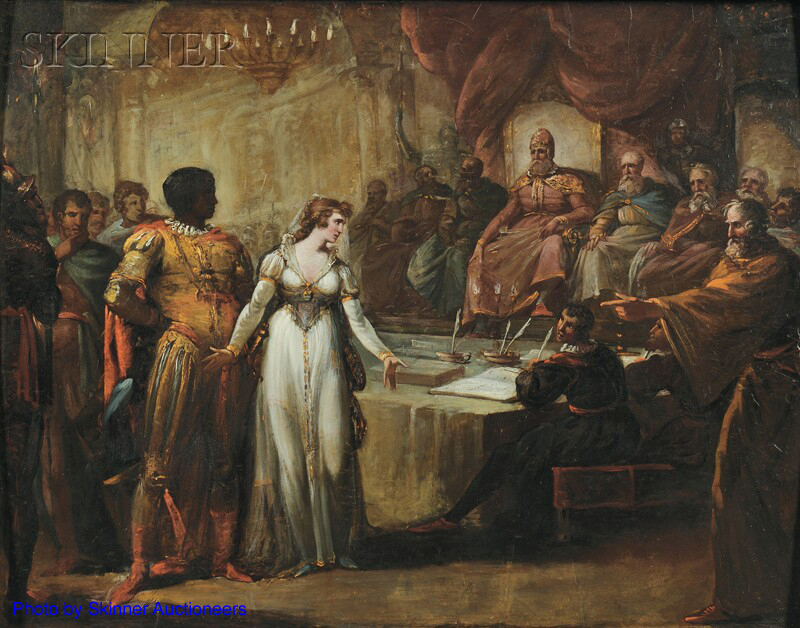
Desdemona has married Othello, but her father Brabantio cannot comprehend why a woman like her would disobey him, much less marry a black man. He is actually convinced that Othello must have used drugs or witchcraft to seduce Desdemona, and calls both of them to court before the Duke. The Duke hears the argument patiently and concludes that Desdemona’s love for Othello is genuine. In the lines above he speaks to Brabantio giving him friendly advice as if he were Brabantio’s conscience, (or the sense of judgment that he so clearly lacks). The Duke urges this father to let go of his “grief” over losing his daughter because it will only invite further suffering.

Sadly Brabantio doesn’t take this advice at all, and ‘warns’ Othello that she could just as easily betray him as she betrayed her father. Arguably, this plants the first seeds of doubt and jealousy in Othello’s mind, the seeds with Iago so carefully cultivates.

The miracle of Hanukkah is that the Israelites were able to see clearly who they were and preserve their culture in the face of annihilation. Sadly, the characters in Othello are all blinded- blinded by racism (Brabantio, Iago), lust, (Rodrigo), love (Desdemona), and jealousy (Othello). I thought Dr. Jones drew some very interesting parallels between Shakespeare and Hanukkah, and I’m happy to share them with you:

The original post: https://rebooting.com/article/the-miracle-of-shakespeare/

Spirit Halloween and Shakespeare

I’ve written before that Shakespeare helped influence Halloween as we know it- the images of holding skulls, witches chanting over a cauldron, and even ghosts coming back to plague their murderers all have Shakespearean roots. Exhibit A is how these images and tropes can even be found in beloved Halloween costume stores like Spirit Halloween!

If you like creepy Halloween activities and Shakespeare, please sign up for my fully online, fully asynchronous class: “An Immersive Guide To Shakespeare’s Macbeth!” The class features a digital escape room, an interactive quiz, and a special, undead guest!

Get $10 off my class “An Interactive Guide to Shakespeare’s “Macbeth” ” with coupon code HTHES4NHCN10 until Nov 3, 2023. Get started at https://outschool.com/classes/an-interactive-guide-to-shakespeares-macbeth-jp7TIh9B and enter the coupon code at checkout.

Activities For Students and Teachers: Make A Shakespeare Club!

Privacy Note

I’m not going to say where my club is or mention the names of the members for privacy’s sake. This post is to familiarize you with the idea, and hopefully inspire your school to do the same.

The Genesis

Like I said in my “Is Shakespeare Being Cancelled?” post, most teachers don’t have the time, training, or inclination to teach a really in-depth Shakespeare unit. Most classes I’ve worked in barely have enough time to cover the plot of Romeo and Juliet, before they need to work on another unit. This is why I started a Shakespeare club, to give kids time to engage with Shakespeare without having to worry about grades.

Mission Statement:

 Shakespeare was NOT meant to be read. In this club, we’ll engage with Shakespeare’s plays through games, sword fighting, dramatic readings, movies, and sometimes even recipes! The goal of the club is to have fun with classic works of theater.

Organization

Every month we will discuss a new play and try to explore different aspects of it each week. For each week we’ll do the following:

  1. Weekly questions such as: “What do you know about Shakespeare the man?” or, “Are Shakespeare’s plays still relevant today?”
  2. Group Close reading- Every month I’ll choose a different play to focus on. We’ll pick a scene or speech each month to look at and read aloud.
    1. I’ll provide some context, explaining what is happening in the play durin the speech, and any relevant historical context.
    2. There will be a dramatic reading, either by me (or a brave soul in the club).
    3. We’ll watch a recording and discuss their interpretation and what the students like and don’t like.
  3. Immersive activities such as:
    1. -Pool Noodle sword fights
    2. – Shakespeare’s arts and crafts and recipes such as gingerbread men contests and making costumes and props.
    3. – Shakespeare movie-watching party with such films as 10 Things I Hate About You, ‘O,’ “Gnomio and Juliet,” “Hamlet,” and others. 
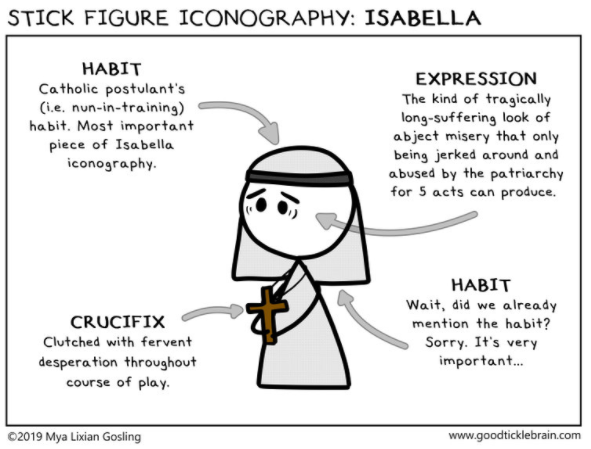
  4. Weekly challenges like “Find a Shakespeare quote that you use in normal speech,” “Find a movie or character that’s based on Shakespeare,” or “Draw a picture of a Shakespearean character (stick figures are acceptable). Each challenge is rewarded with a digital badge, which the students can trade for Shakespeare swag at the end of the month!

Meeting RecapS

  • Meeting 1: I talked about Shakespeare’s life, using the same format as this video:
  • Meeting 2: To get the kids to connect with Shakespeare’s plays, I had them take a personality quiz to figure out which Shakespeare play they might want to read:

https://www.zoo.com/quiz/which-shakespeare-play-fits-you

I then asked the students to research the play they got, then asked them to fill out a Jamboard, like the one I made below- using photos and short descriptors to get a general idea of their new favorite play!

So as the school year continues, I’ll create more recaps and post more discussions to let you know how this little experiment is coming. Since this is a new idea, I’d love to get your feedback because I want as many people as possible to help make this project a success!

My Top 10 Favorite Shakespeare/ Harry Potter Actors

This list is not about skill or the talent of the actor. This is to honor the contributions of Shakespearean actors who also appeared in one of my favorite film and book franchises of all time: Harry Potter. Accordingly, some of the actors who weren’t essential to either Harry Potter or Shakespeare or both are placed lower on the list even if I personally love the actor or the character they portrayed.

#10: Richard Harris- Albus Dumbledore

The Irish-born actor has been a veteran of stage and screen for decades before his death in 2002, after the second Harry Potter film. Here is him on Johnny Carson, telling a funny story about a production of Macbeth he did early in his career:

#9: Kenneth Branaugh- Gilderoy Lockheart

If you visit this website regularly, you know I’m a fan of Kenneth Branaugh– I’ve reviewed three of his Shakespeare movies and he’s my all-time favorite Hamlet. I’m also aware that he has a reputation of being a bit of an egotist and a womanizer, (since he had affairs with two women on this list), so even though he was a bit too old to play the part, it was nice to see him have a laugh at his own expense as the attention-hogging Gilderoy Lockheart. The humbug professor’s name actually Gilderoy (as in a man painted with false gold), gives away the twist that he takes credit for other witches and wizards’ work and Branaugh shamelessly mugs to the camera whenever he’s on screen. My favorite scene of his though, is the one serious scene where he teaches dueling with the help of the much more competent Professor Snape:

Kenneth Branaugh and Alan Rickman in Harry Potter and the Chamber of Secrets, (2002).

If you saw my post on the duel at the end of Hamlet, you can see that the way wizards duel is directly inspired by the way fencers fought in Hamlet, right down to the flashy salute and bow beforehand, and it’s neat to see two legendary Hamlets fight in it.

#8: Jim Broadbent (Horace Slughorn) / Timothy Spall (Peter Pettigrew [aka ‘Wormtail’]

I couldn’t decide between these fabulous actors, so I grouped them together. After seeing Timothy Spall as the cowardly, foolish incompetent spy and traitor Rosencrantz in Hamlet, I knew that the only Harry Potter role for him would be as Lord Voldemort’s toady and pathetic rat, Peter Pettigrew, aka Wormtail.

Broadbent on the other hand, is completely different and unrecognizable during his excellent portrayal of Lord Buckingham in Ian McKellen’s 1995 film version of Shakespeare’s Richard III. Unlike the meek and easily broken Horace Slughorn, Broadbent as Buckingham is an oily politician who very nearly sells his soul to McKellen’s diabolical Richard:

What unites these two portrayals is that both characters are corrupted by a figure of pure evil, but both have a breaking point- Buckingham, (as you see in the clip above), refuses to be a party to child murder, while Slughorn eventually helps Harry Potter destroy Voldemort. In a way, they’re two sides of a very flawed coin.

#7 Michael Gambon (Albus Dumbledore 2)

Like Richard Harris, Michael Gambon, (who passed away in September of 2023) was an accomplished stage and screen actor, famous for playing King Lear multiple times, including a famous performance with Antony Sher at the Royal Shakespeare Company. Here are some highlights of his stage work:

https://www.theguardian.com/stage/gallery/2015/feb/09/michael-gambon-on-stage-from-king-lear-to-krapp-in-pictures

#6: Fiona Shaw (Petunia Dursley)

I feel I have to give Fiona Shaw a good spot on this list, though I think her talent was wasted in the role of Petunia Dursley. She is an icon of British theater and her work in Shakespeare is superb. She famously played Richard II back in 1995, and in the short film below, she talks about her amazing interpretation of Measure For Measure, with fellow Harry Potter alumn, David Tennant.

I’d also like to include the best-deleted scene from Deathly Hallows with Shaw in it, where she admits to Harry for the first time that she misses her sister Lilly.

#5: Ralph Fiennes (Lord Voldemort)

In a way, Lord Voldemort was a role that Fiennes had trained for all his life. He has played smarmy, serpentine characters before in films like Red Dragon and Schindler’s List. But Fiennes’ Shakespeare training allowed him to tap into the evil megalomaniac at the heart of Voldemort when he played roles like Richard III, (another deformed autocrat), and Coriolanus, the Roman general who is himself compared to a dragon. In the video above, YouTube critic Kyle Kalgren analyzes how Fiennes’ past roles and experience with Shakespeare translated well in his performance and his direction of the 2011 film Coriolanus.

#4 Imelda Stanton (Delores Umbridge)

By contrast, I give more credit to Imelda Stanton, who mainly plays sweet mom-like characters (or nurse-like in the case of Shakespeare In Love), for embodying the utterly loathsome Delores Umbridge. Reportedly, the role made Stanton feel physically ill and unlike Richard III, people hate her character with a passion. By contrast, look at her sweet and charming portrayal of Maria in the 1996 film Twelfth Night, (which also starred Helena Bonham Carter):

#3 Helena Bonham Carter (Bellatrix Lestrange)/ Emma Thompson (Sybyl Trelawney)

Again, I had to give credit to both of these women for the startling transformations they did for their Harry Potter characters, as well as their stellar work in Shakespeare. Helena Bonham Carter mainly plays apealing aristocratic characters such as Olivia in Twelfth Night, and Ophelia in Hamlet:

Seeing Ms. Carter as the demented Bellatrix Lestrange was quite a shock for me, yet the performance was no less impressive. I especially love this scene in Deathly Hallows where she has to act like a 17 year old girl, TRYING TO BE BELLATRIX LESTRANGE

#2: Alan Rickman (Severus Snape)

I already wrote a tribute to Alan Rickman after his death in 2016, so I don’t wish to repeat myself. Suffice it to say that Mr. Rickman was always a consummate professional, and his iconic portrayal of Severus Snape was the performance of a lifetime.

Alan Rickman as Achilles in Troilus and Cressida, Royal Shakespeare Company.

Honorable Mention: David Tennent (Barty Crouch)

To be honest, I thought Tennant was miscast in Harry Potter- he can play villains, (as Good Omens fans know well), but he just isn’t great at being maniacal and evil. That said, Tennant is a rising Shakespearean star and has created many memorable performances from Richard II, to Benedick in Much Ado About Nothing, to Hamlet.

#1: Dame  Maggie Smith (Professor McGonigal)

Say it with me… you probably saw this coming. No one can deny that Dame Maggie’s contributions to Shakespeare, as well as her ubiquitous portrayal of Hogwarts’ current Headmistress Minerva McGonigal, stand the test of time as strongly as the animated chess pieces she placed in the school basement. Let’s look at some of her greatest Shakespearean moments.

Plug for my Acting Class

If you enjoyed this list, you might want to sign up for my Intro to Acting class or my extended acting course, where I delve into Shakespearean acting techniques, and answer the big question, “WHY DO SHAKESPEAREAN ACTORS KEEP GETTING CAST AS WITCHES AND WIZARDS?” To sign up, click the link below: https://outschool.com/classes/609658d1-3f9f-4371-8af2-4fe81ad13d8c

Cover art for my Outschool Beginning Acting Class.

Thanks for reading!

Dramatic PLay In Classes

Hi everyone,

I know I haven’t posted in a while. I’ve been working on my education certification so I’ve been pretty busy. My last project was about using theater as an educational tool, so I thought I’d reprint it here. I’ll add some notes later on to show how this can be adapted to Shakespeare, but for now, hopefully, this can be an interesting look at theater as a way for children to cope with trauma, etc.

INTRODUCTION

Numerous studies from educators, neuroscientists, and nonprofit organizations have demonstrated that children’s brains benefit from the arts. According to David A. Sousa in his book How the Brain Learns, human beings have used art forms as teaching from the very beginning of civilization, and every child’s early development can benefit from the kind of imaginative play that children naturally engage in:

Much of what young children do as play- singing, drawing, dancing…engages all the senses and helps wire the brain for successful learning. When children enter school, these art activities need to be continued and enhanced. The cognitive areas are developed as the child learns songs and rhymes. The dancing and movements during play develop gross motor skills, and the sum of these activities enhances emotional well-being.

(Sousa 215)

One method to continue this kind of artistic learning in a classroom is dramatic play or drama therapy: using theatrical games and techniques as a teaching tool. This paper will demonstrate how educators have used dramatic play to improve socio/emotional learning, as well as cognitive development. In particular, the studies and books cited in this paper will argue that a dramatic play intervention in schools would be beneficial to students who are facing challenges due to emotional disorders.

After reviewing case studies in drama therapy and reading literature on dramatic play, the author of this paper is convinced that a dramatic therapy intervention could and should be available to children with emotional disorders. The goal of the intervention is to help students with emotional disorders through creative play, dramatic exploration, textual analysis, and roleplay-based problem-solving. The suggested intervention would help students confront their problems in a safe way and help them develop problem-solving strategies over the course of a few weeks.

WHAT IS DRAMATIC PLAY?

According to West Governor’s University, dramatic play involves students taking on roles and acting them out to explore themselves and their surroundings. WGU’s website identifies two basic types of dramatic play- structured and unstructured. In the case of structured play, it may take the form of roleplaying scenarios, or performing a specific group activity or task. Finally, the play may center around interpreting a text such as a book, play, or some other artform. The roles the students play need not be a pre-written story. When students take on these roles to play, they may better understand their real-life roles and how to perform them in real life.

In her 2015 article, Analysis of Three Approaches in Dramatherapy, Ivana Lessner Listiakova compares and contrasts three approaches of drama therapy: Role Theory, Psychodrama, and Developmental Transformation. In all three approaches, participants may gain a new understanding of themselves and a healthy way of processing their emotions. Within Role Theory, participants examine Jungian archetypal roles and counter roles within themselves by embodying them. In Psychodrama, participants enact moments from their own lives and have emotional and mental epiphanies by looking at those moments with a critical eye. Finally, in Developmental Transformation, participants arrive at roles and stories organically through a sort of “improvised series of encounters,” rather than a set story that is agreed upon beforehand. Listiakova emphasizes that these approaches work within psychotherapy because rather than the direct uncomfortable confrontations found in traditional therapy, dramatherapy uses the theater’s distance from the client and the metaphorical nature of storytelling to allow clients to see the issues and emotions that they face in their lives in a new light.

HOW DRAMATIC PLAY BENEFITS CHILDREN WITH EMOTIONAL DISORDERS.

A study by Roundabout Dramatherapy in 2013 in the journal Dramatherapy (Godfrey 20-28), demonstrates how drama therapy can specifically benefit developmental disorders like Autistic Spectrum Disorders (ASD). Roundabout is a London-based charity aimed at improving the lives of children on the Autism Spectrum. Through a collaboration with Emma Godfrey, (a psychotherapist and drama therapist), this article chronicled the success of its drama therapy sessions over three primary schools and five secondary schools. Before and after each program of drama therapy, teachers, parents, and students submitted evaluations and questionnaires to Roundabout.

The students showed marked improvement in the following specific areas: [processing}f, working with peers, social skills, structure, and anxiety. Most children on the Autism spectrum struggle with these very skills, therefore this kind of play was incredibly useful for these students. The activities encouraged at Roundabout developed specific life skills such as saying hello and goodbye and relaxation techniques to quell anxiety:

Dramatherapy is particularly appropriate for this client group as it develops social skills and supports the expression of feelings through structured work that helps reduce anxiety. The dramatherapist can model clear, expressive communication, as well as facilitate the development of relationships with others, which gives participants numerous opportunities to rehearse and replay social skills until they are learned and integrated into behavior. (Godfrey 21)

Godfrey’s study showed that students with ASD benefited from modeled play, in which the teachers rehearsed and practiced important life skills in class that taught the students how to compensate for their inability to intuit social cues. As this quote from a parent whose child was part of the study illustrates, dramatherapy can help ASD students gain a better understanding of themselves, how to interact with people, and help them develop tools to engage with others and control their anxiety and other forms of emotional stress:

It has really helped him to understand his emotions and friendships more. At times he has found it challenging but it’s been great for him to do that in a safe and caring environment where the people running it understand his issues (Godfrey 25).

The sources cited above confirm that students with emotional disorders can benefit from different forms of dramatic play and develop coping mechanisms and skills to help enrich and improve their lives.

DISCUSSION AND RECOMMENDATION

As the literature previously demonstrates, dramatic play is an excellent educational tool to help students process their emotions and prevent anxiety through role-playing while promoting social, emotional, and physical health. The author’s suggested interventions, like the study by Roundabout, would carefully monitor child development as students engaged in formal and informal activities to help develop social skills, reduce anxiety, and develop emotional coping skills.

A potential format for the intervention would be to start with unstructured drama games designed to engage the children’s imagination, and promote positive emotion. The teacher would then move into a check-in-check-out therapy to guide the students into thinking about their feelings and social situations that the therapy would address. The class could then turn to role-play and role theory, where students would explore sources of stress, anxiety, or difficulty in a safe roleplay-based setting. The session might then conclude with a creative group project such as superhero play, or reading and acting out a storybook or text, (with emphasis on books that promote healthy social and emotional behavior).

The work of Sousa, Godfrey, Hereford, and others indicates that dramatic play can be a powerful method to improve the lives of children with emotional disorders, and their techniques would translate well to children with anxiety, Autism Spectrum Disorders, or depression. The potential intervention described in this paper would use these techniques effectively to benefit children with these and other emotional disorders. Since the onset of COVID-19 in 2020, mental health has been a big concern in schools, and cases of ASD have been increasing over the last few decades (Godfrey 21). There has never been a greater need for mental health interventions in classrooms, and dramatic play is a particularly effective method to help the growing number of children who require intervention.

Works Cited

Brooks, A. (2015). 5 Reasons Dramatic Play Matters for Child Development | Rasmussen College. Rasmussen.edu. https://www.rasmussen.edu/degrees/education/blog/why-dramatic-play-matters/

Dramatic Play: What It Is and Why It’s Important. (2021, November 5). Western Governors University. https://www.wgu.edu/blog/dramatic-play-what-is-why-important2111.html#close

Godfrey, E., & Haythorne, D. (2013). Benefits of Dramatherapy for Autism Spectrum Disorder: A Qualitative Analysis of Feedback from Parents and Teachers of Clients Attending Roundabout Dramatherapy Sessions in Schools. Dramatherapy, 35(1), 20–28. https://doi.org/10.1080/02630672.2013.773131

Kissinger, K. (2017). Anti-bias education in the early childhood classroom : hand in hand, step by step. Routledge.

Laurence, M., & Curtis, D. (2019, December 1). Look, Listen, Learn. “We Are Power Rangers!” Learning from Children’s Dramatic Play | NAEYC. Www.naeyc.org. https://www.naeyc.org/resources/pubs/tyc/dec2019/childrens-dramatic-play

Nancy Jo Hereford, & Schall, J. (1991). Learning Through Play. Scholastic Inc.

Sousa, D. A. (2017). How the Brain Learns (5th ed.). Corwin, A Sage Publishing Company.

Richard the Third and Toxic Masculinity

This past month, there was a free production of Richard III in New York’s Shakespeare In the Park, starring Danai Gurira as the title character. I have not seen this production, though I wish I had. I enjoyed the actress Ms. Gurrira in such films as “Black Panther,” and would love to see her do Shakespeare. What is more, the concept intrigues me. This project explores themes of toxic masculinity, racial identity, inferiority, and misogyny.

Danai Gurira as Richard III, Shakespeare in the Park, 2024

https://www.npr.org/2022/07/10/1110359040/why-it-matters-that-danai-gurira-is-taking-on-richard-iii

Unsurprisingly, with so many heady topics in the production, this Richard III is still somewhat controversial. Some right-wing critics dismissed the whole production as a piece of ‘woke propaganda,’ but I feel this is unfair.

When Danai Gurira of Marvel’s “Black Panther” first takes the stage in the title role, the actress has no perceivable hunchback or arm trouble. And yet the dialogue suggesting Richard suffers from a lifelong physical issue (“rudely stamped”) has been kept in. Perhaps we are to use our imaginations. Who knows? We are certainly tempted to close our eyes.

By Johnny Oleksinski

I will not judge this production based on the acting because I haven’t been able to see it. What I will do is take a stance on the validity of the concept. Specifically, I want to ask if this play is a good examination of toxic masculinity and if it would it be worthwhile to see it portrayed by a black woman, as opposed to a white man. The short answer is an emphatical “Yes.”

https://variety.com/2022/legit/features/danai-gurira-richard-iii-toxic-masculinity-central-park-1235318196/

Richard’s Toxic Masculity

Richard III is definately an example of toxic masculinity. He is violent, full of hatred, vengeance, and mysogeny. He is constantly insulting women from Lady Anne, Jane Shore, Queen Elizabeth, and even his own mother. In fact, the source of Richard’s toxic attitude is that he blames his mother for his disability and deformity:

Well, say there is no kingdom then for Richard;1635
What other pleasure can the world afford?
I'll make my heaven in a lady's lap,
And deck my body in gay ornaments,
And witch sweet ladies with my words and looks.
O miserable thought! and more unlikely1640
Than to accomplish twenty golden crowns!
Why, love forswore me in my mother's womb:
And, for I should not deal in her soft laws,
She did corrupt frail nature with some bribe,
To shrink mine arm up like a wither'd shrub;1645
To make an envious mountain on my back,
Where sits deformity to mock my body;
To shape my legs of an unequal size;
To disproportion me in every part,
Like to a chaos, or an unlick'd bear-whelp1650
That carries no impression like the dam.
And am I then a man to be beloved?
O monstrous fault, to harbour such a thought!. 3H6, Act III, Scene i, lines 1635-1653.

Now I should clarify the difference between deformity and disability, which are characteristics that Richard III has as part of his character makeup. According to the Americans With Disabilities Act, a disability is defined as: “A physical or mental impairment that substantially limits one or more major life activities.” This could include paralysis, autism, or any number of congenital or acquired conditions. Richard’s disability is primarily his limp (caused by his unequally shaped limbs), and his withered arm. What’s interesting in this production is that while the title role is played by an able-bodied woman, most of the rest of the cast have actual disabilites. Watch this clip of the famous courtship scene between Richard and Lady Anne, who plays her role in a wheel-chair.

While a disability is a legal term that is recognized by lawyers and governments alike, the term “deformity” is more subjective; it generally refers to any kind of cosmetic imperfection. In Richard III, this applies to Richard’s hump and withered arm. 

The Elizabethans thought that deformity was a sign of disfavor from God, and that deformed people were constantly at odds with God and nature, as Francis Bacon puts it in his essay, “On Deformity.”

As deformed people are physically impaired by nature; they, in turn, devoid themselves of ‘natural affection’ by being unmerciful and lacking emotions for others. By doing so, they get their revenge on nature and hence achieve stability.

Richard III has this drive for revenge in spades and I believe it manifests itself as a particularly terrible form of toxic masculinity. Richard definitely wants the crown to make up for his lack of ‘natural affection,’ but he is also especially malevolent towards women.

I, that am rudely stamp’d, and want love’s majesty

To strut before a wanton ambling nymph;

And therefore, since I cannot prove a lover,

To entertain these fair well-spoken days,

I am determined to prove a villain

And hate the idle pleasures of these days

Seeing a woman play this kind of misogynist dialogue forces the audience to take it out of context and question Richard’s point of view. We see casual misogyny every day, and seeing a woman deliver it is quite illuminating.

Richard’s deformity and Blackness

Another provocative choice by Danai Gurira’s portrayal of Richard is the fact that she plays the role of Richard without the hump or withered arm. She herself explains that for her production, Richard’s perceived deformity, is actually represented by her being a black woman:

He’s dealing with the otherness compared to his family, in terms of not being Caucasian and fair like them.” The word ‘fair’, is used a lot in the play.

Danai Gurira’s

Shakespeare writes Richard as constantly striving to compensate for his deformities by being clever, violent, and eventually, by becoming king. As I wrote before in my review of Othello, for centuries black people have been portrayed as inferior; aberrations of the ‘ideal fair-skinned form’. So, to the Elizabethans, blackness itself was a form of deformity, and the rawness of addressing this uncomfortable fact in this production should be commended.

English people are already trained—and we have scholars like Anthony Barthelemy has talked about this in his book Black Face, Maligned Race, where the image of blackness, as associated with sin, with the devil, all of these things, makes it quite easy to map onto then Black people these kinds of characteristics. Then, those kinds of characteristics allow for the argument that these people are fit to be enslaved. – Dr. Ambereen Dadabhoy, Race and Blackness in Elizabethan England Shakespeare Unlimited: Episode 168

https://www.folger.edu/shakespeare-unlimited/elizabethan-race-blackness-dadabhoy

So while I can’t speak to the production’s acting or staging, I will emphatically defend the notion that this production’s concept is valid. Richard III is an example of toxic masculinity through his self-hatred, violence, misogyny, and narcissism. In addition, as I’ve written before, in the Early Modern Period, blackness was considered an aberration or deformity, and seeing it in the person of Richard, with the implicit understanding that black people still face this kind of prejudice today, opens a much-needed dialogue that any production of Shakespeare shouldn’t be afraid to open.

In short, by re-contextualizing Richard’s deformity and disabilities, this production gets to the heart of the play’s moral for our times. The early modern period’s toxic attitudes towards deformity and disability created the Renaissance monster of Richard III. We in the 21st century must examine our own societal prejudices and toxic attitudes so this monster does not come to haunt us in real life.

The Awesome World of “Six” Part II: Full Review Of the Show

I am just ecstatic to talk about this year’s hit Broadway Musical Six. It swept the Tonys, and has opened up touring productions across the country, and I JUST GOT TO SEE IT!

Part I: The Concept: A Historemix.

Welcome to the show, to the histo-remix
Switching up the flow as we add the prefix
Everybody knows that we used to be six wives

The cast of Six “Ex Wives”

This vibrant, clever retelling of Tudor her-story was created by TOBY MARLOW & LUCY MOSS in association with the Chicago Shakespeare Festival. The show is incredibly smart, and creative, and delves into the lives of some fascinating women, re-told as a singing contest with the characters singing their lives for you to judge what it was like being the queen of England and living with the turbulent and fickle Henry VIII.

What really appeals to me in this show is that like Hamilton, the musical takes these six semi-mythical women and tells their story in a way that is fresh and exciting. It bridges the gap between Tudor History and the modern-day by equating being a queen with being a celebrity, with all the drama of ambitious parents, romantic drama, public opinion, and even being exploited and sexualized by a male-dominated society. This comes across in the music, the costumes, the lyrics, and even the lighting!

Why “Six” Slaps

The costumes are brilliant and iconic. Catherine Of Aragon is like a cross between Beyonce, a saint, and a medieval knight. The lighting is incredible! You could tell the whole story using the lighting design as it pulsates, dances, changes into different colors, turns into different shapes, and finally flashes the name of the show in triumphant gold letters.

One particularly brilliant way the music works in “Six” is the fact that it uses the song “Greensleeves” as a motif both musically and thematically. One big theme of the show is how, unlike Henry VIII, most of the history of his six queens is lost and replaced by legends and even songs. The first line of the show is the famous rhyme about their fates: “Divorced. Beheaded. Died. Divorced. Beheaded. Survived.” As the video above helps illustrate, Marlowe and Moss know that most people only know the rhyme about their deaths and the myth that Henry wrote a song about one of them; that their lives are overshadowed by their deaths and the misconceptions that people have written over the years. Howard Ho points out how the song musically forces itself into the first number, “Ex Wives,” but by the end of the show, the six queens break free from these musical bars! You can hear the change of key and notes during this performance at the Tonys, which puts the opening number and closing reprise together.

The Cast of “Six” perform live at the 2021 Tony Awards.

But how do the queens go from “one word in a stupid rhyme,” to a group of powerful, individual queens singing in harmony, without the man who made them famous? That’s what the solo numbers in “Six” do so incredibly well- tell each queen’s solo stories as rocking ballads, hilarious dis-tracks, soulful love songs, and… well stay tuned.

Part II: The Women and Their Queenspirations

1. Catherine of Aragon

Catherine of Aragon was Henry’s first wife and is still universally beloved, even though Henry decided to divorce her. As the epitome of a stand-alone power queen, it makes sense that Six modeled her character, costume, and songs after Beyonce, with a Shakira-inspired Spanish beat for good measure:

My favorite thing about her solo, “No Way” is how the writers paraphrase her real-life speech during the divorce trial in 1529. Below are the lyrics and the real speech:

You’ve got me down on my knees
Please tell me what you think I’ve done wrong
Been humble, been loyal, I’ve tried
To swallow my pride all along
If you can just explain
A single thing I’ve done to cause you pain, I’ll go

(spoken)
No?

[sung]
You’ve got nothing to say

I’m not going away
There’s no way

Alas, Sir, where have I offended you? Or what occasion have you of displeasure, that you intend to put me from you? I take God and all the world to witness that I have been to you a true, humble and obedient wife, ever conformable to your will and pleasure. This twenty years and more I have been your true wife, and whether it be true or no, I put it to your conscience.

— Katherine of Aragon, 1529

2. Anne Boleyn

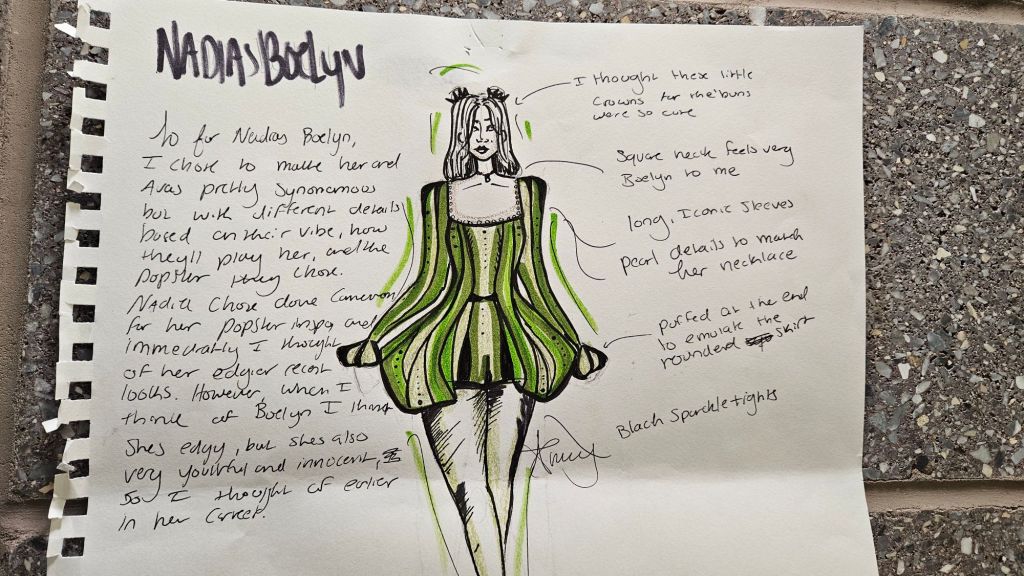
In some ways, the version of Anne Boleyn in “Six” is less a pop version of the real queen and more of a commentary on the nature of celebrity. If you watch the video, you can see how in life she was admired for her beauty and fashion but hated for her comments on Queen Katherine, her scandalous love affairs, and her brash nature. This explains the spiky pop-punk princess look they gave her, (which evidently resonates with many audiences since I saw at least two girls cosplaying as Anne in the audience). Sort of like a celebrity who gets canceled on Twitter or Princess Diana, Anne shows how a person can be undone when they dare challenge an established order, especially the Royal Family.

After the show, I found it a bit weird that they portrayed Anne Boleyn as a jetsetting airhead, but then again she is one of the best-known queens in history, so they can get away with it. In reality, Anne Boleyn was highly educated and a member of an ambitious and social climbing family who basically pushed her to woo Henry. As you can see in this clip from “Anne Of A Thousand Days,” Henry and Anne’s family bullied her constantly to become the King’s mistress after HE ALREADY GOT HER SISTER PREGNANT, so Anne knew that the only way to keep Henry from ruining her life was to convince him to divorce Katherine of Aragon and marry her.

Of course, this strategy didn’t save Anne in the end, which says more about how cruel Henry VIII was, chewing up women and spitting them out in his ravenous quest for a son. So is this an accurate portrayal of Anne’s life? No. Is it fun, ABSOLUTELY!

III. Jane Seymore

I’m more than I seem, or am I?

“Six” The Musical.

This version of Jane Seymore was inspired by Adele, so appropriately, she has a heart-wrenching power ballad about her turbulent relationship with Henry. Sadly, we don’t know much about Jane’s real life, so the song takes some liberties. If you go to the Hampton Court Website, you can actually vote as to whether Jane was a devoted wife or a social climbing gold-digger. Probably the real woman was something even more complicated, though we’ll never know for sure.

IV. Anne of Cleaves

Anne of Cleaves is the funniest part of the show! Many of us have heard the story that Henry divorced Anne after he found her ‘ugly.’ What “Six The Musical” does is amend the story, by pointing out that after he divorced her, Henry gave her a castle and a huge retainer, allowing her to live like a queen, without being married to a king! Accordingly, her song is a Rhianna-style dis track that shows off her awesome lifestyle, and spits in Henry’s stupid face!

As fun as this, rags-to-riches story is, the truth is less fun- Anne was the sister of a German duke, so Henry’s lord Chancellor Thomas Cromwell probably forced Henry to marry her for diplomatic reasons (source: Hampton Court: “Anne of Cleaves”). Naturally, Henry didn’t like being told what to do- I suspect he resented Anne before even meeting her because he didn’t get to pick her himself.

As for whether Anne was actually ugly, the truth is really surprising- Henry actually disguised himself as a peasant during a masked ball when he first courted Anne, and she found him repulsive. At the time, Henry was 49 years old, and in very poor health. As such, he was intermittently impotent and blamed his inability to conceive a child with her on her supposed ugliness to save face.

Even though Anne in the show hates Henry, in reality, once the marriage was annulled, Anne and Henry remained good friends for years! She attended his next wedding to Katherine Howard, and, just like in the show, Henry treated her much better after the divorce:

‘YOU SHALL FIND US A PERFECT FRIEND, CONTENT TO REPUTE YOU AS OUR DEAREST SISTER. WE SHALL, WITHIN FIVE OR SIX DAYS …DETERMINE YOUR STATE MINDING TO ENDOW YOU WITH £4000 OF YEARLY REVENUE…YOUR LOVING BROTHER AND FRIEND.’

Henry VIII, 1548, six months after their wedding, when the annullment went through.

V. Katherine Howard

Without question, Katherine Howard is portrayed as the most tragic of Henry’s six wives and her song is a huge sucker punch. The writers never let you forget that Katherine’s first affair was when she was 13, and she died at age 19. Like Anne Boleyn and Jane Seymore, Henry picked Katherine for his queen among his ladies in waiting and her song “All You Wanna Do” satirizes his and many other men’s lustful appetites. The song begins as a raunchy, sexy pop ballad in the vein of Britney Spears’ “Toxic” and “Womanizer” about Katherine Howard’s love affairs, but then devolves into a cry for help, as Katherine confesses how she was abused, used, and manipulated by the men in her life, (including her own cousin Thomas Culpepper) until she was beheaded in 1542. It masterfully satires both Henry’s cruelty and the hypersexualization of teenage pop stars which certainly took its toll on Britney Spears and Ariana Grande, Katherine’s major ‘Queenspirations.’

VI. Katherine Parr

Historically, Katherine Parr had to turn away her fiancee Thomas Seymore (just like Anne Boleyn was previously engaged to Henry Percy) once the king set his eyes on her for his wife, so her song is a sad, soulful Alicia Keys-inspired bittersweet song where she tearfully says goodbye to Thomas to spare his feelings and probably his life.

Not only does this song once again show how Henry’s selfishness and his lust ruined the lives of the women he married, (as well as the men who already wanted to marry them), but it also sets up the main idea of the show:

His-Story overthrown

In the final number, the wives turn the tables on Henry- they have spent centuries being defined by him, but in reality, he is just as much defined by them! Going forward, history should not define these great women as just, “The Six Wives of Henry the Eighth,” but to celebrate their individual lives and contributions to history. Katherine Parr mentions this when she points out that in life, she fought to allow women to be educated, she wrote books, and was a scholar of theology. Historically, Henry and Katherine would argue about religion and he nearly executed her after she disagreed on points of theology, but Katherine kept her life by claiming she was “Not disagreeing with [him], but simply learning from [him].”

Remember that I was a writer
I wrote books and psalms and meditations

Fought for female education
So all my women can independently study scripture
I even got a woman to paint my picture
Why can’t I tell that story?
‘Cause in history
I’m fixed as one of six
And without him
I disappear
We all disappear

Genius Annotation2 contributors

I Don’t Need Your Love is sung by Catherine Parr in SIX: The Musical. The first part of the song refers to her love of Thomas Seymour, whom she probably wanted to marry rather than Henry (and did marry after Henry’s death). However, the song also protests at the fact that women are often defined by their relationship with men, rather than as people in their own right. Catherine wants to be remembered for what she did, rather than the men she married or loved.

Katherine Parr, Six.

The final number completes the idea of the ‘historemix’ by having the Six queens/pop stars come up with a re-imagined happy ending for themselves, one that doesn’t include the pain that Henry inflicted on them: Katherine A becomes a singing nun, (like Whoopi Goldberg in Sister Act), while Anne Boleyn starts writing lyrics for Shakespeare (which is a fun idea since he does mention “Greensleeves” twice). Jane Seymore forms a band with her many surviving children, Katherine Howard goes solo, and Katherine Parr joins the other queens in a supergroup. It’s not at all historical, but it is a fun and sweet way to put an epilogue on these (mostly) tragic lives.

It’s odd, however, that the show invents an epilogue instead of talking about the six queen’s greatest legacy- Queens Elizabeth and Mary I. For a show that wants to highlight the often-forgotten legacy of these queens, it is an odd oversight. Remember Catherine and Anne gave birth to queens who eventually ruled England without a king. Jane Seymore gave birth to a king, and Catherine Parr helped raise them and restored them to the line of succession- She’s the reason her stepdaughters were able to become queens in the first place.

My issues with the epilogue aside, it is great to see history be recontextualized and shared in such an accessible way. We all know that European history is dominated by the names of white guys- king whoever, duke what’s-his name. To see important women in history be given a voice by a multi-ethnic cast is a great way to make it resonate, and using the metaphor of pop stars works extremely well in this context- these women mostly didn’t choose stardom, but they deserve it for what they went through.

Brava.

Educational links related to the six wives of Henry VIII:

Books

TV:

Web:
https://www.history.com/news/henry-viii-wives

https://sixonbroadway.com/about.php

https://www.hrp.org.uk/hampton-court-palace/history-and-stories/anne-of-cleves/

Resources on Shakespeare’s History Plays:

Books

  1. Shakespeare English Kings by Peter Saccio. Published Apr. 2000. Preview available: https://books.google.com/books?id=ATHBz3aaGn4C
  2. Shakespeare, Our Contemporary by Jan Kott. Available online at https://books.google.com/books/about/Shakespeare_Our_Contemporary.html?id=QIrdQfCMnfQC
  3. The Essential Shakespeare Handbook
  4. The Essential Shakespeare Handbook by Leslie Dunton-Downer and Alan Riding Published: 16 Jan 2013.
    77ace26dfdee4259bf48d6eed1a59d57
  5. Will In the World by Prof. Steven Greenblatt, Harvard University. September 17, 2004. Preview available https://www.amazon.com/Will-World-How-Shakespeare-Became/dp/1847922961

TV:

The Tudors (TV Show- HBO 2007)

“The Six Wives of Henry VIII” (BBC, 1970)

Websites