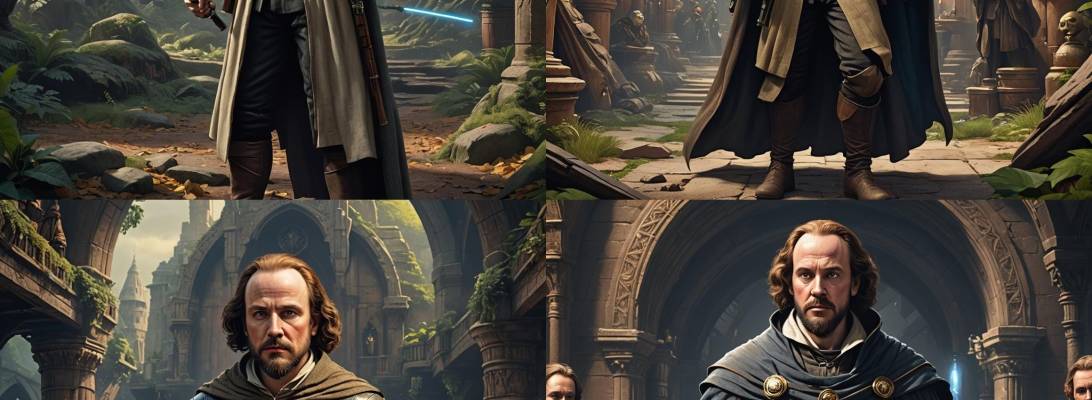
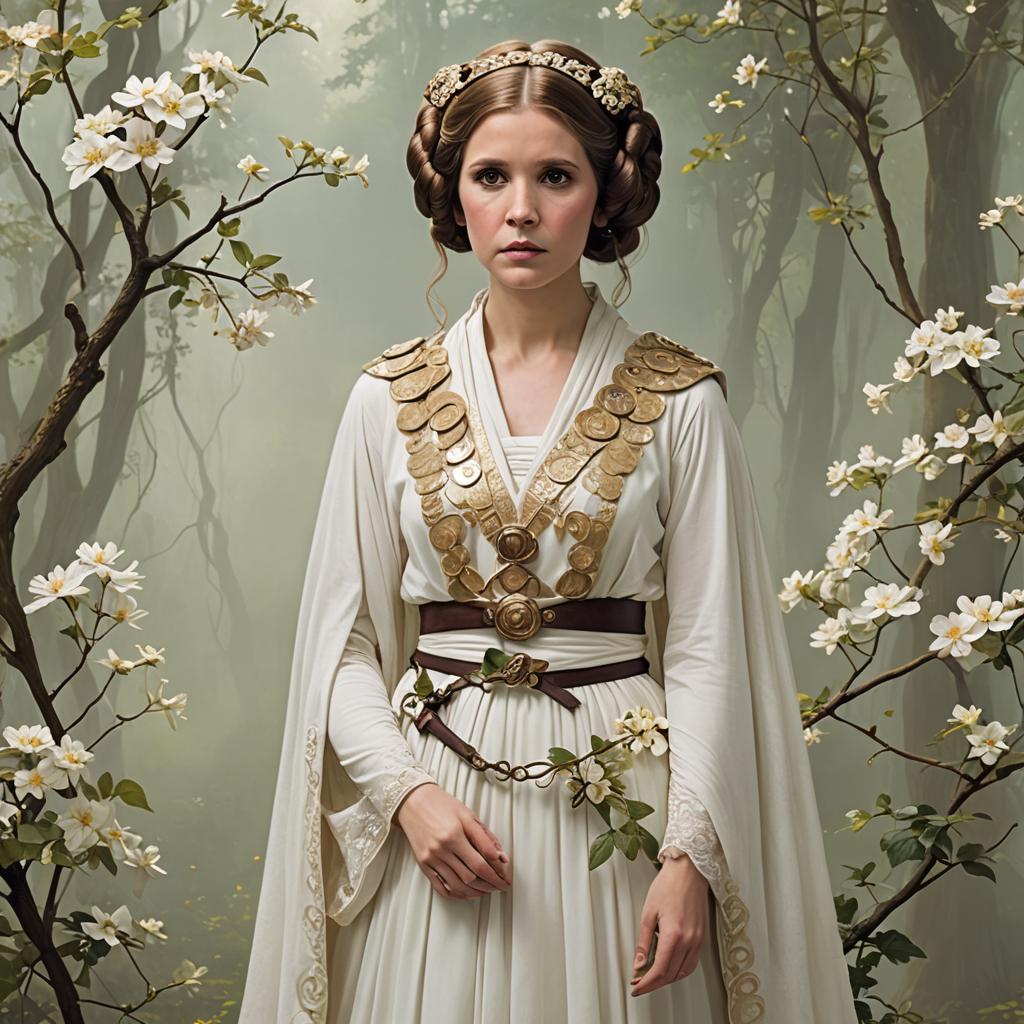
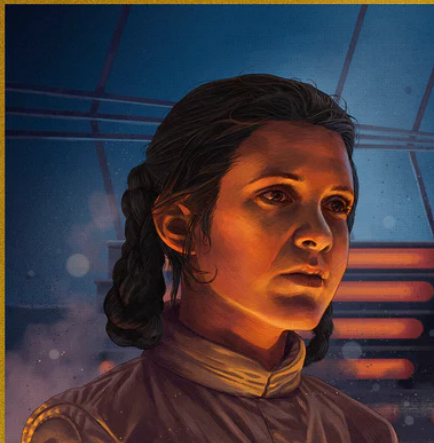
Emperor Palpatine as a grim Shakespearean villianSpace-age YorrickThis one is supposed to be Shakespeare with Yoda ears, but oh well.I think Shakespeare makes a fine Jedi knight.Older Obi WanI told it to draw Obi Wan next to Luke with a green lightsaber. I didn’t expect Anikin would tag along.Almost like old Obi Wan is trying to protect young Obi Wan. There’s a metaphor in there somewhere.Princess Leia as Ophelia from “Hamlet”
I’m working on my annual podcast on “William Shakespeare’s Star Wars” and some accompanying posts and YouTube videos. In the meantime, I’ve created some Shakespeare-Star Wars artwork via Night Creator, a free, online AI artwork website. It’s enjoyable, easy, and I hope you enjoy these “compositions.” To see more of my AI-generated art, go to this website:
Me singing “Brush Up Your Shakespeare” in honor of the Bard’s birthday, 2025
Today, April 23 is the established birthday of William Shakespeare! Today I’ll share some of my favorite posts, videos, podcasts, and quirky recipes related to Shakespeare!
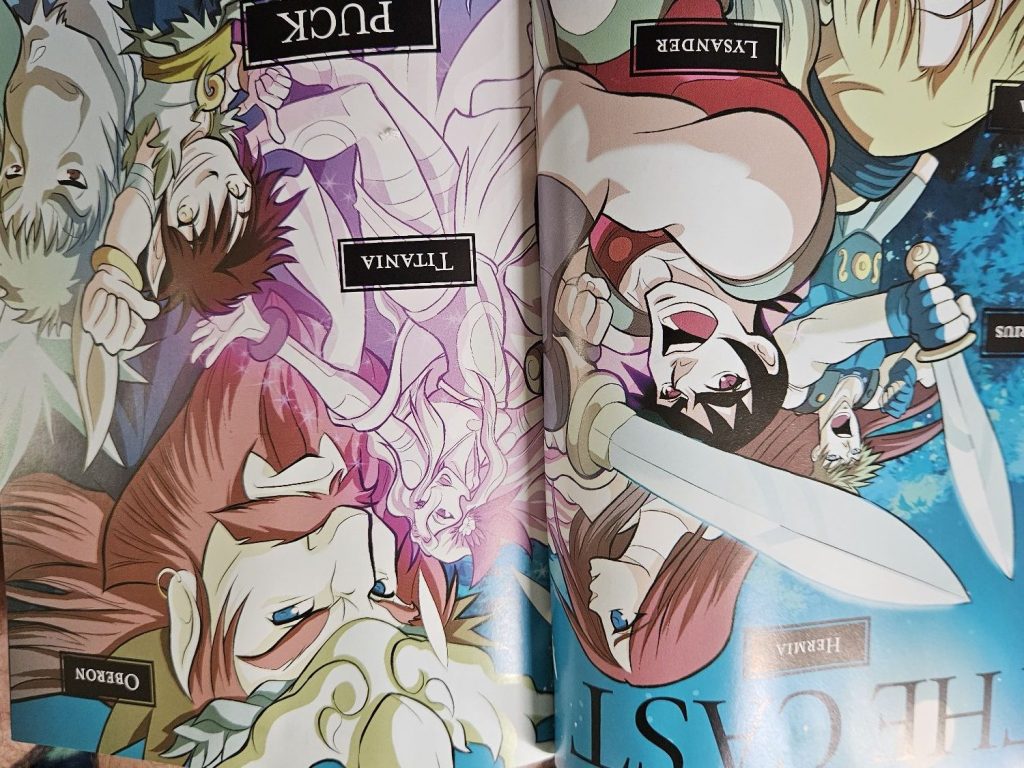
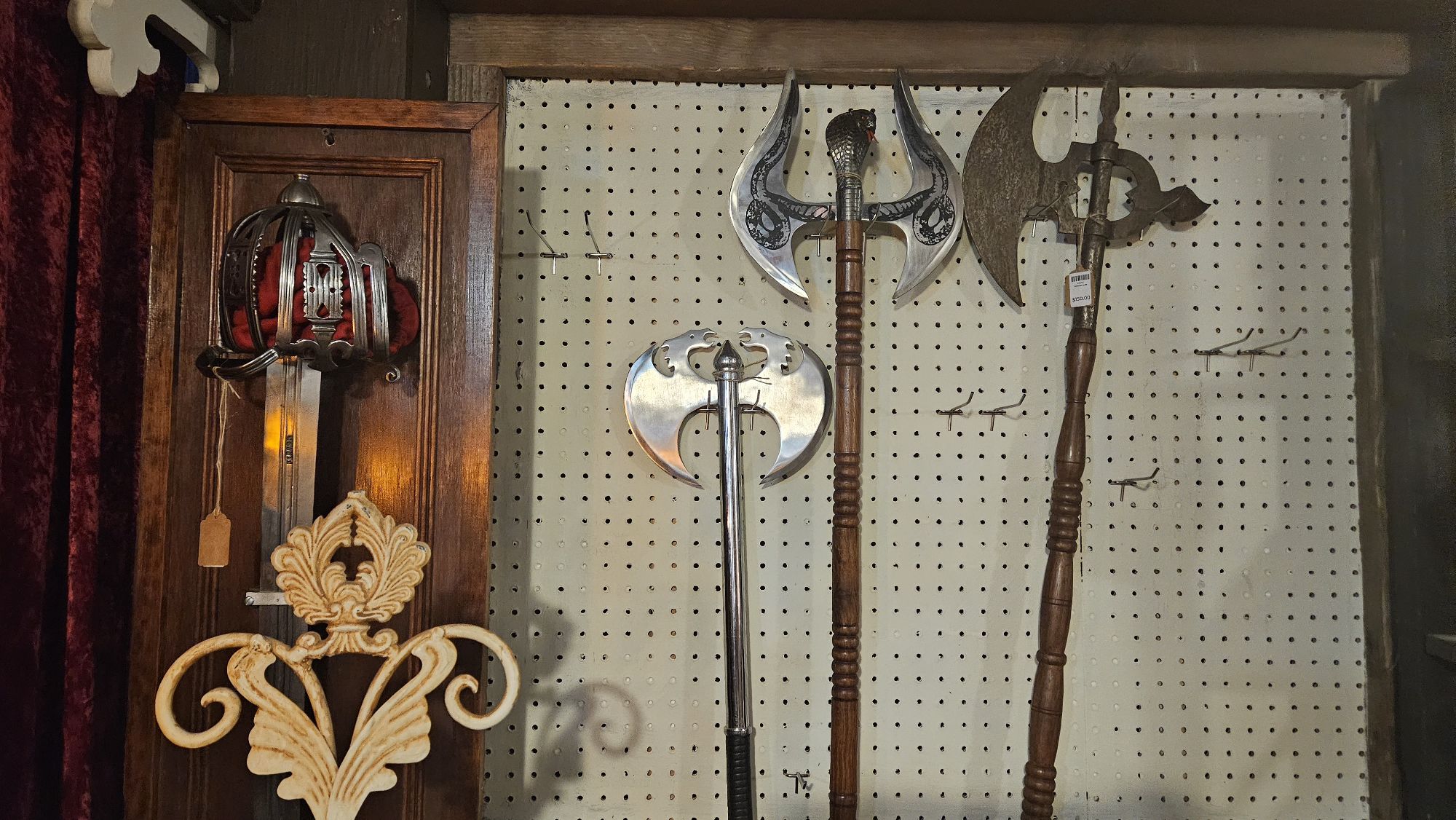
:: AuthoR’s NOTe::This book is the result of a lifelong interest in thesword. Since childhood I have doodled and drawnthis noble weapon, my mind aswirl with imagesof blades and hilts of every shape and size. I wassmitten with the symbolic power of the swordand fascinated with its history as a formidabletool ofwar.Here, as an adult,… Read more: Swords
The Child is locked within that room, alack!Too high to fly and the doors are far too thickPerhaps this console I can disarm or hackO Fate! Thou play’st upon me yet another trick.To enter I must show this Droid my face A thing most vile, against my holy creed.Methinks I hear The Armorer’s voice ‘cross… Read more: Sonnet inspired by the Mandolorian
What’s a classic book that you think is overrated? As a big Shakespeare nerd, I love all of Shakespeare’s plays, but even I have to admit some of them have been overhyped and over sold. In fact, I basically started my Shakespeare Club because I wanted my students to read more than this one Shakespeare… Read more: Is Romeo and Juliet Overrated?
Get $10 off my classes with coupon code Get $10 off my classes Wizard Science for Kids!” with coupon code HTHES4KG1E10 until May 23, 2026. Get started at https://outschool.com/classes/wizard-science-for-kids-KmqzT8U0 and enter the coupon code at checkout.
For my Shakespeare club, my actors and I are reading William Shakespeare’s Star Wars: The Empire Striketh Back. We started staging the scene today and I’d like to publish some of our work and our discoveries going through the text.
The Scene In Context
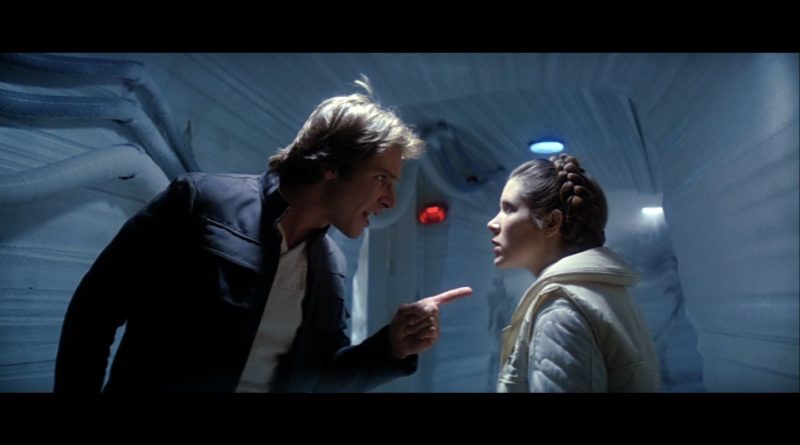
Han and Leia have a fight before he leaves in “The Empire Strikes Back”
The scene is the first moment where Han Solo and Princess Leia display their repressed feelings for each other. Han wants to stay with Leia, but he has a bounty hunter trying to hunt him down. Also, Leia has not directly given him any sign of affection, (though Han suspects that she does have feelings for him). He wants her to ask him to stay, not because of his service to the rebellion, but because she loves him back.
Ian Doescher’s Version
Leia And Han, Act I, Scene ii [Enter Han SL, Leia enters after. stops. L: Han, halt! H:[Turn to her, bows] What is thy pleasure, Highness? L: I did believe that thou had chos’n to stay. H: [Center Stage turn out] The bounty hunter we did meet on Ord Mantell hath chang’d my mind L: -We need thee Han. H: [Turn to her] What “we?” Why speakest thou of “we?” (circling her) Dost thou in royal terms speak her of “we?” (Hands on shoulders) Hast thou a rodent in thy pocket such That thou and he are “we? (holding her hands)” What meanest thou? What need is there that thou dost share with all? [moving her center stage] [Turning to audience] Speak not of “we,” but “I.” O princess, what Dost thou most need? Not “we,” not “they,” but thou? L: [Turning to him] I know not what thou speakest of. H: [pointing at her] - ‘Tis true. Most probably thou dost not know thyself. L: Thy vanity [takes his pointer finger and points it to the sky] Hath puffed up thine imagination. H: -Aye? (Smiling) Then why doest thou yet follow me? Wert thou Afraid I would depart without a kiss? [He stands behind her, looking at her as if he's about to kiss her cheek. She steps on his foot] L: I would as eagerly kiss Wookie lips. H: That can arran`ed be. [He turns SR, starts to leave, then turns back to her.] By heaven’s breath, A kiss would suit thee well! [Exits SR}
My podcast episode about the scene
Like Han in the original script, Doescher latches on to the fact that Leia says “We need you Han,” instead of “I need you,” (which would confirm Han’s suspicions that she has feelings for him). Doescher’s Han has a mocking speech where he tries to coax Leia into saying what she truly wants from him. In both versions Leia, (annoyed with Han’s childish behavior), retorts by saying that she would rather kiss a Wookie, but in Doescher’s version, she also has a soliloquy where, like Beatrice in Much Ado About Nothing, she laments that she would admit her affections if Han could put his ego aside and woo her gently, instead of his accustomed taunts and mockery.
The Verse
If you read my review of the first Shakespeare’s Star Wars play, you know that Doescher put almost every line in iambic pentameter- the standard verse for Shakespeare that has 10 beats per line. I like to call verse the heartbeat of a character and iambic pentameter is sort of a baseline for a character who is calm or in control of their emotions. What’s great about this scene is that Doescher intentionally breaks from the norm of iambic pentameter, which is appropriate because these characters are bubbling with emotions; anger, jealousy, fear, and of course, love.
Leia’s Verse
Leia only has two regular verse lines- right after she enters and right before she leaves:
L: I did believe that thou had chos’n to stay. Leia is a princess, used to giving orders and being obeyed. Accordingly her first line is a simple two word command "Han halt." Then Leia clearly. simply, and in standard iambic pentameter, asks Han to explain why he is going. From that point on, none of her lines are 10 syllables long- they either complete his or his lines complete hers. This kind of rapid-fire call and response is called Stichomythia, and it indicates how intelligent these characters are, how passionate they are, and how impatient they are with each other. It's not unlike some of Shakespeare's other great lovers like Beatrice and Benedick, or characters who dispise each other like Richard III and Lady Anne:
Notice that in this “keen encounter of wits,” the characters talk on top of each other. The verse lines indicate that Han and Leia need to keep topping each other and pick up the tempo. This helps convey how frustrated Leia is with Han and is trying to get him to get to the point! The only other regular verse line is her coup-de-gras at the end where she says “I would as soon kiss Wookie lips!” At that point, she’s done talking to Han and just wants him to go, and the verse reflects her decisive choice.
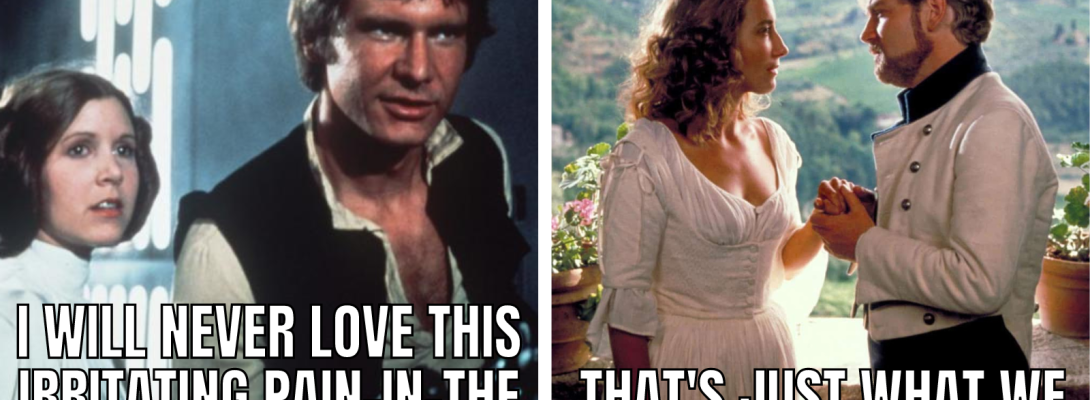
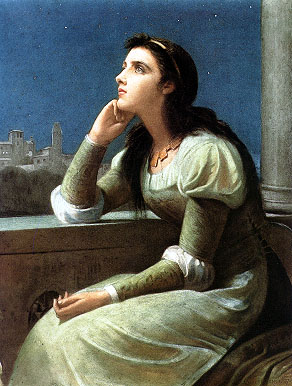
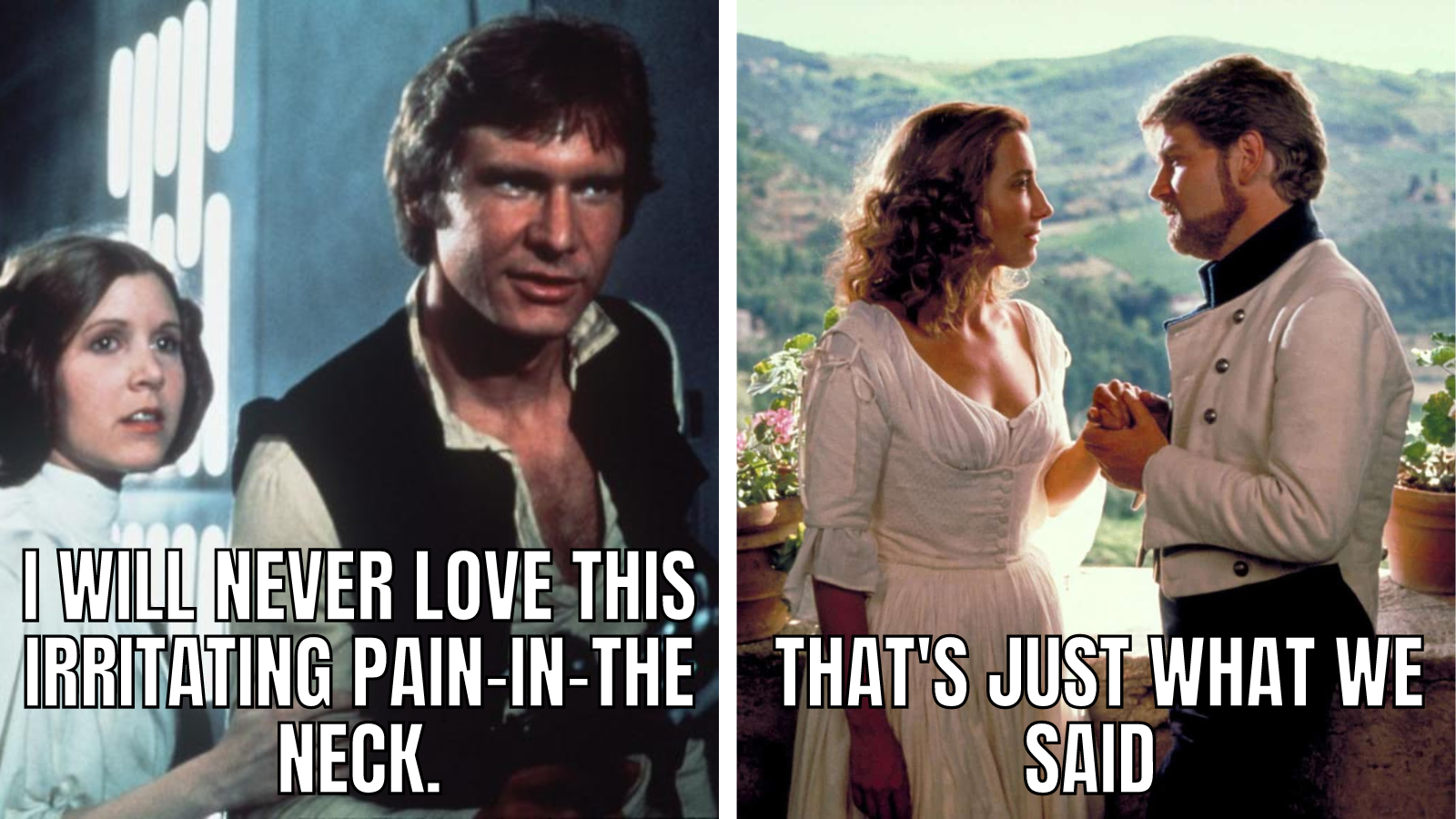
Left- Ruiz Burgos “Princess Leia & Han Solo” Right- Juliet by Philip H. Calderon (1888)
However, as you can hear in the podcast, alone in soliloquy, Leia reveals to the audience that she is still conflicted with her feelings for Han- listing all his best qualities like his hands, his face, his eyes, etc. This rhetorical technique is called anaphora, and it helps Leia build in excitement getting lost in Han’s attractive qualities. For my staging of the scene, Leia puts her hand on her cheek while standing under a balcony to emulate Juliet’s famous musings on Romeo:
Juliet. ‘Tis but thy name that is my enemy; Thou art thyself, though not a Montague. What’s Montague? it is nor hand, nor foot, Nor arm, nor face, nor any other part Belonging to a man. O, be some other name! What’s in a name? That which we call a rose By any other name would smell as sweet; So Romeo would, were he not Romeo call’d, Retain that dear perfection which he owes Without that title. Romeo, doff thy name, And for that name which is no part of thee Take all myself. – Romeo and Juliet, Act II, Scene ii.
Han’s Verse
While Leia’s verse is quick and direct, Han’s is slower and longer. His sentences spill over from one verse line to another because he’s taking his time. Again, his objective is to basically “neg” Leia into admitting that she loves him, so he’s enjoying goading her. He’s sort of like Benedick in Much Ado About Nothing, though Han speaks verse and Benedick speaks prose:
Han’s Extended Metaphor
Again, Han’s goal is to tease Leia into admitting that she loves him, so when she says: “We need thee Han,” he feigns ignorance and asks her to clarify her phrasing- going through all the permutations of “we” (including the colloquial, “Do you have a mouse in your pocket?”) to get her to specify what she means by “we.” If you look at Doescher’s official education guide for the William Shakespeare’s Star Wars series, you can see how Shakespearean characters often go into lengthy metaphors or comparisons to explore an idea or theme:
As I was writing William Shakespeare’s The Empire Striketh Back, I was surprised to realize I had made more references to Shakespeare’s Much Ado About Nothing than any other play. Much Ado is a comedy—probably my favorite of Shakespeare’s comedies—so it was strange that lines from it kept popping up in the darkest of the original Star Wars® trilogy. –
Both of my actors are female and obviously, they aren’t Carrie Fisher or Harrison Ford. Since this play is a parody of the original Star Wars, I wanted to incorporate some physicality and vocal elements, without telling them to impersonate the Star Wars actors.
Han
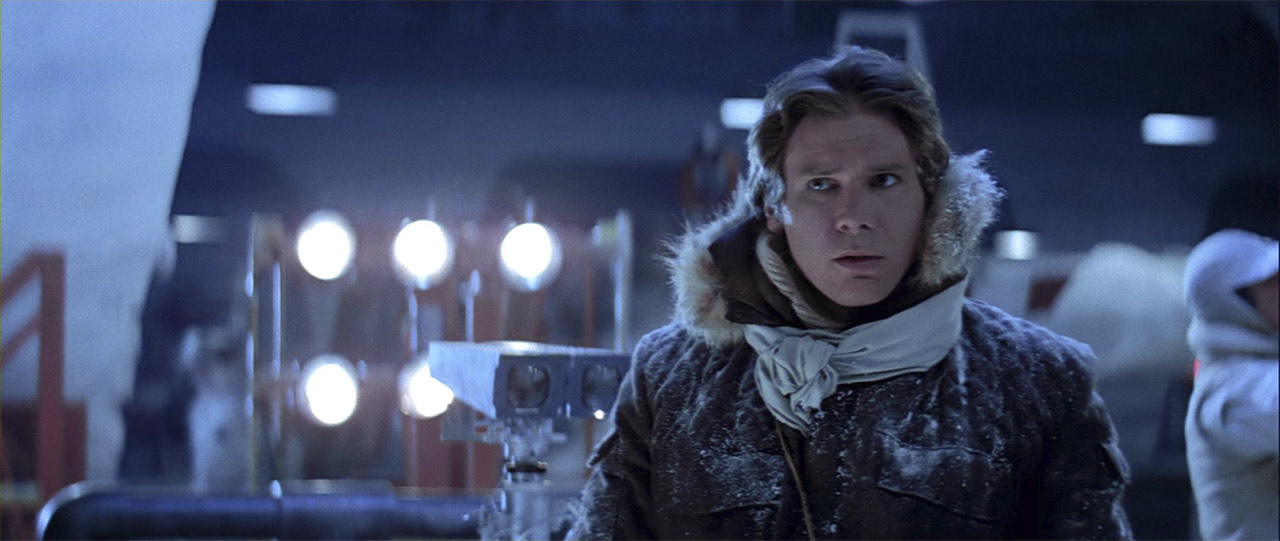
Harrison Ford is much taller than Carrie Fisher and he uses his height to mock and irritate her. He also crosses his arms and points his index finger at her frequently in this movie, so I used that in the blocking. He also has a “cowboy stance”- legs apart, slight bend in the knees, slow, deliberate gait. Ironically, another man who has this kind of walk is David Tennant in his performance as Benedick in “Much Ado About Nothing.”
David Tennant and Catherine Tate in “Much Ado About Nothing,” Act I, Scene ii.
As for Carrie Fisher, she has a faster pace and keeps her arms close to her body. She looks like a ball of stress and anxiety, which is appropriate. After all, not only is she going to lose the man she loves, she’s under attack from an empire and living on a cold, dark planet made of ice! I told my actor to put these characterizations into her performance to not imitate Carrie Fisher, but to get the essence of how her emotions affect how the character moves and speaks. That’s the difference between acting this scene, and just doing impressions of the original actors.
I’m excited to see how my actors bring these techniques to life, and I hope you have enjoyed this little insight into how Doescher’s writing once again pulls back the curtain on how Shakespeare used his verse to show the hearts of his characters!
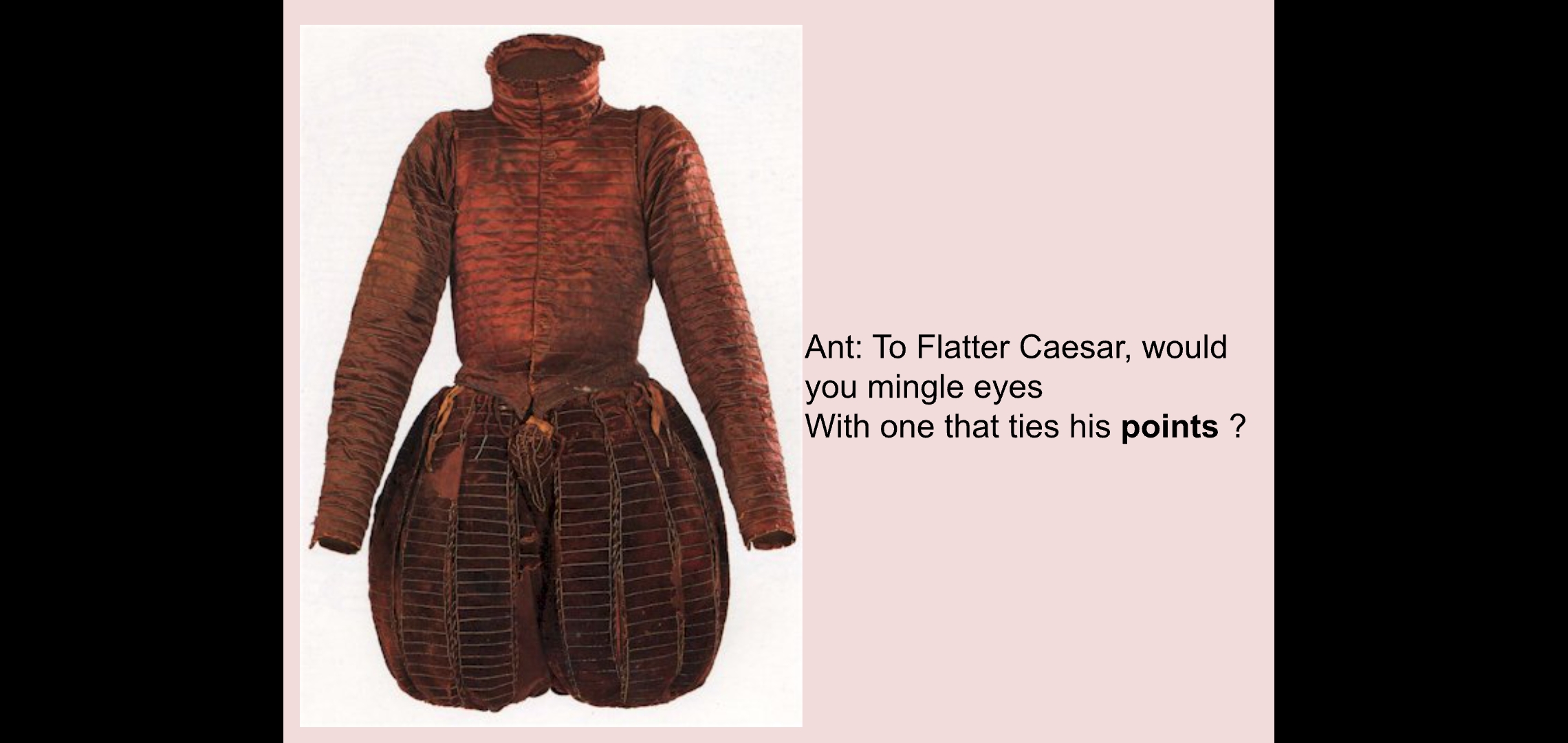
Concept: To explore the plot, characters, and themes of Shakespeare’s Julius Caesar while also gaining an insight into Ancient Roman history and culture.
Student Description: Delve into the passionate speeches of Brutus and Antony in Shakespeare’s Julius Caesar, which led a whole country to revolution.
Parent Description Using self-paced online activities, and a helpful handout, your child(ren) will analyze the rhetoric and persuasive power in two speeches from Shakespeare’s “Julius Caesar.” The course will also cover the culture of Ancient Rome, and the circumstances that led to Julius Caesar’s assasination, which inadvertently led to the birth of the Roman Empire.
Course Organizaiton (the class is divided into 4 parts that students can complete at their own pace over a week-long period
Each lesson will have:
“That Is the Question” (Essential Question)
Lesson Objectives
Set the Scene (Background and context)- 1-3 slides
The Players (biography) 1-3 slides
Go Deeper (Webquest)
Explore military life and the lives of women in Rome using my blog and other websites as a guide.
Post 3 things you learned to the Outschool page or send a photo of your completed handout.
Words, Words Words (Vocabulary, famous lines)
A Taste of Your Quality (Independant Project)
Show us your mettle (Test)
So each class should be 14-15 slides long.
Outline
Class I- Background on Caesar and Roman Culture
That is the Question:
Why did Brutus feel Julius Caesar had to die?
What was the aftermath?
Can one person’s speech effect an entire nation?
Lesson Objectives
To provide historical and political context to explain why Julius Caesar was assassinated, and how his death inadvertantly created the Roman Empire.
To explain the Rhetorical Triangle, the building blocks of persuasive speech.
To go through the story of Julius Caesar focusing on the effect of the speeches.
To study the famous “Friends, Romans Countrymen” speech.
To contrast this speech with some more recent political speeches and you think critically about:
Brutus- Podcast episode. I posit in this episode that Brutus is
Words, Words, Words-
Traitor
Republic
Dictator
Revolution
Ethos
Pathos
Logos
Rhetoric
Colossus
Aeneus
A Taste Of Your Quality:
(Independent work): We’ll examine a painting of Brutus’ ancestor Lucius and learn why Brutus values Rome more than even family.
Show Us Your Mettle:
Quizzes on Brutus
Class 3- Antony and Brutus’ Dueling Speeches
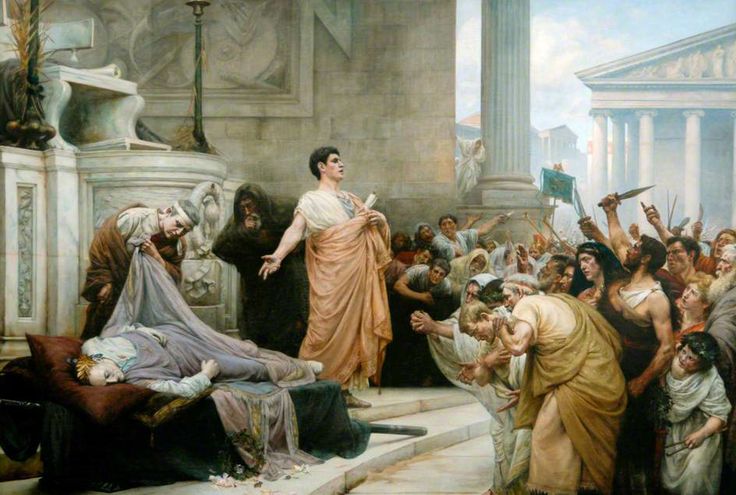
(c) Hartlepool Museums and Heritage Service; Supplied by The Public Catalogue Foundation
That Is the Question
After Caesar’s Death, his friend Marc Antony held a funeral for him where he gives the famous “Friends, Romans, Countrymen” speech. How did Antony’s speech affect the crowd?
Brutus has a speech where he explains why he killed Caesar. What does he say, and how effectively does he say it?
Antony was secretly plotting to take power for himself, and get Brutus and Cassius killed. How did he do it?
Do speeches have the power to change a nation?
Learning Objectives
To explain the Rhetorical Triangle, the building blocks of persuasive speech.
To study the famous “Friends, Romans Countrymen” speech, as well
To look at these speeches and get you to think critically about:
We’ll talk about the consequences of violent revolutions and how Julius Caesar has inspired some of the greatest speeches in political history.
-Patrick Henry
– Gettysburg Address
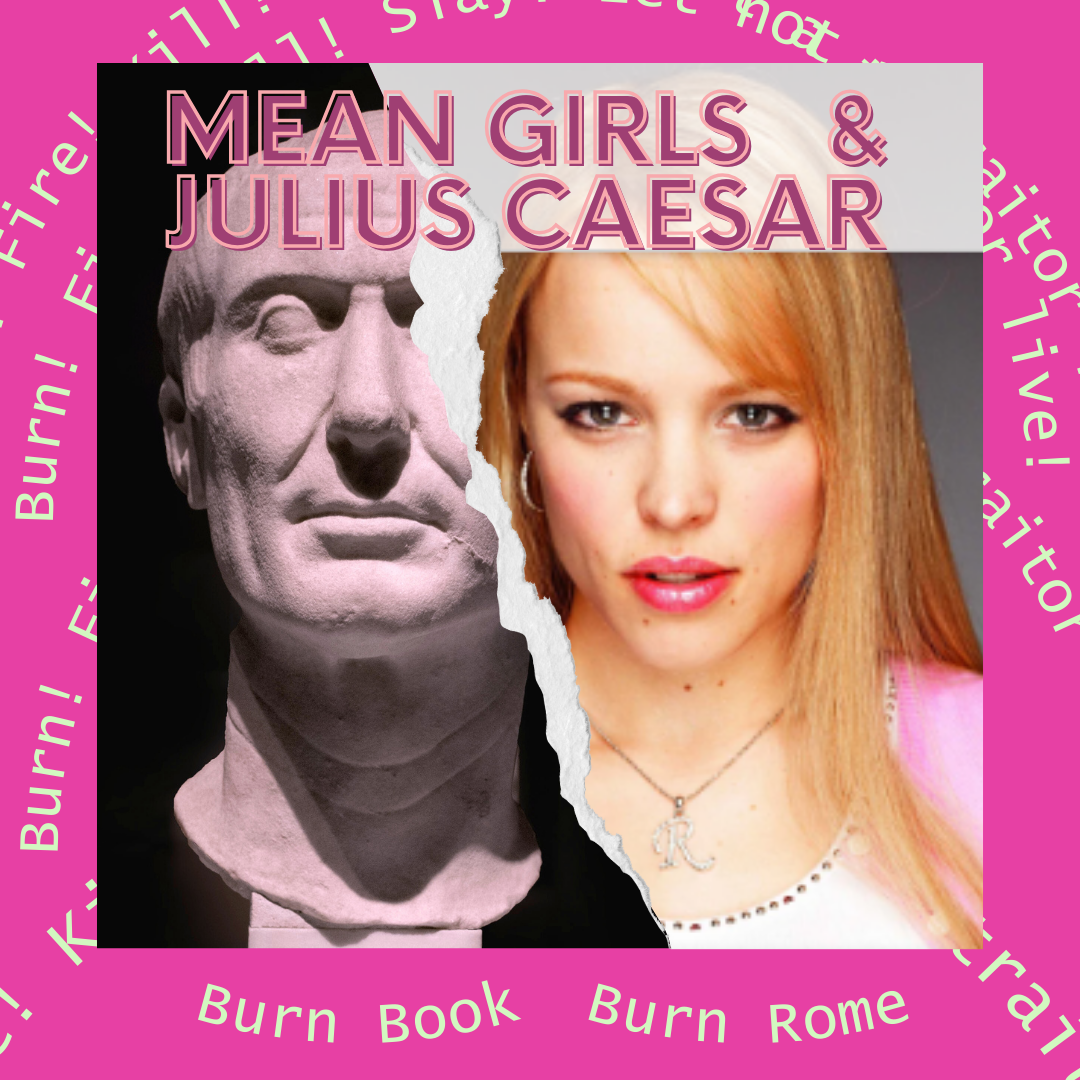
– Mean Girls
That Is the Question
How have people interpreted the play “Julius Caesar” in America?
Does this play promote violence?
What kind of violent speech do we deal with in politics today?
Learning Objectives
To show the link between American History and Julius Caesar
To address the controversy and the misconception that the play promotes violent assassination.
To end on a cautionary note people must think critically about what they hear in politics and not make rash decisions based on appeals to fear.
Setting the Scene- US History
America was founded using the principles of republican government that Ancient Rome used- with a senate, and a series of checks and balances to ensure no one has too much power.
America was founded in a violent revolution, and some of our country’s early leaders used Brutus as an inspiration- to overcome a tyrannical king.
In later years, however, some people have forgotten what happened to Brutus
Today, we are often bombarded with speech that encourages fear and anger and we must think critically when we hear such speech in whatever forum- Roman, or Reddit.
The Players (use my JC lecture?)
Patrick Henry
Abraham Lincoln
John Wilkes Booth
Donald Trump
Go Deeper
-Watch the Caesar Video
– How does the play promote nonviolence?
– How did Brutus’ assassination fail to save the Roman Republic?
Last weekend I saw a wonderful production of “Six” The Musical at the Cab Calloway School Of the Arts in Wilmington DE. After seeing the professional production, I was worried that I wouldn’t enjoy these student performers but it was incredible! The young performers were all terrific and the director managed to use inventive, creative, and entertaining setpieces to both capture the essence of the Broadway show, and also make a version that is distinct and its own with student performers!
The Direction
DIRECTOR’S NOTE I thought original I’d never Broadway get a show chance only to has direct six it at actors Cab. in AS the luck cast, would so/ have it, the teen edition came out this past summer, which allows the addition of a singing and dancing ensemble. I immediately applied for the rights and we were one of the lucky schools to get them. This new teen edition is the perfect fit for our school community and it highlights the talents of studentsfrom every arts area. I wanted to create a Beyoncé or Taylor Swift concert-type at- mosphere, and I think we have achieved that with our show. The fabulous lighting, the beautiful costumes and make-up, the rocking pit band, the fabulous cast and crew and especially the epic choreography have culminated into quite a spectacle! It has always been a joy to work with my colleagues on these projects. and I want to give a particular shout-out to my team of choreog- raphers. They have taken my vision and turned it into something amazing. The creativity in this team is fierce, and if ever there was a group that fed off of each other’s ideas, it’s this one. We’ve had a blast collaborating on this production Also, I would like to acknowledge Brian Touchette, Peter Kuo and Jared DeStafney for their tireless work on this production. With- out them, this show would not be possible.
Marjorie Eldreth
As the director notes in the program, the challenge with doing a musical like “Six” at a high school or community setting is that there are only six major roles, which means it would be hard to find ways for the whole student body to participate. What I loved about this version is that, by utilizing dance, pantomime, and choruses, the director has found ways to not only involve more people, but help use the additional cast to tell the story in ways that the professional touring production I saw earlier didn’t!
My Favorite Moments
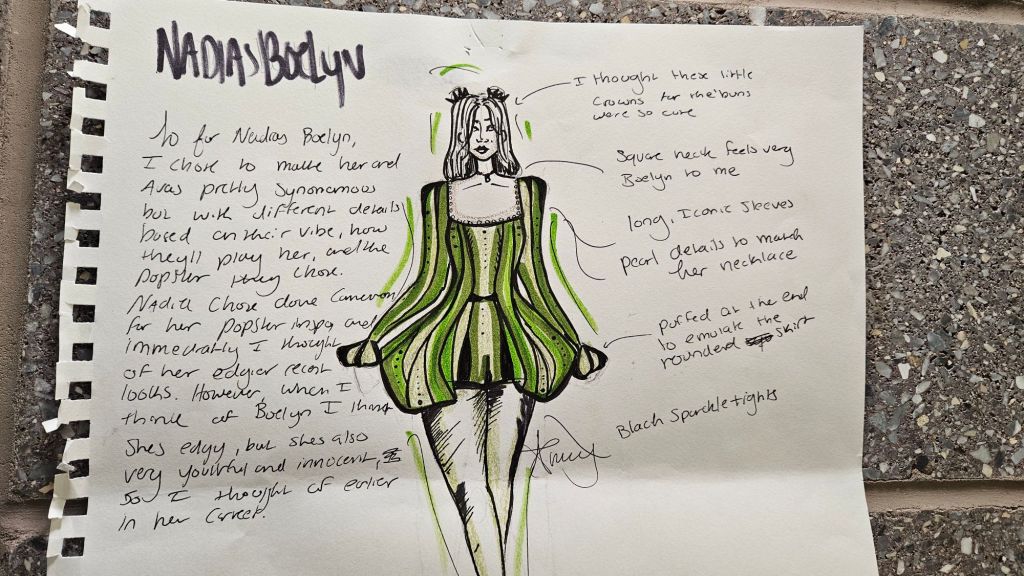
Normally I hate dance numbers in musicals. Don’t get me wrong, I admire the skill and athleticism that dancers have, but when I see a play or musical, I come for the story and the songs. Dance always seems like the black sheep in the musical theater trifecta to me. Not so with this production of “Six.” The dance numbers help tell the story in clever and moving ways! For instance, during Anne Boleyn’s “Don’t Lose Your Head,” a team of dancers with green sticks accompanied her. Their movements were cheeky and brash, which helps encapsulate her bubbly yet tart personality. During the choruses, the dancers and Anne rested their hands on the sticks, drawing attention to their heads moving back and forth, which reinforced both the title, and Anne’s air-headedness. Then, at the end of the number, the dancers got into a circle and pointed their sticks at Anne’s neck- pantomiming how she would eventually be beheaded! Thus, the dancers complimented Anne’s song perfectly, in a way that was not originally part of the show!
“My Heart Of Stone”
The most moving moment of dance was during Jane Seymore’s song “My Heart Of Stone.” When I saw this number in Hershey, it was by far my least favorite. I thought the lyrics were generic, that the song itself was bland, and that gave little depth to Jane character. All that changed this time around. While Jane belted her heart out about the son she never got to raise and the husband who mistreated her, we got to see elegant ballet dancers perform those moments for us. I particularly liked that the male dancers had red hair, (much like the real Henry VIII and his son). The dance actually helped me see Jane’s conflicting feelings for Henry- how she feels genuine love and affection one minute, and terror the next. How she and her son are both ghosts, now that they were denied the chance to live together on Earth. I don’t wish to diminish the wonderful singing and acting of the Hershey production, but Six: Teen Edition did a masterful job of showing, in addition to telling Jane’s story.
THe Cast
The Cab Calloway School of the Arts boasts some of the top young actors in the country, and all of them have tremendous chops as actors, dancers, and singers. Some of them already have professional acting credits. So it should come as no surprise that all the performances were incredible. It was very exciting, however to see a real 19-year-old play Catherine Howard, (since that was the real age she was when she died).
This production also took the bold leap of casting two men in the show. In one cast Anne of Cleaves was played by a man, and in the other (the one I watched), Katherine of Aragon was played by a man. I have no problem with this choice, (after all boys have been playing Katherine ever since Shakespeare’s Day), but I was a little disappointed that the actor had to modify the song to fit his range- I was looking forward to the extravagantly high Shakira and Beyonce inspired vocals that I’ve come to expect from the part. Nevertheless, the actor I saw was incredibly talented and his acting and dancing were completely appropriate for the part.
THe Dramaturg
For those of you who don’t know, a dramaturg’s responsibility is to help the actors, director, and production designer by doing research into the play’s historical or political context. It’s a role that is very important in period plays like Shakespeare. I’ve worked as a dramaturg myself and, though the work one does as a dramaturg is mostly unnoticed by the audience, the dramaturg can greatly contribute to the way the actors understand the text and give the director tools and ideas with which to explore themes and ideas present in it. I don’t know what the dramaturg did for this production, but I could tell based on the performances that every cast member was fully committed to their character. Each actor was able to clearly articulate their character’s emotional journey and that meant they must have learned the history and context of the Tudor period. Again, I don’t know if the dramaturg had any effect on this, but I’m going to assume they did a terrific job, because their end goal was accomplished- the actors and director gave a coherent and well thought out performance that captures the spirit of the Tudor period, so great job!
Stewart as Cassius in “Julius Caesar”Patterson Joseph in “Julius Caesar”Trailer for “Donald Trump is Julius Caesar” from the YouTube Channel “Never Caesar.”
Funny Sketches from “Horrible Histories”
Live Tweeting Caesar’s Funeral
This is an activity I’m doing with my Shakespeare Club. The idea is to paraphrase the lines of the Roman crowd in the language of social media. For example, I changed this:
If you can’t get enough of “Julius Caesar, consider signing up for my online Julius Caesar class. The class is asynchronous, which means you can take it whenever you want. More details below:
Happy International Women’s Day! I would like to dedicate my posts today to my daughter, a wonderful strong girl, a Shakespeare fan, and a lifelong lover of the musical “Six”.
Some of Shakespeare’s Best Female Characters
I’ve discussed Shakespeare’s best Mother characters before, and his Roman characters as well, but I thought I should include some of the ones who are not mothers and/or unmarried (at least for most of the play). I don’t want to rank these characters since I detest ranking women in general, so here are some of Shakespeare’s best characters, and some of their immortal speeches:
CleoPatra
Katherine Of Aragon
Even though “Henry the Eighth” is my least favorite Shakespeare play, I love how strong Katherine is and how well she fights against the machinations of Cardinal Woosey and her husband. She is a courageous, virtuous, and strong-minded woman, who when Henry demands that she consent to a divorce, Katherine simply says: “No Way!”
A fascinating and electrifying character. She seduces her husband and makes him fully commit to murdering the king. If you look at the post above, you can see the multiple potential readings for why she courts evil spirits to convince her husband to murder the king. Her strength and energy is highly attractive and it was easy for me to see how a man might do anything to make her happy.
Isabella From “Measure For Measure”
I think Elizabethans would have seen the connection between the Virgin Queen who fought off assassination from the Pope, and Isabella, a virgin who fights off the advances of Angello, who seems pious, but who secretly is degenerate and cruel. Isabella even becomes a princess at the end of the play, (assuming she marries the Duke), which means she could literally become a Queen Elizabeth to English eyes.
Stick figure version of Isabella from “Peace Good Tickle Brain.”
Portia Catonis (Wife of Brutus)
One of the best female characters in the Roman plays, Portia demands to be taken seriously as a wife and as a Roman citizen. In her one great scene we see her demand that Brutus tell her why he has been so distant and cold:
Some have speculated that in real life Portia helped Brutus with the conspiracy to assassinate Caesar, after all, she was the daughter of Caesar's great rival senator Cato, who was willing to die when he realized the Roman republic was finished. Not only was the real Portia a great woman, she also inspired some great art. Below is the great masterpiece: Portia Wounding her Thigh, by Elisabetta Sirani (1664). According to Dr. DR. MAURA GLEESON, the painting was commissioned by a fabric merchant, which explains Portia's sumptuous outfit. Portia remains totally calm, yet focused and determined as the other women in the background idly spin clothes in the background. For more information on this masterpiece, click the link below:
Since International Women’s Day is Friday, I’m devoting the following week to talking about the awesome female characters in Shakespeare’s Roman plays: Titus, Andronicus, Julius Caesar, Antony and Cleopatra, and Coriolanus
First, here’s my post and an accompanying podcast on Roman women, which includes an analysis of Lavinia, Portia, Valumnia, and Cleopatra:
Here’s a fascinating video about the lives of Roman girls:
And here’s a special section about Cleopatra:
Comedy sketches about Cleopatra from “Horrible Histories” BBC, 2015.
A Lady-Gaga-esque song about Cleopatra from “Horrible Histories,” 2014Infographic from an article about Cleopatra’s beauty regimen. Source: http://socialdiary.pk/
Today is February 29th, a day that only exists every four years. This is because the Earth’s rotation isn’t exactly 265 days, so every couple of years we add a day, (except every few hundred years).
The man who first pushed for the most accurate calender in the Western world was none other than Julius Caesar, the Roman dictator, and titular character in Shakespeare’s famous tragedy. Here’s an interesting news story that details why this happened:
For the month of March I’ll be doing a lot of posts, videos, and podcasts about Julius Caesar, and the Roman plays in general, and also hopefully releasing a new course for Outschool.com. Stay tuned!