Today (Monday) is All Souls Day, AKA “Dia DeLos Muertos.” Shakespeare writes an incredible speech for a character when he realizes it’s all soul’s day, but i couldn’t find a version of it online. That’s why I decided to do it myself! This is a speech that comes from Shakespeare’s bloody history play, “Richard the Third.”
The ending shot of the BBC’s 1978 TV version of “Richard III.”
To set the scene, the character Buckingham has worked as a vile two-faced politician working for Richard Gloucester, Shakespeare’s most evil and tyrannical king. To support Richard’s quest for the throne, Buckingham has arranged the murders of kings, princes, lords, ladies, and basically anyone who got in their way. All the while, he has acted like a nice and loyal Yorkist nobleman, and even swears to protect and serve them.
BUCKINGHAM
Whenever Buckingham doth turn his hate On you or yours, To the Queen
but with all duteous love Doth cherish you and yours, God punish me With hate in those where I expect most love! When I have most need to employ a friend, And most assured that he is a friend Deep, hollow, treacherous, and full of guile, Be he unto me! this do I beg of God, When I am cold in zeal to yours (Richard III, Act II, Scene ii).
After Richard becomes king, he slights Buckingham, who then gets bitter and joins Richard’s enemies. Richard then captures the duke, and sentences him to death by beheading. The day he is to be executed is, you guessed it, All Soul’s Day, which forces Buckingham to confront all the souls Buckingham is directly or indirectly responsible for taking. I hope you enjoy my interpretation!
Here’s the text of the speech here:
BUCKINGHAM
Why, then All-Souls’ day is my body’s doomsday. This is the day that, in King Edward’s time, I wish’t might fall on me, when I was found False to his children or his wife’s allies This is the day wherein I wish’d to fall By the false faith of him I trusted most; This, this All-Souls’ day to my fearful soul Is the determined respite of my wrongs: That high All-Seer that I dallied with Hath turn’d my feigned prayer on my head And given in earnest what I begg’d in jest. Thus doth he force the swords of wicked men To turn their own points on their masters’ bosoms: Now Margaret’s curse is fallen upon my head; ‘When he,’ quoth she, ‘shall split thy heart with sorrow, Remember Margaret was a prophetess.’ Come, sirs, convey me to the block of shame; Wrong hath but wrong, and blame the due of blame.
Tonight I’d like to discuss some of the spookiest, most enigmatic, and above all WEIRDEST characters in Shakespeare: the Three Weird Sisters in Macbeth.
1. Who are they?
Every production has to answer who the witches are, and many have very different answers. Are they temptress? Are they evil agents controlling Macbeth?Furies trying to destroy Macbeth?
I would argue in their basic form the witches are harbingers of change. Their very name “Wyrd Sisters” refers to an old Anglo Saxon concept of fate or destiny. Whether or not they have any effect on Macbeth mind or soul, they point the finger at him and say “things are going to change for you.” Then, he either makes the choices that determine his fate, or they change his fate for him.
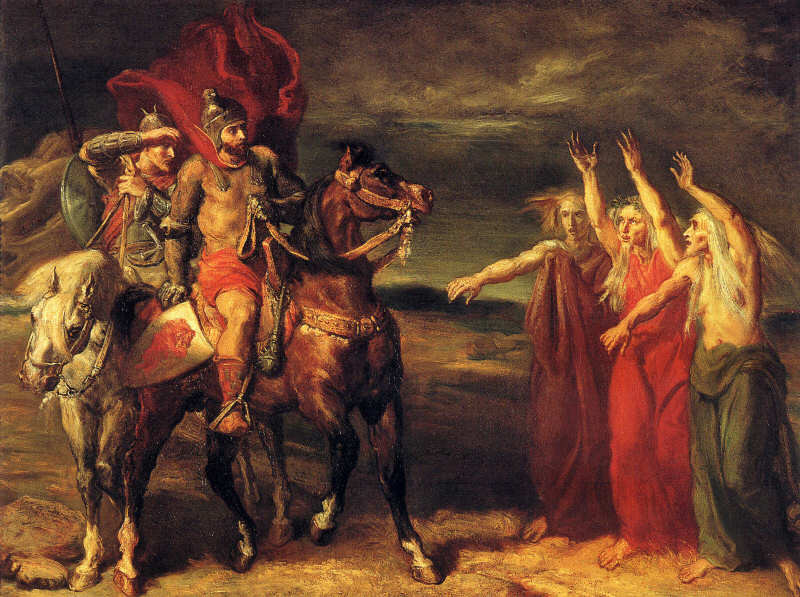
“Macbeth and Banquo First Encounter the Witches,” Théodore Chassériau, 1854.
Macbeth meets the witches on a heath, which means land that is literally out of bounds– the wild, untamed wilderness, which the old Anglo Saxons believed was the lair of many cursed spirits and monsters. This could symbolize Macbeth’ sin or transgressions, slowly turning into a murderer, usurper, and a tyrant. It could also symbolize the chaos in Macbeth’s life.
What Do They Look Like?
Shakespeare’s descriptions of the witches are highly contradictory- they seem to be floating, yet on the ground, they seem to be women, but they have beards! They don’t look Earthly, but here they are on the Earth. This gives them an other worldly quality that keeps us guessing as to who they are, and helps them tempt Macbeth more easily.
BANQUO What are these So wither’d and so wild in their attire, That look not like the inhabitants o’ the earth, And yet are on’t? Live you? or are you aught That man may question? You seem to understand me, By each at once her chappy finger laying Upon her skinny lips: you should be women, And yet your beards forbid me to interpret That you are so.
MACBETH Speak, if you can: what are you? (Act I, Scene iii).
The Witches’ Language:
You know from my earlier posts that the norm for Shakespearean characters is to speak in iambic pentameter- 10 syllable lines of unrhymed poetry that sounds like a normal heartbeat. The witches break these norms- they generally speak in Trochaic Tetrameter- 8 syllable lines with the off beat emphasized. The witches are literally offbeat, and that’s why their speeches are unsettling. Look at the contrast between a normal iambic line like:
“In sooth I know not why I am so sad.” (Merchant Of Venice I,i).
and
“Dou-ble Dou-ble, Toil and Tro-ble.
Fire burn and Caul-dren Bu-ble. (Macbeth, Act IV, Scene i).
For more info on the verse forms of the Witches, click here:
The witches also speak their prophesies in a vague, ambiguous manner They like to play with obscuring their prophesies with lines that make Macbeth think one thing, but the opposite is true. The famous example here is when they claim Macbeth will never be vanquished “until Birnam Wood comes to Dunsinane Hill.” Macbeth assumes this means he’s invincible, but it actually means that the enemy carry wood from the forrest. This is called Equivocation.
Witches and mythology
Illustration from William Blake’s “Europe a Prophecy,” 1794.
1. During the reign of King James, the modern witch hunt began; the king was fascinated with witches and even wrote a book called Daemonology on how to identify and destroy them. This was the era where people believed that witchcraft, rather than a pagan religious practice, was a forbidden craft that could only come from a pact with the devil. However, Shakespeare borrows from both Satanic and early pagan ritual in the characters of his witches.
2. Shakespeare took a couple of details about witchcraft from ancient Celtic and Greek mythology. First of all, the use of a cauldron. In Celtic myth, a cauldron is a symbol of rebirth and was sometimes used to resurrect the dead, just as the witches do in IV i. Of course, the ideal time for raising the spirits was on the feast of the pagan god Samhain, at the point where the veil between the living and dead was the thinnest. The feast took place on October 31st, our modern day Halloween!
Illustration of witches and their familiar spirits, 1647.
3. Familiar spirits In Act I, the witches speak to animal spirits called familiar spirits, which call to them and tell them where to go. King James himself wrote about how the witches found and communicated with these spirits.
Hecate.
In Act IV, Hecate, Ancient Greek goddess of magic appears. She is clearly the lord of all the witches, and is very displeased that they are riddling with Macbeth. Maybe not all witches believe in giving out prophesies that can destroy the Scottish monarchy. Hecate was always enigmatic in myths- she was born one of the Titans who opposed the gods, but frequently changed sides. More then being two faced, she was often portrayed as having three faces! Shakespeare refers to her frequently as “Triple Hecate.”
“The Triple Hecate,” by William Blake, 1794.
For more information on this mysterious goddess, consult the video below, (WARNING, ADULT-ONLY CONTENT).
In conclusion, the witches are meant to be ambiguous because the play examines the source of evil- whether it is inspired by other people, or if it comes from one’s own heart. The witches can be either or both, depending on how you want to tell the story, which is why they act and speak in contradictory ways.
Thanks for reading! If you enjoyed this posting, please consider signing up for my online class, “Macbeth: An Immersive Horror Experience.” I tell you the story of Macbeth and you get to play through an escape room, where you must solve the witches’ puzzles or be added to their Cauldron!
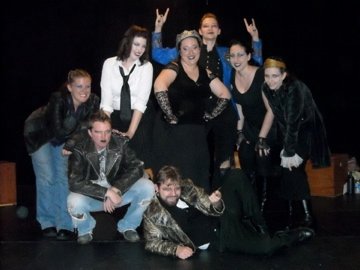
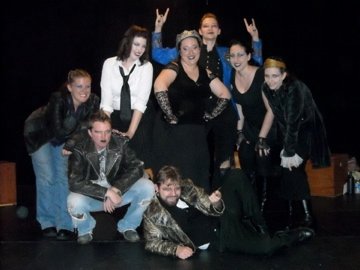
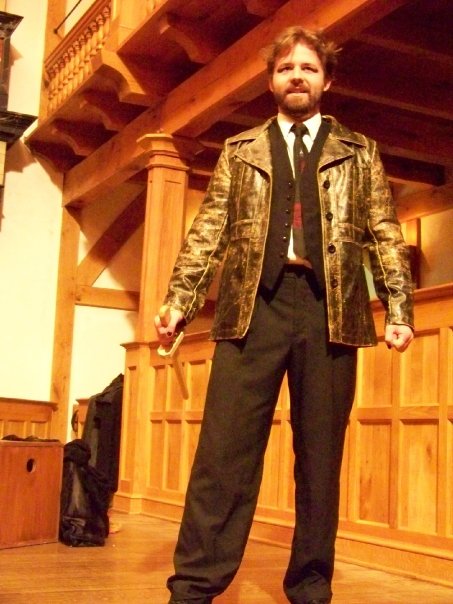
Back in 2009, I had the opportunity to play the lead in a touring production of “Macbeth.” It was the first time I’d ever played a titular Shakespearean character and I was really excited to play this part. I feel that playing one of these parts gives you an insight into the character that no other research can, so I’d like to share the steps of my process, with some pictures and videos from other famous Macbeths to give you an idea of what I learned.
The Auditions-
As I said in one of my earliest posts, if you’re auditioning for a Shakespeare play, Read the whole play, not just a monologue book. Monologue books won’t give you a sense of the whole story and you’ll miss a lot of details about who your character is by not hearing what he/she says, and what other people say about him/her. Fortunately for me, I first read the play when I was 17 and remembered the story pretty well. Unfortunately, my first reading of the part was a disaster. Unlike Hamlet, Macbeth didn’t feel like a part I could play; he seemed like this huge Scottish warrior who everyone loved until he turned into a psycho killer. I’m not a warrior, not a psycho, and (like most actors), often feel a lot of doubt and loneliness about my self. Ironically, that was what helped me get into the heart of the character!
Figure out what’s the hard part. When directors cast, they need to make sure you can handle the part. If your character has to sing, you better be able to carry a tune. If your character needs to be able to contort into a pretzel and talk to dolphins, he or she will probably make that part of the audition. My advice to anyone auditioning for a specific part in a play (Shakespeare or not), is to think like a director and try and figure out what the hardest thing that your character will have to do, and try to prepare for that. For me, the hardest part of playing Macbeth, was the famous Dagger Speech.
Perform your monologue for someone first. I was fortunate that while I was prepping for the audition, the great Shakespearean director Rob Claire was doing a workshop and he helped me work on Macbeth’s soliloquy in Act I, where he decides whether or not to murder Duncan.
Table work
Table work is the point in the process where the actors sit around and read the play, trying to get an idea of the character’s journey from beginning to end. To me is the most exciting time in rehearsals because it’s just the actor and Shakespeare’s words- you can imagine how the play will go, discover how the lines make you feel, and form a bond with your character and fellow actors.
Me and my Lady Macbeth, Katie Crandol.
Macbeth’s Motive- During the table read, I decided on Macbeth’s motivation: to prove himself to his wife. In the play, Lady Macbeth frequently criticizes him and seems to define true manhood as taking what you want, regardless of fear or ethics. Take a look at this horrific passage where she first critiques Macbeth’s manhood, then says she would rather bash her baby’s head in rather than give up on murdering the king!
MACBETH
Prithee, peace:
I dare do all that may become a man;
Who dares do more is none.
LADY MACBETH
What beast was’t, then,
That made you break this enterprise to me?
When you durst do it, then you were a man;
I have given suck, and know
How tender ’tis to love the babe that milks me:
I would, while it was smiling in my face,
Have pluck’d my nipple from his boneless gums,
And dash’d the brains out, had I so sworn as you
Have done to this.
MACBETH
If we should fail?
LADY MACBETH
We fail!
But screw your courage to the sticking-place,
And we’ll not fail. (Macbeth, Act I, Scene vii).
One interesting contradiction in the play, although Lady M mentions that she’s nursed a baby, later on in the play Macduff says that Macbeth has no children. I therefore decided that Lady Macbeth has lost a child, and this has caused unimaginable pain for the couple. Therefore, Macbeth is willing to do anything to win his wife’s affection again, even murder.
Study the verse– Another point I’d advise when you’re doing table work is pay attention to Shakespeare’s verse because it provides clues to help you keep your hand on the pulse of your character. Just like a heartbeat, when a line of verse changes or fragments it usually signals an emotional or mental change in the character. Here is a quick analysis of the verse in Shakespeare’s Macbeth. Click here to find some great books about how to study Shakespeare’s verse.
Voice and Body
When creating any character, you have to decide how (s)he walks and talks. Most Macbeth’s I’ve seen are big, heroic guys, and I’m not big and imposing. I talked to one of my mentors at American Shakespeare Center and he suggested that maybe Macbeth has a bit of a Napoleonic Complex. This made a lot of sense to me. I thought about how Macbeth gets honored at the beginning of the play; what if he just got lucky killing the Norwegians? What if deep down, he doesn’t feel he deserves to be honored just for killing in war? That kind of self hatred and desire for approval could easily lead to violent behavior. I therefore based my physical choices on alternately shrinking and sulking when Macbeth feels low, and trying very hard to look big and imposing for the rest of the play.
I worked on my arms for the sword work and my back because I believe that’s where Macbeth caries himself. When I wanted to appear like a king I would stand straight and puff out my chest, however in moments like the appearance of Banquo’s ghost, I shrank and turned my head away.
I didn’t try to do a voice for Macbeth, I just tried to let my voice go through the changes. When Macbeth is paranoid or afraid, my voice went up, when he feels in control, I kept it at a low, strong register.
The one time I shouted was at the end, when Macduff demands that
I prepare to fight Macduff.
Macbeth surrender. I snarled and barked the line: “I WILL NOT YIELD!” At the end of the play, when Macbeth gets to fight Macduff, I feel he finally feels brave and strong, challenging Macduff even though he knows he will lose. At last he can feel like a valliant hero, even though everyone else sees him as a villain. I gleefully assumed a fighting stance and put all the power in my body into my limbs, ready to attack!
The Speeches. All of Shakespeare’s great characters have fabulous speeches that allow the audience to peer into their hearts. With Macbeth, we see a good man’s journey into becoming a demented, paranoid tyrant through the following speeches.
I contemplate murder in Act I, scene vii.
“If It Were Done,” Act I, Scene vii. This speech was my favorite. It’s basically Macbeth’s version of “To Be Or Not To Be.” In both speeches, the character is contemplating murder, without saying the word “murder.” This is the “IT” Macbeth refers to; killing the king to get his crown. Macbeth is tortured by his ambition and his desire, and you get to see him wrack his brain and body over what to do. Below is Sir Ian McKellen’s interpretation of the speech in a 1979 RSC production.
The Dagger Speech Act II, Scene i. The night of the murder,
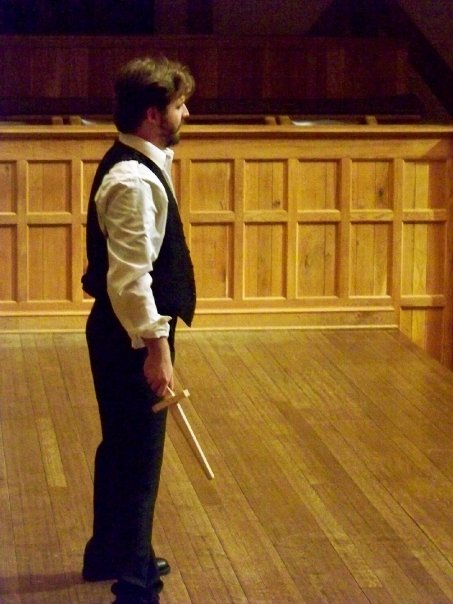
Macbeth stands alone during the Dagger Speech, Act II, scene i
Macbeth sees a bloody dagger that points his way to the king. It’s up to the actor to determine where and what the dagger is: if it is the Witches’ magic, his own psychosis, or a hellish prophesy. Does Macbeth love or fear the dagger? Does it stay in one place or move? Answering these questions and keeping track of the answers makes the speech very hard to do. Here is Sir Antony Sher’s kinetic and frantic version of the Dagger Speech:
“Tomorrow and Tomorrow” Act V, Scene v. This speech is often quoted out of context, given that it has a nearly perfect metaphor for the futility of life: “Life’s but a walking shadow, a poor player who struts and frets his hour upon the stage… it is a tale, told by an idiot, full of sound and fury, signifying nothing.” Since this is the most famous speech in the play, I had to do something different than other Macbeths. What many people forget is that Macbeth says all this when he’s trying to command his army, and gets word that his wife is dead.
I chose to play the speech as a fight within Macbeth to not give into despair. At first he’s furious when he hears the news; he didn’t need this news, especially not today! He tries to suppress his grief, delaying it until tomorrow, but he can’t; now that he knows his wife is dead, his life seems completely pointless, including the battle he was trying to fight. I then gave Macbeth an epithany near the end of the speech: If life is pointless, fighting a battle and dying would be a glorious way to end it! Why not die, after all, life is just “a tale told by an idiot?” At last, Macbeth has a reason to fight again, and he concludes the speech as a call to his soldiers to fight without fear of death. Now, you may disagree with my interpretation, but the point is that it’s mine. I wasn’t trying to imitate Antony Sher, or Laurence Olivier, or Patrick Stewart when they played the part. I was doing my Macbeth, and that’s what made it worth watching.
I hope you enjoyed this look into the process of creating this complex and fascinating character. If you’ve played this character before, leave me a comment about your interpretation, or tell me which Macbeth you liked best and why. Finally, below are links to two full-length productions of Macbeth for your viewing pleasure.
In 1936, famed director Orson Welles, (known for his iconic film Citizen Kane), produced an equally memorable production of Macbeth. At the time, Welles was a theater director, working with a government-funded theater group called The Federal Theater Project. The goal of the FTP was to help support the theater during the Great Depression. Welles also found a way to have his production help black actors by, and casting exclusively African Americans.
Opening night of Orson Welles’ “Macbeth” outside the Lafayette Theater in Harlem, 1936.
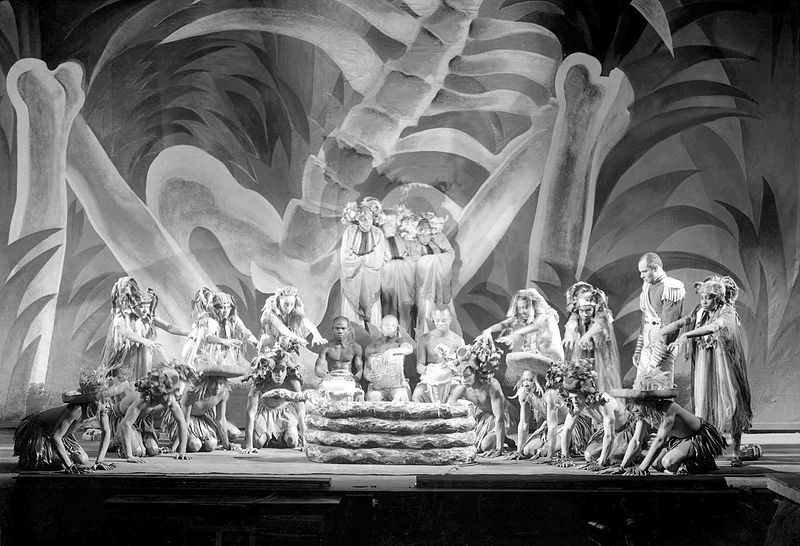
Although Welles kept Shakespeare’s text, he changed the setting to a tribe in Haiti instead of medieval Scotland, and changed the witches into Voodoo priestesses. Below is the only surviving footage of the production, the final scene in which (spoiler alert), Macduff carries Macbeth’s head and sets it on a pole, proclaiming Malcolm the new king. You can see the witches taking a wicked joy when Macbeth’s cursed head is impaled, implying that Welle’s witches had vengeance on their mind when they drove him to kill Duncan.
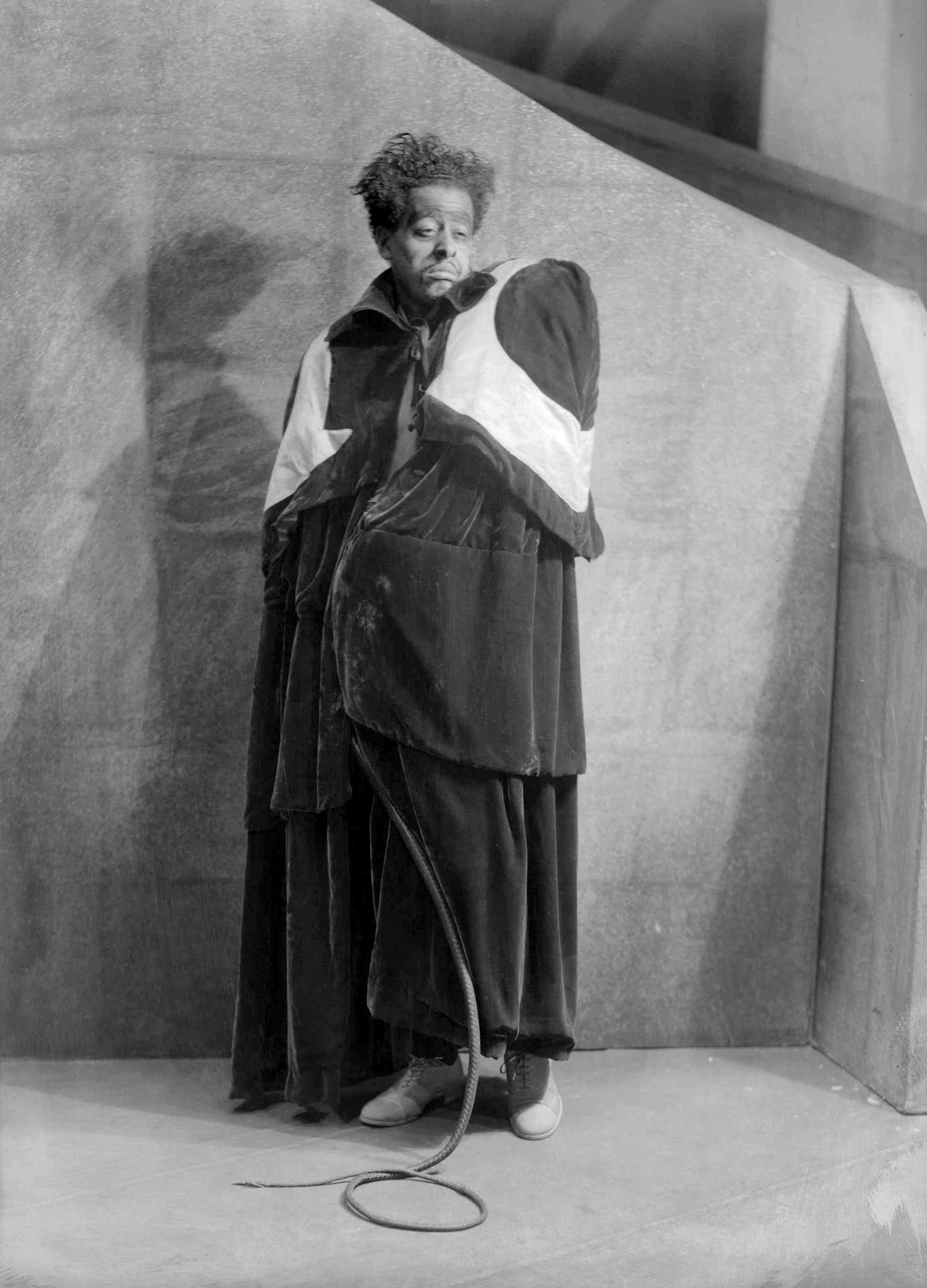
Eric Burroughs as Hecate.
Notice also the actor who screams “Peace, the charm’s wound up,” at the end of the play. He is playing the part of Hecate, the goddess of magic who appears before Macbeth in Act IV. According to legend, Actor Eric Burroughs was a real Voodoo priest, as were the drummers Welles used to spectacular effect during the show. Many critics called the frenetic drumming that occurred during the show and in scene changes an experience that they’d never forget.
Welles’ innovations helped black actors and theater in general survive during the Depression, but not everyone praised his efforts. Journalist Percy Hammond criticized the merits of the performance, arguing that the government shouldn’t pay for artistic projects. The next day when he returned to the theater, he was greeted by a rhythmic thumping underneath the stage that intensified until the critic abandoned his seat and left the theater. The next day, he fell suddenly ill and died! Was his illness a voodoo curse? We may never know, but this story clearly illustrates the effectiveness of Welles’ staging, and the dark occult appeal that lurks beneath the text in any production of Macbeth.
Macbeth meets the witches around their cauldron, (Act IV, Scene i).
Works Cited:
1. Dunton-Downer Leslie and Alan Riding.The Essential Shakespeare Handbook: Macbeth p.367. New York: DK Publising Inc, 2004.
2. Rippy, Marguerite. Orson Welles and the Unfinished RKO Projects: A Postmodern Perspective pp 75-76. Retrieved 10/21/15 from Google Books.
For those of us who don’t live in England, I’m happy to say there’s a way to see productions at Shakespeare’s Globe without having to travel hundreds of miles. You can see the shows broadcast to your local movie theater, and for this October, they’re doing “Macbeth!” Click here to find tickets at a theater near you: http://onscreen.shakespearesglobe.com/productions/macbeth/
Just in time for Halloween, I’ve decided to abandon the Julius Caesar posts and spend the rest of the month talking about the most mysterious, most bloody, and most occult play Shakespeare ever wrote- MACBETH.
As you probably know, I already wrote a review of an amazing adaptation of Macbeth called “Sleep No More,” which you can read here. I also mentioned that there’s a new movie adaptation of this play, starring Michael Fassbender, (look at my last post to see the trailer). In future weeks, I’ll create a new play of the month page, and delve into the magic and curses associated with the play.
But for now, here are some nice tidbits from around the internet.
First, a funny comic from “Zounds, Alack, and By My Troth.”
Macbeth, Act IV summary cartoon from “Zounds, Alack, and By My Troth.”
Next, a short recap of the play from 60 Second Recap.
Third, a feminist interpretation of the play:
And finally, a modern retelling of the play from a BBC series called: “Shakespeare Retold,” starring James Macavoy:
I know it’s been a while, but I’ve been moving into my new place so it’s been hard to find time for blogging. Anyway, some exciting Shakespeare news out in cyberspace, and I’d like to report on some of the ones that make me really excited!
There is a new movie version of Shakespeare’s “Macbeth” coming out in the next few months, starring Michael Fassbender (now he and Ian McKellen have shared 2 big film roles!)
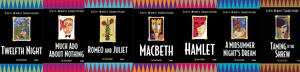
Title pages of books in the 60 Second Shakespeare series.
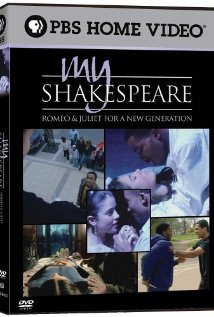
On this page, I review a Shakespeare book, movie, or TV show that I feel has some kind of value, either as an interpretation of Shakespeare, or a means to learn more about the man and his writing. This post will introduce you to an incredible documentary, and in my view one of the best ways to encourage, excite, and challenge young people reading Romeo and Juliet Aptly titled, it is called, My Shakespeare.
Name:My Shakespeare
Year: 2004
Director: Michael Waldman
Ages:PG for frank discussions of violence, and occasional suggestive language.
Media:Full length documentary, (available on Amazon and Netflix DVD)
Recommendation: I’d recommend this to high school and college students, as well as all theater teachers and practitioners. A word of caution though- nearly everyone in the documentary speaks with various British accents (from posh London to poor Harlesden), and thus if you think your class might not be able to understand foreign accents, you might want a different version, or put on the subtitles.
Premise: Director Patterson Joseph is a man on a mission- to prove that the people in his home town, (the poor, violence-ridden town of Harlesden England), that these same people can and will put on a production of Romeo and Juliet, in just four weeks. The cast has never acted before, and Patterson sometimes has to drag them kicking and screaming into rehearsals, but eventually they all learn that putting on a Shakespeare play can become an extremely personal experience. In the beginning, they are attempting Shakespeare, but by the end they live it. In between the action, there are interviews with Baz Luhrman, the celebrated director of the Leonardo Dicaprio film version of Romeo and Juliet back in 1996. Baz serves as a sort of chorus, explaining some of the challenges a director like Patterson will inevitably face as he and his actors bring the play to life.
Repeated Ideas That Run Through the Documentary:
You can do this- you can act, you can understand Shakespeare, you can finish something, you can show emotions, and you can direct.
Shakespeare is able to tell stories that appeal to everyone, and here’s the proof.
The best way to understand Shakespeare is to get on your feet and do it.
Moments to watch for: Before I list my favorite moments in the documentary, I’d like to list the theatrical process by which Patterson and his company put on Romeo and Juliet.
The Process Of Creating Romeo and Juliet:
Auditions/ ImprovGames (4 weeks to go)
Table Work, where the actors read the script and talk about their characters.
Paraphrasing the script and improv (9 days to go)
Stage combat Rehearsals- prepping the fights.
Opening Scene rehearsal on a basketball court.
Vocal Rehearsal
The Emotion Workshop (8 days to go) The actors try to tap into their own emotions to try and bring some real feelings into their parts.
Death Scene Rehearsal in a Graveyard!
Last minute changes (5 days to go)
Globe theater rehearsal
Nighttime Balcony Scene Rehearsal at the aptly named, “Shakespeare Road.”
Tech Rehearsal at the Royal Academy Of Dramatic Arts.
Speed Through Rehearsal/ The final rehearsal (1 day to go)
Performance at the Royal Academy Of Dramatic Art
Now a look at some of my favorite parts of the documentary.
The audition/ casting scene- In this scene you watch the future cast members explore the story of the play through improvisation, then you see their background through a series of headshots and dossiers. The whole cast is more diverse than any West End production: black, white, Christian, Muslim, young people and old people. Patterson’s casting choices alone makes this production fresh and relevant to our shrinking little world. A few cast members are refugees that came to England because of their countries’ own family feuds in Somalia and Afghanistan. Even more striking, Romeo and Juliet are very young- 18 and 22 respectively, which gives their love scenes an amazing truth and honesty. At first they think they have nothing in common with their characters, but in reality they have even more in common than most of us who read Romeo and Juliet.
The table work scene where the cast learns about their characters You see Mustafa as Mercutio learn that Shakespeare can be funny, you see Jonathan as Romeo learn that some of Shakspeare’s words are still used today, and you see Muska just start to flirt with the idea of playing Juliet.
Jonathan’s Story- Unlike most actors who have played Romeo, Jonathan Thomas has been in a real fight, and he describes it in brutal detail, even showing the scars he got from his stab wounds. Hearing his story gives his performance a truth and poignancy that I’ve never seen in any other version.
The Balcony Scene Rehearsals- In this documentary the two leads perform the scene many times, in rehearsal where they talk about how hard it is to play love realistically, in Shakespeare’s Globe, where they see how it was done in Shakespeare’s day, in a modern balcony back in Harlesden, (on the appropriately named “Shakespeare Road,” and at last in the final performance. Few documentaries show just how hard it is to do a Shakespearean scene, particularly if it’s famous, and how many different ways a director and a pair of talented actors can play it and find new things each and every time.
The scene where Patterson lets one of the actors go. Everyone in this production has to overcome obstacles, even the director; when one of his actors fails to perform, he simply has to drop the axe and recast one of his lead roles. Theater is hard work, and just like any job, the director has to take control and do what is necessary to make sure that the production is a success.
Rehearsal at the Globe Theater On one very special day, the actors step onto the stage of the reconstructed Globe, and take a few tentative steps into the 1500s. Once in the space, they take to it like fish to water, playing with the audience, playing with projection, and their lines are infused with a special kind of energy that only arises from the boards of an Elizabethan stage. I found it interesting that when Jonathan was talking to Mark Rylance, the artistic director of the Globe, he asks what kind of man Shakespeare was, because he’s starting to see Shakespeare as a peer!
My reaction: This documentary gives me hope every time I see it. Over and over again Patterson instills in his cast the idea of “Yes, you can,” yes, these people can understand Shakespeare, yes they can learn their lines, yes they can act, yes they can do something intelligent, and moving, and honest, and beautiful and what better play to bring that message across than Romeo and Juliet, which is full of youthful energy and excitement. My only complaint is the interviews with Baz Luhrman don’t really add much to the documentary side of things; Luhrman was really only there for name recognition, and he certainly knows less about Shakespeare than the RSC veteran Patterson. Nevertheless, the whole documentary Is nothing short of inspiring from beginning to end.
Notable cast members
Muska Khpal as Juliet. An 18 year- old Afghan refugee who came to England in 1996, without even speaking English, now playing one of the greatest characters in English literature! Like Juliet herself, Muska has very strict parents (who didn’t approve of her playing the part), and is at first is extremely shy towards Romeo, toward the play, and even the director, but when you hear her talk about her dream to return to Afghanistan and become a doctor, you can sense Juliet’s strength and independence.
Jonathan Taylor 22 year-old Jonathan is a very charismatic and intelligent young man. After this production he became a professional actor. He speaks articulately about the experience of acting for the first time, reading Shakespeare for the first time, and even his own experiences with love and violence on the streets of Harlesden. He is also very talented and speaks the lines with an effortless panache. I found myself rooting for him the whole time, and the fact that I got to see this production spark his interest in acting and then to see him change and grow was truly inspiring.
Mustafa as Mercutio Tiny, sparkle eyed Somali refugee. He is truly Mercurial- he frequently jokes and kids with the cast, yet at the same time, he is deathly serious when he talks about his life in Somalia- seeing people die in front of him. When he dies onstage, you know his performance is drawn from some real world experience.














 The Shakespearean Student