Summer Shakespeare Academy!

I’m working this summer with the good people at Outschool, an online learning platform for kids ages 3-18. I’m designing a series of Shakespeare classes that you can sign up for. We’ll be doing acting exercises, reading Shakespeare’s text, and making Shakespeare props Cost is $3 per child.

The course is ala carte, that is, you can sign up for as many courses as you like. Each course builds on the last one, but you don’t have to have taken the previous ones to enjoy any one particular course Let me know in the comments which class(es) you are interested in, and/or what suggestions you might have. I can’t wait to hear what you think about these summer Shakespeare courses, and I hope to see you online soon!

1. Introduction to Shakespeare- (enrollment here: https://outschool.com/classes/introduction-to-shakespeare-or-how-i-learned-to-love-the-bard-UoHH5fes?sectionUid=973060db-f857-461a-a23a-f1476203a544&showDetails=true) We’ll talk about why Shakespeare is so famous and learn about his life and career. Then we’ll do some fun quizzes that you can earn prizes based on how well you pay attention!
2. How to write ✍ like Shakespeare (Enrollment here: https://outschool.com/classes/how-to-write-like-shakespeare-0HuPq1Cg?sectionUid=4243af25-ba41-4724-82a2-61bd7c7d862e&showDetails=true) Have you ever wanted to woo your sweetheart or write the next bestselling play? Well, this course will cover the secrets of Shakespeare’s writing. We’ll cover how to write romantic poems, the structure of Shakespeare’s plays, and you’ll get to write your own Shakespearean speeches!
3. Intro to Shakespearean acting Practical tips and tricks for your next Shakespeare audition.
4. Shakespeare’s villains
We’ll look at the darkest and creepiest Shakespearean characters and see why they still fascinate us today!
5. The Violent Rhetoric Of Shakespeare’s Julius Caesar (Registration Here: https://outschool.com/classes/the-violent-rhetoric-of-julius-caesar-fkMLbAtA?sectionUid=1f9220cd-8c28-438d-9799-8479494353a4&showDetails=true#usMaRDyJ13) In this one-time course, students will analyze the rhetoric and persuasive power in two speeches from Shakespeare’s “Julius Caesar”
6. Intro to Romeo and Juliet – Get a leg up on your next English class with this fun, frenetic look through the characters, themes, and story of Shakespeare’s most popular, and most-taught play.
7. Basics Of Stage Combat (Registration here: https://outschool.com/classes/1120ada2-047d-4b0f-84f6-5eb4b0f7dc66/schedule#usMaRDyJ13 I’ll teach the kids about Elizabethan street fighting, and the basics of stage combat.
8. The Balcony Scene of Romeo and Juliet– It’s been called the greatest love scene of all time, but why? I’ll explain the imagery, the poetic language, and give you a chance to make your own love poetry!
9. Insults and Shakespeare You’ll craft your own Shakespeare insults and engage in a (respectful), beat down with your classmates! Along the way, we’ll talk about how insults escalate to violence in Shakespeare’s Romeo and Juliet.
10. The Iconic imagery of Romeo and Juliet We’ll look at some beautiful paintings, songs, and other works of art that build on Shakespeare’s poetic imagery.
11. Romeo and Juliet and pedagogy Shakespeare is uniquely challenging to get kids to engage with. I’ll give you some of my resources, games, and activities to help you delve into the play in your next class.

If you like these courses, let me know by leaving a comment below. If you’re interested in signing up, visit my teacher profile page: https://outschool.com/teachers/The-Shakespearean-Student. New classes will be added every week, and I’ll work around your schedule when planning the dates and times. Hopefully this will be a great chance for me to share my expertise with a young group of future Shakespearean students!

Crafting a Character: Friar Lawrence

Me as Friar Laurence. Ashland University, 2010.

I played this character back in 2010 as a college production and not to brag, but I want award both for my performance and also my role as dramaturg for that particular production, so I did a lot of research in into the character and I tried to bring my own spin on the part. So unlike my other Crafting a Character posts, I am going approach explaining the character as a series of questions instead of talking about it https://youtu.be/-ocOfP16tdw

Who Is Friar Lawrence?

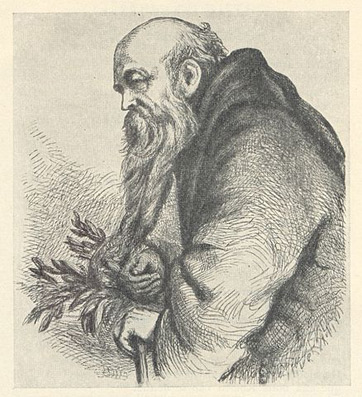
Concept art for Friar Lawrence, including a photo of Pete Postelwhite in the 1996 movie

A friar is a monk who belongs to a local monestary. Francis belongs to the Franciscan orders created by Saint Francis of Assisi. It was known for its naturalist philosophy, and St Francis himself is often depicted in paintings as being friends with birds and rabbits and things like that. He was also a strict vegetarian and believed the spirit of God is in all creatures.

Francis’ work was a reaction to the other orders of Catholic monks who, the Franciscans believed, had gotten corrupt and lustful. So the Franciscans in reaction to that corruption, tried to embrace poverty, plain living, and duty to the poor.

The Franciscans were also famous for not wearing shoes; Shakespeare calls one of them “[our] barefoot brother.” Again, the Franciscans value humility before God, and because of that, they shaved off part of their heads, (known as a tonsure hairstyle); it was way of stating that they were not concerned with their appearance, (so yes, it’s supposed to look stupid).

Why does Romeo hang around him? Friar Lawrence is supposed to be Romeo’s tutor, but really he is in the play because Shakespeare needed a convenient way to get Romeo married to Juliet without his parents finding out. He is also a neutral party who can be sympathetic to both Romeo and Juliet, without being tangled in the politics of the Capulet/ Montegue fued.

Romeo persuades Friar Lawrence to help him marry Juliet in Act II, Scene iii.

Friar Lawrence also acts as a character foil to Romeo. While Romeo is rash, passionate, and impulsive, Friar Lawrence is calm, slow, and contemplative, (appropriate qualities for a monk). During my production of Romeo and Juliet, the director beautifully explained their relationship by having Romeo trip and fall when he is excited about his impending marriage. I as Friar Laurence turned around and said calmly: “Wisely and slow, they stumble that run fast.”

My Interpretation Shakespeare makes references again and again to the character being old, yet the director and I made a conscious choice not to portray him as such. I portrayed him as just a few years older than Romeo, who is supposed to be a teenager. I played him as sort of about 25-26, the same age that I was when I played the part.

We did this because even though Friar Laurence acts as the voice of age and experience, he also seems very naive. He seriously believes that he can singlehandedly stop the feud between the Montegues and Capulets with one marriage. he never consults anybody else, and he leaves Friar John in charge of sending the all important letter to Romeo that Juliet is not dead, and never checks up with him on that.

Rather than being an old priest who is aged and experienced, I portrayed him as a young idealistic priest who doesn’t know better. In some ways, his love of God  has blinded him as much as Romeo’s love for Juliet. The Friar  thinks that being a peacemaker is something that God wants him to do. He thinks that bringing together souls is part of his heavenly mandate and he doesn’t think about the practical consequences of his religious fervour.

What is his role in the play?

Friar Laurence engineers the plots to get Romeo married to Juliet and hopefully settle the feud. When we first meet him, Romeo convinces Friar Lawrence to perform a secret wedding between Romeo and Juliet (Act II, Scene iii).

“Romeo shall thank thee daughter, for us both,” Romeo and Juliet, Act II, Scene v.

In Act II, Scene vi, Friar Lawrence secretly marries Romeo and Juliet, but first warns them to “Love moderately,” because he believes that an over abundance of passion can have disastrous consequences. He even compares Romeo and Juliet’s love to gunpowder.

In Act IV, Friar Lawrence has two scenes where he stops Romeo and then Juliet from killing themselves. First he stops Romeo, filled, with grief and remorse after murdering Tybalt, and being banished.

“What, rouse thee man, thy Juliet is alive!”
“Juliet, I already know thy grief…”
“Come you to make confession to this father?” Paris (Matt Bugay) meets Juliet (Alesia Lawson) outside of Friar Lawrence’s cell, Act IV, Scene 1.

In Act IV, Scene iii, Friar Lawrence concocts his plan to give Juliet a secret potion with which to fake her death. Juliet demands that he find a way to prevent her marriage to Paris or she will kill herself.

“The heavens do lour upon you for some ill.”
In Act V, Scene ii, Friar Lawrence learns from Friar John that his message that Juliet is alive, never reached Romeo.
“A greater power than we can prevent…” Friar Lawrence delivers the bad news that Romeo is dead, Act V, Scene iii.

Is Friar Lawrence To Blame For Romeo and Juliet’s Death?

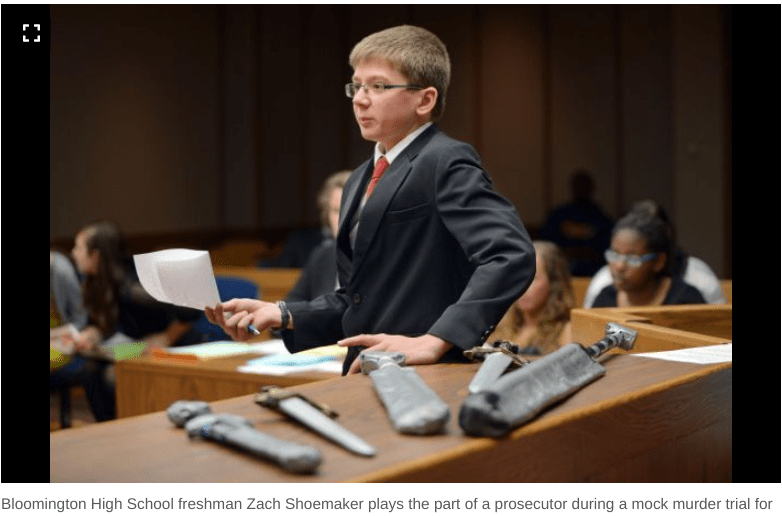
A lot of scholars, teachers, and classrooms have pondered this question. In addition, even the Supreme Court of the United States put Friar Lawrence on trial in 2016 as part of a mock trial sponsored by the Shakespeare Theater in Washington DC. https://www.c-span.org/video/?419930-1/federal-judges-discuss-romeo-juliet
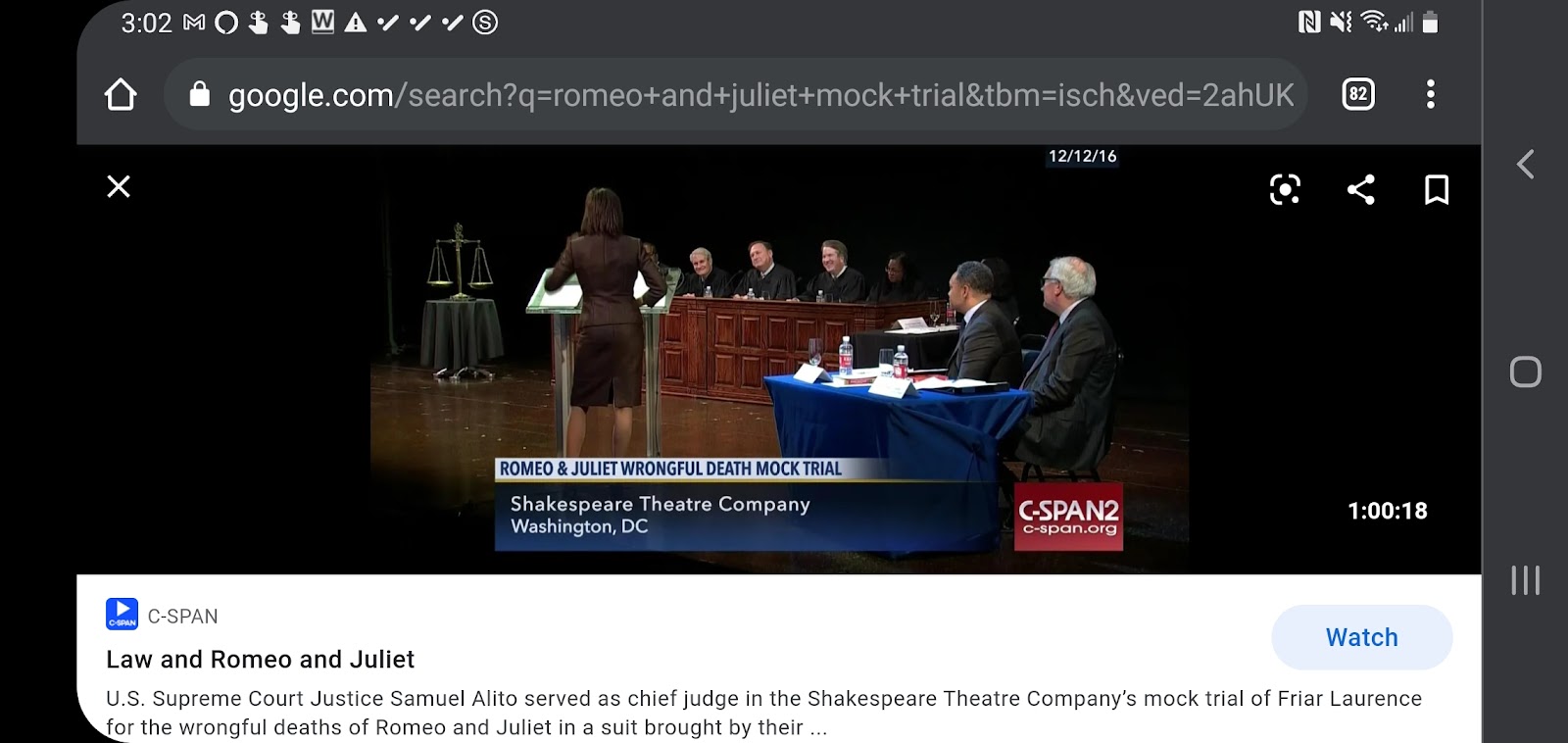
I am actually working on my own mock trial activity which I will share by the end of this month, but for right now I will summarize the major arguments:

The Defendant (Friar Lawrence) tried repeatedly to prevent Juliet and Romeo from committing suicide. In Act III, when Romeo tries to stab himself, Friar Lawrence stops him and convinces him to go to Mantua:

Romeo. O, tell me, friar, tell me,
In what vile part of this anatomy1985
Doth my name lodge? tell me, that I may sack
The hateful mansion.
[Drawing his sword]

Friar Laurence. Hold thy desperate hand:
Art thou a man? thy form cries out thou art:1990
Thy tears are womanish; thy wild acts denote
The unreasonable fury of a beast:
Thou hast amazed me: by my holy order,1995
I thought thy disposition better temper'd.
Hast thou slain Tybalt? wilt thou slay thyself?
And stay thy lady too that lives in thee,
By doing damned hate upon thyself?

Likewise in Act IV, Friar Lawrence stops Juliet from killing herself and gives her the vial of sleeping potion.

“Be not so long to speak, I long to die!” Juliet (Claire Danes), begs Friar Lawrence to divise a plan to prevent her marriage to Paris in the 1996 movie.

Throughout the play, Friar Lawrence attempted to keep Romeo and Juliet alive and together, but was thwarted by what could legally be interpreted as and ‘Act of God’:

Passage from Act V, Scene ii.
As this slide shows, the reason Friar John was unable to deliver the message to Romeo is that he was in quarantine. A literal “Plague on both your houses,” has indirectly killed Romeo and Juliet

What the prosecutor might say-

Friar Lawrence performed a marriage illegally, without consulting the parents of two minors. He also harbored a fugitive (Romeo), right after he was found guilty of murder. Finally, he tried to deceive Juliet’s parents by giving her a dangerous drug. On paper, though Friar Lawrence was certainly acting out of compassion for Romeo and Juliet, his actions were highly suspicious and could be considered criminal.

An English class can learn a lot putting Friar Lawrence on trial for his role in Romeo and Juliet’s deaths, as long as they are responsible in the way they portray teenage suicide.

Who Originally Played Friar Laurence?

I don’t have any substantial evidence to prove this but I do of have a theory: some of Shakespeare’s parts require a great amount of stage business; singing, dancing, swordfighting, improvising that kind of thing. Hamlet for example has to sing, dance, sword fight, and remember copious amounts of speeches and dialogue. Will Kempe had to dance and dance and sing. Robert Armin had to improvise and dance with the audience.

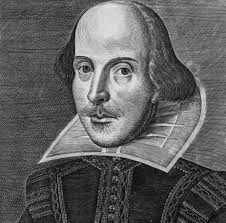
My theory is Shakespeare didn’t have time to learn extravagant stage business, since he was also writing the plays and helping with the company’s business dealings. With this in mind, he probably gave himself the parts that had long speeches. That’s why I think that Shakespeare himself might have played friar Laurence.

Plus Shakespeare had an edge playing the role over other actors. Since friars are supposed to shave their heads, and since we know that Shakespeare had thinning hair, he could have easily played the part himself.

So those of you who get cast as Friar Laurence and wish that you were cast is somebody young like Romeo or Tybalt, at least your consolation prize is that you might be playing the part that Shakespeare himself once played.

I hope you found this insightful and maybe helpful if you find yourself cast in Romeo and Juliet. I’ll be sure to post about the Friar Lawrence mock trial I’m currently working on. At the very least, I hope this information helps you see Friar Lawrence as more than an old guy who hangs around teenagers.

https://youtu.be/AMLRwqPm_gk snl

Review: Gnomio and Juliet

Gnomeo and Juliet

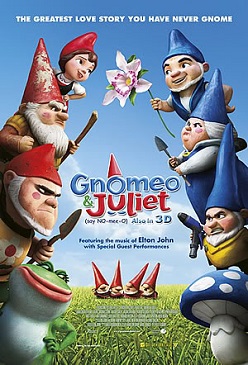
Theatrical poster for “Gnomio and Juliet,”

Like I said in the review for “Romeo and Juliet: Sealed With A Kiss,” adapting Shakespeare’s play for children seemed to me like an impossible undertaking, until I saw this film. This interpretation had all the romance and danger of Romeo and Juliet, with all the wry humor of Shrek. Before I present my thesis, I want to post a refutation of a review from a man I actually hold in very high esteem:

“You Wanted Me To Review Gnomio and Juliet, So I Did.” Kyle Kalgreen YouTube Video Essay.

I’ve watched all of Mr. Kalgreen’s reviews of Shakespeare on film, from Hamlet, to Ran, to Ralph Fiennes’ Coriolanus, and all but one of his reviews I genuinely loved. This is why I was so dissappointed when I saw this review. As his channel suggests, “Brows Held High” is mostly interested in high concept editions of Shakespeare and in a rare act of snobbery, Mr. Kalgren seems to turn his nose up at this movie, calling it essentially populist trash. He seems to say that the film misses the mark as a legitimate Shakespearean adaptation, and he’s not wrong. What he fails to notice though, is that is not the point of this movie. It’s purpose is not to be a faithful adaptation of Shakespeare, it’s a simplfied way of introducing children to Shakespeare.

This computer animated film is set in two adjoining houses in England, with two families of garden gnomes duking it out for supremacy. Though this seems like a ridiculous concept, it gives the film a great amount of charm, watching these two gnomes trot across the garden with their plaster feet, riding around on lawnmowers, and of course the fact that they are gnomes makes even Tybalt look cute.

Most importantly, unlike other ‘inanimate object comes to life’ movies, garden gnomes are able to be smashed. Unlike the nearly indestructable Woody or Lightning McQUeen- these characters can be smashed. It’s established in the first 10 minutes that both Gnomio and Juliet have parents that were smashed. This means that the audience is constantly worried for the safety of the characters, especially when they fight. This is a clever, kid-friendly shorthand that allows the audience to worry about the character’s mortality, without the gory realities of human death.

The characters are also handled with care and charm. Gnomeo is a cocky, self-assured gnome who first looks for adventure before finding love. Juliet is even more of a spitfire than her human counterpart, and is able to perform midnight catburgling into a nearby greenhouse. It’s their desire for fun and adventure that makes these two compatible, and makes their love easy for even a child to understand.

The film’s cleverness doesn’t stop there: the filmmakers inserted all kinds of Shakespearean jokes to make the play easier to understand and to entertain the audience. For example, the Capulet and Montegue households on “Verona Avenue” have the addresses 2B and another 2B crossed off, (punning on Hamlet’s most famous line). In addition, when we first meet Juliet, she argues with her father (voiced by Michael Caine) to let her off a small white platform that he forbids her from leaving. Because she’s a gnome, her father literally puts her on a pedestal, which beautifully illustrates the relationship between Juliet and Lord Capulet. In the play, this is hinted at, but not really explored, but in this version, it is front and center, and helps increase the drama.

Perhaps the most clever thing about Gnomeo and Juliet, is that the film makes you very aware that this is an homage, rather than a re-interpretation of the story. At the opening of the film, a tiny gnome with a ridiculously long hat says: “The story you’re about to see has been told before… A LOT.” This immediately reminds the audience that, although this film will give you the general idea of Shakespeare’s play, the real play is full of more violence and sex than a children’s movie will allow. At one point, Gnomeo even converses with an animated statue of Shakespeare himself, as a way of further conceding the homage, recognizing the difference between an adult-themed play, and a children’s movie, and hopefully, encouraging kids to see both versions.

Resources for Teachers and Students: A Visit To Elizabethan London

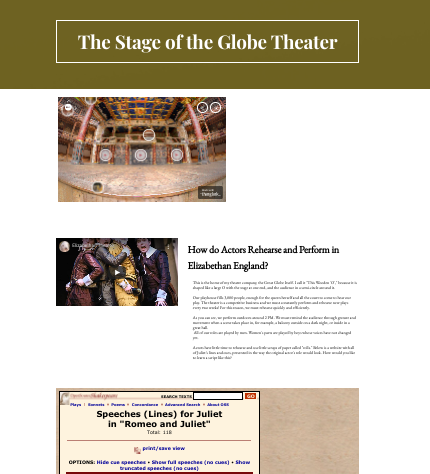
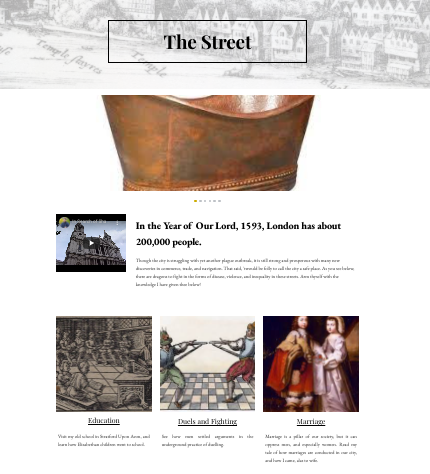
I’m working on several educational projects at the moment and I’m proud to share this one with you. It’s what I call a virtual tour of Shakespeare’s London. The teacher I’m working with said she wanted to teach the kids about the culture of Elizabethan London as he was writing Romeo and Juliet. Naturally with the pandemic a field trip was out of the question, (for multiple reasons), but I wanted to create a visually interesting tour of the places Shakespeare knew and worked and try to imagine his perspective and how that might have informed the characters and themes of Romeo and Juliet.

So I created this: a website written as if Shakespeare himself is taking you on a tour of his London in the year 1593, the year where, as far as we know, he had just completed writing Romeo and Juliet. 1593 was also the middle of another outbreak of Bubonic Plague. It has virtual tours of Shakespeare’s Globe Theater, Hampton Court Palace, Shakespeare’s Grammar School, and a quiz where you can pretend you’re in the Elizabethan doctor’s office.

For the class I’m helping, the students will fill out a worksheet as they navigate the website so they learn from the material at their own pace. If you’re interested, leave a comment and I’ll post the worksheet so you can use it in your classroom.

My hope is that this website can be a resource for anyone trying to connect with Romeo and Juliet and trying to learn from the culture of Elizabethan London. Shakespeare was a product of his time and his experiences must have had an influence on what he wrote. Even if they didn’t, they certainly influenced the people who saw the play and he knew that it would. So I hope it can help you understand a little bit more about the world of this famous play, and the context of the world that created it.

Activities For Kids for Shakespeare’s Birthday 🎂

I’m stuck at home with the kids for Shakespeare’s Birthday, so I thought I’d come up with some fun activities for my kids to do today:

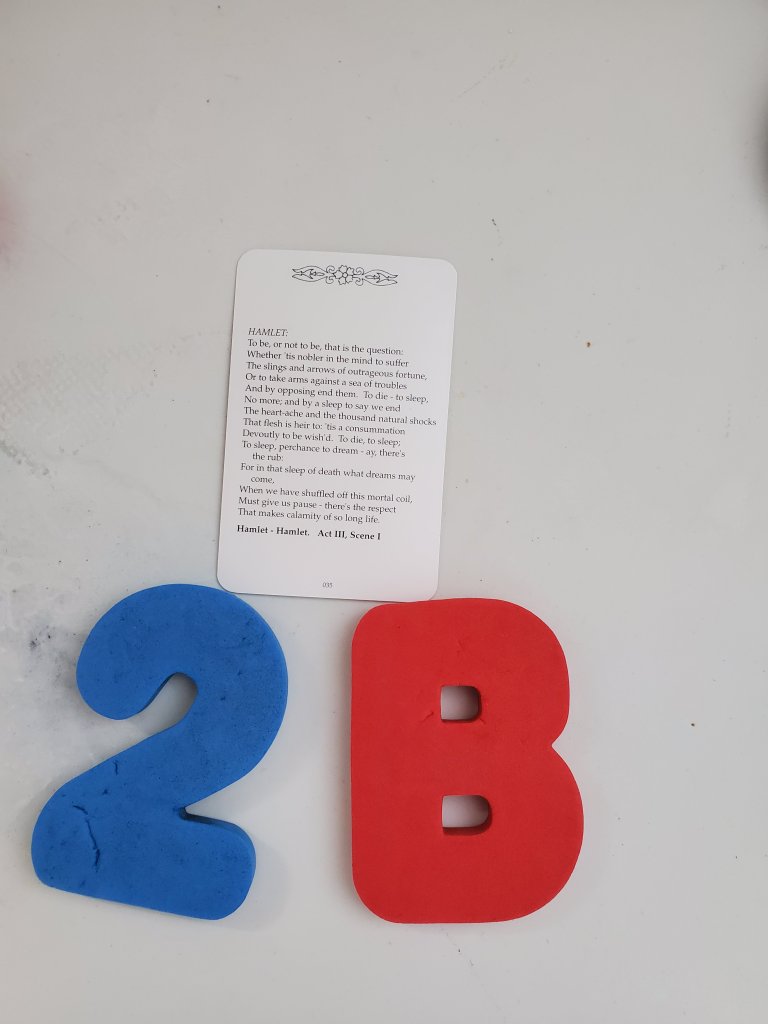
I hid the quote from “Hamlet” in the bathtub 🛁 and had my kids find the bath letters “2” and “B.”

At home I have a card game called “The Bard Game, which has several famous Shakespeare quotes printed on little cards. I hid the cards around the house and when they found them, I had them recite a short quote. Sometimes I hid them in funny locations like the bath tub or the fridge.

2. Romeo and Juliet For Kids. There’s a bunch of animated Shakespeare videos on YouTube and my daughter really likes this one: https://youtu.be/mMFE0IIHR6I

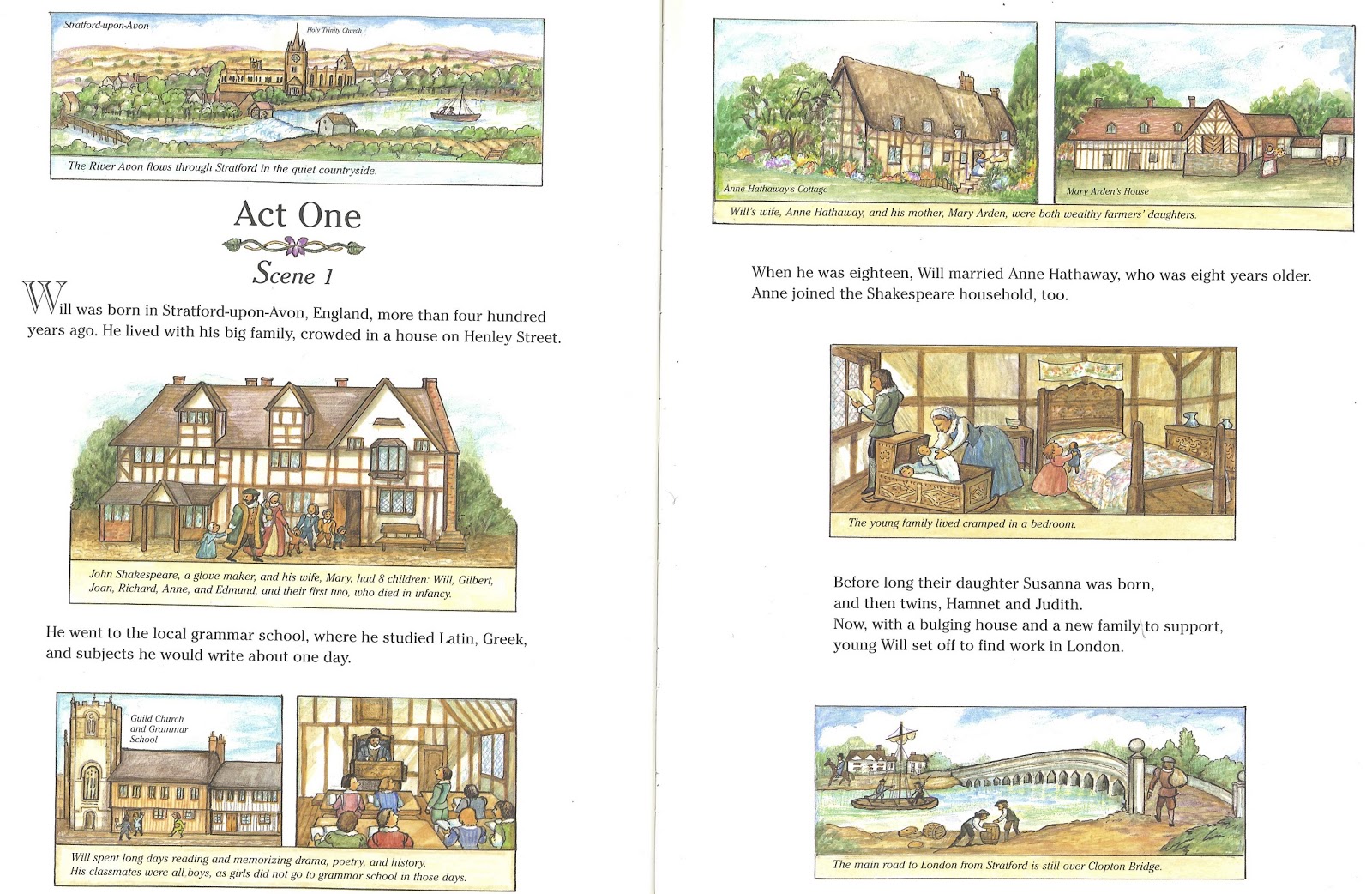
3. William Shakespeare and the Globe by Aliki. A fantastic book that introduces Shakespeare’s life and plays.

Romeo and juliet cookies

What’s a birthday party without treats? I had my kids decorate these Romeo and Juliet cookies. My daughter is only 5, so it was good practice writing ✍ the letters R and J.

If you like my ideas or want to suggest something, please leave a comment below!

New TV Adaptation Of Romeo and Juliet

PBS is going to show (and hopefully stream), the National Theater’s production of Romeo and Juliet Friday, to help celebrate William Shakespeare’s birthday.

The production stars Jessie Buckley as Juliet, and Josh O’Connor as Romeo, who recently won a Golden Globe for his portrayal of the young Prince Charles

After playing another doomed lover whose family won’t allow him to be with the woman he wants, I look forward to seeing him bring his passion and skill to Shakespeare.

Jessie Buckley as Juliet, and Josh O’Connor as Romeo. National Theater, 2021

Shakespeare’s Roman Women

Since it’s Women’s History Month, and we just had the Ides of March last week, I thought it might be a good idea to analyze some of Shakespeare’s  female characters in his Roman plays. I’ve talked a lot about the men in Julius Caesar, Titus, Andronicus, and Coriolanus, but haven’t examined the female characters much, so that’s what I’m going do discuss today.

Examining these characters is important because many are based on real Roman women, and Shakespeare’s sources reveal what Roman culture thought about women’s roles. This is particularly relevant to those of you reading this in the west because Roman culture influenced the Elizabethans and they set the foundation for our culture today. Feminist criticism has been much maligned, (and I’m certainly not an expert on feminism), but I do know this: it exists to question the values and conventions of our culture, so we can identify what works and what needs to change to build a more egalitarian society.

When it comes to Shakespeare female characters in general, he challenges the status quo, but also reinforces it: There’s always a character who challenges traditional gender roles like Katherine and Beatrice, but, (with the exception of Twelfth Night), for every one of these there’s also a Bianca or a Hero; characters who embody traditional famine roles and virtues of chastity, meekness, and yes, marriage and childbirth.

Nowhere is this more apparent than in Shakespeare’s Roman plays where there are always two female characters and they usually embody opposite views of women’s roles and a woman’s duty to her country and the men in their lives

1. Tamara from Titus Andronicus

Titus was Shakespeare’s first tragedy and his first Roman play. As we shall see, as Shakespeare went through his career we see a more nuanced view of women’s roles and a greater appreciation for women who disdain or challenge patriarchal society. The characters Lavinia and Tamara are perfect examples and counterexamples respectively of traditional feminine roles.

When we first meet her, Tamara is the queen of the Goths- an enemy tribe that Rome has just conquered. Everything about Tamara from her foreign upbringing, to her personality, is a counter-example of what Romans prize in women. She is portrayed as savage and bloodthirsty, motivated by revenge against Titus, (who in the first scene of the play, kills her eldest son. Tamara responds by masterminding the murder of all of Titus’ children. She is also sexually liberated and uses her sexuality to further her revenge. Tamara seduces the Emperor to get him on her side, and gets the Emperor to condemn Titus’ sons to death. Her adultery with Aaron is another way she uses her sexuality to get revenge; she brings ruin the monarchy by cuckolding the Emperor. Thus Tamara’s sexuality and bold personality is framed in the play as an existential threat to Rome itself.

Tamara’s chief and only virtue is her love for her children, as you can plainly see in this scene from the play. Her love for her son Alarbus is why she begs Titus for his life, and afterwards, when he sacrifices Alarbus, Tamara’s love for her son turns into deadly hate to Titus. It is her motherly devotion that makes Tamara simultaneously human, and inhuman. As the play progresses however, Tamara is referred to in increasingly inhuman and savage terms. She dresses up as the goddess Revenge to torment Titus, and after she dies, Lucius, the new Emperor (and Titus’ only surviving son), calls her a “ravenous tiger,” and calls for her body to be thrown to beasts, since “Her life was beast-like.” Tamara is unquestionably the villain- a femme-fatale and a threat to all the Roman characters, but especially Titus’ daughter Lavinia.

2. Lavinia from Titus Andronicus

For the entire play, Lavinia embodies  traditional Roman female virtues, in that she is defined by the men in her life, and her chastity. The Romans actually invented the term castitas to refer to the female virtues of modesty and chastity, that is, only having sex with the man you are married to. Lavinia fits this mold perfectly. She’s a devoted daughter, wife, and sister. When we first meet her, she is a model of duty- greeting her father and asking for his blessing when he returns to Rome, and shedding tears for her brothers that were slain in the war:

In the cruelest and most barbaric scene in all of Shakespeare, Lavinia is raped by Tamara’s sons. Then, to keep her from identifying her attackers, they cut out her tongue and cut off her hands. The mutilation is grotesque, but for Titus, the Romans, and for the Elizabethans Shakespeare was writing for, the cruelest loss for Lavinia was the loss of her chastity. Now that she isn’t a virgin, Lavinia is marked with the opposite of chastity, incestum, or infamy. Even though the rape was not her fault, Lavinia is marked with shame. The Romans took unchastity extremely seriously; they used to punish it by throwing the adulteress to her death off the Tarpeian Rock. As you can see in this video, when a woman who was supposed to live chaste is even suspected of adultery, her very life is now in jeopardy:


When she loses her virginity, Lavinia becomes a silent creature of sadness. She is no longer a person, but a motivation for Titus’ revenge. Even if she hadn’t lost her tongue, she would still have little agency in the plot. This is why Titus kills her; to remove her incestum, and end her suffering.  Lavinia embodies the the cruel truth that women had to face in ancient Rome- once they lose their virginity, they are already dead in the eyes of most of Roman society.

Lavinia’s death scene from Titus, 1999, directed by Julie Taymor.

3. Portia (Julius Caesar)
If Shakespeare only wrote these two  female characters, you might rightly assume that he was a vile sexist, who defines a women’s usefulness simply by her chastity or lack thereof, and who thinks the proper function of a woman is to be quiet, demure, chaste, and obedient. Thankfully Shakespeare created Portia in Julius Caesar, and she defies many of the stereotypes associated with women in Ancient Rome.

Portia marks a turning point in Shakespeare’s Roman female characters as we we go from more ‘traditional’ female characters, to ones who exemplify masculine virtues. Instead of women being subordinates to men’s affairs and keeping out of religion, politics, and the affairs of Roman society, Portia is a character who demands respect, and to share her husband’s dangers. Some ancient sources suggested possibly Portia might have been the one who inspired Brutus to kill Caesar, (more on that later), but in any case Portia is not a character who is subordinate to men, but who demands to be treated as a Roman citizen.

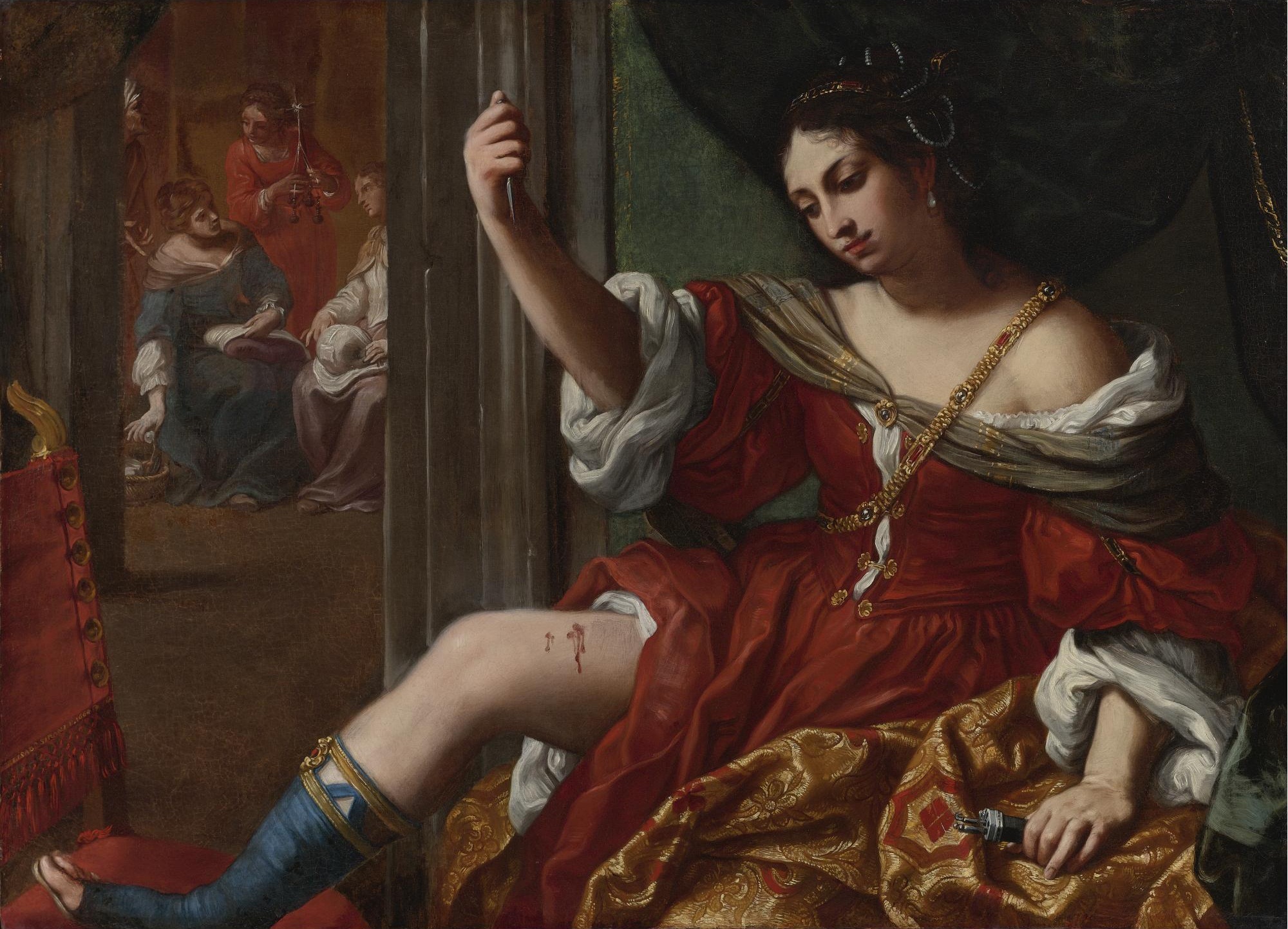
In one of the strangest passages of the play, Portia reveals that she has willingly injured herself by stabbing herself in the thigh. She does this as a way of establishing her tolerance for pain and her desire to be taken seriously by her husband:

Brutus. You are my true and honourable wife,
As dear to me as are the ruddy drops
That visit my sad heart
Portia. If this were true, then should I know this secret.
I grant I am a woman; but withal920
A woman that Lord Brutus took to wife:
I grant I am a woman; but withal
A woman well-reputed, Cato's daughter.
Think you I am no stronger than my sex,
Being so father'd and so husbanded?925
Tell me your counsels, I will not disclose 'em:
I have made strong proof of my constancy,
Giving myself a voluntary wound
Here, in the thigh: can I bear that with patience.
And not my husband's secrets?930
Brutus. O ye gods,
Render me worthy of this noble wife!

Romans have always had a connection with blood. Blood is a connection to duty; we owe our lives and our blood to Rome; the Gladiator whose blood honours the dead, the sacrifice of the enemy soldiers in Titus Andronicus, and the blood of the Roman soldier shed in service of the country. Rome is almost a culture that is built on blood. Portia in this gesture makes it clear that she is willing to shed blood just as much as her husband, who of course, will shed blood, (just not his own). In a way, Portia’s wound makes her more heroic than Brutus, because she is willing to suffer for the good of Rome, while Brutus kills for the good of Rome.

Shakespeare’s Roman characters, (male and female), extol the questionable virtue of the noble death. Historically when a Roman conspiracy failed, the conspirators had a choice; they could be paraded back to Rome humiliated and disgraced, or they could kill themselves and show defiance in the face of their conquerors. In some cases suicide was actually encouraged by the conquerors, as it meant that the threat was neutralized. In response, the conquerors would go easy on the wife and children.

Portia kills herself after Brutus is on the run. There could be two equally important reasons why she does this. First, she might be attempting to gain favor with the triumvirate by killing herself, (since she is complicit in the assassination), in the hopes that Anthony and a and Octavian will take pity on a Brutus’ children. It’s also possible that Portia kills herself because with the tide of battle turning, she might be next. Portia might be showing the same sort of resolve their husband later shows when he commits suicide to appease Caesar’s ghost and to defy his enemies the honor of capturing him.

Since Portia has a lot of her husband’s same virtues, the inevitable question I come to is to wonder what if; what if  Shakespeare’s Brutus had a listened to Portia more,what might he have done?

The Lictors Bring to Brutus the Bodies of His Sons, Jacques Louis David, 1789.

This painting by Jacques Louis David depicts Brutus’ ancestor Junius Brutus. We see that he is utterly removed and stoic him in the face of death. He has ordered the execution of his own sons for trying to bring back the monarchy. In the background, Brutus’s wife and daughters are mourning the death of their son and brothers. Men like Brutus, with their Republican ideals, take little stock in the consequence of their actions.

One can only wonder if Brutus had had confided in Portia, would she have condemned his actions, or could she have led him to a more constructive path, that might have a prevented Brutus’ death, and maybe even stopped the coming days of the Empire?

Valumnia (Coriolanus)
In Shakespeare’s later Roman tragedy Coriolanus, we again see a young, chaste woman and an older mother figure, but unlike in Titus, the older Volumnia is much more heroic than the young maid Virgilia. Both show loyalty to Rome and devotion to Coriolanus, but Volumnia is not only a hero, she is in many ways a complete inversion of the Roman mother trope.


Volumnia is fanatically devoted to Rome and its army and like her son. She finds war more beautiful than symbols of peace, especially those associated with motherhood. In Act I, Scene iii, she says that the breasts of the Trojan Queen Hecuba were not as lovely as her son’s forehead when it spit blood in battle. She is an inversion of the traditional motherly character; because of her devotion to Rome and  her son,
she is more outspoken than other women and not afraid to talk back to anyone who questions Rome. In a way she is more of Coriolanus’ general or his father than a traditional mother. Her love of Rome is inextricably tied to her love of her son. She raises her son to be a warrior for the Senate and the people of Rome, exhorting him to either return in glory, or die. Observe this passage where she tells Coriolanus’ wife that she was never proudest than when she sent her son off to war:

Volumnia: I pray you, daughter, sing; or express yourself in a
more comfortable sort: if my son were my husband, I
should freelier rejoice in that absence wherein he
won honour than in the embracements of his bed where
he would show most love. When yet he was but
tender-bodied and the only son of my womb, when
youth with comeliness plucked all gaze his way, when
for a day of kings' entreaties a mother should not
sell him an hour from her beholding, I, considering
how honour would become such a person. that it was
no better than picture-like to hang by the wall, if
renown made it not stir, was pleased to let him seek
danger where he was like to find fame. To a cruel
war I sent him; from whence he returned, his brows
bound with oak. I tell thee, daughter, I sprang not
more in joy at first hearing he was a man-child
than now in first seeing he had proved himself a
man.

Although Virgilia fits the bill of the modest, chaste, and loyal Roman housewife, Volumnia is framed as much more heroic. She even uses her mighty stoicism to save Rome! After Coriolanus rebels against Rome and joins the Volscis, Volumnia gets him to agree to make peace with Rome. She does this by kneeling before her own son; humiliating herself for the good of Rome. This act of self-humiliation changes Coriolanus’ mind. Observe how shocked Coriolanus (Ralph Fiennes) is when his mother (Vanessa Redgrave) kneels in this scene from the movie Coriolanus (directed by Ralph Fiennes in 2011).

4. Julia (Antony and Cleopatra) and with Cleopatra

With these final two examples, I’ve chosen two character who, (at face value), resemble Lavinia and Tamara. One is a dutiful, chaste Roman wife, related by blood to the Imperial family. Octavia was beloved throughout Rome for her chastity and kindness, and the citizens were outraged when her husband Marc Antony, abandoned her for Cleopatra, who was seen by many as a murderous, barbarous, lustful and an evil sorceress. However, Shakespeare paints a much more complex picture of Cleopatra, and though Octavia retains her chastity and is praised for her virtue, Cleopatra is unquestionably the star of the show, and ultimately commands more respect, awe, and even sympathy from the audience.

In Shakespeare’s play (and in real life), Cleopatra used her beauty as a propaganda tool. As I mentioned the Game of Thrones post, she deified herself in order to be taken seriously. In the 1st century AD, the system was very much rigged against female authority and so women had to resort to terrible measures in order to secure power for themselves.

If you look at the play again especially near the end, Cleopatra doesn’t come across as a femme fatale, she comes across as a woman who is trying to keep her Kingdom and her son Cesarian safe, and she will do anything to protect him. As the name suggests, Cesarean was Cleopatra’s love child of Julius Caesar, so the entire Roman world wanted him dead, because he was a threat to Octavian’s claim to the throne. To keep her son safe, Cleopatra seduces Marc Antony, hoping a powerful Roman alliance will keep her crown safe, and her son alive. Sadly for her, Octavian would stop at nothing to bring down all threats to his power, including Cesarian and Marc Antony. Arguably, the only reason he married Marc Antony to Octavia in the first place, was that he knew if Antony committed adultery, it would give Octavian the perfect excuse to raise an army and destroy Antony. Cleopatra got caught up in the political machinations of the most powerful and cunning man in the ancient world, and held him off as best she could.

Cleopatra struggles through the whole play to keep Antony, her people, and the situation in Rome under control. Antony never respects her as a queen and treats her like a jealous boyfriend, which is why they frequently get into fights.

However, after Antony’s suicide, the audience sees that Cleopatra also genuinely loved him back, and weeps for him as a wife, not an ally. Yet, quickly she regains her royal composure once Octavian threatens to take her back to Rome in chains. She decides to simultaneously deny Octavian the satisfaction, protect her son, and join her husband in the afterlife with her regal suicide:

Cleopatra: Give me my robe, put on my crown; I have
Immortal longings in me: now no more
The juice of Egypt's grape shall moist this lip:
Yare, yare, good Iras; quick. Methinks I hear
Antony call; I see him rouse himself
To praise my noble act; I hear him mock
The luck of Caesar, which the gods give men
To excuse their after wrath: husband, I come:
Now to that name my courage prove my title!
I am fire and air; my other elements
I give to baser life. So; have you done?
Come then, and take the last warmth of my lips.
Farewell, kind Charmian; Iras, long farewell.
[Kisses them. IRAS falls and dies]
Have I the aspic in my lips? Dost fall?
If thou and nature can so gently part,
The stroke of death is as a lover's pinch,
Which hurts, and is desired. Dost thou lie still?
If thus thou vanishest, thou tell'st the world
It is not worth leave-taking.

In conclusion, Shakespeare couldn’t go too far against the grain with challenging traditional patriarchal views of women, but in his Roman plays, we see characters who are simultaneously mothers and murderers, chaste and intelligent, citizens and devoted wives. I’m not trying to say that Shakespeare invented feminism, but I do believe his characters remind us that it is folly to try to box either gender into such stale old Roman categories as masculine or feminine. Perhaps we should all aspire to be like Cleopatra, whose infinite variety allowed her to succeed in a man’s world, while still being a wife, a mother, a lover, and a queen.

What Does Shakespeare Say About Ireland 🇮🇪?

Happy St. Patrick’s Day! The Emerald Isle has long been a source of illumination for poet’s pens and Shakespeare was no exception. The Bard of Avon is indebted to Mother Ireland not only for the inspiration he took, but sadly for the pain he gave her back.

None of Shakespeare’s plays are set in Ireland, but he freely adapted elements from Irish folklore. English poet Edmund Spencer visited Ireland in the 1590s and adapted the folklore he picked up into his opera The Fairy Queen, which Shakespeare adapted into A Midsummer Night’s Dream

The Irish created and continue to tell many of the fairy legends and stories that we retell and adapt today. If you go to Lullymore park in Ireland, you can see a place that is essentially a “Fairy preserve.”

Types of fairies you can “spot” at the Lullymore Park in Ireland:

The old stories tell that Fairies are magical creatures who live in hollow places in the earth. Some are benevolent and help give rain and pleasant weather to the Earth, Like the king and Queen of the fairies, Oberon and Titania:

And the mazed world,
By their [the tides] increase, now knows not which is which:
And this same progeny of evils comes
From our debate, from our dissension;
We are their parents and original.

— Titania, (Queen of the Faries), A Midsummer Night’s Dream Act II, Scene i.

Titania in this speech shows great concern for nature, humanity, and the planet. She believes it is the responsibility of fairies, particularly herself and her husband Oberon, to control the elements and keep humans and fairies safe. Some fairies, however, are cruel and enjoy playing tricks on mortals, just like Puck in A Midsummer Night’s Dream, or Queen Mab in Romeo and Juliet.

.

This is a short analysis I created of the tricks Puck plays on people in A Midsummer Night’s Dream, as part of my acting course on Ouschool.com. Note the different ways Puck is portrayed in photos as a satyr, a rotund elf, and sometimes as an almost- demon like figure.

Cringe-worthy Shakespeare: Shakespeare’s only Irish character, captain mcmorris in “Henry V”

When Shakespeare is racially insensitive towards people of color, the cringe-worthy writing is mercifully few and far between. With the exception of Aaron the Moor and Don Armada, there are only a few sporadic derogatory references to non-White Anglo-Saxon Protestants. Sadly though, Shakespeare might have permanently harmed the Irish through his character the Irish captain Macmorris in Henry the Fifth, his only Irish character.

According to The Irish Times, there is a longstanding stereotype that still exists in the British Isles that Irish people are violent, short-tempered, and essentially savages and Shakespeare might have invented this stereotype (or at least popularized it) when he wrote this scene from Henry the Fifth, Act III, Scene ii:

FLUELLEN
To the mines! tell you the duke, it is not so good
to come to the mines; for, look you, the mines is
not according to the disciplines of the war: the
concavities of it is not sufficient; for, look you,
the athversary, you may discuss unto the duke, look
you, is digt himself four yard under the
countermines: by Cheshu, I think a' will plough up
all, if there is not better directions.
GOWER
The Duke of Gloucester, to whom the order of the
siege is given, is altogether directed by an
Irishman, a very valiant gentleman, i' faith.
FLUELLEN
It is Captain Macmorris, is it not?
GOWER
I think it be.
FLUELLEN
By Cheshu, he is an ass, as in the world: I will
verify as much in his beard: be has no more
directions in the true disciplines of the wars, look
you, of the Roman disciplines, than is a puppy-dog.
Enter MACMORRIS and Captain JAMY
GOWER
Here a' comes; and the Scots captain, Captain Jamy, with him.
FLUELLEN
Captain Jamy is a marvellous falourous gentleman,
that is certain; and of great expedition and
knowledge in th' aunchient wars, upon my particular
knowledge of his directions: by Cheshu, he will
maintain his argument as well as any military man in
the world, in the disciplines of the pristine wars
of the Romans.
JAMY
I say gud-day, Captain Fluellen.
FLUELLEN
God-den to your worship, good Captain James.
GOWER
How now, Captain Macmorris! have you quit the
mines? have the pioneers given o'er?
MACMORRIS
By Chrish, la! tish ill done: the work ish give
over, the trompet sound the retreat. By my hand, I
swear, and my father's soul, the work ish ill done;
it ish give over: I would have blowed up the town, so
Chrish save me, la! in an hour: O, tish ill done,
tish ill done; by my hand, tish ill done!
FLUELLEN
Captain Macmorris, I beseech you now, will you
voutsafe me, look you, a few disputations with you,
as partly touching or concerning the disciplines of
the war, the Roman wars, in the way of argument,
look you, and friendly communication; partly to
satisfy my opinion, and partly for the satisfaction,
look you, of my mind, as touching the direction of
the military discipline; that is the point.
JAMY
It sall be vary gud, gud feith, gud captains bath:
and I sall quit you with gud leve, as I may pick
occasion; that sall I, marry.
MACMORRIS
It is no time to discourse, so Chrish save me: the
day is hot, and the weather, and the wars, and the
king, and the dukes: it is no time to discourse. The
town is beseeched, and the trumpet call us to the
breach; and we talk, and, be Chrish, do nothing:
'tis shame for us all: so God sa' me, 'tis shame to
stand still; it is shame, by my hand: and there is
throats to be cut, and works to be done; and there
ish nothing done, so Chrish sa' me, la!
JAMY
By the mess, ere theise eyes of mine take themselves
to slomber, ay'll de gud service, or ay'll lig i'
the grund for it; ay, or go to death; and ay'll pay
't as valourously as I may, that sall I suerly do,
that is the breff and the long. Marry, I wad full
fain hear some question 'tween you tway.
FLUELLEN
Captain Macmorris, I think, look you, under your
correction, there is not many of your nation--
MACMORRIS
Of my nation! What ish my nation? Ish a villain,
and a bastard, and a knave, and a rascal. What ish
my nation? Who talks of my nation?
FLUELLEN
Look you, if you take the matter otherwise than is
meant, Captain Macmorris, peradventure I shall think
you do not use me with that affability as in
discretion you ought to use me, look you: being as
good a man as yourself, both in the disciplines of
war, and in the derivation of my birth, and in
other particularities.
MACMORRIS
I do not know you so good a man as myself: so
Chrish save me, I will cut off your head.
GOWER
Gentlemen both, you will mistake each other.
JAMY
A! that's a foul fault.
A parley sounded
GOWER
The town sounds a parley.
FLUELLEN
Captain Macmorris, when there is more better
opportunity to be required, look you, I will be so
bold as to tell you I know the disciplines of war;
and there is an end.
Exeunt

Irish History and Shakespeare: The tempestous relationship between england and Ireland

The mayor and all his brethren in best sort,
Like to the senators of the antique Rome,
With the plebeians swarming at their heels,
Go forth and fetch their conquering Caesar in:
As, by a lower but loving likelihood,
Were now the general of our gracious empress,
As in good time he may, from Ireland coming,
Bringing rebellion broached on his sword,

Henry V, Act V Chorus

National Portrait Gallery painting of Robert Deveraux, 2nd Earl of Essex. Wikimedia Commons.
Robert Devereax, 2nd Earl of Essex (National Portrait Gallery)
Hugh, O’Neill, Earl of Tyronne

James Shapiro in his excellent book, A Year In The Life Of William Shakespeare, 1599, posits that contemporary affairs in Ireland might have inspired some of Shakespeare’s greatest plays in including Richard II, Henry V, and Julius Caesar. In 1594 the Earl of Tyrone began a rebellion in Ireland against the English, and in 1599, Queen Elizabeth dispatched the ambitious and chivalrous Earl of Essex to quell it. As you can see in the quote above, Shakespeare mentions Essex’s fight in his play of Henry V, which probably premiered at around the same time Essex was in Ireland.

The audience may have been watching Henry conquer France, but many would have been thinking about Elizabeth’s struggle to conquer Ireland.

BBC Radio 4 Extra – Shakespeare’s Restless World, Ireland: Failures in the Present – Transcript – Shakespeare’s Restless World – Programme 7

Though King Henry successfully conquered and united England and France, Essex failed spectacularly, and Elizabeth was deeply embarrassed by the whole scenario. She was also deeply alarmed by the popularity of Shakespeare’s tragedy Richard II, which shows onstage the deposing and killing of a king who had no children and failed to quell a rebellion in Ireland.

Elizabeth was worried about her subjects but she was also very worried about Essex overseas. Everyone, (including Shakespeare), remembered that 2,000 years ago, Julius Caesar went from him the Senate’s Consul General to dictator by amassing an army, then threatening to invade Rome under the pretense of helping to quell a foreign invasion. Caesar made his name by subjugating tribes in Gaul (modern-day France), and the Senate was worried that he would come home and use his army for a military coup. Look at the expressions on the faces of Cicero and Brutus when they see Caesar coming home in triumph in this scene from the HBO series Rome.

Elizabeth repeatedly attempted to curb Essex’s power while he was fighting in Ireland; she refused to give the Earl more troops for fear that he might be staging a potential coup. Her fears would later be proven right when in 1602, Essex attempted to head a rebellion and take the Crown for himself, but not before one of Essex’s friends commissioned Shakespeare’s company to portray the deposing and killing of King Richard II. Essex was trying to turn himself from a failed Henry V to a victorious Henry IV, and his queen into Richard II.

Left- deposition form the interrogation of Augustine Phillips, one of the actors in Shakespeare’s company about his company’s potential involvement with the Essex rebellion. Right- the hanging of Cinna the poet from Julius Caesar.

Shakespeare might have been inspired to write Julius Caesar after being an unwitting pawn in the political drama between Essex and the queen, and might have even created the character of Cinna the Poet as an analog for Shakespeare himself. In the play, Cinna the poet is mistaken for one of the conspirators by an angry mob and is murdered in the street. Perhaps Shakespeare created Cinna the Poet as a way of coping with the fear he must have had that people might mistake him for a radical, after his play Richard II briefly made him a walking target for those opposed to Essex’s rebellion. In any case, Julius Caesar eloquently documents the kind of anxiety of not knowing who could be trusted when it comes to politics, whether it be a populist warrior like Julius Caesar or Essex, or the Queen, privy council, or indeed Roman senate, and the whole thing started from a failed attempt to quell a rebellion in Ireland.

In summation, even though Shakespeare sets no plays in Ireland, Irish history and Irish culture are everywhere in his plays. England and Ireland are I are indeed separate islands but the cultural exchange between England and Ireland has inspired Shakespeare and many other great writers for centuries. After all Shakespeare’s most famous honorific, ‘the Bard of Avon’ comes from an ancient Irish tradition of semi-mystical poets, who in Irish folklore, were able to see the future and glimpse worlds that are unseen to ordinary mortals. What Shakespeare really felt about Ireland we don’t know but we do him but he does owe the Irish people a lot of thanks, and on this  Saint Patrick’s day, I honor their contribution to him and to him all the world

References:

Shapiro, James. A Year In the Life Of William Shakespeare, 1599. Chapter 6: Things Dying and Things Reborn.

https://www.bbc.co.uk/programmes/articles/3fLDRSY7r9rJhrVFWy99Mly/transcript-shakespeares-restless-world-programme-7

https://www.independent.ie/entertainment/theatre-arts/is-shakespeare-responsible-for-the-stage-irishman-34638347.html

https://www.irishtimes.com/culture/stage/what-ish-my-nation-shakespeare-s-irish-connections-1.2619173