Shakespeare On Dragons

Tonight is the Chinese New Year, beginning the Year of the Dragon. I’ve talked before about the fascinating relationship between Shakespeare and China, and I thought I’d illustrate it here by talking about a shared cultural mythology- the concept of dragons. Both Western and Eastern cultures use dragons in their myths, but as you’ll see, they have very different cultural meanings.

Quotes from Shakespeare About Dragons

Before thee stands this fair Hesperides,
With golden fruit, but dangerous to be touch’d;
For death-like dragons here affright thee hard:

Antiocus, Pericles

Sometimes we see a cloud that’s dragonish;
A vapour sometime like a bear or lion,
A tower’d citadel, a pendent rock,
A forked mountain, or blue promontory

Antony and Cleopatra

In Western myths, dragons are symbols of wrath and fierceness. In ancient Greek and Viking myths, dragons are often guards of treasure, (and sometimes in modern stories like Harry Potter). In the myth of Hercules, a multi-headed dragon guarded the golden apples of the Hesperides, (the apples that kept the gods young and immortal). King Antiochus wants to scare Pericles by comparing his daughter to the apples; if he fails to win her love, he’ll be devoured as Hercules almost was.

Coriolanus and Dragons

His CORIOLANUS is grown
from man to dragon: he has wings; he’s more than a
creeping thing.

Coriolanus

Shakespeare’s Roman general Coriolanus is frequently compared to a dragon in Shakespeare’s play. According to Dr. Peter Saccio of Dartmouth College, this is because the general is unable to relate to other humans- he is solitary, violent, jealous of his power and wealth, and prefers to strike first, then retreat from other people when the battle is won. This is why he utterly fails to get the Roman people to elect him consul in this scene from Ralph Fiennes’ movie. I find it ironic that Fiennes has played not only this character, (who is associated with dragons), but with Lord Voldemort, (who controls several large serpents), and also Francis Dollarhyde in the film Red Dragon:

Swift, swift, you dragons of the night, that dawning
May bare the raven’s eye! I lodge in fear;
Though this a heavenly angel, hell is here.

Cymbeline

Sometime he angers me
With telling me of the mouldwarp and the ant,
Of the dreamer Merlin and his prophecies,
And of a dragon and a finless fish,
A clip-wing’d griffin and a moulten raven,
A couching lion and a ramping cat,
And such a deal of skimble-skamble stuff
As puts me from my faith. 

Hotspur, Henry IV, Part I

A thousand hearts are great within my bosom;

Advance our standards, set upon our foes

Our ancient word of “courage,” fair Saint George,

Inspire us with the spleen of fiery dragons!

Richard III

St. George and the Dragon

In the medieval story of St. George, the titular knight defeats a dragon, which is basically a stand-in for Satan. George was seen as the ideal knight- virtuous, devoted to his cause, strong, and patriotic. His defeat of the dragon was an allegory for how knights should devote themselves to protecting their lords, ladies, and the innocent against evil. Therefore, it’s intentionally unsettling that Shakespeare has Richard III telling his soldiers to act not like the virtuous St. George, but like the cruel and violent dragon. Richard is Shakespeare’s most villainous king, so it makes sense in context that he would side with the dragon, and thus his defeat would seem even more like a triumph of good over evil. In addition, the real King Richard flew this flag with a dragon on it during the actual Battle of Bosworth Field.

Royal standard of Richard III, using the dragon of St. George

Peace, Kent!
Come not between the dragon and his wrath.

King Lear

Dragons and Chinese Culture

None of the animals is so wise as the dragon. His blessing power is not a false one. He can be smaller than small, bigger than big, higher than high, and lower than low.”

–Chinese scholar Lu Dian (AD 1042-1102)

Qualities of Dragons

Dragons didn’t have the negative connotations of Western myths. In China, they were symbols of good luck, strength, and success. They were also known to be proud and temperamental-sometimes kind but sometimes vengeful to people who didn’t show them proper respect. In a sense, the dragon was like the ancient Greek gods- they should be viewed with respect and gratitude as well as fear.

Zodiac

The Chinese calendar goes by a cycle of years, not months. It has 12 animals that represent various qualities and those qualities will characterize the coming year. So hopefully a year of a dragon will be a year marked with courage, good fortune, and justice.

IV. What would a Chinese Lear look like?

Looking at the quotes I showed you earlier, it’s interesting that King Lear calls himself a dragon, and it made me think- Lear is a powerful warlord who demands absolute loyalty from his children. Would a Chinese version of King Lear work?
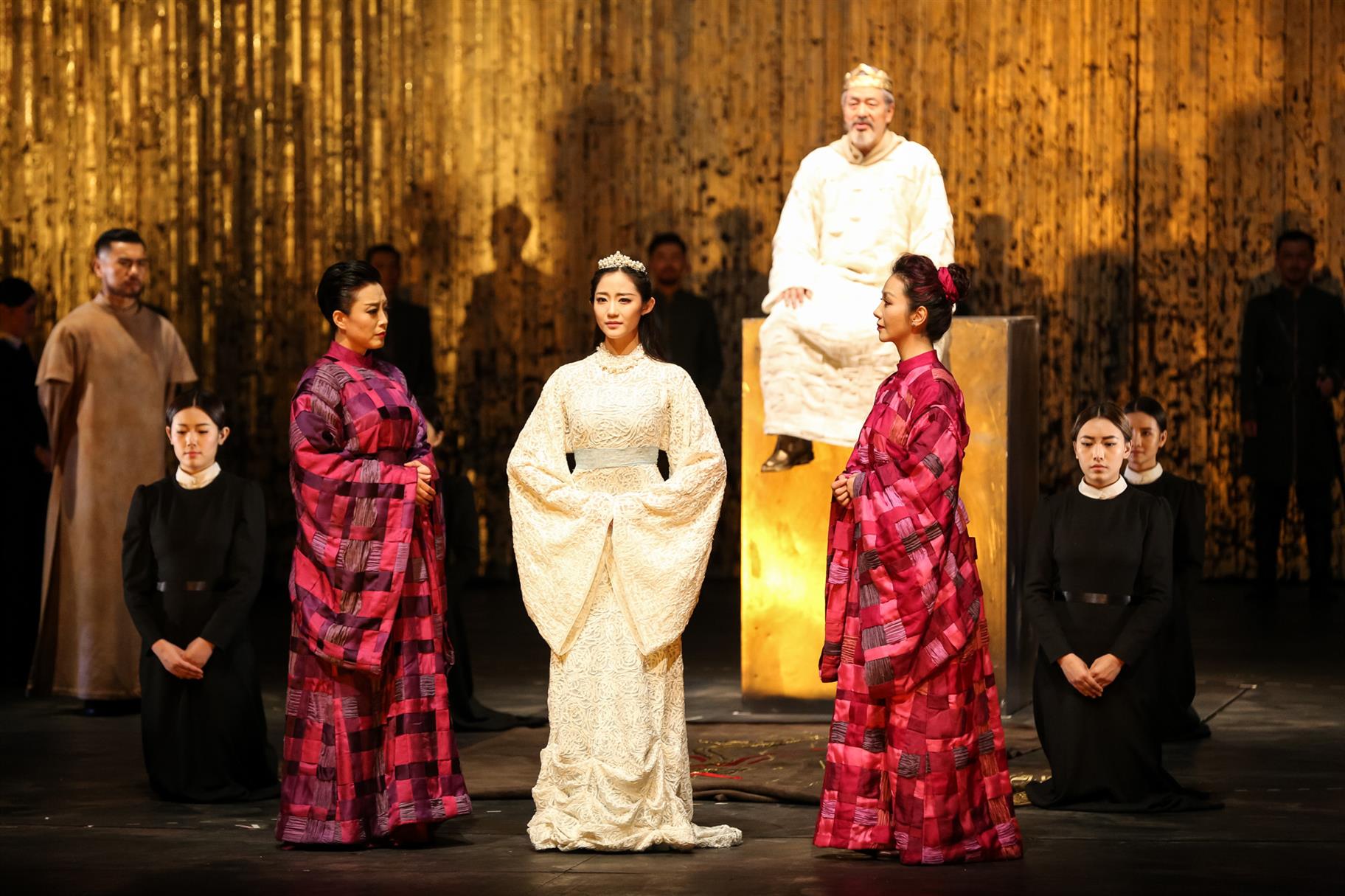
2017 Chinese Language production of “King Lear” at the Royal Shakespeare Company.

There was a Chinese production of King Lear back in 2017, where the translator and director traveled to the Royal Shakespeare Company in England and worked with the actors and directors of a London production to make their production gain insight into the characters’ motivations. However, I wonder how successfully they translated the Western ideas and values of the play for a Chinese audience. One of the reviews from China Daily.com describes the play like this:

Originating from old British legend, King Lear is one of Shakespeare’s four most famous tragedies. Through the internal disorder of the royal family, the rise and fall of King Lear’s fate and the final punishment of evil powers, Shakespeare expresses his optimistic views in the future of society, thereby adding the glory of strong idealism into his work.

ChinaDaily.com

The last word I would use to describe King Lear is “optimistic”. It is the only tragedy where not only does everyone die, but the entire future of the monarchy is in question. Nevertheless, reading about this production makes me interested in imagining my own version of King Lear, one that emphasizes Chinese values, but also questions them.

Many Chinese stories stress family loyalty, communalism, and respect for elders. You could portray King Lear as a story about the disastrous consequences of self-interest. After all, Regan and Goneril cast their father out and dismissed his followers, and it led their kingdom into civil war. In that version, Lear is like the Dragon King, who in Chinese folklore, was a powerful ruler of the seas, (giving new meaning to the lines “Blow winds, and crack your cheeks”). As a bonus, historically, many imperial Chinese rulers decorated their palaces with images of dragons, and the emperors themselves were associated with the creature, (especially during the Han Dynasty), so when Lear says “Come not between the dragon and his wrath,” In his mind, he literally is a dragon.
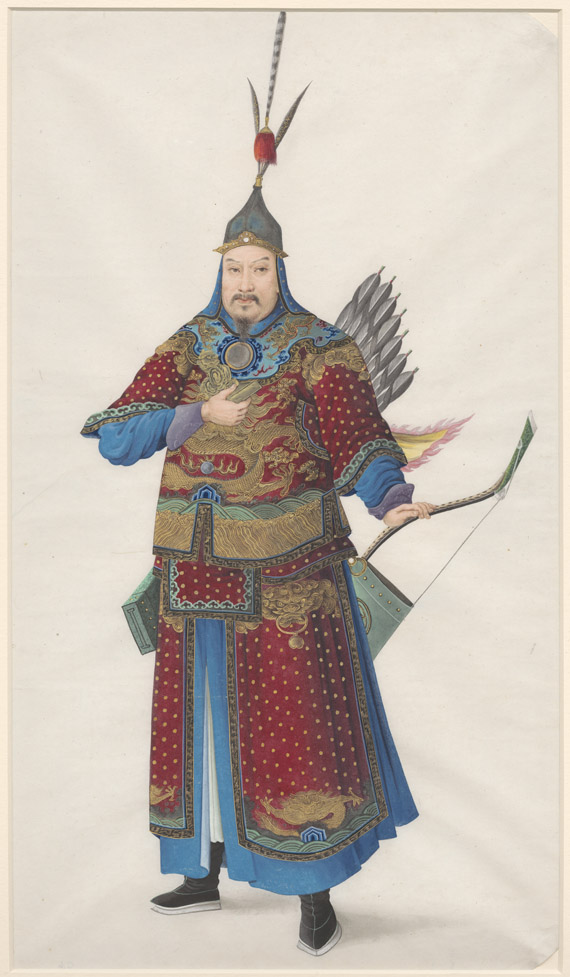
Han Dynasty watercolor print of a Han warrior whose clothing is embroidered with dragons.

In 1736, Jean-Baptiste Du Halde wrote about the Emperor: “His clothing is embroidered with dragons: they are his emblem, and only He can wear dragons with five claws – any infringement to this rule is punished severely.”

Cornell University: Emblems and Mascots of Rulers:
Chinese Imperial Dragon
s

That said, some dragons were associated with bad luck and ill omens. I’ve said before that Lear’s biggest flaw is that he fails to take time to examine himself or think about the consequences of his actions until it is too late. Maybe Lear thinks of himself as a benevolent dragon, but really is a bad man cursed with bad luck; he is not a dragon, he just has one on his back. So, in short, a Chinese re-imagining of King Lear could be a fascinating look at Chinese culture and give a fresh re-imagining of Shakespeare’s tragic story.

I hope you enjoyed this look into dragons in Shakespeare and Chinese culture. Joseph Campbell said that all cultures share and interpret archetypes to understand their own culture, but also to grasp what makes us all human. For whatever reason, every culture on Earth has some kind of large serpent- Chinese dragons, European dragons, The Aztec god Quetzalcoatl, the Viking Yormungand, even the Piasa of the native tribes of the Mississippi. and they can mean many different things to many different people, which means that we as humans are in some way tied to gether through all these dragon tales (no pun intended).

V. Sources

  1. https://www.kennedy-center.org/whats-on/explore-by-genre/young-audiences/2023-2024/dragon-kings-daughter/#:~:text=Chinese%20dragon%20mythology%2C%20martial%20arts,inspiring%20songs%20by%20Marcus%20Yi.
  2. https://www.historyskills.com/classroom/year-7/chinese-dragons/#:~:text=Another%20well%2Dknown%20legend%20involves,benevolent%2C%20divine%20force%20in%20nature.
  3. https://www.amnh.org/exhibitions/mythic-creatures/dragons/asian-dragons
  4. https://www.topchinatravel.com/china-guide/chinese-dragon-language.htm
  5. https://studycli.org/chinese-culture/chinese-dragons
  6. https://rmc.library.cornell.edu/AnimalLegends/exhibition/emblems/dragons.html#:~:text=Already%20a%20royal%20symbol%20in,and%20his%20brother%20Yan%20Di.
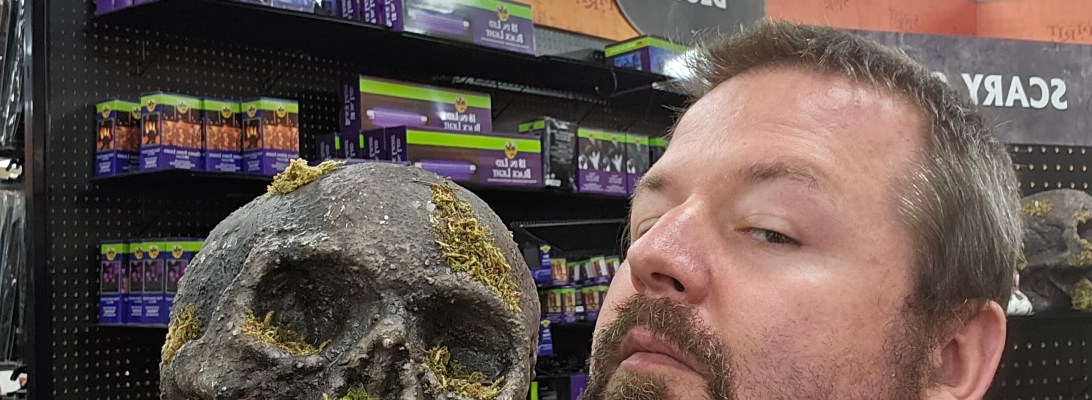
Spirit Halloween and Shakespeare

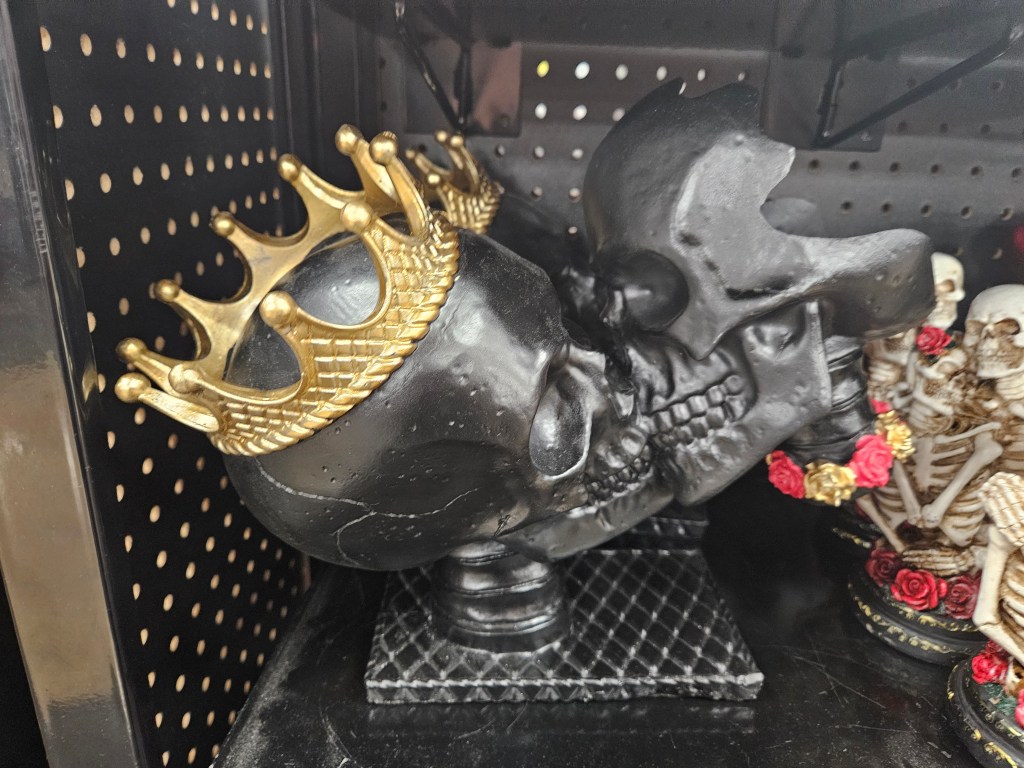
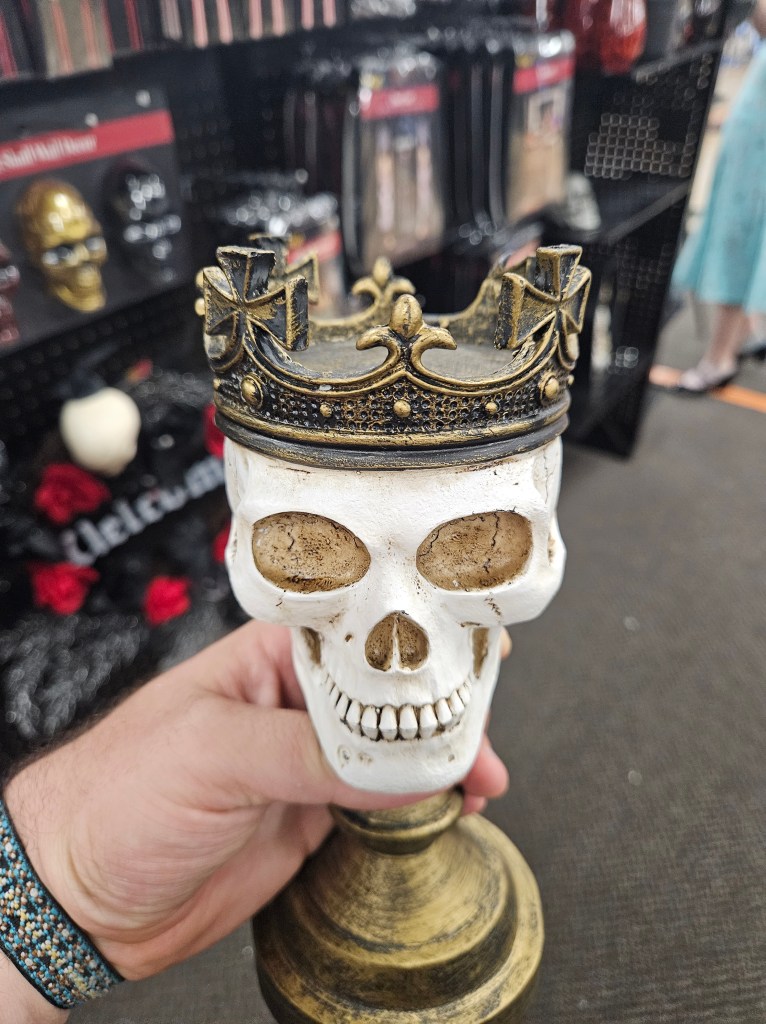
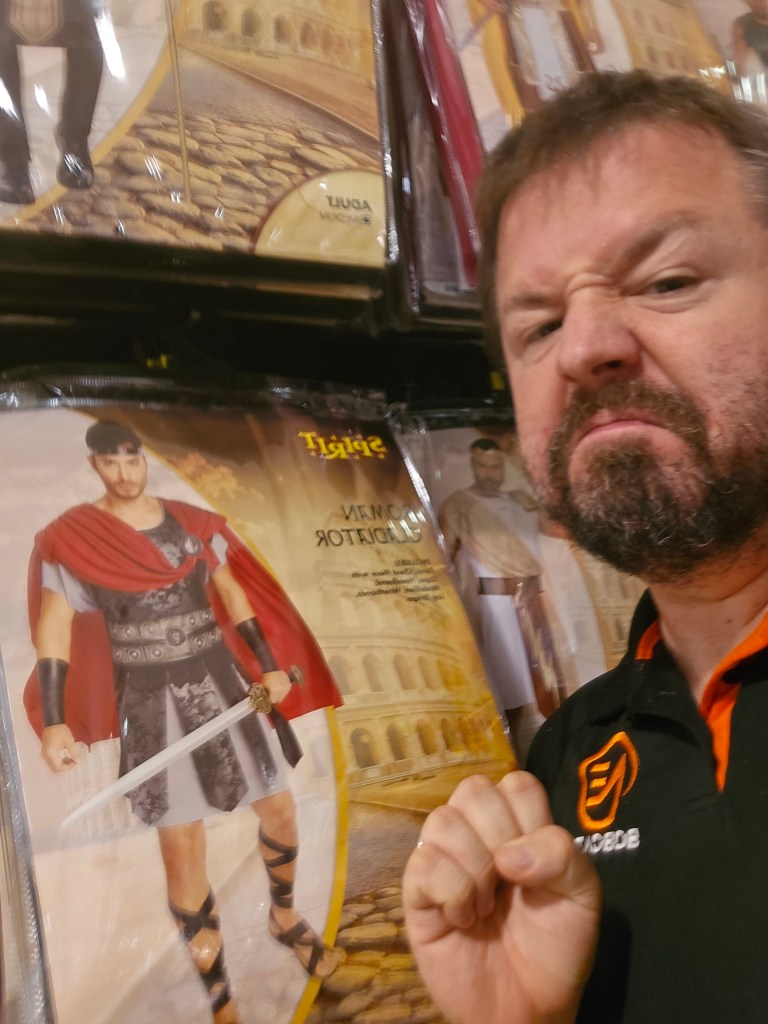
I’ve written before that Shakespeare helped influence Halloween as we know it- the images of holding skulls, witches chanting over a cauldron, and even ghosts coming back to plague their murderers all have Shakespearean roots. Exhibit A is how these images and tropes can even be found in beloved Halloween costume stores like Spirit Halloween!

If you like creepy Halloween activities and Shakespeare, please sign up for my fully online, fully asynchronous class: “An Immersive Guide To Shakespeare’s Macbeth!” The class features a digital escape room, an interactive quiz, and a special, undead guest!

Get $10 off my class “An Interactive Guide to Shakespeare’s “Macbeth” ” with coupon code HTHES4NHCN10 until Nov 3, 2023. Get started at https://outschool.com/classes/an-interactive-guide-to-shakespeares-macbeth-jp7TIh9B and enter the coupon code at checkout.

Review: Romeow and Drooliet by Nina Laden

The whole book, read by me!

As you probably know, I love to review children’s adaptations of Shakespeare (whether direct or indirect). “The Lion King,” (Hamlet), “Encanto” (King Lear), and of course, the many adaptations of “Romeo and Juliet,” are mainstays on this website: Gnomio and Juliet, Romeo and Juliet: Sealed With A Kiss, even Disney’s Pocahontas have their basic plot and characters firmly rooted in Verona Italy.

Then one day by chance, I found this book in a local park, and I knew I had to review it!

The Premise

This is a simple re-telling of the story of Shakespeare’s play that focuses on just the young lovers. You feel for these cute little animals and in a way, making them a kitty and a dog smitten with puppy love, makes them more understandable and sympathetic than Shakespeare’s youthful teenagers, who indulge in violent delights without using their human reason.

What It Keeps

The Story

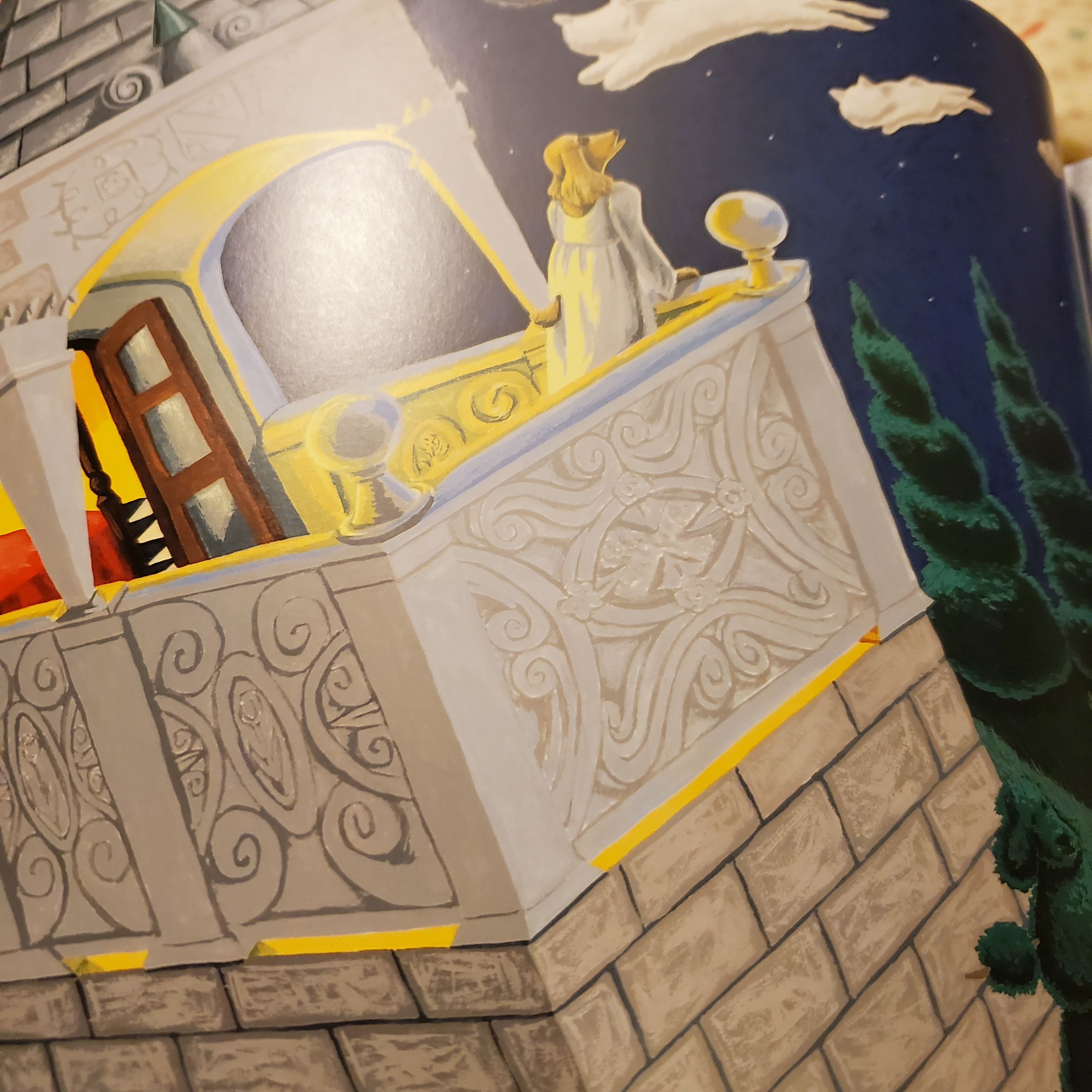
The book keeps the feud between the two families, has the young lovers meet in disguise at a ball, fall in love on a balcony, get married, and amazingly, DIE! Laden still manages to tell the story in a kid-friendly way, though giving it tragic weight.

The Language

The book opens with a rhyming prologue, which, although it isn’t in sonnet form, has the same function as Shakespeare’s prologue- to explain the plot before we see it played out in the book, thus giving the whole story a sense of dramatic irony. Plus, as you can see, Laden also imitates Shakespeare’s love of wordplay with metaphors and puns, (a tale of tails), and alliteration to give the dialogue some wit and effervescence. Reading it gave me giggles like I’d just popped open some champagne.

What it changes: Spoiler alert

All throughout, Laden makes small changes to simplify the plot and remove characters that don’t directly impact the main plot. The characters of Lord/Lady Capulet and Lord/Lady Montegue, The Nurse, Paris, Peter, the servants, and the friars are completely absent, turning an already brief play into an even more compressed story.

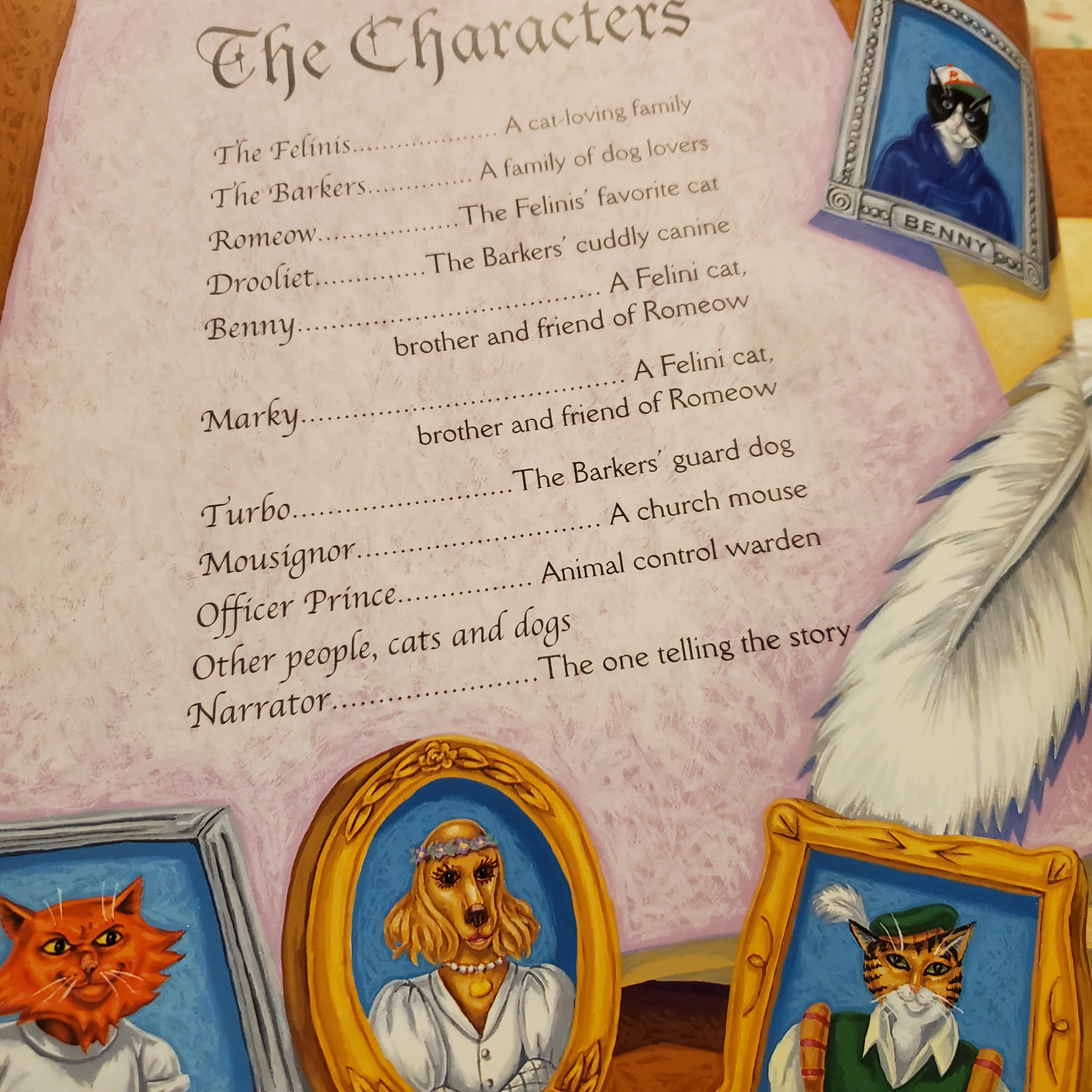
Like a lot of animal retellings I’ve seen of this story, the author recasts the human leads as animals that are natural enemies- in this case, cats and dogs. This makes the story easier for kids to understand. As I’ve said before, it’s often difficult to keep track of who belongs to which house in Shakespeare’s version. All you need to know is that Romeo and his brothers are cats and Juliet’s family are dogs.

Funnily enough, my daughter actually complained that the story would’ve been better if Juliet were a cat instead of Romeo, which I agree with for very specific reasons. The character of Tybalt is named after a character from a prose story called “Reynard the Fox,” who had the epithet, Prince of CATS. Mercutio annoys Tybalt by taunting him with this title before challenging him to a duel:

Tybalt: What would you with me?
Mercutio: Good Prince of Cats, nothing but one of your nine lives! Romeo and Juliet, Act III, Scene i.
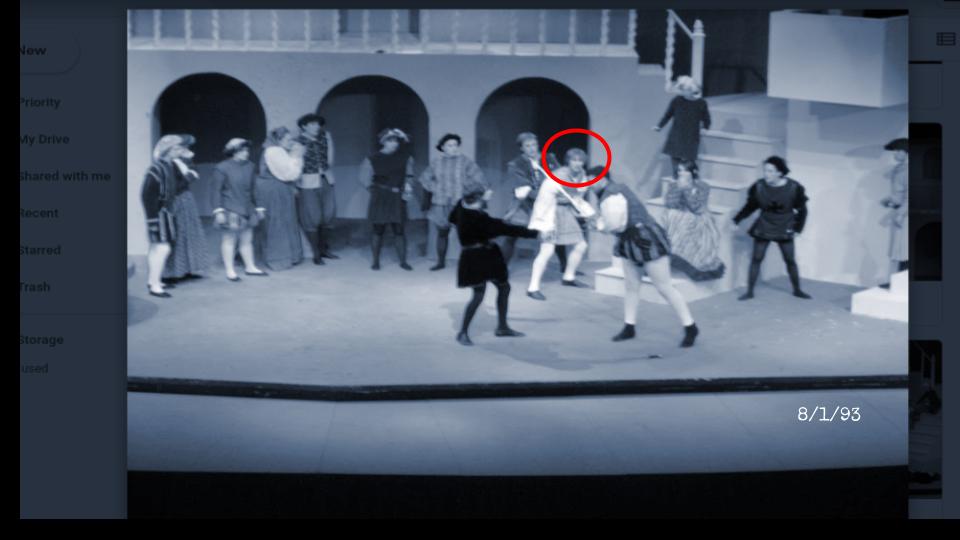
It would’ve been a funny Shakespeare easter egg to have Juliet and Tybalt be portrayed as cats, but I understand why they went with dogs- Drooliet is a hilarious pun, and having Tybalt be a vicious, rabid dog helps set him up as a fearsome antagonist.

I suppose you’re wondering, how the author keeps Shakespeare’s tragic ending in a children’s book? Well, like Shroedinger’s cat, she manages to make Romeow die and not die at the same time. He gives Drooliet one of his 9 lives, allowing them both to ‘die’ and then come back for a happy ending. It’s a brilliant way to nod at the original, while also keeping the kid-friendly tone.

My Reaction

This book is really fun and very enjoyable for kids, parents, and teachers who want to introduce kids to Shakespeare at an early age!

Free teaching guide from the SAG-Aftra Foundation

Special Discount For My Online Class:

Scan the QR code to see my list of classes.

This Friday is the grand premiere of my new online class: “Shakespeare: The Lost Play,” where you discover who stole Shakespeare’s play. Below is the latest trailer.

Since I want as many people to play as possible, I’m creating a coupon: Get $10 off my class “Shakespeare’s Lost Play Mystery Game” with coupon code HTHES4OXNY10 until May 8, 2023. Get started at https://outschool.com/classes/shakespeares-lost-play-mystery-game-ny9HhlxI and enter the coupon code at checkout.

New Trailer/ Special offer on my Murder Mystery Game!

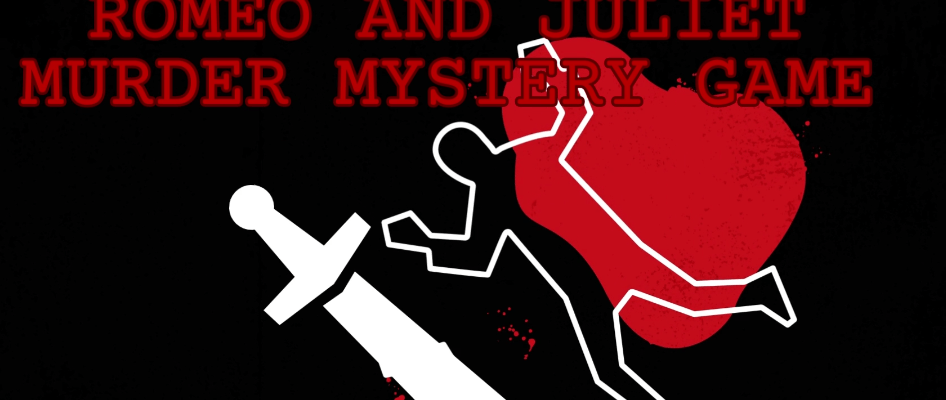
This is my new trailer for my fully online, fully immersive murder mystery game based on Shakespeare’s “Romeo and Juliet.” You play as a detective hired to solve the mystery of Juliet’s murder. You will piece together the plot and characters of Romeo and Juliet, but also use forensic science to identify clues, interrogate suspects, and examine the crime scene just like a real detective! Register now at Outschool.com SPECIAL OFFER: Get $5 off the murder mystery class with coupon code HTHESSQ76F5 until Apr 22, 2023. Get started at https://outschool.com/classes/romeo-a… and enter the coupon code at checkout.

Romeo and Juliet Murder Mystery Course!

I’m pleased to announce my brand-new, fully immersive, fully online murder mystery game! Similar to my “Macbeth” and “Interactive Guide To London,” course, the course is a series of slides, videos, digital activities, and websites that you explore and complete based on your knowledge of a Shakespeare play. Unlike that course, this one also includes real-life science experiments and handy guides to both the play “Romeo and Juliet” and forensic science!

Background on the game

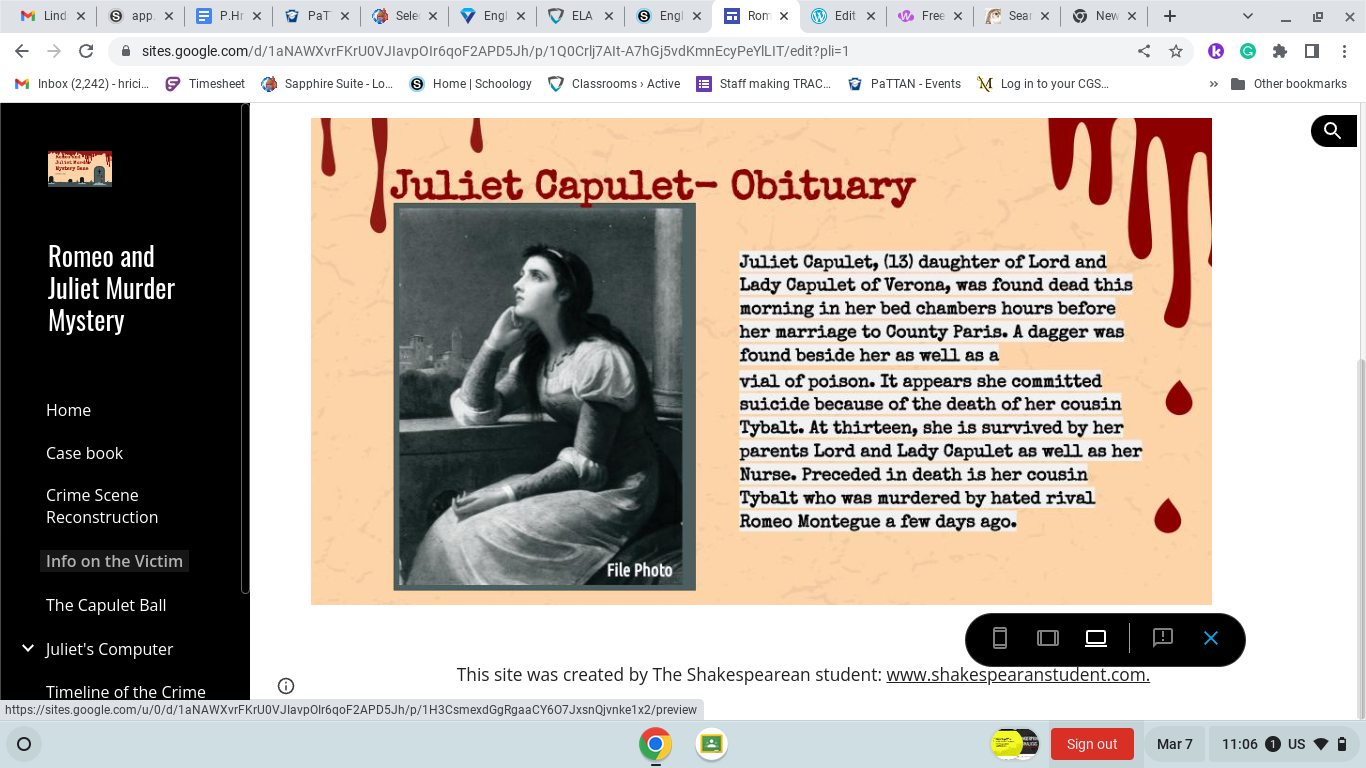
Through a series of slides, you’ll learn that you are playing the part of a detective, hired by Juliet’s parents to investigate her sudden death. You’ll read her obituary, look at a crime scene photo, and the story so far.

Parts of the course:

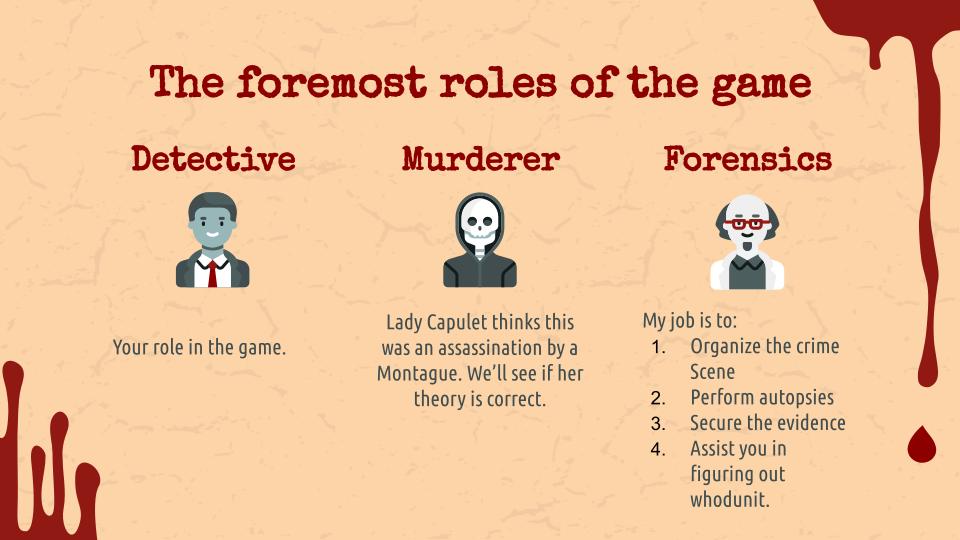
The major players of the game

The class is divided into 8 parts that students can complete at their own pace over a 4-week period. Once you are signed up for the class, you will receive a link to a Nearpod Presentation that has links to all the online activities. You will also receive a detective case file, that will serve as your notes as you record your discoveries through the mystery. Finally, I will provide you with a course cheat sheet and a list of resources in case you need help through the various activities.

Week 1: The Scene Of the Crime

The student will learn, not only about the plot of “Romeo and Juliet,” but also the way real detectives and forensic scientists follow clues and try to solve crimes, in this case, an apparent death by poisoning.

Activity 1: Poison Analysis

In a pre-recorded video, The Investigator introduces himself. He is in the middle of doing a toxicology test on the vial found near Juliet’s bed. He explains that most poisons are either highly acidic or highly alkali (aka, bases). Testing the liquid’s PH will help you determine if the substance is poisonous or not.
In a short simulation via Nearpod, you will test multiple liquids for acidity or alkalinity. You’ll even learn how to test substances in your own home for acidity and for alkaline properties!

Week 2: Crime Scene Investigation

Crime Scene Analysis, Romeo and Juliet Style

Using the Nearpod slides and a linked website, you’ll figure out what happened to Juliet’s cousin Tybalt the day before her own mysterious death.

Activity 3: Unlock Juliet’s Computer

Using Shakespeare’s text, you will decode a secret password to unlock Juliet’s website (Google Sites). Using Juliet’s (fake) Twitter account, you will read her account of the events of the play thus far. Each tweet is paraphrased from a line of Shakespearean
dialogue. Once you’ve read the fake tweets, you can play a game where you match them with the real Shakespearean dialogue.

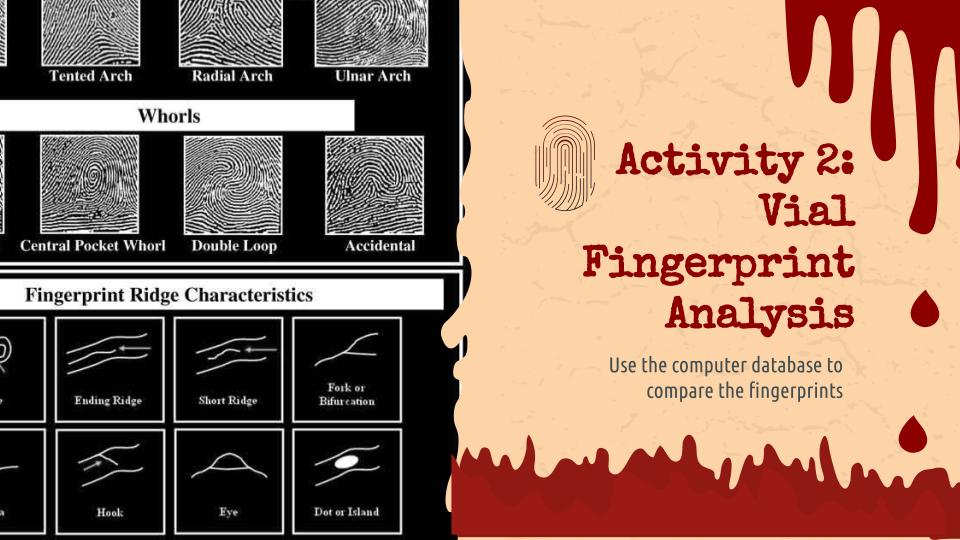
Activity 4: Fingerprint Analysis

Fingerprint Analysis experiment

You will ‘scan’ a fingerprint found on the vial found in Juliet’s bed. The website will tell you who it’s from and you will record it in your case file. You’ll also learn how to take your own fingerprints, and the characteristics real detectives look for when analyzing them.

Week 4: Construct a Timeline/ Make the Arrest:

Using your case file, you will write the sequence of events thus far in your case file and write down information about the suspects (the characters in the play), in the format of a police dossier.

The activities will enrich the student(s)’ understanding of the plot and characters of “Romeo and Juliet” using the format of a murder mystery In addition, the students will learn the methods practiced by detectives, investigators, and forensic scientists when they solve real crimes including toxicology, fingerprint analysis, CSI, and interrogation techniques.

Please sign up now at www.outschool.com!


Announcing ROMAN MONTH!

Julius Caesar Immortal Longings

In honor of “The Ides Of March” and Women’s History Month, I’ve planned a series of posts, podcasts, activities, and videos all related to “Julius Caesar” and Shakespeare’s female characters. Here’s a preview:

Posts

Play of the Month: Julius Caesar

Why “Mean Girls” is like Julius Caesar

Close Reading: Friends, Romans, Countrymen

Shakespeare’s Roman Women

The Fashion is the Fashion- Julius Caesar- Togas, helmets, etc.

Mock Trial- Julius Caesar

Shakespeare Recipes- Roman Pies

Podcasts

Crafting A Character: Brutus

The turbulent history of “Julius Caesar” in America

Special Promo Event!

Be sure to subscribe for all the fun!

Get $5 off when you sign up for my online class “The Violent Rhetoric of Julius Caesar” with coupon code HTHESIIAW75 until Mar 28th.

Review: Romeow and Drooliet by Nina Laden

As you probably know, I love to review children’s adaptations of Shakespeare (whether direct or indirect). “The Lion King,” (Hamlet), “Encanto” (King Lear), and of course, the many adaptations of “Romeo and Juliet,” are mainstays on this website: Gnomio and Juliet, Romeo and Juliet: Sealed With A Kiss, even Pocahontas have their basic plot and characters firmly rooted in Verona Italy.

Then one day by chance, I found this book in a local park, and I knew I had to review it!

THe Premise

This is a simple re-telling of the story of Shakespeare’s play that focuses on just the young lovers. You feel for these cute little animals and in a way, making them a kitty and a dog smitten with puppy love, makes them more understandable and sympathetic than Shakespeare’s youthful teenagers, who indulge in violent delights without using their human reason.

What It Keeps

The Story

The book keeps the feud between the two families, has the young lovers meet in disguise at a ball, fall in love on a balcony, get married, and amazingly, DIE! Laden still manages to tell the story in a kid-friendly way, though giving it tragic weight.

THe Language

The book opens with a rhyming prologue, which, although it isn’t in sonnet form, has the same function as Shakespeare’s prologue- to explain the plot before we see it played out in the book, thus giving the whole story a sense of dramatic irony. Plus, as you can see, Laden also imitates Shakespeare’s love of wordplay with metaphors and puns, (a tale of tails), and alliteration to give the dialogue some wit and effervescence. Reading it gave me giggles like I’d just popped open some champagne.

What it changes: Spoiler alert

All throughout, Laden makes small changes to simplify the plot and remove characters that don’t directly impact the main plot. The characters of Lord/Lady Capulet and Lord/Lady Montegue, The Nurse, Paris, Peter, the servants, and the friars are completely absent, turning an already brief play into an even more compressed story.

Like a lot of animal retellings I’ve seen of this story, the author recasts the human leads as animals that are natural enemies- in this case, cats and dogs. This makes the story easier for kids to understand- as I’ve said before, it’s often difficult to keep track of who belongs to which house in Shakespeare’s version. All you need to know is that Romeo and his brothers are cats and Juliet’s family are dogs.

Funnily enough, my daughter actually complained that the story would’ve been better if Juliet were a cat instead of Romeo, which I agree with for very specific reasons. The character of Tybalt is named after a character from a prose story called “Reynard the Fox,” who had the epithet, Prince of CATS. Mercutio annoys Tybalt by taunting him with this title before challenging him to a duel:

Tybalt: What would you with me?
Mercutio: Good Prince of Cats, nothing but one of your nine lives! Romeo and Juliet, Act III, Scene i.

It would’ve been a funny Shakespeare easter egg to have Juliet and Tybalt be portrayed as cats, but I understand why they went with dogs- Drooliet is a hilarious pun, and having Tybalt be a vicious, rabid dog helps set him up as a fearsome antagonist.

I suppose you’re wondering, how can the author keep Shakespeare’s tragic ending in a children’s book? Well, like Shroedinger’s cat, she manages to make Romeow die and not die at the same time. He gives Drooliet one of his 9 lives, allowing them both to ‘die’ and then come back for a happy ending. It’s a brilliant way to nod at the original, while also keeping the kid-friendly tone.

My Reaction

This book is really fun and very enjoyable for kids, parents, and teachers who want to introduce kids to Shakespeare at an early age!

Just below you can watch the book being read by actress Hayle Duff:

Free teaching guide from the SAG-Aftra Foundation