However, the Romans gave way before the good fortune of the man and accepted the bit, and regarding the monarchy as a respite from the evils of the civil wars, they appointed him dictator for life. This was confessedly a tyranny, since the monarchy, besides the element of irresponsibility, now took on that of permanence
Patrick Stewart (Cassius), convinces Brutus (Ian Richardson), to betray Caesar, RSC, 1970
Under these circumstances the multitude turned their thoughts towards Marcus Brutus, who was thought to be a descendant of the elder Brutus on his father’s side, on his mother’s side belonged to the Servilii, another illustrious house, and was a son-in‑law and nephew of Cato. 2 The desires which Brutus felt to attempt of his own accord the abolition of the monarchy were blunted by the favours and honours that he had received from Caesar. 3 For not only had his life been spared at Pharsalus after Pompey’s flight, and the lives of many of his friends at his entreaty, but also he had great credit with Caesar. 4 He had received the most honourable of the praetorships for the current year, and was to be consul three years later, having been preferred to Cassius, who was a rival candidate. 5 For Caesar, as we are told, said that Cassius urged the juster claims to the office, but that for his own part he could not pass Brutus by.105 6 Once, too, when certain persons were actually accusing Brutus to him, the conspiracy being already on foot, Caesar would not heed them, but laying his hand upon his body said to the accusers: “Brutus will wait for this shrivelled skin,”106 implying that Brutus was worthy to rule because of his virtue, but that for the sake of ruling he would not become a thankless villain. 7 Those, however, who p589 were eager for the change, and fixed their eyes on Brutus alone, or on him first, did not venture to talk with him directly, but by night they covered his praetorial tribune and chair with writings, most of which were of this sort: “Thou art asleep, Brutus,” or, “Thou art not Brutus.”107 8 When Cassius perceived that the ambition of Brutus was somewhat stirred by these things, he was more urgent with him than before, and pricked him on, having himself also some private grounds for hating Caesar;
So far, perhaps, these things may have happened of their own accord; the place, however, which was the scene of that struggle and murder, and in which the senate was then assembled, since it contained a statue of Pompey and had been dedicated by Pompey as an additional ornament to his p597 theatre, made it wholly clear that it was the work of some heavenly power which was calling and guiding the action thither.
Well, then, Antony, who was a friend of Caesar’s and a robust man, was detained outside by Brutus Albinus,110 who purposely engaged him in a lengthy conversation; 5 but Caesar went in, and the senate rose in his honour. Some of the partisans of Brutus took their places round the back of Caesar’s chair, while others went to meet him, as though they would support the petition which Tulliusº Cimber presented to Caesar in behalf of his exiled brother, and they joined their entreaties to his and accompanied Caesar up to his chair. 6 But when, after taking his seat, Caesar continued to repulse their petitions, and, as they pressed upon him with greater importunity, began to show anger towards one and another of them, Tullius seized his toga with both hands and pulled it down from his neck. This was the signal for the assault. 7 It was Casca who gave him the first blow with his dagger, in the neck, not a mortal wound, nor even a deep one, for which he was too much confused, as was natural at the beginning of a deed of great daring; so that Caesar turned about, grasped the knife, and held it fast. p599 8 At almost the same instant both cried out, the smitten man in Latin: “Accursed Casca, what does thou?” and the smiter, in Greek, to his brother: “Brother, help!”
9 So the affair began, and those who were not privy to the plot were filled with consternation and horror at what was going on; they dared not fly, nor go to Caesar’s help, nay, nor even utter a word. 10 But those who had prepared themselves for the murder bared each of them his dagger, and Caesar, hemmed in on all sides, whichever way he turned confronting blows of weapons aimed at his face and eyes, driven hither and thither like a wild beast, was entangled in the hands of all; 11 for all had to take part in the sacrifice and taste of the slaughter. Therefore Brutus also gave him one blow in the groin. 12 And it is said by some writers that although Caesar defended himself against the rest and darted this way and that and cried aloud, when he saw that Brutus had drawn his dagger, he pulled his toga down over his head and sank, either by chance or because pushed there by his murderers, against the pedestal on which the statue of Pompey stood. 13
And the pedestal was drenched with his blood, so that one might have thought that Pompey himself was presiding over this vengeance upon his enemy, who now lay prostrate at his feet, quivering from a multitude of wounds. 14 For it is said that he received twenty-three; and many of the conspirators were wounded by one another, as they struggled to plant all those blows in one body.
-Plutarch’s Life Of Caesar
Artwork
Bust of Caesar Artwork for Julius Caesar. Immoral Longings, 2013.
Video 📹
Commentary
James Shapiro in his book 1599, addresses the common complaint that in the play that bears his name, Julius Caesar dies halfway through the play and has little time onstage to make a connection with the audience. The play is about tyrananicide, what causes it, what it looks like, and especially its aftermath. In a time when Jesuits and Catholic radicals threatened to assassinate Queen Elizabeth, Shakespeare wrote a powerful story about how fragile government systems can be; how striking the head off Rome leads to anarchy and sometimes tyranny.
Since Valentines Day is next week, I thought I’d talk a little bit about Shakespeare’s love poems. Every year I try to study a sonnet or two and write one of my own for my wife and my family. So here’s some insight into the sonnets and I hope that this inspires you to read and craft your own love poems.
My mini-lecture on Shakespeare’s Sonnets.
What Is A Sonnet?
Shakespeare wrote 154 short poems called sonnets. They are 14 lines long Each line has 10 syllables, generally in iambic pentameter
12 of the 14 lines are grouped into 3 groups of 4 lines called quatrains The final two lines are called a rhyming couplet
A little History
The first collection of Shakespeare’s Sonnets was published in 1609, but NOT BY SHAKESPEARE.
We don’t know if this is the order he intended, we don’t know if he intended them to be published, and we DEFINITELY DON”T KNOW IF THEY ARE AUTOBIOGRAPHICAL.
Themes and Ideas
A lot of the sonnets use extended metaphors where the speaker describes his feelings by describing himself as another person, place, or thing. In some sonnets, he’s a painter or looking in a mirror, or an astronomer looking through a telescope or outdoors in nature and something reminds him of the beloved. Most follow a similar theme: You’re beautiful like… [or] I’m trying to write about you but… You wil age and die.
TIme and the sonnets
Pierre Mignard Time Clipping Cupid’s Wings (1694)
The most pervasive idea in the sonnet is a fight against Time. Time is often personified in the sonnets as being jealous, cruel, cold, unfeeling or petty. Time is also associated with the concept of Death. Like the Grim Reaper, he is the enemy of romantic love because he makes young lovers age and die.
Devouring Time, blunt thou the lion’s paws,
And make the earth devour her own sweet brood;
Sonnet 19
THe BIG BUT..
In most of the sonnets there’s a “But” around the third quatrain (lines 9-12 or thereabouts), which challenges the power of time or Death. For example, the first 8 sonnets basically say: “You will age BUT… you will become immortal if you have children.” Couplet
The Young Man sonnets (1-126)
From fairest creatures we desire increase,
That thereby beauty’s rose might never die,
But as the riper should by time decease,
His tender heir might bear his memory:
William Shakespeare, Sonnet 1
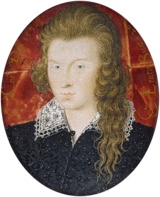
Henry Wriosley, Earl of Southampton and Shakespeare’s patron.
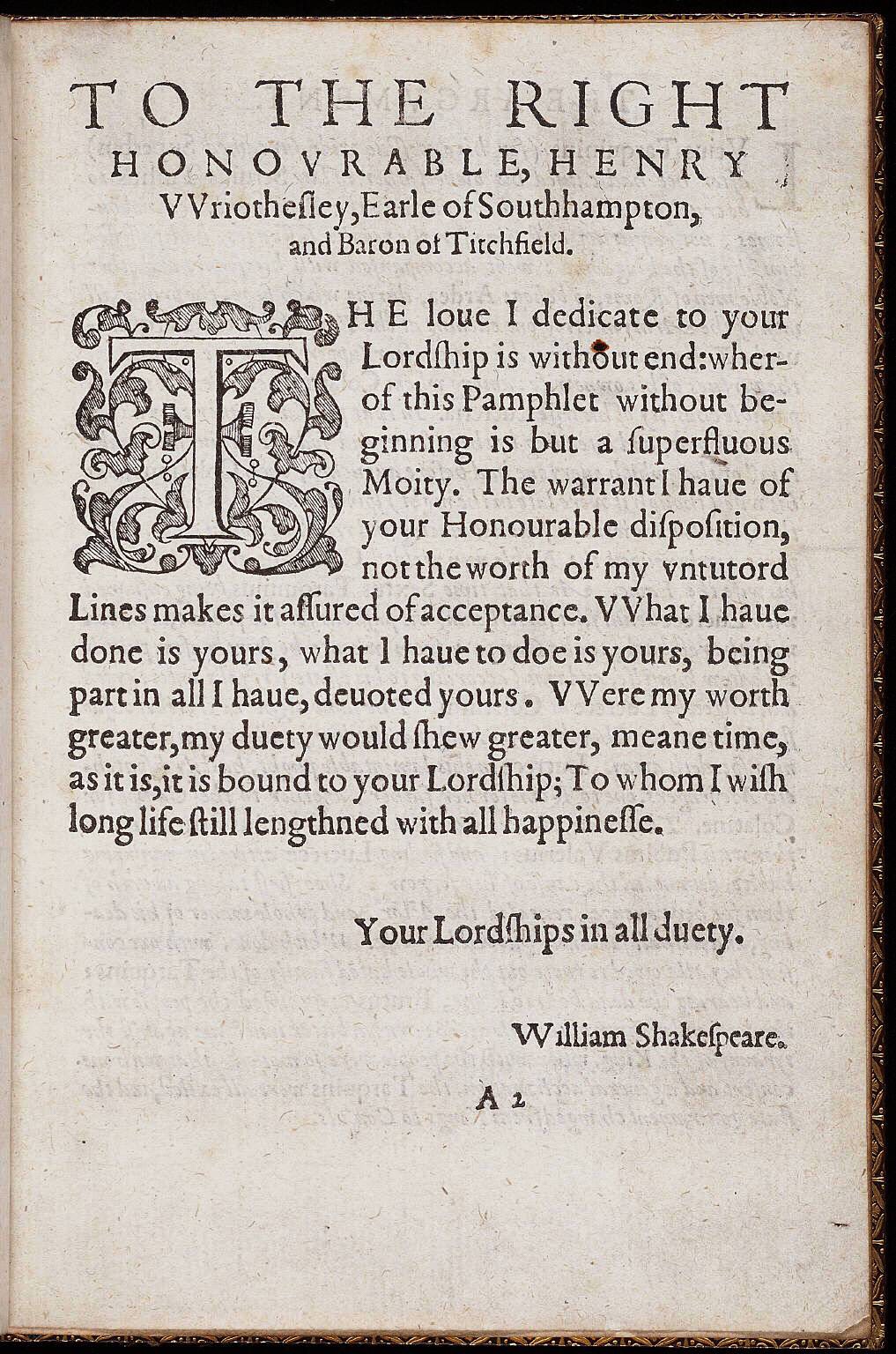
The first 126 sonnets (roughly) are about a young man with blonde hair. Though there is no evidence that the sonnets were autobiographical, many scholars have speculated that he might have been partially inspired by Henry Wriosley, the Earl of Southampton. Shakespeare dedicated two poems to Henry: The Rape of Lucrece and Venus and Adonis, which you can see the title page of here:
Title page to the 1593 edition of Venus and Adonis
Sonnet 12
When I do count the clock that tells the time, And see the brave day sunk in hideous night; When I behold the violet past prime, And sable curls, all silvered o’er with white; When lofty trees I see barren of leaves, Which erst from heat did canopy the herd, And summer’s green all girded up in sheaves, Borne on the bier with white and bristly beard, Then of thy beauty do I question make, That thou among the wastes of time must go, Since sweets and beauties do themselves forsake And die as fast as they see others grow; And nothing ‘gainst Time’s scythe can make defense Save breed, to brave him when he takes thee hence
I love this sonnet for its use of alliteration, the use of words that sound the same: “count,” “clock” “tells,” “time,” “green,” “girdled,” etc. The use of “count,” and “clock” in particular makes you imagine the sound of a clock in your head. The sonnet makes you keenly aware of the passage of time, first from the seconds of a ticking clock, then to the changing of the seasons, then at last to the span of a lifetime. This sonnet might not inspire much in terms of feelings, but its technical construction literally works ‘like clockwork.’ If you’re interested in r Elizabethan clocks and other timekeeping instruments, click here for a fascinating blog: https://www.cassidycash.com/did-shakespeare-have-a-clock-part-1-of-5/
Sonnet 18
Shall I compare thee to a summer's day?
Thou art more lovely and more temperate:
Rough winds do shake the darling buds of May,
And summer's lease hath all too short a date:
Sometime too hot the eye of heaven shines,
And often is his gold complexion dimmed,
And every fair from fair sometime declines,
By chance, or nature's changing course untrimmed:
But thy eternal summer shall not fade,
Nor lose possession of that fair thou ow'st,
Nor shall death brag thou wander'st in his shade,
When in eternal lines to time thou grow'st,
   So long as men can breathe, or eyes can see,
   So long lives this, and this gives life to thee.
I go into detail explaining sonnet 18 in my class: “Love Poetry Shakespeare Style,” but to put it succinctly, this sonnet is famous for talking about the ways the beloved is Better than a summer’s day.
Sonnet 27- “Weary With Toil…
Weary with toil, I haste me to my bed,
The dear repose for limbs with travel tired;
But then begins a journey in my head
To work my mind, when body's work's expired:
For then my thoughts--from far where I abide--
Intend a zealous pilgrimage to thee,
And keep my drooping eyelids open wide,
Looking on darkness which the blind do see:
Save that my soul's imaginary sight
Presents thy shadow to my sightless view,
Which, like a jewel hung in ghastly night,
Makes black night beauteous, and her old face new.
   Lo! thus, by day my limbs, by night my mind,
   For thee, and for myself, no quiet find.
Not to seem crass, but this sonnet is literally panting with sexual desire. The speaker is exhausted but cannot sleep, with the image of his beloved haunting his thoughts. There are also a few religious allusions too where the speaker calls himself a “pilgrim,” much like Romeo and Juliet in their first meeting in Act I, Scene v. It almost seems like the beloved is both an angel that the speaker wants to bless him, and a succubus or vampire draining him of love and life.
XXIX “When In disgrace…”
Sonnet 29: “When in disgrace With Fortune and men’s eyes
When in disgrace with fortune and men's eyes
I all alone beweep my outcast state,
And trouble deaf heaven with my bootless cries,
And look upon myself, and curse my fate,
Wishing me like to one more rich in hope,
Featured like him, like him with friends possessed,
Desiring this man's art, and that man's scope,
With what I most enjoy contented least;
Yet in these thoughts my self almost despising,
Haply I think on thee, and then my state,
Like to the lark at break of day arising
From sullen earth, sings hymns at heaven's gate;
   For thy sweet love remembered such wealth brings
   That then I scorn to change my state with kings.
Sonnet 29
Sonnet 118- The “Marriage” Sonnet
Let me not to the marriage of true minds admit impediments.
– Shakespeare, Sonnet 29
Let me not to the marriage of true minds
Admit impediments. Love is not love
Which alters when it alteration finds,
Or bends with the remover to remove:
O, no! it is an ever-fixed mark,
That looks on tempests and is never shaken;
It is the star to every wandering bark,
Whose worth's unknown, although his height be taken.
Love's not Time's fool, though rosy lips and cheeks
Within his bending sickle's compass come;
Love alters not with his brief hours and weeks,
But bears it out even to the edge of doom.
     If this be error and upon me proved,
     I never writ, nor no man ever loved.
This sonnet is one of the most famous poems in all of English literature all. In fact, it's quite personally important to me, because my wife recited it to me on my wedding day. It is full of powerful metaphors about how married love is stronger and more resilent than simple lust or infatuation. On my wedding day it was a powerful affirmation that my wife and I will endure age, change, Time, and eventually death, but our love will remain the same.
The Dark Lady Sonnets 127-152
Sonnets 127-152 seem to be collectively addressed to a woman with dark hair, dark skin, and musical talent, who seems to be in a love triangle with the speaker of the sonnets, and someone else. As you can see in this video, many theories have come up to try and expose who she really was, but again, he have no proof that these sonnets were in any way autobiographical.
As far as we know, the Dark Lady sonnets might simply have been a writing exercise for Shakespeare while he was writing Othello and Antony and Cleopatra. I’m not interested in the Dark Lady conspiracy, except for its usefulness for historians to highlight important Elizabethan women. I have to admit that I wouldn’t have known about Emilia Lanier, or the Countess of Pembroke if they hadn’t been roped into the Dark Lady theory. Otherwise, I’m only interested in the Dark Lady sonnets for their poetry and the interesting stories they tell.
In the old age black was not counted fair,
Or if it were, it bore not beauty's name;
But now is black beauty's successive heir,
And beauty slandered with a bastard shame:
For since each hand hath put on Nature's power,
Fairing the foul with Art's false borrowed face,
Sweet beauty hath no name, no holy bower,
But is profaned, if not lives in disgrace.
Therefore my mistress' eyes are raven black,
Her eyes so suited, and they mourners seem
At such who, not born fair, no beauty lack,
Sland'ring creation with a false esteem:
   Yet so they mourn becoming of their woe,
   That every tongue says beauty should look so.
I admit this is a retroactive reading, but Shakespeare has been guilty of equating fair skin with beauty, so it’s nice to see this sonnet, which lends itself to a refutation of that notion. Much like how “Hath not a Jew eyes…” has been appropriated as a plea for tolerance, I hope this sonnet gains popularity as a source of pride for POC.
In the old age black was not counted fair, Or if it were, it bore not beauty’s name; But now is black beauty’s successive heir, And beauty slandered with a bastard shame: For since each hand hath put on Nature’s power, Fairing the foul with Art’s false borrowed face, Sweet beauty hath no name, no holy bower, But is profaned, if not lives in disgrace. Therefore my mistress’ eyes are raven black, Her eyes so suited, and they mourners seem At such who, not born fair, no beauty lack, Sland’ring creation with a false esteem: Yet so they mourn becoming of their woe, That every tongue says beauty should look so.
Sonnet 128 How oft when thou, my music, music play’st, Upon that blessed wood whose motion sounds With thy sweet fingers when thou gently sway’st The wiry concord that mine ear confounds, Do I envy those jacks that nimble leap, To kiss the tender inward of thy hand, Whilst my poor lips which should that harvest reap, At the wood’s boldness by thee blushing stand! To be so tickled, they would change their state And situation with those dancing chips, O’er whom thy fingers walk with gentle gait, Making dead wood more bless’d than living lips. Since saucy jacks so happy are in this, Give them thy fingers, me thy lips to kiss.
Sonnet 130
My mistress’ eyes are nothing like the sun; Coral is far more red, than her lips red: If snow be white, why then her breasts are dun; If hairs be wires, black wires grow on her head. I have seen roses damasked, red and white, But no such roses see I in her cheeks; And in some perfumes is there more delight Than in the breath that from my mistress reeks. I love to hear her speak, yet well I know That music hath a far more pleasing sound: I grant I never saw a goddess go, My mistress, when she walks, treads on the ground: And yet by heaven, I think my love as rare, As any she belied with false compare.
I ended with this sonnet, because unlike the previous ones, Shakespeare beautifully shows the frankness and honesty in true love. Shakespeare doesn’t use extravagant praise or pretty metaphors, but instead just says he loves his mistress for who she is. I wish that all of you reading this will find a love that you can enjoy without false comparison, (but then again, what is life without a little poetry in it)?
Your child will learn how to write poetry like Shakespeare himself, through a mix of presentations, a printable guideline, and some fun quizzes to test your knowledge of Shakespeare’s sonnets! Designed for ages 13-18.
Class Description:
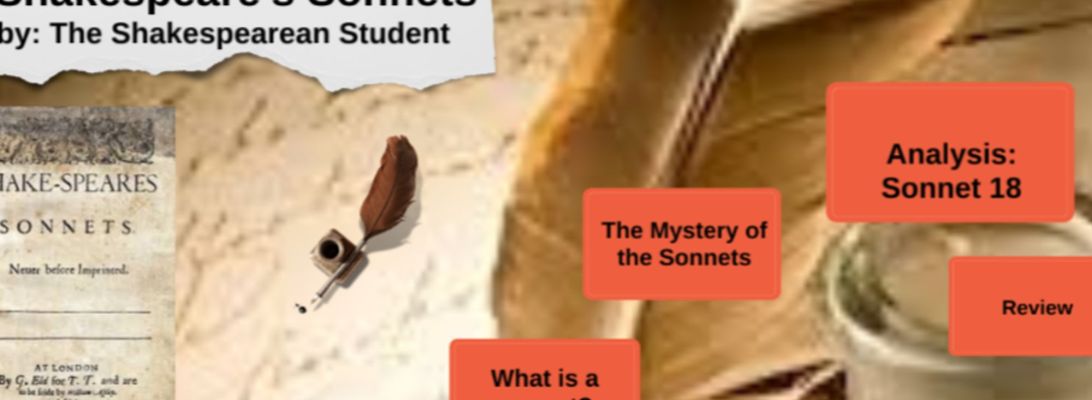
We will cover what a sonnet is, namely a type of poetry Shakespeare wrote in iambic pentameter with a particular rhyme scheme. Using a combination of Prezi video presentation and Google Slides, I will go in-depth to explain how he organized his poetic ideas into a very compact form.
Using primarily Google slides, we will then analyze Shakespeare's sonnets for their themes, literary devices, and the way he uses the poetry to enhance and heighten emotion and ideas. I will focus mainly on Sonnet 18, "Shall I compare thee to a summer's day?" I will cover Shakespeare's use of such literary devices as:
- Metaphor
- Simile
- Personification
- Rhetorical Question
- Irony
- Paranomasia
Analyzing this sonnet will allow the class to grasp the basics of how a sonnet is constructed, and begin to prepare to write their own. While the presentation is in play, students will be given an access code to an optional Nearpod presentation, that will allow them to construct an iambic pentameter line, quiz themselves on the vocabulary I cover, and provide visual aides to better understand Shakespeare's sonnets.

In the next part of the course, We will engage in a group brainstorming session. I will provide the students with potential topics (assuming they don't have one of their own), and then we will construct a short story using madlibs around that topic that will later be condensed into a sonnet. I will demonstrate to the students how to use imagery and poetic language to enhance the ideas and feelings in the poem. After this, I will use the nearpod and Google slide presentations to guide the students how to tell their own story using such devices as metaphor, personification, allusion, and sensory details. They can jot their ideas down on the provided handout to help organize their thoughts. In addition, the optional handout will have useful brainstorming activities such as a web link to websites like Rhymezone.com, (which helps poets find rhymes to words), and imagery boards that will allow the students to think of sensory details to include in the sonnet . The class will draw attention to the handout activities, and pause briefly to allow the students to do them.


In the last part of the class, I will give the students step-by-step instructions on how to transform their brainstorming ideas into a sonnet. I will begin by showing them how to construct an iambic pentameter line. I will engage the students by clapping out the beats for this line and allow them time to do the same, so they may internalize the rhythm. This will be accomplished via a Google Slides screen.
The final page of the handout has a page to write a draft of their final sonnet, with the line numbers conveniently provided. I will go over every section of the worksheet so the students know how to utilize it effectively.

After all this practice and training, the students will be able to create a basic 14 line sonnet which will give them practice not only writing poetry but also using and recognizing literary devices. It is my hope that this course will not only help the student(s) gain an appreciation for Shakespeare's poetry but also develop their own ability to speak and write eloquently and persuasively.
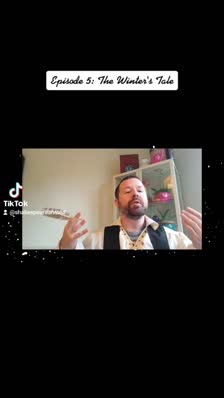
This week I’ll be celebrating Hanukkah with a series of posts and podcasts about Shakespeare’s only play to feature Jewish characters The Merchant Of Venice. I’ll have a new post about the play this week, and hopefully a podcast episode, but in the meantime, here are some of the post’s I’ve written in the past about the Merchant Of Venice.
Trailer for my 2021 Acting course via Outschool.com
I’ve been working on a remote learning class for Outschool.com where I take some of the audition advice I wrote in Creating A Character: Macbeth, and some of the other acting posts I’ve published over the years. This will be a weekly virtual acting course for kids ages 13-18, starting September 12th at 10AM EST.
This class will outline the tools and techniques of Shakespearean acting such as projection, articulation, and imagination. Each We’ll also go over Shakespeare’s own advice on acting in his play “Hamlet: Prince of Denmark.” The course will culminate with the students choosing their own Shakespearean monologues and scenes, which they can use going forward in auditions, school plays, and classes.
The best thing about the course is that each week builds on the previous week’s experience, but you don’t need to go to all of them. I’ll be flexible and work with the student’s schedule so everyone gets as much out of the class as possible.
If you’re interested in signing up, go to Outschool.com. If you have any questions, email me by clicking here:
If you’re a teacher and your students are reading Romeoand Juliet, one question that your students might innevitably ask is, who’s to blame? The play ends with The Prince and the Watch trying to ascertain what happened over the past 5 days to Romeo and Juliet. He seems to place blame loosely on everyone, but it does make one wonder- will anyone face consequences for the numerous deaths, damages, anguish, and broken promises that resulted from the double suicides?
In 2021, I decided to create an activity that would allow the students in the English class I worked in to decide who is to blame for the deaths of Romeo and Juliet. I developed the project with the help of an English teacher and a real judge. We designed the project so it would test the kids’ knowledge of the play, and their persuassive speaking abilities (which we worked on in a previous unit).
I would like to share the journey of this project, which I think is a lovely way to get kids to engage with English Literature, as well as touching on other topics in high school English courses like persuassive writing, critical thinking, and research.
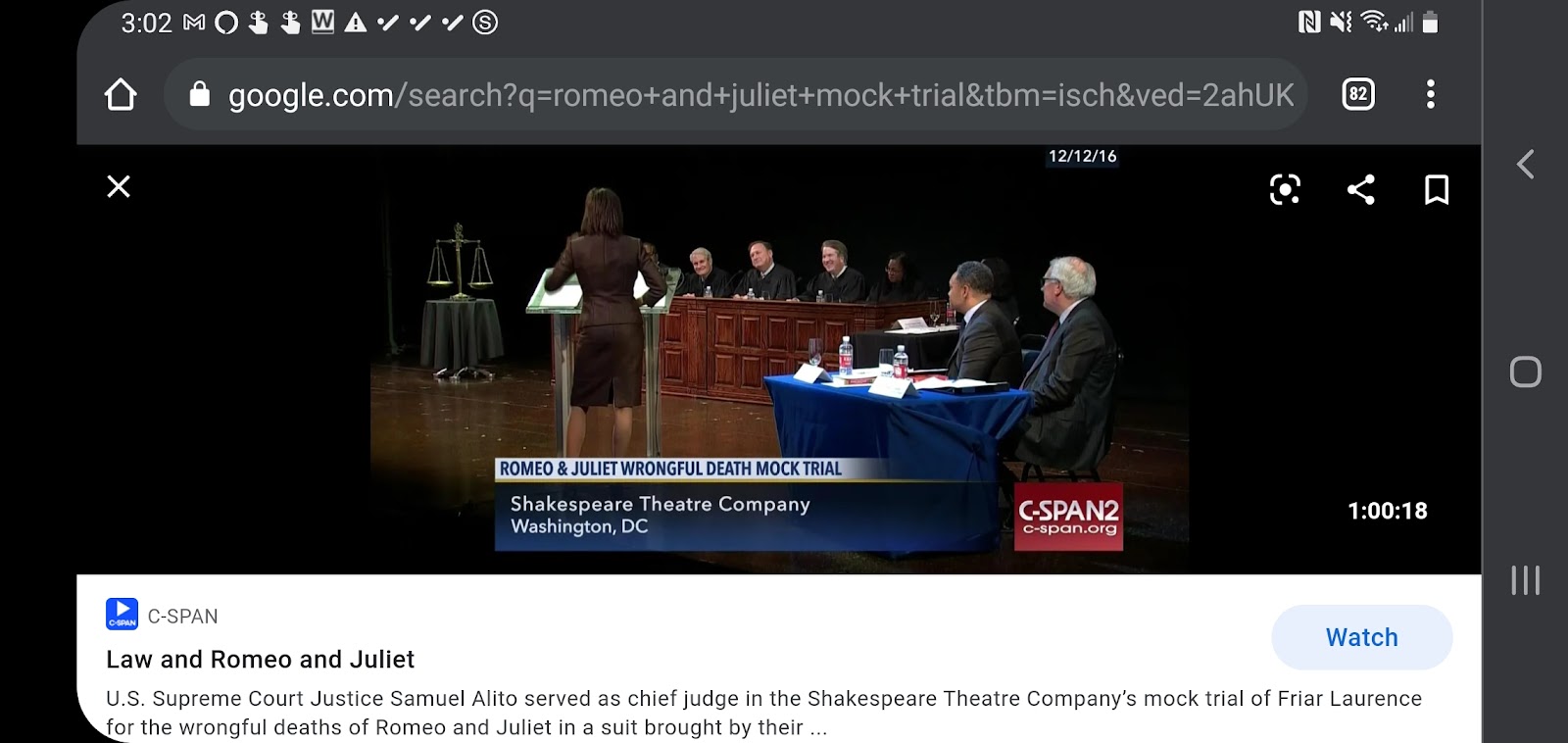
My original idea was to put Friar Laurence on trial for criminal negligence and/ or conspiracy to assist a suicide, There’s been plenty of classrooms, comedy sketches, and even some juries that blame Friar Laurence for the deaths of Romeo and Juliet, including the US Supreme Court, who put him in the dock as part of a mock trial at the Shakespeare Theater in Washington DC bac in 2016. If you go to C-Span’s website, you can watch the full trial itself: https://www.c-span.org/video/?419930-1/federal-judges-discuss-romeo-juliet
Though mock trials have tried Friar Laurence for murder in the past, the teacher I worked with decided we wanted to be sensitive to the issue of suicide and not place the blame for suicide on anyone other than Romeo and Juliet. This is a valid concern- since teenagers do occassionaly encounter suicide, we didn’t want to suggest that anyone could be held responsible for someone else’s suicide. However, if you decide to have a criminal murder or manslaughter trial, you can do so.
Our trial chose to focus on a different sort of negligence: we noted that, although Friar Laurence arguably isn’t guilty of murder, he certainly did perform the wedding of two minors without parental consent, a wedding that their parents absolutely didn’t apprve of, and that arguably caused irreperable financial damages to the houses of Capulet and Montegue. I therefore went about consstructing a criminal trial based on this perceived negligence.
TheCRIMINAL PROHIBITIONS ON THE MARRIAGE OF MINORS ACT
In most states in the United states, parental consent is required to marry a minor, so in reality, Friar Laurence would almost certainly be found guilty of illegal marriage. The judge I worked with wanted to give the case a fighting chance, so she created a fae law that is just for our class called the CRIMINAL PROHIBITIONS ON THE MARRIAGE OF MINORS ACT, which you can read below. This law is designed to provide a loophole for Friar Laurence that allows a clergyman to perform a minor wedding without parental consent if the parents are themselves creating an unsafe and dangerous home. Our teacher liked this aspect of the case, becasue it allows the class to consider the partriarchial values of Lord Capulet, who for most of the play, treats his daugher like a piece of property, and threatens her with dire consequences if she chooses her own husband. This is the central argument of the trial- Was Friar Laurence negligent and irresponsible in marrying Romeo and Juliet, or was he respecting Juliet’s autonomy and trying to free her from an abusive household? Below is a complete description of the project, a presentation I created for the class, and some downloadable materials to get you started. If you have questions or suggestions for other projects, let me know!
Overview
A mock trial is an excellent way to engage a student’s critical thinking skills, persuasive writing skills, and challenge their knowledge of a sequence of events. In Shakespeare’s Romeo and Juliet, several violent deaths occur and at then end of the play it’s ambiguous who will be punished and how. Therefore, to engage students in the play, they can play judge, jury, and lawyers in a trial to answer the question: was Friar Laurence guilty of performing an illegal marriage?
Goals
Test the student’s knowledge of the plot of the play
Get them to make persuasive arguments defending and prosecuting the character of Friar Lawrence.
Come to conclusions
Get the Jury to look at the rhetoric of the prosecution and defense.
Structure
Quiz on the play to help assign roles- The highest scorers get to be lawyers and prosecutor, the next highest get to be witnesses, and the lowest scorers get to be the jury.
Mock trial where the students take on the roles of witnesses, judge, lawyer, prosecutor, and jury
The Jury delivers a verdict
Class discussion.
Before the Trial
Only people who know the plot of the play should be allowed to be the lawyers, so I propose that before the trial starts, each student should be quizzed on the plot of the play. The students who score the highest should be allowed to play the prosecutor and defense lawyer. The third, fourth, and fifth highest scoring students can be The Judge and the two witnesses. Everyone else can be the jury. I would propose that the teacher or teaching assistant play the part of Friar Lawrence, as he/she will have to answer the toughest questions and know the most about the play. Of course, if you have a student with real acting talent, he or she can play Friar Lawrence.
The Trial will take place over at least two days- one day for constructing legal arguments, and one day for the trial itself.
When the trial begins, each person will get a character sheet that details who they are, what their role is, in the trial, and what they know about the deaths of Romeo and Juliet. Unlike other mock trials, this will not be scripted. Think of it more like a D&D character sheet or murder mystery game; the characters are given information but not told what to say. Below is a sample character sheet I made for the Prosecuting Attorney.
The Prosecutor intends to prove that Friar Lawrence performed an illegal marriage because he married two minors without their parent’s consent. The Defense intends to prove that the marriage was legal under the CRIMINAL PROHIBITIONS ON THE MARRIAGE OF MINORS ACT (a fake law made up for our class).
Jury Instructions- The Judge
Opening Statements- Prosecutor and Defense Lawyer
Witness For the Prosecution- Lord Capulet
Cross-Examination- Lord Capulet
Witness For the Defense- Ghost Juliet
Witness For the Prosecution- The Nurse
Cross-Examination- The Nurse
Defendant’s Testimony- Friar Lawrence
Cross-Examination- Friar Lawrence
Witness For the Prosecution- Lady Capulet
Cross-Examination- Lady Capulet
Closing Statements- Prosecutor and Defense Lawyer
Post Trial Instructions- Judge
The Verdict- Jury
Weighing In- Judge
Worksheet content-
All characters will have a packet explaining who they are, their goal for the trial, and what their character knows about the alleged crime. They also have a copy of the structure of the trial, so they know when to speak. During the pre-trial prep day, the lawyers will decide on questions to ask the witnesses and construct arguments based on their knowledge of the law and the play.
-Friar Lawrence
-The Nurse
-Lord Capulet
-Prosecutor
-Defense Lawyer
-Jury
-Judge
Everyone will receive a copy of the CRIMINAL PROHIBITIONS ON THE MARRIAGE OF MINORS so the prosecution and jury can construct their arguments, and the Jury can judge the effectiveness of those arguments.
CRIMINAL PROHIBITIONS ON THE MARRIAGE OF MINORS ACT
Purpose
The purpose of this act is to protect the integrity of the family and the independent rights of minor children.
Prohibitions:
No officiant shall perform the marriage of a minor child without the consent of the child’s parent, unless such minor child has first been determined to be emancipated and such determination was in the minor’s best interest.
Definitions:
Officiant means a person authorized to perform weddings, including but not limited to a priest, minister, friar or pastor.
Minor child means a person 14 years but under the age of 18 years.
The parent of a minor child shall mean the biological father of said child.
The factors used in the determination of emancipation shall include the following;
The demonstrated ability and capacity to manage his/her own affairs,
The demonstrated ability and capacity to live independently,
The wishes of the minor child,
The wishes of the parent,
Any other factors including compensation which could influence the officiant.
7) The factors used in the determination of the best interest of the minor child shall include the following:
The age of the minor child,
The home environment of the minor child, especially if there is a risk of violence or harm to the minor child,
Whether the marriage of the child promotes a union that is beneficial to society,
Whether the minor child can manage his/her own finances.
Whether the minor child has demonstrated other characteristics of maturity
8) An emancipated child shall be entitled to enter into contracts, marry and enjoy the legal rights of an adult without the permission of his/her parent.
9) Whoever violates this law shall be guilty of a misdemeanor of the first degree, which is punishable by up to 6 months in jail and/or a $1,000 fine.
Jury instructions (to be handed out ot the jury)
The jury need not be given a passive role- they can write down reactions on how effective the lawyers wer in presenting their arguments, which witness gave the best testimony, etc. In most jury trials, judges instruct the jury on how to put aside their personal biases when listening to the evidence, which I’ve written into some instructions below, based on instructions that Judge Taylor gave me.
So, that is my version of the Romeo and Juliet mock trial that you can freely use in your classroom. If you want to use it, please just give me credit. If you want to collaborate with me on your version, send me an email. I hope this project can be a widespread activity that will help students hone their persuasion, analysis, research, and of course, their interpretation of literature in a realistic context.
You can download the entire project for free on my TeachersPayTeachers page: