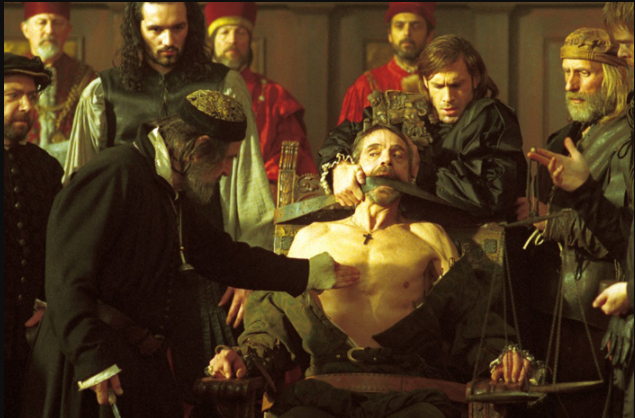
Mafia Tropes in “Richard III”

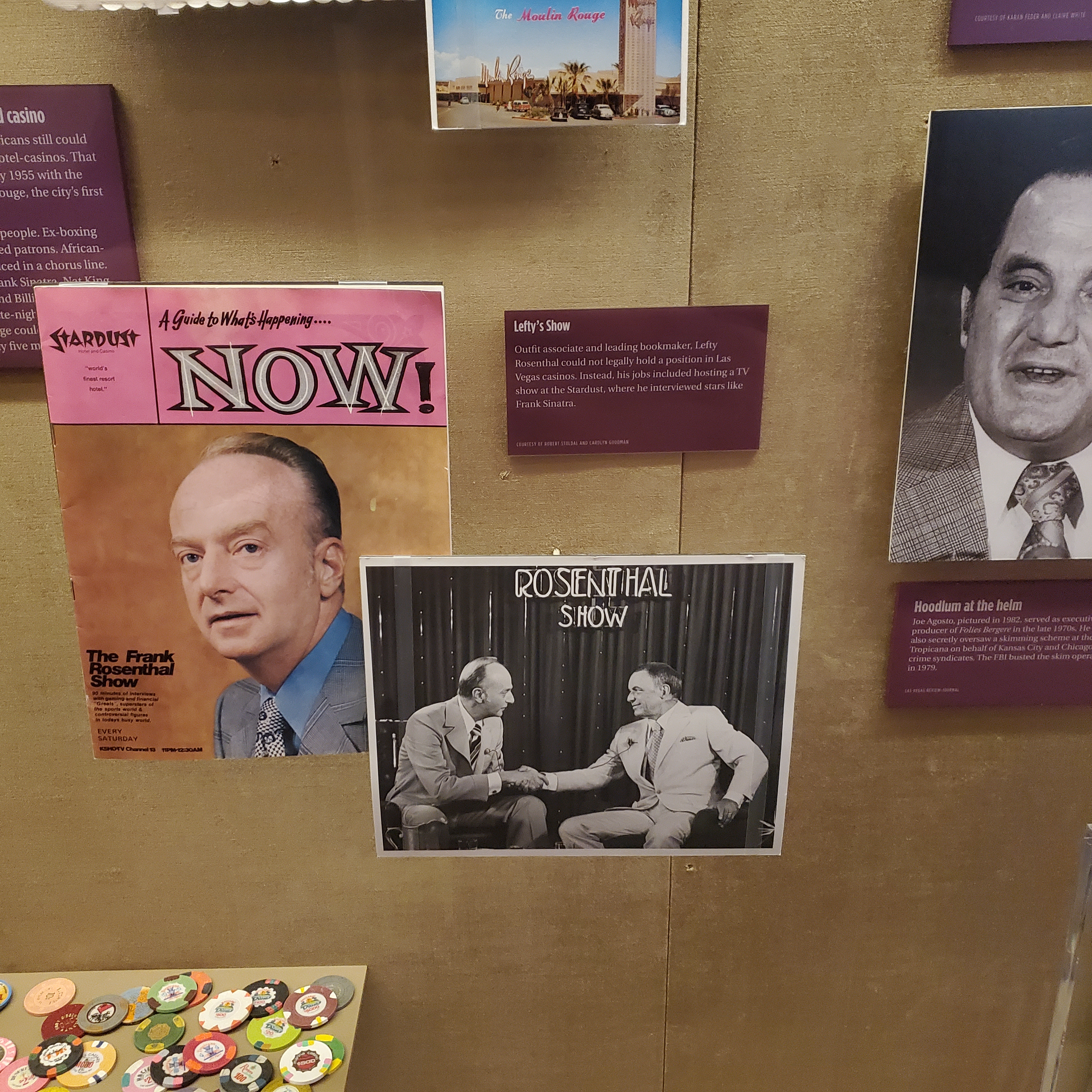
Last month, I took a short vacation to Las Vegas, where, as some of you know, I went to Area 15 and the Omega Mart Exhibit. I also visited the Las Vegas Mob Museum. I’ve been fascinated by the mob for years. The Mob (AKA The Outfit), has within its many threads a potent combination of corruption, seduction vice, and violence all hidden behind the veneer of honorable men who do what they feel they have to to protect their families and their communities.

Not surprisingly, while at the museum, I saw parallels between the history of organized crime and Shakespeare, specifically his most popular history play about a powerful family that takes over the crown of England in a brutal turf war, and then one of its most feared soldiers bribes, intimidates, and murders his way to the top; Richard III.

A Protection Racket: Feudalism vs. La Cosa Nostra


The structure of the mafia paralleled the feudal system. In a world where a police force didn’t offer much protection for marginalized communities, the mafia thrived by offering protection for these communities, (especially to immigrants and people of color in the 19th and early 20th century).


Much earlier than that, the feudal system of the middle ages, which started to crumble after Richard’s reign ended, was designed specifically so poor peasants could get protection from wealthy landowners after the fall of the Roman Empire. These lords offered the protection of their knights to these peasants i. Return for labor and a percentage of their income working the field. Like the mafia, these peasants paid tributes to their lords and these lords demanded loyalty. In the museum, there’s an interactive video where you can become a ‘made man,’ which means become an official member of a mafia crew. Like a king knighting a lord, this ceremony meant pledging your life to your superiors, and being at their beck and call no matter what. In addition, like medieval knights, mafiosos were not allowed to murder other made men without permission from their capo or boss.


However benevolent they might appear, In both cases the Dons and the medieval lords were extorting their underclass. Failing to pay tribute to their lords would cause the peasants to lose their lands, and any disloyalty to the mafia would be severely punished. These powerful, violent thugs used their private armies to intimidate the weak into giving them what they wanted.

Part II: The Two Families

To thoroughly explain the parallels between the Wars of the Roses and the mob, I need to make clear that Richard iii is more than just the story of one man’s rise to power, although there are also mafia stories that fit this mold such as Scarface, White Heat, and the real-life story of Al Capone.

As this hilarious “weather report” from “Horrible Histories,” makes clear, during the Wars of the Roses two powerful families, (each with a claim to the English crown) fought each other in a brutal turf war. As Shakespeare characterizes in his play Henry VI, Part III, the battles between the houses of York and Lancaster shook England like a mighty storm, and for a while it was hard to tell who would prevail:

Henry VI. This battle fares like to the morning's war,
When dying clouds contend with growing light,
What time the shepherd, blowing of his nails,1105
Can neither call it perfect day nor night.
Now sways it this way, like a mighty sea
Forced by the tide to combat with the wind;
Now sways it that way, like the selfsame sea
Forced to retire by fury of the wind:1110
Sometime the flood prevails, and then the wind;
Now one the better, then another best;
Both tugging to be victors, breast to breast,
Yet neither conqueror nor conquered:
So is the equal of this fell war.
Henry VI, Act II, Scene i

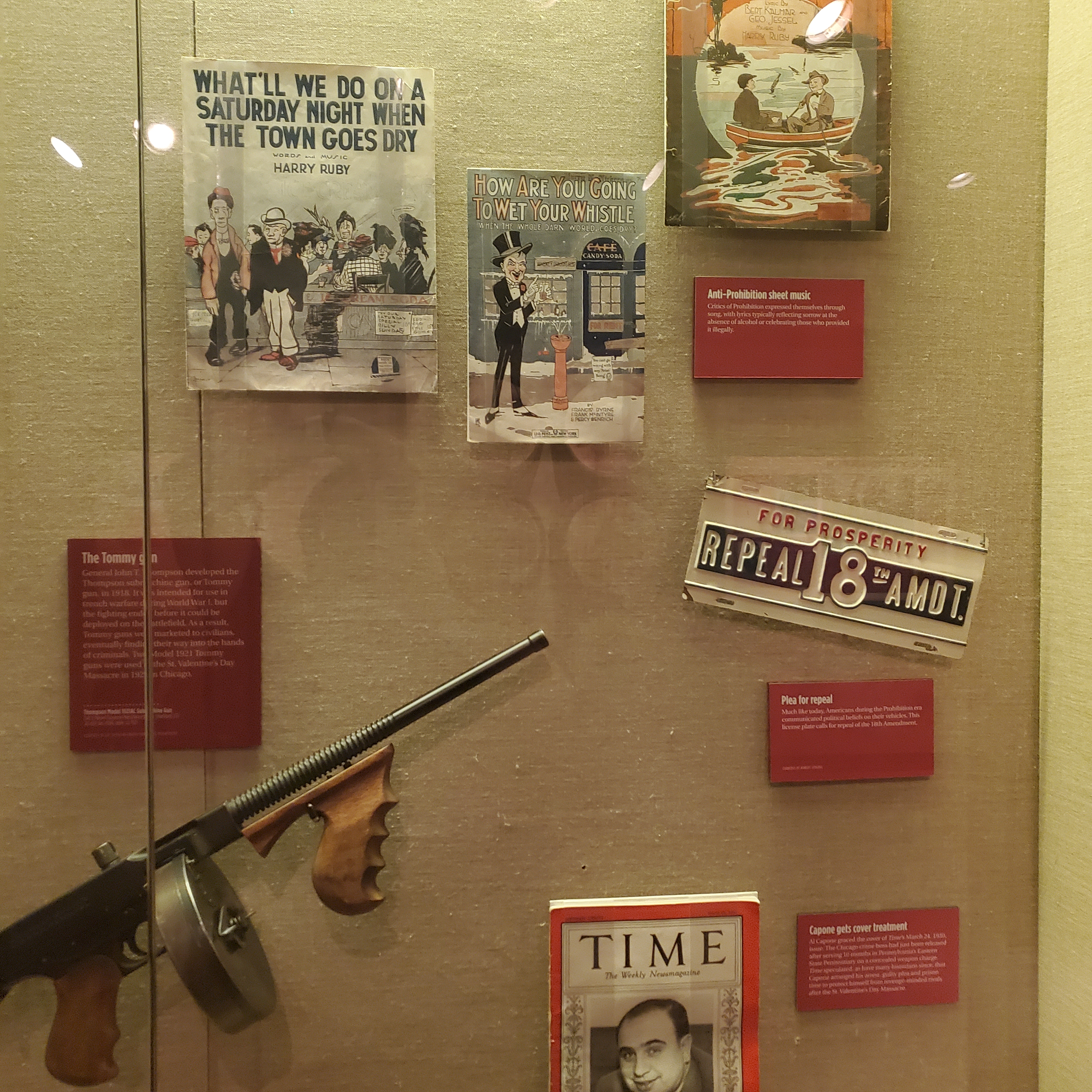
During the Wars of the Roses, it was King Henry’s incompetence and mental illness that gave the Yorkists the ability to challenge the House of Lancaster for the crown. In the 1920s, the passage of the 18th amendment, (which made alcohol illegal, and thus a profitable commodity for organized crime), that allowed the mob to rise to unheard-of power through illegally buying, distributing, and selling alcohol. As the photo and subsequent video shows, Prohibition largely led to the rise in organized crime in America, especially in Chicago. During Prohibition, the Italian Sough-side Gang fought for control of Chicago’s bootlegging trade and subsequently destroyed their competition from the Irish gangs through corruption, intimidation, and violence.
The Don rises- Richard Vs. Al Capone

Opening Scene from Ian Mckellen’s 1995 movie of Richard III.

Like the Italian and Irish gangs In Prohibition-era Chicago, the Yorkist and Lancastrian armies battled for the English throne. As Ian McKellen’s excellent movie (set in the 1930s) shows, Richard was instrumental in destroying the leading Lancastrians at the Battle of Tewkesbury, including Prince Edward and King Henry.

In Chicago, the most feared mobster soldier was Al Capone, who many scholars believe was responsible for killing off high ranking members of the Irish gang during the infamous St. Valentines Day Massacre, where the gang members were ‘arrested’ by South Side gangsters disguised as cops. As the Irish stood against the wall with their hands behind their heads, the phony cops pulled out Tommy guns from their coats and let out a hail of bullets on their unsuspecting quarry.

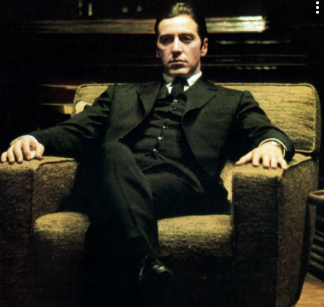
In Shakespeare’s play, the only Lancastrian to survive the war is Queen Margaret, wife to the murdered King Henry, and mother to the slaughtered Prince Edward. In this scene from Al Pacino’s “Looking For Richard,” she curses Richard for his cruel slaughters. It’s not surprising that Pacino was so drawn to Richard II that he starred in and directed this film. After all, Pacino is famous for playing mafia characters who slaughter their way to the top.

Once Capone killed the competition, he ruled a multimillion-dollar empire of bootleggers and maintained that empire through corruption, intimidation, and by constantly playing innocent, just like Richard himself.

Hypocrisy, Corruption and hidden violence

“Men in general judge more by the sense of sight than by the sense of touch, because everyone can see, but few can test by feeling. Everyone sees what you seem to be, few know what you really are; and those few do not dare take a stand against the general opinion.”

Niccolo Machiavelli

Both Richard III and mobsters are masters of double-speak, that is, seeming to say one thing and meaning something else. Look at this passage where Richard talks about killing his nephew, then denies it:

Las Vegas: The town that bedded and abetted the mob.

After Al Capone’s demise and the repeal of Prohibition, the mafia found another vice to capitalize on: gambling. As the video below indicates, using their connections with the Teamsters Union and midwestern bookmakers, the mob in the midwest financed, built, and run almost every casino in Las Vegas, including The StarDust and the Hassienda. Once the casinos were built, the mob extorted millions of dollars from the casinos every month!

The profits from the casinos bought the mob even more power and influence, but this skim depended on making sure the bosses controlled their underlings, and defended their casinos from cheaters and snitches, which is why they defended their casinos through intimidation and violence.

Murders in The White tower and the city of sin.

A series of quotes from Las Vegas Mobsters

“Simple, plain, Clarence. I do love thee so, that I shall shortly send thy soul to Heaven.”

—Richard III, Act I, Scene i

When Richard of Gloucester starts his quest to become king, he begins by convincing his brother King Edward to execute his other brother George. Richard bribes the murderers to kill George before the king can reverse the death sentence. Richard has thus eliminated another obstacle in his way, and gained two loyal followers who will do anything for his gold.

Richard hires two murderers to kill the duke of Clarence (Nigel Hawthorne).

The mafia dealt the same way with traitors, stool pigeons, and anyone who tried to challenge the bosses. Look at this tour of the Mafia museum, where the grandson of the gangster Meyer Lansky starts by reminiscing about the glamourous lifestyle of Las Vegas mobsters, but the tour quickly takes a dark turn as Lansky II talks about how his grandfather ordered brutal executions for anyone who crossed The Las Vegas Outfit.

The Mafia Museum, Las Vegas
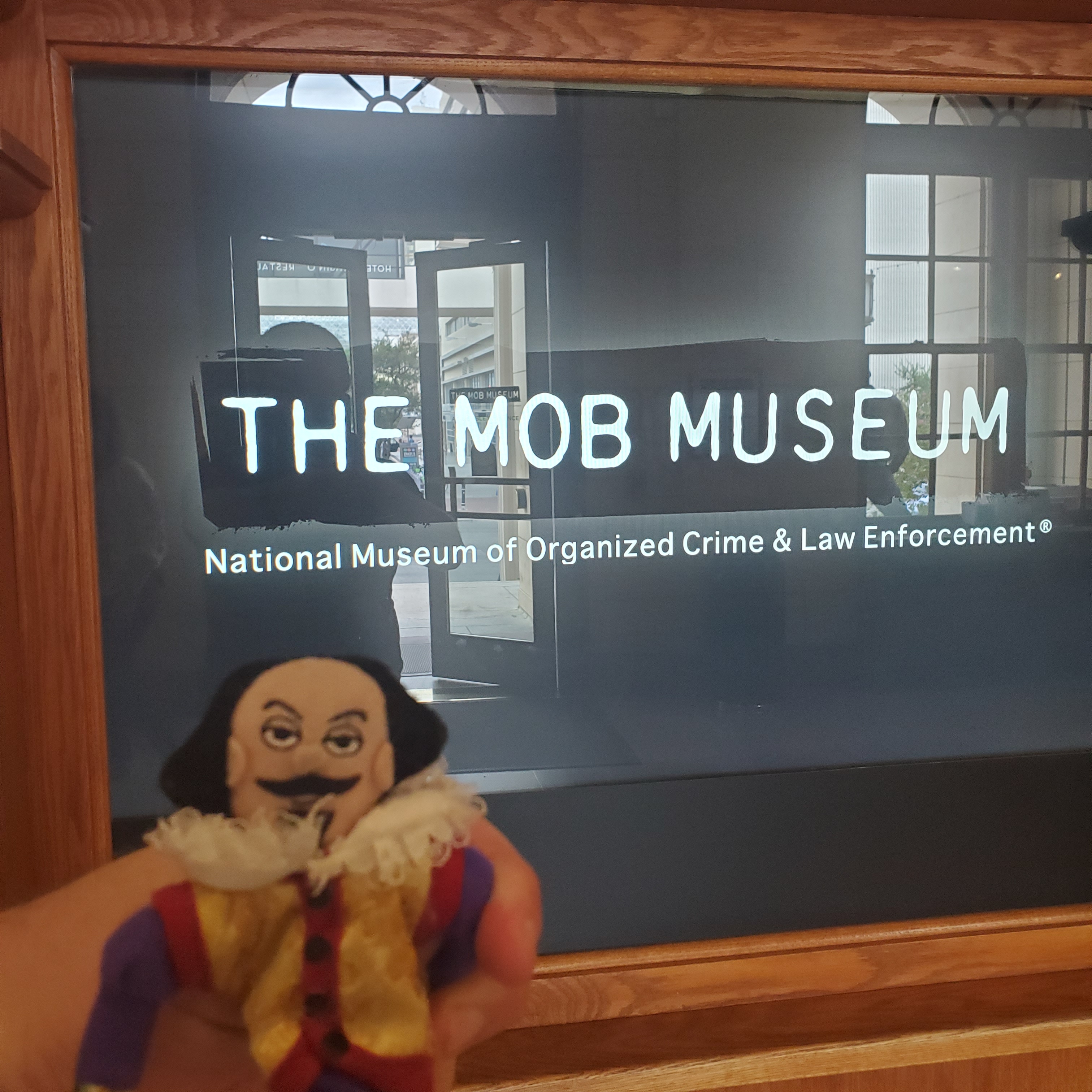
Exterior of the Mafia Museum

It was an enormously interesting trip going to the Mafia Museum, and if you can get out to Las Vegas, be sure to visit, (don’t forget the password to visit the speakeasy bar in the basement!) It was eye-opening for me how prevalent the sort of corrupt protection racket that started in the middle ages and continued into most of the 20th century helped define The Wars of the Roses and the mafia. As long as the strong prey on the weak and the law can’t protect everyone equally, these kinds of violent thugs will be lurking in the shadows, waiting for a shot at the crown.

Richard the Third and Toxic Masculinity

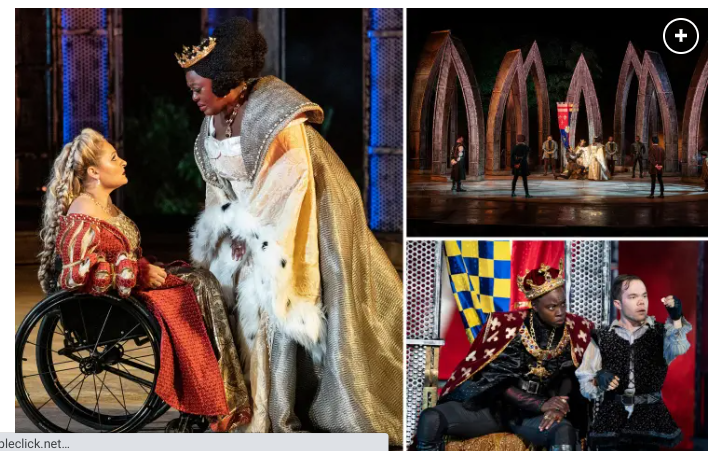
This past month, there was a free production of Richard III in New York’s Shakespeare In the Park, starring Danai Gurira as the title character. I have not seen this production, though I wish I had. I enjoyed the actress Ms. Gurrira in such films as “Black Panther,” and would love to see her do Shakespeare. What is more, the concept intrigues me. This project explores themes of toxic masculinity, racial identity, inferiority, and misogyny.

https://www.npr.org/2022/07/10/1110359040/why-it-matters-that-danai-gurira-is-taking-on-richard-iii

Unsurprisingly, with so many heady topics in the production, this Richard III is still somewhat controversial. Some right-wing critics dismissed the whole production as a piece of ‘woke propaganda,’ but I feel this is unfair.

When Danai Gurira of Marvel’s “Black Panther” first takes the stage in the title role, the actress has no perceivable hunchback or arm trouble. And yet the dialogue suggesting Richard suffers from a lifelong physical issue (“rudely stamped”) has been kept in. Perhaps we are to use our imaginations. Who knows? We are certainly tempted to close our eyes.

By Johnny Oleksinski

I will not judge this production based on the acting because I haven’t been able to see it. What I will do is take a stance on the validity of the concept. Specifically, I want to ask if this play is a good examination of toxic masculinity and if it would it be worthwhile to see it portrayed by a black woman, as opposed to a white man. The short answer is an emphatical “Yes.”

https://variety.com/2022/legit/features/danai-gurira-richard-iii-toxic-masculinity-central-park-1235318196/

Richard’s Toxic Masculity

Richard III is definately an example of toxic masculinity. He is violent, full of hatred, vengeance, and mysogeny. He is constantly insulting women from Lady Anne, Jane Shore, Queen Elizabeth, and even his own mother. In fact, the source of Richard’s toxic attitude is that he blames his mother for his disability and deformity:

Well, say there is no kingdom then for Richard;1635
What other pleasure can the world afford?
I'll make my heaven in a lady's lap,
And deck my body in gay ornaments,
And witch sweet ladies with my words and looks.
O miserable thought! and more unlikely1640
Than to accomplish twenty golden crowns!
Why, love forswore me in my mother's womb:
And, for I should not deal in her soft laws,
She did corrupt frail nature with some bribe,
To shrink mine arm up like a wither'd shrub;1645
To make an envious mountain on my back,
Where sits deformity to mock my body;
To shape my legs of an unequal size;
To disproportion me in every part,
Like to a chaos, or an unlick'd bear-whelp1650
That carries no impression like the dam.
And am I then a man to be beloved?
O monstrous fault, to harbour such a thought!. 3H6, Act III, Scene i, lines 1635-1653.

Now I should clarify the difference between deformity and disability, which are characteristics that Richard III has as part of his character makeup. According to the Americans With Disabilities Act, a disability is defined as: “A physical or mental impairment that substantially limits one or more major life activities.” This could include paralysis, autism, or any number of congenital or acquired conditions. Richard’s disability is primarily his limp (caused by his unequally shaped limbs), and his withered arm. What’s interesting in this production is that while the title role is played by an able-bodied woman, most of the rest of the cast have actual disabilites. Watch this clip of the famous courtship scene between Richard and Lady Anne, who plays her role in a wheel-chair.

While a disability is a legal term that is recognized by lawyers and governments alike, the term “deformity” is more subjective; it generally refers to any kind of cosmetic imperfection. In Richard III, this applies to Richard’s hump and withered arm. 

The Elizabethans thought that deformity was a sign of disfavor from God, and that deformed people were constantly at odds with God and nature, as Francis Bacon puts it in his essay, “On Deformity.”

As deformed people are physically impaired by nature; they, in turn, devoid themselves of ‘natural affection’ by being unmerciful and lacking emotions for others. By doing so, they get their revenge on nature and hence achieve stability.

Richard III has this drive for revenge in spades and I believe it manifests itself as a particularly terrible form of toxic masculinity. Richard definitely wants the crown to make up for his lack of ‘natural affection,’ but he is also especially malevolent towards women.

I, that am rudely stamp’d, and want love’s majesty

To strut before a wanton ambling nymph;

And therefore, since I cannot prove a lover,

To entertain these fair well-spoken days,

I am determined to prove a villain

And hate the idle pleasures of these days

Seeing a woman play this kind of misogynist dialogue forces the audience to take it out of context and question Richard’s point of view. We see casual misogyny every day, and seeing a woman deliver it is quite illuminating.

Richard’s deformity and Blackness

Another provocative choice by Danai Gurira’s portrayal of Richard is the fact that she plays the role of Richard without the hump or withered arm. She herself explains that for her production, Richard’s perceived deformity, is actually represented by her being a black woman:

He’s dealing with the otherness compared to his family, in terms of not being Caucasian and fair like them.” The word ‘fair’, is used a lot in the play.

Danai Gurira’s

Shakespeare writes Richard as constantly striving to compensate for his deformities by being clever, violent, and eventually, by becoming king. As I wrote before in my review of Othello, for centuries black people have been portrayed as inferior; aberrations of the ‘ideal fair-skinned form’. So, to the Elizabethans, blackness itself was a form of deformity, and the rawness of addressing this uncomfortable fact in this production should be commended.

English people are already trained—and we have scholars like Anthony Barthelemy has talked about this in his book Black Face, Maligned Race, where the image of blackness, as associated with sin, with the devil, all of these things, makes it quite easy to map onto then Black people these kinds of characteristics. Then, those kinds of characteristics allow for the argument that these people are fit to be enslaved. – Dr. Ambereen Dadabhoy, Race and Blackness in Elizabethan England Shakespeare Unlimited: Episode 168

https://www.folger.edu/shakespeare-unlimited/elizabethan-race-blackness-dadabhoy

So while I can’t speak to the production’s acting or staging, I will emphatically defend the notion that this production’s concept is valid. Richard III is an example of toxic masculinity through his self-hatred, violence, misogyny, and narcissism. In addition, as I’ve written before, in the Early Modern Period, blackness was considered an aberration or deformity, and seeing it in the person of Richard, with the implicit understanding that black people still face this kind of prejudice today, opens a much-needed dialogue that any production of Shakespeare shouldn’t be afraid to open.

In short, by re-contextualizing Richard’s deformity and disabilities, this production gets to the heart of the play’s moral for our times. The early modern period’s toxic attitudes towards deformity and disability created the Renaissance monster of Richard III. We in the 21st century must examine our own societal prejudices and toxic attitudes so this monster does not come to haunt us in real life.

What is a Soldiers Due?

On this Memorial Day, I’m inspired by a quote to ponder what it really means to “Support Our Troops,” living and dead. The quote comes from an epilogue written for a 1778 performance of Shakespeare’s obscure Roman Tragedy, “Coriolanus:”

The most interesting thing about the play is how modern it is. One of his few plays that deals directly with the drama of democracy. And more than that, it deals with the seemingly modern phenomenon of officials undone by public opinion. So many of Shakespeare’s characters have to answer to their God or their king, or (as Coriolanus does), his family. Only rarely, do they answer to the people.

Kyle Kallgren: “Coriolanus- Universal Soldier” (2016)

https://www.nationaltheatre.org.uk/shows/nt-at-home-coriolanus

Play Summary

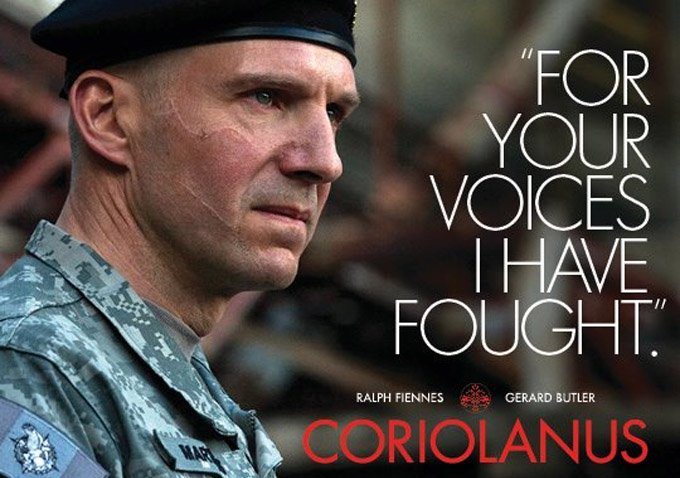
Coriolanus is one of Shakespeare’s strangest and most controversial plays. Its principal figure is a warrior, exemplary in his courage and single-minded dedication, who finds it difficult to adjust to life away from the battlefield. Refusing to compromise and contemptuous of anyone who does not live up to his exacting standards, Coriolanus, not long after being nominated for the high political office of consul, is cast into exile, accused of treason and ends up leading an army to invade and destroy Rome.

Warren Chernaik, Emeritus Professor of English in the University of London

What do we not owe soldiers?

Throughout the play, Coriolanus shows nothing but contempt for popular rule. This certainly suggests that he is aristocratic in his political views, but arguably he is much more militaristic. Remember that to be a Consul or any kind of high ranking position in the Senate, the senators all served in the army for a set term. Coriolanus respects the Senate more than the Assembly because the former is full of his fellow comrades in arms.

Coriolanus is first and last a soldier, and he represents a society run by the war machine. For centuries, authoritarians who rule through a cult of personality have propped up Caius Martius as an ideal of a military society. After all, it was Mussoluini who organized his fascist dictatorship around the Roman Empire, and the play Coriolanus was taught in literature classes during the Third Reich. They probably looked like Starship Troopers.

https://www.theguardian.com/stage/2020/mar/05/coriolanus-shakespeare-laurence-olivier-ralph-fiennes-ian-mckellan

So to recap, though we owe soldiers a lot for their courage and sacrifice, nobody owes them Blind obedience, because that is the root of fascism. Look at this actual excerpt from a literary textbook about Coriolanus that was given to children in Nazi Germany.

The poet deals with the problem of the peaople and its leader, he depicts the ture nature of the leader in contrast to the aimless masses; he shows a people led in a false manner, a false democracy, whose exponents yield to the wishes of the people for egotistical reasons. Above these weaklings towers the figure of the true hero and leader, Coriolanus, who would like ot guide the deceived people to its health in the same way as, in our days, Adolf Hitler would do with our beloved German Fatherland.

Martin Brunkhorst, “Shakespeare’s Coriolanus in Deutscher Bearbeitung. Quoted from Weida

So now that I’ve established what we don’t owe our soldiers, what do we owe them?

What do we owe our soldiers?

[  ] Honesty- why are you fighting? Is dying for one’s country worth it? Unlike Henry V, in which Shakespeare makes it very clear why the king is trying to conquer France, we don’t really understand why Rome wants to destroy the Volskies, and it seems somewhat arbitrary. I think one of the ways we sympathize with Coriolanus is that he never “asks the reason why; his is but to do and die,” as Tennyson puts it. He has one speech where he rallies the troops, but it just seems flat and hollow without a clear reason why the soldiers should risk their lives.


[  ] A chance to heal When he comes home to run for Consul, Coriolanus is required to show his battle scars to the people and refuses to stay in the room when the patricians talk about them. This could be interpreted as more arrogance where he is disgusted to be in the same room as common men, but I think there’s another aspect. I think Coriolanus has PTSD, and every time he sees or hears about his scars, his repressed memories bubble up to the surface and drown him in fear. His story is partially a story of how all soldiers need help to deal with the trauma they endure on a regular basis.


] Love for their courage and sacrifice. Whether the conflict is right or wrong men and women risked their lives for it, and that is worth compassion.
[  ] Good leaders. Coriolanus is a play where arguably nobody cares about the people. Coriolanus and the Patricians look down on them, and the tribunes see them as a means to gain power. With all this political in fighting who is really trying to make life better? Better for the starving Romans? Better for soldiers like Coriolanus? In a republican society like Rome, we owe it to our soldiers to participate in politics so men like Coriolanus aren’t sent to die on a whim. If we don’t use our voices, we are the common cry of curs that Coriolanus characterizes us as:

Compassion– in John Osborne’s version the title character goes mad from his trauma and of course, in Shakespeare’s version, he’s driven out of Rome and then killed by Aufidius. Even today, many soldiers suffer from poverty, sickness, life-altering injuries, and of course, PTSD. This Memorial Day, let’s all try to help ease the lives of the men and women who have suffered for us.

Sources:

SHAKESPEARE AND BRITISH OCCUPATION POLICY IN GERMANY, 1945-1949 by Katherine Elizabeth Weida B.A. (Washington College) 2011

https://www.bl.uk/shakespeare/articles/an-introduction-to-coriolanus

Today in history: End of the American Civil War

Shakespeare and the Civil War are forever linked. All the major players had a connection to the Bard, and some might surprise you:

1. Did you know US Grant played a woman in a Shakespeare play!

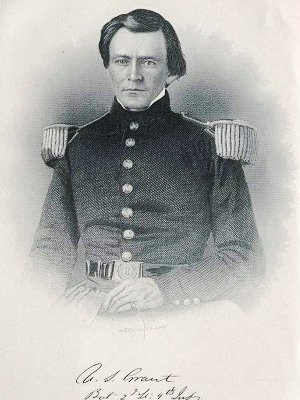
US Grant as a US army colonel in the Mexican American War, c. 1846

We rarely see images of the future general and future president without his well-kept beard, but if this apocryphal tale is true, Grant might have grown a beard after he was embarrassed by the reaction of his fellow soldiers during a performance of Othello, where Grant rehearsed the part of Desdemona:

That December, officers decided to stage “Othello.” They looked for someone to play the beautiful Desdemona. Grant was urged to try out for the part. He had a trim figure and almost girlish good looks; his friends called him “Beauty.” Though the costume fit perfectly, the officer playing the Moor couldn’t look at Grant without laughing. They sent to New Orleans for a professional actress to play Desdemona. After that, Grant grew a beard to hide his girlish good looks. He was “Beauty” no more.

Civilwartalk.com

#2. President Lincoln, Shakespearean Gentleman

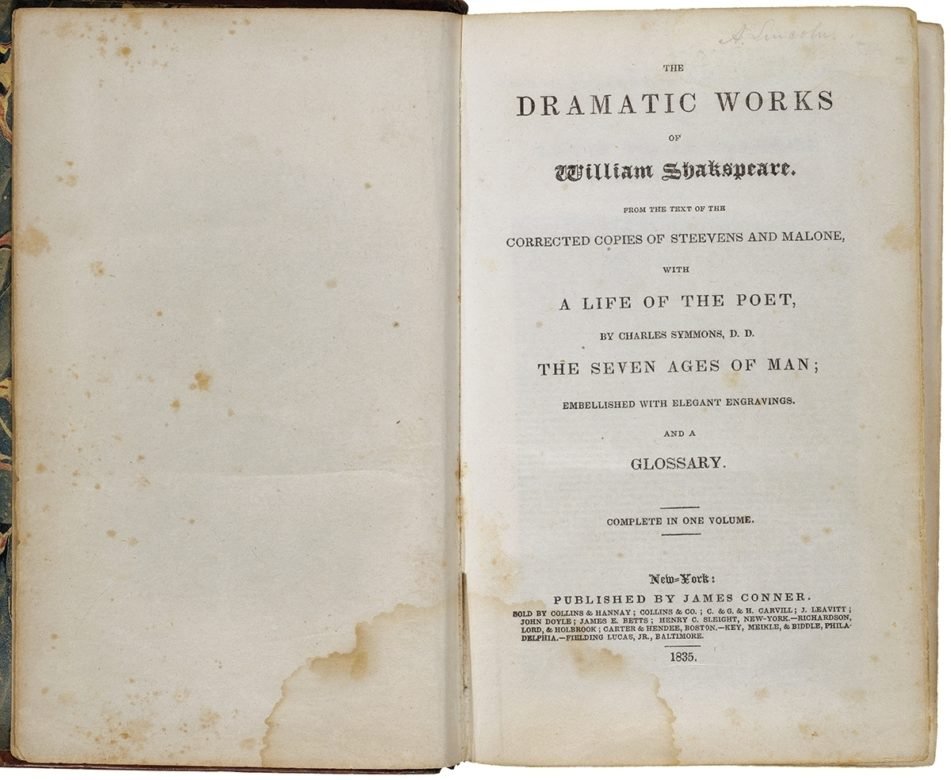
A copy of Shakespeare’s Plays, c. 1865. In the top-right corner, written in pencil is inscribed “A. Lincoln.”

I’ve talked before about how, to the South, President Lincoln was as big a tyrant as Julius Caesar, and how John Wilkes Booth was determined to cast himself as a real life Brutus

Photo from the 1864 benefit performance of “Julius Caesar,” starring John Wilkes Booth, Edwin Booth, and Junius Brutus Booth Jr (left to right).

https://www.whitehousehistory.org/the-american-presidents-and-shakespeare

What you might not know is that Lincoln’s favorite Shakespeare play was Macbeth. I find a more fitting character for the compassionate and eloquent president would be the good King Duncan from Macbeth. According to Whitehousehistory.org. Lincoln quoted some lines about the good king’s death, a few days before his own:

On Sunday, April 9, 1865, with the war over, he was returning to Washington on the River Queen from City Point, Virginia, where he had visited the front, and he talked Shakespeare to his companions, read aloud to them, and recited his favorite passages from memory. He spent most of his time on Macbeth. “The lines after the murder of King Duncan. Lincoln’s companions were struck by the slow, quiet way he read the lines:

“Duncan is in his grave;

After life’s fitful fever, he sleeps well,

Treason has done his worst; not steel, nor poison,

Malice domestic, foreign levy, nothing can touch

him farther.”

When Lincoln finished, he paused for a moment, and then read the lines slowly over again. “I then wondered,” reflected one of his friends, “whether he felt a presentiment of his impending fate.”

Whitehousehistory.org.

If you choose to sign up for my Outschool class: The Violent Rhetoric Of Julius Caesar, I compare Antony’s speech, (which essentially started a civil war in Rome), with Lincoln’s Gettysburg Address. I also discuss John Wilkes Booth and his obsession with the character Brutus.

Title image for my Outschool class: “The Violent Rhetoric Of Julius Caesar.

#3: Ex Confederates hid out in Shakespeare’s home town!

Ex-Confederate soldiers gathered in Royal Leamington Spa in England, c. 1865.

I was pretty shocked to learn this one, and it took a while before I found a decent amount of evidence to justify reporting on it here, but apparently a few ex confederates fled to England after the war, and took refuge at inns and houses in and around Stratford, including Royal Leamington Spa, which is a town just 12 miles from Stratford-upon-Avon.

I had scarcely become domesticated before the visits of the Confederates began, & we have now quite a little Southern Society. Mr & Mrs Fry of N. York, & Mrs Leigh reside very near us. Mr & Mrs Westfeldt also; but just now they are absent. Mr & Mrs Dugan, Mr & Mrs & the Misses
Stewart, Mrs Hanna & Miss Reynolds, Mr & Mrs Clements, Mr & Mrs Skinner, Capt Flinn, & various others who are here, off & on, compose the little nest of Confederates in Leamington.

Nathaniel Beverley Tucker, US Consul, 1861

England was anti Slavery in the 1860s but they were also partners with the Confederates in the lucrative cotton trade. CSA president Jefferson Davis dispatched a number of ambassadors and negotiators to hopefully gain support from the English to help them fight the US in the Civil War.

Once President Lincoln signed the Emancipation Proclamation, England politely declined to aid the confederacy militarily, but Davis’ visits opened the door for Confederates in England, and that is why they wound up living in Leamington Spa.

While they were there, some purchased English warships to become part of the Confederate Navy. Some even got married!

Sources:

1. Shakespeare and US Presidents: Whitehouse History.com

2. Civilwartalk.com

3. New York Times: John Wilkes Booth

4. Leamington History: “A Confederate Nest in Leamington.”

The Ides of March

A historical Account

However, the Romans gave way before the good fortune of the man and accepted the bit, and regarding the monarchy as a respite from the evils of the civil wars, they appointed him dictator for life. This was confessedly a tyranny, since the monarchy, besides the element of irresponsibility, now took on that of permanence

Patrick Stewart (Cassius), convinces Brutus (Ian Richardson), to betray Caesar, RSC, 1970

Under these circumstances the multitude turned their thoughts towards Marcus Brutus, who was thought to be a descendant of the elder Brutus on his father’s side, on his mother’s side belonged to the Servilii, another illustrious house, and was a son-in‑law and nephew of Cato. 2 The desires which Brutus felt to attempt of his own accord the abolition of the monarchy were blunted by the favours and honours that he had received from Caesar. 3 For not only had his life been spared at Pharsalus after Pompey’s flight, and the lives of many of his friends at his entreaty, but also he had great credit with Caesar. 4 He had received the most honourable of the praetorships for the current year, and was to be consul three years later, having been preferred to Cassius, who was a rival candidate. 5 For Caesar, as we are told, said that Cassius urged the juster claims to the office, but that for his own part he could not pass Brutus by.105 6 Once, too, when certain persons were actually accusing Brutus to him, the conspiracy being already on foot, Caesar would not heed them, but laying his hand upon his body said to the accusers: “Brutus will wait for this shrivelled skin,”106 implying that Brutus was worthy to rule because of his virtue, but that for the sake of ruling he would not become a thankless villain. 7 Those, however, who  p589 were eager for the change, and fixed their eyes on Brutus alone, or on him first, did not venture to talk with him directly, but by night they covered his praetorial tribune and chair with writings, most of which were of this sort: “Thou art asleep, Brutus,” or, “Thou art not Brutus.”107 8 When Cassius perceived that the ambition of Brutus was somewhat stirred by these things, he was more urgent with him than before, and pricked him on, having himself also some private grounds for hating Caesar; 

So far, perhaps, these things may have happened of their own accord; the place, however, which was the scene of that struggle and murder, and in which the senate was then assembled, since it contained a statue of Pompey and had been dedicated by Pompey as an additional ornament to his  p597 theatre, made it wholly clear that it was the work of some heavenly power which was calling and guiding the action thither.

Well, then, Antony, who was a friend of Caesar’s and a robust man, was detained outside by Brutus Albinus,110 who purposely engaged him in a lengthy conversation; 5 but Caesar went in, and the senate rose in his honour. Some of the partisans of Brutus took their places round the back of Caesar’s chair, while others went to meet him, as though they would support the petition which Tulliusº Cimber presented to Caesar in behalf of his exiled brother, and they joined their entreaties to his and accompanied Caesar up to his chair. 6 But when, after taking his seat, Caesar continued to repulse their petitions, and, as they pressed upon him with greater importunity, began to show anger towards one and another of them, Tullius seized his toga with both hands and pulled it down from his neck. This was the signal for the assault. 7 It was Casca who gave him the first blow with his dagger, in the neck, not a mortal wound, nor even a deep one, for which he was too much confused, as was natural at the beginning of a deed of great daring; so that Caesar turned about, grasped the knife, and held it fast. p599 8 At almost the same instant both cried out, the smitten man in Latin: “Accursed Casca, what does thou?” and the smiter, in Greek, to his brother: “Brother, help!”

9 So the affair began, and those who were not privy to the plot were filled with consternation and horror at what was going on; they dared not fly, nor go to Caesar’s help, nay, nor even utter a word. 10 But those who had prepared themselves for the murder bared each of them his dagger, and Caesar, hemmed in on all sides, whichever way he turned confronting blows of weapons aimed at his face and eyes, driven hither and thither like a wild beast, was entangled in the hands of all; 11 for all had to take part in the sacrifice and taste of the slaughter. Therefore Brutus also gave him one blow in the groin. 12 And it is said by some writers that although Caesar defended himself against the rest and darted this way and that and cried aloud, when he saw that Brutus had drawn his dagger, he pulled his toga down over his head and sank, either by chance or because pushed there by his murderers, against the pedestal on which the statue of Pompey stood. 13

And the pedestal was drenched with his blood, so that one might have thought that Pompey himself was presiding over this vengeance upon his enemy, who now lay prostrate at his feet, quivering from a multitude of wounds. 14 For it is said that he received twenty-three; and many of the conspirators were wounded by one another, as they struggled to plant all those blows in one body.

-Plutarch’s Life Of Caesar

Artwork

Video 📹

Commentary

James Shapiro in his book 1599, addresses the common complaint that in the play that bears his name, Julius Caesar dies halfway through the play and has little time onstage to make a connection with the audience. The play is about tyrananicide, what causes it, what it looks like, and especially its aftermath. In a time when Jesuits and Catholic radicals threatened to assassinate Queen Elizabeth, Shakespeare wrote a powerful story about how fragile government systems can be; how striking the head off Rome leads to anarchy and sometimes tyranny.