I know it’s been a while, but I’ve been moving into my new place so it’s been hard to find time for blogging. Anyway, some exciting Shakespeare news out in cyberspace, and I’d like to report on some of the ones that make me really excited!
There is a new movie version of Shakespeare’s “Macbeth” coming out in the next few months, starring Michael Fassbender (now he and Ian McKellen have shared 2 big film roles!)
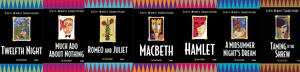
Title pages of books in the 60 Second Shakespeare series.
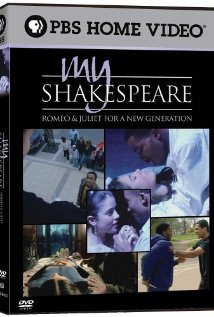
On this page, I review a Shakespeare book, movie, or TV show that I feel has some kind of value, either as an interpretation of Shakespeare, or a means to learn more about the man and his writing. This post will introduce you to an incredible documentary, and in my view one of the best ways to encourage, excite, and challenge young people reading Romeo and Juliet Aptly titled, it is called, My Shakespeare.
Name:My Shakespeare
Year: 2004
Director: Michael Waldman
Ages:PG for frank discussions of violence, and occasional suggestive language.
Media:Full length documentary, (available on Amazon and Netflix DVD)
Recommendation: I’d recommend this to high school and college students, as well as all theater teachers and practitioners. A word of caution though- nearly everyone in the documentary speaks with various British accents (from posh London to poor Harlesden), and thus if you think your class might not be able to understand foreign accents, you might want a different version, or put on the subtitles.
Premise: Director Patterson Joseph is a man on a mission- to prove that the people in his home town, (the poor, violence-ridden town of Harlesden England), that these same people can and will put on a production of Romeo and Juliet, in just four weeks. The cast has never acted before, and Patterson sometimes has to drag them kicking and screaming into rehearsals, but eventually they all learn that putting on a Shakespeare play can become an extremely personal experience. In the beginning, they are attempting Shakespeare, but by the end they live it. In between the action, there are interviews with Baz Luhrman, the celebrated director of the Leonardo Dicaprio film version of Romeo and Juliet back in 1996. Baz serves as a sort of chorus, explaining some of the challenges a director like Patterson will inevitably face as he and his actors bring the play to life.
Repeated Ideas That Run Through the Documentary:
You can do this- you can act, you can understand Shakespeare, you can finish something, you can show emotions, and you can direct.
Shakespeare is able to tell stories that appeal to everyone, and here’s the proof.
The best way to understand Shakespeare is to get on your feet and do it.
Moments to watch for: Before I list my favorite moments in the documentary, I’d like to list the theatrical process by which Patterson and his company put on Romeo and Juliet.
The Process Of Creating Romeo and Juliet:
Auditions/ ImprovGames (4 weeks to go)
Table Work, where the actors read the script and talk about their characters.
Paraphrasing the script and improv (9 days to go)
Stage combat Rehearsals- prepping the fights.
Opening Scene rehearsal on a basketball court.
Vocal Rehearsal
The Emotion Workshop (8 days to go) The actors try to tap into their own emotions to try and bring some real feelings into their parts.
Death Scene Rehearsal in a Graveyard!
Last minute changes (5 days to go)
Globe theater rehearsal
Nighttime Balcony Scene Rehearsal at the aptly named, “Shakespeare Road.”
Tech Rehearsal at the Royal Academy Of Dramatic Arts.
Speed Through Rehearsal/ The final rehearsal (1 day to go)
Performance at the Royal Academy Of Dramatic Art
Now a look at some of my favorite parts of the documentary.
The audition/ casting scene- In this scene you watch the future cast members explore the story of the play through improvisation, then you see their background through a series of headshots and dossiers. The whole cast is more diverse than any West End production: black, white, Christian, Muslim, young people and old people. Patterson’s casting choices alone makes this production fresh and relevant to our shrinking little world. A few cast members are refugees that came to England because of their countries’ own family feuds in Somalia and Afghanistan. Even more striking, Romeo and Juliet are very young- 18 and 22 respectively, which gives their love scenes an amazing truth and honesty. At first they think they have nothing in common with their characters, but in reality they have even more in common than most of us who read Romeo and Juliet.
The table work scene where the cast learns about their characters You see Mustafa as Mercutio learn that Shakespeare can be funny, you see Jonathan as Romeo learn that some of Shakspeare’s words are still used today, and you see Muska just start to flirt with the idea of playing Juliet.
Jonathan’s Story- Unlike most actors who have played Romeo, Jonathan Thomas has been in a real fight, and he describes it in brutal detail, even showing the scars he got from his stab wounds. Hearing his story gives his performance a truth and poignancy that I’ve never seen in any other version.
The Balcony Scene Rehearsals- In this documentary the two leads perform the scene many times, in rehearsal where they talk about how hard it is to play love realistically, in Shakespeare’s Globe, where they see how it was done in Shakespeare’s day, in a modern balcony back in Harlesden, (on the appropriately named “Shakespeare Road,” and at last in the final performance. Few documentaries show just how hard it is to do a Shakespearean scene, particularly if it’s famous, and how many different ways a director and a pair of talented actors can play it and find new things each and every time.
The scene where Patterson lets one of the actors go. Everyone in this production has to overcome obstacles, even the director; when one of his actors fails to perform, he simply has to drop the axe and recast one of his lead roles. Theater is hard work, and just like any job, the director has to take control and do what is necessary to make sure that the production is a success.
Rehearsal at the Globe Theater On one very special day, the actors step onto the stage of the reconstructed Globe, and take a few tentative steps into the 1500s. Once in the space, they take to it like fish to water, playing with the audience, playing with projection, and their lines are infused with a special kind of energy that only arises from the boards of an Elizabethan stage. I found it interesting that when Jonathan was talking to Mark Rylance, the artistic director of the Globe, he asks what kind of man Shakespeare was, because he’s starting to see Shakespeare as a peer!
My reaction: This documentary gives me hope every time I see it. Over and over again Patterson instills in his cast the idea of “Yes, you can,” yes, these people can understand Shakespeare, yes they can learn their lines, yes they can act, yes they can do something intelligent, and moving, and honest, and beautiful and what better play to bring that message across than Romeo and Juliet, which is full of youthful energy and excitement. My only complaint is the interviews with Baz Luhrman don’t really add much to the documentary side of things; Luhrman was really only there for name recognition, and he certainly knows less about Shakespeare than the RSC veteran Patterson. Nevertheless, the whole documentary Is nothing short of inspiring from beginning to end.
Notable cast members
Muska Khpal as Juliet. An 18 year- old Afghan refugee who came to England in 1996, without even speaking English, now playing one of the greatest characters in English literature! Like Juliet herself, Muska has very strict parents (who didn’t approve of her playing the part), and is at first is extremely shy towards Romeo, toward the play, and even the director, but when you hear her talk about her dream to return to Afghanistan and become a doctor, you can sense Juliet’s strength and independence.
Jonathan Taylor 22 year-old Jonathan is a very charismatic and intelligent young man. After this production he became a professional actor. He speaks articulately about the experience of acting for the first time, reading Shakespeare for the first time, and even his own experiences with love and violence on the streets of Harlesden. He is also very talented and speaks the lines with an effortless panache. I found myself rooting for him the whole time, and the fact that I got to see this production spark his interest in acting and then to see him change and grow was truly inspiring.
Mustafa as Mercutio Tiny, sparkle eyed Somali refugee. He is truly Mercurial- he frequently jokes and kids with the cast, yet at the same time, he is deathly serious when he talks about his life in Somalia- seeing people die in front of him. When he dies onstage, you know his performance is drawn from some real world experience.
This is a presentation I created back in 2006 that explores the imagery and world view of Romeo and Juliet. I explore what it means to be “Star Crossed Lovers,” and the relation that this play has to Astrology, religion, and even the Black Death. I hope you find it interesting!
While I work on this week’s posts, enjoy this wonderful documentary from the series Shakespeare Uncovered, about the great Shakespeare play, hosted by Joseph Fiennes, who played Romeo and Shakespeare in the film “Shakespeare In Love.” It talks about where the play comes from, and examines why this 400 year old love story endures. For you teachers, I’ve also included a great series of lesson plans that accompany the video
Here’s my special analysis of Romeo and Juliet full of analysis, famous quotes, famous artwork, and a few neato facts! Play Of the Month: Romeo and Juliet
Those of you who read my post for Much Ado About Nothing will probably remember that I made a post like this one last year. I created a fake playlist of songs that I though the protagonists, Benedick and Beatrice, might want to hear during moments of the play. Well, since this year our Romeo and Juliet focuses greatly on the influence of technology in everyday life, I felt it would be appropriate to make another playlist.
For those of you who didn’t read the older post, this is a game!
The way it works is I provide you with a list of the events that happen to Romeo, and then a fake ipod Playlist screen. This screen has a group of songs that I chose because I feel Romeo might want them as part of his ‘internal soundtrack.’ So if Romeo is feeling sad at a particular moment, you look at the playlist and try to pick a song that would match his mood. Yesterday I did Romeo’s playlist and today I’ll do Juliet’s.
Anyway, enough gabbing. LET’S PLAY!
Part I: Events that Happen To Juliet (In Chronological Order)
Like a dutiful daughter, Juliet promises to meet Paris at the Capulet ball.
Juliet is immediately stuck with true love when she dances with Romeo.
Caught up in love and passion Juliet kisses Romeo at her balcony and pledges to be with him forever.
After sneaking off to Friar Lawrence’s cell, Juliet secretly marries Romeo.
Juliet anxiously awaits her first night with Romeo as a married woman.
After spending one last tender night with her Romeo, Juliet tries to keep him by her side, even though she knows he has to leave.
Juliet defies her father by refusing to marry Paris and he threatens to disown her.
Terrified and repulsed by the idea of marrying Paris, Juliet visits Friar Lawrence’s cell, begging him to either help her or let her die.
Haunted by Tybalt’s memory, Juliet reluctantly takes Friar Lawrence’s potion to make herself seem dead. She is taken to her family’s crypt.
Awakened from her sleep and seeing her husband Romeo dead, Juliet stabs herself.
Epilogue: Through Julie’s death, her father reconciles with Montegue.
Part II- The playlist- try to match these songs with the events above.
So now you know the rules, enjoy the game. Send your answers to us by leaving a comment below or by emailing us at openairshakespearnrv@gmail.com. If you have other suggestions for the playlist, let us know and we’ll make a new one!
Have fun!
If you’ve read any of my last four posts, hopefully I gave you some insight as to the literary sources of Shakespeare’s Romeo and Juliet, and a little bit of what Shakespeare accomplished in writing the play, so now I’d like to focus on what was going on when Shakespeare wrote it; what was going on in his own life and his career. Unfortunately, nobody knows when Shakespeare’s company first performed Romeo and Juliet, but since it was published in 1597, it must have been written sometime between 1593, and 1596.
Above- Video Bio of Shakespeare by me!
In 1593, Shakespeare was in a bit of a creative slump; all the London theaters were closed down, thanks to an outbreak of Bubonic Plague Shakespeare knew intimately the pain, fear, and heartbreak that plague could bring- At age 7, he saw his sister Anne die in April 4, 1579. Anne Shakespeare was 8 years old.
In addition, Shakespeare had gained success from his four English history plays,, but great tragedy had never been his forte. In fact, although he was a commercial success, Shakespeare wasn’t respected much in his own artistic community. In 1592, Robert Greene, a well-known smarty-pants dramatist in 1593, saw that his plays were getting passed over by theatre goers in favor of Shakespeare, who was an uneducated ACTOR!!! This set Greene’s teeth on edge, and he published an insulting pamphlet which slyly satirizes Shakespeare as:
“An upstart Crow, beautified with our feathers, that with his Tygers hart wrapt in a Players hyde, supposes he is as well able to bombast out a blanke verse as the best of you: and being an absolute Iohannes fac totum, is in his owne conceit the onely Shake-scene in a countrey
-Robert Greene, Greenes, Groats-worth of Witte, Bought With a Nillion Of Repentance (with original spelling) [1592].
More criticism ensued from Shakespeare’s distant relative, a poet and Jesuit missionary named Robert Southwell. Because of his Catholic beliefs, Southwell was an outlaw and a traitor to the Queen, yet he continued to try and convert England back to Catholicism with everything he did and wrote. Somewhere between his secret arrival in England in 1586, and his capture, torture, and execution in 1595, Southwell wrote a dedicatory essay addressed “To my poet cousin, Master W.S,”
the text of the title page is reprinted below:
Worthy Cousin, Poets by abusing their talents and making the follies and fainings of love the subject of their base endeavors, have so discredited this faculty (ability) that a poet, a lover, and a liar are but three words of one signification.
Southwell’s speech strongly echoes the speech Shakespeare gives to Theseus in his play A Midsummer Night’sDream, especially the comment where Theseus claims “The lunatic, the lover, and the poet are of imagination all compact.” We don’t know how much influence Southwell had on Shakespeare, but in any case, it’s clear that around 1593, Shakespeare was trying to establish himself as a true Renaissance writer, which meant writing great poetry and not just crowd-pleasing histories full of blood and gore.
So Shakespeare had to face two great challenges- to defend his art from his detractors, and to make a living without the theatre in a time of plague. To pay his rent, he took a job writing poetry for the Earl of Southampton, Henry Wriothesley (pronounced “Rizely,” left). By all accounts, the Earl was a spoiled, vain pretty- boy who loved patronizing poets. To please Wriothesley, Shakespeare composed two long epic poems, “Venus and Adonis,” and “The Rape Of Lucrece,” classical stories inspired by Shakespeare’s favorite Roman poet, Ovid.
According to The Poetry Foundation, a lot of the themes and language devices Shakespeare employed in these two poems contributed greatly to Romeo and Juliet. Most notably, Shakespeare’s use of the concept of forbidden love, his creation of strong, tragic heroines who conquer their predicaments in their deaths, Shakespeare’s use of paradox to describe impossible situations, and perhaps, in the case of Adonis, a model for the character of Romeo:
it features an innocent hero, Adonis, who encounters a world in which the precepts he has acquired from his education are tested in the surprising school of experience. His knowledge of love, inevitably, is not firsthand (“I have heard it is a life in death, / That laughs and weeps, and all but with a breath.”
In these two poems Shakespeare was refining his craft, and examining questions about the nature of love. In Venus and Adonis, the title characters explore love as a giddy romp through the forest, but their relationship ends with a tragic accident when a wild boar kills Adonis. In The Rape Of Lucreece, Shakespeare shows the destructive quality of male desire, and the nobility of self-possessed women. I think that Romeo and Juliet would not have existed without Shakespeare making a meditation on his craft, on the nature of love, and the fragility of human life.
Shakespeare’s Romeo and Juliet
As you saw from my post last week, Romeo and Juliet wasn’t a new story- it had appeared as a poem in 1587 and in several versions before that. When Shakespeare adapted the story, he used his new-found powers of poetic language to make the story more alive, more beautiful, and to make the characters more complete.
What Did Shakespeare Do Differently With His Version Of the Story?
Plot- Generally, Shakespeare keeps the same plot as the poem version of the play, but compresses characters, times, and speeds the action along faster.
Shakespeare compresses the story to 5 days, making the love affair even more passionate and volatile.
He changes the Capulet’s feast from a Christmas celebration to a summer’s feast, making the time of year hot and dangerous.
He makes Juliet 13 instead of 16 as she was in the poem.
He makes Peter Capulet’s servant, instead of Romeo’s.
Themes- Shakespeare, more than most poets who have interpreted this story, refuses to put the blame squarely on Romeo and Juliet, which is why he invents thematic devices to put the blame on chance, fate, or possibly an angry God.
Plague Themes– In the 16th century, plagues were viewed as a consequence of angering God. The fact that Mercutio curses the two warring families with “A plague on both your houses,” suggests that the lover’s deaths was a just punishment from God, or at least a horrible instance of random chance.
Importance of Fate- Romeo and Juliet are first described as “Star-crossed lovers,” which means their destinies are intertwined, and determined by an unlucky star, (like being crossed by a black cat). In addition, Medieval and renaissance poets often invoked the goddess Fortuna, who guides people’s destinies and controls whether they have good fortune or bad fortune. Some said this destiny was written in the stars, as Romeo angrily denounces after he hears of Juliet’s death:
“Is it even so? Then I DEFY you stars!”
Shakespeare uses these thematic devices to make the fates of Romeo and Juliet less clear and more open to interpretation. Without a clear-cut moral, Shakespeare’s audiences could make up their own minds.
The Language Of Romeo and Juliet
Steven Greenblatt, editor of the Norton Anthology of Shakespeare’s plays, points out the amazing variety of wordplay and language devices in Romeo and Juliet, which Shakespeare employs to allow characters to insult each other (like verbal artillery), to curse, to mock, to impress, and in the case of Romeo and Juliet themselves, “To create a new Heaven and a new Earth” (Norton, 889). Romeo and Juliet are unable to be together due to their feuding families, so through poetic imagery they turn their situation into paradise and turn each other into gods. Romeo turns Juliet into the Sun, the force that sustains all life on Earth, and Juliet asks God to:
Take him and cut him out in little stars,
And he will make the face of heaven so fine
That all the world will be in love with night
And pay no worship to the garish sun (R&J III.i).
Antithesis-To characterize the powerful and contradictory forces at work in the hearts of the characters, Shakespeare frequently has them speak using antithesis- putting two opposite terms next to each other, such as in the phrase,“Why then, O brawling love, O loving hate, O anything of nothing first create” (R&J, I. i).
One big way Shakespeare uses antithesis is the repeated imagery of night and day. Night stands for beauty, danger, love, and hidden love, as in the example from Act III above, and from the phrase: “I have night’s cloak to hide them from my eyes,” from the Balcony Scene. Day on the other hand, is associated with fighting, unpleasantness, and rudeness, like in the example above, where Juliet describes the Sun as “garish” or rude. In fact, the first time the word “day” is used in the play, Shakespeare follows it with the rhyme, “fray,” which immediately sets up how the day means hotblooded violence.
One final example occurs in Act IV, Scene v, where Romeo has slipped into Juliet’s bedroom during the night, where Romeo laments how, as it comes closer to day time, the time for him to leave draws near:
JULIET: O, now be gone; more light and light it grows. ROMEO More light and light; more dark and dark our woes!
I could go on talking about Shakespeare’s literary devices, but the important thing is that, to establish himself as a great Rennaisance poet, Shakespeare put his love of language in this play more than he had ever done before, and it shows in every line.
What was the first performance like?
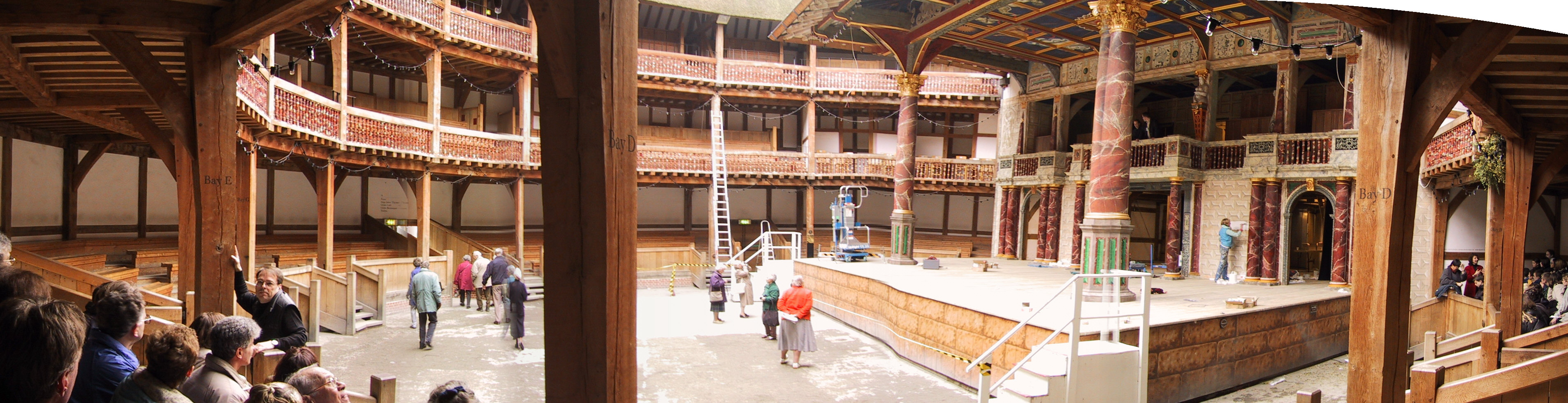
Above is the trailer for a production of Romeo and Juliet at the re-built Globe Theatre in 1999, which illustrates how this production relied thoroughly on the imagination of the audience.
Just like us at Open Air Shakespeare NRV, the first production of Romeo and Juliet was outdoors during the afternoon, (we know from the records of the time that plays took place about 2PM most of the time).
There were minimal props and scenery, no lighting and few sound effects, and the actors were able to talk directly to the audience.
Another important thing about Elizabethan performance is the multiple levels of the audience. As you can see, audience members can stand on a semi-circle around the stage. These audience members were called “groundlings,” and they paid a penny to stand through the show. For another penny, audience members sat on wooden planks like the people in the foregrounds. The upper galleries were a little less expensive, since they were further away from the stage, and the most expensive seats of all were The Lord’s Rooms (far right just below the roof of the stage). The Lord’s Rooms allowed wealthy patrons to be seen by everyone in the house, showing off their aristocratic status. The Lord’s Rooms also doubled as a musicians gallery, and also as Juliet’s balcony, as you can see in this video
The backstage facade area that the actors went through for costume changes was called the Tiring House, where at the end of the play, they would push out Juliet on a stone slab, to represent her tomb.
Without question, Romeo and Juliet was popular in Shakespeare’s lifetime;
It was printed in 1597, two more times during Shakespeare’s lifetime, then it was printed four more times between 1622, and 1637. It would probably have continued printing continuously till this day, if not for the Puritans abolishing theater in 1642.
The same year Shakespeare first performed the play, we know he became a shareholder in the Chamberlain’s Men, which meant he not only got a salary for writing and performing, he also got a share in the profits.
Critics praised Shakespeare’s poetry, calling him “The poet of the heart-robbing line.”
So, to sum up, Shakespeare composed this masterpiece during a very turbulent time- he was unable to act, the theaters were closed. He was no doubt afraid of being killed by the plague, and all the while he was being plagued by critics. When he wrote the play, he expanded his art and craft to a new and unheard of degree, ensuring his place in history as the finest dramatist in the English-speaking world. It was truly a labor of love.
– Shakespearean Student
Poster for a production of “Romeo and Juliet,” that I worked on in 2012.
When I say that the story of Romeo and Juliet is timeless, I mean that the story’s roots go back almost to the beginnings of time. According to Sigmund Freud in Beyond the Pleasure Principle, the desire for love is inexplicably tied to the desires for creation, and destruction. These contradictory forces live deep in the human psyche, which explains why stories of doomed love have been re-interpreted throughout history. What follows is a short history of the stories that inspired Shakespeare, so you can see how this archetypal story has evolved into the one we still read today.
Ancient Sources
When Shakespeare was going to school in the late 1560s, Elizabethan boys were expected to read ancient Greek and Roman writers, who wrote many of the classical love stories listed below. We know that Shakespeare remembered of all these stories because he gives a brief homage to them in Ac II, Scene iv of Romeo and Juliet:
MERCUTIO
Now is he [Romeo] for the numbers that Petrarch flowed in: Laura to his lady was but a kitchen-wench; marry, she had a better love to be-rhyme her; Dido a dowdy; Cleopatra a gipsy; Helen and Hero hildings and harlots; Thisbe a grey eye or so, but not to the purpose.
Mercutio’s opinion of these old love stories is that they are based on a false concept of true love, when in fact, love for Mercutio is merely lust and obsession.
Hero and Leander
Author– Unknown (traditional Greek Myth)
Date Of Composition 1400- 300 BC (approx)
Plot– Hero, a prophetess of Aphrodite loves Leander, a young man from the other side of her temple across a river called the Hellespond. As a priestess, Hero is supposed to remain a virgin, but Leander convinces her to make love to him, and visits her several times by swimming across the Hellespond. Their affair comes to a tragic end when on one stormy night, Leander is overcome by the waves and drowns on his journey to be with his beloved Hero. Consumed with grief, Hero throws herself off the temple tower to be with him.
Moral– love (or at least lust), destroys and kills.
Plot– Paris, the prince of Troy abducts and ravishes Helen, the queen of Sparta in Greece, leading to a 10 year war between the Greeks and the Trojans. This war divides everyone in both countries, even the gods, leading to the question of whether love is more important to loyalty to one’s country or family.
Moral– Ambiguous- The Greeks fight the Trojans bravely, but only to destroy Troy. Whereas the Trojans are often more sympathetic than the Greeks, but their decision to protect Paris and Helen’s adulterous affair is very unwise. The characters in this story strive to answer the question of what is the most important thing in life- desire for power, fame, to protect one’s home, or love?
Authors– Various, including the French bards Thomas and Beroul
Date of Composition– somewhere around the 12th century AD.
Plot– Similar to the Trojan War story, but in a medieval context: a young English knight named Tristan meets the heroine, a princess from Ireland, who is engaged to his country’s king. Their passion is instant and fiery, (sometimes it is the result of a love potion they accidentally drank), but it also forces them to make a terrible choice- If Tristan carries off Isolde, he will be disobeying his king, destroying a peaceful alliance, and forcing England and Ireland to go to war. However, it is clear from the beginning that Isolde does not love the one-eyed English king, and if she marries him, Isolde will be miserable her whole life. Tristan fights gallantly to protect both Isolde and her honor and it puts Tristan, the king, and Isolde into a torturous love triangle, which usually ends with Tristan and the king fighting to the death.
Morals–
Arranged marriages ruin everything,
love is like a drug,
“Bros before, [you know-what].”
Note– This story was also the root of the story of Lancelot in the Arthur myths. In the version created by Thomas Mallory in the 15th century, Lancelot falls in love with Queen Guineveere, and betrays King Arthur, whom he loves like a father. Lancelot’s adultery eventually destroys the fellowship of the Round Table, and allows Arthur’s wicked bastard son Mordred to kill Arthur and ruin Camelot.
Here is a brief timeline of the narrative sources dating from 1530-1580 that Shakespeare used to create his own masterpiece. As you can see, they differ considerably from the ancient sources in plot, and overall morals.
Timeline Of the Narrative Sources of Romeo and Juliet:
Romeo and Giulietta
Author– Luigi Da Porto in his novel Historia novellamente ritrovata di due nobili amanti (“Newly found story of two noble lovers”
Date of Composition- 1530
Background– Da Porto was a soldier and a brilliant story writer. Some claim that he based his tale on an earlier story, while some claim he based it on his falling in love with a girl at a masked ball. In any case, Da Porto was the first to set the story in Verona, created the characters of Mercutio and Benvolio, and also the first author to change the context of the story into two warring households, rather than great empires or kingdoms. This small change helps the audience sympathize with the lovers more, since they are not guilty of treason or adultery.
Plot– Two noble houses, the Montecchi and the Cappelletti are at war. The hero Romeo meets Giulietta at a Carnival ball, which makes him forget about an unrequited love he has for an unnamed girl (the name Rosalind is Shakespeare’s invention). The two lovers have several liasons over a much longer period than in Shakespeare’s play at Guilietta’s chamber window. Also, although they are married in secret and Romeo is banished just as in Shakespeare’s version, the character he kills is not related to Guilietta. However, the plot device of the sleeping potion and Romeo’s suicide is also consistent with Shakespeare’s version of the story.
Romeus and Juliet
Author– Matteo Bandello’s in his story Novelle, (translated into English) by Arthur Brooke in 1587.
Date of Composition– 1554, (translated in 1562, re-printed 1587)
Background– Bandello adapted Da Porto’s version of the story and developed the supporting characters, adding The Nurse, the Friar and the Apothecary, and developing Benvolio (without giving him a name).
Plot– This plot is almost exactly the same as Shakespeare’s play,but it does reveal some narrative details that Shakespeare omits. Bandello’s poem reveals the origin of the Capulet/ Monegue feud, as well as the ultimate fates of the surviving characters.
Moral– Like many other interpretations, the author (or at least the translator) seem to be struggling with the Christian taboo of premarital sex, which to some extent condemns the protagonists. In the English translation by Arthur Brooke, the Preface makes it very clear that Brooke is not condoning Romeus’ premarital sex or his blatant disregard for his parents’ authority. Brooke claims that the story is intended to show the actions of bad people being punished for their actions:
The good man’s example biddeth men to be good, and the evil man’s mischief warneth men not to be evil. To this good end serve all ill ends of ill beginnings. And to this end, good Reader, is this tragical matter written, to describe unto thee a couple of unfortunate lovers, thralling themselves to unhonest desire; neglecting the authority and advice of parents and friends; conferring their principal counsels with drunken gossips and superstitious friars (the naturally fit instruments of unchastity); attempting all adventures of peril for th’ attaining of their wished lust – (Brooke, Romeus and Juliet )
On the other hand, at the end of the poem, Bandello describes Romeus and Juliet’s love (or at least Brooke’s translation), as: “so perfect, sound, and so approvéd love,” which suggests that the author at least approve of the lover’s actions. One can almost imagine Italian passion fighting with English morality in the dueling pens of Brooke and Bandello. It was up to Shakespeare to try and resolve this conflict in his own version.
Romeo and Juliet
Author– William Shakespeare
Date of Composition 1593 (approximately)
Plot– One of the most interesting things about Shakespeare’s play is that he develops the characters of Mercutio, the Nurse, and Friar Lawrence, but deliberately omits certain plot elements such as why the feud began between the Capulets and Montegues, and what happened to The Apothecary, Nurse, and Friar Lawrence after the Prince found out about the lovers’ suicides. This effectively makes the Capulet/Montegue feud seem pointless, which allows the audience to focus more on the lovers. On the other hand, Shakespeare also compresses the time Romeo and Juliet know each other from 9 months as in Brooke’s version to 5 days, making the love affair seem even more rash. These changes in plot make the story much less a morality tale about morally wrong love, and more about the war between creative and destructive love that play in the human psyche.
Moral– As we’ve seen, most interpretations of the story condemn the lovers as rash, foolish, and adulterous. Shakespeare refuses to condemn or condone. That is Shakespeare’s great gift for storytelling- he doesn’t give us clear answers because he knows life is more complicated than that. He merely provides two sides of an issue and lets the reader sort it out for themselves.
How did Shakespeare get away with ripping off material this old? You’d think that, since every English schoolboy knew this story for over 1000 years, nobody would see this play since there would be no surprises. The answer is that Shakespeare writes primarily for characters, not plot. He infuses old characters like Romeo and Juliet with a new language that makes them more complete, more modern, and more timeless. That’s why stories like R&J, which was already known to Shakespeare’s audiences, are still entertaining and compelling, even after you read it 100 times, and see hundreds of different productions.
I hope this short history of the sources of Romeo and Juliet allows you to ponder the complex theories behind love and lust that authors have struggled to explain in the history of this story. Each age debates the values of love and whether it’s worth fighting or dying or killing for. Perhaps the best thing about Shakespeare’s version is that it tries to provide the most complete summary of the question, without giving us an answer, allowing us to marvel at how complex it is.