Happy Teacher Appreciation Week!

Greetings Teachers!

As an educator, I am in awe of all the hard work teachers do. They do more than just educate, they maintain discipline, nurture young minds, foster curiosity, volunteer, inspire, and give hours of their time, money, and passion.

I’ve tried to make this blog a resource for teachers as well as students and since I know a lot of you have testing to do, you probably could use some quick, simple activities and lesson plans to get your class past the fourth quarter and on to the finish line! So first, here’s a bunch of my resources and lesson plans that you’re welcome to use as you will:

  1. My top 10 Shakespeare apps: My Top Ten Shakespearean Apps For Teachers and Students, Part 1 and My Top Ten Shakespearean Apps For Teachers and Students, Part 2
  2. My Macbeth Digital Escape Room: Activities for Students and Teachers: Macbeth Escape Room
  3. My Shakespeare Website (useful for web quests) Resources for Teachers and Students: A Visit To Elizabethan London
  4. Activities For Students and Teachers: “The Comedy Of Errors.”
  5. Activities For Teachers and Students: Mock Trial of Romeo and Juliet
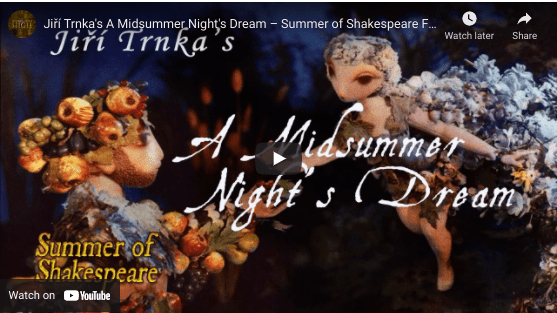
  6. Activities For Students and Teachers: A Midsummer Night’s Dream

Also, please check out my reviews of Shakespeare movies to decide which ones are good for your class (More on that later).

Finally, here are some words of encouragement from Shakespeare himself:

O, let my books be then the eloquence
And dumb presagers of my speaking breast,
Who plead for love and look for recompense
More than that tongue that more hath more express’d.
O, learn to read what silent love hath writ:
To hear with eyes belongs to love’s fine wit.

— Sonnet 23

Summer Shakespeare courses!

Trailer for my summer Shakespeare Courses!

I’m beyond excited that I am able to offer three multiple week courses through Outschool for kids aged 6-12. If you scan the QR code below, you can see class descriptions and individual trailers. You can also check out the “My classes,” Page on this blog. I hope you and your family will join me this summer!
Pericles’ Crazy Spring Break

It’s April, so it’s about to be spring break. Also, Shakespeare’s birthday 🎂 is coming up, so I thought I’d honor him this year by highlighting some hidden gems of Shakespeare’s plays.
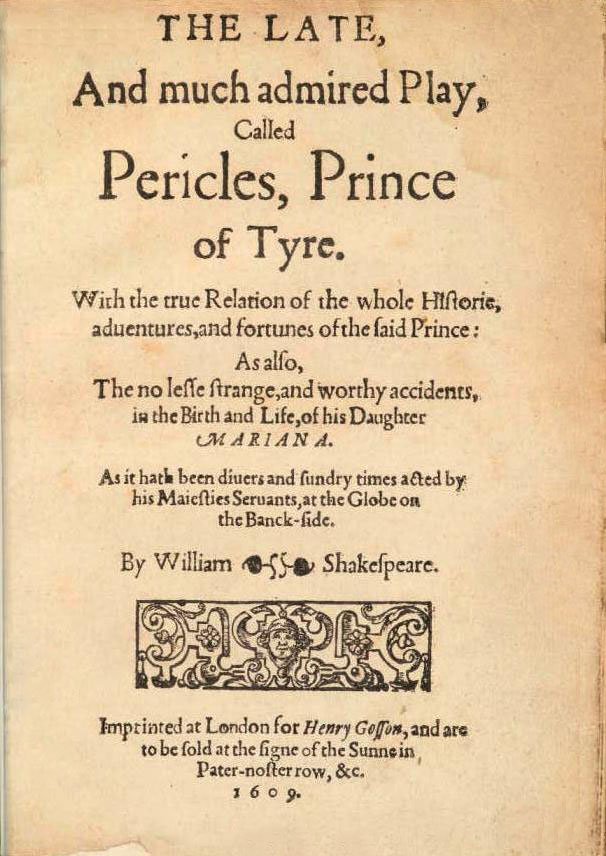
Title Page for Pericles, Prince of Tyre

Shakespeare’s Pericles is an incredible odyssey where the hero goes to many exotic locations and has many adventures, so I thought I’d summarize the action of the play using the device of… vacation photos!

Part 1: Pericles’ Vacation In Antioch

Travel brochure for Antioch, where Pericles finds himself in Act I.

Part II, Scaped beheaded, now he’s wedded!

Pericles’ vacation video where he gets shipwrecked, finds a suit of armor, wins a joust, falls in love, and gets married all in a few days!

Part III: The worst Cruise ever

Pericles reviews the ship 🚢 that took him to Tarsus.

Part IV: Beauty(?) Regimen

https://www.youtube.com/shorts/6GrZ9x2jBUs

Part V: Family reunion at Ephesus

Pericles Reunion T-Shirt.\

Resources for National Poetry Month

I’m teaching a number of clases on poetry this National Poetry Month, and I wanted to make suggestion if you want to woo a sweetheart this poetry month but don’t know where to start. So here are some resources for you you use, and some links to some of my own work on the subject:

1. Mindup.com

This website is very good at helping you organize your writing into small blocks, webs, charts, etc. This is really useful when you’re creating sonnets because it helps you set up your argument. You can even add pictures to think about the images you’re going to use in your poem!.

2. RHymezone.com

https://www.rhymezone.com/

A MUST for any poet. This website allows you to find rhymes for any word.

3. Poem Generator.uk

https://www.poem-generator.org.uk/

This website is very fun and useful for teachers and students. You plug in various adjectives, verbs, and nouns and it does the rest. The sonnets aren’t great, but you do get a clear idea of how sonnets work, and that makes it very useful for students.

A sample sonnet I made about money.

3. Folger.edu- How to Write a sonnet

One of the best pieces of advice I can give to an aspiring poet is to read other poets and learn what you like. The Folger has a yearly competition of student sonnets which you can read on their website, and lots of handouts and info that teaches you about sonnet form, so check it out!

https://www.folger.edu/shakespeare-birthday-party-at-home/write-a-sonnet

4. My Mini lecture video: Shakespeare’s sonnets

My mini-lecture on Shakespeare’s Sonnets

5. My post on sonnet writing, with more resources and advice:

6. My OUtschool Classes on Sonnets and Shakespeare’s writing:

If you want some one-on-one help with writing Elizabethan poetry, consider signing up for my online classes! I teach 2 classes on writing poetry and literary devices:

Love Poetry: Shakespeare Style

This class is a live brainstorming session where I’ll teach you to use the resources I’ve listed above to craft an Elizabethan sonnet of your very own! We’ll also discuss some of Shakespeare’s own sonnets, and the enduring mystery of the Dark Lady and the Fair Young Man.

Trailer video fo “Love Poetry: Shakespeare Style”
Page Icon for my Outschool class on Shakespearean writing.

https://outschool.com/classes/d9a6c17e-7ec2-4839-8337-152da6beaeb7/schedule#usMaRDyJ13

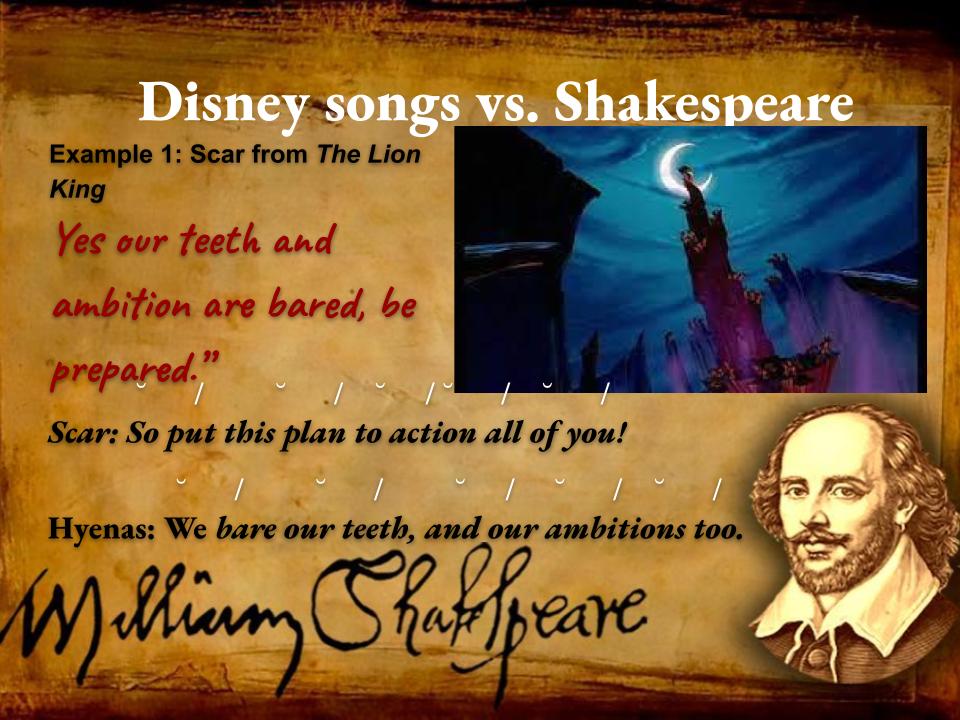
This class is a general intro to Shakespeare’s writing. I discuss the structure of his plays and poems, and I play a fun game where I rewrite some very famous lines in iambic pentameter:
So thanks for reading this list! I hope this helps you out, and if you do consider signing up for my class, I’m offering a special discount for the Love Poetry course: Get $5 off my class “Love Poetry- Shakespeare Style!” with coupon code HTHESVFDPO5 until May 5, 2022. Get started at https://outschool.com/classes/love-poetry-shakespeare-style-k8lL9yLK and enter the coupon code at checkout.

Let thy verse flow like a river, ye merry balladiers!

Women’s History Month: Margaret Hughes: Stage Beauty

Since today is the last day of women’s history month I thought I’d talk about the historical first ever Shakespearean actress and first-ever English actress. Margaret Hughes (1630-1719), is credited as the first-ever English actress. She led a fascinating life and books, plays, and movies have immortalized her, including the 2004 film, Stage Beauty.

Although there is some debate among scholars as to whether the 1st actress in question was Margaret Hughe, she is the one who has been credited because of her performance as Desdemona in Othello during the reign of King Charles II.

Some facts about Mrs. Hughes from Southern Shakespeaer Company
King Charles discusses how his reign and the first actresses in England are linked.

Around 1660s Charles II formally allowed for public performances of women on English stages. Restoration audiences, craving entertainment after the enforced closure of theatres during the Puritan Interregnum, rejoiced. Others, particularly the successful male impersonators of women, were shocked and annoyed as they suddenly lost their celebrity status and were seen as freaks. The stage war that the appearance of actresses initiated resulted in an almost immediate reiteration of almost medieval misogyny and vituperative ostracism directed at any woman who dared to challenge the masculine reign on the English stage. The actresses themselves had to learn both how to act out femininity as seen through male playwrights’ eyes and how to maintain their celebrity status and the audiences’ adoration. This, however, meant more than ‘just’ displaying perfect acting skills and appearing in the best plays available. A successful actress needed to woo the audience, particularly its male members, with her body, or her sexuality in general. She likewise needed to accept, or even engender, vitriolic attacks on her reputation in public discourse and, if possible, utilise such bad publicity to her own advantage. As such, this chapter aims to present a link between medieval anxiety concerning public displays of femininity and the seemingly privileging introduction of the actress in the late seventeenth-century England. It will also present a synthetic image of celebrated actresses’ lives as seen through theatrical records as well as seventeenth-century pamphlets and poetry, proving true the contemporary saying that only lack of press is bad press.

Bronk, 23

What I’m going to do is give a few historical notes on Margaret Hughes and her portrayal of Desdemona in the production of Othello and then I’m going to simultaneously do a review of the movie that celebrates her life: Stage Beauty (which was also made into a play).

Review Of Stage Beauty

What Shakespeare In Love did for the 16th century, this movie does for the late 17th century: it is awash with beautiful costumes elegant sets and dazzling music. it is a visual feast and everybody in it is fantastic in their roles, especially Billy Crudup as Ned Kyneston, Richard Griffith as Sir Charles, Tom Wilkinson as Thomas Betterton, and of course, Claire Danes as Margaret Hughes.

Hughes is a  costumes mender and dresser for Thomas Betterton’s theater company in London as she watches Ned Kyneston every night as he portrays Desdemona in Othello. Mrs. Hughes develops an admiration not only for his performance and skills but also forms romantic feelings for him. However, Mrs. Hughes isn’t content to keep watching Kyneston from the wings, and sneaks off after work to perform as Desdemona illegally at the Cockpit Tavern to packed houses. When Kyneston finds out, he is livid.

“[He was] the most beautiful woman I’ve ever seen

— Samuel Peypes

Edward Kyneston, (1640-1712)
1889 mezzotint engraving of Edward Kynaston.

Kyneston constantly belittles, ignores, and underestimates Hughes through this film and is supremely arrogant to everyone, enjoying the notoriety he’s achieved as the premier female impersonator in London. However, after he offends King Charles (played by Rupert Everett), and his mistress, Nell Gwynn, (herself an aspiring actress), the King in retaliation, bans men from playing women, thereby making Kyneston seem like a degenerate, incapable of getting work. He sinks into alcoholism and depression, but finds comfort when Hughes finds him and nurses him back to health. The two then form a romantic bond.

Nell Guinn, King Charles’ mistress and one of the first English actresses

In the third act twist of the movie, the actress playing Desdemona in Mr. Betterton’s theater is pregnant,  so  Margaret must take over her role.  Kyneston sees an opportunity to regain respectability as an actor,  so he demands to be given the role of Othello. In my favorite scene of the film, Kyneston rehearses the death scene of Othello, changing the acting style from over-the-top stylistic 17th century to very modern naturalistic portrayal:

The rehearsal scene from Stage Beauty (warning, R-rated language)

The two actors perform a fantastic modern naturalistic portrayal of Othello before the king, and they both become respected actors who learn to respect each other.

Danes performs with wonderful real pathos as Hughes and Desdemona. In fact, all the performances are great, the the writing is top notch, and as I said the costumes and cinematography are phenomenal. It’s a very fun, slightly naughty romp through Restoration England, not unlike the flirtatious comedies of Behn and Wycherly.

Special merit goes to Billy Crudup, who had to completely transform his voice, gestures, and dialect for the film. He worked closely with a dialect coach, a physical acting coach, and the director Richard Eyre, who has worked in theater for over 20 years, and has a lot of experience with Shakespeare:

The film is not without flaws; there are some plot elements that are a bit dated and a bit unsettling. While it is true that the real Ned Kyneston was rumored to have relationships with both men and women, including famously, George Villiers, the Duke of Buckingham, who appears in the movie. Kyneston’s sexual identity is constantly shifting through the course of the movie, and it’s not handled very delicately. In the beginning of the film, Ned seems very firmly homosexual;  his relationship with the Duke of Buckingham is played fairly respectfully, though Ned himself is hardly a positive portrayal of a gay or bisexualim man.

Even worse, when Buckingham rejects him, Crudup’s Kyneston seems to be coaxed by Hughes to become heterosexual, which he remains through the course of the movie. Now these actors have fantastic chemistry together, but it seems bizarre that Kyneston is all of a sudden changing his sexual identity at the same time he’s changing his style of performance. That doesn’t seem genuine, (at least in my experience),  and it might be offensive to members of the LGBTQ community to assume that a man might think he’s one identity and then choose to be a heterosexual.

Historical Details that the movie gets right:

Crash Course Theater History: The Restoration and first Actresses

1 it is true that for hundreds of years it was considered socially unacceptable for women to play parts on the London stage although it was common practice in Italy and France and other countries

2. Ned Kynaston, Thomas Betterton, and of course Mrs. Hughes are real people who performed during the Restoration. However, they actually rarely worked together. Much like the Admiral’s Men and Chamberlain’s men in Shakespeare In Love, The Duke’s Company which is where Betterton worked, while Mrs. Hughed mainly performed in the rival King’s Company.

Edward Kyneston, (1640-1712)

Sources:

1. Katarzyna Bronk- No Press is Bad Press-Being an Actress in English Restoration. Stardom: Discussions on Fame and Celebrity Culture, 23-34, 2012. Retrieved online from: =related:YvjGsAEzxIoJ:scholar.google.com/&hl=en&as_sdt=0,39#d=gs_qabs&u=%23p%3DYvjGsAEzxIoJ