

Happy Valentine’s Day everyone!
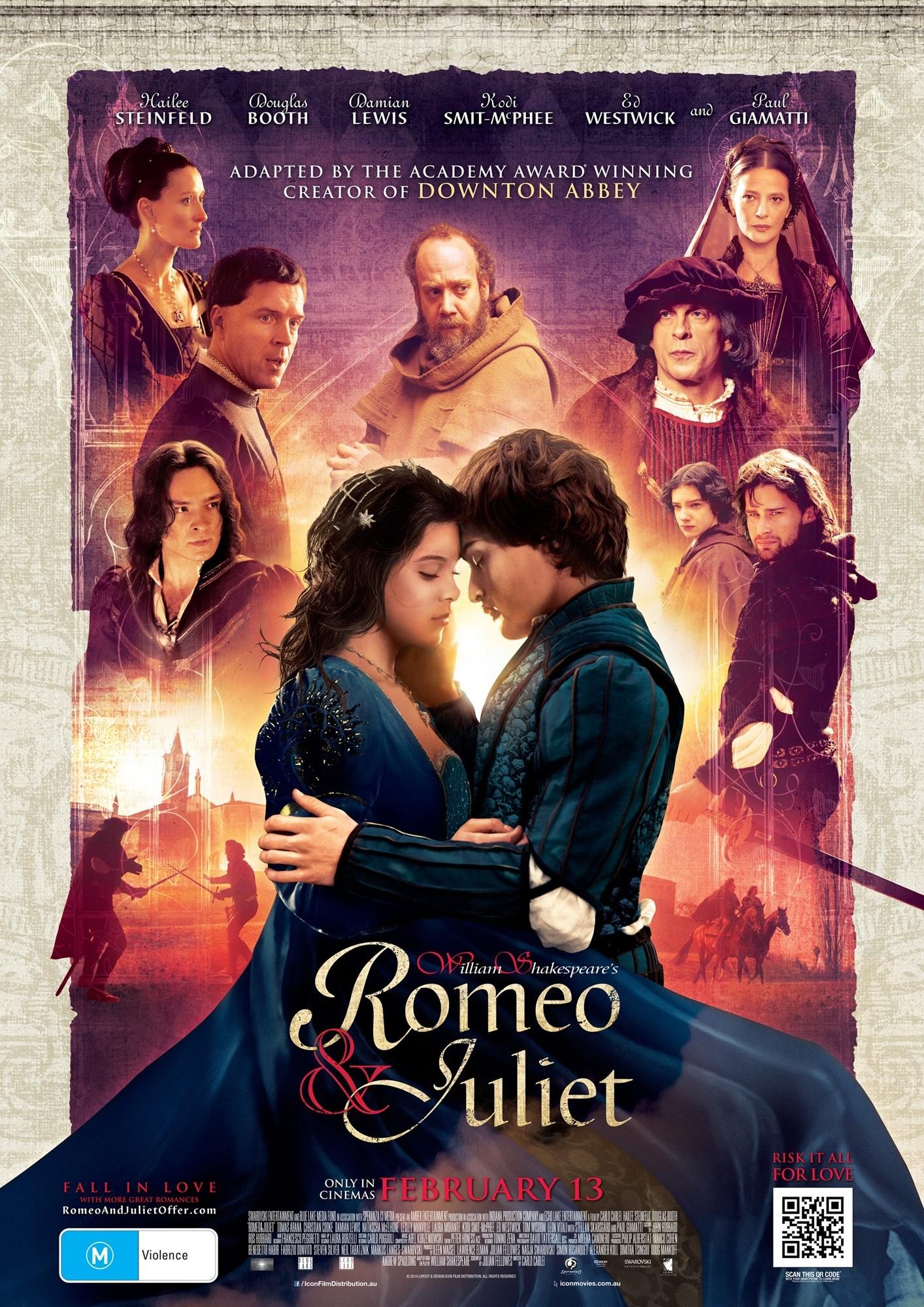
Every couple of years or so, there’s a new retelling of the tale of star-crossed lovers. I’ve written before that Shakespeare didn’t invent this story, but his version is definitely the template for every subsequent retelling.


The big challenge in telling the story for children is how to get around the sexual and violent elements of the story. Some versions like “Gnomio and Juliet,” make the violence comic and kid-friendly, while others like the WIshbone version call attention to the fact that it’s only a play, by presenting it as a story-within-a story.
What I find unique about Disney’s Elemental is that it ignores the violence and explores a side of the story that is often downplayed: family loyalty vs. personal choice. Is this version a complete adaptation- no. But it’s interesting to compare to “Romeo and Juliet” to see how it modernizes and diversifies elements of Shakespeare’s story.
Part I- The World of “Elemental”
One trope that both Elemental and Romeo and Juliet emphasize is the ancient notion of comparing human temperaments to the four elements.
In this world, all people are made of one basic element and it corresponds to their personality- dull, cold earth, flighty air, emotional water, and driven and temperamental fire. Our heroine Ember not only has a fiery temper, but a burning desire to repay her family for all that they’ve given her. She is also full of family anger for the prejudice she suffered at being an immigrant and a fire person. In the world of Elemental, fire people are looked upon with distrust because.. well fire burns!
This concept of elemental temperaments is explored in very creative ways in the film, but it is by no means a new idea. The idea that humans are made of four elements goes back to ancient Greece and China. The Greek philosopher Aristotle helped popularize the theory that not only is everything made of four elements but there are four liquids called humours that control human health and human behavior.

This is a presentation I created back in 2006 that explores the imagery and worldview of Romeo and Juliet. I explore what it means to be “Star Crossed Lovers,” and the relation that this play has to Astrology, religion, and even the Black Death. I hope you find it interesting!
Aristotle believed that to be physically and emotionally healthy, a person’s humours needed to be balanced which would prevent sickness and also control their temperament. A “humorous” person was someone who was either too angry or too melancholy and therefore worthy of scorn. This eventually twisted into our notion that humorous means to be funny.
In Romeo and Juliet, all of the characters are dominated by a particular humor and sometimes they even say how they are dominated by Choler (fire), Melancholy (Earth), Blood (Air), and Phlegm (Water)
Patience perforce with wilful choler meeting
Tybalt, Act I, Scene v
Makes my flesh tremble in their different greeting.
I will withdraw: but this intrusion shall
Now seeming sweet convert to bitter gall.
All things that we ordained festival,
Lord Capulet, Act IV, Scene v
Turn from their office to black funeral;
Our instruments to melancholy bells,
Our wedding cheer to a sad burial feast,
Then hie you hence to Friar Laurence’ cell;
The Nurse (to Juliet), Act II, Scene v
There stays a husband to make you a wife:
Now comes the wanton blood up in your cheeks,
They’ll be in scarlet straight at any news.
What’s unique about Elemental is that, while characters in Renaissance dramas have all four elements within them, in this movie, they are literally embodying one. Therefore to be in balance as Aristotle says they should be, they need a partner with an opposite humor to form a harmonious union. This is a nice way of visually showing the age-old adage that opposites attract in a very literal and easy-to-grasp way.
Wade- A more Temperate Romeo
As much as I love “Romeo and Juliet,” I’m well aware that Romeo is not an ideal lover. His attraction to Juliet is very much based on sight alone and though he is courageous and persistent to win her love, he does little to support or help her. Many people have pointed out that, had Romeo lived, it seems unlikely that his relationship with Juliet would last, especially considering that he just got over another girl five minutes before meeting her:
So as a character, Romeo is iconic, but as a lover, he’s not exactly ideal. What Elemental does is keep his love of romance and his persistence, and give him the ability to empathize, a desire to help, and above all, the ability to LISTEN to Ember, (the Juliet analog). Enter… Wade:
Wade is a great addition to the Romeo trope and though he doesn’t kill anyone for Ember’s honor, he does fight many figurative battles for her- he helps her fight her guilt and find her purpose in life, he tries to help her family multiple times, and he fights her father’s prejudice against water people by being kind and respectful to her family.
I think it’s telling that Wade is dominated by water. First of all, it makes it clear to audiences that he has significant challenges in dating Ember (since he might literally extinguish her), but also because of what it says about his character.
Romeo is dominated by the humor of blood, which according to Hippocrates and Galen:
A person who is sanguine is generally optimistic, cheerful, even-tempered, confident, rational, popular, and fun-loving. He or she can be daydreamy to the point of not accomplishing anything and impulsive, acting on whims in an unpredictable fashion. Sanguines usually have a lot of energy, but have a problem finding a way to direct the energy. This also describes the manic phase of a bipolar disorder.
https://www.thecolourworks.com/hippocrates-galen-the-four-humours/
While Wade is literally made of water, which according to Galen:
A phlegmatic person is calm and unemotional. Phlegmatic means “Pertaining to phlegm” and corresponds to the season of winter (wet and cold), and connotes the element of water. While phlegmatics are generally self-content and kind, their shy personality can often inhibit enthusiasm in others and make themselves lazy and resistant to change. They are very consistent, relaxed, and observant, making them good administrators and diplomats. Like the sanguine personality, the phlegmatic has many friends. But the phlegmatic is more reliable and compassionate; these characteristics typically make the phlegmatic a more dependable friend.
https://www.thecolourworks.com/hippocrates-galen-the-four-humours/
So by his very nature, Wade is more active and a better friend than Romeo, which makes his relationship with Ember a more equal partnership. Wade is thus a more modern take on the age-old sanguine lover like Romeo.
Many have argued that Romeo and Juliet’s relationship was never designed to last; it was designed to be much like fire or even like a poison that tastes good at first, but kills at last:
Ember- the Conflicted Juliet

Much like Shakespeare’s version, the Juliet character in Elemental is more interesting than the Romeo character, and the writers know it. In Shakespeare’s version, Romeo is absent for most of Act IV, and in Elemental, Wade is not there for most of Act I and parts of Act II in the movie. The focus of both stories and the best feature is how the heroine handles the conflict between her family and her romance.
In Shakespeare’s version, Juliet doesn’t immediately fall head-over-heels in love with Romeo and uses an elemental image to describe how it would be foolish to try and rush into love too fast:
Although I joy in thee,
Juliet, Act II, Scene ii
I have no joy of this contract to-night:
It is too rash, too unadvised, too sudden;
Too like the lightning, which doth cease to be
Ere one can say ‘It lightens.’ Sweet, good night!
But, once the two of them are married, she is very passionate and will do anything to avoid getting married to Lord Paris, even though her parents are pressuring her:
It’s also interesting that Lord Capulet is described in this scene as “Too hot.” I’ve mentioned before that in many productions, the Capulets are dressed in fiery colors like reds, yellows, and orange.

Juliet herself can also be very fiery and willful. At one point, Friar Laurence even compares Romeo’s infatuation with Juliet to fire and gunpowder!

These violent delights have violent ends
And in their triumph die, like fire and powder,
Which as they kiss consume: the sweetest honey
Is loathsome in his own deliciousness
And in the taste confounds the appetite:
Therefore love moderately; long love doth so;
Too swift arrives as tardy as too slow.
[Enter JULIET]
So there is precedent for portraying Juliet as a fiery character. What Elemental adds, is a sympathetic portrayal of race and culture wrapped up in her fiery nature. As I said before, Ember is the child of immigrants who are grateful to Element City for taking them in, but tired of the prejudices they face from the other elements. This echoes the real word struggle of Chinese immigrants under the Chinese Exclusion Act, and Japanese Americans during World War II. One way Ember’s fiery temper manifests itself is with her anger at prejudice and injustice:
The other struggle that keeps Ember intemperate is her conflicting desire to honor her family by taking over the family business, although this isn’t what she wants to do with her life. Wade sees this and realizes that Ember is fighting a war within herself and that is why she is lashing out at people in the store. She is also dealing with her family’s relative poverty and is constantly worried that her family won’t survive if she doesn’t take over the store.
In this scene, Ember becomes jealous of Wade, who was born into wealth and acceptance unlike her family who has struggled for years. This jealousy drives a wedge between her and Wade. It’s interesting that, rather than a family feud, the real forces that keep Wade and Ember in Elemental apart are not an arbitrary feud, but big societal forces like racism, nativism, and cultural differences.
In essence, Elemental takes the star-crossed aspect of the story and makes them more like the modern world. Most of us in first-world countries don’t get into blood feuds but plenty of people face prejudice and hardships based on where and how they were born. Elemental “boils” down the core of the Romeo and Juliet story and tells it differently, while keeping the central lesson that love can overcome and unite family differences and problems when two people are willing to risk everything for each other… even life.
 The Shakespearean Student