Is Shakespeare Being Canceled?

Thanks to WordPress’ new interface, it’s easier for me to read what other bloggers have to say about the topics I write about. One trend I’ve noticed is the question that’s been boiling underneath the surface of a lot of people in our culture: “Should Shakespeare be ‘cancelled’?” It’s an interesting question and definitely merits discussion.

It is also a question that has some basis reality: Shakespeare was taken off the list of required reading of of schools in New Zealand. In 2007, The American Council Of Trustees and Allumni published a report called “The Vanishing Shakespeare,” about the number of colleges who no longer require English majors to take Shakespeare courses. If you read my post on Romeo and Juliet, you will recall that one of the main reasons why we have Shakespeare as a requirement in American high schools is that he is required reading in many colleges. So this could be part of a trend that extends to primary as well as secondary schools as well.

Many academics, (myself included), are wondering about Shakespeare’s status in education, and whether or not he will continue to be a staple of all English language curricula. So what I want to do with this essay is to ask the question, “Should Shakespeare be cancelled,” as well as”Should he not be cancelled? and “What even is cancelling and how does apply to somebody who is already long long dead now?”

First off, cards on the table: I am a white man, (with a beard), who has been studying Shakespeare for 20 years. I have a very clear bias; I would never advocate for Shakespeare being taken out of any schools. That said, I see merits to parts of the argument, and I do not believe that these teachers who are reexamining Shakespeare’s place in education are inherently wrong. Nor do I believe if that there is no merit to changing the way educators teach Shakespeare in our schools, (more on that later). My point is to write a thoughtful reflection about the nature of Shakespeare as a writer, his status within our culture, his status within the educational establishment, and how changing that is not necessarily a bad thing.

Part One: the arguments for cancelling Shakespeare

When I read the article “Why I am rethinking Teaching Shakespeare In My English Classroom,” by teacher Christina Torres, I noticed a lot of her arguments centered around diversity quotas and simply not having the class time to devote to Shakespeare. This is entirely understandable. Shakespeare has been dead for 400 years, which means language has changed a lot since his heyday.

Shakespeare poses several unique challenges in education. He wrote in an obscure form of poetry that is no longer fashionable. You have to read footnotes. Although 95% of the words he used are still used today, they are used in a very unique syntax. Furthermore, I come to teaching Shakespeare from the perspective of somebody who studied theater, acting, Elizabethan history, and everything that that is required to teach Shakespeare, but many teachers do not. My point is I can understand why a teacher feels that he or she does not have the time, energy, or the learning required to give Shakespeare the space that he so clearly demands.

The question of Shakespeare’s status in our classrooms also raises subtle questions about diversity. Many curricula these days emphasize diverse writers and try to highlight the cultural contributions of women, people of color, and LGBTQ people, and as far as we know, Shakespeare fit into none of these groups.

This educational initiative is a part of the anti racist initiative and I as an educator I am fully on board with this. I love to be in a classroom where Gabriel Garcia Marquez, Lorraine Hansberry, Mary Shelley, and Truman Capote share the same shelf is William Shakespeare, but ever since the 18th century Shakespeare and cultural nationalism have been inexorably linked.

Almost since the beginning of Shakespearean scholarship, American and British critics have sought to venerate Shakespeare as the peak of British culture, and thus the peak of human culture as well. It’s not a coincidence that we celebrate National Poetry Month the same month as Shakespeare’s birth and death. Also, even though we don’t know for sure when Shakespeare was born, we celebrate it on April 23rd, St. George’s Day, thus forever linking England’s greatest poet, with its patron saint. George Bernard Shaw, (an Irishman), coined the term ‘bardolotry,’ to describe the treatment of Shakespeare by the English as if he were a god and the evidence is quite damning:
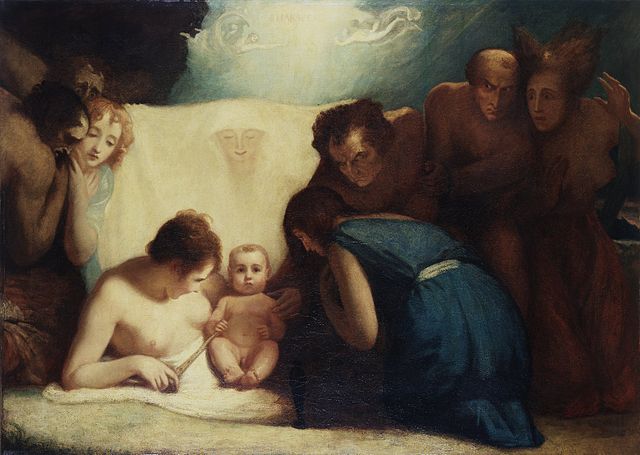
The infant Shakespeare attended by Nature and the Passions (Romney, c. 1791-1792)

Just look at this painting where Shakespeare is portrayed as in the same pose and with the same reverence as the baby Jesus. This reverence carried over to poetry, music, festivals, and of course, to the classroom. As I wrote in My Romeo and Juliet post, since the beginning of American public education, Shakespeare was an indispensable fixture in American schools, and thus, prompting American writers like Mark Twain to grumpily refer to Shakespeare and other classics as “Something everyone wants to have read, but nobody wants to read.”

Countless textbooks refer to Shakespeare as the greatest writer in the English language, and possibly the greatest writer ever. Ralph Waldo Emerson once preached that Shakespeare was: “Inconceivably wise.” The god-like aura around Shakespeare has made him nearly impervious to criticism and English speakers on both sides of the Atlantic have claimed Shakespeare as their gospel. Being an English speaker means having the God-Shakespeare on your side, and if you have God on your side historically speaking, you can justify anything.

“A Discovery Of the Bermudas,” 1610. Thought by many scholars to be Shakespeare’s inspiration for “The Tempest”

The British were keen to elevate Shakespeare to this godlike status partially because it showed that their culture was superior to others. Let’s not forget that Shakespeare’s last play The Tempest is about a man with book learning who goes off and colonizes an island whose inhabitants seem savage and uneducated. If our goal as educators with adding anti racist education is to show that all voices are valid, to highlight the contributions of every ethnic group, and to refute the notion that white culture is in any way superior to any other, then to a certain degree, we must knock Shakespeare off his literary pedestal.

Caliban, Prospero’s slave from “The Tempest”

We also should not a take a blind eye to the anti-POC and mysoginist language in some of Shakespeare’s plays. For instance one line I deeply despise in Romeo and Juliet is the line where Romeo refers to Juliet by saying she “Hangs upon the cheek of night like a rich jewel in Ethiop’s ear” (A black woman wearing an earring).

1583/5 – ANNIBALE CARRACCI, PORTRAIT OF A WOMAN HOLDING A CLOCK

This statement contrast beauty, specifically the beauty of white skin, with the “ugliness” of a black woman’s ear. Shakespeare uses this metaphor several times in several plays, establishing white as beauty and black as the aberration.

I bring this up not to say that Shakespeare should be cancelled and hated because of this racially insensitive language, because he’s not the only one who does it. All you have to do is Google “Who’s the fairest one of all?” to realize that for centuries, fair skin, beautiful skin, and white skin meant the same thing. As Dr. Grady says in the video above, having an honest discussion of Shakespeare’s language and his culture’s attitude towards race is an opportunity to teach critical race theory in the classroom, and to teach students to recognize and deplore dehumanizing language, which though poetic to white Elizabethans, is hurtful and dehumanizing to people of color. In short, banning or condemning Shakespeare is counter productive, but examining his language, culture, and politics with a critical eye is a very useful and important exercise.

Part 2 why Shakespeare doesn’t deserve to be cancelled

I’ve established that Shakespeare has connections with some very dark moments in a European history and he should not be celebrated merely because of he was white or because he was British. I believe that Shakespeare’s contributions to the English language as well as drama and the arts still makes him worthy of study by students. As this video from the New York Times shows, students need at least a basic understanding of Shakespeare to understand western culture:

There’s No Escaping Shakespeare: New York Times, 2016.

I believe that, as long as we educators don’t indulge our bardolotrous tendancies, and keep Shakespeare in the context of the period in which he lived, we can still teach him in a way that will benefit our students.

One small way to put Shakespeare in context is very simple: STOP USING THE TERM “RENAISSANCE.” Most scholars now refer to Shakespeare’s time period as the Early Modern Period, not The Renaissance, which was an honorific term that people used during Shakespeare’s time period. The term RENAISSANCE, meaning the rebirth of classical learning and by extention the rebirth of sophisticated European culture, can give the impression that it was only a period of study and artistic achievement, leaving out colonization and racial and political tension. I find Early Modern Period a very useful descriptor because like it or not, Shakespeare’s culture influenced ours, therefore an understanding of him is very much understanding of where we came from. Learning from Shakespeare is like learning from history- we cannot shy away from the mistakes of the past, nor should we flat out reject its benefits.

it should be noted that a lot of the good scholarship in the last to the last 50 or 60 years has been tasked with putting Shakespeare back into his historical context and trying to reclaim his staus as a man of his time. Dr. Stephen Greenblatt of Harvard University helped coin the term ‘new historicism’ which emphasizes learning about the culture of a writer’s time period. To New Historicists (such as myself), Shakespeare is no longer considered a great man of history, but a man shaped by the culture of his time, which is to say a man who had good parts and bad parts much like history itself. This is the approach that I think should be taught in American schools highlighting how Elizabethan culture shaped Shakespeare, and how he shaped our culture in turn.

Comparing Shakespeare to history, especially American history, is very useful in American schools. Like the founding fathers Shakespeare reached towards an ideal. He wrote plays about ideal kingship, even though kingship is a cruel and autocratic system of government. He wrote romances about young lovers who follow the wonderful idea of love at first sight, even though in reality that concept is somewhat rare, and very often fraught with peril. And like Shakespeare, people often ignore the flaws and human failings of the founding fathers too. Look at this mural painting of The Apotheosis of Washington, which still looks down on mortals from the US capital building in Washington DC.
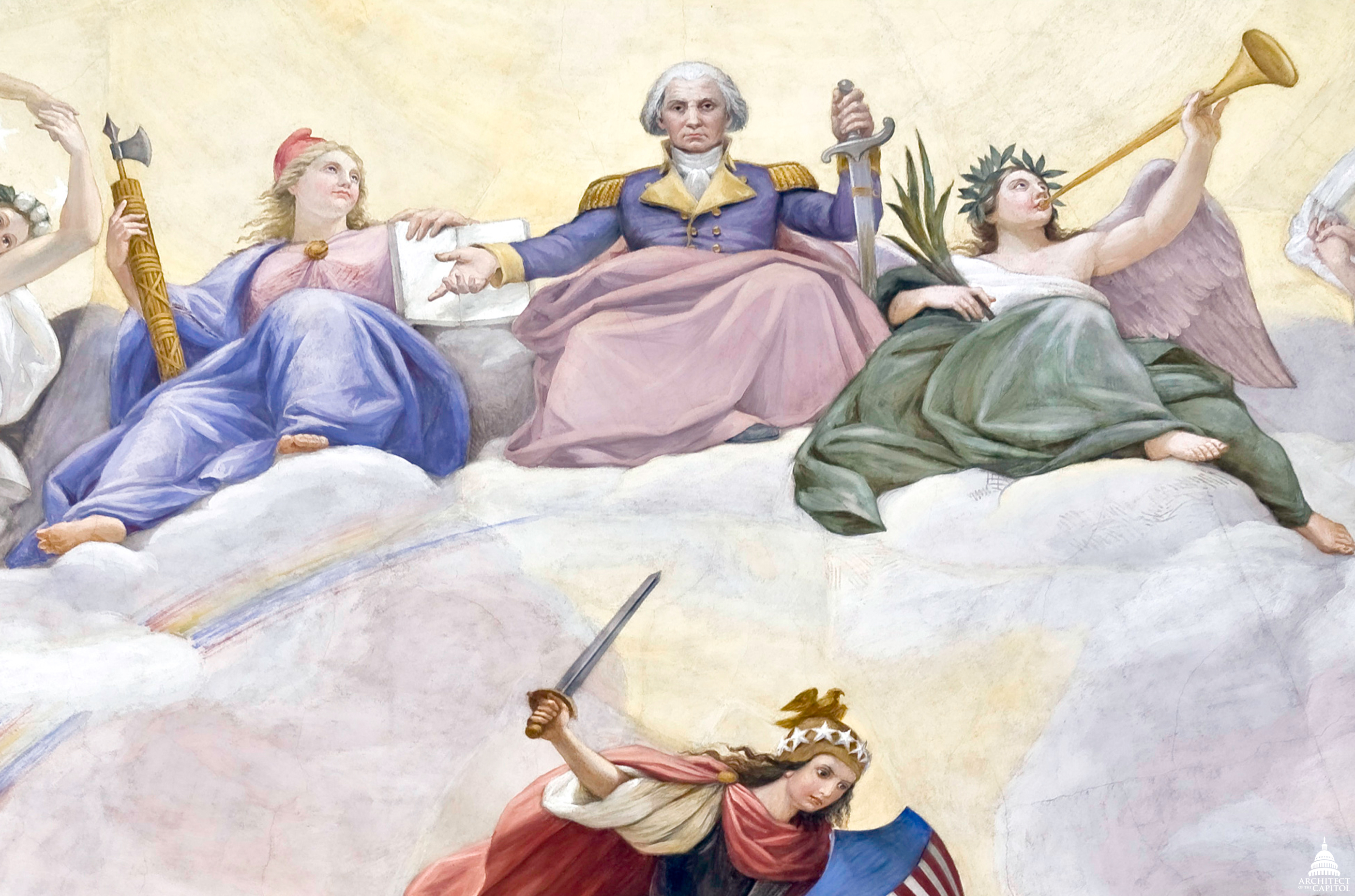
Deifying the First President in 'The Apotheosis of Washington' – Brewminate
The Apotheosis of Washington  Constantino Brumidi, 1865 .

Much like the founding fathers’ document that declares that all men are created equal, we can appreciate Shakespeare’s plays but also be aware of their flaws. Both documents were written by a flawed human being with a very narrow understanding of the wider culture and world in which he lived, but one who did his best to try and write works that would benefit all of mankind. As educators we can teach students to be inspired by this work, and seek to have a greater understanding of “The Great Globe Itself,” with the benefit of hindsight, so they may become enlightened citizens of the world, true Renaissance Men, Women, themselves.

So if I truly believe, (and I do), that Shakespeare is still relevant and has something to say to people regardless of their culture or cultural and racial backgrounds regardless of what time period they were born in and regardless of gender, how then can we teach him in classrooms in responsible and nuanced way?

What to do?

[  ]Give a cultural context to the play you study. A culture that is the direct ancestor of our own, but one that was frought with Colonialism, Casual racism, (especially in language), Sexism, Patriarchy, and Homosexual oppression. Not to toot my own horn, but this is what I tried to do with my Romeo and Juliet Website: https://sites.google.com/d/1iLSGjbllxU-ZwyrUya_xHtjojSCg9pd6/p/12GhgKdJr63wmTcm6TTvkZ-ROmUnALKQi/edit

-Give students the chance to rewrite or reword the more problematic elements, such as Romeo’s creepy stalking of Juliet,

-Highlight Shakespeare calling attention to patriarchial issues: Capulet in Act III, v, Friar Lawrence comparing love to gunpowder. Juliet raging against arranged marriage, etc.

  • Celebrate Shakespeare’s positive contributions to race relations: Othello was the first black hero on the London stage and the role helped generations of black actors get their start in theatre. There’s your modern bardolotry, Shakespeare not as “Inconceivably wise,” Inconceivably woke! You can also look at the proud tradition of color blind casting in Shakespeare’s performance history, such as Orson Wells’ “Voodoo Macbeth.”
  • Do some research on modern productions that translate the themes into a modern concept.
BOOKS : THE LOVERS, AFGHANISTAN'S ROMEO AND JULIET — Home | Afghan Culture  Unveiled
Book cover for “The Lovers,” the real-life story of Ali and Zakia, teenagers from Afghanastan, who fell in love in spite of their parent’s religious hatreds.

To sum up- cancelling Shakespeare doesn’t mean vilifying him. It means re-examining his role in our culture, and teaching students to appreciate the benefits, and try to correct the damages that his culture has brought to our own. We can’t change the past, but we can learn from it. As for Shakespeare himself, no amount of legitimate criticism will keep people like me from enjoying his plays. If anything, I appreciate even more the breadth and depth of his writing the more I learn about the culture in which he lived. I like to think that, if Shakespeare knew people would be talking about him in school, he’d echo the way Othello said he wanted to be remembered, to “Speak of me as I am, Nothing extenuate.” And that we heed the words of Ben Johnson in the dedication to the First Folio, when we think of treating Shakespeare as an icon.

Dedication by Ben Johnson in Shakespeare’s First Folio, 1623.

Resources for Teachers and Students: A Visit To Elizabethan London

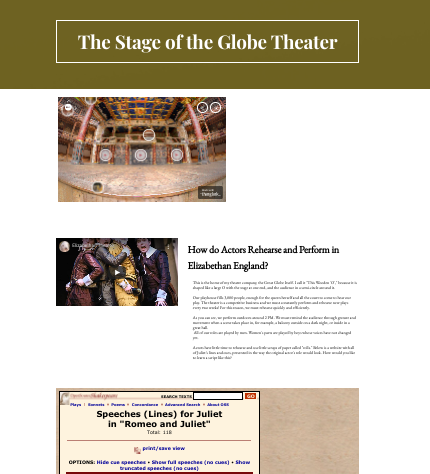
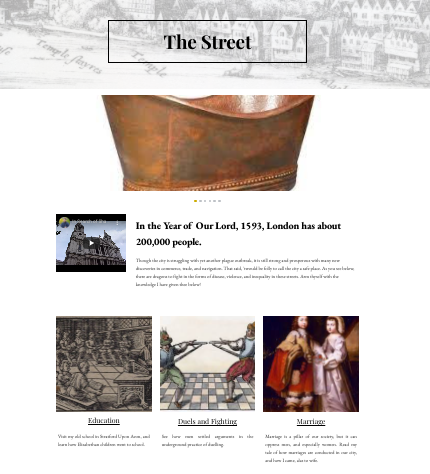
I’m working on several educational projects at the moment and I’m proud to share this one with you. It’s what I call a virtual tour of Shakespeare’s London. The teacher I’m working with said she wanted to teach the kids about the culture of Elizabethan London as he was writing Romeo and Juliet. Naturally with the pandemic a field trip was out of the question, (for multiple reasons), but I wanted to create a visually interesting tour of the places Shakespeare knew and worked and try to imagine his perspective and how that might have informed the characters and themes of Romeo and Juliet.

So I created this: a website written as if Shakespeare himself is taking you on a tour of his London in the year 1593, the year where, as far as we know, he had just completed writing Romeo and Juliet. 1593 was also the middle of another outbreak of Bubonic Plague. It has virtual tours of Shakespeare’s Globe Theater, Hampton Court Palace, Shakespeare’s Grammar School, and a quiz where you can pretend you’re in the Elizabethan doctor’s office.

For the class I’m helping, the students will fill out a worksheet as they navigate the website so they learn from the material at their own pace. If you’re interested, leave a comment and I’ll post the worksheet so you can use it in your classroom.

My hope is that this website can be a resource for anyone trying to connect with Romeo and Juliet and trying to learn from the culture of Elizabethan London. Shakespeare was a product of his time and his experiences must have had an influence on what he wrote. Even if they didn’t, they certainly influenced the people who saw the play and he knew that it would. So I hope it can help you understand a little bit more about the world of this famous play, and the context of the world that created it.

Activities For Kids for Shakespeare’s Birthday 🎂

I’m stuck at home with the kids for Shakespeare’s Birthday, so I thought I’d come up with some fun activities for my kids to do today:

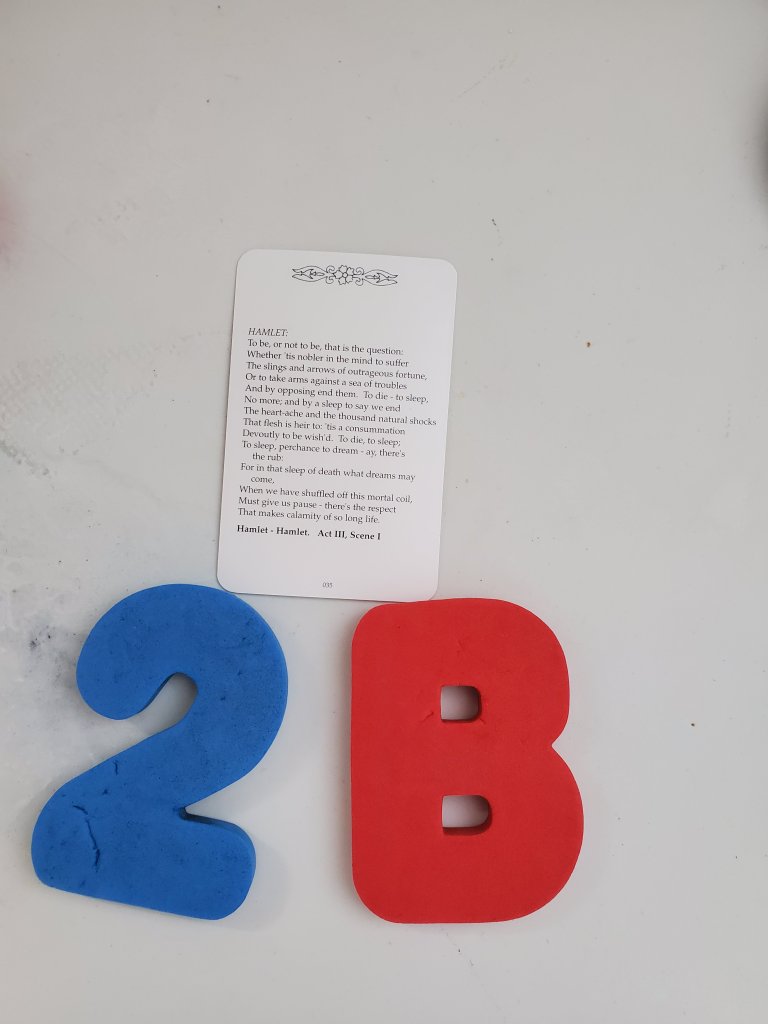
I hid the quote from “Hamlet” in the bathtub 🛁 and had my kids find the bath letters “2” and “B.”

At home I have a card game called “The Bard Game, which has several famous Shakespeare quotes printed on little cards. I hid the cards around the house and when they found them, I had them recite a short quote. Sometimes I hid them in funny locations like the bath tub or the fridge.

2. Romeo and Juliet For Kids. There’s a bunch of animated Shakespeare videos on YouTube and my daughter really likes this one: https://youtu.be/mMFE0IIHR6I

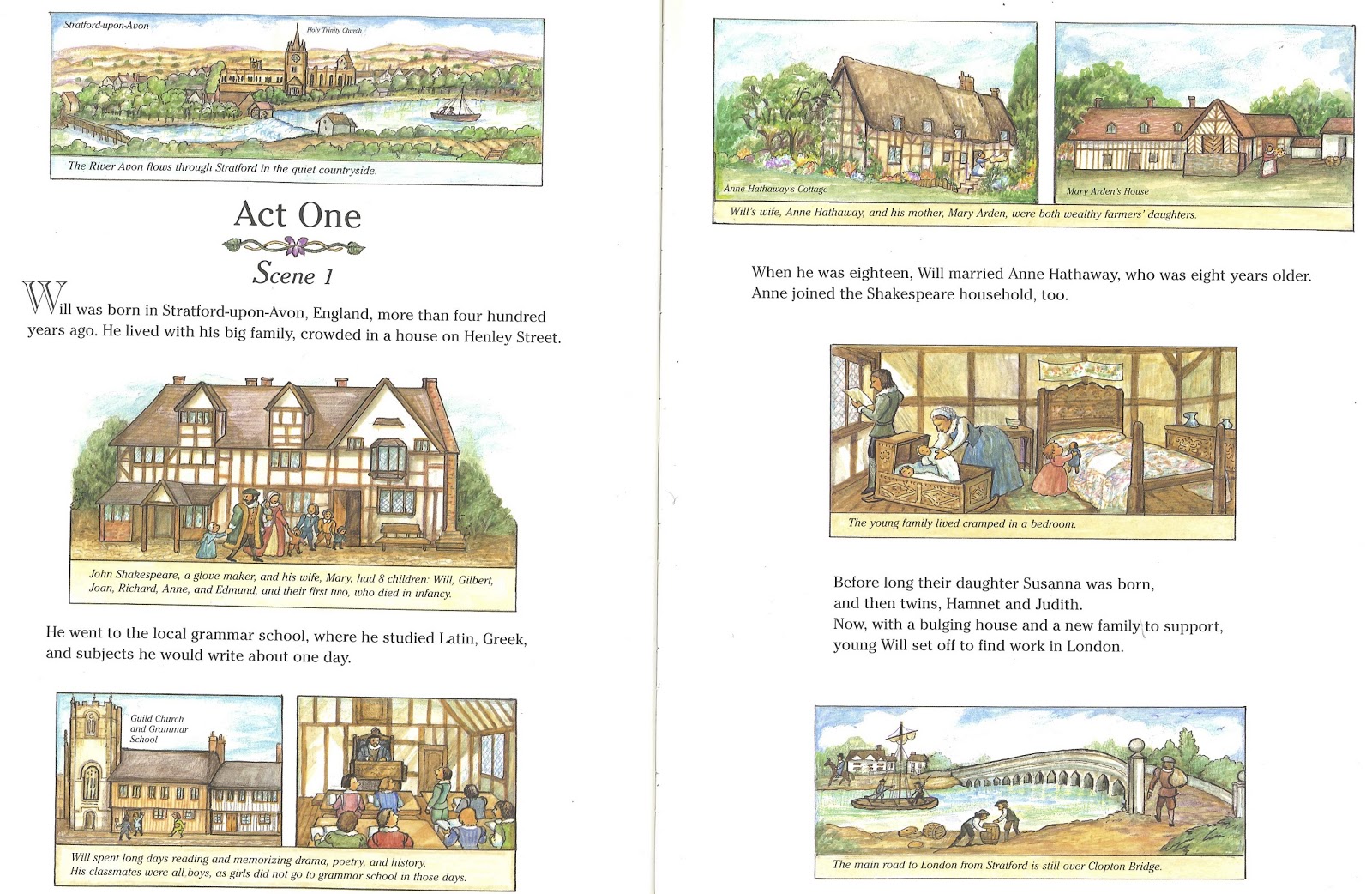
3. William Shakespeare and the Globe by Aliki. A fantastic book that introduces Shakespeare’s life and plays.

Romeo and juliet cookies

What’s a birthday party without treats? I had my kids decorate these Romeo and Juliet cookies. My daughter is only 5, so it was good practice writing ✍ the letters R and J.

If you like my ideas or want to suggest something, please leave a comment below!

Teaching Titus through creepy cooking

Titus Andronicus is one of the most bloody, disgusting plays in Shakespeare. As this infographic from the Royal Shakespeare Company shows, there are tons of deaths and some of them are even the result of cannibalism!

One way to capture the macabre nature of this play in the classroom, (which some scholars see as a horror comedy), is to characterize it through cooking, after all, revenge is a dish best served cold.

Me in costume as Titus Androgynous, a crazy cooking show host who butchers two people in the same manner as Titus

So here are some ghoulish gourmet dishes and revolting recipes that you can share with your students to help them get into this tragic tale of violence, revenge, and cooking:

Idea 1: recipe cards

Design a recipe card like the ones in cooking magazines based on Titus speech where he murders Chiron and Demetrius

Idea 2: Create a menu that summarizes the play:

Act I:

Starter: Caesar Salad, toad in the hole

As the play begins, Caesar has died and Saturnine wants to devour his father’s empire. Enjoy this light salad in anticipation of far more bloody feasts to come.https://youtu.be/UxZ5NOkRwj0

Act II Scene 3: Breakfast:

Lamb Benedict

Lamb Benedict recipe I found on Reddit

While on an early morning hunting trip, Bassianus is slaughtered like a lamb by his own nephews. Enjoy this sweet treachery with a golden egg in the hole.

Act II, Scene 4: Main course:

Roast venison with all the trimmings

“As the deer that hath some unrecuring wound.”

“She was washed and cut and trimmed.”

Titus compares his daughter to a deer or welkin, and in the play’s most barbaric scene, the emperor’s sons ravish her and cut out her tongue. They enjoy the cruel rape and mutilation just like two starving lions enjoying their prey.

Act V:

Just desserts: people pot pie.

“More stern and bloody than the centaur’s feast,” A truly unforgettable dessert for this feast of carnage. The cook, Titus, reinvents the term rich food by cooking two emperor’s sons into pies.

Served cold, like revenge!

“Set him breast deep in Earth and famish him.”

Idea 3: Real Titus foods inspired by my favorite Halloween diy recipes

1. Lavinia’s tongue and hands

• horrific Halloween punch with ice cold hand cubes: https://youtu.be/XLYwcX7Ud-E

• Bloody lady fingers https://pin.it/xbnfxcs4bxbhsq

2. Titus hand: Hot dog fingers for Titus’ hand.

https://pin.it/ofn6cotybnvn4n

Or this grisly appetizer: cheese hand in prosciutto

3.

People Pies:

There are many horrific pie recipes on the internet, but for a busy teacher on a budget, I’m adapting this one from the YouTube channel Threadbanger: https://youtu.be/E6U6xUl3A5M. Don’t show this video to your students because there’s far too much cursing. That said this recipe is very cheap and it’s easy. He used only store bought items and no fancy cooking techniques, which means if you choose to bake it as a classroom activity, even your students can help make it. Here are some tips from the video to get the most horrible ppeople pie you can make:

• Use red filling like cherry or strawberry for filling.

• Use excess dough for a nose.

• Cut out little pieces of apple to make teeth

• Cut holes for the eyes and mouth

• The bloodier, the better!

Bone appetit!

Scavenger Hunt For Shakespeare’s Birthday!

https://gsch.se/game/99ef58a585e547cf9120f602970dfc20/share/

I designed this on an app called “GooseChase”, appropriate since Shakespeare invented the term!

If you click on the link, you can do a great scavenger hunt where you upload pictures or answer trivia questions for points, and of course they are all related to Shakespeare. If you have the app on your phone, search for Shakespeare Birthday Scavenger Hunt and enter the code: 2BON2B (Get it, to be or not to be)! You can also use the code NLEGVM. Let me know if you like it or if you cannot access the link.
Happy Hunting!

Posts for Black History Month

For February, I would like to give a shoutout to a wonderful article I read about famous black Shakespearean actors, and to link to a few of my old posts that detailed how Shakespeare approaches the issue of race. Enjoy:

  1. Shakespeare In Action (blog): “Celebrate Black History Month- Black Actors In Shakespearean Roles:” Retrieved 2/27/19 from: https://www.google.com/amp/s/shakespeareinaction.wordpress.com/2016/02/16/celebrate-black-history-month-black-actors-in-shakespearean-roles/amp/
  2. Play Of the Month: Othello, the Moor Of Venice
  3. Was Shakespeare Racist?
  4. Othello and Toxic Masculinity
  5. Close Reading: Iago- “Who Is He Who Says I Play the Villain?”

How President Trump Is Like Richard III

  • Happy President’s Day Everyone!
  • Since it’s now two years into the Trump presidency I thought I would follow up on my post I wrote when he was a candidate, and focus instead on his actions as president. Shakespeare’s Richard changes almost immediately once the crown is set on his head in the middle of the play, and the rest of his short reign is plagued with the exhaustive process of keeping it on his head, (and by extension, keeping his head on his shoulders). My main argument is that Trump’s presidency has steadily skirted more and more towards authoritarianism through his actions and his rhetoric, much the same way Richard became more like a dictator as soon as he became king. Moreover, Trump, Shakespeare’s Richard and even the historical king Richard have been distorted beyond recognition because of fake news, but not the kind you might expect.
  • Part I Before the Throne

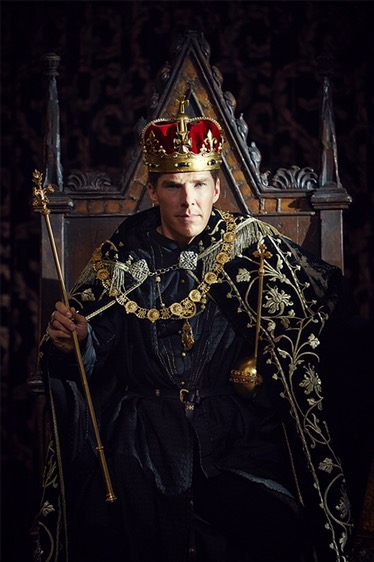
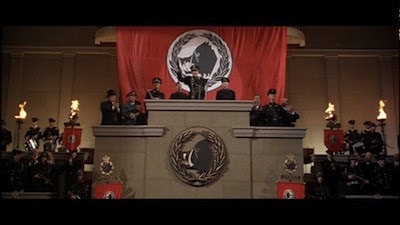
    As I have written before, Richard claims the throne by manipulating everyone in the British political machine- stoking hatred among the nobles, while trying to appear as a pious, humble man to the common people. Because of his years on reality television and experience as a businessman, even I must admit Trump has a gift at manipulating people’s perceptions and playing the part of a man of the people:
    • https://m.youtube.com/watch?v=cpxCl8ylJgE
      If you watch Trump in interviews, he often closes his remarks with “believe me,” Richard also understands the power of oaths and pretends to speak like a plain blunt man, claiming that the British nobles hate him because he ‘tells it like it is’:
  • Cannot a plain man live and think no harm? But his simple truth must be abused by silken, sly, insinuating jacks!- Richard III, Act I, Scene iii

    As for Trump, even though he is a privileged billionaire with inherited wealth, he pretends to be an unpretentious, unapologetic common man, abused by the ‘mainstream media’ and his political opponents.

    Richard is also a fan of the moral equivalence argument, (also known as whataboutism). He tries to offset his own murders by mentioning other people and their misdeeds during the Wars Of The Roses, making them seem as bad or worse than Richard:

    https://youtu.be/c0gGWAo0JIU

  • Let me put in your mind if you forget what you have been ere this and what you are, withal what I have been and what I am. RIII Act I, Scene iii.
  • Many have pointed out that both Trump and Fox News frequently use Whatsboutism to discredit their opponents and to shrug off their own guilt. It is also a tactic frequently used in former Soviet Union propaganda: https://youtu.be/PpVzHpgYuSc
  • My final comparison of the rhetoric between Trump and Shakespeare’s Richard is that both men are actors, players, or if you like, hypocrites. Trump actually tweeted how he sees each speech he makes as a tailor-made performance, while Richard praises his own ability to dissemble and equivocate to the skies: https://youtu.be/v6ji07tsI2M
  • Part II: The descent

  • Richard the third starts out the play as a evil underdog. Yes he kills people to gain the throne, but his deformity makes him seem sympathetic, and the fact that his victims have already killed plenty of people in the Wars of the Roses, gets him on our side. Once he’s crowned however, Richard step by step becomes more and more like an authoritarian dictator
  • Authoritarianism https://m.youtube.com/watch?v=5YU9djt_CQM
  • https://m.youtube.com/watch?v=mQP5FHq7hqs

    What is an authoritarian? Basically an authoritarian regime concentrates power into the hands of one person, and tries to hold onto power by:

    1. Projecting strength.

    2. Demonizing opponents, both real and imagined.

    3. Destroying institutions.

    From the moment the crown is placed on his head, Richard starts to see threats to his power, and uses all his newfound resources to destroy every each and every threat. First he kills his nephews, (the legitimate heirs to the throne), then he kills his wife, so that he can remarry a princess to try and consolidate his power. And finally, when he faces his greatest threat the armies of Henry tutor Earl of Richmond, Richard goes full on dictator, calling himself a tower of strength, demonizing Richmond as a foreigner, and claiming that his soldiers will rape the English wives and daughters.

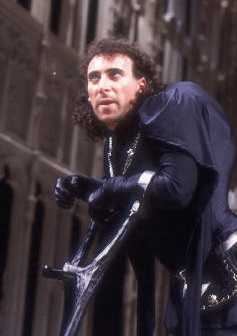
    Still from Ian McKellen’s film version of Richard III, 1995

    Trump is guilty of every one of these authoritarian strongman habits. He tries to convince people he is strong both physically and politically by having photo ops with doctors who claim that he is “the healthiest president ever”. He also attempted to project strength by misrepresenting the size of the crowds at his inauguration (which was a flat out lie), Furthermore, Trump demanded a military parade to emulate autocratic governments like North Korea. Then there’s his ultimate misguided show of American strength: the wall, which even Fox News has calculated will cost $25 billion dollars at least, and will do little to nothing to stop the flow of drugs and illegal immigration.

    Trump also has from the beginning waged war on the Internet against any and all who oppose him. Let us not forget that Fox News is a 24 hour a day propaganda machine that exists almost entirely to condemn anyone who opposes the president and his agendas. And in terms of destroying institutions, his constant claims of “fake news“ seeks to destabilize the Free Press. America’s finding fathers guaranteed free press with the knowledge that if the government is corrupt, the only way the public can fight back is through the knowledge provided by a free and Independent press. But if the media is the enemy, we have no one to listen to except Trump himself.

  • Another authoritarian habit shared by Trump and Richard is by firing (or murdering anyone who gets in his way. Trump’s reckless behavior appointing and then firing people to his cabinet is such a joke, that the Washington Post has compiled a list of everyone that Trump has fired, so far: https://www.google.com/amp/s/www.washingtonpost.com/amphtml/news/the-fix/wp/2017/07/25/heres-a-list-of-people-trump-has-fired-or-threatened-to-fire/
  • Richard is even more comically trigger happy than Trump. Look at this scene where in less than 10 minutes, he sends a murderer to kill his nephews, plots to murder his wife and marry his niece, and completely throws off the Duke of Buckingham, his only supporter on his way to the crown!

    https://m.youtube.com/watch?v=gD5afYxDc6g

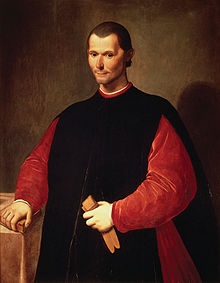
    Richard’s authoritarian tactics actually spring from one of the best political theorists of the renaissance, unfortunately it was Machiavelli. Niccolo Machiavelli saw how the crown heads of Italy consolidated power through violence and intimidation, and he came to realize that the power behind the throne is much less to do with divine right or royal bloodline, and more with who can play the game and project power and strength. In Shakespeare’s Henry the Sixth Part III, Richard brags that in his quest to the good for the crown he will send Machiavelli to school: https://m.youtube.com/watch?v=v6ji07tsI2M

    Portrait of Machiavelli by Sandi DiTito, c. 1650

    I unfortunately don’t have enough time to get into the connections between Machiavelli, Richard, and Trump. Suffice it to say that all three advocate rule by fear and have no interest in preserving democracy. Below are some quotes and articles that I have collected about Machiavelli and his connection to Shakespeare and Trump:

    http://insights.som.yale.edu/insights/what-can-you-learn-machiavelli

    https://www.google.com/amp/s/www.theatlantic.com/amp/article/354672/

    https://www.bl.uk/shakespeare/articles/richard-iii-and-machiavelli

    https://www.google.com/amp/s/murreyandblue.wordpress.com/2015/01/31/richard-iii-the-murderous-machiavel-2/amp/

    Part III: Who Lives, Who Dies, Who Tells Your Story

    Sadly, the ultimate similarity between Shakespeare’s Richard III, the real King Richard, and Trump is that the actual human has been swallowed up by a narrative. Even though most of what Trump says is a lie, to his supporters he is the one person who ‘tells it like it is,’ not because they believe him, but because they want to believe in the narrative he constructs.

    Not only are his lies compelling, Trump himself has become a powerful symbol to the disenfranchised that the system is broken and corrupt, so why not vote for someone like him? He brands himself as a ‘plain blunt man’ who isn’t afraid to offend or criticize people in power, even though he is much worse than they are at running the government. According to the testimony of his former lawyer Michael Cohen, Trump described his own campaign as the ” The greatest infomercial in political history.” His campaign was from the start, a scam, where the ultimate con man told people he was going to fix healthcare, fix the immigrants coming into the country, and fix everything they didn’t like about America.

    Trump and Richard exploit what you and I want to believe. A New York Times article from 2016 made an interesting comparison between Trump’s odious political persona and that of one of the “heels” or bad guys in professional wrestling. These characters are unrepentantly evil, and love to stir up anger in the crowd, and everyone knows that their every word and action is fake, but they buy into the story. This kind of suspension of disbelief is of course, the central guiding principle of theater itself, and arguably Shakespeare created a villain who would make a very effective wrestling heel.

    The real Richard’s devolution from a historical king into a villainous archetype is more tragic, but just as powerful. The lies that the Tudor chronicles told about him were more compelling and politically convenient than the truth, and Shakespeare’s genius just further distanced us from caring what the real man was like. In essence, Shakespeare was inventing fake news far before Trump was railing about it. Just as we as an audience are complicit in the pretend crimes of a fake king when we watch the play, we are also complicit in perpetuating a comfortable simplistic story of the 15th century War of the Roses king Richard Plantagenet.

    Trump and Richard show that history can be distorted when we focus less on what is really happening and more on what we want to see. More people wanted to believe his lies than Hillary Clinton’s facts, the same way people were forced to believe the Tudor lies instead of the real truth of what happened from 1483-1485. Likewise Shakespeare’s Richard exploits people’s fear, greed, and gullibility to gain power for himself, but this is his only talent; eventually his supporters lose faith in him, his enemies mobilize, and he is taken from power.

    Shakespeare’s Greatest Mother Characters 

    Happy Mothers Day!

    This slideshow requires JavaScript.


    I thought I would take a little time to showcase some of Shakespeare’s great mother characters. Some of these women are models of selflessness, compassion, and devotion to the children they take care of. Other ones… not so much. Just for fun, I also made some suggestions for Mother’s Day gifts if you had one of these mother’s on the list.
    The Good Mothers
    Countess of Roussilion from Alls Well That Ends Well

    Though she is technically not the heroine Helena’s mother, the Countess is still a fantastic example of selflessness, support, and love. As she says “you never oppressed me with a mothers groans but I expressed to you mothers care.” She also encourages her foster daughter Helena to play doctor and save the King Of France from a deadly illness, giving her a job and a bright future!
    Mother’s Day Gift: either some French Wine and cheese, or a Doc McStuffins for her future grandchild.
    2. Hermione in The Winters Tale

    Her husband arrests her for infidelity with no proof at all, while she’s still pregnant! Then she stands up in front of the entire court, having just given birth in prison, just to prove her child is a legitimate heir to the throne. Hermione is a mighty example of grace and courage under fire, as beautiful and strong as the statue she looks like at the end of the play. What more needs to be said!?

    Mother’s Day Gift: Statue polish
    3. Queen Elizabeth in Richard the Third

    As you can see in my description, Elizabeth started out as a poor widow trying to get a better future for her children. Then she becomes the queen and takes a lot of crap from lords like Richard for her marriage, and her sons.
    As Richard schemes to get the throne, Elizabeth is the only one who sees how dangerous he is, and how he will certainly try to kill her two sons to get it. To protect them from Richard, Elizabeth hides her sons in a church and tries her best to keep him away from them. The only problem is her husband made Richard Lord Protector, and responsible for everything connected to crowning the new king, (terrible judgment on his part).
    Once her husband the king dies, Richard proclaims Elizabeth’s sons as bastards and makes himself king. He then has them secretly murdered in the Tower Of London. Even though Elizabeth can’t defend her sons for long, she identified the threat, and did her best to stop him. In this clip from the TV Series “The White Queen,” Elizabeth tries to get her sons released from the Tower, while her brother is oblivious to the danger they are in: https://youtu.be/5Y3qYeq0ok4
    Though Elizabeth fails to protect her sons, she succeeds in saving her daughter. Richard knows that if his enemy Henry Tudor marries Elizabeth’s daughter (who is also named Elizabeth), he can lay claim to the throne and destroy Richard. The wicked king tries therefore, to marry his niece himself! Elizabeth refuses to pimp her daughter to the king and curses him for all of his heinous murders. Click here to see the epic battle of these two great characters in a scene from Ian McKellen’s movie version of Richard III. Look at the power and wit Elizabeth (Annette Benning), displays as she refuses to wed her daughter to Richard, (Ian McKellen).
    https://youtu.be/dHqlTSCe18k
    At the end of the scene, Elizabeth says she will persuade her daughter to marry the king, but she secretly marries the young princess to Henry Tudor, who becomes King Henry the Seventh after defeating Richard in battle. So Elizabeth succeeds in protecting her daughter and helped to start a dynasty of monarchs, including her granddaughter, Queen Elizabeth I.
    Mothers Day Gift : Sweaters for her sons to wear in the tower.
    Alternative Mother’s Day Gift: A baby monitor that works within the Tower Of London, so she won’t have to worry about her kids being slaughtered.
    Queen Margaret in King Henry the Sixth Part III.

    Though her methods are questionable, and her blood thirstiness legendary, Margaret still fights bravely to defend her son’s rightful claim to the English throne.
    Video bio of Queen Margaret: https://youtu.be/hJnspEh99h4
    Mother’s Day Gift: A dozen Red roses.
    Cleopatra

    The quintessential queen of Egypt is similar to Margaret in “the ends justify the means” category of mothers. Cleopatra will hook up with any powerful man to protect her son and heir to the throne. Cleopatra’s son, Cesarean is the love child that she had with Julius Caesar. After Caesar’s assassination, Cleopatra seduced Marc Antony, Caesar’s friend and a consul of Rome. Also, according to some historians, Cleo found a way to hide her son after Octavius Caesar tried to kill Cesarean and his mother. She reportedly sent him into hiding through secret tunnels underneath the city of Alexandria.
    http://thevoiceofthezamorin.blogspot.com/2015/06/what-happened-to-son-of-queen-cleopatra.html?m=1
    Mother’s Day Gift: A snake- proof brassiere.
    Mediocre Moms
    1. Thaisa in Pericles. A lot like her husband Pericles on my OK Dads list, Thaisa’s problem is that, though she clearly loves her children, she doesn’t see them for nearly 20 years. Granted, she doesn’t really know that they’re there they’re still alive but nonetheless, you would think that a good mother would at least check.
    2. Constance in King John.

    I wasn’t sure where to put her on this list, even though she demonstrates great love and affection for her son, (whom King John just murdered), the truth is that Constance doesn’t really do much for her son that we see during the play. https://youtu.be/fpAZju8RbiI
    What Constance mainly has going for her is her supremely agonizing expressions of grief over her son’s death. Steven Greenblatt in his book Will in the World, suggests that her speeches might’ve been Shakespeare’s own horror and grief at the loss of his son, who died around the same time King John was supposedly written. https://www.spectator.co.uk/2015/06/is-the-globe-right-to-revive-shakespeares-king-john/
    Mother’s Day Gift: barbershop coupon, have you seen that hair, honey?
    Also on the ok mom list, Mistress Page in Merry Wives, and Lady Capulet In Romeo and Juliet.
    Bad Moms

    1. Tamara in Titus Andronicus. She’s called a ravenous tiger in the play, and it’s easy to see why. She encourages her own sons to rape a girl, (Titus’s daughter Lavinia), then murder Lavinia’s husband! As if that wasn’t enough, Tamara tells the boys to cut out Lavinia’s tongue and cut her hands off, so she can’t accuse them of their crimes. Later Tamara tells her lover Aaron to murder their illegitimate baby, so her husband the emperor won’t find out about the affair. Worst of all, Tamara leaves her sons alone with her mortal enemy, Titus which allows Titus to (spoiler alert )…….. kill her sons, chop them up in a pie and serve them to her. She accidentally eats her own sons!
    Mothers Day Gift: a parenting book! Or if you’re really sick, a bib with a picture of her kids on it.
    2. Dionyza In Pericles- This Queen is a show mom of the worst kind- She’s a Queen from a far off kingdom, tasked with raising her own children and King Pericles’ daughter Mariana. When Dionyza sees that Mariana is a better singer/ dancer/weaver, etc than her own daughter, she tries to kill her! https://youtu.be/z9UW-p7iEk
    Mother’s Day Gift:ITonya on DVD,Tanya Harding’s mom and Dionyza should compare notes.
    3. Queen in Cymbeline Similar kind of deal. She’s a wicked stepmother who wants to kill the heroine Imogen and make her own son Cloten the heir to the throne. Shakespeare didn’t give her a name, she’s that wicked!

    The Queen in Cymbeline, Oregon Shakespeare Festival, 2013 http://www.stageandcinema.com/2013/08/06/cymbeline-oregon-shakespeare/
    Mother’s Day Gift: A name.
    Gertrude in Hamlet This one is very ambiguous. On the one hand, she loves her son, and tries to protect him from his wicked uncle Claudius. On the other hand, she married Claudius less than two months after her first husband died in mysterious circumstances . It’s never revealed in the play whether Gertrude was complicit in the old king’s murder, but when Hamlet Confronts her about the marriage, she is full of remorse.

    Absent
    To be honest, this list was easier to put together than my Fathers Day list, because there are fewer choices. In 9 Of Shakespeare’s plays, there are no mother characters at all:
    Love’s Labor’s Lost
    Midsummer Night’s Dream
    The Comedy Of Errors
    Two Gentlemen Of Verona
    Measure For Measure
    Twelfth Night
    The Tempest
    As You Like It
    Merchant Of Venice
    It’s hard to know how much Shakespeare knew about motherhood. From what we know about his life, he probably wasn’t around to see his wife Anne raise his two daughters in Stratford, since he spent most of his time in London writing and acting in his plays.
    In any case, the thing that comes across in all the mother’s in Shakespeare’s plays is the level of sacrifice and selflessness that so many mothers demonstrate. Being a parent is tough, but the rewards are greater than even the Bard could ever explain.
    Happy Mother’s Day Everyone!