


This list is not about skill or the talent of the actor. This is to honor the contributions of Shakespearean actors who also appeared in one of my favorite film and television franchises of all time: Star Trek. Accordingly, some of the actors who weren’t essential to either Star Trek or Shakespeare or both are placed lower on the list even if I personally love the actor or the character they portrayed.
#10: Marina Sirtis
The English actress played Counselor Troi on Star Trek: TNG. Like John DeLancie, however, aside from playing Ophelia in Hamlet, I was unable to find much Shakespeare in her credits, which is a shame because she has an incredible speaking voice. I frankly think the creators of the show spent way too much of the series trying to sexualize her and didn’t create enough opportunities for her to use her telepathic abilities or her empathic abilities.
#9: John Delancie
Like I said before, I am judging these actors for their cumulative contributions to Shakespeare, and unfortunately, I didn’t find many Shakespeare credits for Mr. DeLancie. That said, he is one of my all-time favorite Star Trek actors and was part of Star Trek The Next Generation all the way through the series. As the omnipotent entity Q, Mr. DeLancie plays a Richard III-like villain who manipulates the poor humans around him for his own amusement. He is also very interested in human nature and engages in many debates with Picard on the virtues of humans, like in this epic scene:
John DeLancie actually started acting in a high school production of Shakespeare’s Henry V, and later performed at the American Shakespeare Center in Connecticut: (Source: https://www.johndelancie.com/pages/my-past-work) ,
#8: Leonard Nimoy
Gene Roddenberry, the creator of Star Trek envisioned the 23rd century as a time when mankind would be united in purpose but all people would keep their cultures and racial identities. Accordingly, a lot of the cast came from a diverse cultural background; African Americans, Russians, and very notably, Jews. One man who brought his own Jewish background into the core of Star Trek was Leonard Nimoy- son of Russian Jews who spoke Yiddish. In the article above, Nimoy mentions how he incorporated the famous Vulcan hand gesture of “Live Long And Prosper,” from the blessing his rabbi gave his congregation, which Nimoy saw as a boy:
Nimoy started out as a theater actor, starting with Yiddish theaters in Boston and New York, and he continued to work in theater and radio before and after Star Trek. His first foray into Shakespeare happened in 1975 when he was cast as Malvolio in Twelfth Night.
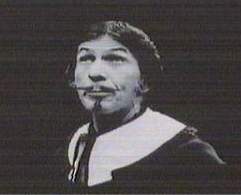
“I’ve been studying and reading and watching Shakespeare long enough to feel excited and positive about it. The biggest problem an actor has is finding good material. With Shakespeare, you know that not only do you have good material, you have a proven piece that has been staged successfully many times.”
— Leonard Nimoy, Pittsburgh Post-Gazette, 1975.
Though Nimoy is now internationally beloved for his work on stage, screen, and radio, as a child had to overcome prejudice because of his Jewish roots. I wish Nimoy had played Shylock in the Merchant of Venice since he had the potential to play the role with a lot of passion and pathos. Just goes to show that Mr. Nimoy was a man of great accomplishment and creativity, and a Renaissance Man to boot.
#7 George Takei
I studied at the Shakespeare Institute at Stratford Upon Avon in 60s. So it is with great joy that I will be making my London stage debut this January!
George Takei
With his iconic deep, smooth voice and skill as a fencer I wasn’t surprised to find out that the actor who played Hikaru Sulu was a classically trained actor. Sadly, I was unable to find many Shakespeare credits for Mr. Takei, which is a shame since I wanted to find some clips of him performing Shakespeare to put here. The best I could find was this clip from TOS.
I was able to find this interview where the actor shares his thoughts on Shakespeare. I’m actually going to see Mr. Takei in a live show in April of 2023, and I suggest you do too if you can. He’s a fascinating guy and a great activist for Asian Americans and the LGBTQ+ community. Like Leonard Nimoy, he has overcome discrimination and oppression and spread his wings creatively through many different media. Hopefully, I can update this list once I see him live to include more quotes and thoughts about Shakespeare from the man himself.
#6: Brett Spiner


Brett Spiner is a multi-talented veteran of film, stage, screen, and radio, so it makes sense that he has a grounding in Shakespeare. More than that, Spiner’s character, the andriod Lt. Commander Data, (one of the best characters of Star Trek: The Next Generation), faces a Shakespearean dilemma- he wants to understand what it’s like to be human, though he isn’t. He is not only mechanical but he doesn’t have emotions. Therefore he offers an objective commentary on the way the human characters interact, not unlike Horatio in Hamlet or the Fool characters in many other Shakespeare plays.
Data’s struggle to understand humanity even extends to reading and performing Shakespeare himself, as this clip shows:
Data even impersonates a Shakespearean actor playing Puck in the episode Time’s Arrow, (a preview of Spiner’s role as Puck in Gargoyles):
I might be cheating a little by putting Spiner this high on the list, since technically he hasn’t done many full Shakespeare plays, but doing these little snippets as Data on Star Trek, or as Puck on Gargoyles was a way to introduce Shakespeare to younger viewers, which as I will discuss later, is one of the great gifts Star Trek gave Shakespeare fans like me.
#5: William Shatner
To be honest, I don’t care much for William Shatner as an actor or a person. He drove away a lot of his fellow cast members on Star Trek, his ego is infamous, and his delivery of Shakespeare is clipped, slow, and I would argue, lazy. That said, Shatner is very good at playing characters who are arrogant, and he does know a lot about how to deliver Shakespeare for TV.
I will give credit to Shatner; he’s good at playing smarmy or arrogant characters which is why Captain Kirk was a good role for him. He was also surprisingly good as Marc Antony- he really sells the verbal irony as he subtly attacks Brutus in the “Friends, Romans, Countrymen” speech. Like Kirk, Antony is (to quote General Chang in Star Trek VI), “An insubordinate, unprincipled, career-minded opportunist,” and Shatner plays both of them with skill and relish.
Shatner actually got his first break in the theater as an understudy in a production of Henry V, where he got to take on the title role when Christopher Plummer got sick (more on that later). As this video above shows, Shatner continued to play Shakespeare throughout his career, and as Kirk, he explored the ‘brave new worlds of Star Trek with a Shakespearean curiosity.
#4 Benedict Cumberbatch

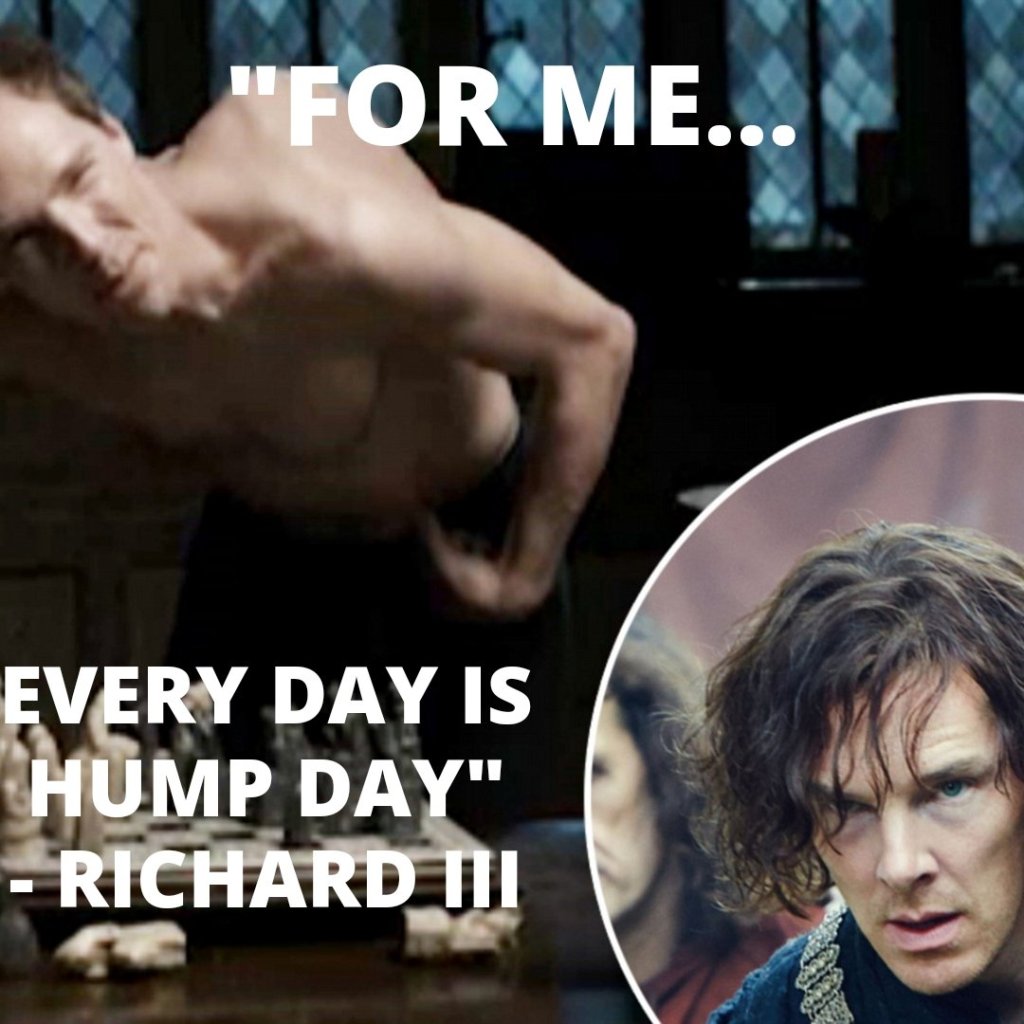
Though his contribution to Star Trek is comparatively small- playing the villain Khan in Star Trek: Into Darkness, Benedict Cumberbatch is quickly becoming the best of the new generation of Shakespearean actors who have made the leap to the Final Frontier. I covered his Shakespeare work in other posts such as my review of his Hamlet. So let’s just enjoy the Machiavellian villainy in this clip, where he taunts Spock with Richard III-like glee.
#3 Christopher Plummer
[William] Shatner was Plummer’s understudy in a 1956 production of Henry V at the Stratford Shakespeare Festival. Plummer could not go on one evening due to illness, which led to Shatner’s big break. “He didn’t do what I did at all,” Plummer recalled in a separate interview. “Where I stood up to make a speech, he sat down. He did the opposite of everything I did. And I knew that son of a $%*# was going to be a star.”
BY RYAN PARKER
Hollywood Reporter FEBRUARY 5, 2021
Christopher Plummer, who tragically died last year, was a loss to both stage, screen, and by all accounts, everyone he knew or worked with. He was a dear man a consummate professional, and he brought that skill with Shakespeare and a love of Star Trek to create one of the greatest villains in Star Trek history.
General Chang, the war-mongering Klingon in “Star Trek VI”, who assassinates his own Chancellor Gorkon to start a war with the Federation, is a great antagonist, especially considering that Kirk was tempted to do the same thing himself. Kirk hates the Klingons and wishes death and destruction on the whole race. This film came out just two years after the fall of the Berlin Wall, and the blind hatred between the Klingons and the Federation is a brilliant metaphor for the last days of the Cold War.
Shakespeare appears at the center of this metaphor- Chang assassinates Gorkon like Brutus killed Caesar, fearing that his peace talks with the Federation would destroy the Klingon Empire. Chang hates The Federation and Kirk in particular. The only human he has any affection for is Shakespeare, (whom he himself believes is Klingon), and he taunts Kirk with Shakespeare quotes relentlessly. Chang’s character also has echoes of Macbeth- killing his king and then blaming someone else in a show trial where he serves as the prosecution. Finally, just like Macbeth, Chang dies fighting when the Enterprise figures out how to shoot at his ship while it’s cloaked.
As the quote above indicates, it’s fitting that Plummer played Chang since the two of them have had a friendly rivalry ever since they played opposite each other in Henry V. He’s a great antagonist onstage and a towering, dignified presence offstage. In a way, the two men were two sides of a coin- Shatner being a loud and boisterous movie/ TV star, Plummer being a dignified, matinee-idol type. These big egos tussle extremely well in Star Trek VI, yet, as even Shatner admitted, they admired each other a lot:
https://variety.com/2021/film/news/william-shatner-christopher-plummer-1234904276/
Before I move on, I’d like to show you my favorite performance of Plummer’s. It’s a short monologue from Long Day’s Journey Into Night, where Plummer plays a washed-up Shakespearean actor, who ruined his career doing populist trash. One can see some of Plummer’s antipathy toward The Sound Of Music in his performance. Still, thankfully, Plummer didn’t meet the same fate as James Tyronne:
#2: David Warner

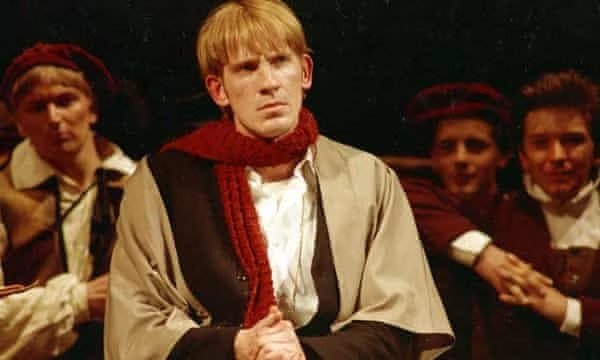
It’s appropriate that Star Trek VI: The Undiscovered Country, which is a film named after a quote from Hamlet cast a beloved Hamlet, David Warner. Like Patrick Stewart and Benedick Cumberbatch, Warner was a veteran of the Royal Shakespeare Company, and he played Hamlet back in 1975:
Warner’s character in Star Trek VI thinks that this speech is about the future, and like MLK, Gorbechav or Gandhi, he tries to bring a “brave new world” to fruition by making peace with his enemies through nonviolent means. This includes sharing his love for Shakespeare. I like to think that Gorkon knows that Shakespeare was actually human, and when he quotes him to the Enterprise crew, it’s a means to ingratiate himself to the humans by finding common ground.
Sadly though, Gorkon in his idealism forgets that the speech is actually about death (or possibly it was translated incorrectly into Klingon). Indeed, this misunderstanding of humans and Klingons is what costs Gorkon his life. The situational and verbal irony of this quote from Hamlet is worthy of Shakespeare himself and it helps Warner’s performance become one of the most memorable in the movie.
Amazingly though, as if one incredible Star Trek performance wasn’t enough, Warner came back again. Ignoring his performance in the infamous Star Trek V, Warner gave a truly chilling performance as the sadistic Cardassian Gul Navek in the two-part episode “Chain Of Command,” where he captures and tortures Captain Picard!
Like the Klingons, the Cardassians are a warlike race of conquerors who use their war machine to better their society through conquest. In subsequent portrayals, they seem like a metaphor for the Nazis since they attempted to exterminate the Bajoran race, and their military philosophy seems to be inspired by fascism. In this episode, Warner’s cruelty echoes many horror stories of POWs enduring sadistic torture at the hands of the likes of Adolph Eichman, Heinrich Himmler, and many other monsters who told their torturers to “On no account show the slightest mercy.”
The chilling way Warner plays Gul Madred is one of the high points of the series. He and Stewart worked before on a production of Hamlet in 1965, and the way these two play off each other is masterful. Warner is powerful, in command, dangerous, and sly. Picard never knows when he is telling the truth, and as time goes on, Madred revels in how much closer he is to breaking the pitiful human. Still, Picard in his wonderful stoicism never breaks, and briefly manages to turn the tables on Gul Madred, when he makes the mistake of opening up to Picard about how in reality, he is a scared and miserable soul, trying to fill the emptiness of his heart with power and sadistic pleasure. Again, these two actors are so powerful that all you need is them, and a dark room to create compelling drama.
#1: Sir Patrick Stewart
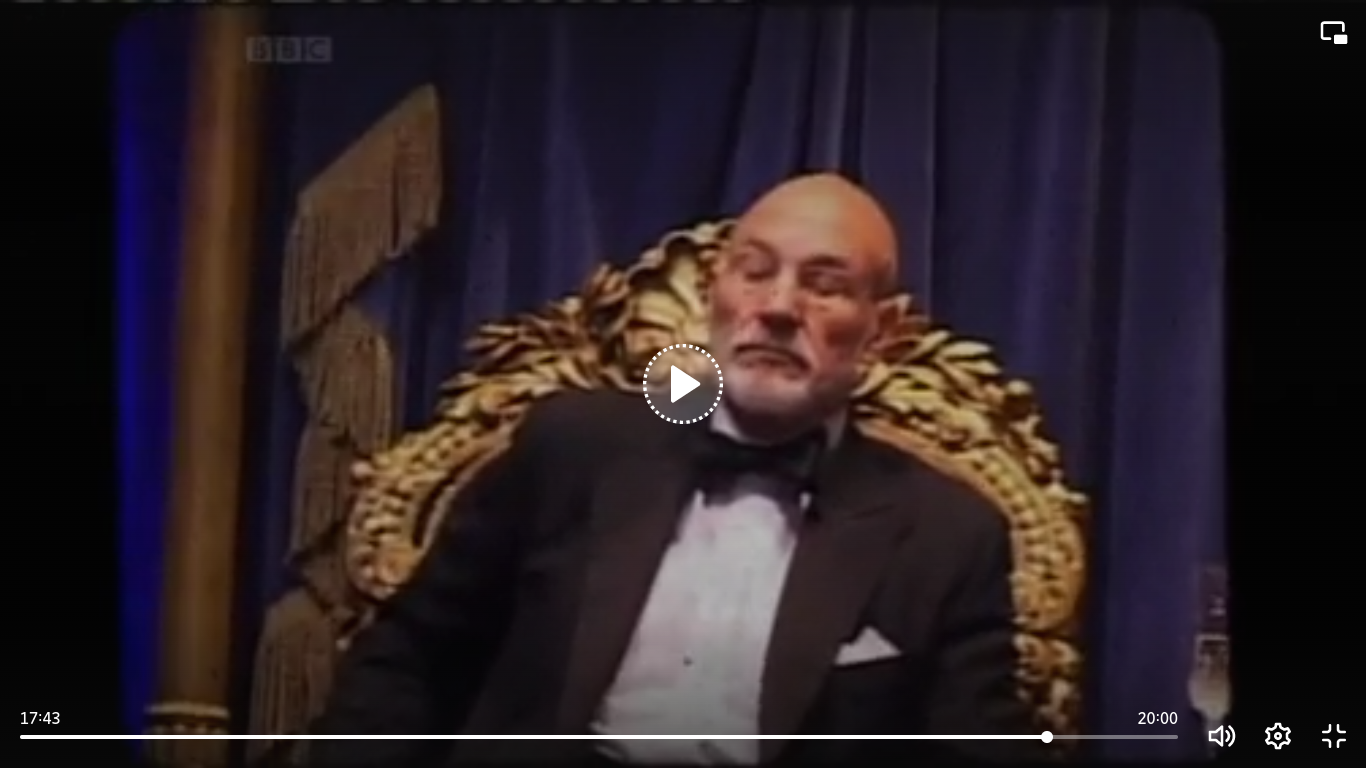


You probably saw this coming. Not only is Stewart the most important character on Star Trek: The Next Generation, but he’s also one of the greatest living Shakespeareans, and has become a sort of icon for Shakespearean acting himself.
Stewart has given so many memorable performances over the years, but one of my favorites was fairly recent- when he played Marc Antony in Antony and Cleopatra. I mentioned how, in Julius Caesar, Antony is essentially the Captain Kirk of his time- brash, cunning, arrogant, and unprincipled. In the play that bears his name though, Antony is a shadow of his former self- a drunk, foolish old man who is completely blinded to the threat Octavian poses to him. Stewart said that he based his portrayal on his own father, who was himself a soldier and an alcoholic, who was very abusive to the young Stewart and his mother. With this in mind, the portrayal has a poetic justice to it that the man who lied and cheated so many Romans finally gets cheated by the foremost man of Rome. At the same time, Stewart makes us feel for him; since so many people admire Stewart (myself included), seeing him play a man who is bringing himself low, makes us all want to save him from himself. It’s the definition of catharsis.
Sources:
The 1975 Star Trektacular and Twelfth Night
http://bardfilm.blogspot.com/2008/11/discoveries-in-undiscovered-country.html





 The Shakespearean Student