It’s a moment of tragic irony, worthy of King Lear himself that the actor who played Snape died before the actor who played Dumbledore, but here we are. I’m saddened to say that we’ve lost another beloved Shakespeare and Harry Potter actors.
Michael Gambon (
Gambon was born in Ireland in 1940. His first Shakespeare role was in a production of “Othello” at the Gates Theater in Dublin Ireland. He went on to win an Olivier Award, a BAFTA, several SAG awards, and was knighted in 1988.
Sir Michael became accomplished both on TV, in movies, and on stage. He played many of Shakespeare’s greatest roles, including a famous performance as King Lear with Antony Sher at the Royal Shakespeare Company. Here are some highlights of his stage work:
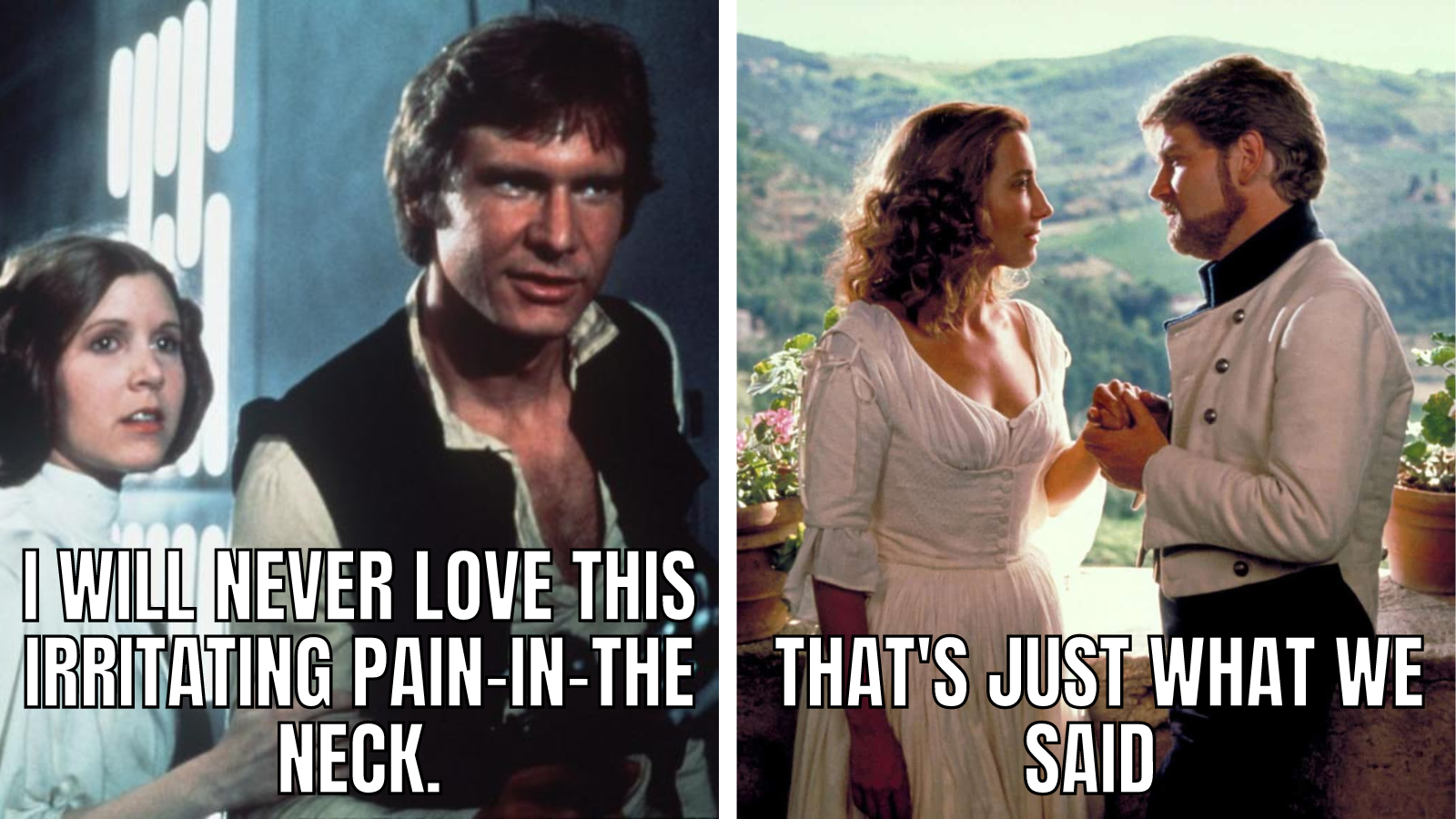
Now before I go on, I’d like to address the elephant in the room, or rather the MEME in the room:
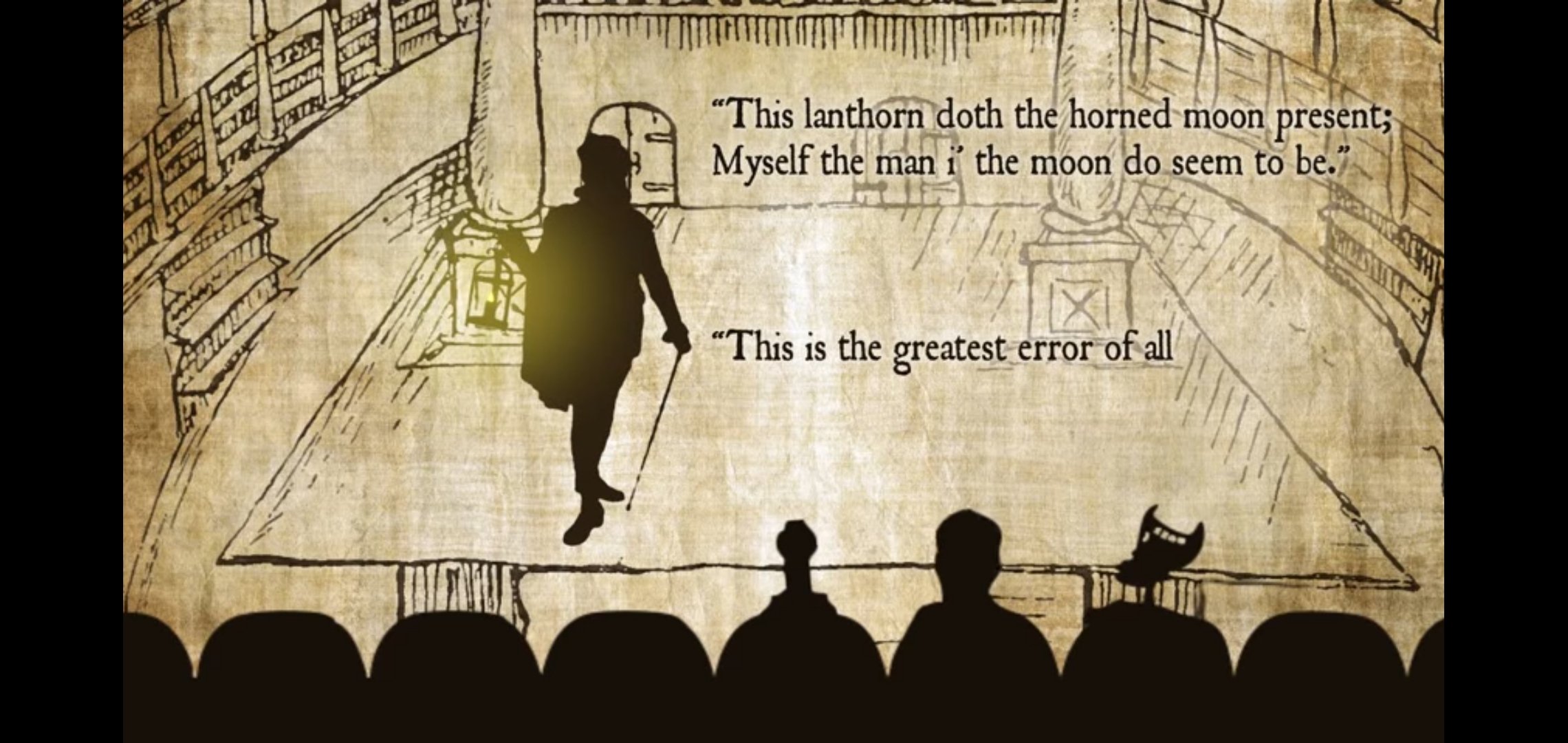
I’ve never understood the animosity that Gambon got for changing the interpretation of this line, and no one seems to have a real explanation for why he changed it from the book. So this is all speculative, but as a Shakespeare actor myself, I want to provide some rational explanations that while you might not like his choice, you hopefully won’t come to the conclusion that it was the “Worst mistake ever.”
1. If You Don’t Change Something, You’re Not Doing Your JOb
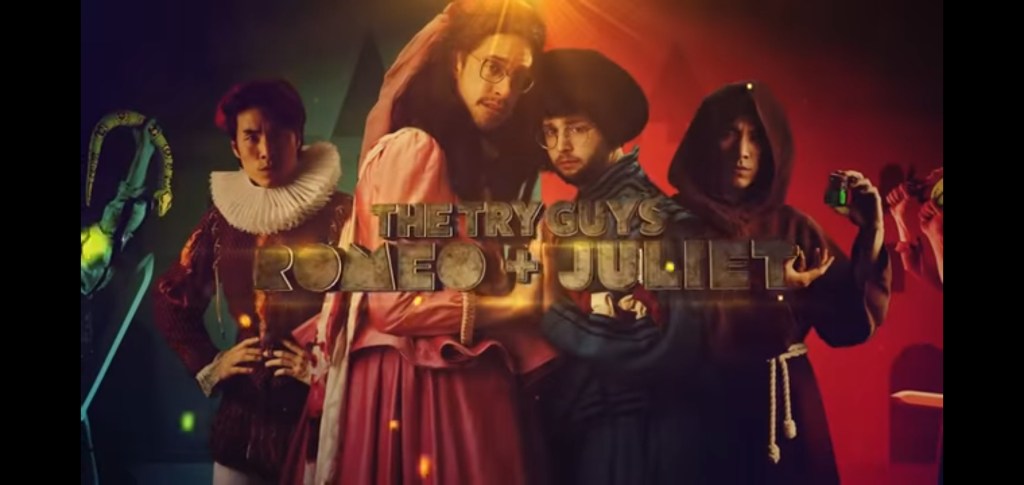
I was excited from the beginning to hear that the Try guys were going to bring Shakespeare to YouTube in a way that was fun and accessible. My expectations were that they would make fun of the play with care; I was hoping that they wouldn’t mock Shakespeare, (or mock people who like Shakespeare). I was also hoping that they would critique the characters without outright mocking them and find ways to make the play connect to modern audiences. I think they achieved all those things and more!
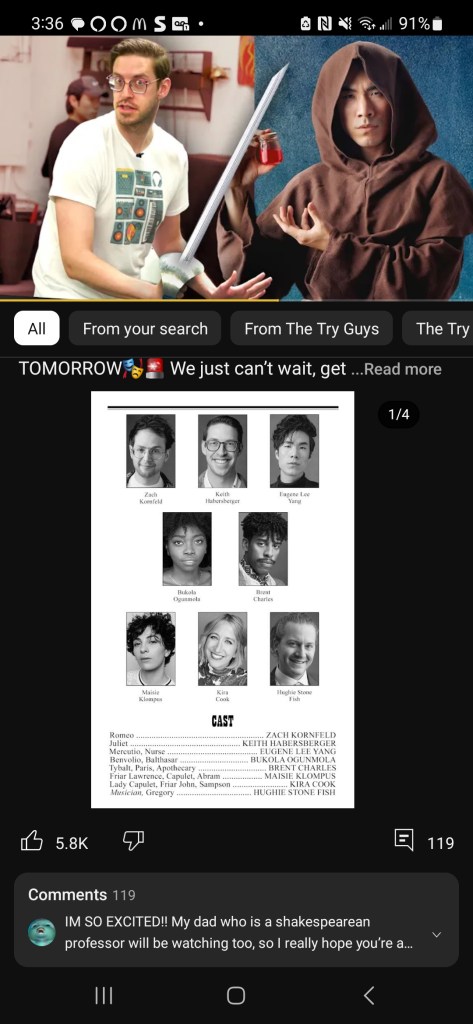
Zach Kornfield, Eugene Yang, and Keith Habersberger known collectively as “The Try Guys” are a group of friends who seek out new experiences and share them with the world. They thrive on taking themselves out of their comfort zone and learning about the world through experiencing it firsthand in a funny, lighthearted way. As I said before, what could be more adventurous, daring, informative, and out of YouTube’s comfort zone than doing Shakespeare?
In a series of videos they explored Elizabethan clothing, stage combat, learning how to speak Shakespearean verse, and finally on August 10th, 2023, they performed “Romeo and Juliet” live on Youtube, with suggestions from the audience! With this post, I will discuss the evolution from these three videos, to the final show, which I got to see live on YouTube. I will discuss what I think worked, what didn’t, and how this production might influence future Shakespeare productions going forward!
Podcast About the SHow:
My Top Ten Moments:
Background on the Show
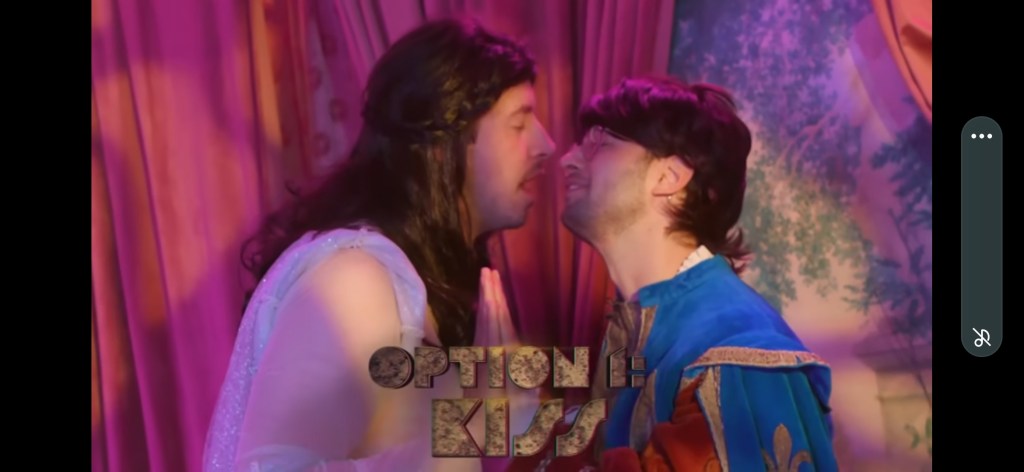
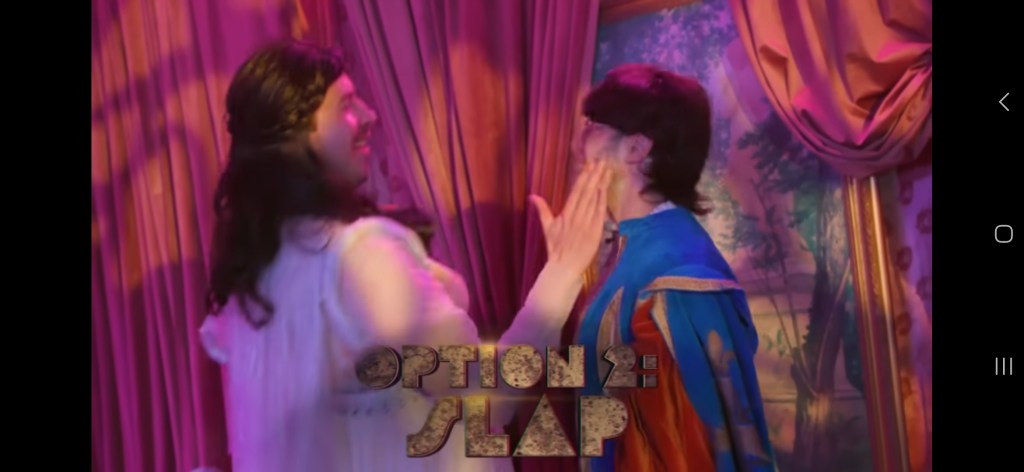
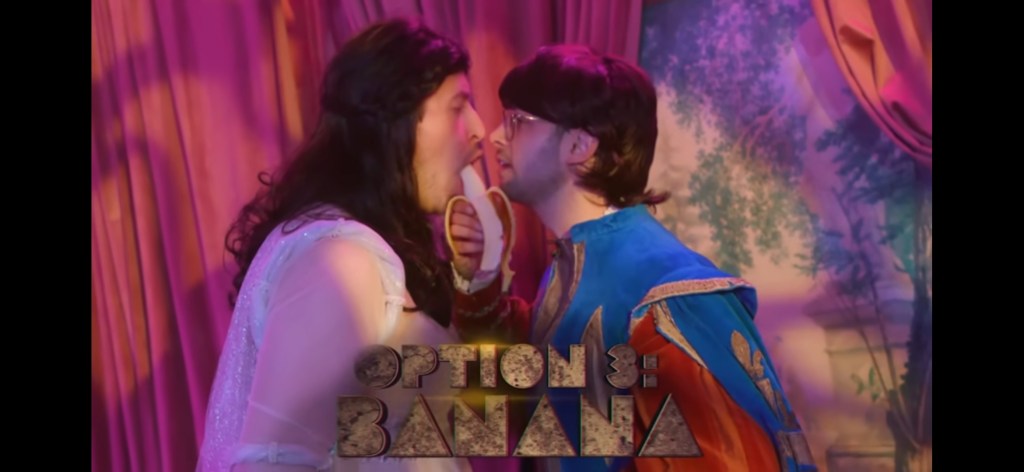
The original pitch for the play made it sound like a live YouTube event, but they made it even better by including a voting option where viewers could change some of the action and chose for instance, if they fought with swords or some other object, thus engaging the audience the whole time. This is what made this experience unique, (perhaps more than any other production), and I think in many ways this production could be an inspiration to educators and theater practitioners! My main critcism of the show is that, though it can be enjoyed by almost anybody, it is definitely not suitable for children, and nobody could get away with showing it in a classroom environment.
Costumes and Sets
The set for “Romeo and Juliet,” seems like an ordinary YouTube TV studio, in that it’s fairly small and it does not suggest any particular period. It kind of suggests somewhat of a dream-like environment; there are cardboard cut outs with some clouds, the lighting is warm with a few pink colors . Most of all it reminds me of a fractured fairytale more than classic tragedy, (which I suppose is clever in itself because it sets up that the Try Guys are going to fracture Shakespeare the same way people like the Muppets fractured fairy tales.
The costumes don’t seem as elaborate or historically accurate as the ones in the previous video, which is a shame because it would’ve been really nice to see the Try Guys walk, fight, and dance in the same costumes that they experimented with in the previous video. That said, the costumes certainly are functional within the story. Eugene as Mercutio has a stylish striking black outfit that certainly suggests somebody you don’t want to mess with. Zach as Romeo has an amusing long wig (romantically disheveled of course) and a blue doublet (though I miss the pumpkin pants in the previous video). As in other productions, the Montegues wear blue and the Capulets mostly wear red. I would be surprised if the director had seen the famous Franco Zephirelli film (or at least Gnomio and Juliet).
The director Keith Habersberger also keeps the best costumes for himself both as the Prince and Juliet; he’s wearing a beautiful ordinate gold costume as the Prince and Juliet herself has lovely rose-colored gowns. Even her shift in Act Four is it’s tasteful. I’ll talk more about Keith’s portrayal of Juliet later, but let’s just say that the clothes do not make him look like a man in women’s garb, they make him look like Juliet.
Stage Combat
The stage combat episode is great, and as a Stage Combat junkie myself, I watch a lot of channels like Skalgrim, Forged In Fire, HEMA videos, and of course my own stage combat videos. Consuming this combat content, I know that there are lots of avenues for education and for entertainment watching these 3 guys who have never done sage combat before, try out swords. I was very delighted to see them putter around with swords and then learn a short stage combat scene in which they then put on put their own spin on by improvising a scene where Romeo & Juliet sword fight with a guy who cut the cut in front of them while they were trying to get ice Cream. The video is fun, ludicrous, but also it’s just as informative as videos from the Folger Shakespeare Library.
Unfortunately, The Try Guys didn’t make much use of the swordplay they learned in this video during the final performance. Imagine my disappointment when, during the climactic duel between Tybalt and Mercutio, the audience voted to replace the swords with…something that was definitely NSFW. I’ll discuss this choice in depth later on my podcast but let’s just say it made the training they did in the previous episode seem like a waste of time.
The Cameos
Did you hear about this guy Romeo? He’s the talk of the town
Link Neal from Good Mythical Morning
One aspect of the production that I deeply loved was that instead of doing the whole play, The Try Guys did a 90-minute abridged version using multiple narrators to fill in with bits of exposition and commentary. The Reduced Shakespeare Company did this before in their show, but since The Try Guys are very popular in the YouTube Community, they got a bunch of their fellow Youtubers to be their narrators like Rhett and Link, Smosh Games, Rosario Pansino from Nerdy Nummies, and Mat Pat from Game Theory. It was absolutely delightful to hear more of my favorite YouTubers talk about my favorite writer, each one telling the story with their own brand of humor!
Romeo runs to Friar Laurence, mascara all smeared!
Manny Mua
The Performances:
Finally, let’s talk about the acting in the final performance and how the Try Guys succeded in bringing Shakespeare to You Tube.
Keith Habensburger as Juliet
Keith carries the show as Juliet. As he mentions in the video above, he has performed in Shakespeare before, and his passion for performing shines. It’s actually a bit shocking to see him drop his usual persona as an easy-going funny guy and become a tragic heroine! In addition, he has a clear vision for the character- I suspected that he would probably exploit the comedy of him being a man playing a woman and being taller than Zach and he does in the earlier scenes, but once Tybalt dies, Keith plays Juliet absolutely straight- he is absolutely committed to playing Juliet’s anguish and desperation and it’s really moving to watch!
Eugene As The Nurse/ Mercutio
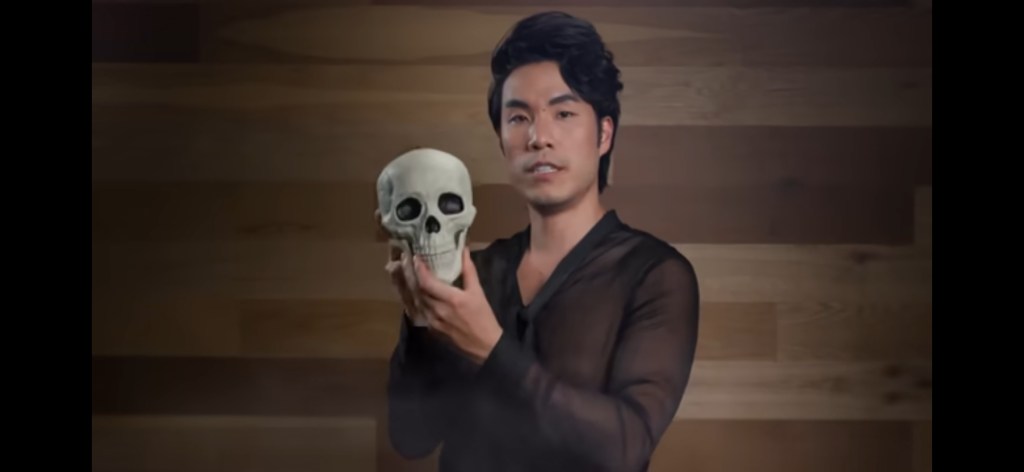
Eugene was a natural choice for Mercutio- his Try Guys persona is very much the wild card, sometimes friendly and sometimes fierce and he clearly loves Shakespearean language as you can see in the earlier video where he plays Edmund from “King Lear.” Honestly, though, I think his performances in the final play are a bit under-dramatized- I don’t quite know what he was going for as either The Nurse or Mercutio, which might be a result of limited time or lack of direction. That said, he does a good job for having never done Shakespeare professionally before.
Zach as Romeo or “A Bro wearing Hose”
Zach admits in the Shakespeare Acadamy video that he doesn’t “get Shakespeare,” and I get the sense that he doesn’t really like Romeo, so his performance seems like an intentional parody of romantic leading men. Honestly, this is fine. Romeo isn’t my favorite Shakespearean character either, and yes, The Try Guys are treating this as a real show, but at the same time it is still an experiment; they are trying something they wouldn’t normally do, so Zach is dealing with the awkwardness of playing Romeo with the same self-deprecating sense of humor that he uses when baking without a recipe or trying ballet. He knows that he would never get cast as Romeo in real life, so he’s having a laugh while he does it onstage, all the while being the best Romeo he can be.
The Format
One of the biggest challenges any Shakespeare practitioner has to face with a modern audience is the problem of engagement. The age of social media has changed how we consume content- we don’t passively watch anymore, we engage with it, comment on it, share it, and sometimes even manipulate it for ourselves. In Shakespeare’s day, there was no division between actors and audiences so in a way, his plays work well for this kind of live choose-the-outcome YouTube Event and I’m interested to see if it influences future performances going forward. In any case, I’m grateful that I was able to see this fun-frenetic, once-in-a-lifetime evening of live theater!
If you would like to learn Shakespeare like the Try Guys, I have a series of online clases in acting, stage combat, Shakespearean comedies, tragedies, and of course, “Romeo and Juliet.” You can enroll in one of these classes now or schedule one with me by visiting my Outschool.com page:
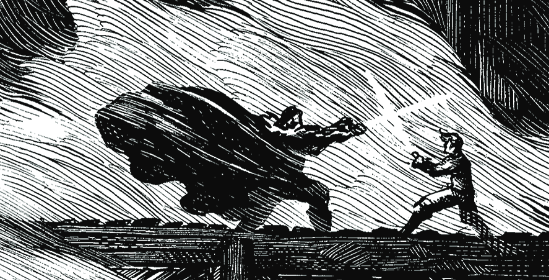
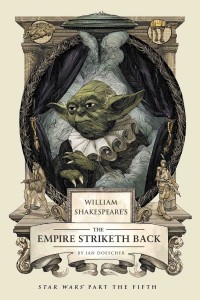
Greetings and welcome to part 2 of my podcast on The Empire Striketh back, the 5th installment in the William Shakespeare’s Star Wars Series.
Last time I mentioned Luke’s journey and how Droesher adapts the cinematic quality into Elizabethan drama through soliloquies.This time, I’m going to talk about the other main characters, Han and Leia. In my opinion, Doescher writes their journey much better and gives them lots of good romantic and comedic dialogue. I am also privileged that this time I will have some help with the voices- two professional actors, Hal Jourdan and Janine Ashley have graciously agreed to be part of this podcast, lending their voices to Han, Leia, the Wampa, and Luke. I’m grateful for their involvement and would love for you to check out their other work onstage. Below are some Youtube clips I made using their voices. Enjoy!
For Pride Month, I’d like to draw some focus to a celebrated LGBTQ film, based on a play that, while not Shakespearean, it was by one of Shakespeare’s contemporaries and one who influenced Shakespeare a lot. This film, Edward II, directed by Derek Jarman, was based on the play of the same name by Christopher Marlowe (1564-1593). The film came out in 1991, during the AIDS crisis, when gay and lesbian people were not only fighting for their lives against a devastating epidemic but also for acceptance from the heterosexual community. This film is not only a striking, well-acted, well-directed adaptation of Marlowe’s play; it is also an encapsulation of the fears, struggles, and anxieties of the LGBTQ+ community at the time.
Plot Summary/ Great Quotes
Biography Of King Edward II
Edward II was the son of the infamous King Edward I, aka, Edward the Longshanks, the Scottish Hammer. He lived from 1307-1327 – until he was assassinated.
Fact Vs. Fiction
Peter Hanley as Prince Edward in “Braveheart” (1995) directed by Mel Gibson.
Aside from a few historical footnotes, I’m betting that when we think of Edward II, we mostly think of this portrayal in the 1995 film Braveheart. Frankly, most contemporary accounts of Edward II’s reign are similar to this portrayal- vain, spoiled, weak, deluded, and an utter disgrace to his warrior father. One of his greatest embarrassments was his army’s catastrophic defeat at the Battle of Bannockburn in 1314. Edward’s sources mainly portray him as weak and feeble compared to his father, but we have to remember that this was a cruel, warlike society with very little place for anyone who didn’t conform to stereotypical masculine virtues. Probably in the minds of the English court, Edward’s homosexuality was linked with his failures as a king. It was up to Jarman’s production to make Edward feel more like a real man, and not just a gay stereotype.
Play Vs. Movie
In the play, it’s ambiguous whether Galveston really loves Edward, or if he’s using him for the king’s power and protection. In the movie, Galveston is definitely using Edward, making the king’s fawning all the more pathetic and tragic. As his son asks: “Why do you love him when all the world hates him?” This makes our sympathies teter between Edward and his court- we wish Edward would open his eyes and get rid of Galveston, but at the same time, who hasn’t been blinded by love? At the same time, Galveston has been hurting the country, and taking Edward away from his court and his queen. Like many other stories of monarchs in love, including the real-life story of our current king, there is a constant tension in the court between the monarch’s personal desires, and his or her responsibilities to the country.
Biography of Marlowe
Edward II and Richard II
Many scholars believe that Marlowe’s play helped influence Shakespeare’s Richard II, as they both center around weak, sometimes effeminate kings that fall prey to the machinations of other lords. In Shakespeare’s play, it is possible to play Richard as being in love with some of his favorite courtiers, but nothing is explicit. Obviously, Marlowe was much more overt in Edward’s love for Gaveston. To demonstrate how these plays are similar, here’s Ian McKellen playing Richard II:
Is this play Homophobic?
On the one hand, the story shows Edward as effeminate, weak-willed, and poor in judgment which does align with offensive homosexual stereotypes. On the other hand, the other lords of the court are portrayed as cruel and intolerant, and Jarman definitely makes Mortimer a cruel and homophobic individual. In addition, when Edward’s son Edward III, who famously conquered England and France, he is shown in the movie wearing drag, which clearly shows that a member of the LGBTQ community need not be weak or ineffective. It also shows that Edward III has inherited his mother’s strength, not his father’s weakness.
Book cover for Ian Doescher’s “The Empire Striketh Back,” a Shakespearean parody of Star Wars Episode 5.
Well today is May 4rth, when a lot of people have chosen to celebrate one of the most iconic movies of the 20th century: Star Wars! And why not? The story is full of conflict, introspection, love, change, the conflict between fathers and sons, and occasionally guidance from ghosts. Wait, that sounds familiar- it’s a lot like Shakespeare! Yes, the movie has a lot of parallels with the Shakespearean canon, and I’d like to share some of those similarities here. Below is a post I did for the American Shakespeare Center about how the Star Wars prequels parallel Shakespeare’s history saga of Henry the Sixth:
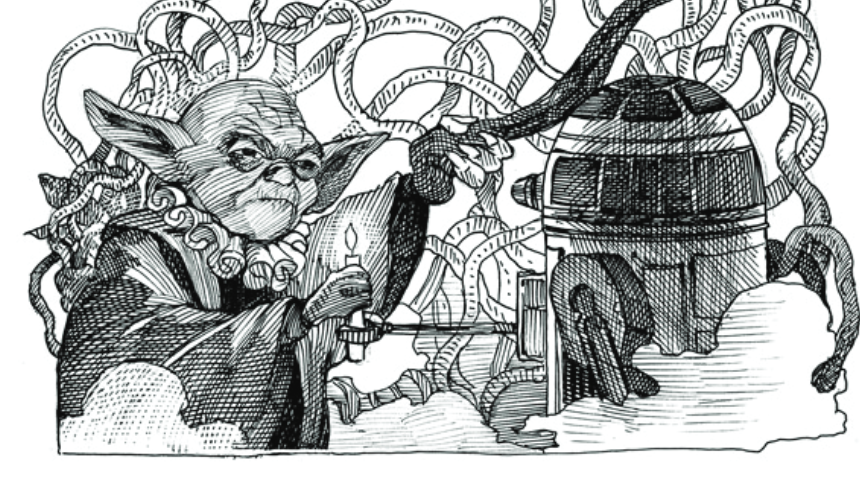
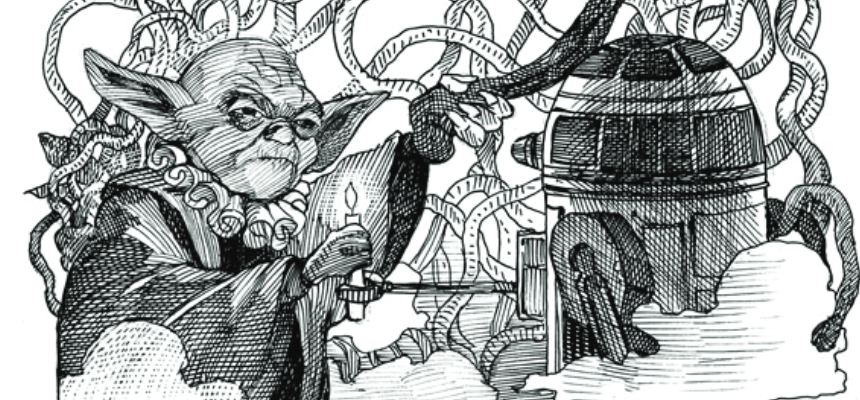
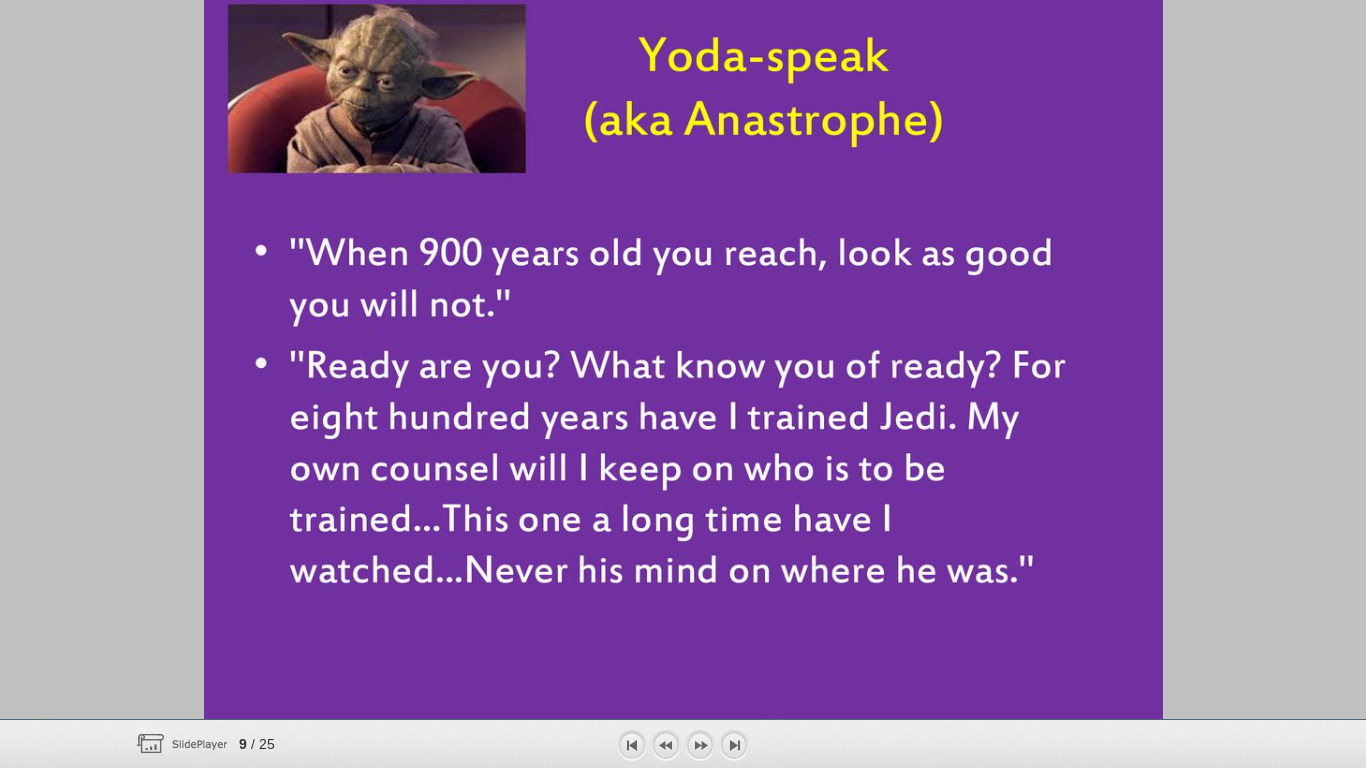
This is part of my upcoming podcast where I demonstrate how similar Yoda’s speech is to some Shakespearean dialogue. Actor and puppeteer Frank Oz, who puppeteered the character and supplied the voice explained that the idea behind the character’s iconic speech pattern was a discovery he made reading through the script:
“It’s funny you ask about [Yoda] because I was just looking at the original script of The Empire Strikes Back the other day and there was a bit of that odd syntax in it, but also it had Yoda speaking very colloquially. So I said to George [Lucas]: ‘Can I do the whole thing like this?’ And he said: ‘Sure!’ It just felt so right.”
There are a lot of in-universe theories as to why Yoda speaks like this. David Adger, from Queen Mary University of London has a theory that, much like many Latin languages have a different syntax than English, perhaps Yoda is speaking in the syntax of his language while speaking English:
He’s speaking English but changed the structure of it to be like his native language,” Adger points out. “We can find out something about Yoda’s native language by looking at how he speaks English, in the same way as I can find out about a French person’s native language by looking at how that French person speaks English. Yoda says things like ‘the greatest teacher failure is’… If you were to say that in a language like Hawaiian … it would be almost exactly the same … putting the predicate before the subject,” the professor used as an example.
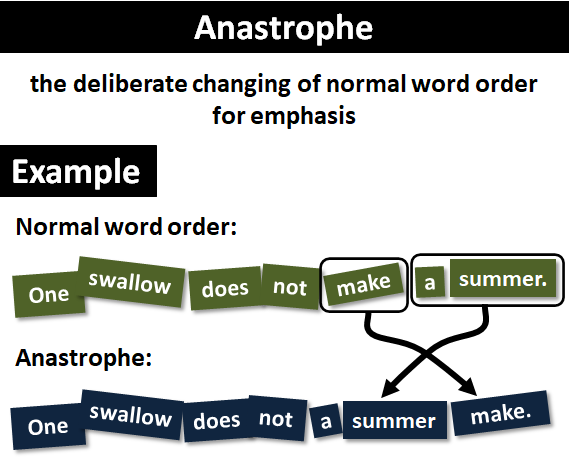
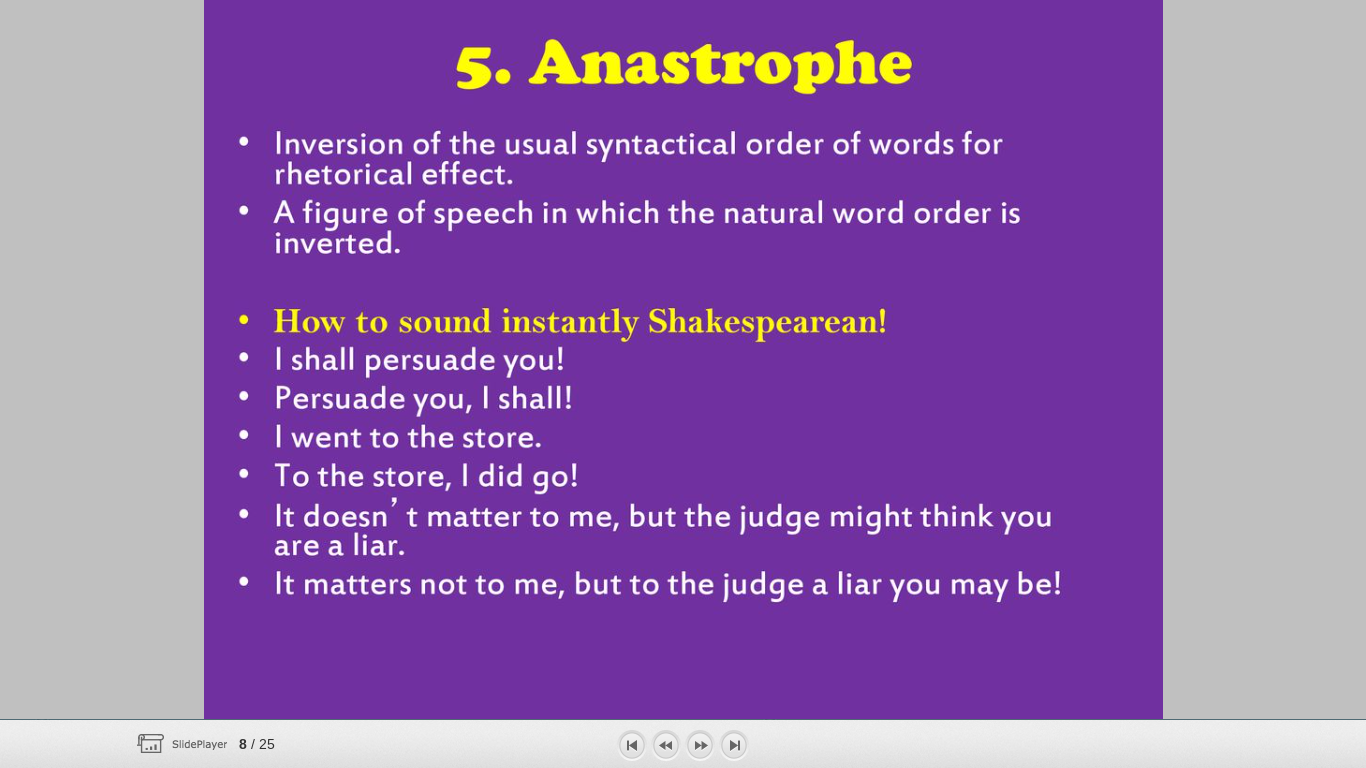
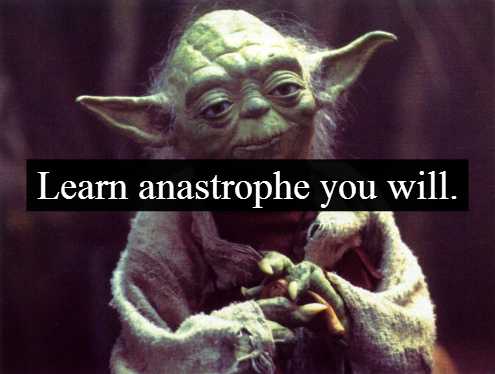
From a Shakespearean perspective, what Yoda is doing is called anastrophe, a rhetorical technique that is used for emphasis. Instead of the familiar- Subject-Verb-Object syntax of English, the order is flipped to grab the reader/ listener’s attention:
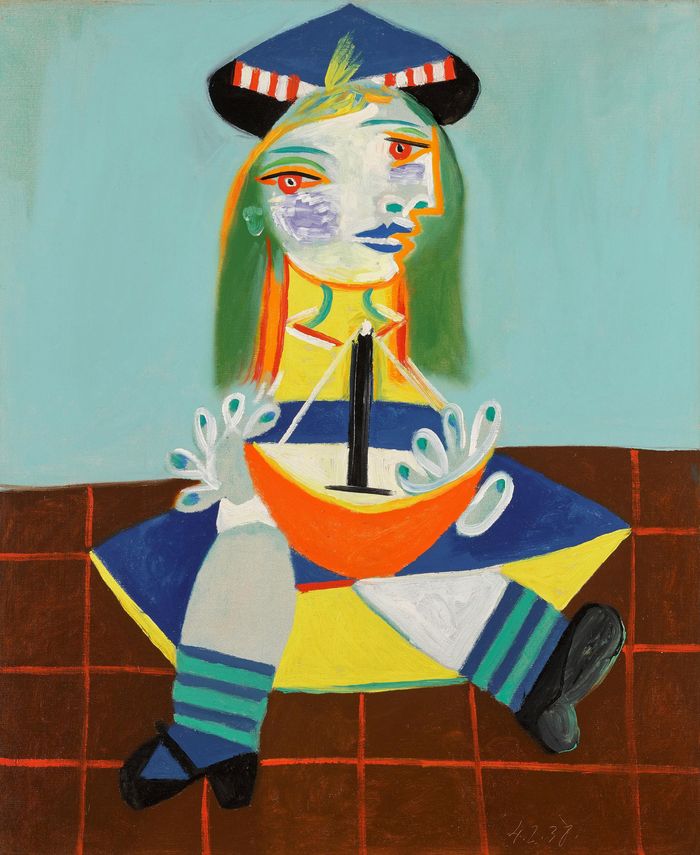
According to Silvae Rhetorica (The Forest of Rhetoric), the word Anastrophe is Greek for “backward turning,” where the writer twist the word order around. As I said before, this creates a surprising effect, much like this painting by Picasso:
“People take the eye for granted. If I paint an eye in an eye socket, they take it for granted. If I take it out of the eye socket and stick it somewhere else, it comes as a shock, and they see the eye anew.”
— Pablo Picasso
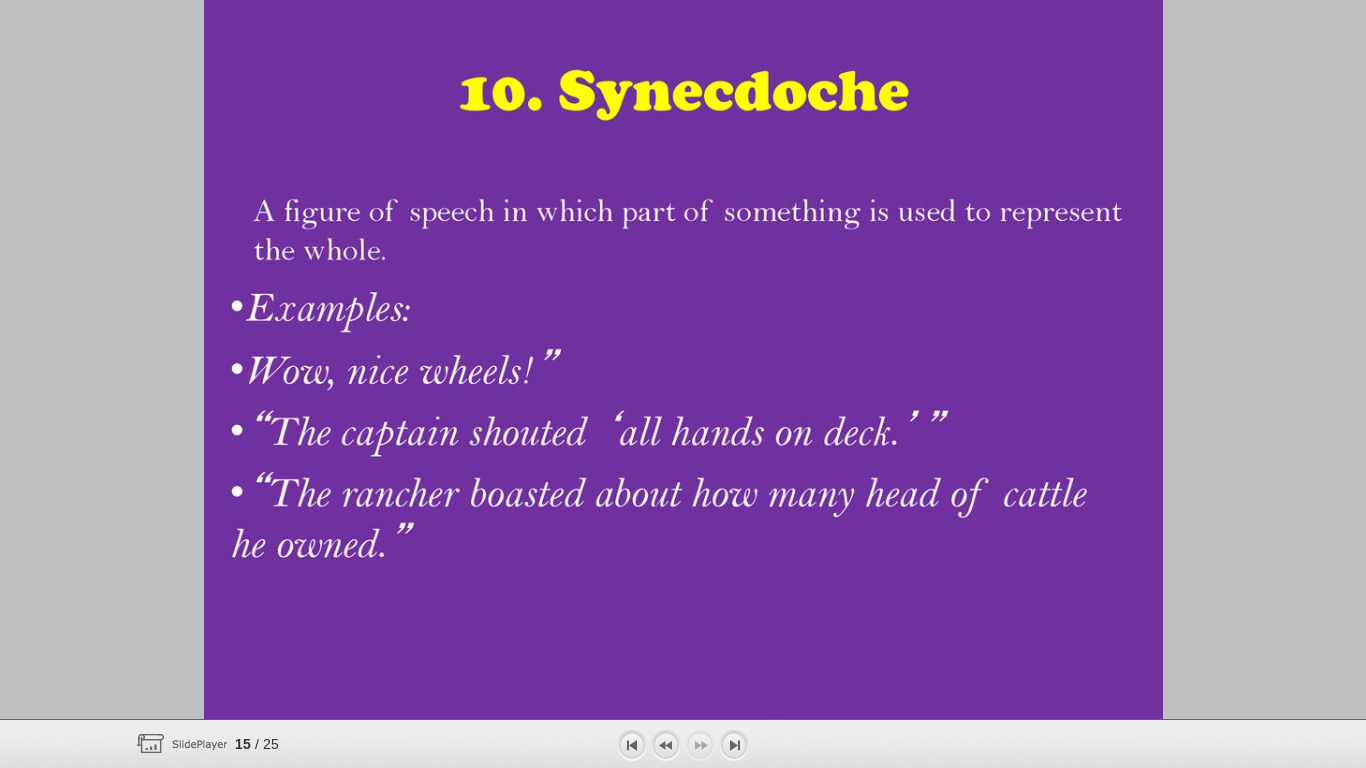
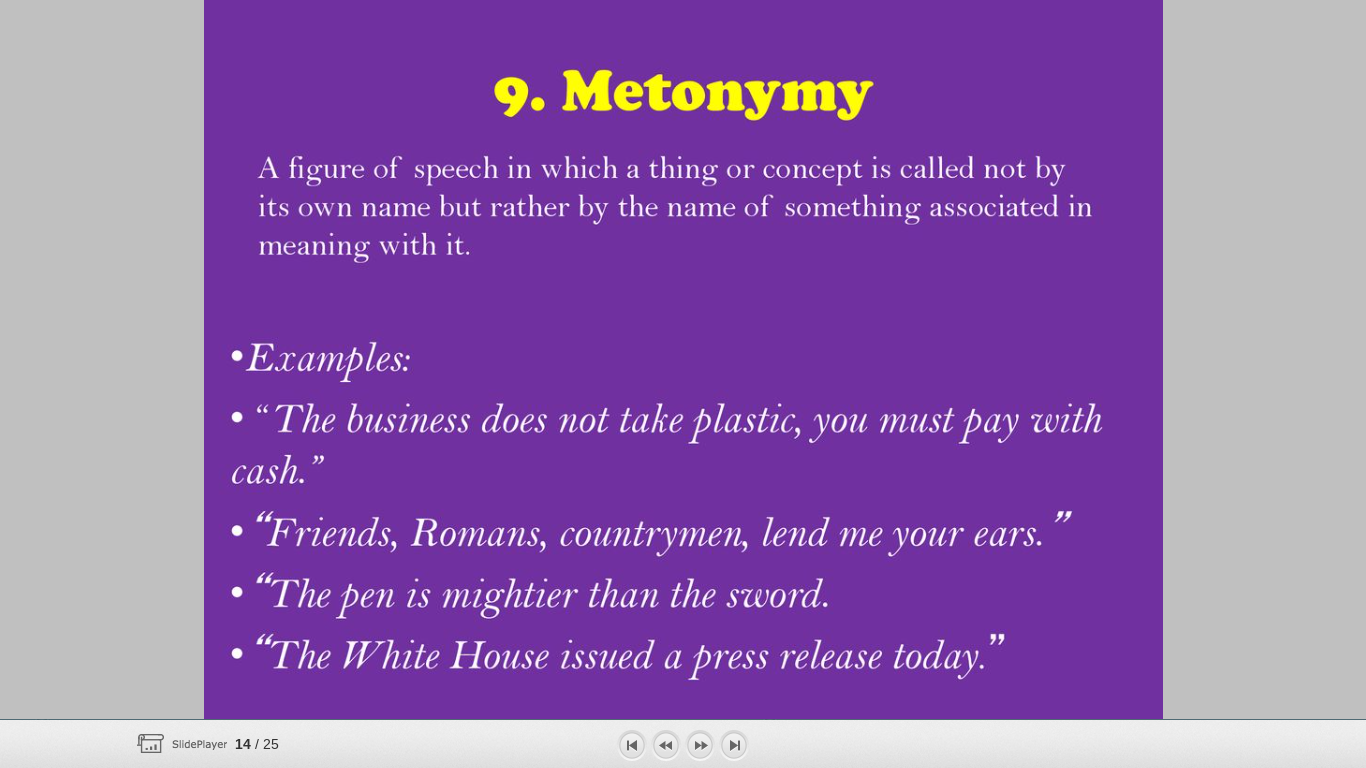
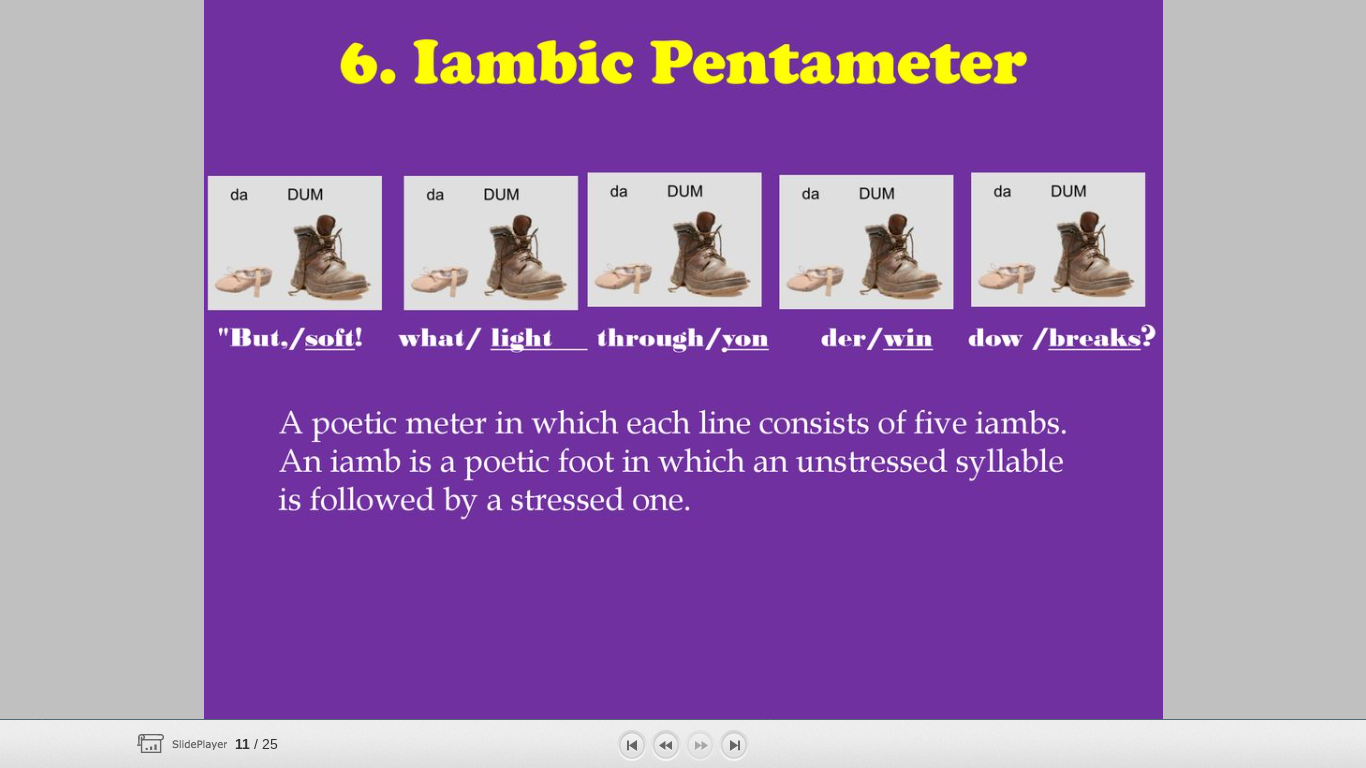
In the following slides, (which I found from Slideplayer.com), you can see examples of how Shakespeare and Yoda use anastrophe.
So I hope this post has helped you understand the force of Yoda’s unique style of speaking that was first used by The Bard!
If you liked this post, please listen to my new podcast about Ian Doescher’s Shakespearean parody of Star Wars: The Empire Strikes Back, which I’ll publish on May 4rth (hopefully)
This Friday is the grand premiere of my new online class: “Shakespeare: The Lost Play,” where you discover who stole Shakespeare’s play. Below is the latest trailer.
Since I want as many people to play as possible, I’m creating a coupon: Get $10 off my class “Shakespeare’s Lost Play Mystery Game” with coupon code HTHES4OXNY10 until May 8, 2023. Get started at https://outschool.com/classes/shakespeares-lost-play-mystery-game-ny9HhlxI and enter the coupon code at checkout.
This is an interactive game that teaches the craft of Shakespeare’s writing and stagecraft in the form of an Elizabethan escape room. You must find the lost play of William Shakespeare before a mystery thief destroys it! Solve the clues and learn about Shakespeare’s writing and theater to uncover a historical mystery!
Course Description
In this fully online, fully interactive game, you play as a member of Shakespeare’s company. You’ve just discovered that someone has stolen Shakespeare’s new play “Love’s Labors Won,” and you need to find it before the show tonight! In the course of the game, you search the Globe Theater and Shakespeare’s study. Then a mysterious note reveals that someone has stolen the play! You must figure out who it is, and find the play before the thief burns it! Through the course of the game, you will learn about Shakespeare’s theater, the secrets of how he wrote some of his great plays and beautiful poetry, and the work of his contemporaries in a fun, interactive way.
The class is organized into four parts, based on four locations where you will search for the missing play:
Part I- Search the Theater
Part I- Search the theater (website/ Slides/ Jamboard) You learn the basic parts of an Elizabethan stage (Google slides) You label the parts of the theater (Google Forms) You do a virtual tour of the theater (via Globe Theater.com) Web quest- answer 3 questions about Shakespeare’s Globe: https://www.shakespearesglobe.com/ (handout) You search the tiring house (the backstage area of the Globe), and find the letter from the thief (Sites).
Part II- THe Crime
A video plays where the thief declares that he’s stolen Shakespeare’s play for money and revenge. After the video, you will learn about plays, printing, and theft in Shakespeare’s day through a series of Google Slides Activity- make a folio, quarto, and octavio with just a piece of paper (handout) Web Quest- answer 3 questions about how Shakespeare’s plays were printed and the first folio (Slides) Activity 2: make an actors’ scroll or roll the way that Elizabethans might use (video) Easter egg- find a pair of gloves in the print shop and answer questions.
You’ll gain new understanding of the types of plays Shakespeare wrote and their basic plot structure via Google Slides. You’ll then take a short quiz to confirm what you learned.
-Plot Structure You’ll learn about the basic structure of Elizabethan plays via Google Slides. A second set of slides will demonstrate the plot structure of Romeo &Juliet You’ll mix and match a series of plot elements to create your own Elizabethan play via Jamboard
Tragedy:
A hero is given some unwelcome news
He feels betrayed by those close to him
He agonizes about the ethics of killing someone close to him.
He kills someone (or banishes an honest man) and immediately falls into a downward spiral.
The hero does (this will be a mandatory choice)
Comedy:
The heroine disguises herself as a boy
A hero or heroine swears (s)he will never fall in love and immediately falls in love
The heroine pretends not to be interested in the hero, (but secretly loves him).
A loyal best friend is captured, sent to prison, or bewitched
The hero and heroine hate each other due to a series of misunderstandings.
The hero and heroine get married (this will be a mandatory choice).
History:
An ambitious young man arises to challenge the king for the throne.
The old king dies, (or is murdered)
A new king becomes king
Duels and or battles
Someone dies in battle
Someone is murdered, assassinated, or sentenced to death.
New King gets married
King and Queen reign peacefully (at least for now)
Romance ( if students pick this option, they can mix and match everything (except the main character dying)
Verse practice- You’ll learn about the verse Shakespeare wrote, through a series of slides and a jam board. Activity- You will be given a series of famous lines from plays and movies, (such as a quote from a Disney Movie, a Star Wars film, or a song). You will then determine if it is an iambic pentameter line (Google Slides). Easter egg- you find a second note from the thief (Google Sites).
Part IV- THe Tavern
You will look at a series of pictures and videos about Shakespeare’s contemporaries and try to figure out which of them stole the play. Through the handout, you will conclude who the thief is. You find a dagger in the tavern and take it. Outside the tavern, you will fight the thief in a short animation. GAME OVER.
THe FIrst Class starts April 28th, 2023. CLick here to register!
Shakespeare’s birthday is coming up! This is the week where I usually stop talking about individual plays, and talk about the man himself. Today I’d like to cover how he’s been portrayed in fiction. As you’ll see, with such a famous and at the same time mysterious figure like Shakespeare, there is a lot of leeway in terms of how you portray him. This list shows multiple interpretations of Shakespeare and at different stages (ages) of his life. Some are comic, some are tragic, but all are fascinating to discuss:
#10: Rhys Ivans (Anonymous, as The Earl Of Oxford).
Like I said in my podcast, I don’t believe Oxford was the real Shakespeare, and I have some issues with the character and his lack of humanity. That said, I do like the character they were going for- a tortured genius who has to create, in spite of himself, and it destroys him and his family.
#9: Hugh Laurie
I love what they do here- Shakespeare’s a temperamental artist who hates editors, but ultimately accepts that he has to put butts in seats. It’s very true-to-life and Rowan Atkinson and Hugh Laurie do a great job in this sketch!
#8: Kill Shakespeare Volume 2
Like I said in my full review, I really like the idea of an aging Shakespeare buckling under the pressures of being an icon. Bardolatry, the worship of Shakespeare as a literary god, has been a real thing in academic circles for at least the last 200 years and I think it really hampers first-time readers from even attempting to read Shakespeare. Since this comic is very much attempting to get people to do just that, it makes sense that they portray Shakespeare as a deeply flawed human who is trying his best, but not able to live up to his god-like persona.
#7 Matthew Baynton- Horrible Histories
Even though this history show for kids is also trying to make Shakespeare accessible for British schoolchildren, it actually takes the opposite approach for Shakespeare- make him cocky, self-assured, silly, and a bit of a schlamaazel, who like his own creation of Mercutio, talks too much and invariably gets himself into trouble.
#6: King Of Shadows
Cover of “King Of Shadows,” an excellent Young adult novel for anyone who loves Shakespeare.
“Nat, say hello to William Shakespeare”. They might as well have said, “Nat, say hello to GOD!”
-King Of Shadows
Again, most interpretations of Shakespeare are aware of and try to subvert the god-like status he has in our culture, which is why this YA novel attempts to humanize him, by having him interact with the hero, Nathan, a 20th-century child actor, go back in time and finds himself switching places with another Nathan Field, a real boy actor in Shakespeare’s company. Nathan then meets and befriends Shakespeare and the two form a father-son bond.
This book takes place just a few years after the death of Shakespeare’s own son, Hamnet, so this William Shakespeare has a son-shaped hole in his heart. It’s really heartwarming to see the two broken people form a family bond.
#5: Hamnet
As I said before, Shakespeare is not the main character of this novel; he pops in and out of the life of the real main character; his wife Anne, as he visits her at his parents’ home, and later when he sees her on periodic trips home from London. His characterization is entirely indirect. That said, we learn a ton about him through her perceptive eyes. We see his hatred of his abusive father, his frustration with being a glover’s son with no time to make a living in the theater. We see his ambition take hold as he travels to London, and at last, his contrite return to finally become a good husband after the death of his son. This Shakespeare is sort of a prodigal son, who searches for fame and fortune as a young man in the big city, but eventually comes to value his life at home. This solves the mystery of why Shakespeare never moved his family to London, why he retired in the early 1610s, and why his writings have nothing about his relationship with his family, his wife, or especially his son. This Shakespeare is scarred; trying to redeem himself from the sins of his past.
#3 Kenneth Branaugh- “All Is True”
This Shakespeare is at the end of the journey he took in “Hamnet.” He’s retired from theater, trying to pick up the pieces of his life in Stratford, and trying to reconcile his feelings for the fair-young-man (played by Ian McKellen), and his wife, (played by Judy Dench). It’s melancholic, but still funny in a dour way.
#3: Christian Borle- “Something Rotten”
Like I said in the review of the Broadway musical, Borle is the best part of this show. Like Matthew Baynton, he plays Shakespeare as a cocky young self-assured genius on the outside, but unlike Baynton, we see he has a deeper side underneath. As he sings in the incredibly catchy “Hard To Be the Bard,” Shakespeare is once again dealing with the problem of maintaining his success and is under a tremendous amount of pressure to crank out new and successful plays all the time. Even though he’s the antagonist, he’s more sympathetic than the heroes.
#2: Jacob Fiennes- “Shakespeare In Love”
I realize this movie has lost a lot of prestige over the years, thanks to the controversy over its loathsome producer, Harvey Weinstein. I realize that the film Shakespeare In Love might not have deserved best picture over films like Saving Private Ryan. That said, I still think it’s a fantastic movie and every single element from the sets to the costumes to the near-perfect casting, is top-notch, especially the casting of Jacob Fiennes as Shakespeare. This young, heartthrob Shakespeare hasn’t yet become the self-assured genius we see elsewhere on this list. He’s constantly out-classed by Christopher Marlowe, which is a very good choice because it helps us sympathize and root for this man, whom we all know will become a rich, successful genius, but hasn’t yet.
Fiennes also gives Shakespeare a very good arc- he’s a selfish dreamer like Bottom at the beginning and a sweet, sensitive man at the end. In the end, he writes for all the right reasons- supporting his family, immortalizing his love Lady Viola, and helping his friends and partners in the Chamberlain’s Men. Most of these Shakespeare are fairly static, but this movie gives him a great hero’s arc which allows us to like him and hope that his play is a success. As you can see in this alternate version of the final scene, Shakespeare makes a tearful goodbye to Viola, and sets about paying tribute to her in a play that will eventually become Twelfth Night. He also begins his lifelong partnership with Richard Burbage, who will go on to play Malvolio in that play, as well as Hamlet, Othello, and many others. It’s a satisfying conclusion to his arch, which like Viola, shows that Shakespeare is ready to take on a “brave new world” with a new sense of purpose.
#1: Dean Lennox Kelly From Dr. Who: The Shakespeare Code
Dr. Who (David Tennent) and Dr. Martha Jones ( Freema Agymann), are… disappointed when they meet Shakespeare in person in 1599.
Though this episode has an inauspicious start, Dean Lennox Kelly from this 2007 episode of Dr. Who finds a way to incorporate every aspect of every other Shakespeare on this list! He’s a cocky, self-assured showman on the outside who knows he’s a genius but is also a middle-class man of the people, playing to the groundlings. On the inside though, he is mourning the loss of his son and yearning for love, which is why he falls in love with Martha and (spoiler alert) makes her the Dark Lady of the sonnets. He also is clever enough to figure out what’s going on as three aliens try to manipulate him into using his gift of words to conjure the end of the world for them. Finally, he is still a hard-working writer and does occasionally doubt his own work:
Shakespeare: “To be or not to be”. Oh, that’s quite good.
10th Doctor: You should write that down
Shakespeare: I dunno… bit pretentious?
-The Shakespeare Code.
Again, the best thing about this Shakespeare is his arc- he drops his mask of genius and opens up to Martha and the Doctor, just like how the Doctor confides in Shakespeare how he is mourning the loss of his previous companion, Rose. In the end though, he draws strength in the memory of his son, and actually uses it to save the world!
Is this a historically accurate biopic? No. Is it a silly cartoon? Also no. The reason I ranked this episode the highest is because they managed to encompass the myth and the man of Shakespeare in a very compressed time, with tons of Shakespeare easter eggs, and historical references, and it was filmed in the real re-creation of Shakespeare’s own theater! Someday I’ll write a full review of this episode, but for now, I hope you’ve enjoyed this list, and are hungry for more Shakespeare’s Birthday Week content!






















 The Shakespearean Student