I played this character back in 2010 as a college production and not to brag, but I want award both for my performance and also my role as dramaturg for that particular production, so I did a lot of research in into the character and I tried to bring my own spin on the part. So unlike my other Crafting a Character posts, I am going approach explaining the character as a series of questions instead of talking about it https://youtu.be/-ocOfP16tdw
Who Is Friar Lawrence?
Concept art for Friar Lawrence, including a photo of Pete Postelwhite in the 1996 movie
A friar is a monk who belongs to a local monestary. Francis belongs to the Franciscan orders created by Saint Francis of Assisi. It was known for its naturalist philosophy, and St Francis himself is often depicted in paintings as being friends with birds and rabbits and things like that. He was also a strict vegetarian and believed the spirit of God is in all creatures.
Francis’ work was a reaction to the other orders of Catholic monks who, the Franciscans believed, had gotten corrupt and lustful. So the Franciscans in reaction to that corruption, tried to embrace poverty, plain living, and duty to the poor.
The Franciscans were also famous for not wearing shoes; Shakespeare calls one of them “[our] barefoot brother.” Again, the Franciscans value humility before God, and because of that, they shaved off part of their heads, (known as a tonsure hairstyle); it was way of stating that they were not concerned with their appearance, (so yes, it’s supposed to look stupid).
Why does Romeo hang around him? Friar Lawrence is supposed to be Romeo’s tutor, but really he is in the play because Shakespeare needed a convenient way to get Romeo married to Juliet without his parents finding out. He is also a neutral party who can be sympathetic to both Romeo and Juliet, without being tangled in the politics of the Capulet/ Montegue fued.
Romeo persuades Friar Lawrence to help him marry Juliet in Act II, Scene iii.
Friar Lawrence also acts as a character foil to Romeo. While Romeo is rash, passionate, and impulsive, Friar Lawrence is calm, slow, and contemplative, (appropriate qualities for a monk). During my production of Romeo and Juliet, the director beautifully explained their relationship by having Romeo trip and fall when he is excited about his impending marriage. I as Friar Laurence turned around and said calmly: “Wisely and slow, they stumble that run fast.”
My Interpretation Shakespeare makes references again and again to the character being old, yet the director and I made a conscious choice not to portray him as such. I portrayed him as just a few years older than Romeo, who is supposed to be a teenager. I played him as sort of about 25-26, the same age that I was when I played the part.
We did this because even though Friar Laurence acts as the voice of age and experience, he also seems very naive. He seriously believes that he can singlehandedly stop the feud between the Montegues and Capulets with one marriage. he never consults anybody else, and he leaves Friar John in charge of sending the all important letter to Romeo that Juliet is not dead, and never checks up with him on that.
Rather than being an old priest who is aged and experienced, I portrayed him as a young idealistic priest who doesn’t know better. In some ways, his love of God has blinded him as much as Romeo’s love for Juliet. The Friar thinks that being a peacemaker is something that God wants him to do. He thinks that bringing together souls is part of his heavenly mandate and he doesn’t think about the practical consequences of his religious fervour.
What is his role in the play?
Friar Laurence engineers the plots to get Romeo married to Juliet and hopefully settle the feud. When we first meet him, Romeo convinces Friar Lawrence to perform a secret wedding between Romeo and Juliet (Act II, Scene iii).
“Romeo shall thank thee daughter, for us both,” Romeo and Juliet, Act II, Scene v.
In Act II, Scene vi, Friar Lawrence secretly marries Romeo and Juliet, but first warns them to “Love moderately,” because he believes that an over abundance of passion can have disastrous consequences. He even compares Romeo and Juliet’s love to gunpowder.
In Act IV, Friar Lawrence has two scenes where he stops Romeo and then Juliet from killing themselves. First he stops Romeo, filled, with grief and remorse after murdering Tybalt, and being banished.
“What, rouse thee man, thy Juliet is alive!” “Juliet, I already know thy grief…”“Come you to make confession to this father?” Paris (Matt Bugay) meets Juliet (Alesia Lawson) outside of Friar Lawrence’s cell, Act IV, Scene 1.
In Act IV, Scene iii, Friar Lawrence concocts his plan to give Juliet a secret potion with which to fake her death. Juliet demands that he find a way to prevent her marriage to Paris or she will kill herself.
“The heavens do lour upon you for some ill.”In Act V, Scene ii, Friar Lawrence learns from Friar John that his message that Juliet is alive, never reached Romeo. “A greater power than we can prevent…” Friar Lawrence delivers the bad news that Romeo is dead, Act V, Scene iii.
Is Friar Lawrence To Blame For Romeo and Juliet’s Death?
A lot of scholars, teachers, and classrooms have pondered this question. In addition, even the Supreme Court of the United States put Friar Lawrence on trial in 2016 as part of a mock trial sponsored by the Shakespeare Theater in Washington DC. https://www.c-span.org/video/?419930-1/federal-judges-discuss-romeo-juliet
I am actually working on my own mock trial activity which I will share by the end of this month, but for right now I will summarize the major arguments:
The Defendant (Friar Lawrence) tried repeatedly to prevent Juliet and Romeo from committing suicide. In Act III, when Romeo tries to stab himself, Friar Lawrence stops him and convinces him to go to Mantua:
Romeo. O, tell me, friar, tell me,
In what vile part of this anatomy1985
Doth my name lodge? tell me, that I may sack
The hateful mansion.
[Drawing his sword]

Friar Laurence. Hold thy desperate hand:
Art thou a man? thy form cries out thou art:1990
Thy tears are womanish; thy wild acts denote
The unreasonable fury of a beast:
Thou hast amazed me: by my holy order,1995
I thought thy disposition better temper'd.
Hast thou slain Tybalt? wilt thou slay thyself?
And stay thy lady too that lives in thee,
By doing damned hate upon thyself?
Likewise in Act IV, Friar Lawrence stops Juliet from killing herself and gives her the vial of sleeping potion.
“Be not so long to speak, I long to die!” Juliet (Claire Danes), begs Friar Lawrence to divise a plan to prevent her marriage to Paris in the 1996 movie.
Throughout the play, Friar Lawrence attempted to keep Romeo and Juliet alive and together, but was thwarted by what could legally be interpreted as and ‘Act of God’:
Passage from Act V, Scene ii.As this slide shows, the reason Friar John was unable to deliver the message to Romeo is that he was in quarantine. A literal “Plague on both your houses,” has indirectly killed Romeo and Juliet
What the prosecutor might say-
Friar Lawrence performed a marriage illegally, without consulting the parents of two minors. He also harbored a fugitive (Romeo), right after he was found guilty of murder. Finally, he tried to deceive Juliet’s parents by giving her a dangerous drug. On paper, though Friar Lawrence was certainly acting out of compassion for Romeo and Juliet, his actions were highly suspicious and could be considered criminal.
An English class can learn a lot putting Friar Lawrence on trial for his role in Romeo and Juliet’s deaths, as long as they are responsible in the way they portray teenage suicide.
Who Originally Played Friar Laurence?
I don’t have any substantial evidence to prove this but I do of have a theory: some of Shakespeare’s parts require a great amount of stage business; singing, dancing, swordfighting, improvising that kind of thing. Hamlet for example has to sing, dance, sword fight, and remember copious amounts of speeches and dialogue. Will Kempe had to dance and dance and sing. Robert Armin had to improvise and dance with the audience.
My theory is Shakespeare didn’t have time to learn extravagant stage business, since he was also writing the plays and helping with the company’s business dealings. With this in mind, he probably gave himself the parts that had long speeches. That’s why I think that Shakespeare himself might have played friar Laurence.
Plus Shakespeare had an edge playing the role over other actors. Since friars are supposed to shave their heads, and since we know that Shakespeare had thinning hair, he could have easily played the part himself.
So those of you who get cast as Friar Laurence and wish that you were cast is somebody young like Romeo or Tybalt, at least your consolation prize is that you might be playing the part that Shakespeare himself once played.
I hope you found this insightful and maybe helpful if you find yourself cast in Romeo and Juliet. I’ll be sure to post about the Friar Lawrence mock trial I’m currently working on. At the very least, I hope this information helps you see Friar Lawrence as more than an old guy who hangs around teenagers.
Thanks to WordPress’ new interface, it’s easier for me to read what other bloggers have to say about the topics I write about. One trend I’ve noticed is the question that’s been boiling underneath the surface of a lot of people in our culture: “Should Shakespeare be ‘cancelled’?” It’s an interesting question and definitely merits discussion.
It is also a question that has some basis reality: Shakespeare was taken off the list of required reading of of schools in New Zealand. In 2007, The American Council Of Trustees and Allumni published a report called “The Vanishing Shakespeare,” about the number of colleges who no longer require English majors to take Shakespeare courses. If you read my post on Romeo and Juliet, you will recall that one of the main reasons why we have Shakespeare as a requirement in American high schools is that he is required reading in many colleges. So this could be part of a trend that extends to primary as well as secondary schools as well.
Many academics, (myself included), are wondering about Shakespeare’s status in education, and whether or not he will continue to be a staple of all English language curricula. So what I want to do with this essay is to ask the question, “Should Shakespeare be cancelled,” as well as”Should he not be cancelled? and “What even is cancelling and how does apply to somebody who is already long long dead now?”
First off, cards on the table: I am a white man, (with a beard), who has been studying Shakespeare for 20 years. I have a very clear bias; I would never advocate for Shakespeare being taken out of any schools. That said, I see merits to parts of the argument, and I do not believe that these teachers who are reexamining Shakespeare’s place in education are inherently wrong. Nor do I believe if that there is no merit to changing the way educators teach Shakespeare in our schools, (more on that later). My point is to write a thoughtful reflection about the nature of Shakespeare as a writer, his status within our culture, his status within the educational establishment, and how changing that is not necessarily a bad thing.
Part One: the arguments for cancelling Shakespeare
When I read the article “Why I am rethinking Teaching Shakespeare In My English Classroom,” by teacher Christina Torres, I noticed a lot of her arguments centered around diversity quotas and simply not having the class time to devote to Shakespeare. This is entirely understandable. Shakespeare has been dead for 400 years, which means language has changed a lot since his heyday.
Shakespeare poses several unique challenges in education. He wrote in an obscure form of poetry that is no longer fashionable. You have to read footnotes. Although 95% of the words he used are still used today, they are used in a very unique syntax. Furthermore, I come to teaching Shakespeare from the perspective of somebody who studied theater, acting, Elizabethan history, and everything that that is required to teach Shakespeare, but many teachers do not. My point is I can understand why a teacher feels that he or she does not have the time, energy, or the learning required to give Shakespeare the space that he so clearly demands.
The question of Shakespeare’s status in our classrooms also raises subtle questions about diversity. Many curricula these days emphasize diverse writers and try to highlight the cultural contributions of women, people of color, and LGBTQ people, and as far as we know, Shakespeare fit into none of these groups.
This educational initiative is a part of the anti racist initiative and I as an educator I am fully on board with this. I love to be in a classroom where Gabriel Garcia Marquez, Lorraine Hansberry, Mary Shelley, and Truman Capote share the same shelf is William Shakespeare, but ever since the 18th century Shakespeare and cultural nationalism have been inexorably linked.
Almost since the beginning of Shakespearean scholarship, American and British critics have sought to venerate Shakespeare as the peak of British culture, and thus the peak of human culture as well. It’s not a coincidence that we celebrate National Poetry Month the same month as Shakespeare’s birth and death. Also, even though we don’t know for sure when Shakespeare was born, we celebrate it on April 23rd, St. George’s Day, thus forever linking England’s greatest poet, with its patron saint. George Bernard Shaw, (an Irishman), coined the term ‘bardolotry,’ to describe the treatment of Shakespeare by the English as if he were a god and the evidence is quite damning:
The infant Shakespeare attended by Nature and the Passions (Romney, c. 1791-1792)
Just look at this painting where Shakespeare is portrayed as in the same pose and with the same reverence as the baby Jesus. This reverence carried over to poetry, music, festivals, and of course, to the classroom. As I wrote in My Romeo and Juliet post, since the beginning of American public education, Shakespeare was an indispensable fixture in American schools, and thus, prompting American writers like Mark Twain to grumpily refer to Shakespeare and other classics as “Something everyone wants to have read, but nobody wants to read.”
Countless textbooks refer to Shakespeare as the greatest writer in the English language, and possibly the greatest writer ever. Ralph Waldo Emerson once preached that Shakespeare was: “Inconceivably wise.” The god-like aura around Shakespeare has made him nearly impervious to criticism and English speakers on both sides of the Atlantic have claimed Shakespeare as their gospel. Being an English speaker means having the God-Shakespeare on your side, and if you have God on your side historically speaking, you can justify anything.
“A Discovery Of the Bermudas,” 1610. Thought by many scholars to be Shakespeare’s inspiration for “The Tempest”
The British were keen to elevate Shakespeare to this godlike status partially because it showed that their culture was superior to others. Let’s not forget that Shakespeare’s last play The Tempest is about a man with book learning who goes off and colonizes an island whose inhabitants seem savage and uneducated. If our goal as educators with adding anti racist education is to show that all voices are valid, to highlight the contributions of every ethnic group, and to refute the notion that white culture is in any way superior to any other, then to a certain degree, we must knock Shakespeare off his literary pedestal.
Caliban, Prospero’s slave from “The Tempest”
We also should not a take a blind eye to the anti-POC and mysoginist language in some of Shakespeare’s plays. For instance one line I deeply despise in Romeo and Juliet is the line where Romeo refers to Juliet by saying she “Hangs upon the cheek of night like a rich jewel in Ethiop’s ear” (A black woman wearing an earring).
1583/5 – ANNIBALE CARRACCI, PORTRAIT OF A WOMAN HOLDING A CLOCK
This statement contrast beauty, specifically the beauty of white skin, with the “ugliness” of a black woman’s ear. Shakespeare uses this metaphor several times in several plays, establishing white as beauty and black as the aberration.
I bring this up not to say that Shakespeare should be cancelled and hated because of this racially insensitive language, because he’s not the only one who does it. All you have to do is Google “Who’s the fairest one of all?” to realize that for centuries, fair skin, beautiful skin, and white skin meant the same thing. As Dr. Grady says in the video above, having an honest discussion of Shakespeare’s language and his culture’s attitude towards race is an opportunity to teach critical race theory in the classroom, and to teach students to recognize and deplore dehumanizing language, which though poetic to white Elizabethans, is hurtful and dehumanizing to people of color. In short, banning or condemning Shakespeare is counter productive, but examining his language, culture, and politics with a critical eye is a very useful and important exercise.
Part 2 why Shakespeare doesn’t deserve to be cancelled
I’ve established that Shakespeare has connections with some very dark moments in a European history and he should not be celebrated merely because of he was white or because he was British. I believe that Shakespeare’s contributions to the English language as well as drama and the arts still makes him worthy of study by students. As this video from the New York Times shows, students need at least a basic understanding of Shakespeare to understand western culture:
There’s No Escaping Shakespeare: New York Times, 2016.
I believe that, as long as we educators don’t indulge our bardolotrous tendancies, and keep Shakespeare in the context of the period in which he lived, we can still teach him in a way that will benefit our students.
One small way to put Shakespeare in context is very simple: STOP USING THE TERM “RENAISSANCE.” Most scholars now refer to Shakespeare’s time period as the Early Modern Period, not The Renaissance, which was an honorific term that people used during Shakespeare’s time period. The term RENAISSANCE, meaning the rebirth of classical learning and by extention the rebirth of sophisticated European culture, can give the impression that it was only a period of study and artistic achievement, leaving out colonization and racial and political tension. I find Early Modern Period a very useful descriptor because like it or not, Shakespeare’s culture influenced ours, therefore an understanding of him is very much understanding of where we came from. Learning from Shakespeare is like learning from history- we cannot shy away from the mistakes of the past, nor should we flat out reject its benefits.
it should be noted that a lot of the good scholarship in the last to the last 50 or 60 years has been tasked with putting Shakespeare back into his historical context and trying to reclaim his staus as a man of his time. Dr. Stephen Greenblatt of Harvard University helped coin the term ‘new historicism’ which emphasizes learning about the culture of a writer’s time period. To New Historicists (such as myself), Shakespeare is no longer considered a great man of history, but a man shaped by the culture of his time, which is to say a man who had good parts and bad parts much like history itself. This is the approach that I think should be taught in American schools highlighting how Elizabethan culture shaped Shakespeare, and how he shaped our culture in turn.
Comparing Shakespeare to history, especially American history, is very useful in American schools. Like the founding fathers Shakespeare reached towards an ideal. He wrote plays about ideal kingship, even though kingship is a cruel and autocratic system of government. He wrote romances about young lovers who follow the wonderful idea of love at first sight, even though in reality that concept is somewhat rare, and very often fraught with peril. And like Shakespeare, people often ignore the flaws and human failings of the founding fathers too. Look at this mural painting of The Apotheosis of Washington, which still looks down on mortals from the US capital building in Washington DC.
The Apotheosis of Washington Constantino Brumidi, 1865 .
Much like the founding fathers’ document that declares that all men are created equal, we can appreciate Shakespeare’s plays but also be aware of their flaws. Both documents were written by a flawed human being with a very narrow understanding of the wider culture and world in which he lived, but one who did his best to try and write works that would benefit all of mankind. As educators we can teach students to be inspired by this work, and seek to have a greater understanding of “The Great Globe Itself,” with the benefit of hindsight, so they may become enlightened citizens of the world, true Renaissance Men, Women, themselves.
So if I truly believe, (and I do), that Shakespeare is still relevant and has something to say to people regardless of their culture or cultural and racial backgrounds regardless of what time period they were born in and regardless of gender, how then can we teach him in classrooms in responsible and nuanced way?
What to do?
[ ]Give a cultural context to the play you study. A culture that is the direct ancestor of our own, but one that was frought with Colonialism, Casual racism, (especially in language), Sexism, Patriarchy, and Homosexual oppression. Not to toot my own horn, but this is what I tried to do with my Romeo and Juliet Website: https://sites.google.com/d/1iLSGjbllxU-ZwyrUya_xHtjojSCg9pd6/p/12GhgKdJr63wmTcm6TTvkZ-ROmUnALKQi/edit
-Give students the chance to rewrite or reword the more problematic elements, such as Romeo’s creepy stalking of Juliet,
-Highlight Shakespeare calling attention to patriarchial issues: Capulet in Act III, v, Friar Lawrence comparing love to gunpowder. Juliet raging against arranged marriage, etc.
Celebrate Shakespeare’s positive contributions to race relations: Othello was the first black hero on the London stage and the role helped generations of black actors get their start in theatre. There’s your modern bardolotry, Shakespeare not as “Inconceivably wise,” Inconceivably woke! You can also look at the proud tradition of color blind casting in Shakespeare’s performance history, such as Orson Wells’ “Voodoo Macbeth.”
Do some research on modern productions that translate the themes into a modern concept.
Book cover for “The Lovers,” the real-life story of Ali and Zakia, teenagers from Afghanastan, who fell in love in spite of their parent’s religious hatreds.
To sum up- cancelling Shakespeare doesn’t mean vilifying him. It means re-examining his role in our culture, and teaching students to appreciate the benefits, and try to correct the damages that his culture has brought to our own. We can’t change the past, but we can learn from it. As for Shakespeare himself, no amount of legitimate criticism will keep people like me from enjoying his plays. If anything, I appreciate even more the breadth and depth of his writing the more I learn about the culture in which he lived. I like to think that, if Shakespeare knew people would be talking about him in school, he’d echo the way Othello said he wanted to be remembered, to “Speak of me as I am, Nothing extenuate.” And that we heed the words of Ben Johnson in the dedication to the First Folio, when we think of treating Shakespeare as an icon.
Dedication by Ben Johnson in Shakespeare’s First Folio, 1623.
I’m working on several educational projects at the moment and I’m proud to share this one with you. It’s what I call a virtual tour of Shakespeare’s London. The teacher I’m working with said she wanted to teach the kids about the culture of Elizabethan London as he was writing Romeo and Juliet. Naturally with the pandemic a field trip was out of the question, (for multiple reasons), but I wanted to create a visually interesting tour of the places Shakespeare knew and worked and try to imagine his perspective and how that might have informed the characters and themes of Romeo and Juliet.
So I created this: a website written as if Shakespeare himself is taking you on a tour of his London in the year 1593, the year where, as far as we know, he had just completed writing Romeo and Juliet. 1593 was also the middle of another outbreak of Bubonic Plague. It has virtual tours of Shakespeare’s Globe Theater, Hampton Court Palace, Shakespeare’s Grammar School, and a quiz where you can pretend you’re in the Elizabethan doctor’s office.
For the class I’m helping, the students will fill out a worksheet as they navigate the website so they learn from the material at their own pace. If you’re interested, leave a comment and I’ll post the worksheet so you can use it in your classroom.
My hope is that this website can be a resource for anyone trying to connect with Romeo and Juliet and trying to learn from the culture of Elizabethan London. Shakespeare was a product of his time and his experiences must have had an influence on what he wrote. Even if they didn’t, they certainly influenced the people who saw the play and he knew that it would. So I hope it can help you understand a little bit more about the world of this famous play, and the context of the world that created it.
For Shakespeare’s Birthday, I thought I would discuss his most famous speech what is arguably his greatest play. Hamlet, Prince of Denmark was written in 1600, the pinnacle/ middle of Shakespeare’s career, after Julius Caesar but before Macbeth.
David Tennent as Hamlet. Royal Shakespeare Company, 2010.
To Be Or Not To Be has intrigued and mystified people for centuries. It is full of ambiguous imagery, haunting images, and solemn contemplative ideas. I’m going to try and break the speech down first like an intellectual argument, but I will also give you some of my interpretation of Hamlet’s thoughts and feelings. Shakespeare’s genius is creating a speech that gives plenty for the reader to interpret,, but it’s up to the reader to decide what’s happening in the speech.
Just a refresher of the plot:
1. The king has died and been seen as a ghost
2. He tells his son Hamlet that he was murdered by his brother Claudius, who killed him to become king and marry Hamlets mother, Gertrude.
Hamlet is trying to determine if the ghost is telling the truth and if so, how can Hamlet revenge the death of his father?
The speech occurs right in the middle of the play. Hamlet has been acting strange and the king is worried. He hides behind a tapestry right before Hamlet enters. He then delivers this famous and highly cryptic speech:
Ham. To be, or not to be, that is the Question:
Whether 'tis Nobler in the minde to suffer
The Slings and Arrowes of outragious Fortune,
Or to take Armes against a Sea of troubles,
And by opposing end them: to dye, to sleepe
No more; and by a sleepe, to say we end
The Heart-ake, and the thousand Naturall shockes
That Flesh is heyre too? 'Tis a consummation
Deuoutly to be wish'd. To dye to sleepe,
To sleepe, perchance to Dreame; I, there's the rub,
For in that sleepe of death, what dreames may come,
When we haue shufflel'd off this mortall coile,
Must giue vs pawse. There's the respect
That makes Calamity of so long life:
For who would beare the Whips and Scornes of time,
The Oppressors wrong, the poore mans Contumely,
The pangs of dispriz'd Loue, the Lawes delay,
The insolence of Office, and the Spurnes
That patient merit of the vnworthy takes,
When he himselfe might his Quietus make
With a bare Bodkin? Who would these Fardles beare
To grunt and sweat vnder a weary life,
But that the dread of something after death,
The vndiscouered Countrey, from whose Borne
No Traueller returnes, Puzels the will,
And makes vs rather beare those illes we haue,
Then flye to others that we know not of.
Thus Conscience does make Cowards of vs all,
And thus the Natiue hew of Resolution
Is sicklied o're, with the pale cast of Thought,
And enterprizes of great pith and moment,
With this regard their Currants turne away,
And loose the name of Action. Soft you now,
Now before I talk about the context of the speech, I want to deconstruct it as an intellectual argument. Hamlet is grappling with something huge, and he is weighing the consequences of his potential actions. Remember, Hamlet is a prince, but he is also a college student, so he turns his choice into an intellectual argument.
If you look at the speech as an argument, it hinges on two points- to be or not to be.
One is passive and one is active
Both actions are potentially lethal, as evidenced by the two metaphors Hamlet describes later.
Contrary to popular belief, I believe that this speech is not just about suicide. It’s about the choice between suicide and murder, (in this case killing Claudius).
Three Speeches- Macbeth, and Hamlet
Lets discuss the two central images at the start of this speech. One is active- fighting (“taking arms”), and one is passive (“to suffer…”). Both choices have a similar outcome- death. No one can fight the sea, and arrows are just as lethal.
Let’s look at the speech again, and turn it into a series of beats using the conjunctions “and, but, and or,” The speech has 6 beats. What he’s thinking about or feeling is open to interpretation, but the argument definitely changes at these points. First the thesis:
This beat sets up the two options (murder and suicide). Why do I think this? Because it’s similar to two other speeches: https://youtu.be/nq3hcs1yFKw
It’s worth noting that about the same time, Shakespeare wrote three great soliloquis; Hamlet’s “To Be Or Not To Be,” Macbeth’s “If It Were Done,” and Brutus’ “It must be by his death.” All three speeches have some notable commonalities:
All three speeches are in passive voice; the would be murderer wishes he didn’t have to kill someone, but wants the victim dead nonetheless.
Refuse to mention the name of the man who will die.
Refuse to say ‘murder’
Personify death in abstract terms.
When I noticed the commonalities between the speeches, I came to realize that all of them are about murder, not just suicide. I think Hamlet alone contemplates suicide as well as murder, possibly because unlike Brutus and Macbeth, Hamlet is not at all sure he’s doing the right thing.
Beat 1 The Nerve: Hamlet is working himself up for something; either murder or suicide. It’s ambiguous which one he starts with, and largely depends upon the actor’s interpretation.
Beat 2The Consequences Whether Hamlet kills the king or himself, either way he could die and when he does, his soul will have to answer for his actions. This is similar to Macbeth, who worries that his foul murder will be exposed and judged by “Heaven’s cherubim, horses upon the sightless couriers of the air.”
“PITY,” by William Blake, alongside the text of Macbeth’s soliloquy from Act I, Scene 7.
“There’s the rub”- there’s the catch.
“Coil” refers to a snake skin. The line characterizes death as shedding an earthly body, something that seems all too easy to do. It’s an uncomfortable image because it makes death look all too easy. It also calls to mind the story of Gilgamesh, who had a flower that would grant him immortality, but a snake stole it, which is why snakes cam shed their skin, seemingly growing young again forever.
This beat is where Hamlet seems smothered in his frustrations with life.. Rather than making a decision, he’s sidetracked with a laundry list of universal problems. His energy seems up, but it’s unclear why.
When I performed this portion of the speech, I realized that everything Hamlet refers to, Claudius has done: he has oppressed and wronged the kingdom, he has delayed the law, and he has hindered Hamlet’s love for Ophelia by letting Polonius deny Hamlet’s access to her. Perhaps the laundry list is designed to psych him up- listing all the reasons Claudius deserves to die, (without tipping him off).
Beat 4: The Downward Spiral
Once again Hamlet is thwarted by the concept of Death and divine judgment. He seems to imply that everyone is scared into compliance with the threat of death.
The Conclusion:
Hamlet’s conclusion is that he has no conclusion. He can’t kill himself because his conscience tells him that God is against it, and he cannot kill Claudius because of fear of death or damnation.
When he says “The native hue of resolution,” he means red, (as in blood), is curtailed, cut off by the very thought of Deaths pale scythe.
Interpretations:
Mel Gibson plays Hamlet as a sort of man in mourning. He is as close to the action movie hero as Hamlet gets with his large, imposing physique and brutal looking medieval sword:
Speaking of action heroes, the whole movie Last Action Hero has a reoccurring motif of nodding to Hamlet. The avenging hero archetype is the prototype for every action movie, every superhero, (and most kung fu), and it began with Shakespeare’s Hamlet. This is why it’s hilarious that Schwarzeneger portrays him in Last Action Hero- the movie is a loving parody of every single action star since the original- Hamlet.
Why Else might Hamlet be so cryptic?
Not all versions are about suicide or murder
Lawrence Olivier believed that Hamlet has an Oedipus complex, and therefore has an unconscious desire to murder his father and sleep with this mother, which is why he considered himself unworthy to avenge his father’s death. In Olivier’s To Be, you can almost see his Hamlet aroused by his own Oedipal fantasies and then recoiling with disgust right before he says the line: “Perchance to dream.”
Kenneth Branaugh’s Hamlet centers around court intrigue. In contrast with Oliver’s Gothic Elsinore, his is bright and baroque, but it’s full of two way mirrors. Half the film is either large shots with lots of people watching public performances or POV shots of people being watched.
Branaugh’s interpretation of “To Be,” focuses on the possibility that Hamlet knows that Claudius is watching him through the two way mirror- he frightens him, puzzles, him, but in the end, never gives Claudius a clue as to his true intentions.
Murder or suicide?
the speech is not only famous for its universality but its evocative imagery, clear (albeit cryptic) construction, and heightened circumstances.
Shakespeare is able to give us a complete character without giving everything away, which allows anyone to reinterpret the character their own way. That is why Shakespeare’s characters endure.
PBS is going to show (and hopefully stream), the National Theater’s production of Romeo and Juliet Friday, to help celebrate William Shakespeare’s birthday.
The production stars Jessie Buckley as Juliet, and Josh O’Connor as Romeo, who recently won a Golden Globe for his portrayal of the young Prince Charles
After playing another doomed lover whose family won’t allow him to be with the woman he wants, I look forward to seeing him bring his passion and skill to Shakespeare.
Jessie Buckley as Juliet, and Josh O’Connor as Romeo. National Theater, 2021
Since it’s Women’s History Month, and we just had the Ides of March last week, I thought it might be a good idea to analyze some of Shakespeare’s female characters in his Roman plays. I’ve talked a lot about the men in Julius Caesar, Titus, Andronicus, and Coriolanus, but haven’t examined the female characters much, so that’s what I’m going do discuss today.
Examining these characters is important because many are based on real Roman women, and Shakespeare’s sources reveal what Roman culture thought about women’s roles. This is particularly relevant to those of you reading this in the west because Roman culture influenced the Elizabethans and they set the foundation for our culture today. Feminist criticism has been much maligned, (and I’m certainly not an expert on feminism), but I do know this: it exists to question the values and conventions of our culture, so we can identify what works and what needs to change to build a more egalitarian society.
When it comes to Shakespeare female characters in general, he challenges the status quo, but also reinforces it: There’s always a character who challenges traditional gender roles like Katherine and Beatrice, but, (with the exception of Twelfth Night), for every one of these there’s also a Bianca or a Hero; characters who embody traditional famine roles and virtues of chastity, meekness, and yes, marriage and childbirth.
Nowhere is this more apparent than in Shakespeare’s Roman plays where there are always two female characters and they usually embody opposite views of women’s roles and a woman’s duty to her country and the men in their lives
1. Tamara from Titus Andronicus
Titus was Shakespeare’s first tragedy and his first Roman play. As we shall see, as Shakespeare went through his career we see a more nuanced view of women’s roles and a greater appreciation for women who disdain or challenge patriarchal society. The characters Lavinia and Tamara are perfect examples and counterexamples respectively of traditional feminine roles.
When we first meet her, Tamara is the queen of the Goths- an enemy tribe that Rome has just conquered. Everything about Tamara from her foreign upbringing, to her personality, is a counter-example of what Romans prize in women. She is portrayed as savage and bloodthirsty, motivated by revenge against Titus, (who in the first scene of the play, kills her eldest son. Tamara responds by masterminding the murder of all of Titus’ children. She is also sexually liberated and uses her sexuality to further her revenge. Tamara seduces the Emperor to get him on her side, and gets the Emperor to condemn Titus’ sons to death. Her adultery with Aaron is another way she uses her sexuality to get revenge; she brings ruin the monarchy by cuckolding the Emperor. Thus Tamara’s sexuality and bold personality is framed in the play as an existential threat to Rome itself.
Tamara’s chief and only virtue is her love for her children, as you can plainly see in this scene from the play. Her love for her son Alarbus is why she begs Titus for his life, and afterwards, when he sacrifices Alarbus, Tamara’s love for her son turns into deadly hate to Titus. It is her motherly devotion that makes Tamara simultaneously human, and inhuman. As the play progresses however, Tamara is referred to in increasingly inhuman and savage terms. She dresses up as the goddess Revenge to torment Titus, and after she dies, Lucius, the new Emperor (and Titus’ only surviving son), calls her a “ravenous tiger,” and calls for her body to be thrown to beasts, since “Her life was beast-like.” Tamara is unquestionably the villain- a femme-fatale and a threat to all the Roman characters, but especially Titus’ daughter Lavinia.
2. Lavinia from Titus Andronicus
For the entire play, Lavinia embodies traditional Roman female virtues, in that she is defined by the men in her life, and her chastity. The Romans actually invented the term castitas to refer to the female virtues of modesty and chastity, that is, only having sex with the man you are married to. Lavinia fits this mold perfectly. She’s a devoted daughter, wife, and sister. When we first meet her, she is a model of duty- greeting her father and asking for his blessing when he returns to Rome, and shedding tears for her brothers that were slain in the war:
In the cruelest and most barbaric scene in all of Shakespeare, Lavinia is raped by Tamara’s sons. Then, to keep her from identifying her attackers, they cut out her tongue and cut off her hands. The mutilation is grotesque, but for Titus, the Romans, and for the Elizabethans Shakespeare was writing for, the cruelest loss for Lavinia was the loss of her chastity. Now that she isn’t a virgin, Lavinia is marked with the opposite of chastity, incestum, or infamy. Even though the rape was not her fault, Lavinia is marked with shame. The Romans took unchastity extremely seriously; they used to punish it by throwing the adulteress to her death off the Tarpeian Rock. As you can see in this video, when a woman who was supposed to live chaste is even suspected of adultery, her very life is now in jeopardy:
When she loses her virginity, Lavinia becomes a silent creature of sadness. She is no longer a person, but a motivation for Titus’ revenge. Even if she hadn’t lost her tongue, she would still have little agency in the plot. This is why Titus kills her; to remove her incestum, and end her suffering. Lavinia embodies the the cruel truth that women had to face in ancient Rome- once they lose their virginity, they are already dead in the eyes of most of Roman society.
Lavinia’s death scene from Titus, 1999, directed by Julie Taymor.
3. Portia (Julius Caesar) If Shakespeare only wrote these two female characters, you might rightly assume that he was a vile sexist, who defines a women’s usefulness simply by her chastity or lack thereof, and who thinks the proper function of a woman is to be quiet, demure, chaste, and obedient. Thankfully Shakespeare created Portia in Julius Caesar, and she defies many of the stereotypes associated with women in Ancient Rome.
Portia marks a turning point in Shakespeare’s Roman female characters as we we go from more ‘traditional’ female characters, to ones who exemplify masculine virtues. Instead of women being subordinates to men’s affairs and keeping out of religion, politics, and the affairs of Roman society, Portia is a character who demands respect, and to share her husband’s dangers. Some ancient sources suggested possibly Portia might have been the one who inspired Brutus to kill Caesar, (more on that later), but in any case Portia is not a character who is subordinate to men, but who demands to be treated as a Roman citizen.
In one of the strangest passages of the play, Portia reveals that she has willingly injured herself by stabbing herself in the thigh. She does this as a way of establishing her tolerance for pain and her desire to be taken seriously by her husband:
Brutus. You are my true and honourable wife,
As dear to me as are the ruddy drops
That visit my sad heart
Portia. If this were true, then should I know this secret.
I grant I am a woman; but withal920
A woman that Lord Brutus took to wife:
I grant I am a woman; but withal
A woman well-reputed, Cato's daughter.
Think you I am no stronger than my sex,
Being so father'd and so husbanded?925
Tell me your counsels, I will not disclose 'em:
I have made strong proof of my constancy,
Giving myself a voluntary wound
Here, in the thigh: can I bear that with patience.
And not my husband's secrets?930
Brutus. O ye gods,
Render me worthy of this noble wife!
Romans have always had a connection with blood. Blood is a connection to duty; we owe our lives and our blood to Rome; the Gladiator whose blood honours the dead, the sacrifice of the enemy soldiers in Titus Andronicus, and the blood of the Roman soldier shed in service of the country. Rome is almost a culture that is built on blood. Portia in this gesture makes it clear that she is willing to shed blood just as much as her husband, who of course, will shed blood, (just not his own). In a way, Portia’s wound makes her more heroic than Brutus, because she is willing to suffer for the good of Rome, while Brutus kills for the good of Rome.
Shakespeare’s Roman characters, (male and female), extol the questionable virtue of the noble death. Historically when a Roman conspiracy failed, the conspirators had a choice; they could be paraded back to Rome humiliated and disgraced, or they could kill themselves and show defiance in the face of their conquerors. In some cases suicide was actually encouraged by the conquerors, as it meant that the threat was neutralized. In response, the conquerors would go easy on the wife and children.
Portia kills herself after Brutus is on the run. There could be two equally important reasons why she does this. First, she might be attempting to gain favor with the triumvirate by killing herself, (since she is complicit in the assassination), in the hopes that Anthony and a and Octavian will take pity on a Brutus’ children. It’s also possible that Portia kills herself because with the tide of battle turning, she might be next. Portia might be showing the same sort of resolve their husband later shows when he commits suicide to appease Caesar’s ghost and to defy his enemies the honor of capturing him.
Since Portia has a lot of her husband’s same virtues, the inevitable question I come to is to wonder what if; what if Shakespeare’s Brutus had a listened to Portia more,what might he have done?
The Lictors Bring to Brutus the Bodies of His Sons, Jacques Louis David, 1789.
This painting by Jacques Louis David depicts Brutus’ ancestor Junius Brutus. We see that he is utterly removed and stoic him in the face of death. He has ordered the execution of his own sons for trying to bring back the monarchy. In the background, Brutus’s wife and daughters are mourning the death of their son and brothers. Men like Brutus, with their Republican ideals, take little stock in the consequence of their actions.
One can only wonder if Brutus had had confided in Portia, would she have condemned his actions, or could she have led him to a more constructive path, that might have a prevented Brutus’ death, and maybe even stopped the coming days of the Empire?
Valumnia (Coriolanus) In Shakespeare’s later Roman tragedyCoriolanus, we again see a young, chaste woman and an older mother figure, but unlike in Titus, the older Volumnia is much more heroic than the young maid Virgilia. Both show loyalty to Rome and devotion to Coriolanus, but Volumnia is not only a hero, she is in many ways a complete inversion of the Roman mother trope.
Volumnia is fanatically devoted to Rome and its army and like her son. She finds war more beautiful than symbols of peace, especially those associated with motherhood. In Act I, Scene iii, she says that the breasts of the Trojan Queen Hecuba were not as lovely as her son’s forehead when it spit blood in battle. She is an inversion of the traditional motherly character; because of her devotion to Rome and her son, she is more outspoken than other women and not afraid to talk back to anyone who questions Rome. In a way she is more of Coriolanus’ general or his father than a traditional mother. Her love of Rome is inextricably tied to her love of her son. She raises her son to be a warrior for the Senate and the people of Rome, exhorting him to either return in glory, or die. Observe this passage where she tells Coriolanus’ wife that she was never proudest than when she sent her son off to war:
Volumnia: I pray you, daughter, sing; or express yourself in a
more comfortable sort: if my son were my husband, I
should freelier rejoice in that absence wherein he
won honour than in the embracements of his bed where
he would show most love. When yet he was but
tender-bodied and the only son of my womb, when
youth with comeliness plucked all gaze his way, when
for a day of kings' entreaties a mother should not
sell him an hour from her beholding, I, considering
how honour would become such a person. that it was
no better than picture-like to hang by the wall, if
renown made it not stir, was pleased to let him seek
danger where he was like to find fame. To a cruel
war I sent him; from whence he returned, his brows
bound with oak. I tell thee, daughter, I sprang not
more in joy at first hearing he was a man-child
than now in first seeing he had proved himself a
man.
Although Virgilia fits the bill of the modest, chaste, and loyal Roman housewife, Volumnia is framed as much more heroic. She even uses her mighty stoicism to save Rome! After Coriolanus rebels against Rome and joins the Volscis, Volumnia gets him to agree to make peace with Rome. She does this by kneeling before her own son; humiliating herself for the good of Rome. This act of self-humiliation changes Coriolanus’ mind. Observe how shocked Coriolanus (Ralph Fiennes) is when his mother (Vanessa Redgrave) kneels in this scene from the movie Coriolanus (directed by Ralph Fiennes in 2011).
4. Julia (Antony and Cleopatra) and with Cleopatra
With these final two examples, I’ve chosen two character who, (at face value), resemble Lavinia and Tamara. One is a dutiful, chaste Roman wife, related by blood to the Imperial family. Octavia was beloved throughout Rome for her chastity and kindness, and the citizens were outraged when her husband Marc Antony, abandoned her for Cleopatra, who was seen by many as a murderous, barbarous, lustful and an evil sorceress. However, Shakespeare paints a much more complex picture of Cleopatra, and though Octavia retains her chastity and is praised for her virtue, Cleopatra is unquestionably the star of the show, and ultimately commands more respect, awe, and even sympathy from the audience.
In Shakespeare’s play (and in real life), Cleopatra used her beauty as a propaganda tool. As I mentioned the Game of Thrones post, she deified herself in order to be taken seriously. In the 1st century AD, the system was very much rigged against female authority and so women had to resort to terrible measures in order to secure power for themselves.
If you look at the play again especially near the end, Cleopatra doesn’t come across as a femme fatale, she comes across as a woman who is trying to keep her Kingdom and her son Cesarian safe, and she will do anything to protect him. As the name suggests, Cesarean was Cleopatra’s love child of Julius Caesar, so the entire Roman world wanted him dead, because he was a threat to Octavian’s claim to the throne. To keep her son safe, Cleopatra seduces Marc Antony, hoping a powerful Roman alliance will keep her crown safe, and her son alive. Sadly for her, Octavian would stop at nothing to bring down all threats to his power, including Cesarian and Marc Antony. Arguably, the only reason he married Marc Antony to Octavia in the first place, was that he knew if Antony committed adultery, it would give Octavian the perfect excuse to raise an army and destroy Antony. Cleopatra got caught up in the political machinations of the most powerful and cunning man in the ancient world, and held him off as best she could.
Cleopatra struggles through the whole play to keep Antony, her people, and the situation in Rome under control. Antony never respects her as a queen and treats her like a jealous boyfriend, which is why they frequently get into fights.
However, after Antony’s suicide, the audience sees that Cleopatra also genuinely loved him back, and weeps for him as a wife, not an ally. Yet, quickly she regains her royal composure once Octavian threatens to take her back to Rome in chains. She decides to simultaneously deny Octavian the satisfaction, protect her son, and join her husband in the afterlife with her regal suicide:
Cleopatra: Give me my robe, put on my crown; I have
Immortal longings in me: now no more
The juice of Egypt's grape shall moist this lip:
Yare, yare, good Iras; quick. Methinks I hear
Antony call; I see him rouse himself
To praise my noble act; I hear him mock
The luck of Caesar, which the gods give men
To excuse their after wrath: husband, I come:
Now to that name my courage prove my title!
I am fire and air; my other elements
I give to baser life. So; have you done?
Come then, and take the last warmth of my lips.
Farewell, kind Charmian; Iras, long farewell.
[Kisses them. IRAS falls and dies]
Have I the aspic in my lips? Dost fall?
If thou and nature can so gently part,
The stroke of death is as a lover's pinch,
Which hurts, and is desired. Dost thou lie still?
If thus thou vanishest, thou tell'st the world
It is not worth leave-taking.
In conclusion, Shakespeare couldn’t go too far against the grain with challenging traditional patriarchal views of women, but in his Roman plays, we see characters who are simultaneously mothers and murderers, chaste and intelligent, citizens and devoted wives. I’m not trying to say that Shakespeare invented feminism, but I do believe his characters remind us that it is folly to try to box either gender into such stale old Roman categories as masculine or feminine. Perhaps we should all aspire to be like Cleopatra, whose infinite variety allowed her to succeed in a man’s world, while still being a wife, a mother, a lover, and a queen.
Today is March 15th, a day that history still bewares, because of the infamous day when armed, violent conspirators went to the Senate and attempted to overthrow elected rulers. For obvious reasons, this put me in mind of the heinous actions of another group of conspirators stormed another Senate and tried, unsuccessfully, to overthrow democracy.
January 6th, 2021 (which, coincidently, was Twelfth Night, one of my favorite Shakespeare-themed holidays), was a tragedy for multiple reasons. The protestors broke windows, destroyed furniture, defaced statues, broke into both chambers of Congress, and probably would have harmed lawmakers, in a violent protest of both the US presidential election and the Senate vote in Georgia that week.
Let me be clear, this was sedition and treason and everyone involved should be prosecuted to the full extent of the law. Anyone who says otherwise is blatantly attacking our cherished democracy, and spitting in the face of the rule of law. Unfortunately, Republicans in both chambers have been unwilling to condemn their actions for fear of alienating their base. If this is what the Republican party has come to, the party doesn’t deserve the name. A republic protects the right of the people to elect its representatives and dedicates itself to the peaceful transition of power. Left unchallenged, groups like this will bring anarchy and tyranny to our country.
How do I know this? Because it happened before. Shakespeare has long dramatized real historic events where people rise up against their governments (for better or worse). In all cases, whether protesting a famine, a war, or a cruel tyrannical usurper, the riots never accomplish anything except bringing chaos and bloodshed. Sometimes these ignorant rioters are goaded by charismatic powerful figures, but these upper-class characters are only exploiting the rioters, using their violence as a way to get power for themselves. So, let’s examine the language, tactics, and effects of rioters in three of Shakespeare’s plays: Julius Caesar, Henry VI Part III, and Sir Thomas More:
Example 1: Julius Caesar
(c) Hartlepool Museums and Heritage Service; Supplied by The Public Catalogue Foundation
As I covered before in my “Friends, Romans, Countrymen,” post, during Antony’s famous funeral speech, he galvanizes the Roman crowd, first to mourn Caesar, then to revenge his death. How do they do this? By burning the houses of the conspirators and rioting in the street. They even kill a man just because he has the same name as one of the conspirators:
What does this violence accomplish? Nothing. Caesar is still dead. Brutus is still alive (though on the run). Antony merely wished to punish Brutus, and get the mob to hate him while he secretly cheats them out of their money. In Act Four, Antony becomes the de facto ruler of Rome because he leveraged his performance at the funeral, and uses his newfound powers to take money away from the citizens that Caesar promised to give them in his will. He manipulated them for his own purposes and duped them for political power.
Example 2: Jack Cade in Henry VI, Part ii.
Henry VI is the only king in English history to be crowned twice, deposed twice, and buried twice (Saccio 91). As the play begins, King Henry has already lost France, lost his mind, and lost the respect of his people. Around 1455, John Hardyng wrote a contrast between Henry’s father and himself. He laments that Henry the Fifth died so soon and then exhorts Henry to keep the quarrelsome lords in his government from warring among themselves.
Withstand, good lord, the outbreak of debates. And chastise well also the rioters Who in each shire are now confederates Against your peace, and all their maintainers For truly else will fall the fairest flowers Of your great crown and noble monarchy Which God defend and keep through his mercy.
(Excerpt from Harding’s Chronicle, English Historical Documents, 274).
Henry’s political ineptness was why Richard of York challenged his claim to the throne. Though Richard had little legal claim as king, he believed himself to be better than Henry.
In Shakespeare’s play Henry VI, Part ii, York tries to get the people’s support by engineering a crisis that he can easily solve. York dupes a man named Jack Cade to start a riot in London and demand that the magistrates crown Cade as the true king.
Biography of Richard, Duke of York, who challenged King Henry VI for his right to be king.
York and Cade start a conspiracy theory that Cade is the true heir to the throne and the royal family suppressed his claim and lied about his identity. Cade starts calling himself John Mortimer, a distant uncle of the king whom York himself admits is long dead:
The Royal National Theater’s production of Henry VI, Parts II, and 7. Jack Cade appears at about the 7-minute mark.
And this fell tempest shall not cease to rage
 Until the golden circuit on my head,
 Like to the glorious sun's transparent beams,
 Do calm the fury of this mad-bred flaw.
 And, for a minister of my intent,
 I have seduced a headstrong Kentishman,
 John Cade of Ashford,
 To make commotion, as full well he can,
 Under the title of John Mortimer.
Just like Cade and his rebels, the January 6th rioters were motivated by lies and conspiracies designed to crush their faith in their legitimate ruler. Even more disturbing, these rioters are pawns in the master plan of a corrupt political group. York doesn’t care that Cade isn’t the real king; he just wants to use Cade’s violence as an excuse to raise an army, one that he can eventually use against King Henry himself.
15th century woodcut from the War Of the Roses.
Similar to York’s lies and conspiracy-mongering, many Republicans have refused to accept the legitimacy of Joe Biden’s election, and some are actual proponents of Q Anon conspiracies!
A lot of Republicans deserve blame for fanning the flames of rebellion on January 6th, but arguably former President Trump deserves most of the blame. Even Rush Limbaugh admitted that Trump spread a huge amount of conspiracy theories without believing in any of them. He does this because he wants Americans to be afraid of imaginary threats that he claims he can solve. What’s easier to solve than a problem that doesn’t exist? Much like York, Trump tried to hold onto power by pressuring his supporters to pressure the Capital, feeding them lies about election fraud, and a secret democratic Satanic cult. Thus radicalized, they resolved to do what Cade’s mob did: “Kill all the lawyers.” Unfortunately, there are a lot of lawyers in the Senate.
As Dick the Butcher points out, most people don’t actually believe Cade is truly John Mortimer, they are just so angry at the king and the oppressive English government, that they are willing to follow him in a violent mob to take their vengeance upon the monarchy. This is why they try Lord Saye and execute him just for the crime of reading and writing! Similarly, the mob attacking the capital was made up of die-hard conspiracy adherents, and people just angry at the Democratic Party.
Like I said before, Cade and his mob is just a pawn in the machinations of York. Eventually the king’s enforcer, Lord Clifford convinces most of them to abandon Cade, and Cade himself dies a humiliating death- on the run from the law and starving, Cade is murdered by a farmer after trying to steal some food. After Joe Biden became the 46th President, many of the conspiracy group Q-Anon, who had many prominent members in the January 6th riot, began to disbelieve and abandon the conspiracies of the group. However, as this news story shows, some Q-Anon supporters are die-hard adherents and will never abandon their conspiracy theories, and some, like York’s supporters, are being recruited by other extreme groups. Sadly, as York shows, sometimes a riot is a rehearsal for another riot. In Shakespeare’s Henry VI, Part III, York finally amasses an army and challenges the Lancastrians in all-out war. Hopefully, the US government will hunt down and arrest these violent insurrectionists before they have the chance to do the same.
Example 3: Sir Thomas More
In the unfinished play “Sir Thomas More, a racist mob again attempts to attack London. This time they have no political pretenses; they want to lynch immigrants who they believe are taking English jobs. As I said in my “Who Would Shakespeare Vote For?” post, More’s speech is a perfect explanation of why this behavior cheapens and denigrated a country’s image, and weakens its ability to command respect from the rest of the world. Last time I posted a video of Sir Ian McKellen speaking this speech, but this time.. well just watch:
Happy Midsummer everyone! Wednesday June 24rth is the Midsummer festival, which means as you go to sleep that night, I wish you all Midsummer Night Dreams! Before that though, I welcome you to party like it’s the court of King Oberon, and here are some ideas:
Background: What Are Fairies?
The story of Fairies has many authors that come from multiple folkloric traditions. The Greeks had nymphs, the Romans had cupid, and the English and Germans had…
1. According to Paracelsus, fairies are elemental spirits that help control the Earth’s four elements: Silfs (air), gnomes (Earth), Salamanders (fire), and Undines (water). 2. In some versions, they are household creatures that interact with humans 3. Some cultures call them demoted Angels, not good enough for Heaven, but not bad enough for Hell.
So you can see there are lots of traditions that contribute to our modern concept of the fairy, and plenty of ideas to adapt into your party!
Part One: The Invitation:
There’s a ton of free fairy clip art and fairy designs online. Below is an invitation I created for free with an app called Canva and a parchment background picture I found online.
1. Pixie invitations 2. Immortal Longings
Second card design I created on Canva.
You probably also know that I am a huge fan of the website Immortal Longings because of their excellent Shakespearean art and they sell cards too. You can buy the cards or download the pictures on their website.
Shakespearean Greeting Cards from Immortal Longings.com
Part Two: Decorations Fairy
Fairy Dens Right now the Royal Shakespeare Company is making DIY Fairy decorations including a Fairy Den that you can share with your family and friends:
What is a Fairy Den? Fairies in folklore are closely tied to the Ancient Celts and Druids, who believed that Fairies live in hollow places underground. A fairy den is a homemade den that imitates the ancient fairy hollows.
In addition to fairy dens, there are tons of fairy lights, fairy coloring books, and other fairy crafts you can find. Here is a fairy lantern my wife made using pickle jars!
First paint the jars with white paint and cut out paper fairies to paste around the inside of the jar (we used tackey glue). You can also stick star stickers on the inside of the jars.For added realism, you can glue fake moss to the bottom of the jar. We got this from our local dollar store.Put a small battery powered LED light inside.Turn on the LED lights and take the lanterns somewhere dark.Detail of the fairy lights.
Part Three: The Feast
Since the Fairies in Midsummer are woodland spirits, almost any forest or camping themed recipes can be adapted. Here are some ideas that my wife and I made for our own fairy themed party.
2. Love potion: Similar to follow the leader or musical chairs. A group of people lie down and pretend to sleep. Then someone plays Puck by putting a real or pretend flower in one of the player’s hands. The Puck then yells “Awake,” and sets a timer or plays some music. The object of the game is for everyone to chase after the flower and get it before time runs out.
Costumes:
Make some printable donkey masks for Bottom, flower crowns for the fairies, and don’t forget your wings!
Happy Ides of March every one. I hope you have enjoyed all the posts for my Roman week. If I have time, I will try to post a few more, since I have not touched on Cymbaline or Titus Andronicus.This will not be an in depth character analysis. I won’t go into every scene and speech of Brutus’. My goal is to look at the history and the actions of Brutus in the play to show why he is such an amazing and ambigous character.
Marcus Brutus was born in 85 BC. Shakespeare’s source for the play, Plutarch’s lives of the Noble Greeks and Romans, mentions that his desire to kill Caesar might have been tied to his family: Brutus’ ancestor was Lucius Junius Brutus, the man who drove out the last king of Rome, and first consul. Below is the famous painting of Lucius foiling a plot to restore the monarchy, but to do so, he had to sentence his own sons to death:
Jaques Louis David, The Lictors Bring to Brutus the Bodies of His Sons, 1789.
This was how seriously the Brutus family took defending the Roman Republic, they valued it even beyond their own family.
Brutus’ mother was Servilia, half sister of Caesar’s longtime critic, the senator Cato. He even married Cato’s daughter Portia! So you can see that once Caesar starts acting like a king, Brutus must have felt a tremendous amount of pressure from his Family to stay true to his Republican ideology. On the other hand, Servillia was actually Caesar’s mistress and Brutus owed his life to Caesar. After Brutus fought against Casesar, they reconciled after the Battle of Pharsalus in 48 BC:
Most of those who were taken alive Caesar incorporated in his legions, and to many men of prominence he granted immunity. One of these was Brutus, who afterwards slew him. Caesar was distressed, we are told, when Brutus was not to be found, but when he was brought into his presence safe and sound, was pleased beyond measure- Plutarch, retrieved from: http://penelope.uchicago.edu/Thayer/E/Roman/Texts/Plutarch/Lives/Caesar*.html
Despite his close ties to Caesar, Brutus chose to betray and assassinate him, so the question remains, why?
In the play and in Plutarch, Brutus is persuaded by Cassius Longinus, his brother in law and colleague in the Roman Senate. As you remember from my post on “Friends, Romans, Countrymen,” there are three basic kinds of persuasive speech, and Cassius uses all three:
1. Ethos “If you do know that I do fawn on men, and hold them hard, and after scandal them… then hold me dangerous.”
2. Logos- Cassius points out a series of embarrassing stories about Caesar that set up the following argument:
• Caesar is weak and frail
• Gods cannot be frail
• Why is Caesar treated like a god?
3. Pathos
• The people
• Fear of tyranny
• Brutus’ family honor- this is the real knife that kills any doubt Brutus had. Cassius reminds Brutus of his ancestor Lucius and how he would rather die than see a king in Rome again.
The soliloquy
Brutus.It must be by his death: and for my part,
I know no personal cause to spurn at him,
But for the general. He would be crown’d:
How that might change his nature, there’s the question.
It is the bright day that brings forth the adder;
And that craves wary walking. Crown him?—that;—
And then, I grant, we put a sting in him,
That at his will he may do danger with.
The abuse of greatness is, when it disjoins
Remorse from power: and, to speak truth of Caesar,
I have not known when his affections sway’d
More than his reason. But ’tis a common proof,
That lowliness is young ambition’s ladder,
Whereto the climber-upward turns his face;
But when he once attains the upmost round.
He then unto the ladder turns his back,
Looks in the clouds, scorning the base degrees
By which he did ascend. So Caesar may.
Then, lest he may, prevent. And, since the quarrel
Will bear no colour for the thing he is,
Fashion it thus; that what he is, augmented,
Would run to these and these extremities:
And therefore think him as a serpent’s egg
Which, hatch’d, would, as his kind, grow mischievous,
And kill him in the shell.
• This speech is a direct predecessor for “To be or not to be,” and Macbeth’s “If it were done,” soliloquy. https://youtu.be/IoDwXjKIenI
All three speakers are talking about murder and can’t bring themselves to say either the word murder, nor mention the name of the man who will die.
• All references to murder are in passive voice, as if Brutus wishes a lightning bolt would kill Caesar, so he doesn’t have to accept the responsibility of killing.
•Compared to Hamlet and Macbeth, Brutus’ text is flat, The speech depends on the actor to show the torment in his soul.
One question that the actor must answer for himself is, is Brutus really concerned for the well being of Rome, or does he want Caesar dead for another reason?
You can see in this video that Brutus speaks eloquently about how just the cause is and how only Caesar will die. This illustrates that Brutus is well spoken but not pragmatic. As we all know, Marc Anthony eventually gets the crowd to turn on Brutus and will become part of the army that hunts him and Cassius down. The dramatic irony is what helps the argument that Brutus is the real tragic hero of this play.
The murder and its aftermath
The rest as they say, is history. On March 15th, 44 BC, Brutus and the conspirators stabbed Caesar 17 times. In the play, before Caesar dies, he utters the famous line, “Et tu, Brute? Then fall Caesar!”
The line stands out because it is the only time anyone in this Roman play speaks in Latin. Now, I have heard a compelling argument from Professor J. Rufus Fears, that this might actually be a misquote, and what Caesar really said will amaze you. As I have mentioned, Brutus’ mother was Caesar’s mistress and the two of them were very close. At the time of Caesar’s death he was 40, while Caesar was 16 years his senior. Why did Caesar forgive Brutus fighing against him? Is it not possible that what he actually said was: “Et tu, son?” That’s a question for directors and actors, but it does heighten Brutus’ emotional conflic. Much like his ancestor Lucius, Marcus Brutus is caught between his ideals and his family.
During the funeral, Brutus has a very well crafted speech where he lays out his reasons for killing Caesar. He sets himself up as the friend of Rome. This video from the Royal Shakespeare Company explores the techniques that Brutus uses to get the crowd on his side: https://youtu.be/nyPlvuv8SSk
After Antony makes his speech however, the mob burns Brutus’ house and even slaughters a man just because he shares a name with one of the conspirators. Brutus and Cassius take their armies and flee Rome, and prepare to take on Antony and Octavian. The adversity Cassius and Brutus go through pushes them together and they behave like brothers; they fight and reconcile constantly: https://youtu.be/K9EAxjVC22M
In a way, these men are two sides of the same coin: Cassius is fiery but pragmatic while Brutus is stoic and idealistic. It’s like a tragedy in and of itself that these men weren’t melded into one man with Brutus’ heart and Cassius’ mind.
Is Brutus A Traitor?
Unlike Macbeth, Shakespeare’s text leaves it ambiguous as to whether Brutus was right or wrong to kill Caesar. Even Antony, who leads an army against him, ends the play by calling Brutus “The noblest Roman of them all.” Shakespeare also gives us few clues to Brutus’ motivations other than the speech I quoted earlier. Mainly we have to go on Brutus’ actions and their consequences.
One moment that I think perfectly encapsulates the ambiguity of Brutus’ actions is the moment where he’s visited by Caesar’s ghost. In other tragedies like Macbeth and Richard III, the villain is tormented by the ghost or ghosts of people he murdered. The ghost serves as a manifestation of the murderer’s guilty conscience and torments him before his death. When Brutus sees Caesar, he does not follow this trope. He isn’t horrified, not struck by guilt, in fact, he wishes that the ghost would stay longer.
Shakespeare, as other Elizabethan writers, uses the idea of ghosts in his plays usually as aforeshadowingof events to come. In “Hamlet,” Hamlet has to deal with working out what to do with his father’s request for revenge, and also, whether the ghost is indeed his father. In “Macbeth“, Macbeth has to deal with the Ghost of Banquo showing up to dinner, literally haunting him. In “Richard III“, Richard deals with the ghosts of the men he has wronged right at the start of the play.
This haunting is significant also in “Julius Caesar“. The Ghost of Julius arrives on the eve of battle to literally haunt Brutus. Brutus had hoped that by killing Caesar he would enact change in Rome, however, the Roman Empire goes on, as does the reign of Caesar (albeit, a new Caesar).
As Brutus goes into battle, and the battle doesn’t go his way, he again turns to Julius Caesar, blaming him for the outcome of the battle,
O Julius Caesar, thou art mighty yet!
Thy spirit walks abroad, and turns our swords
In our own proper entrails. (5.3.94–96)
Shakespeare’s ghosts are visible to one person (as well as the audience, clearly) so those who react to the ghost are the ones who are supposed to learn from the arrival of the ghost, heeding the message from beyond the grave.
Enter the Ghost of CAESAR
How ill this taper burns! Ha! who comes here?
I think it is the weakness of mine eyes
That shapes this monstrous apparition.
It comes upon me. Art thou any thing?
Art thou some god, some angel, or some devil,
That makest my blood cold and my hair to stare?
Speak to me what thou art.
GHOST
Thy evil spirit, Brutus.
BRUTUS
Why comest thou?
GHOST
To tell thee thou shalt see me at Philippi.
BRUTUS
Well; then I shall see thee again?
GHOST
Ay, at Philippi.
BRUTUS
Why, I will see thee at Philippi, then.
Exit Ghost
Now I have taken heart thou vanishest.
Ill spirit, I would hold more talk with thee.
The ghost itself also resists the clearcut definition as a sign of a guilty conscience. It doesn’t accuse Brutus of murder, it doesn’t curse in fact, all the ghost says is that Brutus will see him at Philippi. Unlike Richard III or Macbeth, the ghost utters no curses or scare Brutus out of his mind.
The only conclusion that Brutus gleans is that his end is near. According to Dr. John Langdon, many Elizabethan ghosts serve as a shorthand to indicate that the play’s denouement is on its way. Brutus seems aware of this as well- he knows that if he sees a ghost, he’s likely to be one soon. Yet the reality of his impending death doesnt change Brutus; he doesn’t express remorse like Richard III or hopelessness like Macbeth, if anything his stocism and seeming world weariness makes him seem more like a hero like Hamlet during his “Not a whit, we defy augery,” speech. This passive embrace of fate is at the core Brutus and it illustrates how hard it is to truly decide if he is a villain or a hero.
Though Shakespeare wrote the character of Brutus as ambiguous, over the centuries many artists and cultures have passed judgment on Brutus. Dante in his book Inferno example places Brutus and Cassius in the lowest circle of Hell, who along with Judas Iscariot, are being forever devoured by Satan himself, imagined below in a medieval illustration as a three-headed beast. You can see the name Brut in the head on the right.
By contrast, during the French Revolution, many statesmen referred to Brutus as a hero for his noble attempt to destroy a corrupt monarchy.
“One day men will be astonished by the fact that humanity in the eighteenth century was less advanced than in the time of Caesar. Then a tyrant was slain in the midst of the Senate with no formalities but thirty blows of a dagger and with no other law save the liberty of Rome”Louis Antoine de Saint-Just, November 13th, 1792, (2 months before the execution of Louis XVI).
As I have written before, in the 20th and 21st centuries, America has a somewhat more complex relationship with the character of Brutus. On the one hand, America was founded on the principle of resisting tyranny; it’s even on the state flag of Virginia, which is why some early productions of the play make Brutus a hero. On the other hand, as you see above, rebels and traitors like John Wilkes Booth have also taken inspiration from Brutus. His father and brother’s middle name was Brutus and all three brothers performed in the play one year before John turned theater performance into American tragedy.
Like Brutus, Booth seemed amazed with the world’s reaction to his deed, for after he assassinated the president, he wrote this in his journal:
[W]ith every man’s hand against me, I am here in despair. And why; For doing what Brutus was honored for … And yet I for striking down a greater tyrant than they ever knew am looked upon as a common cutthroat.”
John Wilkes Booth, April 21, 1865.
The most recent controversy over Brutus’ actions is the 2017 Shakespeare in the Park production of Caesar directed by Oscar Eustis. As I wrote before, when portraying Caesar as an American president, it tends to anger the political party of his supporters, but the play shows how unplanned political violence can destabilize a country. In these productions, Brutus seems a bit of a well meaning dupe or an naive patsy acting out of fear. On the other hand in cultures that have suffered many violent uprisings, Brutus is a figure that is all to common in places like Uganda, Iran, and the Taliban controlled world: https://youtu.be/5HU8SA33j2w
Brutus is a great character because Shakespeare keeps enough of his motives in the dark to allow for new interpretations, but also showing a man with relatable desires and fears get swept up in a dangerous and unpredictable time.



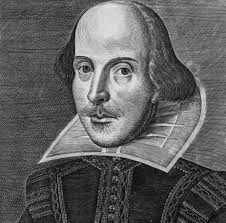
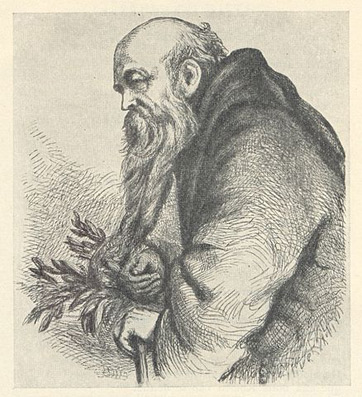
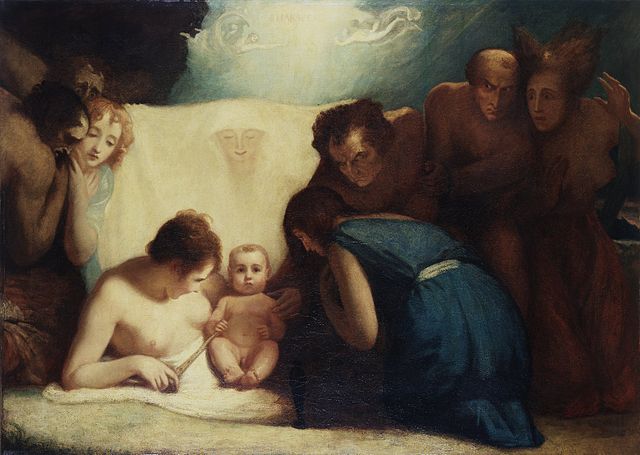


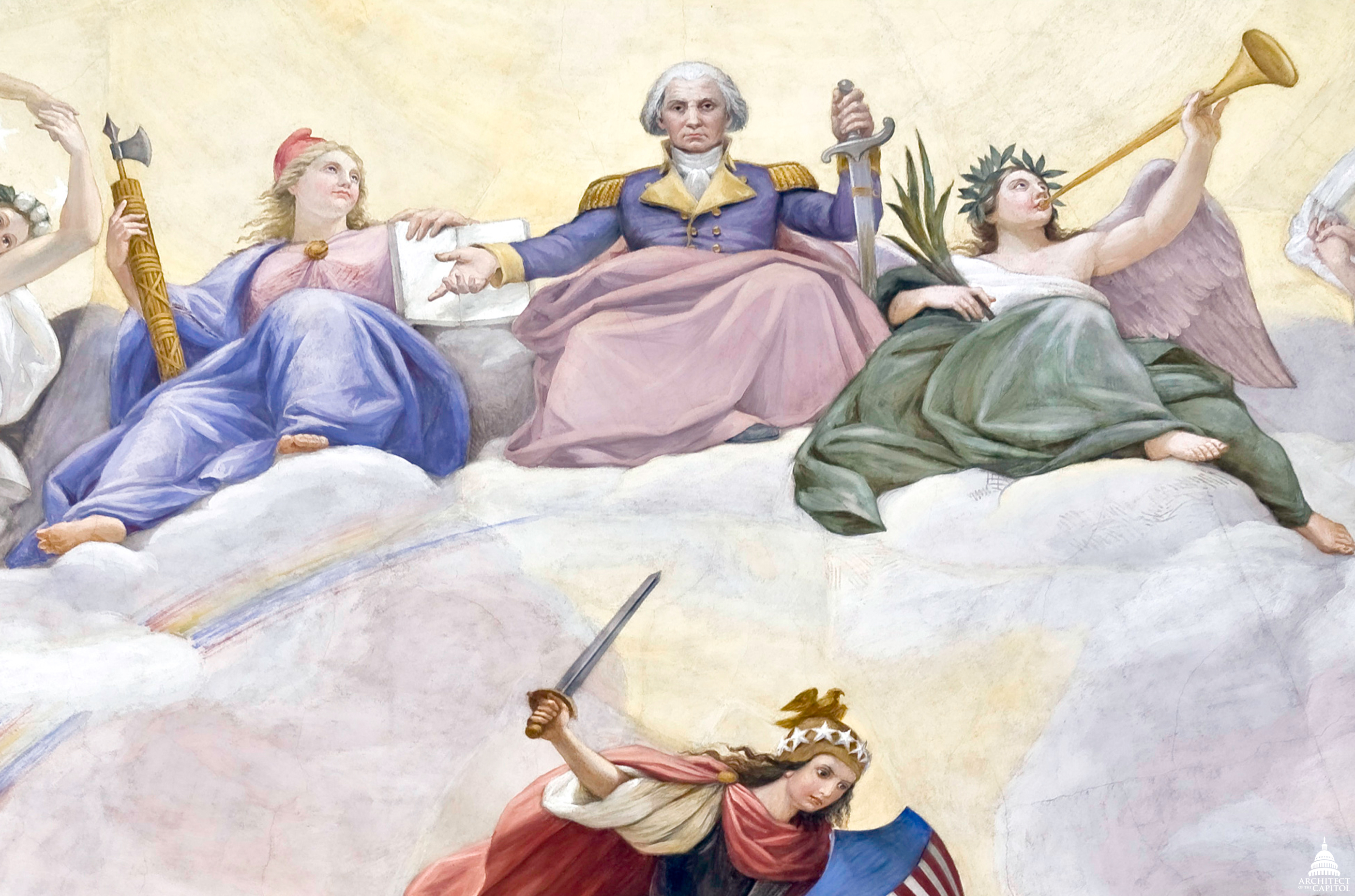


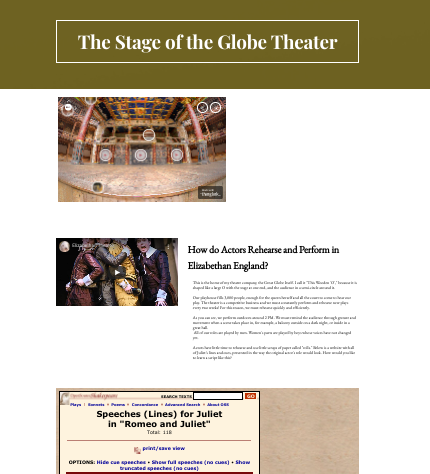
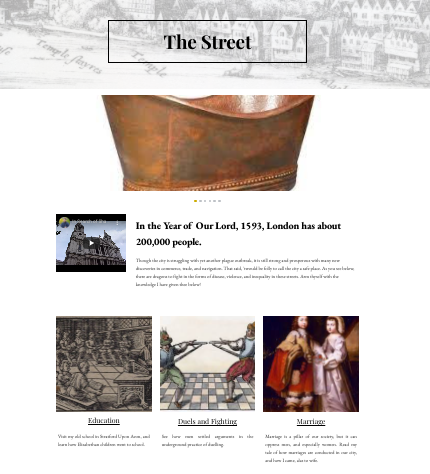


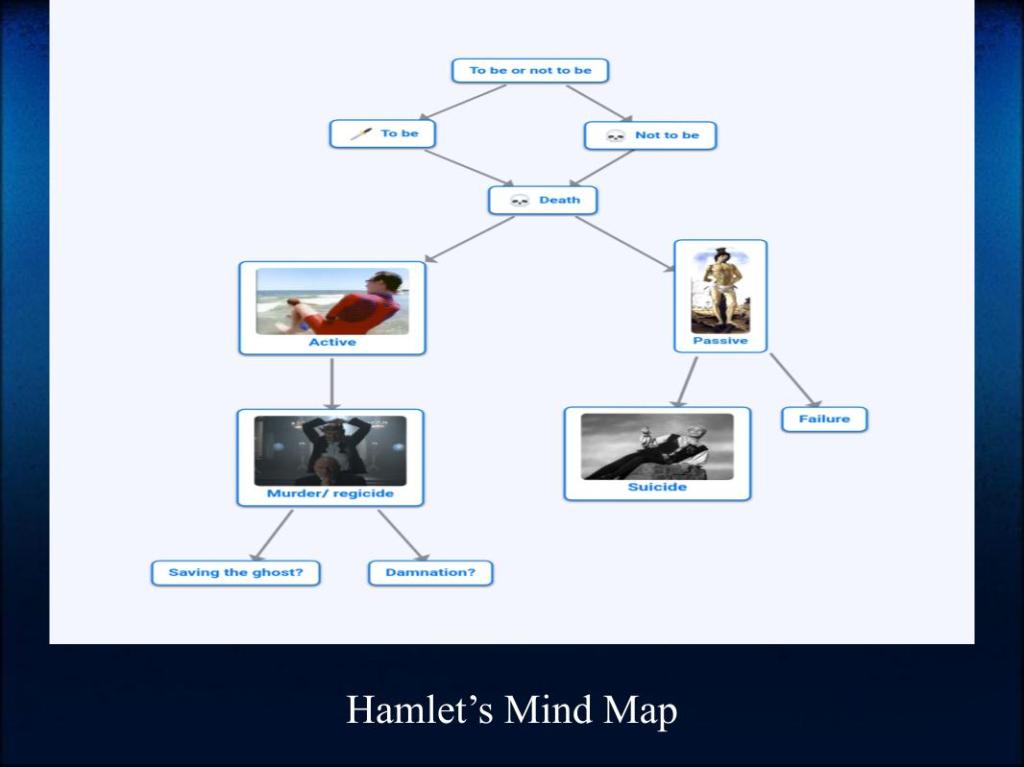


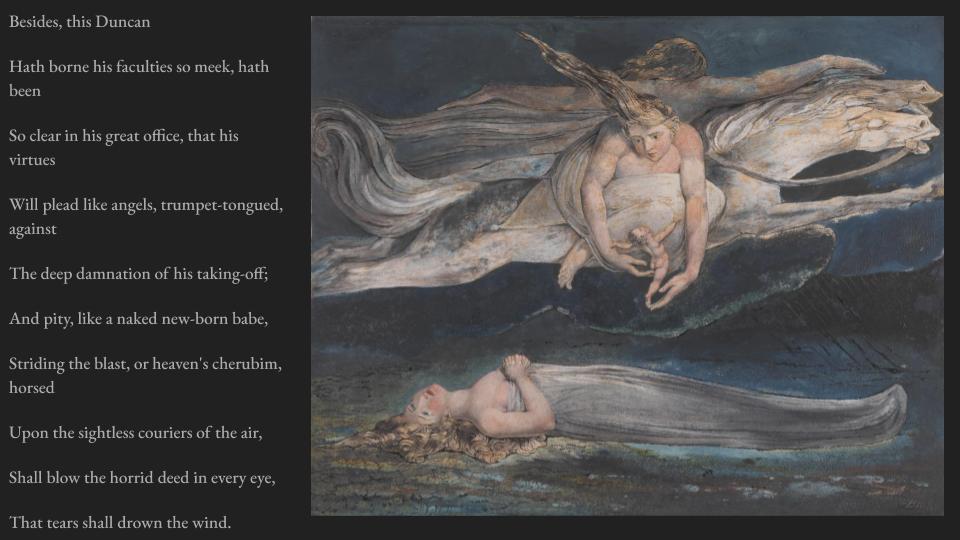


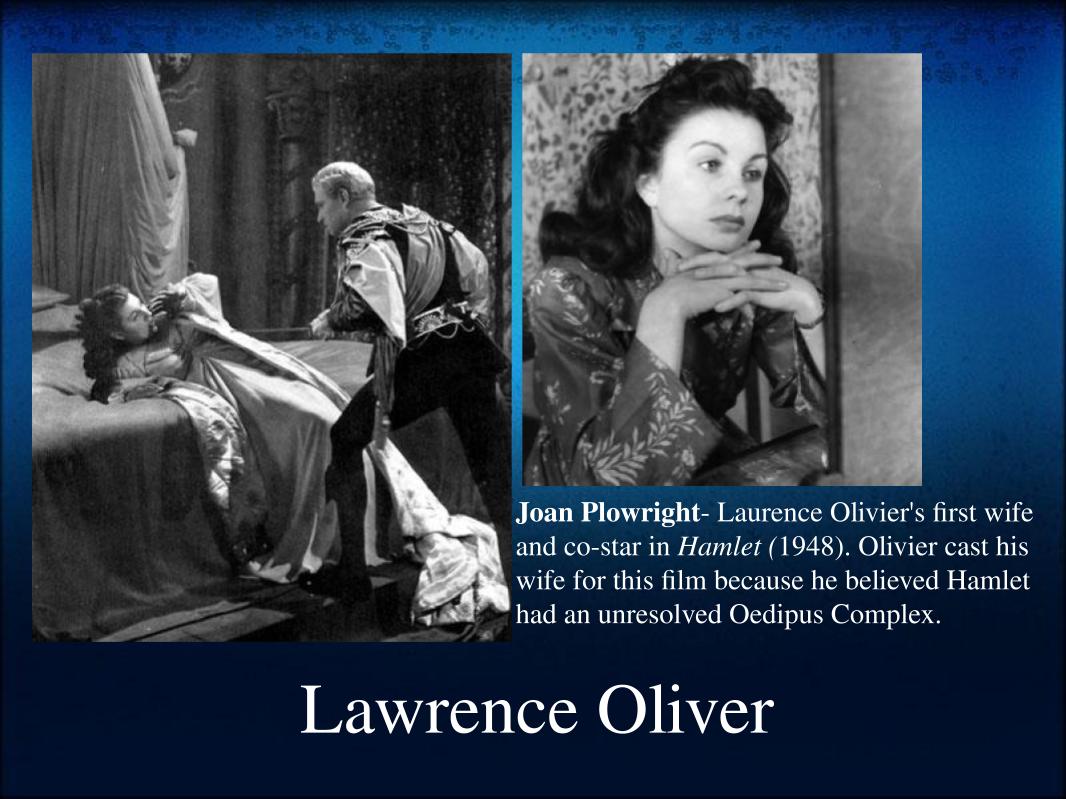


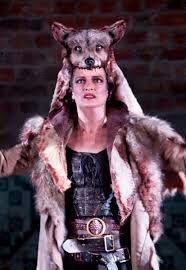

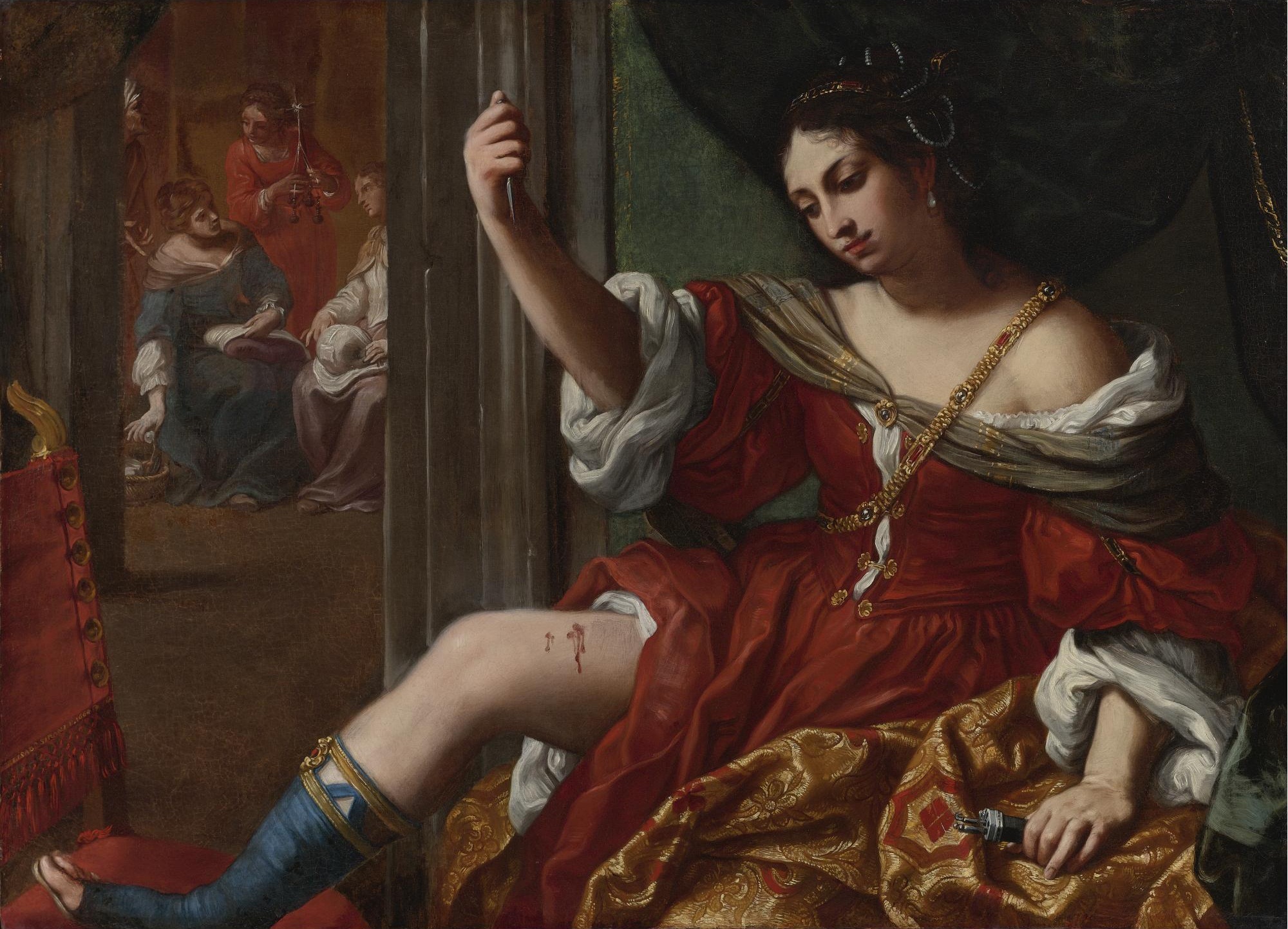


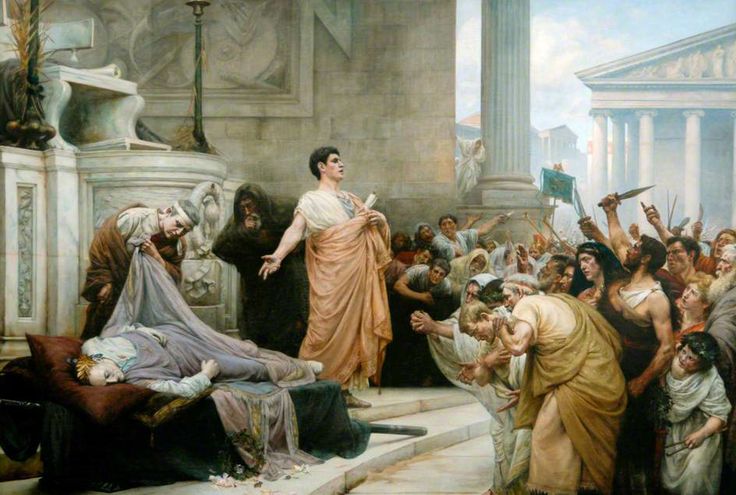


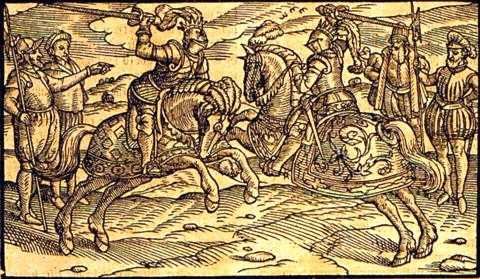


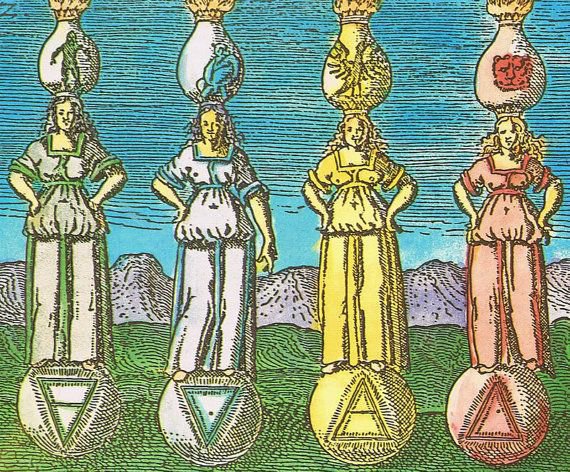

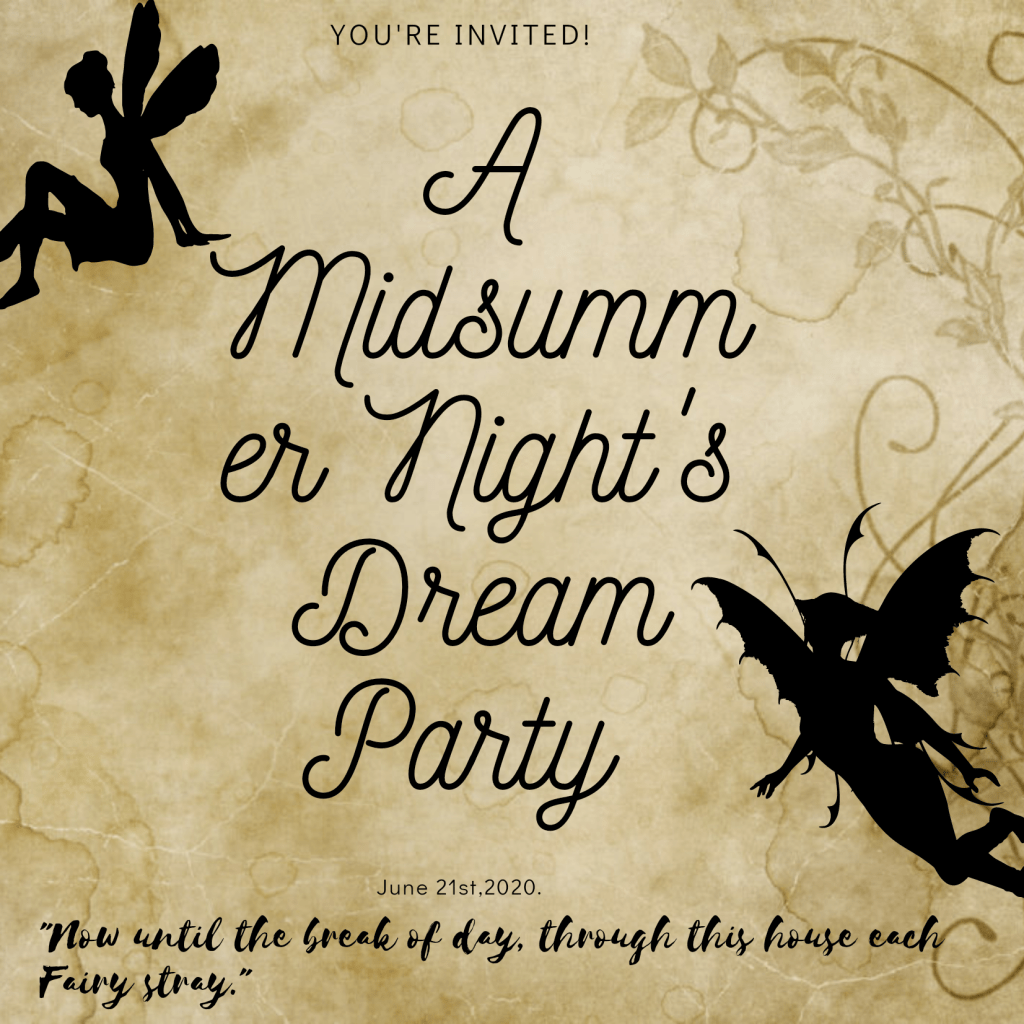












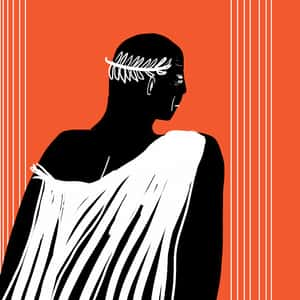


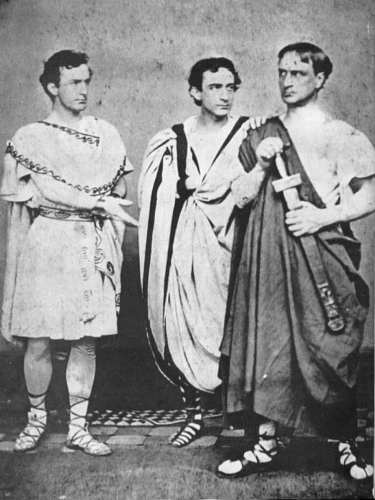
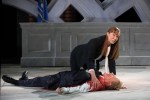

 The Shakespearean Student