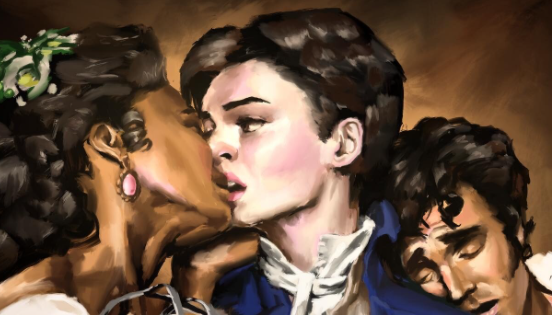
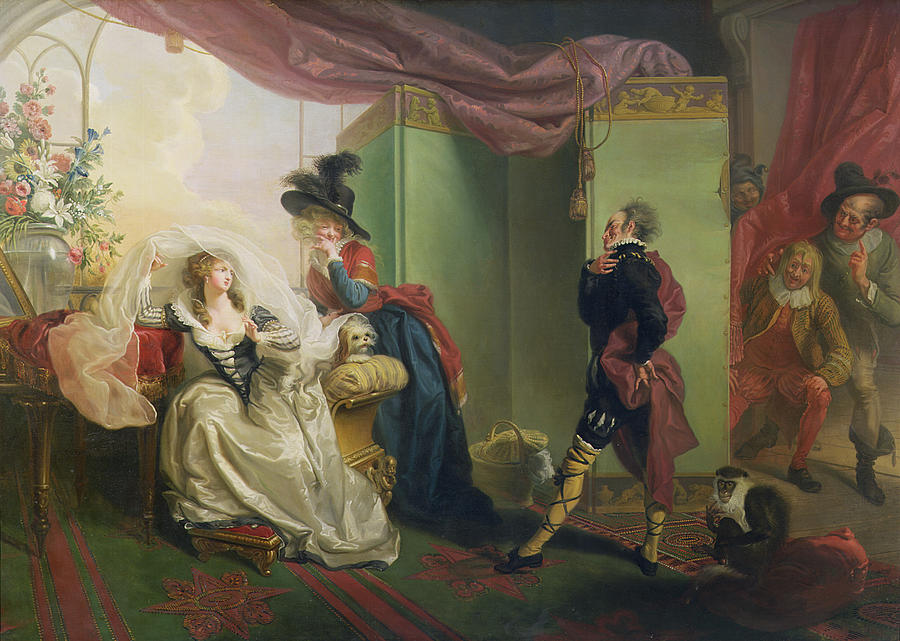
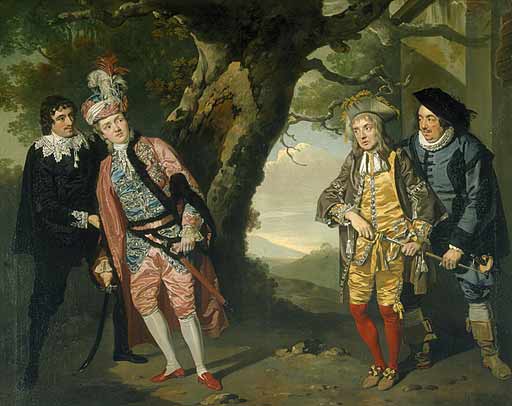
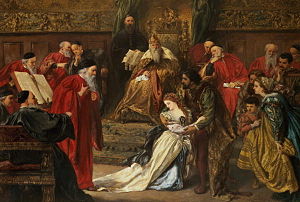
Disney’s “Elemental” and “Romeo and Juliet”

Happy Valentine’s Day everyone!

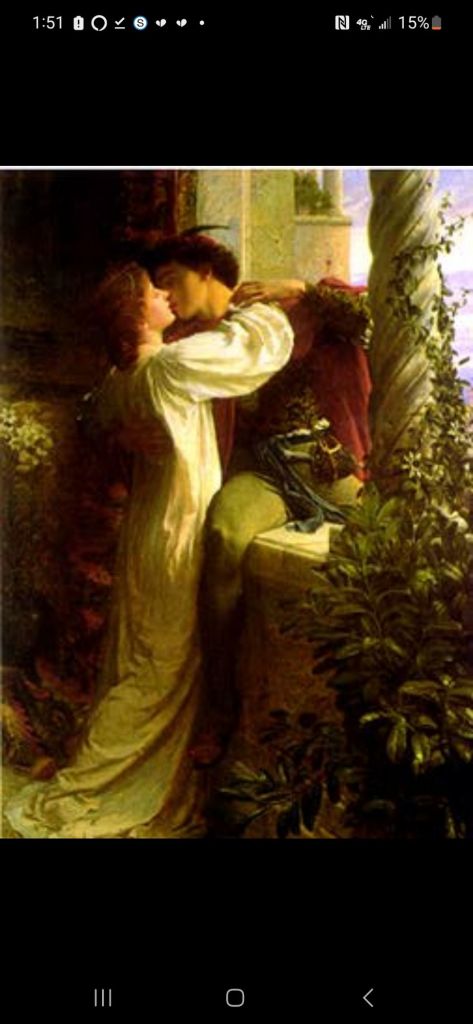
Every couple of years or so, there’s a new retelling of the tale of star-crossed lovers. I’ve written before that Shakespeare didn’t invent this story, but his version is definitely the template for every subsequent retelling.
The big challenge in telling the story for children is how to get around the sexual and violent elements of the story. Some versions like “Gnomio and Juliet,” make the violence comic and kid-friendly, while others like the WIshbone version call attention to the fact that it’s only a play, by presenting it as a story-within-a story.

What I find unique about Disney’s Elemental is that it ignores the violence and explores a side of the story that is often downplayed: family loyalty vs. personal choice. Is this version a complete adaptation- no. But it’s interesting to compare to “Romeo and Juliet” to see how it modernizes and diversifies elements of Shakespeare’s story.

Part I- The World of “Elemental”

One trope that both Elemental and Romeo and Juliet emphasize is the ancient notion of comparing human temperaments to the four elements.

In this world, all people are made of one basic element and it corresponds to their personality- dull, cold earth, flighty air, emotional water, and driven and temperamental fire. Our heroine Ember not only has a fiery temper, but a burning desire to repay her family for all that they’ve given her. She is also full of family anger for the prejudice she suffered at being an immigrant and a fire person. In the world of Elemental, fire people are looked upon with distrust because.. well fire burns!

This concept of elemental temperaments is explored in very creative ways in the film, but it is by no means a new idea. The idea that humans are made of four elements goes back to ancient Greece and China. The Greek philosopher Aristotle helped popularize the theory that not only is everything made of four elements but there are four liquids called humours that control human health and human behavior.

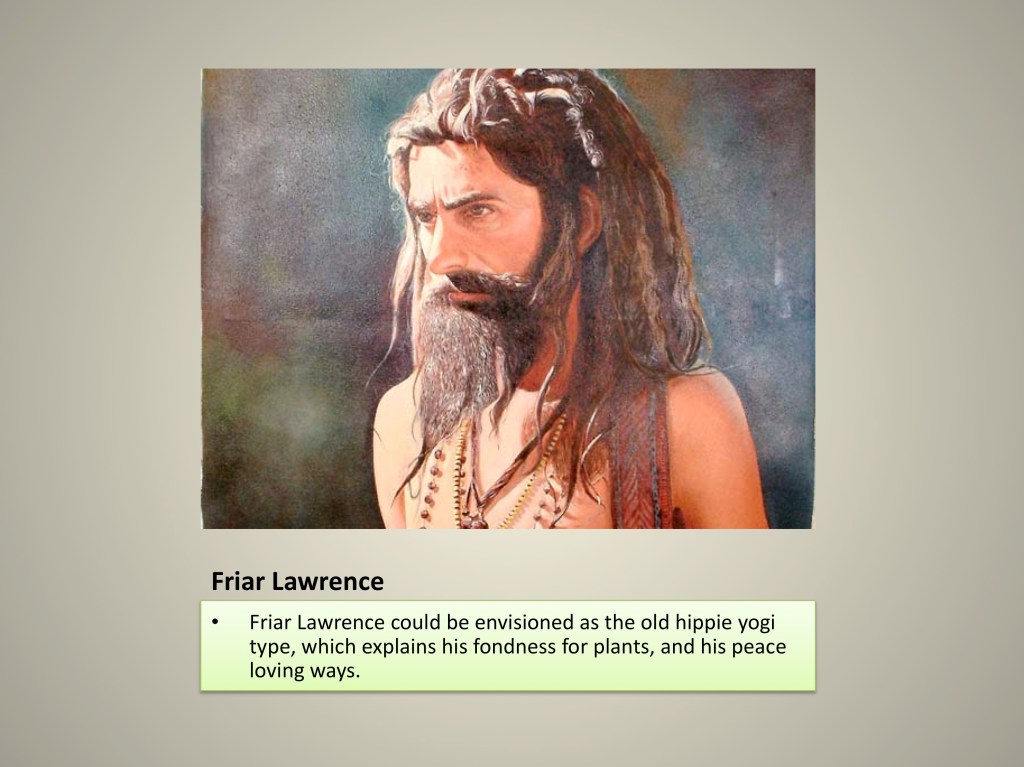
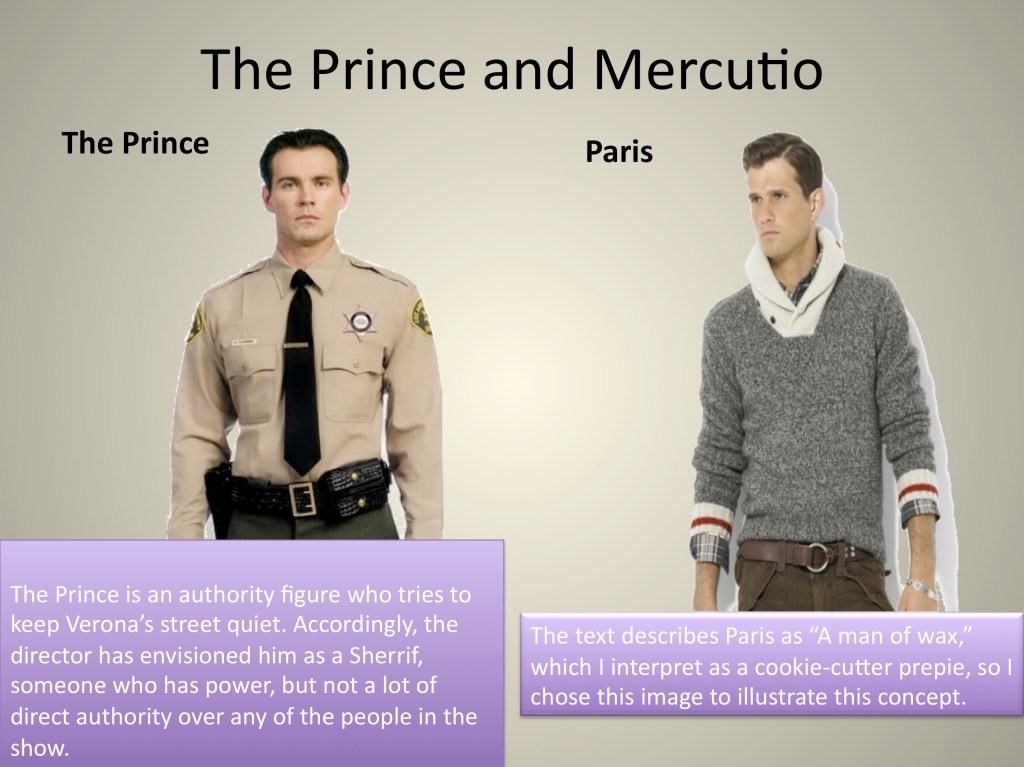
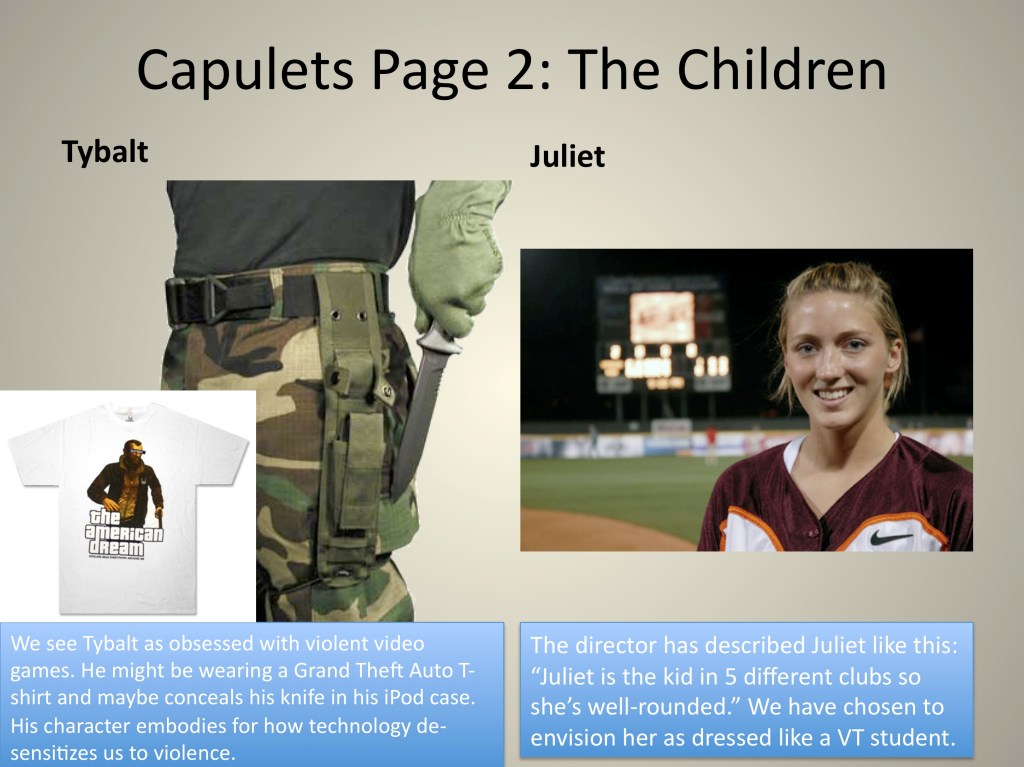
This is a presentation I created back in 2006 that explores the imagery and worldview of Romeo and Juliet. I explore what it means to be “Star Crossed Lovers,” and the relation that this play has to Astrology, religion, and even the Black Death. I hope you find it interesting!

Aristotle believed that to be physically and emotionally healthy, a person’s humours needed to be balanced which would prevent sickness and also control their temperament. A “humorous” person was someone who was either too angry or too melancholy and therefore worthy of scorn. This eventually twisted into our notion that humorous means to be funny.

In Romeo and Juliet, all of the characters are dominated by a particular humor and sometimes they even say how they are dominated by Choler (fire), Melancholy (Earth), Blood (Air), and Phlegm (Water)

Patience perforce with wilful choler meeting
Makes my flesh tremble in their different greeting.
I will withdraw: but this intrusion shall
Now seeming sweet convert to bitter gall.

Tybalt, Act I, Scene v

All things that we ordained festival,
Turn from their office to black funeral;
Our instruments to melancholy bells,
Our wedding cheer to a sad burial feast,

Lord Capulet, Act IV, Scene v

Then hie you hence to Friar Laurence’ cell;
There stays a husband to make you a wife:
Now comes the wanton blood up in your cheeks,
They’ll be in scarlet straight at any news.

The Nurse (to Juliet), Act II, Scene v

What’s unique about Elemental is that, while characters in Renaissance dramas have all four elements within them, in this movie, they are literally embodying one. Therefore to be in balance as Aristotle says they should be, they need a partner with an opposite humor to form a harmonious union. This is a nice way of visually showing the age-old adage that opposites attract in a very literal and easy-to-grasp way.

Wade- A more Temperate Romeo

As much as I love “Romeo and Juliet,” I’m well aware that Romeo is not an ideal lover. His attraction to Juliet is very much based on sight alone and though he is courageous and persistent to win her love, he does little to support or help her. Many people have pointed out that, had Romeo lived, it seems unlikely that his relationship with Juliet would last, especially considering that he just got over another girl five minutes before meeting her:

SCUMBAG ROMEO memes | quickmeme

So as a character, Romeo is iconic, but as a lover, he’s not exactly ideal. What Elemental does is keep his love of romance and his persistence, and give him the ability to empathize, a desire to help, and above all, the ability to LISTEN to Ember, (the Juliet analog). Enter… Wade:

Wade is a great addition to the Romeo trope and though he doesn’t kill anyone for Ember’s honor, he does fight many figurative battles for her- he helps her fight her guilt and find her purpose in life, he tries to help her family multiple times, and he fights her father’s prejudice against water people by being kind and respectful to her family.

I think it’s telling that Wade is dominated by water. First of all, it makes it clear to audiences that he has significant challenges in dating Ember (since he might literally extinguish her), but also because of what it says about his character.

Romeo is dominated by the humor of blood, which according to Hippocrates and Galen:

A person who is sanguine is generally optimistic, cheerful, even-tempered, confident, rational, popular, and fun-loving. He or she can be daydreamy to the point of not accomplishing anything and impulsive, acting on whims in an unpredictable fashion. Sanguines usually have a lot of energy, but have a problem finding a way to direct the energy. This also describes the manic phase of a bipolar disorder.

https://www.thecolourworks.com/hippocrates-galen-the-four-humours/

While Wade is literally made of water, which according to Galen:

phlegmatic  person is calm and unemotional. Phlegmatic means “Pertaining to phlegm” and corresponds to the season of winter (wet and cold), and connotes the element of water. While phlegmatics are generally self-content and kind, their shy personality can often inhibit enthusiasm in others and make themselves lazy and resistant to change. They are very consistent, relaxed, and observant, making them good administrators and diplomats. Like the sanguine personality, the phlegmatic has many friends. But the phlegmatic is more reliable and compassionate; these characteristics typically make the phlegmatic a more dependable friend.

https://www.thecolourworks.com/hippocrates-galen-the-four-humours/

So by his very nature, Wade is more active and a better friend than Romeo, which makes his relationship with Ember a more equal partnership. Wade is thus a more modern take on the age-old sanguine lover like Romeo.

Many have argued that Romeo and Juliet’s relationship was never designed to last; it was designed to be much like fire or even like a poison that tastes good at first, but kills at last:

https://www.thetelegraph.com/news/article/wherefore-art-thou-romeo-beautiful-elemental-18206334.php#taboola-1

Ember- the Conflicted Juliet

Much like Shakespeare’s version, the Juliet character in Elemental is more interesting than the Romeo character, and the writers know it. In Shakespeare’s version, Romeo is absent for most of Act IV, and in Elemental, Wade is not there for most of Act I and parts of Act II in the movie. The focus of both stories and the best feature is how the heroine handles the conflict between her family and her romance.

In Shakespeare’s version, Juliet doesn’t immediately fall head-over-heels in love with Romeo and uses an elemental image to describe how it would be foolish to try and rush into love too fast:

Although I joy in thee,
I have no joy of this contract to-night:
It is too rash, too unadvised, too sudden;
Too like the lightning, which doth cease to be
Ere one can say ‘It lightens.’ Sweet, good night!

Juliet, Act II, Scene ii

But, once the two of them are married, she is very passionate and will do anything to avoid getting married to Lord Paris, even though her parents are pressuring her:

It’s also interesting that Lord Capulet is described in this scene as “Too hot.” I’ve mentioned before that in many productions, the Capulets are dressed in fiery colors like reds, yellows, and orange.

Collage of images of Tybalt. Notice the reds and yellows.

Juliet herself can also be very fiery and willful. At one point, Friar Laurence even compares Romeo’s infatuation with Juliet to fire and gunpowder!

Visual Accompaniment for Romeo and Juliet

These violent delights have violent ends
And in their triumph die, like fire and powder,
Which as they kiss consume: the sweetest honey
Is loathsome in his own deliciousness
And in the taste confounds the appetite:
Therefore love moderately; long love doth so;
Too swift arrives as tardy as too slow.
[Enter JULIET]

So there is precedent for portraying Juliet as a fiery character. What Elemental adds, is a sympathetic portrayal of race and culture wrapped up in her fiery nature. As I said before, Ember is the child of immigrants who are grateful to Element City for taking them in, but tired of the prejudices they face from the other elements. This echoes the real word struggle of Chinese immigrants under the Chinese Exclusion Act, and Japanese Americans during World War II. One way Ember’s fiery temper manifests itself is with her anger at prejudice and injustice:

The other struggle that keeps Ember intemperate is her conflicting desire to honor her family by taking over the family business, although this isn’t what she wants to do with her life. Wade sees this and realizes that Ember is fighting a war within herself and that is why she is lashing out at people in the store. She is also dealing with her family’s relative poverty and is constantly worried that her family won’t survive if she doesn’t take over the store.

In this scene, Ember becomes jealous of Wade, who was born into wealth and acceptance unlike her family who has struggled for years. This jealousy drives a wedge between her and Wade. It’s interesting that, rather than a family feud, the real forces that keep Wade and Ember in Elemental apart are not an arbitrary feud, but big societal forces like racism, nativism, and cultural differences.

In essence, Elemental takes the star-crossed aspect of the story and makes them more like the modern world. Most of us in first-world countries don’t get into blood feuds but plenty of people face prejudice and hardships based on where and how they were born. Elemental “boils” down the core of the Romeo and Juliet story and tells it differently, while keeping the central lesson that love can overcome and unite family differences and problems when two people are willing to risk everything for each other… even life.

Is Percy Jackson Hamlet?

I’m really excited about the Disney Plus release of the Percy Jackson TV show. My family and I are really enjoying it and I think it’s a very good adaptation, (much more faithful than the previous movie versions). The tone is darker, the characters are better fleshed out, and also there’s a much more nuanced take on Percy’s character, which I believe is at the core of the series. The movie is essentially just a fetch quest where Percy is going from location A to location B looking for various magic items and fighting monsters. Movie Percy is a very static character but in the books and the show, they keep all of those journeys but also delve into his complicated relationship with the gods, his own insecurities growing up without a father, and his overwhelming feeling that this world of gods and mortals is fundamentally flawed and that he is the one to fix it.

“Families are messy. Immortal families are eternally messy. Sometimes the best we can do is to remind each other that we’re related for better or for worse…and try to keep the maiming and killing to a minimum.”

-Percy Jackson, The Sea of Monsters


In short, what makes the show great is that it emphasizes the elements of the book that make it a classic story of a young man who is trying to find his place in the world and complete the quest that his father set for him. Of course, once I started watching it, my Shakespeare Brain activated, and I immediately compared him to Shakespeare’s ultimate example of a hero trying to complete a quest given to him by an absent father- Hamlet.
So today I’ll Talk about why I think Percy Jackson is actually a descendant of Hamlet or rather that Hamlet and Percy Jackson are both descendants of the same common ancestor in Greek mythology and touch on what these classic stories can say to us today.

1. The Plot

AI Art I created of Percy Jackson. Nightcreator.com.

As I touched on earlier, there are some glaring similarities between the plots of Percy Jackson and Hamlet- we have a young man who has who hates his stepfather, who is deeply protective of his mother, who goes on a magical quest given to him by his father, (who cannot directly aid him because he’s not physically there). In Percy Jackson, his father is a god- the ancient Greek water god Poseidon, while Hamlet’s father is a ghost. Both heroes have to deal with treachery, uncover a plot, avert potential wars, and get caught up in great military and political power schemes. While Hamlet is trying to restore the rightful heir to the throne (himself), Percy is trying to avoid a war between the gods. Both heroes have stoic sidekicks- Hamlet has Horatio whereas Percy has Annabeth and his friend Grover the Satyr. Hamlet’s friend l Horatio is kind of like a combination of Annabeth’s intelligence and Grover’s kindness and empathy. Finally, both stories conclude in a duel (spoiler alert) where they fight against a near-impossible adversary, and in the end, succeed in their quest, although in Hamlet’s case, he does so at the cost of his own life.

The main difference between these stories is connected to tone and genre- Hamlet is a revenge play, and most Revenge tragedies end in the death of the avenger. Percy Jackson is an adventure quest so based on the conventions, he can succeed, survive, and go off to fight another day. Nevertheless, in terms of the broad outline, the plots are very similar. I would argue this is probably because Hamlet has its roots in many ancient mythological stories like Oedipus, Orestes, and of course, the Danish Viking myth of Amleth. I would argue that both Percy Jackson and Hamlet have a very clear direct common ancestor: the ancient Greek myth of …

2. A Common Ancestor- Perseus

https://prezi.com/btk3m_bamkmh/hamlets-monomyth/

As this funny cartoon illustrates, the plots of Percy Jackson and Hamlet can be seen as a modern incarnation of the Perseus myth, from the villainous stepfather to the hero’s protective feelings to the mother to the magical quest to get rid of a stepfather who takes away his birthright. These plot elements follow a very similar formula; as Jake also alluded to, all three of these stories are part of what writers and scholars like to call the monomyth or the “Hero’s journey,” a concept in mythology and storytelling that has inspired works such as Percy Jackson, Star Wars, and many others.

What Is the Monomyth?

Crash Course Mythology- The Monomyth

In 1949, scholar Joseph Campbell wrote a book called “The Hero With a Thousand Faces,” which posited that every culture has stories that fit into universal archetypes- that essentially all human cultures have unique stories, but also call to mind universal truths about humanity. He then distilled the common archetypes and plot tropes of these myths into something called “The monomyth” or “The Hero’s Journey,” a 17-step process that is at the core of many ancient myths, modern adventure stories, or revenge stories such as Hamlet. Below are some of the common tropes of the Hero’s Journey. When you see it spelled out like this, it is very clear that both Hamlet, Percy Jackson, and Perseus follow the Monomyth formula:

Infographic of the Monomyth from David R. Jolly.com

Part I: The Call To Adventure:

Where’s the glory in repeating what others have done?

The Lightining Thief

Every Greek hero starts with a call to adventure- Theseus finds his father’s sword and sets out to find him. Oedipus needs to lift the plague on Thebes, and Hamlet needs to find out why his father’s ghost has returned.

A Half-Blood of the eldest gods, Shall reach sixteen against all odds
And see the world in endless sleep
The Hero’s soul, cursed blade shall reap
A single choice shall end his days
Olympus to preserve or raze.

The Oracle- Sea of Mosters

Part II: Refusing the Call

If my life is going to mean anything, I have to live it myself.

The Lighting Thief

I won’t go looking for trouble. I usually don’t have to

Neither Hamlet nor Percy outright refuse to go on their quests, but both experience doubts. Percy, looking at how the gods have cursed and fought and betrayed each other, wonders whether or not they deserve his help:

Percy watches the story of the gods in the Tunnel of Love (Episode 5, Disney Plus 2024.)

Hamlet on the other hand, is so worried that the ghost is trying to deceive him into killing an innocent man, that he nearly kills himself in the most famous speech in all of Shakespeare.

Part III: Supernatural Aide

Supernatural Aid – A magical helper appears or becomes known

Go on with what your heart tells you, or you will lose all.

The Nereiads, Lighting Thief Chapter 17

Both Percy and Perseus get help from the gods- magical weapons, advice, etc. Hamlet gets the revelation from his father that his uncle killed him and how. What sets Hamlet apart from any number of myths is that, since there’s no tangible evidence that his father was there, Hamlet is not sure if his father helped him, or if he is going insane.

Suspecting and knowing are not the same.

-The Lighting Thief

Crossing the first threshold

In Perseus, the first threshold would be when he leaves Acrisius’ palace and sails to the island of Cerebos. In Percy Jackson, this would be when he leaves Yancy Academy and goes to Camp Half-Blood, and in Hamlet, it would be when he meets the ghost.

My fate cries out, and makes each petty artery in this body as hardy as the Nemian Lion’s mane. Still am I called!

Hamlet, Act I, Scene iii.

Belly of THe BEast

There’s always a part of the story when a character feels they are in too deep. Sometimes it’s a literal belly of the beast- Pinocchio and the whale, Luke Skywalker and the Sarlaac pit, Frodo when he reaches Mordor, and Agent K in Men In Black when he literally gets eaten by the Bug. In Percy Jackson, it would definitely be when he journeys to Hades, like many Greek heroes like Orpheus or Hercules.

I’d love to tell you I had some deep revelation on my way down, that I came to terms with my own mortality, laughed in the face of death, et cetera.

The truth? My only thought was: Aaaaggghhhhh!.

Usually, the belly of the beast occurs near the climax of the story- the ultimate test of the hero’s courage and resolve. For Hamlet, this would be the duel with Laertes- he’s in a situation where Claudius has total control of what he does.

“You weren’t able to talk sense into him?”
“Well, we kind of tried to kill each other in a duel to the death.”
“I see. You tried the diplomatic approach.” (The Sea of Monsters)

I’ll get into a deeper summary of the steps of the Hero’s journey on my podcast later this month, but to summarize, the Hero’s Journey is essentially a story of growth, maturity, and enlightenment. It’s not a coincidence that all three of these heroes are young men who leave home and then return to confront an evil stepfather or uncle. Campbell regarded the Hero’s journey as a metaphor for young men growing up, learning about themselves, gaining confidence in themselves and their abilities, and taking their rightful place in society by displacing a corrupt older authority figure. This is also why these stories often resonate with young people, and why storytellers like Disney often use the Hero’s Journey as a template for children’s movies.

These universal stories of growing up, maturity, and a life worth living have always inspired people and even though the stories have different purposes and the plots take different forms, the core of what makes them universal remains the same.

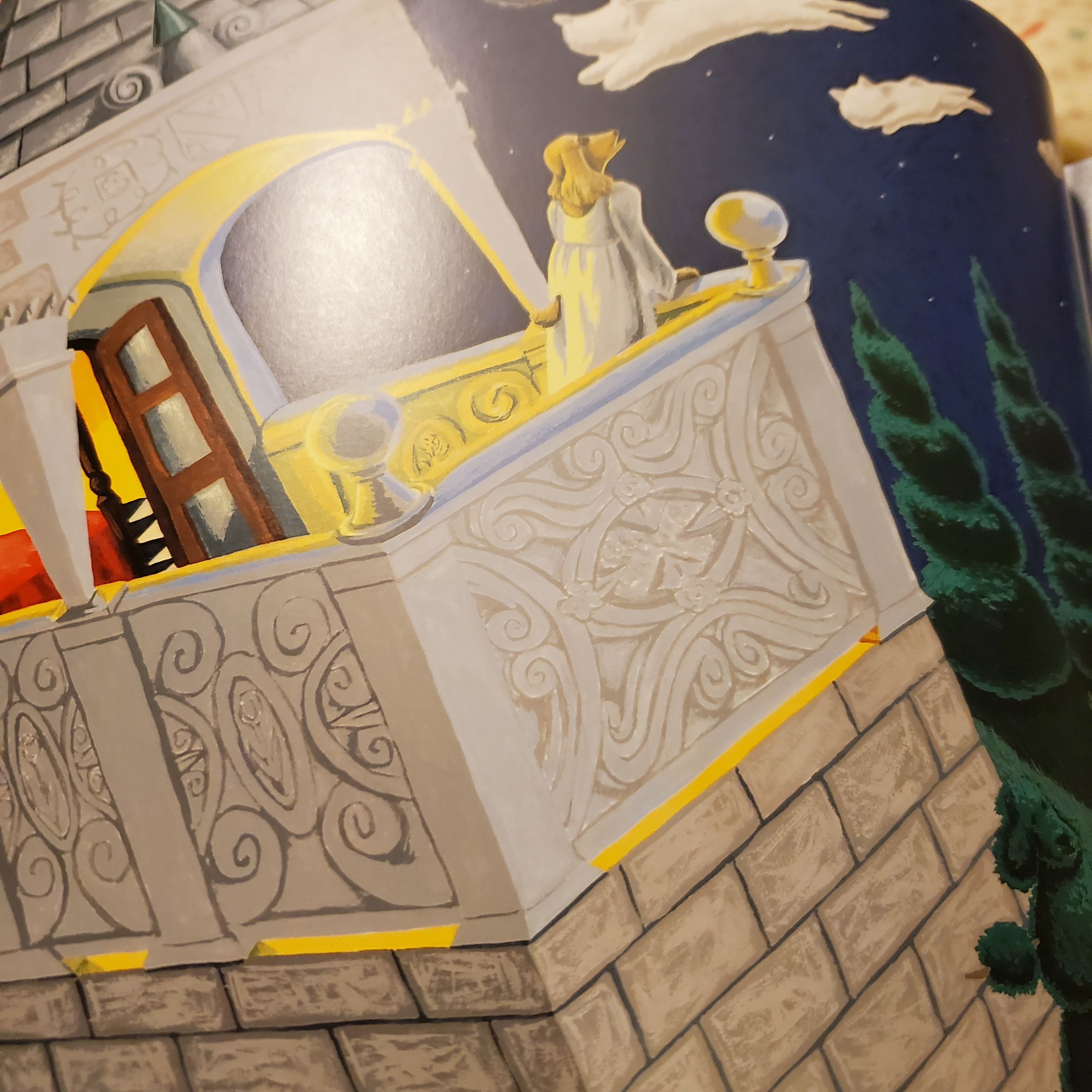
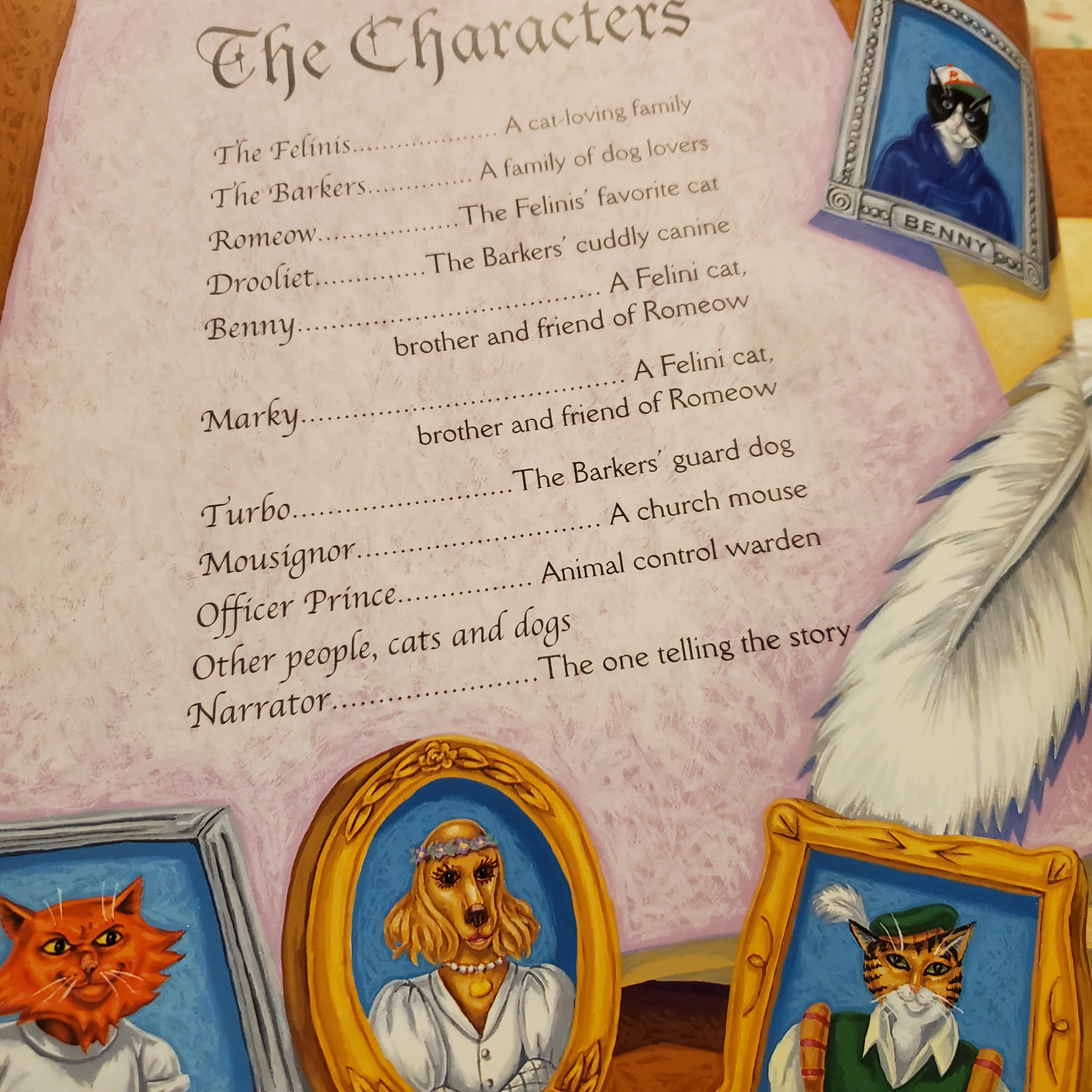
Review: Romeow and Drooliet by Nina Laden

As you probably know, I love to review children’s adaptations of Shakespeare (whether direct or indirect). “The Lion King,” (Hamlet), “Encanto” (King Lear), and of course, the many adaptations of “Romeo and Juliet,” are mainstays on this website: Gnomio and Juliet, Romeo and Juliet: Sealed With A Kiss, even Pocahontas have their basic plot and characters firmly rooted in Verona Italy.

Then one day by chance, I found this book in a local park, and I knew I had to review it!

THe Premise

This is a simple re-telling of the story of Shakespeare’s play that focuses on just the young lovers. You feel for these cute little animals and in a way, making them a kitty and a dog smitten with puppy love, makes them more understandable and sympathetic than Shakespeare’s youthful teenagers, who indulge in violent delights without using their human reason.

What It Keeps

The Story

The book keeps the feud between the two families, has the young lovers meet in disguise at a ball, fall in love on a balcony, get married, and amazingly, DIE! Laden still manages to tell the story in a kid-friendly way, though giving it tragic weight.

THe Language

The book opens with a rhyming prologue, which, although it isn’t in sonnet form, has the same function as Shakespeare’s prologue- to explain the plot before we see it played out in the book, thus giving the whole story a sense of dramatic irony. Plus, as you can see, Laden also imitates Shakespeare’s love of wordplay with metaphors and puns, (a tale of tails), and alliteration to give the dialogue some wit and effervescence. Reading it gave me giggles like I’d just popped open some champagne.

What it changes: Spoiler alert

All throughout, Laden makes small changes to simplify the plot and remove characters that don’t directly impact the main plot. The characters of Lord/Lady Capulet and Lord/Lady Montegue, The Nurse, Paris, Peter, the servants, and the friars are completely absent, turning an already brief play into an even more compressed story.

Like a lot of animal retellings I’ve seen of this story, the author recasts the human leads as animals that are natural enemies- in this case, cats and dogs. This makes the story easier for kids to understand- as I’ve said before, it’s often difficult to keep track of who belongs to which house in Shakespeare’s version. All you need to know is that Romeo and his brothers are cats and Juliet’s family are dogs.

Funnily enough, my daughter actually complained that the story would’ve been better if Juliet were a cat instead of Romeo, which I agree with for very specific reasons. The character of Tybalt is named after a character from a prose story called “Reynard the Fox,” who had the epithet, Prince of CATS. Mercutio annoys Tybalt by taunting him with this title before challenging him to a duel:

Tybalt: What would you with me?
Mercutio: Good Prince of Cats, nothing but one of your nine lives! Romeo and Juliet, Act III, Scene i.

It would’ve been a funny Shakespeare easter egg to have Juliet and Tybalt be portrayed as cats, but I understand why they went with dogs- Drooliet is a hilarious pun, and having Tybalt be a vicious, rabid dog helps set him up as a fearsome antagonist.

I suppose you’re wondering, how can the author keep Shakespeare’s tragic ending in a children’s book? Well, like Shroedinger’s cat, she manages to make Romeow die and not die at the same time. He gives Drooliet one of his 9 lives, allowing them both to ‘die’ and then come back for a happy ending. It’s a brilliant way to nod at the original, while also keeping the kid-friendly tone.

My Reaction

This book is really fun and very enjoyable for kids, parents, and teachers who want to introduce kids to Shakespeare at an early age!

Just below you can watch the book being read by actress Hayle Duff:

Free teaching guide from the SAG-Aftra Foundation

Happy Twelfth Day of Christmas Everyone!

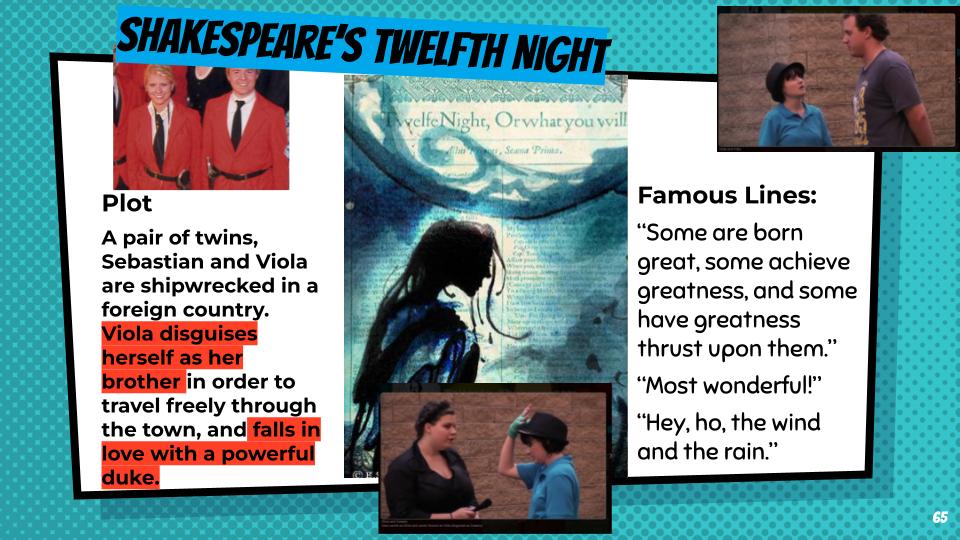
Hello everyone! I’m back from break and happy to celebrate one of my favorite holidays with you- the one that gave its name to one of Shakespeare’s greatest comedies- Twelfth Night

How to throw a Twelfth Night Party

How To Throw A Twelfth Night Party

How to Make a Twelfth Night Cake

Intro to Twelfth Night (THe play)

I’ve been in this play three times and I’m continually struck by how fun, romantic, and progressive it is. It raises questions about gender roles, social norms, bullying, and even catfishing and heteronormativity! It’s a fascinating and thought-provoking play and it’s my favorite of Shakespeare’s comedies!

Shakespeare’s early comedies are about young love, infatuation, and being ‘madly in love’ (sometimes literally). His middle plays are about mature relationships between men and women and the need for commitment. I would argue that Twelfth Night, (and possibly Much Ado About Nothing), are the best examples of Shakespeare telling meaningful stories about romantic relationships.

Past Posts on “Twelfth Night”

  1. Play of the Month: Twelfth Night
  2. The Fashion Is the Fashion: Twelfth Night
  3. Crafting a Character: Malvolio
  4. Exquisite Artwork from Twelfth Night

Would you like to know more? Take a class!

In honor of “Twelfth Night,” I’ve created a coupon for my course on Shakespeare’s comedies from now till January 31st: Get $10 off my class “Shakespeare’s Comic Plays” with coupon code HTHESYTIT110 until Jan 31, 2023. Get started at https://outschool.com/classes/shakespeares-comic-plays-868BR5hg and enter the coupon code at checkout.

To finish I wanted to give you a complete production of Twelfth Night for your viewing pleasure, but I can’t decide which one, so I will post a bunch today! 

1. 1996 TV movie starring Geoffrey Rush (Pirates of the Caribbean)

2.1996 Thames TV directed by Kenneth Branaugh 

Brave and Macbeth

Playing a Disney princess is akin to playing a character in a William Shakespeare play. You’re not going to be the only one inhabiting the role, and chances are, you’re not even the first one to take on the part. These are characters that are bigger than one human being and that includes the people who wrote them in the first place. Figures like Ariel, Snow White, or Elsa endure for so long that they could never be tied down to just one performer.

Read More: https://www.looper.com/901268/the-untold-truth-of-brave/?utm_campaign=clip

Quote from DOUGLAS LAMAN ” The Untold Truth Of Brave.” Looper 2022

As I have done several times before on this site, I’m going to compare a Disney princess to a Shakespearean character, and if you’ve been paying attention, you can probably guess to whom I’m going to compare Merida, a Scottish woman who seeks counsel from a witch. That’s right, Lady Macbeth! But I’m not just going to write about how Macbeth is similar to Brave. In fact, I’m going to primarily focus on how they are not similar. I would argue that the film’s greatest strengths occur when it parallels and subverts a lot of the elements of Macbeth. I would further argue that the film’s greatest weakness is that it didn’t go far enough with these themes and ideas, and due to the film’s troubled (dare I say… CURSED) production history, it is frankly a bit unfocused and doesn’t have a successful conclusion because it didn’t commit to the ideas it set up at the beginning of the film. 

Plot Summary

In medieval Scotland, a young princess named Merida (Kelly MacDonald), is strong, a skilled fighter, and a superlative archer. Yet, these skills are irrelevant and invisible to her mother Queen Elinor (Emma Thompson), who believes that a princess should strive to be beautiful, poised, diplomatic, and willing to sacrifice her own freedom for the good of the realm. This is why she has positioned her daughter, the heir to the throne, to marry one of her father’s allies, which she has no interest in doing.

Merida chafes at her mother’s controlling nature and wishes to change her fate. First, she defies her mother openly by challenging her suitors to an archery contest, and (in a glorious mash-up of Robin Hood and Odysseus), she defeats them all with three excellent bullseyes!

Faced with her child’s rebellion and the diplomatic disaster that her behavior caused, Ellinor is of course furious. Earlier in the film, Ellinor mentions that a selfish prince brought his whole kingdom into bloodshed and war because of an act of defiance like this. Mother and daughter have a bitter argument that causes Merida to leave home and try to change her fate a different way.

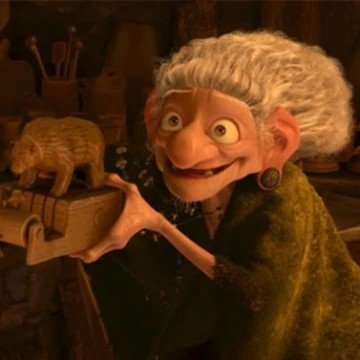
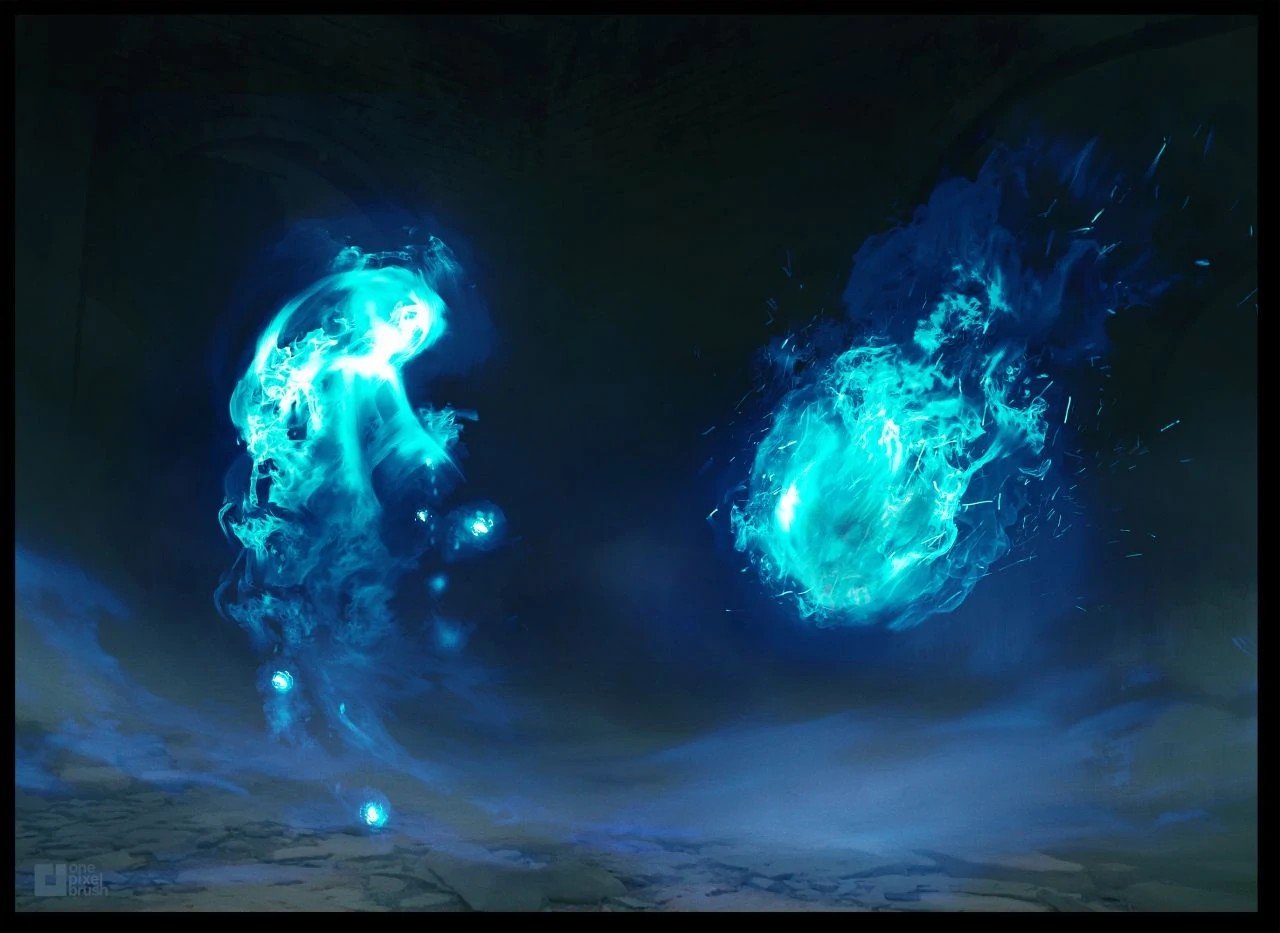
Merida follows the legendary Will O’the Wisp into the forest and meets a witch, who promises to brew her a potion to change her fate and….

You have a lot of good left to give to this World
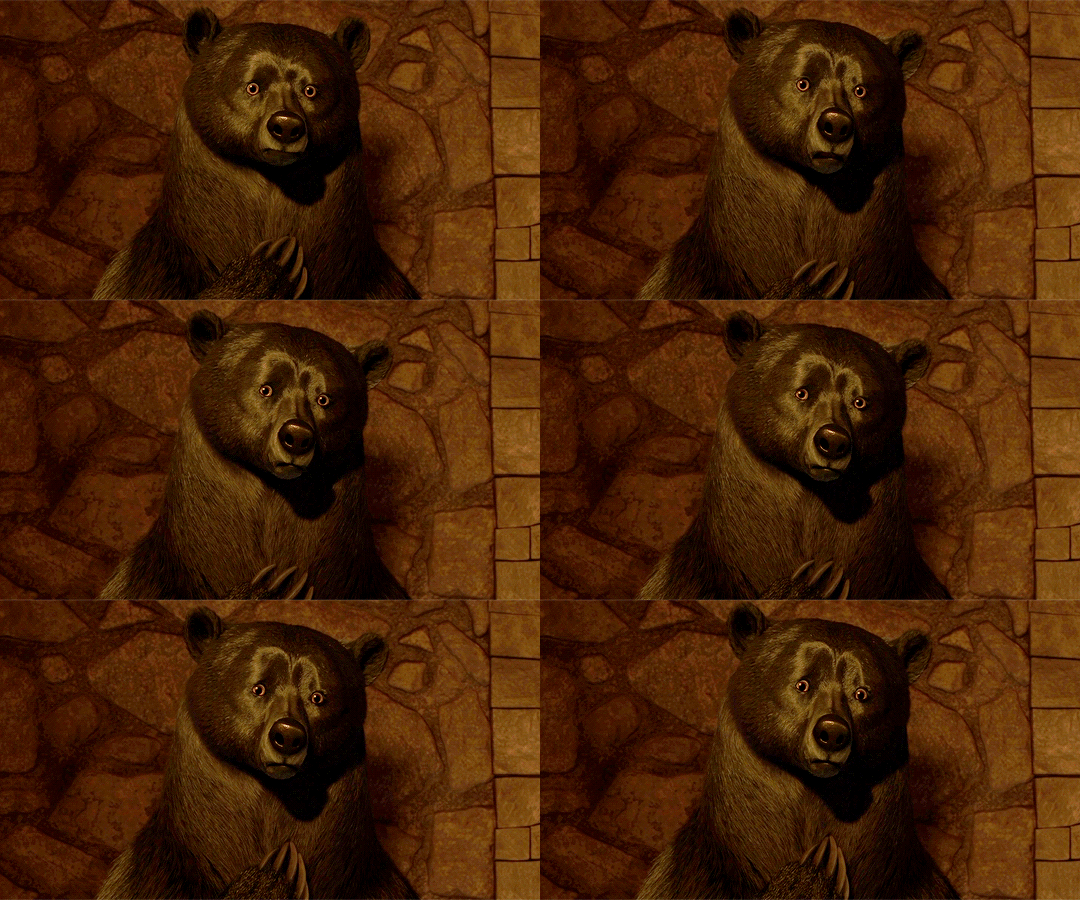
Cover art for “Brother Bear”

[Spoiler alert] This is where the story gets ridiculous. It turns out that the potion changes Merida’s mother into a bear. The second half of the movie is basically a Brother Bear ripoff where a character turned into a bear has to learn the error of their ways, and deal with being an animal. Yes, there’s conveniently a monster bear called M’ordu who Elinor has to fight as a bear to protect Merida, and with her mother unable to speak, Merida finally has to speak to the lords like a princess, which is all well and good, but the drama and character arcs set up in the first half are completely muddled once Elinor consumes that potion.

The cursed production

I was completely baffled by the choice to make Ellinor turn into a bear, especially given how grounded the first half of the movie was, but I want to make it clear- I do not blame the creator. Brenda Chapman, the original writer/ director had a very personal and clear vision for the story, as you can see in the quote below.

[I was inspired by] My love of Scotland, the old Grimms and Hans Christian Andersen fairy tales, but mostly my relationship with my daughter. She has been quite a challenge to my “authority” since she was five years old. I love that she is so strong, but it sure doesn’t make my job easy! She is my Merida … and I adore her.

Brenda Chapman, Ms. Magazine 2012

Chapman, who also directed The Prince Of Egypt, is clearly a very talented writer and director. It’s hard to know what the original story Chapman envisioned was, but as the quote above indicates, it was always intended to be a fantasy story that explores the relationship between a mother and daughter. Maybe the bear transformation was part of Chapman’s original idea, but I have to believe it would have been handled better than this.

In any case, the production suffered because Chapman found herself at odds with John Lasseter, Pixar’s CEO. Their clashes no doubt made it harder to develop the story in a productive way. Chapman points out that her being a female director, trying to tell the story of the first-ever female Pixar protagonist was in itself a ‘hard sell’ to the higher-ups at Pixar.

“I hit a lot of the issues with being a woman and also trying to put forward a female-led story.” She also claimed that her conflicts with former Pixar chief creative officer John Lasseter related to her being let go as the director of “Brave.” Chapman further remarked that plans to shift “Brave” to a father-daughter narrative didn’t work out and the film circled closer back to her original mother-daughter vision.

Read More: https://www.looper.com/901268/the-untold-truth-of-brave/?utm_campaign=clip

Brenda Chapman, writer and original director of “Brave”

By contrast, look at how the second director Mark Andrews describes the experience:

So it’s kind of like we are all pals and there’s a really good camaraderie and support system here, so if I’m sitting there going “I’m drowning! I’m drowning! I’m failing and I don’t know what’s going on, I need help!” they are there to help.

Read More: https://www.slashfilm.com/520673/film-interview-mark-andrews-director-pixars-brave/?utm_campaign=clip

Mark Andrews, Slashfilm.com

“I will not trust you, aye, nor no longer stay in your cursed company, DISNEY!”

So you can see that the decision to sack both Chapman and her original idea for the script probably cost Pixar precious time that they couldn’t use to develop the film; they must have grudgingly realized that throwing the mother-daughter relationship story aspect away wouldn’t work, and had to rescue that idea instead of developing it through the rest of the script.

So when I came on, I looked at it and I go “Okay, I just need to strip this down to who’s story is it? It’s Merida’s. Let’s go back to the basics with Merida and clean everything out. What does she need to learn? What is her arc? How is she going to go through this story? Who are the characters around her? Who is her biggest foil? Well that’s her mom, right? Why?” I had to just take all of these elements that they already had, but focus them down and clear a lot of the clutter away. There was a lot more magic involved and the magic was affecting the environment. “Do I actually need that to tell the story?” So there were those things.

Read More: https://www.slashfilm.com/520673/film-interview-mark-andrews-director-pixars-brave/?utm_campaign=clip

Mark Andrews, second director of Brave

In addition, the new director probably didn’t have a personal connection to the story, nor the support of the studio. I think it’s fair to say that based on Andrew’s description, Pixar was a bit of a boy’s club (at least in 2012), and I get the feeling based on the results of the film, that they weren’t putting as much effort into this story that features a female protagonist. If I were making this film, I’d probably connect the two halves of the story and borrow liberally from tropes in the story of Macbeth.

Shakespearean tropes in “Brave”

First of all, I’d like to mention that there are veteran Shakespeareans in the cast and creative team- Elinor is voiced by Emma Thompson, one of the greatest Shakespeareans of our time. Further, the movie is scored by Patrick Doyle, who did the music for every one of Kenneth Branaugh’s Shakespeare films. You can read about both of them in my review of Branaugh’s Henry V.

Trope 1: Fate vs. Responsibility

As in my review of Encanto, the title character of Macbeth is not the protagonist of Brave. In fact, he’s barely seen in the film at all, but he is mentioned many times; the wicked prince who eventually becomes the fearsome bear Mor’du.

Obviously, there are also parallels with King Lear, where the patriarch splits his kingdom between his children, and their cruelty and selfishness lead to civil war. However, I feel the Macbeth parallel is even more pronounced. Not only is the story set in Scotland, but the wicked prince feels entitled to the throne, and uses witchcraft to try and obtain it.

Both Banquo and Macbeth encounter the witches, but only Mabeth takes their prophecies to mean he must kill the king. He and his wife choose a dark fate and show themselves to be lacking in morals. Macbeth becomes an internal monster, while Mor’du becomes monstrous in every way.

What makes Mor’du work is that he is literally a cautionary tale for what Merida may become- her mother tells his story to warn her that if she continues to selfishly value herself above her kingdom, she may cause chaos and bloodshed, which she nearly does when she humiliates the lords at the archery contest.

Trope 2: Magic as forbidden desire

The film centers around the ancient Scottish myth of the will-o-‘the-wisp, which guides characters to their destinies. Like The Force, there is a dark and light aspect to the wisp. Sometimes they help people improve their fates, while sometimes they tempt people to their doom.

Both Merida and the wicked prince follow the wisp to a witch’s cottage and they both ask for the same thing- to change their fate. The prince asks for strength so he can win the civil war and become king, while Merida asks for the ability to change her mother’s mind.

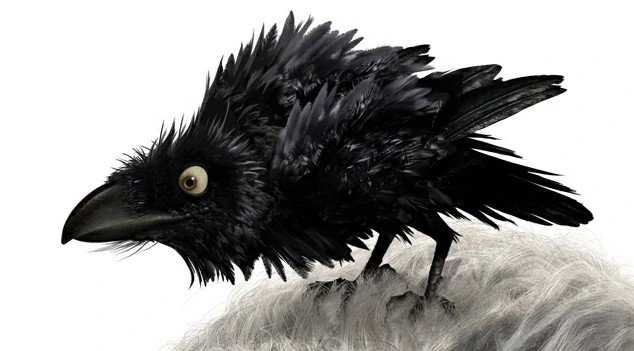
It’s also interesting that everything in the witch’s shop is bear themed. This could be a weird quirk of hers, or it might be another subtle way to thematically bind these two characters together. Maybe the old witch can sense these characters have similar spirits. It’s also interesting that the witch keeps carving bears when she gives up witchcraft, perhaps out of guilt for creating the monster Mor’du. As I mentioned in my post on the witches, they might not necessarily be evil, they merely facilitate the fate of the characters.

Trope 3: Toxic Masculinity and patriarchy

Witchcraft has long been a shorthand in theater and film for female power. Sadly, in Macbeth, it is framed as monstrous, that is, both attractive and morally wrong. When Lady Macbeth prays to dark spirits, it is because she seems unable to find any kind of power for herself, and resorts to witchcraft.

The raven himself is hoarse
That croaks the fatal entrance of Duncan
Under my battlements. Come, you spirits
That tend on mortal thoughts, unsex me here,
And fill me from the crown to the toe top-full
Of direst cruelty!

Lady Macbeth, Act I, Scene 5.

As this funny sketch from Second City indicates, in a modern context, Lady Macbeth’s problem isn’t that she wants power or wants to make herself queen, it’s that she goes about it the wrong way. I absolutely love the way the actress says: “I really need a job.” It’s hilariously tragic the way the sketch sums up how useless and isolated this character feels.

Sorry about the ad, but again, this sketch is useful to contextualize Lady Macbeth’s frustrations with a patriarchial society- if female power is considered abhorrent, she feels she has no choice but to use abhorrent means, which begs the question- which is more evil- dark magic, or the patriarchy?

Merida and Lady Macbeth have the same problem; society has pre-determined their fate as nothing more than wives and mothers which is why they both seek out magic to change that fate. Likewise, Macbeth and Mor’du are driven by toxic masculinity to change their fates by violently seizing power.

Ian McKellen as Macbeth performing the Dagger Speech (Act II, Scene i).

What’s great about this film is that it has buried within all its silly bear comic subplot, a clever spin on a classic tale that touches on patriarchy, ambition, and greed. Like Encanto and Lear, what I like about Brave is that it takes Shakespearean tragedy as an example of what almost happened to the main character. I wish that some of the fluff and fur was trimmed off this story and that Brenda Chapman’s vision for the film was truly realized, to make the film a true masterpiece.

The Shakespeare Authorship Controversy and Conspiracy Theories

“There is a tendency for us to view Shakespeare as this unquestionable monolithic genius. But there is also in us all that iconoclast that wants to tear him off his pillar or plinth.”

Dr. Katrina Marchant

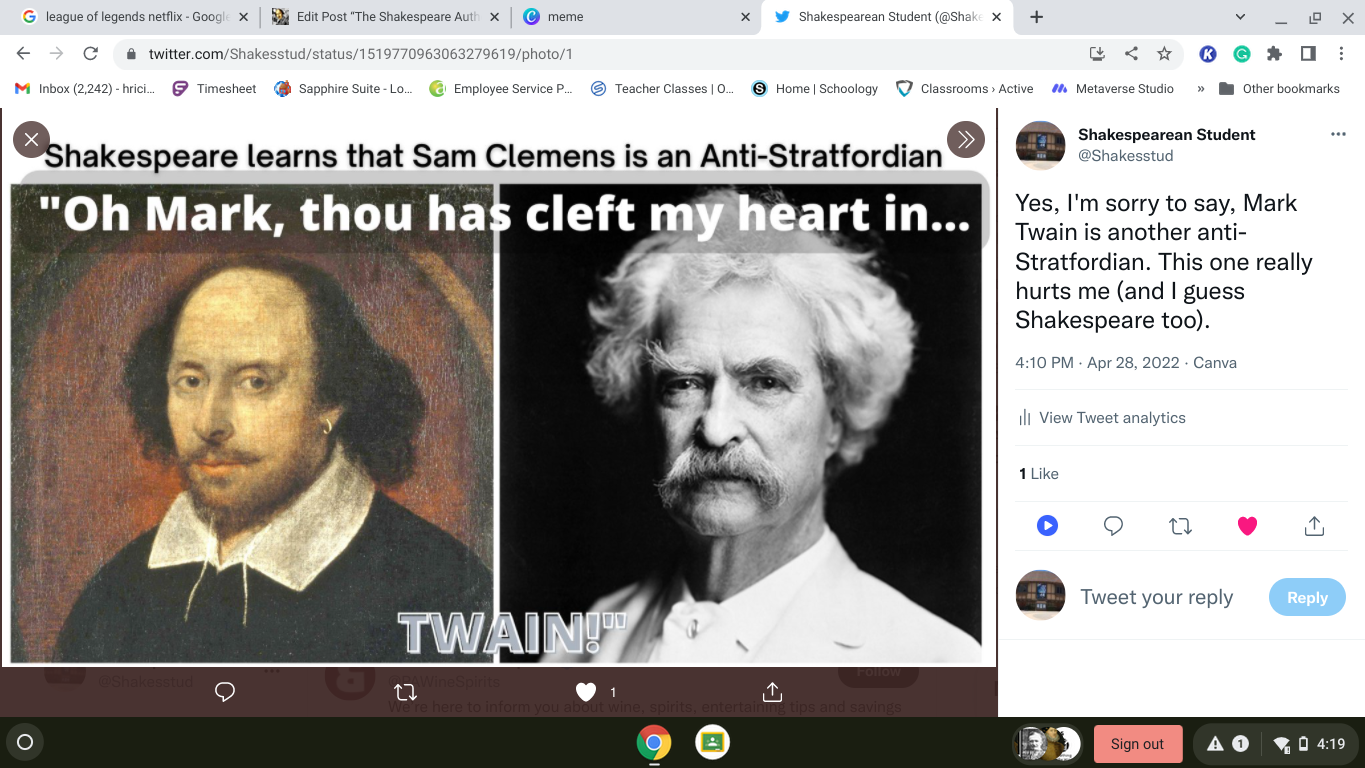
There are few things that will drive a Shaespeaeran scholar more skull-shatteringly livid than when someone asks them if Shakespeare wrote the plays attributed to him. There are dozens of YouTube rants, bile-dripping academic papers, tinfoil-hat Tweets, and of course, centuries of anti-academic book bashing and counter-bashing research on the subject. So I won’t try to settle this debate, but I think the debate itself is worth looking at.

The authorship controversy is essentially a conspiracy theory- Was some unknown writer sending scripts to Shakespeare’s company and using the actor from Stratford as a patsy, or a pen name? Is there a massive cover-up to disguise the author of the most celebrated works in the English language? If so, why? How? and what else are they hiding?

The Malleus Malefecarum, “The Witch’s Hammer,” a 15th century book that posits that there is a vast conspiracy of witches living among us.

Now if there’s one thing I’ve learned over the past four years is that it’s extremely rare to change anyone’s mind about any kind of conspiracy theory, and there are hundreds! Ancient Aliens, Bill Gates, Covid vaccine microchips, Elvis isn’t dead, The Illuminati, Kennedy Assassination, Pizzagate, Q-Anon, Trump’s Russia connections, the list goes on. Several recent studies show that the majority of Americans have heard at least one conspiracy theory, and many of us believe these theories to varying degrees. Sadly, the internet, which was designed to share information, is extremely good at sending misinformation as well.

So as an en educator and a father, I want to focus on the Shakespeare conspiracy not just because it gets my dander up, but also because, compared to these other theories, it is actually one of the least harmful. Conspiracies like the Plandemic hoax are extremely dangerous because they dissuade people from getting a life-saving treatment, and allow this pandemic to continue. By contrast, ultimately it doesn’t really matter who wrote Shakespeare’s plays, so I think this kind of exercise is useful for educators to challenge students to think critically about this low-stakes theory, and then applying the same skill to others to become better-informed thinkers.

How to break down the Shakespeare conspiracy theory

First, let’s summarize the most compelling points of the theory that Shakespeare didn’t write his plays. This is a video by director Roland Emmerich, which he made to help promote his film “Anonymous.” Emmerich dramatizes the controversy by portraying the Earl of Oxford writing the plays of Shakespeare anonymously, and sending them to Shakespeare’s company, giving the man from Stratford credit for writing them.

There’s an old saying in science that “Extraordinary claims require extraordinary proof,” and, aside from the fact that the Earl of Oxford wrote poems, there is no evidence that Oxford ever even spoke to Shakespeare’s company. In fact, almost none of this video is supported by any historical evidence. Now it would be a lot of work to refute each argument of this video point by point right? And surely I have better things to do than do a point-by-point refutation, but…

A Point-by Point refutation of the Roland Emmerich video:

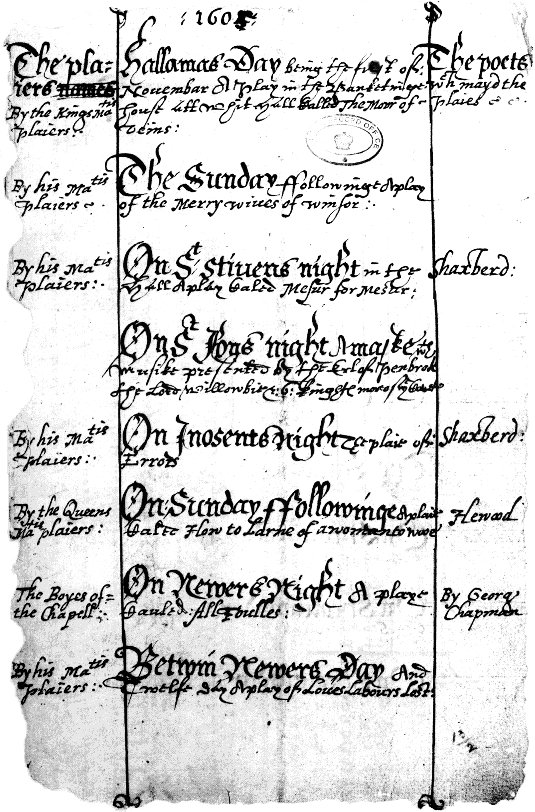
– Shakespeare did leave evidence of his handwriting, just not evidence of his dramatic writing. The fact that his correspondence didn’t survive doesn’t mean there wasn’t any. The kind of cheap parchment that writers of the period used dissolved very easily, especially when they used ink with high iron content. The examples we have of Shakespeare’s writing are mainly legal records and books that were designed to last. In short, there’s no conspiracy to hide Shakespeare’s manuscripts, they simply didn’t survive.

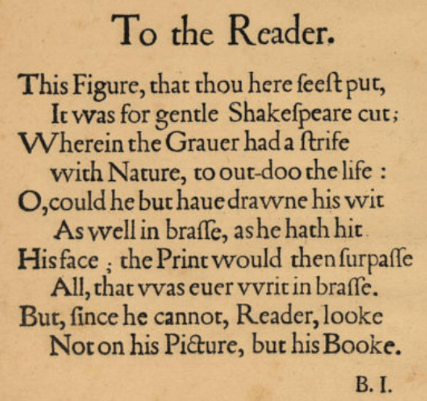
The dedication page of the 1623 First Folio.

We don’t know for sure that his parents were illiterate, or that his daughters were. That is based on an urban legend, not actual proof. Also, plays were not written to be read, that’s why TV viewers are viewers and the grounding are called an audience.

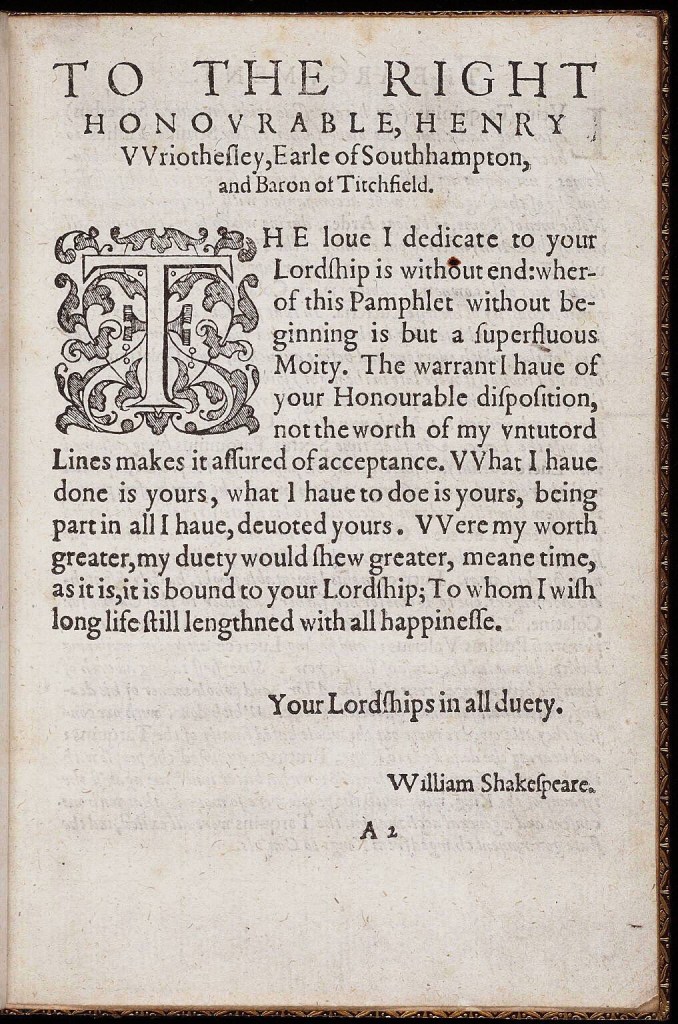
A. Shakespeare wrote about aristocratic people because they were paying his rent. His company was literally named “The Lord Chamberlain’s Men.” One reason why Shakespeare was more successful than Ben Johnson was that he was deferential and obsequious to the English aristocracy; he had to sing their praises to stay in business.

Dedication page of Venus and Adonis, which Shakespeare wrote to the Earl Of Southampton.

B. Every character that Emmerich mentions is not an aristocrat- Bottom is a lower-class weaver, Mistress Overdon is an inn-keeper. The only aristocrats Shakespeare ever insults are Polonius (who isn’t real), and Sir John Oldcastle in the early draft of King Henry IV, which he immediately changed to Sir John Falstaff once Oldcastle’s family members complained about it to Shakespeare’s company. Emmerich is flat-out lying when he says Shakespeare mocks the English upper class like an equal.

C. There’s a very simple explanation of how Shakespeare was able to write about the manners and lives of the English aristocratic class: he didn’t. All of Shakespeare’s comedies (except for Merry Wives which has the aforementioned Falstaff as a character), and tragedies take place in other countries like Italy, France, Sicily, or Greece. His History plays are set in England, but they dramatize events that happened 100-200 years before Shakespeare was born, meaning that he didn’t need to know too much about contemporary court politics. Furthermore, the majority of the plots he used were recycled from history books, poems, and prose romances.

It’s useful to think of Shakespeare not as a novelist like Dickens or Tolstoy and more like a TV or film screenwriter like George Lucas or Aaron Sorkin. He didn’t write based on real-life experiences or conjure new ideas out of thin air. He was a popular dramatist who adapted existing works of literature to be dramatized onstage. This is why I created my YouTube comedy series “If Shakespeare worked for Disney.” Emmerich, like many Anti-Stratfordians, is assuming that Shakespeare couldn’t have written plays about the nobility without being one himself, but that’s not what Elizabethan dramatists did- they adapted pre-existing work to fit on the public stage, which means anyone with a good education and knowledge of the theater could have written them, regardless of his or her upbringing.

If you are wondering how I could possibly know Shakespeare’s writing process,, the answer is simple: All of Shakespeare’s sources have survived, which means that I can prove that his plays are adaptations. This is a common problem with most conspiracy theories- they never take the straightforward way to explain something. Instead, they take a theory and twist facts to suit that theory. In this case, they twisted the facts about the Earl of Oxford’s life to make him look like Hamlet and based on that, they made him look like the true author of Shakespeare.

D. Honestly the handwriting is the weakest point- yes Shakespeare spelled his name differently in documents but this was before standard English spelling. The first English dictionary was at least 100 years after Shakespeare’s death. This point is clearly designed to discredit Shakespeare and make him seem uneducated. But again, this point is irrelevant when you consider that Shakespeare wrote for theater, where standard spelling is completely unnecessary.

By the way, Ben Johnson spelled his name differently in his manuscripts.

The Debate- Feelings vs. Facts. Modern vs. early modern

When I was in high school, taking my first class on Shakespeare, I watched this documentary which almost convinced me that Oxford was the true author of Shakespeare. The researcher they interviewed seemed so passionate and I wanted to believe what he said was true. But that was before I started reading about Shakespeare’s life for myself, and looked at the evidence myself.

How to Spot a Conspiracy Theory

https://allianceforscience.cornell.edu/conspiracy-theory-handbook/

The common traits of Conspiracy Theories from the Conspiracy Theory Handbook

If you look at many different conspiracy theories, they often exist in a form outside of normal reality, to the point where the believers have no interest in any kind of contrary evidence, logic, or any person who even questions it. Essentially the conspiracy becomes their identity, and they will virulently defend this conspiracy from anyone and anything that opposes it. Below is an explanation of the basic parts of a Conspiracy theory, with some points on how they all apply to the Shakespeare Authorship Controversy

Contradictory Beliefs:

Believers in conspiracies are motivated by feelings, not facts, and they don’t care how inconsistent those theories are. For example, the same people who believe Joe Biden lost the presidential election, also believe that the president (Joe Biden) is also being played by an actor. This might explain why many people believe that people like Christopher Marlowe wrote the works of Shakespeare, despite the fact that he died 9 years before Shakespeare started writing.

Overriding suspicion:

Again, since the believer is motivated by feelings, they are naturally suspicious of any contrary evidence and just assume anyone who contradicts them is in on the conspiracy. This is called self-sealing the conspiracy.

Nefarious intent:

One question that inevitably comes up with the Shakespeare Authorship debate is: “Who cares?” Usually, this means “Does it really matter who wrote the plays?” However, I want to use this question in this context: “Why go through the trouble to conceal who wrote these plays?” As I mentioned earlier, though Shakespeare is very famous and culturally important now, he certainly wasn’t back in his lifetime. Playwriting was not a venerated profession, and socioeconomically, Shakespeare was little better than a tailor. Why would it be worth it to conceal who wrote a few, fairly popular plays in 1616?

It would take an enormous amount of effort to conceal who wrote these plays for 400 years- you’d have to pay off publishers, fake court records (like the one I showed you above), keep an entire court quiet, and make sure nobody ever wrote down the truth for 400 years. Why would it be worth it? This kind of logic is why the Moon Landing and the Flat Earth conspiracies don’t hold up to rational thought- there’s simply no reason to go through the effort of concealing the alleged truth. The truth itself is just easier to defend.

Something Must be wrong:

As the name implies, Anti-Stratfordians don’t so much believe in Bacon, Pembroke, Oxford, etc, so much as they actively choose not to believe in William Shakespeare of Stratford. This means they will use every bit of their energy trying to prove that theory, and won’t stop until they find something, no matter how nonsensical, to prove their Shakespeare is the real Shakespeare.

Persecuted victim:

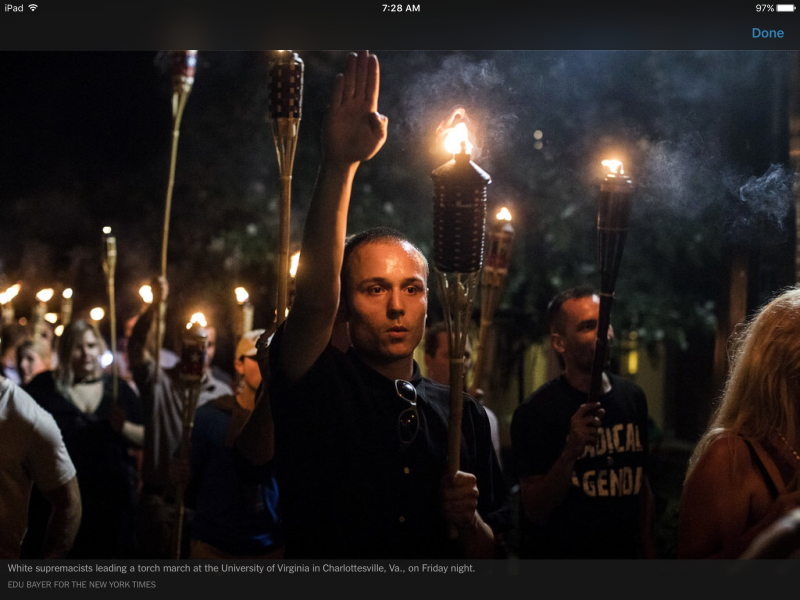
Let me be blunt- a conspiracy is very simmilar to a delusion, and any attempt to shatter that delusion is a form of persecution for the conspiracist. The most infamous example of how conspiracy theorists can feel persecuted and empowered at the same time is the way it permeated Nazi Germany and neo-Nazi units. Hitler came to power by spreading the theory that the Jews were secretly controlling the world and Germany was persecuted, while at the same time, Germany was destined to control the world in the eyes of the Nazis. I mention this not because I think Anti-Stratfordians are Nazis (how could I watch I Claudius otherwise?), but that conspiracy theories are potentially very dangerous because they foster a self-serving victim mentality where people are constantly looking for someone to blame for their problems and they will sometimes become violent against anyone who challenges them.

Immune to Evidence

One of the most important concepts in law is the notion that someone is ixznnocent until proven guilty. Along those lines, the prima facie, the accepted truth is accepted as truth, until new evidence contradicts it. If you look at the Supreme Court mock trial for the Authorship question back in 1987, that was the conclusion they came to in the end. Though little historical evidence for Shakespeare has survived, there is NO PHYSICAL evidence that contradicts it, so in the interest of prima facie evidence, they ruled for Shakespeare.

Now real conspiracy believers never believe in the merits of contrary evidence. They will just assume it is manufactured or faulty; part of the attempts of those nefarious truth concealers to pull the wool over their eyes.

Re-Interpreting Randomness

I’ve seen many people claim that the evidence for conspiracies is not found in documents or in scientific explanation, it’s in some kind of code or cipher or series of clues that only the believers understand. As you’ll see below, some of the most famous Anti-Stratfordians claimed to find hidden codes and ciphers in Shakespeare’s plays that prove that he was concealing his true identity. They will also cite coincidental details like the fact that the crest of Edward DeVere was an eagle shaking a spear, and claim this proves his identity as the true author of the plays. When you see a theory like like this, remember, correlation is not causation. Just because a few bad things happened when a few people said “Macbeth,” does not mean Macbeth is cursed. Some things actually are coincidences and not everything has a dramatic or sinister cause. This brings me to my next point:

The real enemy of conspiracies: Disappointing facts (Spoilers ahead for the movie “Coco”)

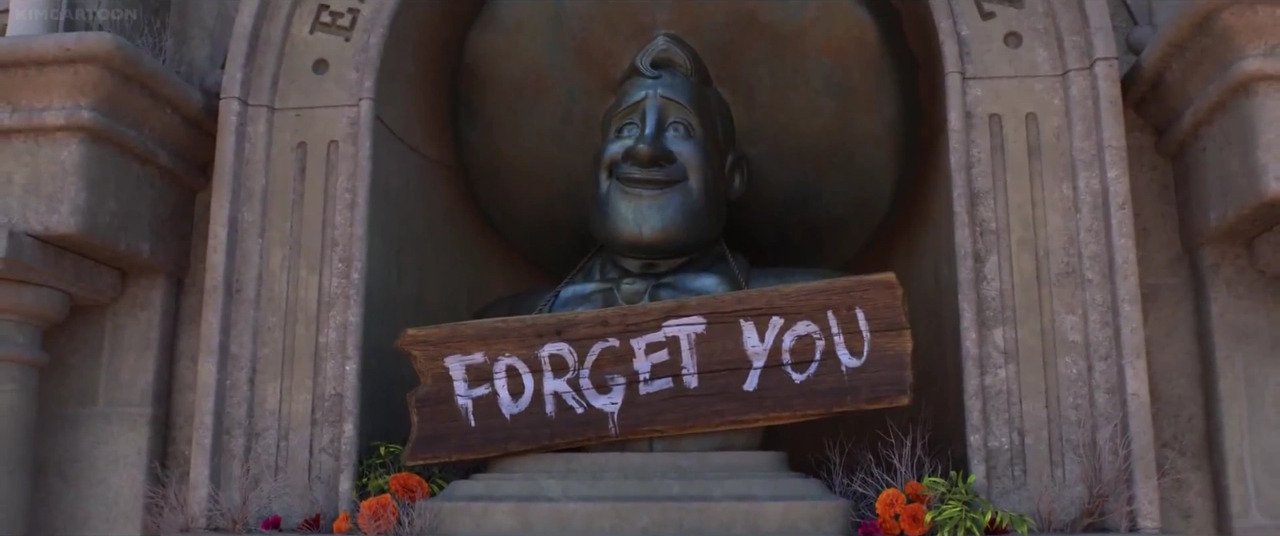
Let’s do a little thought experiment: Let’s imagine that you were Miguel from Disney’s Coco, and you discovered that your hero Ernesto Dela Cruz murdered your grandfather Hector, but (unlike in the movie), he actually DID write the songs he said he did. How would you feel about Hector? Would you hope and pray that Ernesto lied and your virtuous grandfather was the real author? Might you even concoct a conspiracy theory to rewrite Ernesto’s history and get Hector celebrated as the real author of “Remember Me?”

I’m not suggesting that Shakespeare is guilty of murder, or any other crime (apart from usury, hoarding grain, and a few minor tax violations). What I’m trying to do is to draw parallels between two men who are icons that are beloved by their hometowns, who created work that resonates with a lot of people.

We all have a tendency to take people we admire and put them on pedestals, (like the quote at the beginning mentions), and many people try to identify with their heroes. This is really easy with Shakespeare because most of the personal details of his life have vanished, so we can imbue him with our own sensibilities. Case in point- when Mya Angelou read Shakespeare’s sonnets as a little girl, she initially thought that he was a black girl. Likewise, Eugene O’Neill and other Irish and Irish American writers have thought he might be been Irish.

Some of the most outrageous anti-Stratfordians clearly have an axe to grind because they have a family connection (real or imagined) to the man they believe to be Shakespeare. In the 19th century, Delia Bacon wanted to prove that the real author of Shakespeare’s plays was the 17th-century poet, philosopher, and essayist, SIR FRANCIS BACON. Ms. Bacon hated Shakespeare because she thought he was an illiterate sheep-poaching commoner. She, therefore, used her theory to hoist Shakespeare off his literary pedestal, and therefore elevate herself because she believed she was descended from Sir Francis (though in reality, she wasn’t).

Rather than using any kind of historical evidence to prove her theory, Ms. Bacon claimed there was an elaborate code hidden in the iambic pentameter. Subsequent literary pseudo-scholars have attempted to hack the code and prove that they can prove that Sir Francis was the real author of the plays. In the late 1800s, American politician and author Ignatius Donnelly appropriated Ms. Bacon’s theory and claimed he had found the code, which rested on the pagination of the First Folio.

Donnelly had a knack for spreading conspiracy theories; as the title page of his book shows, he also authored a book where he claimed he correctly identified the location of the lost city of Atlantis. He also hated Shakespeare because Donnelly believed he was nothing more than a businessman, exploiting the talent of others, so like Bacon, he cooked up these ‘facts’ to suit his theory in order to take Shakespeare down.

Like many conspiracy theories, Anti-Stratfordians don’t have any factual basis for the ideas they hold, they are responding to an emotional need or desire. Donnelly and Bacon wanted fame, recognition, and revenge against a man they hated. J. Thomas Looney, who proposed that the Earl of Oxford wrote Shakespeare, wanted a ‘fairy prince’ that is, a semi-mythical Bard who would lead England into a golden age. All these people were dissatisfied with the man from Stratford, so they created a Shakespeare of their own, and tried to justify his existence.

Title page of the 1623 Folio, the first complete edition of Shakespeare's plays.
Title page of the 1623 Folio, the first complete edition of Shakespeare’s plays.

To briefly sum up why the Bacon/ Donnelly theory is false, it hinges on the page numbers of the Folio, but Shakespeare didn’t print the first Folio. If you look at the title page, it was assembled by two actors from Shakespeare’s company- Henry Condell and John Hemmings, and it was printed by Isaac Jaggard, the same man who printed Shakespeare’s Sonnets in 1609. Writers had no say in how their work was printed and in fact Jaggard actually printed the sonnets without Shakespeare’s permission! The notion that Jaggard had any interest in properly printing a secret code in the pages of his posthumous book seems to me, incredibly unlikely at best.

Lesson plan

I’ve adapted a lesson plan about conspiracy theories to include a discussion of the Shakespeare authorship question. I’ll also include a worksheet that you can use in your classroom to distribute among your students if you choose to use it as well. I think it’s a good way to foster critical thinking, scientific reasoning, and historical curiosity, and if it prevents more people from joining Q-Anon, so much the better!

This lesson plan makes use of the Conspiracy Theory Handbook, and it has great, easy to read activities about how to spot a conspiracy theory, how to talk to a conspiracy theorist, and how to avoid being taken in by a conspiracy.

Sources:

https://www.americanprogress.org/press/release/2020/10/13/491521/release-new-survey-shows-conspiracy-theories-thriving-u-s-election-nears/:

https://www.forbes.com/sites/rainerzitelmann/2020/06/29/how-many-americans-believe-in-conspiracy-theories/?sh=62b9725d5e94

https://www.c-span.org/video/?618-1/shakespeare-author-pseudonym#

The Fashion Is the Fashion 4: The Journey of Romeo and Juliet

I’ve seen four live productions of Romeo and Juliet, (5 if you include West Side Story). I’ve also watched four films (6 if you include West Side Story and Gnomio and Juliet) and one thing that I’ve noticed again and again, and again is that you can tell the whole story of the play with clothing. This is a story about families who are part of opposite factions whose children secretly meet, marry, die, and fuse the families into one, and their clothes can show each step of that journey.

The feud
Nearly every story about a conflict or war uses contrasting colors to show the different factions. Sometimes even real wars become famous for the clothes of the opposing armies. The Revolutionary War between the redcoats and the blue and gold Continentals, the American Civil War between the Rebel Grays and the Yankee Bluebellies. In almost every production I’ve ever seen, the feud in Romeo and Juliet is also demonstrated by the opposing factions wearing distinctive clothing.

Guelphs and Ghibellines - Wikipedia


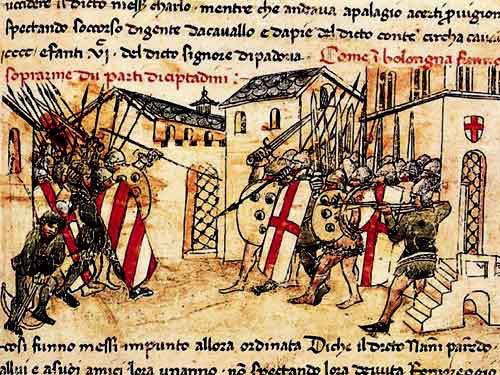
Historically, warring factions in Itally during the period the original Romeo and Juliet is set, wore distinctive clothes and banners as well. . In this medieval drawing, you can see Italians in the Ghibelline faction, who were loyal to the Holy Roman Empire, fighting the Guelph faction (red cross), who supported the Pope. Powerful families were constantly fighting and taking sides in the Guelf vs. ghibelines conflict in Verona, which might have inspired the Capulet Montegue feud in Romeo and Juliet.


Even the servants of the nobles got roped into these conflicts, and they literally wore their loyalties on their sleeves. The servants wore a kind of uniform or livery to show what household they belonged to. The servants Gregory and Sampson owe their jobs to Lord Capulet, and are willing to fight to protect his honor. Perhaps Shakespeare started the play with these servants to make this distinction very obvious. Here’s a short overview on Italian Liveries from the Metropolitan Museum of Art:

https://www.metmuseum.org/art/collection/search/86582


In 1966, director Franco Zepherelli set a trend with his iconic use of color in his movie. He chose to make the Capulets wear warm tones while the Montegues wore blue and silver. Juliet (Olivia Hussey) wore a gorgeous red dress that made her look youthful, passionate, and lovely, while Tybalt (Michael York), wore red, orange, and black to emphasize his anger, and jealousy (which has been associated for centuries with the color orange). By contrast, the Montagues like Romeo (Leonard Whiting) wore blue, making him look peaceful and cool. These color choices not only clearly indicate who belongs to which contrasting factions, but also help telegraph the character’s personalities. Look at the way these costumes make the two lovers stand out even when they’re surrounded by people at the Capulet ball:

Dance scene from the iconic 1968 film of Romeo and Juliet, directed by Franco Zeffirelli.
Gnomeo & Juliet - Wikipedia
Poster for “Gnomio and Juliet, 2011


Zepherilli’s color choices were most blatantly exploited in the kids film Gnomio and Juliet, where they did away with the names Capulet and Montegue altogether, and just called the two groups of gnomes the Reds and the Blues.

The Dance


To get Romeo and Juliet to meet and fall in love, Shakespeare gives them a dance scene for them to meet and fall in love. He further makes it clear that when they first meet, Romeo is in disguise. The original source Shakespeare used made the dance a carnival ball, (which even today is celebrated in Italy with masks). Most productions today have Romeo wearing a mask or some other costume so that he is not easily recognizable as a Montague. Masks are a big part of Italian culture, especially in Venice during Carnival:


In the 1996 movie, Baz Luhrman creates a bacchanal costume party, where nobody wears masks but the costumes help telegraph important character points. Mercutio is dressed in drag, which not only displays his vibrant personality but also conveniently distracts everyone from the fact that Romeo is at the Capulet party with no mask on.


Capulet is dressed like a Roman emperor, which emphasizes his role as the patriarch of the Capulet family. Juliet (Claire Danes) is dressed as an angel, to emphasize the celestial imagery Shakespeare uses to describe her. Finally, Romeo (Leonardo DiCaprio) is dressed as a crusader knight because of the dialogue in the play when he first meets Juliet:

Romeo. [To JULIET] If I profane with my unworthiest hand
This holy shrine, the gentle fine is this:720
My lips, two blushing pilgrims, ready stand
To smooth that rough touch with a tender kiss.
Juliet. Good pilgrim, you do wrong your hand too much,
Which mannerly devotion shows in this;
For saints have hands that pilgrims' hands do touch,725
And palm to palm is holy palmers' kiss.
Romeo. Have not saints lips, and holy palmers too?
Juliet. Ay, pilgrim, lips that they must use in prayer.
Romeo. O, then, dear saint, let lips do what hands do;
They pray, grant thou, lest faith turn to despair.730
Juliet. Saints do not move, though grant for prayers' sake.
Romeo. Then move not, while my prayer's effect I take.
Thus from my lips, by yours, my sin is purged.
Juliet. Then have my lips the sin that they have took.
Romeo. Sin from thy lips? O trespass sweetly urged!735
Give me my sin again.
Juliet. You kiss by the book. Romeo and Juliet, Act I, Scene V, Lines 719-737.

Notice that Romeo calls Juliet a saint, and later an angel in the famous balcony scene, which explains her costume at the ball. Juliet refers to Romoe as a Pilgrim, which is a cheeky comment on his crusader knight costume. In the Crusades, crusader knights made pilgrimages to the holy land, with the hope that God (and presumably, his angels) would forgive their sins. Romeo’s name even means “Pilgrim.” Luhrman makes clever nods to Shakespeare’s text by dressing Romeo and Juliet in this way, and gives the dialogue a bit of a playful roleplay as the characters make jokes about each other’s costumes- Romeo hopes that he will go on a pilgrimage and that this angel will take his sin with a kiss.


In Gnomio and Juliet, the titular characters meet in a different kind of disguise. Rather than going to a dance with their family, they are both simultaneously trying to sneak into a garden and steal a flower, so they are both wearing black, ninja-inspired outfits. Their black clothing helps them meet and interact without fear of retribution from their parents (since they do not yet know that they are supposed to be enemies. The ninja clothes also establishes that for these two gnomes, love of adventure unites them. Alas though, it doesn’t last; Juliet finds out that Gnomio is a Blue, when they both accidentally fall in a pool, stripping their warpaint off and revealing who they are.

Trailer for “West Side Story,” (2021) directed by Steven Spielberg.


Sometimes the dance shows a fundamental difference between the lovers and the feuding factions. West Side Story is a 20th-century musical that re-imagines the feuding families as juvenile street gangs, who like their Veronese counterparts, wear contrasting colors. The Jets (who represent the Montagues) wear Blue and yellow, while the Sharks (Capulets), wear red and black. The gang members continue wearing these colors on the night of the high school dance, except for Tony and Maria (the Romeo and Juliet analogs). In most productions I’ve seen, (including the 2021 movie), these young lovers wear white throughout the majority of the play, to emphasize the purity of their feelings, and their rejection of violence. Thus, unlike Shakespeare’s version of the story, West Side Story makes the lovers unquestionably purer are more peaceful than Shakespeare’s Romeo and Juliet, and their clothing makes this clear.

Romeo (John Warren), meets Juliet (Alesia Lawson) in the 2010 Ashland University production of “Romeo and Juliet,” directed by Ric Goodwin.

The Merging of the family
(8:30-11:00)


Costume Designer Charlene in the 2006 AU production deliberately had the characters change clothes when they get married. Juliet was wearing the same iconic red dress as Olivia Hussey for the first two acts of the play but then changed into a pale blue gown that matches Romeo. The clothes re-enforce the idea that the marriage represents Romeo and Juliet abandoning their family’s conflicts, and simply showing their true colors.

Two sets of costumes for Juliet in the 2006 Ashland University Production. Pull the slider bar left to see how Juliet’s costume changes from the start of the show to the end.


Another way of getting everyone in the family to subconsciously unite in grief would be to costume everyone wearing black except Romeo and Juliet. At the end of the play, The Capulets are already mourning Juliet, (because she faked her death in Act IV), and the Montegues are already mourning Lady Montegue (who died offstage). Just by these circumstances, everyone could come onstage wearing black, uniting in their grief, which is further solidified when they see their children dead onstage.

Not all productions choose to costume the characters like warring factions, but nevertheless, any theatrical production’s costumes must telegraph something about the characters. In these production slides for a production I worked on in 2012, the costumes reflect the distinct personality of each character and show a class difference between the Montagues and the Capulets.


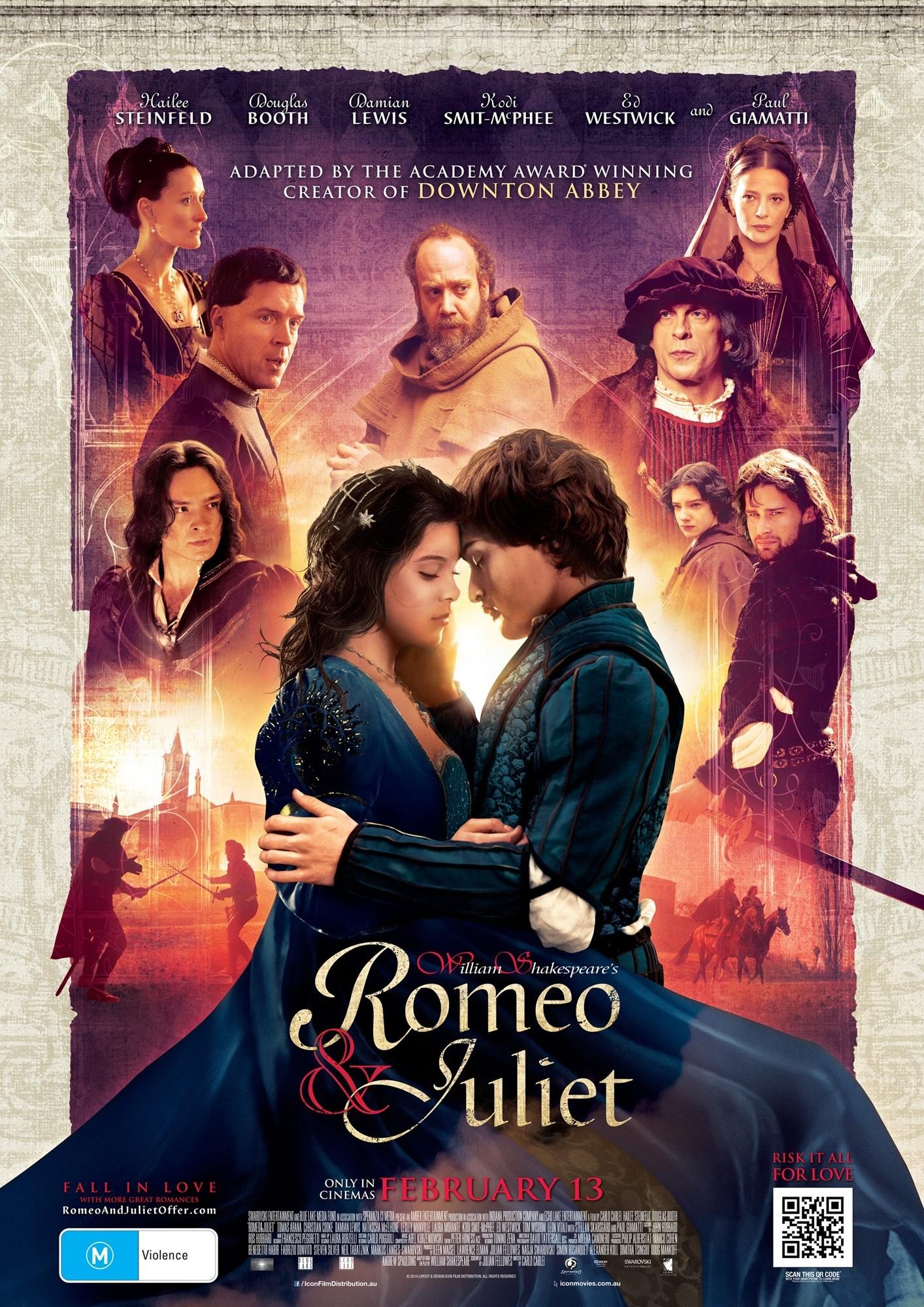
The 2013 Film: Costumes Done Badly


The 2013 movie is more concerned with showing off the beauty of the actor’s faces, and the literal jewels than the clothes:

Most of the actors and costumes are literally in the dark for most of the film, probably because the film was financed by the Swarofski Crystal company, who literally wanted the film to sparkle. Ultimately, like most jewelry, I thought the film was pretty to look at, but the costumes and cinematography had little utilitarian value. The costumes and visual didn’t tell the story efficiently, but mainly was designed to distract the audience with the beauty of the sets, costumes and the attractive young actors. The only thing I liked was a subtle choice to make Juliet’s mask reminiscent of Medusa, the monster in Greek Myth, who could turn people to stone with a look. I liked that the film was subtly implying that love, at first sight, can be lethal.

Movie Review: Disney’s “Encanto”- “King Lear” with a happy ending. 


If you read my blog for an extended period of time, or if you listen to my podcasts, or if you’ve taken any of my classes online, then  I probably  told you the notion that I believe that you could find Shakespearean roots in just about every single work of Western and quite a few of Eastern literature. Shakespeare is ingrained in our culture and therefore a lot of his influence can be felt in almost every bit of media we take in.  One of my favorite ways to illustrate this, is by looking at Disney movies, trying to prove that every Disney story is at least a little bit inspired by a Shakespeare play as you’ve seen from my comedy series if Shakespeare wrote for Disney:

I had an enormous challenge on my hands when Disney came out with the new film Encanto. Previously I’ve found it very easy to deconstruct Disney film plots and spot their Shakespearean roots: Pocahontas is Romeo and Juliet by Disney’s own admission, Aladdin is basically the Tempest, Mulan is Twelfth Night, and the Lion King is Hamlet, (as many people have pointed out).

Encanto was really really hard because it is such a fresh and original story. It is deeply rooted in Columbian culture, so trying to defend the notion that it has anything in common with the works of a 400-year-old English male playwright is a tough claim. I don’t mean to suggest that this movie is a deliberate reinterpretation of Shakespeare. That would be insulting and limiting to the breadth of the story. My main purpose with this post is to show how universal and powerful these two stories are- to pay Encanto the compliment that, like Shakespeare, the story transcends cultural and historical boundaries and tells a story we can all relate to, and this is why I am making this bold claim, that Encanto resembles King Lear, albeit with a happy ending.

Mirabelle- the Cordelia of “Encanto”

It was hard for me to realize that  Encanto resembles  Lear because the Lear character is not the focus of the movie; the focus of the movie is the Cordelia character, Mirabelle. If you’ve read King Lear , then you know that Cordelia is vital to the first 2 scenes of the play, and then goes offstage until Act 4 when where she is reunited with her father in prison, then cures his madness just long enough for her to be hanged. Her death is the darkest, grimmest, bleakest moment that  Shakespeare ever wrote. She is the heart of the play and Lear’s failure to listen to her forms the heart of the play’s message;  when an older generation clings to power and power or money or status or anything else besides their family, ultimately they suffer tremendously.

  In his first line, King Lear says that he wants to give up his kingdom, conferring it to his daughters and their husbands, but what he is really trying to do is to get his daughters to say they love him and to give them the kingdom as a reward.

This deal also has more strings attached;   Lear basically says: “Now that I’ve given you my kingdom, you have to house me in your castle with a retinue of 100 knights.” And the only child who really loves Lear and has his best interest in heart is Cordelia, and Lear violently renounces his parental claims on her and banishes her from the kingdom along with her husband the king of France.

The Lear of “Encanto”

Abuela Alma Madrigal, from Disney’s Encanto.

So who is the King Lear figure in Encanto? Abuela Alma! Think about it, she is an older person who is spending the whole play clinging and holding on to the power that the Magic Candle gives to her. She spends the whole movie trying to protect the Encanto, and when she mistakenly believes that Mirabelle is a threat, she pushes her away. She rules her other children Papa, Julietta, and Brunowith an iron fist, and she flies into panics and rages whenever anything seems to threaten the safety of the candle. For example, when Bruno gets the magic prophecy that Mirabelle might destroy the house and destroy the Encanto,  Abuela refuses to let Mirabelle talk to anybody ever and generally acts in a cruel controlling way.

Look at this passage when Lear rejects his loving daughter Cordelia. Given what I’ve mentioned- the fists of rage, the clinging to supernatural powers, and the controlling demands for loyalty and obedience from his children, whom does King Lear sound like?

Lear: 
For, by the sacred radiance of the sun,
The mysteries of Hecate and the night;
By all the operation of the orbs115
From whom we do exist and cease to be;
Here I disclaim all my paternal care,
Propinquity and property of blood,
And as a stranger to my heart and me
Hold thee from this for ever. The barbarous Scythian,120
Or he that makes his generation messes
To gorge his appetite, shall to my bosom
Be as well neighbour'd, pitied, and reliev'd,
As thou my sometime daughter. King Lear, Act I, Scene i.

As Ian McKellen explains in this interview, like Abuella, Lear clings to power, which he derives from supernatural forces, ignores people who care about him, and believes that his authority is absolute:

Trauma and Violence in Encanto and King Lear

Marxist critics believe that Lear’s power is based on violence, (like most medieval kings), and violence is actually connected to Abuela as well. Let’s not forget that the candle was forged after the faceless men with machetes attempted to murder Abuela and her whole village. The candle is Abuela’s power, but it is also a constant reminder of the violence that she escaped. It is also therefore a symbol of her trauma. Perhaps these characters became so controlling, distant, and cold because of the trauma they endured. Lear is supposed to be a king of Britain back in the pre-Christian era of the Anglo-Saxons so he must have seen countless invasions:

The former king says himself that he’s fought in wars with his “Good biting falchion” (a kind of sword). Whether they’ve seen falchions or machetes, these characters have seen violence and want to protect themselves against seeing the pain of it again, and ultimately it is their children that suffer because of it.

In King Lear, the kingdom is ripped apart between the three daughters, and in Encanto, the house is literally ripped apart by the rift between the family and Abuela. Lear foolishly tries to bribe his daughters into flattering him; promising them the kingdom if they demonstrate how much they love him. Therefore Lear demands obedience and love and expects his family to fawn on him as if they were his subjects, not his family.

Lear’s favorite daughter Cordelia refuses to take the bribe, so she says nothing. Lear is enraged and treats this small disobedience like an act of treason:

Act 1 Scene ii: Lear disowns Cordelia

Arguably Abuella makes the same mistake. She treats her children like her subjects too and exploits their gifts in order to keep the community happy. Her fear of losing her home is the reason she pushes the Madrigals to be indispensable to the community. Think of the psychological and physical pressure Louisa mentions in her song:

As you can see in this video, Lin Manuel Miranda, who wrote the music for Encanto, was actually inspired by Shakespearean verse for the lyrics and rhythms in her song “Surface Pressure.” Whether or not he or the screenwriters were inspired by “Lear,” the fact remains that Mirabelle suffers much like Cordellia. She also can’t stand to see her sister Louisa in pain like this, so she sets out to save her family, which forces her to confront Alma. Much like Lear and Cordelia, Mirabelle and Abuela argue about how her clinging to the past is hurting her family and how the pressure she puts on them is literally ripping their home and family apart:

Sight and Sightlessness in “Encanto” and “King Lear”

Perhaps the biggest connective motif between Encanto and King Lear is the motif of sight and sightlessness. Both Lear and Lord Gloucester are blind to the danger that they’re in and blind to who their real friends and enemies are. Lear trusts his two elder daughters because they flatter him, he trusts his drunken knights who only succeed in getting him forced out of the cold. Conversely, Lear ignores Cordelia. who really loves him, as well as  Kent, who is a loyal nobleman to the very end, and he ignores the Fool because he’s a fool.  If he had heeded any of their advice he would not have died alone and powerless. Therefore his sightlessness is a deadly weakness.

Gloucester, the other old man character in Lear has another problem with sightlessness and is punished for it figuratively and literally.  Gloucester’s bastard son Edmond deceives him into thinking that his legitimate son Edgar is plotting to kill him. The old man sends Edgar away, makes Edmund his heir, and then Edmond betrays him and gets him arrested for treason.

In the play’s most savage scene, Gloucester is tortured and his eyes are literally pulled out of his head.  From this moment  Gloucester finally sees Edmond’s treachery, and he laments that he “Stumbled when he saw”. Gloucester feels like he is finally able to see clearly now that he is blind, not unlike the ancient Greek tragedy Oedipus Rex. Of course,  nothing this gruesome can be shown in a Disney movie but the image of sight is constantly referenced in Encanto visually, and also through the lyrics of the songs. Even the name of the character; Mirabelle comes from the Spanish word ‘mira’ which means “to look”, and the first thing one might notice about her is her brightly painted green glasses, which constantly draw attention to her ability to see.

Mirabelle, like Cordelia, is able to see that her family is in pain, she sees that her family, the Encanto, and the house is in danger, while Abuela is constantly deluding herself and everybody else in thinking that nothing is wrong.

Through the course of the movie, Mirabelle is able to fix the various problems she sees. For instance, she sees that her sister Louisa is taking on too many responsibilities and refusing to admit that she is tired and feels weak. She realizes that her sister Isabella is tired of being the perfect golden child, that her  Uncle Bruno is not the monster that the family declares him to be, (however catchy their song about him is).

Through her sight and her perceptiveness, Mirabelle is able to heal the wounds in her family, The last wounds that she heals are the cracks on her house, and her own Abuella’s wounds, the wounds that went deep through her and even deep through her house; she mends the problems that happened the instant that the candle came into being:

Once Mirabelle and Alma reconcile, they set about rebuilding the house in this song. Notice how many times the words “look,” and “see” are mentioned in the lyrics. Mirabelle re-iterates how each person in her family is more than their gifts, more than just the roles Abuella put them in, and they respond by telling her to look at her own gifts and be proud of who she is. She heals them by seeing them as they are, and they heal her by seeing her too.

It was when I realized this that I understood that this movie is what would have happened if King Lear had only listened to the people who really cared about him, and did not succumb to idle flattery. If only he did not let his pain and his trauma dictate the rest of his life. There’s a wonderful hopeful message here that family wounds can be healed if we take the time to see and address them. If you read King Lear and then see Encanto you can see both how these family wounds can be healed, and the tragic consequences if they are not.

I hope that this little post has helped you appreciate both works because they are both magnificent and they are both carefully constructed and they both tell a very simple lesson for all families. As families, we need to recognize our faults, forgive faults in others, and work together to mend the pain and suffering that we experience in our lives. Mirabelle and Cordelia show that we can all be heroes if we see the truth, and speak what they feel not what they ought to say.

FMI

https://www.rsc.org.uk/shakespeare-learning-zone/king-lear/character/analysis#king-lear

Gloucester and His Sons, PBS Learning Media: Shakespeare Uncovered: witf.pbslearningmedia.org/resource/shak15.ela.lit.gloucester/gloucester-and-his-sons-king-lears-subplot-shakespeare-uncovered/?student=true

James Earl Jones in King LEar at Shakespeare In the Park, 1974. In my opinion, this is the BEST version of “King Lear” on film.