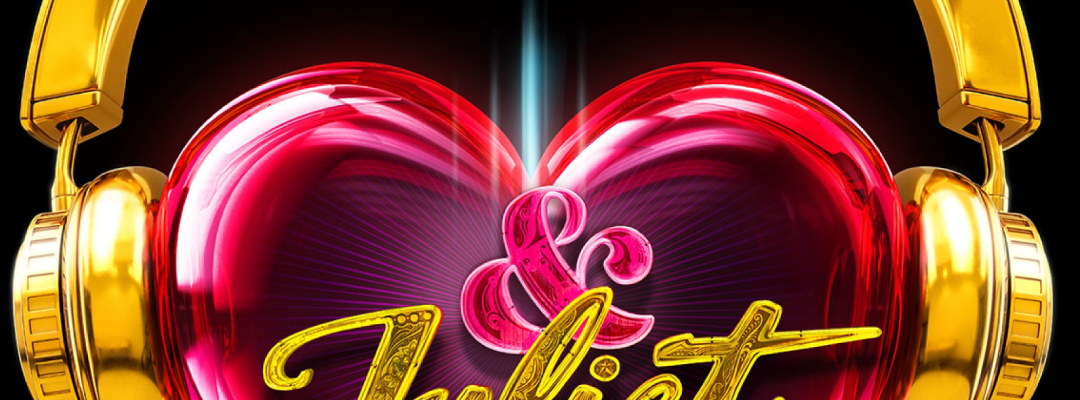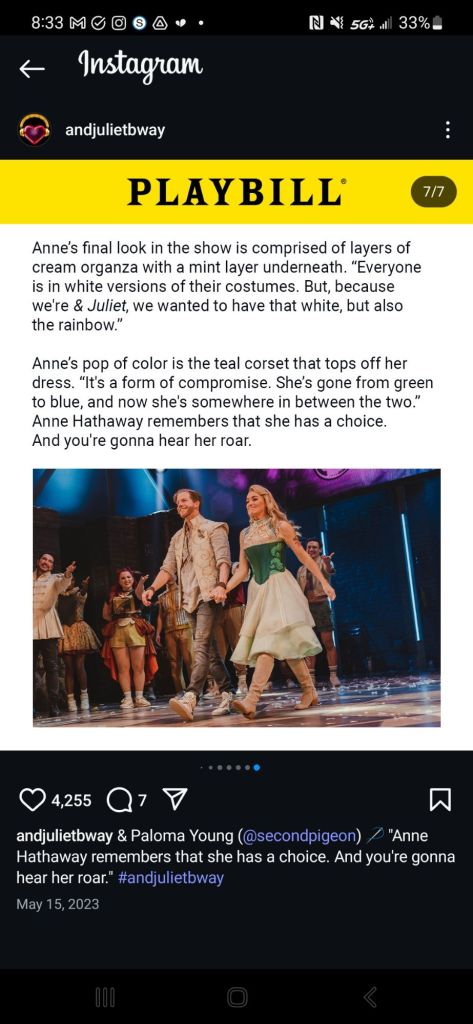
It’s around 1597 and Shakespeare is putting the finishing touches on his new play, Romeo and Juliet, when his wife Anne Hathaway arrives. Anne frankly, hates the double-suicide ending and takes Will’s quill. She then proceeds to write a new story where, after Romeo dies, Juliet packs up and flees with her Nurse and her two best friends to have a holiday in Paris (the city, not her ex-fiance).
To find a jukebox musical that is so self-aware in its writing, so humorous in the way it includes its songs through the narrative, and so blatantly charming, is a pure joy…and really, if you asked me to summarise this review into just a sentence it would be that: & Juliet is pure joy. –Carly Fisher
Stuff you Might have Missed
1609 collection of Shakespeare’s Sonnets, which were published without his permission.
Anne Hathaway Shakespeare- the sonnet Anne complains that Shakespeare never mentions her in his work, except once in sonnet 145, where he writes: “I hate, from hate away she threw, and saved my life saying, ‘not you’.”
Anne and the Second Best Bed– After breaking the fourth wall, Anne also complains that her husband left nothing to her in his will but “My second best bed with the furniture.” This is true, and some scholars have attempted to defend this choice, but it certainly doesn’t look good. In the myth of Shakespeare, this story has helped to construct the Shakespeare who cares more about his work than his wife. What’s interesting is that “&Juliet” helps address this myth and examines it. For more information about the myth of Anne and Will, click here to see my review of “Hamnet”
Yes, Juliet might be based on a historical character. One reason Will objects to his wife changing the play is that it violates the historical accuracy of the story. Like I said in my “Genesis of Romeo and Juliet,” the Capulets and Montegues might have been based on real political factions in Verona.
The Characters
The Music
All the songs in “& Juliet” came from one man- Max Martin, a Sweedish songwriter who has composed songs for Brittney Spears, Celene Dion, and The Backstreet Boys. These mega pop-hits were a huge part of my childhood, so seeing them combined with my favorite writer definitely tickled me and set off my nostalgia goggles. More importantly, it’s very interesting to see how the playwright David West Read turned these songs into a musical.
Setting “Romeo and Juliet” to pop music is by no means a new idea- “Gnomio and Juliet” underscored the whole movie with music by Elton John (who also produced the film). Making Shakespeare into a kind of rock or pop star is also not a new idea- Something Rotten and the musical version of “Shakespeare In Love” also did that. What is new is the concept of turning the story of Romeo and Juliet into a jukebox musical- a story where all the songs are pre-existing pop songs.
Normally I hate jukebox musicals- I find it irritating when producers take an artists’ songs and try to stitch them together into a coherent musical play. In normal musicals, the songs are designed to further the plot and help explain the characters’ internal and external conflicts. In my experience with most jukebox musicals, the songs feel like a waste of time, because the songs were never designed to tell an overarching story, so when they are integrated into a play, the story grinds to a halt. When it’s done badly, either you’re bored with the songs, or bored with the play.
With this in mind, I was prepared to dislike “&Juliet”. I was expecting either to hate the songs for slowing down the plot, or to hate the plot because I wanted to get back to the songs. But… miraculously, both the songs and the story WORKS! David West Read did a great job seeing the overarching themes of loss, love, and conflict within relationships within the music of Max Martin, and translate them into Romeo and Juliet- the iconic lovesick teenagers.
I’d like to highlight the incredible effect of one of these songs in the context of the play- “Hit Me Baby One More Time,” by Miller, made popular by Brittney Spears:
Oh, baby, baby The reason I breathe is you Boy, you got me blinded Oh, pretty baby There’s nothing that I wouldn’t do It’s not the way I planned it
It’s very clever that the writer gave this song to Juliet when she us at her most down and most self-destructive. She feels like her life is over without Romeo (her loneliness is killing her). What’s nice about this musical is that this moment is the beginning of Juliet’s arch, not the end.
Costumes
I could write a whole post about how clever the costumes are, and I will at a later date. Suffice it to say that they compliment the story and music by blending Elizabethan costumes with the sort of late 90s-early 2000s pop-star fashion favored by The Backstreet Boys, Katy Perry, and of course, Brittney Spears.
My Final Word
This show might not please everyone- hardcore Shakespeare nerds might find the concept hard to swallow, and honestly since the songs are mostly from the 90s and early 2000s, the music might be a little dated for a modern audience. Also, with the positive portrayal of homosexual relationships this show is DEFINATELY NOT FOR CONSERVATIVES. That said, it might do exactly what I’d hoped it would do- make fun of Shakespeare with care and in the process, get audiences to enjoy it anew.
In a world and in an age where everything is taken so seriously, it’s a complete delight to return to the idea of going to the theatre simply for fun and entertainment. Yes, the storyline is light and the line up of songs is a laundry list of bops, but in my opinion, there’s no problem in any of that! Quite the opposite! Packed to the brim with exceptional talent and some of Australia’s top dancers filling the ensemble…this is entertainment for entertainment’s sake and that is a lost art form in and of itself. – Carly Fisher
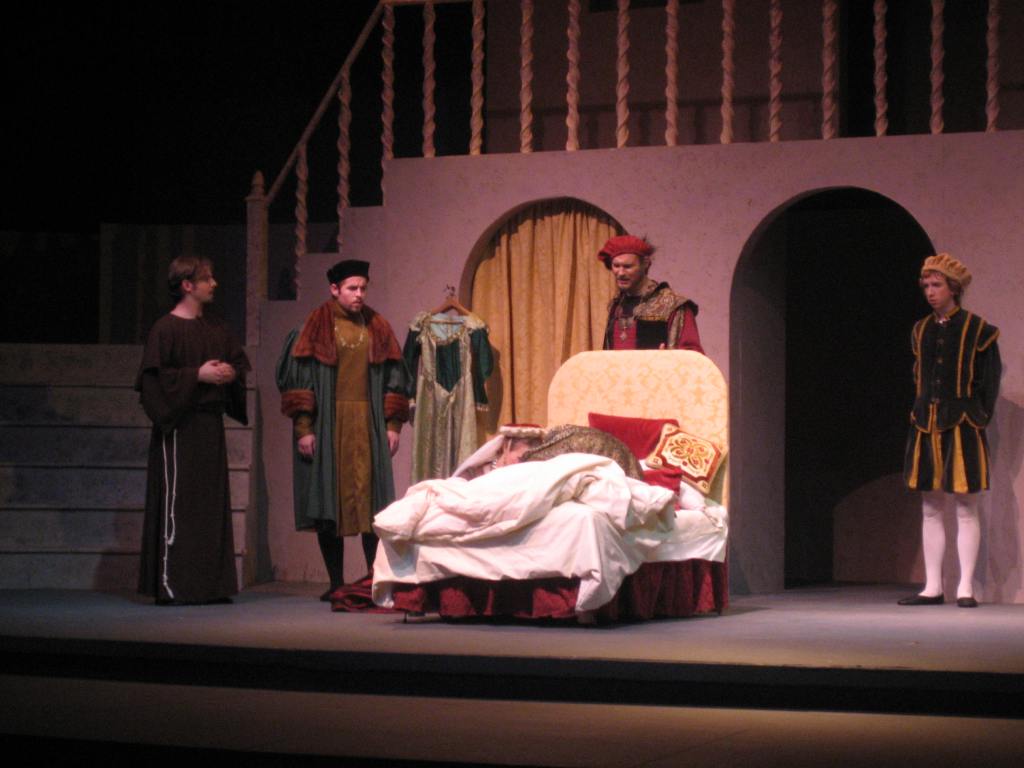
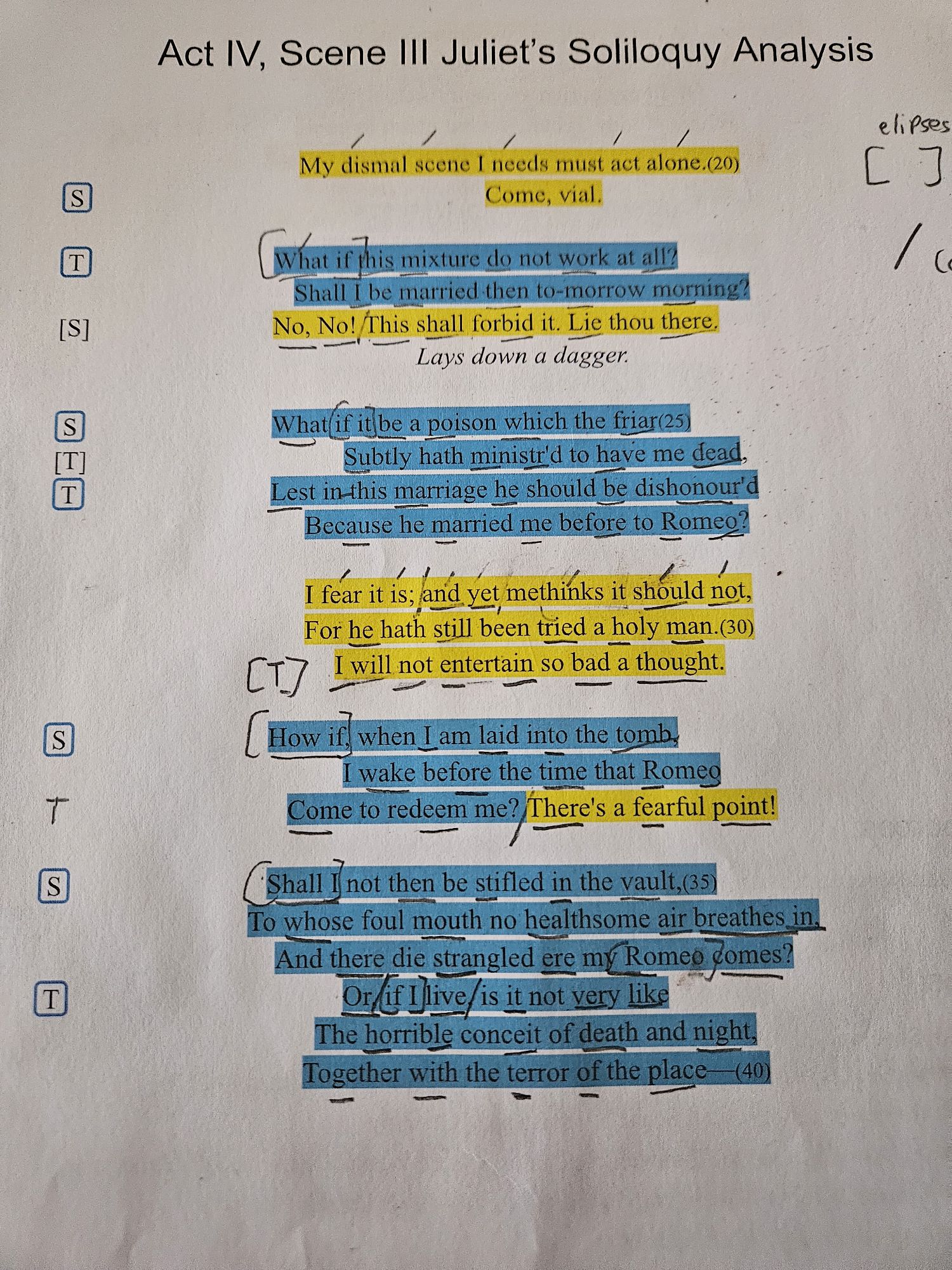
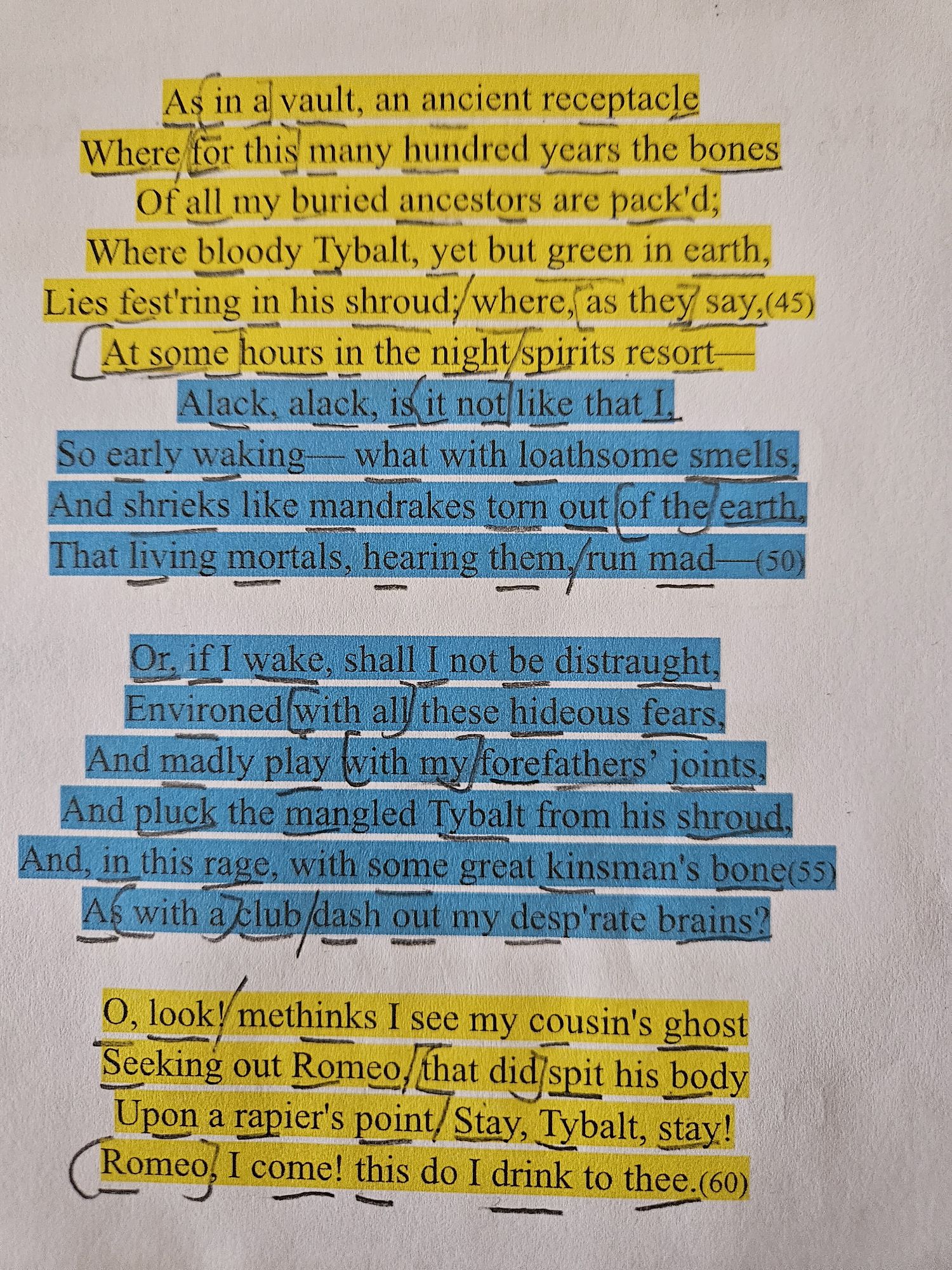
LADY CAPULET Good night. Get thee to bed and rest, for thou hast need. Lady Capulet and the Nurse exit. JULIET Farewell.—God knows when we shall meet again. I have a faint cold fear thrills through my veins That almost freezes up the heat of life. I’ll call them back again to comfort me.— Nurse!—What should she do here? My dismal scene I needs must act alone. Come, vial. She takes out the vial. What if this mixture do not work at all? Shall I be married then tomorrow morning? She takes out her knife and puts it down beside her. No, no, this shall forbid it. Lie thou there. What if it be a poison which the Friar Subtly hath ministered to have me dead, Lest in this marriage he should be dishonored Because he married me before to Romeo? I fear it is. And yet methinks it should not, For he hath still been tried a holy man. How if, when I am laid into the tomb, I wake before the time that Romeo Come to redeem me? There’s a fearful point. Shall I not then be stifled in the vault, To whose foul mouth no healthsome air breathes in, And there die strangled ere my Romeo comes? Or, if I live, is it not very like The horrible conceit of death and night, Together with the terror of the place— As in a vault, an ancient receptacle Where for this many hundred years the bones Of all my buried ancestors are packed; Where bloody Tybalt, yet but green in earth, Lies fest’ring in his shroud; where, as they say, At some hours in the night spirits resort— Alack, alack, is it not like that I, So early waking, what with loathsome smells, And shrieks like mandrakes torn out of the earth, That living mortals, hearing them, run mad— O, if I wake, shall I not be distraught, Environèd with all these hideous fears, And madly play with my forefathers’ joints, And pluck the mangled Tybalt from his shroud, And, in this rage, with some great kinsman’s bone, As with a club, dash out my desp’rate brains? O look, methinks I see my cousin’s ghost Seeking out Romeo that did spit his body Upon a rapier’s point! Stay, Tybalt, stay! Romeo, Romeo, Romeo! Here’s drink. I drink to thee. She drinks and falls upon her bed within the curtains.
The Given Circumstances
This famous soliloquy comes from Act IV, Scene iii. In this speech, Juliet grapples with her fears and anxieties about taking the Friar’s sleeping potion.
Traditional Interpretations
Ellen Terry (Vinal Record Recording, C. 1911)
Ms. Terry, like her famous grandson John Gielgud, is more interested in delivering the text clearly, beautifully, and strongly than getting Juliet’s character across. Consequently, by our standards, her reading of the speech is slow, declamatory, and maybe a bit over-the-top. However, this kind of delivery really brings out the rhythm of the verse, the beauty of the individual words, and the structure of the speech itself, so I recommend actors listen to it as a jumping off point. In my opinion, having a good technical grasp of the speech will keep an actor from going too far with the emotion, (making it hard for the audience to hear and understand them). This is why there’s still value in these dusty old recordings.
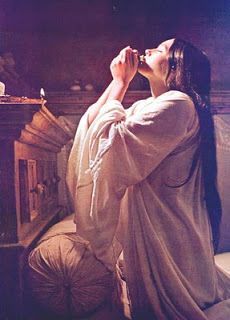
Olivia Hussey (Romeo and Juliet directed by Franco Zephirelli, 1966)
Zephirelli was very sparing with the dialogue- choosing to condense this entire speech to one line “Love, give me strength.” Hussey has a great deal of passion in the speech, as if she is absolutely certain that taking the potion will re-unite her with Romeo.
Claire Danes (Romeo +Juliet, 1996)
Claire Danes contemplating the vial in Romeo + Juliet
Danes has a sense of almost macabe trance-like energy when she delivers the speech. Like all the edged weapons in the movie, the dagger is replaced by a gun. Most of the speech is cut because Luhrman wanted to emphasize the character’s obsession with violence, rather than fears about ghosts and arranged marriages. Consequently, Danes does little other than put the gun under her pillow, take out the vial, and drink it.
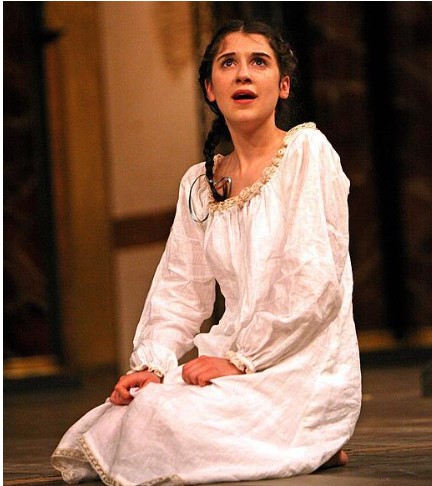
Ellie Kendrick (Globe Theater, 2009)
Ms. Kendrick is one of my favorite Juliets ever! She is a wonderful blend of sweetness and naivety, tempered with anxiety and practical thinking. She delivers the whole speech to different parts of the audience and makes sure every idea and every horrible thought of Juliet lands. Furthermore, her fast pacing around the stage helps her not only connect with the audience, but to use the Globe theater to make them imagine the Capulet vault.
Verse
As I always say, verse is the heartbeat of a character, and based on this, Juliet’s heart is beating a mile a minute. You’ll notice that five of these lines start with a trochee (T), and five of them have trochees. This means Juliet is unsettled, she’s literally off-beat. In addition, there are frequently pauses in the middle of the lines called cesuras, which might indicate that either Juliet is trying to answer her own questions, or that she is so worried, that she’s gasping for breath.
In this second part of the speech, the lines start running together. Juliet’s pace is quickening and she breathes every 2-3 lines instead of at the end of each line.
Structure
The speech is organized as a series of questions:
“What if…”
“What if…”
“How if…”
“Or if I live…”
“O, if I wake, shall I not…”
and then the terrifying statement: “O look…”
So, with this in mind, the actress needs to convey Juliet’s overactive imagination, her fears, and her ability to answer these fears with inner calm and inner strength.
Imagery
It’s a horrific idea being shut up alive with the dead. Shakespeare gives us the sights and smells and the grim reality of feeling “stifled” in a vault. I created this image to demonstrate the smells, the fear, and the claustrophobic nature of the vault.
I chose to have the vault lit with candles, and to use green smoke to represent decay and possibly noxious gas, like the nitre that sometimes dips from walls of tombs. I also added some stone faces of ancestors to stare down at Juliet.
Historical Research
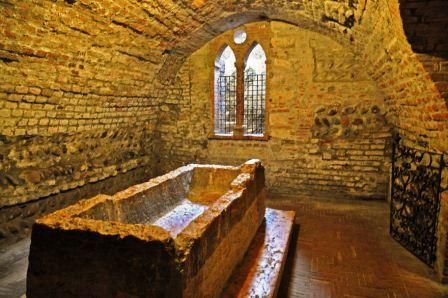
Sarcophagus in church of San Francesco al Corso, an old Franciscan monastery in Verona.
The plain stone sarcophagus above has become a tourist attraction as the traditional ‘resting place’ of Juliet. As I mentioned in my Friar Lawrence post, the Friar who marries Juliet is a Franciscan, which is probably why they chose this church in Verona as the ‘site’ for Juliet’s grave.
It is a plain, open, and partly decayed sarcophagus, in a wild and desolate conventual garden once a cemetery now ruined to the very graves. The situation struck me as very appropriate to the legend, being blighted as their love.
– Lord Byron, Letters and Journals Vol. III
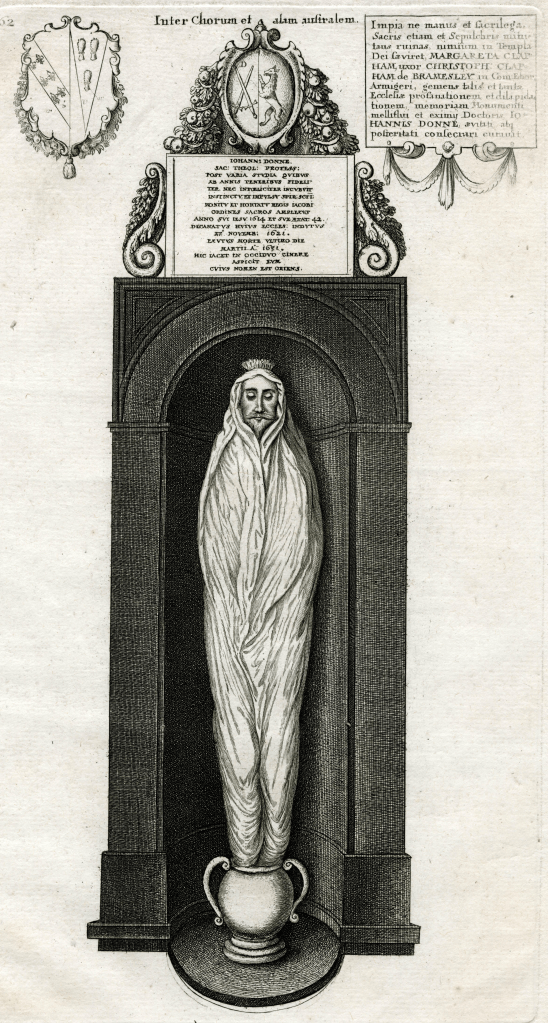
Since Italy is a small, hot country, bodies in the 16th century were buried almost immediately. First, the body would be wrapped up in a shroud or winding sheet, as Juliet mentions at the end. The corpses might be decorated with Rosemary or other sweet-smelling herbs.
A winding sheet for a corpse
Wealthy families like the Capulets or the church, would store all the bodies of their ancestors in burial vaults or crypts. Some bodies would be anointed with oil or preserved with vinegar.
Literary Inspiration: The Cask of Amontillado
Montressor and Fortunato move through the burial crypt in “The Cask of Amontillado”
When I think of the dark, macabre atmosphere of a family tomb, I think of The Cask of Amontillado, a short story by Edgar Allen Poe where the anti-hero Montressor, tricks his enemy Fortunato into going into his family crypt and buries him alive! There are some interesting parallels between Montressor and Tybalt from Romeo and Juliet- both men belong to ancient families, both men are violent, and both refuse to let any kind of insult stand. I think Juliet sees the vault as a hostile place, where her ancestors are angry at her for “betraying the Capulet name,” after marrying a Montague.
Image Research 4: Tybalt’s Angry Ghost
AI image of Tybalt’s Ghost
Like Montressor in The Cask of Amontillado, Tybalt embodies the Capulet feud, and it makes sense that Juliet would see him when she thinks of being shut up in the vault. The real question is, what does seeing him do to her? Is she terrified? Is she remorseful? Is she moved to protect Romeo? How does seeing Tybalt’s ghost motivate her to take the potion?
Other Questions to consider
Why is Juliet so nervous?
How does Juliet feel about running away from home?
Do the ghosts represent something? Guilt? Judgement? Some kind of ticking clock?
What does she see Tybalt’s ghost doing?
How does Juliet pull it together at the end?
Emotional
Not only is Juiet worried about her health, (mental and physical), I get a sense that she might also be experiencing guilt. The notion of her being tormented by spirits that shriek like mandrakes, suggests that maybe the ancient Capulets aren’t very pleased with Juliet. This makes sense because she married a Montegue. I get the sense that maybe, for the first time, Juliet actually feels guilty, as if she’s failed her ancestors. However, for whatever reason, she definitely re-focuses and thinks about Romeo. Either she rejects her ancestors and Tybalt, or maybe she sees the potion as a way of protecting Romeo, or possibly Juliet just wants these fears and anxieties to end, and takes the potion as a release. My actor and I will no doubt try these ideas out and figure out what works within the structure and within her interpretation of the character.
Our Interpretation
Again, it’s a little too early for me to tell you our interpretation yet, but I’ll post it later.
Resources:
Myshakespeare.com. This website will allow you to look up unfamilliar words, download pictures and videos of the scene, and even watch an ‘interview’ with Juliet, where, just as in this speech, she becomes more and more anxious and fearful until the very end.
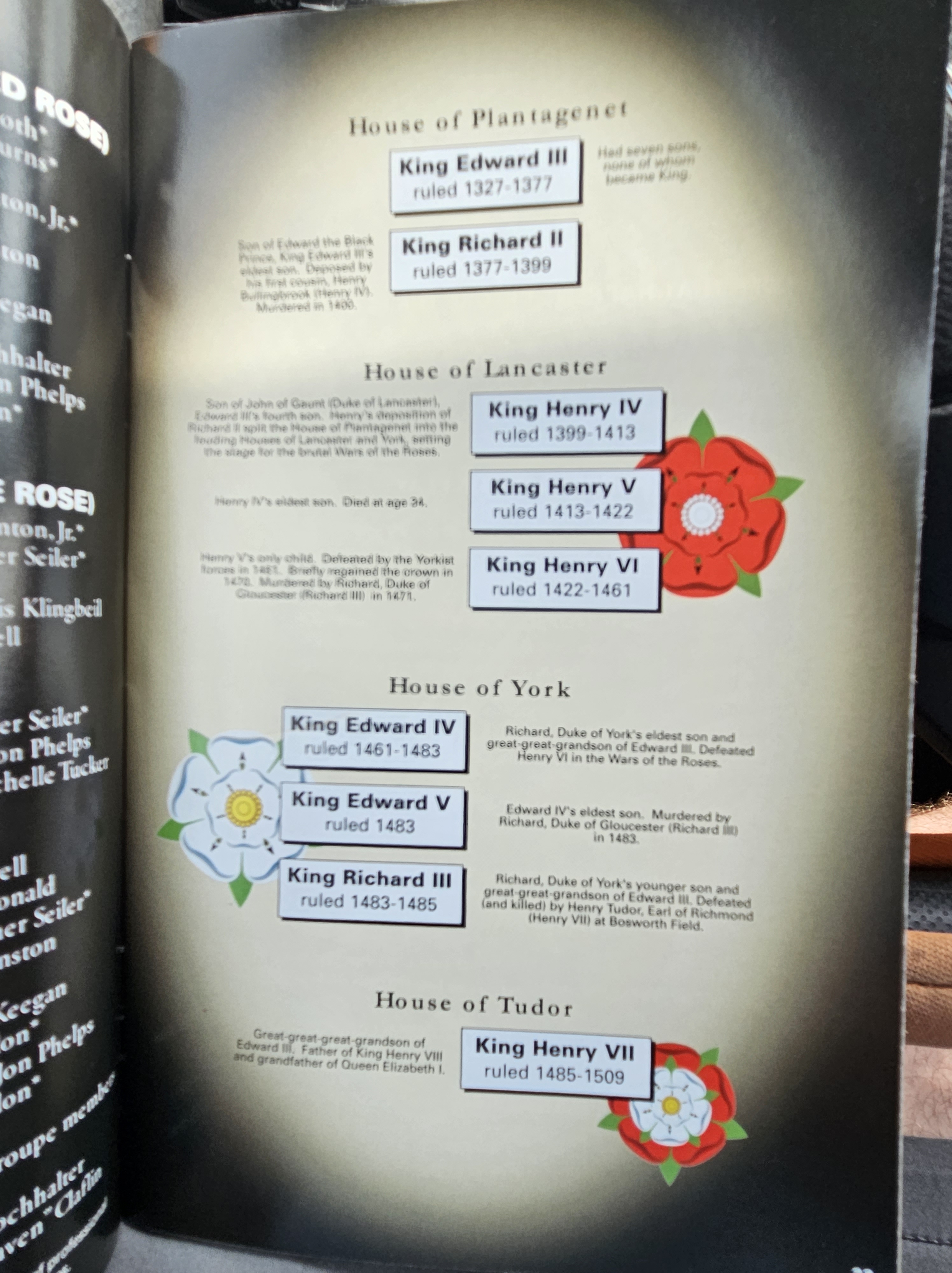
Parent Description- A fully online, fully interactive course into Shakespeare’s histories taught by a professional text coach and actor.
Students- Uncover the scandalous and gory history behind Shakespeare’s most action-packed plays! Shakespeare’s histories have inspired such works as “Empire,” “Game of Thrones,” “Hamilton” and even the “Star Wars” trilogy. This class will unlock for you why these stories of power and betrayal have been so popular for 400 years.
Format:
0. The class will have a Nearpod with slides, activities, and links to my other resources. The class will be a combination of slides, activities, and videos. Each class will have
Weekly Discussion questions via Google Forms such as: “What do you know about Shakespeare the man?” or, “Are Shakespeare plays still relevant today?”
Video Analysis- Every week I’ll discuss a different play with a short video.
I’ll provide some context, explaining what is happening in the play durin the speech, and any relevant historical context.
We’ll watch a recording and the students can write their impressions on what they like and don’t like.
Immersive activities such as:
– Shakespeare arts and crafts and recipes such as making costumes and props.
– My online Shakespeare board game.
Virtual tours of the Tower Of London,
Weekly Web Quests like “find a Shakespeare quote that you use in normal speech,” “find a movie or character that’s based on Shakespeare,” or “Draw a picture of a Shakespearean character (stick figures are acceptable).
6 Week Course
Week 1 – Why Hamilton is Like A Shakespeare History Play Hamilton and Shakespearean History We’ll discuss what makes a history play a history play, why they were so popular in Shakespeare’s day, and draw parallels between Shakespeare and the Broadway Musical “Hamilton.”
What is a history play?
Song quest: Watch the Horrible histories king song
Worksheet- which Shakespearean character reminds you most of Hamilton?
What would you call the tone of this speech? Patriotic? Mournful? Excited? Bitter?
The deposition Scene (video- 3 minutes)
The danger of this scene:
Though Queen Elizabeth I is now almost universally beloved, she wasn’t always in Shakespeare’s time. By 1601, she was 68 years old and had no male heir. Her government had also failed to put down a rebellion in Ireland. Some people in her government were getting restless.
Robert Devereaux, Earl of Essex was one of those restless nobles. He’d been one of the Queen’s favorites, but after failing to crush the rebellion in Ireland, his relationship with her sourered. He then plotted to rebel against the Queen, and take the throne for himself.
To do that though, Essex would need to get people on his side, so he recruited Shakespeare! One of Essex’s servants paid Shakespeare’s companies to perform a scene from Shakespeare’s Richard II; the scene where a handsome and charismatic nobleman convinces the king to willingly give up his power.
This scene was so dangerous that when the play was published, it was taken out by Elizabeth’s censors.
Playing Richard video: Fiona Shaw Questions What does making Richard female emphasize for an audience? What point does Shaw’s performance say about women in power?
Week 3 Henry V week
Tom Hiddleston as Henry V
Basic plot- Young king fights a war and conquers France proving himself to the world.
Olivier vs. Branaugh
-Concept- what if the play was a Hockey movie?
Henry is like the coach or team captain who gives inspirational speeches
The underdogs win
The snooty bad guys lose
How this translates to staging fights/ directing the characters (website/ youtube interviews)
Activity= write a trailer or design a poster for Henry with a cool tag line.
Week 4- The Wars of the Roses-
Summary of the three Henry VI plays
Wars of the Roses Horrible Histories
Web quest- research one major character from the 3H6 ASC website:
Richard of Gloucester
Henry VI
Margaret of Anjou
Richard of York
Medieval warfare
Watch one of the Weapons that Made Brittain videos and answer 5 questions.
The battles of the Wars of the roses
Costumes
Week 5- Richard III- The rise of the corrupt king
Close reading- “Now Is the Winter of Our Discontent”
Slides on Richard’s plot.
Richard and Machiavelli
Richard and Emperor Palpatine
Richard and Modern Leaders
Richard vs. the Amir of Gloucester
Propaganda activity- make a campaign slogan/ poster for Richard.
Me singing “Brush Up Your Shakespeare” in honor of the Bard’s birthday, 2025
Today, April 23 is the established birthday of William Shakespeare! Today I’ll share some of my favorite posts, videos, podcasts, and quirky recipes related to Shakespeare!
Before you send your kid off to summer camp, why not spend a few short hours learning Shakespeare in a low-key, no-pressure scenario! I have classes on Shakespeare’s life, Romeo and Juliet, and my celebrated Stage Combat class! Sign up now for all the fun on Outschool.com!
The Concept So, why Ghostbusters? Well, as William Shakespeare’s Star Wars has shown, it’s not only fun to adapt popular stories into Shakespearean parodies, it can also be educational. I knew I wanted to do a short play for my school’s fall festival, but I didn’t think to do “Ghostbusters” until I saw the final… Read more: I Made a Ghostbusters Shakespeare Parody!
What Is the Fate Of Ophelia? I’ve criticized Ms Swift in the past, offering praise for her work as a whole, but not when she tackled Romeo and Juliet in “Love Story.” So, when I heard she was making a new song specifically about Ophelia, the young ingenue role in Hamlet, I wasn’t sure what… Read more: Taylor Swift’s Ophelia and Shakespeare
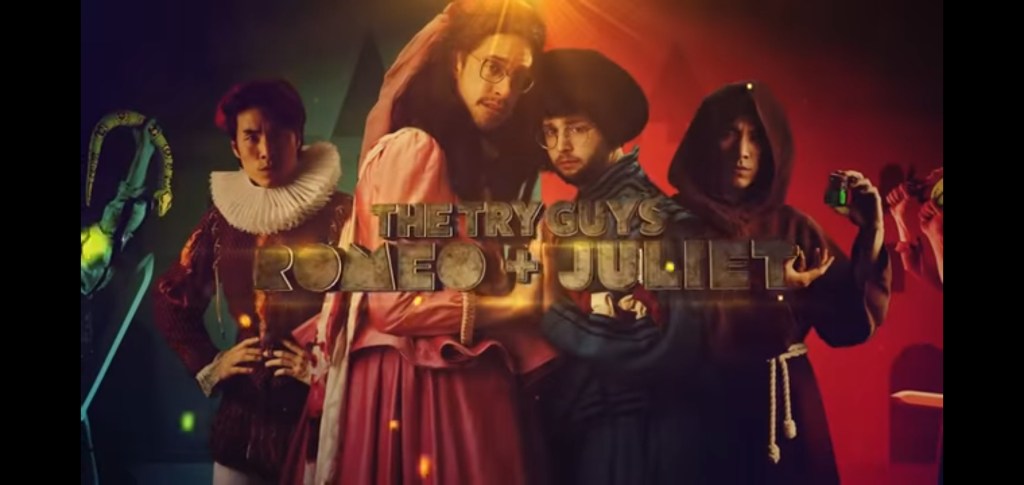
I was excited from the beginning to hear that the Try guys were going to bring Shakespeare to YouTube in a way that was fun and accessible. My expectations were that they would make fun of the play with care; I was hoping that they wouldn’t mock Shakespeare, (or mock people who like Shakespeare). I was also hoping that they would critique the characters without outright mocking them and find ways to make the play connect to modern audiences. I think they achieved all those things and more!
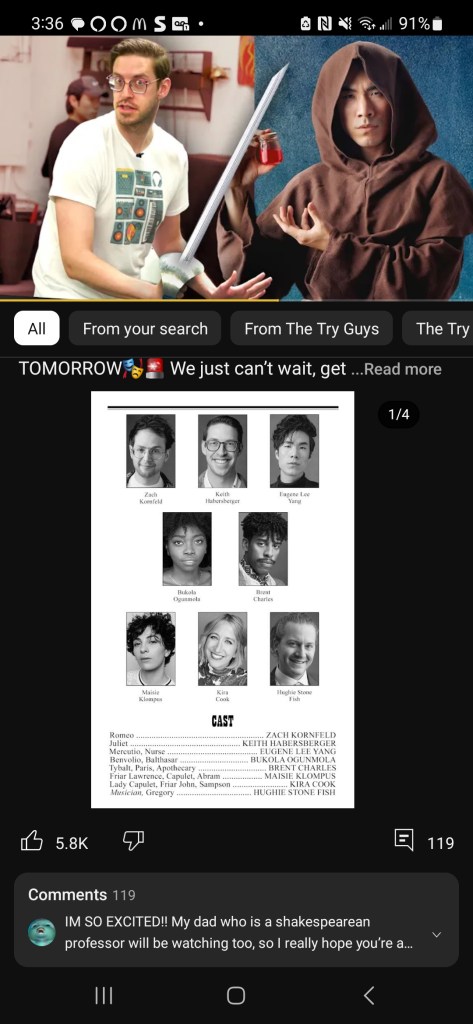
Zach Kornfield, Eugene Yang, and Keith Habersberger known collectively as “The Try Guys” are a group of friends who seek out new experiences and share them with the world. They thrive on taking themselves out of their comfort zone and learning about the world through experiencing it firsthand in a funny, lighthearted way. As I said before, what could be more adventurous, daring, informative, and out of YouTube’s comfort zone than doing Shakespeare?
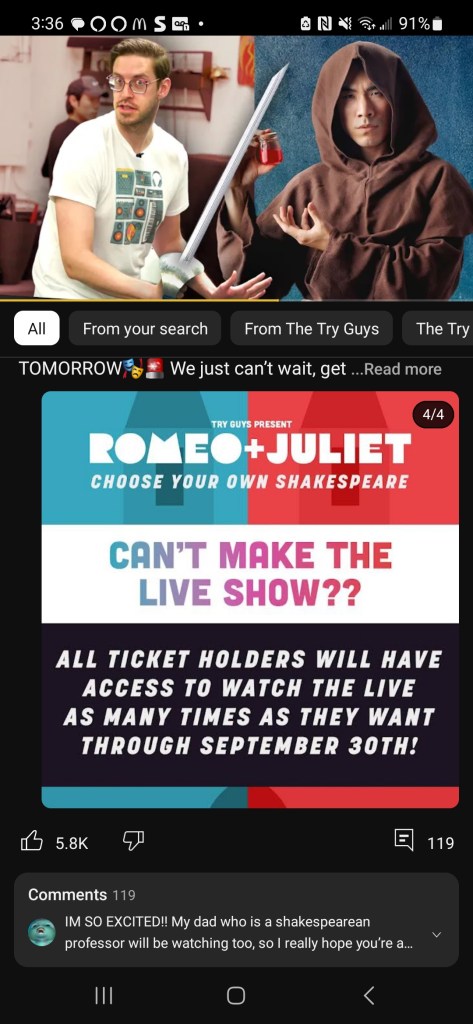
In a series of videos they explored Elizabethan clothing, stage combat, learning how to speak Shakespearean verse, and finally on August 10th, 2023, they performed “Romeo and Juliet” live on Youtube, with suggestions from the audience! With this post, I will discuss the evolution from these three videos, to the final show, which I got to see live on YouTube. I will discuss what I think worked, what didn’t, and how this production might influence future Shakespeare productions going forward!
Podcast About the SHow:
My Top Ten Moments:
Background on the Show
The original pitch for the play made it sound like a live YouTube event, but they made it even better by including a voting option where viewers could change some of the action and chose for instance, if they fought with swords or some other object, thus engaging the audience the whole time. This is what made this experience unique, (perhaps more than any other production), and I think in many ways this production could be an inspiration to educators and theater practitioners! My main critcism of the show is that, though it can be enjoyed by almost anybody, it is definitely not suitable for children, and nobody could get away with showing it in a classroom environment.
Costumes and Sets
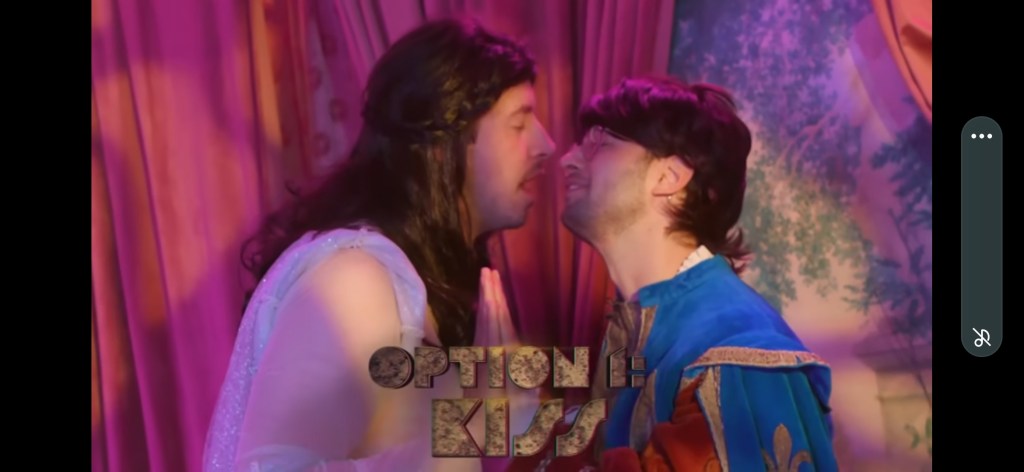
The set for “Romeo and Juliet,” seems like an ordinary YouTube TV studio, in that it’s fairly small and it does not suggest any particular period. It kind of suggests somewhat of a dream-like environment; there are cardboard cut outs with some clouds, the lighting is warm with a few pink colors . Most of all it reminds me of a fractured fairytale more than classic tragedy, (which I suppose is clever in itself because it sets up that the Try Guys are going to fracture Shakespeare the same way people like the Muppets fractured fairy tales.
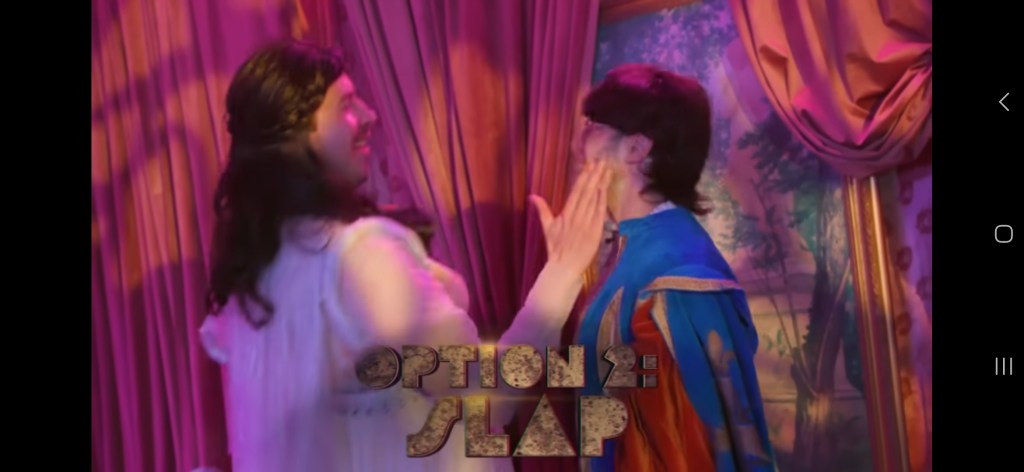
The costumes don’t seem as elaborate or historically accurate as the ones in the previous video, which is a shame because it would’ve been really nice to see the Try Guys walk, fight, and dance in the same costumes that they experimented with in the previous video. That said, the costumes certainly are functional within the story. Eugene as Mercutio has a stylish striking black outfit that certainly suggests somebody you don’t want to mess with. Zach as Romeo has an amusing long wig (romantically disheveled of course) and a blue doublet (though I miss the pumpkin pants in the previous video). As in other productions, the Montegues wear blue and the Capulets mostly wear red. I would be surprised if the director had seen the famous Franco Zephirelli film (or at least Gnomio and Juliet).
The director Keith Habersberger also keeps the best costumes for himself both as the Prince and Juliet; he’s wearing a beautiful ordinate gold costume as the Prince and Juliet herself has lovely rose-colored gowns. Even her shift in Act Four is it’s tasteful. I’ll talk more about Keith’s portrayal of Juliet later, but let’s just say that the clothes do not make him look like a man in women’s garb, they make him look like Juliet.
Stage Combat
The stage combat episode is great, and as a Stage Combat junkie myself, I watch a lot of channels like Skalgrim, Forged In Fire, HEMA videos, and of course my own stage combat videos. Consuming this combat content, I know that there are lots of avenues for education and for entertainment watching these 3 guys who have never done sage combat before, try out swords. I was very delighted to see them putter around with swords and then learn a short stage combat scene in which they then put on put their own spin on by improvising a scene where Romeo & Juliet sword fight with a guy who cut the cut in front of them while they were trying to get ice Cream. The video is fun, ludicrous, but also it’s just as informative as videos from the Folger Shakespeare Library.
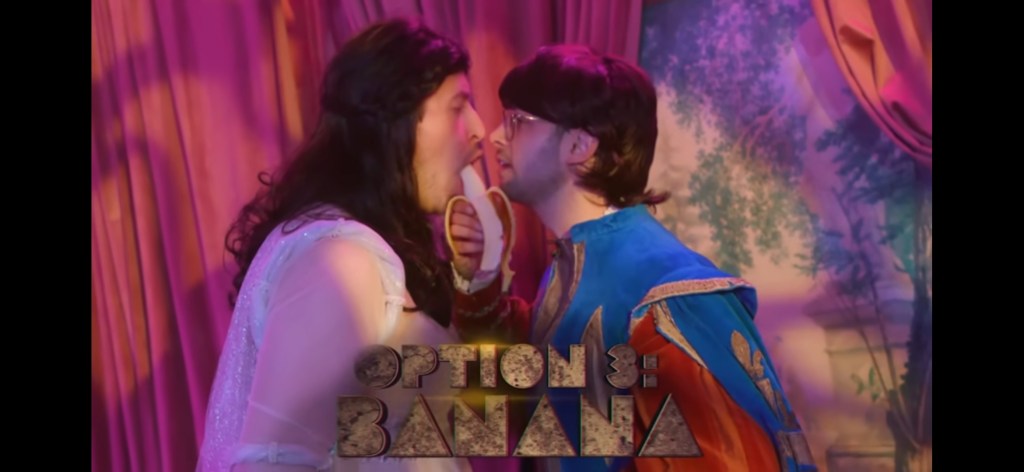
Unfortunately, The Try Guys didn’t make much use of the swordplay they learned in this video during the final performance. Imagine my disappointment when, during the climactic duel between Tybalt and Mercutio, the audience voted to replace the swords with…something that was definitely NSFW. I’ll discuss this choice in depth later on my podcast but let’s just say it made the training they did in the previous episode seem like a waste of time.
The Cameos
Did you hear about this guy Romeo? He’s the talk of the town
Link Neal from Good Mythical Morning
One aspect of the production that I deeply loved was that instead of doing the whole play, The Try Guys did a 90-minute abridged version using multiple narrators to fill in with bits of exposition and commentary. The Reduced Shakespeare Company did this before in their show, but since The Try Guys are very popular in the YouTube Community, they got a bunch of their fellow Youtubers to be their narrators like Rhett and Link, Smosh Games, Rosario Pansino from Nerdy Nummies, and Mat Pat from Game Theory. It was absolutely delightful to hear more of my favorite YouTubers talk about my favorite writer, each one telling the story with their own brand of humor!
Romeo runs to Friar Laurence, mascara all smeared!
Manny Mua
The Performances:
Finally, let’s talk about the acting in the final performance and how the Try Guys succeded in bringing Shakespeare to You Tube.
Keith Habensburger as Juliet
Keith carries the show as Juliet. As he mentions in the video above, he has performed in Shakespeare before, and his passion for performing shines. It’s actually a bit shocking to see him drop his usual persona as an easy-going funny guy and become a tragic heroine! In addition, he has a clear vision for the character- I suspected that he would probably exploit the comedy of him being a man playing a woman and being taller than Zach and he does in the earlier scenes, but once Tybalt dies, Keith plays Juliet absolutely straight- he is absolutely committed to playing Juliet’s anguish and desperation and it’s really moving to watch!
Eugene As The Nurse/ Mercutio
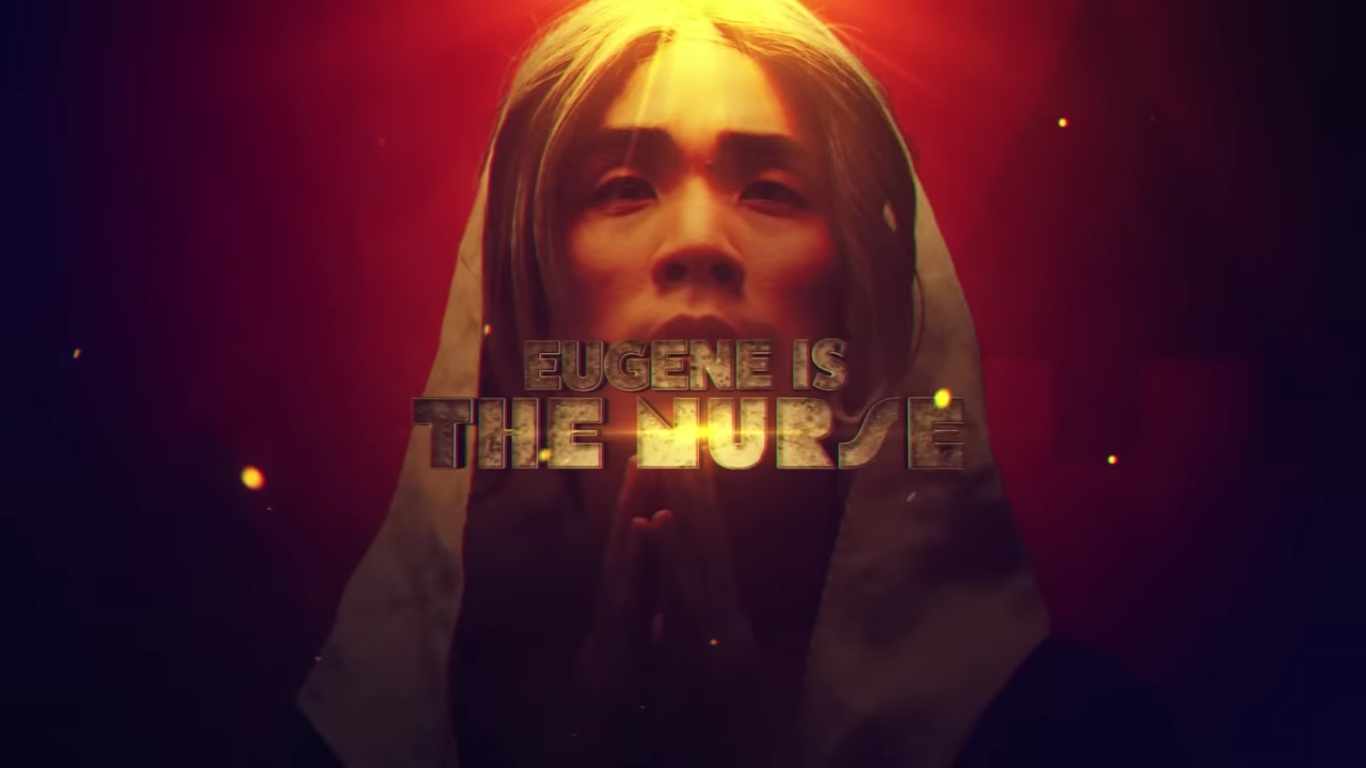
Eugene was a natural choice for Mercutio- his Try Guys persona is very much the wild card, sometimes friendly and sometimes fierce and he clearly loves Shakespearean language as you can see in the earlier video where he plays Edmund from “King Lear.” Honestly, though, I think his performances in the final play are a bit under-dramatized- I don’t quite know what he was going for as either The Nurse or Mercutio, which might be a result of limited time or lack of direction. That said, he does a good job for having never done Shakespeare professionally before.
Zach as Romeo or “A Bro wearing Hose”
Zach admits in the Shakespeare Acadamy video that he doesn’t “get Shakespeare,” and I get the sense that he doesn’t really like Romeo, so his performance seems like an intentional parody of romantic leading men. Honestly, this is fine. Romeo isn’t my favorite Shakespearean character either, and yes, The Try Guys are treating this as a real show, but at the same time it is still an experiment; they are trying something they wouldn’t normally do, so Zach is dealing with the awkwardness of playing Romeo with the same self-deprecating sense of humor that he uses when baking without a recipe or trying ballet. He knows that he would never get cast as Romeo in real life, so he’s having a laugh while he does it onstage, all the while being the best Romeo he can be.
The Format
One of the biggest challenges any Shakespeare practitioner has to face with a modern audience is the problem of engagement. The age of social media has changed how we consume content- we don’t passively watch anymore, we engage with it, comment on it, share it, and sometimes even manipulate it for ourselves. In Shakespeare’s day, there was no division between actors and audiences so in a way, his plays work well for this kind of live choose-the-outcome YouTube Event and I’m interested to see if it influences future performances going forward. In any case, I’m grateful that I was able to see this fun-frenetic, once-in-a-lifetime evening of live theater!
If you would like to learn Shakespeare like the Try Guys, I have a series of online clases in acting, stage combat, Shakespearean comedies, tragedies, and of course, “Romeo and Juliet.” You can enroll in one of these classes now or schedule one with me by visiting my Outschool.com page:
“Welcome Spirit, How Camest Thou hither?” The sources for Puck
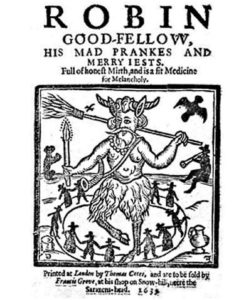
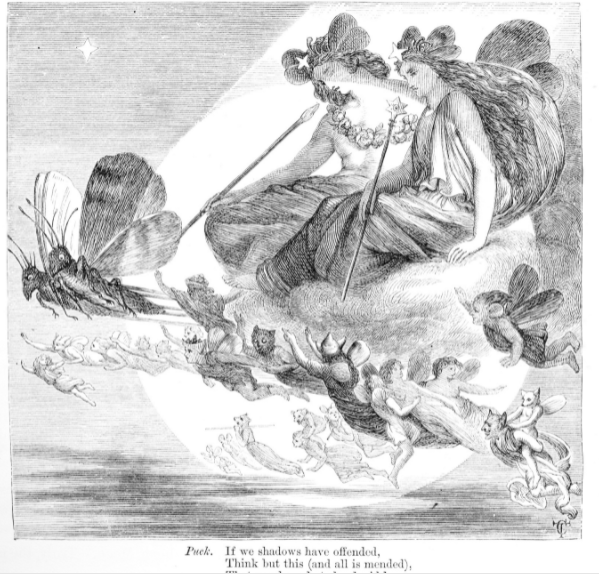
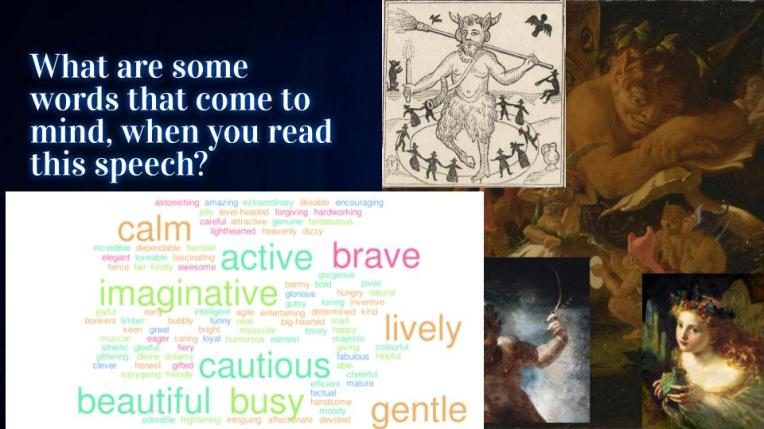
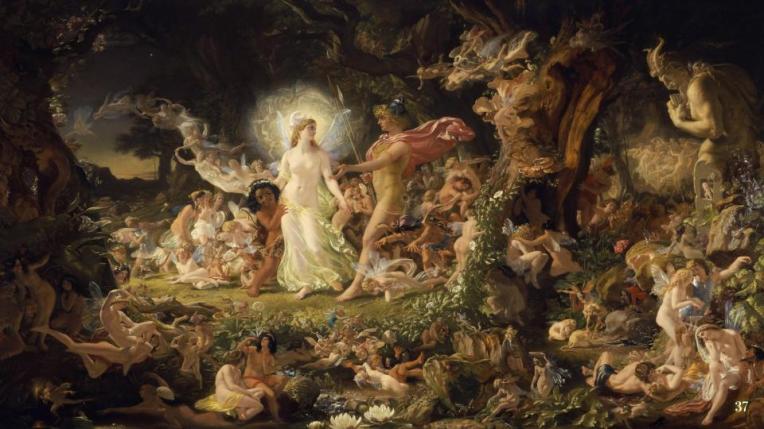
Puck, in medieval English folklore, a malicious fairy or demon. In Old and Middle English the word meant simply “demon.” In Elizabethan lore he was a mischievous, brownielike fairy also called Robin Goodfellow, or Hobgoblin. As one of the leading characters in William Shakespeare’s Midsummer Night’s Dream, Puck boasts of his pranks of changing shapes, misleading travelers at night, spoiling milk, frightening young girls, and tripping venerable old dames. The Irish pooka, or púca, and the Welsh pwcca are similar household spirits.
Shakespeare also took inspiration from English poet Edmund Spencer, who visited Ireland in the 1590s and adapted the folklore he picked up into his opera The Fairy Queen, which Shakespeare adapted into A Midsummer Night’s Dream
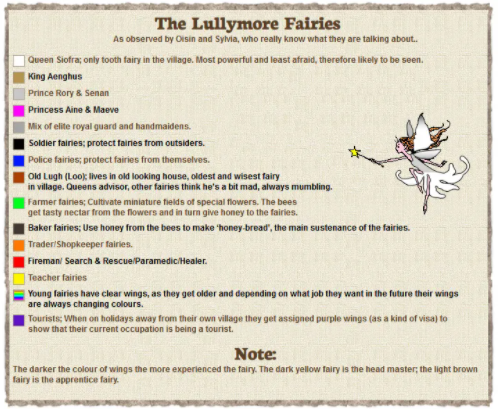
Types of fairies you can “spot” at the Lullymore Park in Ireland:
Puck/Robin’s Dual Nature
The old stories tell that Fairies are magical creatures who live in hollow places in the earth. Some are benevolent and help give rain and pleasant weather to the Earth, Like the king and Queen of the fairies, Oberon and Titania:
And the mazed world, By their [the tides] increase, now knows not which is which: And this same progeny of evils comes From our debate, from our dissension; We are their parents and original.

— Titania, (Queen of the Faries), A Midsummer Night’s Dream Act II, Scene i.
Titania in this speech shows great concern for nature, humanity, and the planet. She believes it is the responsibility of fairies, particularly herself and her husband Oberon, to control the elements and keep humans and fairies safe. Some fairies, however, are cruel and enjoy playing tricks on mortals, just like Puck in A Midsummer Night’s Dream, or Queen Mab in Romeo and Juliet.
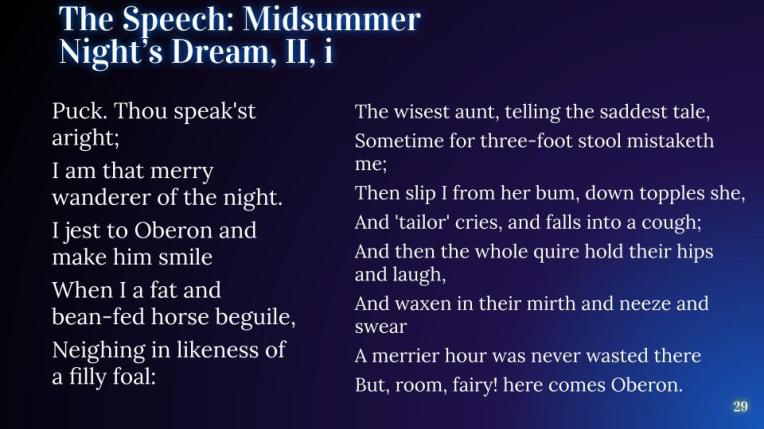
Close reading of Puck’s speech (MND II, i)
.
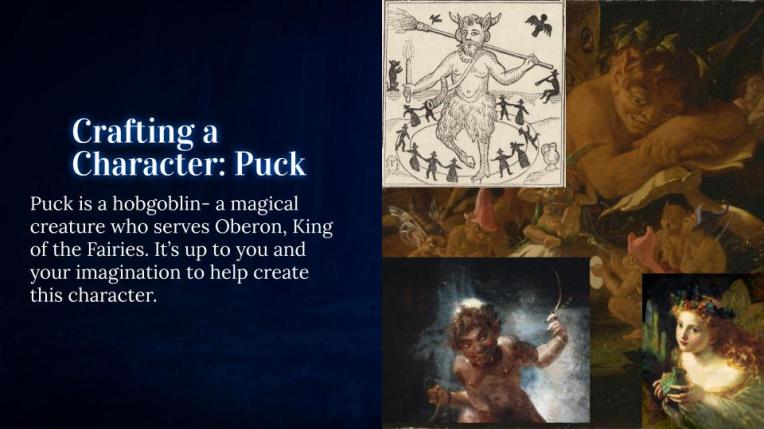
This is a short analysis I created of the tricks Puck plays on people in A Midsummer Night’s Dream, as part of my acting course on Ouschool.com. Note the different ways Puck is portrayed in photos as a satyr, a rotund elf, and sometimes as an almost- demon like figure.
Punishments or contracts with fairies formed a significant part of Goodfellow’s purpose on earth. While he could issue good fortune and support, this was always at the cost of those involved. As Reginald Scot commented, Goodfellow had a ‘standing fee’ of a ‘mess of white bread and milk’, which he expected after supporting housewives with their chores. If his payment was forgotten, Goodfellow was believed to steal from the home that owed him, often stealing grain and milk from the dairy.
Abigail Sparkes, Historic UK.com
Performing Puck
Because Puck is not human, and somewhat ambiguous in the text, an actor can play Puck in many different ways. Generally speaking, actors tend to explore Puck’s attitude toward humans, their love of mischief, and how to translate that physically and vocally
Puck. My mistress with a monster is in love. Near to her close and consecrated bower, While she was in her dull and sleeping hour, A crew of patches, rude mechanicals, Were met together to rehearse a play The shallowest thick-skin of that barren sort, Who Pyramus presented, in their sport Forsook his scene and enter’d in a brake When I did him at this advantage take, An ass’s nole I fixed on his head:
Anon his Thisbe must be answered, And forth my mimic comes. So, at his sight, away his fellows fly; And, at our stamp, here o’er and o’er one falls; He murder cries and help from Athens calls. I led them on in this distracted fear, And left sweet Pyramus translated there: When in that moment, so it came to pass, Titania waked and straightway loved an ass!
I am just ecstatic to talk about this year’s hit Broadway Musical Six. It swept the Tonys, and has opened up touring productions across the country, and I JUST GOT TO SEE IT!
This vibrant, clever retelling of Tudor her-story was created by TOBY MARLOW & LUCY MOSS in association with the Chicago Shakespeare Festival. The show is incredibly smart, and creative, and delves into the lives of some fascinating women, re-told as a singing contest with the characters singing their lives for you to judge what it was like being the queen of England and living with the turbulent and fickle Henry VIII.
What really appeals to me in this show is that like Hamilton, the musical takes these six semi-mythical women and tells their story in a way that is fresh and exciting. It bridges the gap between Tudor History and the modern-day by equating being a queen with being a celebrity, with all the drama of ambitious parents, romantic drama, public opinion, and even being exploited and sexualized by a male-dominated society. This comes across in the music, the costumes, the lyrics, and even the lighting!
Why “Six” Slaps
The costumes are brilliant and iconic. Catherine Of Aragon is like a cross between Beyonce, a saint, and a medieval knight. The lighting is incredible! You could tell the whole story using the lighting design as it pulsates, dances, changes into different colors, turns into different shapes, and finally flashes the name of the show in triumphant gold letters.
One particularly brilliant way the music works in “Six” is the fact that it uses the song “Greensleeves” as a motif both musically and thematically. One big theme of the show is how, unlike Henry VIII, most of the history of his six queens is lost and replaced by legends and even songs. The first line of the show is the famous rhyme about their fates: “Divorced. Beheaded. Died. Divorced. Beheaded. Survived.” As the video above helps illustrate, Marlowe and Moss know that most people only know the rhyme about their deaths and the myth that Henry wrote a song about one of them; that their lives are overshadowed by their deaths and the misconceptions that people have written over the years. Howard Ho points out how the song musically forces itself into the first number, “Ex Wives,” but by the end of the show, the six queens break free from these musical bars! You can hear the change of key and notes during this performance at the Tonys, which puts the opening number and closing reprise together.
The Cast of “Six” perform live at the 2021 Tony Awards.
But how do the queens go from “one word in a stupid rhyme,” to a group of powerful, individual queens singing in harmony, without the man who made them famous? That’s what the solo numbers in “Six” do so incredibly well- tell each queen’s solo stories as rocking ballads, hilarious dis-tracks, soulful love songs, and… well stay tuned.
Catherine of Aragon was Henry’s first wife and is still universally beloved, even though Henry decided to divorce her. As the epitome of a stand-alone power queen, it makes sense that Six modeled her character, costume, and songs after Beyonce, with a Shakira-inspired Spanish beat for good measure:
My favorite thing about her solo, “No Way” is how the writers paraphrase her real-life speech during the divorce trial in 1529. Below are the lyrics and the real speech:
Alas, Sir, where have I offended you? Or what occasion have you of displeasure, that you intend to put me from you? I take God and all the world to witness that I have been to you a true, humble and obedient wife, ever conformable to your will and pleasure. This twenty years and more I have been your true wife, and whether it be true or no, I put it to your conscience.
— Katherine of Aragon, 1529
2. Anne Boleyn
In some ways, the version of Anne Boleyn in “Six” is less a pop version of the real queen and more of a commentary on the nature of celebrity. If you watch the video, you can see how in life she was admired for her beauty and fashion but hated for her comments on Queen Katherine, her scandalous love affairs, and her brash nature. This explains the spiky pop-punk princess look they gave her, (which evidently resonates with many audiences since I saw at least two girls cosplaying as Anne in the audience). Sort of like a celebrity who gets canceled on Twitter or Princess Diana, Anne shows how a person can be undone when they dare challenge an established order, especially the Royal Family.
After the show, I found it a bit weird that they portrayed Anne Boleyn as a jetsetting airhead, but then again she is one of the best-known queens in history, so they can get away with it. In reality, Anne Boleyn was highly educated and a member of an ambitious and social climbing family who basically pushed her to woo Henry. As you can see in this clip from “Anne Of A Thousand Days,” Henry and Anne’s family bullied her constantly to become the King’s mistress after HE ALREADY GOT HER SISTER PREGNANT, so Anne knew that the only way to keep Henry from ruining her life was to convince him to divorce Katherine of Aragon and marry her.
Of course, this strategy didn’t save Anne in the end, which says more about how cruel Henry VIII was, chewing up women and spitting them out in his ravenous quest for a son. So is this an accurate portrayal of Anne’s life? No. Is it fun, ABSOLUTELY!
III. Jane Seymore
I’m more than I seem, or am I?
“Six” The Musical.
This version of Jane Seymore was inspired by Adele, so appropriately, she has a heart-wrenching power ballad about her turbulent relationship with Henry. Sadly, we don’t know much about Jane’s real life, so the song takes some liberties. If you go to the Hampton Court Website, you can actually vote as to whether Jane was a devoted wife or a social climbing gold-digger. Probably the real woman was something even more complicated, though we’ll never know for sure.
IV. Anne of Cleaves
Anne of Cleaves is the funniest part of the show! Many of us have heard the story that Henry divorced Anne after he found her ‘ugly.’ What “Six The Musical” does is amend the story, by pointing out that after he divorced her, Henry gave her a castle and a huge retainer, allowing her to live like a queen, without being married to a king! Accordingly, her song is a Rhianna-style dis track that shows off her awesome lifestyle, and spits in Henry’s stupid face!
As fun as this, rags-to-riches story is, the truth is less fun- Anne was the sister of a German duke, so Henry’s lord Chancellor Thomas Cromwell probably forced Henry to marry her for diplomatic reasons (source: Hampton Court: “Anne of Cleaves”). Naturally, Henry didn’t like being told what to do- I suspect he resented Anne before even meeting her because he didn’t get to pick her himself.
As for whether Anne was actually ugly, the truth is really surprising- Henry actually disguised himself as a peasant during a masked ball when he first courted Anne, and she foundhim repulsive. At the time, Henry was 49 years old, and in very poor health. As such, he was intermittently impotent and blamed his inability to conceive a child with her on her supposed ugliness to save face.
Even though Anne in the show hates Henry, in reality, once the marriage was annulled, Anne and Henry remained good friends for years! She attended his next wedding to Katherine Howard, and, just like in the show, Henry treated her much better after the divorce:
‘YOU SHALL FIND US A PERFECT FRIEND, CONTENT TO REPUTE YOU AS OUR DEAREST SISTER. WE SHALL, WITHIN FIVE OR SIX DAYS …DETERMINE YOUR STATE MINDING TO ENDOW YOU WITH £4000 OF YEARLY REVENUE…YOUR LOVING BROTHER AND FRIEND.’
Henry VIII, 1548, six months after their wedding, when the annullment went through.
V. Katherine Howard
Without question, Katherine Howard is portrayed as the most tragic of Henry’s six wives and her song is a huge sucker punch. The writers never let you forget that Katherine’s first affair was when she was 13, and she died at age 19. Like Anne Boleyn and Jane Seymore, Henry picked Katherine for his queen among his ladies in waiting and her song “All You Wanna Do” satirizes his and many other men’s lustful appetites. The song begins as a raunchy, sexy pop ballad in the vein of Britney Spears’ “Toxic” and “Womanizer” about Katherine Howard’s love affairs, but then devolves into a cry for help, as Katherine confesses how she was abused, used, and manipulated by the men in her life, (including her own cousin Thomas Culpepper) until she was beheaded in 1542. It masterfully satires both Henry’s cruelty and the hypersexualization of teenage pop stars which certainly took its toll on Britney Spears and Ariana Grande, Katherine’s major ‘Queenspirations.’
VI. Katherine Parr
Historically, Katherine Parr had to turn away her fiancee Thomas Seymore (just like Anne Boleyn was previously engaged to Henry Percy) once the king set his eyes on her for his wife, so her song is a sad, soulful Alicia Keys-inspired bittersweet song where she tearfully says goodbye to Thomas to spare his feelings and probably his life.
Not only does this song once again show how Henry’s selfishness and his lust ruined the lives of the women he married, (as well as the men who already wanted to marry them), but it also sets up the main idea of the show:
His-Story overthrown
In the final number, the wives turn the tables on Henry- they have spent centuries being defined by him, but in reality, he is just as much defined by them! Going forward, history should not define these great women as just, “The Six Wives of Henry the Eighth,” but to celebrate their individual lives and contributions to history. Katherine Parr mentions this when she points out that in life, she fought to allow women to be educated, she wrote books, and was a scholar of theology. Historically, Henry and Katherine would argue about religion and he nearly executed her after she disagreed on points of theology, but Katherine kept her life by claiming she was “Not disagreeing with [him], but simply learning from [him].”
I Don’t Need Your Love is sung by Catherine Parr in SIX: The Musical. The first part of the song refers to her love of Thomas Seymour, whom she probably wanted to marry rather than Henry (and did marry after Henry’s death). However, the song also protests at the fact that women are often defined by their relationship with men, rather than as people in their own right. Catherine wants to be remembered for what she did, rather than the men she married or loved.
Katherine Parr, Six.
The final number completes the idea of the ‘historemix’ by having the Six queens/pop stars come up with a re-imagined happy ending for themselves, one that doesn’t include the pain that Henry inflicted on them: Katherine A becomes a singing nun, (like Whoopi Goldberg in Sister Act), while Anne Boleyn starts writing lyrics for Shakespeare (which is a fun idea since he does mention “Greensleeves” twice). Jane Seymore forms a band with her many surviving children, Katherine Howard goes solo, and Katherine Parr joins the other queens in a supergroup. It’s not at all historical, but it is a fun and sweet way to put an epilogue on these (mostly) tragic lives.
It’s odd, however, that the show invents an epilogue instead of talking about the six queen’s greatest legacy- Queens Elizabeth and MaryI. For a show that wants to highlight the often-forgotten legacy of these queens, it is an odd oversight. Remember Catherine and Anne gave birth to queens who eventually ruled England without a king. Jane Seymore gave birth to a king, and Catherine Parr helped raise them and restored them to the line of succession- She’s the reason her stepdaughters were able to become queens in the first place.
My issues with the epilogue aside, it is great to see history be recontextualized and shared in such an accessible way. We all know that European history is dominated by the names of white guys- king whoever, duke what’s-his name. To see important women in history be given a voice by a multi-ethnic cast is a great way to make it resonate, and using the metaphor of pop stars works extremely well in this context- these women mostly didn’t choose stardom, but they deserve it for what they went through.
Brava.
Educational links related to the six wives of Henry VIII:
As you probably know, I love to review children’s adaptations of Shakespeare (whether direct or indirect). “The Lion King,” (Hamlet), “Encanto” (King Lear), and of course, the many adaptations of “Romeo and Juliet,” are mainstays on this website: Gnomio and Juliet, Romeo and Juliet: Sealed With A Kiss, even Pocahontas have their basic plot and characters firmly rooted in Verona Italy.
Then one day by chance, I found this book in a local park, and I knew I had to review it!
THe Premise
This is a simple re-telling of the story of Shakespeare’s play that focuses on just the young lovers. You feel for these cute little animals and in a way, making them a kitty and a dog smitten with puppy love, makes them more understandable and sympathetic than Shakespeare’s youthful teenagers, who indulge in violent delights without using their human reason.
What It Keeps
The Story
The book keeps the feud between the two families, has the young lovers meet in disguise at a ball, fall in love on a balcony, get married, and amazingly, DIE! Laden still manages to tell the story in a kid-friendly way, though giving it tragic weight.
THe Language
The book opens with a rhyming prologue, which, although it isn’t in sonnet form, has the same function as Shakespeare’s prologue- to explain the plot before we see it played out in the book, thus giving the whole story a sense of dramatic irony. Plus, as you can see, Laden also imitates Shakespeare’s love of wordplay with metaphors and puns, (a tale of tails), and alliteration to give the dialogue some wit and effervescence. Reading it gave me giggles like I’d just popped open some champagne.
What it changes: Spoiler alert
All throughout, Laden makes small changes to simplify the plot and remove characters that don’t directly impact the main plot. The characters of Lord/Lady Capulet and Lord/Lady Montegue, The Nurse, Paris, Peter, the servants, and the friars are completely absent, turning an already brief play into an even more compressed story.
Like a lot of animal retellings I’ve seen of this story, the author recasts the human leads as animals that are natural enemies- in this case, cats and dogs. This makes the story easier for kids to understand- as I’ve said before, it’s often difficult to keep track of who belongs to which house in Shakespeare’s version. All you need to know is that Romeo and his brothers are cats and Juliet’s family are dogs.
Funnily enough, my daughter actually complained that the story would’ve been better if Juliet were a cat instead of Romeo, which I agree with for very specific reasons. The character of Tybalt is named after a character from a prose story called “Reynard the Fox,” who had the epithet, Prince of CATS. Mercutio annoys Tybalt by taunting him with this title before challenging him to a duel:
Tybalt: What would you with me? Mercutio: Good Prince of Cats, nothing but one of your nine lives! Romeo and Juliet, Act III, Scene i.
It would’ve been a funny Shakespeare easter egg to have Juliet and Tybalt be portrayed as cats, but I understand why they went with dogs- Drooliet is a hilarious pun, and having Tybalt be a vicious, rabid dog helps set him up as a fearsome antagonist.
I suppose you’re wondering, how can the author keep Shakespeare’s tragic ending in a children’s book? Well, like Shroedinger’s cat, she manages to make Romeow die and not die at the same time. He gives Drooliet one of his 9 lives, allowing them both to ‘die’ and then come back for a happy ending. It’s a brilliant way to nod at the original, while also keeping the kid-friendly tone.
My Reaction
This book is really fun and very enjoyable for kids, parents, and teachers who want to introduce kids to Shakespeare at an early age!
Just below you can watch the book being read by actress Hayle Duff:
Hello everyone! I’m back from break and happy to celebrate one of my favorite holidays with you- the one that gave its name to one of Shakespeare’s greatest comedies- Twelfth Night
I’ve been in this play three times and I’m continually struck by how fun, romantic, and progressive it is. It raises questions about gender roles, social norms, bullying, and even catfishing and heteronormativity! It’s a fascinating and thought-provoking play and it’s my favorite of Shakespeare’s comedies!
Shakespeare’s early comedies are about young love, infatuation, and being ‘madly in love’ (sometimes literally). His middle plays are about mature relationships between men and women and the need for commitment. I would argue that Twelfth Night, (and possibly Much Ado About Nothing), are the best examples of Shakespeare telling meaningful stories about romantic relationships.
Images from various productions and paintings of “Twelfth Night.”
In honor of “Twelfth Night,” I’ve created a coupon for my course on Shakespeare’s comedies from now till January 31st: Get $10 off my class “Shakespeare’s Comic Plays” with coupon code HTHESYTIT110 until Jan 31, 2023. Get started at https://outschool.com/classes/shakespeares-comic-plays-868BR5hg and enter the coupon code at checkout.
To finish I wanted to give you a complete production of Twelfth Night for your viewing pleasure, but I can’t decide which one, so I will post a bunch today!
1. 1996 TV movie starring Geoffrey Rush (Pirates of the Caribbean)