&Juliet Review

The Concept: Juliet Decides Her Own Fate

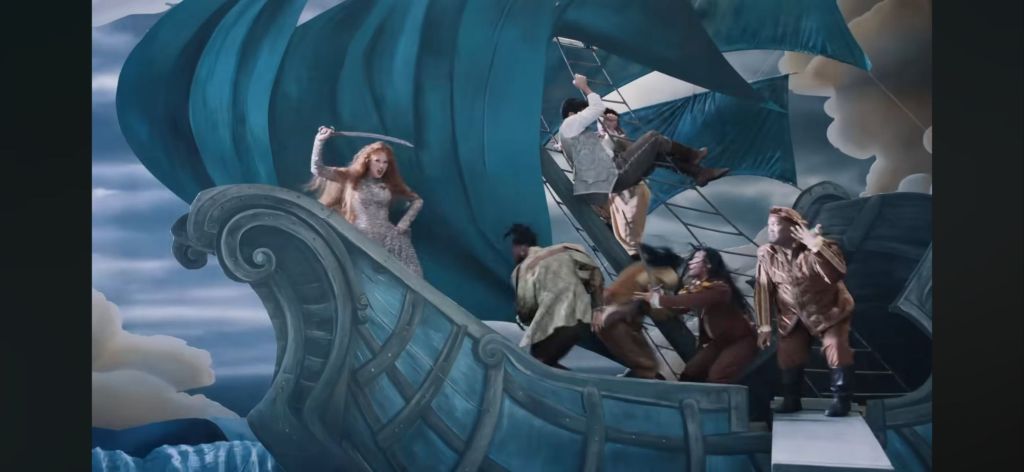
It’s around 1597 and Shakespeare is putting the finishing touches on his new play, Romeo and Juliet, when his wife Anne Hathaway arrives. Anne frankly, hates the double-suicide ending and takes Will’s quill. She then proceeds to write a new story where, after Romeo dies, Juliet packs up and flees with her Nurse and her two best friends to have a holiday in Paris (the city, not her ex-fiance).

To find a jukebox musical that is so self-aware in its writing, so humorous in the way it includes its songs through the narrative, and so blatantly charming, is a pure joy…and really, if you asked me to summarise this review into just a sentence it would be that: & Juliet is pure joy. –Carly Fisher

Stuff you Might have Missed

1609 collection of Shakespeare’s Sonnets, which were published without his permission.
  1. Anne Hathaway Shakespeare- the sonnet Anne complains that Shakespeare never mentions her in his work, except once in sonnet 145, where he writes: “I hate, from hate away she threw, and saved my life saying, ‘not you’.”
  2. Anne and the Second Best Bed– After breaking the fourth wall, Anne also complains that her husband left nothing to her in his will but “My second best bed with the furniture.” This is true, and some scholars have attempted to defend this choice, but it certainly doesn’t look good. In the myth of Shakespeare, this story has helped to construct the Shakespeare who cares more about his work than his wife. What’s interesting is that “&Juliet” helps address this myth and examines it. For more information about the myth of Anne and Will, click here to see my review of “Hamnet”
  3. Yes, Juliet might be based on a historical character. One reason Will objects to his wife changing the play is that it violates the historical accuracy of the story. Like I said in my “Genesis of Romeo and Juliet,” the Capulets and Montegues might have been based on real political factions in Verona.

The Characters

The Music

All the songs in “& Juliet” came from one man- Max Martin, a Sweedish songwriter who has composed songs for Brittney Spears, Celene Dion, and The Backstreet Boys. These mega pop-hits were a huge part of my childhood, so seeing them combined with my favorite writer definitely tickled me and set off my nostalgia goggles. More importantly, it’s very interesting to see how the playwright David West Read turned these songs into a musical.

Setting “Romeo and Juliet” to pop music is by no means a new idea- “Gnomio and Juliet” underscored the whole movie with music by Elton John (who also produced the film). Making Shakespeare into a kind of rock or pop star is also not a new idea- Something Rotten and the musical version of “Shakespeare In Love” also did that. What is new is the concept of turning the story of Romeo and Juliet into a jukebox musical- a story where all the songs are pre-existing pop songs.

Normally I hate jukebox musicals- I find it irritating when producers take an artists’ songs and try to stitch them together into a coherent musical play. In normal musicals, the songs are designed to further the plot and help explain the characters’ internal and external conflicts. In my experience with most jukebox musicals, the songs feel like a waste of time, because the songs were never designed to tell an overarching story, so when they are integrated into a play, the story grinds to a halt. When it’s done badly, either you’re bored with the songs, or bored with the play.

With this in mind, I was prepared to dislike  “&Juliet”. I was expecting either to hate the songs for slowing down the plot, or to hate the plot because I wanted to get back to the songs. But… miraculously, both the songs and the story WORKS! David West Read did a great job seeing the overarching themes of loss, love, and conflict within relationships within the music of Max Martin, and translate them into Romeo and Juliet- the iconic lovesick teenagers.

I’d like to highlight the incredible effect of one of these songs in the context of the play- “Hit Me Baby One More Time,” by Miller, made popular by Brittney Spears:

Oh, baby, baby
The reason I breathe is you
Boy, you got me blinded
Oh, pretty baby
There’s nothing that I wouldn’t do
It’s not the way I planned it

It’s very clever that the writer gave this song to Juliet when she us at her most down and most self-destructive. She feels like her life is over without Romeo (her loneliness is killing her). What’s nice about  this musical is that this moment is the beginning of Juliet’s arch, not the end.

Costumes

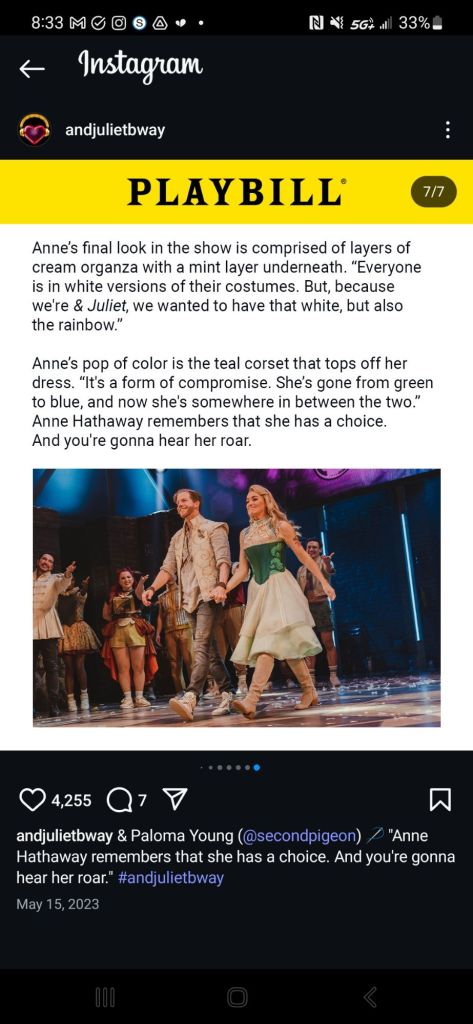
I could write a whole post about how clever the costumes are, and I will at a later date. Suffice it to say that they compliment the story and music by blending Elizabethan costumes with the sort of late 90s-early 2000s pop-star fashion favored by The Backstreet Boys, Katy Perry, and of course, Brittney Spears.

My Final Word

This show might not please everyone- hardcore Shakespeare nerds might find the concept hard to swallow, and honestly since the songs are mostly from the 90s and early 2000s, the music might be a little dated for a modern audience. Also, with the positive portrayal of homosexual relationships this show is DEFINATELY NOT FOR CONSERVATIVES. That said, it might do exactly what I’d hoped it would do- make fun of Shakespeare with care and in the process, get audiences to enjoy it anew.

OTher Reviews/ For More Information

In a world and in an age where everything is taken so seriously, it’s a complete delight to return to the idea of going to the theatre simply for fun and entertainment. Yes, the storyline is light and the line up of songs is a laundry list of bops, but in my opinion, there’s no problem in any of that! Quite the opposite! Packed to the brim with exceptional talent and some of Australia’s top dancers filling the ensemble…this is entertainment for entertainment’s sake and that is a lost art form in and of itself. – Carly Fisher

https://www.theatretravels.org/post/review-juliet-at-the-lyric-theatre#:~:text=In%20a%20world%20and%20in,form%20in%20and%20of%20itself.

https://thesmithcenter.com/explore/smith-center-blog/and-juliet-pop-quiz/

Shakespeare and Taylor Swift

One of my colleagues at work showed me this book, and it really fired my imagination. Taylor Swift is one of the most if not THE MOST successful singer/songwriter of our era. Her songs go across multiple genres and tones and, like many writers, they often contain allusions to classical poetry, nursery rhymes, and occassionally even Shakespeare.

My own Reservations with Taylor

I’m not exactly a Swifite, and I know I’m running the risk of offending MILLIONS of people here by offering criticisms of Taylor Swift, but I honestly think it’s a good idea to be able to critique the things you love. In the past I’ve criticized Shakespeare’s plays, his characters, and even suggested that he might be racist. I would like to offer that, in the case of Love Story, Ms. Swift simplifies the plot of Romeo and Juliet, and leaves out its tragic elements, which kind of misses the point. As an allusion, it seems a little watered down. That said, I feel other TS songs are better, use their allusions more skillfully, and create a more coherent picture in the listeners’ mind. Dispite my issues with this one song, I heartily admit that Ms. Swift is prolific, talented, and has created songs that are classic works of art!

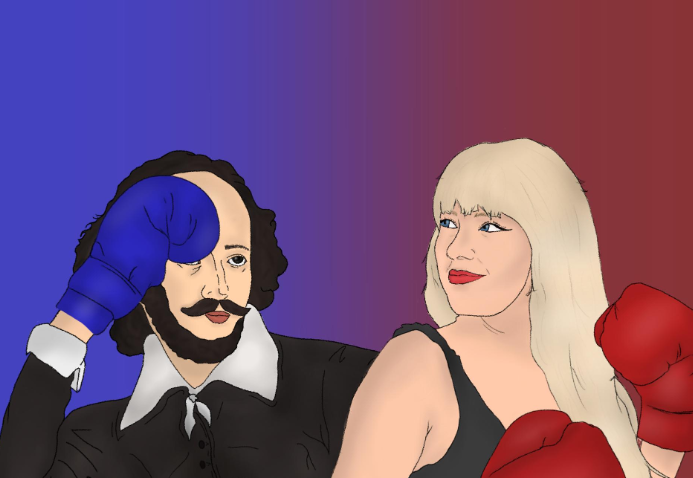
What I’m not interested in doing is getting into a “battle” where I try to justify Shakespeare as being better than Taylor Swift. When I see memes like the one above, it makes me immediately disengage with whoever posted it. I don’t want a Swiftie to talk in the comments about how Shakespeare was a talentless hack. Alternatively, I don’t want a Shakespeare nerd to dismiss Taylor as being infantile or any other critique. Both these writers had different goals, went about them differently, and achieved success in their own special ways. So now, let’s look at how Taylor Swift borrowed from different literary traditions to make her songs more dramatic, more visceral, more insightful, and more poetic.

Her Literary Allusions

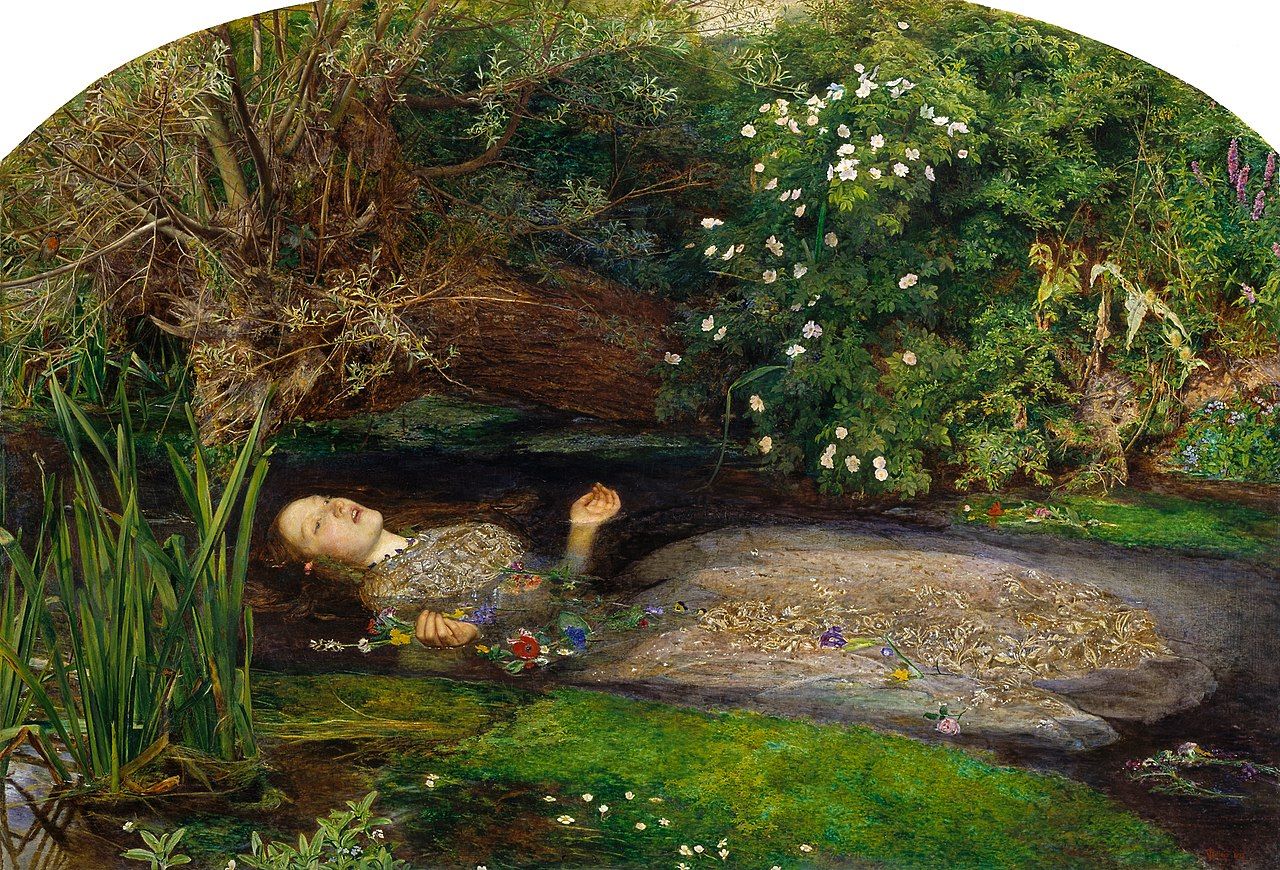
Obviously, Love Story mentions Romeo and Juliet, as well as The Scarlet Letter and various princess stories. TS rarely makes direct references to Shakespeare in her work, but some scholars have suggested that there might be more oblique references in some of her songs. For instance, when I look at the lyrics of Willow, I can’t help wonder if she wasn’t at least partially inspired by Shakespeare’s song of the same name in Othello:

Wait for the signal and I’ll meet you after dark
Show me the places where the others gave you scars
Now this is an open-shut case
Guess I should’ve known from the look on your face
Every bait and switch was a work of art

The more that you say
The less I know
Wherever you stray
I follow
I’m begging for you to take my hand
Wreck my plans
That’s my man

I can’t hear this song and not hear the parallels with the Othello story- the speaker alludes to eloping with her beloved (which Desdemona nearly does in the first act), that he has scars (which Othello clearly does mentally and physically). In addition, I imagine the refrain as like a duet between Othello (who is reluctant to kill Desdemona), and Desdemona (who wants to leave Cyprus and have a normal married life with Othello:

Desdemona: The more that you say
The less I know
Othello: Wherever you stray
I follow
I'm begging for you to take my hand
Wreck my plans
Desdemona: That's my man

Even if Shakespeare isn't mentioned directly in many of Taylor's songs, like Shakespeare she often uses Greek myths, the Bible, and other popular works as allusions. Some scholars have suggested that both Shakespeare and TS write using their own experiences through the lenses of classical poetry and literature. Simmilar to how Shakespeare probably wrote Hamlet to deal with his grief over his son's death, Taylor writes songs about past relationships, feuds with pop stars, and her own evolution as an artist through the lens of Shakespeare, novels, poetry, and other works.

TS’s Poetry

Ms. Swift’s songs are more than just catchy beats with a few allusions stuffed in. Like Shakespeare, she makes use of alliterations, internal rhymes, clever metaphors, and strong rhythms that help her songs tell their stories clearly and effectively. As an exercise, I fed the lyrics to “Bad Blood” into a poetry analyzer and found a very interesting analysis:

The poem features a rhythmic and catchy structure, typical of song lyrics. The syllabic patterns vary but often maintain a consistent beat, enhancing its musical quality. The use of internal rhymes and alliteration (e.g., “mad love,” “bad blood”) adds to the flow and memorability. The stresses often fall on the first word of each line, creating a strong start and a compelling rhythm that engages the listener. The word choice in the poem is evocative and charged with emotion. Phrases like “bad blood,” “deep cut,” and “salt in the wound” create vivid imagery and convey the depth of the narrator’s pain. The use of questions, such as “Did you have to do this?” and “Did you think we’d be fine?” emphasizes feelings of confusion and hurt. –Studycorgi.com

I highly encourage students and teachers to do an analysis of both Shakespeare and Taylor Swift because studying one can help us appreciate the other. Similarly, learning the way each writer conveys ideas can help the reader become more creative!

Who Said It? Shakespeare or T.Swift?

Lots of teachers play this game and there are many Youtube videos of people playing it. Occassionally, even Shakespearean actors have played it:

There are also online quiz forms available on Quizlet and Gimkit. You can also show your students this video below:

What iF SHakespeare’s Characters were Swifties?

I posted on Reddit a while back to ask the internet which Swift songs would be great soundtracks for the lives of Shakespearean characters. This is sort of an outgrowth of my: Infinite (Variety) Playlist activity. Here are some of the results I got:

  1. Richard III and Henry Tudor- Bad Blood
  2. Macbeth- Look What You Made Me Do
  3. King Lear- Anti-hero
  4. Lady Macbeth- No Body No Crime
  5. Julius Caesar- My Tears Ricochet
  6. Richard II- Castles Crumbling
  7. Antony and Cleopatra- Style
  8. Mercutio from “Romeo and Juliet”- 22 and “Shake it Off”
  9. Goneril from “King Lear”- Blank Space

Do you agree with my list?

I hope this post can help teachers see the value in analyzing Taylor Swift with their students, and help students in analyzing Shakespeare. I think the term “classic” applies to anything good enough to stand the test of time. Shakespeare has already passed that test, and based on her clever allusions, evocative wordplay, and emotionally-charged subjects, I believe Taylor Swift to be classic too!

For More Information:

  1. Prestige Online: Literary References in Taylor Swift: https://www.prestigeonline.com/my/lifestyle/culture-plus-entertainment/literary-references-in-taylor-swift-the-tortured-poets-department-ttpd-peter-pan-romeo-juliet/
  2. Allusions (Taylor’s Version)

3. Taylor Swift and Shakespeare by Stephanie Burt (who taught a course on Taylor Swift at Harvard) https://www.folger.edu/blogs/shakespeare-and-beyond/taylor-swift-and-shakespeare/

Close Reading: Juliet’s Soliloquy: “My dismal Scene I needs Must Act Alone.”

The Text

LADY CAPULET  Good night.
Get thee to bed and rest, for thou hast need.
Lady Capulet and the Nurse exit.
JULIET
Farewell.—God knows when we shall meet again.
I have a faint cold fear thrills through my veins
That almost freezes up the heat of life.
I’ll call them back again to comfort me.—
Nurse!—What should she do here?
My dismal scene I needs must act alone.
Come, vial. She takes out the vial.
What if this mixture do not work at all?
Shall I be married then tomorrow morning?
She takes out her knife
and puts it down beside her.
No, no, this shall forbid it. Lie thou there.
What if it be a poison which the Friar
Subtly hath ministered to have me dead,
Lest in this marriage he should be dishonored
Because he married me before to Romeo?
I fear it is. And yet methinks it should not,
For he hath still been tried a holy man.
How if, when I am laid into the tomb,
I wake before the time that Romeo
Come to redeem me? There’s a fearful point.
Shall I not then be stifled in the vault,
To whose foul mouth no healthsome air breathes in,
And there die strangled ere my Romeo comes?
Or, if I live, is it not very like
The horrible conceit of death and night,
Together with the terror of the place—
As in a vault, an ancient receptacle
Where for this many hundred years the bones
Of all my buried ancestors are packed;
Where bloody Tybalt, yet but green in earth,
Lies fest’ring in his shroud; where, as they say,
At some hours in the night spirits resort—
Alack, alack, is it not like that I,
So early waking, what with loathsome smells,
And shrieks like mandrakes torn out of the earth,
That living mortals, hearing them, run mad—
O, if I wake, shall I not be distraught,
Environèd with all these hideous fears,
And madly play with my forefathers’ joints,
And pluck the mangled Tybalt from his shroud,
And, in this rage, with some great kinsman’s bone,
As with a club, dash out my desp’rate brains?
O look, methinks I see my cousin’s ghost
Seeking out Romeo that did spit his body
Upon a rapier’s point! Stay, Tybalt, stay!
Romeo, Romeo, Romeo! Here’s drink. I drink to
thee.
She drinks and falls upon her bed
within the curtains.

The Given Circumstances

This famous soliloquy comes from Act IV, Scene iii. In this speech, Juliet grapples with her fears and anxieties about taking the Friar’s sleeping potion.

Traditional Interpretations

Ellen Terry (Vinal Record Recording, C. 1911)

Ms. Terry, like her famous grandson John Gielgud, is more interested in delivering the text clearly, beautifully, and strongly than getting Juliet’s character across. Consequently, by our standards, her reading of the speech is slow, declamatory, and maybe a bit over-the-top. However, this kind of delivery really brings out the rhythm of the verse, the beauty of the individual words, and the structure of the speech itself, so I recommend actors listen to it as a jumping off point. In my opinion, having a good technical grasp of the speech will keep an actor from going too far with the emotion, (making it hard for the audience to hear and understand them). This is why there’s still value in these dusty old recordings.

Olivia Hussey (Romeo and Juliet directed by Franco Zephirelli, 1966)

Zephirelli was very sparing with the dialogue- choosing to condense this entire speech to one line “Love, give me strength.” Hussey has a great deal of passion in the speech, as if she is absolutely certain that taking the potion will re-unite her with Romeo.

Claire Danes (Romeo +Juliet, 1996)

Claire Danes contemplating the vial in Romeo + Juliet

Danes has a sense of almost macabe trance-like energy when she delivers the speech. Like all the edged weapons in the movie, the dagger is replaced by a gun. Most of the speech is cut because Luhrman wanted to emphasize the character’s obsession with violence, rather than fears about ghosts and arranged marriages. Consequently, Danes does little other than put the gun under her pillow, take out the vial, and drink it.

Ellie Kendrick (Globe Theater, 2009)

Ms. Kendrick is one of my favorite Juliets ever! She is a wonderful blend of sweetness and naivety, tempered with anxiety and practical thinking. She delivers the whole speech to different parts of the audience and makes sure every idea and every horrible thought of Juliet lands. Furthermore, her fast pacing around the stage helps her not only connect with the audience, but to use the Globe theater to make them imagine the Capulet vault.

Verse

As I always say, verse is the heartbeat of a character, and based on this, Juliet’s heart is beating a mile a minute. You’ll notice that five of these lines start with a trochee (T), and five of them have trochees. This means Juliet is unsettled, she’s literally off-beat. In addition, there are frequently pauses in the middle of the lines called cesuras, which might indicate that either Juliet is trying to answer her own questions, or that she is so worried, that she’s gasping for breath.

In this second part of the speech, the lines start running together. Juliet’s pace is quickening and she breathes every 2-3 lines instead of at the end of each line.

Structure

The speech is organized as a series of questions:

“What if…”

“What if…”

“How if…”

“Or if I live…”

“O, if I wake, shall I not…”

and then the terrifying statement: “O look…”

So, with this in mind, the actress needs to convey Juliet’s overactive imagination, her fears, and her ability to answer these fears with inner calm and inner strength.

Imagery

It’s a horrific idea being shut up alive with the dead. Shakespeare gives us the sights and smells and the grim reality of feeling “stifled” in a vault. I created this image to demonstrate the smells, the fear, and the claustrophobic nature of the vault.


I chose to have the vault lit with candles, and to use green smoke to represent decay and possibly noxious gas, like the nitre that sometimes dips from walls of tombs. I also added some stone faces of ancestors to stare down at Juliet.

Historical Research

Sarcophagus in church of San Francesco al Corso, an old Franciscan monastery in Verona.

The plain stone sarcophagus above has become a tourist attraction as the traditional ‘resting place’ of Juliet. As I mentioned in my Friar Lawrence post, the Friar who marries Juliet is a Franciscan, which is probably why they chose this church in Verona as the ‘site’ for Juliet’s grave.

It is a plain, open, and partly decayed sarcophagus, in a wild and desolate conventual garden once a cemetery now ruined to the very graves. The situation struck me as very appropriate to the legend, being blighted as their love.

– Lord Byron, Letters and Journals Vol. III

Since Italy is a small, hot country, bodies in the 16th century were buried almost immediately. First, the body would be wrapped up in a shroud or winding sheet, as Juliet mentions at the end. The corpses might be decorated with Rosemary or other sweet-smelling herbs.

A winding sheet for a corpse

Wealthy families like the Capulets or the church, would store all the bodies of their ancestors in burial vaults or crypts. Some bodies would be anointed with oil or preserved with vinegar.

Literary Inspiration: The Cask of Amontillado

Montressor and Fortunato move through the burial crypt in “The Cask of Amontillado”

When I think of the dark, macabre atmosphere of a family tomb, I think of The Cask of Amontillado, a short story by Edgar Allen Poe where the anti-hero Montressor, tricks his enemy Fortunato into going into his family crypt and buries him alive! There are some interesting parallels between Montressor and Tybalt from Romeo and Juliet- both men belong to ancient families, both men are violent, and both refuse to let any kind of insult stand. I think Juliet sees the vault as a hostile place, where her ancestors are angry at her for “betraying the Capulet name,” after marrying a Montague.

Image Research 4: Tybalt’s Angry Ghost

AI image of Tybalt’s Ghost

Like Montressor in The Cask of Amontillado, Tybalt embodies the Capulet feud, and it makes sense that Juliet would see him when she thinks of being shut up in the vault. The real question is, what does seeing him do to her? Is she terrified? Is she remorseful? Is she moved to protect Romeo? How does seeing Tybalt’s ghost motivate her to take the potion?

Other Questions to consider

  1. Why is Juliet so nervous?
  2. How does Juliet feel about running away from home?
  3. Do the ghosts represent something? Guilt? Judgement? Some kind of ticking clock?
  4. What does she see Tybalt’s ghost doing?
  5. How does Juliet pull it together at the end?

Emotional

Not only is Juiet worried about her health, (mental and physical), I get a sense that she might also be experiencing guilt. The notion of her being tormented by spirits that shriek like mandrakes, suggests that maybe the ancient Capulets aren’t very pleased with Juliet. This makes sense because she married a Montegue. I get the sense that maybe, for the first time, Juliet actually feels guilty, as if she’s failed her ancestors. However, for whatever reason, she definitely re-focuses and thinks about Romeo. Either she rejects her ancestors and Tybalt, or maybe she sees the potion as a way of protecting Romeo, or possibly Juliet just wants these fears and anxieties to end, and takes the potion as a release. My actor and I will no doubt try these ideas out and figure out what works within the structure and within her interpretation of the character.

Our Interpretation

Again, it’s a little too early for me to tell you our interpretation yet, but I’ll post it later.

Resources:

  1. Myshakespeare.com. This website will allow you to look up unfamilliar words, download pictures and videos of the scene, and even watch an ‘interview’ with Juliet, where, just as in this speech, she becomes more and more anxious and fearful until the very end.
  2. https://www.open.ac.uk/blogs/literarytourist/?p=49

If you enjoyed this analysis, please consider signing up for one of my online classes! Link below:

Playlist of my Outschool Classes

Click here to get an exclusive discount for all my online classes:

Activities For Teachers and Students: Shakespeare Gingerbread Men (and Women)

Every holiday season, my school likes to decorate the classroom doors in a festive way. I wanted to celebrate my Shakespeare Club and also teach the club members about Shakespearean fashion, Shakespearean characters, and maybe a little bit about engineering too. I’m very proud of the results, and I wanted to share this idea with you to maybe inspire you next holiday season!

The Concept

Hath I but one penny in the world, thou should’st have it to buy gingerbread. – Love’s Labors Lost

Since the theme had to be holiday-related, I looked at the above quote and decided to make Shakespearean gingerbread men! I knew I wanted to make the kids design a bunch of gingerbread men that would look like Shakespearean characters. While we were at it, I wanted gingerbread houses and maybe even a 3D element to go along with it. I knew it wouldn’t be easy, but I also knew my group was up to the task!

The plan

My concept drawing of how the door should look

I knew I couldn’t use real gingerbread, so I chose the next best thing- cardboard! I made a cardboard plan of the door to show to my group. I then found a wooden gingerbread man at the local dollar store and used that as a template for the cardboard characters. Finally, I explained the concept to the group, and divided my group up into teams- one group would draw and color the gingerbread houses, one group would color the gingerbread men based on pictures of Shakespearean characters:

Gingerbread Hamlet
Gingerbread Henry V
Gingerbread Juliet

My final group created a 3D gingerbread house with a light in it to make the gingerbread village come to life. They even put my little puppet Shakespeare pal in there (I guess it’s his winter home).

Intro to Coriolanus


Why no Coriolanus?? David Oyelowo is playing him at the National Theatre and it’s the one analysis of Shakespeare you don’t have! Please hurry! I’m seeing it on Friday!

User Noittickles, sent to me today

Well, with a request like that, how can I refuse!

Coriolanus is the only Shakespearean story about Republican Rome, which is to say, before Julius Caesar turned Rome into a dictatorship. The play has been called pro-democracy, pro-monarchy, fascist, Marxist, and many other things. In some ways, the play is rather simple and its verse isn’t much fun to read, but the questions it poses, and the way Coriolanus shows the clash between power and common people, makes it fascinating to think about.

The play’s title character is also the most opaque one Shakespeare ever wrote. Some say he is a war hero, undone by the mob. Some say he is a want-to-be dictator who hates the common people and wants to keep power among the military elite. Unlike Hamlet, Macbeth, or any of Shakespeare’s other tragic heroes, we never get a sense of his true intent, or his actual feelings on anything. 

To illustrate this, let’s look at two very different interpretations of the same speech. In Act III, Scene iii, the tribunes (representatives of the commons in the Senate), have organized a smear campaign to prevent Coriolanus from becoming Consul, (the highest rank a Roman aristocrat could achieve before Emperor Augustus). Coriolanus is furious at the Tribunes, and vows to leave Rome to take his revenge on the city. Here’s the text of the speech:

Coriolanus. You common cry of curs! whose breath I hate
As reek o' the rotten fens, whose loves I prize
As the dead carcasses of unburied men
That do corrupt my air, I banish you;
And here remain with your uncertainty!
Let every feeble rumour shake your hearts!
Your enemies, with nodding of their plumes,
Fan you into despair! Have the power still
To banish your defenders; till at length
Your ignorance, which finds not till it feels,
Making not reservation of yourselves,
Still your own foes, deliver you as most
Abated captives to some nation
That won you without blows! Despising,
For you, the city, thus I turn my back:
There is a world elsewhere.
[Exeunt CORIOLANUS, COMINIUS, MENENIUS, Senators,]
and Patricians]
Aedile. The people's enemy is gone, is gone!
Citizens. Our enemy is banish'd! he is gone! Hoo! hoo!

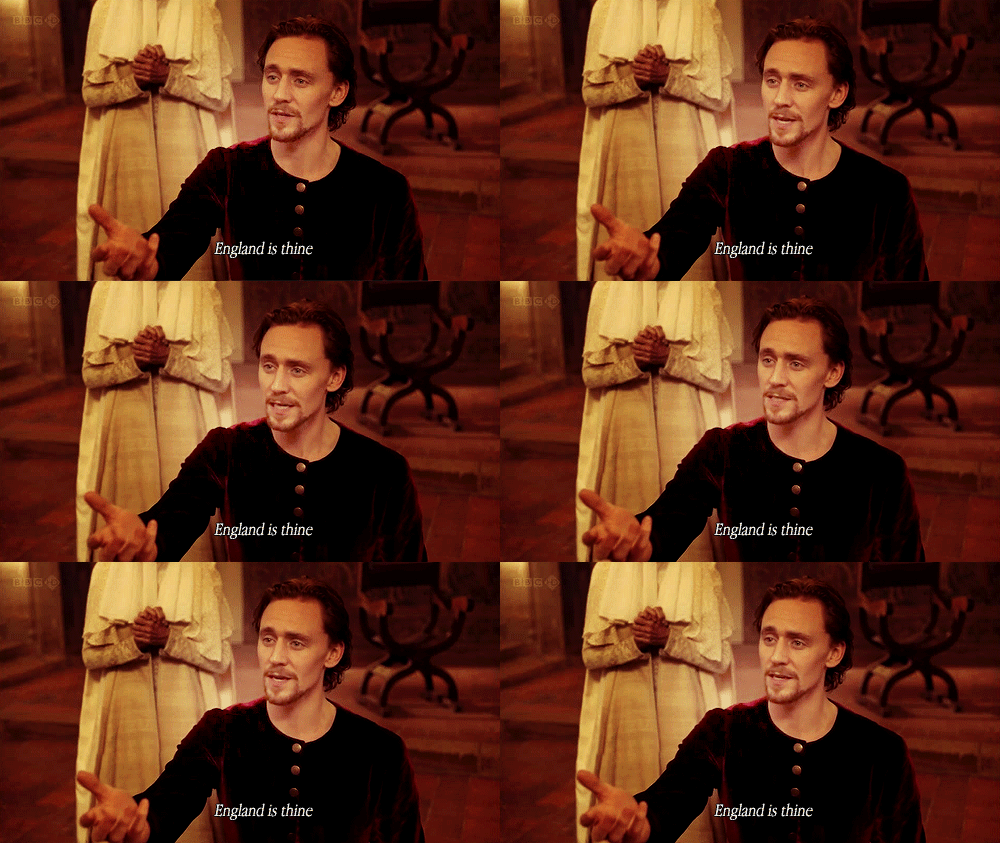
In the first speech, Tom Huddleston plays Coriolanus as a heroic soldier, disgusted and hurt by the lies of the scheming  Tribunes:

Hiddleston chose to play Coriolanus not as a villain but as a frustrated demagogue- someone who wants to lead his people to greatness, whether they like it or not. Whether you approve of his methods, Hiddleston’s Caius Martius does care about the good of Rome. You can almost see the tears in his eyes as he leaves the city he loves, the city he bled for, and that has now betrayed him.

By Contrast, Ralph Fiennes takes a much more authoritarian and cruel route in the film Coriolanus, which Fiennes also directed:

Youtube critic Kyle Kallgren made the excellent case that Fiennes’ Coriolanus is first and foremost, a soldier. You could argue that perhaps Coriolanus has no political ambition whatsoever; he merely wants to keep fighting because war is all he knows. Maybe he purposefully sabotaged himself during his campaign for Consul, because all he wishes to rule is the battlefield:

Kalgren also highlights the “proto fascist” parts of Fiennes’ performance, since Fiennes himself has played Nazis, serial killers, and of course, Lord Voldemort, who is essentially a fascist dictator. Like Merchant of Venice, the Nazi party used Coriolanus as a propaganda tool, claiming that Caius’ fall from grace showed the failure of a weak democracy:

The poet deals with the problem of the people and its leader, he depicts the true nature of the leader in contrast to the aimless masses; he shows a people led in a false manner, a false democracy, whose exponents yield to the wishes of the people for egotistical reasons. Above these weaklings towers the figure of the true hero and leader, Coriolanus, who would like to guide the deceived people to its health in the same way as, in our days, Adolf Hitler would do with our beloved German Fatherland.

Martin Brunkhorst, “Shakespeare’s Coriolanus in Deutscher Bearbeitung. Quoted from Weida

It makes sense that fascists would gravitate towards a play about a seemingly virtuous Roman military leader. After all, the word “fascism” is an Italian word, coined by Benito Mussolini, to evoke the glory days of the Roman Empire- days when Roman society was based on military conquest under a strong leader. What these fascists fail to recognize is that Coriolanus is not a strong leader- he hates politics and is unable to gain any support from the people or from the elites in power. His inability to “play the game” of Roman politics, does make him appealing to some, but on the whole, his career is a disaster.

Some have chosen to interpret the story of Coriolanus as a sort of action-movie wish fulfillment- a man in a lawless society who uses his fists rather than words. Back in the 1990s, Steve Bannon (former advisor to President Donald Trump), wrote a hip-hop musical called: The Thing I Am, which re-interpreted the story of Coriolanus as a police captain who is trying to clean up downtown LA, which is embroiled in gang warfare. I find this interpretation paper-thin and not at all conducive to the spirit of the original play. It also has very racist and paternalistic undertones. You can read my review of it here:

Coriolanus Today

https://www.nationaltheatre.org.uk/productions/coriolanus/

Shakespeare refuses to be prescriptive on political or social issues. He tries to represent all sides of an issue and let the audience decide. With the rise of neo-fascist movements, sectarian violence, and the persistent questions surrounding police and military forces, Coriolanus is more relevant than ever. I haven’t seen this production at the National Theater, but I hope it calls attention to the various angles and points of view of the play- Coriolanus the war hero, Coriolanus the traitor, Coriolanus the soldier, Coriolanus the would-be-dictator. David Oyelowo is a fantastic Shakespearean actor, so I’m sure he can bring a great deal of complexity and nuance to this complicated man.

What I find interesting is that the trailer chooses to use this speech, when Coriolanus has defected to Rome’s enemies, the Volskies. He seems sorrowful, desperate, and afraid of what the Volskies will do to him, now that he is in their camp. One line that Oyelowo delivered exceptionally well was the line “Only the name remains.” I haven’t seen the whole play, but it seems THIS Coriolanus is concerned with the glory of his name living after him. The final question this play asks is, for such a complicated man, how will Coriolanus be remembered?

Well, there you go, Stopittickles! Hope you enjoyed this overview of the play Coriolanus. If you like this review, you might like to sign up for my online class on Julius Caesar via outschool.com:

Click here to sign up and get a $5 discount: https://outschool.com/teachers/The-Shakespearean-Student

RIP James Earl Jones

Speak of me as I am, nothing extenuate- Othello

I’m sure I don’t need to tell you that one of the most iconic voices of our generation, James Earl Jones has passed away at the age of 93. I’m sure I also don’t need to mention his iconic film roles in such films as Field of Dreams, Coming To America, The LIon King, and of course, his (initially uncredited) role as the voice of Darth Vader in the Star Wars Trilogy. As I’ve written before, Jones had a powerful, authoritative voice that played kings, generals, knights, and even gods, which came directly from his training as a Shakespearean actor. So, instead of taking a look at his illustrious film career, I’d like to celebrate Jones’ contributions to Shakespeare, and how Shakespeare changed his life, and through him, changed mine.

Jones and Poetry

I don’t mind talking about my stuttering because it’s just another example of you finding yourself with a weak muscle and you exercise it, and sometimes that becomes your strong muscle,” Jones told KCRA in 1986. “I was mute from grade one through freshman year in high school — mute because I just gave up on talking.”

-James Earl Jones in a TODAY Show interview, 1986

James Earl Jones was born in 1931 in Arkabutla, Mississippi. Not only did he struggle with racial discrimination at home and in his career, he also dealt with a debilitating stutter which, as you can see in the quote above, left him all but mute for years of his life. It was one of his teachers who helped Jones find his voice by giving him poetry to read, inspiring him to become an actor. As a Shakespearean actor who also struggles with a stutter, reading this about Jones helped me become an actor as well.

The New York Shakespeare Festival

Your voice has the power to inspire, motivate, and change lives. Don’t be afraid to use it.

James Earl Jones

Before he became a star in the Hollywood firmament, Jones was a classically trained actor who starred in many contemporary and classic plays like The Iceman Cometh, The Great White Hope, and a title role in a drama about the great Shakespearean actor, Paul Robeson. In addition, Jones was a regular performer at the New York Shakespeare Festival, starring as King Claudius in Hamlet, Oedipus Rex, The Prince of Morocco in The Merchant of Venice, and like Paul Robeson, Jones was celebrated for his dignified and powerful portrayal of Othello.

James Earl Jones as Othello and Cecilia Hart as Desdemona in a scene from the Broadway revival of the play “Othello.”
James Earl Jones as Othello and Christopher Plummer as Iago in a scene from the Broadway revival of the play “Othello” (New York 1982)

Mr. Jones commands a full, resonant voice and a supple body, and his jealous rages and frothing frenzy have not only size but also emotional credibility,” .”

The Times wrote in a review in 1964

From Shakespeare to Strangelove

James Earl Jones made the leap from stage and TV (he was one of the first celebrity guests on Sesame Street among others), after a surprising performance. In 1964, he was playing the relatively minor role of the Prince of Morocco in Merchant of Venice at the New York Shakespeare Festival, while George C. Scott played the more iconic role of Shylock. Surprisingly, Director Stanley Kubrick saw both of them and cast them both in Dr. Strangelove, Or: How I Learned to Stop Worrying And Love the Bomb, Jones’ first film role.

This goes to show that success is often not a straight line, that sometimes it’s the people you know and the reputation you garner that gives you success in your field.

Success should not be measured by material possessions, but by the contentment and fulfillment we find within ourselves.

James Earl Jones

My Favorite Performance of Jones

Though his film roles brought him international acclaim, James Earl Jones still performed onstage well into his 80s, including many more memorable performances at the New York Shakespeare Festival, including my favorite performance of all Jones’ stage roles- his role as King Lear. I’ve written before that Jones is still my favorite Lear- he plays the characters’ rage and commanding presence extremely well, but tempers it with the frailty and foolishness of age. You get the sense that this man was a force to be reckoned with, but is now unable to command himself, much less others. Jones’ interpretation apparently changed drastically in rehearsal, as he delved into Lear’s all-too-human flaws, playing him more like a king with dementia than like Mufasa.

Final thoughts

James Earl Jones would be the first to admit that Shakespeare and poetry changed his life. I would argue that the poetic qualities of his voice was what made him such a great actor. He could rumble and smash but also soothe and charm with a single sentence, and that is why I am glad that his voice is now preserved in the halls of Hollywood. Though he was a movie star, his voice was a Shakespearean through and through.

True strength is not in showing power over others, but in conquering your own fears and insecurities.

James Earl Jones

For More Information

https://news.northeastern.edu/2024/09/12/james-earl-jones-voice/