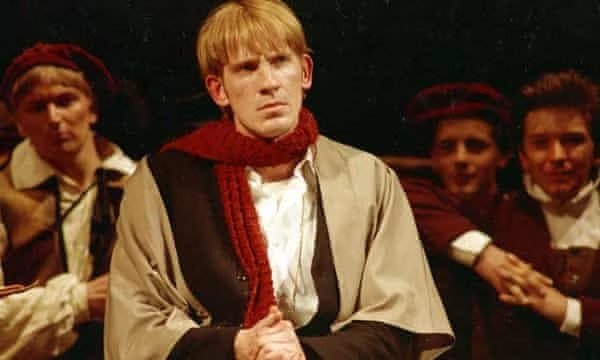
I’m saddened to report the death of a great British thespian and a versitile character actor. David Warner rose to priminance at the Royal Shakespeare Company, whre he played a celebrated Hamlet, a saintly King H enry VI, and many many others.
Warner’s stage career falls into two distinct halves: a youthful decade of riotous acclaim and a late-life flowering separated by a period from 1972 to 2001 when he forsook the stage to carve out a career in cinema. Yet in both youth and age he showed similar gifts: an innate gentleness of spirit, a sense of latent melancholy, an inquisitive intellect
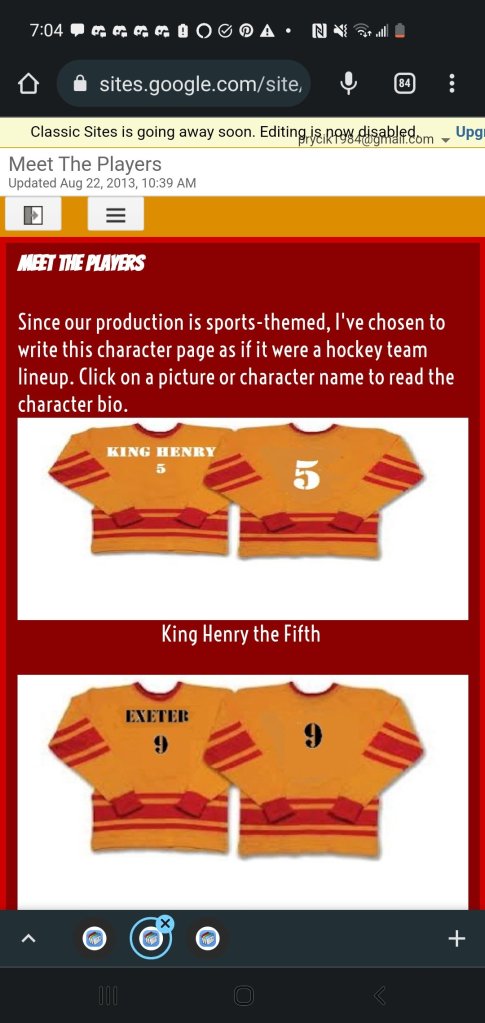
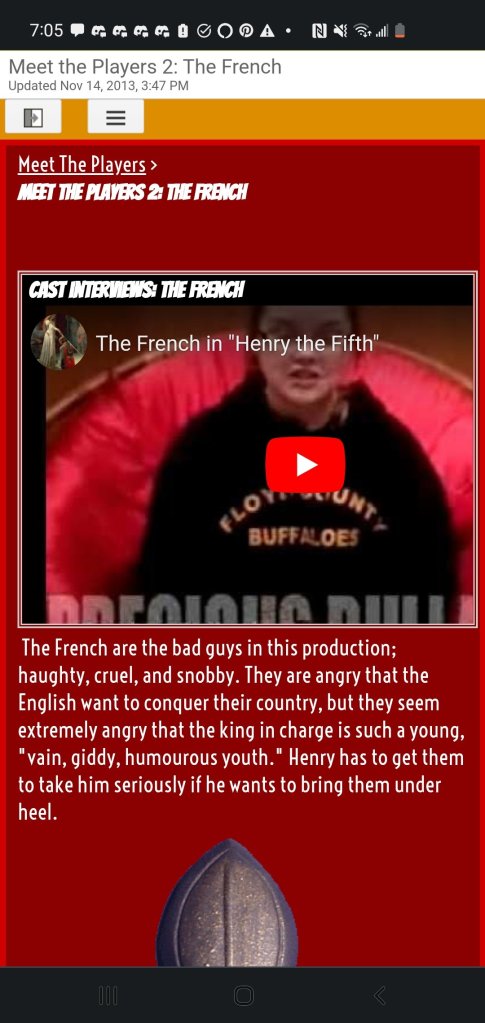
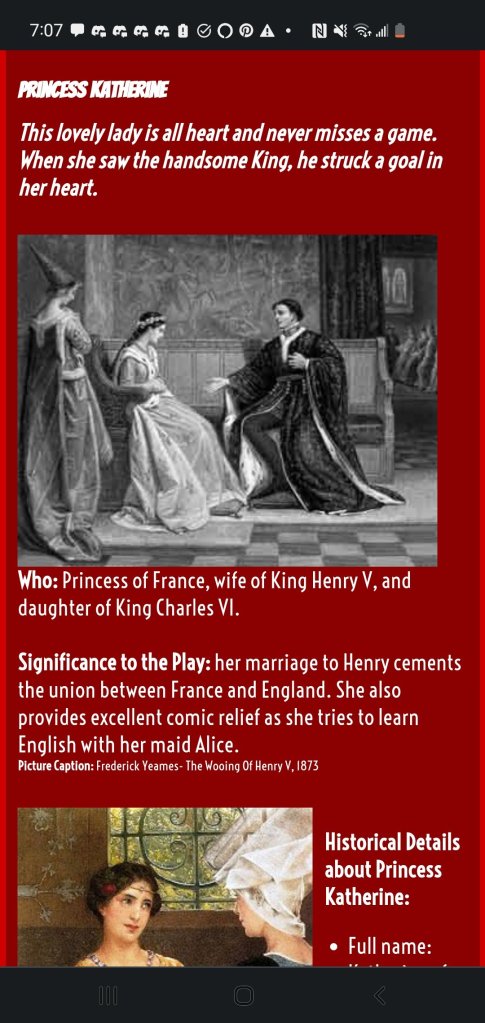
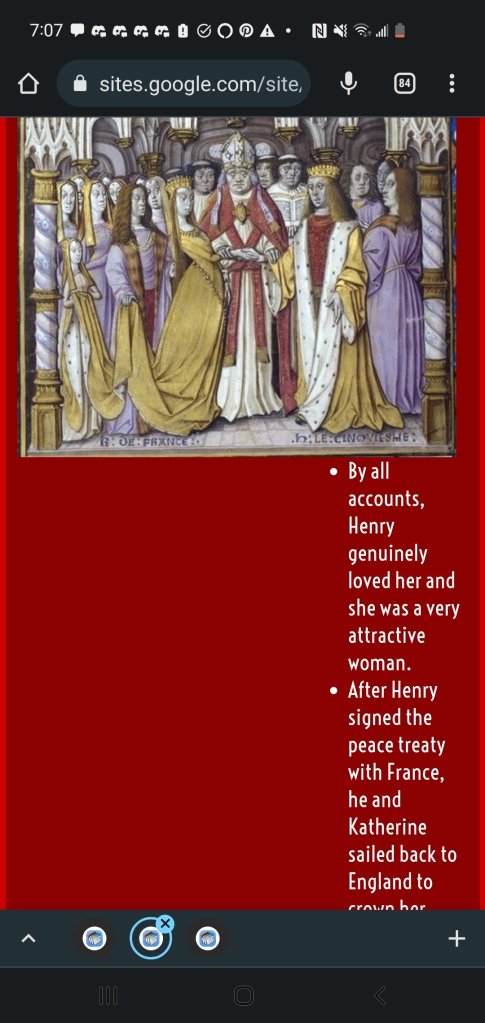
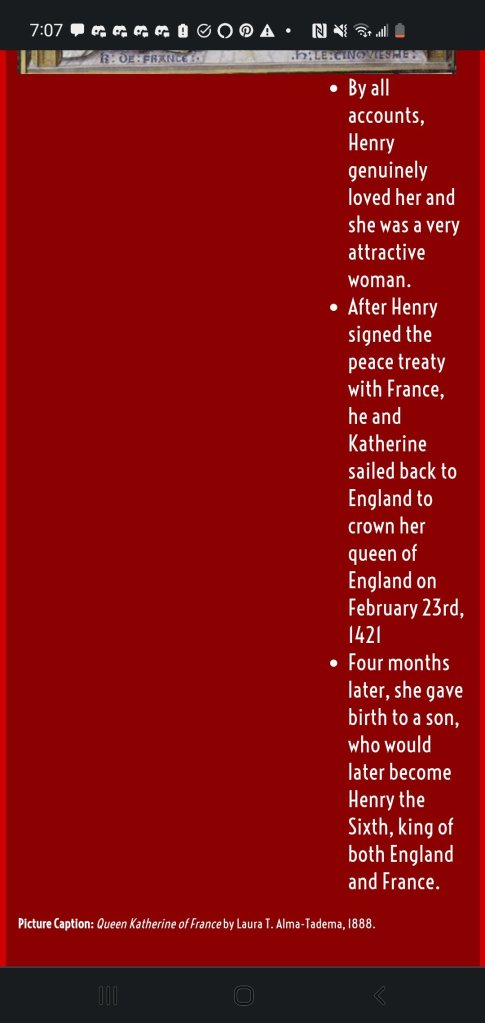
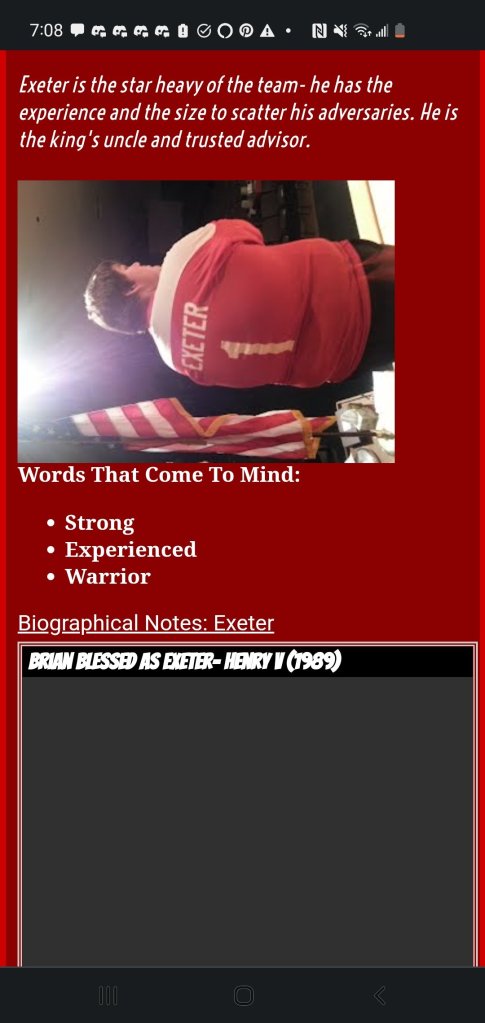
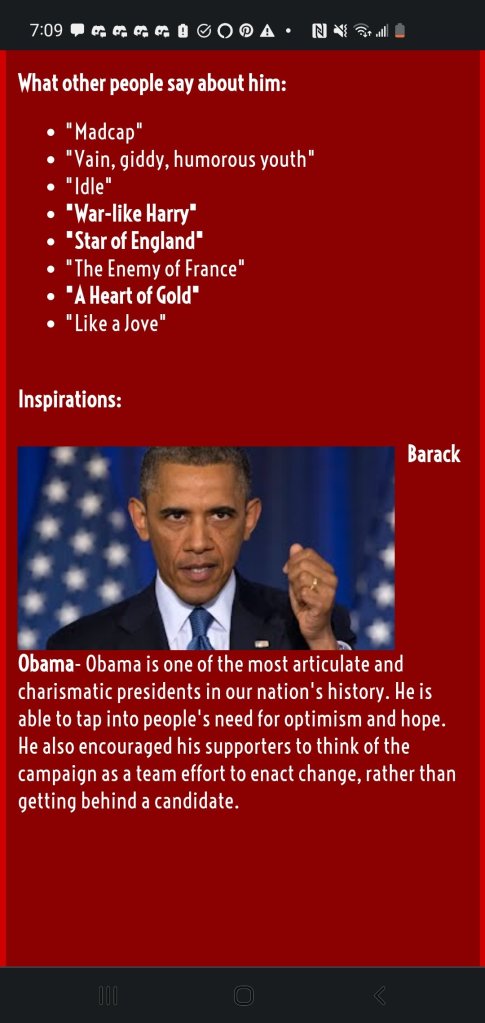
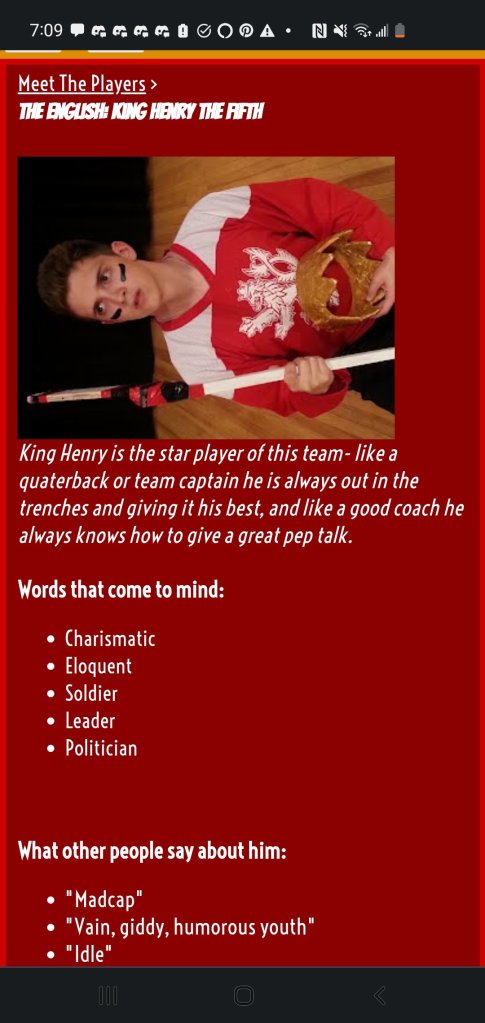
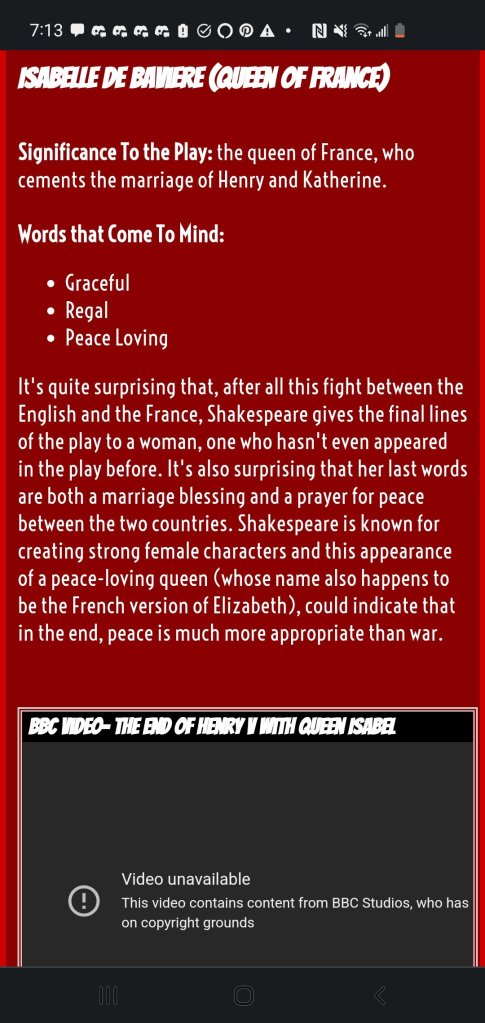
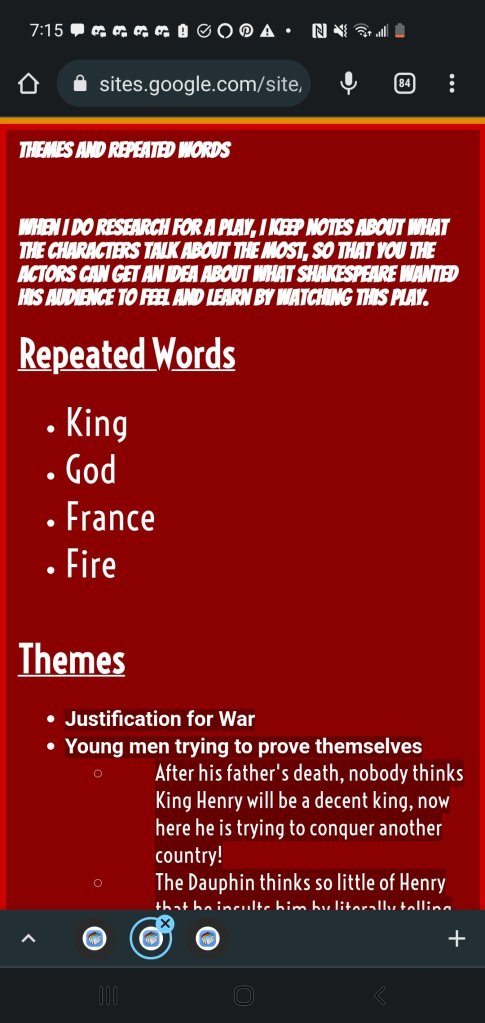
In 2012, I was text coach for a high school production of “Henry the Fifth,” directed by Sara Landis. Below is a series of photos, videos, and character information about the production, and the play itself.
Happy Father’s Day! I’ve been teaching a number of classes these past few days so I haven’t had much time to post but in honor of Father’s Day- here’s a bunch of my favorite past Father’s Day posts:
Shakespearean Greeting Cards from Immortal Longings.com
2. Bios of William Shakespeare and John Shakespeare Both Shakespeare and his father had children, and both worked hard to make a better life for their offspring, so I thought I’d tell you some of their life stories so you can learn more about these great men.
The house on Henley Street, where Shakespeare was born in 1564. Click here to learn more about Shakespeare’s birthplace.
3. My Picks For Top 5 Best and Worst Dads in Shakespeare I’ve gone through the entire cannon from As You Like It to Alls Well That Ends Well, and picked out the dads whom I think deserve recognition either as great or terrible parents. Who will take the coveted #1 Shakespeare Dad prize? Stay tuned to find out!
Coffee mug with a quote from one of Shakespeare’s most well-known dads Polonius in “Hamlet.”
I’ll also be sharing some great memes and reviews on Instagram and my podcast next week.
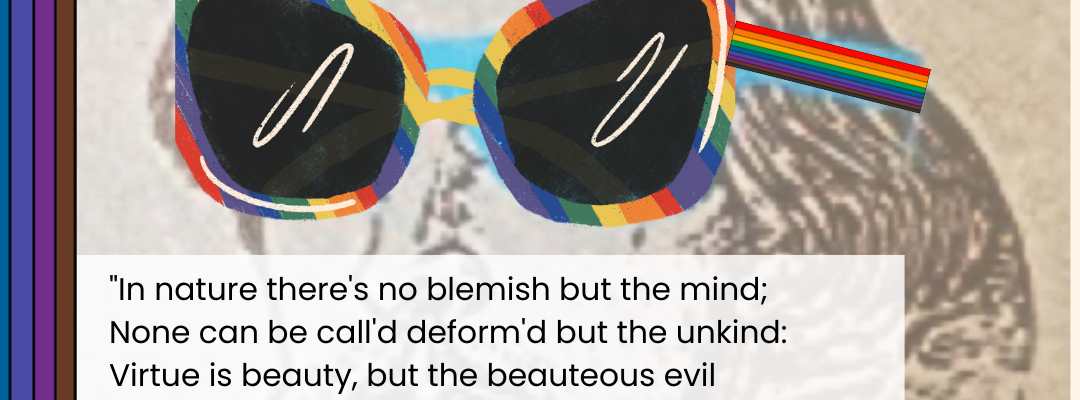
Happy Pride Month everyone! This month I’m going to concentrate on “A Midsummer Night’s Dream,” more info on Shakespeare’s comedies, and a few little nerdy analyses, but first I wanted to extend a friendly hand to members of the LGBTQ+ community, whom arguably Shakespeare has celebrated in some of his writing, especially in Midsummer and the other comedies.
The quote on the featured photo comes from “Twelfth Night.” The character Antonio repeatedly mentions how much he loves Sebastian (Viola’s twin brother). He shows a great amount of courage and devotion. Sadly, Sebastian doesn’t reciprocate his feelings, but he is grateful to Antonio, and tries to help him when he gets in trouble.
If you’re interested in queer readings and queer coding in Shakespeare, enjoy this video analysis from Kyle Kalgren and Rantasmo- a scholar who delves into queer representation in popular media:
Let me know if you’d like me to cover more of this topic. I admittedly, haven’t read many Queer Theory papers on Shakespeare, but it’s a fascinating and wide-ranging topic. It also helps develop the case that, as Rantasmo puts it: “If we truly believe (and I do) that Shakespeare is a universal writer, then his plays should be able to speak to all races, cultures, and all forms of love.”
In 1978, a “holiday special’ was released under the Star Wars umbrella. Today it is universally panned as the worst Star Wars product ever conceived. It is tonally completely different from Star Wars and it spends most of its time either in a bar on Tatooine or on Kashik with Chewbacca’s family; characters we don’t know, can’t understand, and have no influence on the larger Star Wars Universe!
The only bright spot in this tragic black hole of a time-wasting special, (at least according to most of the internet), was that this special brought back the character of Boba Fett, the cool, anti-heroic bounty hunter who is constantly deceiving our heroes. As you can see, they changed the format into a cartoon, so that’s a little bizarre, but it was nice to see an old friend in this otherwise who’s who of lame new characters.
THIS WAS NOT A NEW IDEA, EVEN FOR 1978,
In around 1598 (allegedly), Queen Elizabeth the first asked William Shakespeare to write a comedy about Sir John Falstaff, the fat cowardly comic center of the Henry IV plays. The Queen wanted to see a comedy about Falstaff in love, which Shakespeare allegedly completed in a few short weeks.
Ant the result, was the Star Wars Holiday Special of the Shakespearean Cannon.
Unlike Henry IV, which is a complex history play about rebels going up against an empire (Henry IV claimed part of France so that counts :), Merry Wives a silly comedy set in the country town of Windsor. Just like the Holiday Special, Shakespeare’s comedy has a totally different tone than the other plays that feature Falstaff.
I think Shakespeare wisely didn’t try to make Falstaff a romantic figure- that would be absolute character assassination. What he does instead is take Falstaff’s ability to sweet-talk women and his penchant for thievery, and make the play about his attempts to seduce two virtuous housewives and steal their money. Just like how Boba Fett was not changed into a good-guy to pander to audiences (yet), but instead, Lucas made him a cunning deceiver who tries to sell out our heroes to Darth Vader.
Though Falstaff himself works within the context of the play, most of the new comic characters are very dated and not very funny. Dr. Caius and the Welshman are written with outrageous accents making them as incomprehensible as alien bit players in Star Wars. Frankly, I’d rather kiss a Wookie than listen to these losers try to woo Mistress Page’s daughter. It’s like Shakespeare cut and pasted the worst scenes from Taming Of The Shrew and added a French accent.
Even more boring are the scenes at the Garter Inn- a place that must’ve had significance for knights in the 1590s, but nowadays is somewhat forgettable, (like the Cantina, deal with it NERDS!)
The one really good part of the play is this scene in Act II, Scene I where Mistress Page and Mistress Ford simultaneously receive letters of “love,” (which really means ‘I want sex and your money), from Falstaff. The ladies are incensed for a couple of really good reasons:
A. It’s Falstaff- a fat, old, penniless knight who is well known as a drunk.
B. They’re already married, and he has the pudding guts to assume they’d betray their husbands.
C. If they were to cheat on their husbands, THEY WOULDN’T DO IT WITH FALSTAFF
D. The love poem he writes them is terrible. If he wanted these virtuous wives to cheat on their husbands for someone as completely undeserving as him, he could’ve at least put some effort into it!
I would also argue that the worst thing about the Holiday Special became the best thing about Merry Wives: the songs!
The most egregious change to the tone of Star Wars that the Holiday Special made was putting in a bunch of terrible musical performances by people like Jefferson Starship (get it?) to make the special more of a variety show with the Star Wars characters slapped on top of it like a sticker on a lunch box. Now we know what it sounds like when Princess Leia sings a song that clearly required a second draft:
Luckily for Shakespeare, instead of Jefferson Starship, he got opera composer Otto Nikoli, who saved this mostly terrible play by turning it into a charming opera! Look at this duet from Act I!
A lot of the more absurd plot points of Merry Wives work extremely well as musical comedy shtick, and Falstaff himself works very well as a big basso profundo
So if you go to see Merry Wives, know that it’s not a very good play by Shakespearean standards. It’s silly, kind of pointless, and not a very good addition to the story of Falstaff, but much like the Star Wars Holiday Special, it’s sure to make you laugh:
With Shakespeare’s birthday coming up, I got to wondering if Shakespeare and other Elizabethans celebrated birthdays, and if so, did they use birthday cakes covered with lit candles?
Shakespeare’s plays make it clear that they did at least mark birthdays- Cassius in Julius Caesar and Cleopatra in Antony and Cleopatra do mention birthdays and several other plays mention cake.
One passage from Troilus and Cressida, (a comedy set in Ancient Greece) is practically a recipe for an Elizabethan cake:
Pandarus. Well, I have told you enough of this: for my part,
I'll not meddle nor make no further. He that will
have a cake out of the wheat must needs tarry the grinding.
Troilus: Have I not tarried?
Pandarus. Ay, the grinding; but you must tarry
the bolting.
Troilus. Have I not tarried?
Pandarus. Ay, the bolting, but you must tarry the leavening.
Troilus. Still have I tarried.
Pandarus. Ay, to the leavening; but here's yet in the word
'hereafter' the kneading, the making of the cake, the
heating of the oven and the baking; nay, you must
stay the cooling too, or you may chance to burn your lips.
You might think Shakespeare is being anachronistic, but according to Food and Wine Magazine, the Ancient Greeks invented the practice of putting candles oncake, because Greek cakes were offerings to the Moon goddess Artemis, and the pious worshippers wanted their cakes to shine like the Moon!
There are also stories from Greco-Roman myths about a special honey cake that was so good, it even appeased Cerberus, the three-headed dog of the underworld!
It was the Romans who had the first birthday parties with cake, though their parties were strictly for the aristocracy, not common people. The first children’s birthday cakes with candles came to be in Germany in the 18th century.
So we know birthday cakes were a thing in Shakespeare’s Day, and that he was aware of them. The question is whether Christian Elizabethans chose to continue the practice of birthday cakes, and if common men like Shakespeare partook in them.
Sadly, the research I’ve gathered suggests that common men like Shakespeare probably didn’t eat cakes to celebrate their birthdays, (though, as I have discussed in other posts, Shakespeare might have eaten cakes at Halloween, Christmas, and Twelfth Night).
Twelfth Night Cake recipe from 1604, when Shakespeare was still alive.
Although the concept of a birthday cake with frosting and candles wasn’t really a thing in Shakespeare’s Day and not available to people of his social class, we can still celebrate his birthday in plenty of fun and delicious ways! Below is a video from the Utah Shakespeare festival that features a young girl making an Elizabethan cake from The Complete Cook in Shakespeare’s honor, in front of a special guest!
An Elizabethan cake recipe, Utah Shakespeare Festival.
You’ll notice that the recipe doesn’t have leavening agents like baking powder except for yeast, so like Pandarus warns Troilus, an Elizabethan cake requires kneading, more time, and will produce a smaller and less fluffy result, (much like Troilus’ relationship with Cressida, but I will get into that later). I encourage you to try this and other Shakespearean recipes and stay tuned to my blog, YouTube page, etc, for lots of fun posts in honor of Shakespeare’s Birthday!
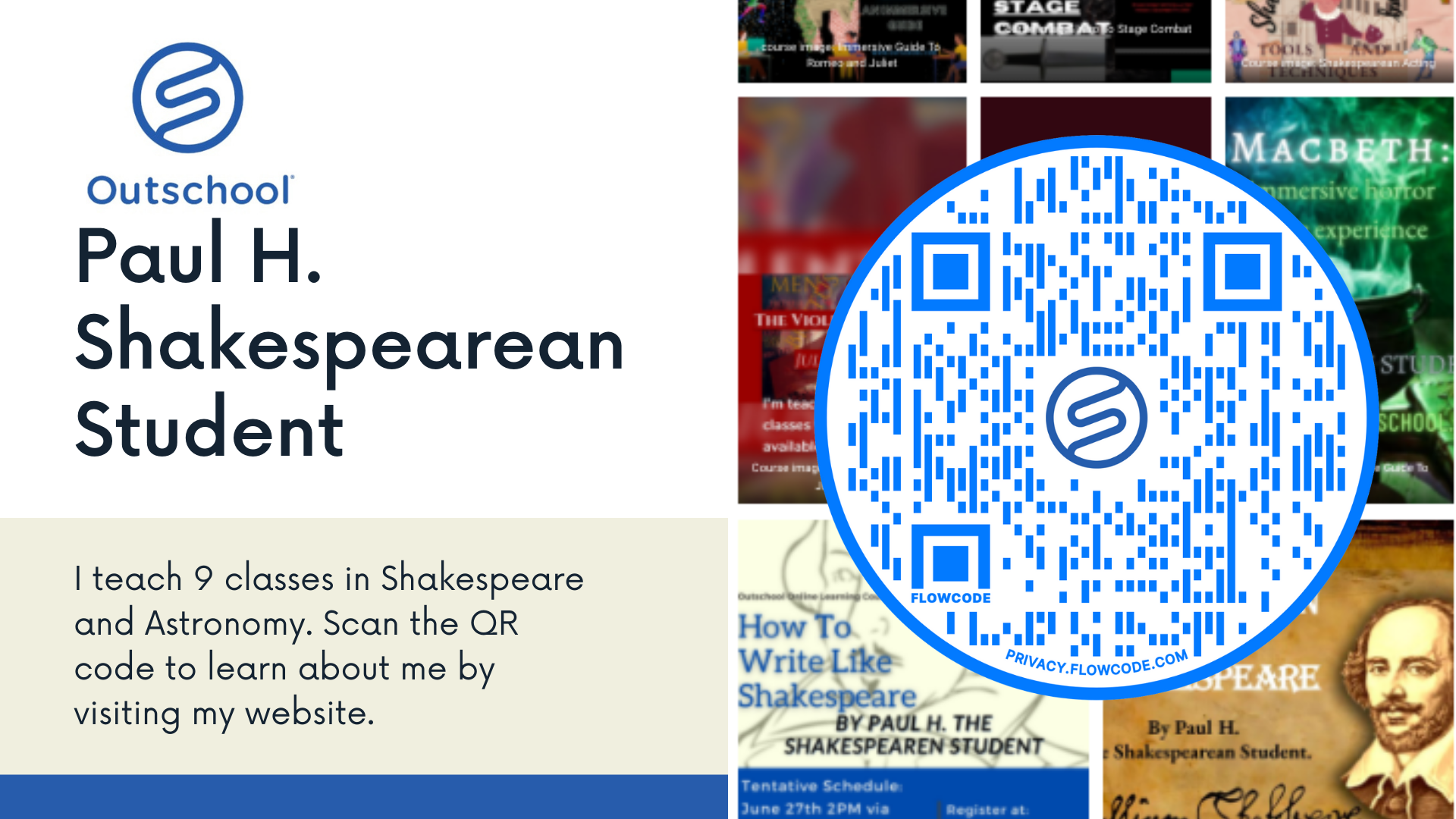
I’m beyond excited that I am able to offer three multiple week courses through Outschool for kids aged 6-12. If you scan the QR code below, you can see class descriptions and individual trailers. You can also check out the “My classes,” Page on this blog. I hope you and your family will join me this summer!