Today is February 29th, a day that only exists every four years. This is because the Earth’s rotation isn’t exactly 265 days, so every couple of years we add a day, (except every few hundred years).
The man who first pushed for the most accurate calender in the Western world was none other than Julius Caesar, the Roman dictator, and titular character in Shakespeare’s famous tragedy. Here’s an interesting news story that details why this happened:
For the month of March I’ll be doing a lot of posts, videos, and podcasts about Julius Caesar, and the Roman plays in general, and also hopefully releasing a new course for Outschool.com. Stay tuned!
This past month, there was a free production of Richard III in New York’s Shakespeare In the Park, starring Danai Gurira as the title character. I have not seen this production, though I wish I had. I enjoyed the actress Ms. Gurrira in such films as “Black Panther,” and would love to see her do Shakespeare. What is more, the concept intrigues me. This project explores themes of toxic masculinity, racial identity, inferiority, and misogyny.
Danai Gurira as Richard III, Shakespeare in the Park, 2024
Unsurprisingly, with so many heady topics in the production, this Richard III is still somewhat controversial. Some right-wing critics dismissed the whole production as a piece of ‘woke propaganda,’ but I feel this is unfair.
When Danai Gurira of Marvel’s “Black Panther” first takes the stage in the title role, the actress has no perceivable hunchback or arm trouble. And yet the dialogue suggesting Richard suffers from a lifelong physical issue (“rudely stamped”) has been kept in. Perhaps we are to use our imaginations. Who knows? We are certainly tempted to close our eyes.
I will not judge this production based on the acting because I haven’t been able to see it. What I will do is take a stance on the validity of the concept. Specifically, I want to ask if this play is a good examination of toxic masculinity and if it would it be worthwhile to see it portrayed by a black woman, as opposed to a white man. The short answer is an emphatical “Yes.”
Richard III is definately an example of toxic masculinity. He is violent, full of hatred, vengeance, and mysogeny. He is constantly insulting women from Lady Anne, Jane Shore, Queen Elizabeth, and even his own mother. In fact, the source of Richard’s toxic attitude is that he blames his mother for his disability and deformity:
Well, say there is no kingdom then for Richard;1635
What other pleasure can the world afford?
I'll make my heaven in a lady's lap,
And deck my body in gay ornaments,
And witch sweet ladies with my words and looks.
O miserable thought! and more unlikely1640
Than to accomplish twenty golden crowns!
Why, love forswore me in my mother's womb:
And, for I should not deal in her soft laws,
She did corrupt frail nature with some bribe,
To shrink mine arm up like a wither'd shrub;1645
To make an envious mountain on my back,
Where sits deformity to mock my body;
To shape my legs of an unequal size;
To disproportion me in every part,
Like to a chaos, or an unlick'd bear-whelp1650
That carries no impression like the dam.
And am I then a man to be beloved?
O monstrous fault, to harbour such a thought!. 3H6, Act III, Scene i, lines 1635-1653.
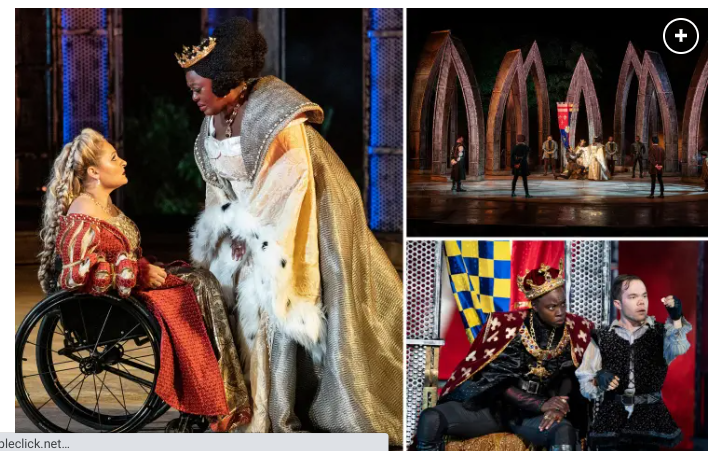
Now I should clarify the difference between deformity and disability, which are characteristics that Richard III has as part of his character makeup. According to the Americans With Disabilities Act, a disability is defined as: “A physical or mental impairment that substantially limits one or more major life activities.” This could include paralysis, autism, or any number of congenital or acquired conditions. Richard’s disability is primarily his limp (caused by his unequally shaped limbs), and his withered arm. What’s interesting in this production is that while the title role is played by an able-bodied woman, most of the rest of the cast have actual disabilites. Watch this clip of the famous courtship scene between Richard and Lady Anne, who plays her role in a wheel-chair.
While a disability is a legal term that is recognized by lawyers and governments alike, the term “deformity” is more subjective; it generally refers to any kind of cosmetic imperfection. In Richard III, this applies to Richard’s hump and withered arm.
The Elizabethans thought that deformity was a sign of disfavor from God, and that deformed people were constantly at odds with God and nature, as Francis Bacon puts it in his essay, “On Deformity.”
As deformed people are physically impaired by nature; they, in turn, devoid themselves of ‘natural affection’ by being unmerciful and lacking emotions for others. By doing so, they get their revenge on nature and hence achieve stability.
Richard III has this drive for revenge in spades and I believe it manifests itself as a particularly terrible form of toxic masculinity. Richard definitely wants the crown to make up for his lack of ‘natural affection,’ but he is also especially malevolent towards women.
I, that am rudely stamp’d, and want love’s majesty
To strut before a wanton ambling nymph;
And therefore, since I cannot prove a lover,
To entertain these fair well-spoken days,
I am determined to prove a villain
And hate the idle pleasures of these days
Seeing a woman play this kind of misogynist dialogue forces the audience to take it out of context and question Richard’s point of view. We see casual misogyny every day, and seeing a woman deliver it is quite illuminating.
Richard’s deformity and Blackness
Another provocative choice by Danai Gurira’s portrayal of Richard is the fact that she plays the role of Richard without the hump or withered arm. She herself explains that for her production, Richard’s perceived deformity, is actually represented by her being a black woman:
He’s dealing with the otherness compared to his family, in terms of not being Caucasian and fair like them.” The word ‘fair’, is used a lot in the play.
Danai Gurira’s
Shakespeare writes Richard as constantly striving to compensate for his deformities by being clever, violent, and eventually, by becoming king. As I wrote before in my review of Othello, for centuries black people have been portrayed as inferior; aberrations of the ‘ideal fair-skinned form’. So, to the Elizabethans, blackness itself was a form of deformity, and the rawness of addressing this uncomfortable fact in this production should be commended.
English people are already trained—and we have scholars like Anthony Barthelemy has talked about this in his book Black Face, Maligned Race, where the image of blackness, as associated with sin, with the devil, all of these things, makes it quite easy to map onto then Black people these kinds of characteristics. Then, those kinds of characteristics allow for the argument that these people are fit to be enslaved. – Dr. Ambereen Dadabhoy, Race and Blackness in Elizabethan England Shakespeare Unlimited: Episode 168
So while I can’t speak to the production’s acting or staging, I will emphatically defend the notion that this production’s concept is valid. Richard III is an example of toxic masculinity through his self-hatred, violence, misogyny, and narcissism. In addition, as I’ve written before, in the Early Modern Period, blackness was considered an aberration or deformity, and seeing it in the person of Richard, with the implicit understanding that black people still face this kind of prejudice today, opens a much-needed dialogue that any production of Shakespeare shouldn’t be afraid to open.
In short, by re-contextualizing Richard’s deformity and disabilities, this production gets to the heart of the play’s moral for our times. The early modern period’s toxic attitudes towards deformity and disability created the Renaissance monster of Richard III. We in the 21st century must examine our own societal prejudices and toxic attitudes so this monster does not come to haunt us in real life.
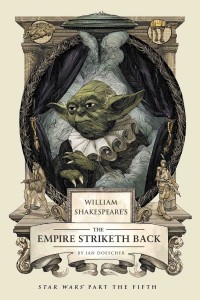
As I was writing William Shakespeare’s The Empire Striketh Back, I was surprised to realize I had made more references to Shakespeare’s Much Ado About Nothing than any other play. Much Ado is a comedy—probably my favorite of Shakespeare’s comedies—so it was strange that lines from it kept popping up in the darkest of the original Star Wars® trilogy.
William Shakespeare’s Star Wars is a series of parody plays written by Ian Doescher that takes the prose screenplays of the Star Wars story and transforms them into Elizabethan verse. Last time I mentioned how much I loved the cheeky references to Shakespeare and Star Wars, and how Doescher adapts the cinematic quality into Elizabethan drama very well. In my podcast, I also emphasized the way Doescher gives each character verbose Shakespearan language that works very well for radio and theater:
My podcast episode where I do dramatic readings of “Verily A New Hope.”
What I want to do with this post, (and the accompanying podcast), is to see whether this edition captures the fun, the clever wordplay, and the Shakespearean storytelling of “A New Hope,” with the second installment of the series, and if it helps to capture the shift in tone between the two movies, as Luke is tempted by the dark side and Han is betrayed and frozen by Lando.
Notes about the play
The first play in the series, “Verily, A New Hope,” took plot and structure inspiration from Henry V; it tells the story as an epic heroic story of Luke’s heroic deeds, much like how Henry V is about a king who grows from boy to man.
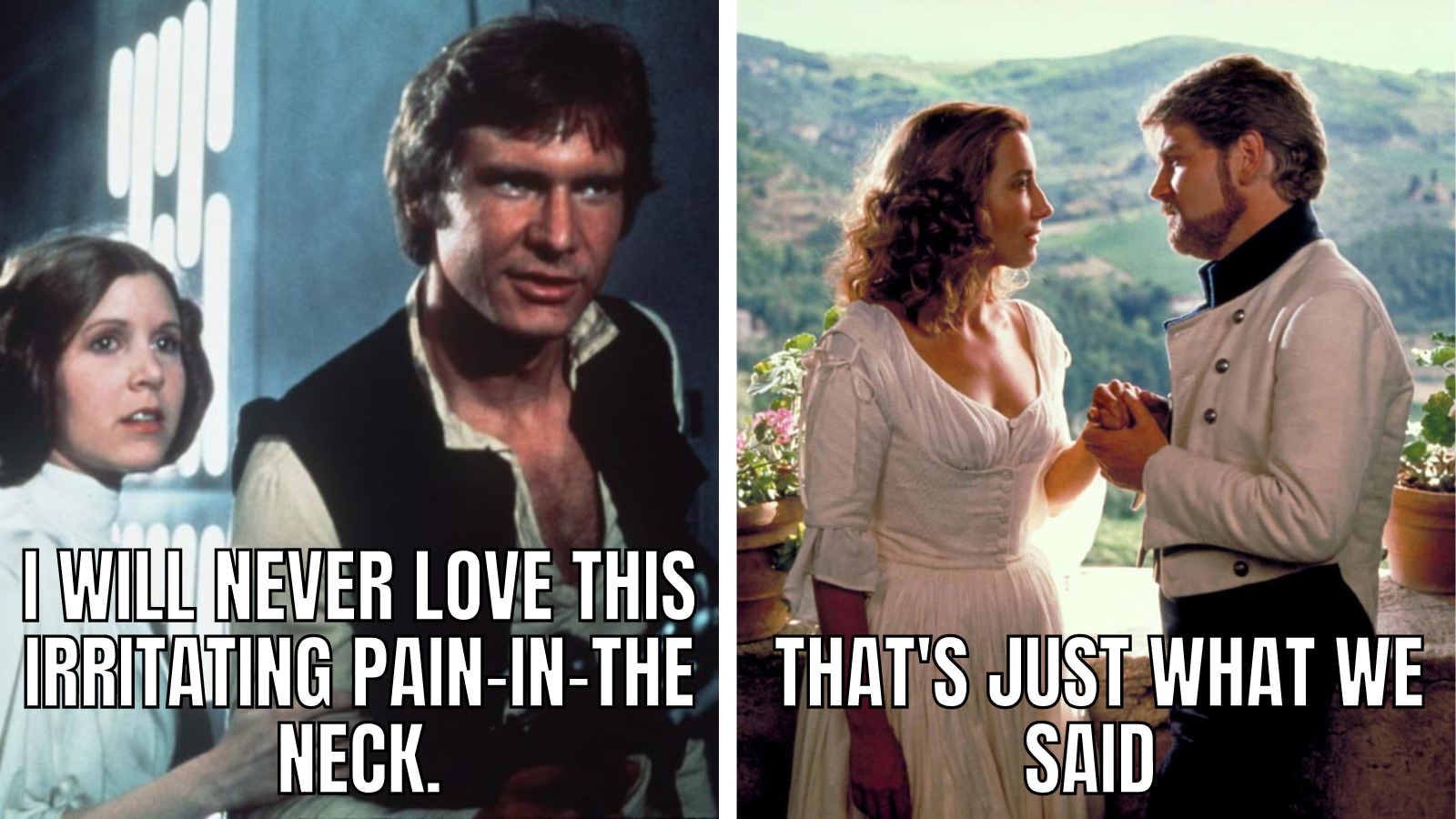
By the playwright’s own admission, the dialogue is stuffed with lots of re-purposed quotes from Much AdoAbout Nothing, Shakespeare’s comedy of a womanizing, self-centered soldier who becomes a devoted husband. This is appropriate since the Leia/ Han plot within the play and movie starts out with them bickering like Beatrice and Benedick. Doescher says this was an accident, but I think he might have subconsciously taken inspiration from their love affair to help structure the dialogue. In the accompanying podcast episode, I talk more about how the use of Much Ado quotes helped to flesh out the characters of Luke, Leia, and especially Han.
Structure
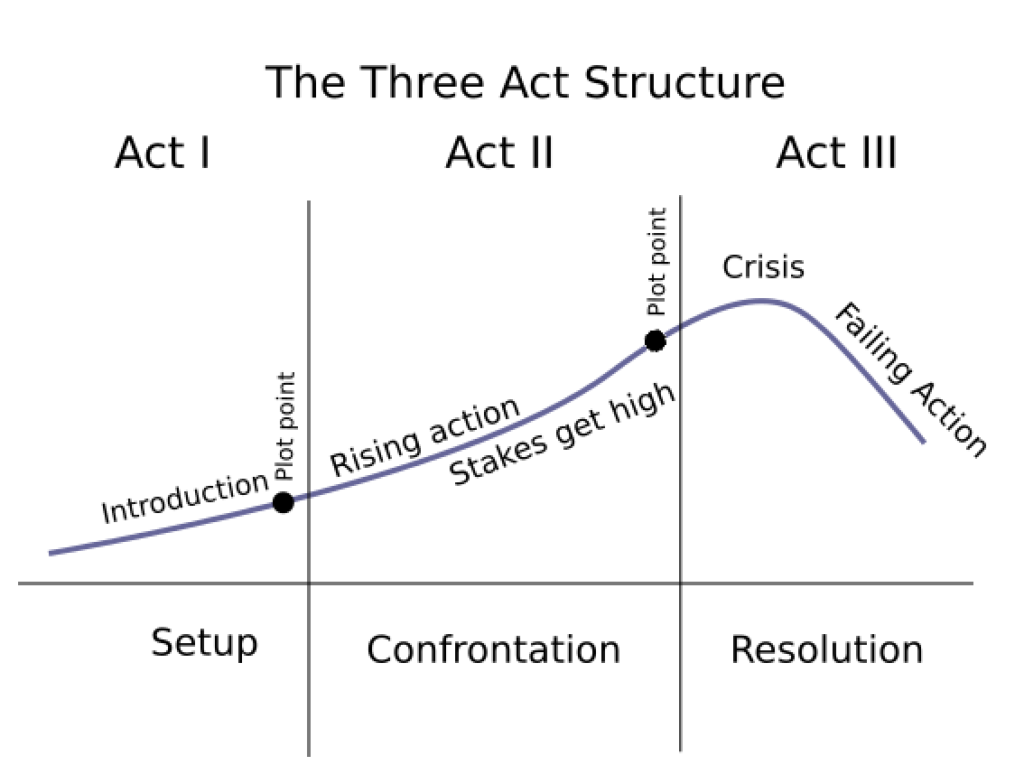
Movies and plays follow a similar structure where the action starts at a static place, tension rises, and finally, things get resolved at the end. A lot of the same elements are in both issues. The main difference is how they are arranged. Let’s see how Doescher translated the three-act structure of a screenplay, to the five-act structure of an Elizabethan tragedy.
A Chorus is a short speech where a character who is not part of the action of the play introduces the plot. It functions the same way as the famous title crawl at the beginning of Star Wars.
I mentioned last time that “Verily: A New Hope” uses choruses liberally, which is appropriate because the tone of this story is so much darker, and since the action follows the journeys of Han and Luke so closely Ian doesn’t use choruses as much. I suspect this is partly because unlike The Empire Strikes Back, A New Hope jumped around more between planets and locations and used wipes and other transitions heavily:
Below is a link to the Royal Shakespeare Company’s Learning Zone, where you can learn about the language of the Henry V chorus.
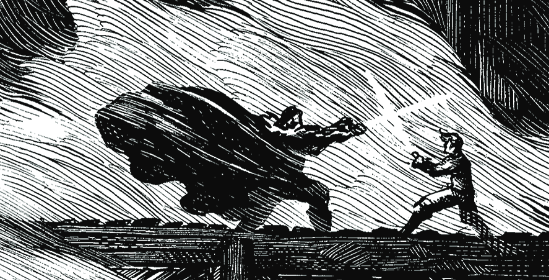
The literary technique of stichomythia has characters who speak at more or less the same time, using slightly different forms of dialogue. Doescher uses this well as a staging device by having Vader and Luke speak similar lines as Luke plummets down the shaft after losing his lightsaber duel:
These similar lines highlight the connection these two have (no spoilers), and also emphasize that, though the actors might be physically close onstage, their characters are meant to be far apart; they wouldn’t be saying this to each other.
In Romeo and Juliet, there’s an excellent example of stichomythia in Act IV, Scene iv, right after Juliet’s parents and Nurse discovers her, apparently dead. There is a long series of laments by her parents and nurse where they are shocked and horrified at her sudden death:
Lady Capulet. Accursed, unhappy, wretched, hateful day! 2702 Most miserable hour that e’er time saw In lasting labour of his pilgrimage! But one, poor one, one poor and loving child, But one thing to rejoice and solace in, And cruel death hath catch’d it from my sight!
Nurse. O woe! O woful, woful, woful day! Most lamentable day, most woful day, That ever, ever, I did yet behold!2710 O day! O day! O day! O hateful day! Never was seen so black a day as this: O woful day, O woful day!
Paris. Beguiled, divorced, wronged, spited, slain! Most detestable death, by thee beguil’d,2715 By cruel cruel thee quite overthrown! O love! O life! not life, but love in death!
Capulet. Despised, distressed, hated, martyr’d, kill’d! Uncomfortable time, why camest thou now To murder, murder our solemnity?2720 O child! O child! my soul, and not my child! Dead art thou! Alack! my child is dead; And with my child my joys are buried.
Romeo and Juliet, Act IV, Scene v lines 2702-2723.
When I played Friar Laurence and the cast and I rehearsed this scene, the actors playing the Nurse and Juliet’s parents were struck by how similar the lines are and worried that these long passages of laments would get tedious to an audience. I realized by looking at the similar lines, the similar words (especially at the ends of lines), and the fact that Friar Laurence interrupts them at the end, led me to believe that these lines are meant to be spoken AT THE SAME TIME. This creates an effect of organized chaos where the actors seem to be wailing and ranting, but are actually speaking a carefully composed quartet of grief. Thus Doescher cleverly mimics Shakespeare’s use of stichomythia to convey Vader and Luke’s physical distance, and complementary feelings at the same time.
3. Parody Lines
The biggest appeal of William Shakespeare’s Star Wars is the fact that it is a parody, and I’ve said for many years that parody and gentle riffing on Shakespeare is a great way to get students to overcome their fear of Shakespeare and engage with him. Students who know Star Wars but don’t know Shakespeare will recognize the familiar characters and plots of the movies and then see how Shakespeare’s language tells the story anew. Similarly, people who know Shakespeare will recognize the way Doescher re-tools famous Shakespeare quotes to give to characters in the Star Wars Universe, like here, where he spoofs the intentionally bad speech of Snug the Joiner and gives it to the Wampa from Empire Strikes Back:
Peter Keavy as Snug the Joyner in “A Midsummer Night’s Dream,” 2017.
In the Educator’s guide, which I’ve attached below, Doescher tells you exactly which lines he has parodied and the plots of the original plays so the students can learn about Shakespeare through these famous speeches. Orson Wells once said that “We sit through Shakespeare in order to recognize the quotations,” and this edition gives us thrilling space battle, wonderful characters, and witty dialogue to keep us entertained while we wait.
Staged moments
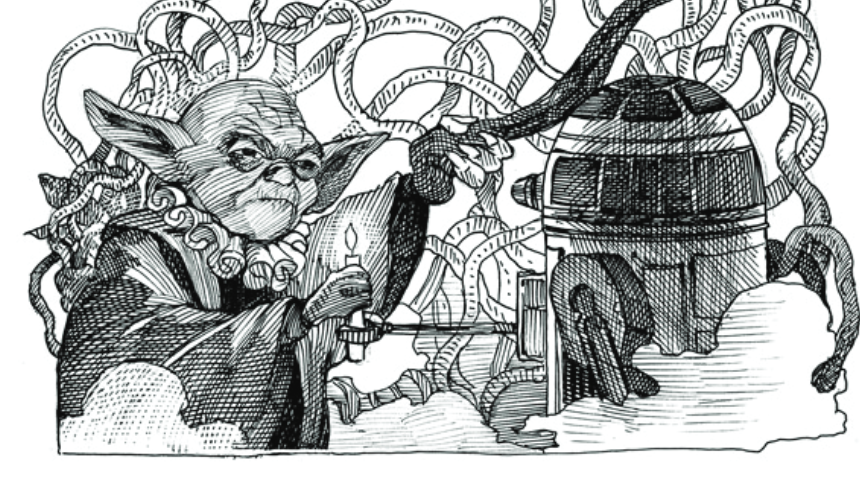
As Doescher worked his way through all nine installments of Star Wars, he continued to expand and experiment with his storytelling. There are a couple of moments in “Empire” that work only onstage such as the aforementioned moment of stichomythia after the lightsaber duel, and the scene in Act II, Scene ii where the Imperial Walkers known as AT-ATs actually speak to each other onstage. Like the French in Henry V, it’s interesting to see the battle from the enemy’s point of view, albeit a highly biased one. I won’t reprint it here for copyright reasons, but I will put this funny sketch in as a placeholder:
My Criticism
Although I loved “Verily, A New Hope,” I feel that Doescher didn’t go far enough to adapt the dialogue in interesting ways and play with the stagecraft of Star Wars to make it more distinct from the film and the first installment. My favorite moment of the play was the Wampa speech which was great because it not only parodies one of my favorite speeches in “A Midsummer Night’s Dream, it also made the Wampa attack tonally distinct from the film- the film is tense and grim, while the Wampa speech is funny and charming. I wish Doescher had embraced the parody and silly tone he shows in this speech and applied it more to the rest of the play; we already know Empire is the darkest installment of the series, but that doesn’t mean it needs to be played like that the whole time.
What I think works best in the film is the romantic comedy between Han and Leia; Doescher does a wonderful job pointing out the parallels between Han and Leia and Benedick and Beatrice which is not only fun, but helps Star Wars fans appreciate the comedy of Much Ado About Nothing even more. This is why I’m glad Doescher took painstaking notes on how he parodied Much Ado and other plays in the guide below:
If you enjoyed the accompanying podcast episode to this post, please consider subscribing and donating to help me continue making fun and educational content like this!
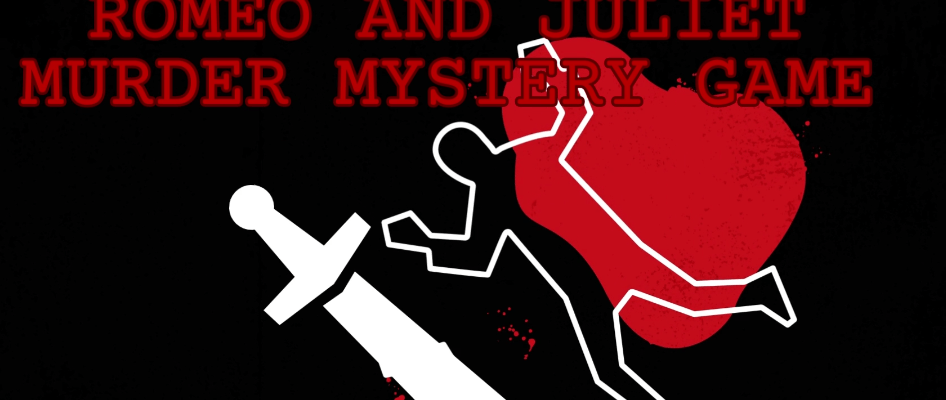
This is my new trailer for my fully online, fully immersive murder mystery game based on Shakespeare’s “Romeo and Juliet.” You play as a detective hired to solve the mystery of Juliet’s murder. You will piece together the plot and characters of Romeo and Juliet, but also use forensic science to identify clues, interrogate suspects, and examine the crime scene just like a real detective! Register now at Outschool.com SPECIAL OFFER: Get $5 off the murder mystery class with coupon code HTHESSQ76F5 until Apr 22, 2023. Get started at https://outschool.com/classes/romeo-a… and enter the coupon code at checkout.
No, you aren’t hallucinating. This is a clip from the short-lived Warner Brothers kids cartoon show “Histeria,” an educational variety show, sort of like Horrible Histories or “Who Was.” This clip is a song about the life of Henry VIII.
The show was produced by Worner Brothers for the WB back in 1996. It starred many successful voice actors from other WB projects like Billy West (Renn and Stimpy), Tess McNeill (Tiny Toon Adventures), and Frank Welker (The current voice of Curious George). In addition, the show was created by Tom Ruegger, Executive Producer of Warner Animation, who also created Tiny Toons, Animaniacs, and Pinky and the Brain. Those of you who grew up in the 90s know that the WB occasionally sprinkled their shows with educational sketches especially with Animaniacs:
So the idea of using these creative people to create a show about history was not a bad one in and of itself. It could have been a modern-day Schoolhouse Rock. The problem is that the characters are TERRIBLE.While Tiny Toons had likeable characters who were the modern-day successors to classic Warner characters like Buster Bunny, Plucky Duck, and Hampton pig, Histeria has lame characters nobody knows or has any interest in like Froggo, World’s Oldest Woman, and Big Fat Baby. In addition, there is no through line to any of these sketches so it seems like a bunch of random skits. While the Animaniacs was about crazy weird characters trying to escape from the Warner Bros. lot, it seems unclear as to why these characters are talking to me about history.
In short, Histeria feels like a bunch of talented people were forced to make it, and they gave little thought to how to make it a popular series. Still, the animation is good, the voice acting is top-notch, and occasionally, the jokes land very well, and the songs are very catchy. Not surprisingly, my favorite song is this one, where the cast summarizes in song, all 37 plays of William Shakespeare:
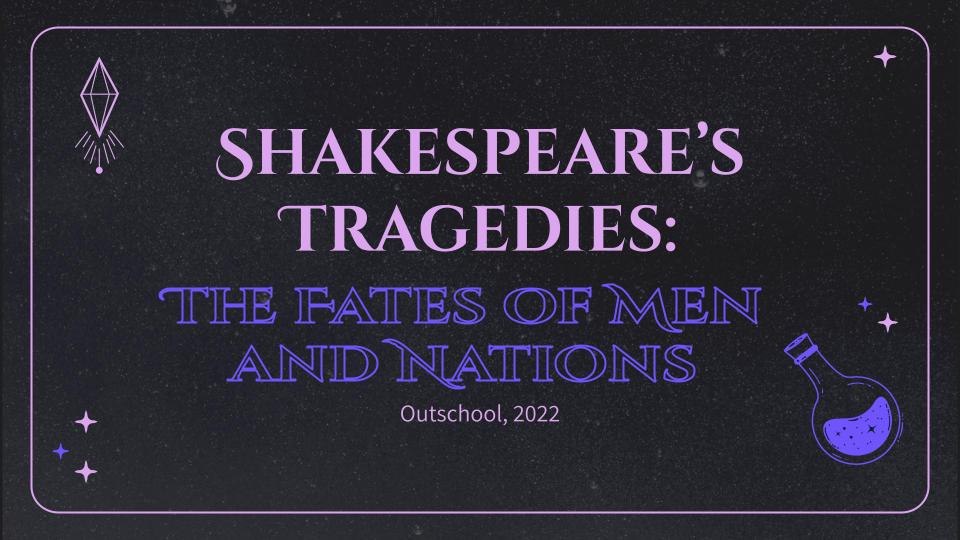
Tomorrow is the first session of my course on Shakespeaere’s tragedies! I’m so excited to teach this great group whom I’ve worked with before. To mark this occasion, I present this silly, catchy, and informative song about the tragic fates of Cleopatra, Juliet, Hamlet, and others.
Title page for my course on Shakespeare’s Tragedies
If you want to sign up for this course or request a private session, you can do so at http://www.outschool.com, or by scanning the QR code below:
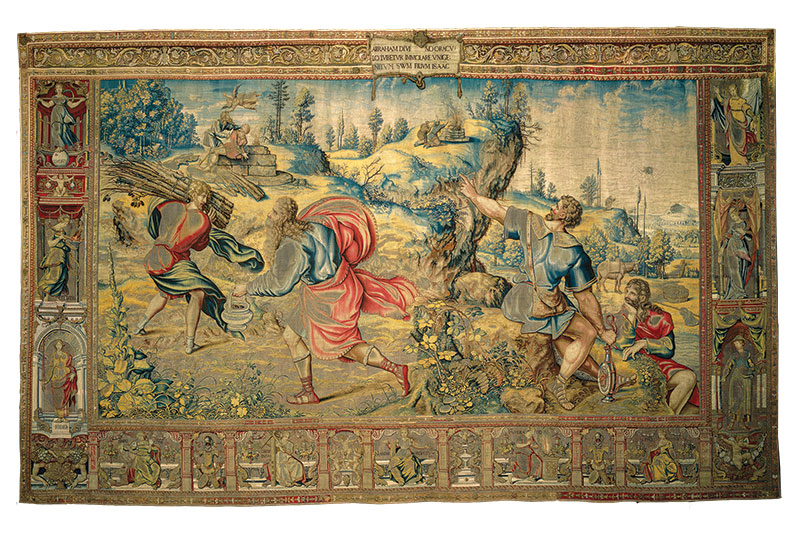
“Upon Such Sacrifices: King Lear and the Binding of Isaac”
I’ve compared King Learto a fairy tale in the past, but i haven’t compared it to a story from the King James Bible, even though Shakespeare, in all likelihood wrote and performed it for James himself. This article form the Jewish Review of Books is a comparison between Lear and the Old Testament Bible. First, the author has a tantalizing historical tidbit that might explain why Shakespeare chose to write Lear for King James:
Before ascending to the English throne, James VI of Scotland wrote a political guide, Basilikon Doron, for his eldest son advising him never to divide his kingdom (as Lear does) but “make your eldest son Isaac, leaving him all your kingdoms.”
Noah Millman.
The article also draws some fascinating parallels between Lear and other Biblical patriarchs especially the sacrifice of Isaac, which takes place in Genesis 22, or as it’s known in Jewish tradition, the akeda.
The akedah prompts different questions than King Lear does, not of how so much tragedy could have sprung from a foolish love test, but how the God of all creation could have put his faithful servant to such an unconscionable test in the first place. And so there is a long interpretive tradition that labors to elide that fact in increasingly creative ways. Surely God never intended Isaac to be a sacrifice—the boy was merely to be present at the sacrifice! How could Abraham have thought otherwise, when God had already sworn that it was through Isaac that his promise to Abraham would be fulfilled? Or, alternatively, surely Abraham never doubted that God was merely testing him—after all, Abraham tells Isaac himself that God would provide a lamb to substitute!
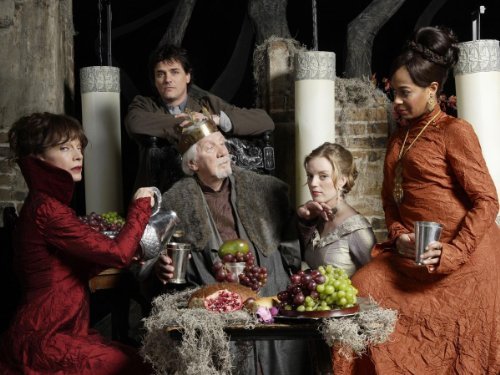
It’s interesting to see the parallels between Lear and an Old Testament patriarch. He constantly asks his gods for help and swears by them when he pronounces his doom, yet arguably he has no real faith in his gods or his daughters, which is why his foolish love test in Act I, serves as the catalyst that corrodes and destroys his kingdom and his life. However, maybe Lear sees himself this way, as a king appointed by God, with the authority to test his daughters’ love as God tested Abraham. Ian McKellen seems to share this view and sees Lear as a priest who is unwilling to give up his “special relationship with his gods.”
The actor playing Lear can benefit from studying the sort of old-fashioned patriarchs presented in the Bible because they help shape his worldview. In addition, the concept of faith and how it is tested is another big theme in Lear and contrasting how men in the Bible keep their faith while Lear loses it is an illuminating way to contextualize both works. Was Shakespeare trying to write a parable for kings? Perhaps, but he certainly encapsulates very well the struggles and anxieties of keeping power, and the desire for divine intervention when a kingdom bleeds.
Lear at its core is a play about growing older, and not just for its title character. Goneril and Regan learn their father is a lousy dad and learn to stand up to him. Edgar learns about the cruelty of the world and how to deceive his enemies.
Lear, a king in pre-Christian England, is too old to rule, so he decides to divide his kingdom among his three daughters. He then tells them he will give the the kingdom to the one who loves him most.
Lear’ youngest daughter Cordelia, refuses to flatter her father, so she banishes her. He also banishes the Earl of Kent, who warns the king that his actions are foolish and rash. Finally, Lear demands that, although he resigns his kingdom, his daughters call him king and agree to house him and his knights in their castle.
Lear is not the only rash old man who is blind to his true danger. His friend the Duke of Gloucester has a bastard son named Edmund, who schemes to usurp his father’s lands and marry into Lear’s family. Edmund frames his legitamite brother Edgar which forces him to disguise himself as the mad beggar Poor Tom
After his daughters refuse to house him and his knights, Lear goes stark-raving mad. He runs out into a storm on the heath, wishing the Earth were struck flat and all mankind was destroyed. He is soon cared for by his Fool, and Kent, disguised as a commoner named Caius.















 The Shakespearean Student