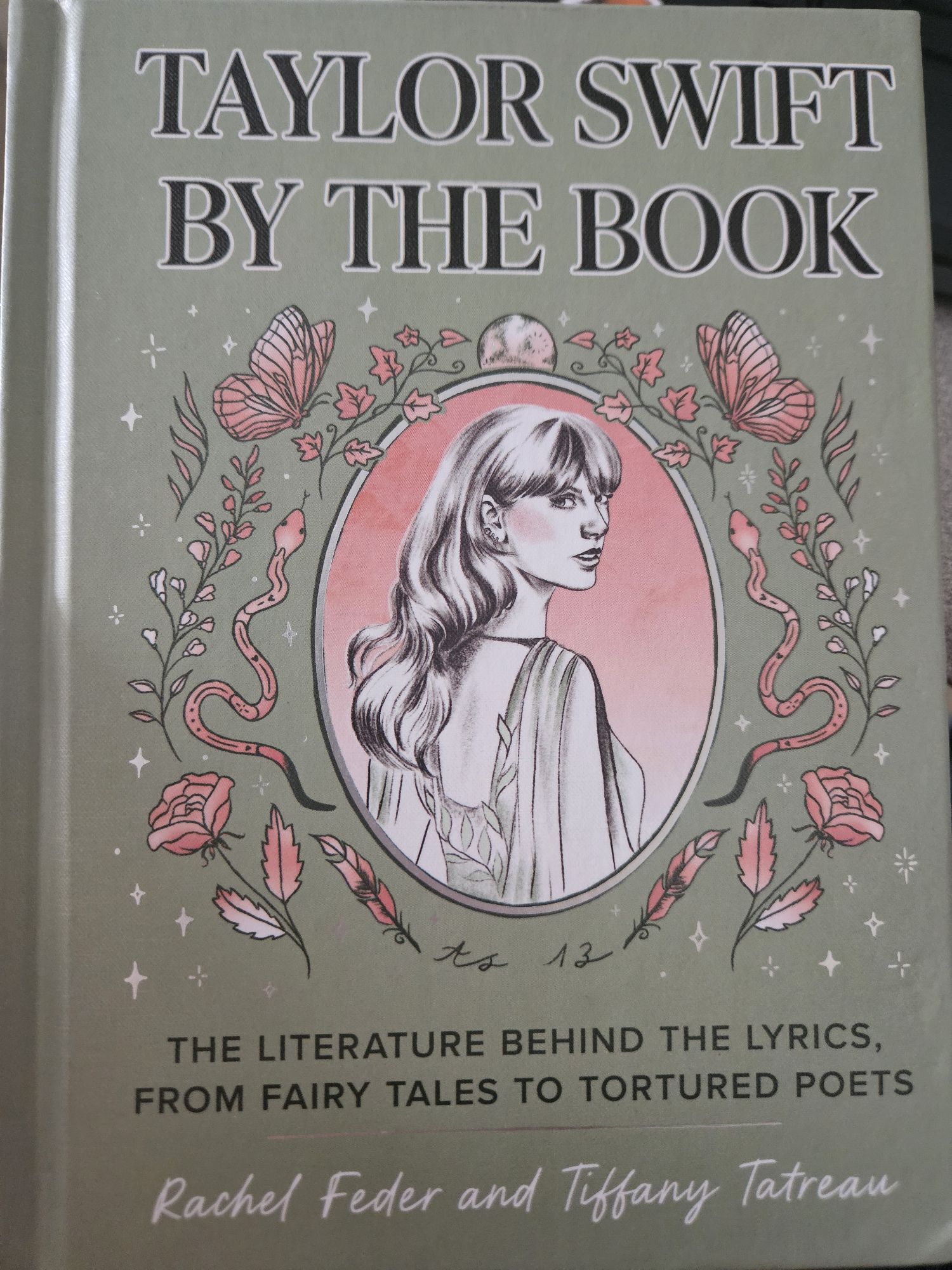
One of my colleagues at work showed me this book, and it really fired my imagination. Taylor Swift is one of the most if not THE MOST successful singer/songwriter of our era. Her songs go across multiple genres and tones and, like many writers, they often contain allusions to classical poetry, nursery rhymes, and occassionally even Shakespeare.
My own Reservations with Taylor
I’m not exactly a Swifite, and I know I’m running the risk of offending MILLIONS of people here by offering criticisms of Taylor Swift, but I honestly think it’s a good idea to be able to critique the things you love. In the past I’ve criticized Shakespeare’s plays, his characters, and even suggested that he might be racist. I would like to offer that, in the case of Love Story, Ms. Swift simplifies the plot of Romeo and Juliet, and leaves out its tragic elements, which kind of misses the point. As an allusion, it seems a little watered down. That said, I feel other TS songs are better, use their allusions more skillfully, and create a more coherent picture in the listeners’ mind. Dispite my issues with this one song, I heartily admit that Ms. Swift is prolific, talented, and has created songs that are classic works of art!
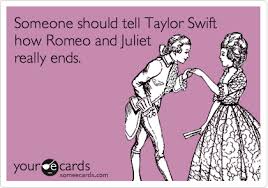
What I’m not interested in doing is getting into a “battle” where I try to justify Shakespeare as being better than Taylor Swift. When I see memes like the one above, it makes me immediately disengage with whoever posted it. I don’t want a Swiftie to talk in the comments about how Shakespeare was a talentless hack. Alternatively, I don’t want a Shakespeare nerd to dismiss Taylor as being infantile or any other critique. Both these writers had different goals, went about them differently, and achieved success in their own special ways. So now, let’s look at how Taylor Swift borrowed from different literary traditions to make her songs more dramatic, more visceral, more insightful, and more poetic.
Her Literary Allusions
Obviously, Love Story mentions Romeo and Juliet, as well as The Scarlet Letter and various princess stories. TS rarely makes direct references to Shakespeare in her work, but some scholars have suggested that there might be more oblique references in some of her songs. For instance, when I look at the lyrics of Willow, I can’t help wonder if she wasn’t at least partially inspired by Shakespeare’s song of the same name in Othello:
Wait for the signal and I’ll meet you after dark Show me the places where the others gave you scars Now this is an open-shut case Guess I should’ve known from the look on your face Every bait and switch was a work of art
The more that you say The less I know Wherever you stray I follow I’m begging for you to take my hand Wreck my plans That’s my man
I can’t hear this song and not hear the parallels with the Othello story- the speaker alludes to eloping with her beloved (which Desdemona nearly does in the first act), that he has scars (which Othello clearly does mentally and physically). In addition, I imagine the refrain as like a duet between Othello (who is reluctant to kill Desdemona), and Desdemona (who wants to leave Cyprus and have a normal married life with Othello:
Desdemona: The more that you say
The less I know
Othello: Wherever you stray
I follow
I'm begging for you to take my hand
Wreck my plans
Desdemona: That's my man

Even if Shakespeare isn't mentioned directly in many of Taylor's songs, like Shakespeare she often uses Greek myths, the Bible, and other popular works as allusions. Some scholars have suggested that both Shakespeare and TS write using their own experiences through the lenses of classical poetry and literature. Simmilar to how Shakespeare probably wrote Hamlet to deal with his grief over his son's death, Taylor writes songs about past relationships, feuds with pop stars, and her own evolution as an artist through the lens of Shakespeare, novels, poetry, and other works.
TS’s Poetry
Ms. Swift’s songs are more than just catchy beats with a few allusions stuffed in. Like Shakespeare, she makes use of alliterations, internal rhymes, clever metaphors, and strong rhythms that help her songs tell their stories clearly and effectively. As an exercise, I fed the lyrics to “Bad Blood” into a poetry analyzer and found a very interesting analysis:
The poem features a rhythmic and catchy structure, typical of song lyrics. The syllabic patterns vary but often maintain a consistent beat, enhancing its musical quality. The use of internal rhymes and alliteration (e.g., “mad love,” “bad blood”) adds to the flow and memorability. The stresses often fall on the first word of each line, creating a strong start and a compelling rhythm that engages the listener. The word choice in the poem is evocative and charged with emotion. Phrases like “bad blood,” “deep cut,” and “salt in the wound” create vivid imagery and convey the depth of the narrator’s pain. The use of questions, such as “Did you have to do this?” and “Did you think we’d be fine?” emphasizes feelings of confusion and hurt. –Studycorgi.com
I highly encourage students and teachers to do an analysis of both Shakespeare and Taylor Swift because studying one can help us appreciate the other. Similarly, learning the way each writer conveys ideas can help the reader become more creative!
Who Said It? Shakespeare or T.Swift?
Lots of teachers play this game and there are many Youtube videos of people playing it. Occassionally, even Shakespearean actors have played it:
There are also online quiz forms available on Quizlet and Gimkit. You can also show your students this video below:
What iF SHakespeare’s Characters were Swifties?
I posted on Reddit a while back to ask the internet which Swift songs would be great soundtracks for the lives of Shakespearean characters. This is sort of an outgrowth of my: Infinite (Variety) Playlist activity. Here are some of the results I got:
Mercutio from “Romeo and Juliet”- 22 and “Shake it Off”
Goneril from “King Lear”- Blank Space
Do you agree with my list?
I hope this post can help teachers see the value in analyzing Taylor Swift with their students, and help students in analyzing Shakespeare. I think the term “classic” applies to anything good enough to stand the test of time. Shakespeare has already passed that test, and based on her clever allusions, evocative wordplay, and emotionally-charged subjects, I believe Taylor Swift to be classic too!
LADY CAPULET  Good night.
Get thee to bed and rest, for thou hast need.
Lady Capulet and the Nurse exit.
JULIET
Farewell.—God knows when we shall meet again.
I have a faint cold fear thrills through my veins
That almost freezes up the heat of life.
I’ll call them back again to comfort me.—
Nurse!—What should she do here?
My dismal scene I needs must act alone.
Come, vial. She takes out the vial.
What if this mixture do not work at all?
Shall I be married then tomorrow morning?
She takes out her knife
and puts it down beside her.
No, no, this shall forbid it. Lie thou there.
What if it be a poison which the Friar
Subtly hath ministered to have me dead,
Lest in this marriage he should be dishonored
Because he married me before to Romeo?
I fear it is. And yet methinks it should not,
For he hath still been tried a holy man.
How if, when I am laid into the tomb,
I wake before the time that Romeo
Come to redeem me? There’s a fearful point.
Shall I not then be stifled in the vault,
To whose foul mouth no healthsome air breathes in,
And there die strangled ere my Romeo comes?
Or, if I live, is it not very like
The horrible conceit of death and night,
Together with the terror of the place—
As in a vault, an ancient receptacle
Where for this many hundred years the bones
Of all my buried ancestors are packed;
Where bloody Tybalt, yet but green in earth,
Lies fest’ring in his shroud; where, as they say,
At some hours in the night spirits resort—
Alack, alack, is it not like that I,
So early waking, what with loathsome smells,
And shrieks like mandrakes torn out of the earth,
That living mortals, hearing them, run mad—
O, if I wake, shall I not be distraught,
Environèd with all these hideous fears,
And madly play with my forefathers’ joints,
And pluck the mangled Tybalt from his shroud,
And, in this rage, with some great kinsman’s bone,
As with a club, dash out my desp’rate brains?
O look, methinks I see my cousin’s ghost
Seeking out Romeo that did spit his body
Upon a rapier’s point! Stay, Tybalt, stay!
Romeo, Romeo, Romeo! Here’s drink. I drink to
thee.
She drinks and falls upon her bed
within the curtains.
The Given Circumstances
This famous soliloquy comes from Act IV, Scene iii. In this speech, Juliet grapples with her fears and anxieties about taking the Friar’s sleeping potion.
Traditional Interpretations
Ellen Terry (Vinal Record Recording, C. 1911)
Ms. Terry, like her famous grandson John Gielgud, is more interested in delivering the text clearly, beautifully, and strongly than getting Juliet’s character across. Consequently, by our standards, her reading of the speech is slow, declamatory, and maybe a bit over-the-top. However, this kind of delivery really brings out the rhythm of the verse, the beauty of the individual words, and the structure of the speech itself, so I recommend actors listen to it as a jumping off point. In my opinion, having a good technical grasp of the speech will keep an actor from going too far with the emotion, (making it hard for the audience to hear and understand them). This is why there’s still value in these dusty old recordings.
Olivia Hussey (Romeo and Juliet directed by Franco Zephirelli, 1966)
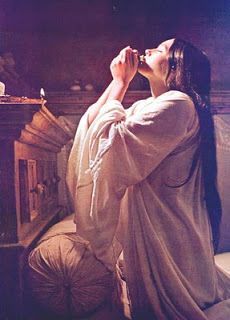
Zephirelli was very sparing with the dialogue- choosing to condense this entire speech to one line “Love, give me strength.” Hussey has a great deal of passion in the speech, as if she is absolutely certain that taking the potion will re-unite her with Romeo.
Claire Danes (Romeo +Juliet, 1996)
Claire Danes contemplating the vial in Romeo + Juliet
Danes has a sense of almost macabe trance-like energy when she delivers the speech. Like all the edged weapons in the movie, the dagger is replaced by a gun. Most of the speech is cut because Luhrman wanted to emphasize the character’s obsession with violence, rather than fears about ghosts and arranged marriages. Consequently, Danes does little other than put the gun under her pillow, take out the vial, and drink it.
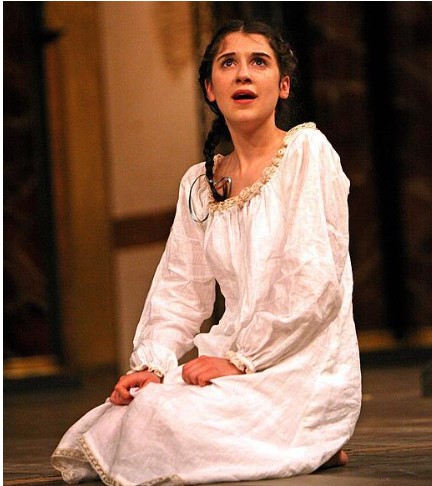
Ellie Kendrick (Globe Theater, 2009)
Ms. Kendrick is one of my favorite Juliets ever! She is a wonderful blend of sweetness and naivety, tempered with anxiety and practical thinking. She delivers the whole speech to different parts of the audience and makes sure every idea and every horrible thought of Juliet lands. Furthermore, her fast pacing around the stage helps her not only connect with the audience, but to use the Globe theater to make them imagine the Capulet vault.
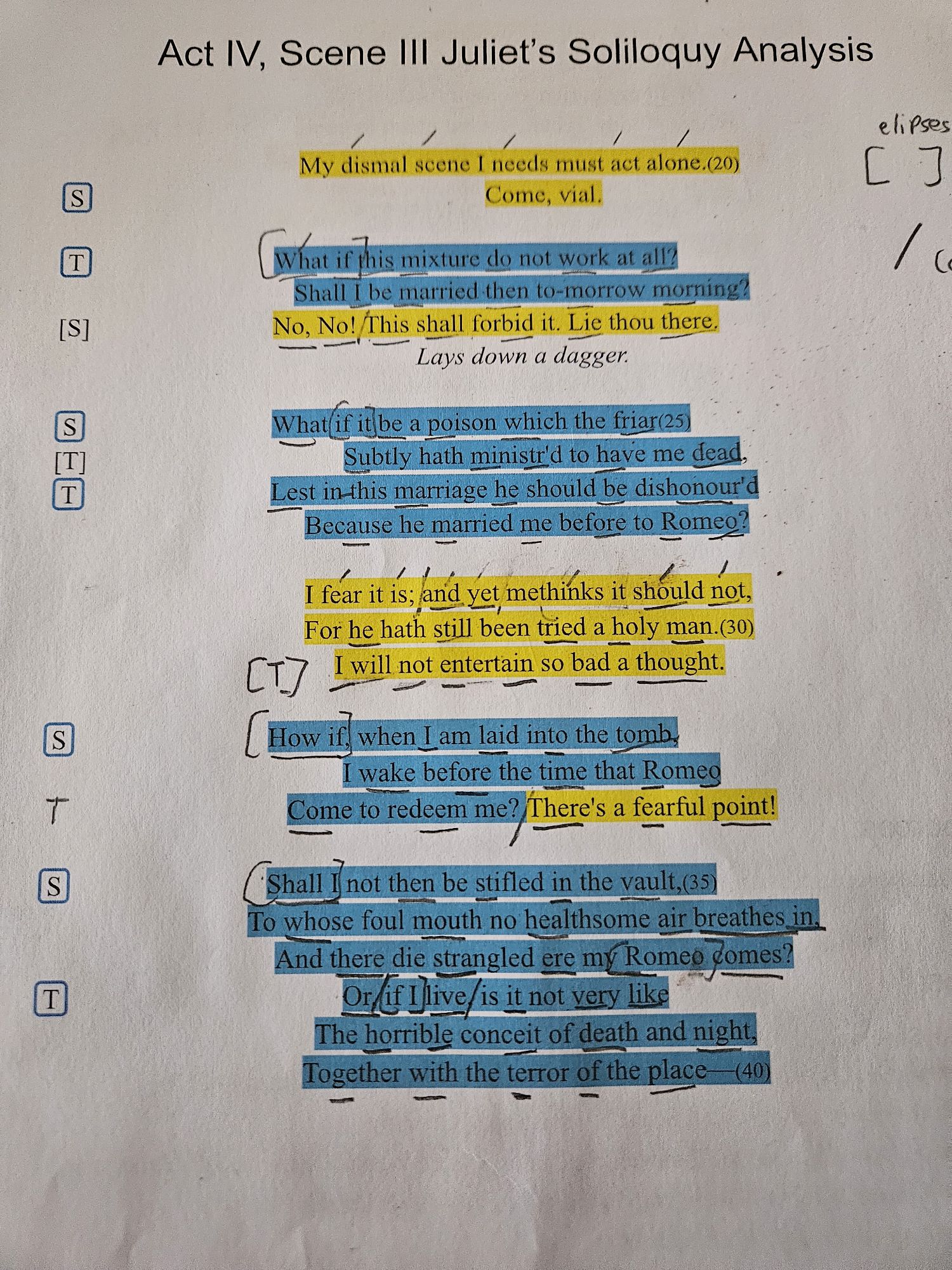
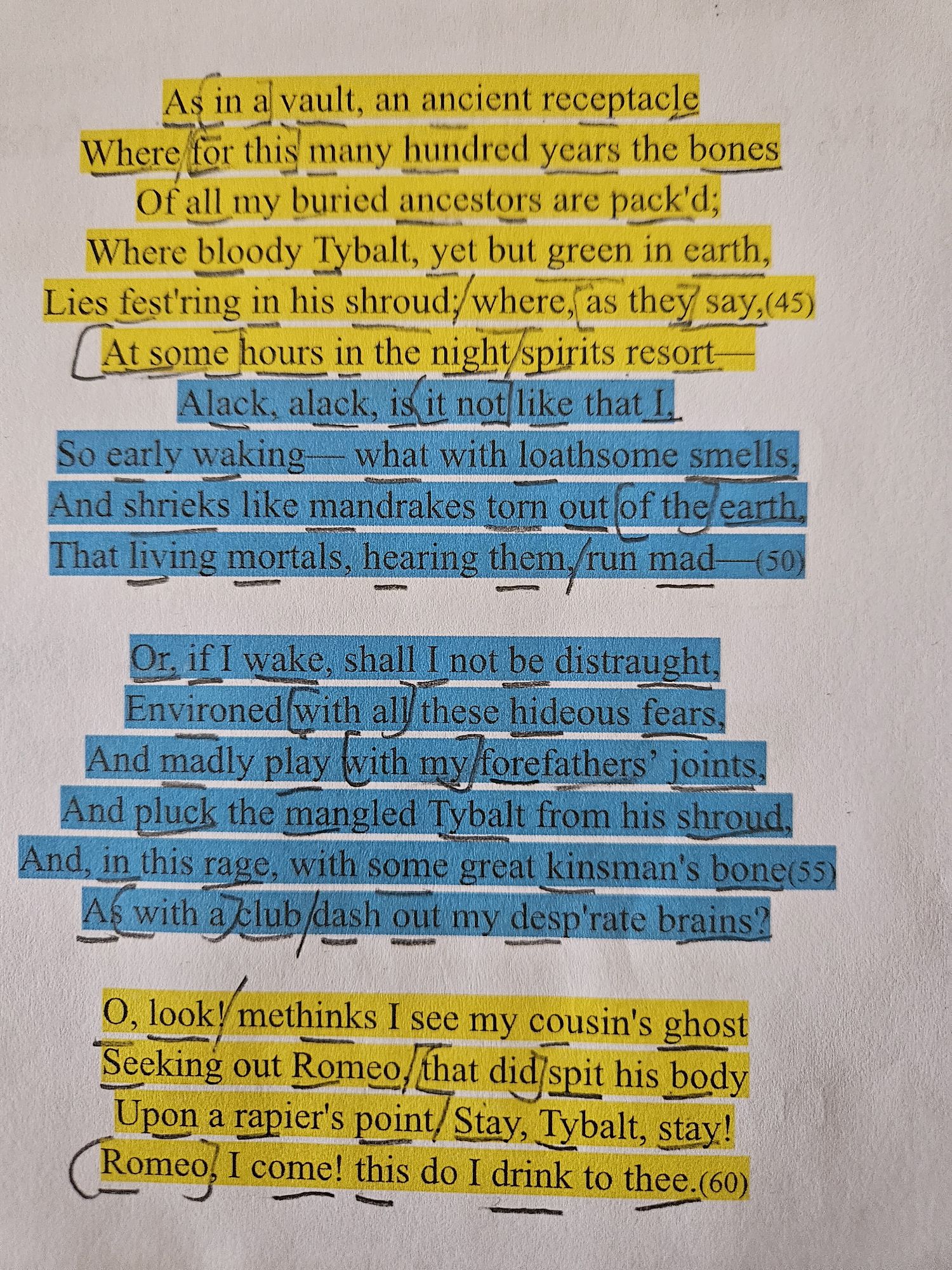
Verse
As I always say, verse is the heartbeat of a character, and based on this, Juliet’s heart is beating a mile a minute. You’ll notice that five of these lines start with a trochee (T), and five of them have trochees. This means Juliet is unsettled, she’s literally off-beat. In addition, there are frequently pauses in the middle of the lines called cesuras, which might indicate that either Juliet is trying to answer her own questions, or that she is so worried, that she’s gasping for breath.
In this second part of the speech, the lines start running together. Juliet’s pace is quickening and she breathes every 2-3 lines instead of at the end of each line.
Structure
The speech is organized as a series of questions:
“What if…”
“What if…”
“How if…”
“Or if I live…”
“O, if I wake, shall I not…”
and then the terrifying statement: “O look…”
So, with this in mind, the actress needs to convey Juliet’s overactive imagination, her fears, and her ability to answer these fears with inner calm and inner strength.
Imagery
It’s a horrific idea being shut up alive with the dead. Shakespeare gives us the sights and smells and the grim reality of feeling “stifled” in a vault. I created this image to demonstrate the smells, the fear, and the claustrophobic nature of the vault.
I chose to have the vault lit with candles, and to use green smoke to represent decay and possibly noxious gas, like the nitre that sometimes dips from walls of tombs. I also added some stone faces of ancestors to stare down at Juliet.
Historical Research
Sarcophagus in church of San Francesco al Corso, an old Franciscan monastery in Verona.
The plain stone sarcophagus above has become a tourist attraction as the traditional ‘resting place’ of Juliet. As I mentioned in my Friar Lawrence post, the Friar who marries Juliet is a Franciscan, which is probably why they chose this church in Verona as the ‘site’ for Juliet’s grave.
It is a plain, open, and partly decayed sarcophagus, in a wild and desolate conventual garden once a cemetery now ruined to the very graves. The situation struck me as very appropriate to the legend, being blighted as their love.
– Lord Byron, Letters and Journals Vol. III
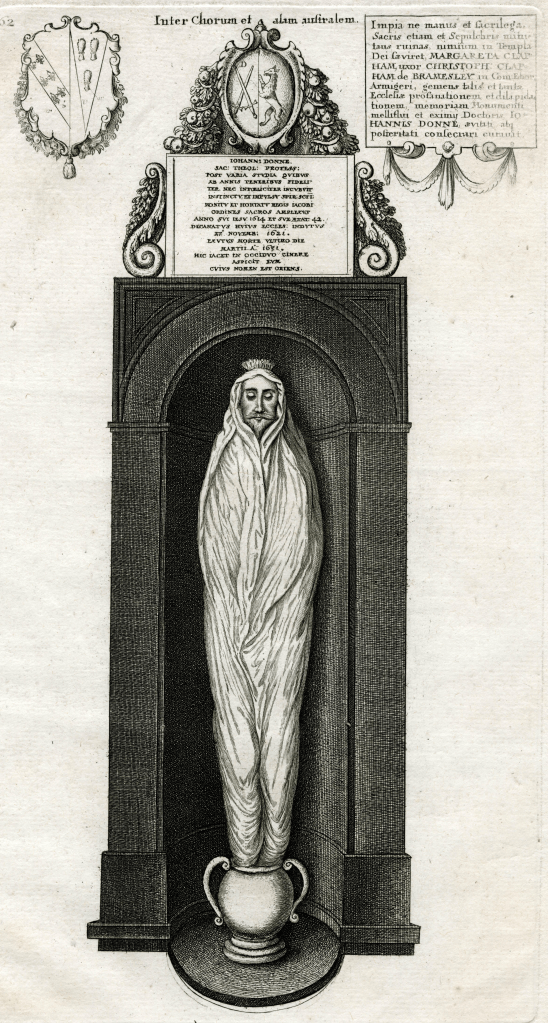
Since Italy is a small, hot country, bodies in the 16th century were buried almost immediately. First, the body would be wrapped up in a shroud or winding sheet, as Juliet mentions at the end. The corpses might be decorated with Rosemary or other sweet-smelling herbs.
A winding sheet for a corpse
Wealthy families like the Capulets or the church, would store all the bodies of their ancestors in burial vaults or crypts. Some bodies would be anointed with oil or preserved with vinegar.
Literary Inspiration: The Cask of Amontillado
Montressor and Fortunato move through the burial crypt in “The Cask of Amontillado”
When I think of the dark, macabre atmosphere of a family tomb, I think of The Cask of Amontillado, a short story by Edgar Allen Poe where the anti-hero Montressor, tricks his enemy Fortunato into going into his family crypt and buries him alive! There are some interesting parallels between Montressor and Tybalt from Romeo and Juliet- both men belong to ancient families, both men are violent, and both refuse to let any kind of insult stand. I think Juliet sees the vault as a hostile place, where her ancestors are angry at her for “betraying the Capulet name,” after marrying a Montague.
Image Research 4: Tybalt’s Angry Ghost
AI image of Tybalt’s Ghost
Like Montressor in The Cask of Amontillado, Tybalt embodies the Capulet feud, and it makes sense that Juliet would see him when she thinks of being shut up in the vault. The real question is, what does seeing him do to her? Is she terrified? Is she remorseful? Is she moved to protect Romeo? How does seeing Tybalt’s ghost motivate her to take the potion?
Other Questions to consider
Why is Juliet so nervous?
How does Juliet feel about running away from home?
Do the ghosts represent something? Guilt? Judgement? Some kind of ticking clock?
What does she see Tybalt’s ghost doing?
How does Juliet pull it together at the end?
Emotional
Not only is Juiet worried about her health, (mental and physical), I get a sense that she might also be experiencing guilt. The notion of her being tormented by spirits that shriek like mandrakes, suggests that maybe the ancient Capulets aren’t very pleased with Juliet. This makes sense because she married a Montegue. I get the sense that maybe, for the first time, Juliet actually feels guilty, as if she’s failed her ancestors. However, for whatever reason, she definitely re-focuses and thinks about Romeo. Either she rejects her ancestors and Tybalt, or maybe she sees the potion as a way of protecting Romeo, or possibly Juliet just wants these fears and anxieties to end, and takes the potion as a release. My actor and I will no doubt try these ideas out and figure out what works within the structure and within her interpretation of the character.
Our Interpretation
Again, it’s a little too early for me to tell you our interpretation yet, but I’ll post it later.
Resources:
Myshakespeare.com. This website will allow you to look up unfamilliar words, download pictures and videos of the scene, and even watch an ‘interview’ with Juliet, where, just as in this speech, she becomes more and more anxious and fearful until the very end.
Every Year around this time, I like to draw attention to Shakespeare’s greatest heroines. You might have read my top 10 Shakespearean mother characters, or my post from last year, where I talked about some of Shakespeare’s best childless characters.This year, I’m putting together a squad of women you don’t want to mess with. So please enjoy (in no particular order because I refuse to rank women), – the best female fighters in all of Shakespeare:
Queen Margaret of Anjou
She defeats the York Army multiple times in the Wars Of The Roses, even killing the Duke of York himself. She was a powerful force on the battlefield and in the court.
Joan of Arc
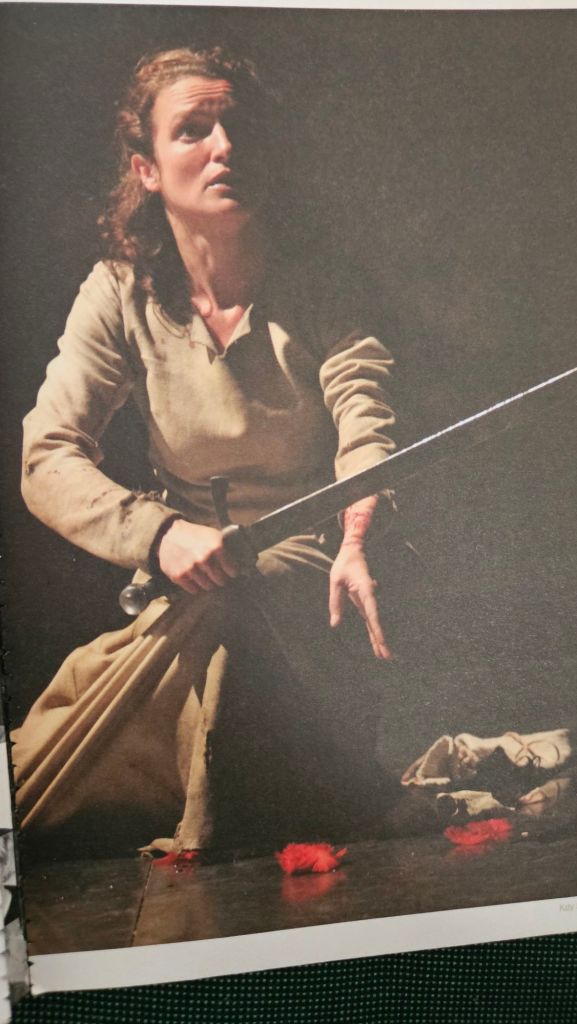
Joan la Pucelle from Henry VI, Part 1: (RSC, 2006)
I am prepared: here is my keen-edged sword, Deck’d with five flower-de-luces on each side; The which at Touraine, in Saint Katharine’s churchyard, Out of a great deal of old iron I chose forth.
And while I live, I’ll ne’er fly from a man.
The iconic female warrior who helped end English occupation of France. In Shakespeare’s play, she fights the French prince to prove her prowess in battle, then she retakes the towns of Orleans and Rouen from the English, and keeps fighting until the
Portia Catonis
Portia preparing to “Swallow fire”
True, she doesn’t have much fighting experience, but clearly she can tolerate pain, has accute powers of perception, and is related to a long line of political and military patriarchs.
Volunnia
Valumnia comforts Coriolanus’ wife (AI art)
Dr Peter Saccio of Dartmouth College once said that this Roman matron talks to her son Caius Martias as if she’s his general, not his mother. She is totally devoted to Rome and she has trained her son since birth to fight for it.
Cordelia
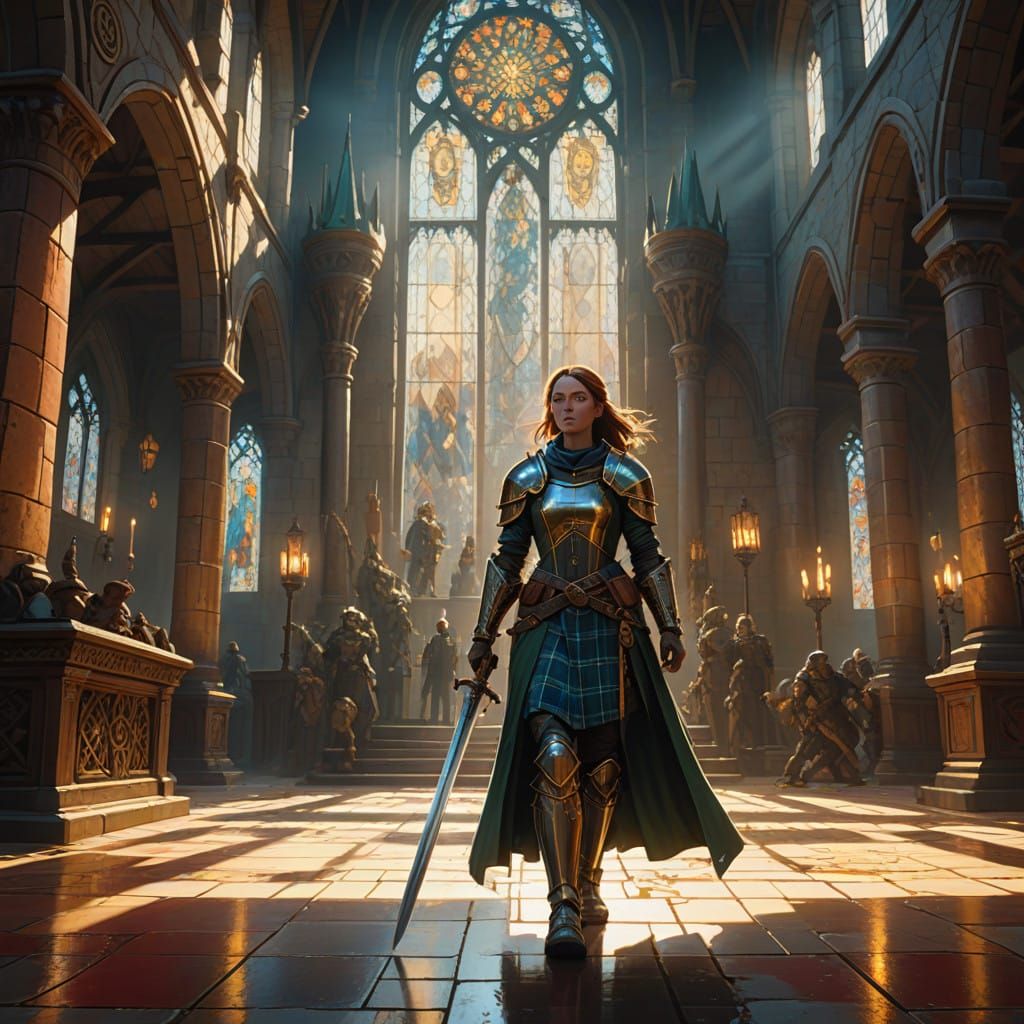
AI artwork I created of Cordelia storming Goneril’s castle
Our preparation stands
In expectation of them. O dear father,
It is thy business that I go about.
Therefore great France
My mourning and important tears hath pitied.
No blown ambition doth our arms incite,
But love, dear love, and our ag'd father's right!
Cordelia shows her strength not through words, but through deeds- massing an army and invading England to put her father back on the throne, as the passage above shows. It’s true she didn’t succeed in saving the kingdom, but she did save her father through her love and bravery.
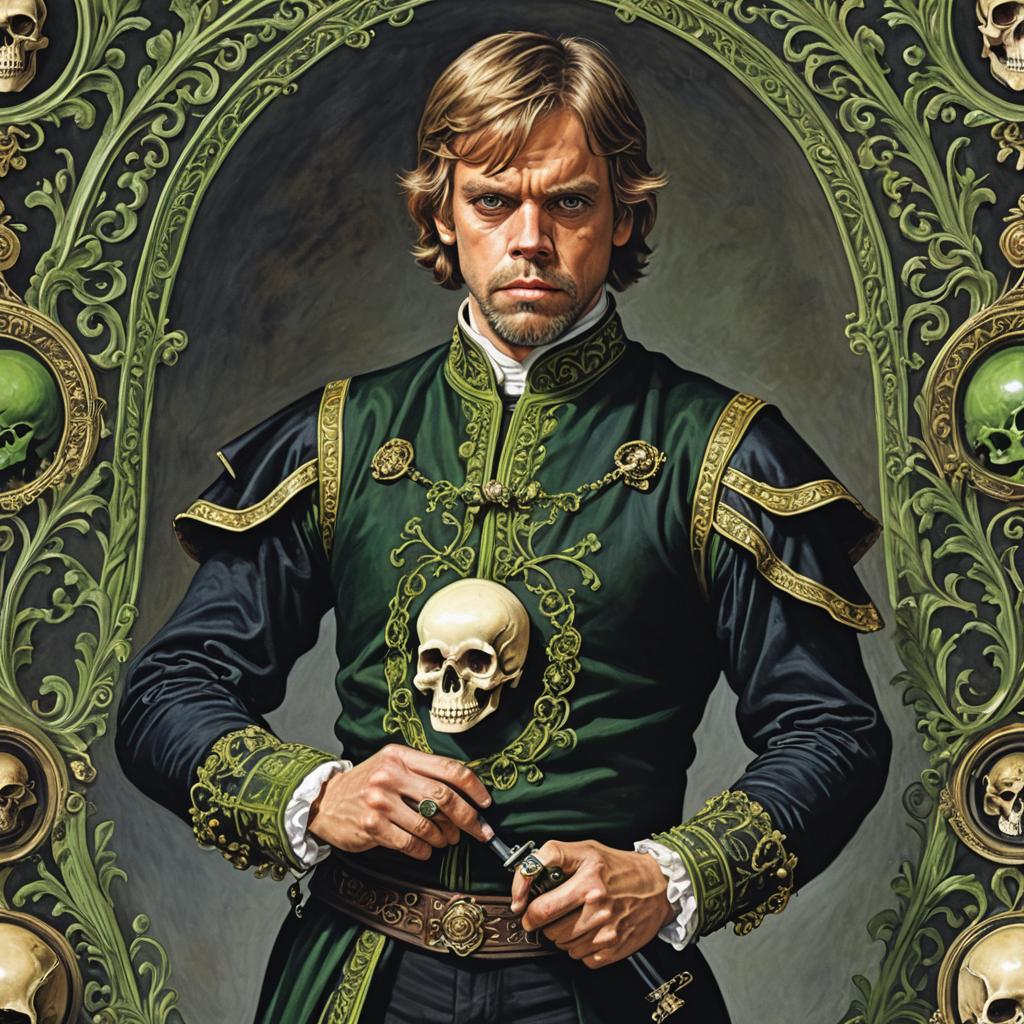
Cordelia and Lear re-united (AI art)Draco Malfoy as Coriolanus (AI art)Harry Potter As Henry V (AI Art)Hamlet as a Ravenclaw student at HogwartsArtwork of Cleopatra and her son Cesarian (Made with Night Cafe)Luke Skywalker as Hamlet (AI)
As a creative person who can’t draw, I can’t always depict the gorgeous imagery that Shakespeare uses in his poems and plays, so I often resort to AI artwork to do it for me. If you’ve been here a while, you know I’ve used NightCafe to imagine Shakespeare characters as, Harry Potter, Disney Princesses, Star Wars, and others.
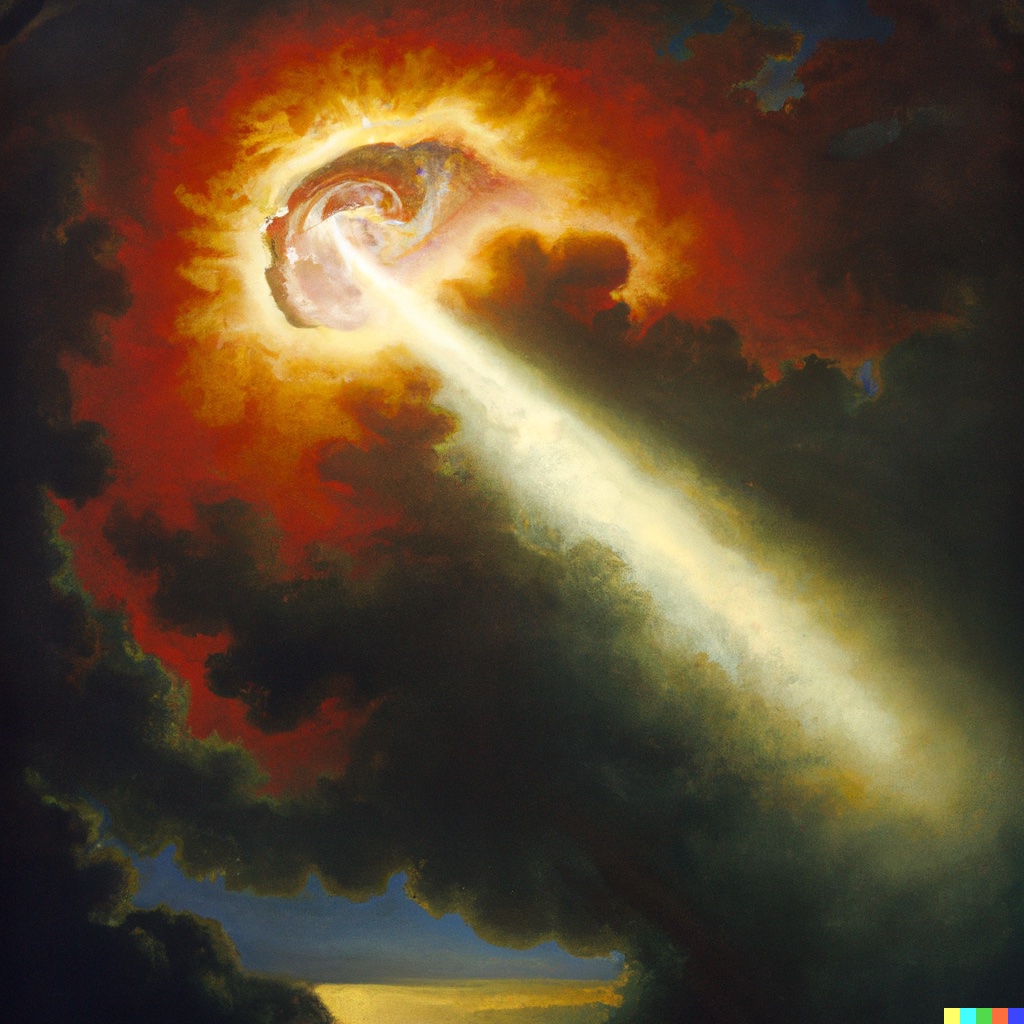
I love to use AI to put pop cultural characters in a Shakespearean context, but until today, I never thought of using AI to interpret Shakespeare directly, until I read this article from Medium.com. The author, Douwe Osinga, has used the AI website DALL-E to create text-to-image artwork in order to show the viewer the imagery that various poets use in their poems. Here’s what he did for Shakespeare’s famous sonnet 118.
Here’s some art that I created through AI based on Sonnet 55:
Not marble nor the gilded monuments
Of princes shall outlive this powerful rhyme,
But you shall shine more bright in these contents
Than unswept stone besmeared with sluttish time.
When wasteful war shall statues overturn,
And broils root out the work of masonry,
Nor Mars his sword nor war’s quick fire shall burn
The living record of your memory.
’Gainst death and all-oblivious enmity
Shall you pace forth; your praise shall still find room
Even in the eyes of all posterity
That wear this world out to the ending doom.
    So, till the Judgement that yourself arise,

    You live in this, and dwell in lovers’ eyes.
I didn’t tell the NightCafe software what to draw; I just put the text of the sonnet. What I find interesting is that the AI assumed I was writing a poem to a beautiful woman, and chose to represent the first line of the poem by placing her in a graveyard. I also love the withered branch, prominently placed over the moon. It reminds me of a scythe- the symbol of decay and death.
I wish the AI had chosen to represent Mars or the flaming sword mentioned in the poem, but it does get some of the central images right.
Using AI to visualize poetry is a useful exercise when you’re teaching Shakespeare because it demonstrates how poets can use multiple allusions, personifications, and many other literary devices.
I’m sure I don’t need to tell you that one of the most iconic voices of our generation, James Earl Jones has passed away at the age of 93. I’m sure I also don’t need to mention his iconic film roles in such films as Field of Dreams, Coming To America, The LIon King, and of course, his (initially uncredited) role as the voice of Darth Vader in the Star Wars Trilogy. As I’ve written before, Jones had a powerful, authoritative voice that played kings, generals, knights, and even gods, which came directly from his training as a Shakespearean actor. So, instead of taking a look at his illustrious film career, I’d like to celebrate Jones’ contributions to Shakespeare, and how Shakespeare changed his life, and through him, changed mine.
Jones and Poetry
“I don’t mind talking about my stuttering because it’s just another example of you finding yourself with a weak muscle and you exercise it, and sometimes that becomes your strong muscle,” Jones told KCRA in 1986. “I was mute from grade one through freshman year in high school — mute because I just gave up on talking.”
-James Earl Jones in a TODAY Show interview, 1986
James Earl Jones was born in 1931 in Arkabutla, Mississippi. Not only did he struggle with racial discrimination at home and in his career, he also dealt with a debilitating stutter which, as you can see in the quote above, left him all but mute for years of his life. It was one of his teachers who helped Jones find his voice by giving him poetry to read, inspiring him to become an actor. As a Shakespearean actor who also struggles with a stutter, reading this about Jones helped me become an actor as well.
The New York Shakespeare Festival
Your voice has the power to inspire, motivate, and change lives. Don’t be afraid to use it.
James Earl Jones
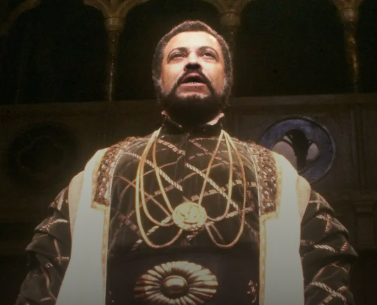
Before he became a star in the Hollywood firmament, Jones was a classically trained actor who starred in many contemporary and classic plays like The Iceman Cometh, The Great White Hope, and a title role in a drama about the great Shakespearean actor, Paul Robeson. In addition, Jones was a regular performer at the New York Shakespeare Festival, starring as King Claudius in Hamlet, Oedipus Rex, The Prince of Morocco in The Merchant of Venice, and like Paul Robeson, Jones was celebrated for his dignified and powerful portrayal of Othello.
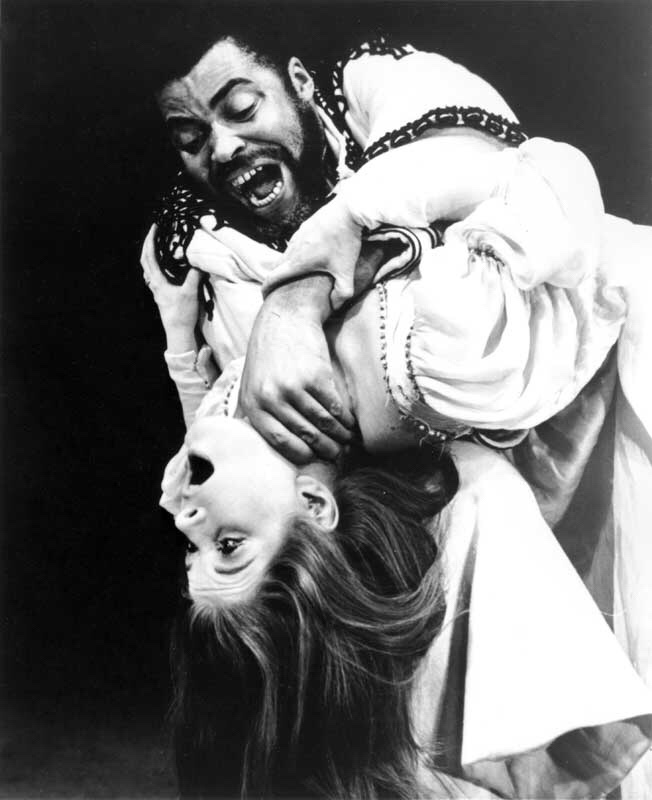
James Earl Jones as Othello and Cecilia Hart as Desdemona in a scene from the Broadway revival of the play “Othello.”
James Earl Jones as Othello and Christopher Plummer as Iago in a scene from the Broadway revival of the play “Othello” (New York 1982)
“Mr. Jones commands a full, resonant voice and a supple body, and his jealous rages and frothing frenzy have not only size but also emotional credibility,” .”
The Times wrote in a review in 1964
From Shakespeare to Strangelove
James Earl Jones made the leap from stage and TV (he was one of the first celebrity guests on Sesame Street among others), after a surprising performance. In 1964, he was playing the relatively minor role of the Prince of Morocco in Merchant of Venice at the New York Shakespeare Festival, while George C. Scott played the more iconic role of Shylock. Surprisingly, Director Stanley Kubrick saw both of them and cast them both in Dr. Strangelove, Or: How I Learned to Stop Worrying And Love the Bomb, Jones’ first film role.
This goes to show that success is often not a straight line, that sometimes it’s the people you know and the reputation you garner that gives you success in your field.
Success should not be measured by material possessions, but by the contentment and fulfillment we find within ourselves.
James Earl Jones
My Favorite Performance of Jones
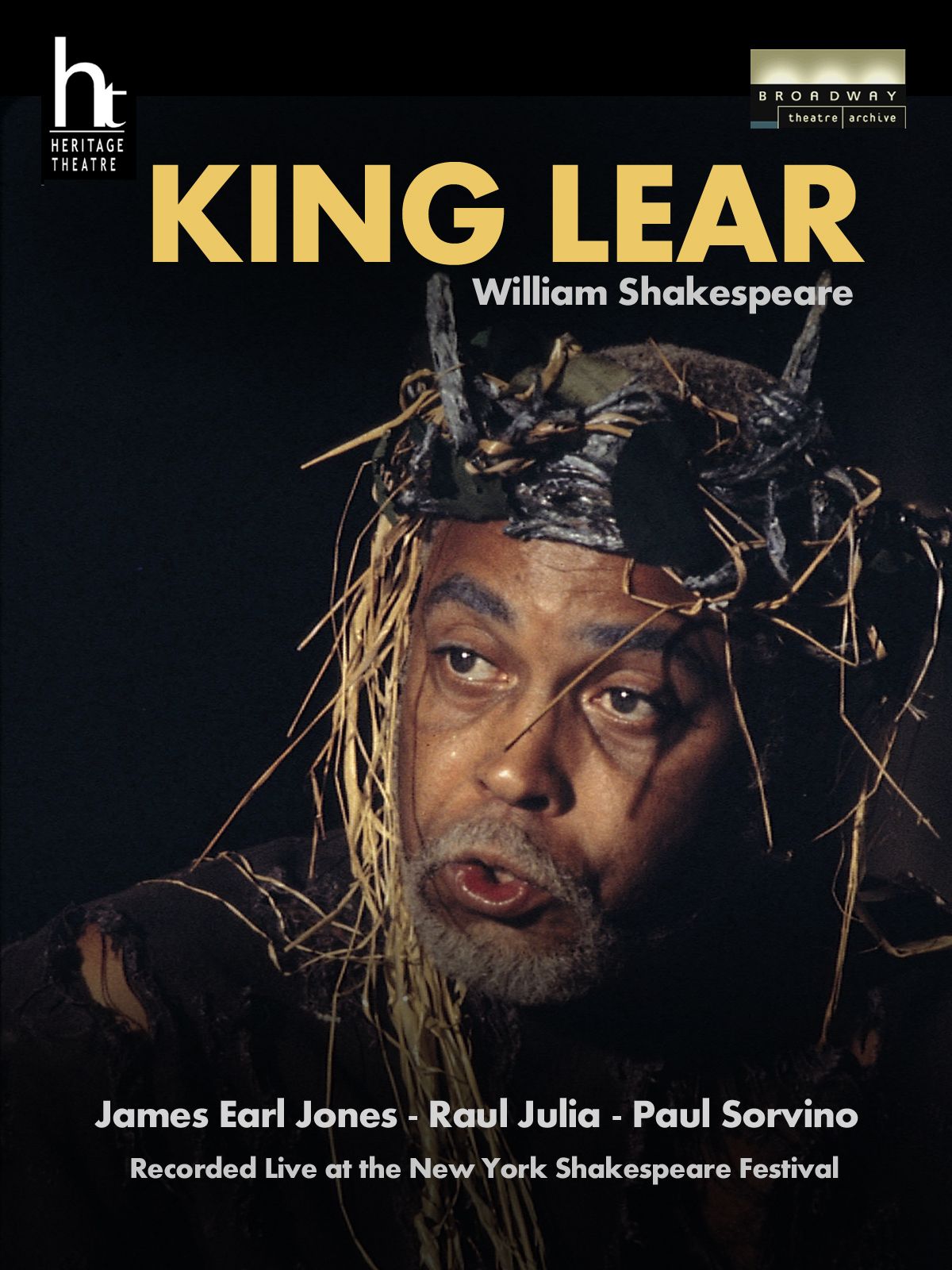
Though his film roles brought him international acclaim, James Earl Jones still performed onstage well into his 80s, including many more memorable performances at the New York Shakespeare Festival, including my favorite performance of all Jones’ stage roles- his role as King Lear. I’ve written before that Jones is still my favorite Lear- he plays the characters’ rage and commanding presence extremely well, but tempers it with the frailty and foolishness of age. You get the sense that this man was a force to be reckoned with, but is now unable to command himself, much less others. Jones’ interpretation apparently changed drastically in rehearsal, as he delved into Lear’s all-too-human flaws, playing him more like a king with dementia than like Mufasa.
Final thoughts
James Earl Jones would be the first to admit that Shakespeare and poetry changed his life. I would argue that the poetic qualities of his voice was what made him such a great actor. He could rumble and smash but also soothe and charm with a single sentence, and that is why I am glad that his voice is now preserved in the halls of Hollywood. Though he was a movie star, his voice was a Shakespearean through and through.
True strength is not in showing power over others, but in conquering your own fears and insecurities.
According to Branaugh, the idea behind the film was to emphasize beautiful things like tranquility and love, but preserve and heighten the danger of being hunted by a powerful warlord like the Duke
Interview with the director and cast at the Barbican
The Plot Of the Play
Historical Context
Branaugh set the film in 19th century Japan, at a time when English people came to Japan for the first time, and created small English communities in the country. I’ll discuss later that I have very conflicting feelings with this choice, but I will give Branaugh this- it does highlight the fish out of water journey that Rosalind and the other characters go through leaving their homes at court, and becoming enamored with a new country.
The Cast
The cast is full of veteran Shakespeareans and gifted Hollywood stars. Bryce Dallas Howard is charming as Rosalind, and has good chemistry with RSC actor David Oyelowo. I also enjoyed Brian Blessed’s dual role as Duke Senior and Duke Frederick. Kevin Klein is very sincere as Jaques but I wish he had a bit more fun with the over exaggerated melancholy that Jaques puts on. The overall effect of the performances is a sentimental, charming, beautiful, witty group of people who are having a fun time.
My Reaction
The cast is great, the cinematography is stunning, and the music is charming. Overall, Branaugh has done a great job of bringing the spirit of the play alive- that of a sweet, pastoral comedy about love, unrestrained by wealth or status. What I worry about though, is that Branaugh might inadvertently be celebrating colonialism. Yes, Japan is a beautiful country with a highly sophisticated and rich culture, so it makes sense that English people would be drawn to it. That does not justify the cruel way the English and Americans colonized parts of Japan, made the people mine for gold, and forced them to trade with the west. I worry that, like The Mikado, Branaugh celebrates Japan in a way that makes it seem like westerners were justified in taking so much away from it. I wish the plot had more of a “look but don’t touch” attitude to Japanese culture.
I also question the decision to cast barely any Asian actors. Given the story Branaugh wants to tell, it makes sense to cast non-asian actors as Thr Duke, Rosalind, Celia, and even Orlando, since they are the ones who come to the forest from an English-style court. But the roles of Corin, Silvius, Audry, Phoebe, and even Old Adam are people who are supposed to be familiar with the country, meaning it would make perfect sense to cast Asian actors in these roles. Frankly, there are very few well known Asian actors in Hollywood and I would love to give some of them a chance to shine, especially since Shakespeare has long been a way for actors to show their skills.
In conclusion, I can see why people like this movie and I too enjoy it, despite its questionable subtext. I don’t want to take away anyone’s enjoyment of the film, just to remind people not to be too seduced by the historical practice of taking something “As You Like It”
If you like this analysis, you might be interested in signing up for my Outschool Course on Shakespeare’s Comedies. Link down below. Share this class with a friend and you will get $20 USD off! You’ll also get $20 USD when you sign up with your link and take their first class!
Ages: Pre Teen- teen. The story is highly condensed so older readers might want a more in-depth adaptation to understand the themes and ideas of the plot.
Premise: This graphic novel is a good introduction to “A Midsummer Night’s Dream.” It tells the bare minimum of the story with very little dialogue and almost none of the original text. Most of the story is conveyed through the visual medium.
ABOUT THE ILLUSTRATORS (Reprinted from the graphic novel)
https://www.behance.net/berelince?locale=en_US Berenice Muniz is a graphic designer and illustrator from Monterrey, Mexico. In the past, she has done work for publicity agencies, art exhibitions, and she’s even created her own webcomic. These days, Berenice is devoted to illustrating comics as part of the CGraphikslava crew. In her spare time, “Bere” loves to draw, read manga, watch animated movies, play videogames, and kill zombies Fares Maese is a graphic designer and illustrator. He has worked as a colorist for Marvel Comics and as a concept artist for the card and role-playing games Pathfinder and Warhammer. Fares loves spending time playing video games with his Graphikslava comrades, and he’s an awesome drum player: https://faresmaese.artstation.com/
About the Retelling Author
The career path of Nel Yomtov has taken him from the halls of Marvel Comics, as an editor, writer, and colorist, to the world of toy development. He then became editorial and art director at a children’s nonfiction book publisher, and now Nel is a writer and editor of books, websites, and comics for children. A harmonica-honking blues enthusiast, Nel lives in New York with his wife, Nancy. They have a son. Jess.
mY rEACTION
I read this version to my five year old son and he enjoyed the colors and characters, which is why I feel confident recommending this version to younger children. It won’t help you pass a test on Midsummer and you won’t get the whole story. But you might get a tantalizing glimpse of Shakespeare’s world of fairies, lovers, and funny fools and honestly, that’s fine with me. As I’ve stated before, parody and short pop-culture adaptations of Shakespeare are great ways to connect with young people, and I see this book as a tool to do just that.
tECHNICAL eXECUTION
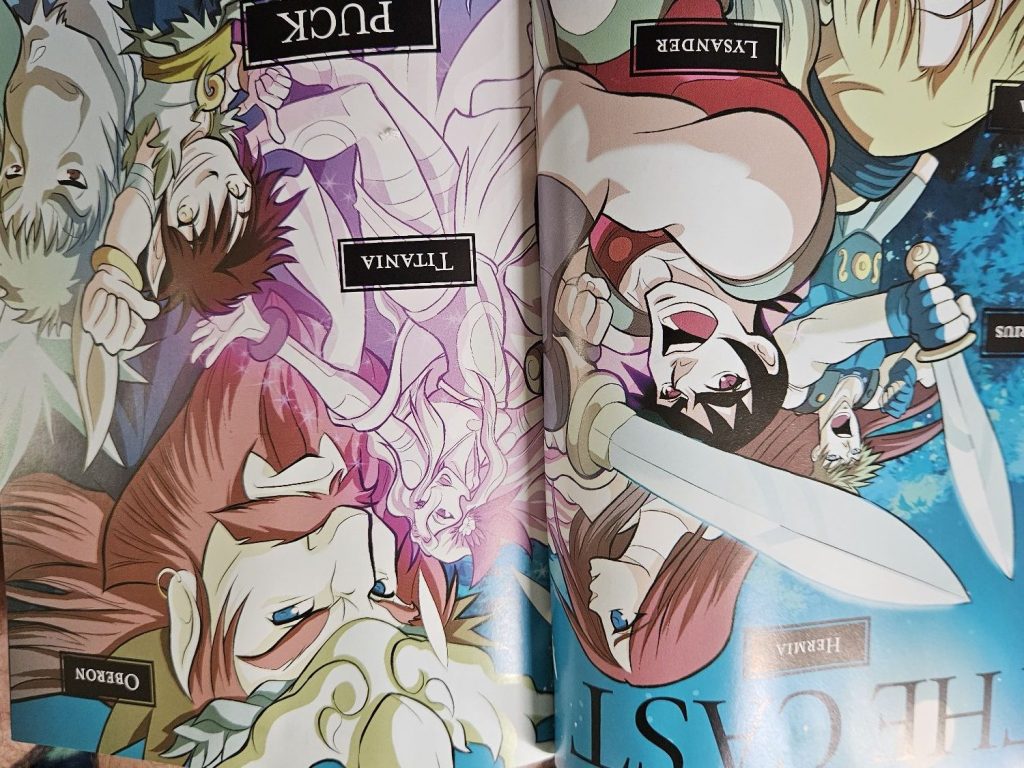
Character Design. It’s interesting to see the difference in style between this version, and the Manga Shakespeare version I previously read. That one was very much inspired by the Shoujo manga style, which emphasizes drama and relationships. This version’s drawings are softer, more cartoonish, and the expressions are less stiff, (except for Oberon, who is drawn very austerely). I particularly like the design for Puck with his big mischievous eyes and squat, childlike shape. I would argue however that the lovers and Mechanicals aren’t distinct enough, which is a problem since they are the most important characters.
The Adaptation
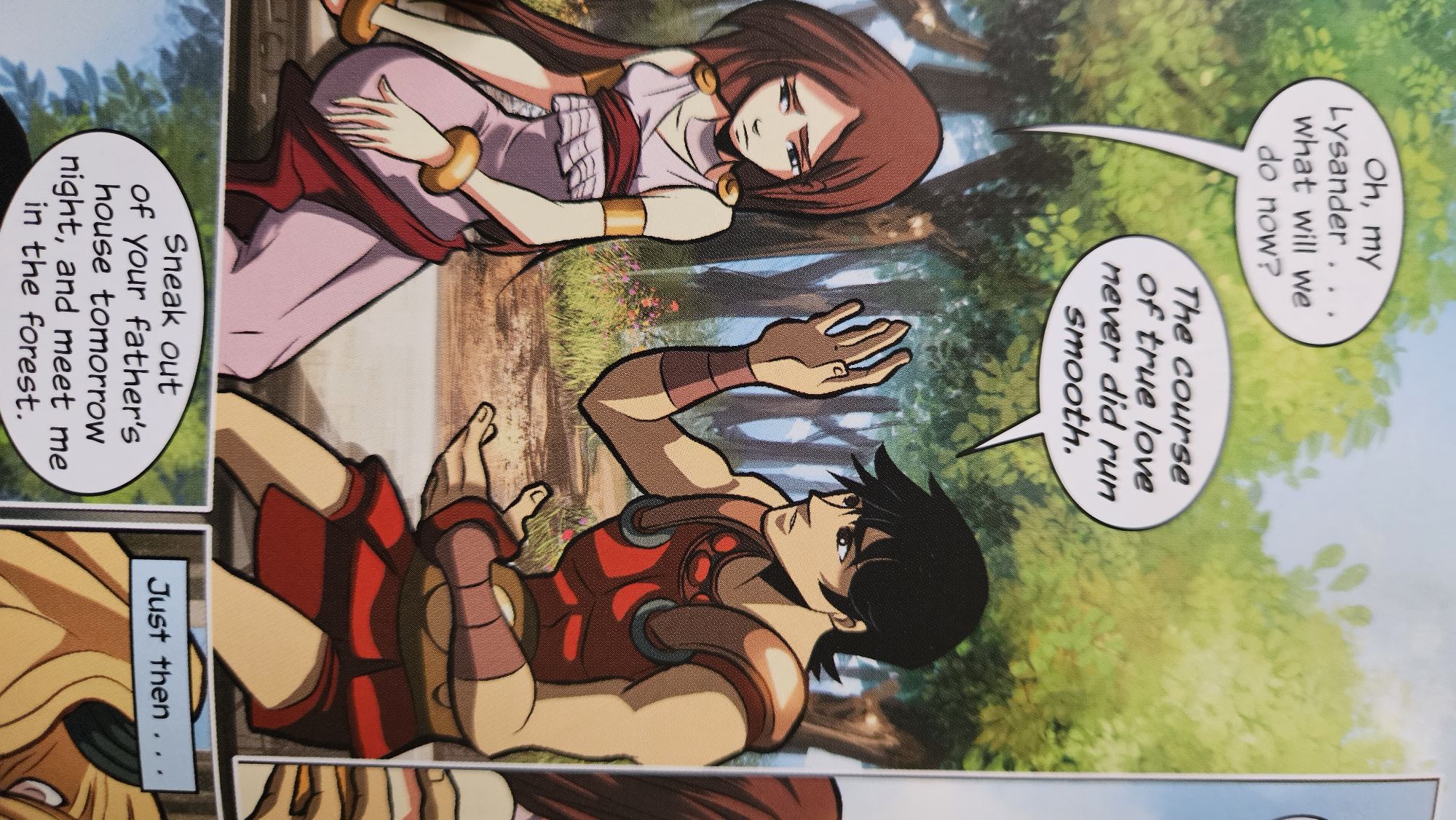
Like I said, this is a bare minimum adaptation of the play. None of Shakespeare’s text is used and the lines and speeches are cut liberally. The entire book is only 77 pages which of course means, that there are a lot of cuts. There’s no mention of the Indian boy, Titania’s tiff with Oberon, Philostrate, the other fairies, and all the great speeches are cut. This version is focused entirely on the plot, and it cuts it quite efficiently. To demonstrate this, below on the left is a panel that shows how Lysander and Hermia express their frustration with not being allowed to marry. On the right is the original text of the scene.
Ay me! for aught that I could ever read, Could ever hear by tale or history, The course of true love never did run smooth; But, either it was different in blood, Lysander. Or else misgraffed in respect of years, Lysander. Or else it stood upon the choice of friends, Or, if there were a sympathy in choice, War, death, or sickness did lay siege to it, Making it momentany as a sound, Swift as a shadow, short as any dream; Brief as the lightning in the collied night, That, in a spleen, unfolds both heaven and earth, And ere a man hath power to say ‘Behold!’ The jaws of darkness do devour it up: So quick bright things come to confusion.
The Colors
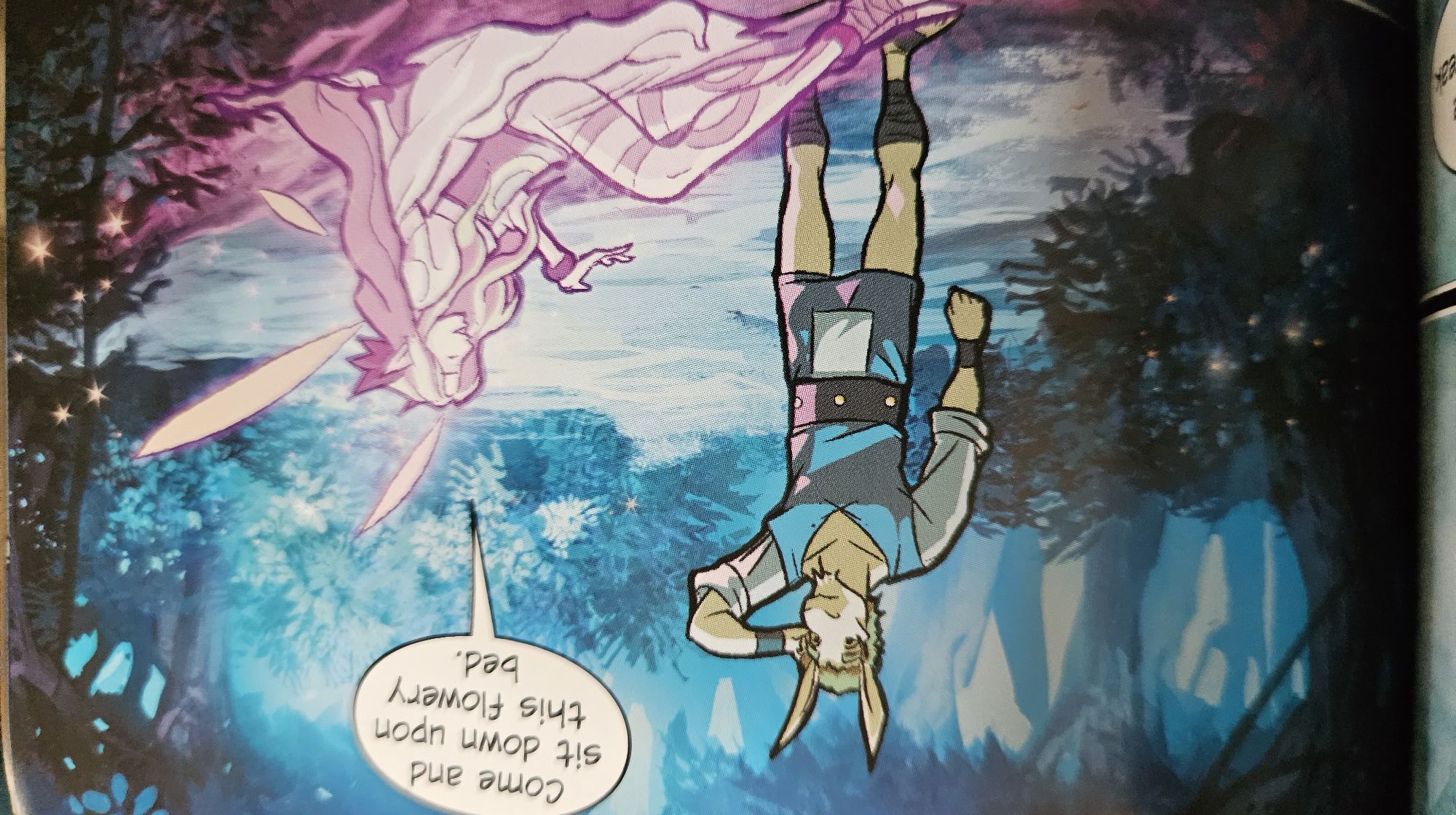
The colors are very beautiful. Other manga stories have colorful title pages but no color in the panels. This comic is alive with color and the colors help tell the story. Athens represents the world of the daytime, so the colors are very warm and vibrant. In the nighttime, the colors are cool and the characters are drawn with very sharp lines to make sure they don’t fade into the background.
IN Conclusion
This version tells l the story quickly and entertainingly with a vibrant and colorful style that was lacking in the Manga version. Granted, the Manga Shakespeare did allow me to focus on the text more, but I think I actually prefer this version, simply because of its beautiful artwork. Check it out if you get a chance!.


































 The Shakespearean Student