Review: A Midsummer Night’s Dream, (2021)

Trailer for Globe Theater’s 2021 production of A Midsummer Night’s Dream

What do you think of when you think of “Shakespeare?” What do you think of when you think of “A Midsummer Night’s Dream?” 

    Ruffs and Tights?

    Mostly white dudes?

    Elizabethan music?

    Dark night and moon?

This production, directed by Michelle Terry, is gleefully throwing out every preconceived notion of what A Midsummer Night’s Dream can or should be. In terms of design, casting, music, and interpretation, it breaks all the rules, while still remaining true to the text. This allows the production to appeal to not only hard-core Shakespeare fans, but first time audiences and children too!

I got to see this production thanks to the Globe’s online streaming library. My mother kindly shared me a link to this recording from the summer of 2021. You can watch it yourself on: https://www.shakespearesglobe.com/watch/#full-length-productions

I would describe the concept behind the show as “Suggestive,” that is, it doesn’t belong to a literal time and place. Even though the play is set in Ancient Greece, the play refuses to be constrained by historical accuracy, which arguably, fits nicely with Shakespeare in particular, and the Globe itself; a modern building in a modern city, based on a 400-year-old building.

The music and costumes evoke a New Orleans Mardis Gras, a Pride parade, or a Spanish pinata with its bright colors, heavy use of fringes, and bright, energetic jazz music. The only people who don’t wear bright colors are the four lovers, which reflects their continuous frustration with being unable to marry the person they really want.

The show is also Color blind and gender blind, with women playing men’s parts and a cast with black, white, and mixed race actors. Terry’s direction also calls attention to the patriarchial, racist, and sexist elements of Athens which are often overlooked in other interpretations of Dream that I’ve seen or read about. Rather than being a hero, Theseus is a horny old man in a ludicrous pink uniform, looking like a cross between M. Bison and a Christmas nutcracker. To reinforce this point, the actor chose to perform one of Theseus’ most patriarchial speeches as a joke:

Theseus. What say you, Hermia? be advised fair maid:50
To you your father should be as a god;
One that composed your beauties, yea, and one
To whom you are but as a form in wax
By him imprinted and within his power
To leave the figure or disfigure it. -Midsummer Night's Dream, Act I, Scene i.

I’ve seen this speech heavily cut and played seriously, but never till now did I see it played to ridicule the ludicrous notion that women are in any way bound to worship their fathers.

In another nod to contemporary gender politics, the actress who plays Hippolyta and Titania chose to perform her role on crutches. As far as I can tell, this was a deliberate choice and not a result of real injury. There is a precedent for this: In 1984, Sir Antony Sher performed Richard iii on crutches because it highlighted the cruelty people with disabilities often suffer.
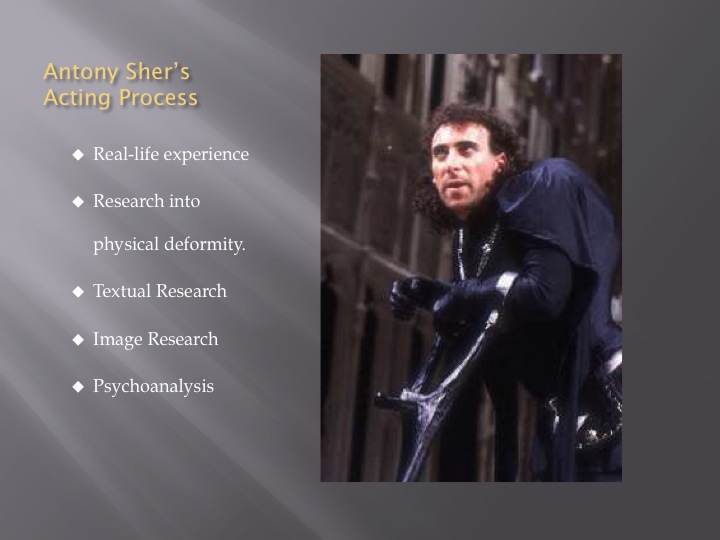
I could be wrong, but I think that the reason the actress was on crutches was a symbolic way of confronting the way gender politics can cripple women.

Many scholars have pointed out how Hippolyta rarely speaks despite the fact that she is supposed to be the powerful Queen of the Amazons, and Theseus’ fiance besides. Shakespeare makes it clear that their marriage was arranged as a political alliance after the Amazons lost to Athens in a war:

Hippolyta, I woo'd thee with my sword,
And won thy love, doing thee injuries;20
But I will wed thee in another key,
With pomp, with triumph and with revelling.

With this in mind, it makes sense to have Hippolyta on crutches as a result of her injuries. Those injuries might also explain her silence; she has lost her agency now that she is essentially Theseus’ prisoner. One might think of any number of war atrocious where women have been sold to powerful men over the centuries. In short, by putting Hippolyta on crutches, we see a glimpse into her tragic story that most productions just gloss over- that she has lost a war, been separated from her people, and is now her enemies’ prisoner through marriage.

I’ve come to expect high quality acting from The Globe Theater Company and this cast did not disappoint. As we watched it together, my family concluded that this was one of the best acted productions of Dream that we’ve ever seen, which between us has to be over 30 plus productions.

The delivery is crisp and fast paced. Every actor has taken these words and made them their own. They speak them as if they were written yesterday. One thing I love about the Globe is that the directors encourage this kind of fast paced delivery; with no distracting special effects or sets, the actors have to captivate the audience with their delivery of Shakespeare’s text, without being melodramatic or self-indulgent. I’m pleased to say that this cast does a fantastic job of telling this magical story in a compelling and very modern way.

I’ve shown my recording to kids, teens, adults, and my family, and everyone has a different reaction to the show. Maybe this isn’t quite your cup of tea, but the concept is sound, the acting is high caliber, and it utilizes the Globe’s unique qualities extremely well. 
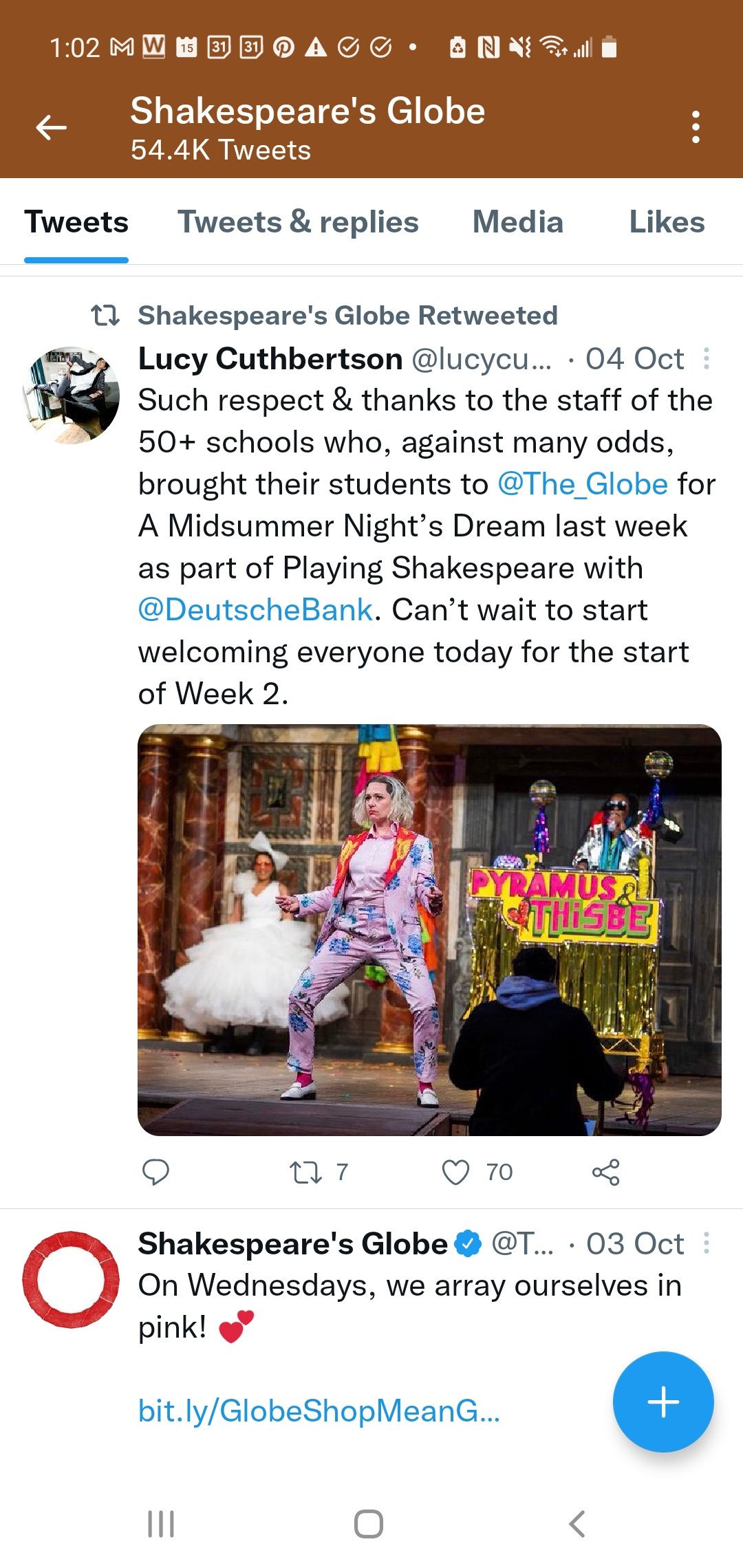


I personally didn’t care for Bottom just because I felt the actress was playing a very energetic part with too much sarcasm and tongue in cheek, but that’s mostly personal preference. I did however love Peter Quince, Snout, Snug, and the rest of the Mechanicals. Peter Quince is a rather thankless part but it’s great to see someone balance being a straight man trying to reign in Bottom’s antics. and an idiot who has no idea how to direct a company of actors, which the actress playing Quince did very well.

New Outschool Course: Macbeth

Just in time for October, I’m offering an online class for kids ages 13-18 about Shakespeare’s most spooky and cursed play:

If you follow this blog you know I’ve written a lot about this play before. Though this class will be more like a game where I teach the class using multimedia, games, and a digital escape room!
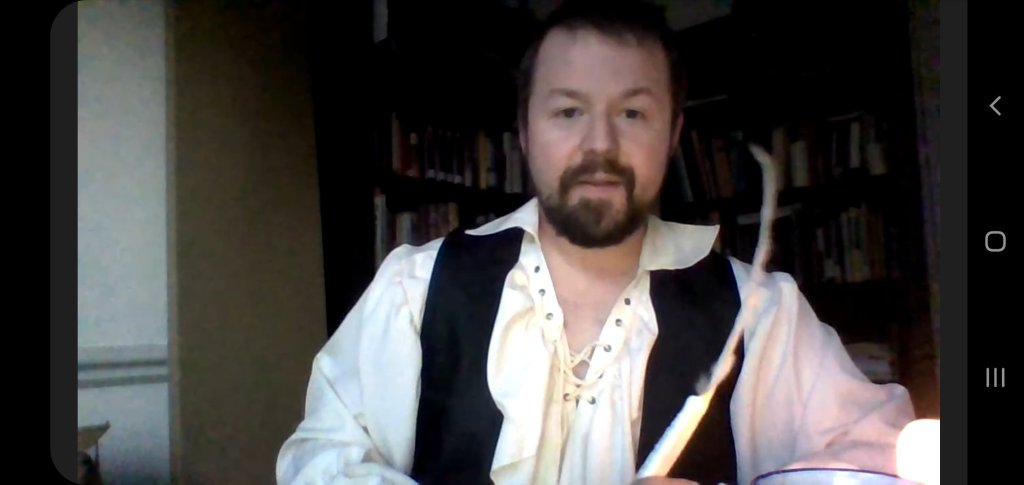
Me in my Shakespeare gatb

I’ll start by speaking to the students in character as Shakespeare, and tell them the story of Macbeth using a multimedia presentation.

I will then test the students’ knowledge with a fun quiz that was inspired by the popular mobile game Among Us. As you know, the game is similar to a scene from the play, so I thought it would be an appropriate way to test the kids’ knowledge.

Screenshot from the Gimkit game “Trust No One.” Like Among Us, players need to figure out who the Imposter is, but they greatly increase the chances of surviving if they answer the quiz questions correctly.

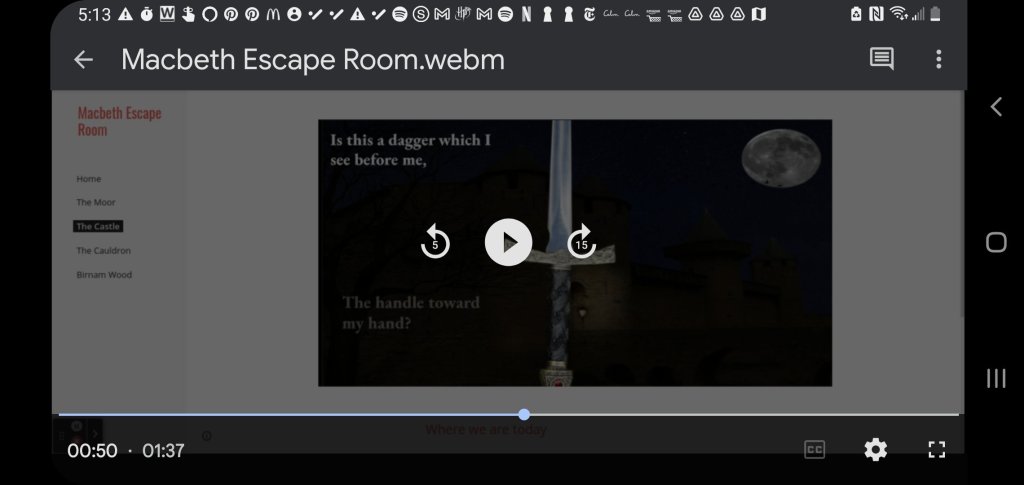
The final part of the class is a digital escape room I’ve created. I don’t want to give too much away, and you can’t play it unless you sign up for the class, but let’s just say it’s fun, spooky, educational, and challenging!

Screenshot from my Macbeth Escape Room.

If you want to sign up now, the course is available every weekend in October, and then by request after that. Register now at Outschool.com. if you take the course, please leave me a good review.

Hope to see you soon!

New Acting Course for Young Actors Starting September 12th, 2021.

Trailer for my 2021 Acting course via Outschool.com

I’ve been working on a remote learning class for Outschool.com where I take some of the audition advice I wrote in Creating A Character: Macbeth, and some of the other acting posts I’ve published over the years. This will be a weekly virtual acting course for kids ages 13-18, starting September 12th at 10AM EST.

This class will outline the tools and techniques of Shakespearean acting such as projection, articulation, and imagination. Each We’ll also go over Shakespeare’s own advice on acting in his play “Hamlet: Prince of Denmark.” The course will culminate with the students choosing their own Shakespearean monologues and scenes, which they can use going forward in auditions, school plays, and classes.

The best thing about the course is that each week builds on the previous week’s experience, but you don’t need to go to all of them. I’ll be flexible and work with the student’s schedule so everyone gets as much out of the class as possible.

If you’re interested in signing up, go to Outschool.com. If you have any questions, email me by clicking here:

Hope to see you online soon!

The Fashion Is the Fashion 3: The Merchant Of Venice

Thanks for recommending this topic. I really enjoyed researching it. Disclaimer: Although I have a degree in Renaissance literature, I don’t have a degree in world religions. I don’t pretend to be an expert in Judaism and I apologize if I have gotten any cultural details wrong. As I have written before, this play has been used to spread harmful stereotypes and misinformation against Jews and Muslims, and I have no desire to do so. So don’t take this information as a comprehensive guide to the lives of Jews or indeed any 16th century Venetians. What I do intend to do is analyze how costumes from the play can evoke the people and cultures of that time.

1. Background https://youtu.be/BvqZ0JUljfo

Venice in the 16th century was a lot like modern day Manhattan- a multicultural epicenter of trade and commerce. https://youtu.be/FNZa9qazTvc

Many productions have costumes that emphasize the wealth and privilege of the Venetian world, except for Shylock

As this video shows, Jews in 16th century Venice were segregated into separate communities known as ghettos. Although the Jews found ways to survive and thrive in this situation, they faced constant discrimination and harassment.

In a modern productions or a period production the costume has to reflect a single vision for the show. Watch this interview with Globe Costume coordinator Laura Rushton: https://youtu.be/PaZmAuKE-Jg

2. Men’s Fashion- Italian fashion was all the rage in Shakespeare’s day. Gone were the stiff woolen tunics of the Middle ages, in with brightly colored silks and leathers. Young Men wore leather jackets called doublets and tight pants that showed off their legs. In the hot sun of Venice, light linnen undershirts were wore underneath the doublet. Wealthy men would wear fine silks and their jackets had slashed sleeves to show off the fine embroidered silk underneath.

Joseph Fiennes’ costume as Bassanio in The Merchant of Venice

Servants- Servants were given distinctive clothes known as liveries by their masters, which for a man would typically be a distinct colorful jacket. Women like Narissa, who were high-ranking ladies maids, would wear hand me down clothes from their mistresses. So this is why in most productions I have seen, Narissa and Portia wear similar clothing. This also helps show the trust and respect they have for each other.

A Note On Masks:

Act II, Scene 5, takes place during Carnival, one of the most celebrated holidays of Venice, and it’s usually celebrated by people wearing brightly colored masks. This great video below from history YouTuber Metetron shows just a little bit of background on Venetian masks:

3. Women’s Fashion- The women in the play Merchant Of Venice are treated line birds in a cage, especially Portia who literally lives on an island and has to marry the man who wins her at a carnival! With the restrictions of garments like partlets, bodies, or corsets, if you wore the fashions of the period, you would feel like your lungs were birds in a cage!

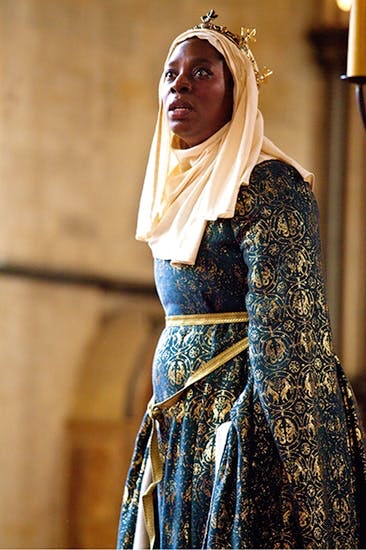
Although the dress was richer and more ornate (reflecting the relative peace during this period), the clothing was much more physically restrictive than medieval dresses: https://youtu.be/KCeqG47LI1Y

Costume for a production of King John. The fashion is reminiscent of the late 15th century. There is no corset, the dress helps shape the silhouette. Notice also the long sleeves.
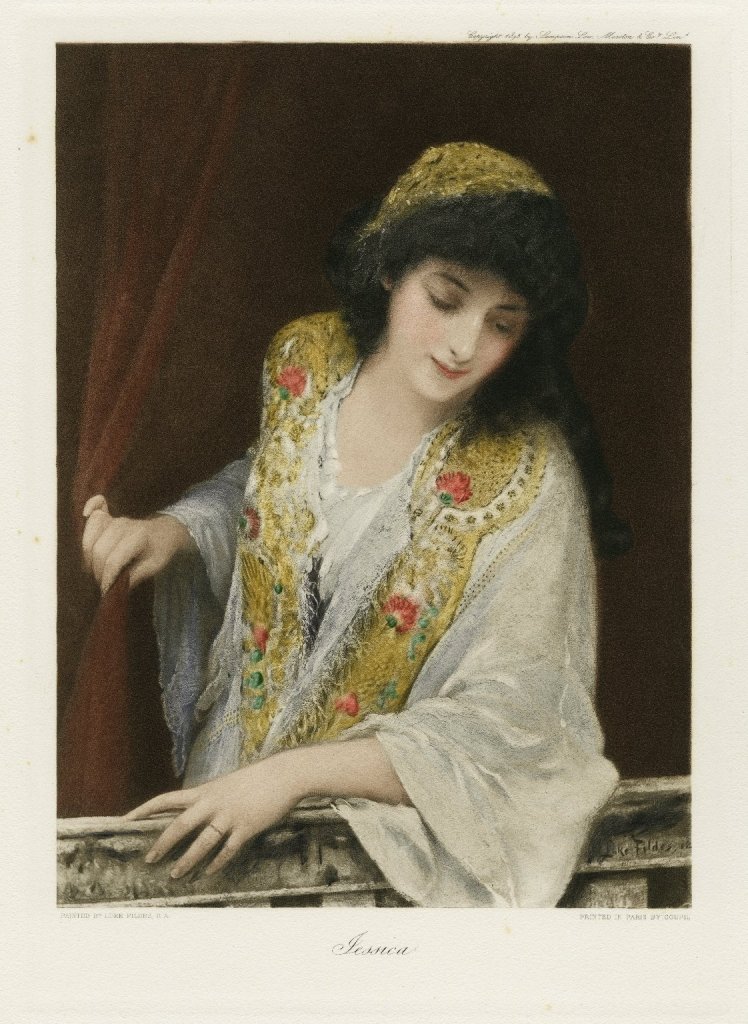
Jessica

Jessica- Though most productions have Shylock’s daughter dressing like the Christian women, there is a long history of distinctive clothing for Jewish women as well as men. Sadly, the only video I could find refers to 14th century clothes, I think this video is very informative and extremely thoughtful

4. Shylock

It’s worth noting that Shylock is not the central character in the story; the titular merchant is Antonio. Probably Shakespeare’s original audience saw him as a one dimensional villain for the audience to boo and hiss, then rejoice when he fails. He probably came onstage in 1596 wearing stereotypical red wig, a long gown, and a grotesquely oversized nose. The costume and performance gave the impression of someone foreign, alien, even demonic. This was one reason why some modern actors have balked at playing Shylock, as Patrick Stewart explains: https://youtu.be/7UOdMHW7J2Q

That said, Shakespeare clearly didn’t write him as one dimensional; he dominates the scenes he’s in and for centuries great actors have yearned to play Shylock over all the other characters. Slowly Shylock has become the focus of the play and the romantic comedy aspect has become less and less important in most modern productions. Like every great part, Shylock’s costume proclaims his social class, his background, and his relationship with other people.

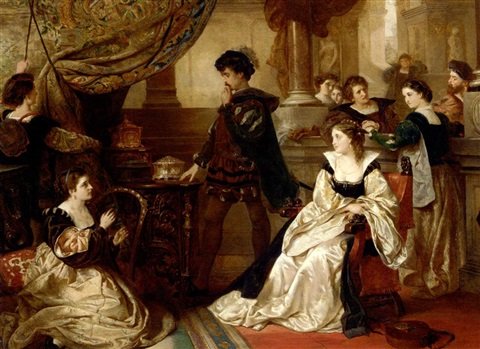
In the play, Shylock only refers to his clothes once, referring to the gown he wears as “My Jewish gaberdine.” A Gaberdine is a long cloak like the one in the painting above, but as you can see, Jews were not the only people wearing them.

Because of rampant antisemitism and fear of the growing influence of the Jewish community in the 16th century, the Senate and local magistrates segregated and kept constant watch on the Jews of Venice, and one way they did that was by forcing Jewish people to wear distinctive clothes.

According to the Online Jewish Museum:

Jews were forced to wear various markings on their clothing to identify themselves as Jews. In 1394 they had to wear a yellow badge, it was changed to a yellow hat in 1496 and to a red hat in 1500.

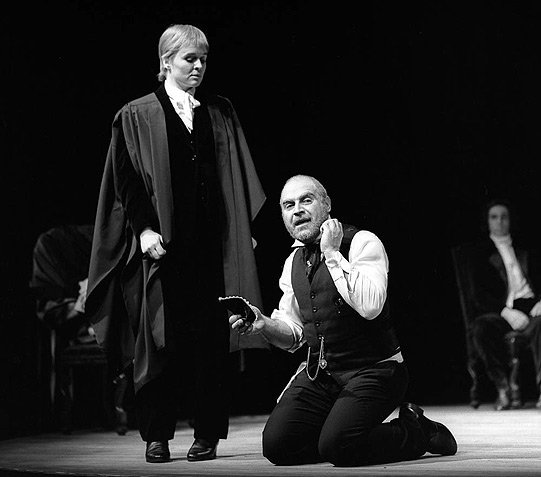
Charles Keen as Shylock

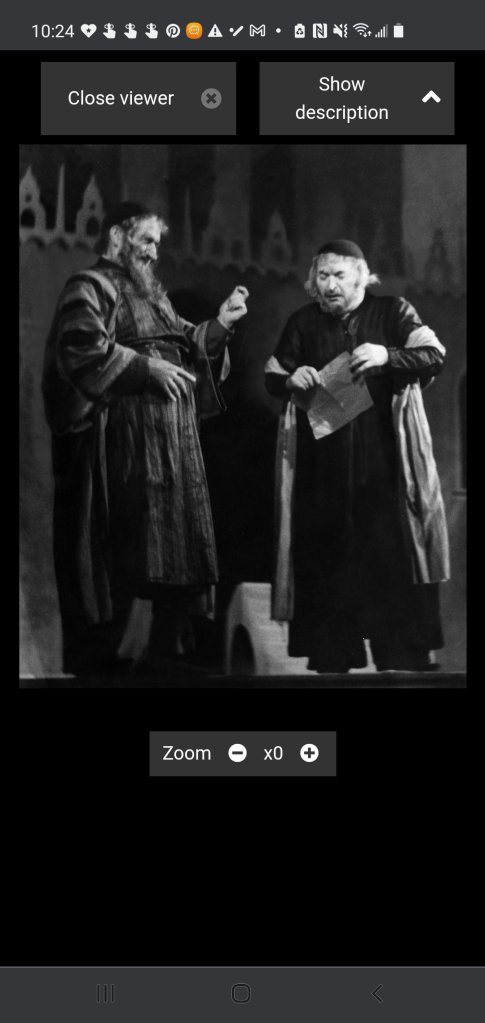
As Shylock grew in popularity with actors and audiences, actors played him with more nuance. Contrast the foreign looking gown in the previous picture, with Charles Keen in the 19th century.

That is not to say that all productions played Shylock as a fully formed human: in 1934, the Nazi Party sponsored a German production of Merchant with horror actor Werner Krauss, (famous for films like The Cabinet of Dr. Caligari) as Shylock. You’ll notice that the costume again emphasizes otherness, and exaggerates Jewish stereotypes.

Warner Krauss in the infamous 1934 production of Merchant sponsored by the Nazi party.

Patrick Stewart when he played Shylock in the 1970s, emphasized how Shylock is essentially an immigrant in his own country and played him with tattered clothes, a dirty bushy beard, and with an air of a stray dog. His clothes emphasise both his race’s oppression, while also telegraphing Shylock’s miserly attitude. Sir Patrick emphasized that his Shylock had lost so much in his life that he clings to Earthly wealth to feel in control of his life.

Patrick Stewart as Shylock
David Suchet as Shylock
David Suchet as Shylock, RSC.

By contrast, David Suchet. (famous for his portrayal of detective Hercule Poirot), chose a near polar opposite interpretation of Shylock at about the same time. The main difference between Suchet and Stewart could basically be summed up by this fact, Suchet is actually Jewish, Stewart is not.

Because Stewart was portraying a member of a community to which he didn’t belong, his portrayal downplayed Shylock’s Jewish identity since he didn’t want to make assumptions about what being Jewish is like. This is why Stewart gave his Shylock an over-refined accent and made sure his costume didn’t emphasize any stereotypical Jewish elements.

Since Suchet actually is Jewish, he did not shy away from portraying Shylock’s jewishness. His Shylock is proud of being Jewish but is well aware of how other people see him. He knows that he is othered by the other Venetians, and can use their fear and hatred of him as a weapon against them. Suchet also dressed his Shylock as well to do, but not gawdy to try and command respect from other people, but also carried around a walking stick to use as a weapon.

Ian McKellen
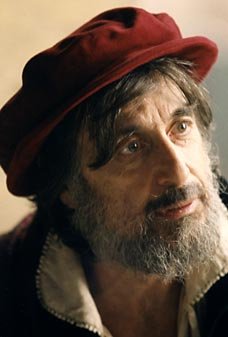
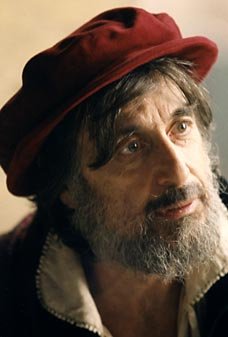
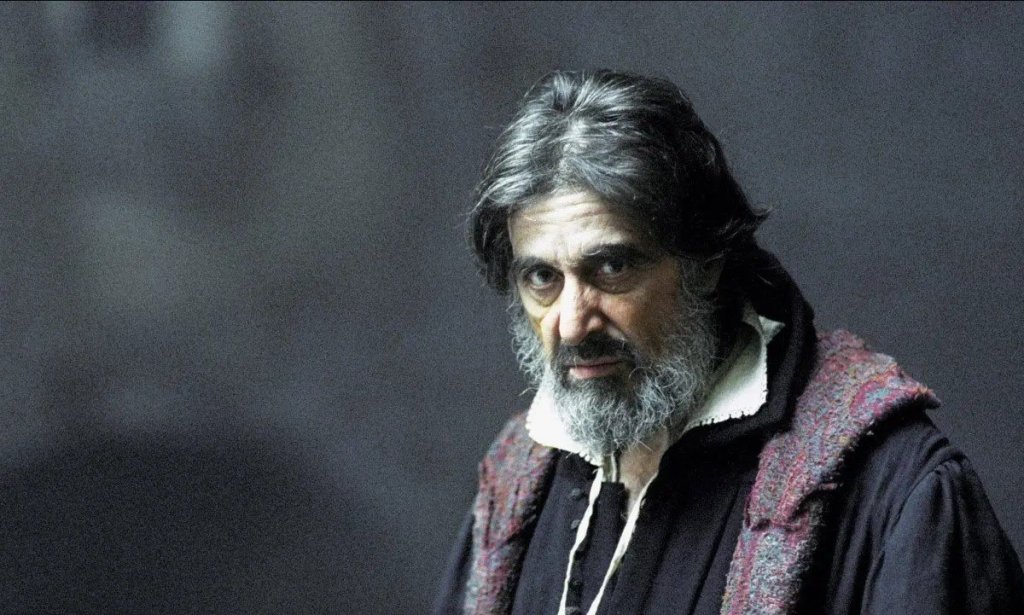
Al Pacino in the 2009 movie of Merchant, wearing the red hat that real Jews were required to wear in the 1590s.

6. Case study: the 2009 movie

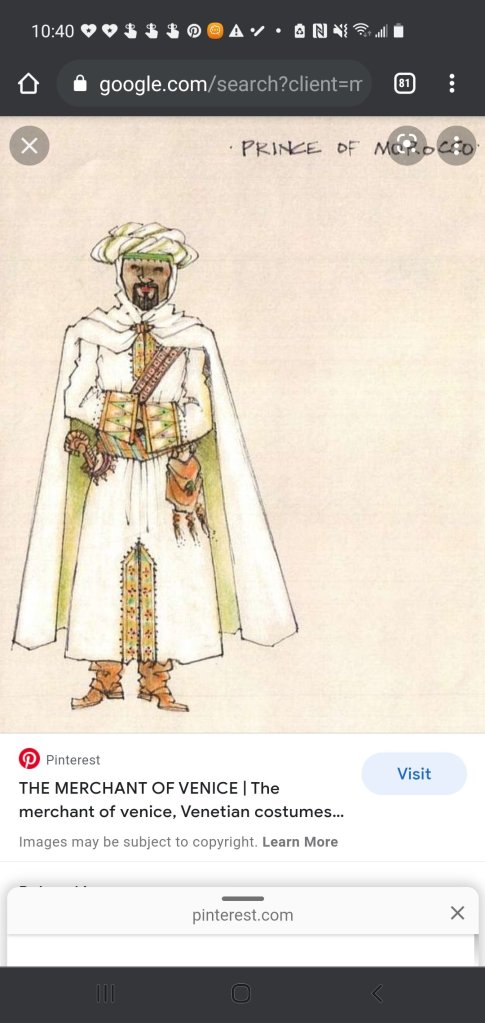
The Prince of Morrocco: In Act II, Scene 7, The Princes of Morrocco and Aaragon (A region of Spain), come to Portia’s home on the island of Belmont to try solve the riddle of the three caskets. In order to show the audience that these men are foreigners, their costumes have to be distinct from the Venetians. Take a look at this was accomplished in the 2004 movie:

The Prince of Morrocco (David Harewood) tries to guess the casket in the 2004 movie.

Mr. Harewood’s costume was inspired by the real Morroccon ambassador to Queen Elizabeth, Abd el-Ouahed ben Messaoud, who many scholars believe, might have also inspired Shakespeare to write Othello 6 years later.

Abd el-Ouahed ben Messaoud
Al Pacino dons the distinctive red cap that all Venetian Jews were required to wear in the 1590s.
Shylock after he converts to Christianity.

6. Works Cited

https://www.bl.uk/shakespeare/articles/a-jewish-reading-of-the-merchant-of-venice

Venetian Fashion in the 16th Century

https://en.wikipedia.org/wiki/1550%E2%80%931600_in_Western_European_fashion

1590-1599

Summer Shakespeare Academy!

I’m working this summer with the good people at Outschool, an online learning platform for kids ages 3-18. I’m designing a series of Shakespeare classes that you can sign up for. We’ll be doing acting exercises, reading Shakespeare’s text, and making Shakespeare props Cost is $3 per child.

The course is ala carte, that is, you can sign up for as many courses as you like. Each course builds on the last one, but you don’t have to have taken the previous ones to enjoy any one particular course Let me know in the comments which class(es) you are interested in, and/or what suggestions you might have. I can’t wait to hear what you think about these summer Shakespeare courses, and I hope to see you online soon!

1. Introduction to Shakespeare- (enrollment here: https://outschool.com/classes/introduction-to-shakespeare-or-how-i-learned-to-love-the-bard-UoHH5fes?sectionUid=973060db-f857-461a-a23a-f1476203a544&showDetails=true) We’ll talk about why Shakespeare is so famous and learn about his life and career. Then we’ll do some fun quizzes that you can earn prizes based on how well you pay attention!
2. How to write ✍ like Shakespeare (Enrollment here: https://outschool.com/classes/how-to-write-like-shakespeare-0HuPq1Cg?sectionUid=4243af25-ba41-4724-82a2-61bd7c7d862e&showDetails=true) Have you ever wanted to woo your sweetheart or write the next bestselling play? Well, this course will cover the secrets of Shakespeare’s writing. We’ll cover how to write romantic poems, the structure of Shakespeare’s plays, and you’ll get to write your own Shakespearean speeches!
3. Intro to Shakespearean acting Practical tips and tricks for your next Shakespeare audition.
4. Shakespeare’s villains
We’ll look at the darkest and creepiest Shakespearean characters and see why they still fascinate us today!
5. The Violent Rhetoric Of Shakespeare’s Julius Caesar (Registration Here: https://outschool.com/classes/the-violent-rhetoric-of-julius-caesar-fkMLbAtA?sectionUid=1f9220cd-8c28-438d-9799-8479494353a4&showDetails=true#usMaRDyJ13) In this one-time course, students will analyze the rhetoric and persuasive power in two speeches from Shakespeare’s “Julius Caesar”
6. Intro to Romeo and Juliet – Get a leg up on your next English class with this fun, frenetic look through the characters, themes, and story of Shakespeare’s most popular, and most-taught play.
7. Basics Of Stage Combat (Registration here: https://outschool.com/classes/1120ada2-047d-4b0f-84f6-5eb4b0f7dc66/schedule#usMaRDyJ13 I’ll teach the kids about Elizabethan street fighting, and the basics of stage combat.
8. The Balcony Scene of Romeo and Juliet– It’s been called the greatest love scene of all time, but why? I’ll explain the imagery, the poetic language, and give you a chance to make your own love poetry!
9. Insults and Shakespeare You’ll craft your own Shakespeare insults and engage in a (respectful), beat down with your classmates! Along the way, we’ll talk about how insults escalate to violence in Shakespeare’s Romeo and Juliet.
10. The Iconic imagery of Romeo and Juliet We’ll look at some beautiful paintings, songs, and other works of art that build on Shakespeare’s poetic imagery.
11. Romeo and Juliet and pedagogy Shakespeare is uniquely challenging to get kids to engage with. I’ll give you some of my resources, games, and activities to help you delve into the play in your next class.

If you like these courses, let me know by leaving a comment below. If you’re interested in signing up, visit my teacher profile page: https://outschool.com/teachers/The-Shakespearean-Student. New classes will be added every week, and I’ll work around your schedule when planning the dates and times. Hopefully this will be a great chance for me to share my expertise with a young group of future Shakespearean students!

Review: Gnomio and Juliet

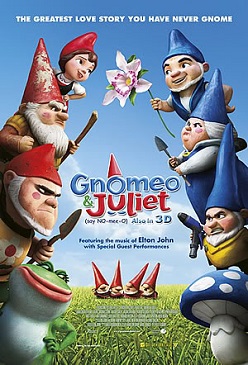
Gnomeo and Juliet

Theatrical poster for “Gnomio and Juliet,”

Like I said in the review for “Romeo and Juliet: Sealed With A Kiss,” adapting Shakespeare’s play for children seemed to me like an impossible undertaking, until I saw this film. This interpretation had all the romance and danger of Romeo and Juliet, with all the wry humor of Shrek. Before I present my thesis, I want to post a refutation of a review from a man I actually hold in very high esteem:

“You Wanted Me To Review Gnomio and Juliet, So I Did.” Kyle Kalgreen YouTube Video Essay.

I’ve watched all of Mr. Kalgreen’s reviews of Shakespeare on film, from Hamlet, to Ran, to Ralph Fiennes’ Coriolanus, and all but one of his reviews I genuinely loved. This is why I was so dissappointed when I saw this review. As his channel suggests, “Brows Held High” is mostly interested in high concept editions of Shakespeare and in a rare act of snobbery, Mr. Kalgren seems to turn his nose up at this movie, calling it essentially populist trash. He seems to say that the film misses the mark as a legitimate Shakespearean adaptation, and he’s not wrong. What he fails to notice though, is that is not the point of this movie. It’s purpose is not to be a faithful adaptation of Shakespeare, it’s a simplfied way of introducing children to Shakespeare.

This computer animated film is set in two adjoining houses in England, with two families of garden gnomes duking it out for supremacy. Though this seems like a ridiculous concept, it gives the film a great amount of charm, watching these two gnomes trot across the garden with their plaster feet, riding around on lawnmowers, and of course the fact that they are gnomes makes even Tybalt look cute.

Most importantly, unlike other ‘inanimate object comes to life’ movies, garden gnomes are able to be smashed. Unlike the nearly indestructable Woody or Lightning McQUeen- these characters can be smashed. It’s established in the first 10 minutes that both Gnomio and Juliet have parents that were smashed. This means that the audience is constantly worried for the safety of the characters, especially when they fight. This is a clever, kid-friendly shorthand that allows the audience to worry about the character’s mortality, without the gory realities of human death.

The characters are also handled with care and charm. Gnomeo is a cocky, self-assured gnome who first looks for adventure before finding love. Juliet is even more of a spitfire than her human counterpart, and is able to perform midnight catburgling into a nearby greenhouse. It’s their desire for fun and adventure that makes these two compatible, and makes their love easy for even a child to understand.

The film’s cleverness doesn’t stop there: the filmmakers inserted all kinds of Shakespearean jokes to make the play easier to understand and to entertain the audience. For example, the Capulet and Montegue households on “Verona Avenue” have the addresses 2B and another 2B crossed off, (punning on Hamlet’s most famous line). In addition, when we first meet Juliet, she argues with her father (voiced by Michael Caine) to let her off a small white platform that he forbids her from leaving. Because she’s a gnome, her father literally puts her on a pedestal, which beautifully illustrates the relationship between Juliet and Lord Capulet. In the play, this is hinted at, but not really explored, but in this version, it is front and center, and helps increase the drama.

Perhaps the most clever thing about Gnomeo and Juliet, is that the film makes you very aware that this is an homage, rather than a re-interpretation of the story. At the opening of the film, a tiny gnome with a ridiculously long hat says: “The story you’re about to see has been told before… A LOT.” This immediately reminds the audience that, although this film will give you the general idea of Shakespeare’s play, the real play is full of more violence and sex than a children’s movie will allow. At one point, Gnomeo even converses with an animated statue of Shakespeare himself, as a way of further conceding the homage, recognizing the difference between an adult-themed play, and a children’s movie, and hopefully, encouraging kids to see both versions.

Resources for Teachers and Students: A Visit To Elizabethan London

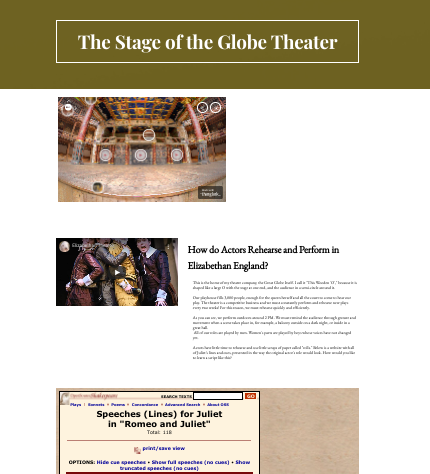
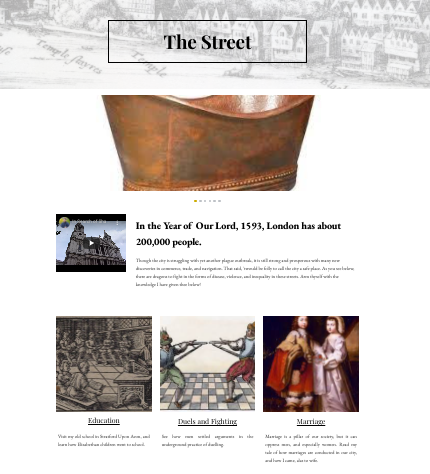
I’m working on several educational projects at the moment and I’m proud to share this one with you. It’s what I call a virtual tour of Shakespeare’s London. The teacher I’m working with said she wanted to teach the kids about the culture of Elizabethan London as he was writing Romeo and Juliet. Naturally with the pandemic a field trip was out of the question, (for multiple reasons), but I wanted to create a visually interesting tour of the places Shakespeare knew and worked and try to imagine his perspective and how that might have informed the characters and themes of Romeo and Juliet.

So I created this: a website written as if Shakespeare himself is taking you on a tour of his London in the year 1593, the year where, as far as we know, he had just completed writing Romeo and Juliet. 1593 was also the middle of another outbreak of Bubonic Plague. It has virtual tours of Shakespeare’s Globe Theater, Hampton Court Palace, Shakespeare’s Grammar School, and a quiz where you can pretend you’re in the Elizabethan doctor’s office.

For the class I’m helping, the students will fill out a worksheet as they navigate the website so they learn from the material at their own pace. If you’re interested, leave a comment and I’ll post the worksheet so you can use it in your classroom.

My hope is that this website can be a resource for anyone trying to connect with Romeo and Juliet and trying to learn from the culture of Elizabethan London. Shakespeare was a product of his time and his experiences must have had an influence on what he wrote. Even if they didn’t, they certainly influenced the people who saw the play and he knew that it would. So I hope it can help you understand a little bit more about the world of this famous play, and the context of the world that created it.

Activities For Kids for Shakespeare’s Birthday 🎂

I’m stuck at home with the kids for Shakespeare’s Birthday, so I thought I’d come up with some fun activities for my kids to do today:

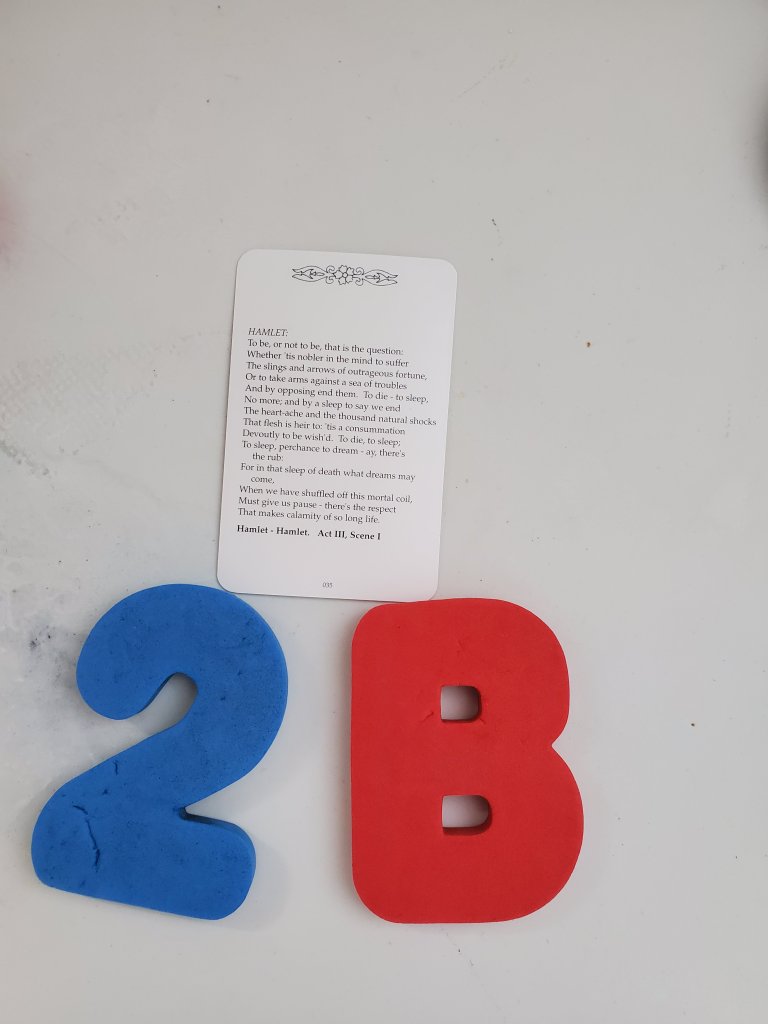
I hid the quote from “Hamlet” in the bathtub 🛁 and had my kids find the bath letters “2” and “B.”

At home I have a card game called “The Bard Game, which has several famous Shakespeare quotes printed on little cards. I hid the cards around the house and when they found them, I had them recite a short quote. Sometimes I hid them in funny locations like the bath tub or the fridge.

2. Romeo and Juliet For Kids. There’s a bunch of animated Shakespeare videos on YouTube and my daughter really likes this one: https://youtu.be/mMFE0IIHR6I

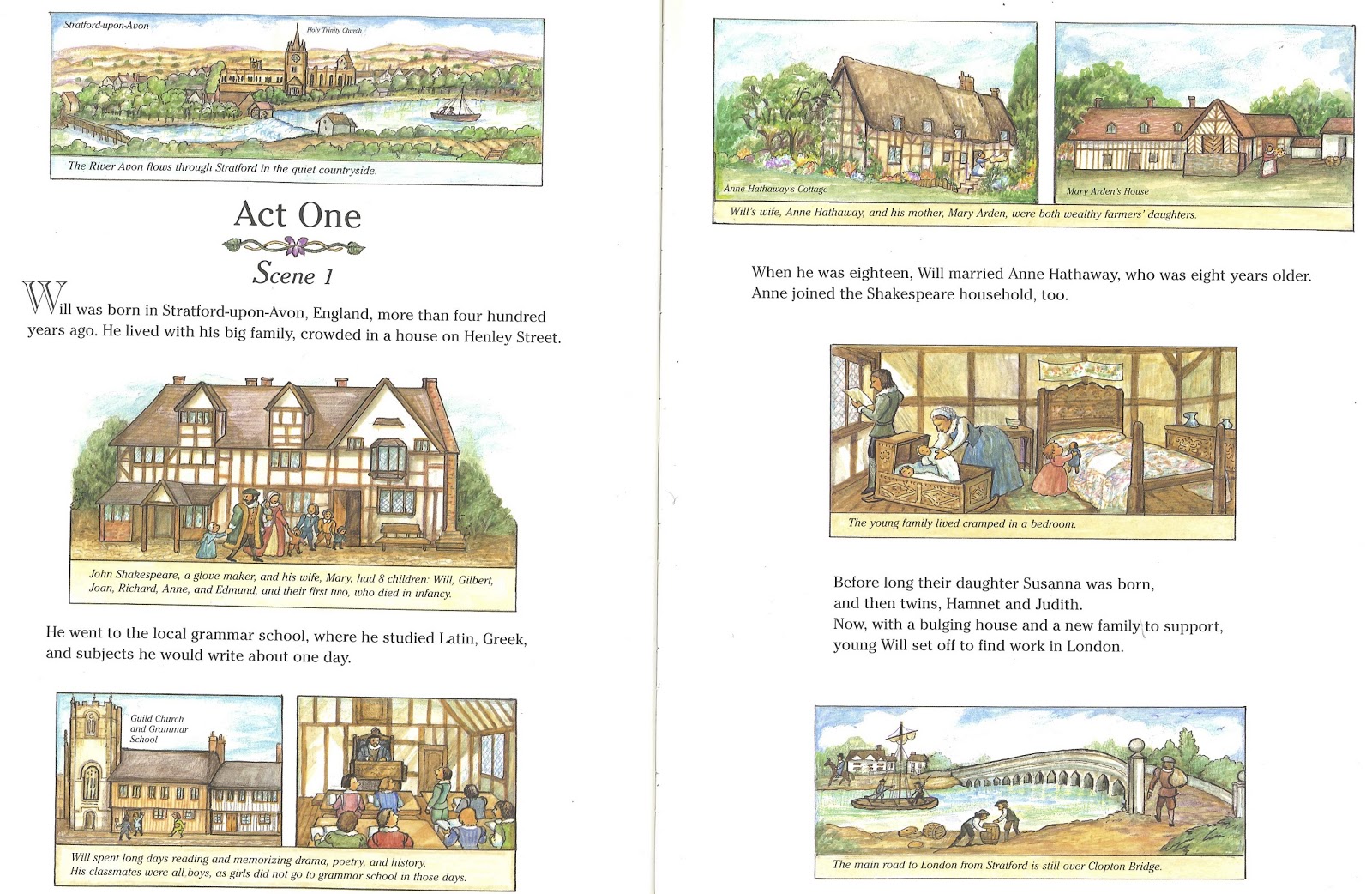
3. William Shakespeare and the Globe by Aliki. A fantastic book that introduces Shakespeare’s life and plays.

Romeo and juliet cookies

What’s a birthday party without treats? I had my kids decorate these Romeo and Juliet cookies. My daughter is only 5, so it was good practice writing ✍ the letters R and J.

If you like my ideas or want to suggest something, please leave a comment below!