One of the most celebrated international film versions of Shakespeare comes from Japanese director Akira Kurasawa, (1910-1998). The innovative filmmaker is famous for combining Shakespeare with traditional forms of Japanese theater like Kabuki and Noh. Kurasawa’smost celebrated film was his film Throne of Blood, (1957), which was a fusion of Shakespeare’s Macbeth with Japanese Noh theater.
I’m beyond excited that I am able to offer three multiple week courses through Outschool for kids aged 6-12. If you scan the QR code below, you can see class descriptions and individual trailers. You can also check out the “My classes,” Page on this blog. I hope you and your family will join me this summer!
It’s April, so it’s about to be spring break. Also, Shakespeare’s birthday 🎂 is coming up, so I thought I’d honor him this year by highlighting some hidden gems of Shakespeare’s plays.
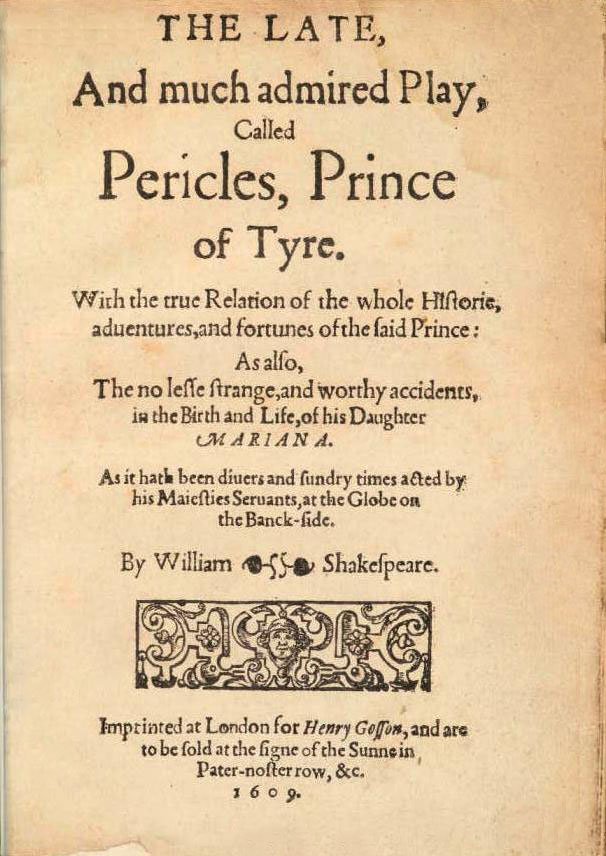
Title Page for Pericles, Prince of Tyre
Shakespeare’s Pericles is an incredible odyssey where the hero goes to many exotic locations and has many adventures, so I thought I’d summarize the action of the play using the device of… vacation photos!
Part 1: Pericles’ Vacation In Antioch
Travel brochure for Antioch, where Pericles finds himself in Act I.
Part II, Scaped beheaded, now he’s wedded!
Pericles’ vacation video where he gets shipwrecked, finds a suit of armor, wins a joust, falls in love, and gets married all in a few days!
Part III: The worst Cruise ever
Pericles reviews the ship 🚢 that took him to Tarsus.
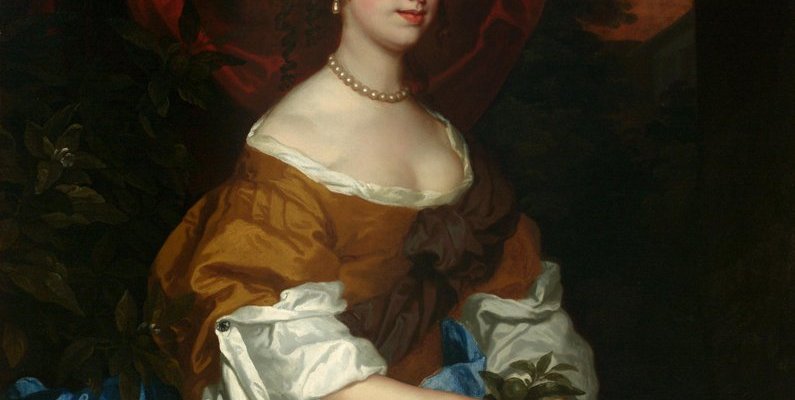
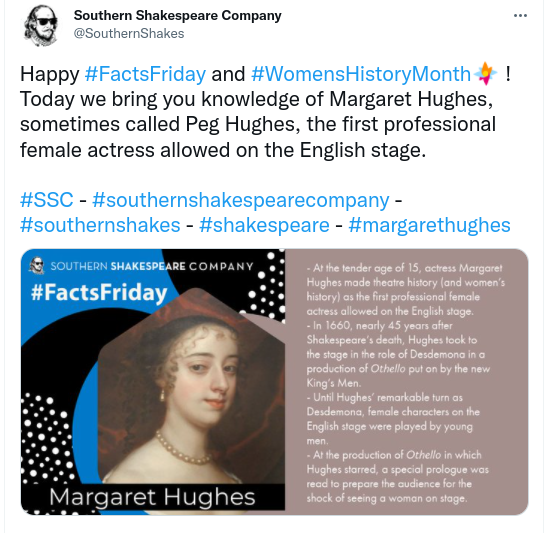
Since today is the last day of women’s history month I thought I’d talk about the historical first ever Shakespearean actress and first-ever English actress. Margaret Hughes (1630-1719), is credited as the first-ever English actress. She led a fascinating life and books, plays, and movies have immortalized her, including the 2004 film, Stage Beauty.
Although there is some debate among scholars as to whether the 1st actress in question was Margaret Hughe, she is the one who has been credited because of her performance as Desdemona in Othello during the reign of King Charles II.
— Southern Shakespeare Company (@SouthernShakes) March 5, 2021
Some facts about Mrs. Hughes from Southern Shakespeaer Company
King Charles discusses how his reign and the first actresses in England are linked.
Around 1660s Charles II formally allowed for public performances of women on English stages. Restoration audiences, craving entertainment after the enforced closure of theatres during the Puritan Interregnum, rejoiced. Others, particularly the successful male impersonators of women, were shocked and annoyed as they suddenly lost their celebrity status and were seen as freaks. The stage war that the appearance of actresses initiated resulted in an almost immediate reiteration of almost medieval misogyny and vituperative ostracism directed at any woman who dared to challenge the masculine reign on the English stage. The actresses themselves had to learn both how to act out femininity as seen through male playwrights’ eyes and how to maintain their celebrity status and the audiences’ adoration. This, however, meant more than ‘just’ displaying perfect acting skills and appearing in the best plays available. A successful actress needed to woo the audience, particularly its male members, with her body, or her sexuality in general. She likewise needed to accept, or even engender, vitriolic attacks on her reputation in public discourse and, if possible, utilise such bad publicity to her own advantage. As such, this chapter aims to present a link between medieval anxiety concerning public displays of femininity and the seemingly privileging introduction of the actress in the late seventeenth-century England. It will also present a synthetic image of celebrated actresses’ lives as seen through theatrical records as well as seventeenth-century pamphlets and poetry, proving true the contemporary saying that only lack of press is bad press.
Bronk, 23
What I’m going to do is give a few historical notes on Margaret Hughes and her portrayal of Desdemona in the production of Othello and then I’m going to simultaneously do a review of the movie that celebrates her life: Stage Beauty (which was also made into a play).
Review Of Stage Beauty
What Shakespeare In Love did for the 16th century, this movie does for the late 17th century: it is awash with beautiful costumes elegant sets and dazzling music. it is a visual feast and everybody in it is fantastic in their roles, especially Billy Crudup as Ned Kyneston, Richard Griffith as Sir Charles, Tom Wilkinson as Thomas Betterton, and of course, Claire Danes as Margaret Hughes.
Hughes is a costumes mender and dresser for Thomas Betterton’s theater company in London as she watches Ned Kyneston every night as he portrays Desdemona in Othello. Mrs. Hughes develops an admiration not only for his performance and skills but also forms romantic feelings for him. However, Mrs. Hughes isn’t content to keep watching Kyneston from the wings, and sneaks off after work to perform as Desdemonaillegally at the Cockpit Tavern to packed houses. When Kyneston finds out, he is livid.
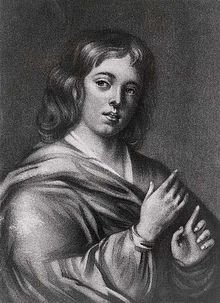
“[He was] the most beautiful woman I’ve ever seen
— Samuel Peypes
1889 mezzotint engraving of Edward Kynaston.
Kyneston constantly belittles, ignores, and underestimates Hughes through this film and is supremely arrogant to everyone, enjoying the notoriety he’s achieved as the premier female impersonator in London. However, after he offends King Charles (played by Rupert Everett), and his mistress, Nell Gwynn, (herself an aspiring actress), the King in retaliation, bans men from playing women, thereby making Kyneston seem like a degenerate, incapable of getting work. He sinks into alcoholism and depression, but finds comfort when Hughes finds him and nurses him back to health. The two then form a romantic bond.
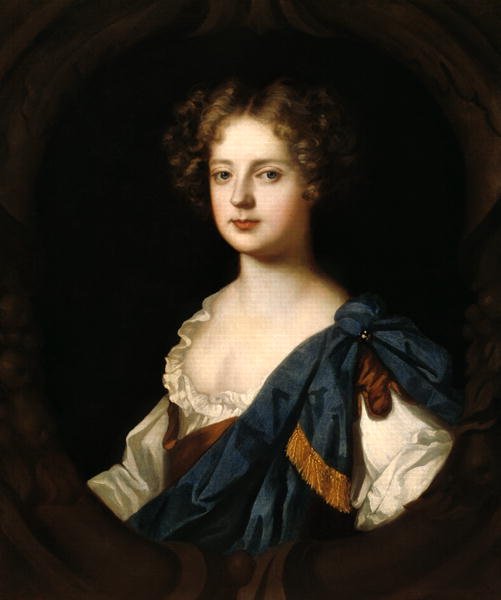
Nell Guinn, King Charles’ mistress and one of the first English actresses
In the third act twist of the movie, the actress playing Desdemona in Mr. Betterton’s theater is pregnant, so Margaret must take over her role. Kyneston sees an opportunity to regain respectability as an actor, so he demands to be given the role of Othello. In my favorite scene of the film, Kyneston rehearses the death scene of Othello, changing the acting style from over-the-top stylistic 17th century to very modern naturalistic portrayal:
The rehearsal scene from Stage Beauty (warning, R-rated language)
The two actors perform a fantastic modern naturalistic portrayal of Othello before the king, and they both become respected actors who learn to respect each other.
Danes performs with wonderful real pathos as Hughes and Desdemona. In fact, all the performances are great, the the writing is top notch, and as I said the costumes and cinematography are phenomenal. It’s a very fun, slightly naughty romp through Restoration England, not unlike the flirtatious comedies of Behn and Wycherly.
Special merit goes to Billy Crudup, who had to completely transform his voice, gestures, and dialect for the film. He worked closely with a dialect coach, a physical acting coach, and the director Richard Eyre, who has worked in theater for over 20 years, and has a lot of experience with Shakespeare:
The film is not without flaws; there are some plot elements that are a bit dated and a bit unsettling. While it is true that the real Ned Kyneston was rumored to have relationships with both men and women, including famously, George Villiers, the Duke of Buckingham, who appears in the movie. Kyneston’s sexual identity is constantly shifting through the course of the movie, and it’s not handled very delicately. In the beginning of the film, Ned seems very firmly homosexual; his relationship with the Duke of Buckingham is played fairly respectfully, though Ned himself is hardly a positive portrayal of a gay or bisexualim man.
Even worse, when Buckingham rejects him, Crudup’s Kyneston seems to be coaxed by Hughes to become heterosexual, which he remains through the course of the movie. Now these actors have fantastic chemistry together, but it seems bizarre that Kyneston is all of a sudden changing his sexual identity at the same time he’s changing his style of performance. That doesn’t seem genuine, (at least in my experience), and it might be offensive to members of the LGBTQ community to assume that a man might think he’s one identity and then choose to be a heterosexual.
Historical Details that the movie gets right:
Crash Course Theater History: The Restoration and first Actresses
1 it is true that for hundreds of years it was considered socially unacceptable for women to play parts on the London stage although it was common practice in Italy and France and other countries
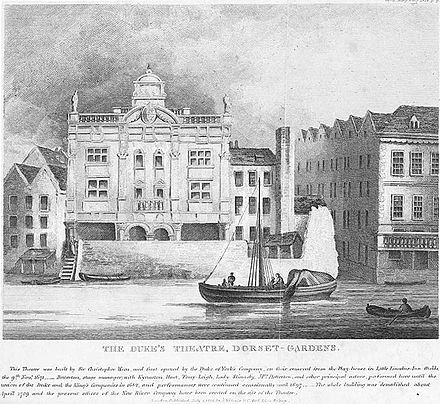
2. Ned Kynaston, Thomas Betterton, and of course Mrs. Hughes are real people who performed during the Restoration. However, they actually rarely worked together. Much like the Admiral’s Men and Chamberlain’s men in Shakespeare In Love, The Duke’s Company which is where Betterton worked, while Mrs. Hughed mainly performed in the rival King’s Company.
I apologize for not spending enough time on black history month this February.
If I do prove her haggard,
Though that her jesses were my dear heartstrings,
I’ld whistle her off and let her down the wind,
To pray at fortune. Haply, for I am black
Or for I am declined
Into the vale of years,—yet that’s not much—
She’s gone. I am abused; and my relief
Must be to loathe her.
Othello, Act III, Scene iii.
Psychologists say some men expect the worst of everyone, especially women. I would argue that Othello is an example of a man who has been threatened so often, he expects the worst of everyone, especially his wife, and this is why it’s so easy for Iago to manipulate him.
I don’t know what it’s like to be black in 21st century America let alone the trauma of Othello’s life, which was riddled with hardship such as being sold into Slavery, encountering Cannibals, and rising through the ranks of an army that doesn’t quite trust him. But based on the psychology of people who undergo trauma, the text of the play, and some details about Venetian life, I think looking at Othello through the perspective of trauma and toxic masculinity is an illuminating interpretation of the play.
I want to be clear that I am not saying domestic violence is condonable, or that being black has anything to do with abuse. What I am trying to say is that Othello is a play that in my view sheds a light on trauma, PTSD, toxic masculinity, and systemic oppression.
In the book Beyond Anger, psychologist Thomas J. Harbin illustrates just how easily a man can deceive himself with jealousy brought on by his own insecurities.
Angry men often believe that others do not approve of them, or think highly of them so more than likely when you assume you know what another is thinking you will assume that person is thinking negative thoughts about you more garbage yen when you For example and whenever [Othello] notices that his wife is not in a good mood, he asks “What’s wrong with you?” his wife usually says that nothing is wrong but [Othello] assumes that she is not telling the truth, and that she is actually angry with him. He then gets angry because he assumes she is blaming him for something that he didn’t do; the ‘garbage out’ mind reading is also frustrating to those around you friends coworkers and family can see that you are getting angry with them, but they have no idea why.
J. Thomas Harbin, “Beyond Anger,” 2018.
Why might Othello be insecure and angry?
Actor Adrian Lester doesn’t think that the play is about race, but about the trauma of military society and according to Aryanna Thompson of George Washington University, he hoped the audience would see Othello as a soldier, not a black man, when he played the role at the National Theater in 2003, when England and America were engaged in military interventions in Iraq.
Though this interpretation works, I would argue that the exploitation of people of color is very much what the play is about, not just on stage but also in places like the military. “The play’s military context is short-lived, serving mainly as a framework for the intense private wars that follow. And in this emotional arena, Othello is far less secure.” Maybe Othello’s toxic insecurities come from being seen as disposable by the Venetian upper crust. Like Shylock before him, Othello is an alien in his own country and if he offends anyone, he will be crushed. He is then put in a dangerous situation where the troops have to hurry up and wait for the danger to find them, which is always a recipe for disaster as the clip above shows.
Maybe a lot of black people felt this feeling of cultural disposibility in the 1600s: listen to professor Thompson talk about the way black people were exploited in the Elizabethan and Jacobean era:
If you watched this clip, you might notice that for most of the history of the play, the draw has been seeing white actors ‘rise to the challenge’ of playing a black man. Sadly, Othello the character is not only exploited by characters in his own play, the role has been exploited as a novelty by theater companies for centuries. My point here is that I see merit to the question of whether or not this play deserves to be performed since from the beginning, it was designed to exploit blackness and the stereotypes of blackness by white actors.
Trauma makes abuse understandable but it doesn’t make it right. The cycle must be broken. Shakespeare’s gift here is to show how toxic masculinity is ultimately self destructive. Plus racial oppression and sexual repression leads everyone into tragedy.
I’m sorry I haven’t posted any content for black history month. Honestly I think I will probably do some overlap in March with black history and women’s history since Shakespeare’s play “Othello” explores both concepts. In the meantime, take a look at this video produced by the National Theater in London for their groundbreaking 2013 production of “Othello.”


















 The Shakespearean Student