Me singing “Brush Up Your Shakespeare” in honor of the Bard’s birthday, 2025
Today, April 23 is the established birthday of William Shakespeare! Today I’ll share some of my favorite posts, videos, podcasts, and quirky recipes related to Shakespeare!
Happy April Fool’s Day! Today I’d like to look at the rich history of Shakespeare’s fools and clowns! Clowns are some of Shakespeare’s classic comic characters, but fools are complex characters that entertain, satirize, and even philosophize. They may dress the part, but they are no fools. This clip from Mel Brooks’ comic masterpiece History… Read more: Shakespeare’s Fools
Happy Saint Patrick’s Day Everyone! Let me begin with a special shout out to Jesse Buckley, the first Irish woman to win an Oscar for her portrayal of Shakespeare’s wife Anne ‘Agnes’ Hathaway in the movie Hamnet. I promise I will write a full review soon, but for now here’s a behind the scenes look… Read more: Happy St Patrick’s Day
Since it’s still the month of love, I thought I’d rank Shakespearean couples and see if the allegation is true that Shakespeare has no good married couples. Naturally, this is my opinion, but I will try to back my opinions up with quotations and moments from the plots. Let me know what you think! S… Read more: Shakespearean Couples Tier List
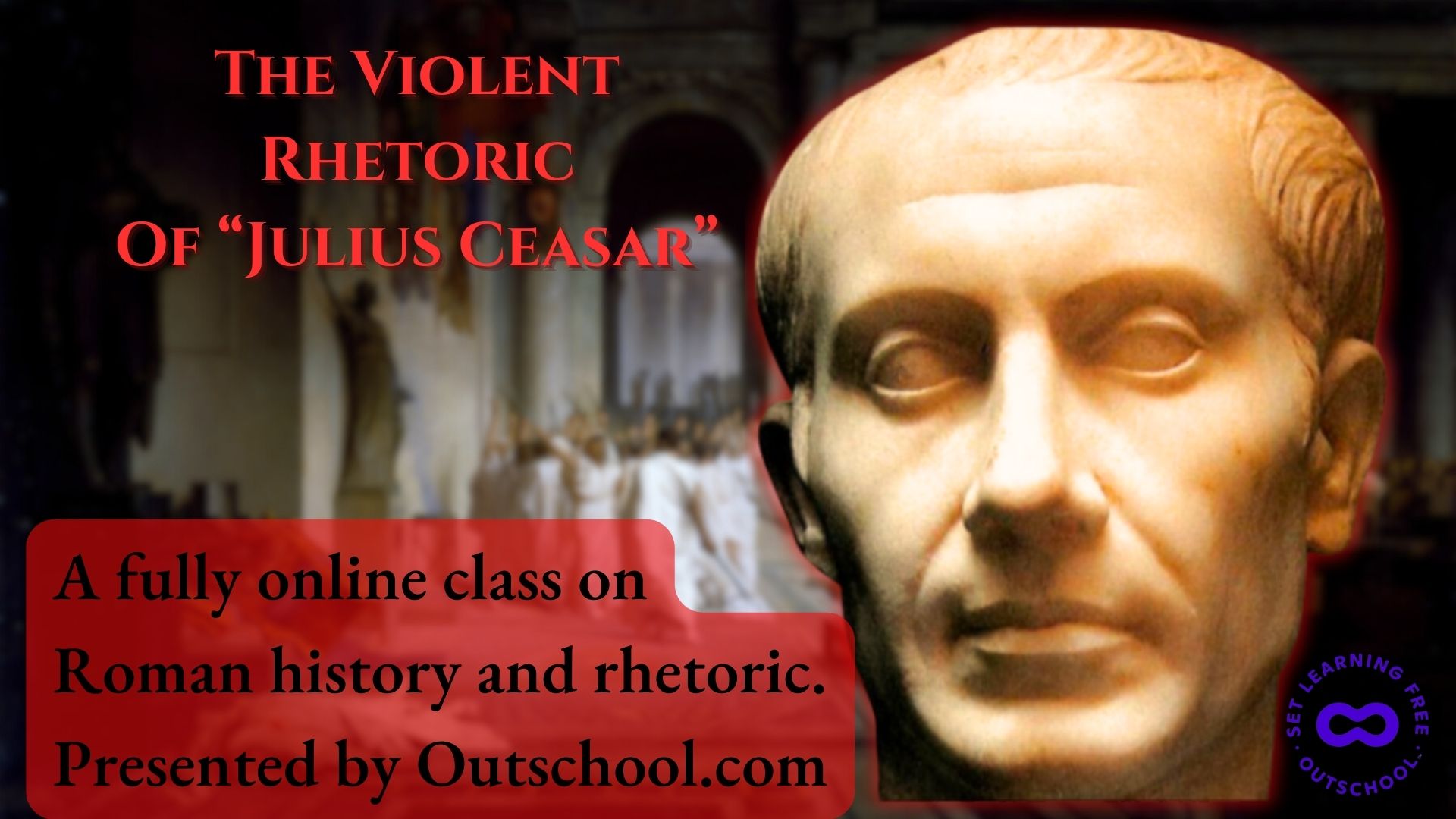
Concept: To explore the plot, characters, and themes of Shakespeare’s Julius Caesar while also gaining an insight into Ancient Roman history and culture.
Student Description: Delve into the passionate speeches of Brutus and Antony in Shakespeare’s Julius Caesar, which led a whole country to revolution.
Parent Description Using self-paced online activities, and a helpful handout, your child(ren) will analyze the rhetoric and persuasive power in two speeches from Shakespeare’s “Julius Caesar.” The course will also cover the culture of Ancient Rome, and the circumstances that led to Julius Caesar’s assasination, which inadvertently led to the birth of the Roman Empire.
Course Organizaiton (the class is divided into 4 parts that students can complete at their own pace over a week-long period
Each lesson will have:
“That Is the Question” (Essential Question)
Lesson Objectives
Set the Scene (Background and context)- 1-3 slides
The Players (biography) 1-3 slides
Go Deeper (Webquest)
Explore military life and the lives of women in Rome using my blog and other websites as a guide.
Post 3 things you learned to the Outschool page or send a photo of your completed handout.
Words, Words Words (Vocabulary, famous lines)
A Taste of Your Quality (Independant Project)
Show us your mettle (Test)
So each class should be 14-15 slides long.
Outline
Class I- Background on Caesar and Roman Culture
That is the Question:
Why did Brutus feel Julius Caesar had to die?
What was the aftermath?
Can one person’s speech effect an entire nation?
Lesson Objectives
To provide historical and political context to explain why Julius Caesar was assassinated, and how his death inadvertantly created the Roman Empire.
To explain the Rhetorical Triangle, the building blocks of persuasive speech.
To go through the story of Julius Caesar focusing on the effect of the speeches.
To study the famous “Friends, Romans Countrymen” speech.
To contrast this speech with some more recent political speeches and you think critically about:
Brutus- Podcast episode. I posit in this episode that Brutus is
Words, Words, Words-
Traitor
Republic
Dictator
Revolution
Ethos
Pathos
Logos
Rhetoric
Colossus
Aeneus
A Taste Of Your Quality:
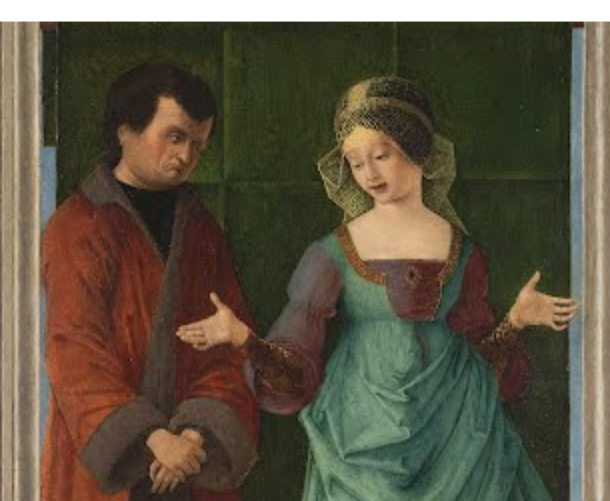
(Independent work): We’ll examine a painting of Brutus’ ancestor Lucius and learn why Brutus values Rome more than even family.
Show Us Your Mettle:
Quizzes on Brutus
Class 3- Antony and Brutus’ Dueling Speeches
(c) Hartlepool Museums and Heritage Service; Supplied by The Public Catalogue Foundation
That Is the Question
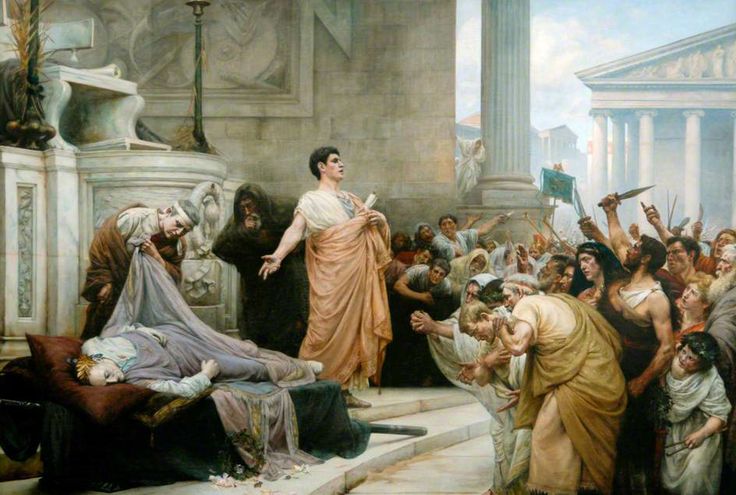
After Caesar’s Death, his friend Marc Antony held a funeral for him where he gives the famous “Friends, Romans, Countrymen” speech. How did Antony’s speech affect the crowd?
Brutus has a speech where he explains why he killed Caesar. What does he say, and how effectively does he say it?
Antony was secretly plotting to take power for himself, and get Brutus and Cassius killed. How did he do it?
Do speeches have the power to change a nation?
Learning Objectives
To explain the Rhetorical Triangle, the building blocks of persuasive speech.
To study the famous “Friends, Romans Countrymen” speech, as well
To look at these speeches and get you to think critically about:
We’ll talk about the consequences of violent revolutions and how Julius Caesar has inspired some of the greatest speeches in political history.
-Patrick Henry
– Gettysburg Address
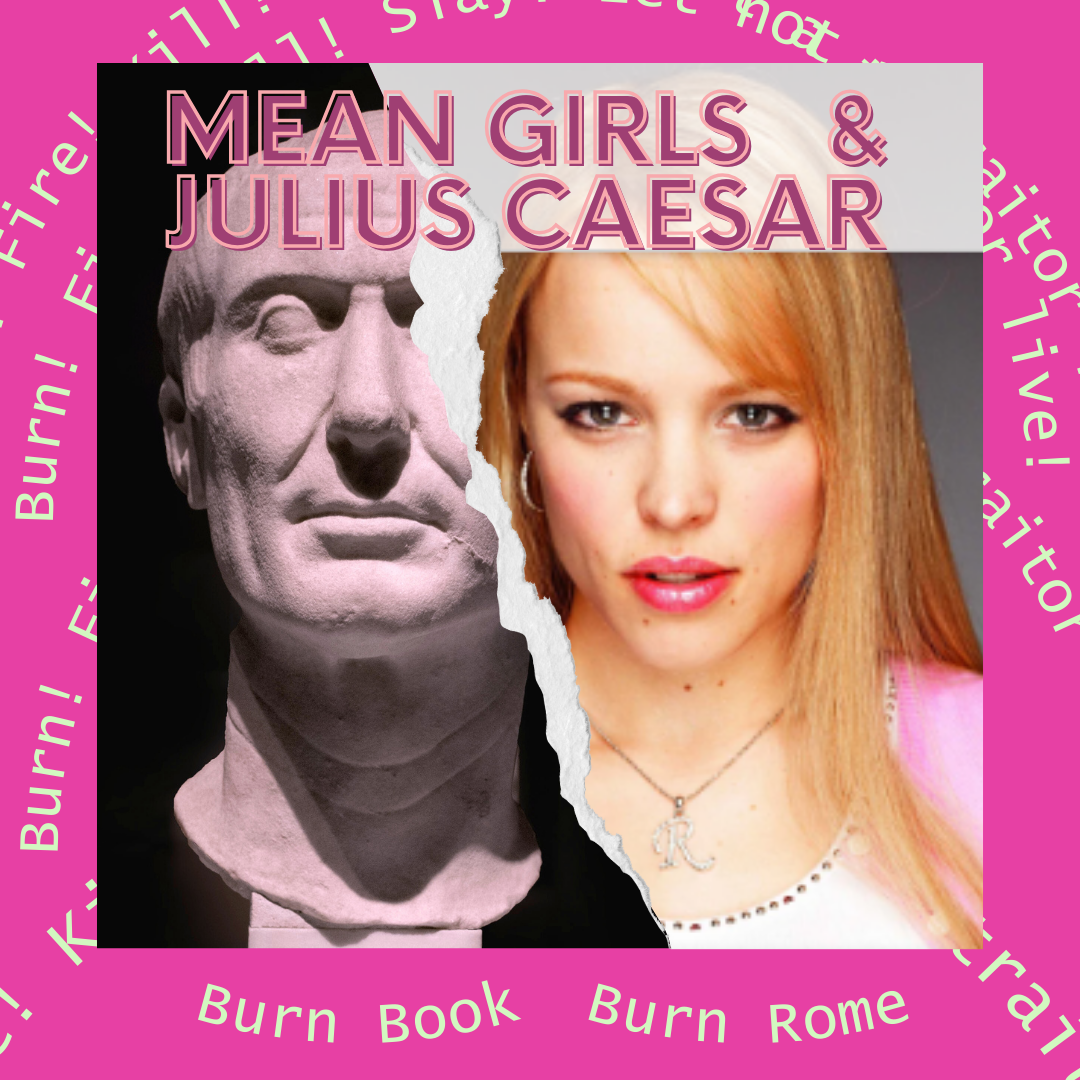
– Mean Girls
That Is the Question
How have people interpreted the play “Julius Caesar” in America?
Does this play promote violence?
What kind of violent speech do we deal with in politics today?
Learning Objectives
To show the link between American History and Julius Caesar
To address the controversy and the misconception that the play promotes violent assassination.
To end on a cautionary note people must think critically about what they hear in politics and not make rash decisions based on appeals to fear.
Setting the Scene- US History
America was founded using the principles of republican government that Ancient Rome used- with a senate, and a series of checks and balances to ensure no one has too much power.
America was founded in a violent revolution, and some of our country’s early leaders used Brutus as an inspiration- to overcome a tyrannical king.
In later years, however, some people have forgotten what happened to Brutus
Today, we are often bombarded with speech that encourages fear and anger and we must think critically when we hear such speech in whatever forum- Roman, or Reddit.
The Players (use my JC lecture?)
Patrick Henry
Abraham Lincoln
John Wilkes Booth
Donald Trump
Go Deeper
-Watch the Caesar Video
– How does the play promote nonviolence?
– How did Brutus’ assassination fail to save the Roman Republic?
PS consoles poor CaesarBloody pies 🥧 for Pi DayO Mist of Maid!Thou thunder masterer“Pardon me, my ride just showed up”Portia and Brutus by Ercole de Roberti, 1486Alas, poor ShamuMy girlfriend is truly MARVELous“Mount, eagle to my palace christaline!”
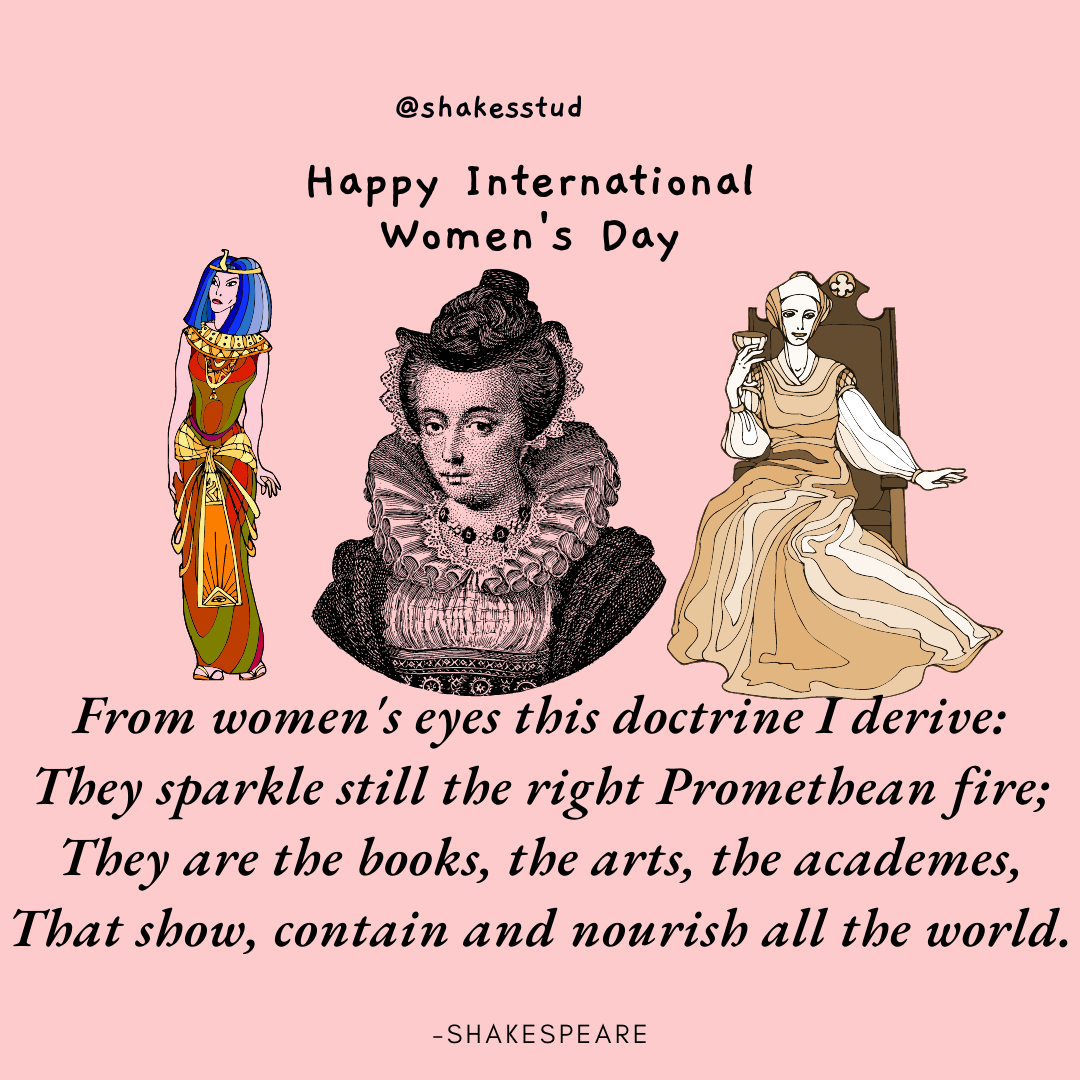
Happy International Women’s Day! I would like to dedicate my posts today to my daughter, a wonderful strong girl, a Shakespeare fan, and a lifelong lover of the musical “Six”.
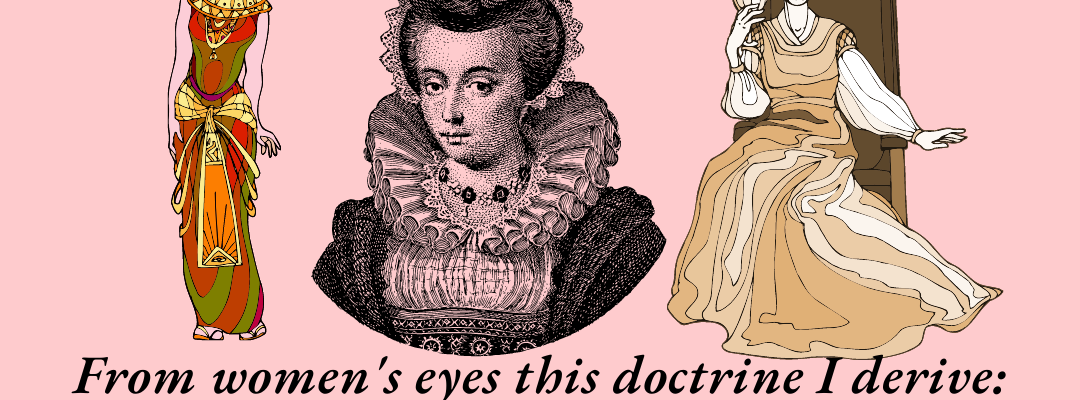
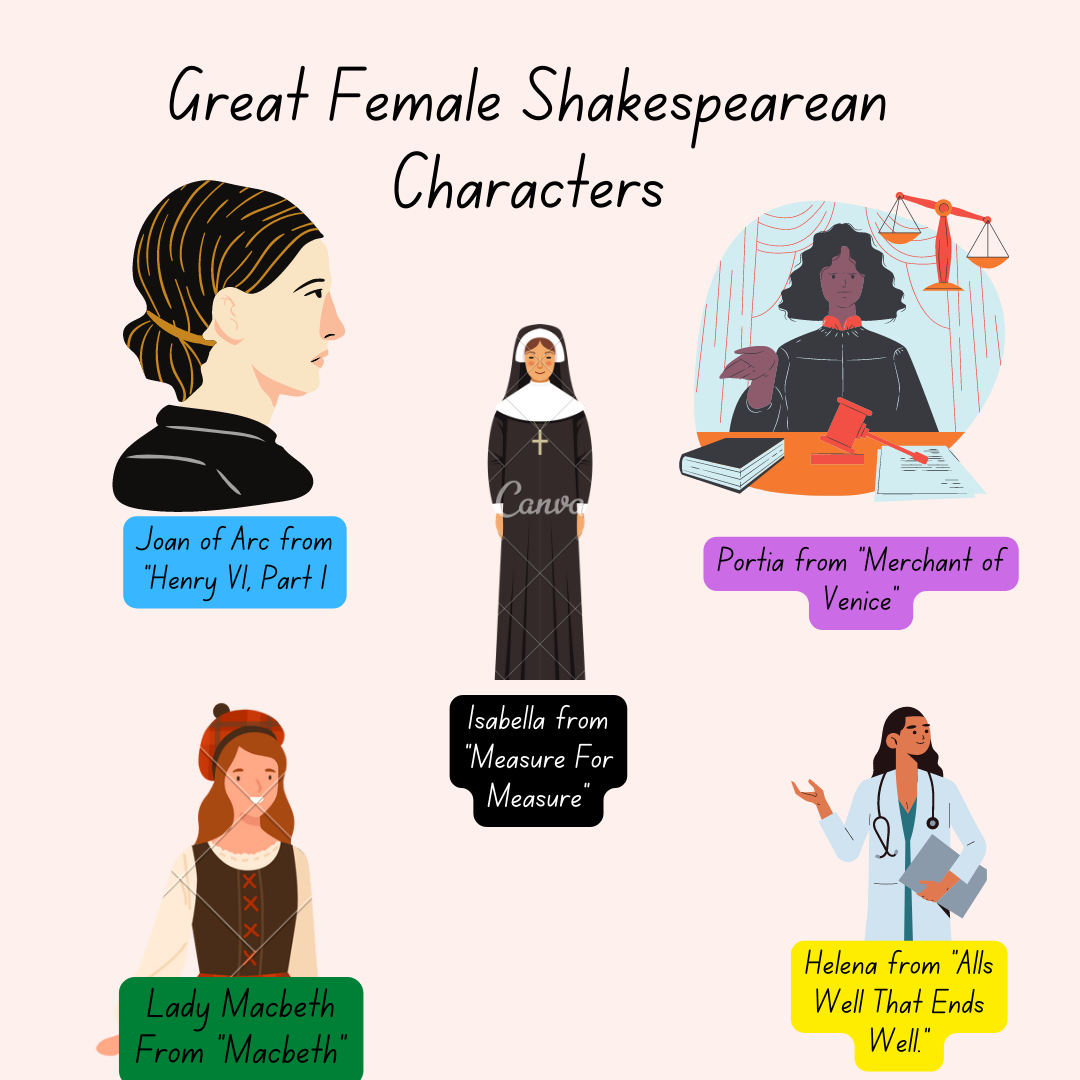
Some of Shakespeare’s Best Female Characters
I’ve discussed Shakespeare’s best Mother characters before, and his Roman characters as well, but I thought I should include some of the ones who are not mothers and/or unmarried (at least for most of the play). I don’t want to rank these characters since I detest ranking women in general, so here are some of Shakespeare’s best characters, and some of their immortal speeches:
CleoPatra
Katherine Of Aragon
Even though “Henry the Eighth” is my least favorite Shakespeare play, I love how strong Katherine is and how well she fights against the machinations of Cardinal Woosey and her husband. She is a courageous, virtuous, and strong-minded woman, who when Henry demands that she consent to a divorce, Katherine simply says: “No Way!”
A fascinating and electrifying character. She seduces her husband and makes him fully commit to murdering the king. If you look at the post above, you can see the multiple potential readings for why she courts evil spirits to convince her husband to murder the king. Her strength and energy is highly attractive and it was easy for me to see how a man might do anything to make her happy.
Isabella From “Measure For Measure”
I think Elizabethans would have seen the connection between the Virgin Queen who fought off assassination from the Pope, and Isabella, a virgin who fights off the advances of Angello, who seems pious, but who secretly is degenerate and cruel. Isabella even becomes a princess at the end of the play, (assuming she marries the Duke), which means she could literally become a Queen Elizabeth to English eyes.
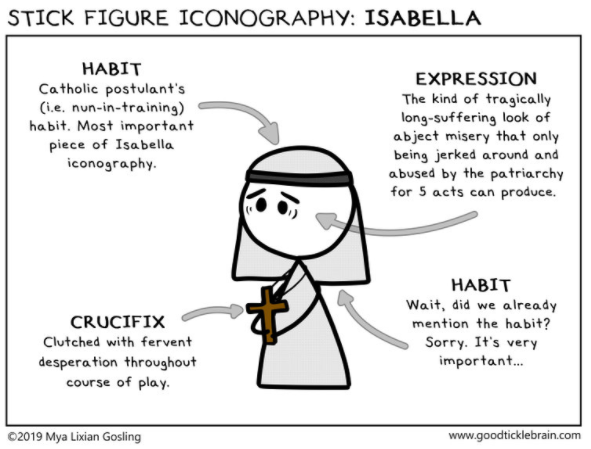
Stick figure version of Isabella from “Peace Good Tickle Brain.”
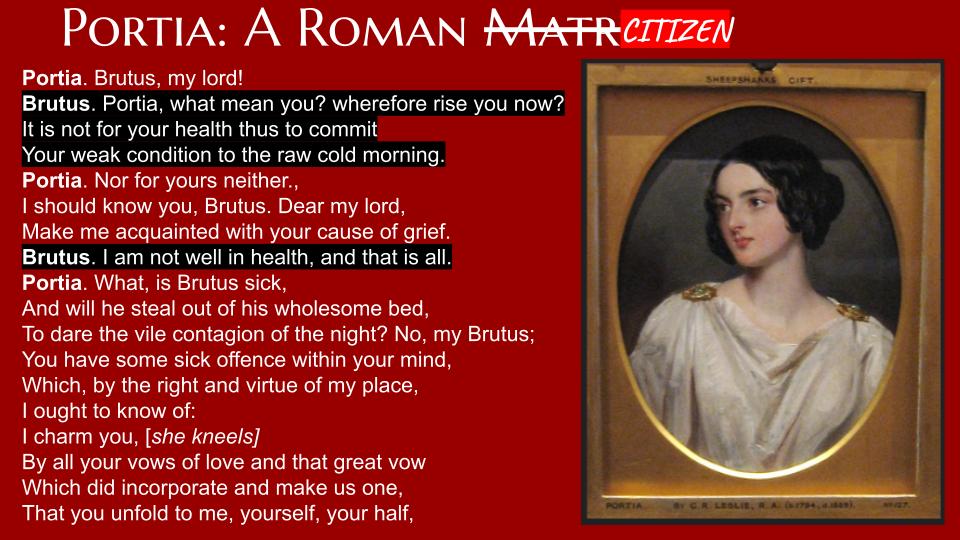
Portia Catonis (Wife of Brutus)
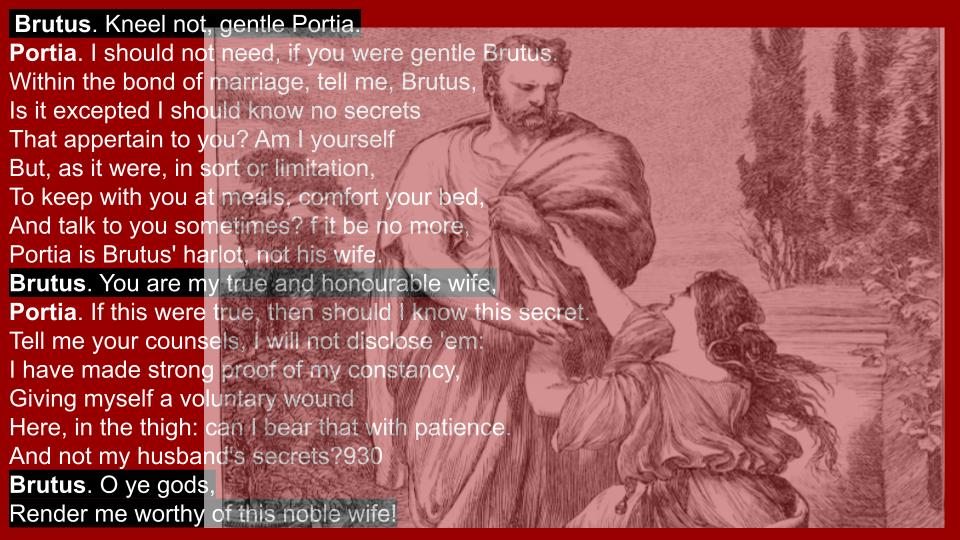
One of the best female characters in the Roman plays, Portia demands to be taken seriously as a wife and as a Roman citizen. In her one great scene we see her demand that Brutus tell her why he has been so distant and cold:
Some have speculated that in real life Portia helped Brutus with the conspiracy to assassinate Caesar, after all, she was the daughter of Caesar's great rival senator Cato, who was willing to die when he realized the Roman republic was finished.
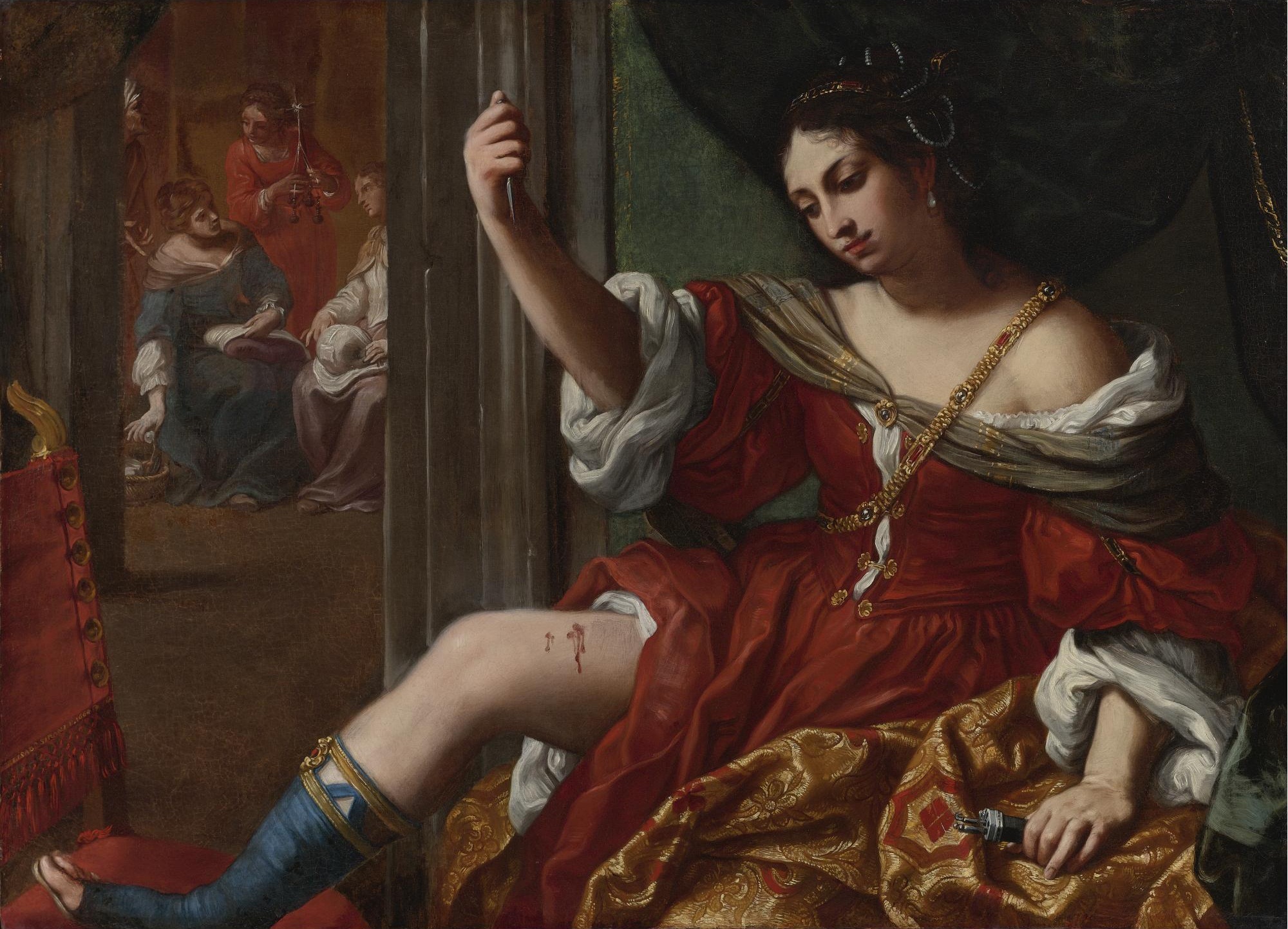
Not only was the real Portia a great woman, she also inspired some great art. Below is the great masterpiece:  Portia Wounding her Thigh, by Elisabetta Sirani (1664). According to Dr. DR. MAURA GLEESON, the painting was commissioned by a fabric merchant, which explains Portia's sumptuous outfit. Portia remains totally calm, yet focused and determined as the other women in the background idly spin clothes in the background. For more information on this masterpiece, click the link below:
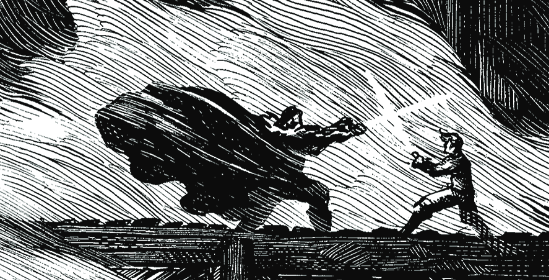
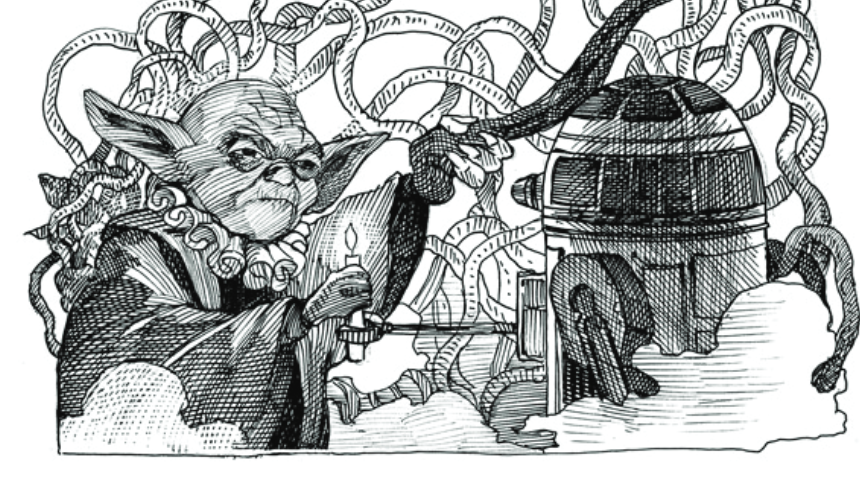
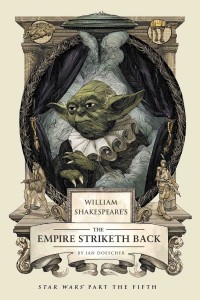
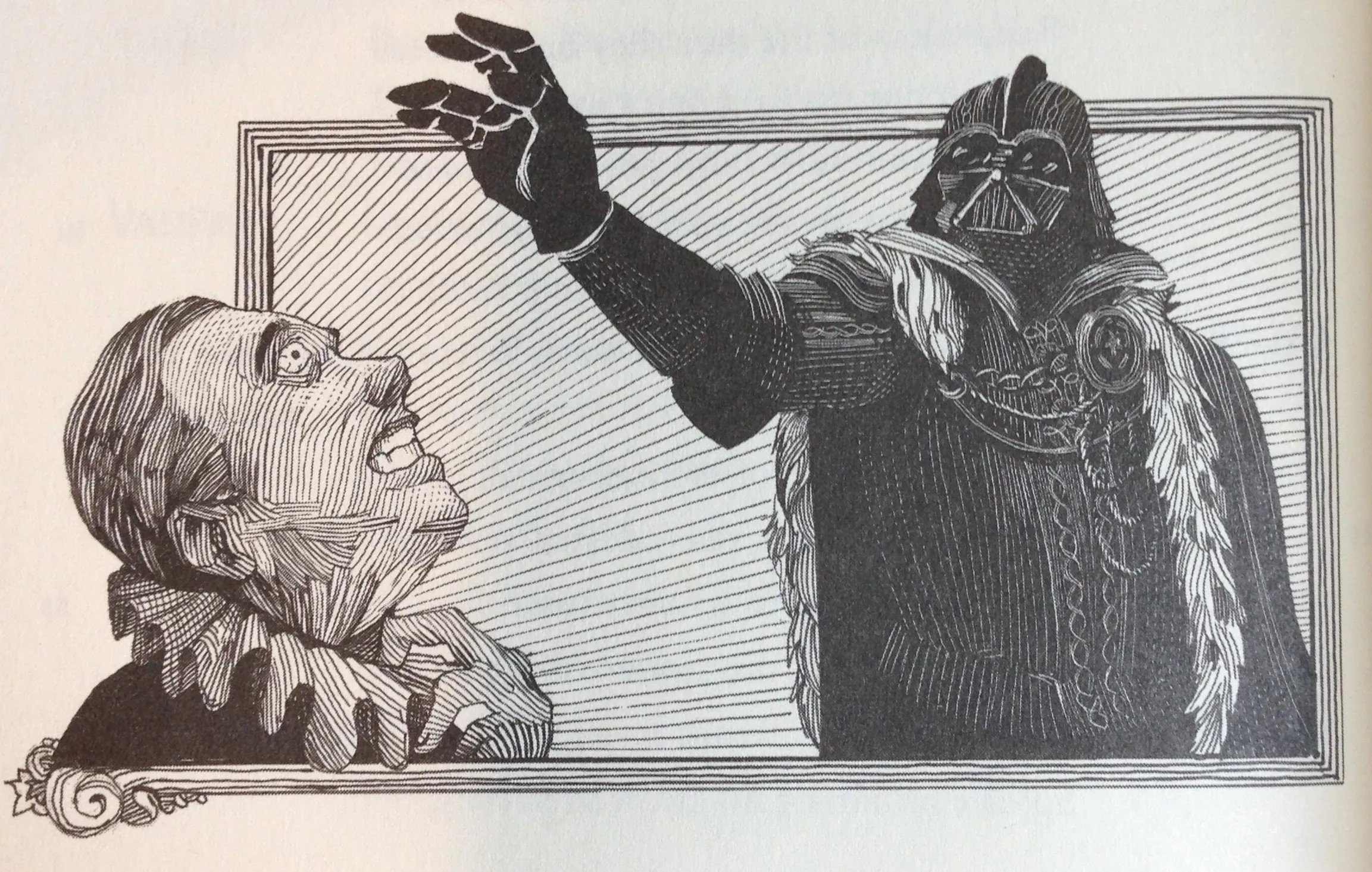
Book cover for Ian Doescher’s “The Empire Striketh Back,” a Shakespearean parody of Star Wars Episode 5.
Well today is May 4rth, when a lot of people have chosen to celebrate one of the most iconic movies of the 20th century: Star Wars! And why not? The story is full of conflict, introspection, love, change, the conflict between fathers and sons, and occasionally guidance from ghosts. Wait, that sounds familiar- it’s a lot like Shakespeare! Yes, the movie has a lot of parallels with the Shakespearean canon, and I’d like to share some of those similarities here. Below is a post I did for the American Shakespeare Center about how the Star Wars prequels parallel Shakespeare’s history saga of Henry the Sixth:
This Friday is the grand premiere of my new online class: “Shakespeare: The Lost Play,” where you discover who stole Shakespeare’s play. Below is the latest trailer.
Since I want as many people to play as possible, I’m creating a coupon: Get $10 off my class “Shakespeare’s Lost Play Mystery Game” with coupon code HTHES4OXNY10 until May 8, 2023. Get started at https://outschool.com/classes/shakespeares-lost-play-mystery-game-ny9HhlxI and enter the coupon code at checkout.
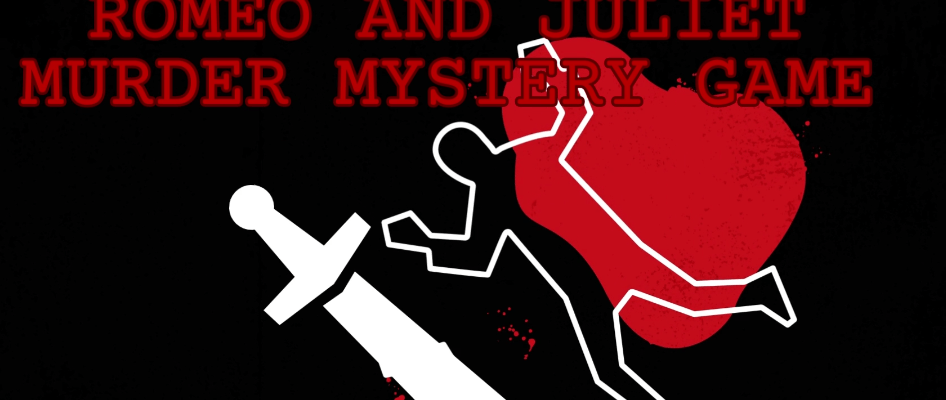
This is my new trailer for my fully online, fully immersive murder mystery game based on Shakespeare’s “Romeo and Juliet.” You play as a detective hired to solve the mystery of Juliet’s murder. You will piece together the plot and characters of Romeo and Juliet, but also use forensic science to identify clues, interrogate suspects, and examine the crime scene just like a real detective! Register now at Outschool.com SPECIAL OFFER: Get $5 off the murder mystery class with coupon code HTHESSQ76F5 until Apr 22, 2023. Get started at https://outschool.com/classes/romeo-a… and enter the coupon code at checkout.
As of right now, if you want to help support the work I do here and my podcast, you can sign up for monthly donations. I have a lot of new ideas for the podcast, but I can’t do them without your support, so please consider being a supporter now!
If you go to my podcast website, there’s now a button that says “Support this Podcast,” where you can choose your monthly rate of contribution, from $9.99 per month to as low as $1 per month! If enough people support this podcast, I’ll start taking requests and giving out rewards to my generous supporters. In short, if you support me, I’ll create content designed to your interests so you can feel that this is YOUR podcast.
Thanks for reading, and please consider donating today!




 Happy April Fool’s Day! Today I’d like to look at the rich history of Shakespeare’s fools and clowns! Clowns are some of Shakespeare’s classic comic characters, but fools are complex characters that entertain, satirize, and even philosophize. They may dress the part, but they are no fools. This clip from Mel Brooks’ comic masterpiece History… Read more: Shakespeare’s Fools
 Happy Saint Patrick’s Day Everyone! Let me begin with a special shout out to Jesse Buckley, the first Irish woman to win an Oscar for her portrayal of Shakespeare’s wife Anne ‘Agnes’ Hathaway in the movie Hamnet. I promise I will write a full review soon, but for now here’s a behind the scenes look… Read more: Happy St Patrick’s Day
 I express my outrage over the January 6th riots
 I examine the traditions and history that inspire the popular dinner theater.
 Since it’s still the month of love, I thought I’d rank Shakespearean couples and see if the allegation is true that Shakespeare has no good married couples. Naturally, this is my opinion, but I will try to back my opinions up with quotations and moments from the plots. Let me know what you think! S… Read more: Shakespearean Couples Tier List



















 The Shakespearean Student