&Juliet Review

The Concept: Juliet Decides Her Own Fate

It’s around 1597 and Shakespeare is putting the finishing touches on his new play, Romeo and Juliet, when his wife Anne Hathaway arrives. Anne frankly, hates the double-suicide ending and takes Will’s quill. She then proceeds to write a new story where, after Romeo dies, Juliet packs up and flees with her Nurse and her two best friends to have a holiday in Paris (the city, not her ex-fiance).

To find a jukebox musical that is so self-aware in its writing, so humorous in the way it includes its songs through the narrative, and so blatantly charming, is a pure joy…and really, if you asked me to summarise this review into just a sentence it would be that: & Juliet is pure joy. –Carly Fisher

Stuff you Might have Missed

1609 collection of Shakespeare’s Sonnets, which were published without his permission.
  1. Anne Hathaway Shakespeare- the sonnet Anne complains that Shakespeare never mentions her in his work, except once in sonnet 145, where he writes: “I hate, from hate away she threw, and saved my life saying, ‘not you’.”
  2. Anne and the Second Best Bed– After breaking the fourth wall, Anne also complains that her husband left nothing to her in his will but “My second best bed with the furniture.” This is true, and some scholars have attempted to defend this choice, but it certainly doesn’t look good. In the myth of Shakespeare, this story has helped to construct the Shakespeare who cares more about his work than his wife. What’s interesting is that “&Juliet” helps address this myth and examines it. For more information about the myth of Anne and Will, click here to see my review of “Hamnet”
  3. Yes, Juliet might be based on a historical character. One reason Will objects to his wife changing the play is that it violates the historical accuracy of the story. Like I said in my “Genesis of Romeo and Juliet,” the Capulets and Montegues might have been based on real political factions in Verona.

The Characters

The Music

All the songs in “& Juliet” came from one man- Max Martin, a Sweedish songwriter who has composed songs for Brittney Spears, Celene Dion, and The Backstreet Boys. These mega pop-hits were a huge part of my childhood, so seeing them combined with my favorite writer definitely tickled me and set off my nostalgia goggles. More importantly, it’s very interesting to see how the playwright David West Read turned these songs into a musical.

Setting “Romeo and Juliet” to pop music is by no means a new idea- “Gnomio and Juliet” underscored the whole movie with music by Elton John (who also produced the film). Making Shakespeare into a kind of rock or pop star is also not a new idea- Something Rotten and the musical version of “Shakespeare In Love” also did that. What is new is the concept of turning the story of Romeo and Juliet into a jukebox musical- a story where all the songs are pre-existing pop songs.

Normally I hate jukebox musicals- I find it irritating when producers take an artists’ songs and try to stitch them together into a coherent musical play. In normal musicals, the songs are designed to further the plot and help explain the characters’ internal and external conflicts. In my experience with most jukebox musicals, the songs feel like a waste of time, because the songs were never designed to tell an overarching story, so when they are integrated into a play, the story grinds to a halt. When it’s done badly, either you’re bored with the songs, or bored with the play.

With this in mind, I was prepared to dislike  “&Juliet”. I was expecting either to hate the songs for slowing down the plot, or to hate the plot because I wanted to get back to the songs. But… miraculously, both the songs and the story WORKS! David West Read did a great job seeing the overarching themes of loss, love, and conflict within relationships within the music of Max Martin, and translate them into Romeo and Juliet- the iconic lovesick teenagers.

I’d like to highlight the incredible effect of one of these songs in the context of the play- “Hit Me Baby One More Time,” by Miller, made popular by Brittney Spears:

Oh, baby, baby
The reason I breathe is you
Boy, you got me blinded
Oh, pretty baby
There’s nothing that I wouldn’t do
It’s not the way I planned it

It’s very clever that the writer gave this song to Juliet when she us at her most down and most self-destructive. She feels like her life is over without Romeo (her loneliness is killing her). What’s nice about  this musical is that this moment is the beginning of Juliet’s arch, not the end.

Costumes

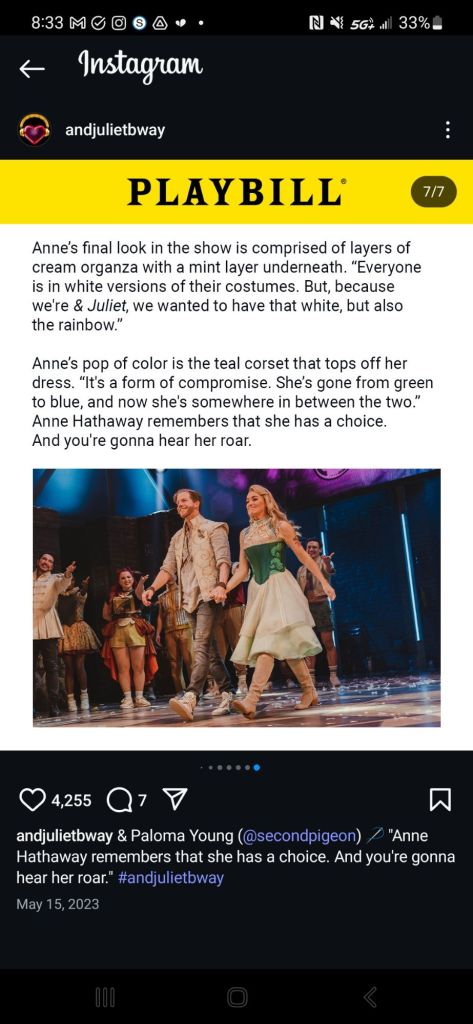
I could write a whole post about how clever the costumes are, and I will at a later date. Suffice it to say that they compliment the story and music by blending Elizabethan costumes with the sort of late 90s-early 2000s pop-star fashion favored by The Backstreet Boys, Katy Perry, and of course, Brittney Spears.

My Final Word

This show might not please everyone- hardcore Shakespeare nerds might find the concept hard to swallow, and honestly since the songs are mostly from the 90s and early 2000s, the music might be a little dated for a modern audience. Also, with the positive portrayal of homosexual relationships this show is DEFINATELY NOT FOR CONSERVATIVES. That said, it might do exactly what I’d hoped it would do- make fun of Shakespeare with care and in the process, get audiences to enjoy it anew.

OTher Reviews/ For More Information

In a world and in an age where everything is taken so seriously, it’s a complete delight to return to the idea of going to the theatre simply for fun and entertainment. Yes, the storyline is light and the line up of songs is a laundry list of bops, but in my opinion, there’s no problem in any of that! Quite the opposite! Packed to the brim with exceptional talent and some of Australia’s top dancers filling the ensemble…this is entertainment for entertainment’s sake and that is a lost art form in and of itself. – Carly Fisher

https://www.theatretravels.org/post/review-juliet-at-the-lyric-theatre#:~:text=In%20a%20world%20and%20in,form%20in%20and%20of%20itself.

https://thesmithcenter.com/explore/smith-center-blog/and-juliet-pop-quiz/
Shakespeare and the Color Blue

I’ve been reading this wonderful picture book about the history of the color blue- a color that evokes deep emotions and has a rich and sometimes tragic history. Here’s a video of the book being read:

Blue: A History of the Color As Deep As the Sea and Wide As the Sky by Nana Ekua Brew-Hammond

The book won the 2023 Orbis Pictus Award for Best Nonfiction For Children:

In identifying an “outstanding” book for children, the committee members will consider the following:

• Accuracy of presentation in both text and illustrative material, as well as appropriate documentation, avoidance of anthropomorphism and teleology, distinction between fact and theory, and balanced treatment.
• Organization of material (e.g., general to specific; specific to general) that contributes to clarity and accessibility.
• Style of writing that is engaging and distinctive in its use of language.
• Style of illustration that is engaging, informative, and complementary to the text.
• Appropriateness of book design based on the topic or subject and with respect to the different age groups for which the topic or subject may be appropriate.
• Potential contribution to the K-8 curriculum.

National Council of Teachers of English Website: Orbis Pictus Website.

As I mentioned in my Coronation post, the colors blue and purple have been associated with power (earthly or heavenly) because for centuries they have been hard to produce, and the book tells that history extremely well while highlighting the people and cultures that created those dyes by harvesting shellfish and collecting indigo plants:

A few good reasons to appreciate the color blue. Throughout history, humans have captured, cultivated, and coaxed the color blue out of everything from mollusks to rocks to plants. In this fascinating exploration of our relationship to this once-precious color, Brew-Hammond begins by discussing its elusive nature: Seawater is blue, but the color disappears when water is cupped in ones hand; similarly, crushing iris petals yields blue, but the hue quickly dissipates when soaked in water. Readers learn that the earliest known use of blue dates back to about 4500 B.C.E. in Afghanistans Sar-e-Sang Valley and that ancient Egyptians used it, too. But blue has been found worldwide. It was extracted from the bellies of particular shellfish in coastal Japan, Central America, the Mediterranean, and Mexico and harvested from plants in Africa, Asia, the Caribbean, and the Americas. Because of its rarity, blue has been considered a royal color reserved for use by the wealthy and privileged. Laced with insights, Brew-Hammonds meditative verse covers a wide range of cultures, time periods, and geographical locations, while Minters mesmerizing images highlight the significance of blue to diverse groups of people through culturally specific visuals such as hairstyles and clothing design. The highly textured backgrounds add life and movement to the focal images in the foreground. (This book was reviewed digitally.)Stunning and informativeand as profoundly rich as the color blue. (authors note, facts about blue, selected sources)

Kirkus Reviws

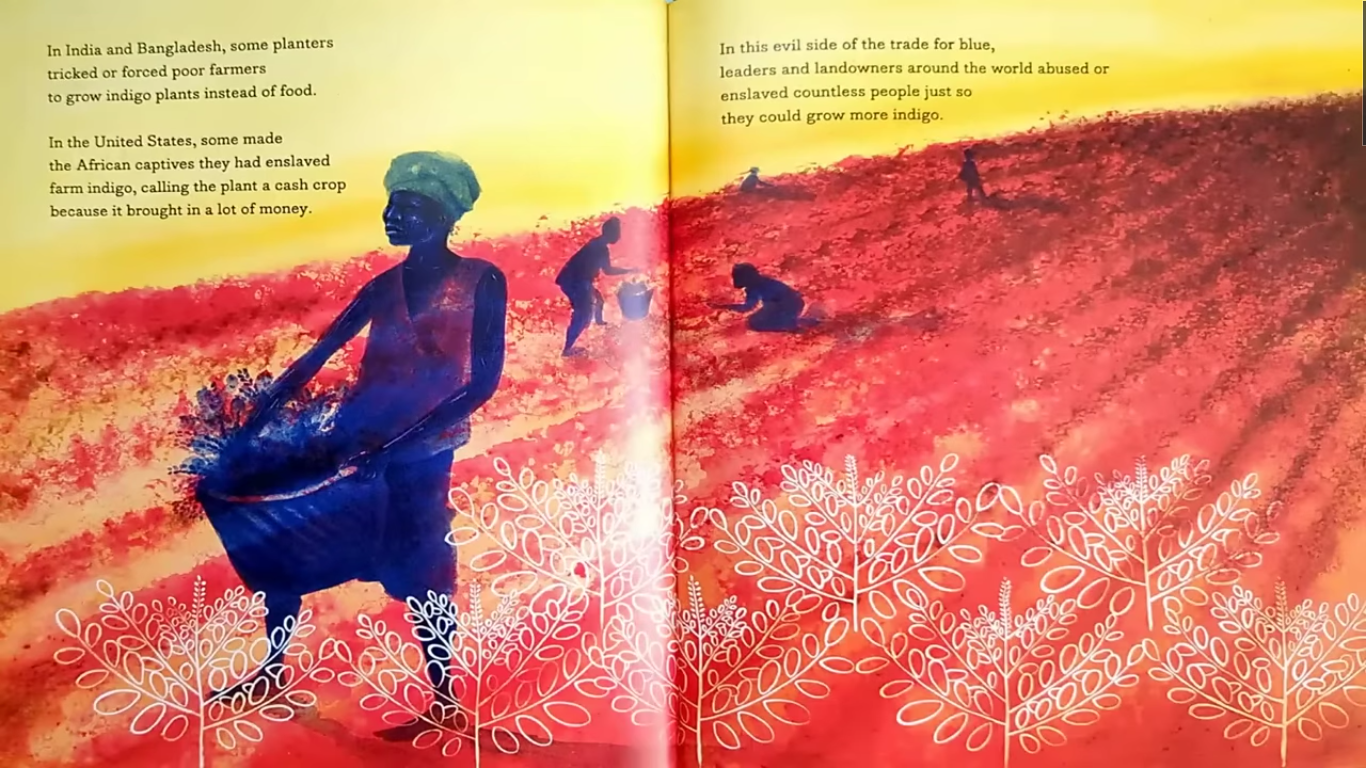
As the review above shows, the book doesn’t focus on European royals or colonialist countries that bought and wore blue clothing, it focuses on the countries that make blue in places like Africa, Asia, and Central or South America. It also doesn’t disguise the fact that the slave trade in America was partially used to gather indigo plants, which the illustrator poignantly represents on the page where slaves are painted with blue dye- they lived and died for the color of their skin, and for the color they were forced to cultivate.

Fortunately, the book doesn’t end on the exploitation of people for the sake of a color, it also celebrates the triumph of science as chemist Adolph Von Baeyer labors to develop an artificial dye- one that would make such backbreaking labor unnecessary. Von Baeyer began working in 1865, the same year the American Civil War ended.

So what does this have to do with Shakespeare?

Brew-Hammond explores the history and culture surrounding blue powders and dyes, a rare and prized commodity until recently. She details how the ancient Egyptians ground lapis lazuli rocks from Afghanistan to make blue pigment for royals; later, sea snails were used by dyers until the indigo plant became a more practical solution for large quantities; and finally, Adolf von Baeyer created chemical blue, which led to widespread availability of this color. She also touches on some concepts and emotions associated with this hue: feeling blue (sad), blues music, out of the blue (unexpected), royal blue, and blue ribbons (extraordinary). Minter’s acrylic-wash illustrations depict predominantly Black figures, a nod to the key role played by West African dyers in developing these tinctures, and the importance of enslaved Africans whose toil made possible the North American indigo industry. Blue tints appear in every spread, but often as a spotlight color; reds, yellows, and greens do the heavy lifting, allowing the blue tones to stand out. A fascinating look at an underreported topic.

Kay Weisman (Booklist)

What’s really wonderful about this book is that it doesn’t just detail the history of the color blue, it also delves into its poetic history- the way we use blue as an adjective, in expressions, and many other daily occurrences. Terms like ‘feeling blue,’ or ‘blue blood,’ and the connotations of the sky and ocean make blue a color that is grand and vast, but hard to catch. This quality of tantalizing beauty has inspired many poets, including Shakespeare:

 CLEOPATRA: Here
My bluest veins to kiss; a hand that kings
Have lipp’d, and trembled kissing.

Antony and Cleopatra
  • RosalindThere is none of my uncle’s marks upon you; he taught me
    how to know a man in love; in which cage of rushes I am sure you
    are not prisoner.1455
  • OrlandoWhat were his marks?
  • RosalindA lean cheek, which you have not; a blue eye and sunken,
    which you have not; 
As You Like It

Under these windows, white and azure laced
With blue of heaven’s own tinct. 

Cymbeline

Now pile your dust upon the quick and dead
Till of this flat a mountain you have made
T’ o’ertop old Pelion or the skyish head
Of blue Olympus.

Hamlet

Also, apparently, there is a shade of blue CALLED “SHAKESPEARE!”

So, I hope you enjoyed this look into the complex history and mystery of the color blue. Like Shakespeare, blue is mysterious but pervasive- hard to pin down in history books, but admired and celebrated to this very day.

Review: Ye Try Guys Try Romeo and Juliet

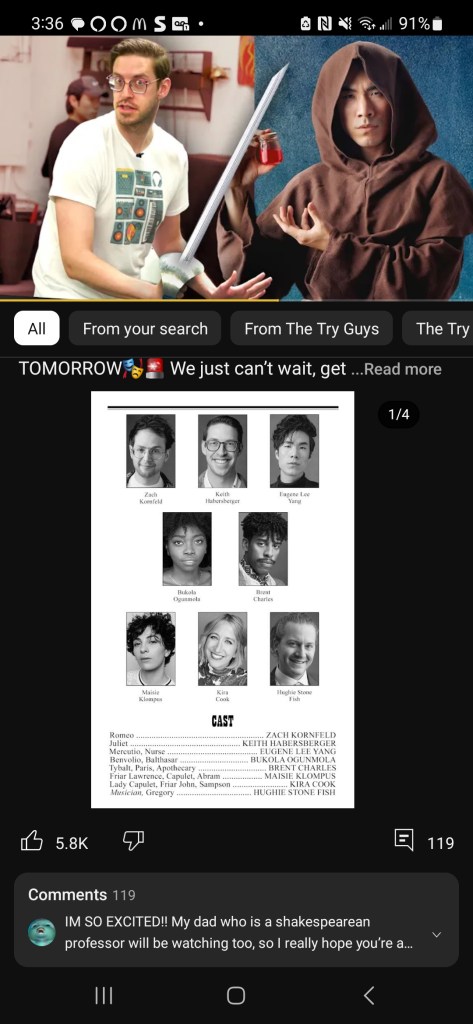
I was excited from the beginning to hear that the Try guys were going to bring Shakespeare to YouTube in a way that was fun and accessible. My expectations were that they would make fun of the play with care; I was hoping that they wouldn’t mock Shakespeare, (or mock people who like Shakespeare). I was also hoping that they would critique the characters without outright mocking them and find ways to make the play connect to modern audiences. I think they achieved all those things and more!

Zach Kornfield, Eugene Yang, and Keith Habersberger known collectively as “The Try Guys” are a group of friends who seek out new experiences and share them with the world. They thrive on taking themselves out of their comfort zone and learning about the world through experiencing it firsthand in a funny, lighthearted way. As I said before, what could be more adventurous, daring, informative, and out of YouTube’s comfort zone than doing Shakespeare?

In a series of videos they explored Elizabethan clothing, stage combat, learning how to speak Shakespearean verse, and finally on August 10th, 2023, they performed “Romeo and Juliet” live on Youtube, with suggestions from the audience! With this post, I will discuss the evolution from these three videos, to the final show, which I got to see live on YouTube. I will discuss what I think worked, what didn’t, and how this production might influence future Shakespeare productions going forward!

Podcast About the SHow:

My Top Ten Moments:

Background on the Show

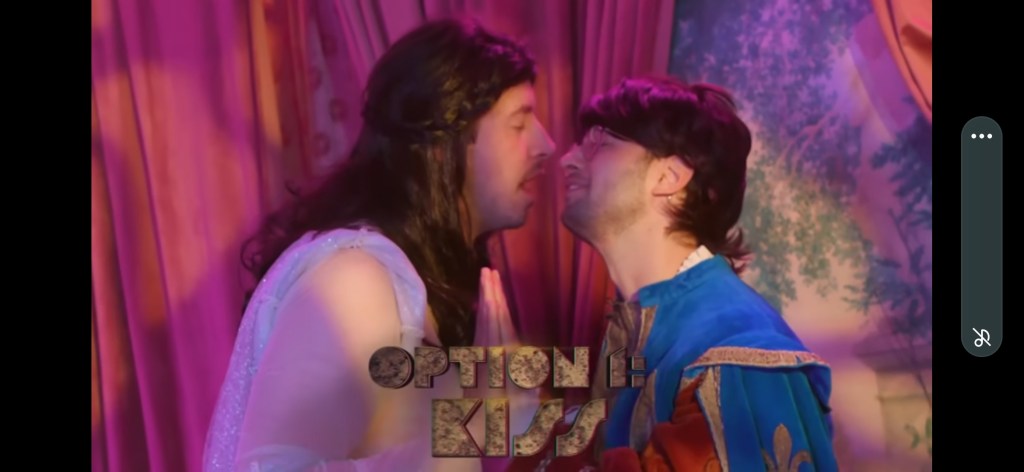
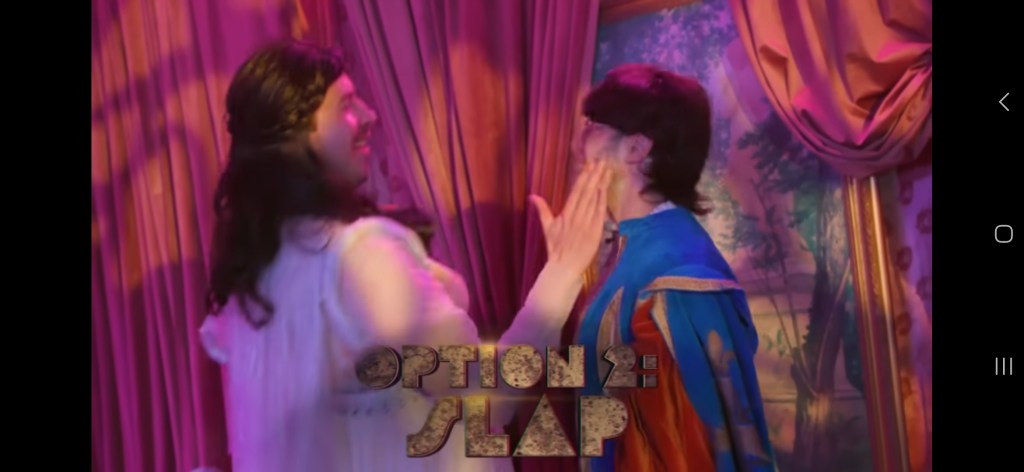
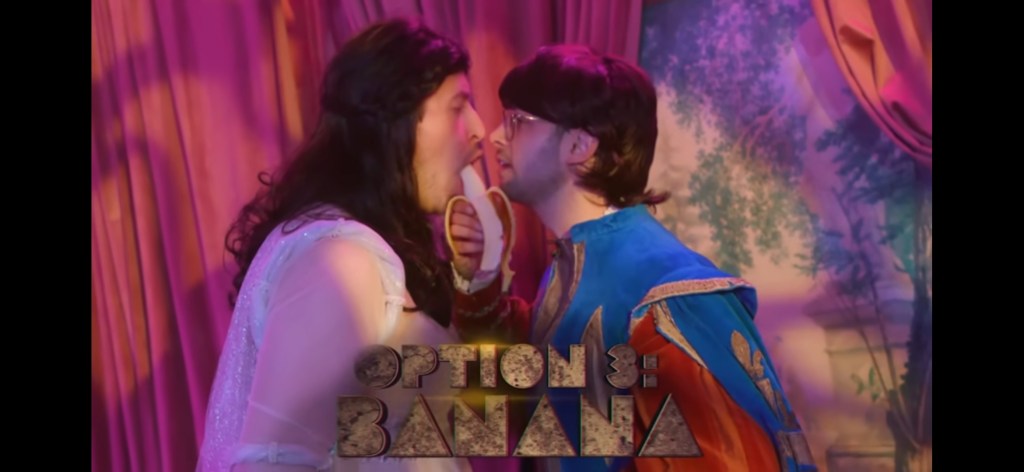
The original pitch for the play made it sound like a live YouTube event, but they made it even better by including a voting option where viewers could change some of the action and chose for instance, if they fought with swords or some other object, thus engaging the audience the whole time. This is what made this experience unique, (perhaps more than any other production), and I think in many ways this production could be an inspiration to educators and theater practitioners! My main critcism of the show is that, though it can be enjoyed by almost anybody, it is definitely not suitable for children, and nobody could get away with showing it in a classroom environment.

Costumes and Sets

The set for “Romeo and Juliet,” seems like an ordinary YouTube TV studio, in that it’s fairly small and it does not suggest any particular period. It kind of suggests somewhat of a dream-like environment; there are cardboard cut outs with some clouds, the lighting is warm with a few pink colors . Most of all it reminds me of a fractured fairytale more than classic tragedy, (which I suppose is clever in itself because it sets up that the Try Guys are going to fracture Shakespeare the same way people like the Muppets fractured fairy tales.

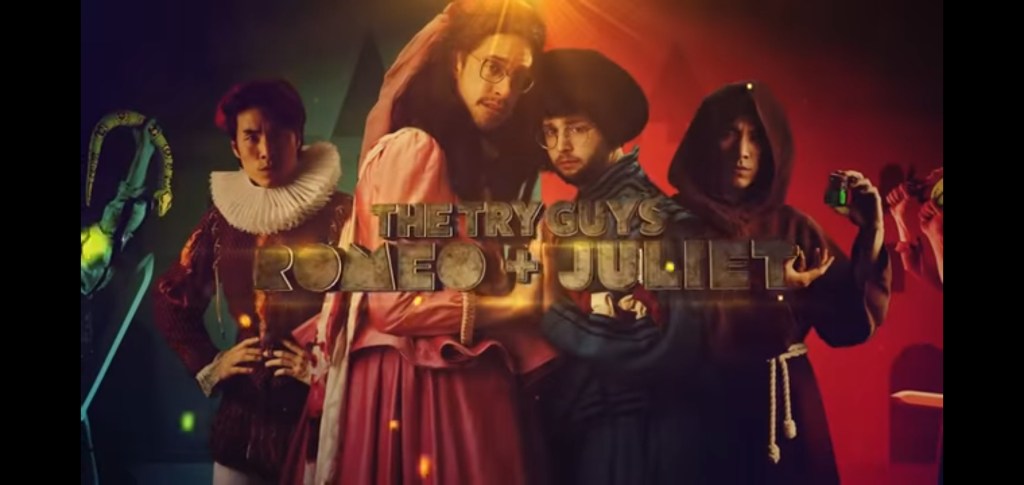
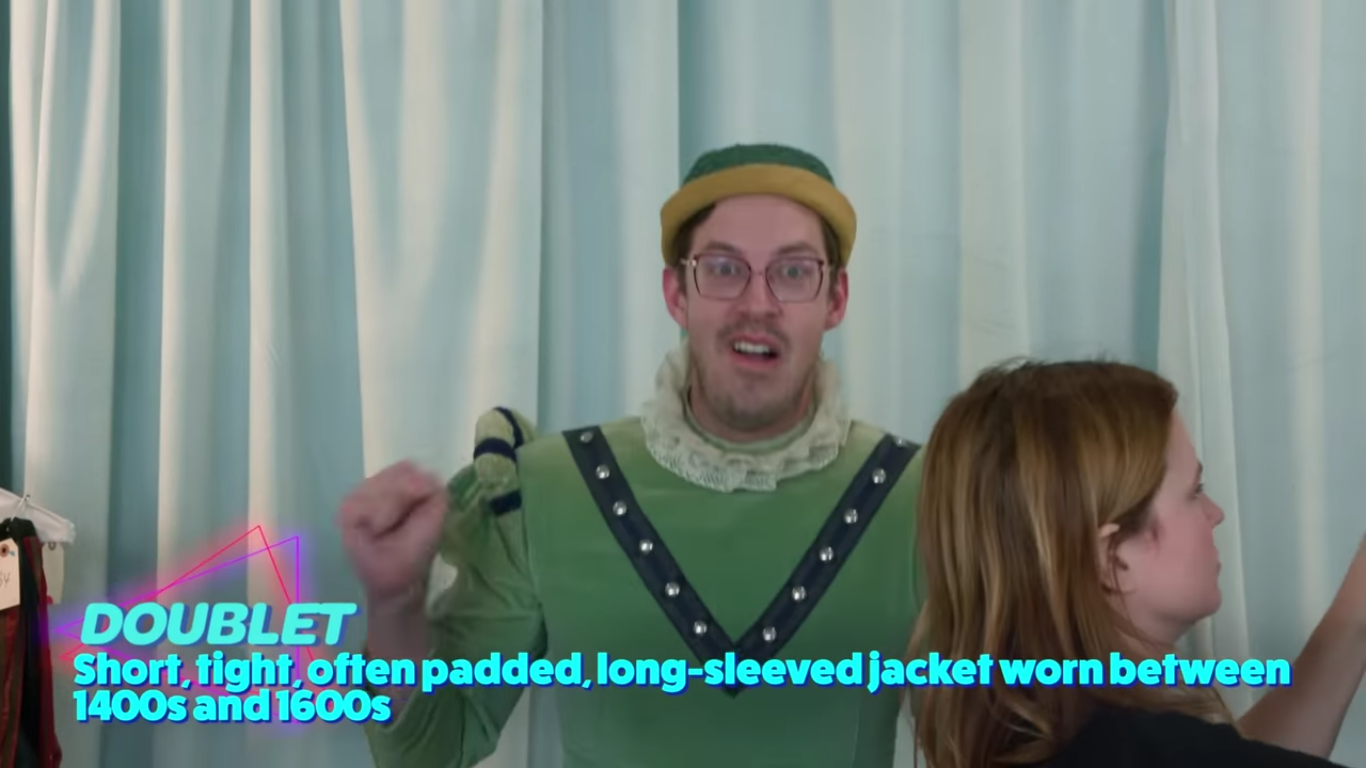
The costumes don’t seem as elaborate or historically accurate as the ones in the previous video, which is a shame because it would’ve been really nice to see the Try Guys walk, fight, and dance in the same costumes that they experimented with in the previous video. That said, the costumes certainly are functional within the story. Eugene as Mercutio has a stylish striking black outfit that certainly suggests somebody you don’t want to mess with. Zach as Romeo has an amusing long wig (romantically disheveled of course) and a blue doublet (though I miss the pumpkin pants in the previous video). As in other productions, the Montegues wear blue and the Capulets mostly wear red. I would be surprised if the director had seen the famous Franco Zephirelli film (or at least Gnomio and Juliet).

The director Keith Habersberger also keeps the best costumes for himself both as the Prince and Juliet; he’s wearing a beautiful ordinate gold costume as the Prince and Juliet herself has lovely rose-colored gowns. Even her shift in Act Four is it’s tasteful. I’ll talk more about Keith’s portrayal of Juliet later, but let’s just say that the clothes do not make him look like a man in women’s garb, they make him look like Juliet.

Stage Combat

The stage combat episode is great, and as a Stage Combat junkie myself, I watch a lot of channels like Skalgrim, Forged In Fire, HEMA videos, and of course my own stage combat videos. Consuming this combat content, I know that there are lots of avenues for education and for entertainment watching these 3 guys who have never done sage combat before, try out swords. I was very delighted to see them putter around with swords and then learn a short stage combat scene in which they then put on put their own spin on by improvising a scene where Romeo & Juliet sword fight with a guy who cut the cut in front of them while they were trying to get ice Cream. The video is fun, ludicrous, but also it’s just as informative as videos from the Folger Shakespeare Library.

Unfortunately, The Try Guys didn’t make much use of the swordplay they learned in this video during the final performance. Imagine my disappointment when, during the climactic duel between Tybalt and Mercutio, the audience voted to replace the swords with…something that was definitely NSFW. I’ll discuss this choice in depth later on my podcast but let’s just say it made the training they did in the previous episode seem like a waste of time.

The Cameos

Did you hear about this guy Romeo? He’s the talk of the town

Link Neal from Good Mythical Morning

One aspect of the production that I deeply loved was that instead of doing the whole play, The Try Guys did a 90-minute abridged version using multiple narrators to fill in with bits of exposition and commentary. The Reduced Shakespeare Company did this before in their show, but since The Try Guys are very popular in the YouTube Community, they got a bunch of their fellow Youtubers to be their narrators like Rhett and Link, Smosh Games, Rosario Pansino from Nerdy Nummies, and Mat Pat from Game Theory. It was absolutely delightful to hear more of my favorite YouTubers talk about my favorite writer, each one telling the story with their own brand of humor!

Romeo runs to Friar Laurence, mascara all smeared!

Manny Mua

The Performances:

Finally, let’s talk about the acting in the final performance and how the Try Guys succeded in bringing Shakespeare to You Tube.

Keith Habensburger as Juliet

Keith carries the show as Juliet. As he mentions in the video above, he has performed in Shakespeare before, and his passion for performing shines. It’s actually a bit shocking to see him drop his usual persona as an easy-going funny guy and become a tragic heroine! In addition, he has a clear vision for the character- I suspected that he would probably exploit the comedy of him being a man playing a woman and being taller than Zach and he does in the earlier scenes, but once Tybalt dies, Keith plays Juliet absolutely straight- he is absolutely committed to playing Juliet’s anguish and desperation and it’s really moving to watch!

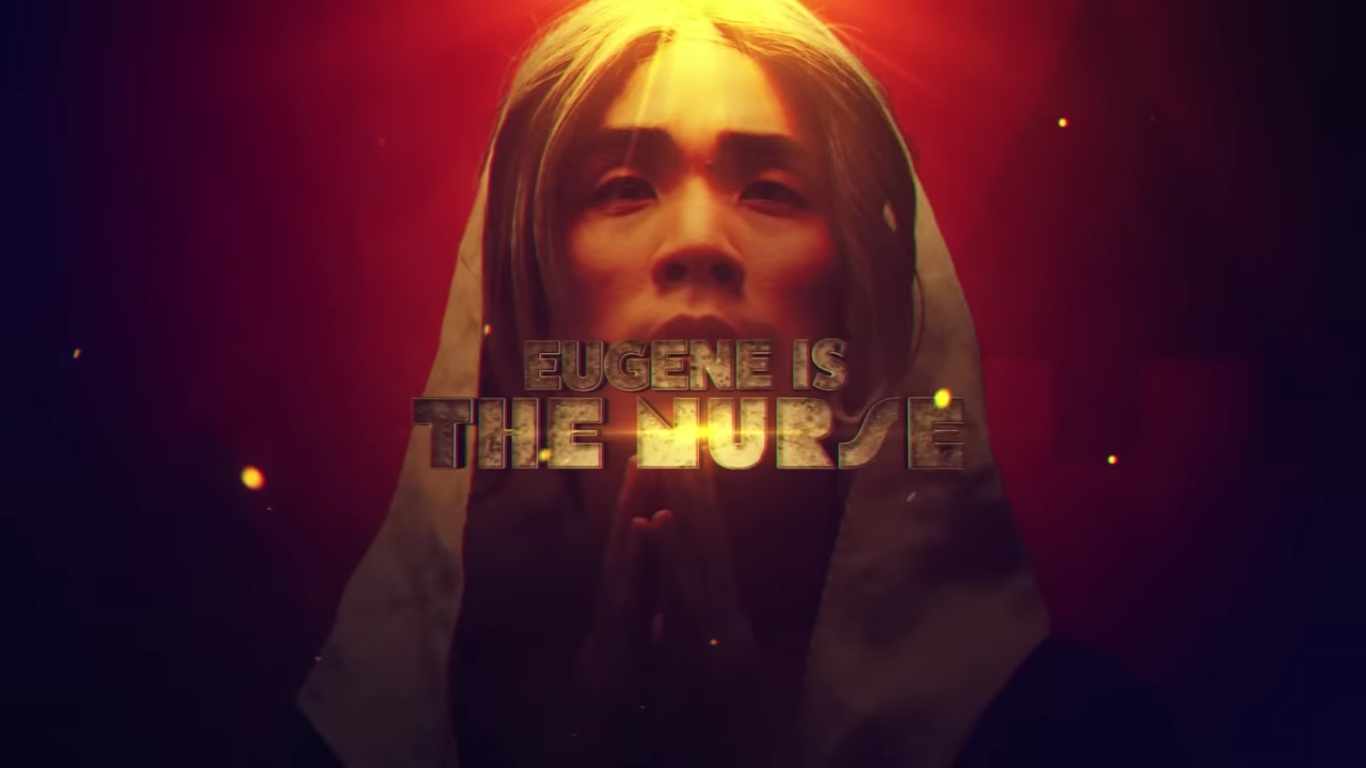
Eugene As The Nurse/ Mercutio
Eugene was a natural choice for Mercutio- his Try Guys persona is very much the wild card, sometimes friendly and sometimes fierce and he clearly loves Shakespearean language as you can see in the earlier video where he plays Edmund from “King Lear.” Honestly, though, I think his performances in the final play are a bit under-dramatized- I don’t quite know what he was going for as either The Nurse or Mercutio, which might be a result of limited time or lack of direction. That said, he does a good job for having never done Shakespeare professionally before.

Zach as Romeo or “A Bro wearing Hose”

Zach admits in the Shakespeare Acadamy video that he doesn’t “get Shakespeare,” and I get the sense that he doesn’t really like Romeo, so his performance seems like an intentional parody of romantic leading men. Honestly, this is fine. Romeo isn’t my favorite Shakespearean character either, and yes, The Try Guys are treating this as a real show, but at the same time it is still an experiment; they are trying something they wouldn’t normally do, so Zach is dealing with the awkwardness of playing Romeo with the same self-deprecating sense of humor that he uses when baking without a recipe or trying ballet. He knows that he would never get cast as Romeo in real life, so he’s having a laugh while he does it onstage, all the while being the best Romeo he can be.

The Format

One of the biggest challenges any Shakespeare practitioner has to face with a modern audience is the problem of engagement. The age of social media has changed how we consume content- we don’t passively watch anymore, we engage with it, comment on it, share it, and sometimes even manipulate it for ourselves. In Shakespeare’s day, there was no division between actors and audiences so in a way, his plays work well for this kind of live choose-the-outcome YouTube Event and I’m interested to see if it influences future performances going forward. In any case, I’m grateful that I was able to see this fun-frenetic, once-in-a-lifetime evening of live theater!

If you would like to learn Shakespeare like the Try Guys, I have a series of online clases in acting, stage combat, Shakespearean comedies, tragedies, and of course, “Romeo and Juliet.” You can enroll in one of these classes now or schedule one with me by visiting my Outschool.com page:

The Fashion Is The Fashion: Ye Try Guys

I’m so excited! One of my favorite Youtube channels is doing a series of videos where they try Shakespeare for the first time! Zach Kornfield, Eugene Yang, and Keith Habersberger known collectively as “The Try Guys” are a group of friends who seek out new experiences and share them with the world. They thrive on taking themselves out of their comfort zone and learning about the world through experiencing it firsthand in a funny, lighthearted way.

So, what could be more adventurous, daring, informative, and out of YouTube’s comfort zone than doing Shakespeare? So in a series of videos they are going to explore Elizabethan clothing, stage combat, learning how to speak Shakespearean verse, and finally on August 10th, 2023, they will perform “Romeo and Juliet” live on Youtube, with suggestions from the audience!

This post will be a reaction to the humor and information on Elizabethan clothing from part one of the series with my notes on Elizabethan fashion, and the costumes worn by Shakespeare’s company

Background on Elizabethan Clothing

I’ve written a series of posts about Elizabethan fashions. If you’re unfamiliar with the period, Queen Elizabeth reigned from 1558 to 1603. This was one of the most prosperous and cosmopolitan times in English history and the fashions of the time reflected this.

Report of fashions in proud Italy,
Whose manners still our tardy apish nation
Limps after in base imitation.

Richard II, Act II, Scene i

Clothing of this period was very hierarchical- if you were lower class, the garments had drab colors, were functional rather than fashionable, and were not tailored for individual people. On the other hand, upper-class people literally wore their wealth and status on their sleeves- clothes were tailor-made, colors were bright and hard to produce, and fashion styles represented the far reach and sophistication of the English court. One way the court proclaimed this was by importing fashions from Italy, as the quote above indicates. This might be one reason why so many of Shakespeare’s plays are set in Italy; the public wanted to see the exotic upper-class fashions in this play set in romantic, sophisticated Italy. In a way, Shakespearean plays were sort of a fashion show in the 16th century.

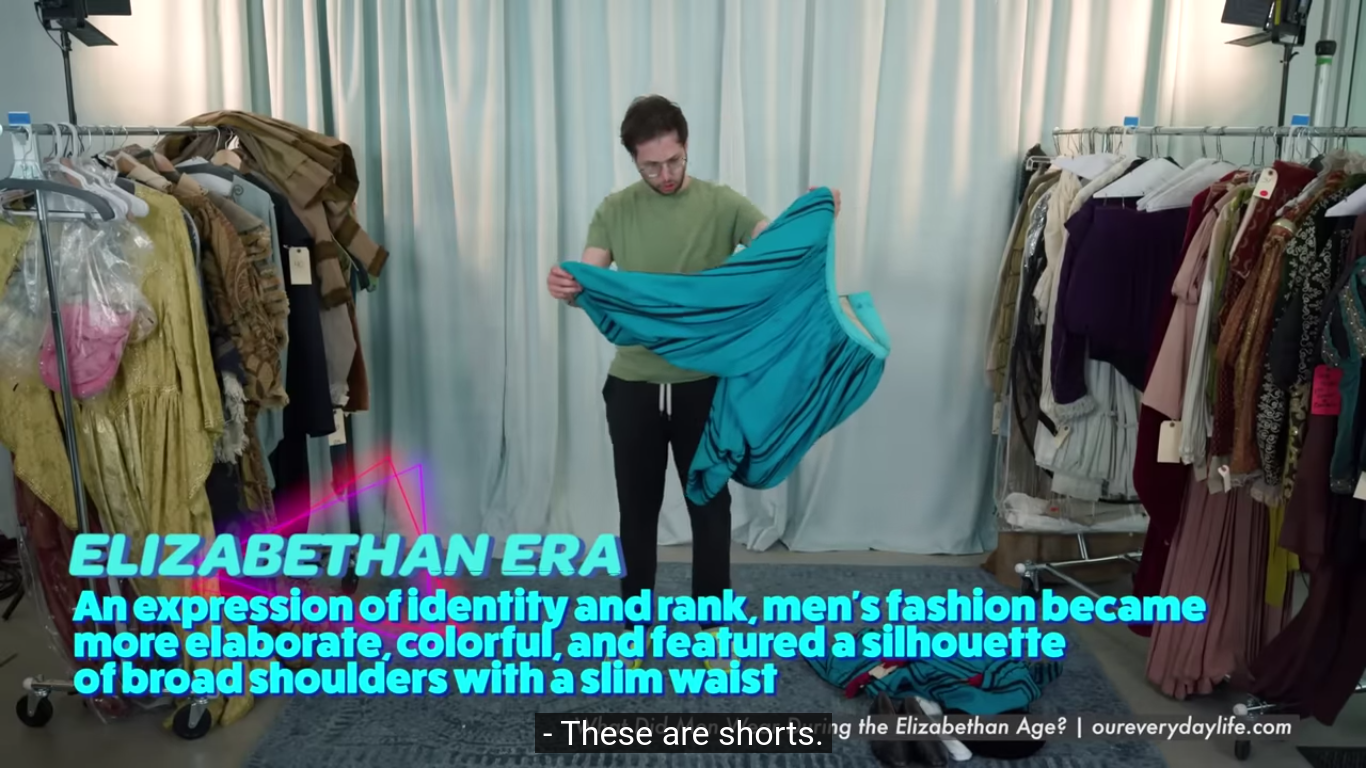
If they [Elizabethans] saw a onesie, their heads would explode!

Keith

Keith’s remark is referencing the fact that nowadays our clothes are stitched together on the spot by machines. If you buy pants or a shirt, it comes as one complete garment, but this is a luxury the Elizabethans did not have. Costumes came in pieces like ruffled collars, sleeves, skirts, kirtles, foreskirts, etc. All these pieces would need to be assembled by a patient lady or gentleman in waiting, which is why Elizabethan nobles couldn’t get dressed by themselves, as you can see in this graduate thesis video by my friend Anna Gonzales:

Keith Habensburger as Juliet

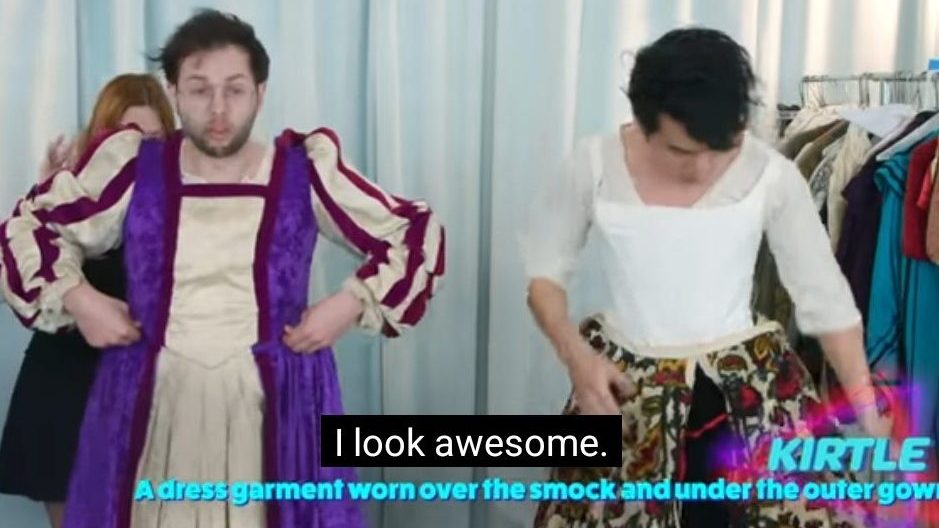
One of the best parts of the video is Keith trying on various upper-class Elizabethan ladies’ garments from dresses to skirts. The Try Guys have a long history of trying on female garments so in a way, they’re perfectly suited to try Shakespearean costumes.

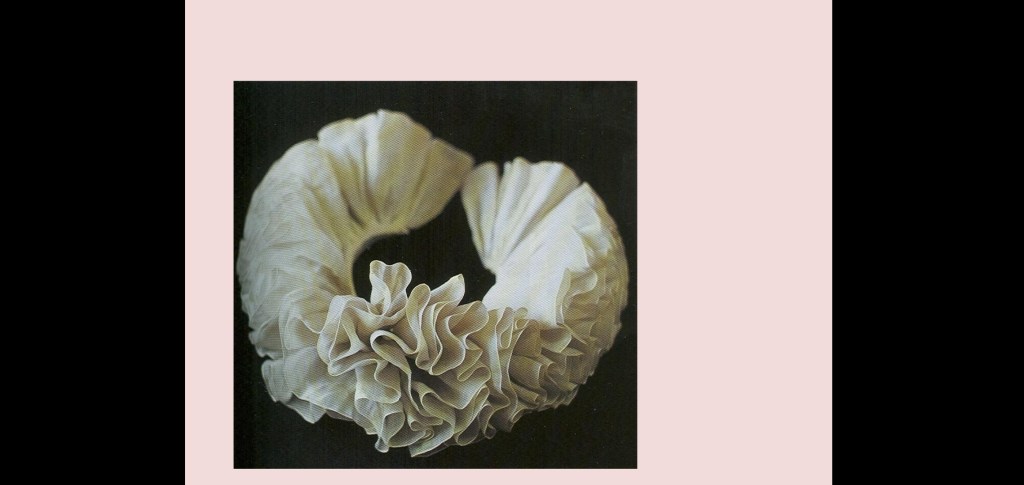
Keith’s favorite Elizabethan costume piece is the famous neck ruff- a piece of rolled linen that goes around the neck worn by men and women. Ruffs were very popular in the Tudor court, so it became a symbol of Elizabethan fashion.

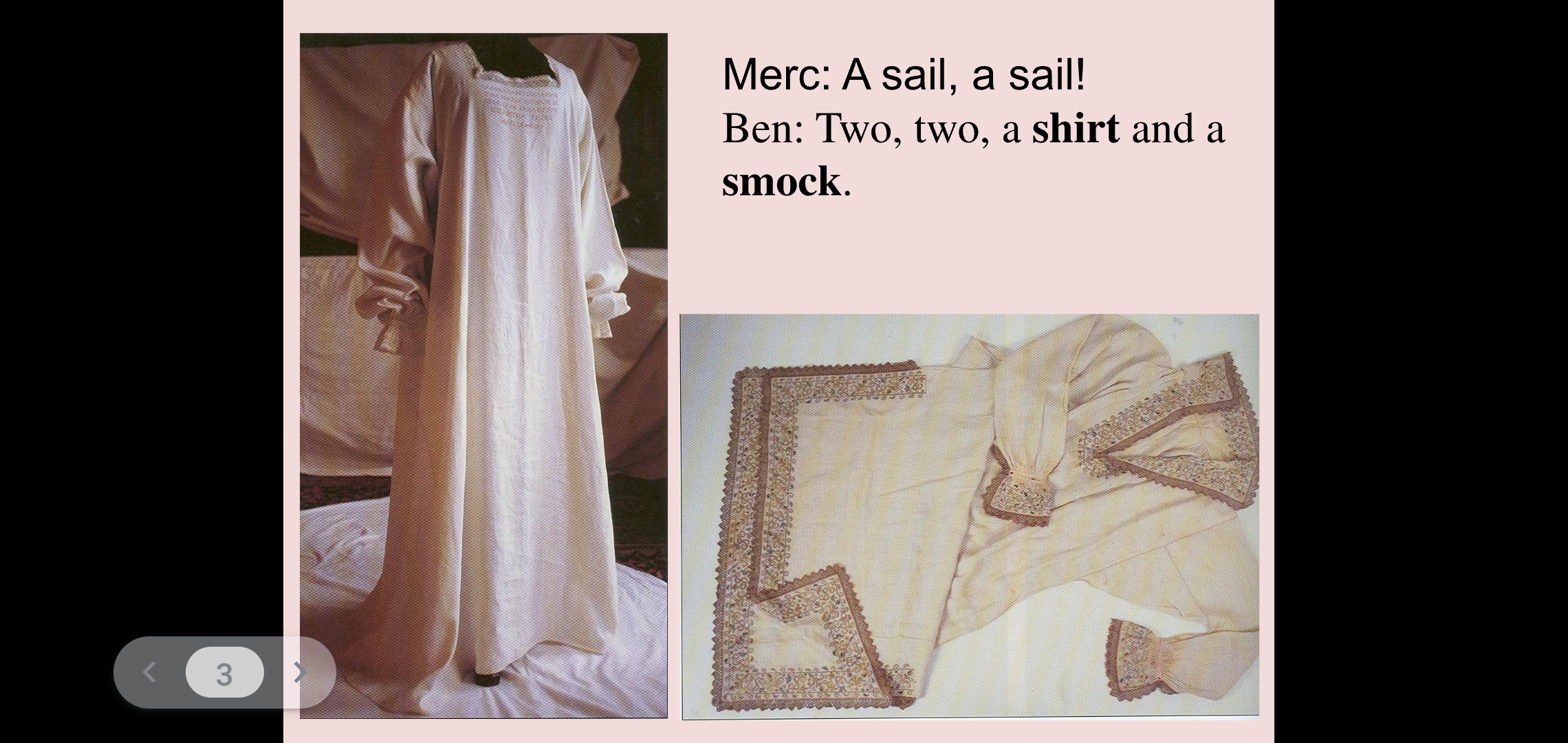
“A Shirt and a Smock”

In Anna’s thesis, she points out how Elizabethan undergarments came in the form of long shirts for men and a long linen one called a smock for women. In the video, Keith is puzzled by the garments and wonders if it would be at all erotic to see an Elizabethan in their not-at-all revealing shirts or smocks. As Anna points out in her thesis, these garments were worn close to the body, coming into contact with all the sweat and grime of daily life. So NO Keith, it wasn’t sexy to see an Elizabethan in his or her shirt or smock.

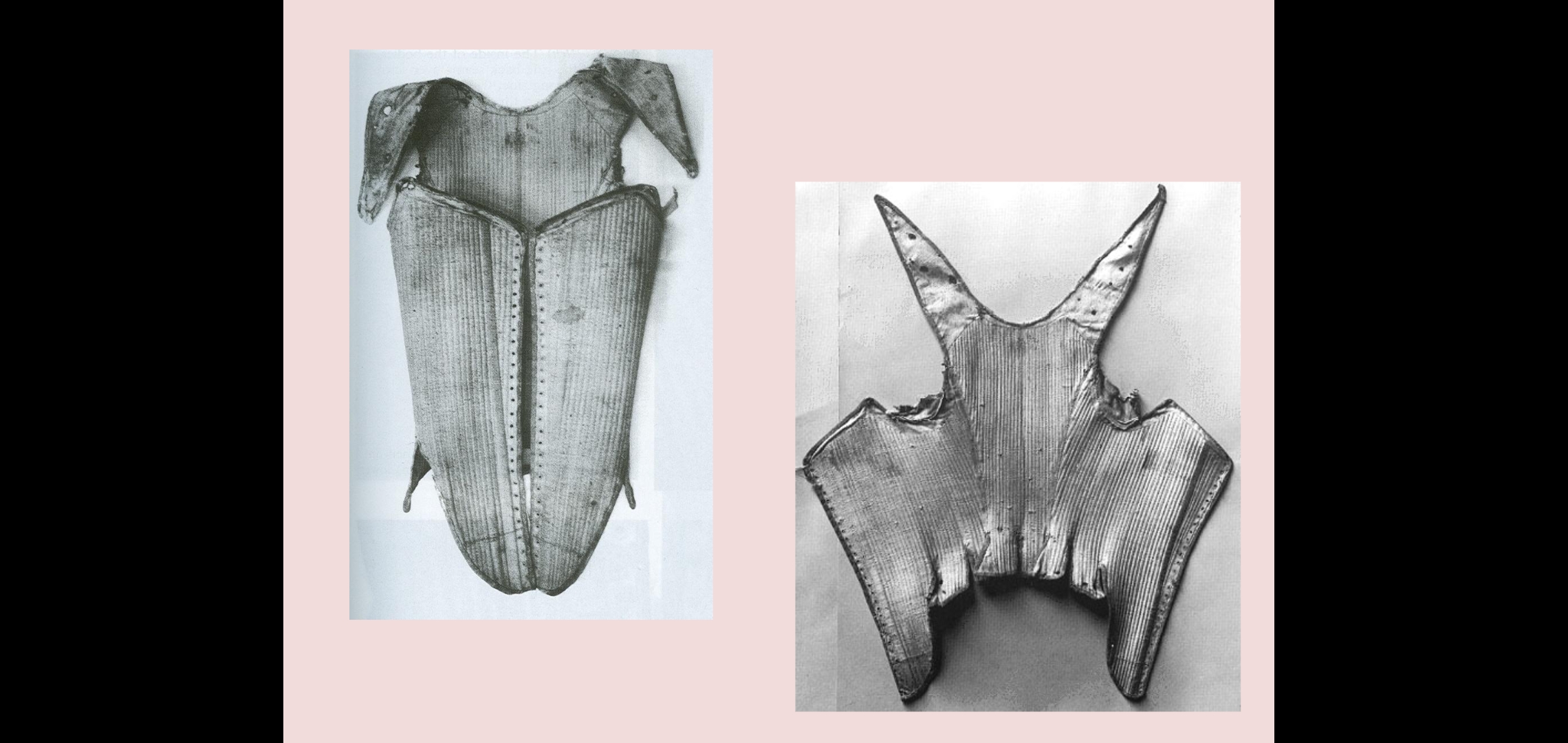
“THe Devil Himself Could Invent such stuff”- Elizabethan Corsets.


Every age has a new definition of the ‘ideal silhouette,’ that is, the figure that is most appealing in women that the clothes either create or accentuate. Elizabethan women were expected to have slim waists, small chests and wide hips. This look was accomplished through the use of a corset, which tightened the waist and compressed the chest.

Under the Hood- Farthingale, bum rolls, and petticoats

To create the wider hip look of Elizabethan women, bum rolls tied around the waist, and wooden farthingales created a bell shape for the hips and skirt. On top of that went the petticoat, kirtle, and skirt.

Eugene wears a petticoat on top of his corset and bum roll that is done up with red bows.

Zach wears a lace collar that partly covers his head. Eugene’s sleeves were added separately.

Eugene As THe Nurse

Eugene’s clothing as The Nurse, reflects the fact that lower-class people had fewer and fewer fancy options in terms of fabrics, styles, and colors. The costume is a simple linen shirt, a basic corset, and grey clothes. I suspect that The Nurse was also helping Juliet get dressed, like the ladies in this video:

Men’s fashion- Zach as Romeo or “Bros wearing Hose”

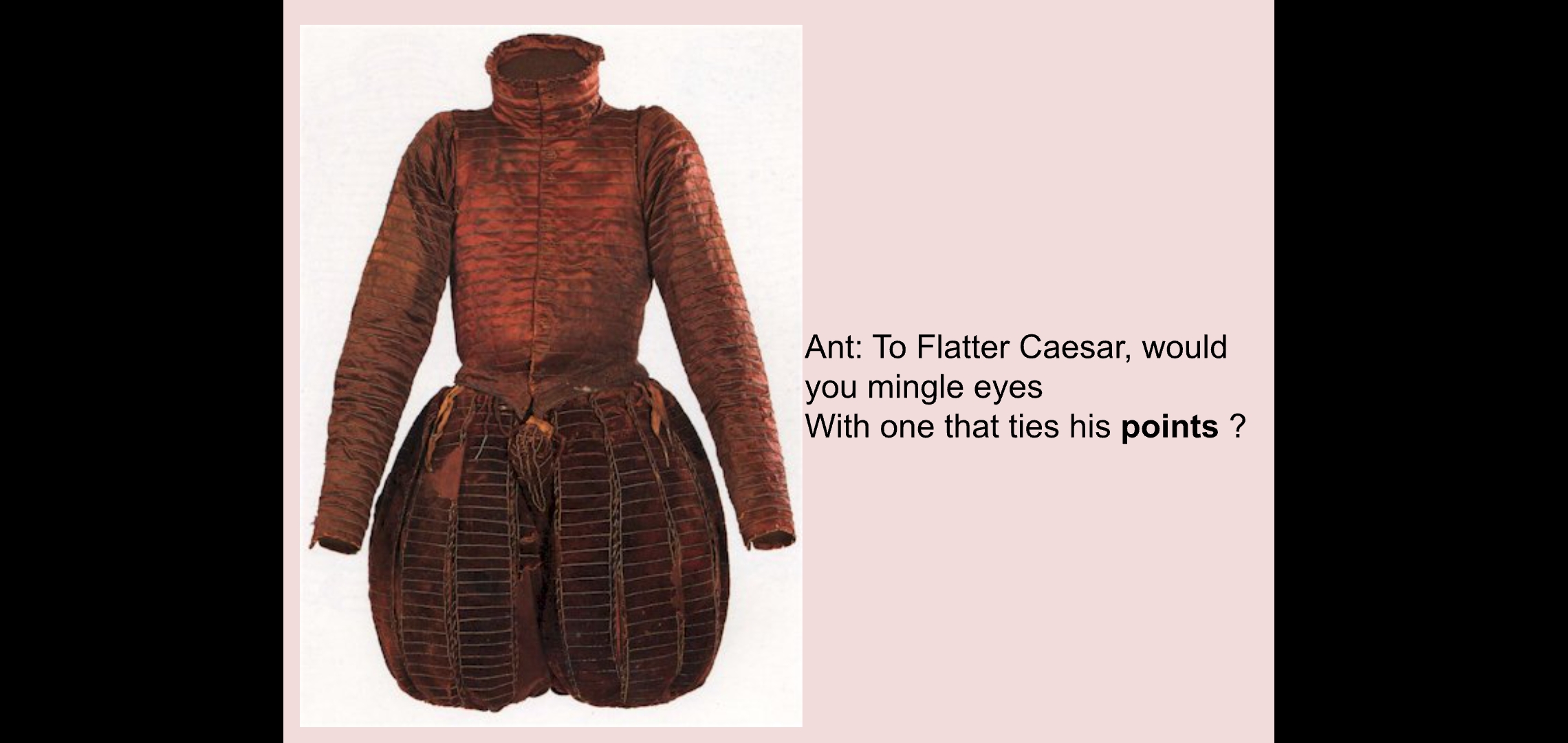
Men in this period also wore custom garments- the sleeves were added separately and the pants had to be attached at the points. Unlike women, young men didn’t cover their stockings (hose) and enjoyed showing off the shape of their legs. Stockings were often brightly colored and sometimes padded to make the man wearing it look more muscular.

I Made Shakespeare a Comic Book Character

Just for fun, I found this superhero creator website, and decided to create a Shakespeare character from it:

  1. I put the real Shakespeare’s coat of arms on his chest, and decided to use the same color scheme. Hence, the black cape, the black mask that looks like an eagle, (since in Shakespeare’s Cymbeline, the god Jupiter appears on an eagle. I also gave him yellow tights as a nod to Malvolio from Twelfth Night. I also kept colors that hint at Batman, since of course, Batman is partly inspired by Shakespeare’s Hamlet.
  2. If I were to make a full comic book of this character, I’d probably make Shakespeare’s quill magic and either cover people with ink, or temporarily control their actions. He can also throw a wooden Globe at criminals and cram them inside it (an homage to the Prologue of Henry V.
  3. I’d make Shakespeare a detective who can solve crimes because of his great storytelling abilities.

What do you think? Should I make a full comic of Shakespeare Man? Who should his nemesis be? And would this be something that you would enjoy seeing on this blog on a regular basis?

https://superherotar.framiq.com/en/build/

My Visit to a Twelfth Night Party!

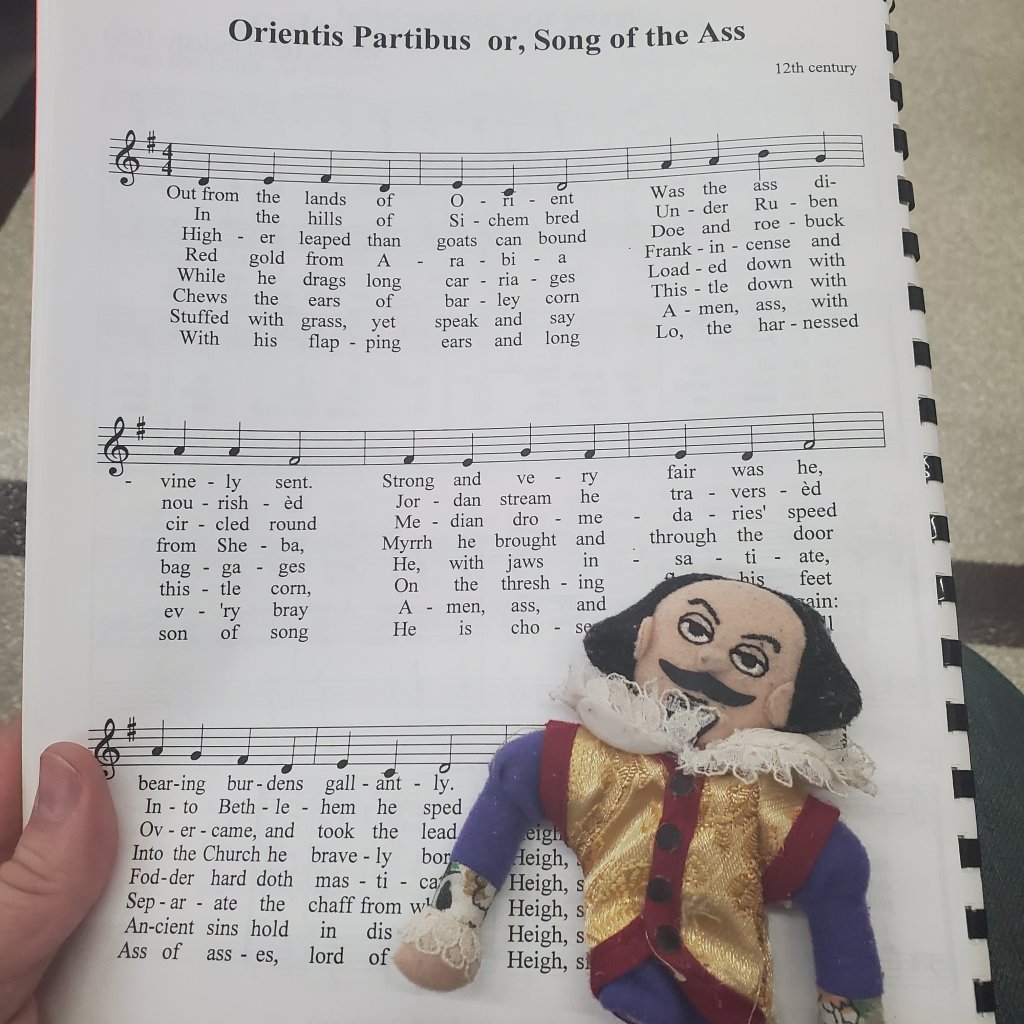
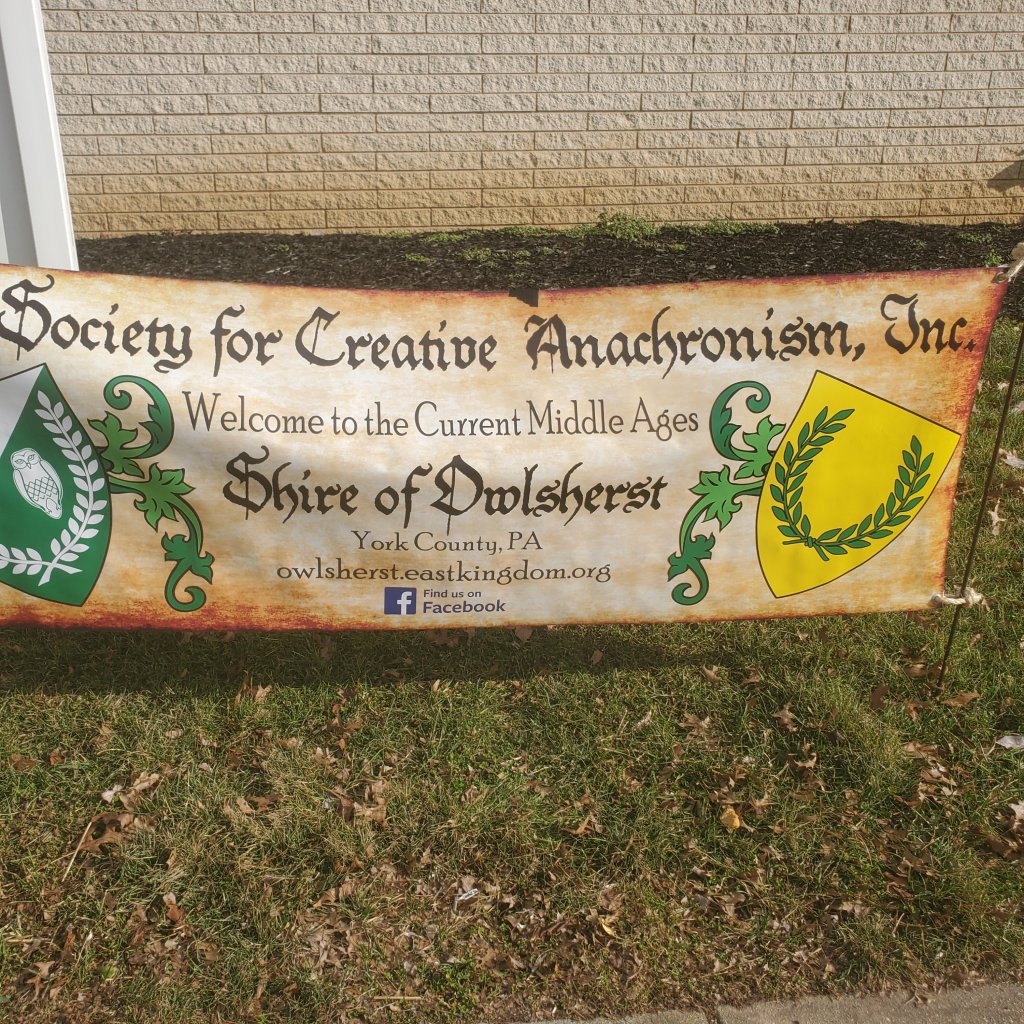
I can think of no better wrapup to my play of the month “Twelfth Night,” than by reporting on my visit to an actual Twelfth night Party, presented by the Society For Creative Anachronism.

What’s a Twelfth Night Party?

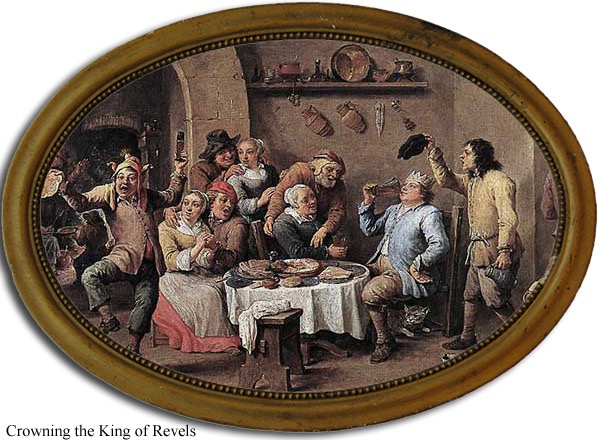
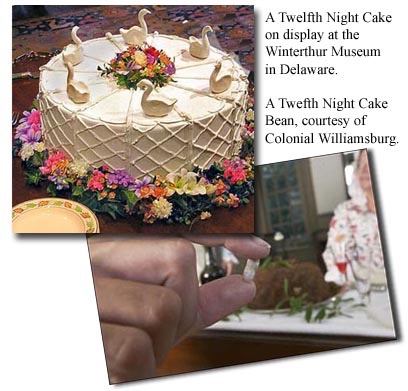
If you took my class on Shakespearean Christmas traditions or read my blog posts, you know that, back in Shakespeare’s day, Twelfth Night was a party to end the Christmas season. It was presided over by a Lord of Misrule, who would lead people in games and songs. The party would also have a Twelfth Night Cake with a bean in the center. If you found the bean, you’d have good luck for the year! So I was pleased to come to a real-life Twelfth Night party and see these traditions come to life!

What is the society for Creative anachronism?

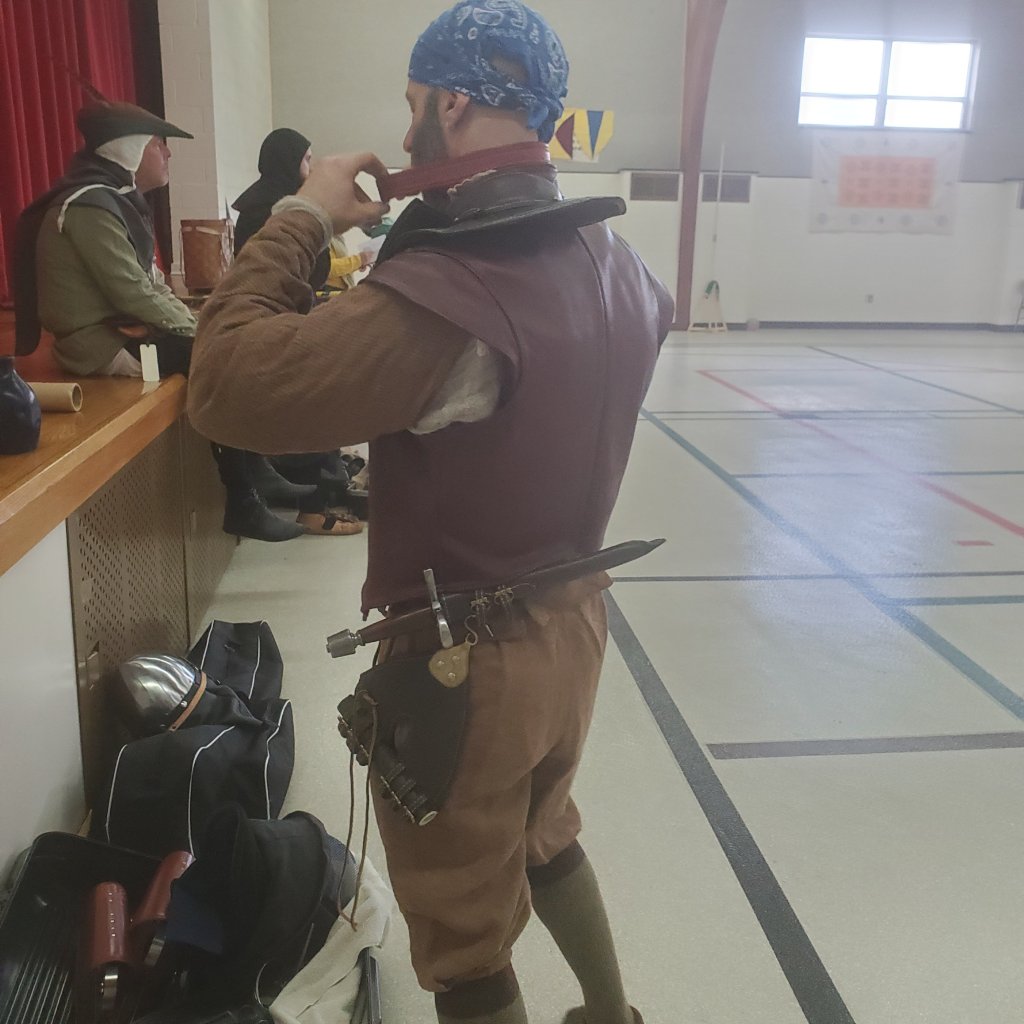
The short answer is- it’s LARPING for history nerds. Rather than creating a D&D persona and then getting arms and armor to play-fight in the backyard, SCA members create personas based on real medieval history, make or buy real historical arms and armor, (or arts and crafts as the case may be) and spend years of their lives studying and perfecting their immersion in that character’s life. SCA-ers learn how to fight with swords, daggers, spears, etc, how to sing medieval songs, medieval dances, and many other medieval ‘mysteries,’ which in this case means arts, crafts, and professions.

The Shire of Owlsherst

Owlsherst is the SCA’s local chapter in York PA. They have a number of dedicated members who specialize in textiles to rapier-dagger fighting. I’ve posted some videos of their fighting demonstrations on Youtube and Tiktok and their archery master has his own Tiktok channel. They hosted this year’s Twelfth Nigh party and have many other events throughout the year. For more information on this chapter, go to https://owlsherst.eastkingdom.org/

My reaction

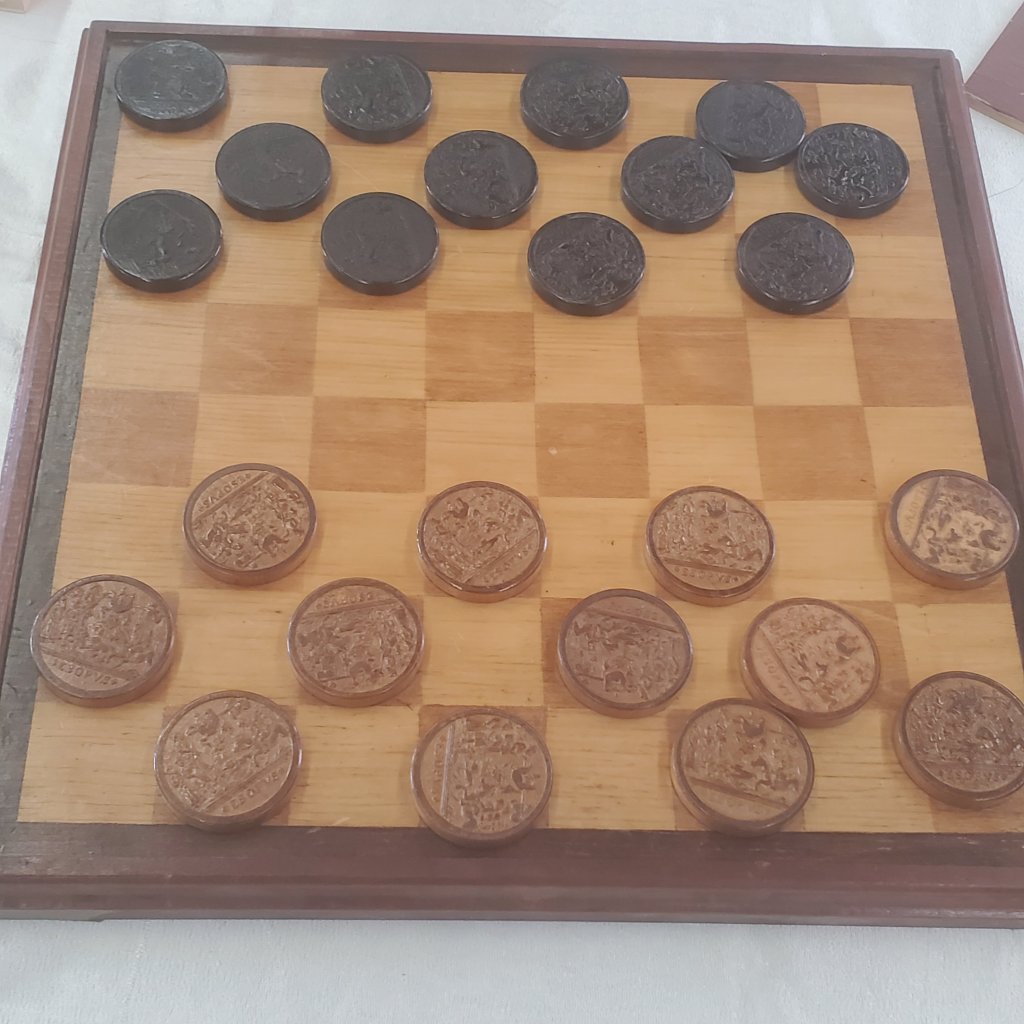
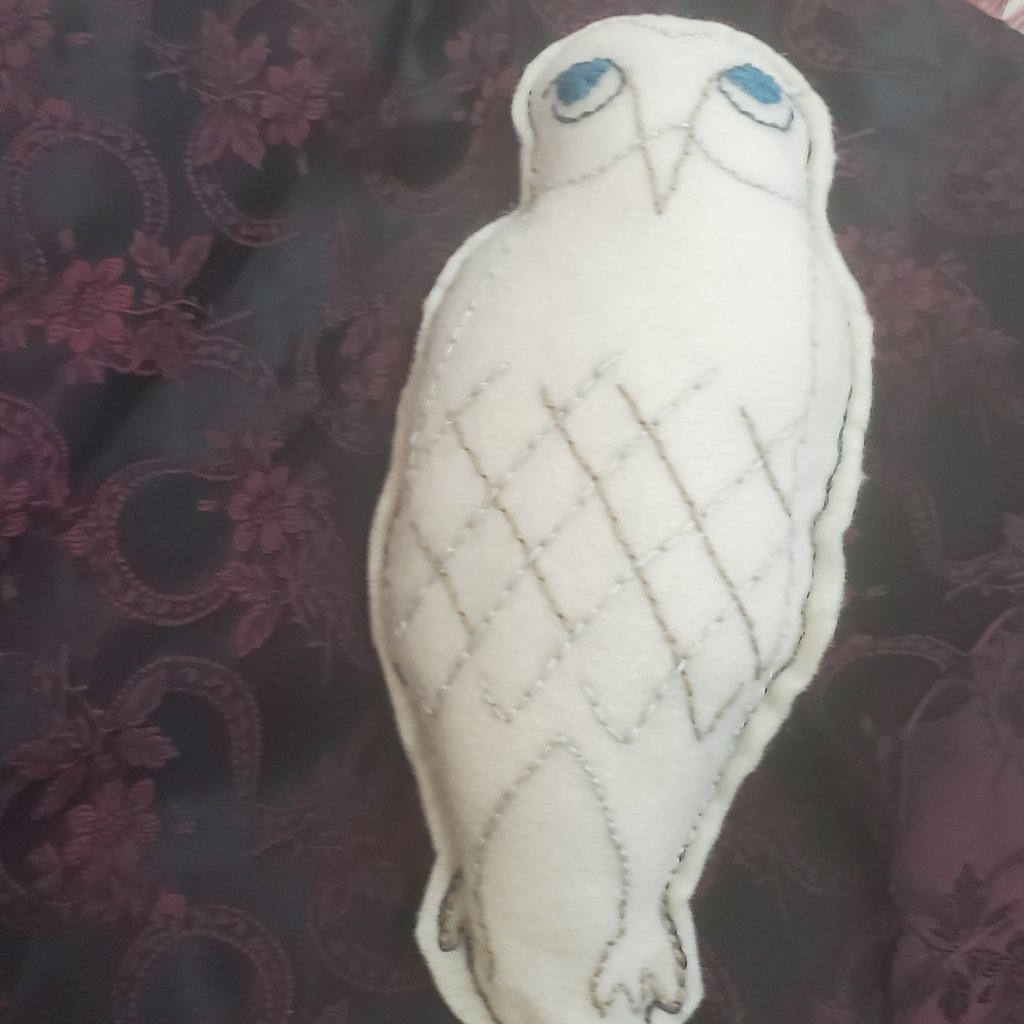
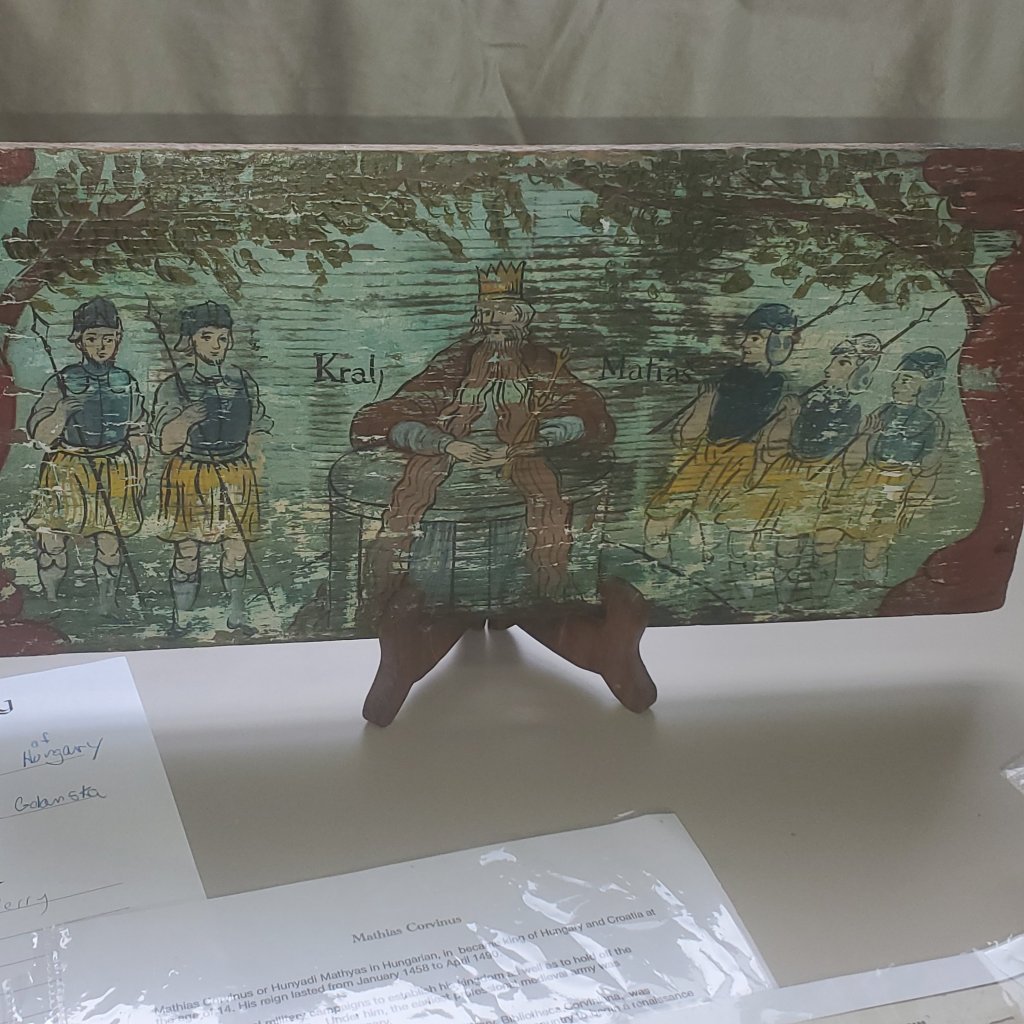
Every SCA event is a great way to celebrate people who are passionate about history and have talents for arts and crafts. Everything from the tapestries to the to the food, to the adorable owl toys, was made by hand by these dedicated people (most of whom brought their own medieval costumes). More members were doing live demonstrations of rapier/ dagger fights, binding books in cow leather, and singing medieval Christmas songs. I was inspired by everyone’s dedication and hard work to put this together. I also wonder if this is how Shakespeare himself felt when, as a child, he went to sheep shearing fairs and saw his friends and fellow artisans put on amateur bible plays on medieval pageant wagons.

That said…

I should warn you that, like a lot of historical reenacting societies like Civil War reenactors, etc, this society is more aimed at hardcore history nerds, than anyone else. This isn’t Medieval Times or a big-budget renaissance fair which is aimed at children and casual fun seekers. As such, it wasn’t really family-friendly. There aren’t many activities for kids and many of the arts and crafts are too delicate for toddlers and young kids. Also, this event isn’t particularly immersive or organized. People mostly just mingled, ate, and watched the various demonstrations. Keep in mind, this is just one chapter and just one event, which means your experience may vary. Nevertheless, because of the organization’s amateur historical nature, I would caution you to manage your expectations. Like I said before, this isn’t some big-budget Disney theme-park ride, but it is a chance for hardcore history nerds to get together, share their knowledge, and celebrate the traditions of a bygone era. If that’s your thing, I highly recommend it!

Happy Twelfth Day of Christmas Everyone!

Hello everyone! I’m back from break and happy to celebrate one of my favorite holidays with you- the one that gave its name to one of Shakespeare’s greatest comedies- Twelfth Night

How to throw a Twelfth Night Party

How To Throw A Twelfth Night Party

How to Make a Twelfth Night Cake

Intro to Twelfth Night (THe play)

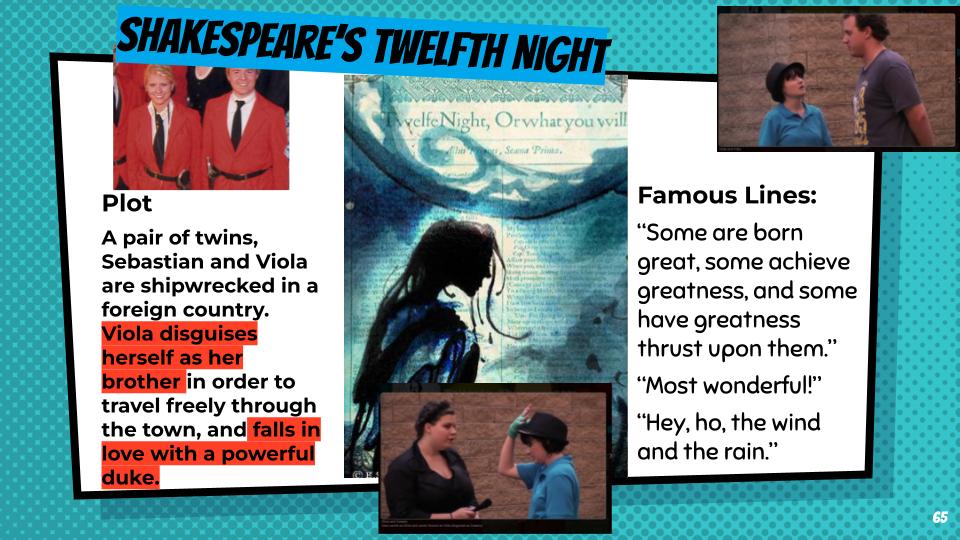
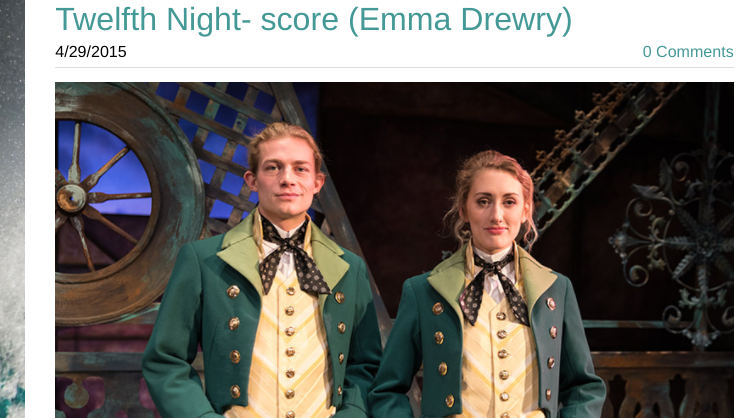
I’ve been in this play three times and I’m continually struck by how fun, romantic, and progressive it is. It raises questions about gender roles, social norms, bullying, and even catfishing and heteronormativity! It’s a fascinating and thought-provoking play and it’s my favorite of Shakespeare’s comedies!

Shakespeare’s early comedies are about young love, infatuation, and being ‘madly in love’ (sometimes literally). His middle plays are about mature relationships between men and women and the need for commitment. I would argue that Twelfth Night, (and possibly Much Ado About Nothing), are the best examples of Shakespeare telling meaningful stories about romantic relationships.

Past Posts on “Twelfth Night”

  1. Play of the Month: Twelfth Night
  2. The Fashion Is the Fashion: Twelfth Night
  3. Crafting a Character: Malvolio
  4. Exquisite Artwork from Twelfth Night

Would you like to know more? Take a class!

In honor of “Twelfth Night,” I’ve created a coupon for my course on Shakespeare’s comedies from now till January 31st: Get $10 off my class “Shakespeare’s Comic Plays” with coupon code HTHESYTIT110 until Jan 31, 2023. Get started at https://outschool.com/classes/shakespeares-comic-plays-868BR5hg and enter the coupon code at checkout.

To finish I wanted to give you a complete production of Twelfth Night for your viewing pleasure, but I can’t decide which one, so I will post a bunch today! 

1. 1996 TV movie starring Geoffrey Rush (Pirates of the Caribbean)

2.1996 Thames TV directed by Kenneth Branaugh 

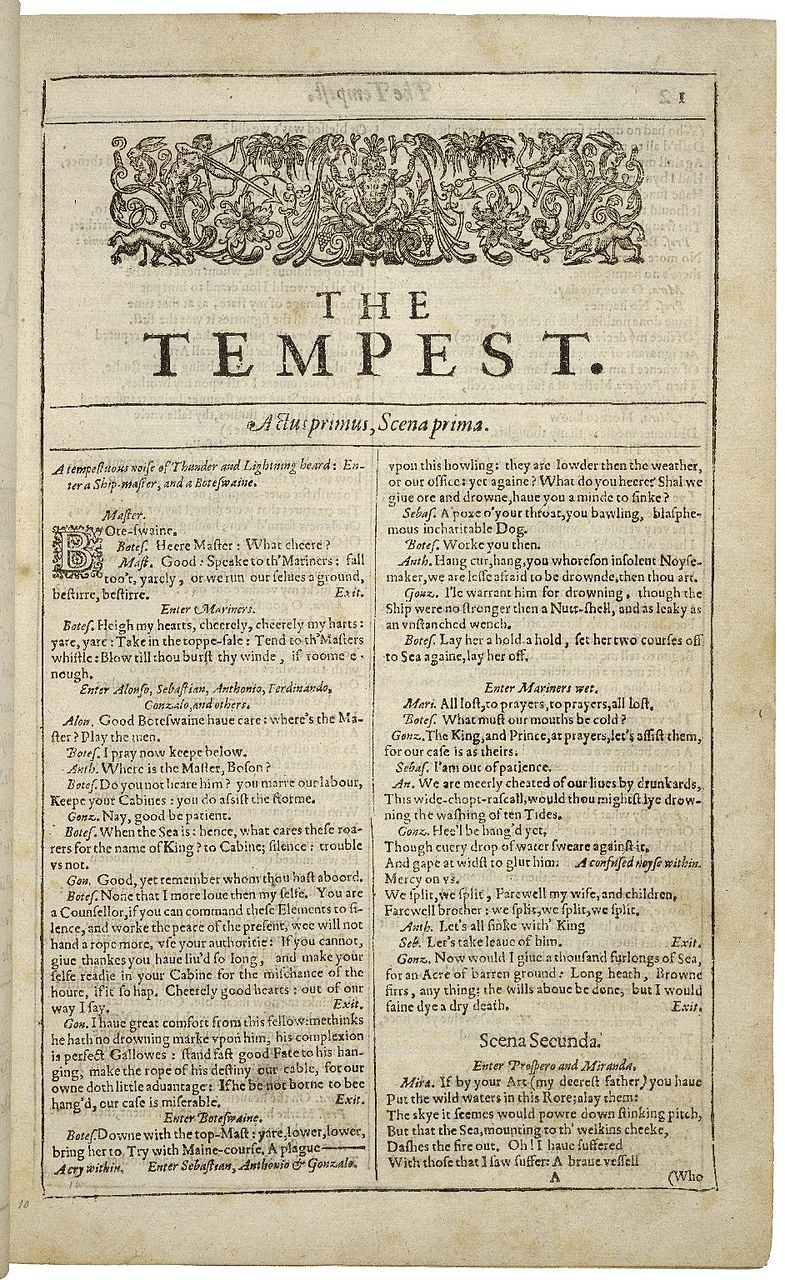
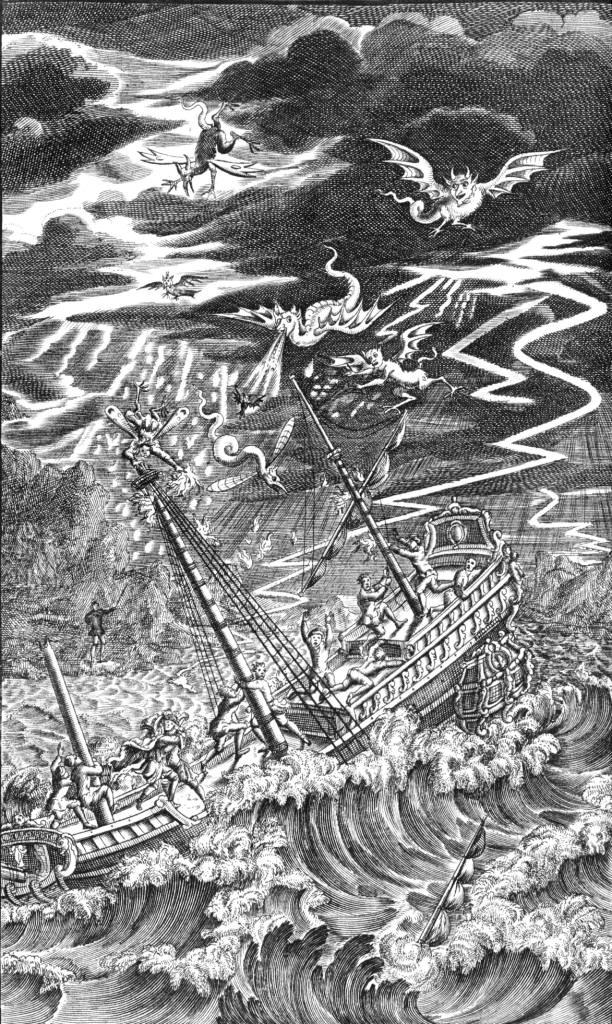
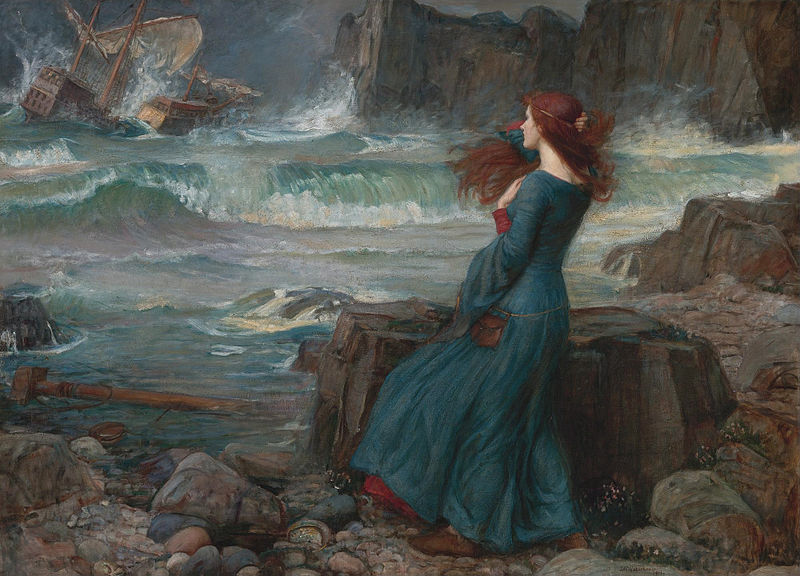
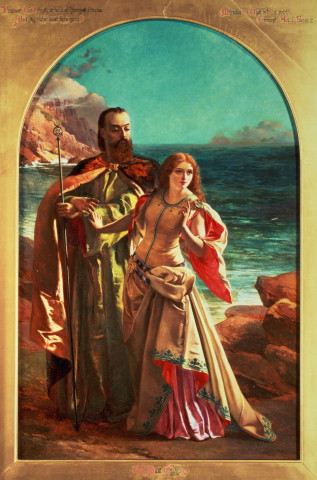
Intro to “The Tempest”

It’s November, the month when we Americans ponder perilous journeys to new worlds and give thanks to the people who settled our country. As this clip from “Shakespeare In Love” illustrates, Shakespeare clearly had these kinds of journeys on his mind. They influenced plays like “Twelfth Night,” “The Comedy Of Errors,” and especially “The Tempest.” It’s not surprising that long journeys to America were on Shakespeare’s mind; he lived right at the time of the first settlements in America, and the Pilgrims celebrated the first Thanksgiving only four years after Shakespeare died:

However, as I said in my “Is Shakespeare Being Cancelled?” post, the people who colonized America were hardly saints and they did impose their own culture on the indigenous people that lived there. This tension between the romantic ideal of taming the unspoiled wilderness of America and the reality of colonization is deep within Shakespeare’s last solo play. Its hero is a magician with the power to control spirits and who enslaves the only creature living on the island before he came- Caliban.

Though Prospero did not come to the island by choice, he certainly imposes his will on the creatures and spirits of the island and even calls himself the lord of it. On the other hand, he eventually leaves, pardons Caliban, sets Ariel free and resumes his former life as the Duke of Milan, so the story isn’t entirely about colonization. At its core, The Tempest is a story about revenge, savagery, and redemption. Audiences back in 1611 would probably see Caliban as a savage with his rough manner, bizarre appearance, and peculiar religious beliefs. But the real savage is Prospero, who like Dr. Frankenstein, gives in to his baser desires for control and revenge; enslaving Caliban, and conjuring the Tempest to take his revenge on his brother Antonio. But Prospero eventually repents and abandons his quest for revenge and this decision improves everyone’s lives, especially his own. He can now move on and become a better duke and a better man.

This play is fascinating to ponder and it has spawned countless re-interpretations. As I said before, this journey to a strange new world has influenced both the Horror and Science Fiction genres. The themes and characters of The Tempest can be found in works such as Frankenstein, to Brave New World, to Star Trek, which is why this month, I will be not only analyzing The Tempest, but also the Shakespearean roots of one of my favorite TV shows- Star Trek: The Next Generation!

My Past Pages/ Posts on “The Tempest”

Play of The Month: The Tempest.

Shakespeare Art: The Tempest

Announcing The Best Fathers In the Shakespearean Cannon

If you are your child are interested in learning more about this fascinating play, I actually teach a class about it as part of my course on Shakespeare’s Comedies which starts November 5th at 4PM, EST. Below is a trailer and link:

https://outschool.com/teachers/c9bc565b-71e9-44c9-894a-921c472f4a37#usMaRDyJ13