

analysis
Shakespeare’s Perfect Halloween Play
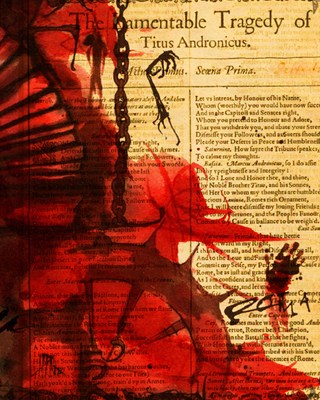
With just a few days left until Halloween, many of us will be anxious to put the candy bowl away, dim the lights, and watch a scary movie. I’d like to recommend my pic for the single best Shakespeare play for Halloween, and you might be surprised to learn which one it is:
It’s not Macbeth, despite its ghosts and witches, it’s not Hamlet, though it has a famous scene in a graveyard. In my opinion, the scariest, most horrific, most disturbing Shakespearean play is the ancient Roman revenge tragedy Titus Andronicus!
Titus Who?
Titus is the most violent, most outrageous play in the Shakespearean cannon and features murder, mutilation, cannibalism, (and even featured the first recorded trick or treating). It was also his first tragedy ever, written around 1590. Back in this period, Shakespeare’s theater was also the site of public executions and blood sports like Bear-baiting, so Shakespeare knew that gore sells. He also knew that people were reading the bloody tragedies of the Roman poet Seneca, so he created a play that out-does the Roman master of bloody violence!
So why have you not heard of it?
- Too violent for school For most people, their first encounters with Shakespeare is in the classroom, and because of the violence in this play it’s definitely not appropriate for high school. The most famous atrocity in the play happens to Titus’ daughter, who is raped offstage. Then, to keep her from incriminating the men who raped her, the rapists cut off her hands and cut out her tongue. Quite a departure from the “Honey tongued” Shakespeare we see in the comedies and sonnets.
- It’s vulgar: T.S. Eliot declared that Titus Andronicus is “one of the stupidest and most uninspired plays ever written.” For people who expect Shakespeare to be poetic and romantic, this play is a sad dissapointment.
- It’s Over the top- People don’t just die in this play, they get butchered horror movie style! Some get stabbed and thrown in a pit, some get their limbs chopped off, one character is buried alive! Many scholars say that after one atrocity after another, the only way you can react to the horror onstage is to laugh. Look at this scene where the villain of the play, Aaron the Moor, confesses to a laundry list of hideous atrocities which he did just for the pleasure of being evil:
Scholars often compare the dark comedy of Titus to the films of Quentin Tarantino, who will murder his characters in grotesque, but funny ways. I won’t even give away the surprise ending where Titus and his daughter gets their revenge, but let’s just say that they would certainly agree with Tarantino that revenge is a dish, best served cold!
- It might be racist As I mentioned in the clip above, the main villain of the play is a black man. Aaron, like Richard III is completely evil and unapologetic about it. When I was studying Shakespeare in college, James Earl Jones, (Darth Vader himself) came to my school to talk about Shakespeare’s racially diverse characters. He argued though that nobody treats Aaron any differently until they learn about his heinous crimes and that the person who seems to hate Aaron’s blackness the most is himself. Look at this passage and see if you agree:
AARON
Look by and by to have thy sons with thee.
Aside Their heads, I mean.
O, how this villany
Doth fat me with the very thoughts of it!
Let fools do good, and fair men call for grace.
Aaron will have his soul black like his face (Titus, Act III, Scene 1).
Now the question to ask about Aaron and most of Shakespeare’s villains, is are they bad because they’re different (different race, differently abled, illegitimate birth), or did they become bad from people treating them badly?
Serious note– Even though productions often dramatize the violence and rape in Titus as over-the-top black comedy, this kind of rape and violence happens in real life, every day, particularly violence against women like Lavinia. One reason why this play is gaining popularity is sadly, that this kind of violence is more common in our current society with the shocking number of rapes committed in this country (1 in 5 women, according to the National Sexual Violence Resource Center), and the brutal murders in this play suggest many real-life atrocities such as Abu ghraib,
Plot summary and more at Schmoop.com
More at http://www.gradesaver.com/titus-andronicus/study-guide/summary
Review of Julie Taymor’s Titus
If you can’t get to the theater this Halloween and want to watch a production of Titus, you’re in luck: In 1999, Julie Taymor, famed director of the Broadway production of The Lion King, directed a film adaptation of Titus which I consider the single greatest Shakespearean film of all time. The movie captures the grotesque comedy of the play, while also visually showing the beauty of Shakespeare’s poetry. It also doesn’t get hung up on historical accuracy just because the play is set in Rome. Best of all, the cast in incredible: Anthony Hopkins, Jessica Langue, Alan Cumming, Harry Lennox and more. This cast knows how to do Shakespeare for the movies and their work shows in every scene. Interesting side note: Hopkins actually considered making this movie the last movie of his career, which explains his amazing glee and energy in the role of Titus. Below is a nice in-depth analysis of the film
Another good review comes from the French Shakespeare Society: https://shakespeare.revues.org/1558
And finally, a review from Roger Ebert: http://www.rogerebert.com/reviews/titus-2000
So that’s my two cents on Titus Andronicus. Happy Halloween everybody!
Creating A Character: Richard III


In 2011, I wrote a graduate thesis about some of the challenges of playing Shakespeare’s Richard III, specifically those related to playing his deformity. What follows in this post is an adaptation of the presentation I gave at the American Shakespeare Center’s Blackfriars Playhouse, in Staunton Virginia. I gave this presentation with the help of my actors, Matt Carter, Jemma Levy, Amanda Noel Allen, and David Santangello. I also interviewed live onstage, one of the ASC’s greatest actors John Harrell and his director Thadd McQuade, about a unique production of Richard that he performed for the company back in 2002. What follows is the script I wrote for the presentation, as well as the video and Powepoint slides I projected for the audience, to help you see my work in performance. You can also consult a website I designed for the ASC’s production of Henry VI, Part III, where Richard was played by actor Ben Curns.
PRESENTATION SCRIPT
MATT CARTER:
Now is the winter of our discontent
Made glorious summer by this sun of York;
And all the clouds that lour’d upon our house
In the deep bosom of the ocean buried.
But I, that am not shaped for sportive tricks,
Nor made to court an amorous looking-glass;
I, that am curtail’d of this fair proportion,
Cheated of feature by dissembling nature,
Deformed, unfinish’d, sent before my time
Into this breathing world, scarce half made up,
And that so lamely and unfashionable
That dogs bark at me as I halt by them.
Why, I, in this weak piping time of peace,
Have no delight to pass away the time,
Unless to spy my shadow in the sun
And descant on mine own deformity: Applause, he sits on one of the gallant stools.
Section 1: Introduction

PAUL:
Many of you recognize those famous lines from the opening soliloquy of Richard III, ably delivered by Matt Carter. Did you notice the ways Matt was moving and the qualities of his voice? Tonight, my actors and I will show you some of the choices actors have made in playing the deformity of Richard III. Deformity and Richard are so closely linked that I would argue that it is the central driving force of the character. The different performances we will discuss show changes in views on deformity, as well as changing theories on the actor’s craft.
Every actor is interested in the human body, every actor is interested in how the mind and body work together, and most importantly, how to present the mind and body of a character to an audience in a clear and articulate way. No matter how the actor decides to represent it, Richard’s deformity of mind and body are essential to the understanding of the character. In his first soliloquy, in the play Henry the Sixth, Part III, he expresses a deep pain, sorrow and bitterness at being denied a normal body. As Jemma delivers this speech, ask yourself- do you pity him? Does this man have a reason to be angry?
JEMMA LEVY:
Why, love forswore me in my mother’s womb:
And, for I should not deal in her soft laws,
She did corrupt frail nature with some bribe,
To shrink mine arm up like a wither’d shrub;
To make an enviousmountain on my back,
Where sits deformity to mock my body;
To shape my legs of an unequal size;
To disproportion me in every part,
And am I then a man to be beloved?
O monstrous fault, to harbour such a thought!
Henry VI, Part III, Act III, Scene i.
PAUL:
In this speech, like the previous one, Richard expresses the belief that his deformity was a curse, laid on by his mother. During the Renaissance, people believed that deformity was a mark of evil and a sign of being cursed by God. Like the Mark of Cain in the Bible, Richard’s deformity signifies that he was “determined,” (presumably by God), to prove a villain.” The deformity also gives Richard psychological motivation. Lacking a normal body, Richard is hungry for revenge, and in search of something to elevate himself above more fortunate people- power.
Section 2: Burbage
PAUL: The first Richard was almost certainly Richard Burbage, Shakespeare’s star actor. Burbage was associated with the role long after his death.
DAVID SANTAGELLO:
‘A funerall Elegy on the death of the famous Actor Richard Burbage:
Who died on Saturday in Lent, the 13th of March 1618′
No more young Hamlet though but scant of breath
Shall cry revenge for his dear father’s death:
Edward shall lack a representative,
And Crookback, as befits, shall cease to live.”
PAUL:
Unfortunately, we have no information on how Burbage played the deformity, but we have one clue as to how his performance might have been received, in the form of an apocryphal story from the diary of law student John Manningham, on 13 March 1602:
AMANDA:
Upon a time when [Richard] Burbage played Richard III,
There was a citizen grew so far in liking with him that before she went from the play,
She appointed him to come that night unto her by the name of Richard III.
Shakespeare, overhearing their conclusion, went before, was entertained, and at his game ere Burbage came.
The message being brought that Richard III was at the door,
Shakespeare caused return to be made that ‘William the Conqueror was before Richard III.’

PAUL:
Although this story is apocryphal, it does hit upon other features of Richard’s deformity- his supreme confidence, and his beast-like sexuality. Scholars have pointed out that Richard’s lack of scruples, (the result of being born deformed), makes him completely focused and confident. Likewise, his non-conformity to traditional standards of beauty could also be seen as a rebellion against societal norms, and thus, a strange aphrodisiac. This dark creature, without a recognizable human shape, manages to exert a dark pull on the audience.
Section 3: Cibber
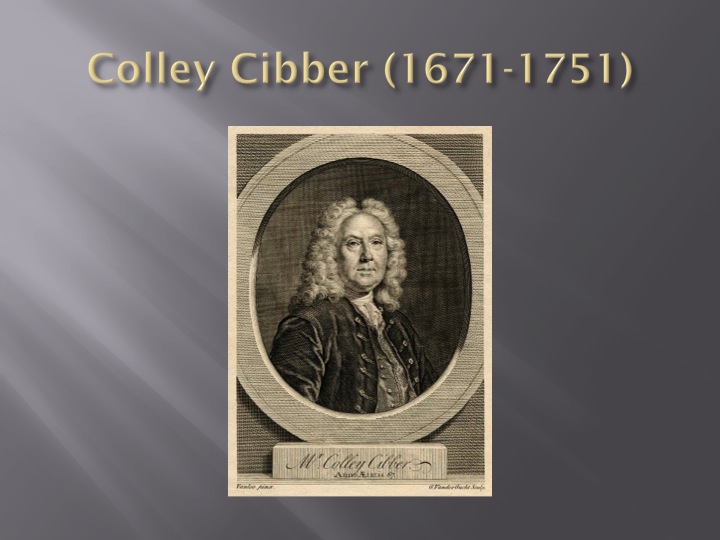
Surprisingly, for nearly 300 years, portrayals of Richard III have been heavily influenced by an obscure author who was not even Shakespeare’s contemporary
During the Restoration of theater in the 17th century Shakespeare’s plays were largely out of fashion, condemned by critics as “too vulgar for this refined age,” and playwrights began to rewrite and adapt them. The most successful adaptation of Richard the Third, came from poet-laureate Colley Cibber in 1671. Cibber’s text interpreted the story as one man’s evil rise to the crown, not the culminating story of the Wars of The Roses. Cibber cut most of the history involved. He condensed scenes, omitted others, and gave Richard 10% more of the dialogue, then Shakespeare. Cibber’s text also re-emphasizes the importance of deformity to Richard’s character- adding 8 more uses of the words “deformed,” or “ugly.” To further the point, Cibber inserted text from other Shakespeare plays that speak about Richard’s deformity, such as the Henry VI speech spoken earlier. Cibber freely cut-and pasted from Shakespeare’s histories, which can be demonstrated in this speech where the Lady Anne mourns for the death of Henry the Sixth, using lines written by Shakespeare for the funeral of King Henry the Fifth:
AMANDA:
Hung be the heavens with black, yield day to night!
Comets, importing change of times and states,
Brandish your firey tresses in the sky,
And with them scourge the bad revolting stars
That have consented unto Henry’s death!O be accursed, the hand that shed his blood
Accursed the head that had the heart to do it!
If ever he have wife, let her be made
More miserable by the life of him
As I am made by Edward’s death and thine!
PAUL:
Cibber also wrote his own speeches for Richard, such as this one where Richard resolves to woo Lady Anne in spite of his deformity:
JOHN HARRELL:
But see! My love appears. Look where she shines
Through her dark veil of rainy sorrows
Tis true, my form perhaps may little move her;
But I’ve a tongue shall wheedle with the devil.
PAUL: Cibber’s text was extremely popular with actors because it raised Richard’s importance to a star role. Actors such as David Garrick made their debut as Cibber’s Richard, and some of Cibber’s editorital choices still survive in the two movie versions of Richard by Ian McKellen and Laurence Olivier.


Section 4: Olivier
Olivier, in the 20th century was considered the definitive Richard. In his film version he emphasizes Richard’s evil and deceptive nature. He uses the character’s physical disabilities (as well as various cinematic techniques) to reveal his moral depravity.
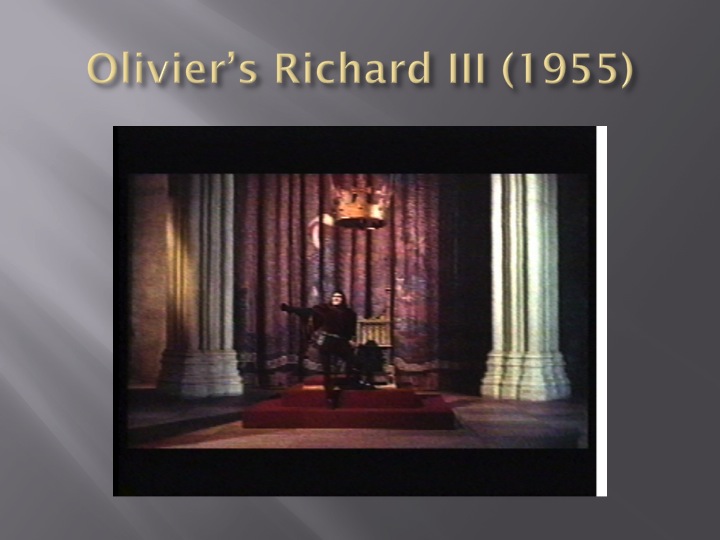
- The Crown of England- the tremolos and the large crown that appears in the beginning, middle, and end of the film. Homage to Cibber.
- CINEMATIC USE OF DEFORMITY
- Long camera angles as he limps away, exposing hump and limp
- Shadowy silhouette
- In this shot, Richard slinks away from the camera, leaving his bizarre silhouette to unfurl like a snake

- In this shot, Richard bends over to whisper evil thoughts into the king’s ear.
- Finally, in this shot, we see the shadow of Richard’s head, as he stares into the cell of his brother Clarence, as he plans his murder. We see through this shot, Richard looms as a great evil presence.
Section 5: Sher

After Olivier, actors abandoned the approach of making Richard into a monster, and favored a more human, natural approach.
The role of Richard III however, presents unique challenges for actors attempting to do this; they are attempting to do something un-natural by playing a deformity that they do not actually have. Thus they are attempting to play something “un-natural” within the precepts of naturalistic acting.. Antony Sher’s massive preparation for the role, using Method acting techniques, included both a thorough research into the physical effects of real disability, and a deep examination of its psychological effects.

- Used Method acting techniques to create the role:
-
- Real-life experience- Crutches came from his own real injury.
- Research into physical deformity.
- Textual Research
- Image Research. He used Margaret’s text to create a visual design for his character, a bottled spider.
- Psychoanalysis- brought Shakespeare’s text to a real psychiatrist to “put Richard on the couch.”
- Sher’s technique led him to go into a deep, psychological probing of Richard’s mind. He viewed the deformity as a source of deep pain, through which we can identify with Richard as a human being.
- Listen to how David, applying Method-inspired text analysis, conveys Richard’s human emotions.
DAVID:
But I, that am not shaped for sportive tricks,
Nor made to court an amorous looking-glass;
I, that am rudely stamp’d, and want love’s majesty
To strut before a wanton ambling nymph;
I, that am curtail’d of this fair proportion,
Cheated of feature by dissembling nature,
Deformed, unfinish’d, sent before my time
Into this breathing world, scarce half made up,
And that so lamely and unfashionable
That dogs bark at me as I halt by them;
PAUL: Sher’s massive preparation for the role represent the limits that an able bodied actor could go to portray a disability he himself did not have.
Section 6: From Sher to Harrell

- Sher’s Richard created an unexpected backlash from disabled community.
- One response to this: a number of Richards played by disabled actors.
- Henry Holden in 2007. Like Sher, on crutches, only he needed them.
- Peter Dinklage played the role with none of the traditional deformities.
- His size was a kind of disability, as it literally hindered him from taking the crown–
-
- He was tangled in his robes,
- Couldn’t reach the throne.
- Critics writing about the performance claimed watching him was more real. You weren’t watching a performance, you watched a real man, with a real struggle.
- Another response is approaching the deformity from a more stylized perspective.
- This was the approach favored by Thadd McQuade.

- The essence of this performance was watching a man struggle through life trying to overcome obstacles and find a place for himself in the world, a struggle that is the essence of all tragedy.
Section 7: 10 minute interview with Thadd and John.

Both– Explain the way you chose to represent deformity (bowling ball) and why.
- John- I got an email from actor JP Schiedler, (who was in the production) who said “ As I recall John was very interested in working inside of some form of restriction which forced his body to adapt, struggle and physically change how he could deal with the world around him which the ball did.” If this is true, I’d like you to talk about this idea- why was it important for you to have something that restricted you? I want to get an idea of how you saw the physicality of Richard and how it is important to the character.
- Thadd, when I interviewed you, you mentioned that doing the play naturalistically can actually be off-putting because an able-bodied actor will never completely pull off the deformity. I want you to repeat some of that to explain the virtues of a more presentational Richard.
- Both- How did your techniques contribute to a better understanding of the play for the audience?
Conclusion: Richard’s deformities and disabilities are both physical and psychological. They are the driving force in his life. Portraying Richard’s deformity is a microcosm of the challenges that face all actors: making choices of how to explore the mind and body of a character. Watching an actor take on the challenge of portraying this man’s struggles. This struggle is the essence of tragedy and watching an actor take on the challenge of creates powerful and poignant theatre.
Useful Richard III Website, starring Ian McKellen!

Here’s a lovely website designed to help you learn about Richard’s first soliloquy by interacting with Sir Ian McKellen himself!
First, a video to see it in action:
And here’s the final website: http://www.stageworkmckellen.com/
As a bonus, here’s a review of Sir Ian’s new app, Heuristic Shakespeare:

http://www.avclub.com/article/ian-mckellen-launches-app-make-shakespeare-easier–236049
This app looks incredible, listen to this satisfied customer:
So far, the only play on the app is “The Tempest,” but hopefully if enough people buy it, it’ll expand and encompass all the plays. I hope you’ll check it out!
The Elephant In the Room: The Real Richard III

Before we continue our exploration of Shakespeare’s “Richard the Third,” I would be remiss if I didn’t spend a little time talking a little about the real Richard Plantagenet, Duke Of Gloucester and king of England from 1483-1485. I have to get this out of the way first and foremost: although “Richard III” is classified as a history play, most of the facts in it are untrue, or severely exaggerated. In this post I will try to separate the character from the man to try and make clear what Shakespeare changed from history and why.
First, a video bio I created:
The facts are these:
-He was a real English monarch who reigned 1483-1485.
– Richard was the younger brother of King Edward IV, and helped his brother take the crown away from King Henry VI, in a series of battles known as The Wars Of the Roses.
– The battles got their name because Richard’s family (the House Of York), used a white rose as its symbol, while King Henry’s faction used a red rose.
– Like Ned Stark in Game of Thrones, Richard was the undesputed “Warden Of the North,” in charge of crushing a potential Scottish invasion.
– In April of 1483, Richard’s brother King Edward IV died. As Lord Protector of England, Richard was entrusted to take care of the country, and Edward’s two sons (the new heirs to the throne). In late May, Richard arrested three lords on suspicion of treason while he guided the two princes to London. Within one month, the two princes were publicly declared illegitimate by the Archbishop, thus making Richard the new king.
– Sometime during Richard’s two year reign, Edward’s sons disappeared. Many believe they were murdered and Shakespeare’s sources named James Tyrrell and Michael Forrest as the murderers, acting under King Richard’s orders. In 1674, the skeletons of two boys believed to be the princes were discovered in the Tower Of London. The remains were interred by King Charles II. So far, nobody has confirmed if the remains belong to the princes or what happened to the young boys.
-Richard was defeated and murdered by Henry Tudor, Earl of Richmond at the Battle Of Bosworth Field on August 22, 1485. His successor founded the House Of Tudor which included Henry VIII, Mary I, Edward VI, and Queen Elizabeth I.
-in 2015, historian Phillipa Langley discovered King Richard’s remains in a parking lot in Leicester
Few contemporary sources survive from Richard’s day, so it’s unknown whether Richard did kill the princes. Even more mysterious, although he did work to depose a king, oppress the Scots, and take the throne from Edward’s kids, some sources claim Richard was actually a just and good king. In the lack of facts, Richard’s legend continues to grow
Reality check
 -After finding his skeleton, scientists discovered that Richard was not deformed, although he did have scoliosis. Thomas Moore added the hump, while Shakespeare added the withered arm.
– There is no physical evidence that Richard killed the two princes, and many others wanted them dead, including Henry Tudor himself!
-Richard also probably was a good king according to some contemporary accounts, as you can see in this video with Monty Python’s Terry Jones:
Why were the facts twisted?
– Remember, Richard was defeated by Henry Tudor, Queen Elizabeth’s grandfather, so there was no way Shakespeare or anyone else in Elizabethan England could get away with portraying him as a good king.
– Shakespeare’s main source was a history by Sir Thomas More, who was 12 at the time of Richard’s reign. More was Henry VIII’s royal chancellor, so he couldn’t afford to be nice to Richard either. More’s history set the groundwork for Shakespeare’s portrayal of Richard as a deformed monster.
The point is, people have known for centuries that Shakespeare’s Richard is no more true than the myth of Robin Hood. Even Laurence Olivier admits before his film even starts that this story has been “scorned in proof thousands of times.” Nevertheless, like Robin Hood, this story is part of the fabric of English society, and it still has value as a cautionary tale about corrupt governments, and how one man may lose his soul (and a horse) in pursuit of power and revenge.
Even today, people continue to gain power by manipulating fear, hatred, and religion, which is why we as a society need Shakespeare’s Richard. The play is so universal it was re interpreted in 2007 as “Richard III: an Arab tragedy.” Shakespeare’s Richard is so close to today’s dirty politicians that we have TV shows on both sides of the Atlantic inspired by him, (more on that later). And Richard himself is so compelling a character that centuries of great actors, cartoon characters, and even occasional rock stars have wanted to emulate him.
The lesson of the story is that a single demagogue can gain control of a corrupt system if we let him. Hitler, Saddam, Trump. It’s no accident that Olivier chose to play Richard right as the war was ending in Europe, and his popularity in that role rose exponentially after post war Britain saw the parallels between the “honey words” of Richard, which captivated England, to Hitler’s fiery rhetoric, which nearly destroyed it. The larger point through all four plays of Shakespeare’s history cycle, (not just “Richard III,”) is that greed and cruelty within one family can lead to chaos on a large scale, especially when it’s the royal family.
For more information:
Books:
- The Daughter Of Time by Josephine Tey, 1951: This is the most famous book that sets down the case that Richard’s reign was maligned by history. In addition to having excellent research, it is also a compelling novel.
- Shakespeare’s English Kings by Peter Saccio. To help students of Shakespeare separate fact from fiction, and get a sense of the lives of the men whose lives shaped Shakespeare’s history plays, Professor Saccio of Dartmouth College created a short, easy to read biography of all 10 of Shakespeare’s monarchs.
Websites:
The Richard III Society: Official website of the society dedicated to preserving the memory of Richard III.
Historic UK: Short biographies of English Monarchs
Leicester Cathedral’s Richard III Page: http://kingrichardinleicester.com See pictures and read about Richard’s final resting place, and how his remains were found, and re-interred.
Westminster Abbey- The tomb of most English kings and queens for over 1,000 years:
http://www.westminster-abbey.org/our-history/royals?start_rank=1
My Top Ten Shakespearean Apps For Teachers and Students, Part 2
As I said before, my criteria for these apps was “Free, functional (educational or useful in life,) and fun.”
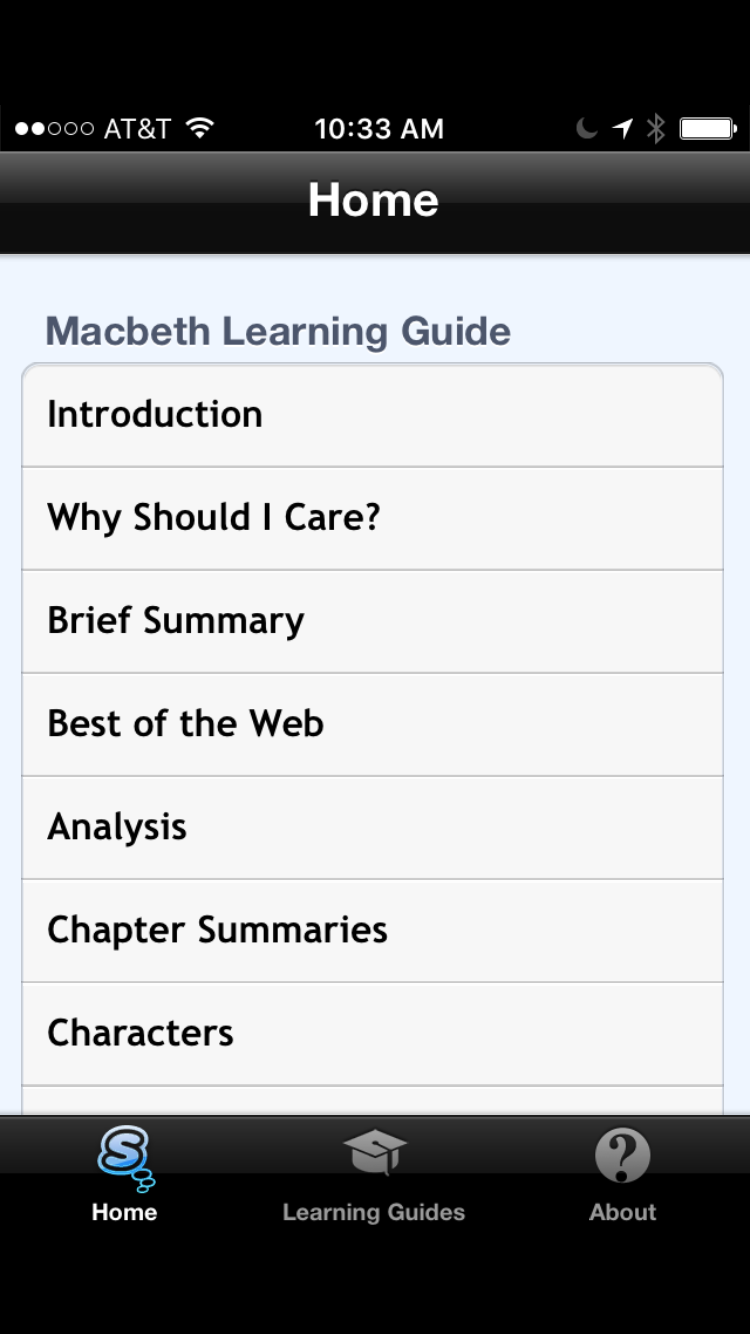
6. Shakespeare by Shmop: incredible! This is a study guide for your phone of tablet. There are separate apps Hamlet, Macbeth, and R&J. Each one features a glossary, analysis, quotes, study questions, you get the idea. You can cover a lot of the play with this app. My favorite feature is “Why Should I Care?” This is a short essay that compares the themes and ideas of the play to modern life. Excellent app, and the website is great too for students and teachers: http://www.shmoop.com
7. Shakespeare for kids–

I believe nobody is too old or too young to enjoy Shakespeare, so I tried to find a Shkespeare app for young children and came up with this. To be honest, I was disappointed in this one; it’s basically an app version of Irene Lamb’s book “Tales From Shakespeare”. It consists of short summaries of the plays intended for children. There are no study guides, no quotes, and the games have nothing to do with Shakespeare. My advice, get the book, or go to these sites:
- K-2: BBC Famous People: Shakespeare. http://www.bbc.co.uk/schools/primaryhistory/famouspeople/william_shakespeare/
- Starfall- Quotes From Shakespeare http://more.starfall.com/m/talking-library/shakespeare/load.htm?f&d=demo
8. Poems By Heart Made by the Penguin Publishing Co, it’s designed to help you learn a poem by quizzing yourself, one line at a time, (or one word if necessary). Friendly and enjoyable.

9. Soliloquy by playshakespeare.com.
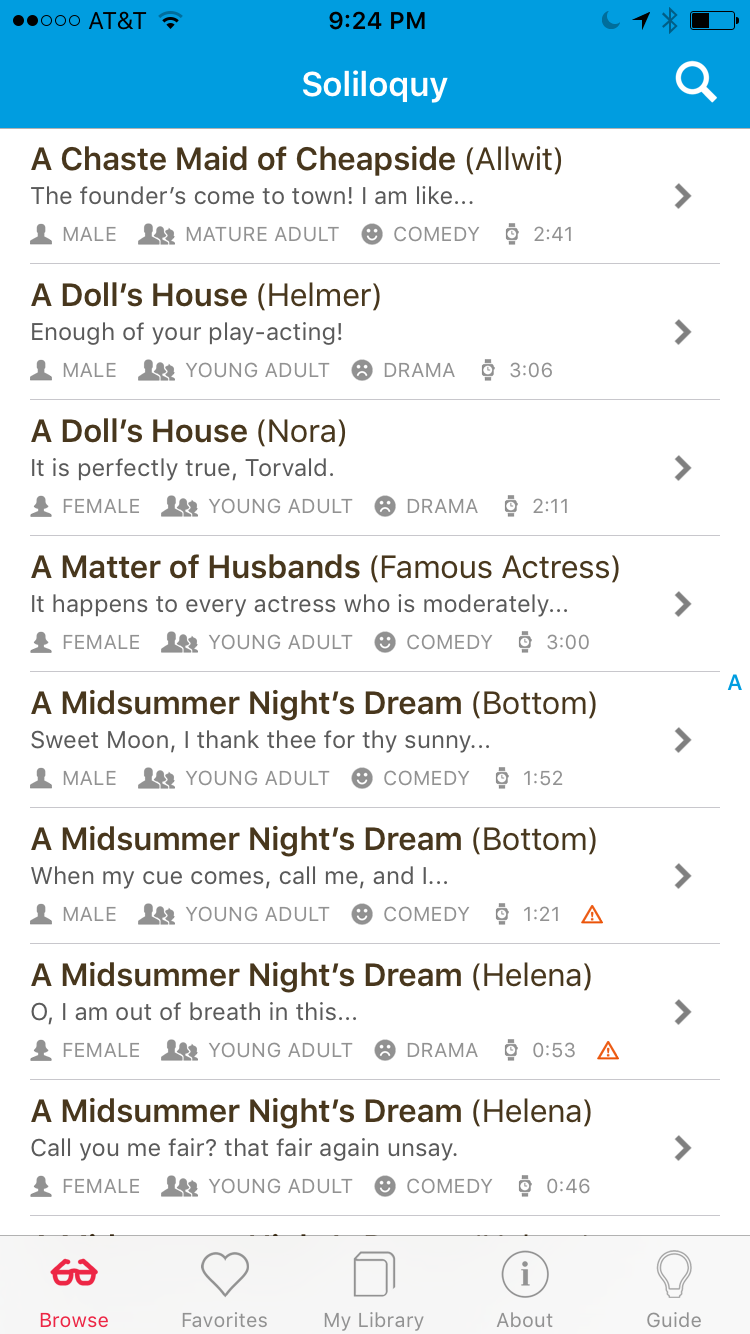
As you might expect, this app is a database of Shakespearean speeches. I normally don’t advocate actors learning speeches out of context without reading the whole play, but this app is useful for the professional actor on the go, who needs to pull out a speech in a hurry. It’s sort of a digital monologue portfolio. You can find a good speech, save it, then pull it out when you need to study it. There’s also a pro feature that allows you to edit the speech if it’s running long. What I really like is the fact that each speech is conveniently classified by gender/ genre/ length, and the helpful tips for young actors picking a good speech.
10. Shakespeare by Play Shakespeare.com
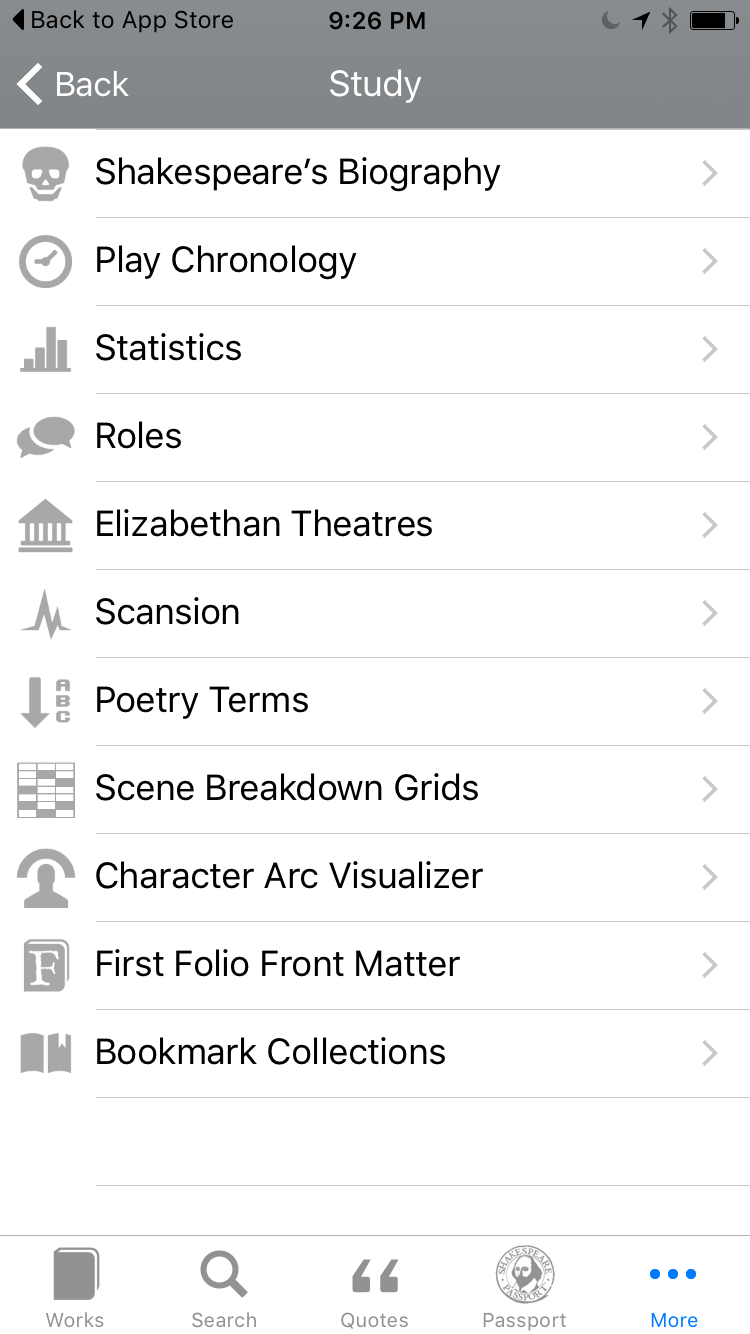

Well now we come to the end of the free Shakespeare app list I’ve compiled. Now what? I would recommend downloading Shakespeare by Playshakespeare.com, then BURN THE LIST! This is the most incredible Shakespeare app I’ve ever seen! It has tons of free and pay- only features and I’ve listed a few below:
- Full text of the plays
- A GPS feature where you can locate any Shakespearean theater near you.
- A free passport to 57 theaters that offer discounts to members.
- Study guides which include scene breakdown, poetry glossary, and notes on verse scansion
- Shakeapeare quotes generator.
- A glossary of over 40,000 Shakespearean words
Much like this blog, I recommend this app to Shakespeare lovers of any age!
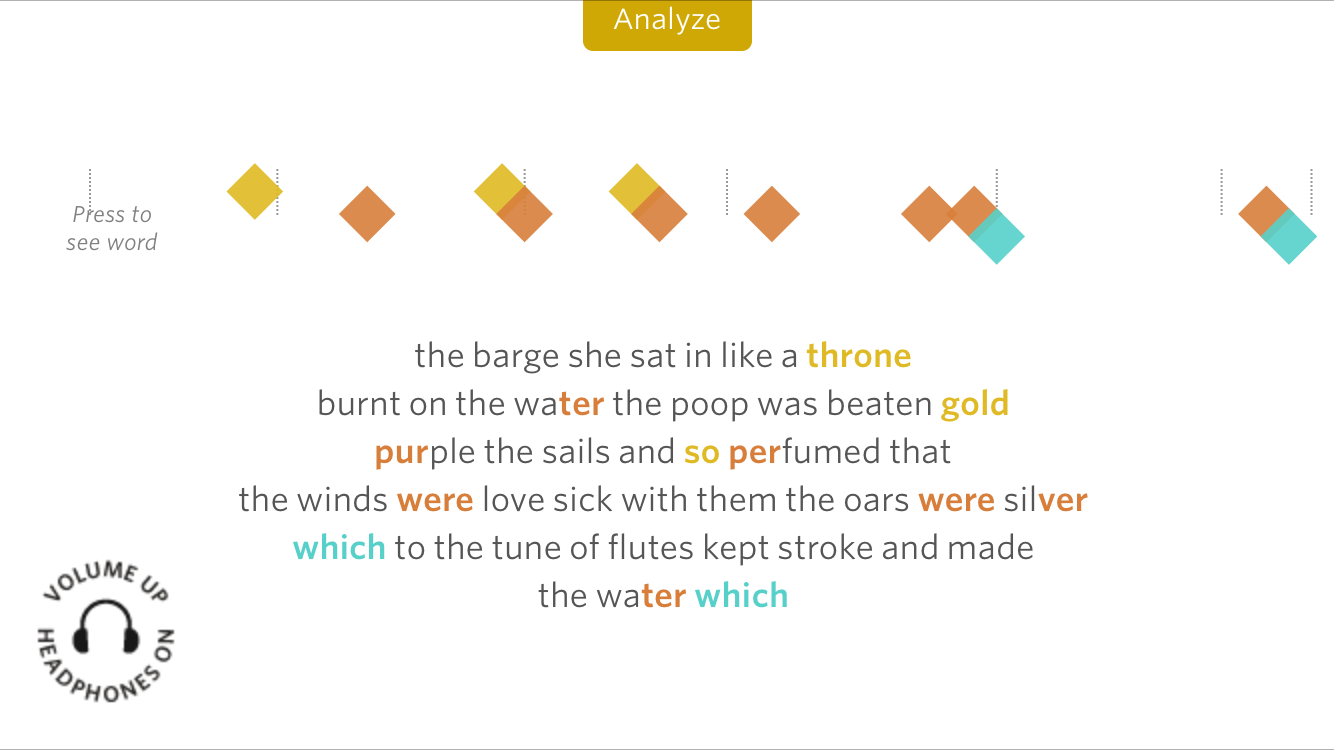
One more bonus review: this isn’t an app, but it’s a website created by Joel Eastman and Erik Hinton of the Wall Street Journal. Its purpose is to analyze the awesome lyric complexity of the Broadway musical “Hamilton.” http://graphics.wsj.com/hamilton/
The website uncovers the use of assonance, alliteration, near-rhymes, mid-line rhymes, and other strokes of Lin-Manuel Maranda’s lyrical brush. The best part is that you can feed any text you want into the website, and it will use the same algorithm to show you its lyrical elements, so I’d recommend using it as a tool to study Shakespeare. You’ll find that the Bard of Avon and Snoop Lion aren’t as different as they might seem.
So there you are, a few fun, friendly, and free tools for exploring the work and life of a timeless English playwright. As The Bard might say: “Sirs, betake you to your tools,” for such apps as these are only as good as the person who uses them.
Intro to Richard III
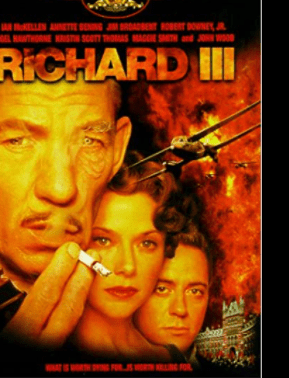
Hi everyone,
Introducing our new Play of the Month: Shakespeare’s dark history play about murder and corruption, Richard III. First, a short presentation I made that introduces the characters and themes of the play.
Second, a quick, funny summary of the play from the Reduced Shakespeare Company
And finally, this incredible animated version of the play, which looks like a stained-glass window come to life!
Crafting A Character: Malvolio

The venerated Shakespearean actor, Sir Antony Sher, once said with frustration while he was acting at the RSC that, “even the best Feste is less funny than the worst Malvolio.” I actually have a rare insight into these two roles since I’ve played them both! So allow me if you will to present you with some insights I’ve gained into these two characters that are very much polar opposites. Although they are as different as night and day, they form the central comic premise of the whole play, and have some truly hilarious moments!
 Me. as Malvolio, Wooster. High School 2002
I played Malvolio when I was a senior in high school; he was my first principal Shakespearean role. My director chose to set the play in the 1940s and he re-purposed the kingdom of Illyria as the Hotel Illyria, with Malvolio as the concierge or lead butler in charge of all the hotel maids and other housekeepers. This not only made the play more accessible to a 2002 audience, it also really helped me understand Malvolio’s role: he is first and foremost a snob who is obsessed with efficiency and pleasing his mistress Olivia (in this version the owner of the hotel). I would soon also discover that, although Malvolio is certainly snobby and can be a bit of a killjoy, he also has qualities that make him appealing to everyone who has ever felt put down or bullied, and that’s what makes him a complex and endearing character today.
 Richard Briars as Malvolio
Some notes on the character: Malvolio’s name means “unsatisfied desire”- somebody who aspires to be what he is not. I find the relationship between Feste and Malvolio interesting because the two are partially defined by how each one is unlike the other. Feste is a clown, hired by the nobles to help them have a good time. He is described as “a merry fellow who cares for nothing.” In other words, Feste never takes anything seriously, except making a living with his jokes and songs. Malvolio is the exact opposite- he is also a servant, but he is a steward, in charge of running the Countess Olivia’s household. As such, he is obsessed with efficiency, commanding respect, and pleasing his mistress through his obsequious manner.
Like the Joker and Batman, both characters live according to an opposing viewpoint; Feste is a chaotic, happy-go-lucky sort, while Malvolio has a strict code of behavior which he expects everyone to follow. Their opposing world views bring them into conflict every time they meet. Plus, in most productions Feste is wearing brightly colored clown apparel or “motley wear,” while Malvolio is dressed in black. I’m not saying Malvolio is anywhere near as cool as Batman, but Malvolio can be just as sanctimonious. His journey is how he goes from being the trusted household servant, to a raving madman, to at last the Spectre at the feast at Olivia’s wedding.
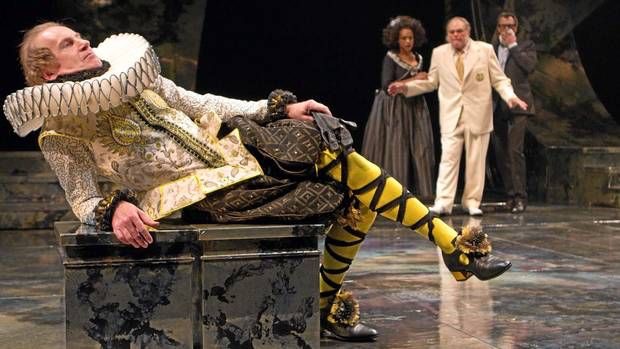
I think the appeal of the character, which balances out the aforementioned snobbery, is that Malvolio is also a nerd: he dreams of becoming a count, he tries to make friends, but he does so by working far too hard at his job and not knowing how to fit in. This is why we inevitably feel sorry for him at the end of the play when he begs to know why his tormentors have locked him in a dark room, treated him like a lunatic, and made him think his lady was in love with him only to utterly destroy his hopes. The balance between the Nerd and the Snob that makes Malvolio a universal and complex part, and that’s why some of history’s greatest actors have played it!
Prepping for the Role: Alec Guinness, Laurence Olivier, Patrick Stewart, Donald Sinden, Nigel Hawthorne, Richard Briars, Steven Fry- these are just some of the names of actors who have played this part over the years. The first actor to play the role was Shakespeare’s leading actor, Richard Burbage, who also played Richard III, Hamlet, and Macbeth. Here’s a sample from Burbage’s famous eulogy, which mentions some of his most famous parts:
A Funeral Elegy
On the Death of the Famous Actor, Richard Burbage,
He’s gone, and with him what a world are dead,
Friends, every one, and what a blank instead!
Tyrant Macbeth, with unwash’d, bloody hand,
We vainly now may hope to understand.
Brutus and Marcius henceforth must be dumb,
For ne’er thy like upon the stage shall come,
Vindex is gone, and what a loss was he!
Frankford, Brachiano, and Malevole.
One big decision that every Shakespearean actor needs to make is how to approach their role in a different way. To be honest, I was kind of a thief with my Malvolio- one of the first things I did was read a book by actor Sir Donald Sinden where he talks about how he delivered Malvolio’s first line, which occurs in Act I, Scene iii:
Olivia. What think you of this fool, Malvolio? doth he not mend?
Malvolio. Yes, and shall do till the pangs of death shake him:
infirmity, that decays the wise, doth ever make the 365
better fool (Act I, Scene v).

Sinden described his first line as a snobby “nyess,” as if he were simultaneously bored and embarrassed by Feste’s jokes. The director told me to act around Feste as if I were the villain in a Charlie Chaplin movie- basically to bully Feste and make him feel very small with my lines, in order to justify the revenge Feste innevitably takes on him. Like any character in Shakespeare, this is only one way to play the role, so you don’t have to agree with me.
The Gulling Scene
Malvolio’s most famous scene is called “The Gulling Scene,” the scene in which he’s tricked into thinking Olivia is in love with him. This is the moment where Malvolio goes from being a respectable prudish servant, into a raving madman. He enters full of dreams and plans to become “Count Malvolio” and creates an elaborate fantasy of what his life would be like if he married the Countess.

Act II Scene v. From Shakespeare Navigators.com
No sooner does Malvolio compete his fantasy of marrying Olivia, when lo and behold, a letter from her suddenly appears! Of course, the audience knows it’s all a trap and even worse, Sir Toby, Sir Andrew, and a boy named Fabian are watching him! It’s a moment of exquisite comedy that’s nearly impossible to get wrong.

Malvolio and the Countess, 1840 by Daniel Maclise
One question I had when I did the scene was whether Malvolio really loves Olivia, or just loves her riches and her title. As a high schooler, I chose to believe that he really does have a crush on Olivia, but is too socially awkward to tell her. Having the letter is a chance to make his feelings known, which Malvolio can get very genuinely excited about! On the other hand, as you can see above, Malvolio might just be greedy to make himself even more respected and admired, and to have the power to throw out the likes of Sir Toby, Sir Andrew, and Maria. Malvolio’s revenge fantasy is also fun to watch, since we know he’ll be punished for it later.
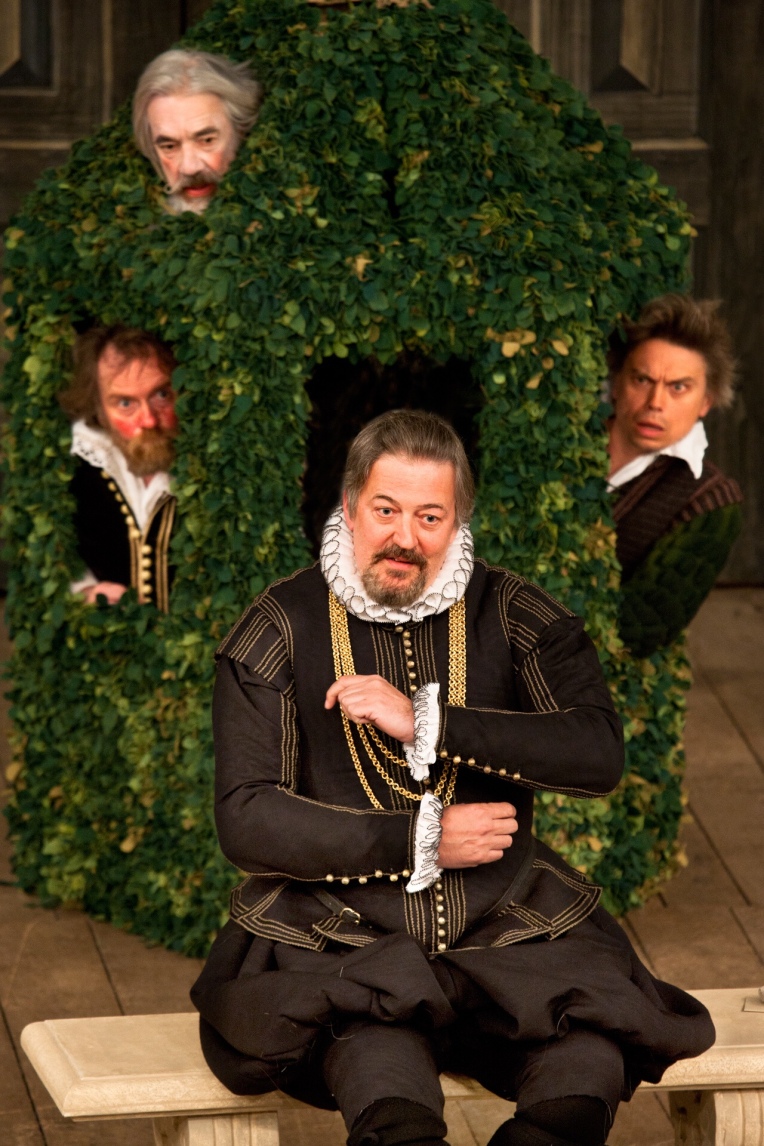
Part of the fun involved in the scene is that it’s basically a “play within a play,” a device that Shakespeare used to great effect in Hamlet, A Midsummer Night’s Dream, Love’s Labor’s Lost, and both parts of Henry the Fourth. I think it’s the charm of seeing a character as he really is, Malvolio shows you his fantasies and creates a whole world in the middle of the orchard. Meanwhile, you feel complicit as you watch the people watching him, who could just as easily be part of your audience.Workshop on Twelfth Night and Bullying
On the other hand, the scene has also been called an example of bullying, since Sir Toby and Maria are using the letter to manipulate then humiliate Malvolio. Remember, Malvolio dresses like a fool and act like a fool in front of Olivia in Act III because he believes it will please the Coubtess. Basically Toby and Maria are Catfishing Malvolio, which can seriously hurt psychologically, as anyone who has been deceived over the internet knows. Plus, it ruins Malvolio’s reputation as you can see in this clip:
Again, as a teenager, I could certainly relate to a man making a fool of himself in a vain attempt to impress a girl. Seeing a man lose his head over a girl and then have her break his heart over a prank, is in some ways truly terrible to watch; even Olivia agrees by the end of the play that the joke has gone too far.
Malvolio. Madam, you have done me wrong,
Notorious wrong.
Olivia. Have I, Malvolio? no.
Malvolio. Lady, you have. Pray you, peruse that letter.
You must not now deny it is your hand:
Write from it, if you can, in hand or phrase;
Or say ’tis not your seal, nor your invention:
You can say none of this: well, grant it then
And tell me, in the modesty of honour,
Why you have given me such clear lights of favour,
Bade me come smiling and cross-garter’d to you,
To put on yellow stockings and to frown 2550
Upon Sir Toby and the lighter people;
And, acting this in an obedient hope,
Why have you suffer’d me to be imprison’d,
Kept in a dark house, visited by the priest,
And made the most notorious geck and gull
That e’er invention play’d on? tell me why!
Olivia. Alas, Malvolio, this is not my writing,
Though, I confess, much like the character
But out of question ’tis Maria’s hand.
And now I do bethink me, it was she 2560
First told me thou wast mad; then camest in smiling,
And in such forms which here were presupposed
Upon thee in the letter. Prithee, be content:
This practise hath most shrewdly pass’d upon thee;
But when we know the grounds and authors of it, 2565
Thou shalt be both the plaintiff and the judge
Of thine own cause.
That’s the tragic part of Malvolio’s journey. We’ve all known a Malvolio, and we’ve all been him from time to time. That’s what makes him such an enduring character.
The Duelling Scene in Twelfth Night
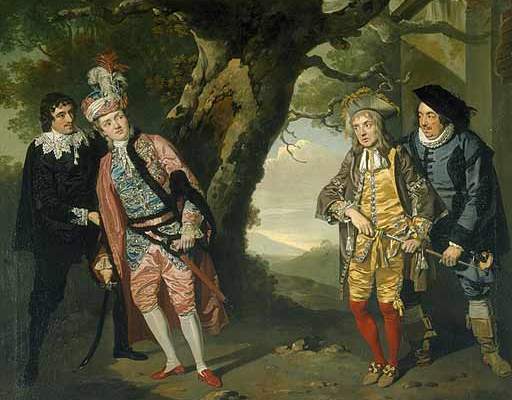
Here’s an article I origionally wrote for the Shakespeare Birthplace Trust about the famous and famously funny scene in Twelfth Night, where Toby tricks Viola in disguise to fight a duel with the cowardly Sir Andrew Aguecheek.
He Cannot By the Duello Avoid It
“He Cannot By the Duello Avoid It!” by Paul Rycik
Hello! To celebrate Shakespeare’s 449th birthday, I’d like to discuss the concept of judicial combat or licensed dueling. Most of Shakespeare’s aristocratic patrons would be intimately familiar with the arts of swordplay. Furthermore, Shakespeare as a trained actor would have studied fighting to accurately replicate it onstage. This is why Shakespeare takes many opportunities to mention dueling culture in his plays, especially within the comedies.
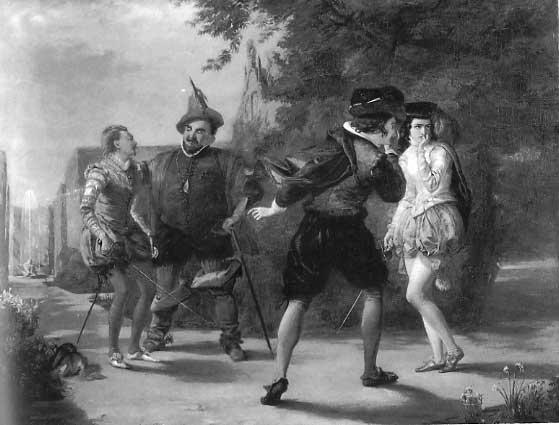
Picture Caption: William Powell Frith, The Duel Scene from “Twelfth Night” (1843)
Shakespeare uses duel references to comic effect in plays such as Twelfth Night, in which Sir Toby Belch convinces the cowardly Sir Andrew to fight Viola, a woman disguised as a man. Both combatants are cowards, but according to the law of arms, both of them have to fight, though neither one wants to or knows how: “He cannot by the duello avoid it” Twelfth Night Act III, Scene iv.
A more serious example of duel culture occurs in “Much Ado About Nothing. In Act IV, Scene I, Claudio has accused his fiancée Hero of adultery in front of the whole town, thus dishonoring her. Her cousin Beatrice is so furious with Claudio, she claims that, were she a man “I would eat his heart in the marketplace!” Eventually, Beatrice convinces Claudio’s friend Benedick to challenge Claudio to a duel. This seems harsh at first, but when one considers the context of judicial combat, it becomes clear that Beatrice is actually being totally rational, and wishes Claudio’s death for an important purpose- to vindicate Hero.
Link: Beatrice (Catherine Tate) asks Benedick (David Tennant) to kill Claudio (Wyndham’s Theatre, 2011).
http://www.youtube.com/watch?v=bsG9O6yIpyk
In Elizabethan society, when a woman was accused of adultery, a champion could fight to the death on her behalf in a judicial combat. This is why Beatrice famously asks Benedick to kill Claudio in Act IV; if Benedick kills Claudio in a duel, Claudio’s death would prove by divine influence that he accused her falsely, and Hero would at last be free from shame. However, when she is left alone with Benedick, she is full of conflicting feelings of love for him, which is why at first she hesitates to ask for his help:
Benedick. Surely I do believe your fair cousin is wronged.
Beatrice. Ah, how much might the man deserve of me that would right her!
Benedick Is there no way to show such friendship?
Beatrice. A very even way, but no such friend.
Benedick. May a man do it?
Beatrice. It is a man’s office, but not yours, Much Ado About Nothing, IV.i
In the last line, Beatrice hints at the office of a champion to fight for a dishonored woman. As a nobleman, Benedick may legally challenge Claudio to a duel and vindicate Hero, but Beatrice also knows that she cannot ask him to fight his best friend. Nevertheless, Beatrice wishes someone would fight to repair Hero’s honor, and her pleas eventually convince Benedick to challenge Claudio.
Link: Benedick (David Tennant Challenges Claudio (Wyndham’s Theater, 2011)
http://www.youtube.com/watch?v=M7BaNrt9e04
In our century, the idea of dueling to vindicate a woman from adultery is somewhat lost in translation, but the idea of men standing up for what is right on behalf of a lady is at the heart of chivalry, and certainly speaks to us as strongly now as it did in 1599. Therefore an understanding of the concept behind this duel helps the actors and audience to appreciate the richness of Shakespeare’s characters and their attempts to do the right thing, even through questionable means.
This entry is part of series on duels and judicial combat, which I’m working on for the Blackfriars conference in Staunton Virginia. I look forward to bringing you more posts about the culture of duels and judicial combat, which so pervades the works of Shakespeare.
Bonus video if time: Me (Paul Rycik) performing Much Ado Act IV Scene I at the Blackfriars Playhouse in Staunton: http://www.youtube.com/watch?v=f69j8vIrycA
Below is the full scene Twelfth Night duel scene
 The Shakespearean Student