Close Reading: Viola’s “I Left No Ring With Her” Soliloquy

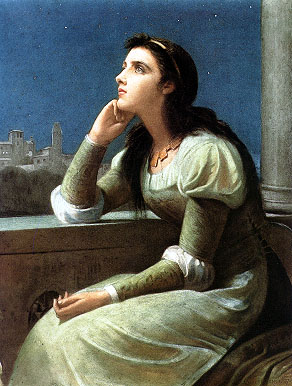
For my Shakespeare club, I’m coaching two young actors on Viola’s celebrated soliloquy in Act II, Scene ii.I thought I’d share some of that work with you. In this speech, Viola has an epiphany; the lady she was sent to woo on her master Orsino’s behalf LOVES HER!

The Text

VIOLA

I left no ring with her: what means this lady?
Fortune forbid my outside have not charm’d her!
She made good view of me; indeed, so much,
That sure methought her eyes had lost her tongue,
For she did speak in starts distractedly.
She loves me, sure; the cunning of her passion
Invites me in this churlish messenger.
None of my lord’s ring! why, he sent her none.
I am the man: if it be so, as ’tis,
Poor lady, she were better love a dream.
Disguise, I see, thou art a wickedness,
Wherein the pregnant enemy does much.
How easy is it for the proper-false
In women’s waxen hearts to set their forms!
Alas, our frailty is the cause, not we!
For such as we are made of, such we be.
How will this fadge? my master loves her dearly;
And I, poor monster, fond as much on him;
And she, mistaken, seems to dote on me.
What will become of this? As I am man,
My state is desperate for my master’s love;
As I am woman,–now alas the day!–
What thriftless sighs shall poor Olivia breathe!
O time! thou must untangle this, not I;
It is too hard a knot for me to untie!

Exit

Twelfth Night, Act II, Scene ii, lines 648-672.

The Given Circumstances

Viola has spent an unspecified amount of time disguised as a man. She has just tried (unsuccessfully) to woo Countess Olivia on behalf of her employer, Duke Orsino. Olivia seemed intrigued by her in her disguise as “Cesario,” and refused to hear any more words about Orsino, but asked Viola to come see her again. The Countess then sent her messenger Malvolio to give Viola a ring, which he claims she tried to give to Olivia as a gift. At first, Viola is confused and upset by the accusation, but slowly realizes that the ring is actually a gift for her; in fact, it’s a love token.

Traditional Interpretations

I think the comedy depends on how Viola reacts to the realization that Olivia loves her. I’ve seen some Violas that are embarrassed, some that are a little frightened (after all, hell hath no fury like a woman scorned), and others with sad sympathy. Viola is a good person, so she can’t laugh at the lovesick countess, but she can have a wry laugh at herself and how her disguise has caused all this trouble; making her unable to confess her love to him, while at the same time making Olivia think she is a handsome young man.

Michelle Terry In the Globe Theater (2021)

Michelle Terry as Viola in the 2021 production of “Twelfth Night”

Michelle Terry is very matter-of-fact in her portrayal. She doesn’t pause, she doesn’t drag out the lines. In fact, she seems more annoyed and scandalized than anything else. The comedy comes mainly from her gestures and movements as she talks to the audience as if they were one of her gal-pals- venting her frustration with this ridiculous situation.

 Michelle Terry excels as Viola, straight-faced, tormented, only occasionally raising a conspiratorial eyebrow at the audience. 

https://www.theguardian.com/stage/2021/aug/08/twelfth-night-review-shakespeares-globe-theatre

Judy Dench in the RSC TV show “Playing Shakespeare” is very sympathetic to “Poor Olivia, ” and plays the speech with a romantic sentimentality. She’s focused on Olivia, and feels awful for the false hope she’s given her.

Both these interpretations are valid, and they’re a good baseline for two sides of Viola’s personality- the sensitive genteel duke’s daughter who is sympathetic to Olivia, and the down-to-earth funny one who is willing to disguise herself as a boy to survive.

Literary Devices

Imagery

The main image here is the image of the knot- a central image of how convoluted this love triangle is.

Verse

First Folio Reprint from The Boldlien Library.
I left no Ring with her: what meanes this Lady?
Fortune forbid my out‑side haue not charm'd her:
[650]
She made good view of me, indeed so much,
That me thought her eyes had lost her tongue,
For she did speake in starts distractedly.
She loues me sure, the cunning of her passion
Inuites me in this churlish messenger:
[655]
None of my Lords Ring? Why he sent her none;
I am the man, if it be so, as tis,
Poore Lady, she were better loue a dreame:
Disguise, I see thou art a wickednesse,
Wherein the pregnant enemie does much.
[660]
How easie is it, for the proper false
In womens waxen hearts to set their formes:
Alas, O frailtie is the cause, not wee,
For such as we are made, if such we bee:
How will this fadge? My master loues her deerely,
[665]
And I (poore monster) fond asmuch on him:
And she (mistaken) seemes to dote on me:
What will become of this? As I am man,
My state is desperate for my maisters loue:
As I am woman (now alas the day)
[670]
What thriftlesse sighes shall poore Oliuia breath?
O time, thou must vntangle this, not I,
It is too hard a knot for me t'vnty.

It’s interesting to note that (in the First Folio text), the verse alternates between being regular, and using a run-on technique called enjabment, where the thoughts continue after the end of the lines, starting with lines three and four. Ironically, when Viola says that Olivia was distracted and confused when she visited her, her own thoughts are disjointed and fragmentary as she reaches the inevitable conclusion that Olivia is infatuated with Viola in her disguise.

Viola’s Emotional Journey

In the book “Shakespeare’s First Texts” by Neil Freeman he describes how the Folio prints the speech in four distinct sections. Freeman hypothesizes that Shakespeare organized this speech into four phrases that chart the stages of emotions Viola goes through:

Each stage has its own easily identifiable quality, reflecting the growing steps of Viola’s journey in what for her is a huge struggle not only to comprehend, but also to deal with the enormous complications of the dreadful love triangle- the potential results of which are now becomming only too clear.

Freeman, 175.

Stage 1: Introduction

In the first three and a half sentences, Viola goes through the facts- she gave no ring to Olivia, Olivia was eying her, and half paying attention to what Viola was saying. The phrase ends with Viola’s conclusion that Olivia must be in love with her.

Stage 2: Complications

The sentences are of very irregular length- sometimes six words per line, sometimes a few as four. According to Freeman, the irregularity of the verse shows how Viola’s emotions are getting the better of her. Viola could be gasping with remorse over the pain she’s caused Olivia, or shocked at how easily she was taken in by Viola’s disguise.

Stage 3: Crisis/ Catharsis

Each line of this section mentions the people in this love triagle: “My master,” “And I,” “And She,” etc. Viola might be thinking about the possible outcomes to this situation- getting fired, getting discovered, getting married, etc.

Stage 4: Summary: “O Time, Thou Must Untangle This, Not I.”

Like Hamlet before her and Macbeth after her, Viola ends her soliloquy by saying she has no conclusion. She has no idea how to solve this problem, but can only hope that Time will provide a solution.

Audience Interaction

As I said, this is a soliloquy, which is to say, a speech where the character is solo or alone onstage. Some people think this means that the characters are talking to themselves, but I firmly disagree with this notion. One reason why Shakespeare writes soliloquies is because they allow a character to share their thoughts and feelings with the audience. They are the ancestors of every aria or solo in opera and musical theater, and every Disney Princess/ Villain song. I’ve even said before that there are some similarities between Viola and a famous Disney Princess:

Resources:

Illustrations

Shakespearean Wisdom for the Sixth Night Of Hanukkah

I found this wonderful short clip from Dr. James Allen Jones, a Shakespearean scholar and actor who draws parallels between the miracle of Hanukkah and this passage from Othello:

Duke of Venice: Let me speak like yourself, and lay a sentence,
Which, as a grise or step, may help these lovers
Into your favour.
When remedies are past, the griefs are ended
By seeing the worst, which late on hopes depended.
To mourn a mischief that is past and gone
Is the next way to draw new mischief on.
What cannot be preserved when fortune takes
Patience her injury a mockery makes.
The robb'd that smiles steals something from the thief;
He robs himself that spends a bootless grief.
Othello, Act I, Scene iii, lines 547-558

The Context

Desdemona has married Othello, but her father Brabantio cannot comprehend why a woman like her would disobey him, much less marry a black man. He is actually convinced that Othello must have used drugs or witchcraft to seduce Desdemona, and calls both of them to court before the Duke. The Duke hears the argument patiently and concludes that Desdemona’s love for Othello is genuine. In the lines above he speaks to Brabantio giving him friendly advice as if he were Brabantio’s conscience, (or the sense of judgment that he so clearly lacks). The Duke urges this father to let go of his “grief” over losing his daughter because it will only invite further suffering.

Sadly Brabantio doesn’t take this advice at all, and ‘warns’ Othello that she could just as easily betray him as she betrayed her father. Arguably, this plants the first seeds of doubt and jealousy in Othello’s mind, the seeds with Iago so carefully cultivates.

The miracle of Hanukkah is that the Israelites were able to see clearly who they were and preserve their culture in the face of annihilation. Sadly, the characters in Othello are all blinded- blinded by racism (Brabantio, Iago), lust, (Rodrigo), love (Desdemona), and jealousy (Othello). I thought Dr. Jones drew some very interesting parallels between Shakespeare and Hanukkah, and I’m happy to share them with you:

The original post: https://rebooting.com/article/the-miracle-of-shakespeare/

Book Review: William Shakespeare and the Globe

Video Book Review:

Content: 

This is a story of two boys, centuries apart, but united by their love of theater in general, and the Globe Theater in particular. The first is William Shakespeare, whose story Aliki tells from his birth, to his boyhood days, to his rise to prominence in the theater. The second is Sam Wannamaker, the man who spearheaded the project of re-building the Globe Theater from 1949 to the first performance of the Globe in June of 1997. 

Aliki tells this story in the format of an Elizabethan play, dividing it into five acts. Acts I-4 tell the story of Shakespeare’s life while Act V focuses on Sam Wannamaker pursuing his dream. The book concludes with a chronology of Shakespeare’s plays, and a table of his most famous words and expressions, illustrated with adorable characters.

Illustrations: Medium and Style of Illustration

Like many of her books, Aliki’s illustrations are layered and detailed. She uses ink pen outlines to draw her characters, but then fills them in with bright, vibrant colors. She then painstakingly shades them using the crosshatching technique, to create textures that are complex but have a hand-drawn almost impressionistic feel. The characters aren’t ultra-realistic, and the color palette is limited mainly to bright primaries and warm browns, making it look like a child’s box of crayons or colored pencils. This book is designed to appeal to children with its hand-drawn quality. 

Format:

Cover- The cover makes the subject of the book clear to the audience. We see Shakespeare and Globe Theater, but also illustrated moments from his plays. This helps establish that this is not only a biography, it is an introduction to Shakespeare’s plays and poems as well.

Front Matter: The book opens with four pages of quotes from Shakespeare’s plays illustrated with fairies, pipers, and Elizabethan men and women. There is no half-title, no frontispiece and no Half title verso.

Title page verso (copyright page) In the center of the copyright page is an Illustration of Shakespeare standing atop a globe, over the famous lines: “All the world’s a stage, and all the men and women merely players.”  Below the quote in very small letters is the copyright date, a short summary, the ISBN data, card catalog information, and the typography information.

Title Page The title is laid out on a white background with a thin black border. Below the title is an image of a boy (presumably Sam Wanamaker), assembling a paper model of Shakespeare’s globe, with a portrait of Shakespeare in the background. This helps establish that this biography focuses on both Shakespeare and Wanamaker, and makes the reader excited to see the real Globe brought to life in full illustration.

Table of Contents As stated before, the book is organized like an Elizabethan play, so rather than Chapter 1, etc. the book has five Acts with 1-4 scenes in them. Each chapter in the table of contents is labeled with a description that sets the scene; either a location (like London, Stratford, The Globe), or what will happen in the scene (such as “Building” or “Uncovering”). The table then details four appendices that are part of the back matter. 

Preface:  The Preface is referred in the book as an aside, (an Elizabethan theater term meaning something spoken between a character and the audience). This preface acknowledges that, because of the lack of surviving historical information on William Shakespeare, Aliki, like many Shakespearean biographers, has to use some guesswork to fill out the narrative of his life. A second preface (referred to as a Prologue), introduces the story of the book, (namely the lives of Will Shakespeare and Sam Wanamaker). This preface mimics how in Shakespeare’s plays, a prologue would tell the audience what would happen before the narrative started.

Back Matter/ Appendices: There are four appendices in the back matter- A table of Shakespeare’s collected works, a timeline of the book’s events from 1564-1999,  an illustrated list of Shakespearean words and expressions, and finally a list of Shakespearean sites to visit in London and Shakespeare’s home town of Stratford Upon Avon. These appendices show the reader that Shakespeare has an important role in history and in the English language, and encourage the reader to learn more about him. 

Value As an Educational Tool

This story not only tells Shakespeare’s life, it also introduces the reader to his plays and his influence on the English language through the illustrations and frequent Shakespearean quotations. The reader also gains an insight into Elizabethan life and culture by following Will’s journey from Stratford to London. Finally, by juxtaposing Shakespeare’s life with Sam Wannamaker’s, the reader sees Shakespeare through Sam’s eyes as he works his whole life to restore Shakespeare’s Globe to its former glory. The reader develops a love of Shakespeare, (or at least an empathetic respect), and may feel empowered to read more about Shakespeare, see his plays or maybe even become a Shakespearean artist in the future. In short, Aliki’s book brings the world of Shakespeare to young readers in a way that is beautiful to look at, full of insight, and with enough supplemental materials to encourage them to learn more.

Overall Impression:

Like Prospero’s magic in The Tempest, this story is magically told- it is not intended to create a totally realistic representation of Elizabethan life, but to give an exciting, colorful impression of Will’s life and work to the reader. Due to the scant historical details of Will’s life, Aliki chose not to do a standard biography, but, like Shakespeare’s own history plays, to tell a historically authentic story, rooted in truth that brings a time and a place to life, while portraying it an exciting and visually appealing way.

Citation:

Aliki. (2000). William Shakespeare & the Globe. HarperCollins Publishers. 

Shakespeare and the Color Blue

I’ve been reading this wonderful picture book about the history of the color blue- a color that evokes deep emotions and has a rich and sometimes tragic history. Here’s a video of the book being read:

Blue: A History of the Color As Deep As the Sea and Wide As the Sky by Nana Ekua Brew-Hammond

The book won the 2023 Orbis Pictus Award for Best Nonfiction For Children:

In identifying an “outstanding” book for children, the committee members will consider the following:

• Accuracy of presentation in both text and illustrative material, as well as appropriate documentation, avoidance of anthropomorphism and teleology, distinction between fact and theory, and balanced treatment.
• Organization of material (e.g., general to specific; specific to general) that contributes to clarity and accessibility.
• Style of writing that is engaging and distinctive in its use of language.
• Style of illustration that is engaging, informative, and complementary to the text.
• Appropriateness of book design based on the topic or subject and with respect to the different age groups for which the topic or subject may be appropriate.
• Potential contribution to the K-8 curriculum.

National Council of Teachers of English Website: Orbis Pictus Website.

As I mentioned in my Coronation post, the colors blue and purple have been associated with power (earthly or heavenly) because for centuries they have been hard to produce, and the book tells that history extremely well while highlighting the people and cultures that created those dyes by harvesting shellfish and collecting indigo plants:

A few good reasons to appreciate the color blue. Throughout history, humans have captured, cultivated, and coaxed the color blue out of everything from mollusks to rocks to plants. In this fascinating exploration of our relationship to this once-precious color, Brew-Hammond begins by discussing its elusive nature: Seawater is blue, but the color disappears when water is cupped in ones hand; similarly, crushing iris petals yields blue, but the hue quickly dissipates when soaked in water. Readers learn that the earliest known use of blue dates back to about 4500 B.C.E. in Afghanistans Sar-e-Sang Valley and that ancient Egyptians used it, too. But blue has been found worldwide. It was extracted from the bellies of particular shellfish in coastal Japan, Central America, the Mediterranean, and Mexico and harvested from plants in Africa, Asia, the Caribbean, and the Americas. Because of its rarity, blue has been considered a royal color reserved for use by the wealthy and privileged. Laced with insights, Brew-Hammonds meditative verse covers a wide range of cultures, time periods, and geographical locations, while Minters mesmerizing images highlight the significance of blue to diverse groups of people through culturally specific visuals such as hairstyles and clothing design. The highly textured backgrounds add life and movement to the focal images in the foreground. (This book was reviewed digitally.)Stunning and informativeand as profoundly rich as the color blue. (authors note, facts about blue, selected sources)

Kirkus Reviws

As the review above shows, the book doesn’t focus on European royals or colonialist countries that bought and wore blue clothing, it focuses on the countries that make blue in places like Africa, Asia, and Central or South America. It also doesn’t disguise the fact that the slave trade in America was partially used to gather indigo plants, which the illustrator poignantly represents on the page where slaves are painted with blue dye- they lived and died for the color of their skin, and for the color they were forced to cultivate.

Fortunately, the book doesn’t end on the exploitation of people for the sake of a color, it also celebrates the triumph of science as chemist Adolph Von Baeyer labors to develop an artificial dye- one that would make such backbreaking labor unnecessary. Von Baeyer began working in 1865, the same year the American Civil War ended.

So what does this have to do with Shakespeare?

Brew-Hammond explores the history and culture surrounding blue powders and dyes, a rare and prized commodity until recently. She details how the ancient Egyptians ground lapis lazuli rocks from Afghanistan to make blue pigment for royals; later, sea snails were used by dyers until the indigo plant became a more practical solution for large quantities; and finally, Adolf von Baeyer created chemical blue, which led to widespread availability of this color. She also touches on some concepts and emotions associated with this hue: feeling blue (sad), blues music, out of the blue (unexpected), royal blue, and blue ribbons (extraordinary). Minter’s acrylic-wash illustrations depict predominantly Black figures, a nod to the key role played by West African dyers in developing these tinctures, and the importance of enslaved Africans whose toil made possible the North American indigo industry. Blue tints appear in every spread, but often as a spotlight color; reds, yellows, and greens do the heavy lifting, allowing the blue tones to stand out. A fascinating look at an underreported topic.

Kay Weisman (Booklist)

What’s really wonderful about this book is that it doesn’t just detail the history of the color blue, it also delves into its poetic history- the way we use blue as an adjective, in expressions, and many other daily occurrences. Terms like ‘feeling blue,’ or ‘blue blood,’ and the connotations of the sky and ocean make blue a color that is grand and vast, but hard to catch. This quality of tantalizing beauty has inspired many poets, including Shakespeare:

 CLEOPATRA: Here
My bluest veins to kiss; a hand that kings
Have lipp’d, and trembled kissing.

Antony and Cleopatra
  • RosalindThere is none of my uncle’s marks upon you; he taught me
    how to know a man in love; in which cage of rushes I am sure you
    are not prisoner.1455
  • OrlandoWhat were his marks?
  • RosalindA lean cheek, which you have not; a blue eye and sunken,
    which you have not; 
As You Like It

Under these windows, white and azure laced
With blue of heaven’s own tinct. 

Cymbeline

Now pile your dust upon the quick and dead
Till of this flat a mountain you have made
T’ o’ertop old Pelion or the skyish head
Of blue Olympus.

Hamlet

Also, apparently, there is a shade of blue CALLED “SHAKESPEARE!”

So, I hope you enjoyed this look into the complex history and mystery of the color blue. Like Shakespeare, blue is mysterious but pervasive- hard to pin down in history books, but admired and celebrated to this very day.

Spirit Halloween and Shakespeare

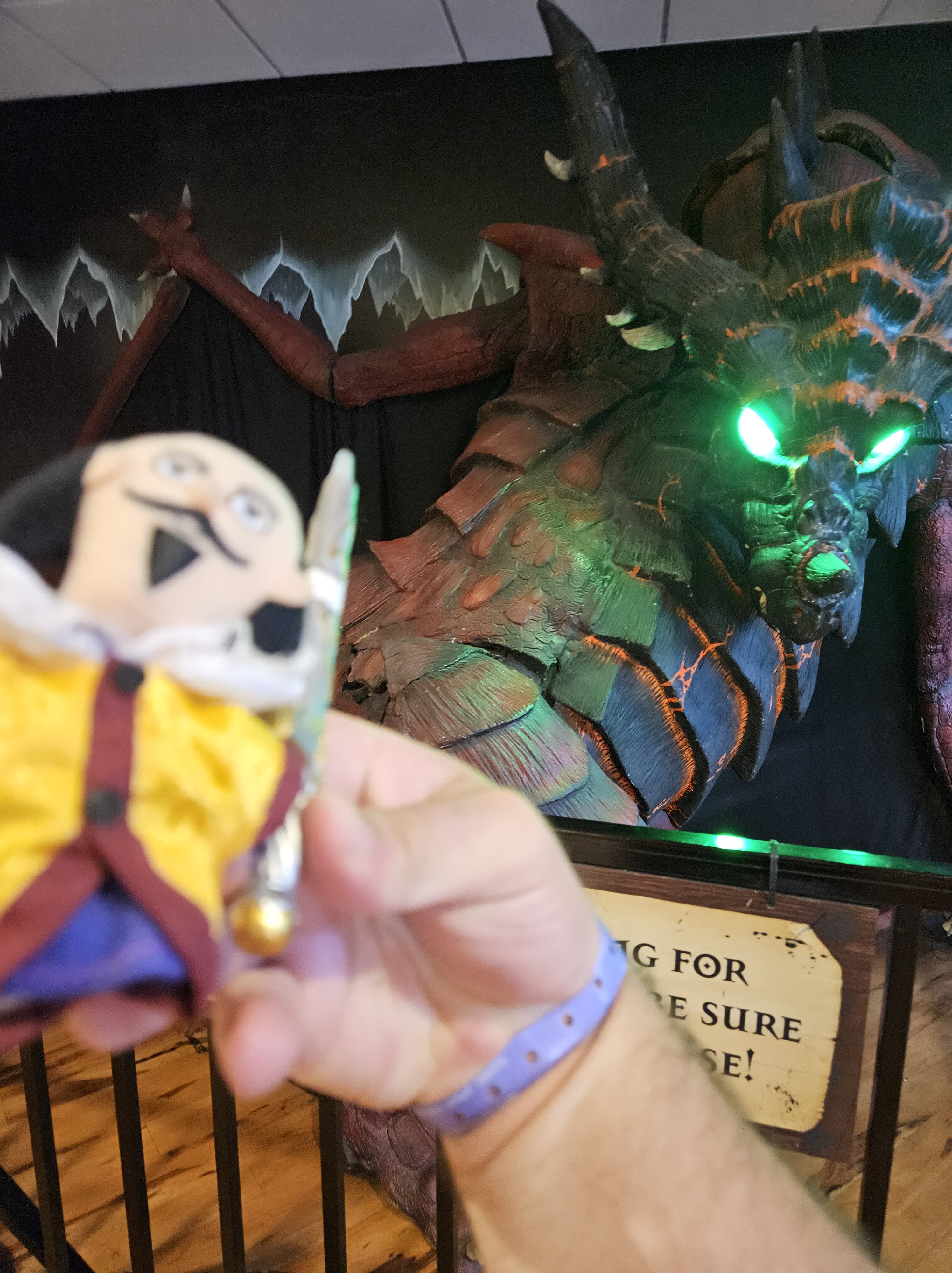
I’ve written before that Shakespeare helped influence Halloween as we know it- the images of holding skulls, witches chanting over a cauldron, and even ghosts coming back to plague their murderers all have Shakespearean roots. Exhibit A is how these images and tropes can even be found in beloved Halloween costume stores like Spirit Halloween!

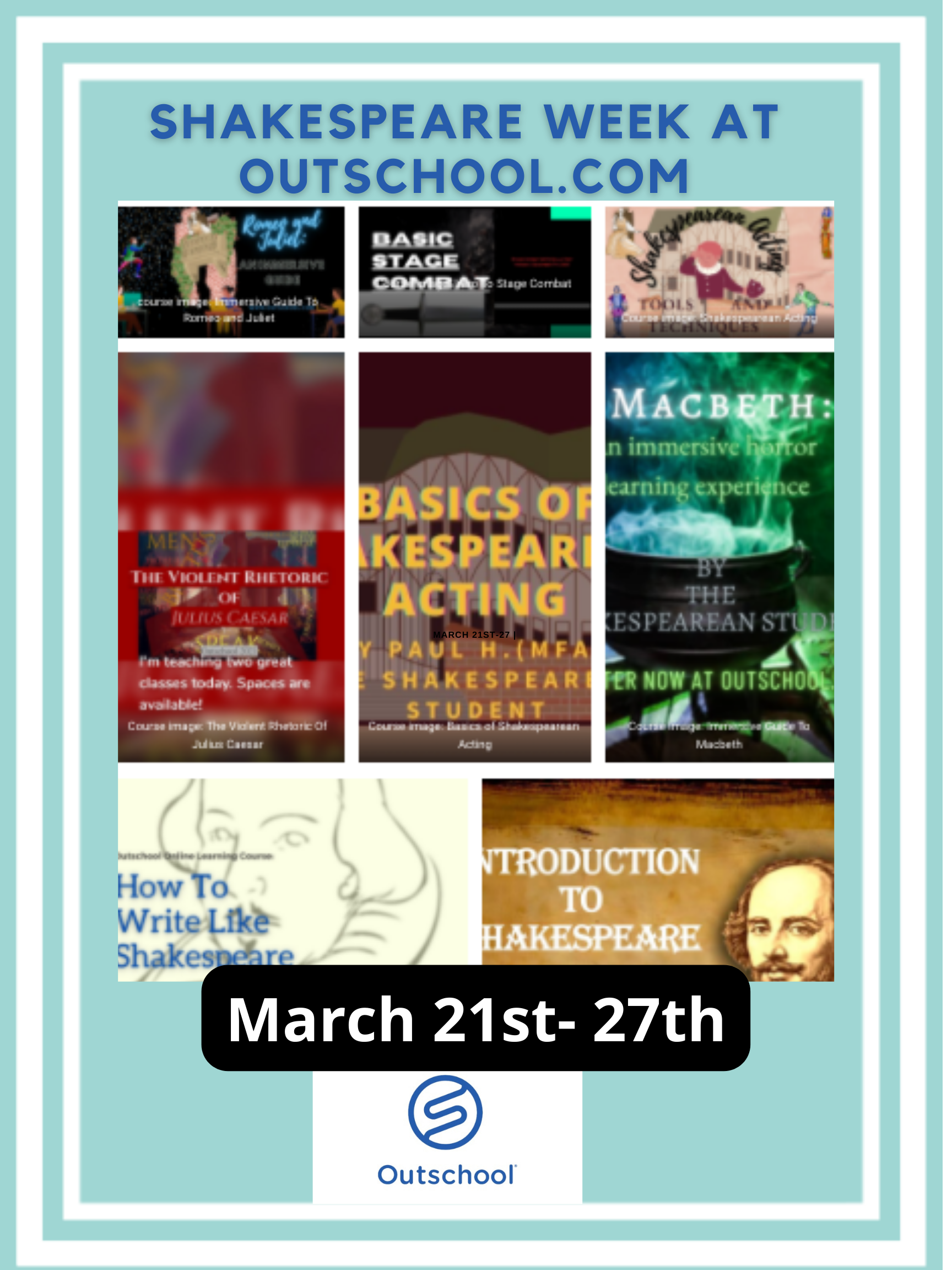
If you like creepy Halloween activities and Shakespeare, please sign up for my fully online, fully asynchronous class: “An Immersive Guide To Shakespeare’s Macbeth!” The class features a digital escape room, an interactive quiz, and a special, undead guest!

Get $10 off my class “An Interactive Guide to Shakespeare’s “Macbeth” ” with coupon code HTHES4NHCN10 until Nov 3, 2023. Get started at https://outschool.com/classes/an-interactive-guide-to-shakespeares-macbeth-jp7TIh9B and enter the coupon code at checkout.

Remembering Michael Gambon

It’s a moment of tragic irony, worthy of King Lear himself that the actor who played Snape died before the actor who played Dumbledore, but here we are. I’m saddened to say that we’ve lost another beloved Shakespeare and Harry Potter actors.

Michael Gambon (

Gambon was born in Ireland in 1940. His first Shakespeare role was in a production of “Othello” at the Gates Theater in Dublin Ireland. He went on to win an Olivier Award, a BAFTA, several SAG awards, and was knighted in 1988.

Sir Michael became accomplished both on TV, in movies, and on stage. He played many of Shakespeare’s greatest roles, including a famous performance as King Lear with Antony Sher at the Royal Shakespeare Company. Here are some highlights of his stage work:

https://www.theguardian.com/stage/gallery/2015/feb/09/michael-gambon-on-stage-from-king-lear-to-krapp-in-pictures

Now before I go on, I’d like to address the elephant in the room, or rather the MEME in the room:

I’ve never understood the animosity that Gambon got for changing the interpretation of this line, and no one seems to have a real explanation for why he changed it from the book. So this is all speculative, but as a Shakespeare actor myself, I want to provide some rational explanations that while you might not like his choice, you hopefully won’t come to the conclusion that it was the “Worst mistake ever.”

1. If You Don’t Change Something, You’re Not Doing Your JOb

Sources:

https://pagesix.com/2023/09/28/sir-michael-gambon-dumbledore-in-harry-potter-dead-at-82/

https://www.mtv.com/news/3m9lil/harry-potter-and-the-gobleddafiyah

Activities For Students and Teachers: Make A Shakespeare Club!

Privacy Note

I’m not going to say where my club is or mention the names of the members for privacy’s sake. This post is to familiarize you with the idea, and hopefully inspire your school to do the same.

The Genesis

Like I said in my “Is Shakespeare Being Cancelled?” post, most teachers don’t have the time, training, or inclination to teach a really in-depth Shakespeare unit. Most classes I’ve worked in barely have enough time to cover the plot of Romeo and Juliet, before they need to work on another unit. This is why I started a Shakespeare club, to give kids time to engage with Shakespeare without having to worry about grades.

Mission Statement:

 Shakespeare was NOT meant to be read. In this club, we’ll engage with Shakespeare’s plays through games, sword fighting, dramatic readings, movies, and sometimes even recipes! The goal of the club is to have fun with classic works of theater.

Organization

Every month we will discuss a new play and try to explore different aspects of it each week. For each week we’ll do the following:

  1. Weekly questions such as: “What do you know about Shakespeare the man?” or, “Are Shakespeare’s plays still relevant today?”
  2. Group Close reading- Every month I’ll choose a different play to focus on. We’ll pick a scene or speech each month to look at and read aloud.
    1. I’ll provide some context, explaining what is happening in the play durin the speech, and any relevant historical context.
    2. There will be a dramatic reading, either by me (or a brave soul in the club).
    3. We’ll watch a recording and discuss their interpretation and what the students like and don’t like.
  3. Immersive activities such as:
    1. -Pool Noodle sword fights
    2. – Shakespeare’s arts and crafts and recipes such as gingerbread men contests and making costumes and props.
    3. – Shakespeare movie-watching party with such films as 10 Things I Hate About You, ‘O,’ “Gnomio and Juliet,” “Hamlet,” and others. 
  4. Weekly challenges like “Find a Shakespeare quote that you use in normal speech,” “Find a movie or character that’s based on Shakespeare,” or “Draw a picture of a Shakespearean character (stick figures are acceptable). Each challenge is rewarded with a digital badge, which the students can trade for Shakespeare swag at the end of the month!

Meeting RecapS

  • Meeting 1: I talked about Shakespeare’s life, using the same format as this video:
  • Meeting 2: To get the kids to connect with Shakespeare’s plays, I had them take a personality quiz to figure out which Shakespeare play they might want to read:

https://www.zoo.com/quiz/which-shakespeare-play-fits-you

I then asked the students to research the play they got, then asked them to fill out a Jamboard, like the one I made below- using photos and short descriptors to get a general idea of their new favorite play!

So as the school year continues, I’ll create more recaps and post more discussions to let you know how this little experiment is coming. Since this is a new idea, I’d love to get your feedback because I want as many people as possible to help make this project a success!